There is no denying that consumers here in the Philippines prefer to use digital methods of paying over cash as more than 57% of retail transactions by volume are digital, according to a business news report by Malay Business Insight. The details were revealed by the Bangko Sentral ng Pilipinas (BSP).
To put things in perspective, posted below is an excerpt from Malaya Business Insight’s news report. Some parts in boldface…
More Filipinos are going cashless and transacting in e-money or digital cash as the most preferred payment for retail accounts, the Bangko Sentral ng Pilipinas (BSP) said in a report on Monday.
Based on the latest BSP status report, digital payments now account for 57.4 percent of retail transactions by volume as of end-2024, up from 52.8 percent in 2023. In terms of value, e-money’s share also increased to 59 percent from 55.3 percent.
The figures surpassed the government’s target range of between 52 and 54 percent as set under the Philippine Development Plan 2023–2028.
BSP Governor Eli M. Remolona Jr. said the steady year-on-year growth “reinforces the momentum built after surpassing the 2023 digitalization target of 50 percent for volume.”
He also said the upward trajectory “reflects the long-term impact of market developments, policy initiatives, and the growing trust and familiarity of Filipinos with digital payment options.”
Remolona said the BSP will continue to harness technology and finance to connect markets and ensure that “every Filipino becomes part of the formal financial system.”
They will do this by empowering banks, non-banks and the fintech sector to leverage innovation in designing financial products that are not only accessible but also more responsive to the needs of consumers.”
Let me end this post by asking you readers: What is your reaction to this recent development? When it comes to retail transactions, do you prefer to pay with cash or with a digital payment method? Do you have any e-wallets (electronic wallets) right now?
To put things in perspective, posted below is an excerpt from the PNA news article. Some parts in boldface…
Domestic travel continues to lead the recovery of the Philippine tourism industry, with its receipts able to make up for the “shortfall” in international arrivals, real estate advisory firm Leechiu Property Consultants (LPC) said Thursday.
“Domestic travel is so big. It’s so big and strong that it can make up for, now in the short term, the shortfall of international arrivals,” Alfred Lay, LPC director for Hotels, Tourism, and Leisure, said during the presentation of the LPC Q2 2025 Philippine Property Market Report in Makati City.
“It can do that for a long time, and the long-term goal for domestic tourism would probably to double (its) size within the next five to 10 years.”
Lay noted that domestic tourism expenditure in 2024 reached PHP3.16 trillion, surpassing the pre-pandemic level of PHP3.14 trillion in 2019. Tourism contributed 8.9 percent of the country’s gross domestic product (GDP) last year.
International tourism expenditures, on the other hand, stood at PHP699 billion, up from PHP600 billion pre-pandemic levels, despite missing the 2024 targets.
In an interview, Lay said he expects inbound arrivals this year to reach at least six million.
He noted that the arrival of South Korean visitors, the Philippines’ top market, has seen a decline in the past five months, likely due to the “negative media coverage” in South Korea over security issues in the country, but long-haul tourists are increasing and have offset the decline.
According to the LPC report, Korean arrivals in the first five months of 2025 dipped 19 percent to 552,000 from 682,000 in the same period last year, while inbound arrivals from the United States, Japan, Australia, and Canada surged between 9 percent and 19.4 percent.
Additional routes and flight frequencies, he said, are likewise expected to sustain this upward momentum.
Meanwhile, Lay addressed news coverage about the affordability of travel to the Philippines, stating that the country only ranks in the “middle of the pack” in terms of hotel average daily rates (ADR) compared to Southeast Asian neighbors and competitors.
The LPC report showed that the Philippines ranks fourth in hotel ADR at PHP6,048, with Thailand (PHP8,171), Cambodia (PHP6,591), and Vietnam (PHP6,359) in the top three places.
Let me end this post by asking you readers: What is your reaction to this recent development? Do you think the tourism industry of the Philippines will do better this year with domestic travel as the main factor? Do you think it is still possible for the Philippines to attract at least six million foreign tourists by the end of this year? Do you think both the national government and private sector should work together to improve local infrastructure so that the cost of travel will go down?
Recently in the City of Las Piñas, school supplies were released by the City Government (through its City Social Welfare Development Office the Local Youth Development Office) to eight hundred and fifty local students, the local government announced via social media. Mayor April Aguilar was present during the release.
To put things in perspective, posted below is an excerpt from social media post of the City Government Some parts in boldface…
The Las Piñas City Government, through the City Social Welfare and Development Office (CSWDO) and Local Youth Development Office (LYDO), distributed educational assistance to 850 beneficiaries during a school supplies awarding ceremony held on Friday, July 4, at the Mayor Nene Aguilar Aguilar DRRMO Building in Talon Dos.
Mayor April Aguilar led the distribution of school bags containing essential items for the new academic year, including five notebooks, a lunchbox, tumbler, scientific calculator, ruler set, scissors, and an umbrella. Joining her in personally handing out the supplies were Sangguniang Kabataan Federation Chairperson Rey Angelo Reyes and CSWDO head Lowefe Romulo.
This initiative aims to support Las Piñas students from low-income families by easing the financial burden of back-to-school expenses and promoting preparedness and motivation for the coming school year.
Let me end this piece by asking you readers: If you are a resident of Las Piñas City, what is your reaction to this development? Are there many students in your local community who expressed their need for school supplies from the City Government?
For more South Metro Manila community news and developments, come back here soon. Also say NO to fake news, NO to irresponsible journalism, NO to misinformation, NO to plagiarists, NO to reckless publishers and NO to sinister propaganda when it comes to news and developments. For South Metro Manila community developments, member engagement, commerce and other relevant updates, join the growing South Metro Manila Facebook group at https://www.facebook.com/groups/342183059992673
Are you a victim of ticket scalping? Recently in the City of Muntinlupa, a new ordinance was signed into law by Mayor Ruffy Biazon effectively prohibiting ticket scalping locally, according to a Manila Bulletin news report.
To put things in perspective, posted below is an excerpt from the Manila Bulletin report. Some parts in boldface…
The Muntinlupa city government approved an ordinance prohibiting ticket scalping.
Mayor Ruffy Biazon signed Ordinance No. 2025-358, which was approved by the Muntinlupa City Council, “prohibiting the scalping of tickets in Muntinlupa City imposing penalties therefor.”
The ordinance defines scalping as “the resale of a ticket at a price greater than the original price printed or listed by the authorized ticket seller.”
Tickets covered by the ordinance are “any physical, digital, or electronic means of entry to a public event, including but not limited to concerts, sports events, theater performances, or exhibitions.”
“Scalping of Tickets is detrimental to Consumer Welfare and to the Development of Local Recreation and Sports Industries in the City Of Muntinlupa,” the ordinance states.
Under the ordinance, it is “unlawful for any person or entity to resell, offer to resell, or purchase with the intent to resell any ticket to an event for an amount greater than the original ticket price. It is likewise prohibited to sell or attempt to sell complimentary tickets regardless of any amount or form of payment, in kind or in cash.”
Exempted from the ordinance is the reselling of tickets at face value or less or when it is permitted by the venue’s official resale policy.
Any person found guilty of violating the ordinance will be fined P5,000 or imprisoned for a year or both depending on the decision of the court.
Official ticket booths are mandated to put up signs warning buyers of the prohibition against scalping and the penalties.
Let me end this post by asking you readers: What is your reaction to this recent development? If you are a resident of Muntinlupa City, do you consider ticket scalping a serious problem?
For more South Metro Manila community news and developments, come back here soon. Also say NO to fake news, NO to irresponsible journalism, NO to misinformation, NO to plagiarists, NO to reckless publishers and NO to sinister propaganda when it comes to news and developments. For South Metro Manila community developments, member engagement, commerce and other relevant updates, join the growing South Metro Manila Facebook group at https://www.facebook.com/groups/342183059992673
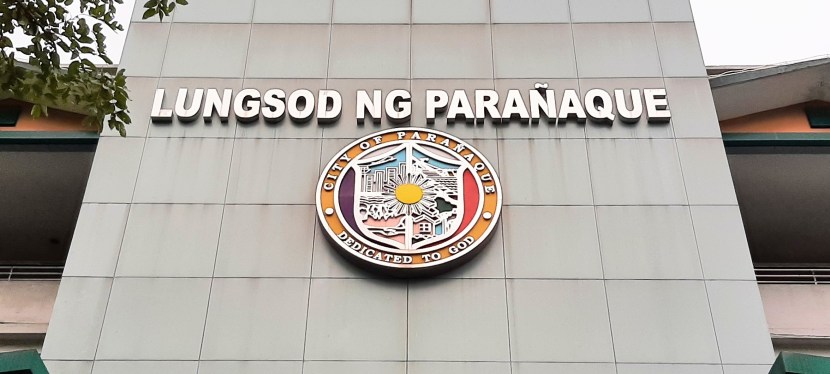
Recently in the city of Parañaque, NBI agents arrested two people and seized illegal vape products that have been estimated to be worth almost P4 million, according to a news article by the Philippine News Agency (PNA). This development is the result of a successful entrapment operation by the NBI.
To put things in perspective, posted below is an excerpt from the PNA news article. Some parts in boldface…
The National Bureau of Investigation (NBI) has arrested two individuals and seized PHP3.9 million worth of illegal vape products in an operation in Parañaque City.
In a press briefing, NBI Director Jaime Santiago identified the suspects as Ace Garcia and Reginald Llanto, who were arrested by operatives of the NBI’s Cavite North District Office (NBI-CAVIDO-North) on Wednesday.
According to the NBI, the CAVIDO-North received information on the sale and distribution of illegal vaporized nicotine and non-nicotine products.
After presenting a sample, the NBI received a certification from the Department of Trade and Industry – Office for the Special Mandate on Vaporized Nicotine and Non-Nicotine Products (DTI-OSMV) that the vape products submitted were considered “unregulated and substandard.”
Operatives conducted an entrapment against the two suspects, resulting in the seizure of 49 master cases which contain 8,200 pieces of vape pods and 1,600 pieces of vape devices, among others, with an estimated value of PHP3.92 million.
Let me end this post by asking you readers: What do you think about this recent development? If you are a resident of Parañaque, do you think the sale and distribution of illegal vaporized nicotine and non-nicotine products in the city will only get worse over the next six months?
For more South Metro Manila community news and developments, come back here soon. Also say NO to fake news, NO to irresponsible journalism, NO to misinformation, NO to plagiarists, NO to reckless publishers and NO to sinister propaganda when it comes to news and developments. For South Metro Manila community developments, member engagement, commerce and other relevant updates, join the growing South Metro Manila Facebook group at https://www.facebook.com/groups/342183059992673
In preparation for the next edition of the Barangay and Sangguniang Kabataan Elections (BSKE), the Commission on Elections (COMELEC) announced that the nationwide voter registration process will be held from August 1 to 10, 2025, according to a news article by the Philippine News Agency (PNA).
To put things in perspective, posted below is an excerpt from the PNA news article. Some parts in boldface…
The Commission on Elections (Comelec) has set the resumption of the nationwide voter registration next month for the conduct of the Barangay and Sangguniang Kabataan Elections (BSKE) later this year.
Comelec Chairperson George Garcia said the Commission’s seven-member panel has approved the holding of the 10-day voter registration activities from Aug. 1 to 10.
“The Commission en banc has approved the resumption of voter registration for the BSKE,” he said in an interview.
He noted that the resumption of the voter registration has been decided to ensure that those looking to vote in the village and youth polls will be able to vote, particularly those aged 15 to 17 years old.
“We are still waiting if the BSKE will push through or not. The problem is, if it pushes through on Dec. 1 and we have not conducted voter registration, we won’t have voters, especially in the 15 to 17 years old age group,” he explained.
President Ferdinand R. Marcos Jr. has yet to sign the proposed bill setting the terms of village and youth officials.
Let me end this post by asking you readers: What is your reaction to this recent development? Do you feel confident that the BSKE will push through this year? Are many voters aged 15 to 17-years-old in your local community eager to vote in the Sangguniang Kabataan polls?
For more South Metro Manila community news and developments, come back here soon. Also say NO to fake news, NO to irresponsible journalism, NO to misinformation, NO to plagiarists, NO to reckless publishers and NO to sinister propaganda when it comes to news and developments. For South Metro Manila community developments, member engagement, commerce and other relevant updates, join the growing South Metro Manila Facebook group at https://www.facebook.com/groups/342183059992673
Starting August 1, 2025, the United States of America (USA) will impose a 20% tariff on all and any Philippine-made products coming into their shores as stated in US President Donald Trump’s official letter to President Ferdinand “Bongbong” Marcos, Jr., according to a Philippine News Agency (PNA) news article. In response, the Philippines wants to renegotiate with America while there is still time.
For the newcomers reading this, America previously set a 17% tariff on the Philippines when Trump unveiled last April the many tariff rates on many nations. The Philippines was confident about the negotiations they had with their American counterparts.
To put things in perspective, posted below is an excerpt from the PNA news article. Some parts in boldface…
The Philippine government is looking to renegotiate the 20 percent tariff imposed by the Trump administration on Philippine goods, according to Philippine Ambassador to the US Jose Manuel Romualdez.
In a letter dated July 9 addressed to President Ferdinand R. Marcos Jr., US President Donald Trump announced that beginning Aug. 1, 2025, the US will raise tariffs on Philippine goods to 20 percent—up from the previously announced 17 percent rate.
In a text message to the Philippine News Agency on Thursday morning, Romualdez said Manila would formally request a review of the tariff hike from Washington D.C.
Trump, in his letter, recognized the Philippine-US trade relations and said the latter has “agreed to continue working with the Philippines, despite having a significant trade deficit.”
“Starting on August 1, 2025, we will charge the Philippines a Tariff of only 20 percent on any and all Philippine products sent into the United States, separate from all Sectoral Tariffs,” it read.
Trump said there would be “no tariff if the Philippines, or companies within” the country decide to build or manufacture products within the US.
The US, he added, is also open to “reconsider an adjustment” if the country opens its “closed trading markets to the United States,” and eliminates its “tariff, and non-tariff policies and trade barriers.”
“These tariffs may be modified, upward or downward, depending on our relationship with your country,” he said.
Trump, meanwhile, warned Manila against reciprocating the move with a tariff increase.
“If for any reason you decide to raise your Tariffs, then, whatever the number you choose to raise them by, will be added onto the 20 percent that we charge,” he said.
For transparency, posted below is the 2-page letter of Trump to Marcos regarding tariffs.
The first page.
The 2nd page.
Let me end this post by asking you readers: What is your reaction to this recent development? Do you think the Philippines fell short in its recent negotiations with the United States which resulted in a higher tariff at 20%? Do you think the economic managers of the Philippines can convince America to delay, if not lower, the declared tariff? Do you think a 20% tariff rate by America will hurt the economy of the Philippines this year?
Based on the latest international tourism statistics and analysis for 2025, the Philippines is clearly failing to attract foreign tourists when compared to its Southeast Asian neighbors, according to a news article by VnExpress.
To put things in perspective, posted below is an excerpt from the VnExpress news article. Some parts in boldface…
An online debate has erupted on social media as users wonder why the Philippines, with its rich nature, culture, and cuisine, is being overlooked by foreign tourists in favor of destinations like Vietnam and Thailand.
Thea Tan, a Filipino, posted on her X account in May expressing frustration over the Philippines’ underwhelming tourism numbers despite offering what other countries dream of: breathtaking beaches, vibrant culture, incredible food, and the warmest locals.
“So, why are tourists still choosing Thailand, Vietnam, and Bali over us?” she asked.
The post quickly went viral, accumulating over 9,000 likes and hundreds of comments.
In the first quarter of the year, Malaysia topped the list of most-visited Southeast Asian countries, with 10.1 million arrivals, followed by Thailand (9.55 million), Vietnam (6 million), and Singapore (4.3 million). By April, the Philippines had only welcomed 2.1 million visitors.
In 2024, the country saw 5.9 million foreign tourists, falling short of the government’s target of 7.7 million and far behind its regional neighbors including Cambodia, which had 6.7 million visitors.
Many online users, like Tan, argue that the Philippines is not considered a top priority destination in ASEAN.
“We are tiring out tourists with poor infrastructure and complicated transportation,” Tan noted.
Even locals find domestic travel expensive and difficult, let alone for foreign visitors, according to comments on the post.
“The Philippines has beautiful beaches, delicious food, and friendly people, but it lacks roads, reliable airports, and public transportation. Most importantly, the prices here are too high,” one local shared.
Another netizen pointed out, “In all the countries you’ve mentioned, their capitals are also tourist destinations. Manila, on the other hand, is boring for tourists. We don’t have decent museums or historical tours, and moving around in Manila is not easy either.”
A netizen added, “The government isn’t investing in quality tourist facilities and infrastructure like our neighboring countries. That’s where we’re lagging behind.“
Recently, the Philippines was ranked as the most dangerous destination by U.K. financial comparison site HelloSafe in a survey dismissed by the Philippines’ tourism experts as biased and misleading.
Victor Lim, president of the Federation of Filipino-Chinese Chambers of Commerce and Industry, emphasized that the Philippines must improve its infrastructure and enhance safety measures to establish itself as a leading tourist destination in Southeast Asia, Philstar reported.
Let me end this post by asking you readers: What is your reaction to this recent development? Do you think the Department of Tourism and its strategic partners should get together and come up with hard adjustments to make the Philippines more attractive to foreigners? What do you think are the five biggest problems of the tourism industry of the country? Do you consider tourism-related awards crucial to the Philippines’ ability to attract visitors from around the world?
For more South Metro Manila community news and developments, come back here soon. Also say NO to fake news, NO to irresponsible journalism, NO to misinformation, NO to plagiarists, NO to reckless publishers and NO to sinister propaganda when it comes to news and developments. For South Metro Manila community developments, member engagement, commerce and other relevant updates, join the growing South Metro Manila Facebook group at https://www.facebook.com/groups/342183059992673
To put things in perspective, posted below is an excerpt from the PNA news article. Some parts in boldface…
Headline inflation continued to remain below the lower end of the government’s target range in June, despite a slight uptick due to a faster increase in non-food prices.
In a briefing on Friday, National Statistician Dennis Mapa said headline inflation settled at 1.4 percent in June from 1.3 percent in May.
This brings the year-to-date average inflation to 1.8 percent, well within the government’s target range of 2 percent to 4 percent for the year.
Mapa said the slight uptick in headline inflation was driven by higher non-food inflation (1.9 percent from 1.5 percent), with faster price increases observed in electricity (7.4 percent from 2.8 percent) and education (5.4 percent from 4.2 percent). Food inflation, however, eased to 0.1 percent during the month from 0.7 percent in May.
Mapa said the deceleration of food inflation in June was mainly due to the annual decrease in the prices of vegetables, tubers, plantains, cooking bananas, and pulses at 2.8 percent from an annual increase of 3.4 percent in the previous month. Rice deflation also hit a record low of 14.3 percent in June.
Mapa said the rollout of the government’s PHP20 per kg. rice program also contributed to the decline, especially in regular-milled rice prices.
In a separate statement, the Department of Economy, Planning, and Development (DEPDev) said government measures to stabilize food supply, boost agriculture, and improve logistics helped ease food inflation during the month.
“The sharp decline in food inflation over the past year underscores the continued progress in our coordinated efforts to boost local production, improve logistics, and implement calibrated trade and biosecurity measures,” DEPDev Secretary Arsenio Balisacan said.
“We will sustain these interventions and complement them with targeted initiatives to ensure a continuous, stable supply and shield consumers from future price pressures.”
To further strengthen food supply chains, DEPDev said the Department of Agriculture (DA) would intensify the implementation of industry recovery and expansion programs, such as the Swine Industry Recovery Project and Livestock Economic Enterprise Development, to accelerate the rehabilitation of the hog industry and restore the pre-African Swine Fever hog population levels.
The DA will also establish the country’s first Onion Research and Extension Center in Bongabon, Nueva Ecija for the development of effective methods to combat pests and diseases, enhance seed quality, and increase farm yields.
The Department of Energy, meanwhile, has partnered with private oil companies to offer fuel discounts to motorists affected by oil price fluctuations amid geopolitical uncertainties.
Let me end this post by asking you readers: What is your reaction to this recent development? Do you think inflation rate of the Philippines will be able to settle below 2% per month until the end of the year? If you are managing a local business, how much of an impact did inflation have on your business?
For more South Metro Manila community news and developments, come back here soon. Also say NO to fake news, NO to irresponsible journalism, NO to misinformation, NO to plagiarists, NO to reckless publishers and NO to sinister propaganda when it comes to news and developments. For South Metro Manila community developments, member engagement, commerce and other relevant updates, join the growing South Metro Manila Facebook group at https://www.facebook.com/groups/342183059992673
Welcome back fellow geeks, Blu-ray collectors and movie buffs!
When it comes to watching movies – both old and new – the best place for me is still the movie theater. The very large screen, high-tech sound systems and comfortable seats of the cinema all make the theater viewing experience very immersive which streaming apps and the home theater setup could never match. The cinema experience is always better than streaming.
That being said, it is disappointing for me – as a resident of Muntinlupa City here in the Philippines – that local theaters in Alabang had to close down. The original cinemas of Festival Mall, which first opened in 1998 and grew from six to ten screens, are no more. Before they were all closed down, those cinemas had deteriorated over time and I still remember how bad the projection in one of their premium cinemas was when I saw Star Trek Into Darkness in 2013. It was like I was watching a VHS copy of the movie on their screen. It was that bad!
This year, the 4-screen cinemas of Commercenter in Filinvest City had closed down (refer to my past blog posts by clicking here and here) and it is very unfortunate not just for me but also for others who enjoyed watching movies at that mall. In my experience, Commercenter was my favorite local place to watch movies at and the cinema operators were consistent with maintaining each screen, the comfortable chairs and the sound systems. At the same time, it was pretty convenient for me to park the car in the basement parking (really spacious), climb up to the cinemas at the 2nd floor (ticket counter and snacks counter were beside each other), enjoy a movie, and visit a local store or a restaurant within the mall after leaving the cinema.
With the closure of Festival Mall’s original cinemas and Commercenter cinemas, that is a combined loss of ten screens along with the many seats and equipment combined. Along the way, many people who worked directly in those lost cinemas either became unemployed or got re-assigned to a new task within the local establishment. Sadly, not too many people here in the Philippines are talking about the jobs lost with the closure of cinemas.
Cinemas of Commercenter have been closed down since March 15, 2025.
This brings me to my next point – BusinessWorld published an article exploring the current struggle of Philippine cinemas in what is now the post-pandemic era. For the newcomers reading this, the Philippines economy has been growing strongly year-by-year after the COVID-19 period ended but the nation’s cinema industry is still struggling in terms of sales and attracting paying customers. The Filipinos’ love for streaming is huge factor but there are also other reasons why not enough moviegoers are supporting cinemas.
To put things in perspective, posted below is an excerpt from the BusinessWorld article. Some parts in boldface…
KAREN LUSTAÑAS, 30, tries to watch a movie in the Philippine capital at least once a month, if the budget allows it.
“I try to save time and money for films that I really want to see,” she told BusinessWorld in a Facebook Messenger chat. “I can barely afford it, but if I’m a fan of the director or actors, I really have to watch it.”
“Otherwise, I’ll just watch it on a streaming platform,” she added.
As good as the movie industry is in imagining alternate realities, it didn’t see this one coming. Five years after the coronavirus disease 2019 (COVID-19) decimated the box office here and all over the world, movies are still struggling to come back.
Philippine gross movie ticket sales fell 3.7% year on year to $45.5 million (P2.5 billion) last year, a far cry from the $144.5 million posted in 2019, before the pandemic hit, according to US-based box office revenue tracker Box Office Mojo. In 2020, gross sales plunged 95% to $7.7 million.
Global cinema ticket sales fell 8.8% last year to €28 billion (P1.8 trillion) from 2023, the first annual drop since COVID-19, the European Audiovisual Observatory (EAO) said last month.
Regular movie ticket prices cost P300 to P400 in Metro Manila, or about half the daily minimum wage. On the other hand, the basic monthly subscription to streaming platforms like Netflix, Max (HBO) and Disney+ costs P150 to P250, and the titles are virtually endless.
“If you think about it, it’s really worth it and more practical to go with Netflix,” Ms. Lustañas, a freelancer, said.
The annual Metro Manila Film Festival (MMFF) grossed P800 million last year, hitting the target but failing to top 2023’s record P1 billion despite a week-long extension.
The pandemic forced people to watch movies at home, aiding streaming services like Netflix, whose revenue grew 14% annually to more than $39 billion last year from 2019, according to computations by BusinessWorld using data from the company’s website. Netflix subscribers also doubled to about 300 million over the five-year period.
Since 2020, local box office hits have been few and far between. The latest was Star Cinema’s My Love Will Make You Disappear starring Kim Chiu and Paulo Avelino, grossing P12 million on its opening day in March.
“Today, going to the cinema is a more intentional experience, rooted not just in the movie being shown but in the overall ambiance that brings the film to life,” Hamm E. Katipunan, Ayala Malls’ Asset Management head, said in an e-mailed reply to questions.
“It’s not just about waiting for blockbusters to hit streaming sites; Filipinos appreciate the good feeling of watching movies that are truly worth experiencing on the big screen,” he added.
While cinemas run by Ayala Malls, SM Supermalls and other mall chains have diversified their offerings, a pattern has emerged in the top-grossing Filipino films that have drawn people to cinemas.
GMA Pictures and Star Cinema’s co-production Hello, Love, Again starring Alden Richards and Kathryn Bernardo set the record for the highest opening day gross for a local film with P85 million in November, surpassing the P75-million gross from The Super Parental Guardians in 2016.
‘FORMULAIC STORIES’ – It shows that Filipinos watch a movie mainly because of its main cast, Film Development Council of the Philippines (FDCP) Chairman Jose Javier Reyes told a news briefing in March, citing a council-funded study involving 800 respondents.
“They can’t afford to go regularly to the movies anymore,” he said. “The biggest blow is that people don’t repeat screenings. They just wait for it to go on streaming platforms.”
The study, done in 2024 in collaboration with De La Salle University to explore the evolving habits, preferences and challenges shaping the local film industry, found that Filipinos from the A, B, and a small part of the C socioeconomic classes regularly watch movies.
The study, which will be released in July as part of the launch of FDCP’s Philippine Film Industry Roadmap, also found that streaming services have become the primary platform for 67% of Filipinos.
Only 21% still frequent cinemas, with many complaining about repetitive movie themes and high ticket prices.
Though stars are still the main movie drawer, the study also found that Filipinos are “sick of formulaic stories,” Mr. Reyes said. He added that the roadmap, mandated by the government, would shed light on how to better support the industry.
In October last year, President Ferdinand R. Marcos, Jr. placed the Film Academy of the Philippines under the Department of Trade and Industry (DTI) to boost Filipino film development.
Trade Secretary Ma. Cristina A. Roque earlier said the budget for the film industry would increase next year as part of the roadmap. She noted that other countries have been using movies and the creative industry to boost tourism and trade.
Mr. Reyes said movie outfits should improve the quality of their films to boost their success overseas. “In the Philippines, star power is important, but the moment you cross borders, there’s a market for people who are more interested in the material itself,” he pointed out.
Rico V. Gonzales, head of distribution at Warner Bros. Pictures Philippines, said the company supports the local industry by distributing two to three Filipino movies yearly, along with the usual foreign releases from Warner Bros. and Universal Pictures.
“It’s part of the goodwill of the company to help local producers who don’t have a distribution arm, compared with the likes of Star Cinema and GMA Pictures, which have the power to do it themselves,” he said.
The current state of the cinema industry of the Philippines is disappointing and the future looks uncertain as of this writing. While a lot of my fellow Filipinos chose streaming to watch movies in the comfort of their home, I prefer watching movies on Blu-ray and 4K Blu-ray disc format. The most phenomenal 4K Blu-ray experiences I had was Top Gun: Maverick and that movie never failed to amaze me each time I saw it using my 4K Blu-ray disc player. I also enjoyed watching my 4K Blu-ray copies of Casablanca, Interstellar, Total Recall (1990), and Star Trek: First Contact.
Going back to the state of cinema here in the Philippines, I did not watch a single movie in the cinema in 2024. In fact, the last time I saw a movie on the big screen locally was Sound of Freedom in 2023 (read my review by clicking here). This is because the new movies that were released in 2024 did not interest me at all and the fact that a lot of new Hollywood movies had woke garbage in them turned me off. Not only that, there were times when news movies from overseas were not even released in Philippine cinemas at all such as Jesus Revolution (note: I had to buy the movie on Blu-ray just to watch it).
I saw The Batman at Commercenter’s cinema on March 2022.
As of this writing, the direction of the entire cinema industry of the Philippines remains uncertain and so far there were no real breakthroughs that happened. That being said, I still remember when in 2015, there were long lines of moviegoers at Commercenter waiting to enter the cinemas to watch Jurassic World. Such a memory won’t be repeated here in Alabang and without its cinemas, Commercenter’s value as a place for fun has gone way down.