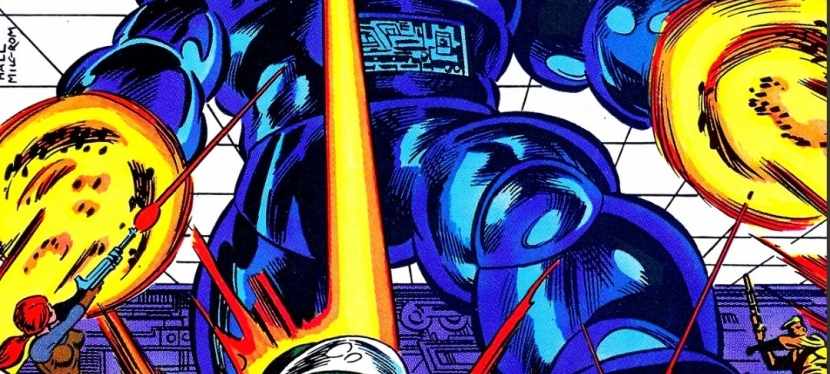
A Look Back at G.I. Joe: A Real American Hero #3 (1982)

Welcome back superhero enthusiasts, 1980s culture enthusiasts and comic book collectors! Today we go back to the early 1980s to explore Marvel Comics’ handling of a series based on the wildly popular military-themed franchise of toys – G.I. Joe: A Real American Hero.

Last time around, a small number of G.I. Joe members went to the North Pole on a mission to find answers and anyone responsible for the destruction of the American research base. The mission did not involve Cobra at all but a certain specialist who was working as a freelancer.  

With those details laid down, here is a look back at G.I. Joe: A Real American Hero published in 1982 by Marvel Comics with the main story written by Larry Hama and drawn by Herb Trimpe.
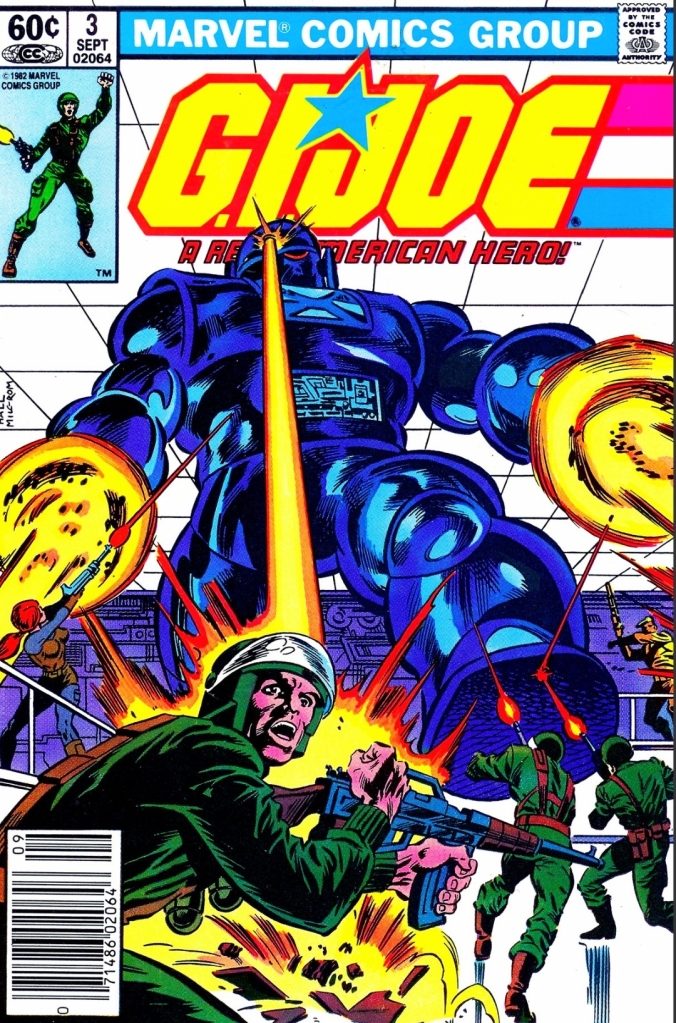
The cover.

Early story

The story begins shortly after G.I. Joe’s successful raid on a secret stronghold that belonged to their arch-rival Cobra. A huge, bulky robot was found at the site and the Joe team received orders to get the machine back to their command center – The Pit – to run preliminary scans on it.

Due to the very sensitive nature of the robot and the Cobra stronghold, the military uses three trucks disguised as American mail trucks for the trips to The Pit.

Elsewhere, Cobra Commander and his team are aware that G.I. Joe is bringing the robot with them. He has a Trojan plan prepared…

Quality
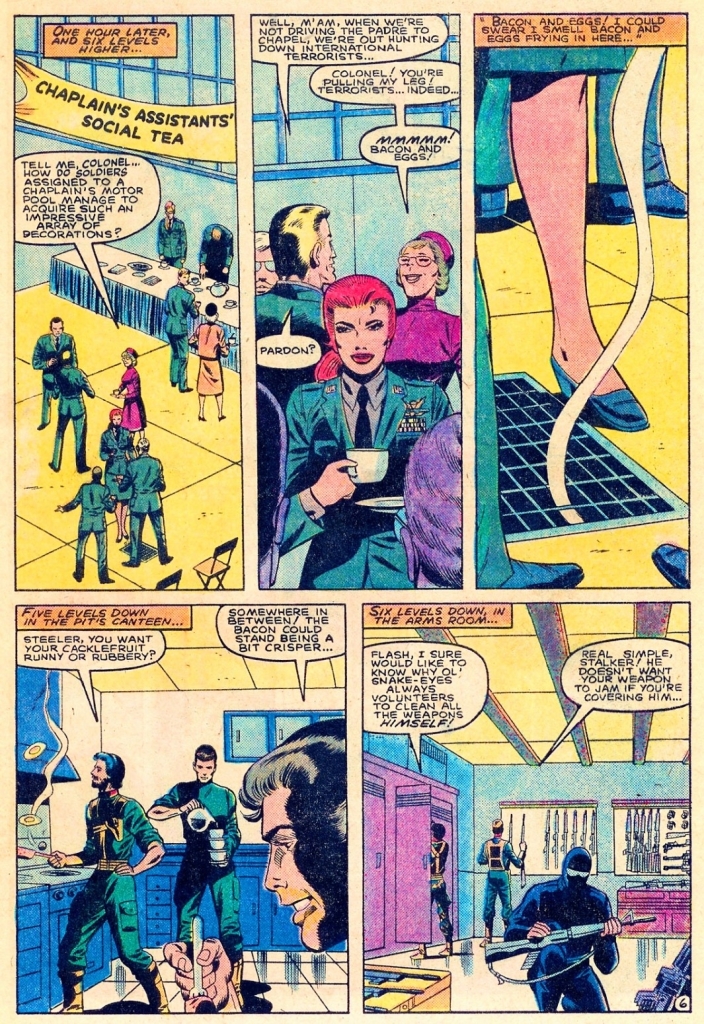
The scent of bacon and eggs reached the higher levels.

To make things clear, this is story still does not put G.I. Joe head-to-head with Cobra in combat. Instead, this is a tale about Cobra’s attempt to cause chaos on their rivals deep within a top secret stronghold of the Americans. That being said, the main character here is the huge robot of Cobra’s which really pushed the Joe team into real challenges. The robot does not even speak and its actions really drove up the tension of both the Joe team’s predicament as well as the narrative itself.

Along the way, you will get to see members of G.I. Joe becoming more tactical with their struggle to survive and solve problems. In fact, the Joe members are more versatile which reflect what they learned from extensive training.

Conclusion
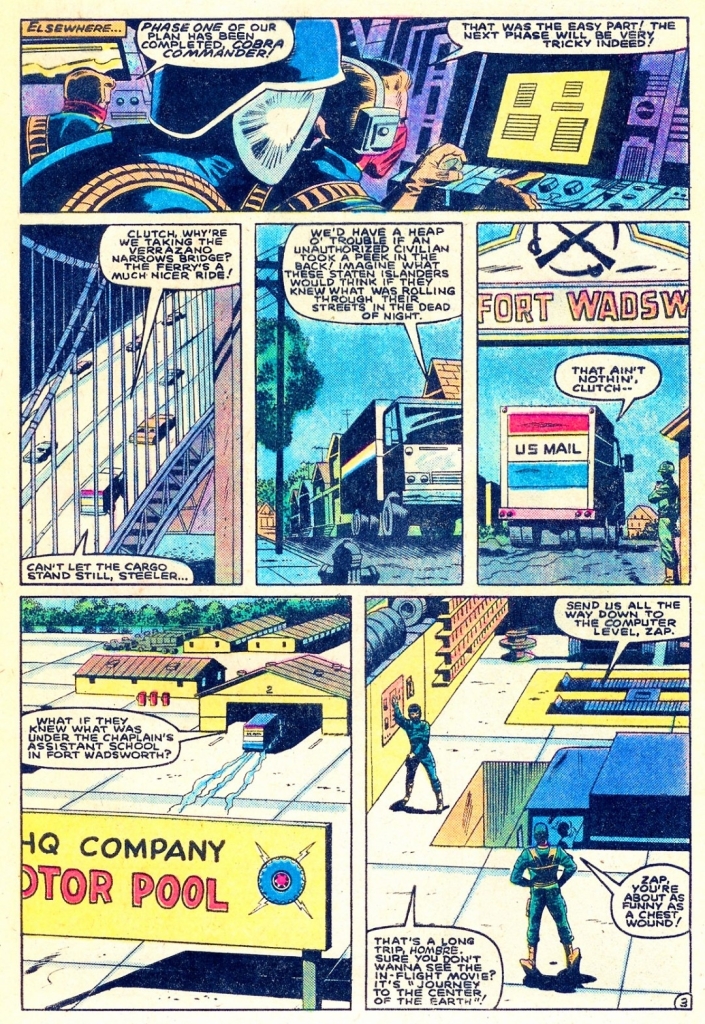
Cobra Commander monitors the developments from a distance as G.I. Joe members brought with them the robot from what was once a stronghold of Cobra.

While the lack of a direct conflict between the Joe team and Cobra is evident, G.I. Joe: A Real American Hero (1982) still had an unrelenting enemy in the form of Cobra’s robot that proved to be a major force of opposition. In terms of presentation, this story has a slight touch of science fiction (due to the robot) but managed to be military in nature the rest of the way. Apart from their resourcefulness, the G.I. Joe members here displayed a strong element of team work. The narrative is packed with action as well as a good amount of details that made the reading experience consistently good.

Overall, G.I. Joe: A Real American Hero (1982) is recommended.

+++++

Thank you for reading. If you find this article engaging, please click the like button below, share this article to others and also please consider making a donation to support my publishing. If you are looking for a copywriter to create content for your special project or business, check out my services and my portfolio. Feel free to contact me with a private message. Also please feel free to visit my Facebook page Author Carlo Carrasco and follow me on Twitter at  @HavenorFantasy as well as on Tumblr at https://carlocarrasco.tumblr.com/ and on Instagram at https://www.instagram.com/authorcarlocarrasco

A Look Back at G.I. Joe: A Real American Hero #1 (1982)

Welcome back superhero enthusiasts, 1980s culture enthusiasts and comic book collectors! Today we go back to the early 1980s to explore Marvel Comics’ launch of a comic book series based on the wildly popular military-themed franchise of toys – G.I. Joe: A Real American Hero.

For the newcomers reading this, Hasbro launched the G.I. Joe: A Real American Hero toyline in 1982 which was actually a revival of the original G.I. Joe series of toys (sized 12 inches) in the 1960s and 1970s. G.I. Joe: A Real American Hero toys had a new format for its action figures influenced by the success of the Micronauts and Star Wars toys. Veteran writer Larry Hama (the same guy behind the memorable Wolverine #75 of 1993) was already working for Marvel and was developing the concept of a new comic book about elite commandos fighting terrorists. Such development happened before the 1982 relaunch of G.I. Joe, and eventually Marvel’s editor-in-chief Jim Shooter approached Hama for a new comic book project based on Hasbro’s military toyline. Eventually a series of developments followed that saw the creation of the evil organization Cobra, the core villain Cobra Commander and more.

The impact of G.I. Joe as a licensed comic book series turned out positively as it helped attract new readers at the newsstands and it developed a strong following with young readers who were not highly interested with superheroes.  

With those details laid down, here is a look back at G.I. Joe: A Real American Hero published in 1982 by Marvel Comics with the main story written by Larry Hama and drawn by Herb Trimpe.

The cover.

Early story

The story begins with an Amtrak train traveling between New York City and Washington, D.C. Inside the nuclear physicist Dr. Adele Burkhart who previously served as one of the brains behind the Doomsday Project. It turns out, Burkhart was declared a traitor for denouncing the military claiming that she was misled by them to work on the said project. Inside the train, she has several security personnel guarding her as she is on her way to testify in front of a certain congressional committee.

As she speaks during a press conference inside one of the train’s cars, several flying soldiers of Cobra attacked the exterior of the train. In front of Burkhart, a few of the journalists turned out to be elements of Cobra led by the Baroness. The Baroness and her companions succeed in defeating the bodyguards and kidnapped Burkhart by means of flight.

At the Pentagon, the kidnapping of Burkhart compels the military to call in their special counter-terrorist group called G.I. Joe for a rescue operation. The stakes are high as they know that they cannot let Cobra keep Burkhart long enough to use her and they cannot let her die as the whole world is aware that they considered her an embarrassment. They ordered Colonel Clayton Abernathy (code name: Hawk) to assemble the Joe Team composed of Clutch, Flash, Breaker, Rock ‘n Roll, Scarlett, Stalker, Short-Fuse and Snake-Eyes…

Quality

Dr. Burkhart held hostage by Cobra and in the presence of Cobra Commander, the Baroness and many terrorists.

To get straight to the point, the main story (Operation: Lady Doomsday) was carefully structured by Hama to tell a story engagingly while also functioning to introduce readers to the characters and immersing them into the illustrated literary universe of G.I. Joe that is noticeably separated from the popular cartoon series. It is a classic portrayal of good versus evil laced with militarism and espionage.

The story moved at a medium pace and the approach on build-up and pay-off was executed carefully. There were scenes that had a sufficient amount of details regarding the plot or character moments (as opposed to development) that made the reading experience immersive. In short, there was no rush in the narrative while the pace never slowed down to a halt (no boring moments).

That being said, you will get to see lots of scenes that focus on the side of G.I. Joe as well as on the side of Cobra which is led by Cobra Commander (who is obsessed and scheming) followed by the Baroness (who is more focused on achieving goals but cannot do so without authority). You will see a certain gap between Cobra Commander and the Baroness which shows something seems off within their terrorist organization. This served as a creative contrast with G.I. Joe being more straightforward with the way they organize themselves.

The only weakness this comic book has is the fact that with so many characters from both the good and the bad sides, identifying them was pretty challenging especially when their military uniforms obscured their looks. Characters like Cobra Commander, Snake-Eyes, Scarlett, Rock ‘n Roll, Stalker and the Baroness are instantly recognizable.

As the main story remains a really good read, the 2nd story (Hot Potato) also written by Hama but drawn by Perlin served as a nice additive to this comic book.

Conclusion

G.I. Joe starts getting ready for the high-stakes rescue mission.

G.I. Joe: A Real American Hero (1982) is indeed a very solid reading experience. This is a strong introduction of the literary version of G.I. Joe and its portrayal of good versus evil remains believable and compelling. I also enjoyed the way the creators balanced the build-up of tension, plot and character moments with spectacle or twists utilized as pay-off. Lastly, I should say that this comic book has lots of action for you to enjoy and the execution of the action scenes made sense within the context of the stories. Remember that this marked the beginning of a memorable long run of G.I. Joe comics that reached into the 1990s. This one is a true classic and it should remind you that there was a time when political correctness and wokeness did not get in America’s way of fighting terrorists.

Overall, G.I. Joe: A Real American Hero (1982) is highly recommended!

+++++

Thank you for reading. If you find this article engaging, please click the like button below, share this article to others and also please consider making a donation to support my publishing. If you are looking for a copywriter to create content for your special project or business, check out my services and my portfolio. Feel free to contact me with a private message. Also please feel free to visit my Facebook page Author Carlo Carrasco and follow me on Twitter at  @HavenorFantasy as well as on Tumblr at https://carlocarrasco.tumblr.com/ and on Instagram at https://www.instagram.com/authorcarlocarrasco

A Look Back at Godzilla: King of the Monsters #1 (1977)

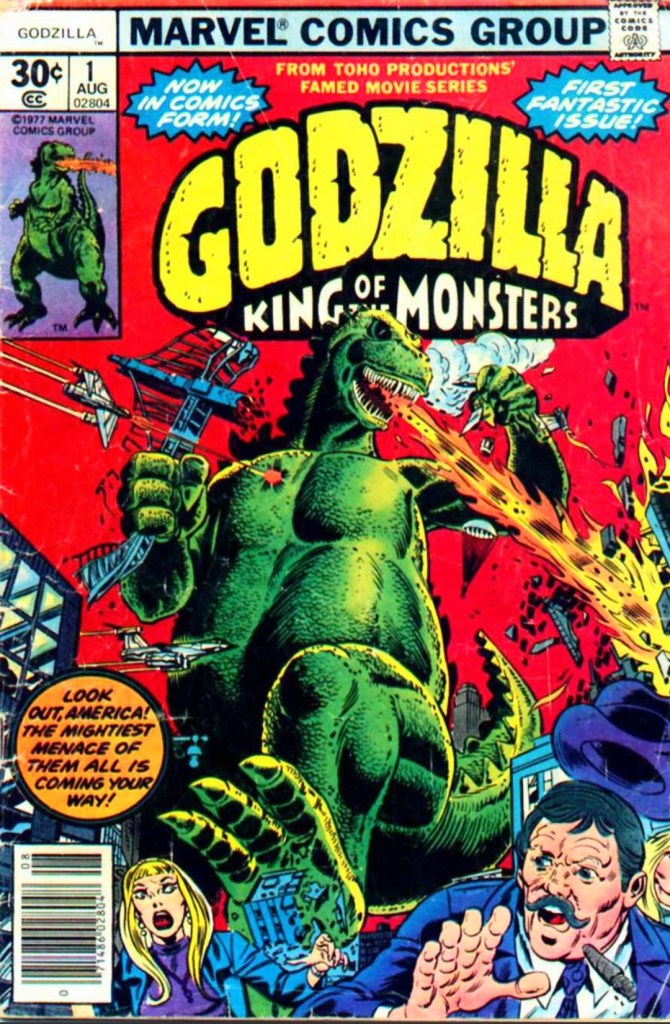
Welcome back superhero enthusiasts, 1970s arts and culture enthusiasts, Marvel Comics fans and comic book collectors! Today we go back to the year 1977 when Marvel Comics had the license to publish comic books about Japan’s iconic monster Godzilla (Gojira in Japanese) and even integrated him into their shared comic books universe.

The mid-1970s saw a decline of Godzilla’s popularity in Japan as reflected in the commercial disappointment of the movie Terror of Mechagodzilla (1975). The company Toho decided to put on-hold the production of its monster movies without permanently ending the Godzilla film franchise. The next Godzilla movie released was The Return of Godzilla (1984) which proved to be a solid rebound of the Japanese film franchise.

Sometime between the mentioned movies, there was interaction between Toho officials and Marvel Comics – including the late Stan Lee – when the Japanese company screened the movie Godzilla vs. Gigan (titled in America as Monster Island) to the comic guys in relation to the film’s American theatrical release. It turns out Stan Lee enjoyed the movie a lot and seated next to him was writer Doug Moench (the eventual writer for the Godzilla comic book series).

With those details laid down, here is a look back at Godzilla: King of the Monsters , published in 1977 by Marvel Comics with a story written by Doug Moench and drawn by Herb Trimpe.

The cover.

Early story

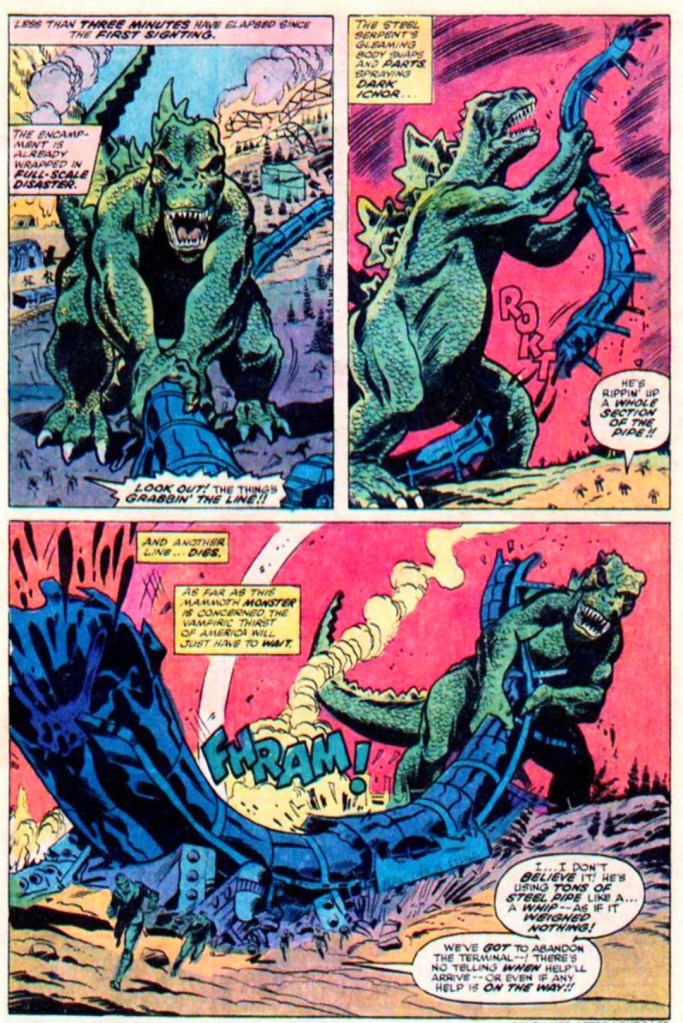
The story begins in Alaska when a huge iceberg suddenly deteriorates unleashing a gigantic monster with sharp teeth, dorsal fins and immense strength – Godzilla. After instantly crushing a supply ship, the monster moves onto the land destroying structures and disrupting the lives of every person nearby.

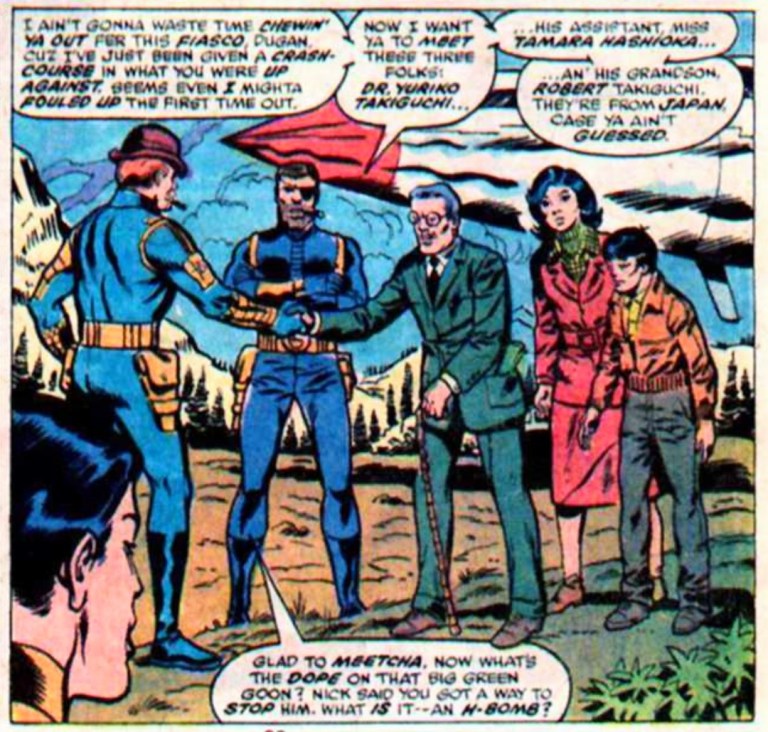
In response to Godzilla’s rampage in Alaska, S.H.I.E.L.D. dispatches its agents to the site of destruction to take on the monster. Meanwhile, S.H.I.E.L.D. director Col. Nick Fury is transporting with him three Japanese individuals deemed important (with clearances from the Pentagon and the White House)…

Quality

Dum Dum Dugan, Col. Nick Fury and the Japanese characters.

To get straight to the point, this comic book not only marked the literary debut of Japan’s iconic monster under Marvel Comics’ banner but also his integration into the shared universe of the time. That being said, the story written by Doug Mench was pretty much a functional build-up of Godzilla’s presence within the realm of Marvel which includes a strategic choice of having S.H.I.E.L.D. and its characters encountering the monster. In short, the creative team decided not to literally pull out Marvel’s biggest guns (the more popular superheroes and teams) as such a move would have lessened the impact of Godzilla’s debut.

For the most part, S.H.I.E.L.D.’s Nick Fury and Dum Dum Dugan had lively portrayals and the way they reacted to the rampage of Godzilla was believable. The introductions of the Japanese characters (who could provide breakthroughs on dealing with the giant monster) were clearly inspired by the Japanese scientists who were crucial in the plot of the original 1954 movie Gojira.

Going further, Doug Mench went on to efficiently establish Godzilla’s origin which creatively is a sensible reinterpretation of what was established in the 1954 movie. The giant monster’s rise as a result of humanity’s testing of powerful weapons on Earth is definitely here.

As expected, Godzilla is the unrestrained force of destruction but as this comic book was released in the 1970s, the destruction scenes lacked impact as they were creatively sanitized with deliberate moves of showing no casualties no matter what happened. This limitation on the part of Marvel Comics showed they were not willing to emulate the approach on destruction and death that was clearly emphasized in the first Godzilla movie of 1954.

As for Godzilla himself, Herb Trimpe’s visual approach is not really good. While Trimpe implemented the guy-in-a-suit shape on the giant monster’s form, he made Godzilla his own (took no inspiration from Godzilla’s cinematic designs) which resulted in making the icon look unrecognizable. There were inconsistencies on Godzilla’s head as well. In certain shots, Godzilla looked terrifying but in other shots, he looked weird or cartoony. The use of the color green did not make Godzilla look reptilian but rather comical.    

Conclusion

I can only imagine the SJWs and the climate change extremists enjoying these images of an unrecognizable Godzilla wreaking havoc to the oil supply. Are there lots of people in your local community who were brainwashed to hate oil and gas?

Godzilla: King of the Monsters (1977) is a serviceable approach on debuting the iconic monster within the fantasy realm of Marvel Comics and sparking a new wave of crossovers. There were uneven levels of quality here and there, and Herb Trimpe’s visual approach on Godzilla was alienating to say the least. Honestly, I did not really see Godzilla in this comic book but rather a green-colored dinosaur-like creature that was mislabeled as Godzilla. What works here is the writing by Doug Mench which proved to be entertaining enough.

Overall, Godzilla: King of the Monsters (1977) is satisfactory.

For my other Godzilla-related posts, click here, here, here, here and here.

+++++

Thank you for reading. If you find this article engaging, please click the like button below, share this article to others and also please consider making a donation to support my publishing. If you are looking for a copywriter to create content for your special project or business, check out my services and my portfolio. Feel free to contact me with a private message. Also please feel free to visit my Facebook page Author Carlo Carrasco and follow me on Twitter at  @HavenorFantasy as well as on Tumblr at https://carlocarrasco.tumblr.com/ and on Instagram at https://www.instagram.com/authorcarlocarrasco

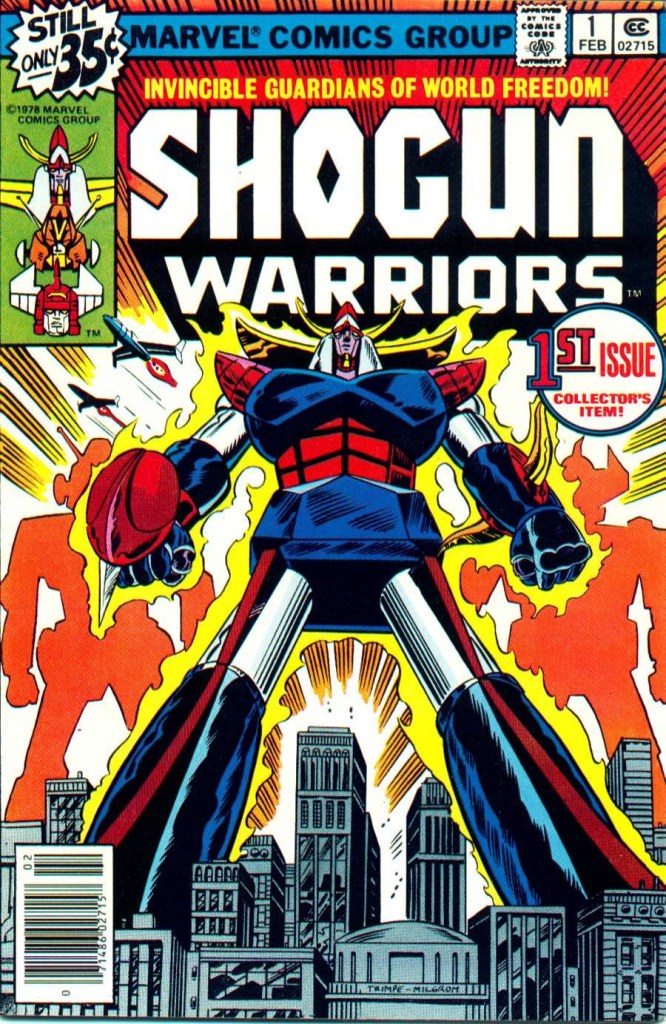
A Look Back at Shogun Warriors #3 (1979)

Disclaimer: This is my original work with details sourced from reading the comic book and doing personal research. Anyone who wants to use this article, in part or in whole, needs to secure first my permission and agree to cite me as the source and author. Let it be known that any unauthorized use of this article will constrain the author to pursue the remedies under R.A. No. 8293, the Revised Penal Code, and/or all applicable legal actions under the laws of the Philippines.

When it comes to showcasing giant robots fighting other robots or monsters, there is no denying that Japan is the leader. In my lifetime, I have seen lots of episodes of varied anime TV series, some anime feature films as well as OVAs (original video animation) of such a genre of entertainment made by lots of Japanese creators. While I never saw any episodes of Brave Raideen nor any episodes of Chōdenji Robo Combattler V, I saw episodes of Dangard Ace on home video.

As seen already in issues #1 and #2 of the Shogun Warriors comic book series, the giant robots were adapted but not their respective original concepts and characters the Japanese established. As such, an all-new concept with Westerners in mind was implemented for the said series.

With those details laid down, here is a look back at Shogun Warriors , published by Marvel Comics in 1979 with a story written by Doug Moench and drawn by Herb Trimpe.

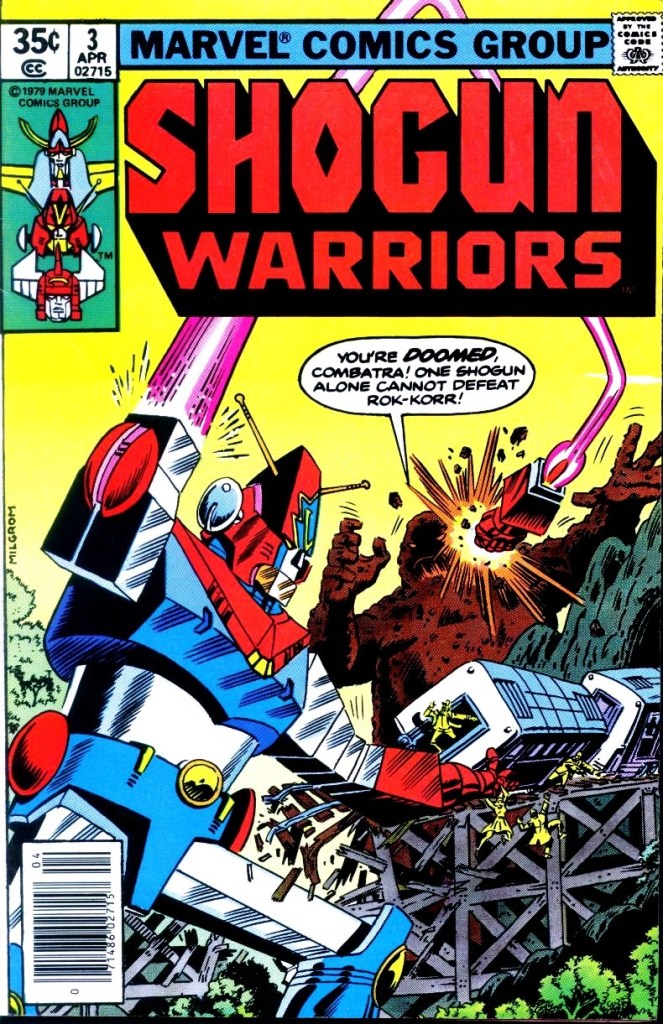
The cover.

Early story

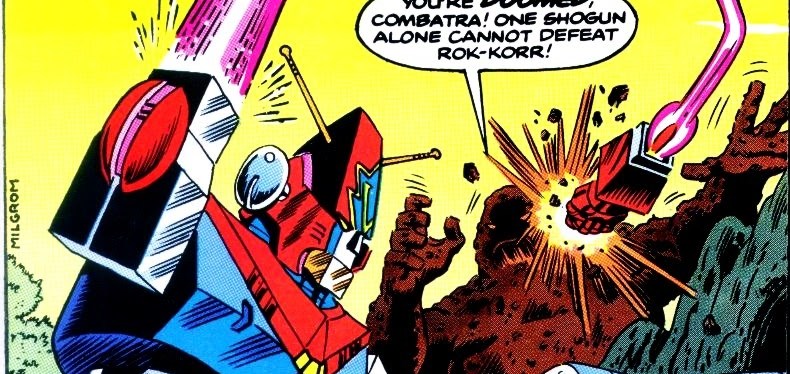
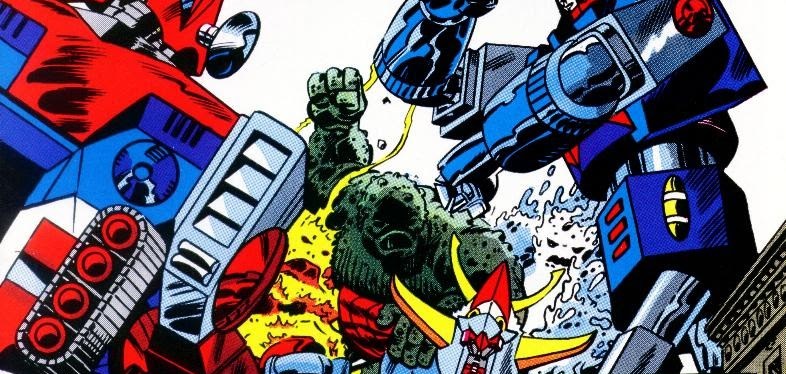
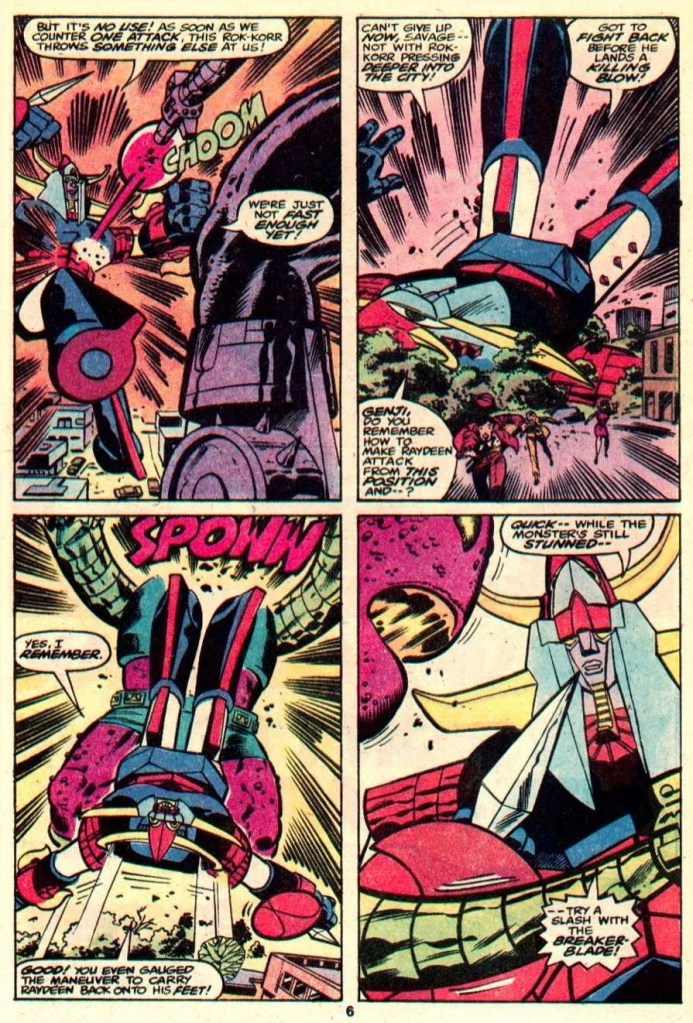
The story begins with Raydeen, Combatra and Dangard Ace on the field facing three giant enemies (each one representing a different element – fire, earth and water). Right near them is the train (on an elevated track) that they just saved which Combatra (piloted by Genji Odashu) notices.

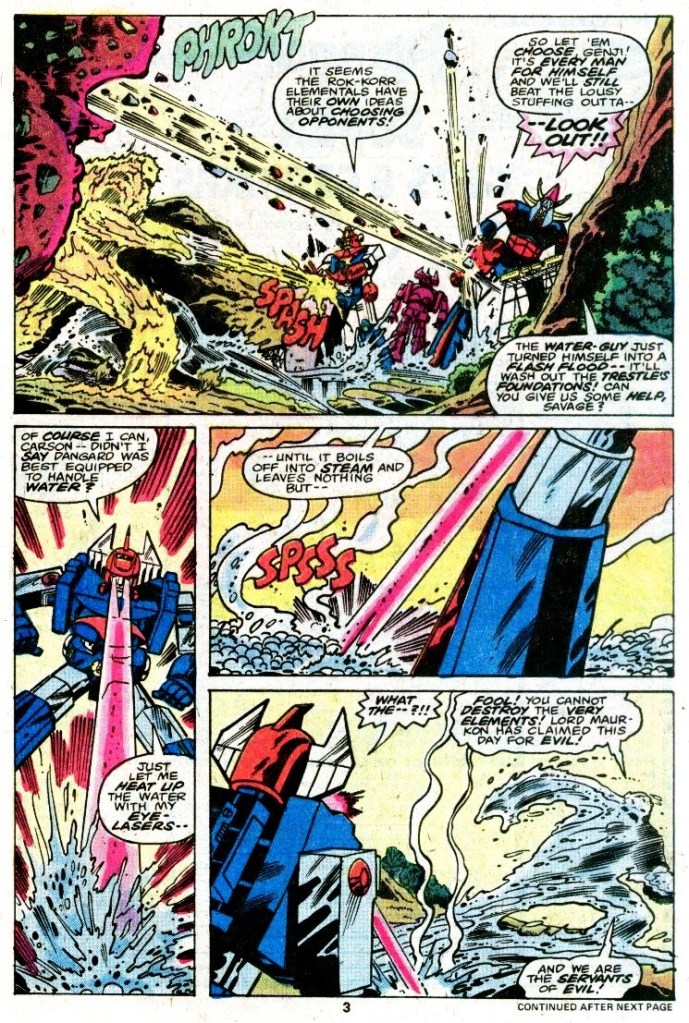
The battle begins with Dangard Ace taking on the water monster while Raydeen and Combatra take on the fire monster and earth monster respectively. During the heat of battle, the stalled train begins to fall as the elevated track gets damaged…

Quality

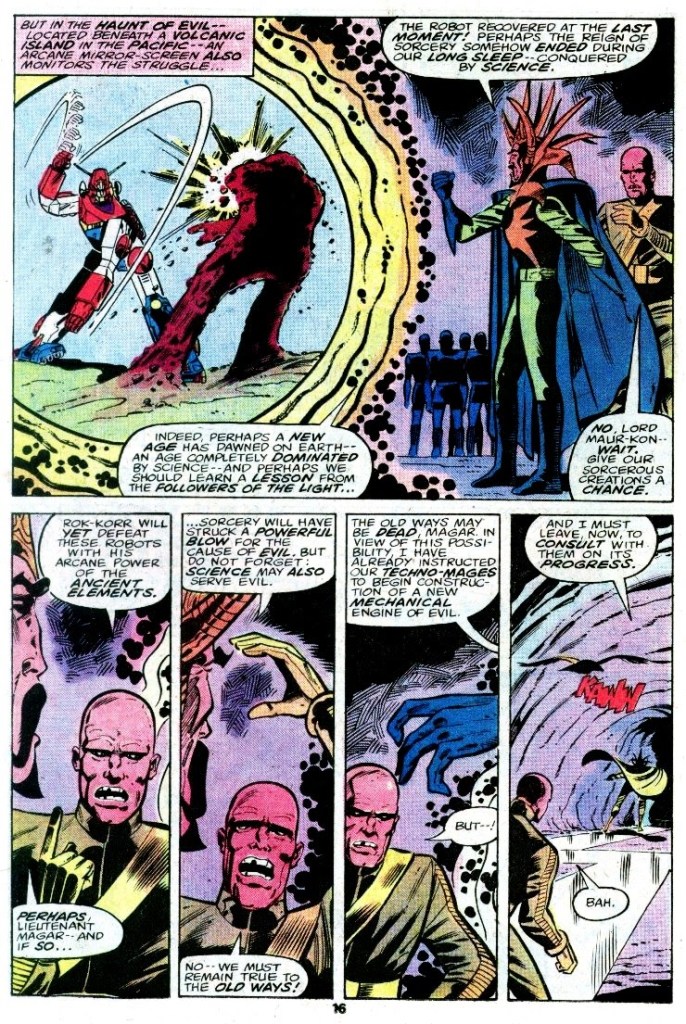
The bad guys watch behind the scenes during the battle.

To be clear and specific, this comic book creatively rebounded when it comes to spectacle. Compared to issue , this one has a lot of action scenes mixed with suspense and some talk scenes that were supposed to be intriguing. When it comes to exposition, this one is a refreshing change from what happened in issue . The exposition was clearly lessened but the creators still managed to insert some scenes to dramatize and explain to readers what the villains are up to and why sorcery is a core element of their power (which kinda explains how they were able to make giant monsters that are capable of talking). Interestingly, this comic book shows that there is division between members of the forces of evil.

Fans who love the three giant robots will have something fun to read. Take note, however, that the action scenes per robot are short and even predictable with the way the spectacle turned out. If you are looking for character development on their respective pilots, you won’t see any here.

Conclusion

Dangard Ace, Raydeen and Combatra fighting their respective counterparts.

Shogun Warriors (1979) does not have much depth but still managed to deliver the goods when it comes to showcasing giant robot spectacle. On the aspect of fun, this one is an improvement over the exposition-heavy issue but that is not saying much. It should be noted that, like the first two issues, this comic book has less than twenty pages of art and story. More notably, there is not much new here other than the very lame and corny attempt by the creators for the big reveal they came up with at the end.

If you are seriously planning to buy an existing hard copy of Shogun Warriors (1979), be aware that as of this writing, MileHighComics.com shows that the near-mint copy of the comic book costs $35.

Overall, Shogun Warriors (1979) is satisfactory.

+++++

Thank you for reading. If you find this article engaging, please click the like button below and also please consider sharing this article to others. If you are looking for a copywriter to create content for your special project or business, check out my services and my portfolio. Feel free to contact me as well. Also please feel free to visit my Facebook page Author Carlo Carrasco and follow me at HavenorFantasy@twitter.com

A Look Back at Shogun Warriors #2 (1979)

Disclaimer: This is my original work with details sourced from reading the comic book and doing personal research. Anyone who wants to use this article, in part or in whole, needs to secure first my permission and agree to cite me as the source and author. Let it be known that any unauthorized use of this article will constrain the author to pursue the remedies under R.A. No. 8293, the Revised Penal Code, and/or all applicable legal actions under the laws of the Philippines.

Long before Pacific Rim (2013) presented giant robots and monsters slug it out on the big screen with a strong emphasis on action and scale, there were varied animated series of such giants shown in television sets in Japan way back in the 1970s. Then by the end of the decade, Marvel Comics published the Shogun Warriors comic book series in relation to a business deal with Mattel.

Last time, only one giant robot was heavily featured as a defender for human civilization as it became a target by a force of evil that unleashed a giant monster. That robot was Raydeen and as a result of what happened, something led to the unveiling of Combatra and Dangard Ace.

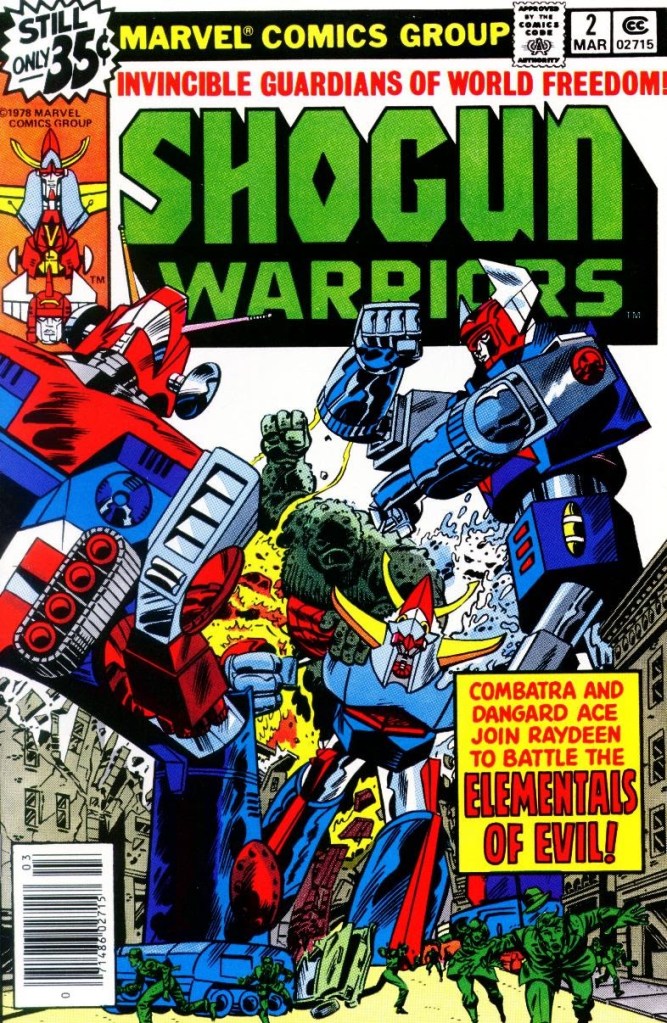
To find out more, here is a look back at Shogun Warriors , published by Marvel Comics in 1979 with a story written by Doug Moench and drawn by Herb Trimpe.

The cover.

Early story

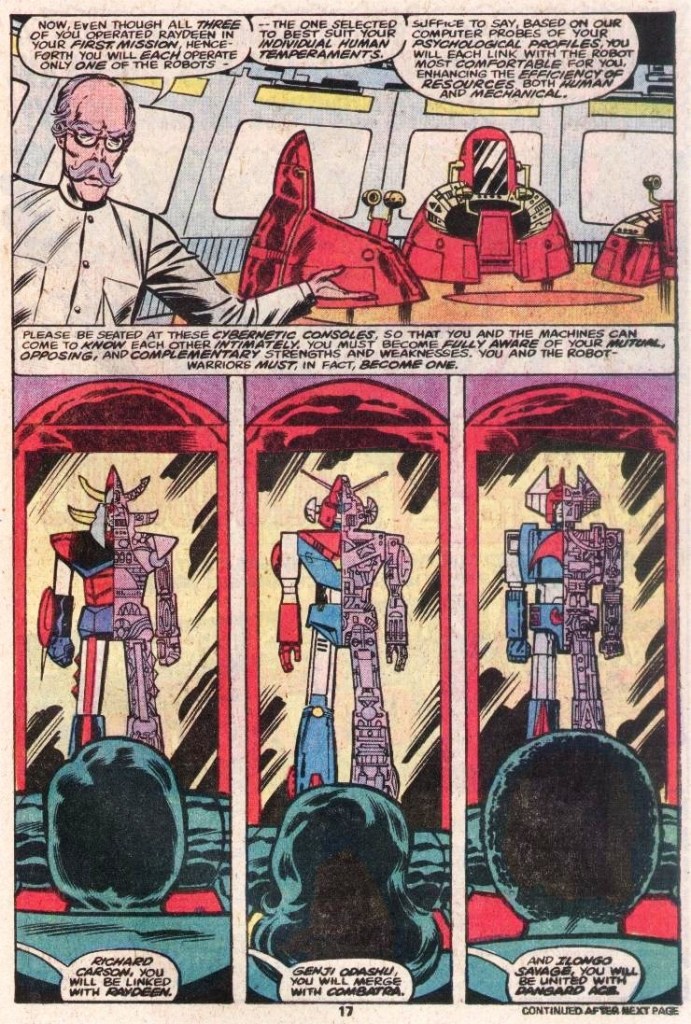
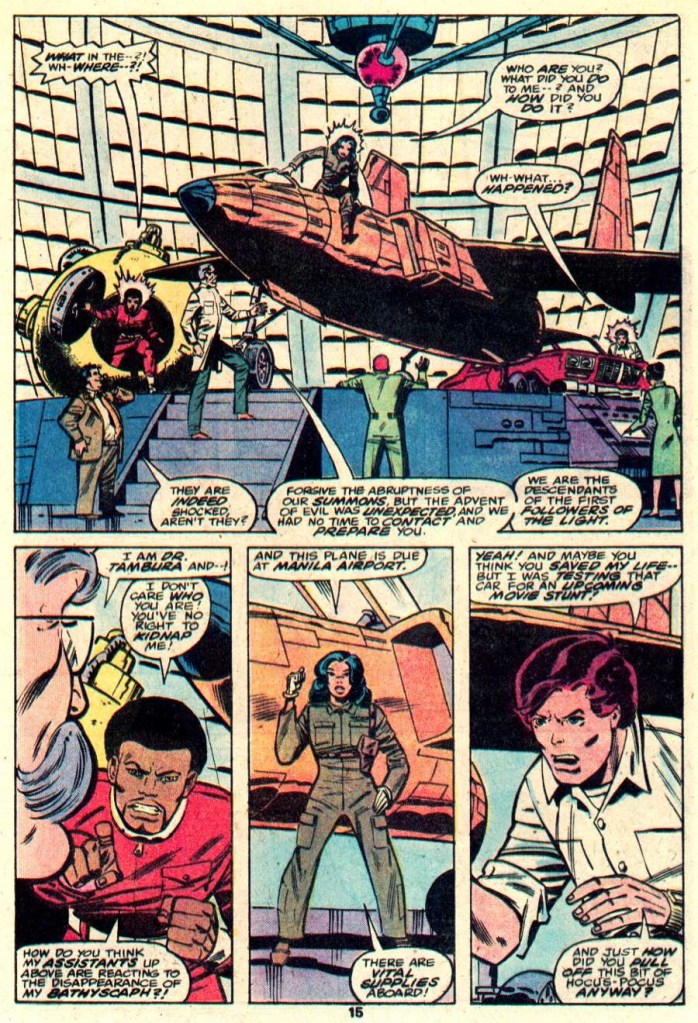
The story begins at the secret facility of Shogun. There the three pilots – Genji Odashu, Ilongo Savage and Richard Carson – are being briefed by Dr. Tambura explains to them that their first mission piloting Raydeen was not a failure at all. While acknowledging that the giant monster Rok-Korr is still a threat, he states to them that giant robots Combatra and Dangard Ace will be deployed and controlled by them.

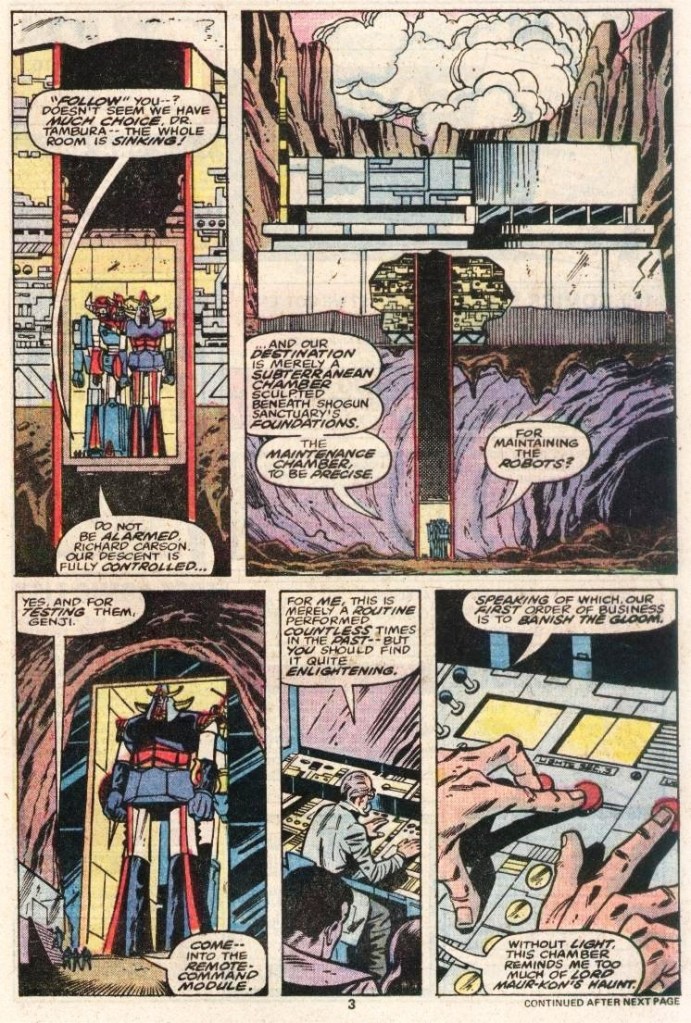
After giving them a quick tour of their subterranean chamber (where the robots receive maintenance and get tested), Dr. Tambura bring the three pilots into another place filled with high-tech controls. From there, they watch Dangard Ace, Raydeen and Combatra perform in field tests via remote control.

Meanwhile on a different island, the evil leader Maur-Kon rallies his so-called dark agents to rise and work together in seeking vengeance for their defeat in the great war chaos as they have found the forces of eternal good anticipating them. After much talk, Maur-Kon and his minions bow and kneel over bubbling magma murmuring evil phrases…

Quality

The three pilots get assigned with each robot.

Like the previous issue, this comic book has less than twenty pages of story and art. This results another heavy load of exposition or information dump on readers, and the narrative had a rushed pace. With regards to the battle between Raydeen and the giant monster, there is indeed a continuation of it. The giant monster was given some personality.

Again, there is no real character development here. The three pilots were not written to display any personality nor did the writer exert any effort to make readers relate with them. Instead, you will see them in training in speed beyond belief.

The highlight here is that Dangard Ace and Combatra finally got revealed and emphasized. Be warned, however, that there is lesser spectacle in this comic book and the story predictably served as a setup for what could be a more promising battle.

Conclusion

The pilots and the Shogun Warriors (the robots) go deep down.

Shogun Warriors (1979) suffered from pretty much the same problems as issue . The noticeable difference here is that there is lesser action and lesser giant-sized spectacle shown here. That is not exactly surprising as the creators had to sacrifice something to make way for further explanation of the comic series’ grand concept.

If you are seriously planning to buy an existing hard copy of Shogun Warriors (1979), be aware that as of this writing, MileHighComics.com shows that the near-mint copy of the regular edition costs $35 while the near-mint copies of the price-less and the Whitman editions cost $350 and $35 respectively.

Overall, Shogun Warriors (1979) is less than satisfactory.

+++++

Thank you for reading. If you find this article engaging, please click the like button below and also please consider sharing this article to others. If you are looking for a copywriter to create content for your special project or business, check out my services and my portfolio. Feel free to contact me as well. Also please feel free to visit my Facebook page Author Carlo Carrasco and follow me at HavenorFantasy@twitter.com

A Look Back at Shogun Warriors #1 (1979)

Disclaimer: This is my original work with details sourced from reading the comic book and doing personal research. Anyone who wants to use this article, in part or in whole, needs to secure first my permission and agree to cite me as the source and author. Let it be known that any unauthorized use of this article will constrain the author to pursue the remedies under R.A. No. 8293, the Revised Penal Code, and/or all applicable legal actions under the laws of the Philippines.

If you are fond of giant robots from Japanese pop culture as well as giant monsters and scenes of city structures getting destroyed, then you might want to take a look at the Shogun Warriors comic book series that was published by Marvel Comics from 1979 to 1980. To put things in perspective, Shogun Warriors was made possible through licensing deals and back in the 1970s, Marvel Comics had the rights to publish comic book about Japan’s famous icon Godzilla.

Specifically, Shogun Warriors involved Marvel Comics and Mattel which in turn organized a line of imported toys from Japan based on varied Japanese shows about giant robots. Among the many giant robots of the toy line, the robots Raideen, Combattler V and Dangard Ace became the featured fighting-for-good robots of the Shogun Warriors comic book series. For the literary works, Raideen was renamed as Raydeen while Combattler V was renamed as Combatra. Dangard Ace’s name was left unchanged.

With those details laid down, here is a look back at Shogun Warriors , published in 1979 by Marvel Comics with a story written by Doug Moench and drawn by Herb Trimpe.

The cover.

Early story

The story begins in the outskirts of Tokyo in Japan where giant robot Raydeen fights a large, tentacled creature enhanced with cybernetics. As the people on the street below them run away from the ongoing destruction, the monster fires a shot at Raydeen who blocks it but subsequently gets tied with one of the tentacles. The giant robot, which is operated by three pilots inside, breaks free and continues to fight the monster.

As the battle rages on, the city continues to get damaged heavily affecting the people…

Quality

Technically the organization kidnapped three people to be the pilots of their robots for Earth’s defense.

Having seen a lot of anime TV series episodes about giant robots, I’m familiar already with the storytelling formula that often focuses first on the human characters and their struggles before shifting the narrative on the giant robots that often fight large monsters or opposition robots. This particular comic book has some of that but the way the story is structured, it is different and can be a bit jarring.

Doug Moench structured the story to have Raydeen and the monster fighting in the present time followed shortly by a flashback that took place just hours prior. The flashback, which occupies 9 of the comic book’s 18 pages, is heavily filled with exposition meant to introduce readers to the three pilots Genji Odashu/Ilongo Savage/Richard Carson, what Earth defense force The Followers of the Light is, and why there are giant monsters ravaging the world. The exposition’s writing felt crammed and rushed for reading although it still succeeds in establishing the comic book’s grand concept.

When it comes to spectacle, this comic book is loaded with giant robot action and it is quite varied in style and execution. The funny thing is that you will only get to see Raydeen in action as this is an introductory story with only 18 pages of story.

The dialogue is a bit of a mess here, particularly with the early Raydeen scenes. As the battle with the monster goes on, there are these lines of dialogue reflecting the conversations between the pilots inside Raydeen who are not shown talking until late in the comic book.

Conclusion

Raydeen and the giant monster in battle.

Shogun Warriors (1979) has a nice concept and its Westernized take on portraying giant robots and human characters is clearly different from the way things were done in the varied giant robot anime TV series of Japan. There is clearly no Japanese style melodrama as this one has its characters portrayed straight with a touch of American science fiction. That being said, do not expect to see the Japan-made characters of Raideen, Combattler V and Dangard Ace appear here as new characters were made in their place. The comic book’s story structure is a bit jarring to follow and the heavy exposition dump makes reading a bit of a chore. It is fun to read but not great. Those of who are fans of Combatra and Dangard Ace will be disappointed about the near-total absence of those robots.

If you are seriously planning to buy an existing hard copy of Shogun Warriors (1979), be aware that as of this writing, MileHighComics.com shows that the near-mint copy of the regular edition costs $63 while the near-mint copy of the Whitman edition costs $35.

Overall, Shogun Warriors (1979) is satisfactory.

+++++

Thank you for reading. If you find this article engaging, please click the like button below and also please consider sharing this article to others. If you are looking for a copywriter to create content for your special project or business, check out my services and my portfolio. Feel free to contact me as well. Also please feel free to visit my Facebook page Author Carlo Carrasco and follow me at HavenorFantasy@twitter.com