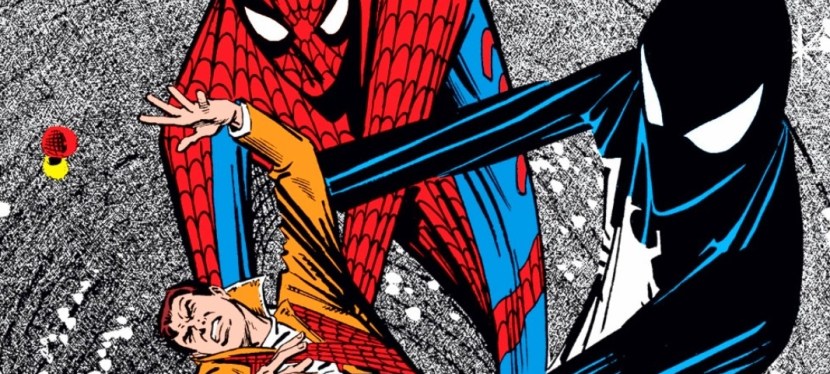
A Look Back at Amazing Spider-Man #258 (1984)

Welcome back superhero enthusiasts, 1980s arts and culture enthusiasts, Marvel Comics fans and comic book collectors! Today we go back to the year 1984 to examine a small part of the Marvel Comics universe through a tale of the Amazing Spider-Man monthly series.

In my previous retro review, Puma had encountered Spider-Man not once but twice. During the first encounter, Black Cat got in the way to defend her beloved webslinger. A short time later, Mary Jane Watson gets involved unexpectedly and the story ended with something that struck Peter Parker very deep inside.

With those details laid down, here is a look back at Amazing Spider-Man , published in 1984 by Marvel Comics with a story written by Tom DeFalco and drawn by Ron Frenz.
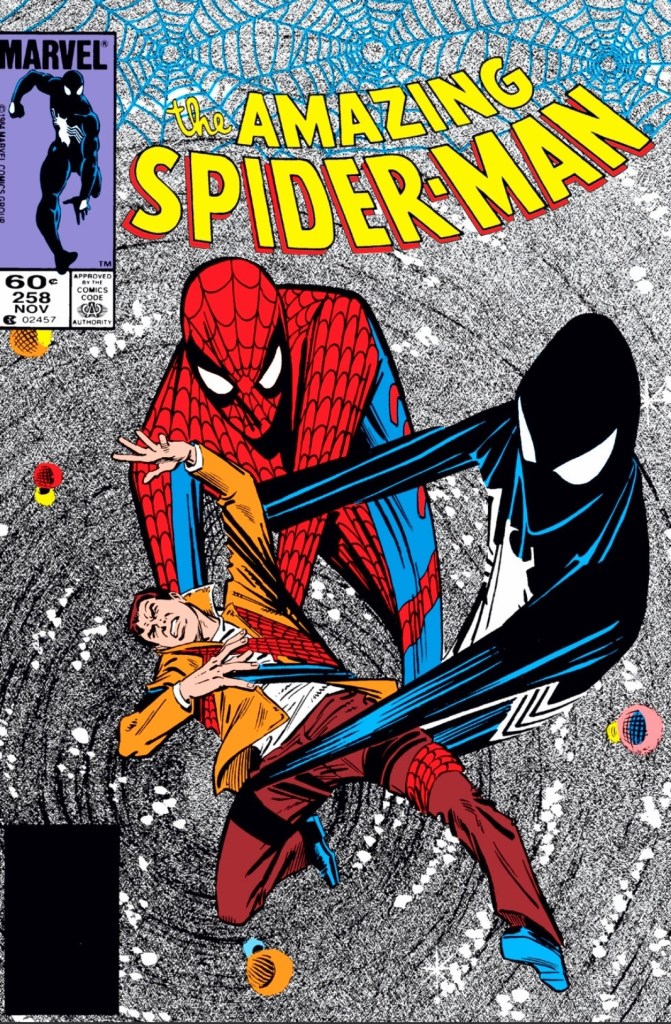
The cover.

Early story

The story begins inside Peter Parker’s apartment in New York City. He is struggling deep inside as he is shocked by Mary Jane’s revelation that she knows he and Spider-Man are one and the same person. She tells him that she knew his secret for years. Peter then begins to think that this is all Puma’s fault.

As Mary Jane begins to leave, Peter tries to talk with her. She tells him that he will deny everything and that she cares about him. She added that knowing his secret identity is why she originally left New York. She had to get away from him (and Spider-Man).

Suddenly, Black Cat arrives through the window. Her presence causes Mary Jane to realize something about them…

Quality

Very clearly the alien costume has its own intelligence and is the main reason why Peter Parker remained exhausted and sleeping too long.

I really like the writing of this comic book. Tom DeFalco showed strong consistency with developing the newcomer (and a formidable foe) Puma and his rivalry with Spider-Man, while also leaving sufficient room to develop Peter Parker who is now in deeper stress dealing with the complexities of his connections with Mary Jane and Black Cat.

What is most notable about the plot is the finally crafted resolution to Peter Parker’s use of the alien costume (the symbiote from Secret Wars that would later bond with Eddie Brock to form the murderous Venom) by having the Reed Richards and Johnny Storm of the Fantastic Four involved in a captivating manner. I won’t reveal what happened but I can assure you readers that this particular plot element alone makes this comic book very worthy of your time and attention. That being said, Spider-Man’s saga took a serious turn from here.

As with the previous issues, Ron Frenz’s fine art really brought DeFalco’s script into life here and this includes Spider-Man’s crossover with the mentioned Fantastic Four members, dynamic shots of the webslinger and fine dramatic expressions on characters’ faces.

Conclusion

With Black Cat and Mary Jane both present with Peter Parker, the tension and uncertainty grew only stronger.

Amazing Spider-Man (1984) is yet another great read from the DeFalco-Frenz duo. The stakes were raised higher and the pay-offs were really solid in this comic book. As mentioned earlier, this story marked the resolution of Spider-Man’s bond with the alien costume, and also paved a new path for future tales of the webslinger. Spider-Man’s crossover with Reed Richards and the Human Torch (which lasted several pages) is easily one of most crucial scenes of entire Marvel Comics stories of the year 1984 and its significance would be realized in relation to the origin and further tales of Venom.

Overall, Amazing Spider-Man (1984) is highly recommended.

+++++

Thank you for reading. If you find this article engaging, please click the like button below, share this article to others and also please consider making a donation to support my publishing. If you are looking for a copywriter to create content for your special project or business, check out my services and my portfolio. Feel free to contact me with a private message. Also please feel free to visit my Facebook page Author Carlo Carrasco and follow me on Twitter at  @HavenorFantasy as well as on Tumblr at https://carlocarrasco.tumblr.com/ and on Instagram at https://www.instagram.com/authorcarlocarrasco

A Look Back at Spider-Man 2099 #42 (1996)

Welcome back superhero enthusiasts, 1990s culture enthusiasts and comic book collectors! Today we go back to the year 1996 and explore a part of the Marvel 2099 comics universe through a tale of the Spider-Man 2099 monthly series.

In my previous retro review, the futuristic webslinger encountered a group of dangerous people who are convinced that he betrayed them by becoming a corporate tool (note: the result of Goblin 2099 poisoning people’s minds). Not only that, the still-recovering Tyler Stone came back at Alchemax, saw his captured son Kron (Venom 2099 himself) and cold heartedly ordered his execution.

With those details laid down, here is a look back at Spider-Man 2099 #42, published in 1996 by Marvel Comics with a story written by Peter David and drawn by Andrew Wildman.

The cover.

Early story

The story begins with Miguel O’Hara now wielding tremendous corporate power at Alchemax where he is surrounded by managers. Some time had passed since he prevented Tyler Stone from returning to power and he made it known to him that he is aware that they are biologically father-and-son. Miguel then played “duck, duck, goose” on the managers while he stood up on his desk. He made clear to them that he is aware of their so-called game of “who can jerk the new boost and get the most for himself?”

Miguel then tells them that he will review their requests and address their concerns in his own time and his own way. They get dismissed by him. Miguel then meets someone who just arrived for the post of office secretary.

Meanwhile in the downtown section of New York, Raff and Kasey watch a union group composed of construction guys, watchdogs, sewer workers and truckers marching down the street and making noise. As Kasey wonders where the group was heading, she notices a man named Boru whom she previously heard was dead…

Quality

Spider-Man 2099 faces a tough opponent.

Storywise, this tale by Peter David moved away from the themes of issues and by focusing more on Miguel’s newest rise in Alchemax’s corporate hierarchy and how this adds more tension to his already troubled living as a secret superhero, an executive and as a person. By this stage, he knows Tyler Stone is his true father and the man known as Venom 2099 is his half-brother and relationships within his family are far from being normal or ideal. Still on the corporate aspect, a very notable person gets to work as Miguel’s new secretary which I won’t spoil here because I can say that the build-up and pay-off are well worth reading. The new secretary also added to the further development of specific characters and what was dramatized here will compel you to revisit earlier issues of the Spider-Man 2099 series. As always, Peter David’s writing is rich here.

Outside of Alchemax, the group led by Boru (who is symbolically a leader of hardened and desperate labor union members) emerges as an intimidating force of opposition for Miguel, the corporation he leads and even in his Spider-Man identity. Boru himself is quite a strong opponent for Spidey and the way their battle ended is something can intrigue readers or even frustrate die-hard fans of the protagonist. These conflicts, combined with Miguel’s struggle with all the tension hitting him from all angles, made this tale very intriguing and compelling to read.

Conclusion

While walking through the city, Miguel O’Hara spots members of Fantastic Four 2099 in conflict with Stark-Fujikawa.

Spider-Man 2099 #42 (1996) may not look like the expected continuation of what was built up in the previous two issues but its standalone story combined with strong twists, in-depth character development and sheer intrigue in key points of the story made this a must-read. I can also say that I am motivated to find out what happens next, especially given how this particular tale ended.

Overall, Spider-Man 2099 #42 (1996) is highly recommended!

+++++

Thank you for reading. If you find this article engaging, please click the like button below, share this article to others and also please consider making a donation to support my publishing. If you are looking for a copywriter to create content for your special project or business, check out my services and my portfolio. Feel free to contact me with a private message. Also please feel free to visit my Facebook page Author Carlo Carrasco and follow me on Twitter at  @HavenorFantasy as well as on Tumblr at https://carlocarrasco.tumblr.com/ and on Instagram at https://www.instagram.com/authorcarlocarrasco

A Look Back at What If #13 (1990)

Disclaimer: This is my original work with details sourced from reading the comic book and doing personal research. Anyone who wants to use this article, in part or in whole, needs to secure first my permission and agree to cite me as the source and author. Let it be known that any unauthorized use of this article will constrain the author to pursue the remedies under R.A. No. 8293, the Revised Penal Code, and/or all applicable legal actions under the laws of the Philippines.

Welcome back superhero enthusiasts, comic book collectors and X-Men fans. I’m about to review an issue of Marvel Comics’ What If monthly series which was published 1990 and was related to the X-Men as the central figure of the comic book is Charles Xavier (AKA Professor X).

To put things in perspective, Charles Xavier is forever known as the founder and leader of the X-Men. Within the Marvel Comics universe, he is one of the most powerful telepaths as well as a genius in science and genetics. He is a paraplegic who can do quite a lot and make an impact on the delicate relationship between his fellow mutants and the humans. In the movies, Xavier was portrayed by Patrick Stewart (first performance as Xavier in X-Men) and James McAvoy (first performance as Xavier in X-Men: First Class). Given his legacy of helping mutants gain rights through peaceful means, Charles Xavier has been compared with Martin Luther King, Jr. Going back to the comics, Xavier has a step brother named Cain Marko who became the X-Men villain Juggernaut.

With the background lesson done, we can now take a look back at What If , published by Marvel Comics in 1990 with a story written by Kurt Busiek and drawn by Vince Mielcarek.

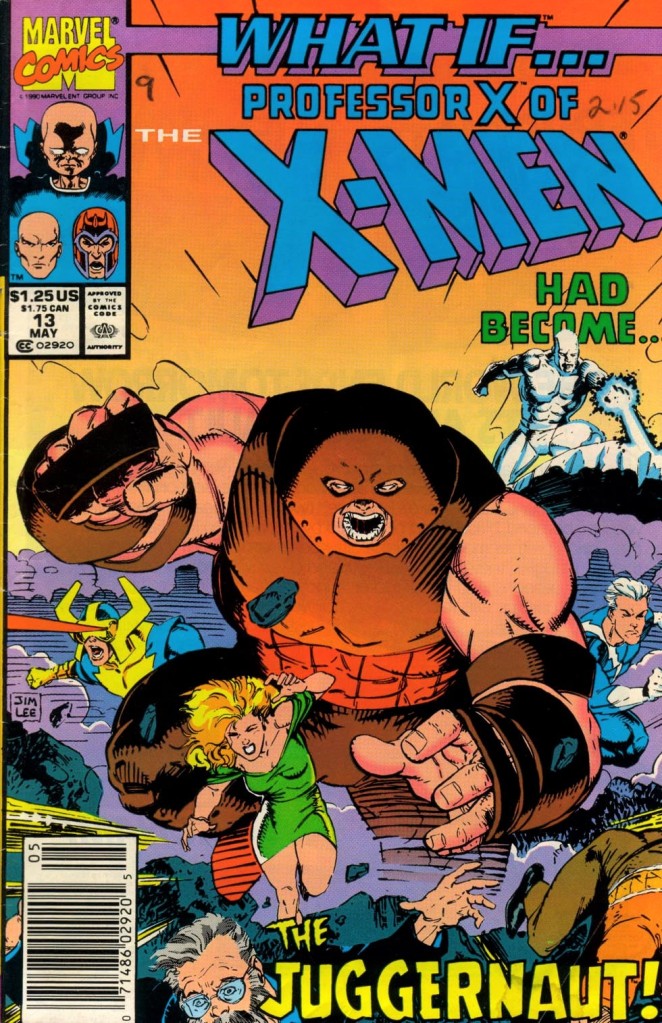
The cover drawn by Jim Lee.

Early story

The story begins in New York in the so-called near future. Graffiti artists attempt to run away from a team of mutants riding a floating vehicle. As Thunderbird is about to hit one of the humans, Cyclops stops him. Suddenly the mutants receive a telepathic message from their big boss who turns out to be Charles Xavier the Juggernaut.

Xavier is leading the effort against a group of humans who have been conspiring against them. Xavier declares, “They must be stopped—for the good of mutantkind!”

The X-Men in this particular story are fascist storm troopers policing a wretched, helpless humanity…

Quality

Xavier-Juggernaut with the X-Men and the invading Fantastic Four.

I can start by say that this comic book written by Kurt Busiek has one of the most compelling what-if scenarios that reflect not only its concept (of Charles Xavier becoming Juggernaut) but also the Marvel Comics universe as we know it. As dedicated X-Men fans know, Cain Marko was the one who touched the ruby in the cave which made him the mainstream Juggernaut. In here, the scenario was altered to make Charles Xavier become Juggernaut and the radical changes did not end there. Without spoiling the great stuff, I can say that this is one great exploration of an alternate version of events that affect not only the X-Men and their villains but also the many other superheroes of the Marvel universe as Xavier-Juggernaut went all-out with his dedication to mutantkind. I can say that in this story, symbolically speaking, Xavier easily outclasses the extreme Magneto on prioritizing mutants over humans.

Comic book concept aside, Kurt Busiek’s writing here is really excellent. Not only did he capture the traits of Xavier as he turned him into the alternate Juggernaut, Busiek also emphasized the many twisted events in the Marvel shared universe with sufficient details. The details implemented made the scenarios really believable. His script for this comic book was brought to life by Vince Mielcarek who did a good job making the characters recognizable (note: there were a lot of superheroes and villains here), showcasing the wide scope of changes made on people and places (in relation to Xavier-Juggernaut’s actions) and there was good pacing with the visuals.

Conclusion

Charles Xavier as you’ve never seen him before.

What If (1990) is great to read and it is a must-have with its story alone. Apart from showing the concept’s deep impact on the Marvel Comics universe, I also enjoyed the way Kurt Busiek blurred the boundaries that separated good and evil. If you are an X-Men and you want to see something different with the mutants – especially Professor X – then you you will find a lot to enjoy here. This is a great alternate superhero story and definitely more people should be aware of this.

If you are seriously planning to buy an existing hard copy of What If (1990), be aware that as of this writing, MileHighComics.com shows that the near-mint copy of the regular edition costs $30 while the near-mint copy of the newsstand edition costs $60.

Overall, What If (1990) is highly recommended!

+++++

Thank you for reading. If you find this article engaging, please click the like button below and also please consider sharing this article to others. If you are looking for a copywriter to create content for your special project or business, check out my services and my portfolio. Feel free to contact me as well. Also please feel free to visit my Facebook page Author Carlo Carrasco and follow me at HavenorFantasy@twitter.com