A Look Back at Mantra #12 (1994)

Disclaimer: This is my original work with details sourced from reading the comic book and doing personal research. Anyone who wants to use this article, in part or in whole, needs to secure first my permission and agree to cite me as the source and author. Let it be known that any unauthorized use of this article will constrain the author to pursue the remedies under R.A. No. 8293, the Revised Penal Code, and/or all applicable legal actions under the laws of the Philippines.

Hey everyone! Welcome back to my continuing effort on reviewing Ultraverse comic books of Malibu Comics from the 1990s. This time we will continue on the crossover between Mantra and The Strangers that started in The Strangers #13.

What I enjoyed most in The Strangers #13 is the interaction between Mantra and members of the superhero team as well as how Boneyard (mortal enemy of Mantra’s) impacts them. It comes to show that careful research of the characters and planning were done to ensure not only a very good story but one that makes mixing Mantra and the Strangers together memorable.

Will the high quality of story, art and crossing over continue? We can find out in the 2nd chapter of the Mantra-Strangers crossover in Mantra #12, published in 1994 by Malibu Comics with a story written by Mike W. Barr and illustrated by Terry Dodson.
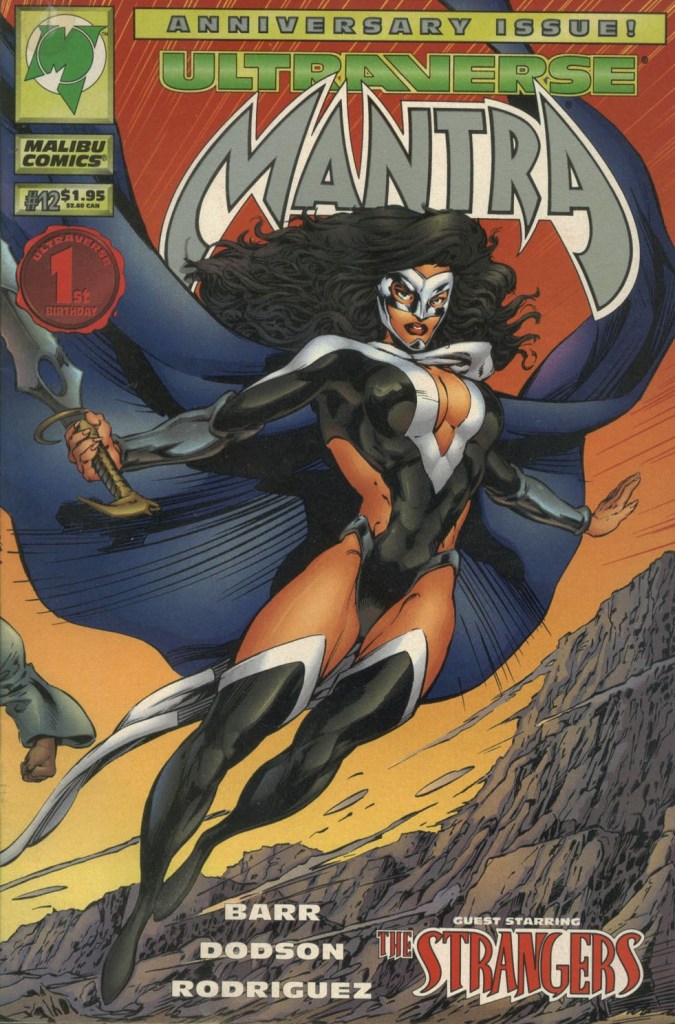
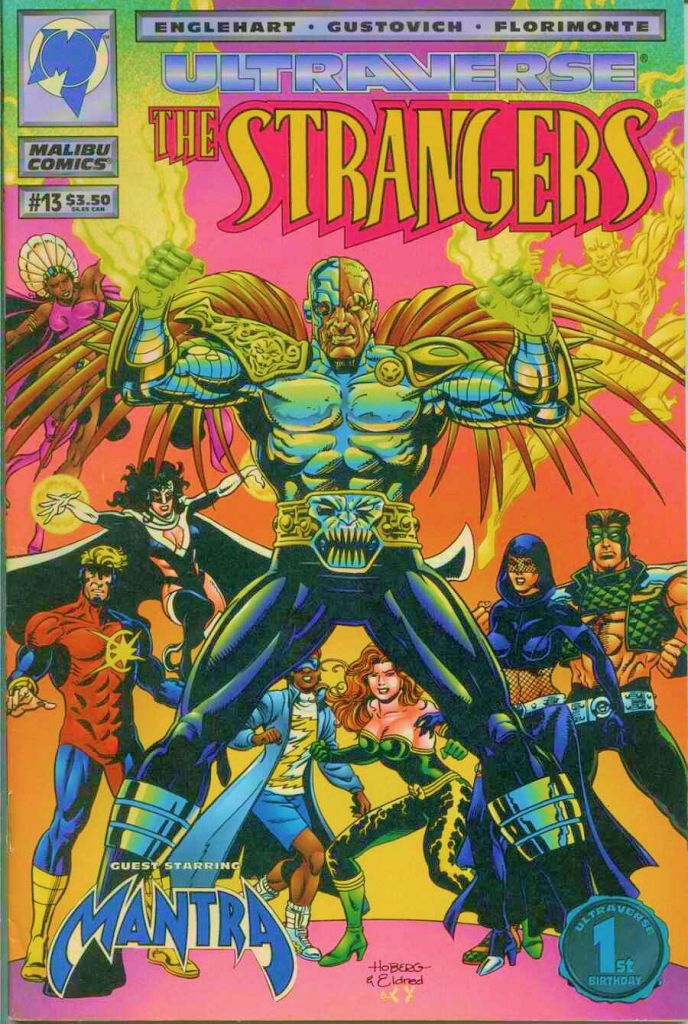
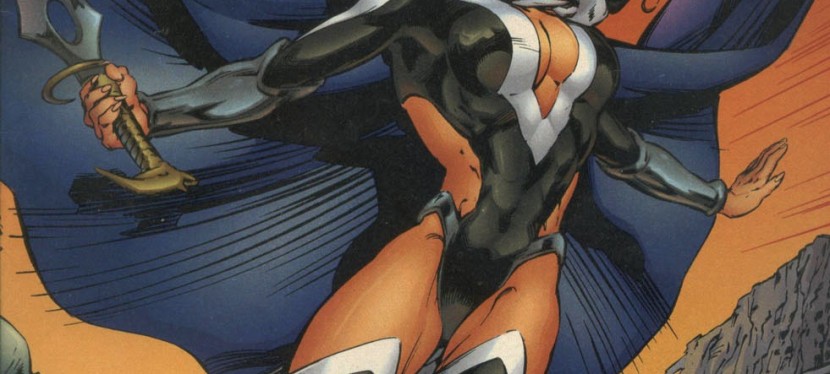
The cover.

Early story

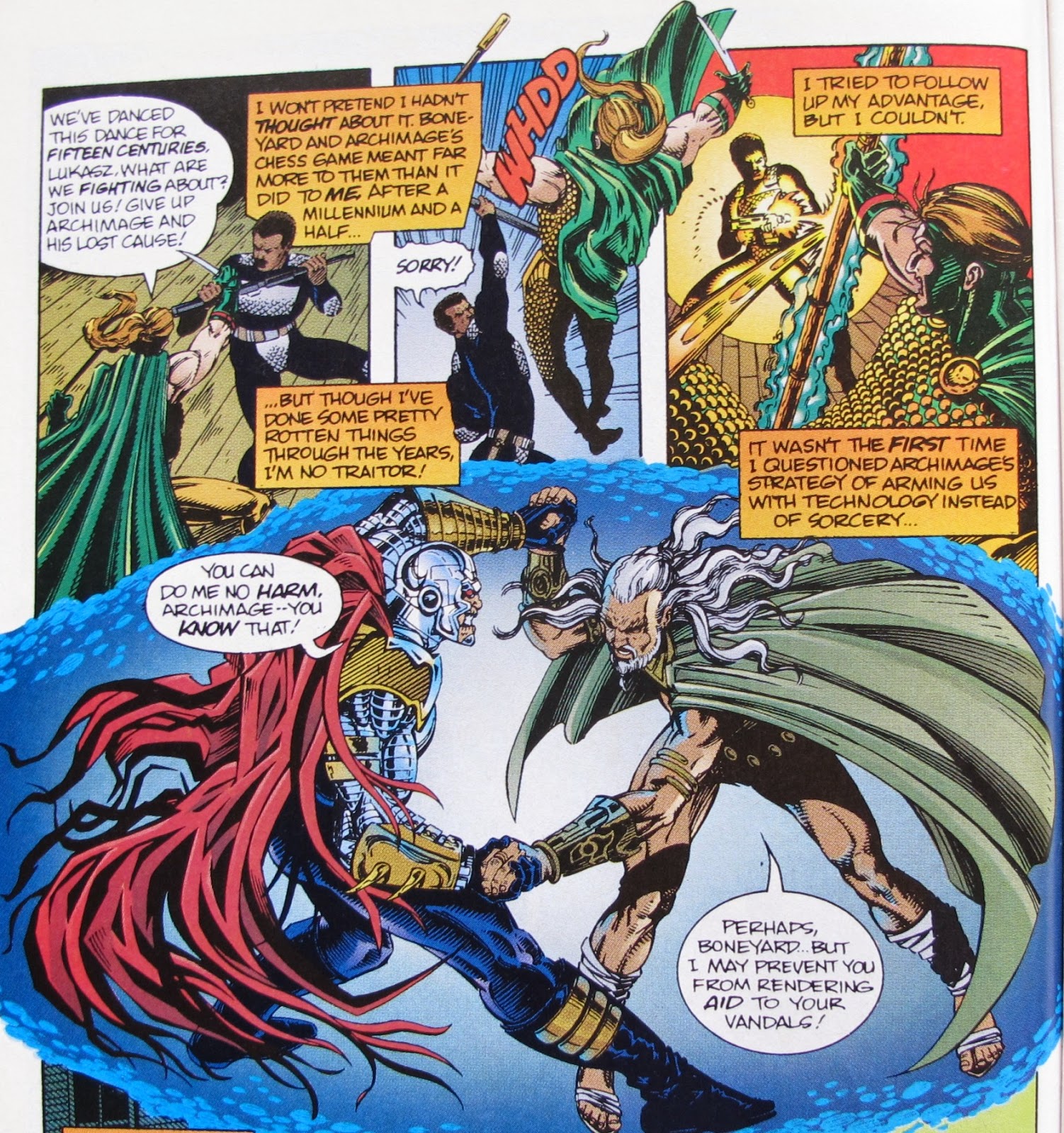
The story begins with Mantra and the Strangers facing Boneyard, his companions and demons. Boneyard has Atom Bob held captive for his magic use. Determined to kill Boneyard, Mantra draws first blood by blasting one of the demons. Due to having weakened powers, Mantra struggles in battle until Electrocute helps taking the other demons off.

As the battle goes on, Boneyard (aided with Notch’s power) makes his move towards Mantra and touches her body with his….

Quality
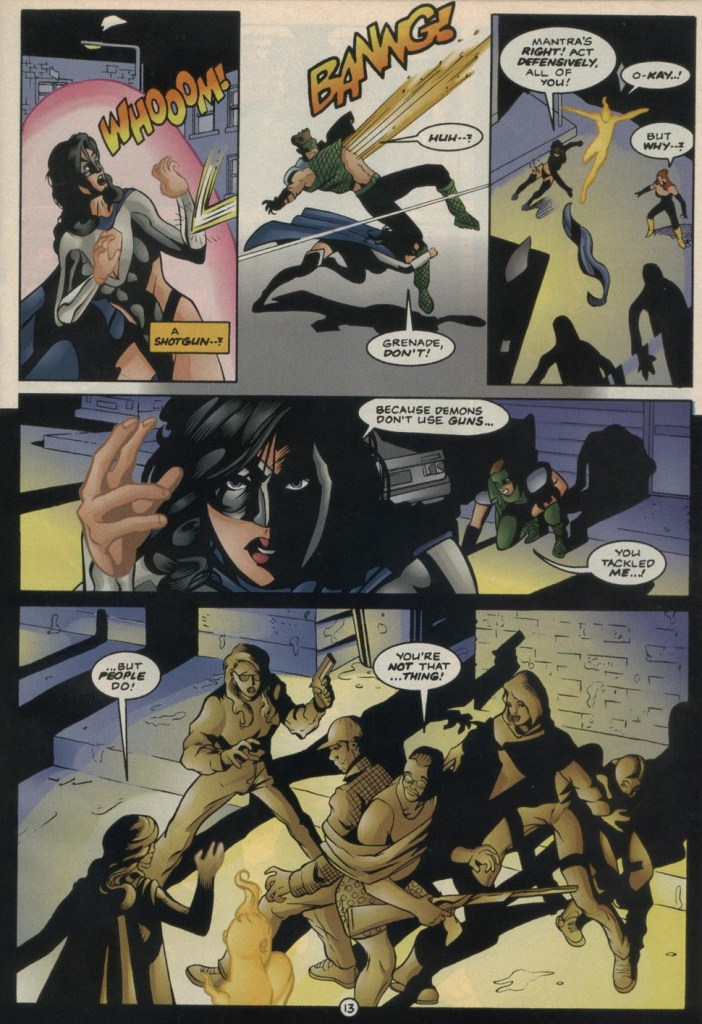
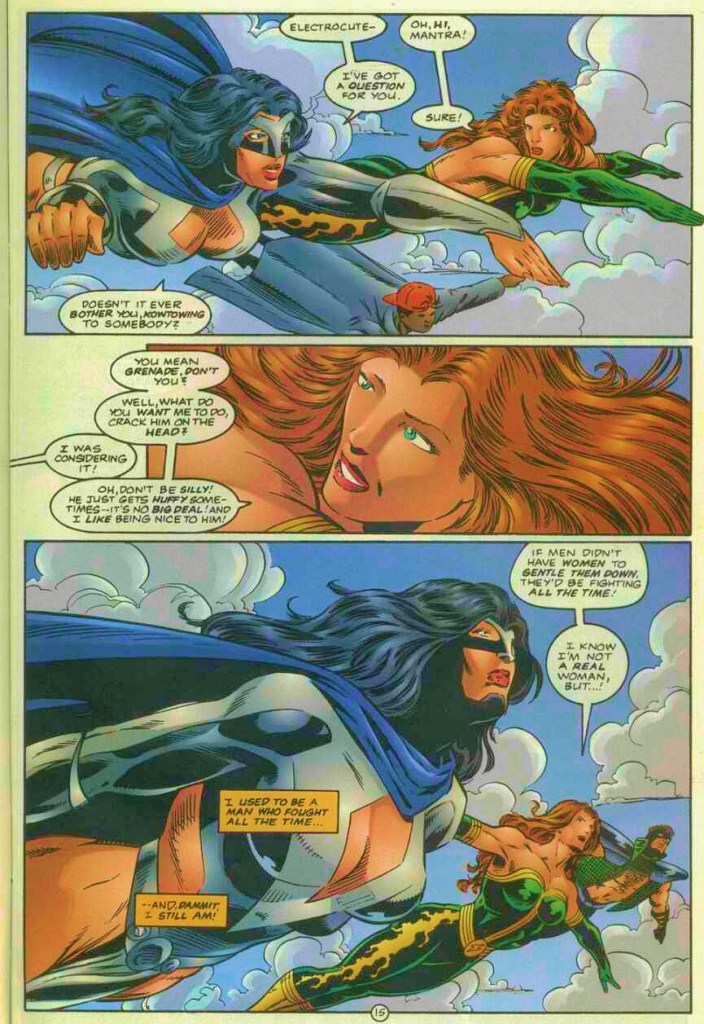
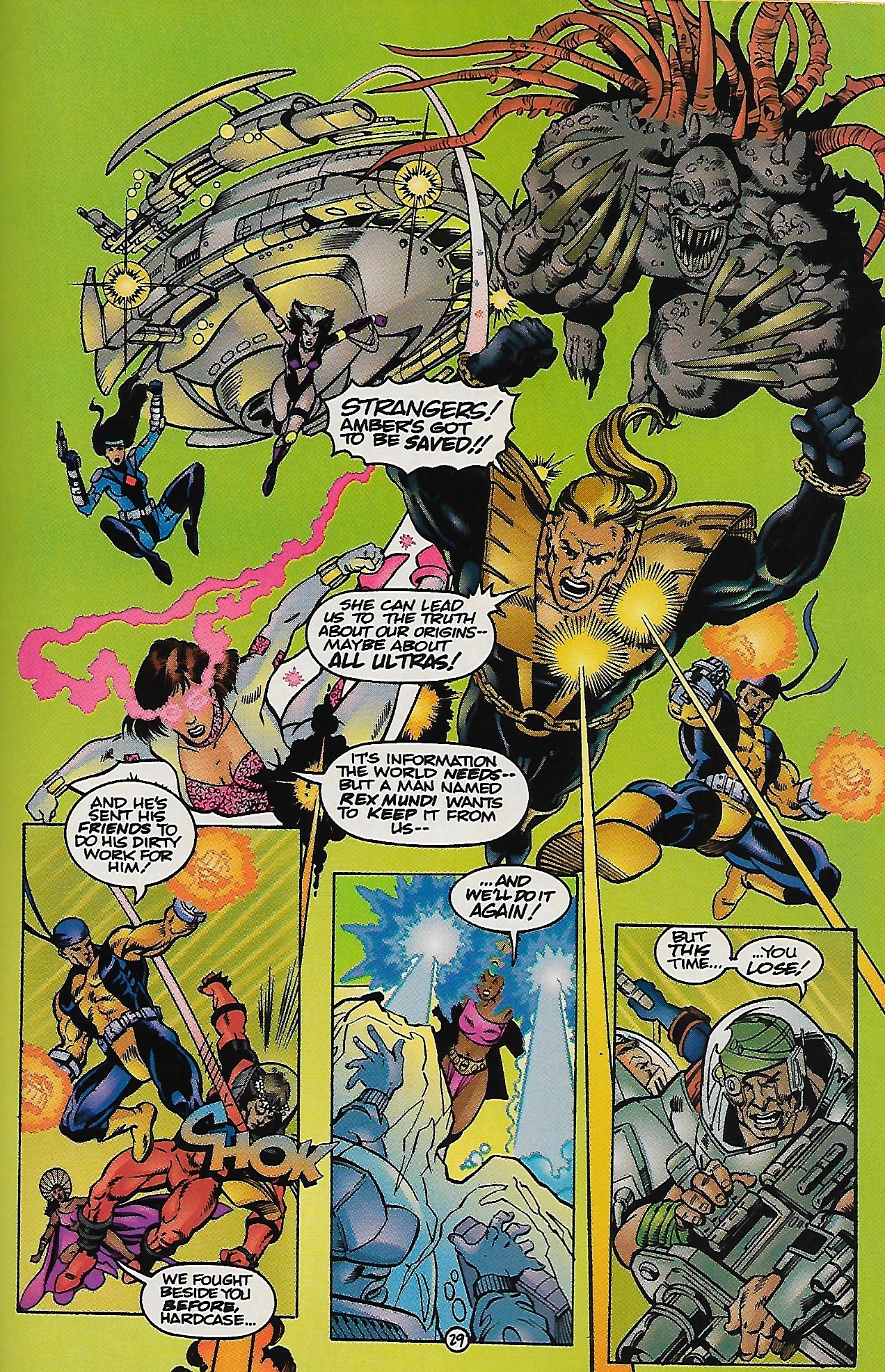
Action in the city.

The script written by Mike W. Barr (in coordination with Steve Englehart of The Strangers) is pretty solid in the sense that it took the interactions between Mantra and the Strangers a few levels deeper which paved the way for some character revelations and further development of varied personalities. To say the least, this one is pretty wordy and there was clear effort to define the characters even as the struggle went on. There were also common things between Boneyard and Yrial that was nicely explored when it comes to their respective abilities.

This comic book daringly touched on gender issues, particularly with the ever unholy topic of homosexuality (note: read 1 Corinthians 6: 9-10 in the Holy Bible) and even rape. There was this lesbian kiss scene between Electrocute and Mantra. Also it is made clear that even though Boneyard knows Mantra really is male warrior Lukasz occupying a female body, the said villain still wants to mate with the protagonist.

On the visuals, I found this one really looking odd even though it was credited to Terry Dodson. His art here really looked cartoony, so much so it’s almost as if someone else drew it. Try comparing Dodson’s art here with what he did in issue #1 and you will see what I mean.

Conclusion
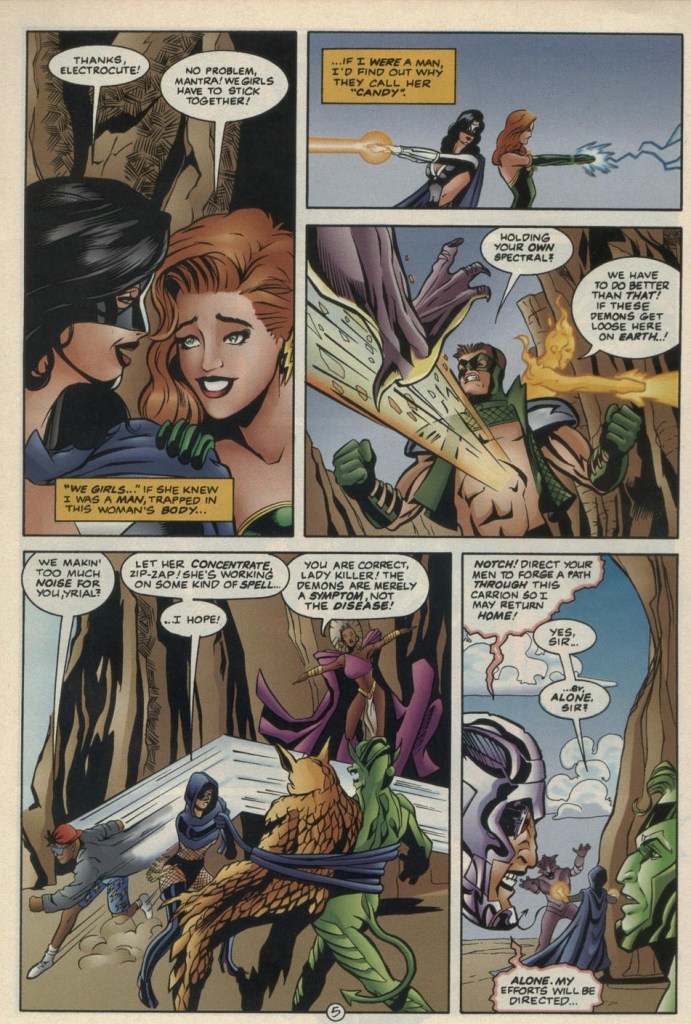
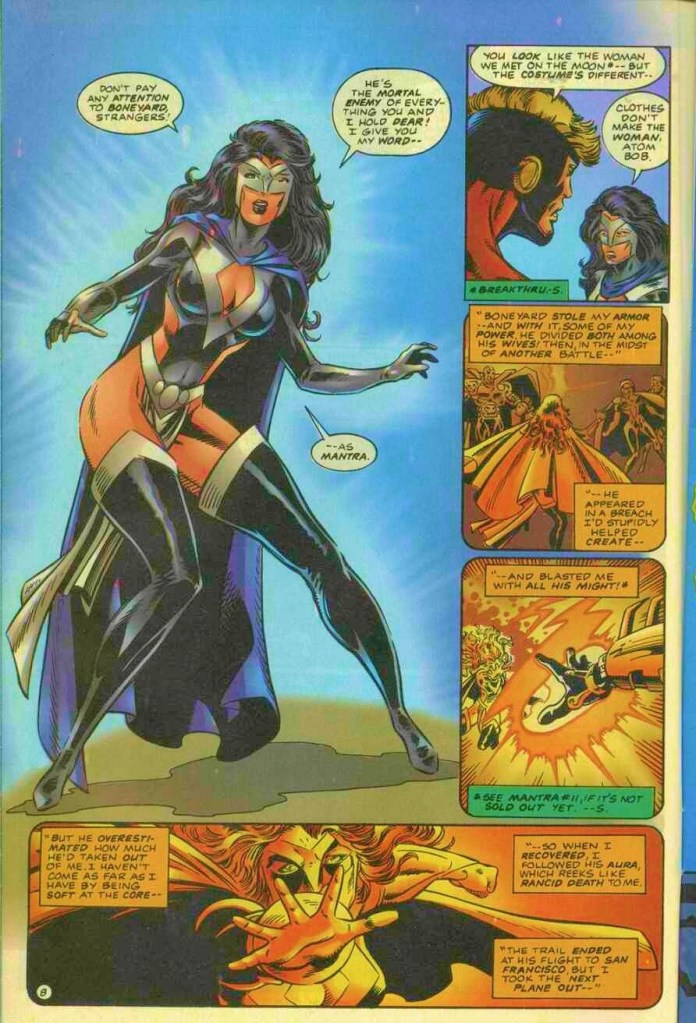
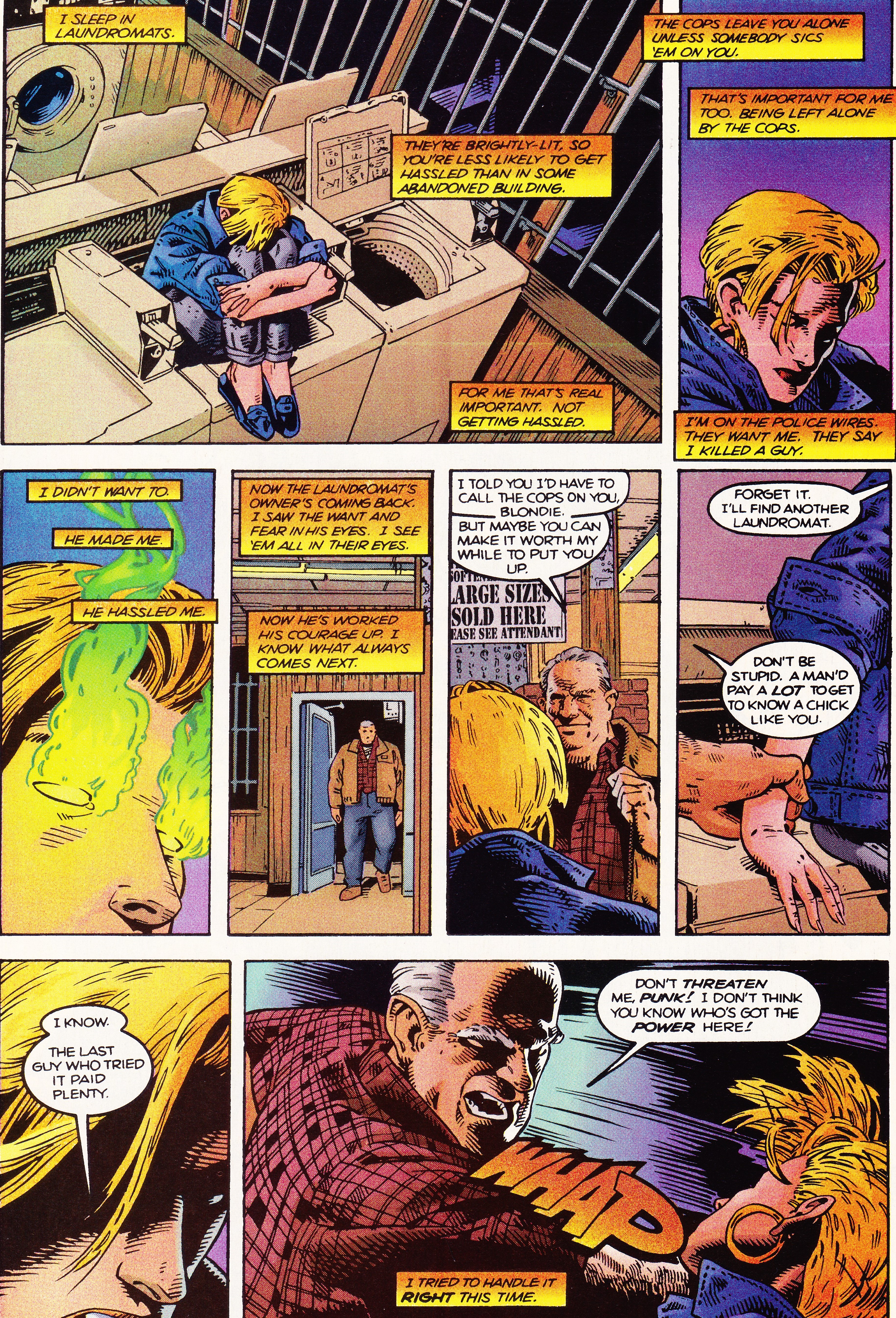
At the coast.

While it is well written, I should say that the crossover between the protagonist and the featured superhero team could have ended better. Compared to the conclusions of the Prototype-Strangers and Hardcase-Strangers crossovers, Mantra #12 ended up lacking punch. As an anniversary issue, it is serviceable.

If you are seriously planning to buy an existing hard copy of Mantra #12 (1994), be aware that as of this writing, MileHighComics.com shows that the near-mint copy costs $8.

Overall, Mantra #12 (1994) is recommended.

+++++

Thank you for reading. If you find this article engaging, please click the like button below and also please consider sharing this article to others. If you are looking for a copywriter to create content for your special project or business, check out my services and my portfolio. Feel free to contact me as well. Also please feel free to visit my Facebook page Author Carlo Carrasco and follow me at HavenorFantasy@twitter.com
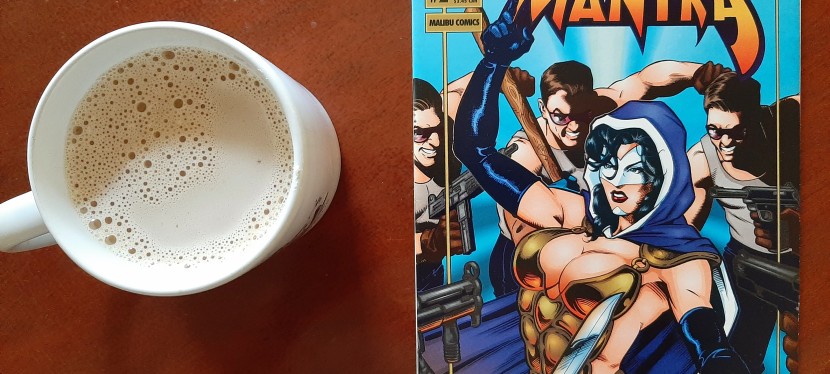
A Look Back at Mantra #2 (1993)

Disclaimer: This is my original work with details sourced from reading the comic book and doing personal research. Anyone who wants to use this article, in part or in whole, needs to secure first my permission and agree to cite me as the source and author. Let it be known that any unauthorized use of this article will constrain the author to pursue the remedies under R.A. No. 8293, the Revised Penal Code, and/or all applicable legal actions under the laws of the Philippines.

It’s been a long time since I reviewed the first issue of Mantra. For the newcomers reading this, Mantra is one of the major protagonists of the Ultraverse and as the series progressed, several stories containing elements of fantasy and even science fiction got published. With the way Mike W. Barr wrote the stories, the Mantra series really had its very own flavor and style among all Ultraverse comic books. What also made the character Mantra unique was that she was established with the use of the unholy element of reincarnation.

Before Mantra came to be, there was a male eternal warrior called Lukasz who was a part of a group that fought a rival group of warriors through the ages. Their leader Archimage used magic to ensure that whenever Lukasz or any of his teammates die, he would get reincarnated (his soul enters a new body belonging to an already living person whose soul gets displaced) and continue the fight. Then something happened in issue #1 which led to Lukasz occupying the body of a pretty woman named Eden.

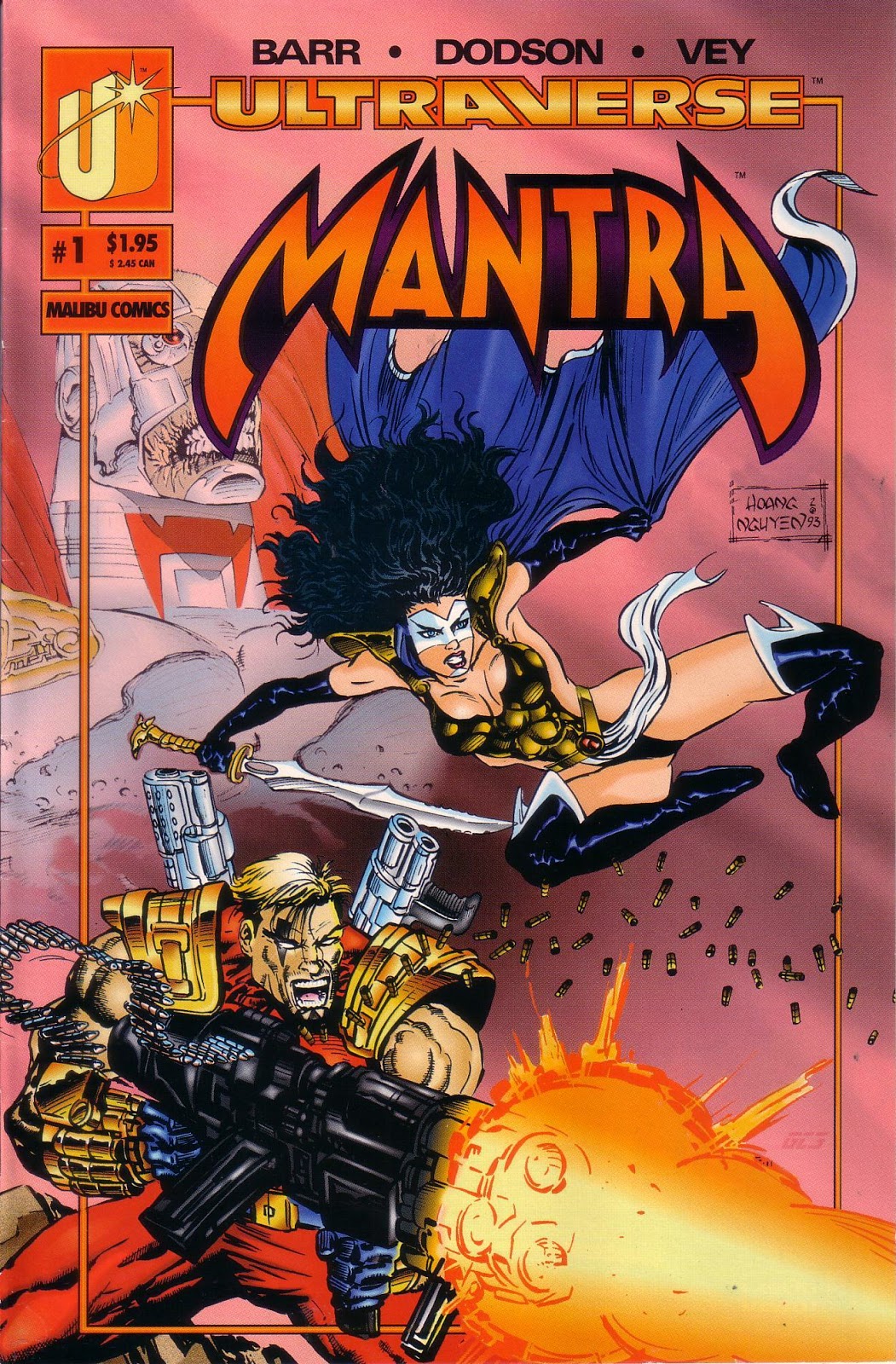
To find out more, join me in this look back at Mantra #1, published in 1993 by Malibu Comics with a story written by Mike W. Barr and drawn by Terry Dodson.

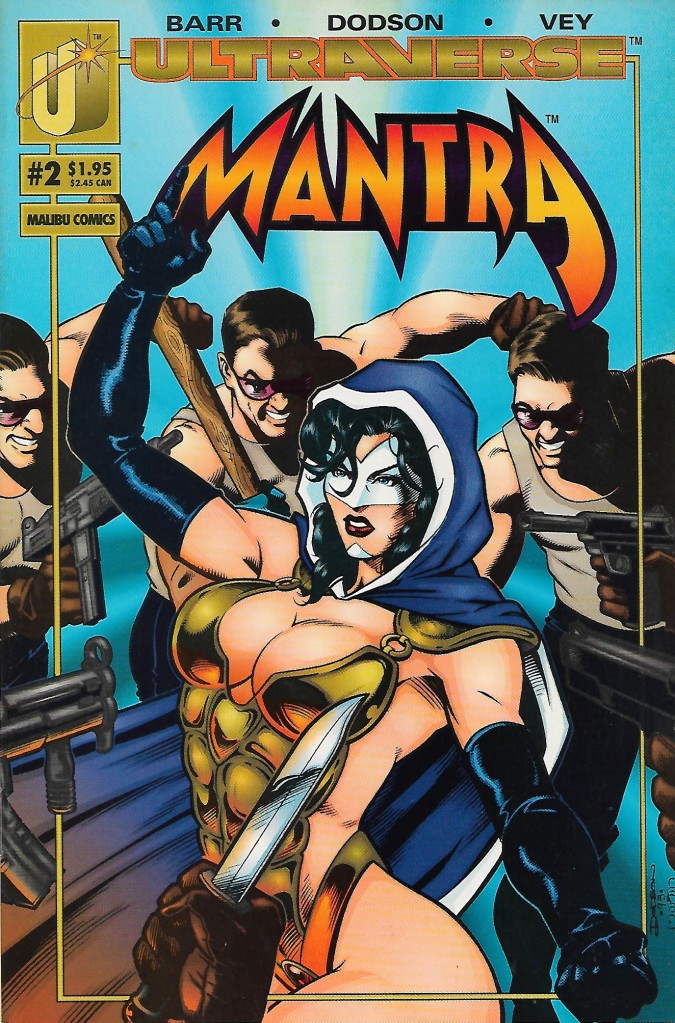
The cover.

Early story

The story begins at the home of Eden Blake in the evening. An armed man named Warstrike knows that Lukasz is occupying Eden’s body. Lukasz/Eden/Mantra starts to resist him but notices that Eden’s son and daughter are both present and seeing them. Quickly and cleverly, Mantra tells the children to get back to bed and hope they did not notice something wrong.

Filled with emotions, Mantra asked Warstrike not to kill her. As it turns out, Warstrike did not come to take her life and reveals that he had been used by Notch (a rival warrior Lukasz often fought with) as a tool to kill him (Lukasz) the last time he was in a male body. Warstrike tells her he’s going to help her.

After the talk and another attempt by Warstrike to charm her, Mantra slams the door and goes to bed. She sleeps to prepare herself for the next day…

Quality

As Eden, Lukasz inherits the responsibility of taking care of her son and daughter.

I’ll star with the most obvious thing about this comic book…the writing done by Mike W. Barr is very strong and has a nice balance between plotting, spectacle and characterization all throughout. For his part, Terry Dodson nicely translated the writing into engaging visuals.

For the most part, this comic book is very character driven which is a nice pay-off considering the plot build-up in issue #1. We get to see Lukasz struggling more not only because he displaced Eden’s soul (again, reincarnation is unholy) as he occupied her body, but because he is living Eden’s life which involves being the single mother of two children, going to work at the office, wearing women’s clothes and shoes, and dealing with a certain someone from Eden’s past. All of these add to the tremendous challenge of Lukasz who already has his own mission to fulfill.

Conclusion

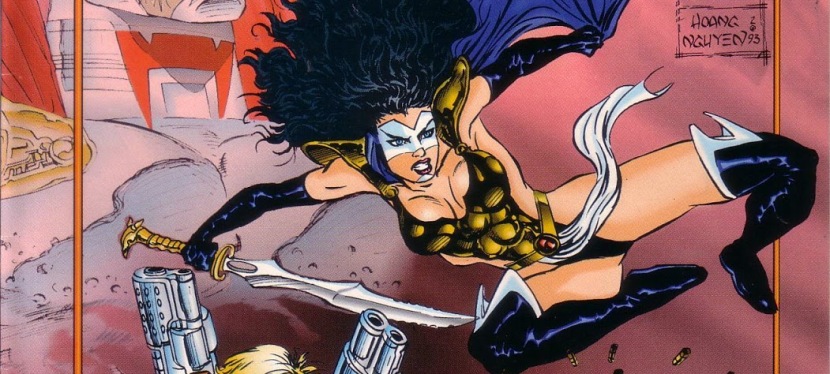
Living Eden’s domestic life alone is a big challenge already for Lukasz who has always been male.

Mantra #2 is a very strong read from start to finish. As it develops Mantra even further, it also adds to the build-up of another story element: Eden’s domestic life. As the armored Mantra, the protagonist has a mission to find and free Archimage. As Eden, spending time with the two little ones is not only challenging but also crucial to their development. These elements are nice twists to the old hero-civilian formula of superhero comics. Indeed, this one is worthy follow-up to issue #1.

If you are seriously planning to buy an existing hard copy of Mantra #2 (1993), be aware that as of this writing, MileHighComics.com shows that the near-mint copy of the regular edition costs $8, the near-mint copy of the bagged edition costs $16 and the near-mint copy of the newsstand edition costs $26.

Overall, Mantra #2 (1993) is recommended.

+++++

Thank you for reading. If you find this article engaging, please click the like button below and also please consider sharing this article to others. If you are looking for a copywriter to create content for your special project or business, check out my services and my portfolio. Feel free to contact me as well. Also please feel free to visit my Facebook page Author Carlo Carrasco and follow me at HavenorFantasy@twitter.com
A Look Back at The Strangers #13 (1994)

Disclaimer: This is my original work with details sourced from reading the comic book and doing personal research. Anyone who wants to use this article, in part or in whole, needs to secure first my permission and agree to cite me as the source and author. Let it be known that any unauthorized use of this article will constrain the author to pursue the remedies under R.A. No. 8293, the Revised Penal Code, and/or all applicable legal actions under the laws of the Philippines.

Crossovers between major individual characters and major superhero teams within the Ultraverse are often fun to read mainly due to the high talents involved who made such fantasy concepts good. Before, The Strangers had a crossover with Hardcase followed by another crossover with Prototype. This time, the superhero team will have their first crossover adventurer together with another major Ultraverse characters…Mantra!

You must be wondering who are what will Mantra and the Strangers be facing. We will find out in this look back at The Strangers #13, published in 1993 by Malibu Comics with a story written by Steve Englehart and drawn by Mike Gustovich.

The cover.

Early story

The story begins inside a facility when the Strangers are surprised by the arrival of police cars outside. Upon meeting the police captain named Rome, the Strangers learn that the police need their help as an evil ultra is on its way to San Francisco.

As the Strangers scramble, Mantra’s foe Boneyard is inside a commercial airline and his presence easily disturbs the passengers. Boneyard punches a man for raising his voice and telling him to put down a child he carried. Boneyard is carrying a young boy using him to have leverage over the passengers and the flight crew.

Some time later, the airplane lands on the tarmac of the airport and Boneyard comes down as the Strangers and the police await him. It turns out, Mantra’s foe wanted a meeting which baffles the Strangers. Boneyard tells them that their actions let some demons free and have placed his life in grave dangers.

As Boneyard and the Strangers talk, Eden Blake watches intensely and changes into Mantra…

Quality

Mantra with Electrocute and Grenade.

This comic book’s story is very well written and it should not be surprising given Steve Englehart’s extensive experience as a writer. He really knows how to structure carefully a plot, get different superheroes get together and work for a common cause. That being said, Boneyard’s entry into the pages of The Strangers series was notably seamless (note: Mike W. Barr of the Mantra series was the one who developed Boneyard as the villain) and believable. When he met the Strangers, I sensed tension brewing which eventually turned into excitement once Mantra (who encountered The Strangers during the Break-Thru crossover) gets involved.

Character interactions, especially between Mantra and the Strangers members, is quite engaging to read. While the most sensible conversation Mantra had was with Electrocute, her talk with Spectral was the most awkward. There really is something worth reading.

When it comes to the artwork, Mike Gustovich’s work is serviceable at best. He worked on this comic book as a guest illustrator temporarily taking over the place of regular artist Rick Hoberg. His art is not bad, just satisfactory.

Conclusion

Mantra meets the Strangers again.

The Strangers #13 is entertaining on its own and the fact is it is only the first part of the Mantra-Strangers crossover. It is a solid start to say the least, and I should state that Steve Englehart captured nicely the respective personalities of Mantra and Boneyard, and he succeeded in mixing up the said ultra with the team. This comic book, by the way, is one of Malibu Comics’ flipside issues (a 2-in-1 comic book with each side being its own issue) and on the other side was Ultraverse Premiere #4. The Ultraverse Premiere side has a main story featuring Prime and a short story focused on Lady Killer of The Strangers.

If you are seriously planning to buy an existing hard copy of The Strangers #13 (1994), be aware that as of this writing, MileHighComics.com shows that the near-mint copy costs $8.

Overall, The Strangers #13 (1994) is recommended.

+++++

Thank you for reading. If you find this article engaging, please click the like button below and also please consider sharing this article to others. If you are looking for a copywriter to create content for your special project or business, check out my services and my portfolio. Feel free to contact me as well. Also please feel free to visit my Facebook page Author Carlo Carrasco and follow me at HavenorFantasy@twitter.com
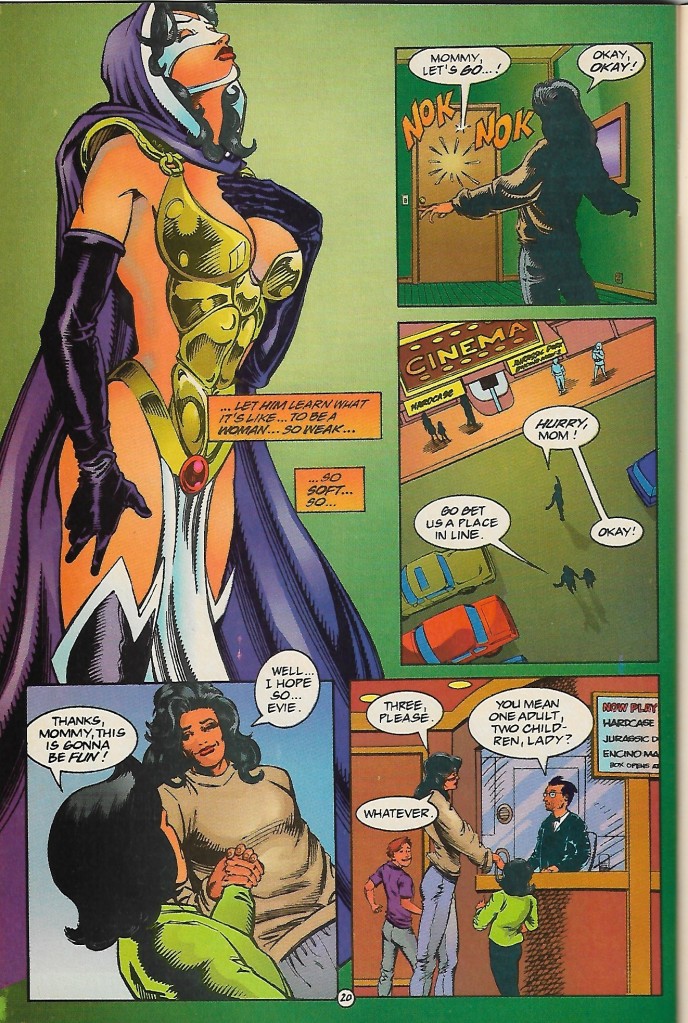
A Look Back at Mantra #1 (1993)

If there is any intriguing way of utilizing fantasy concepts to introduce a superhero (or superheroine) to readers, Mantra #1 from the Ultraverse published in 1993 by Malibu Comics is one fine example.

Mantra1
The cover of Mantra #1.

Early story

Written by Mike W. Barr with art by Terry Dodson, Mantra #1 was an Ultraverse launch comic book that follows Lukasz who is an eternal warrior belonging to a group of other warriors which had been fighting another group (led by eventual Ultraverse villain Boneyard) for several centuries.

How did that conflict last that long? As told through the views of Lukasz, any individual warrior who dies will eventually be placed in a new body (often that of an existing person) and take control of it effectively displacing the its soul. Behind it all, Archmage, the leader of the warriors’ group that includes Lukasz, uses magic to ensure that each member will be reincarnated after dying.

Mantra2
A page for your viewing pleasure.

The story takes a major turn for the shocking and intriguing when something unfortunate happens to Archmage and that the protagonist himself gets killed again. Fortunately for him, he gets to live one more time but there is one major difference – Lukasz occupies the body of a woman named Eden Blake (and the revealing scene remains shocking).

At this point, I don’t want to spoil the rest of the story. If you want to find out how Mantra came to be, you just have to read the comic book yourselves.

Quality

From an analytical view, I still find Mantra’s concept very intriguing to this day. In terms of mysticism, it reminds me a little bit of George Perez’s take on Wonder Woman in the mid-1980s and in some cases Mantra/Eden Blake herself reminds me bit of Wonder Woman/Diana albeit in a more motherly way.

When it comes to storytelling, Mike W. Barr’s script is very solid and made very good use of the twenty-eight (28) pages of the comic book. Unsurprisingly, there was a good amount of expository dialogue and narration but it was handled efficiently. The first-person views of Lukasz/Eden Blake are truly immersive to read. Along the way, there were several scenes that were intriguing to read and there were some nice moments of unintentional comedy which helped balance the overall tone of the story.

To say the least, Mantra’s concept about dead warriors’ souls entering bodies of existing people to live again sheds light on the moral or psychological implications of such events. If you were a warrior who just died and eventually got a new lease on life by occupying the body of let’s say a software company’s chief executive officer, would you not be concerned as to what happened to the soul (of the body) you displaced? Would you not think about how your control of that displaced soul’s body would affect not only the person’s established life but also the personal association with other people? Truly Mike Barr’s writing got me hooked and Terry Dodson’s art really brought his concepts to life.

Conclusion

So what else could I say? Mantra #1 is highly recommended not only because of its story and concepts but also because this particular series lasted several issues more and, for the most part, Mantra’s adventures and misadventures have often been fantastic and fun.

Even though it is fact that the Ultraverse remained in limbo and Marvel Entertainment showed no intention to revive the franchise, Mantra is still a fun and engaging comic book series to read and this comic book is the golden start of it. Mantra #1 itself is one of the most defining superhero comic books of the 1990s ever published and its mature themes combined with strong fantasy concepts made it stand out among all of those other superhero comic books I spotted on the shelf of a BF Homes comic book store that I visited in July 1993.

You guys can order copies Mantra #1 online at ComicCollectorLive.com, at MileHighComics.com (a near-mint holographic cover version of the comic book is worth over $40) or by visiting your local comic book retailer selling old issues.

Author’s Note: This article was originally published at my old Geeks and Villagers blog. What you just read on this website is the most definitive version.


Thank you for reading. If you find this article engaging, please click the like button below and also please consider sharing this article to others. Also my fantasy book The World of Havenor is still available in paperback and e-book format. If you are looking for a copywriter to create content for your special project or business, check out my services and my portfolio. Feel free to contact me as well. Also please feel free to visit my Facebook page Author Carlo Carrasco and follow me at HavenorFantasy@twitter.com
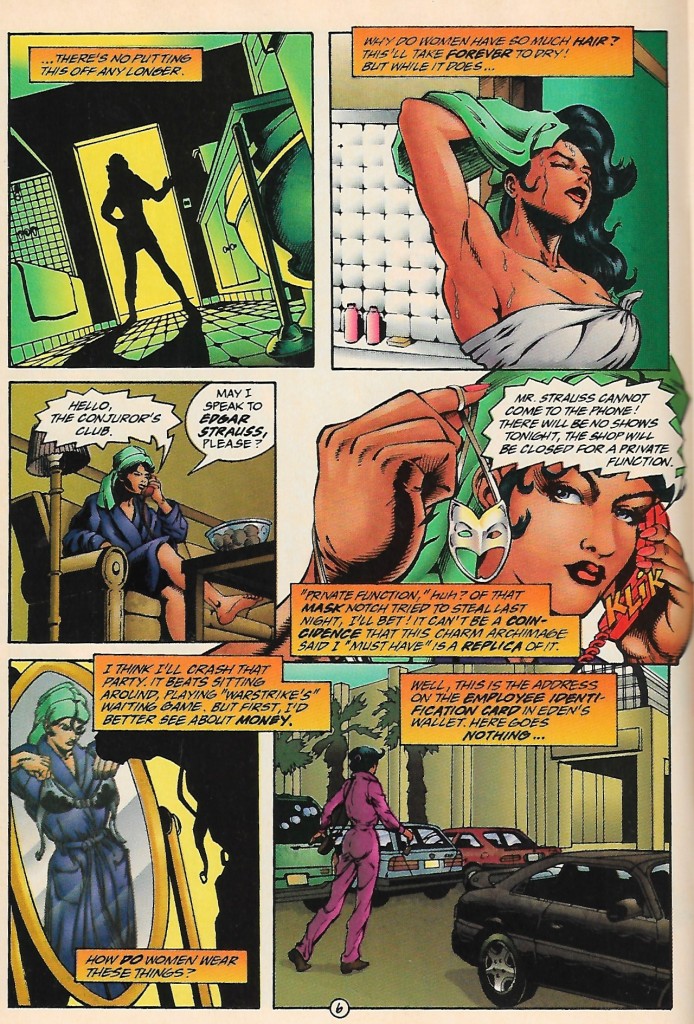
A Look Back At Break-Thru #1

When done right, a crossover storyline showcasing a big mix of superheroes getting involved in a huge event can be memorable and worth revisiting years after getting published.

Back in 1993, Malibu Comics launched the Ultraverse which involved many talented creators. Right from the start, it was made clear that there was a shared universe occupied by The Strangers, Night Man, Prototype, Prime, Mantra, Hardcase and many others.

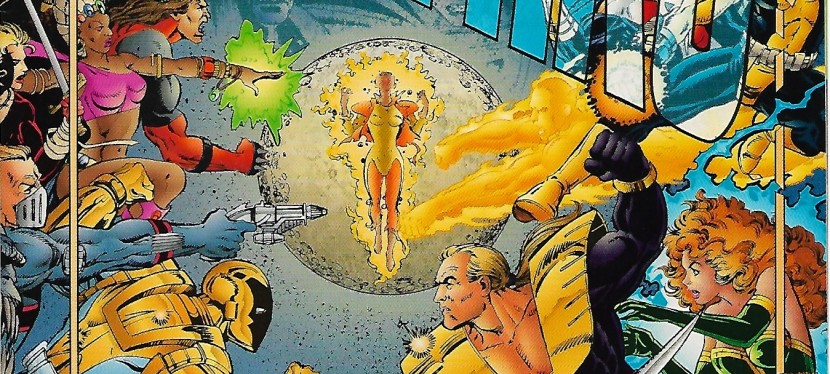
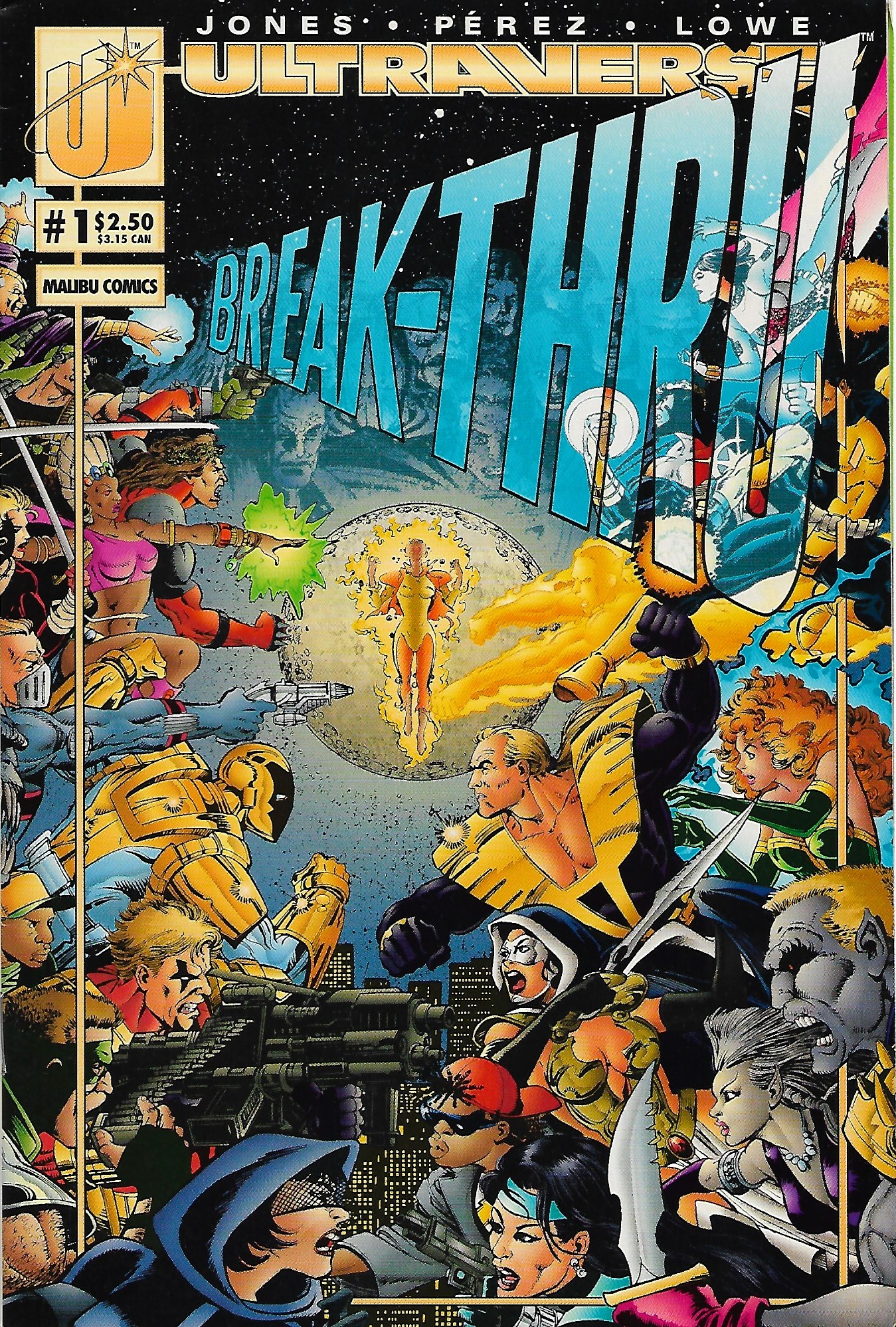
Before the end of 1993, Malibu launched Break-Thru #1 which started a new storyline that involved many of the above characters plus Firearm, The Solution, Sludge and Solitaire. Adding more punch to this comic book was Malibu’s hiring of legendary artist George Perez who worked on the classic Crisis on Infinite Earths maxi-series of DC Comics.

2019-10-17_074138~2.jpg
A great cover! One of the best ever for any Ultraverse comic book!

Here is a close look at Break-Thru #1 mainly written by Gerard Jones, drawn by George Perez and inked by John Lowe with colors by Moose Baumann. Credited as contributing writers were Steve Englehart, Mike W. Barr, Steve Gerber, James D. Hudnall, Tom Mason, George Perez, James Robinson and Len Strazewski.

Early story

The story begins immediately after the end of Exiles #4. A man falls to his death from the top of a tower thinking he was reaching the moon at night. Elsewhere, an airplane sharply goes up with too much altitude as the pilot obsesses with going to the moon

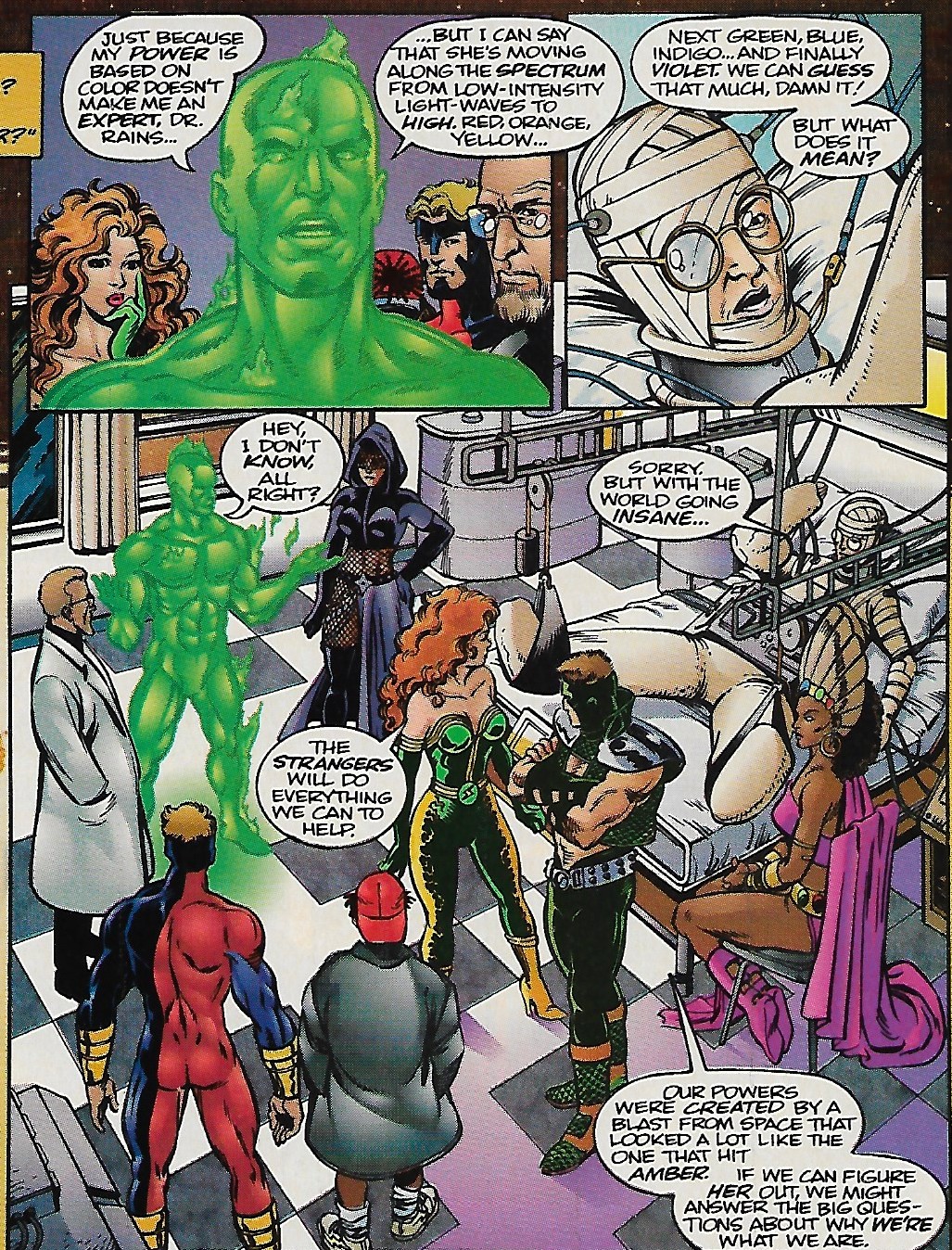
As it turns out, the media reports about people trying to reach the moon and getting restless. A member of Exiles lies helplessly on a bed with his entire body covered with medical materials for his injuries. A doctor presses him for answers and he claims to know that Amber, one of the Exiles members, looks a lot like a young lady floating over Los Angeles. He thinks she is responsible for the madness that has been going around the world.

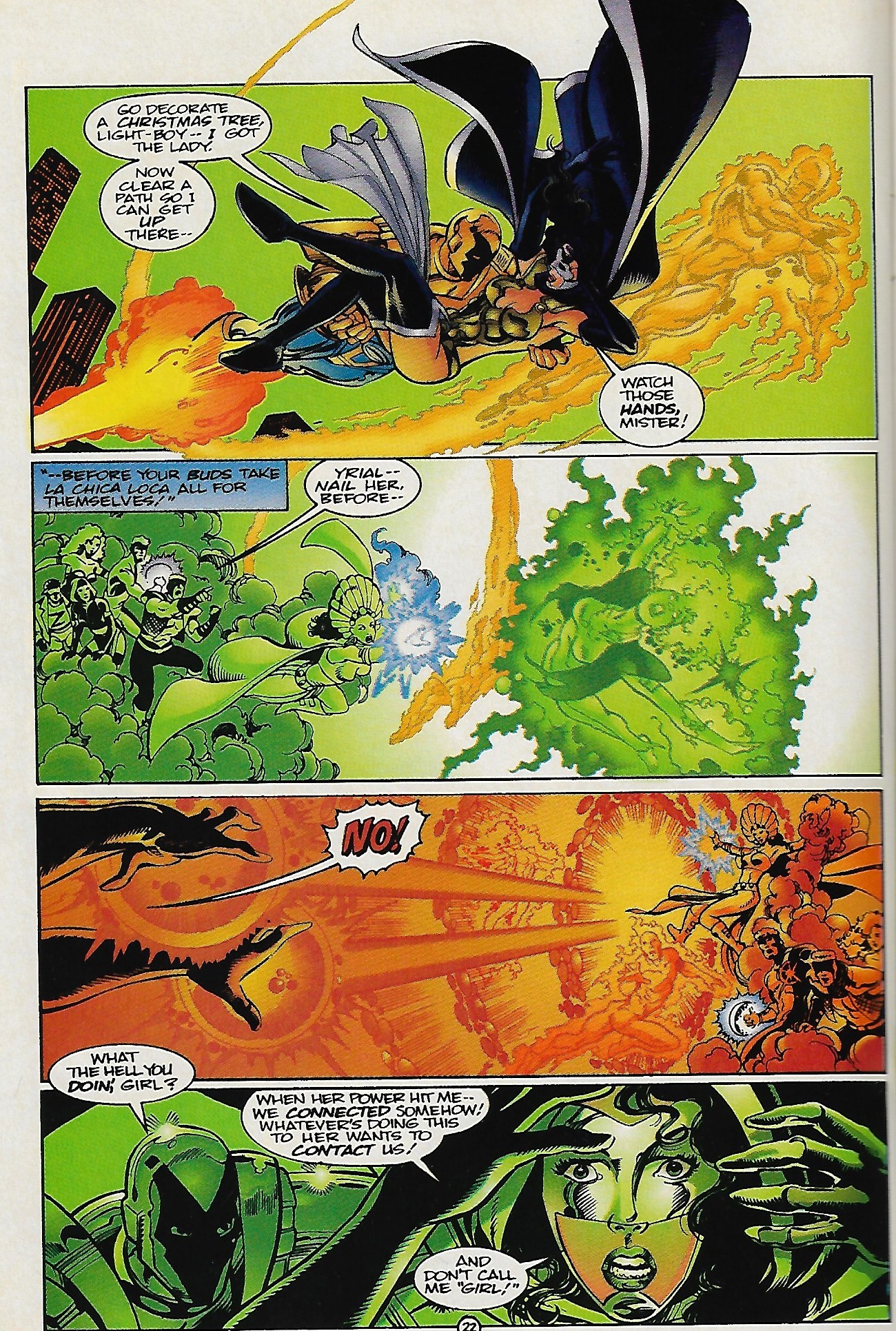
The injured confirmed that the lady, floating high above with reddish energy around her, is none other than Amber. He claims, however, that he has no idea what happened but shared that she was already prone to volatile energy blasts.

Behind the scenes, members of Aladdin discuss what has been happening. One of them believes that Amber may hold important clues to the nature and origin of Ultras. The Aladdin people get distracted with noise caused by Eden Blake (Mantra in civilian form) who secretly eavesdropped on them pretending to be lost (note: a reference is made to Mantra #5 to explain her new employment with Aladdin.)

2019-10-17_075309~2.jpg
The military and Prime.

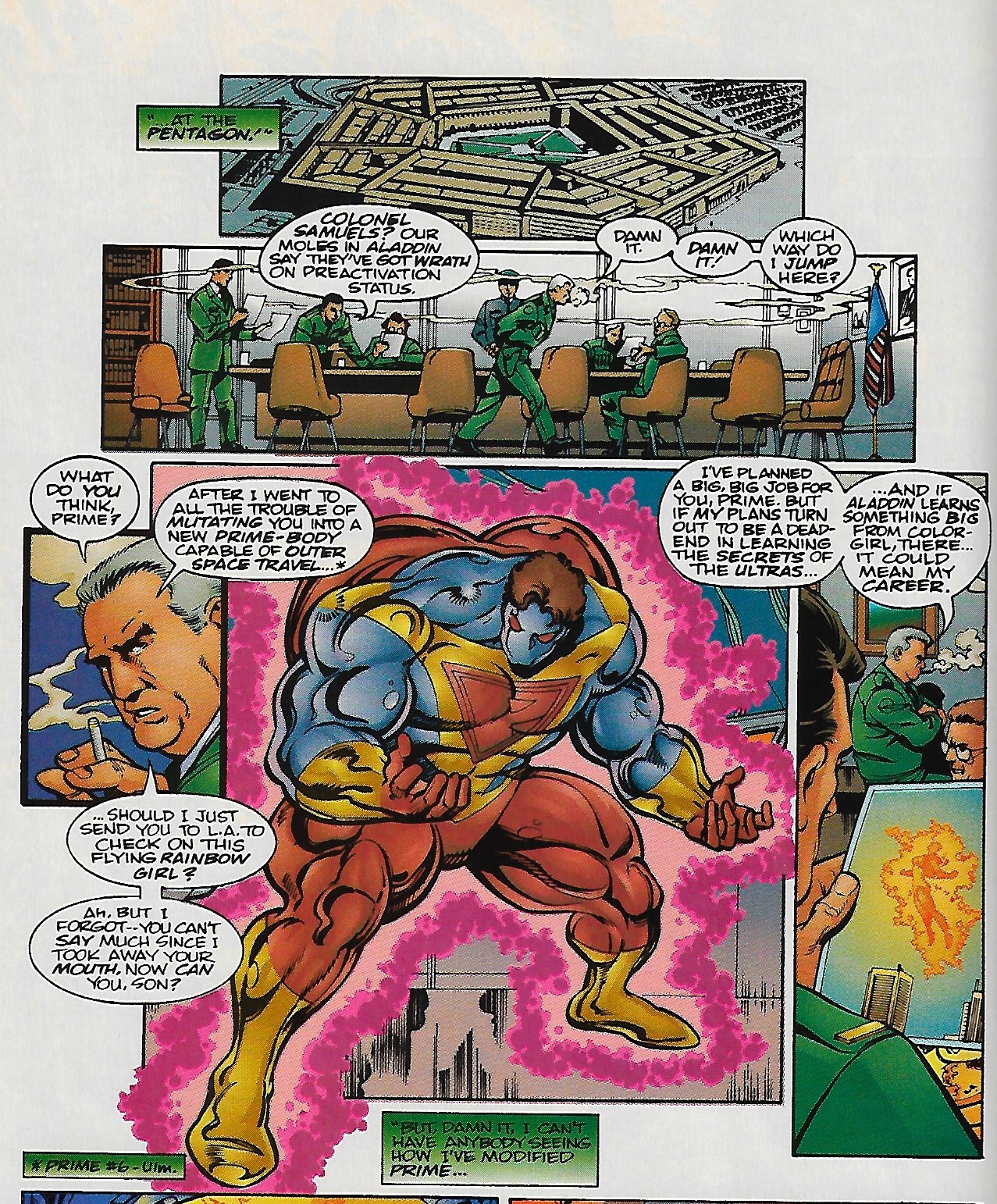
Aladdin decides to activate their own Ultra named Wrath. Over at the Pentagon, military officers discuss the information about Wrath they got received from their moles at Aladdin. Their leader wondered about sending Prime (with a modified look) on a mission but he can’t have anyone see how he modified the Ultra.

Meanwhile in the bowels of the Earth, a man who is not really a man watches…

Quality

In terms of storytelling, Break-Thru #1 has a nice build-up. It took its time making references to the many, many characters of the Ultraverse. By the end of the comic book, you will realize there are different kinds of Ultras: the solo Ultras, the corporate Ultras, the freelancers, the work-for-hire Ultras, the accidental Ultras and the like. With regards to emphasizing the shared universe, this comic book shows that connections with the individual comic books are tight. References in what happened in Exiles #4, Prime #6, Mantra #5 and others all helped build-up the concept of Break-Thru. The story is 35-pages long which, in my opinion, was sufficient not only to emphasize the conflict Break-Thru but also give readers enough space to get to know what exactly is going on, who are these many characters, what the institutions involved are, etc.

2019-10-17_075441~2.jpg
Mantra with Prototype.

2019-10-17_075133~2.jpg
The Strangers discuss what has been happening.

More on Break-Thru’s concept, I like the way the comic book emphasized how the sudden presence of multiple Ultras affected local societies, members of the public, the government, the secret groups and others. It also sheds light on how people, regardless of social class or status, react to the presence of people who carry special powers or have unusual talents over them. This reminds me of a key scene in the 2012 Avengers movie in which Col. Fury mentioned how the sudden presence of super beings caused a disturbance.

Spectacle? Unsurprisingly there is a good amount of action as well as incidental moments that kept the narrative entertaining.

Visually, Break-Thru #1 is a great looking comic book thanks to George Perez who is famous for drawing multiple characters environments with his distinctive style complete with a high level of detail. There is not a single boring moment with his art and each panel has really nice visuals. The action scenes and incidental happenings (example: Valerie’s sudden burst of energy) come with a lot of punch.

2019-10-17_075541~2.jpg
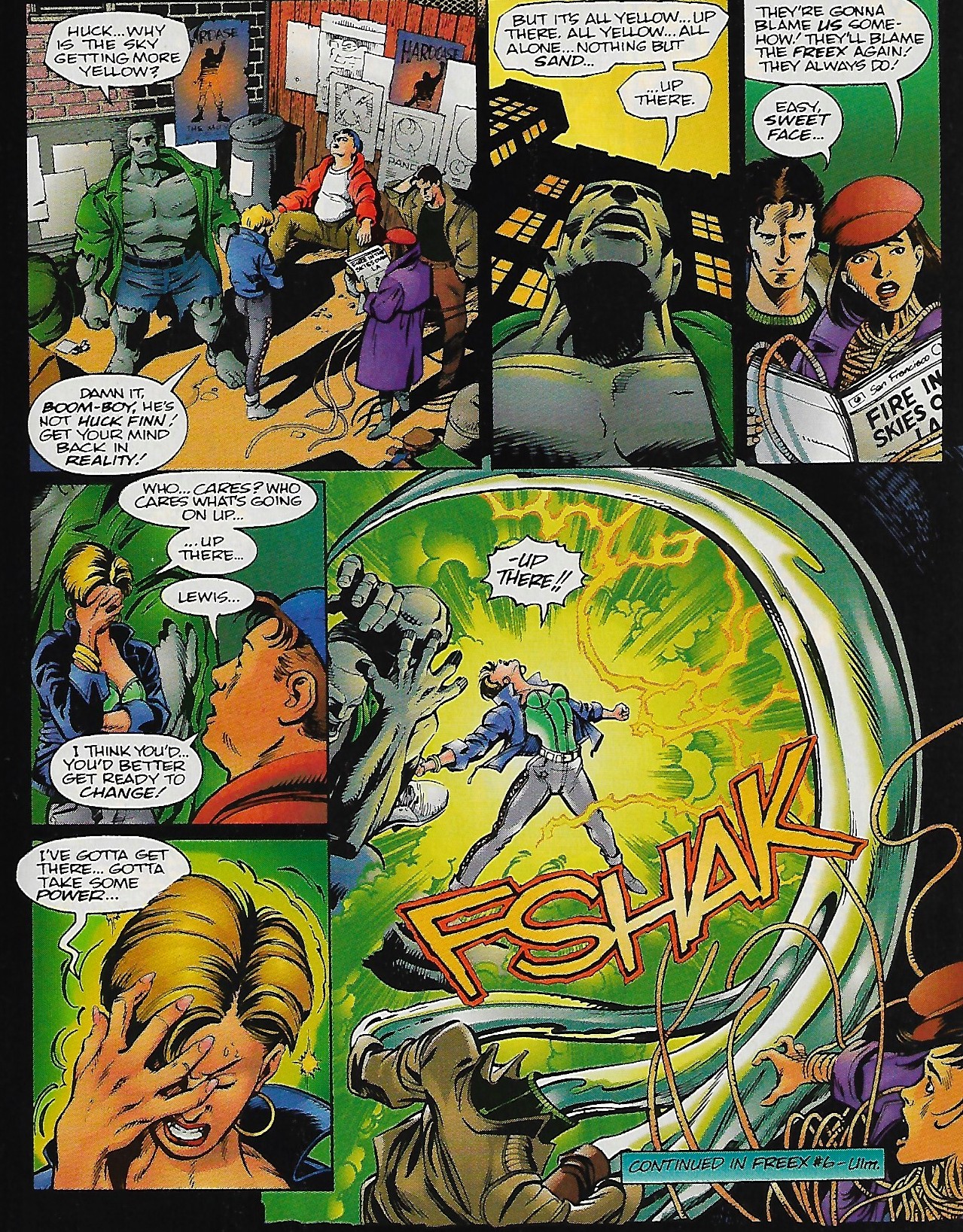
Freex got affected.

Very notably, Perez’s take on each of the Ultraverse characters is very good to look at and in some ways, certain characters look a lot better than they did in their respective comic book series. A perfect example here is the team Freex whose characters look more human (in style) and more lively. Of course, I don’t mean to say that the illustrators of the Freex series did not do a good job.

Perez’s drawing of Mantra is very good. Similar results with The Strangers, Hardcase, Solitaire and Prototype. Very clearly George Perez carefully did his research on the characters and their respective designs.

Conclusion

2019-10-17_074728~2.jpg
Hardcase, Choice and The Solution on the move!

Overall, Break-Thru #1 is a great comic book to read and it reflects the high quality and deep engagement the Ultraverse had when it was still under the control of Malibu Comics (note: Marvel Comics acquired them and drastically changed the UV for the worse in the mid-1990s). It definitely still is one of the finest superhero crossover comic books of the 1990s and, personally, I found it to be more engaging than the launch issues of other crossover storylines like Zero Hour and The Infinity Gauntlet. If you are interested, Break-Thru continued in Firearm #4, Freex #6, Hardcase #7, Mantra #6, The Night Man #3, Prime #7, Prototype #5, Sludge #3, Solitaire #2, The Solution #4, The Strangers #7 and then in Break-Thru #2.

Break-Thru #1 is highly recommended and you can buy a near-mint copy of it for $4 at Mile High Comics’ website.


Thank you for reading. If you find this article engaging, please click the like button below and also please consider sharing this article to others. Also my fantasy book The World of Havenor is still available in paperback and e-book format. If you are looking for a copywriter to create content for your special project or business, check out my services and my portfolio. Feel free to contact me as well. Also please feel free to visit my Facebook page Author Carlo Carrasco and follow me at HavenorFantasy@twitter.com
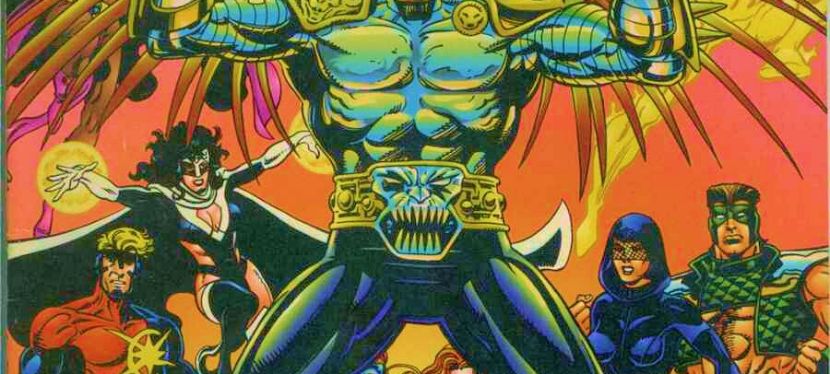
A Look Back At Ultraverse Premiere #0

What is the one thing I love most about superhero comics of the 1990s? It’s easy – the Ultraverse! Launched in 1993 by Malibu Comics during the late stage of what is now called the Comic Book Speculator Boom in Amerca, the Ultraverse was a line of superhero comic books featuring all-new characters and concepts which were the result of intense brainstorming by the founders of the Ultraverse.

Back in mid-1993 here in the Philippines, I first got to discover the Ultraverse through print ads in comic books and take note that the Internet was not yet publicly accessible. By June that year, I visited a comic book store in BF Homes, Paranaque and was astonished to see the store’s wall with multiple Ultraverse comic books on display. With my limited funds at that time, I only managed to buy Freex #1 and Mantra #1. By the end of the evening, I greatly enjoyed what I read and became an Ultraverse fan ever since.

As the months passed by, I enjoyed reading more Ultraverse comic books. What was also fun to read were the special double-sized UV comic books, the Ultraverse Double Feature comic books (flip comic books) and then there was the Ultraverse Premiere #0 comic book which had a cover of Mantra drawn by the great Jim Lee! This is the one comic book I am taking a look back at.

UVprem1
The front cover drawn by Jim Lee!

So what Ultraverse Premiere #0 and what made it special other than having a cover drawn by Jim Lee? Released in late 1993, the comic book is a showcase of separate stories featuring Prime, The Strangers, Rune, Hardcase, Mantra and Freex. It is also a showcase of the respective talents of a big mix of writers and artists that include Len Strazewski, Tom Mason, Gerard Jones, Steve Englehart, Barry Windsor-Smith, Rick Hoberg, James Hudnall, Mike W. Barr, Norm Breyfogle and others.

Given its release date, the stories served as preludes leading to the stories told in the launch comic books. For example, the Hardcase story shows Tom Hawke/Hardcase with his team called The Squad performing what turned out to be their last mission leading directly to the events that started Hardcase #1.

UVprem3
Tom Hawke/Hardcase with his lovely teammate during his time with The Squad.

The story of Mantra in the comic book however was presented more like a side-story. Lukasz is already shown as Mantra with her mystical powers and revealing outfit in place. The short story adds a nice perspective on the personality of Mantra as well as her burden of having to take care of a daughter.

The Rune segment meanwhile was a look at the making of the character involving Barry Windsor-Smith and his art. In the text written by Chris Ulm, what caught my attention was the following segment.

After writing up the concept in the Ultraverse bible, I shortly added Rune to “Fusion”, the story of a conspiracy to develop the ultimate biological weapon by a covert group called Aladdin.

UVprem4
This opening of the Freex short story starts very strongly.

Of course, there is also the fine story of Prime by Len Strazewski and Gerard Jones with great looking art by the late Norm Breyfogle. Remember in the early pages of Prime #1 when the overly muscular superhero claimed he saw the school coach touch the young girls? That got emphasized in the Prime short story in this comic book.

And then there is the one very memorable whole page art of Prime by Breyfogle.

UVprem2
I love this art of Prime by the late Norm Breyfogle.

The stories and art, in my view, were done with a lot of passion by the creators. They make Ultraverse Premiere #0 a worthy comic book to collect even though Marvel (which acquired Malibu Comics in the mid-1990s) screwed the Ultraverse and left the characters and concepts in limbo with no clear sign of any revival coming.

Last but not least, there is this great art of the Ultraverse characters done by Art Nichols at the rear of the comic book.

Ultraverse
The best back cover of any superhero comic book of the 1990s!

Art Nichols’ work on the back cover is fantastic and timeless in my view. It’s great multi-character art that truly captures the spirit of the Ultraverse!

If you are going out to buy old comic books, I strongly recommend Ultraverse Premiere #0.


Thank you for reading. If you find this article engaging, please click the like button below and also please consider sharing this article to others. Also my fantasy book The World of Havenor is still available in paperback and e-book format. If you are looking for a copywriter to create content for your special project or business, check out my services and my portfolio. Feel free to contact me as well. Also please feel free to visit my Facebook page Author Carlo Carrasco and follow me at HavenorFantasy@twitter.com