Disclaimer: This is my original work with details sourced from reading the comic book and doing personal research. Anyone who wants to use this article, in part or in whole, needs to secure first my permission and agree to cite me as the source and author. Let it be known that any unauthorized use of this article will constrain the author to pursue the remedies under R.A. No. 8293, the Revised Penal Code, and/or all applicable legal actions under the laws of the Philippines.
Welcome back superhero enthusiasts, 1990s culture enthusiasts, Spider-Man fans and comic book collectors! Today we go back to the mid-1990s and to explore a part of the Marvel Comics shared universe through a tale of the Spider-Man monthly series.
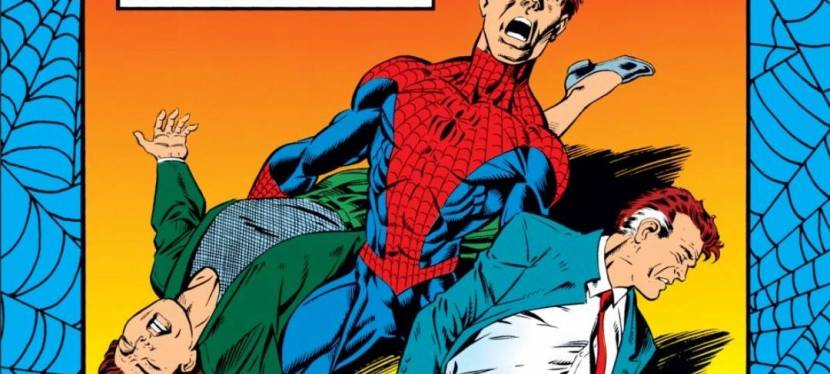
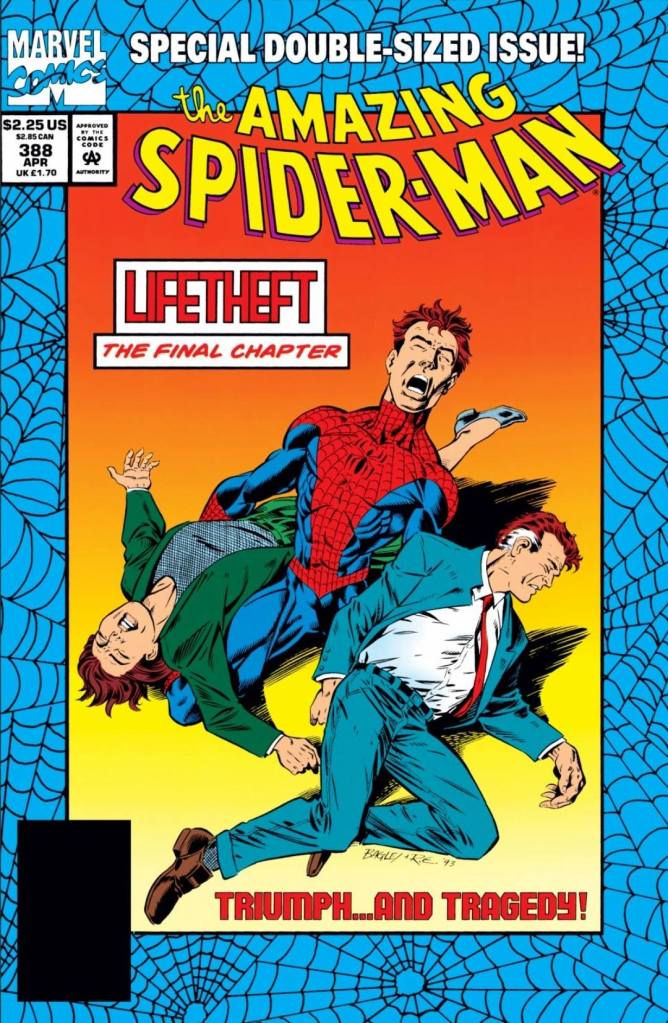
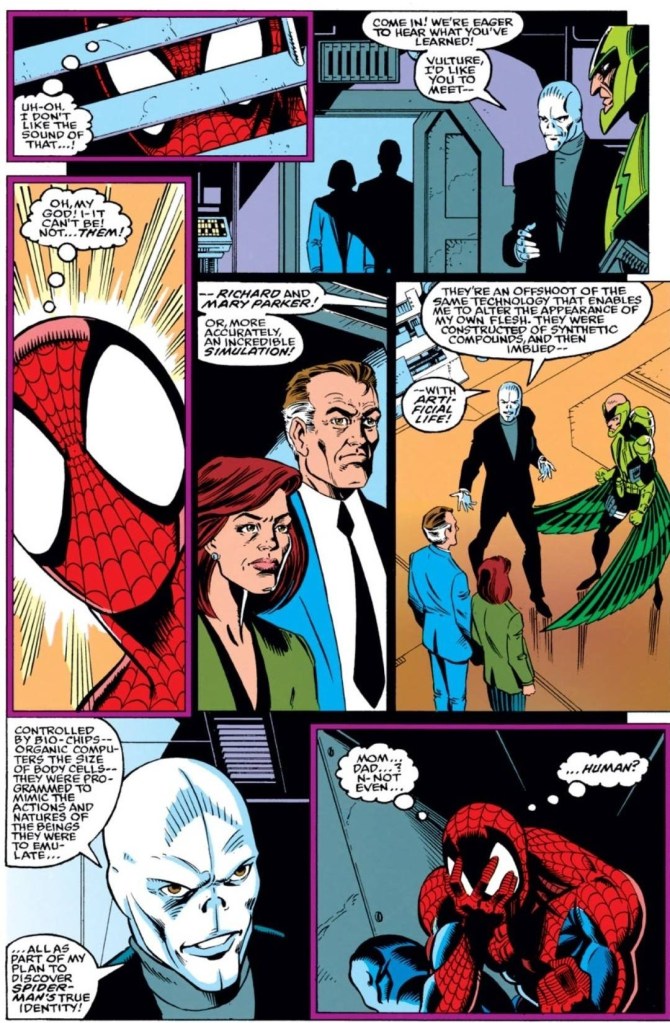
As revealed in Amazing Spider-Man #388, Richard and Mary Parker – who spent some time living with Peter Parker’s family after suddenly emerging from nowhere – were not Peter’s parents but androids designed to look, act and feel human. They were life model decoys (LFDs) programmed infiltrate Peter’s life until they learn Spider-Man’s true identity. As programmed, they reported to their master the Chameleon. Just seconds before Richard revealed the secret identity, Spider-Man suddenly interfered and this led to a series of violent acts.
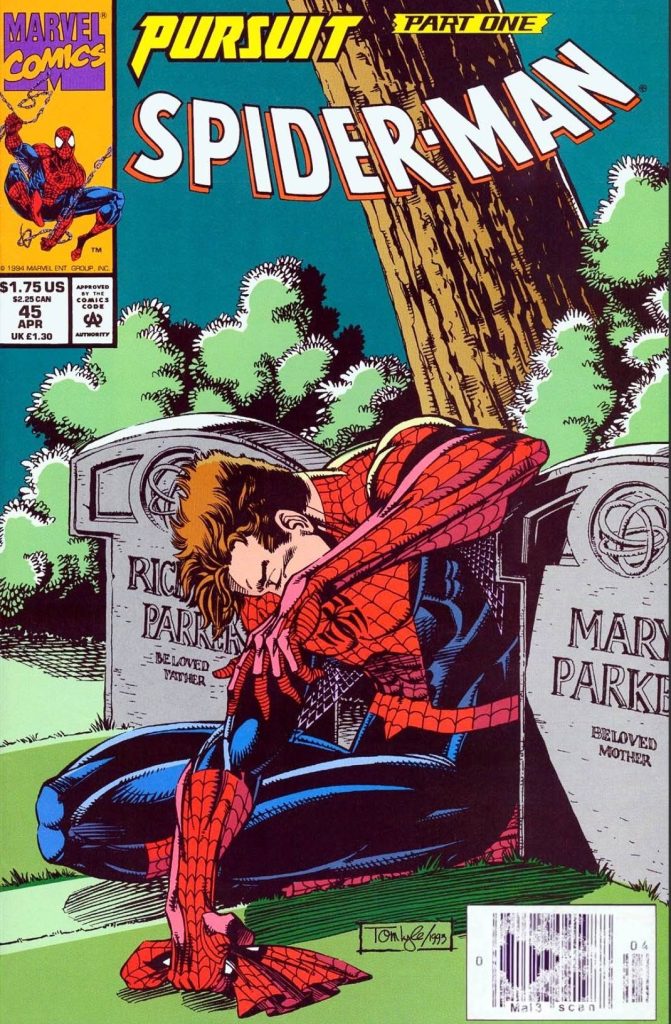
With those details laid down, here is a look back at Spider-Man #45, published in 1994 by Marvel Comics with a story written by Howard Mackie and drawn by the late Tom Lyle. This is the first chapter of the Pursuit storyline.
Early story
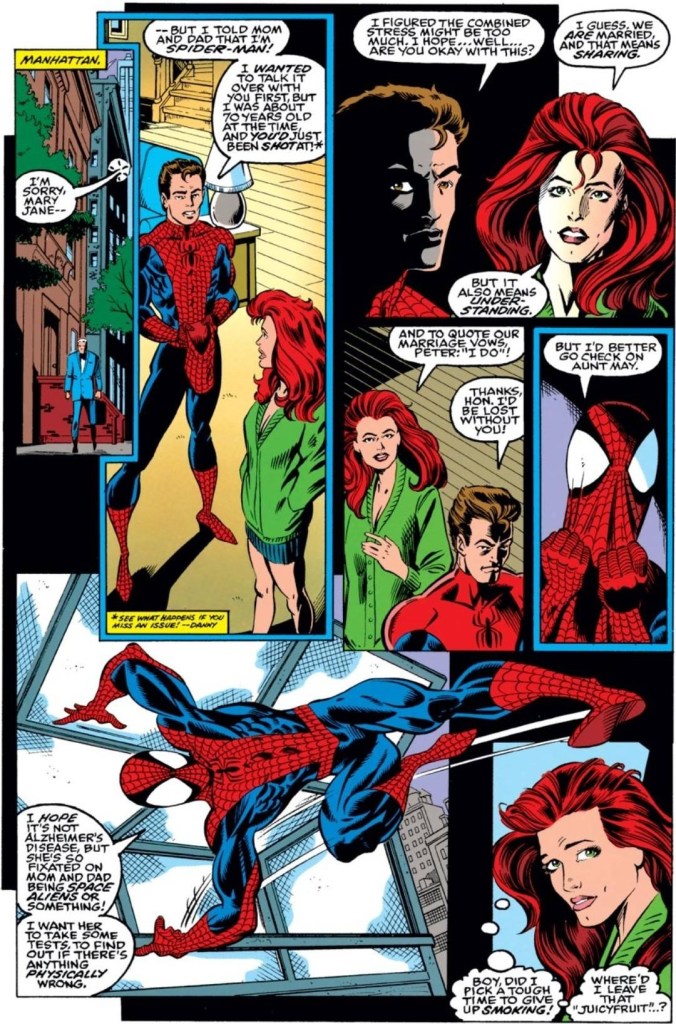
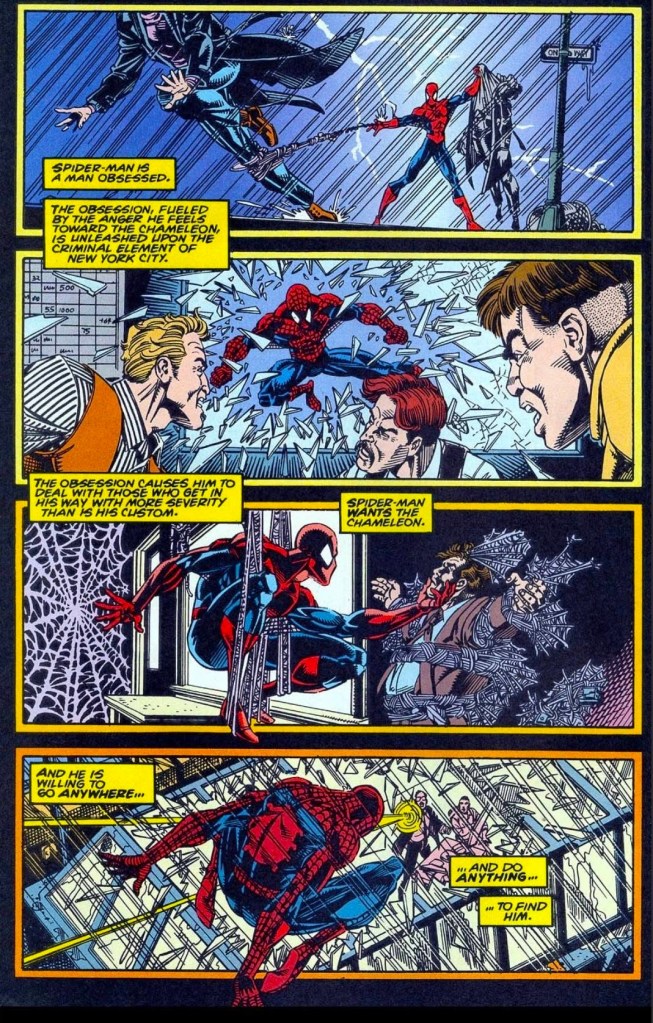
The story begins moments after the huge conflict that happened. A very broken-hearted Spider-Man realized that “Mary” and “Richard” were impostors and his actual parents have long been gone. He is also concerned about how his Aunt May will handle the truth about Richard and Mary. Deep inside him, a desire for vengeance against the Chameleon is growing.
As he swings from one building to another in New York City, Peter Parker begins to realize that his role as Spider-Man is turning into a farce. He begins his obsession of hunting down the Chameleon and stopping him until he keeps him out of his life for good…
Quality
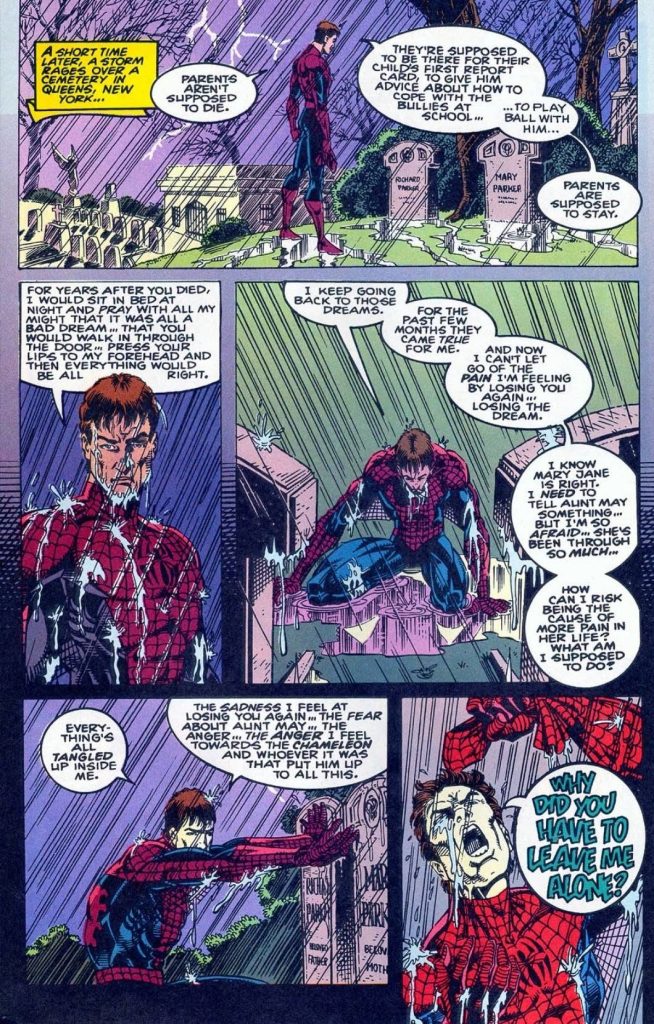
To make things clear to everyone, this tale does not have the long-running friendly neighborhood Spider-Man. Instead, we have the iconic webslinger who is deeply hurt and the pain he carries motivates him to pursue the Chameleon (who is responsible for reviving the deep pain Peter felt after his parents died). It is clearly a pursuit for vengeance and the writing by Howard Mackie is very believable.
That said, readers will not only see Peter Parker wanting vengeance but also his dark side emerge. Carrying over the tragedy that happened in Amazing Spider-Man #388, Mackie and Lyle precisely crafted a story that had a very dramatic and radically different Peter Parker. Peter even shouts at his wife Mary Jane and struggles with revealing the details of the tragedy to his beloved Aunt May. When he goes out as Spider-Man to find answers, he approaches crooks aggressively and with more violence than before. In short, Spider-Man here lacks restraint and really looks like he could become a public menace.
That said, the portrayal of a very broken Peter Parker here can be alienating even to long-time Spider-Man fans.
Along the way, the Mackie-Lyle duo managed to develop the Chameleon not only as Spider-Man’s target but also as his most cunning and very diabolical enemy yet. The Chameleon (first appearance in 1963’s Amazing Spider-Man #1) is very prominently shown here which is quite meaningful because he is the very first super villain to encounter the webslinger. The long-time villain is very organized and has set up a trap for Spider-Man. The Chameleon also has his own obsession versus Spider-Man and his personal connection with Kraven the Hunter has a lot of depth to the story. As such, there are common elements that the webslinger and the evil master of disguise share.
Conclusion
Spider-Man #45 (1994) is clearly a very engaging read even though its concept of Spider-Man wanting vengeance can be a turnoff to some readers. For one thing, the script Howard Mackie wrote has a lot of depth and Tom Lyle brought it to life with a fine art style. Having seen the 1989 movie Licence to Kill, I noticed the similarities Spider-Man has with Timothy Dalton’s James Bond when it comes to executing a private vendetta. That said, I enjoyed what was presented in this comic book. Indeed, this tale was published at a time when the dynamics of superhero storytelling in the 1990s changed dramatically moving towards tragedy, disaster and death. It is clearly a product of its time and anyone who wants to read a dark and gritty Spider-Man portrayal should go for this. As such, I am convinced to read on with the Pursuit storyline.
Overall, Spider-Man #45 (1994) is recommended.
+++++
Thank you for reading. If you find this article engaging, please click the like button below, share this article to others and also please consider making a donation to support my publishing. If you are looking for a copywriter to create content for your special project or business, check out my services and my portfolio. Feel free to contact me with a private message. Also please feel free to visit my Facebook page Author Carlo Carrasco and follow me on Twitter at @CarloCarrascoPH as well as on Tumblr at https://carlocarrasco.tumblr.com/ and on Instagram at https://www.instagram.com/authorcarlocarrasco