A Look Back at Total Recall Movie Special #1

Disclaimer: This is my original work with details sourced from reading the comic book, watching the movie and doing personal research. Anyone who wants to use this article, in part or in whole, needs to secure first my permission and agree to cite me as the source and author. Let it be known that any unauthorized use of this article will constrain the author to pursue the remedies under R.A. No. 8293, the Revised Penal Code, and/or all applicable legal actions under the laws of the Philippines.

I already published that I really love the 1990 sci-fi action movie Total Recall which starred Arnold Schwarzenegger, Sharon Stone, Michael Ironside and Rachel Ticotin under the direction of the highly talented Paul Verhoeven. The movie is one of my all-time favorites and most notably it has aesthetics that are totally unique mainly due to the combined expressions and artistry of Schwarzenegger and Verhoeven. Behind it all, Total Recall would not have been realized without the short story We Can Remember It For You Wholesale written by the late sci-fi author Philip K. Dick whose published works led to other movies from Hollywood.

As part of a business strategy, Total Recall also had multi-media releases in the form of a novel (by Piers Anthony), video games and a comic book published by DC Comics. Very recently I was able to finally read the comic book adaptation of the film titled Total Recall Movie Special . It had a cover that was technically a copy of the American movie poster with Arnold Schwarzenegger’s face dominating it and it came with a cover price of $2.95 which was pretty high for 1990.

Is the comic book adaptation any good? Does it capture the essence of the blockbuster film? We can find out by finally starting this look back at Total Recall Movie Special , published in 1990 by DC Comics with a story written by Elliot S. Maggin and drawn by the late Tom Lyle (read my first article of Lyle’s work).

Cover
The cover of the comic book.

Early story

The story begins on the surface of planet Mars where a man and a woman (both wearing space suits) walk together heading towards an unknown destination. Suddenly a small stone cracks the glass face shield of the man’s helmet exposing him to the deadly atmosphere of Mars.

2
Like in the movie, Douglas Quaid and Lori wake up.

It turns out it was just a dream for Douglas Quaid who was in bed with his wife Lori. The dream turned out to be a recurring one as Lori asked him if the dream lady was in there again. Lori then asked Doug who the dream lady was. A short time later, Doug reports to work and while doing construction work on the field, he asked a colleague about Rekall (note: he saw a video ad of it on his way to work). The guy told Doug about someone getting lobotomized at Rekall and discouraged him from availing of their service.

7
Douglas Quaid at Rekall for his virtual holiday.

Doug eventually visits Rekall after work and availed of their virtual holiday as a secret agent. Something goes wrong as Doug goes berserk while strapped on one of Rekall’s seats. Dr. Lull (in-charge of the operation) explains to her boss that Doug was not acting out his virtual holiday as her team has not even implanted it yet on him…

Quality

14
The bad guys on the hunt for Douglas Quaid.

When it comes to presenting the story, Elliot S. Maggin clearly paid close attention to the details, the plot and dialogue of the movie while implementing adjustments along with artist Tom Lyle to make the story work in comic book format. Clearly, this is not a word-for-word, scene-for-scene adaptation but it comes close to capturing the essence of the film. Unsurprisingly, the comic book adaptation never captured the unique Schwarzenegger-Verhoeven aesthetics of the movie but it still performed well on replicating the sci-fi, hard action moments. I find it surprising that Total Recall Movie Special carried the seal of approval of the Comics Code Authority (CCA) as there were some bloody shots and several moments of strong violence inspired by the R-rated film.

When it comes to the visuals, Tom Lyle succeeded in capturing the sci-fi look of the movie and even had the literary Douglas Quaid occasionally resemble Arnold Schwarzenegger. Lyle’s drawings on other characters like Lori, Melina, Coohagen and Richter looked NOTHING like the actors who played them but that’s not a problem at all as this gives this comic book its own unique touch. In fact, there were some drawings of people that sometimes reminded me of what I saw in EC Comics’ Weird Science comic books.

While Lyle scored nicely with the action scenes, his own drawings of planet Mars and the human colony are quite nice to look at. With regards to the urban environment, Lyle drew a nice mix of 20th century inspired urban areas laced with futurism. Unsurprisingly, the futurism got stronger when the story was set in Mars.

If there is anything lacking with the art, it would be visual dynamism. This can be forgiven however given the high amount of dialogue and story details that had to be presented with each page carrying a lot of panels.

Conclusion

23
The human colony in planet Mars.

I can say it out loud that Total Recall Movie Special is a fun read and serves nicely as a literary companion to the cinematic masterpiece Total Recall. As a comic book adaptation of a blockbuster movie, this one is pretty good and in some ways captured some of the flair of the film even as it never successfully replicated the Verhoeven-Schwarzenegger aesthetic in the film. Really, if you want the best of Total Recall you really should watch the movie. This comic book on its own is entertaining and should encourage you to watch the film.

If you are seriously planning to buy an existing hard copy of Total Recall Movie Special (1990), be aware that as of this writing, MileHighComics.com shows that the near-mint copy of the regular edition costs $11 while the near-mint copy of the newsstand edition costs $31. If you are looking for something more valuable, the near-mint copy of the numbered-and-signed edition of the comic book costs $51.

Overall, Total Recall Movie Special (1990) is highly recommended!


Thank you for reading. If you find this article engaging, please click the like button below and also please consider sharing this article to others. If you are looking for a copywriter to create content for your special project or business, check out my services and my portfolio. Feel free to contact me as well. Also please feel free to visit my Facebook page Author Carlo Carrasco and follow me at HavenorFantasy@twitter.com
A Look Back at X-Men 2099 #35 (1996)

Disclaimer: This is my original work with details sourced from reading the comic book and doing personal research. Anyone who wants to use this article, in part or in whole, needs to secure first my permission and agree to cite me as the source and author. Let it be known that any unauthorized use of this article will constrain the author to pursue the remedies under R.A. No. 8293, the Revised Penal Code, and/or all applicable legal actions under the laws of the Philippines.

This is it! The thirty-fifth and final issue of the X-Men 2099 monthly series from Marvel Comics is at hand. How times have changed in the American comic book industry back in the 1990s. When X-Men 2099 #1 was released in 1993, there was still good demand and room for expanding the 2099 imprint beyond the pioneering characters Spider-Man 2099, Punisher 2099, Ravage 2099 and Doom 2099. By the time the X-Men 2099 series came to an end, Marvel Comics was in turmoil internally and several 2099 series talents behind the scenes left as a result of the termination of 2099 line editor Joey Cavalieri.

With the short history lesson done, we can now take a look back at X-Men 2099 #35, published in 1996 by Marvel Comics with a story written by John Francis Moore (who wrote ALL the series’ issues) and drawn by Jan Duursema.

Cover
The cover.

Early story

The story begins with some members of the X-Men facing off with Darkson (his name is Joaquim, the accelerated grown-up son of Metalhead and Rosa) and his evil mentor Vulcan. Following Vulcann’s command, Darkson lets go of Luna (who was carried earlier by him) who lands on the ground in a weakened state and was approached by Krystallin. In reaction, Krystallin launches some crystals to Vulcann and Darkson but got blocked by a protective aura.

The X-Men realize that Darkson is as potentially dangerous as Zhao. Darkson then strikes at Bloodhawk with a psionic blast and then attacks the other X-Men…

Quality

7
Two X-Men veterans and one X-Nation member in a scene.

In terms of storytelling, John Francis Moore did what he could with all the plot details and with what was built up during the previous issues leading to this issue’s final conflict. The problem, however, is that the pay-off was ultimately unsatisfactory.

Firstly, having Vulcann and Darkson parallel God and Jesus (complete with doing something about the destiny of people who need saving, which in this comic book referred to the futuristic mutants) in a twisted fashion was just hollow and never engaging. Secondly, the way the X-Men members got together was very rushed in execution. Thirdly and more importantly, the final conflict was pretty shallow and only led to a sequel-bait ending designed to lead into 2099: World of Tomorrow .

If you are looking for superhero spectacle, you will find some here but they all feel rushed and unsatisfying. If you care about key X-Men 2099 characters like Skullfire and Xi’an, the way they developed and appeared here will disappoint you. In fairness, Shakti remains the strong-willed mutant as before.

To say the least, there was an effort to emphasize what was at stake for the mutants of 2099 living in Halo City and there was also the idea that the world was coming to an end. The problem here was the execution as the comic book basically showed the X-Men in the presence of Vulcann and Darkson. There was no epic battle here at all and the climax at the end clearly showed rush and even a lack of creativity (note: most likely due to the internal turmoil at Marvel at the time).

Conclusion

2
Vulcan and Darkson (carrying the X-Men’s Luna).

I should say that X-Men 2099 #35 is indeed a disappointing conclusion not only to its series but also in the final conflict the X-Men had with Vulcann and Darkson. The pay-off was very unsatisfying and it did not help that this comic book served as just another build-up leading to another Marvel 2099 publication. By the time the conflict ended, I did not care much about the X-Men which, for the most part, became irrelevant. This is too bad because in issue they were very interesting and (after some stories of misadventures showing the X-Men members separated) they became interesting again with the events in issue .

If you are seriously planning to buy an existing hard copy of X-Men 2099 #35 (1996), be aware that as of this writing, MileHighComics.com shows that the near-mint copy of the regular edition costs $17 while the near-mint copy of the newsstand edition costs $51.

Overall, X-Men 2099 #35 (1996) is unsatisfying. I don’t recommend spending a lot of money for it. Better save your money.


Thank you for reading. If you find this article engaging, please click the like button below and also please consider sharing this article to others. If you are looking for a copywriter to create content for your special project or business, check out my services and my portfolio. Feel free to contact me as well. Also please feel free to visit my Facebook page Author Carlo Carrasco and follow me at HavenorFantasy@twitter.com
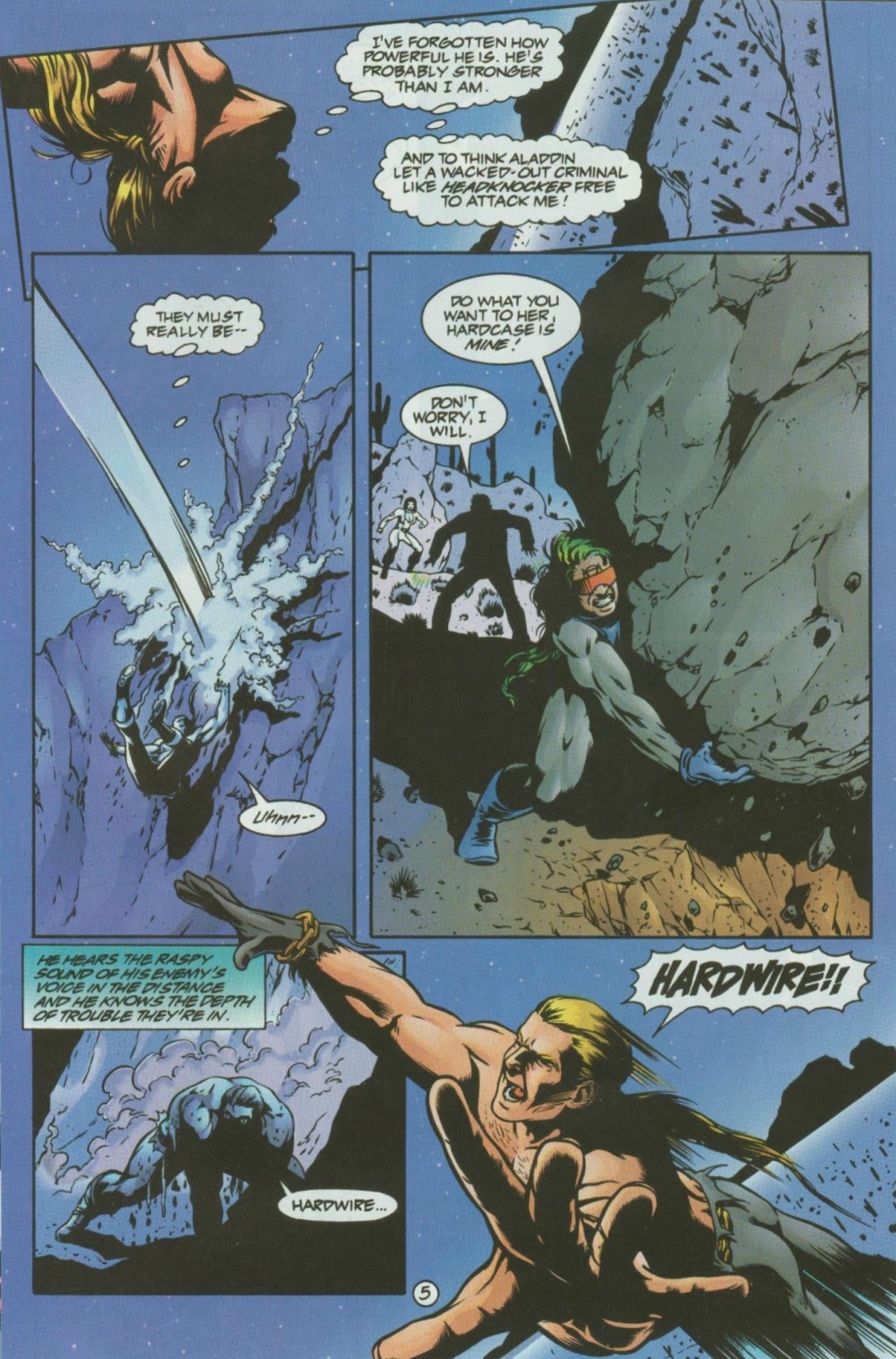
A Look Back at Hardcase #10 (1994)

Disclaimer: This is my original work with details sourced from reading the comic book and doing personal research. Anyone who wants to use this article, in part or in whole, needs to secure first my permission and agree to cite me as the source and author. Let it be known that any unauthorized use of this article will constrain the author to pursue the remedies under R.A. No. 8293, the Revised Penal Code, and/or all applicable legal actions under the laws of the Philippines.

Having read the first several issues of Hardcase, I must say that the late James Hudnall did an incredible job on developing the titular character. Hardcase #9 was very memorable as it marked a turning point in Hardcase’s life and the further development of his relationship with Choice, the lady he has been helping for some time. That particular comic book had a powerful ending as well.

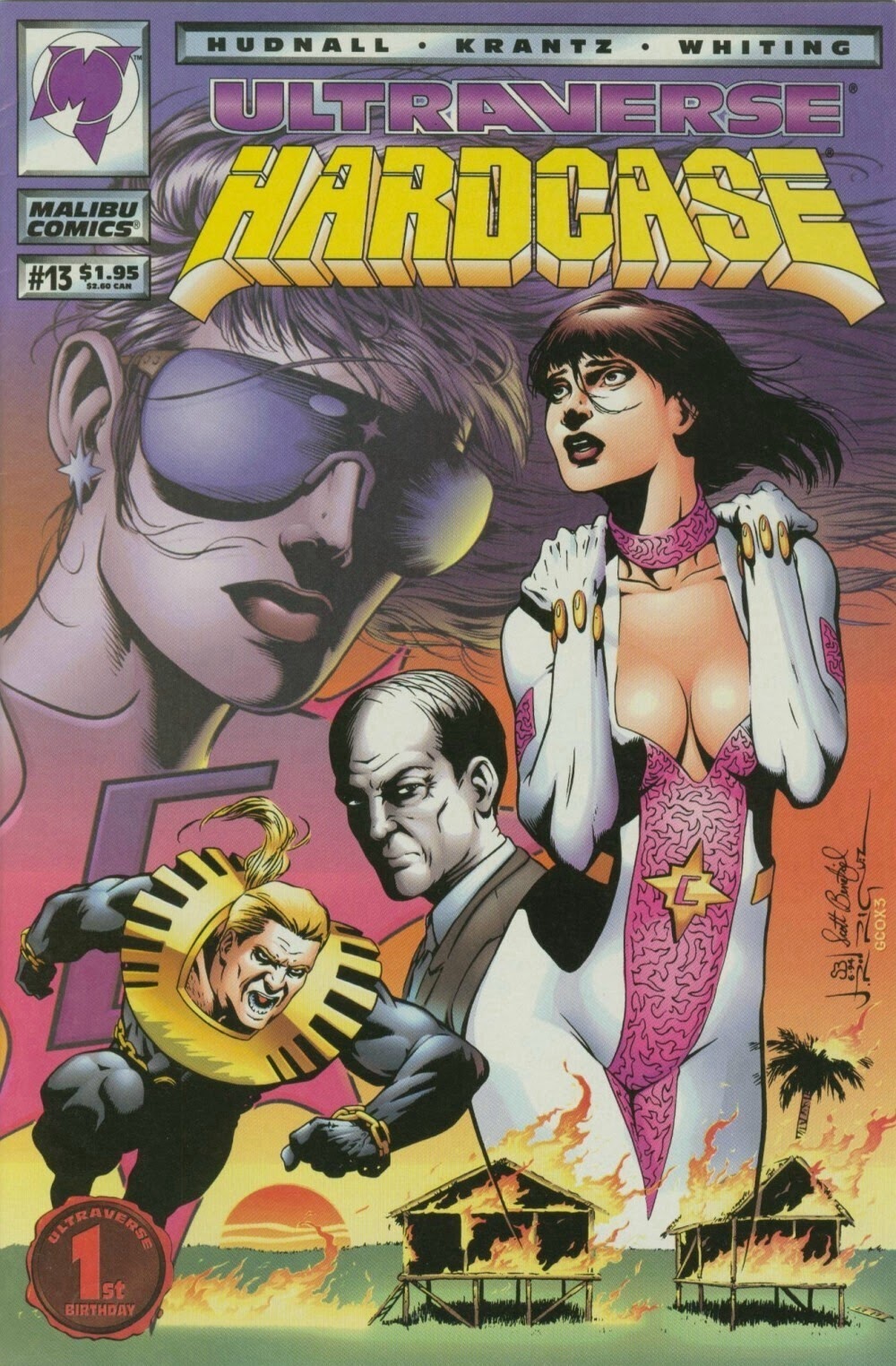
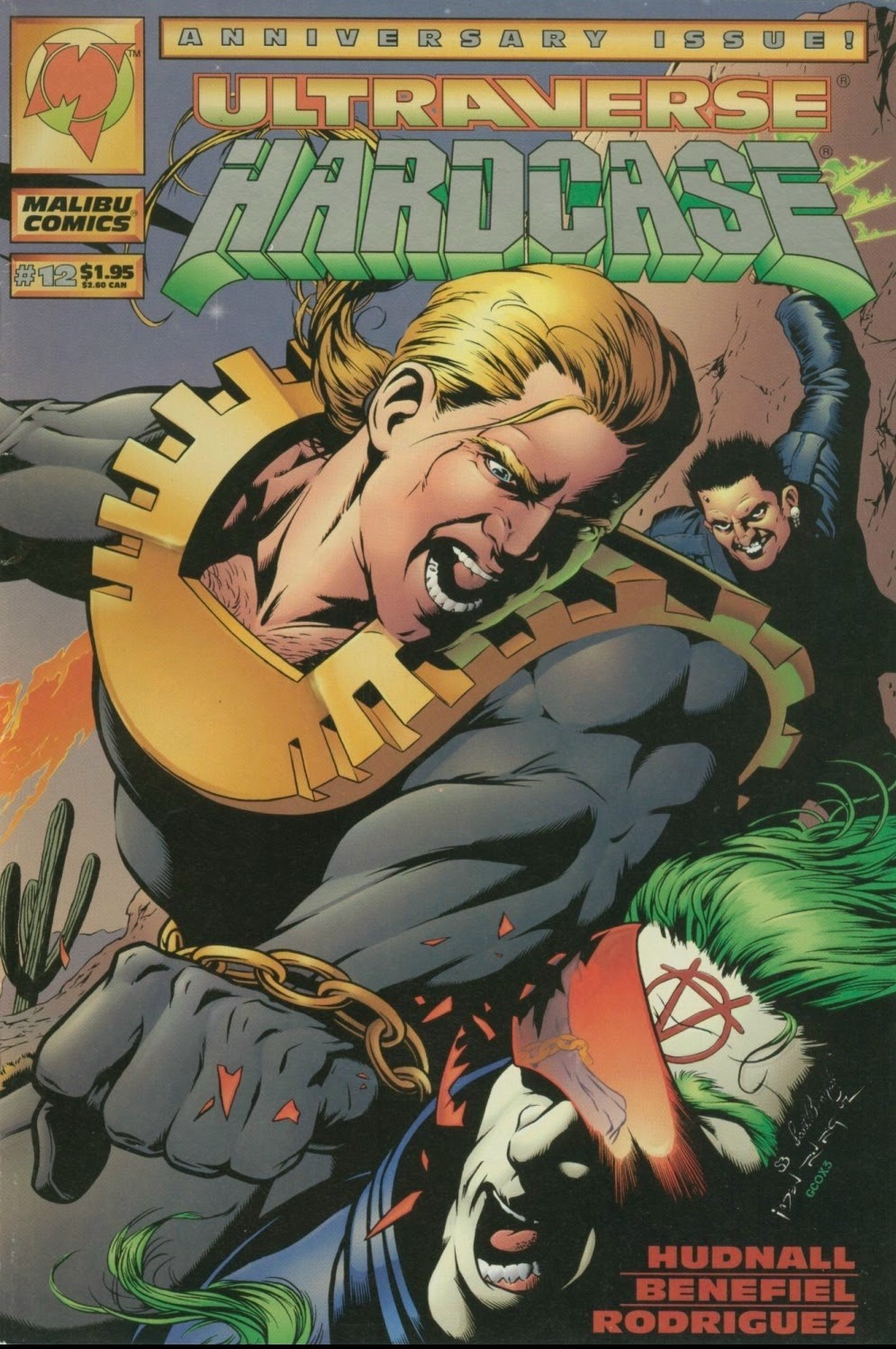
That being said, now we can take a look back at Hardcase , published in 1994 by Malibu Comics with a story written by James Hudnall and drawn by Kelly Krantz.

Cover
The cover.

Early story

The story begins with Tom Hawke/Hardcase being spied on electronically by Aladdin. It turns out, the secret organization has been spying on him for eight weeks as they viewed him as a potential danger to them given his ultra abilities, his capability of solving mysteries and recent interactions he had with other existing ultras. Aladdin continues to collect more data needed to launch a pre-emptive strike against Hardcase.

Meanwhile, Hardcase and Choice start a heartful talk about some serious, personal matters now that they are in a relationship. Choice admits that her memories of the past have been coming back since they returned from the moon.

Quality

13
Choice and Hardcase in a dramatic scene.

I’ll say it straight here – this comic book is full of character development laced with mystery and intrigue. It clearly lacks superhero action (which issue had so much of) but that is NOT a problem at all. This is because James Hudnall’s script is truly compelling to read and his writing was successfully brought to life visually by Kelly Krantz. Not even the slowest scenes felt boring.

What I enjoyed a lot here, apart from character development, are the flashbacks presented as Choice recalled the past. They were very well written and moved at a nice pace. The more the past of Choice was revealed, the more I wanted to discover. The same goes with how the past fit smoothly with Hardcase’s search for answers. It’s really great writing done by Hudnall.

Conclusion

2
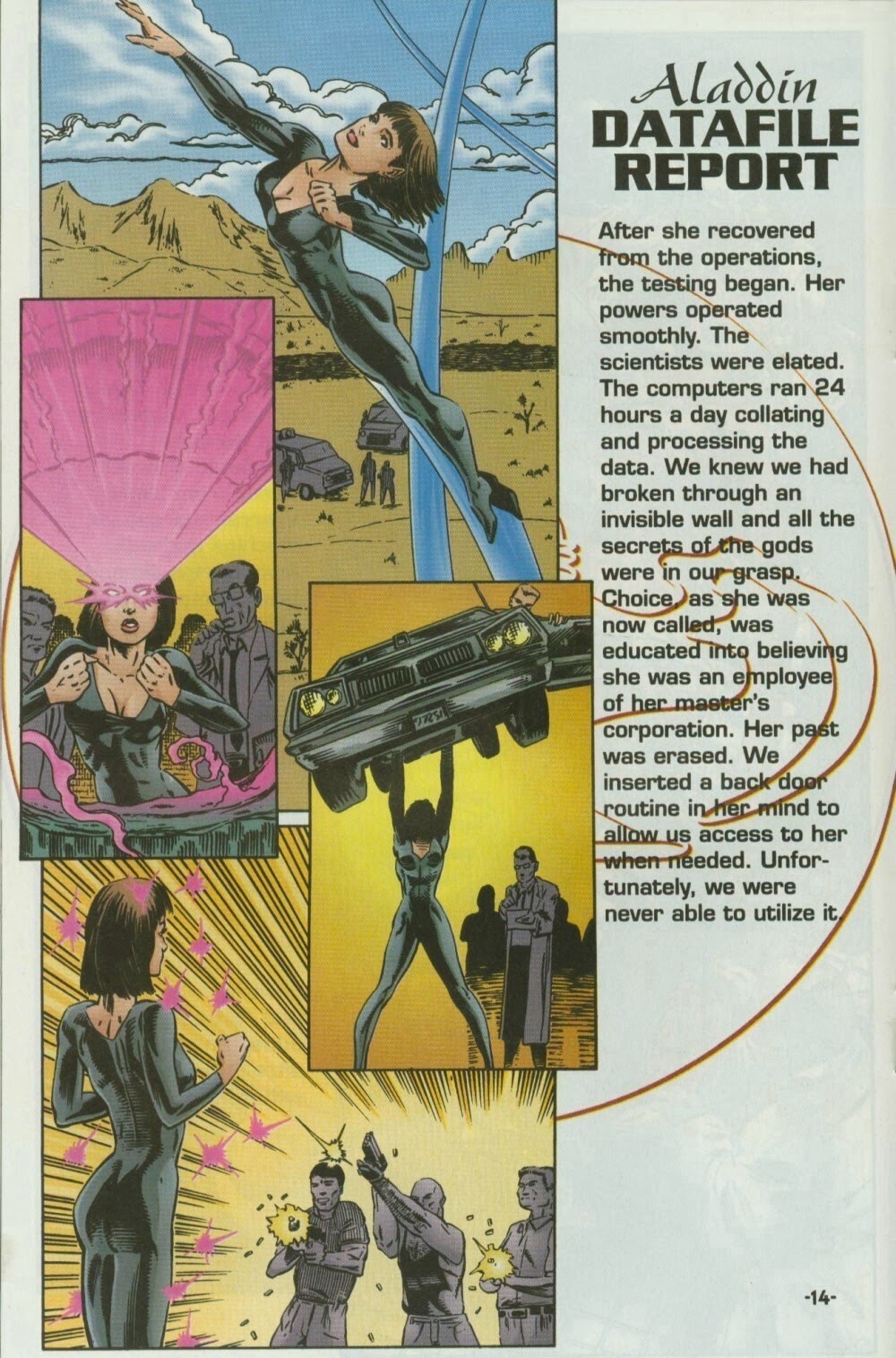
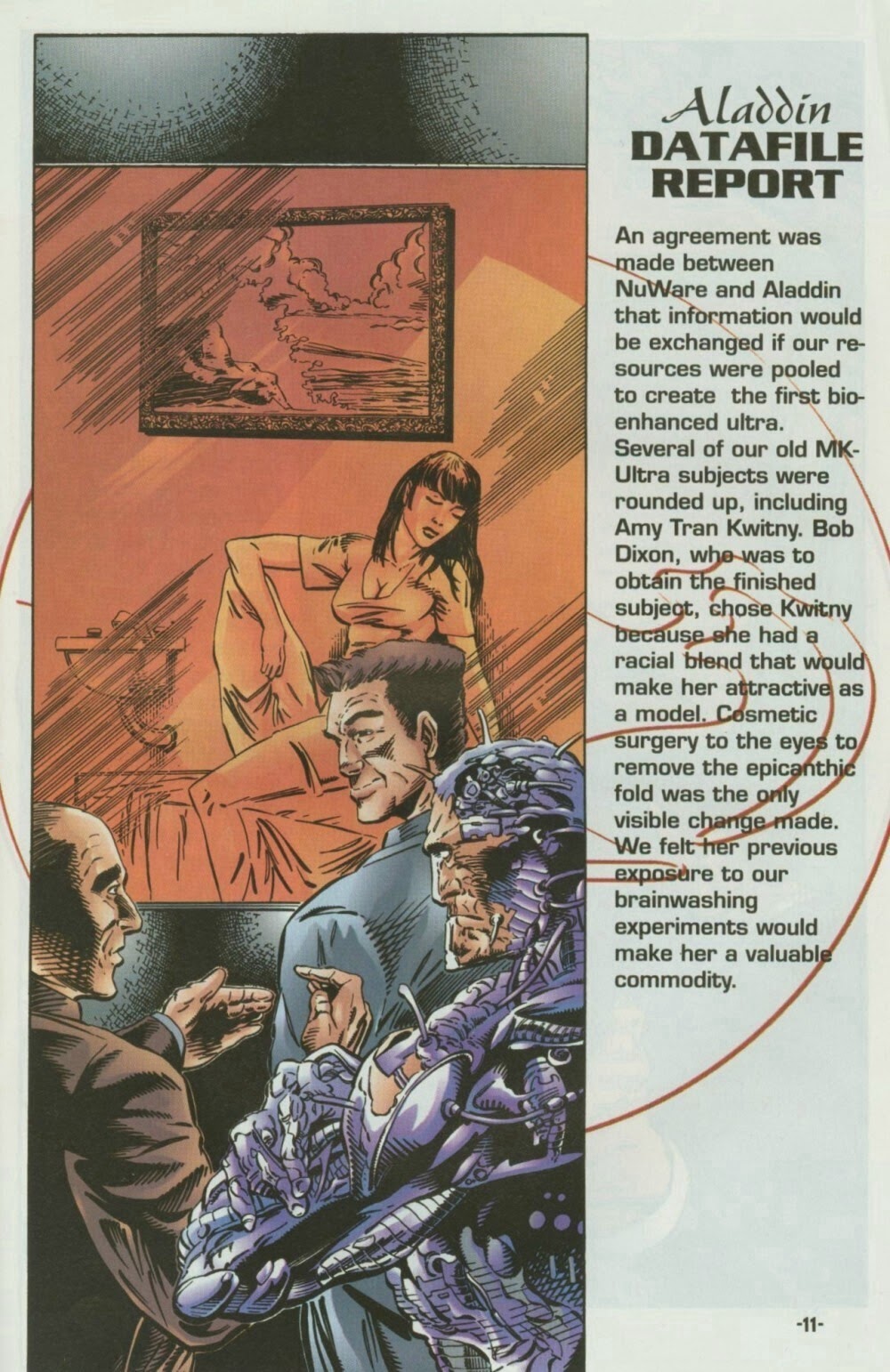
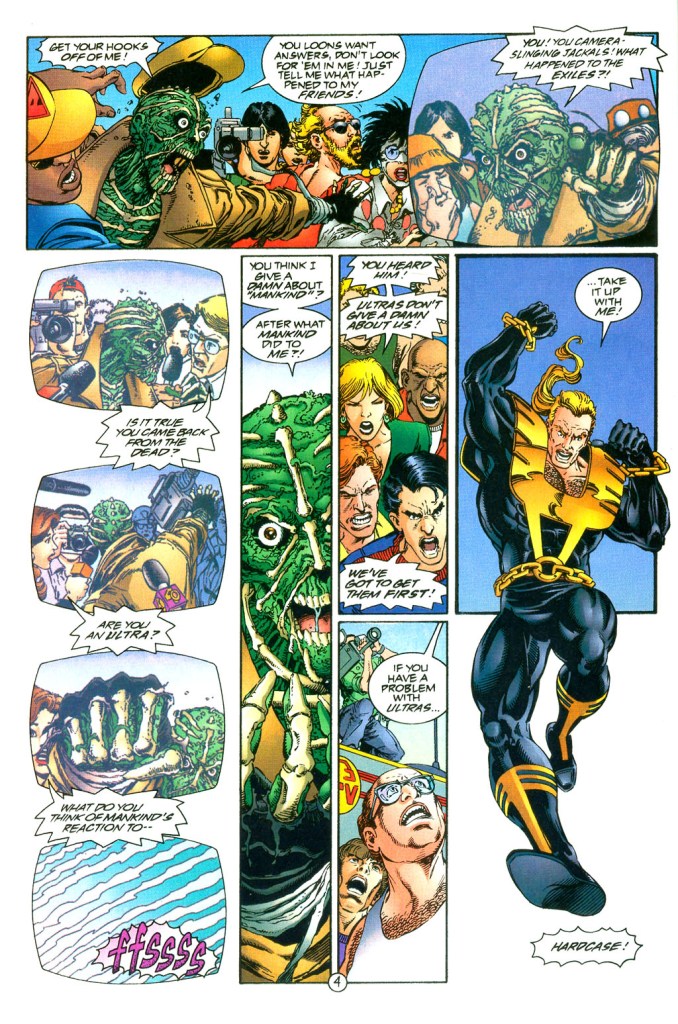
Really nice visual presentation of how Aladdin spies on Hardcase. This was long before Wikileaks and the modern age of electronic surveillance.

No doubt about it. Hardcase is a great read! It has almost no superhero spectacle but the story, characterization, suspense and intrigue all more than made up for it. Other than exploring the deepening relationship between the Hollywood ultra and Choice, this comic book is one of the most defining stories about the secret organization Aladdin and what it has been doing behind the scenes. How Aladdin is portrayed, you really have to read the comic book and I assure you all, it is worth discovering on your own!

If you are seriously planning to buy an existing hard copy of Hardcase (1994), be aware that as of this writing, MileHighComics.com shows that the near-mint copy of the regular edition costs $4 while the near-mint copy of the newsstand edition costs $11.

Overall, Hardcase (1994) is highly recommended!


Thank you for reading. If you find this article engaging, please click the like button below and also please consider sharing this article to others. If you are looking for a copywriter to create content for your special project or business, check out my services and my portfolio. Feel free to contact me as well. Also please feel free to visit my Facebook page Author Carlo Carrasco and follow me at HavenorFantasy@twitter.com
A Look Back at Prototype #6 (1994)

Disclaimer: This is my original work with details sourced from reading the comic book and doing personal research. Anyone who wants to use this article, in part or in whole, needs to secure first my permission and agree to cite me as the source and author. Let it be known that any unauthorized use of this article will constrain the author to pursue the remedies under R.A. No. 8293, the Revised Penal Code, and/or all applicable legal actions under the laws of the Philippines.

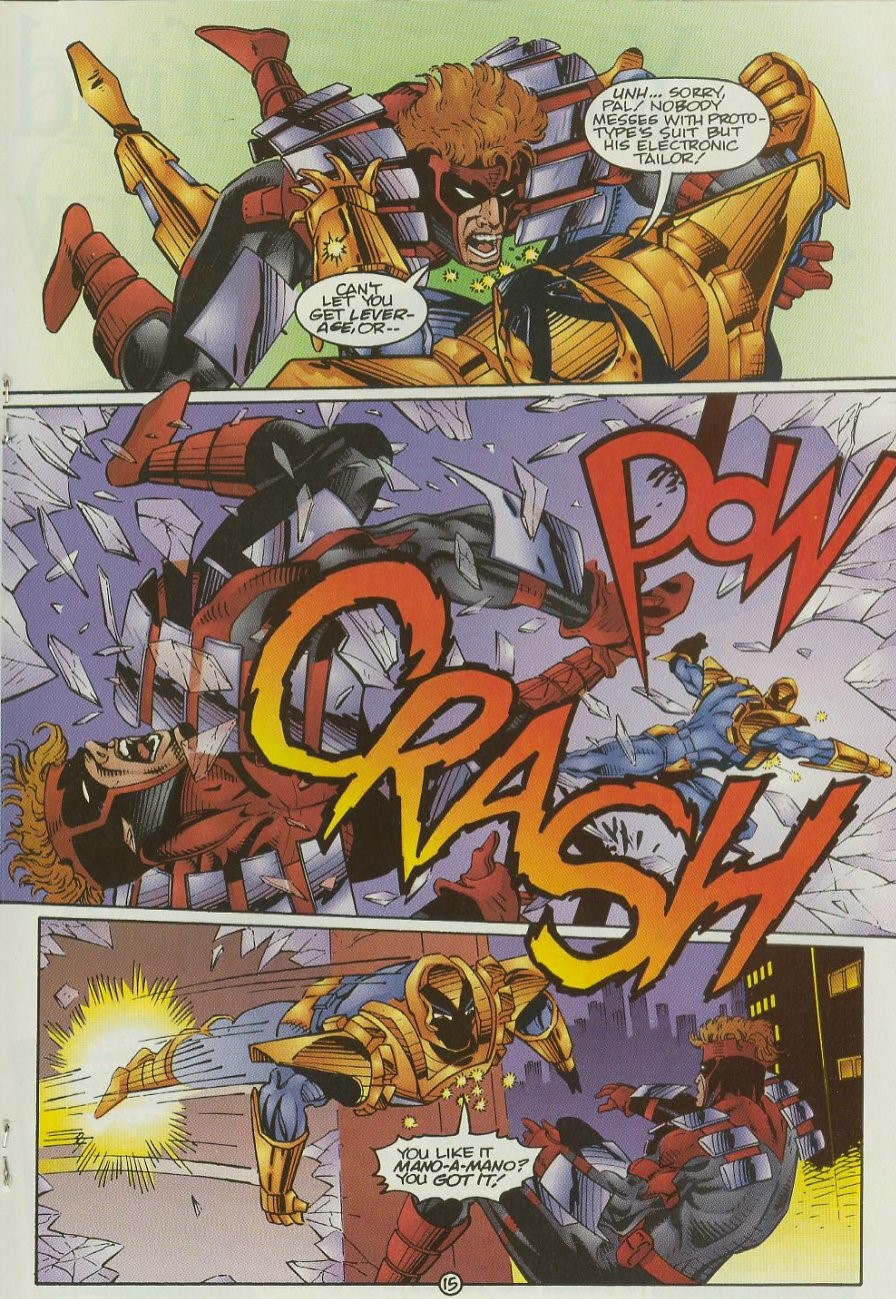
Wrapping up the details after the end of a major crossover is undoubtedly challenging for any comic book creator. Doing such aftermath work includes settling the interaction between characters from different comic book series, explaining the details behind what happened, how the event itself affected the rest of the comic book universe and more. The crossover I’m referring to her specifically is Break-Thru, the memorable year-ender story of the Ultraverse.

This time, we will see the post-Break-Thru side through the armored hero of the Ultraverse in this look back at Prototype , published in 1994 by Malibu Comics with a story co-written by Len Strazewski and Tom Mason, and drawn by Roger Robinson.

Cover
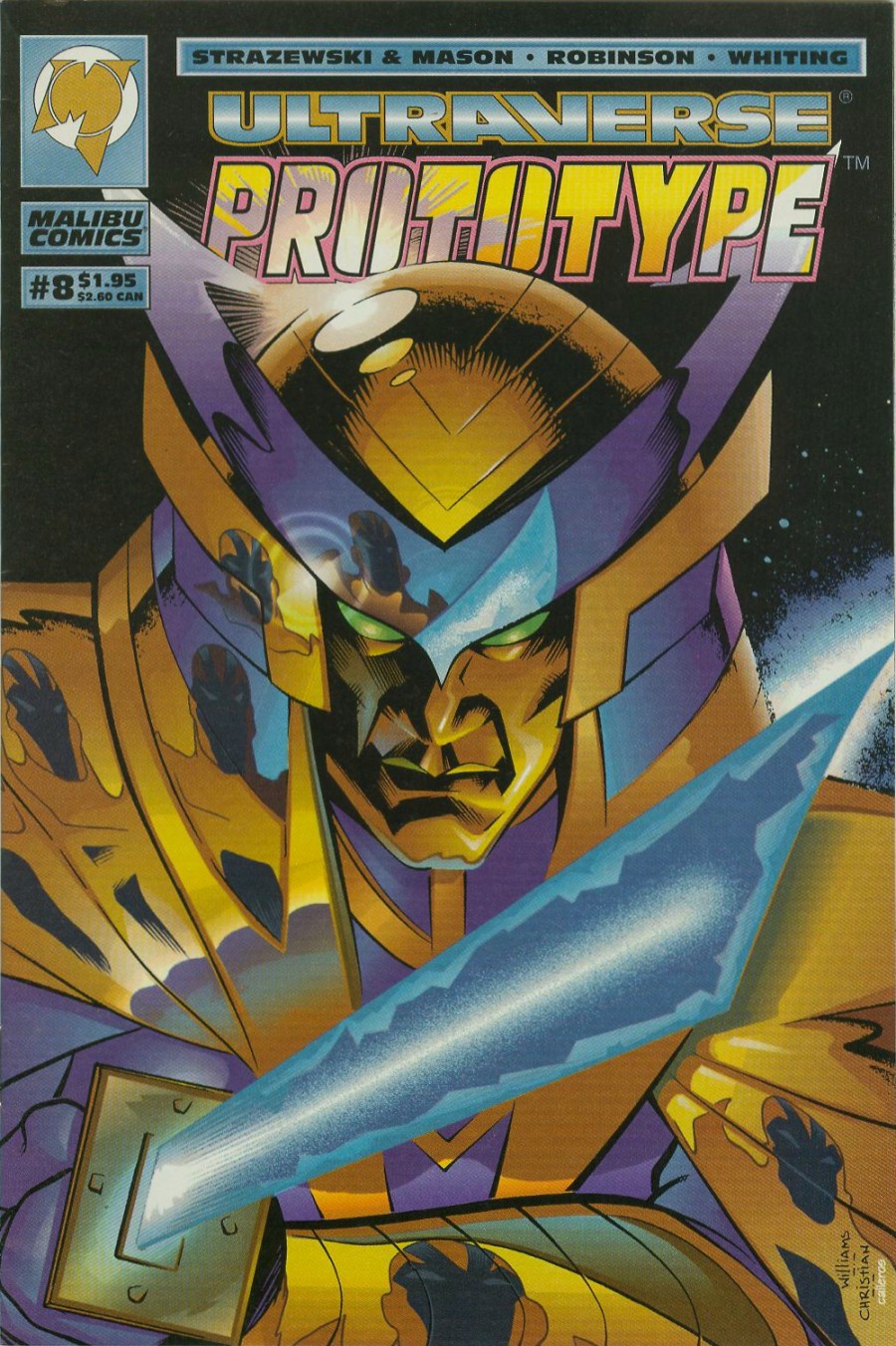
The cover.

Early story

The story begins just hours after the ultras of Earth fought the epic battle on the moon. Prototype and Prime fly their way back to Earth, with the latter serving as a makeshift shield from the heat of re-entry. By this time, the two ultras just concluded their meeting with the Strangers back on the moon, and it was there the idea of trailing Prime was discussed. For Prototype, doing this was crazy especially since it was only days since he fought Prime back on Earth.

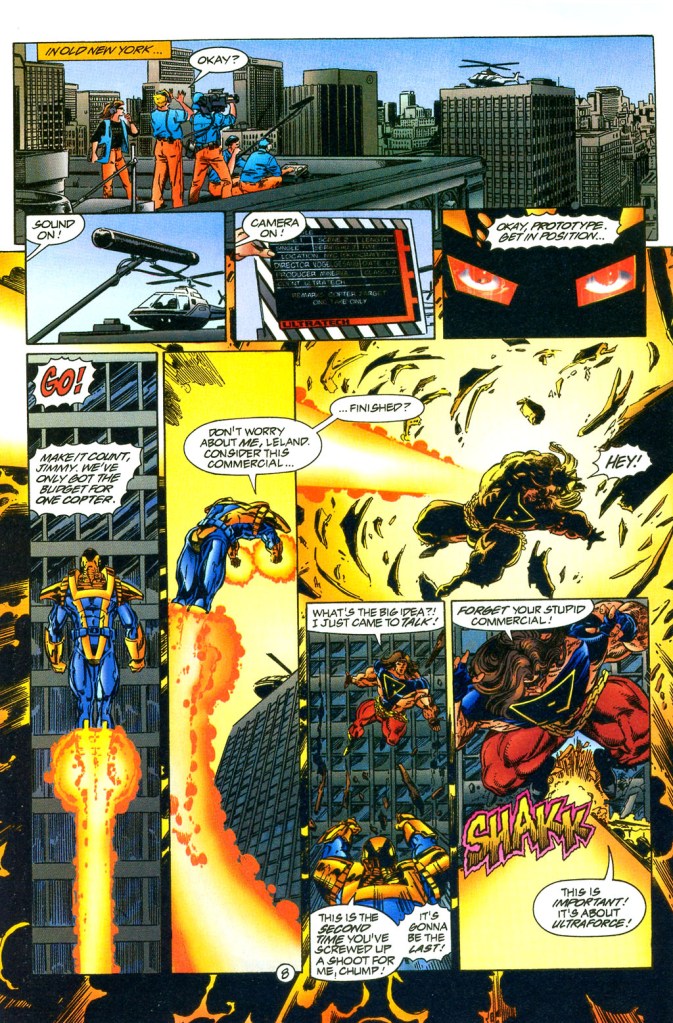
Along the way, Prototype (pilot by Jimmy Ruiz specifically) intends to talk with Stanley Leland whom he believes set him up and almost got him killed with the mission to the moon…

Quality

4
After Prototype and Prime parted ways with the Strangers…

This comic book’s story is compelling. Not only does it wrap up the details of Break-Thru through the viewpoint of Prototype, it excelled with telling the story of Bob Campbell (the original Prototype pilot). As the build-up for Bob has been established in the previous issues, his story here resulted a nice pay-off and most notably, it raises the stakes when it comes to the narrative of the Prototype series (which consistently told parallel stories of Jimmy and Bob). I also enjoyed the introduction of a new villainess as well as the continued portrayal of corporate intrigue (this alone is one of the best features of the Ultraverse narrative).

The visuals done by Roger Robinson are pretty good and they really brought the script to life. Robinson also scored well with making the action scenes look dynamic without going over the top.

Conclusion

2
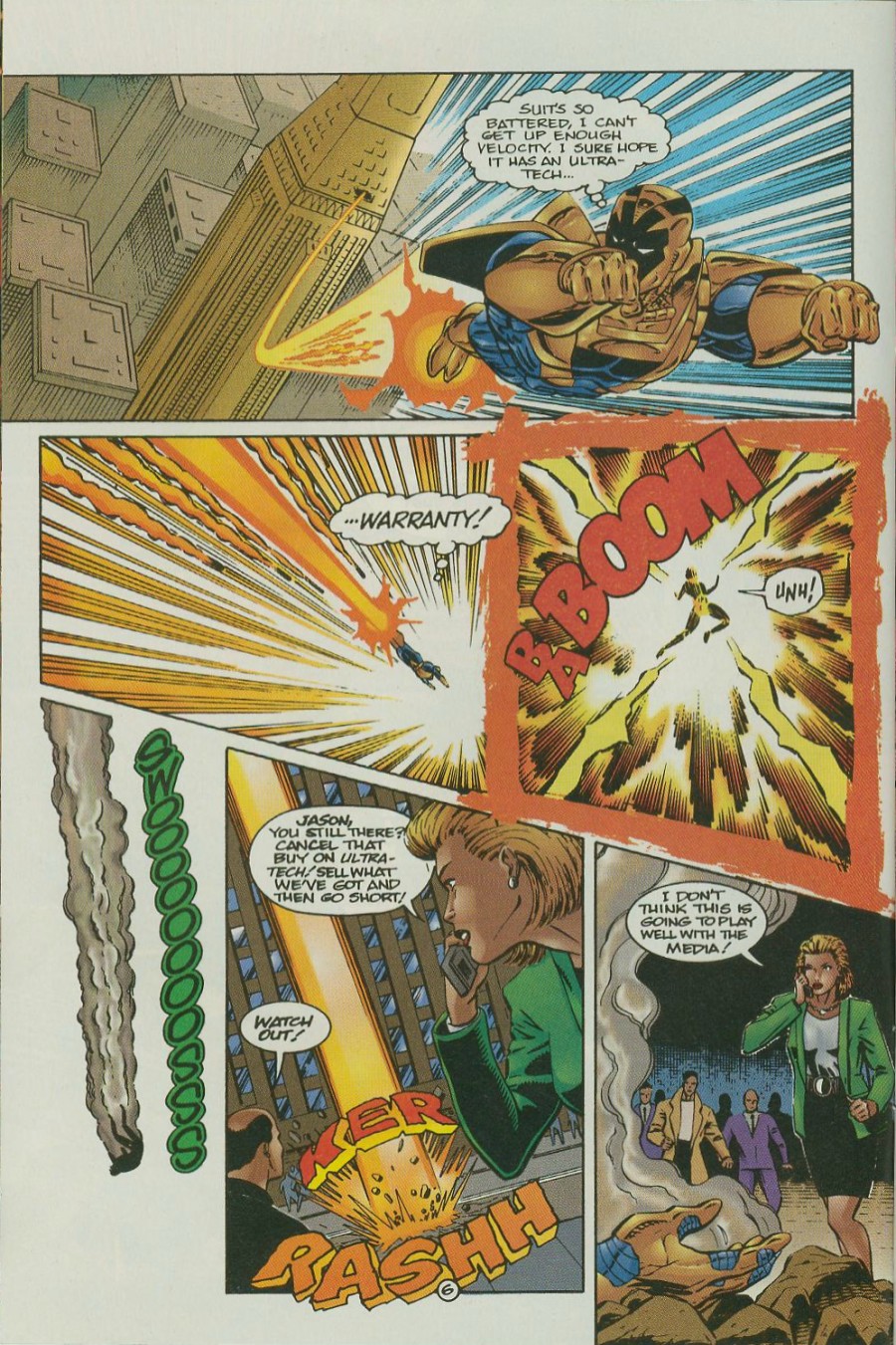
The money shot!

Prototype is a great read! Not only does it wrap up the Break-Thru crossover through Prototype, it also has solid storytelling turning points not only with Bob Campbell but also Jimmy Ruiz. There were no boring scenes and I love the way the script emphasized the culture of corporate America within the Ultraverse and how it affects ultras.

If you are seriously planning to buy an existing hard copy of Prototype (1994), be aware that as of this writing, MileHighComics.com shows that the near-mint copy of the regular edition costs $4.

Overall, Prototype (1994) is highly recommended!


Thank you for reading. If you find this article engaging, please click the like button below and also please consider sharing this article to others. If you are looking for a copywriter to create content for your special project or business, check out my services and my portfolio. Feel free to contact me as well. Also please feel free to visit my Facebook page Author Carlo Carrasco and follow me at HavenorFantasy@twitter.com
A Look Back at Hardcase #9 (1994)

Disclaimer: This is my original work with details sourced from reading the comic book and doing personal research. Anyone who wants to use this article, in part or in whole, needs to secure first my permission and agree to cite me as the source and author. Let it be known that any unauthorized use of this article will constrain the author to pursue the remedies under R.A. No. 8293, the Revised Penal Code, and/or all applicable legal actions under the laws of the Philippines.

Having reviewed the first eight issues of the Hardcase series, I should say that the title character is easily one of the best protagonists of the entire Ultraverse and the late author James Hudnall deserves credit for the storytelling and character development. Hardcase made it in CBR’s 2016 article about what is being missed from the Ultraverse.

As written in the said CBR.com article: Created by James Hudnall, Hardcase was one of the first superheroes in the Ultraverse, forming a team with some other early superheroes. They called themselves “The Squad,” and soon became extremely famous. However, tragedy struck when the team took on a powerful villain, who killed almost all of them, with only Hardcase remaining as The Squad’s only surviving member. Of his three other teammates, two died and one was comatose. He retired from being a superhero and instead became an actor, portraying himself in major motion pictures. When the Ultraverse officially began, Hardcase was pulled out of retirement to become a superhero once again.

Before he passed away on April 2019, Hudnall expressed his support for US President Donald Trump and pointed out that the media has been lying and the ones who are fascists are the rioters who attacked people since the 2016 election.

With all that information presented, let’s take a look back at Hardcase , published in 1994 by Malibu Comics with a story written by Hudnall and drawn by Brent Anderson (the same guy behind the 1982 graphic novel X-Men: God Loves, Man Kills).

Cover
The cover.

Early story

The story begins with Tom Hawke/Hardcase spending time with the comatose Linda. He tells her about what he went through recently. The narrative shifts to a few days back with his work in filmmaking. He meets with Choice whom he has gotten close with for some time.

Inside a trailer, the two discuss relationships and the complexity that comes with acting with regards to emotions.

A short time later, a huge monster attacks Hardcase in public. The monster tells him: “You’re as egotistical as all the rest. It’ll be a pleasure to send you to your grave.”

Quality

9
This is one of many scenes of action brilliantly drawn by Brent Anderson.

As the adventures with the Strangers and the Solution are over, this particular comic book served its purpose well – the further development of the relationship between Hardcase and Choice. The way Hudnall scripted this comic book showed a nice balance between romance, superhero spectacle (note: this comic book is loaded!) and the key element of maturity (with regards to dealing with love from both the past and the present).

With regards to the art, Brent Anderson’s debut with the Hardcase series is pretty solid. I like the gritty touch of the visuals he used on the characters, most notably Hardcase and Choice.

Conclusion

5
Hardcase and Choice in Hollywood.

No doubt that this is another solid Hardcase story. I enjoyed this from start to finish (which was emotionally powerful and symbolic). Hardcase marks a new turn in the life of the the title hero.

If you are seriously planning to buy an existing hard copy of Hardcase (1994), be aware that as of this writing, MileHighComics.com shows that the near-mint copy of the regular edition costs $4 while the near-mint copy of the newsstand edition costs $7.

If you are looking for original Hardcase art by Brent Anderson, click here.

Overall, Hardcase (1994) is highly recommended!


Thank you for reading. If you find this article engaging, please click the like button below and also please consider sharing this article to others. If you are looking for a copywriter to create content for your special project or business, check out my services and my portfolio. Feel free to contact me as well. Also please feel free to visit my Facebook page Author Carlo Carrasco and follow me at HavenorFantasy@twitter.com
A Look Back at RoboCop versus The Terminator #2 (1992)

Disclaimer: This is my original work with details sourced from reading the comic book and doing personal research. Anyone who wants to use this article, in part or in whole, needs to secure first my permission and agree to cite me as the source and author. Let it be known that any unauthorized use of this article will constrain the author to pursue the remedies under R.A. No. 8293, the Revised Penal Code, and/or all applicable legal actions under the laws of the Philippines.

Previously, I found RoboCop versus The Terminator #1 an underwhelming crossover comic book. This was due to the way the story was structured and it had a protagonist who was not interesting to follow. It does not help that RoboCop himself did not appear much in the story while the Terminators were nothing more than window dressing.

Now that the exposition and build-up has been done in the first comic book, we can find out if RoboCop and the Terminator will finally become more prominent in this look back at RoboCop versus The Terminator , published in 1992 by Dark Horse Comics with a story written by Frank Miller and drawn by Walt Simonson.

Cover
The cover.

Early story

The story begins in the dark future. A young boy finds himself in the middle of a war zone surrounded by explosions and blasts. With a broken leg, he crawls up the steps of a ruined place only to find himself facing a T-800 Terminator which kills him. The Terminator, acting like a human, raises the boy’s dead body to other Terminators which raised and clenched their firsts to acknowledge victory.

The story then moves back to 20th century Detroit, Michigan. An ED-209 operating for the city hospital fires at a dog until it got stopped by police officers. RoboCop arrives and enters the hospital with his gun catching everyone’s attention. He enters the room where the young lady from the far future is resting. Knowing that RoboCop is responsible for Skynet and the eventual war between man and machines, she remains hostile towards him.

In response to RoboCop’s inquiry about the weapon used during the shooting incident (that happened at the end of issue ), the lady responds saying, “You really don’t get it. Do you, monster? Well, you will get it when they plug you into Skynet in a copy of years—when your mind makes the Terminators possible—when you mind starts a war that wipes us out, maybe then you’ll get it!”

Even though he is mostly machine and has been computerized RoboCop (Alex Murphy) was compelled to deeply analyze what the lady from the future said. He decides to investigate…

Quality

24
Hard-hitting action between the two pop culture icons is plentiful and satisfying!

With regards to presentation, I should say that the creative team bounced back big time here delivering lots of fun stuff about RoboCop and the Terminator. The plot, for the most part, is well written and there was a lot of room to have Detroit’s cyborg cop go into conflict with more than one Terminator finally paying-off the build-up that dominated the first issue. There were even a few scenes of dark humor spotted here and there. When it comes to fusing the respective creative elements of the RoboCop and Terminator intellectual properties, this was nicely pulled off. Even ED-209, a rival of RoboCop’s in the movies, got involved in battling a T-800. When it comes to the art, Walt Simonson’s work here is satisfactory at best. He does a decent job visualizing the hard action between RoboCop and the T-800 but there is that cartoony aesthetic of Simon’s that I found to be out of place within this crossover.

Conclusion

14
Three Terminator units in different sizes.

I’m happy to say that fans of both RoboCop and the Terminator will have a lot of good stuff to enjoy in RoboCop versus The Terminator . The build-up and heavy exposition in the first issue paid off nicely in this comic book. Those who got annoyed with the lady from the future will be relieved that her spotlight in this issue was heavily reduced. As expected, the fight between RoboCop and the T-800 is brutal and plentiful although the impact could have been stronger had someone else illustrated this comic book. By the end of the story, I was very satisfied and ended up looking forward to the next issue.

If you are seriously planning to buy an existing hard copy of RoboCop versus The Terminator (1992), be aware that as of this writing, MileHighComics.com shows that the near-mint copy costs $6.

Overall, RoboCop versus The Terminator is highly recommended!


Thank you for reading. If you find this article engaging, please click the like button below and also please consider sharing this article to others. If you are looking for a copywriter to create content for your special project or business, check out my services and my portfolio. Feel free to contact me as well. Also please feel free to visit my Facebook page Author Carlo Carrasco and follow me at HavenorFantasy@twitter.com
A Look Back at Hardcase #8 (1994)

Disclaimer: This is my original work with details sourced from reading the comic book and doing personal research. Anyone who wants to use this article, in part or in whole, needs to secure first my permission and agree to cite me as the source and author. Let it be known that any unauthorized use of this article will constrain the author to pursue the remedies under R.A. No. 8293, the Revised Penal Code, and/or all applicable legal actions under the laws of the Philippines.

Hey everyone! It’s time for another story about Hardcase, who is one of the more interesting characters of the Ultraverse as far as I am concerned. With seven issues already reviewed, I can say that the development of Hardcase really worked well thanks to the combined efforts of the creative team with James Hudnall as lead writer. The previous issue I reviewed was part of the Break-Thru crossover of the Ultraverse.

Now we can start looking back at Hardcase , published in 1994 by Malibu Comics with a story written by James Hudnall and drawn by Scott Benefiel.

Cover
The cover.

Early story

The story begins a short time after the end of the Break-Thru crossover, set on the surface of the moon. A team hired by Rex Mundi tries to reach a spaceship (provided by Mundi) only to see it fly off without them.

Inside the ship, Hardcase, Choice and The Solution celebrate not only because they are going home but also because they beat their Mundi-hired rivals (who destroyed the ship of Hardcase and companions).

Back on the moon, the ones who got left behind reached out to Rex Mundi who is actually inside the Los Angeles headquarters of the Choice Corporation. He starts plotting to get Choice back…

Quality

7
Hardcase, Choice and The Solution in space.

As a story, Hardcase pretty much serves like a wind-up of the events of the Break-Thru crossover but managed to follow Hardcase and Choice enough to keep fans of this comic book series engaged. While there is very little room for character development, at least this comic book emphasized Hardcase’s interactions with The Solution which was believable to follow. When it comes to further magnifying the core elements of the Ultraverse, I like the way James Hudnall emphasized the potential rivalry of power between Rex Mundi (the king) and Regina.

As for the visuals, artist Scott Benefiel’s work here was good and I liked how he illustrated The Solution and the rest of the supporting characters. There were a few shots in which his art resembled that of George Perez.

Conclusion

2
The money shot!

Hardcase is an entertaining read even though the title character had to share the spotlight with other characters of the Ultraverse, which is understandable since this is a post-Break-Thru tale. What it lacks in character development, it bounced back nicely with build-up and suspense.

If you are seriously planning to buy an existing hard copy of Hardcase (1994), be aware that as of this writing, MileHighComics.com shows that the near-mint copy of the regular edition costs $4 while the near-mint copy of the newsstand edition costs $11.

Overall, Hardcase (1994) is recommended.


Thank you for reading. If you find this article engaging, please click the like button below and also please consider sharing this article to others. If you are looking for a copywriter to create content for your special project or business, check out my services and my portfolio. Feel free to contact me as well. Also please feel free to visit my Facebook page Author Carlo Carrasco and follow me at HavenorFantasy@twitter.com


A Look Back at Solitaire #2

Disclaimer: This is my original work with details sourced from reading the comic book and doing personal research. Anyone who wants to use this article, in part or in whole, needs to secure first my permission and agree to cite me as the source and author. Let it be known that any unauthorized use of this article will constrain the author to pursue the remedies under R.A. No. 8293, the Revised Penal Code, and/or all applicable legal actions under the laws of the Philippines.

It’s been quite some time since I reviewed Solitaire #1. What I like about the Ultraverse crime-buster is that he was designed to be a very agile combat expert with the ability to regenerate. Apart from being a very capable fighter, Solitaire is also very skilled detective and has lots of connections (with informers). Some comic geeks compared him to Batman and Wolverine but within the Ultraverse, Solitaire is unique.

Now we can take a look back at Solitaire , published in 1993 by Malibu Comics with a story by Gerard Jones and art by Jeff Johnson (inked by Barb Kaalberg). This particular comic book is connected with the Ultraverse crossover event Break-Thru.

Cover
The cover.

Early story

The story begins in Small Town, U.S.A., a place described to be happy with the air full of laughter, the chatter of children and music played by a band. Solitaire arrives and quickly an arrow was launched at him and missed. The place’s defenders are already aware of him.

The place turns out to be an amusement park filled with tourists who paid for rides, sights and fun. In the middle of it, Solitaire is on a mission. Another arrow was fired at him but thanks to his reflexes, he grabbed it, allowed himself to fall into the water. A lady with a bow and arrows arrives to check on him but Solitaire quickly got back at her, restraining her.

After he asked where the bomb is located, she points to the moon. Suddenly another arrow is fired and hits Solitaire on his left thigh…

Quality

9
Fierce opposition towards Solitaire!

Now that the establishment of Solitaire’s origin and superhero nature has been done, this comic book’s story is pretty adventurous to read. The good news is that it is a well-made adventure that not only delivered the fun but also established Solitaire’s place in the Ultraverse (thanks to the link with the Break-Thru crossover). When it comes to developing Solitaire not only as a crime fighter but as a person, I like the use of flashbacks from his past recalling his time as a much younger visitor to the amusement park complete with his mother remaining a hole in his memory.

More on the story, it is not only adventurous but also packed with action. This time, Solitaire does not fight the stereotypical thugs but rather lady defenders of the Moon Man who are so willing to do their jobs, they attack Solitaire even if it means harming the tourists. The build-up leading to the encounter with the villain was nicely paced and was a worthy pay-off.

When it comes to the art, this is one very nice-looking comic book thanks to Jeff Johnson. The illustrator knew how to pace the story visually and when to add punch to the action scenes and stunts.

Conclusion

4
Imagine yourself touring a theme park and actually witnessing a real attack towards a trespasser.

Solitaire is a fun-filled Ultraverse comic book that is worth reading again and again. What it lacked in character development, it bounced back big time with action and adventure elements.

If you are seriously planning to buy an existing hard copy of Solitaire , be aware that as of this writing, MileHighComics.com shows that the near-mint copy of the regular edition costs $4 while the near-mint copy of the newsstand edition costs $8.

Overall, Solitaire is recommended!


Thank you for reading. If you find this article engaging, please click the like button below and also please consider sharing this article to others. If you are looking for a copywriter to create content for your special project or business, check out my services and my portfolio. Feel free to contact me as well. Also please feel free to visit my Facebook page Author Carlo Carrasco and follow me at HavenorFantasy@twitter.com
A Look Back at RoboCop versus The Terminator #1 (1992)

Disclaimer: This is my original work with details sourced from reading the comic book and doing personal research. Anyone who wants to use this article, in part or in whole, needs to secure first my permission and agree to cite me as the source and author. Let it be known that any unauthorized use of this article will constrain the author to pursue the remedies under R.A. No. 8293, the Revised Penal Code, and/or all applicable legal actions under the laws of the Philippines.

Back in the early 1990s, I was already a fan of the Terminator and RoboCop mainly due to their respective first movies released in the 1980s which became cinematic classics. While RoboCop 2 never came close to the quality of the 1987 original movie, Terminator 2: Judgment Day literally rocked the cinemas and went on to become one of the greatest film sequels ever made. Back then, there was a lot to be excited for over the two entertainment franchises.  One day during my high school days (note: there was no social media and Internet access in the Philippines was not yet established), I learned from reading a comic book industry magazine that a crossover comic book mini-series matching the Terminator and RoboCop together. That news excited me a lot and before the end of 1992, I bought myself a copy of the comic book RoboCop versus The Terminator (note: this one has gone out of print).

With the history explained, let’s all take a look back at RoboCop versus The Terminator , published in 1992 by Dark Horse Comics with a story by Frank Miller (note: the same successful comic book creator who actually worked on RoboCop movies in Hollywood) and art by Walt Simonson.

Cover
The cover.

Early story

The story begins in the far future wherein human society has been ruined and the world became a constant battleground of a war between powerful machines and desperate humans. Inside a facility being invaded by the machines, a lady working for the rebels has been using computers (via brainfeed) in the battle with Skynet. As far as she knows, leader John Connor has been right in telling her that it was a human mind that merged with software and got linked with Skynet. She points to the 20th century historical figure Alex Murphy/RoboCop as the one responsible for the war.

Before Skynet’s machines reach her, she strips naked and made a desperate trip back through time. She successfully makes a hard landing into the middle of a city in a time before the war. After struggling with the sudden change, she arms herself and sets off to kill Alex Murphy…

Quality

16
Something is off with the pacing of the action here.

Let me start that this particular mini-series has a very intriguing concept that made it stand on its own (as opposed to simply referencing core concepts of the movies). This is about RoboCop’s technology being used to establish Skynet and this launch comic book emphasized that nicely.

When it comes to storytelling done with this particular comic book, things felt very uneven. For a comic book that strongly focused on the Terminator and RoboCop, this was mainly the story of the rebel lady from the future whose mission was to eliminate officer Alex Murphy in a bid to change the future. While she is portrayed to be highly determined and works by action, the character is never interesting and not worth investing your attention to.

For his part, RoboCop was literally placed on the backseat in this story and he makes his first appearance in the 2nd half starting with crime-busting. Considering the lack of spotlight, the sci-fi icon himself is not even interesting to follow which is disappointing.

The clear representation of evil here is Skynet and its army of Terminators. To say the least, the machines here make a worthy menace to read and somewhat made up for RoboCop and the lady rebel being uncompelling characters.

When it comes to the art, I should say that Walt Simonson’s visuals are not great to look at. There were crooks that had a cartoony aesthetic on the faces, Terminators that don’t even come close to their cinematic designs and some images looked rushed. At least Simonson’s RoboCop looks recognizable and was satisfactory with the action.

Conclusion

6
The target: Alex Murphy/RoboCop.

I still remember how underwhelmed I got after completing RoboCop versus The Terminator the first time way back in 1992. It’s even more underwhelming by today’s standards. Of course, the comic book was essentially a build-up issue with the pay-off supposed to happen in the remaining issues. Its best selling point is the fusion of RoboCop and Terminator concepts that helped establish its own universe.

If you are seriously planning to buy an existing hard copy of RoboCop versus The Terminator (1992), be aware that as of this writing, MileHighComics.com shows that the near-mint copy of the regular edition costs $17 while the near-mint copy of the platinum edition costs $170.

Overall, RoboCop versus The Terminator (1992) is satisfactory. That being said, I would not recommend paying a lot of money for this comic book. Find a near-mint copy priced below $10.


Thank you for reading. If you find this article engaging, please click the like button below and also please consider sharing this article to others. If you are looking for a copywriter to create content for your special project or business, check out my services and my portfolio. Feel free to contact me as well. Also please feel free to visit my Facebook page Author Carlo Carrasco and follow me at HavenorFantasy@twitter.com
A Look Back at Prototype #3 (1993)

Disclaimer: This is my original work with details sourced from reading the comic book and doing personal research. Anyone who wants to use this article, in part or in whole, needs to secure first my permission and agree to cite me as the source and author. Let it be known that any unauthorized use of this article will constrain the author to pursue the remedies under R.A. No. 8293, the Revised Penal Code, and/or all applicable legal actions under the laws of the Philippines.

Are you geeks and comic readers ready for another trip back to the good old days in the 1990s when the Ultraverse line of comic books was published by Malibu Comics in competition with the superhero offerings of Marvel, DC and Valiant Comics?

Here is a look back at Prototype , published in 1993 by Malibu Comics with a story by Tom Mason, Len Strazewski and drawn by David Ammerman.

Cover
The cover.

Early story

The story begins with Jimmy Ruiz (current Prototype user) in a private jet with his corporate companion Hastings. He’s feeling restless over the delay at the airport.

On a large commercial airplane, a gang of armed, masked men suddenly enter stating they claim the plane in the name of Terrordyne, Inc. Passengers naturally got frightened.

From a distance, Jimmy noticed the trouble happening and told Hastings to call security.

Meanwhile in Chicago, an armed lady talks to someone over the phone. In New York, men start to do some work on the body of Glare, a huge green-skinned figure. He is being prepared for Aladdin…

Quality

11
The money shot of this comic book.

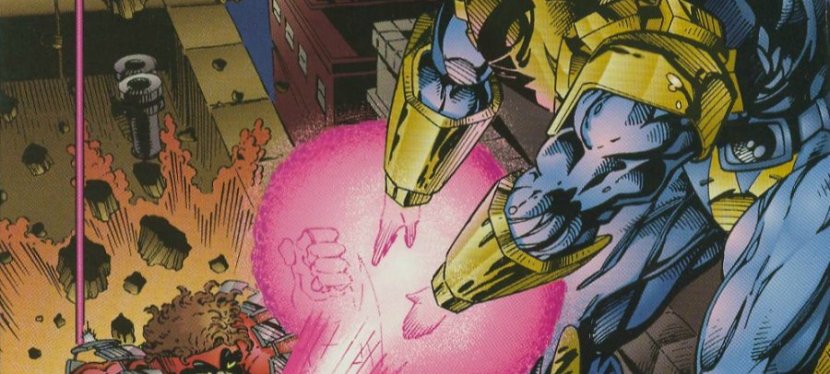
Unsurprisingly, stories of heroic struggles (told through Jim and Bob respectively), corporate intrigue and fighting the bad (in this issue: new villain Heater) were the most defining elements of this comic book. The good news here is that there is still a cohesive story told by Tom Mason and Len Strazewski. One of the more notable parts of the story was Bob Campbell’s reuniting with Felicia which for me made a lot of sense since I already read Prototype #0. Once again, David Ammerman did a good job visualizing the script.

Conclusion

5
Glare in the possession of a group.

Prototype is another fun read that has a careful mix of spectacle, character development and corporate culture exposition. While it does not have the horror element of issue #2, its focus on the corporate side and secret operations made this comic book deep. At the same time, this comic book solidly established Jimmy and Bob as the protagonists of the series.

If you are seriously planning to buy an existing hard copy of Prototype (1993), be aware that as of this writing, MileHighComics.com shows that the near-mint copy of the regular edition costs $4. The near-mint copy of the newsstand edition costs $13.
Overall, Prototype (1993) is recommended.


Thank you for reading. If you find this article engaging, please click the like button below and also please consider sharing this article to others. If you are looking for a copywriter to create content for your special project or business, check out my services and my portfolio. Feel free to contact me as well. Also please feel free to visit my Facebook page Author Carlo Carrasco and follow me at HavenorFantasy@twitter.com