A Look Back at Spider-Man 2099 #38 (1995)

Disclaimer: This is my original work with details sourced from reading the comic book and doing personal research. Anyone who wants to use this article, in part or in whole, needs to secure first my permission and agree to cite me as the source and author. Let it be known that any unauthorized use of this article will constrain the author to pursue the remedies under R.A. No. 8293, the Revised Penal Code, and/or all applicable legal actions under the laws of the Philippines.

Welcome back, superhero enthusiasts, 1990s culture enthusiasts and comic book collectors! Today we revisit the world of 2099 within the universe of Marvel Comics as published back in the 1990s, specifically through the Spider-Man 2099 monthly series.

Back in 2020, I reviewed the three key issues of Spider-Man 2099 (click here, here and here) particularly with the entry of Venom 2099. While tragedy happened in issue #37 (a very powerful story), the futuristic Venom was still on the loose.

With those details laid down, here is a look back at Spider-Man 2099 #38, published in 1995 by Marvel Comics with a story written by Peter David and drawn by Andrew Wildman.

The cover.

Early story

The story begins with Spider-Man 2099 grieving over the death of Dana in the presence of Xina and two armed law enforcers. As one of the law enforcers approach him, Spider-Man hits and damages his helmet. The other law enforcer tells his companion to give Spider-Man some room. The grieving web-slinger asks where Venom 2099 is.

Meanwhile at another location, Miguel O’Hara’s mother saw the breaking news on TV about what the tragedy and Dana’s death. Her son Gabriel comes in and gets updated about what happened. As soon as he heard Dana’s name, he becomes concerned and focuses on the TV screen. As images of Spider-Man and Dana appeared, Gabriel begins to make a connection between them and punches the TV screen hard…

Quality

A very angry Miguel O’Hara using his corporate authority to find and get Venom 2099.

If you enjoyed the storytelling, tension and payoff that happened in issue #37, I can confirm to you that great stuff from that comic book continued smoothly in this comic book. As before, Peter David’s writing remains very engaging and gripping. So much so, issue #38 is a very believable and natural continuation of the events of the previous issue. In fact, the tension that started even as far as issue #35 continued in this comic book and at the same time David succeeded in developing the key characters further. Here, the death of Dana impacts not only Spider-Man/Miguel O’Hara, but also those connected with him.

Apart from the impact Venom 2099 left behind on those whom he victimized, the key selling point in this comic book was the portrayal of Miguel O’Hara wanting not only vengeance but also craves for the death of the vicious supervillain. I really find it very gripping to see Miguel using his authority as a high-ranking executive of his company to not only find Venom but also use company resources to get him. There was also the scene in which Miguel wants the captured living piece of Venom’s symbiote become dead which reflects the rage burning in him.

The way Peter David wrote Miguel’s rage is compelling not only because of the dramatics involved but also because it raises new questions about the personality and heart protagonist of the Spider-Man 2099 monthly series. I found myself wondering the following: Is Miguel O’Hara on the way to becoming a villain? Does he realize he is going off-track and could become a danger to others once he gets his way with Venom 2099?

When it comes to the visuals, Andrew Wildman did a really good job her. Not only was his art more detailed than what Rick Leonardi came up with, Wildman also brought to life the emotions of the characters through detailed facial expressions. Wildman also showed how skilled he is with pacing the story as well as being strategic on visualizing the spectacle.

Conclusion

Spider-Man 2099 in a very emotional state over the death of Dana.

I can clearly say that Spider-Man 2099 #38 (1995) is a great comic book to read. It is indeed a very worthwhile follow-up to the powerful and tragic story of issue #37 and the tension that started in issue #35 continued strongly in this comic book. Very clearly, Peter David carefully planned to shake up the Spider-Man 2099 series of the 1990s even as he built up Venom 2099 as the deadliest foe the futuristic Spider-Man faced. I should also state that the Spider-Man 2099 – Venom 2099 rivalry has a distinct style and flavor of its own, and there was simply nothing ripped off from the 20th century Spider-Man – Venom (Peter Parker and Eddie Brock) rivalry.

If you are seriously planning to buy an existing hard copy of Spider-Man 2099 #38 (1995) be aware that as of this writing, MileHighComics.com shows that the near-mint copy of the regular edition costs $80 while the near-mint copy of the newsstand edition costs $240. Spider-Man 2099 #38 (1995) also comes with a Venom 2099 cover edition which costs $200 for a near-mint copy.

Overall, Spider-Man 2099 #38 (1995) is highly recommended!

+++++

Thank you for reading. If you find this article engaging, please click the like button below and also please consider sharing this article to others. If you are looking for a copywriter to create content for your special project or business, check out my services and my portfolio. Feel free to contact me with a private message. Also please feel free to visit my Facebook page Author Carlo Carrasco and follow me on Twitter at  @HavenorFantasy as well as on Tumblr at https://carlocarrasco.tumblr.com/
A Look Back at Punisher 2099 #13 (1994)

Disclaimer: This is my original work with details sourced from reading the comic book and doing personal research. Anyone who wants to use this article, in part or in whole, needs to secure first my permission and agree to cite me as the source and author. Let it be known that any unauthorized use of this article will constrain the author to pursue the remedies under R.A. No. 8293, the Revised Penal Code, and/or all applicable legal actions under the laws of the Philippines.

Welcome back, superhero enthusiasts, comic book collectors, 1990s pop culture enthusiasts and fans of Marvel Comics! We finally made it at last with the conclusion of The Fall of the Hammer crossover storyline that highlighted Marvel’s 2099 franchises.

Last time around, Doom 2099 saw the raising of the stakes and tension of the storyline leading up to the sudden team-up of the 2099 universe’s pioneering heroes – Spider-Man 2099, Ravage 2099, Doom 2099 and Punisher 2099 – facing the so-called Thor (the flying idol of the people in 2099), the minions and the secret forces behind the conflict.

With those details laid down, here is a look back at Punisher 2099 , published in 1993 (cover dated 1994) by Marvel Comics with a story written by Pat Mills and Tony Skinner, and illustrated by Tom Morgan.

The cover.

Early story

The story begins with Spider-Man, Punisher, Doom and Ravage together facing a horde of Berzerkers approaching them. The four engaged with the horde using violent action. When things calmed down, Doom 2099 tells them that they need to split into duos so that they can prevent the city of Valhalla from harming the millions of people below (in New York).

Before they start their tasks, the schemer Avatarr appears to them through holographic imagery and tells them that Valhalla was created as a base for the heroes that would destroy them and lead mankind along more productive lines. Thanks to Ravage’s move, Doom detects Avatarr’s frequency…

Quality

As Punisher 2099 arms himself, look closely and you will see the conflict between him and Jake Gallows.

When it comes to the storytelling, this conclusion to The Fall of the Hammer storyline felt unsatisfying. There were clear signs of rush on the resolution to the plot that preceded the ending which itself had a sudden shift of focus on Punisher 2099.

The real meat of this comic book is the team-up of the Marvel 2099’s pioneering protagonists, including the duos that were spawned as the plot required it. For most of this crossover storyline, Spider-Man 2099 and Punisher 2099 were just riding together going to Valhalla. In this comic book, you will really see the two work together which was satisfying enough as pay-off (to the build-up the preceded this issue). The duo of Doom 2099 and Ravage 2099, however, was nowhere as satisfying and, more notably, there was no real chemistry between them.

This comic book continues the theme of false deities and a series of unfortunate events pulled off from a distance by some sinister force located in a secret place. While this storyline had touched on the faith of the Thorites (most notably in Doom 2099 ), this one simply abandoned it to focus more on 2099’s original heroes doing something heroic.   

When it comes to Punisher 2099 himself, fans will have a lot of stuff to enjoy. There is a short but notable moment in the story implying that Punisher 2099 and Jake Gallows are separate entities presented in the character’s mind.

Conclusion

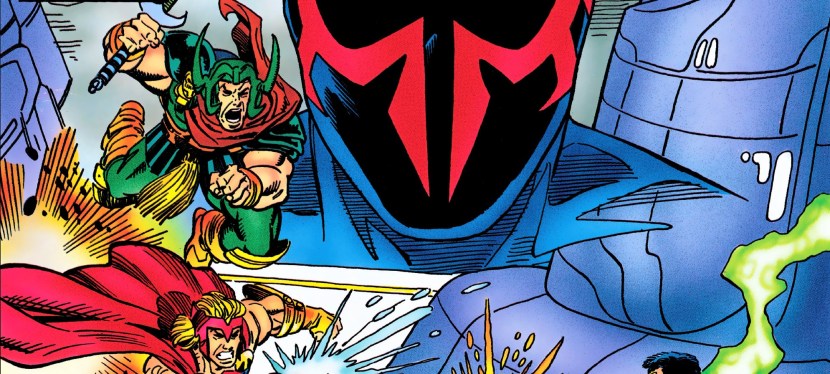
This opening image is easily the best image of the comic book. Things went downhill from after this image.

Punisher 2099 (1994) is not the solid conclusion The Fall of the Hammer storyline deserved. There were clear signs of rush as well as compression of details that had to be done in order to fit the 22 story pages. The so-called final conflict felt hollow and 2099 fans who got invested with the era’s self-declared Thor (who was initially the main antagonist) in the previous chapters will be disappointed with the way he turned out here. That being said, Avatarr as the main villain is just not convincing and was unsatisfying. Having Punisher 2099, Spider-Man 2099, Doom 2099 and Ravage 2099 together to do some saving was pretty interesting and symbolic, as well as the main attraction of this comic book. Sadly, not even those pioneers could save this comic book and the storyline from ending with a whimper.

If you are seriously planning to buy an existing hard copy of Punisher 2099 (1994), be aware that as of this writing, MileHighComics.com shows that the near-mint copy of the regular edition costs $6 while the near-mint copies of the signed-and-numbered and the newsstand editions cost $50 and $16 respectively.

Overall, Punisher 2099 (1994) is worth getting below its cover price.

+++++

Thank you for reading. If you find this article engaging, please click the like button below and also please consider sharing this article to others. If you are looking for a copywriter to create content for your special project or business, check out my services and my portfolio. Feel free to contact me as well. Also please feel free to visit my Facebook page Author Carlo Carrasco and follow me at HavenorFantasy@twitter.com

A Look Back at Ravage 2099 #15 (1994)

Disclaimer: This is my original work with details sourced from reading the comic book and doing personal research. Anyone who wants to use this article, in part or in whole, needs to secure first my permission and agree to cite me as the source and author. Let it be known that any unauthorized use of this article will constrain the author to pursue the remedies under R.A. No. 8293, the Revised Penal Code, and/or all applicable legal actions under the laws of the Philippines.

Welcome back, superhero enthusiasts, comic book collectors, 1990s culture enthusiasts and fans of Marvel Comics! To those who read my previous retro comic book reviews related to the 2099 universe of Marvel Comics, you know fully well that I found the first eight issues of the Ravage 2099 monthly series to be lackluster even though they all involved the writing of the late legend Stan Lee. After Lee stopped working, the Ravage 2099 series was taken over by Pat Mills and Tony Skinner for the writing duties and those two were in-charge of the Punisher 2099 series.

Eventually, a crossover storyline of the 2099 universe was published titled The Fall of the Hammer. It was told in five parts and each of the existing 2099 monthly series at the time – Spider-Man 2099, Ravage 2099, Doom 2099, Punisher 2099 and X-Men 2099 – had one issue forming it. The Fall of the Hammer kicked off with Spider-Man 2099 #16 which had solid writing by Peter David.

Part 2 was told in a Ravage 2099 issue. To find out the story and its quality, here is a look back at Ravage 2099 , published in 1993 (cover dated 1994) by Marvel Comics with a story written by Pat Mills and Tony Skinner, and drawn by Grant Miehm.

Early story

The story begins at the place of Paul-Phillip Ravage who is now in human form. In his presence are X-Men 2099 members Meanstreak, Krystalin and Bloodhawk. Suddenly Bloodhawk comes after Ravage and tries to make him give out information in relation to the disappearance of Jordan Boone, a friend of Meanstreak. Boone disappeared after compiling data related to Alchemax’s problem with Valhalla.

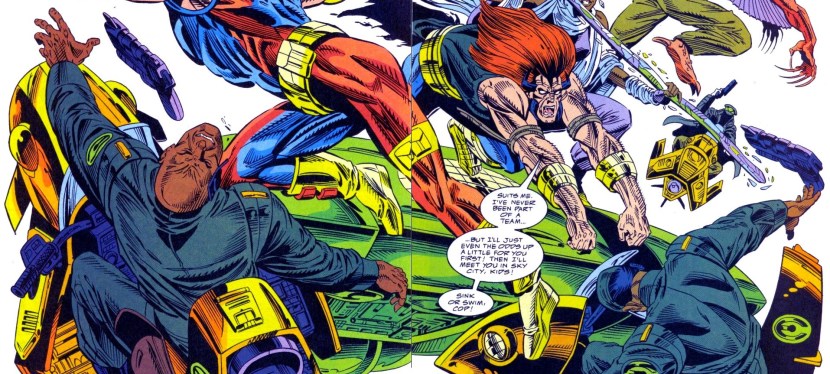
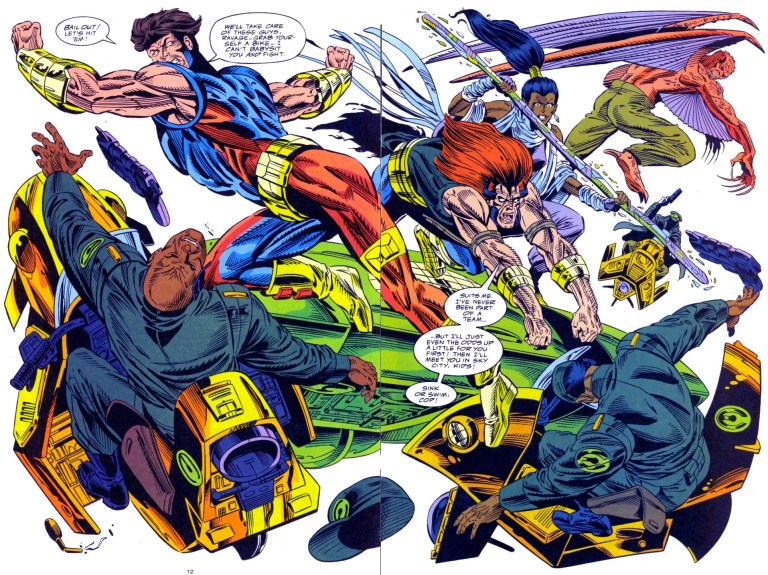
Ravage then transforms into his monstrous form which surprises Bloodhawk. After the winged X-Men member mentioned Valhalla, Ravage calms down and decides to talk with the team. Soon enough, they fly above the city streets in a vehicle heading towards Valhalla. As they approach the floating city, armed flying personnel move in to attack Ravage 2099 and the three X-Men.

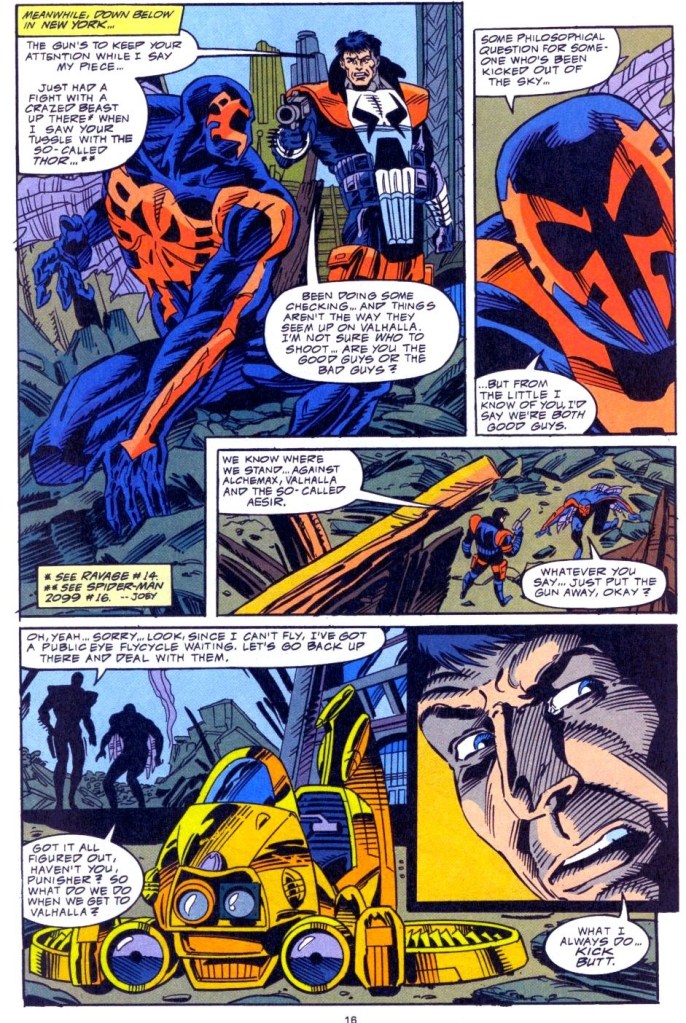
Elsewhere in New York, Spider-Man 2099 finds himself at a disadvantage as Punisher 2099 has a gun pointed at him…

Quality

2099’s Spider-Man and Punisher together.

To put it clearly, this 2nd part of The Fall of the Hammer storyline is where the 2099 heroes begin to actually cross over with each other and the first panel showing Ravage with the three X-Men members is symbolic of that. The plot here is actually simple…Ravage and the X-Men make it to Valhalla which is their common destination. The mutants want information about Jordan Boone while Ravage tries to meet Doom 2099 (whom he met in Ravage 2099 ). Apart from those objectives, there is a lot of action scenes laced with dialogue designed to move the narrative forward little by little. If you are looking for character development of Ravage, you won’t find much here. What you will find, however, are some scenes of intrigue that show Ravage getting disturbed temporarily as a result of realizing the presence of a certain someone he got close with.

As for Valhalla, the city here is more of a technical playground than an actual threat to the people and societies it flew over. What weakens the story here is the absence of 2099’s Thor.

Conclusion

The money shot of this comic book!

To a certain extent, Ravage 2099 (1994) is a somewhat entertaining read mainly due to the mix up of 2099 characters together here. The story is pretty light but at the very least fans of Ravage 2099 will find their monstrous hero in a somewhat interesting misadventure here. The concept that started in Spider-Man 2099 showing Valhalla as a floating danger is weaker here but at least this comic book sets the stage for the next chapter of the storyline decently.

If you are seriously planning to buy an existing hard copy of Ravage 2099 (1994), be aware that as of this writing, MileHighComics.com shows that the near-mint copy of the regular edition costs $16 while the near-mint copy of the newsstand edition costs $48.

Overall, Ravage 2099 (1994) is satisfactory.

+++++

Thank you for reading. If you find this article engaging, please click the like button below and also please consider sharing this article to others. If you are looking for a copywriter to create content for your special project or business, check out my services and my portfolio. Feel free to contact me as well. Also please feel free to visit my Facebook page Author Carlo Carrasco and follow me at HavenorFantasy@twitter.com

A Look Back at Spider-Man 2099 #16 (1994)

Disclaimer: This is my original work with details sourced from reading the comic book and doing personal research. Anyone who wants to use this article, in part or in whole, needs to secure first my permission and agree to cite me as the source and author. Let it be known that any unauthorized use of this article will constrain the author to pursue the remedies under R.A. No. 8293, the Revised Penal Code, and/or all applicable legal actions under the laws of the Philippines.

By the year 1993, Marvel Comics’ new comic book line of the 2099 universe kept filling the shelves of retailers and made it into the hands of collectors and fans with the monthly series composed of Spider-Man 2099, Ravage 2099, Doom 2099, Punisher 2099 and the new addition of the year X-Men 2099. Back then, the Marvel 2099 line expanded a lot and saw the establishment of new fans. Even the quarterly series 2099 Unlimited caught the attention of some readers as it told the early stories of Hulk 2099 (who debuted in 2099 Unlimited ).

Unsurprisingly, there were fans of the 2099 universe who wished for a crossover storyline that would bring together their respective favorite futuristic heroes. Remember the rivalry between classic Spider-Man (Peter Parker) and the Punisher (Frank Castle)? Some wanted Spider-Man 2099 and Punisher 2099 to encounter each other.

Eventually, the crossover dream of the fans came through in the form of The Fall of the Hammer storyline that took place in five parts. Specifically one issue each of Spider-Man 2099, Ravage 2099, Doom 2099, Punisher 2099 and X-Men 2099. It was also an opportunity for the 2099 creative teams (note: the legendary Stan Lee and Peter David were among the writers at the time) to get together and contribute to make something special under the watch of 2099 editor Joey Cavalieri.

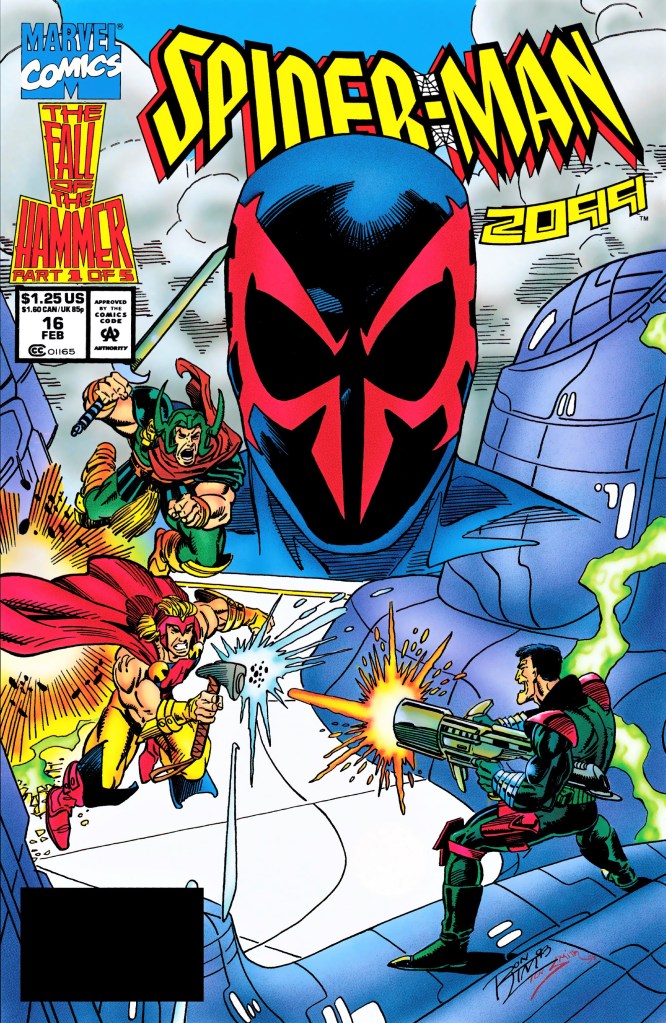
With those details laid down, we can finally start examining the beginning of The Fall of the Hammer storyline in this look back at Spider-Man 2099 , published in 1993 (cover dated 1994) by Marvel Comics with a story written by Peter David and drawn by Rick Leonardi.

The cover drawn by Ron Lim.

Early story

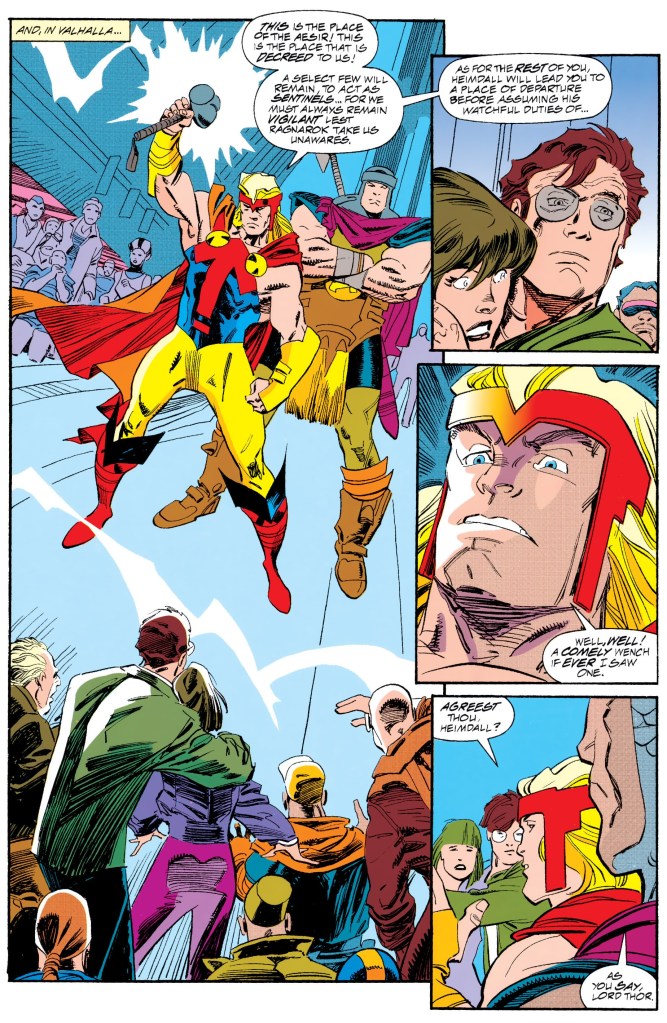
The story begins with the arrival of the floating city of Valhalla, disturbing the people of the town of Randall below. On the floating city itself, a crowd of people – with Miguel O’Hara and Dana among them – stare at a hammer-wielding, caped blonde man who claims to be Thor (their idol). Accompanied by Heimdall, Thor tells them that a select few among them will remain in the city to act as sentinels while the rest will come with Heimdall to a place of departure.

Thor turns his attention on Dana causing Miguel to intervene and challenge his so-called authority. As Thor reacts to Miguel’s defiance, he throws a punch which got deflected. This causes the so-called god of thunder to be surprised given Miguel looking ordinary to him. In reaction, Thor grabs him and throws his body several feet over many people’s heads. This leaves Dana helpless.

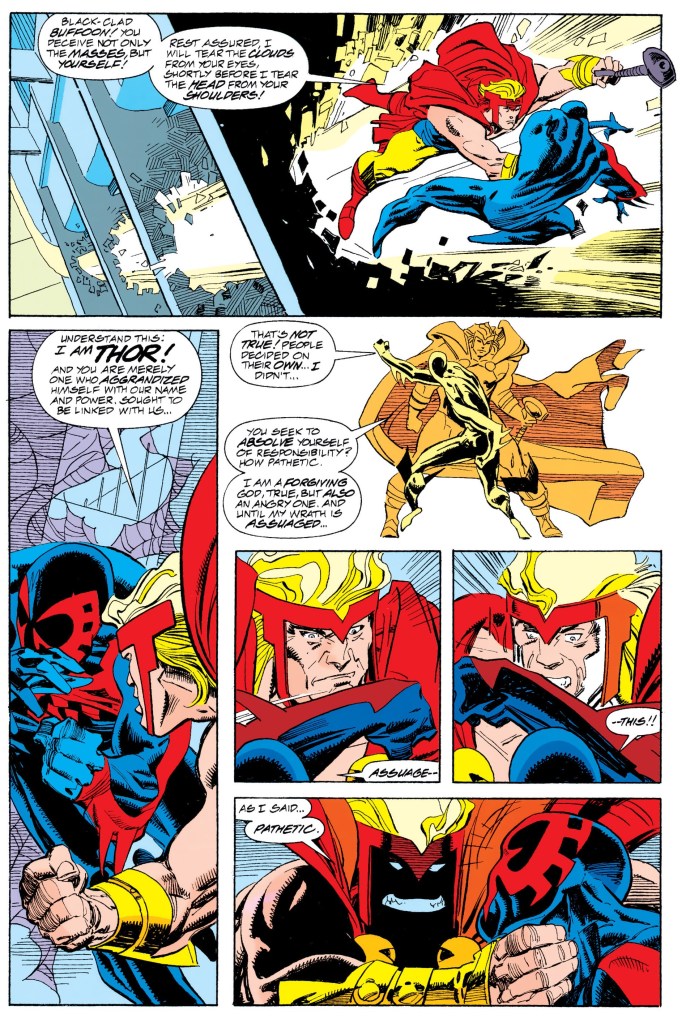
Miguel crashes through a glass window, falling outside until he shoots a web to control his movement. He takes off his civilian clothes, revealing his costume as Spider-Man of 2099. He sets off to get back at Thor…  

Quality

The highlight of the comic book is Spider-Man 2099’s conflict with Thor.

To make clear the obvious, the writing by Peter David is indeed solid although the sketch-like aesthetic of the art of Rick Leonardi badly needed more visual details.

As for the story itself, it is succeeded in creating tension with regards to the caped figure who believes himself to be Thor who is the central figure of religion in 2099 America and has the means to wield power by even involving technology (with Valhalla as the center piece). That being said, Spider-Man 2099’s encounter with him was inevitable, and so was the result (a bit predictable). The story also sheds light on the perceived omnipotence of Thor and how Spider-Man 2099 (who was previously referred to by some people as Thor’s harbinger) got associated with his legend.

To make things clear, this one is purely a Spider-Man 2099 story that justifies the concept of needing other 2099 heroes as the threat was simply too great for any one hero to handle. I should also state that the crossover between any heroes does not begin until the final page of this comic book.

Conclusion

Nothing like being in a crowd of people watching helplessly in front of two so-called omnipotent figures.

Spider-Man 2099 (1994) is still a good read and as the first chapter of The Fall of the Hammer storyline, it served its purpose well. This is mainly due to the strong writing by Peter David who also succeeded in establishing 2099’s Thor not only as the villain but also as a figure who truly is a threat to the people. This comic book also shows that people in 2099 failed to realize who their true Creator is as they embraced religion (instead of faith) and committed idolatry (which is truly unholy) by believing in a false god like Thor.

If you are seriously planning to buy an existing hard copy of Spider-Man 2099 (1994), be aware that as of this writing, MileHighComics.com shows that the near-mint copy of the regular edition costs $40 while the near-mint copies of the newsstand and the signed-and-numbered editions cost $120 and $300 respectively.

Overall, Spider-Man 2099 (1994) is recommended.

+++++

Thank you for reading. If you find this article engaging, please click the like button below and also please consider sharing this article to others. If you are looking for a copywriter to create content for your special project or business, check out my services and my portfolio. Feel free to contact me as well. Also please feel free to visit my Facebook page Author Carlo Carrasco and follow me at HavenorFantasy@twitter.com

A Look Back at Ravage 2099 #5 (1993)

Disclaimer: This is my original work with details sourced from reading the comic book and doing personal research. Anyone who wants to use this article, in part or in whole, needs to secure first my permission and agree to cite me as the source and author. Let it be known that any unauthorized use of this article will constrain the author to pursue the remedies under R.A. No. 8293, the Revised Penal Code, and/or all applicable legal actions under the laws of the Philippines.

Welcome back, superhero enthusiasts, comic book collectors and fans of Marvel’s 2099 universe! Do you want to see more of 2099 stories written by the late Stan Lee? There is Ravage 2099, the one original character for the 2099 universe co-created by Lee and illustrator Paul Ryan. In my last review, the story had Ravage desperately trying to survive in an island which is toxic and filled with lots of bad guys hunting him down.  

With those details laid down, here is a look back at Ravage 2099 , published in 1993 by Marvel Comics with a story written by Stan Lee and drawn by Paul Ryan.

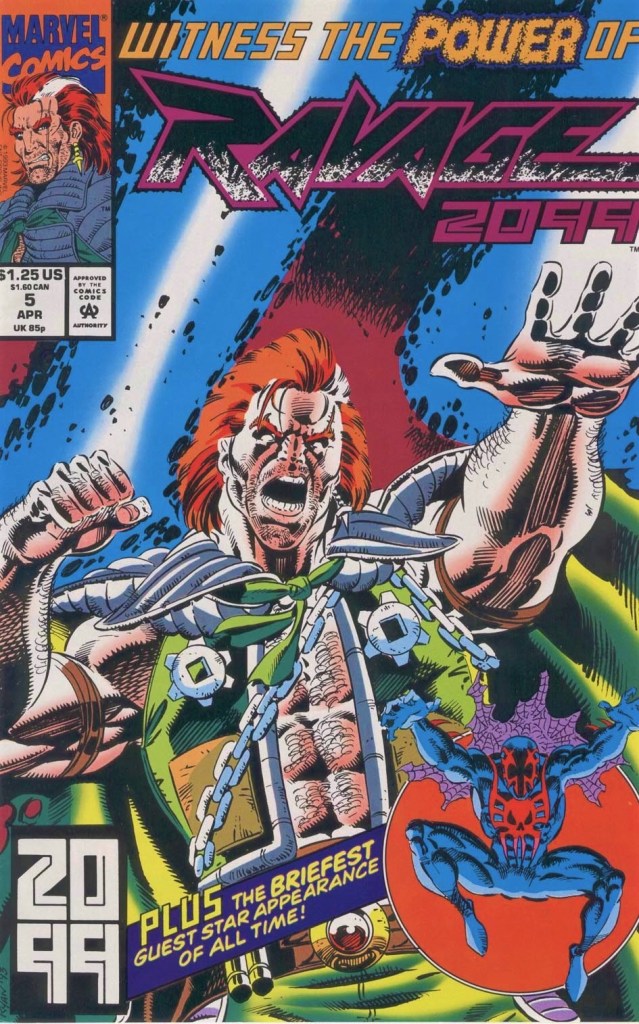
The cover.

Early story

The story begins with Ravage, in the presence of Ursell (the one who saved his life), reacting to his hands burning with light-blue flame. Ursell states it is the radiation causing it. Ravage accuses him of turning him into a troid and that he is not better than Dethstryk, the ruler on the island. As he could not control his anger, Ravage attacks Ursell (who told him his hands are lethal as they destroy what they touch).

Outside, one Dethstryk’s troops spots light (the result of Ravage’s energetic hands) coming from the same cave Ravage and Ursell are in. Eventually Ravage calms down and the energy of his hands weaken. Ursell hands him gloves (composed of complex molecular formula) which help him contain the energy but only for one hour.

Suddenly, Dethstryk’s thugs spot the two in the cave. One of them identifies Ursell as the betrayer of their leader…

Quality

I wonder if SJWs, socialists, Communists and the radicalized feminists will find this image offensive…

In terms of storytelling, this comic book is a big improvement over the last issue. While issue was pretty much limited to Ravage just struggling to survive, this one had more elements of discovery and surprise which made it feel fresh. Ravage having his hands energetic and getting bothered deeply by it was a nice touch to spice up the character while building him up to be potentially more powerful. I also enjoyed the sub-plot in which Tiana, who has been portrayed as an erotic damsel-in-distress since issue , finally gets to do something important with trying to free the troubled youth Dack. Not only that, there is also another sub-plot involving a race of aquatic creatures that seek to invade the surface.

Conclusion

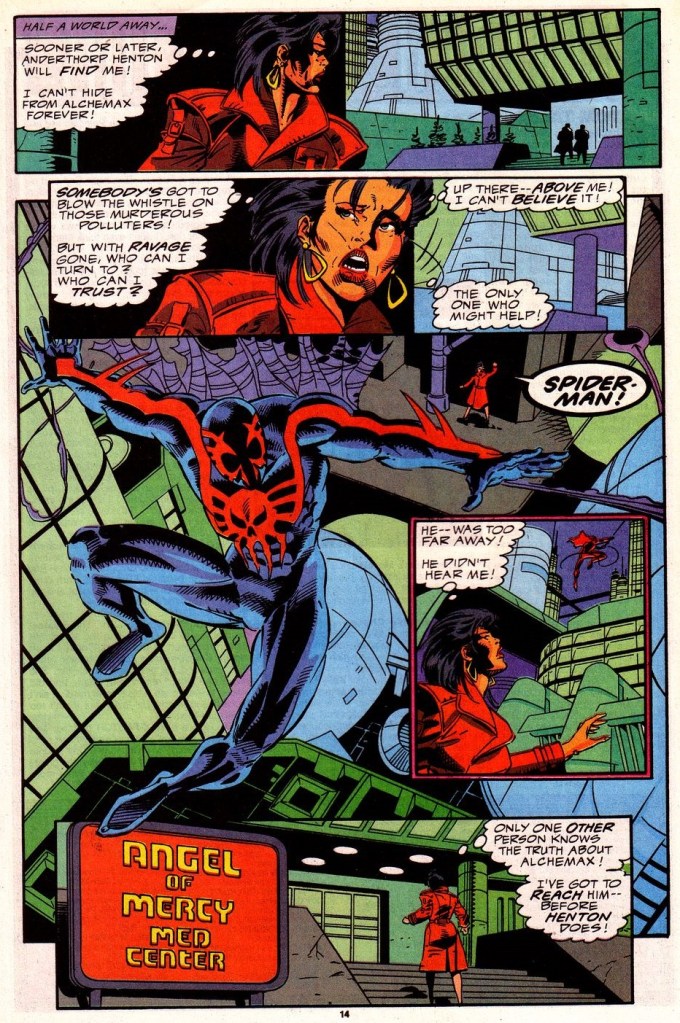
Spider-Man 2099’s very brief appearance!

Ravage 2099 (1993) is fun to read and surprisingly engaging as it is a big improvement over issue . Considering the uneven quality of this particular series, it’s nice to see Stan Lee make storytelling improvements just as they are needed. Still the quality of dialogue is sub-par and there were corny lines like Ravage saying, “You’re cornier than breakfast cereal!”

If you are seriously planning to buy an existing hard copy of Ravage 2099 (1993), be aware that as of this writing, MileHighComics.com shows that the near-mint copy of the regular edition costs $8 while the near-mint copy of the newsstand edition costs $24.

Overall, Ravage 2099 (1993) is satisfactory.

+++++

Thank you for reading. If you find this article engaging, please click the like button below and also please consider sharing this article to others. If you are looking for a copywriter to create content for your special project or business, check out my services and my portfolio. Feel free to contact me as well. Also please feel free to visit my Facebook page Author Carlo Carrasco and follow me at HavenorFantasy@twitter.com

A Look Back at X-Men 2099: Oasis

Disclaimer: This is my original work with details sourced from reading the comic book and doing personal research. Anyone who wants to use this article, in part or in whole, needs to secure first my permission and agree to cite me as the source and author. Let it be known that any unauthorized use of this article will constrain the author to pursue the remedies under R.A. No. 8293, the Revised Penal Code, and/or all applicable legal actions under the laws of the Philippines.

According to the online edition of Merriam-Webster Dictionary, an oasis is something that provides refuge, relief, or pleasant contrast. In the case of X-Men 2099, the open areas of the southwestern region of the United States is a dangerous place to be in even though they are free from oppressive systems of control that dominate cities. As such, it is the southwestern region in 2099 can be compared to the Old West in history where there are lots of desolate places as well as lots outcasts and outlaws. Unlike their mainstream counterparts, the X-Men of the far future are nomads and they don’t have a long-term place of residence they could call home. Considering how dangerous the region is for the mutants, a haven of peace, security and prosperity is always ideal to them but only if it is indeed real.

That is what we will explore in the one-shot comic book X-Men 2099: Oasis here.

But before proceeding with the review, it has to be emphasized first that the one-shot comic book which was made special with the painted art of the Hilderbrandt brothers Greg and Tim. For long-time X-Men 2099 scribe John Francis Moore, Oasis was like a big dream come true. When asked during an online interview about his recollections on making X-Men 2099: Oasis and working with the Hildebrandt Brothers, Moore stated:

I was a fan of the Hildebrandt’s fantasy illustration, and I was blown away when Joey told me that they wanted to do an X-men 2099 project. I met with them in Joey’s office and they were both really great guys. I think they said they really liked Bloodhawk, so I knew he’d be a major player in whatever story we developed. They didn’t enter the project with a lot of conditions. They seemed genuinely happy to get to play in this corner of the Marvel universe.

I can’t remember ever writing a full script for any of my Marvel work. I gave them a plot and sometime later received Xeroxes of pencil art (Hildebrant art!) to dialogue. Then it went back for them to paint, and they did a phenomenal job. I only wish that it could’ve been published before the 2099 line was axed. It was a beautiful book that I think was sadly under promoted.

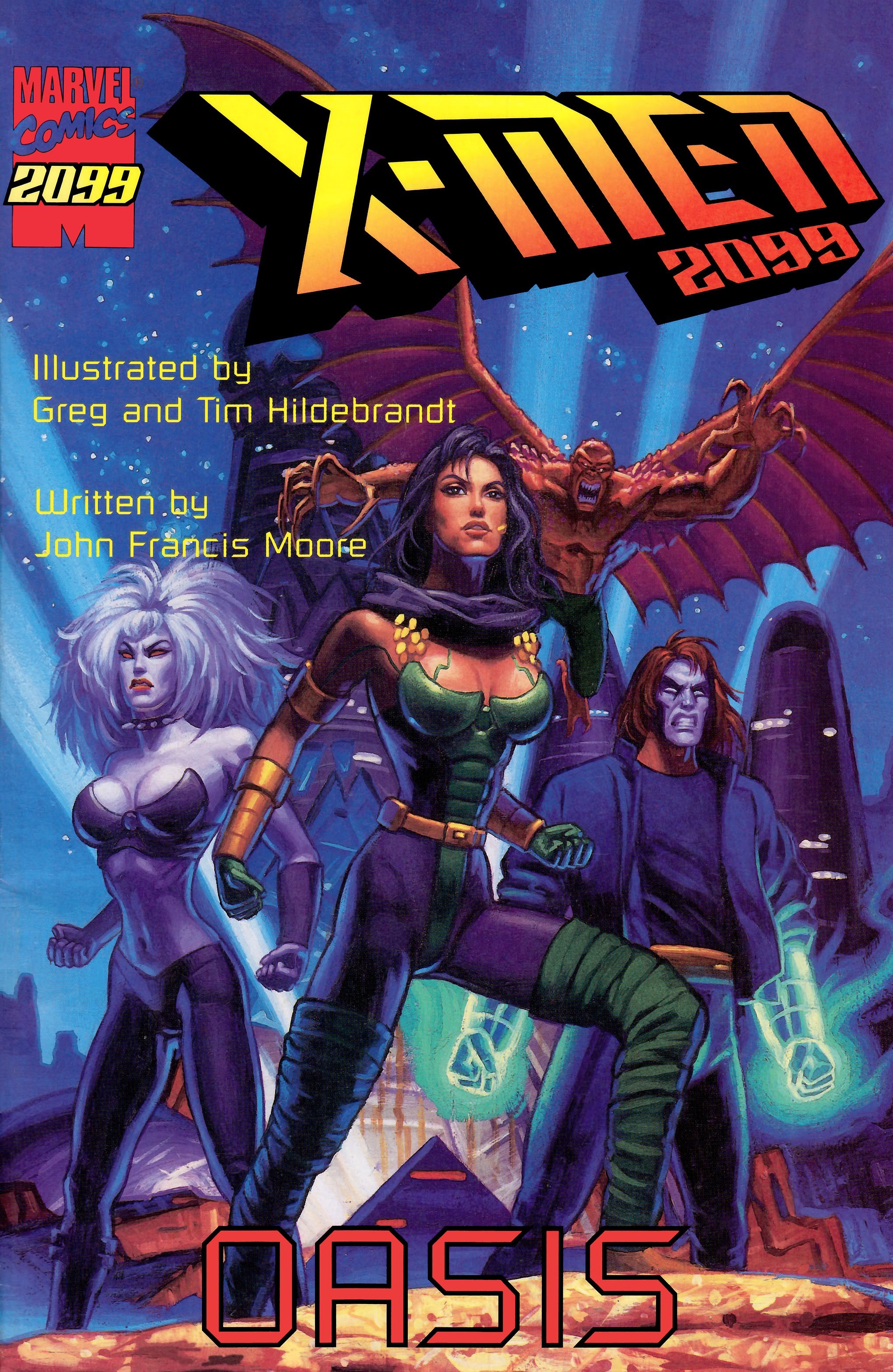
To find out if it is any good, here is a look back at X-Men 2099: Oasis published in 1996 by Marvel Comics with a story written by John Francis Moore and painted art done by Greg and Tim Hildebrandt.

Cover
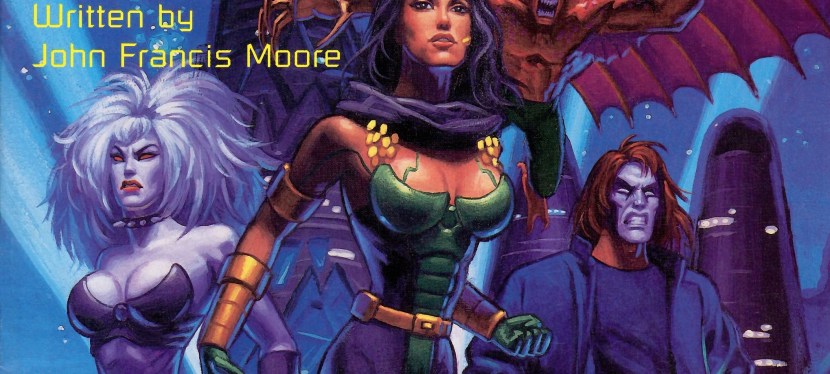
The cover.

Early story

The comic book begins with a flashback set in Hong Kong in the year 2090. A much younger Shakti/Cerebra is on the loose trying to reach a ferry to Kowloon with a plan to hide in the back alleys of Tsimshatsui. Suddenly Lokjaw intercepts her and grabs her. They had a short history together and Lokjaw insists that Shakti should be grateful to her father who raised her to run his bio-shops. After a brief chase, something hits Lokjaw who fell into the water. It turns out Ryu Kobolt helped Shakti, and he has been instructed by his boss to offer her asylum.

11
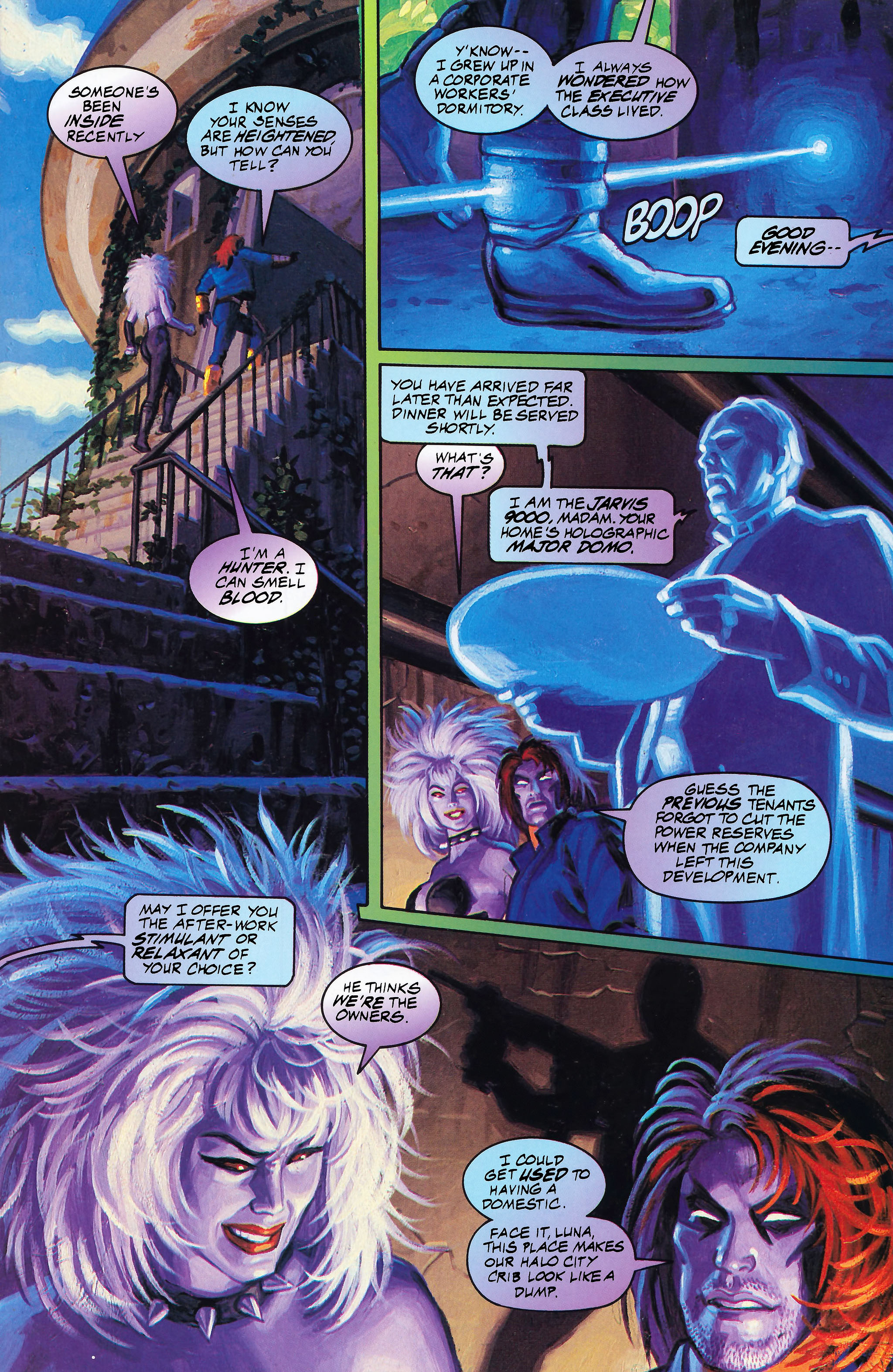
Luna and Skullfire explore a place.

In the present day of 2099 in New Mexico, Bloodhawk flies to his desert home not knowing he is being monitored. Two people, an old man with white hair and a lady, work together to stun the X-Men member and take him with them. A short time later, inside a high-tech facility, Bloodhawk wakes up finding himself restrained and being watched over by the lady and the old man. They tell him he is in the Promised Land, a place where the sins of the old world will be washed away. Using her powers, she touches Bloodhawk’s head and slowly turns him into his normal human form.

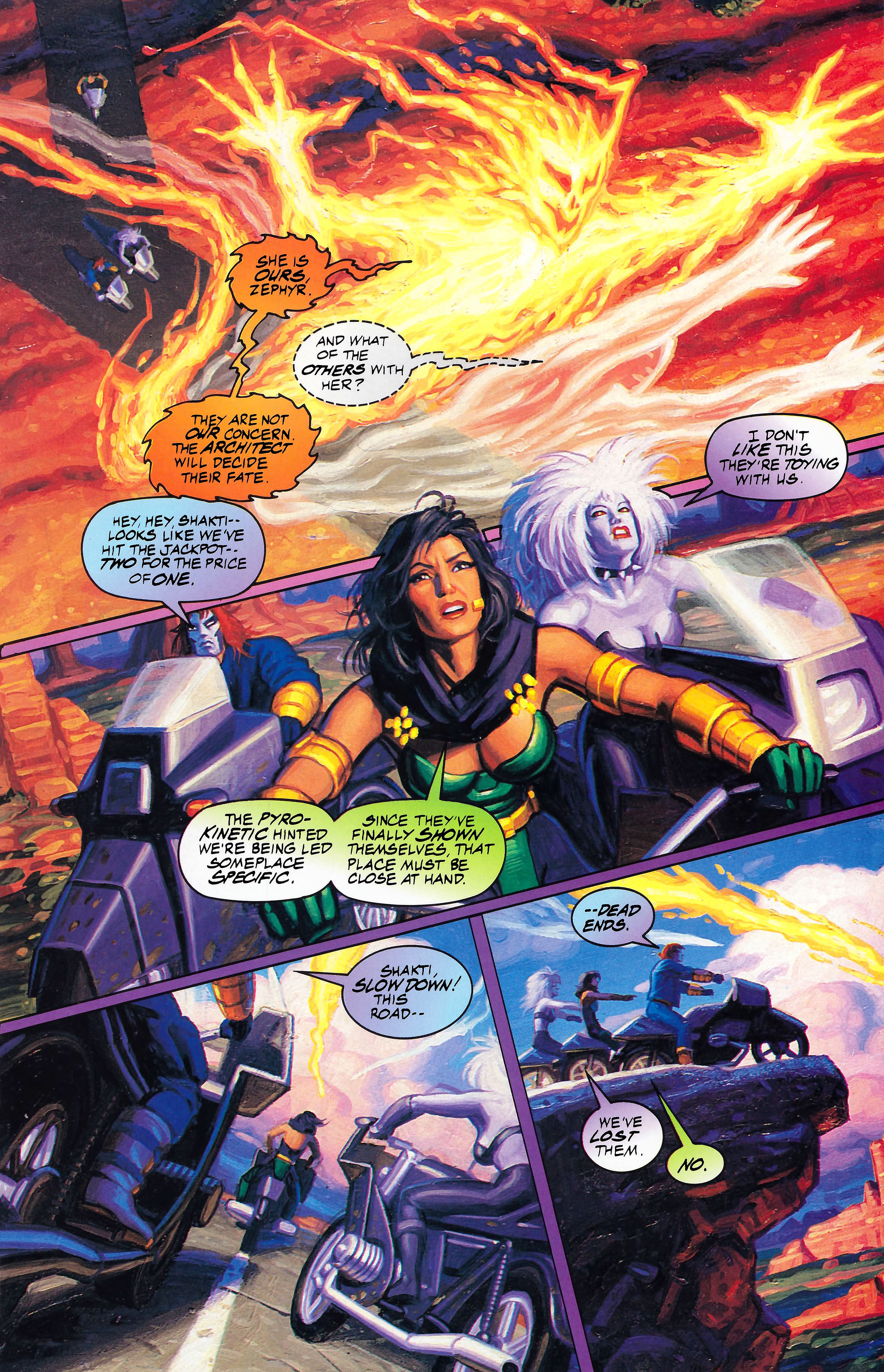
Meanwhile outside a deserted town near the border between Colorado and Kansas, Shakti, Tim/Skullfire and Luna arrive riding motorcycles. They are checking the potential presence of a mutant nearby…

Quality

15
Really great visuals by the Hildebrandt brothers!

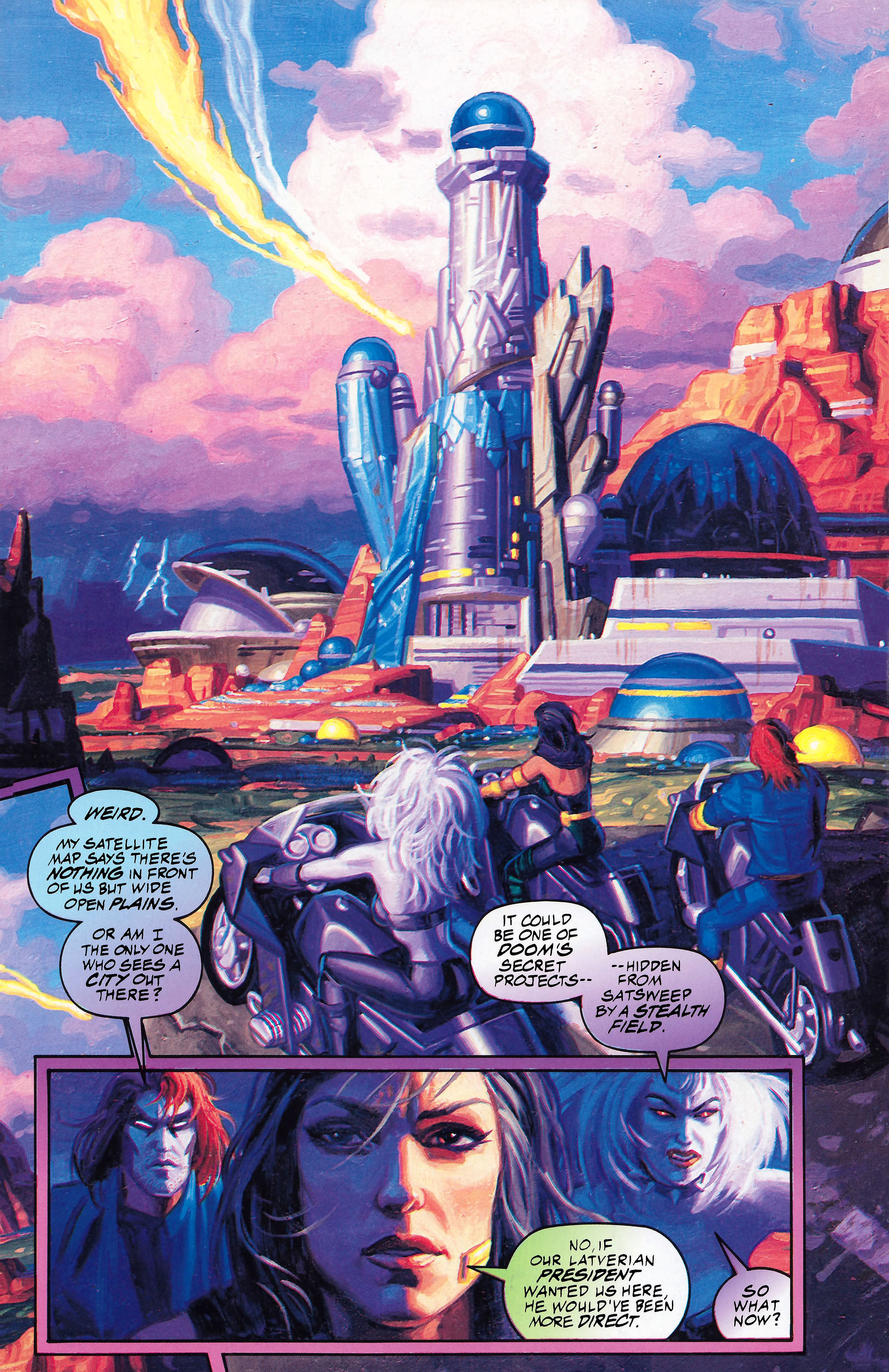
It is very safe to say that this is one very ambitious X-Men 2099 story ever told by John Francis Moore. It sure has an epic concept showing that Oasis in the open region not only exists, but also serves as the closest thing humanity in America has to imitating Heaven built on top of the land. Oasis is the indoor paradise where mutants and humans gather together, live in peace and work together in tremendous ways that the X-Men could only hope to achieve in Halo City (note: this story is set some time after X-Men 2099 #25).

The titular place is clearly the centerpiece of the story backed with characters and threads from the past that explain how it got established. Part of the creation of Oasis is connected with Ryu Kobolt whom Shakti got close with many years back. Of course, someone else got involved with Ryu which directly connects with the creation of Oasis.

While it is also clear that the story took some inspiration from Christianity, I should say that the approach was done by rehashing old storytelling concepts like emphasizing a charismatic person who looks godly or messianic, people getting converted with ways that are not holy, false prophets misleading those seeking salvation, etc. With the ages-old concept of the mad scientists added, then there is conflict here for the X-Men to engage with. The story touches on themes like destiny, conversion, having the power to judge people and committing genocide.

As for the characters, John Francis Moore made the right move to utilize Shakti, Bloodhawk, Skullfire and Luna of the X-Men, however the other new characters such as Memphis, Pandora and Ryu pale in comparison with regards to importance (even though Memphis and Ryu each had a good amount of the spotlight and even some character development).

When it comes to the artwork, this is one great looking superhero, sci-fi story in painted form thanks to the Hildebrandt brothers! Not only is their painted art beautiful to look at, there are also eye-catching shots of scenery, very detailed facial expressions and a very lively presentation of the action scenes and explosions! Each and every character painted – specifically Shakti, Skullfire, Bloodhawk, Luna, Memphis, Pandora and Ryu – has that touch of visual realism (note: not photo realism) that make them look more human to the eyes (especially the X-Men members when compared to how they were drawn by Ron Lim and Jan Duursema in the monthly series). This is one great looking comic book and easily one of the very best of the X-Men of 2099!

Conclusion

16
The Oasis!

X-Men 2099: Oasis is a one-shot comic book that did not match its high ambition. While it has some of the best painted superhero art of the 1990s ever, the storytelling just did not engage me that much. For one thing, its approach on taking inspiration from Christianity is very flawed not only due to rehashing storytelling concepts but also due to the fact that everything – including the titular Oasis – had to be concluded already. Even though there was a build-up leading to a final conflict, the payoff was not that great and ultimately there was a sense of rush in the 2nd half of the story.

What is also disappointing is the fact that the events told here did not really impact Shakti, Skullfire, Luna and Bloodhawk at all, nor was there anything added to the narrative of the X-Men 2099 monthly series. This is too bad because the existence of a haven where people can live in and be protected from the prejudice and violence in the region fits nicely with the concept of X-Men 2099 in the first place. Even though there was a reference to issue during the first half, this comic book ended up looking like a dream story or a parallel universe tale with a $5.95 cover price! It seems to me like this was more like a cash-grab attempt to exploit comic collectors and the fans of X-Men 2099.

If you are seriously planning to buy an existing hard copy of X-Men 2099: Oasis, be aware that as of this writing, MileHighComics.com shows that the near-mint copy costs $14.

Overall, X-Men 2099: Oasis is a serviceable one-shot comic book. That being said, if you really intend to buy it, you should not pay more than $5 for it.


Thank you for reading. If you find this article engaging, please click the like button below and also please consider sharing this article to others. If you are looking for a copywriter to create content for your special project or business, check out my services and my portfolio. Feel free to contact me as well. Also please feel free to visit my Facebook page Author Carlo Carrasco and follow me at HavenorFantasy@twitter.com

A Look Back at X-Men 2099 #1

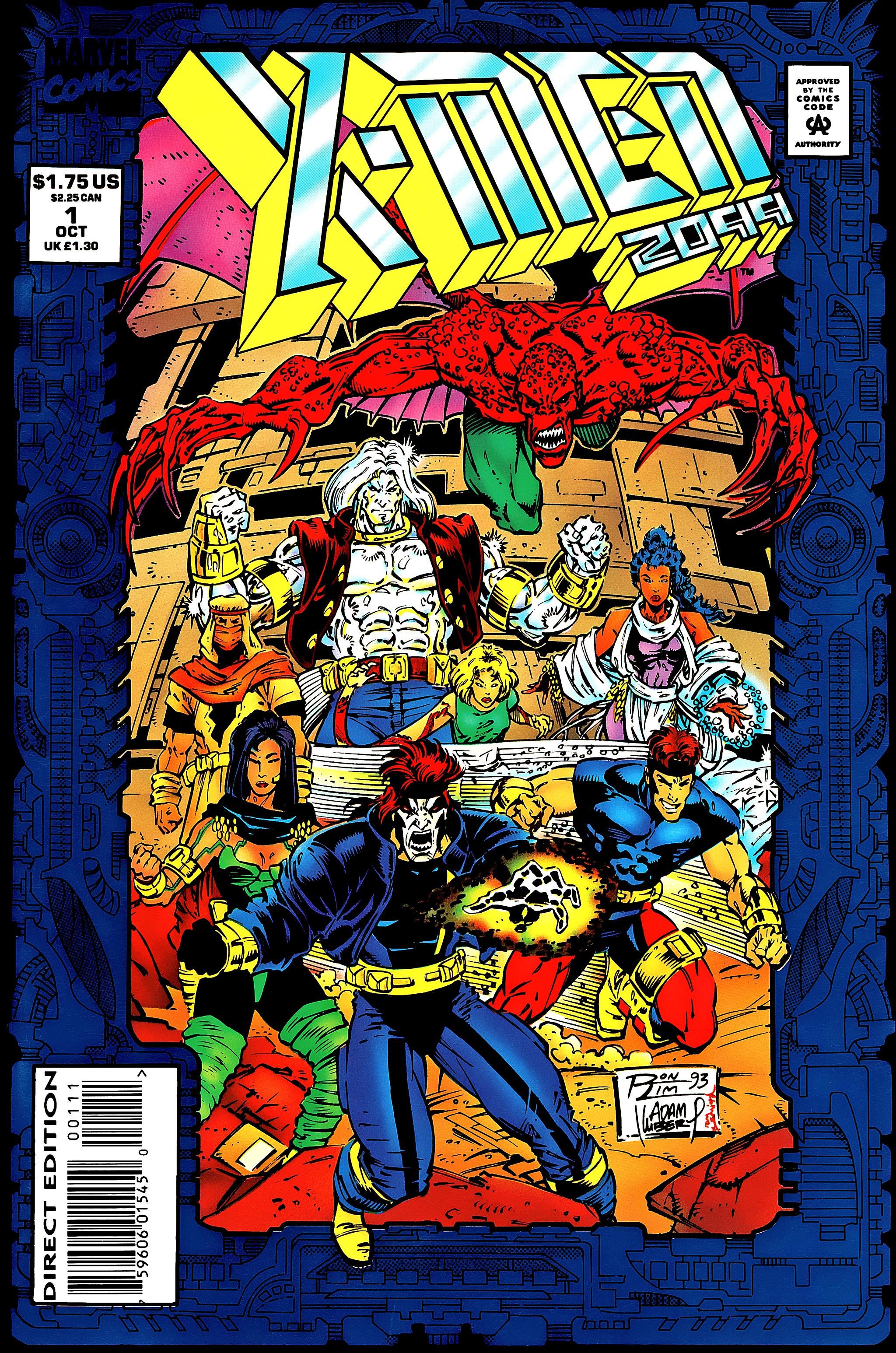
1993 was a special year for X-Men fans. It was the year Marvel Comics celebrated what was back then the 30th anniversary of the X-Men which explains why they released not only a lot of X-Men-related comic books but also issues with hologram cards on the covers of specific issues of X-Force, X-Factor, X-Men, Uncanny X-Men and Excalibur. While superhero movies were not that many at the time, fans had the X-Men animated series to enjoy on TV.

Along the way, the comic book speculator boom continued and Marvel Comics exploited the trend as its creators worked to expand what was back then their still-young 2099 lineup of comic books. This led to the release of X-Men 2099 in the 2nd half of 1993, the comic book of which I bought on a weekday during a short visit to the comic book store in BF Homes, Parañaque.

RCO001_1469507978.jpg
Cover of X-Men 2099 .

Before exploring a bit of the story, let me share that in my personal analysis, releasing X-Men 2099 the same year as the 30th anniversary celebration of X-Men made sense even though the contemporary X comic books made no real story reference to the mutants of 2099. Back in 1993, an undisclosed amount of money was spent to promote, distribute and sell comics and merchandise in relation to the anniversary celebration. I’m confident someone behind the scenes at Marvel thought it was a smart idea to debut the X-Men 2099 series at a time when the X-Men brand was very strong among collectors.

Now on to the comic book.

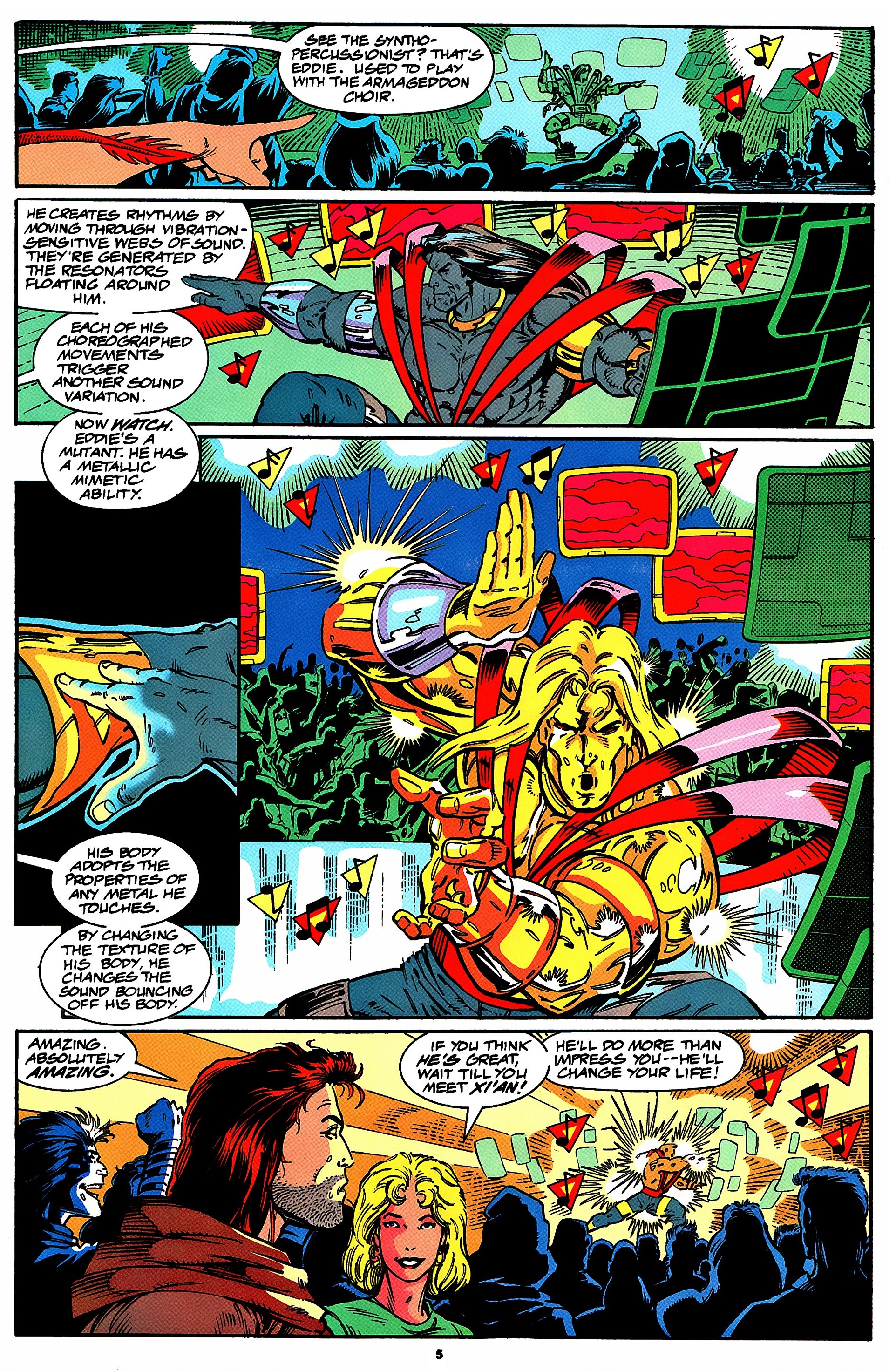
Written by John Francis Moore and drawn by Ron Lim (with ink work by Adam Kubert), X-Men 2099 opens with Timothy Fitzgerald/Skullfire alone and uncertain visiting a large, abandoned facility in the Nevada desert called Nuevo Sol. He stands in front of a large gate with an X marking. After a bumpy introduction with Junkpile, Tim enters and, to his surprise, there he finds a large gathering of people partying despite the deteriorating conditions of the place. He meets Tina/Serpentina who tells him that he is welcome and their gathering attracted mutants, and “nomads and fringers.”

“In Nuevo Sol, you’re not just some corporate bar code, sorted and filed like a product. Here, everyone has a name. Everyone’s equal–no matter where they’ve come from,” Tina tells him.

RCO007_1469507978~2.jpg
As Tim discovers Metalhead, so do the readers.

After the subsequent for-the-readers introductions of Eddie/Metalhead and Shakti/Cerebra, the narrative moves to Las Vegas where a horse-riding Noah Synge (an old man who “ruthlessly controls the greater Nevada syndicate”) gets confronted by Xi’an/Desert Ghost who tells him that his men (of Synge) continue to kidnap members of the nomad tribes for his decadent amusements. In other words, it’s an accusation about human trafficking.

After a harsh exchange of words, Xi’an shows to him his left, creepy looking fist telling him that the red market will fall, that the Synge empire will crumble and that if Synge seeks to hurt the affected people, he (Xi’an) will make him suffer.

Xi’an touches a short stone wall with his left hand which makes it crumble within seconds (as he walks away). This is all I have to share about the plot and if you want to know more, you better get and read this comic book.

So you must be wondering what I think about the quality of this 1993 comic book. When it comes to storytelling, it is well written, entertaining and engaging. John Francis Moore’s script really is good even by today’s standards. Moore managed to carefully introduce not only the X-Men of 2099 but also the supporting characters and the bad guys properly all within 23 story-and-art pages which is a very hard thing to achieve. While the writing was challenging, Moore managed to us symbolism to show “good versus evil”, especially with the conflict between Xi’an (representing the oppressed and the powerless) and Noah Synge (who, by today’s standards, is a caricature of the cruel and rich person).

Tim meanwhile symbolizes the reader’s perception. As he discovers Nuevo Sol, readers feel and see what he perceives. His discovery of the place, the culture and people serves as the eyes of us readers.

When it comes to the art work, this one shows that Ron Lim exerted a lot of effort to give the X-Men of 2099 a unique look of their own without taking any visual inspiration from the contemporary, mainstream X-Men of the 1990s. While it is easy to criticize Lim for the quality of art, we must remember that he worked on a whole lot of other comic book for Marvel back in 1993. During that year, he illustrated The Infinity Crusade which featured a whole bunch of Marvel’s superheroes and many other characters in each comic book. Could you imagine the headaches and stress an illustrator has to go through drawing so many characters in a comic book limited series?

Ron Lim also helped visualize what Nevada looks like in 2099 which is a nice change from the super futuristic, towers-filled New York City. In terms of society, the X-Men 2099 series further showed that America’s wilderness or the abandoned places are filled with outlaws and living there can be even more dangerous for people to do when compared with living in New York under the watch of Alchemax.

This old comic book, which has a solid cover with foil and a price of $1.75, also has a 15-page Marvel 2099 promo which includes a 2-page X-Men 2099 “coming at you” portrait by Lim. The promo includes short previews of the other 2099 feature characters and it also serves as a reminder that X-Men 2099 is part of the same universe with them.

Overall, I declare X-Men 2099 is still a good, old comic book worthy of being added to your collection. Its financial value is not that high right now and the X-Men 2099 themselves pale in comparison to Spider-Man 2099 (easily the most popular 2099 feature character of them all) when it comes to today’s comic book environment.

What you have to keep in mind, however, is that X-Men 2099 just might gain a boost in its financial value if ever the mutants of the future make a big comeback as part of Marvel’s official announcement that it will revive the 2099 line of comic books this November! Granted, X-Men of 2099 had appeared in X-Men comic books in the past few years but the revival of the 2099 line will be a more suitable place for readers to discover them in this age of social media and smartphones.

RCO026_1469507978~2.jpg
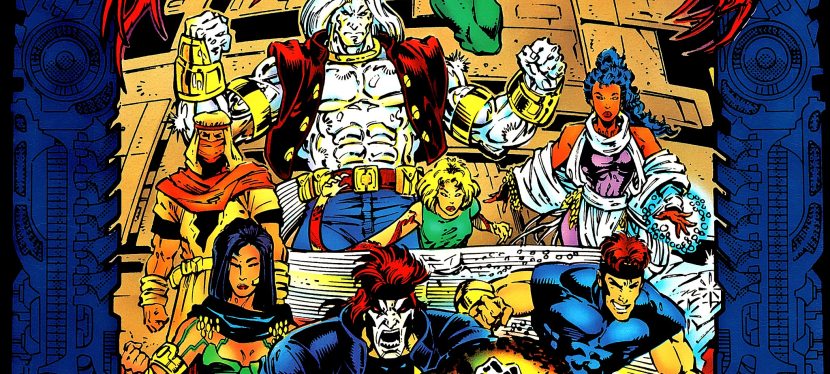
The X-Men of 2099.

Financial value aside, X-Men 2099 is engaging and entertaining, and it has that 1990s charm to it.

X-Men 2099 is highly recommended.


Thank you for reading. If you find this article engaging, please click the like button below and also please consider sharing this article to others. Also my fantasy book The World of Havenor is still available in paperback and e-book format. If you are looking for a copywriter to create content for your special project or business, check out my services and my portfolio. Feel free to contact me as well. Also please feel free to visit my Facebook page Author Carlo Carrasco and follow me at HavenorFantasy@twitter.com