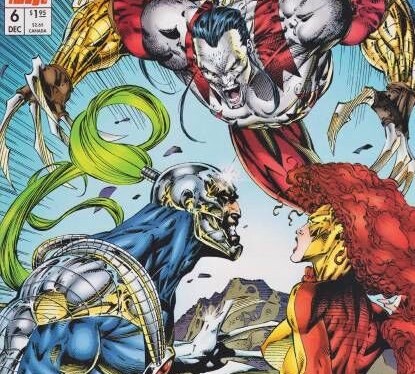
A Look Back at WildC.A.T.S: Covert Action Teams #6 (1993)

Disclaimer: This is my original work with details sourced from reading the comic book and doing personal research. Anyone who wants to use this article, in part or in whole, needs to secure first my permission and agree to cite me as the source and author. Let it be known that any unauthorized use of this article will constrain the author to pursue the remedies under R.A. No. 8293, the Revised Penal Code, and/or all applicable legal actions under the laws of the Philippines.

Welcome back superhero enthusiasts, 1990s culture enthusiasts and comic book collectors! Today we continue revisiting Jim Lee’s flagship title under Image Comics – WildC.A.T.S: Covert Action Teams!

For the newcomers reading this, I recently completed reviewing the 4-issue mini-series (read my retro reviews here, here, here and here), the first issue of which was one of the launch titles published under Image Comics’ banner through Malibu Comics. Back in 2020, I reviewed issue #5 which itself was highly unusual as it marked the beginning of what was back then the regular series of WildC.A.T.S (note: starting a brand new comic book series is often done with a new issue #1). WildC.A.T.S: Covert Action Teams #5 was conveniently part of the build-up for the Killer Instinct storyline that had featured Jim Lee’s creations crossing over with Marc Silvestri’s Cyber Force.

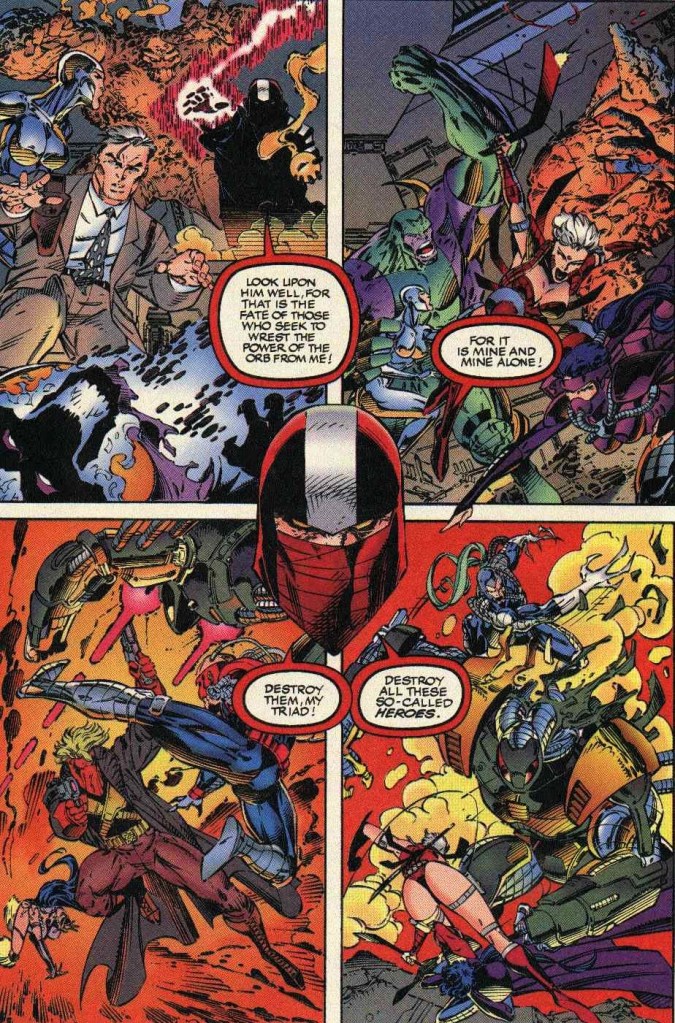
With those details laid down, here is a look back WildC.A.T.S: Covert Action Teams #6, published by Image Comics in 1993 with a story written by Brandon Choi and Jim Lee. Lee did the art.
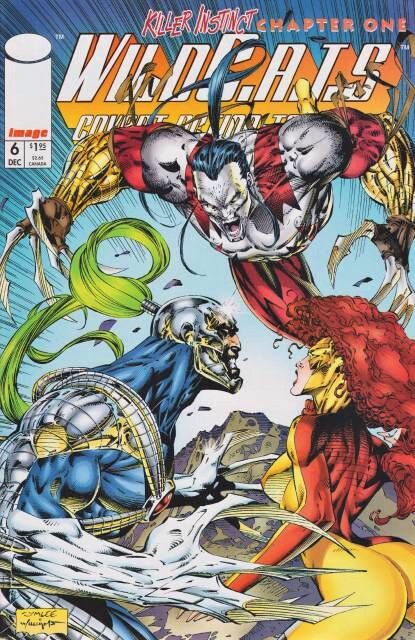
The cover.

Early story

The story begins with the WildC.A.T.S flying in their high-tech aircraft and observing the large explosion which marked the destruction of a top-secret research facility. Their teammate Warblade was left behind which concerns Grifter and Voodoo. Spartan says it is too risky for them to move close to the site of destruction for Warblade as their electronic counter measure and identification systems have been lost due to the explosion. Spartan also told them team that they need to fly away before the Gamorran security forces arrive.

They are too late, however, as three high-tech aircrafts of Gamorra have arrived to take them down. One of them launched several missiles at the WildC.A.T.S aircraft causing Spartan to tell Grifter to redirect all power to their shields.

As hard as he tried, Spartan could only fly their shielded jet to dodge the first four missiles and absorbing the impact of two missiles before getting hit by the other missiles launched by the other two enemy aircrafts.

While their jet got destroyed into pieces, the WildC.A.T.S managed to survive the explosion only to see themselves falling helplessly in the air. As Spartan catches Voodoo, Grifter warns him abou the incoming Gamorran aircraft…

Quality
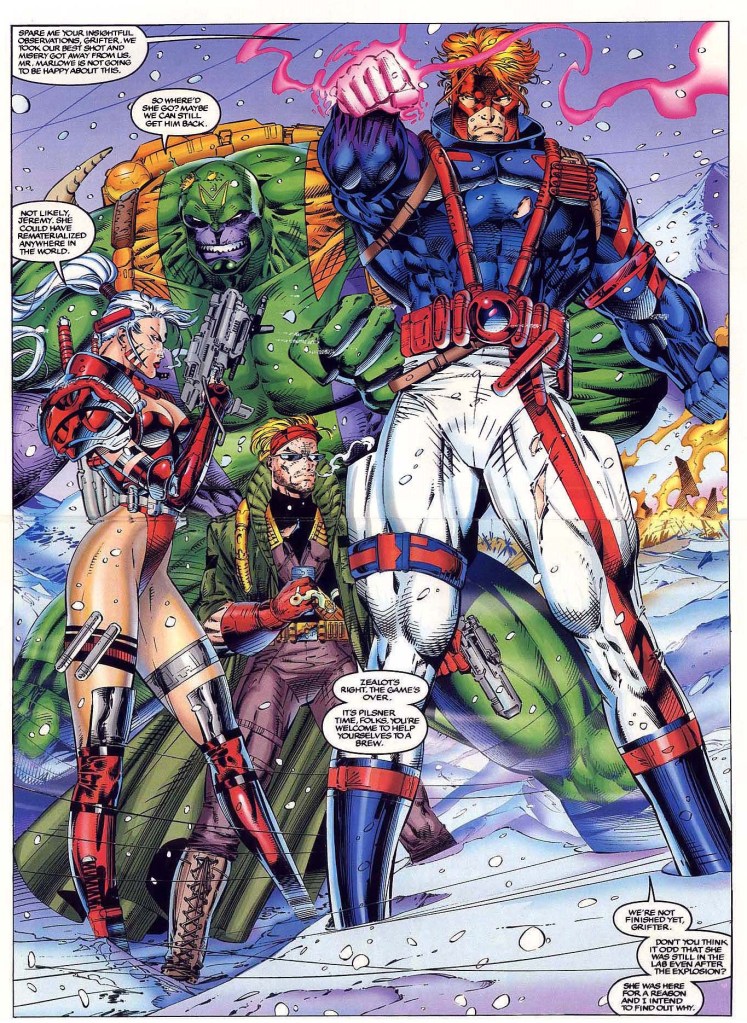
The team but without Jacob Marlowe, Warblade, Voodoo and Void at this point of the story.

To begin with, this comic book is very much like its predecessors – a very action-packed tale laced with the occasional character moments for fun while having little room left for character development. If there is any notable change in the way this comic book’s story was told, it is the detective work done collectively by key members of WildC.A.T.S followed by exposition dumps here and there. The detective work and exposition were done primarily to add to the build-up of the crossover with Cyber Force with the revelation of a love triangle from the past involving Misery (who gave Grifter a lot of trouble in issue #5), Warblade and Ripclaw (from the other team).

As with Jim Lee’s past works, the action here is highly charged and there is a lot of spectacle to enjoy most of the way. By the time this comic book got published, the respective capabilities of the WildC.A.T.S team members have already been established and the creators pushed the creative limits further on showing what else could the main characters do as envisioned by Jim Lee. There is even this 4-page sequence showing Grifter and Zealot infiltrating one of the Gamorran aircrafts and having lots of banter along the way which was fun to read. Considering the lack of space for character development, the creators made up for it somewhat with the dialogue.

As this is the first chapter of the Killer Instinct crossover storyline, the build-up for it is not really that engaging to me personally. While Ripclaw was already established as a major Cyber Force character and Warblade was a visible yet not so dominating as a member of WildC.A.T.S, the establishment of the personal connection between them through Misery (the woman right in the middle) is just not so strong. Not even a huge exposition dump about the past could have strengthened the background. It would have been more helpful had Jim Lee and Marc Silvestri agreed to publish a prequel comic book (or pages inserted into a few comic books of WildC.A.T.S and Cyber Force) about Warblade-Misery-Ripclaw in the past as a prelude to Killer Instinct. More on Misery herself, I could not help but think of her as a distorted and more wicked version of the X-Men’s Jean Grey complete with long red hair.

Conclusion
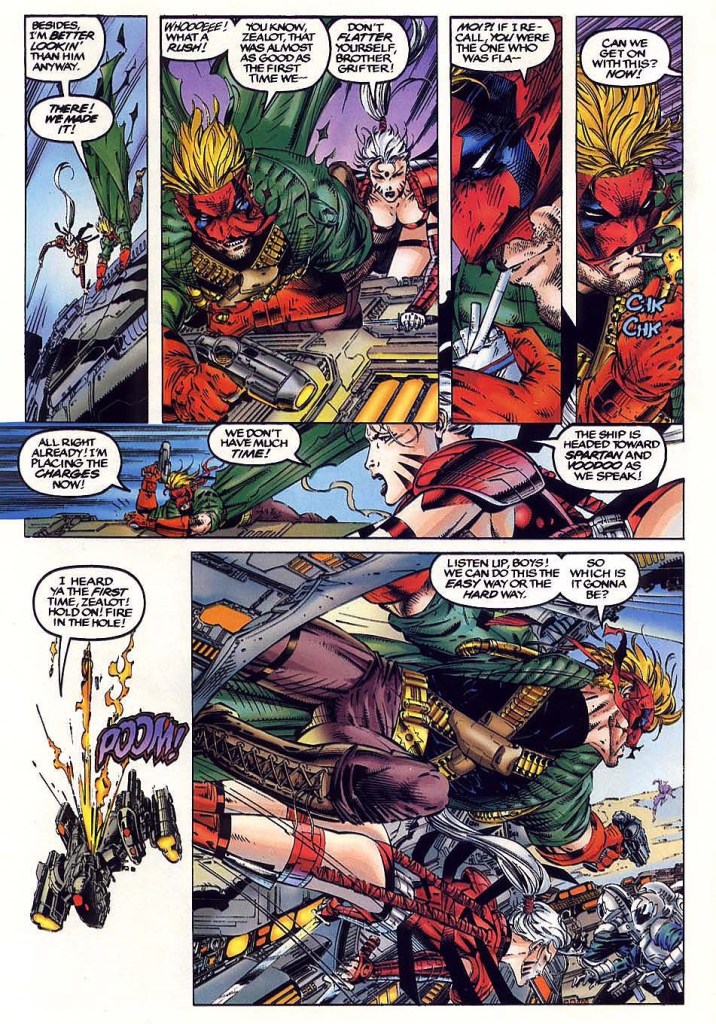
Grifter and Zealot infiltrate a Gamorran aircraft.

WildC.A.T.S: Covert Action Teams #6 (1993) is another fun comic book to read filled with a lot of stuff that Jim Lee fans love to see again and again. As the opening chapter of Killer Instinct, the creators did the best they could to establish Misery as an important antagonist who happens to have been personally involved with Warblade and Ripclaw some years back. Sadly, the Warblade-Misery-Ripclaw triangle establishment is not so engaging and looked more like an afterthought. Still, this comic book’s story is not brainless and expanded the lore of the WildStorm universe a bit more. There is more good stuff than bad ones which make this worth reading.

If you are seriously planning to buy an existing hard copy of WildC.A.T.S: Covert Action Teams #6 (1993), be aware that as of this writing, MileHighComics.com shows that the near-mint copy of the regular edition costs $20 while the near-mint copies of gold cover edition and newsstand edition cost $300 and $60 respectively.

Overall, WildC.A.T.S: Covert Action Teams #6 (1993) is recommended.

+++++

Thank you for reading. If you find this article engaging, please click the like button below and also please consider sharing this article to others. If you are looking for a copywriter to create content for your special project or business, check out my services and my portfolio. Feel free to contact me with a private message. Also please feel free to visit my Facebook page Author Carlo Carrasco and follow me on Twitter at  @HavenorFantasy as well as on Tumblr at https://carlocarrasco.tumblr.com/
A Look Back at WildC.A.T.S: Covert Action Teams #4 (1993)

Disclaimer: This is my original work with details sourced from reading the comic book and doing personal research. Anyone who wants to use this article, in part or in whole, needs to secure first my permission and agree to cite me as the source and author. Let it be known that any unauthorized use of this article will constrain the author to pursue the remedies under R.A. No. 8293, the Revised Penal Code, and/or all applicable legal actions under the laws of the Philippines.

Welcome back superhero enthusiasts, 1990s culture enthusiasts and comic book collectors! Today we revisit the early days of Image Comics through Jim Lee’s WildC.A.T.S: Covert Action Teams comic book franchise which was one of the launch titles of the said company.

Last time around, I reviewed the third issue of the WildC.A.T.S mini-series and its quality was good enough for me. Other than the visual candies delivered by Jim Lee, WildC.A.T.S: Covert Action Teams #3 featured a crossover with Rob Liefeld’s very own Youngblood which was really surprising and intriguing back in those times.

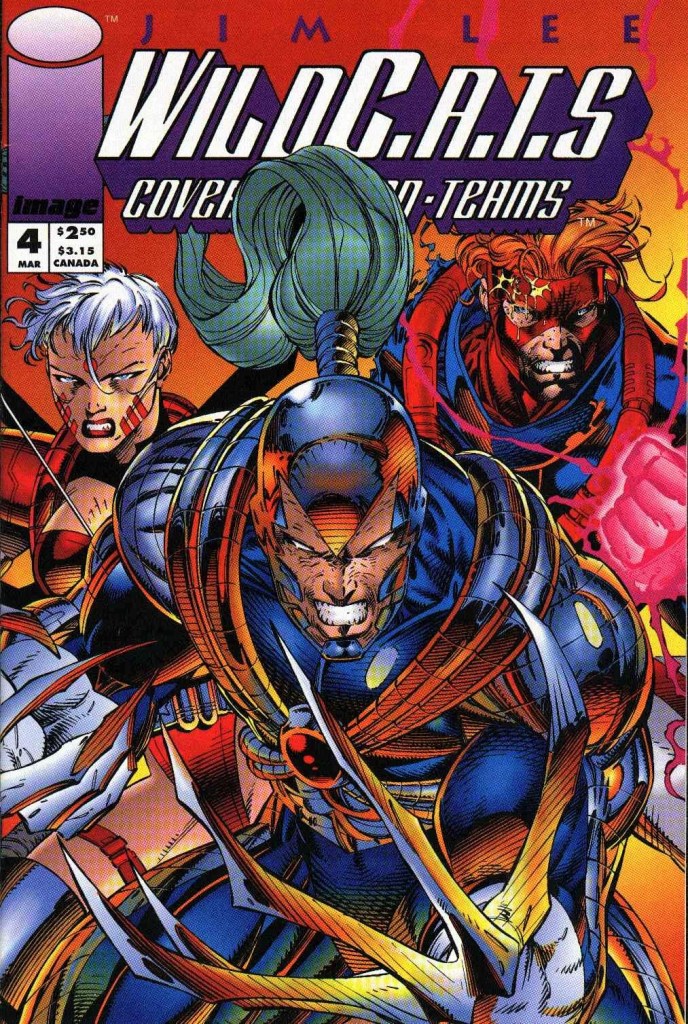
With those details laid down, here is a look back at the final issue of the mini-series…WildC.A.T.S: Covert Action Teams #4, published by Image Comics through Malibu Comics in 1993 with a story written by Brandon Choi and Jim Lee. Lee did the art.

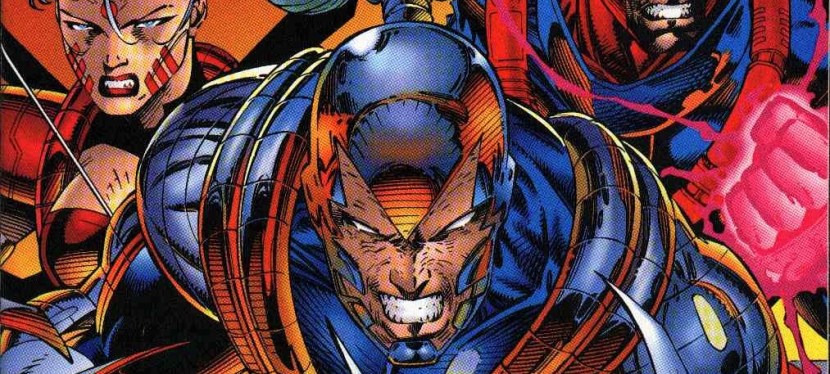
Jim Lee drew this cover very similarly to his cover art work on X-Men #4 (1992).

Early story

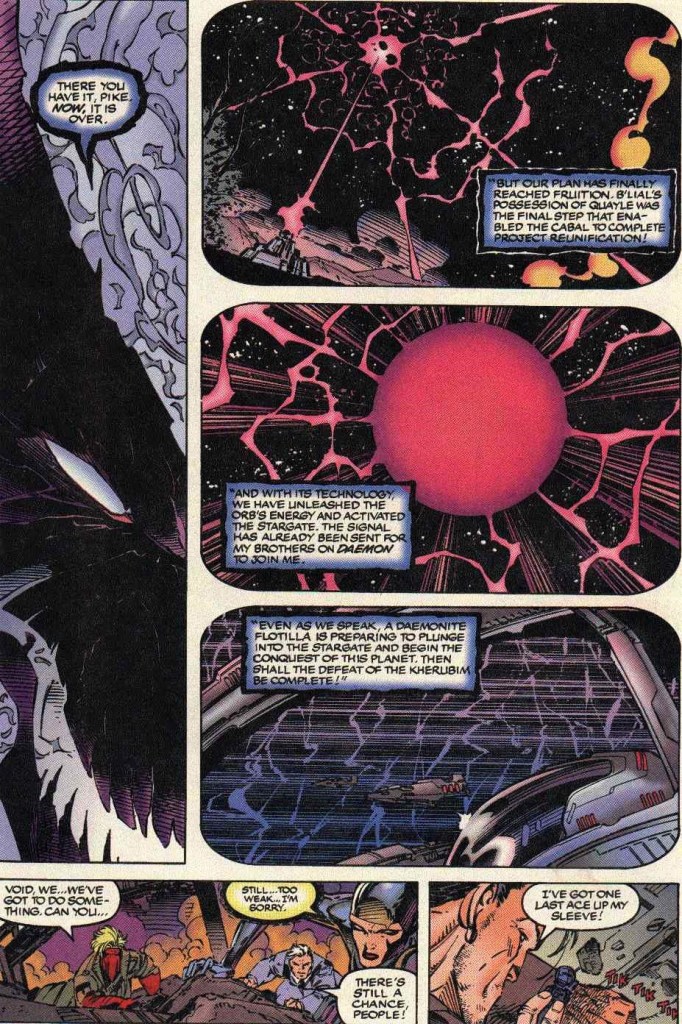
The story begins with Helspont already declaring victory as well as the beginning of his operation called Reunification which involves the use of the orb to activate a stargate which would allow his brethren of Daemonites to come to Earth to not only overwhelm the Kherubim but also to conquer the whole world. In his presence are two of his deadly companies standing with him and certain members of WildC.A.T.S – including their leader Jacob Marlowe – who are down on the rough surface having been hit hard moments earlier.

Suddenly a group composed of the six Youngblood members, Vice President Dan Quayle and WildC.A.T.S’ members Voodoo and Maul approach Helspont and his companions in an attempt to make them surrender.

As Voodoo realizes her power does not affect Helspont, the vicious Daemonite strikes the group with an energy blast aided by the orb and the high technology of the place. As this happens, Grift, Void and Jacob slowly make their moves. Jacob uses his communicator to send a signal to the heavily damaged Spartan…

Quality

WildC.A.T.S face strong opposition from the Gnome and his dangerous companions.

As the final tale of the mini-series, I can say that the script made for this comic book is a pretty satisfying read from start to finish. Like in issue #3, the pace here moves fast and there is a lot of spectacle that got executed while never overwhelming its narrative. More on the narrative, the conflict between the Kherubim and Daemonites is strongly symbolized by the WildC.A.T.S and Helspont’s forces going head to head. There are some pretty notable character moments that added to the fun factor such as Jacob sarcastically telling Helspont he could not access the back-up systems for his dreaded operation to bring the Daemonites to Earth.

Of course, this is not simply a WildC.A.T.S versus Helspont story in the good-versus-evil type of way. Apart from the inclusion of Rob Liefeld’s Youngblood, there is also the other dangerous party led by the Gnome who also have a strong interest in the orb. While their participation in the story happens pretty late, they do provide serious opposition against Jacob Marlowe and his team.

As mentioned earlier, there is a lot of action that expresses the intensity of the conflicts. While there is almost no room left for any real character development, the creators managed to craft a story that never felt brainless or unintelligent. As such, there is a lot of entertaining stuff to enjoy here and I personally find the establishment of WildC.A.T.S’ core concept to be solid and worth following.

Conclusion

As Helspont emphasizes his evil plan, Jacob Marlowe makes his move.

WildC.A.T.S: Covert Action Teams #4 (1993) is a not just a fun comic book to read. It is also a worthy conclusion to its mini-series and also it succeeded in establishing the WildC.A.T.S as both Jim Lee’s passion project and as one of the most worthy early titles of Image Comics. By the time I reached the end of this comic book, it became clear to me back in 1993 that Jim Lee was moving forward to a new territory on superhero comic book creations leaving behind his legacy with Marvel and their X-Men franchise. While this comic book ended the 4-issue mini-series, the funny thing was that Jim Lee and his team went on to start a regular comic book series of WildC.A.T.S: Covert Action Teams by actually publishing issue #5 (in late 1993) instead of starting with a brand new issue #1.

If you are seriously planning to buy an existing hard copy of WildC.A.T.S: Covert Action Teams #4 (1993), be aware that as of this writing, MileHighComics.com shows that the near-mint copy of the regular edition costs $20 while the near-mint copies of newsstand edition (without card) and the numbered-and-signed edition cost $48 and $160 respectively.

Overall, WildC.A.T.S: Covert Action Teams #4 (1993) is recommended.

+++++

Thank you for reading. If you find this article engaging, please click the like button below and also please consider sharing this article to others. If you are looking for a copywriter to create content for your special project or business, check out my services and my portfolio. Feel free to contact me with a private message. Also please feel free to visit my Facebook page Author Carlo Carrasco and follow me on Twitter at  @HavenorFantasy as well as on Tumblr at https://carlocarrasco.tumblr.com/
A Look Back at Wonder Woman Gallery (1996)

Disclaimer: This is my original work with details sourced from reading the comic book and doing personal research. Anyone who wants to use this article, in part or in whole, needs to secure first my permission and agree to cite me as the source and author. Let it be known that any unauthorized use of this article will constrain the author to pursue the remedies under R.A. No. 8293, the Revised Penal Code, and/or all applicable legal actions under the laws of the Philippines.

Welcome back, superhero enthusiasts, comic book collectors and fans of Wonder Woman! I should say that this is the most unusual comic book I have reviewed so far due to its main presentation of varied artworks featuring the Queen of all Superheroes herself – Wonder Woman!

For the newcomers reading this, there were several comic books back in the 1990s that did not really tell stories but showcased artworks of varied superheroes done by several artists. Such publications were in the form of swimsuit specials, apparently inspired by Sports Illustrated’s own publications. There were WildStorm Swimsuit Special #1, Ballistic Studios Swimsuit Special #1, Homage Studios Swimsuit Special #1, Lady Death Swimsuit Special #1 and the Avengelyne/Glory: Swimsuit Special #1 to name some.

The 1990s saw a rise of eroticism in superhero comic books. Not even the Wonder Woman monthly series of that time was spared from the trend. There was a time when DC Comics hired Mike Deodato to illustrate a number of Wonder Woman comic books in the mid-1990s which resulted a more eroticized look of Diana/Wonder Woman and her fellow Amazons. John Byrne took over after Deodato and his stint was not an improvement.

While the 1990s was a weak decade of Wonder Woman comics for me personally, not all was doom and gloom. Around twenty years before Gal Gadot debuted on the big screen as the cinematic Wonder Woman, DC Comics published an art gallery of the Queen of Superheroes in the form of a comic book.

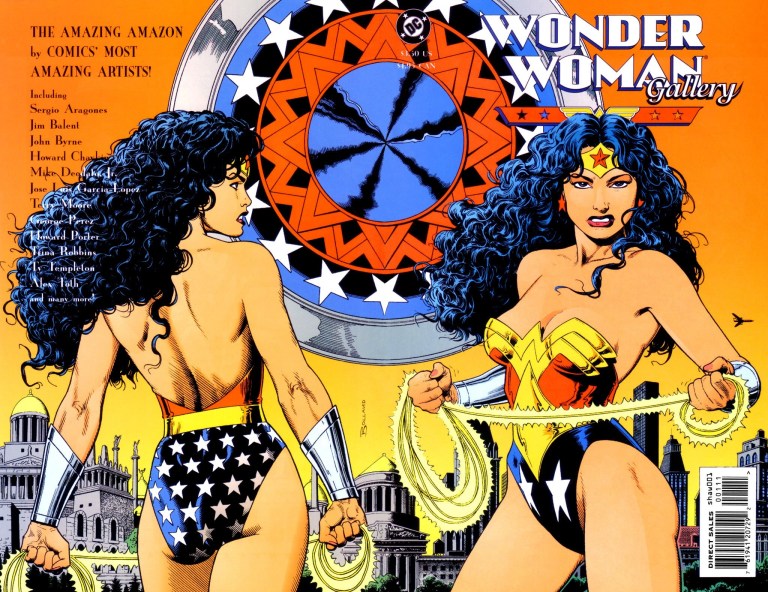
With the details established, here is a look back at Wonder Woman Gallery, published by DC Comics in 1996 featuring the works of multiple artists.

The cover.

What it is

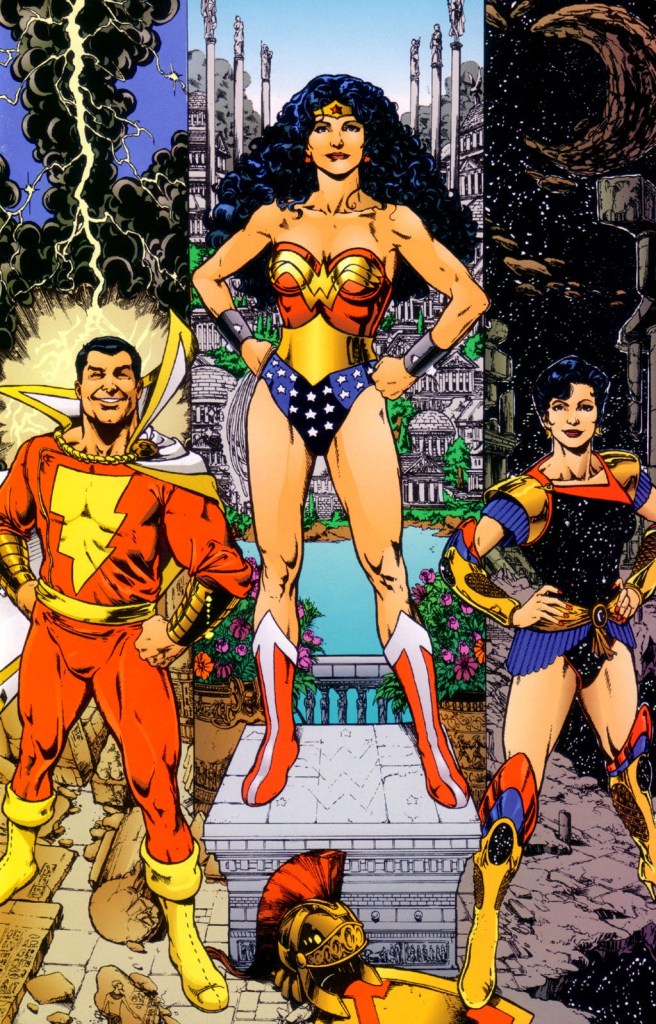
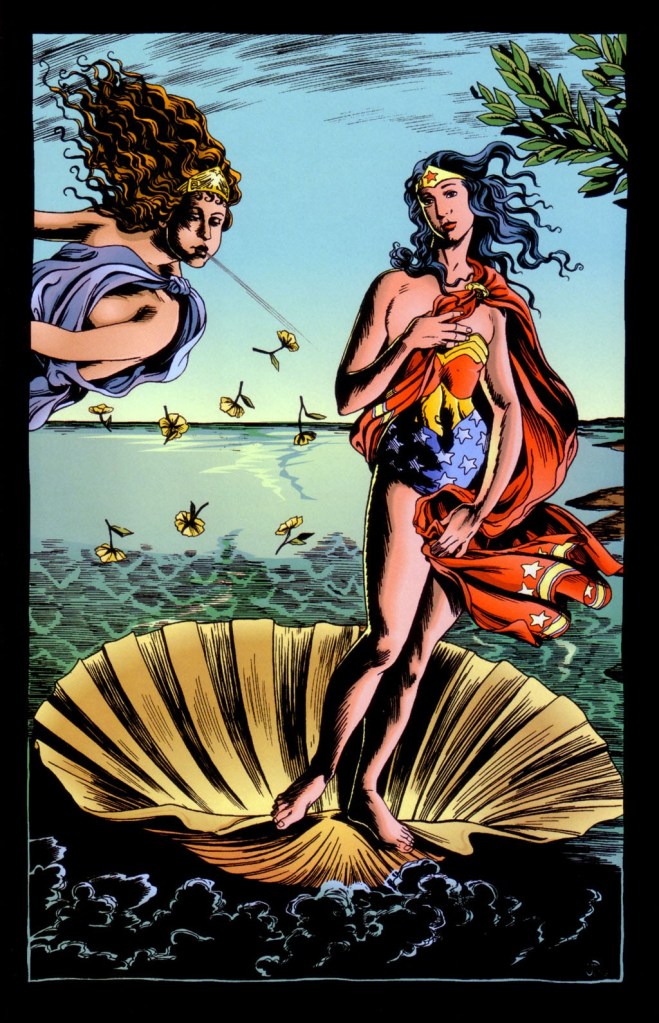
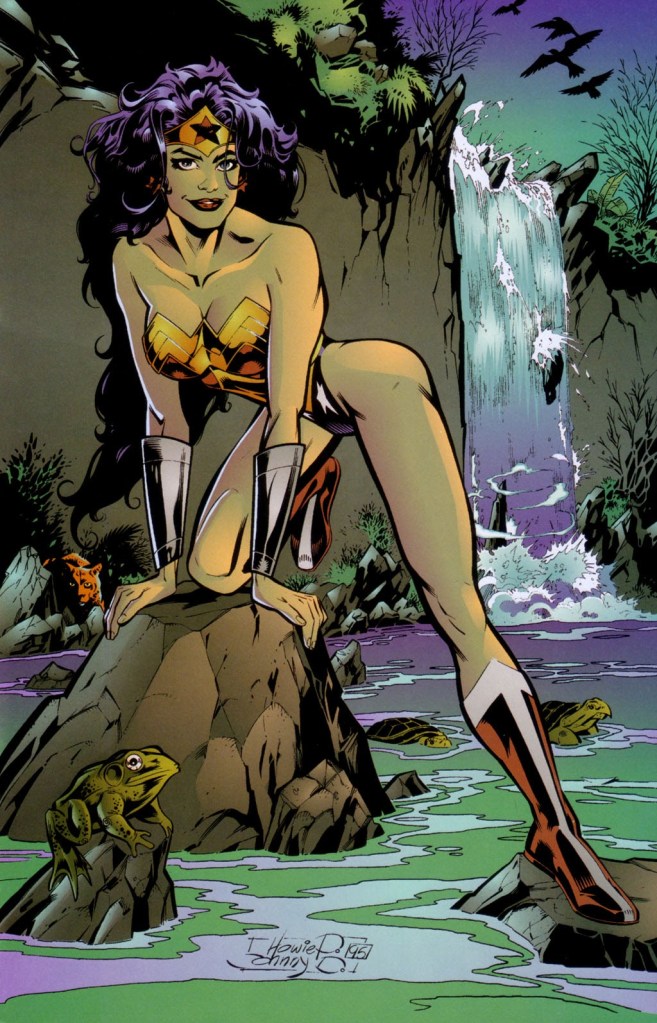
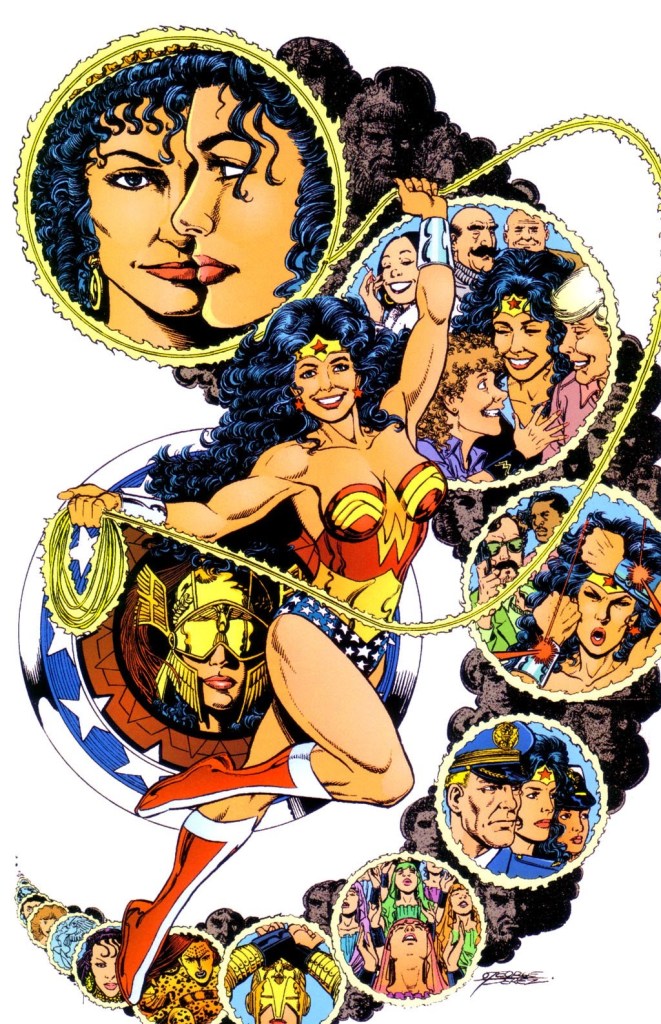
Wonder Woman Gallery is a showcase of thirty-two artworks done by George Perez, Stuart Immonen, Mike Wieringo and Richard Case, Brent Anderson, Howard Porter and John Dell, Jim Balent (misspelled as Jim Balant), Amanda Conner, Chuck Wojtkiewicz and Will Blyberg, Howard Chaykin, Steve Lightle and 22 others.

As this is an art gallery, there is clearly no story to tell. It is all artwork showcasing the different talents of the artists (and the inkers who helped them) on presenting Wonder Woman (note: the only exception here is a solo image of the forgettable WW replacement Artemis).

This artistic contribution by Phil Jimenez looks great.
Jill Thompson’s inspired take on Wonder Woman.
Wonder Woman by Howard Porter and John Dell.
Wonder Woman by Ivan Reis and Barbara Kaalberg.

Quality

As this is an art showcase, the overall quality of the collected art here varies. Such a collection of different art styles will appeal to Wonder Woman fans depending on how they like their favorite superhero presented visually.

In my honest opinion, I always love the art style done by George Perez on Wonder Woman, her fellow Amazons, the supporting characters and more. His presentation here is flawless and timeless. What surprised me here in this collection is the contribution of Phil Jimenez whose quality and art style seem inspired by George Perez’s Wonder Woman legacy. As many of us know already, Jimenez later went on to become one of the top illustrators of DC Comics in the 2000s and his work here is nice to look.

There were a few artworks that showed Wonder Woman with a very cartoony look. Among them is the Wonder Woman piece done in the very distinct style of Sergio Aragones. Some art pieces here showed WW with a bizarre look and then there were a few others whose take on the Queen of Superheroes turned out good.

Conclusion

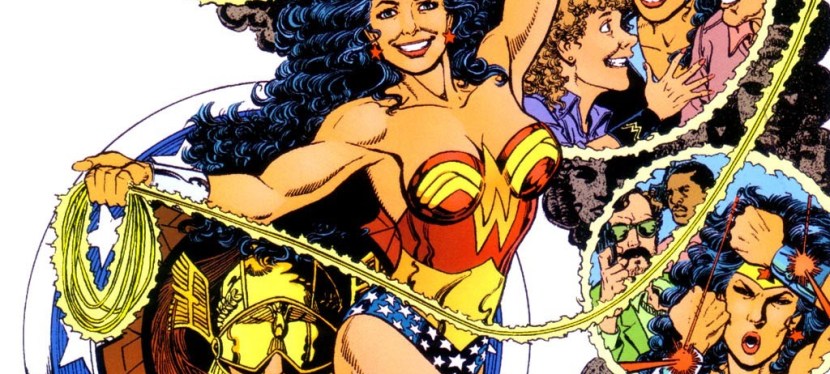
This work by George Perez is my favorite in this collection.

I can say that Wonder Woman Gallery (1996) is a published work that Wonder Woman fans will enjoy for as long as they are willing to accept images of their favorite superhero with styles ranging from realistic to cartoony, obscure and simple. Art styles aside, there is a lot here that fans will marvel at again and again, while art enthusiasts (who are not necessarily fans of the Queen of Superheroes) could find something eye-catching here.

If you are seriously planning to buy an existing hard copy of Wonder Woman Gallery (1996), be aware that as of this writing, MileHighComics.com shows that the near-mint copy of the comic book costs $40.

Overall, Wonder Woman Gallery (1996) is recommended.

+++++

Thank you for reading. If you find this article engaging, please click the like button below and also please consider sharing this article to others. If you are looking for a copywriter to create content for your special project or business, check out my services and my portfolio. Feel free to contact me as well. Also please feel free to visit my Facebook page Author Carlo Carrasco and follow me at HavenorFantasy@twitter.com

DC Comics: The Art of Jim Lee coming soon

If you love DC Comics as well as Jim Lee’s art, then you should watch out for the upcoming release of DC Comics: The Art of Jim Lee Vol. 1 (hardcover).

Superman, Wonder Woman and Batman as drawn by the great Jim Lee with ink by the great Scott Williams.

The publisher described the product as an over-sized art book showcasing Lee’s artwork from his decades-long career. Apart from DC Comics-related works, the new book will come with his early work with WildStorm Productions (WildCATs, Gen13, Deathblow, etc.)

The book will also feature HUNDREDS of covers plus behind-the-scenes art from the artist’s career.

According to DC Comics, the collection will be released on November 27, 2019 for $39.99 containing over 400 pages of content.

Imagine the collection with Lee’s drawings of Wonder Woman, Superman, Batman, WildCATS, Justice League, Gen13, etc. So much fun stuff to look forward to.

I remember way back in 1991 when I was still in high school reading a copy of X-Men #1 (Volume 2) published by Marvel Comics.

I marveled at how great Jim Lee’s art was back then and I even wished to see DC Comics superheroes like Wonder Woman, Superman and Batman get drawn by him.

Guess what? Jim Lee sold his production company to join DC Comics in the late 1990s and had been with them ever since.

I was fortunate enough to see Lee from a distance during the final day of the 2011 San Diego Comic-Con. Nothing like seeing the great legend in person.


Thank you for reading. If you find this article to be engaging, please click the like button below and also please consider sharing this article to others. Also my fantasy book The World of Havenor is still available in paperback and e-book format. If you are looking for a copywriter to create content for your special project or business, check out my services and my portfolio. Feel free to contact me as well. Also please feel free to visit my Facebook page Author Carlo Carrasco.