A Look Back at Spider-Man 2099 #16 (1994)

Disclaimer: This is my original work with details sourced from reading the comic book and doing personal research. Anyone who wants to use this article, in part or in whole, needs to secure first my permission and agree to cite me as the source and author. Let it be known that any unauthorized use of this article will constrain the author to pursue the remedies under R.A. No. 8293, the Revised Penal Code, and/or all applicable legal actions under the laws of the Philippines.

By the year 1993, Marvel Comics’ new comic book line of the 2099 universe kept filling the shelves of retailers and made it into the hands of collectors and fans with the monthly series composed of Spider-Man 2099, Ravage 2099, Doom 2099, Punisher 2099 and the new addition of the year X-Men 2099. Back then, the Marvel 2099 line expanded a lot and saw the establishment of new fans. Even the quarterly series 2099 Unlimited caught the attention of some readers as it told the early stories of Hulk 2099 (who debuted in 2099 Unlimited ).

Unsurprisingly, there were fans of the 2099 universe who wished for a crossover storyline that would bring together their respective favorite futuristic heroes. Remember the rivalry between classic Spider-Man (Peter Parker) and the Punisher (Frank Castle)? Some wanted Spider-Man 2099 and Punisher 2099 to encounter each other.

Eventually, the crossover dream of the fans came through in the form of The Fall of the Hammer storyline that took place in five parts. Specifically one issue each of Spider-Man 2099, Ravage 2099, Doom 2099, Punisher 2099 and X-Men 2099. It was also an opportunity for the 2099 creative teams (note: the legendary Stan Lee and Peter David were among the writers at the time) to get together and contribute to make something special under the watch of 2099 editor Joey Cavalieri.

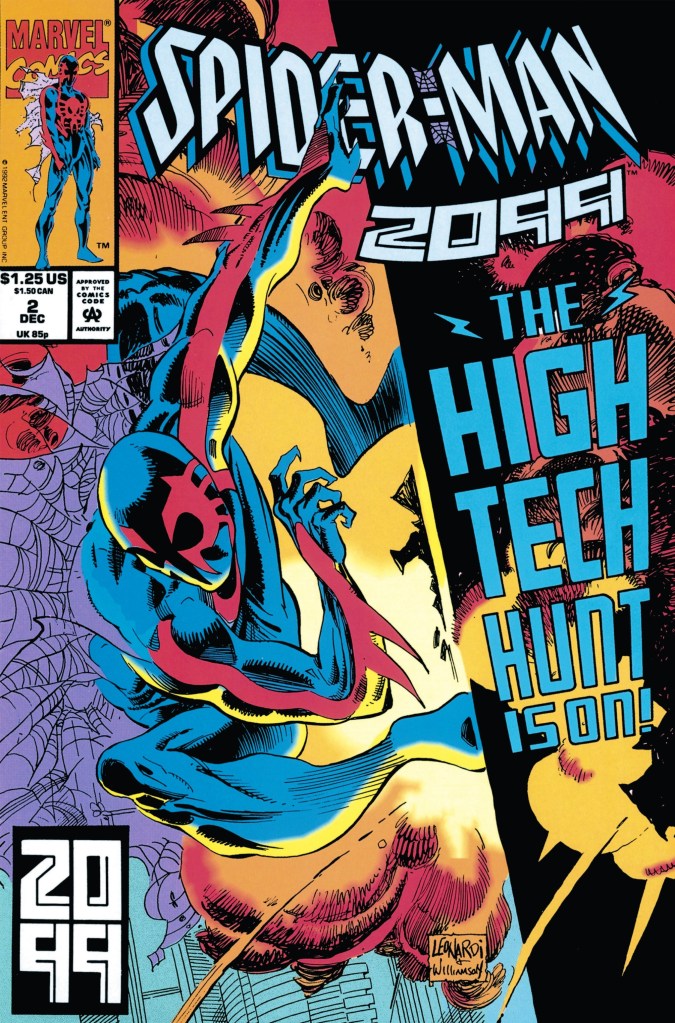
With those details laid down, we can finally start examining the beginning of The Fall of the Hammer storyline in this look back at Spider-Man 2099 , published in 1993 (cover dated 1994) by Marvel Comics with a story written by Peter David and drawn by Rick Leonardi.
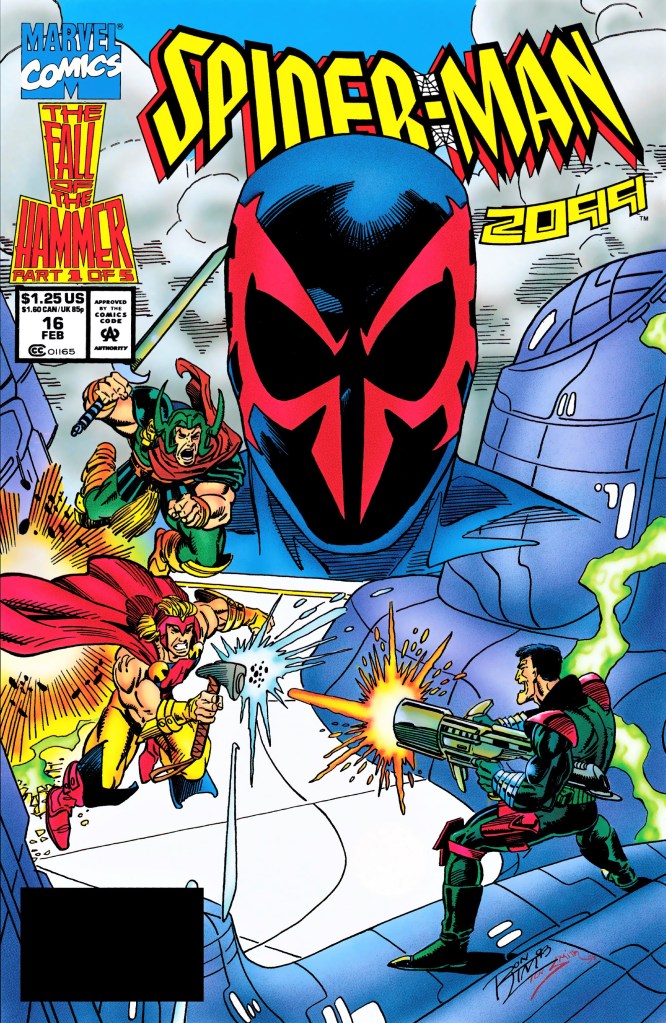
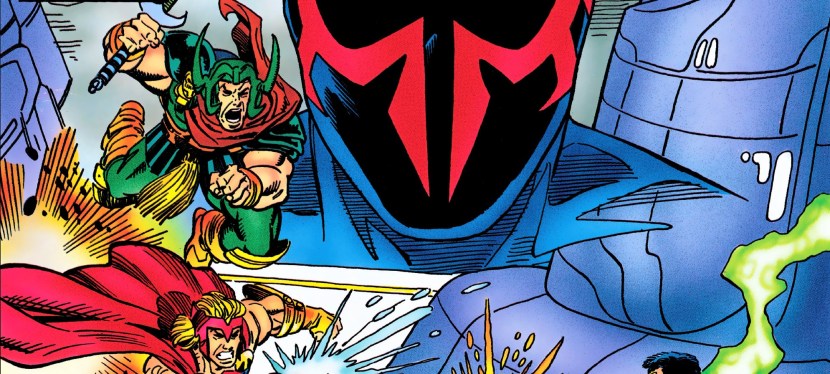
The cover drawn by Ron Lim.

Early story

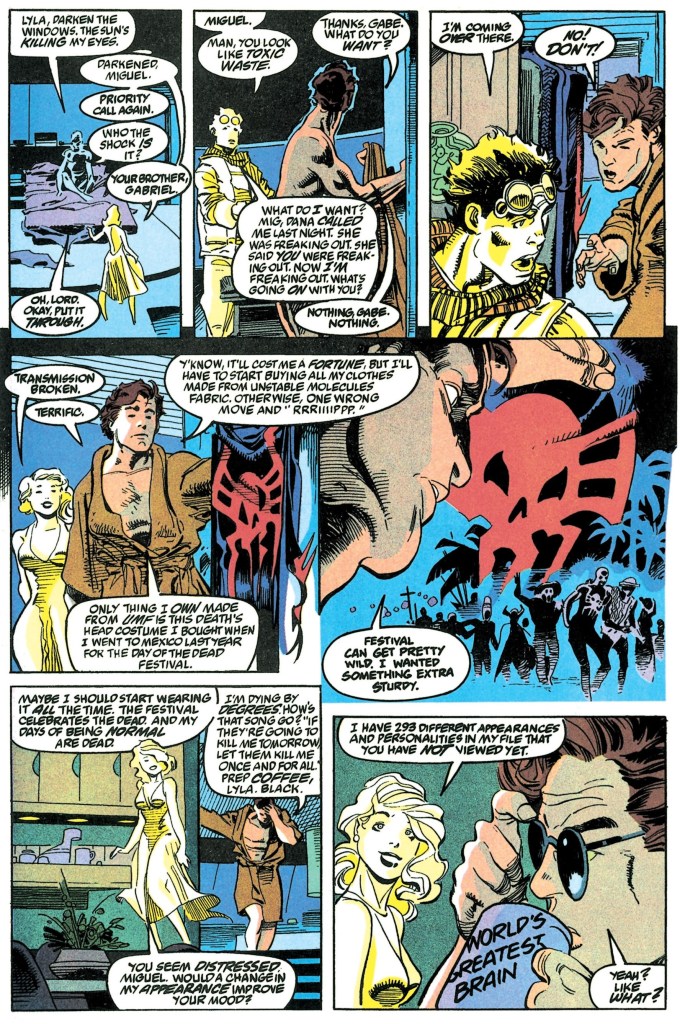
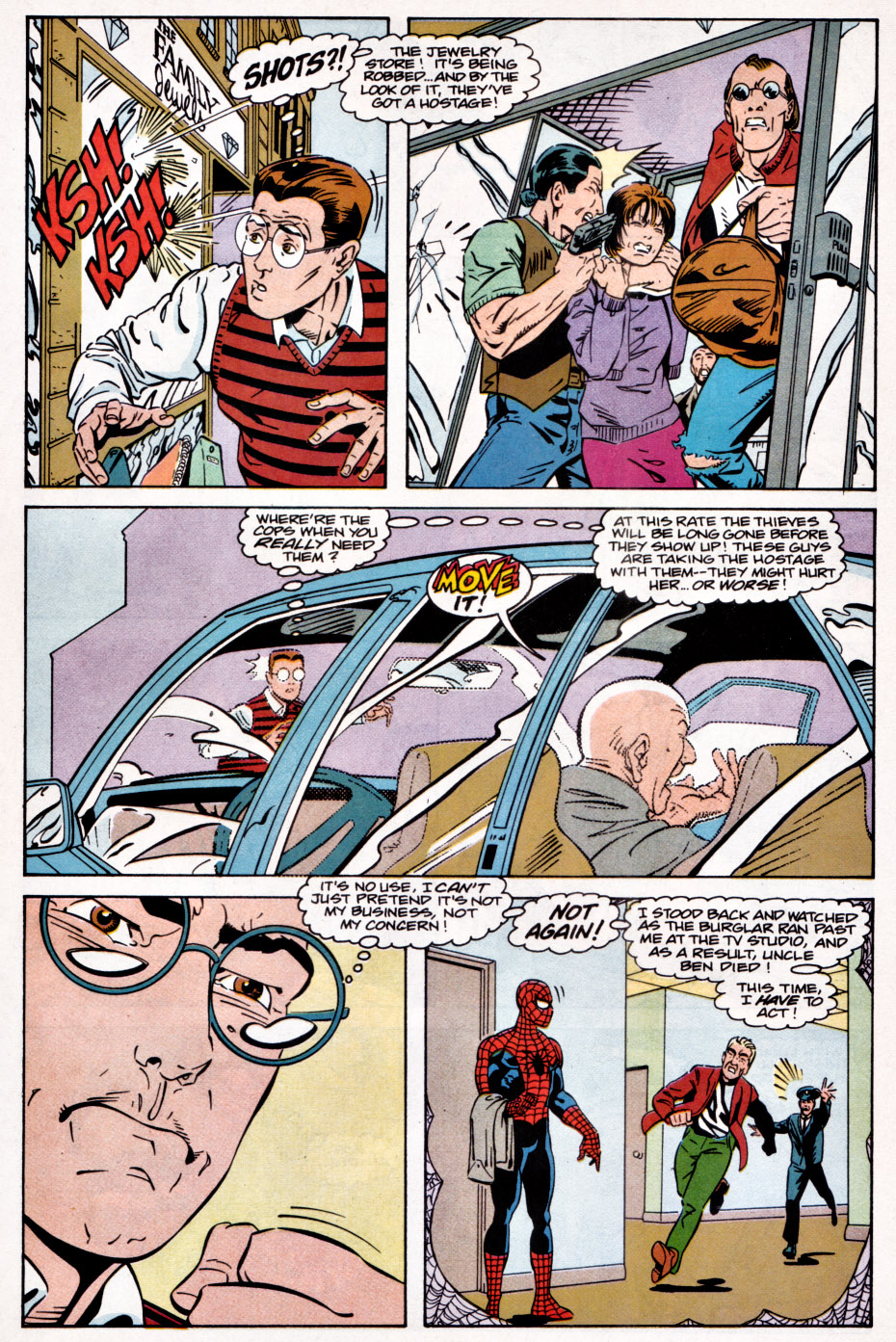
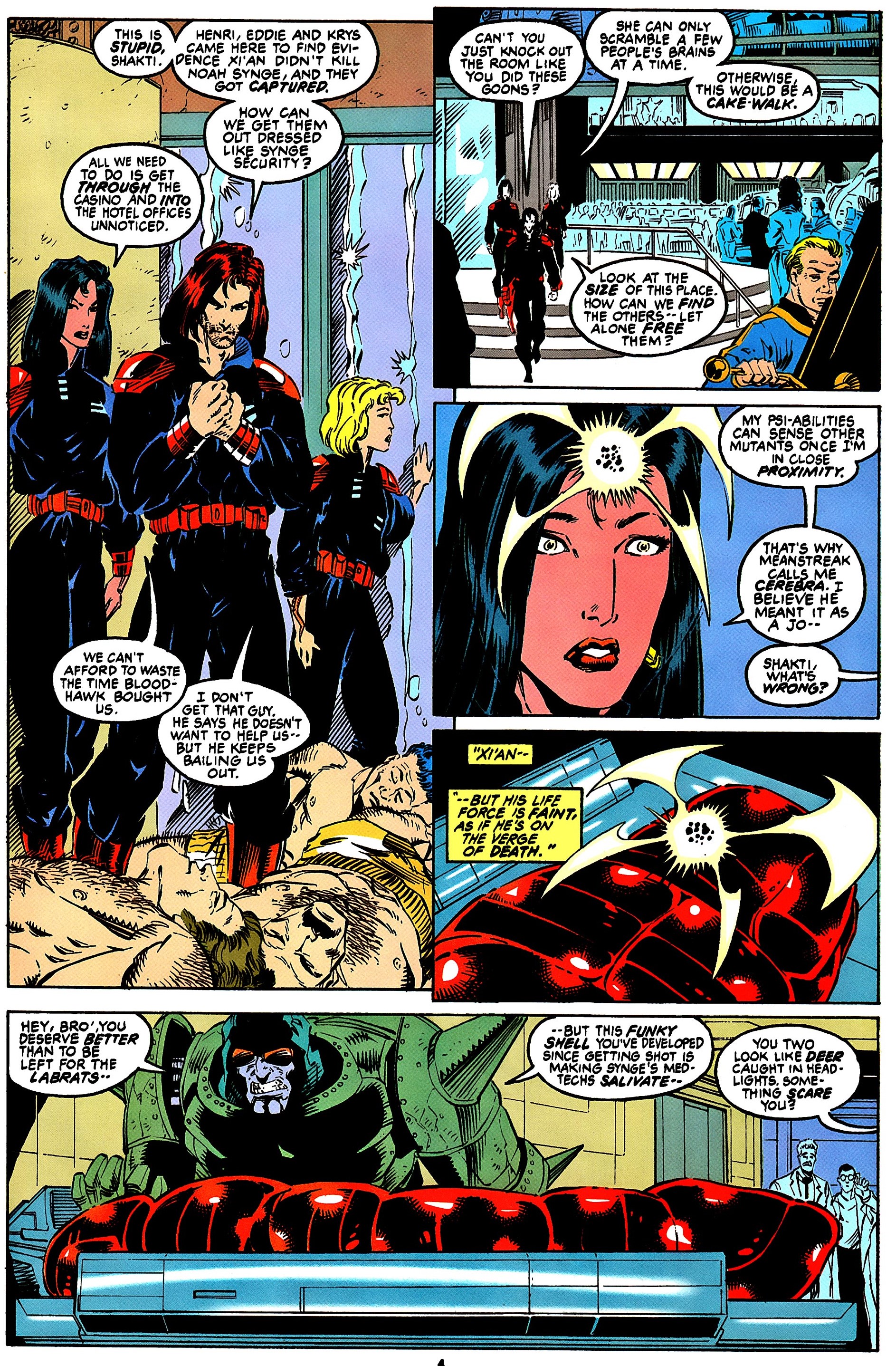
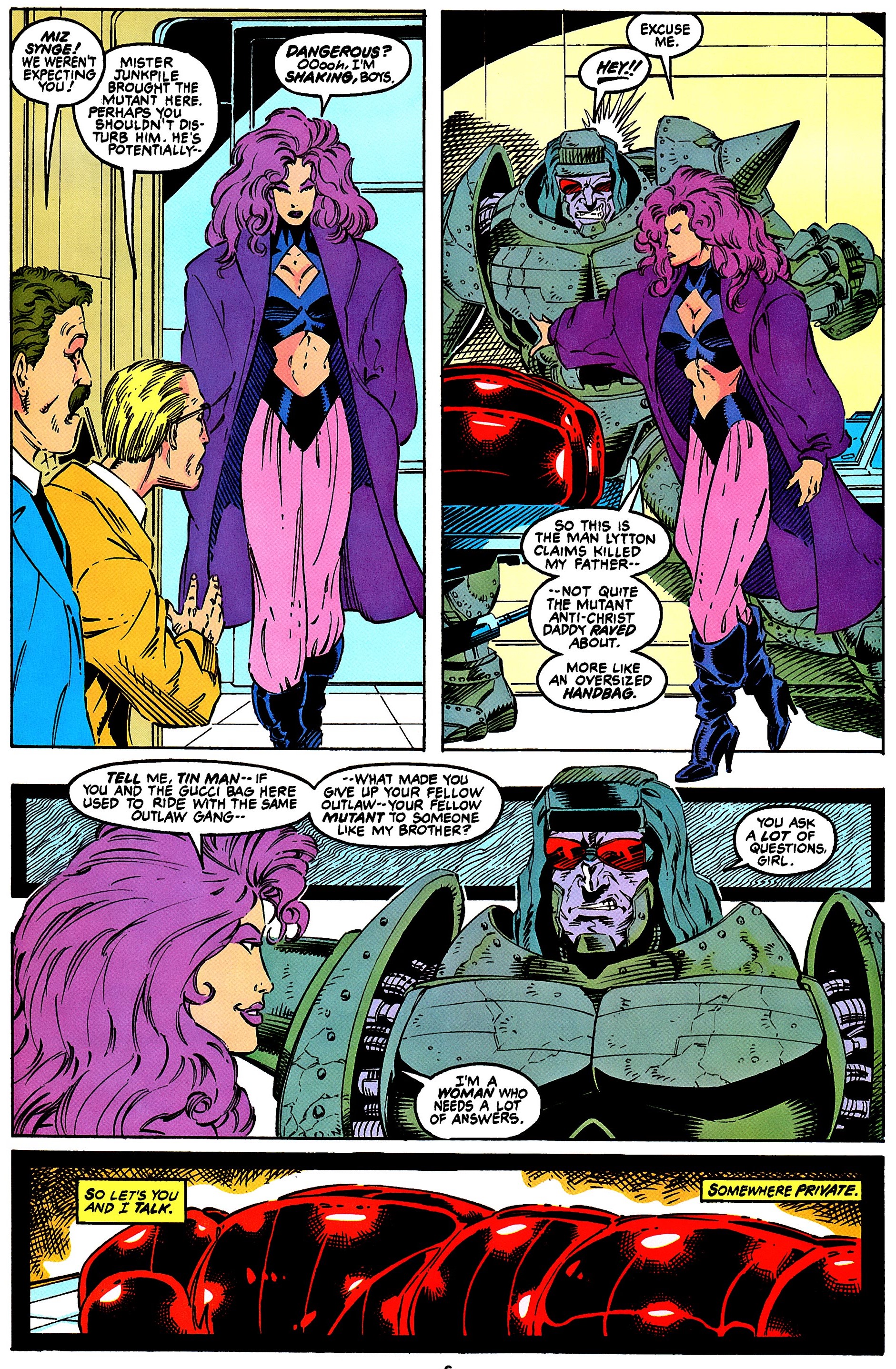
The story begins with the arrival of the floating city of Valhalla, disturbing the people of the town of Randall below. On the floating city itself, a crowd of people – with Miguel O’Hara and Dana among them – stare at a hammer-wielding, caped blonde man who claims to be Thor (their idol). Accompanied by Heimdall, Thor tells them that a select few among them will remain in the city to act as sentinels while the rest will come with Heimdall to a place of departure.

Thor turns his attention on Dana causing Miguel to intervene and challenge his so-called authority. As Thor reacts to Miguel’s defiance, he throws a punch which got deflected. This causes the so-called god of thunder to be surprised given Miguel looking ordinary to him. In reaction, Thor grabs him and throws his body several feet over many people’s heads. This leaves Dana helpless.

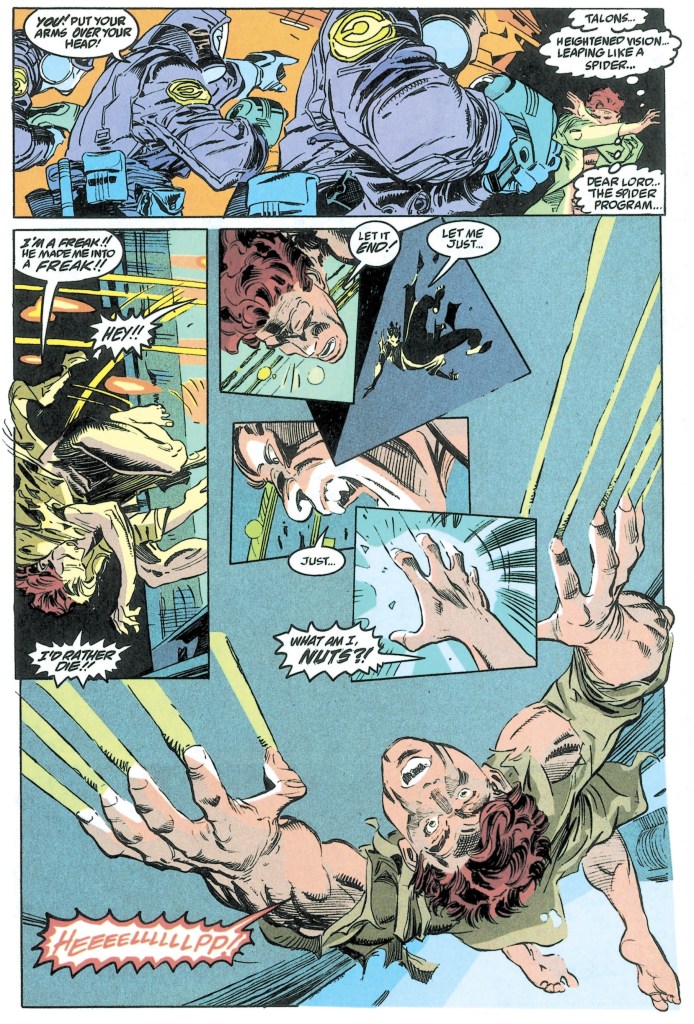
Miguel crashes through a glass window, falling outside until he shoots a web to control his movement. He takes off his civilian clothes, revealing his costume as Spider-Man of 2099. He sets off to get back at Thor…  

Quality
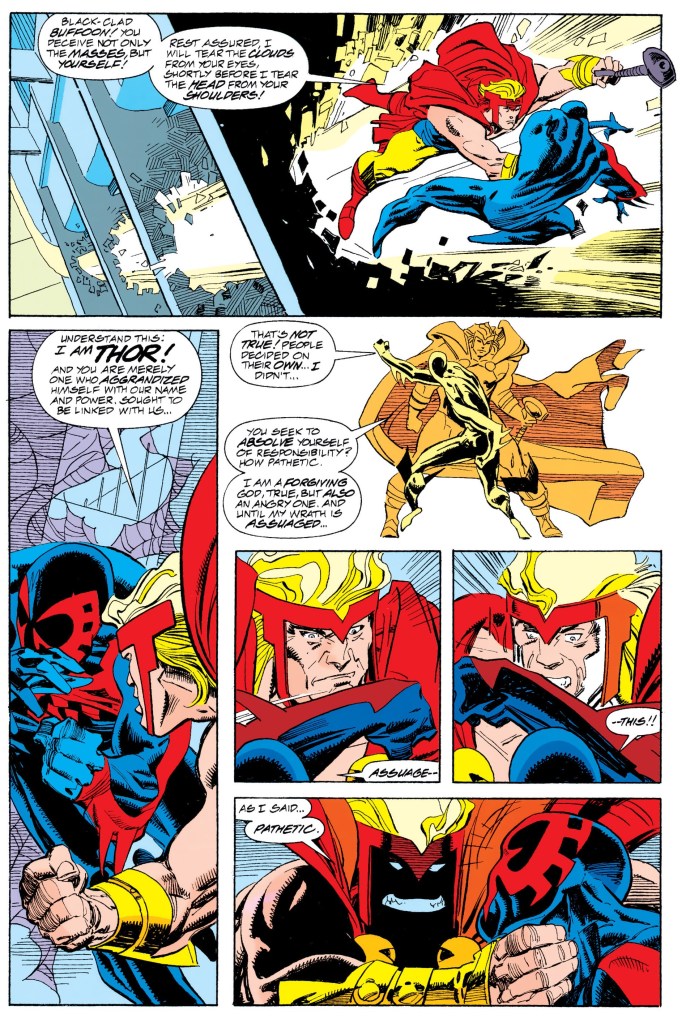
The highlight of the comic book is Spider-Man 2099’s conflict with Thor.

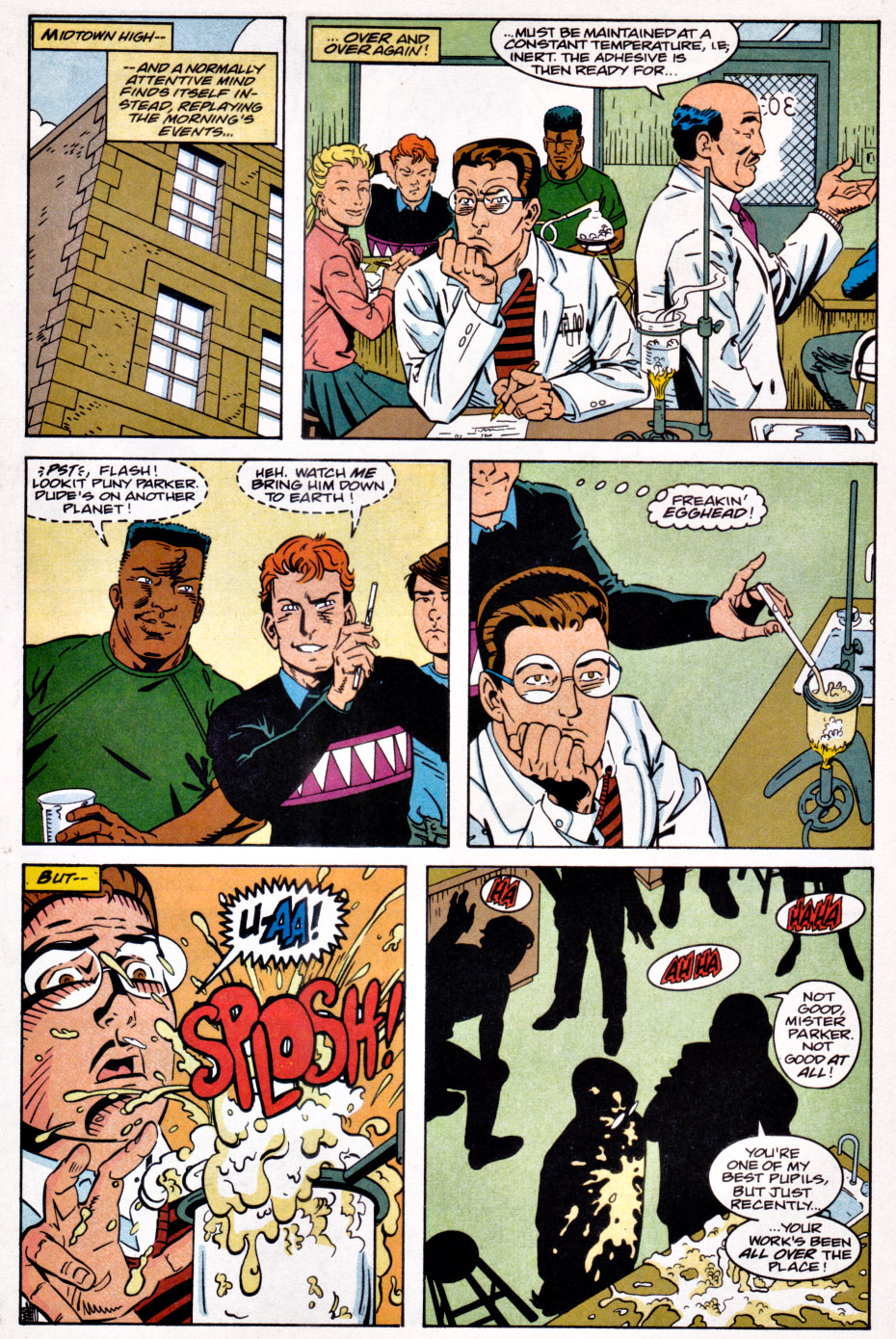
To make clear the obvious, the writing by Peter David is indeed solid although the sketch-like aesthetic of the art of Rick Leonardi badly needed more visual details.

As for the story itself, it is succeeded in creating tension with regards to the caped figure who believes himself to be Thor who is the central figure of religion in 2099 America and has the means to wield power by even involving technology (with Valhalla as the center piece). That being said, Spider-Man 2099’s encounter with him was inevitable, and so was the result (a bit predictable). The story also sheds light on the perceived omnipotence of Thor and how Spider-Man 2099 (who was previously referred to by some people as Thor’s harbinger) got associated with his legend.

To make things clear, this one is purely a Spider-Man 2099 story that justifies the concept of needing other 2099 heroes as the threat was simply too great for any one hero to handle. I should also state that the crossover between any heroes does not begin until the final page of this comic book.

Conclusion
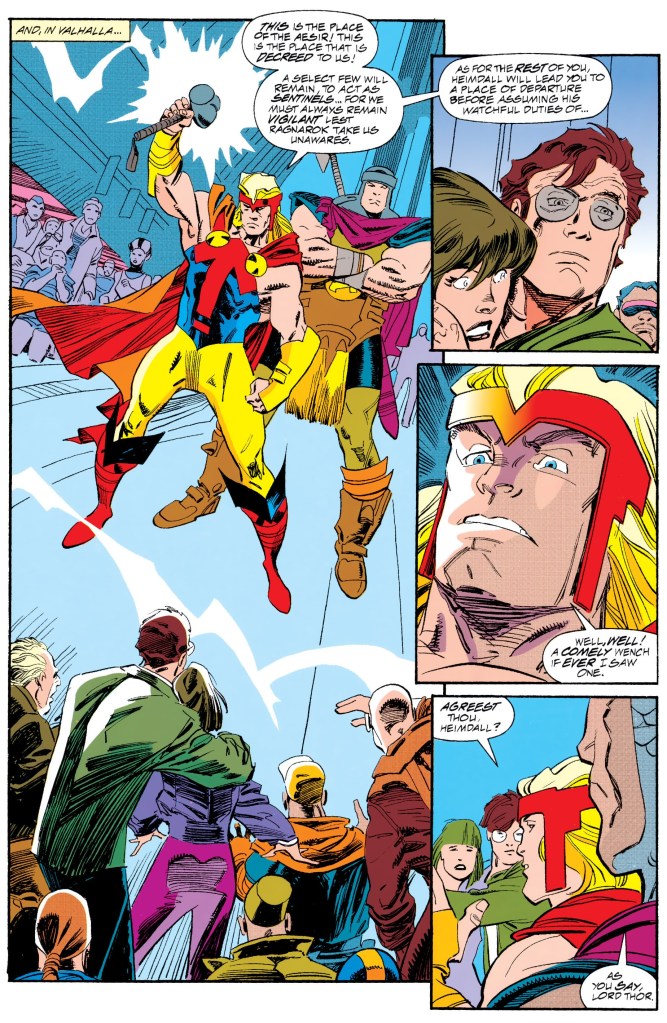
Nothing like being in a crowd of people watching helplessly in front of two so-called omnipotent figures.

Spider-Man 2099 (1994) is still a good read and as the first chapter of The Fall of the Hammer storyline, it served its purpose well. This is mainly due to the strong writing by Peter David who also succeeded in establishing 2099’s Thor not only as the villain but also as a figure who truly is a threat to the people. This comic book also shows that people in 2099 failed to realize who their true Creator is as they embraced religion (instead of faith) and committed idolatry (which is truly unholy) by believing in a false god like Thor.

If you are seriously planning to buy an existing hard copy of Spider-Man 2099 (1994), be aware that as of this writing, MileHighComics.com shows that the near-mint copy of the regular edition costs $40 while the near-mint copies of the newsstand and the signed-and-numbered editions cost $120 and $300 respectively.

Overall, Spider-Man 2099 (1994) is recommended.

+++++

Thank you for reading. If you find this article engaging, please click the like button below and also please consider sharing this article to others. If you are looking for a copywriter to create content for your special project or business, check out my services and my portfolio. Feel free to contact me as well. Also please feel free to visit my Facebook page Author Carlo Carrasco and follow me at HavenorFantasy@twitter.com
A Look Back at Ravage 2099 #7 (1993)

Disclaimer: This is my original work with details sourced from reading the comic book and doing personal research. Anyone who wants to use this article, in part or in whole, needs to secure first my permission and agree to cite me as the source and author. Let it be known that any unauthorized use of this article will constrain the author to pursue the remedies under R.A. No. 8293, the Revised Penal Code, and/or all applicable legal actions under the laws of the Philippines.

If there is anything that truly defines the 2099 universe of Marvel Comics, it is the sci-fi element. Science fiction that not only shows one possible future of Marvel’s United States but also how immense futuristic technology is present all around the people who are undoubtedly impacted by it all. Whether it is within the metropolis (think Spider-Man 2099) or in the wilderness (think X-Men 2099), the sci-fi element clearly defines the 2099 universe.

In the middle of it, there was Ravage (co-created by the late Stan Lee and artist Paul Ryan) who went from a corporate executive to a violent rebel. In my last review, Ravage escaped the toxic island and returned to the metropolis only to realize that his pals Dack and Tiana have been captured again.

To find out what happens next, here is a look back at Ravage 2099 , published in 1993 by Marvel Comics with a story written by Stan Lee and drawn by Paul Ryan.

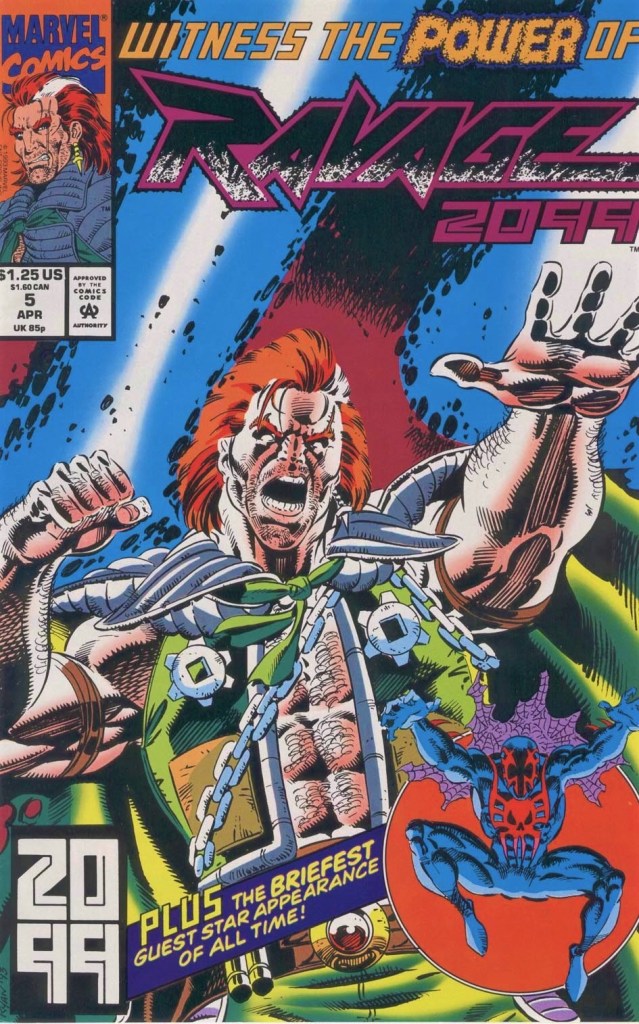
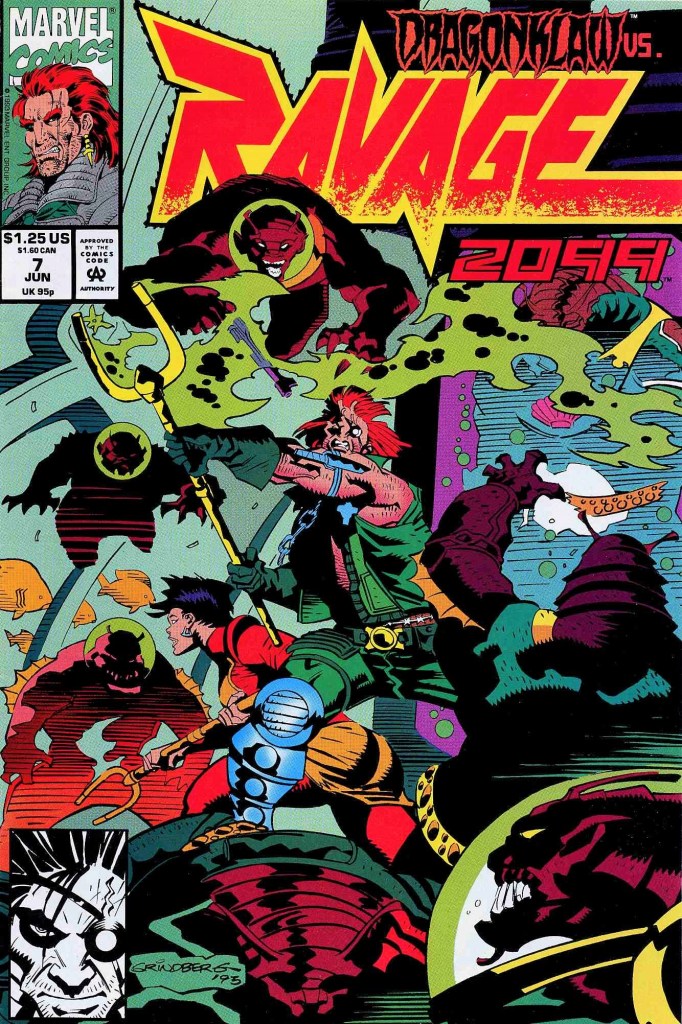
The cover.

Early story

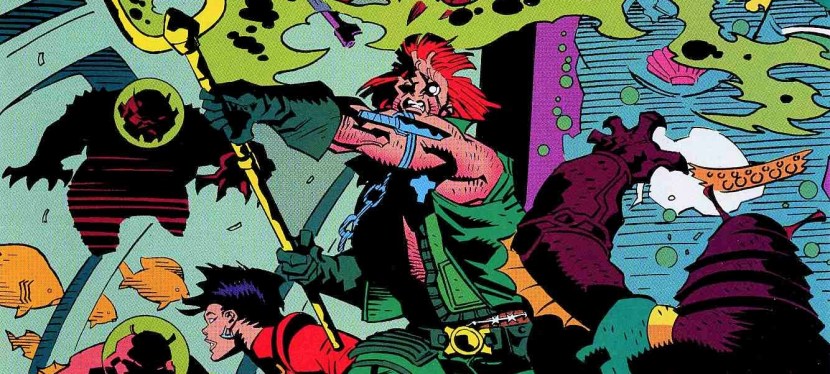
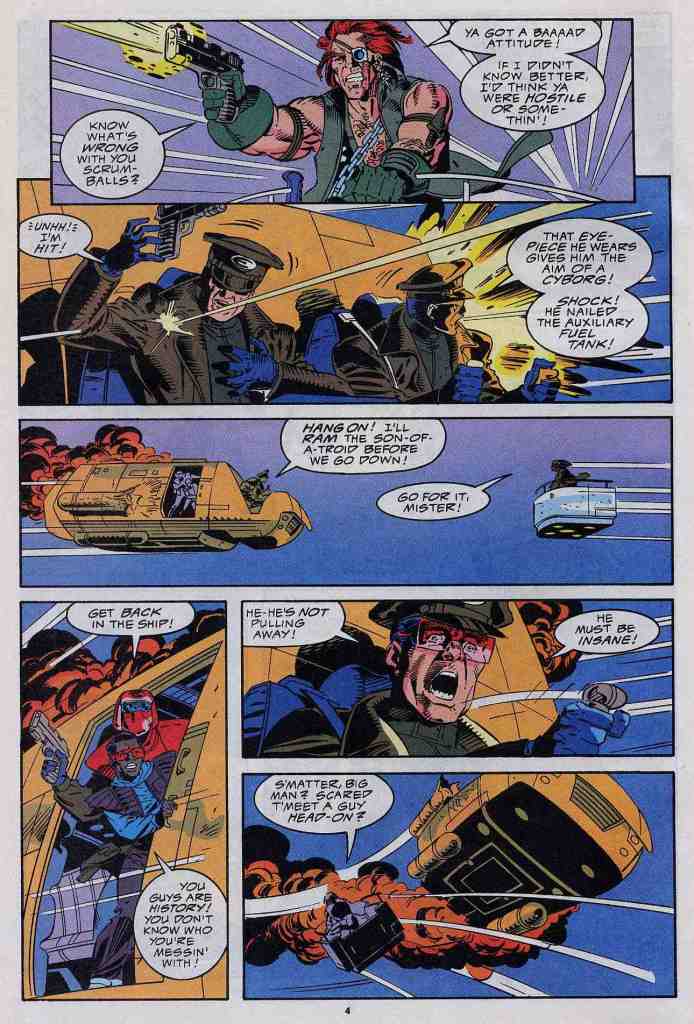
The story begins with Ravage struggling to save Dack and Tiana from different captors, both already separated from each other. Ravage springs into action taking control of the remaining section of the Fantastic Four’s Fantasticar and decides to try to save Dack while facing floating armed personnel. After successfully getting to two armed men hit each other, Ravage chases the flying craft and thanks to his gadget, he is able to hit one of the craft’s personnel.

After a few moments of struggle, Ravage manages to save Dack. He tells the young guy he will drop him off somewhere safe. Dack tells him that he will be blasted on sight by the Public Eye personnel and this convinces Ravage to take him on his dangerous attempt to rescue Tiana from the aquatic invaders…

Quality

I wonder if the social justice warriors (SJWs), the feminists, the socialists and so-called progressives will find this scene offensive to their feelings and beliefs.

Let me first point out the obvious weaknesses of the script Stan Lee wrote: repetition and lack of creative ideas. Alchemax’s Anderthorp Henton being portrayed as ruthless and evil towards his loyal employees yet again – check. Tiana captured again – check. Dack captured again – check. Anderthorp Henton being nice to ladies – check. Tiana being eroticized visually in a state of helplessness – check. Having these repetitions seem to be Stan Lee’s way of filling the script just to ensure there are 22 pages of story to be made.

In fairness to the late Lee, he did something new for this comic book – revealing the underwater lair of the aquatic invaders and having Ravage and Dack involved. The change of environment made this comic book look and feel refreshing, and this added a lot to the science fiction element of the 2099 universe of Marvel. However, it was all a temporary place to show off Ravage doing something heroic. In terms of storytelling, Lee missed out on the opportunity to emphasize to readers why they intend to invade the surface, why are they obsessed on eliminating the human race, and what is the true value of their planned on experiment on naked Tiana (other than learning how to process oxygen).

Another positive point here is Ravage doing heroic acts at last. It’s all technically a repeat of the title character saving his companions but ultimately it helps this comic book achieve its goal of portraying Ravage as a determined and flawed hero. It definitely is much better than his struggle to survive in the toxic island.

Conclusion

An action-packed chase.

As usual, Ravage 2099 (1993) is another flawed comic book like the previous issues. It has, however, more good stuff than bad stuff. True, the repetition of creative elements hurt it but it still has enough entertainment value to justify a read.

If you are seriously planning to buy an existing hard copy of Ravage 2099 (1993), be aware that as of this writing, MileHighComics.com shows that the near-mint copy of the regular edition costs $8 while the near-mint copy of the newsstand edition costs $26.

Overall, Ravage 2099 (1993) is satisfactory.

+++++

Thank you for reading. If you find this article engaging, please click the like button below and also please consider sharing this article to others. If you are looking for a copywriter to create content for your special project or business, check out my services and my portfolio. Feel free to contact me as well. Also please feel free to visit my Facebook page Author Carlo Carrasco and follow me at HavenorFantasy@twitter.com
A Look Back at 2099 Unlimited #1 (1993)

Disclaimer: This is my original work with details sourced from reading the comic book and doing personal research. Anyone who wants to use this article, in part or in whole, needs to secure first my permission and agree to cite me as the source and author. Let it be known that any unauthorized use of this article will constrain the author to pursue the remedies under R.A. No. 8293, the Revised Penal Code, and/or all applicable legal actions under the laws of the Philippines.

During the first half of 1993, Marvel Comics had published four monthly series of their 2099 franchise of comic books: Spider-Man 2099, Ravage 2099, Doom 2099 and Punisher 2099. X-Men 2099 debuted in the 2nd half of 1993 but months before that happened, Marvel went ahead with expanding their 2099 franchise by launching what was back then a new, quarterly comic book series simply titled 2099 Unlimited.

That being said, the mentioned quarterly series was officially launched with 2099 Unlimited which, as its cover showed, featured Spider-Man 2099 as well as Hulk 2099. The comic book came with a high price of $3.95 on its cover and it had 64 pages of content (including ads and bulletins). I myself bought a copy of it as soon as it appeared on the shelves of the local comic book store here in the Philippines.

Was the debut comic book fun? Is it good by today’s standards? We can all find out in this look back at 2099 Unlimited , published in 1993 by Marvel Comics with stories written by Evan Skolnick and Gerard Jones, and drawn by Chris Wozniak and Dwayne Turner.

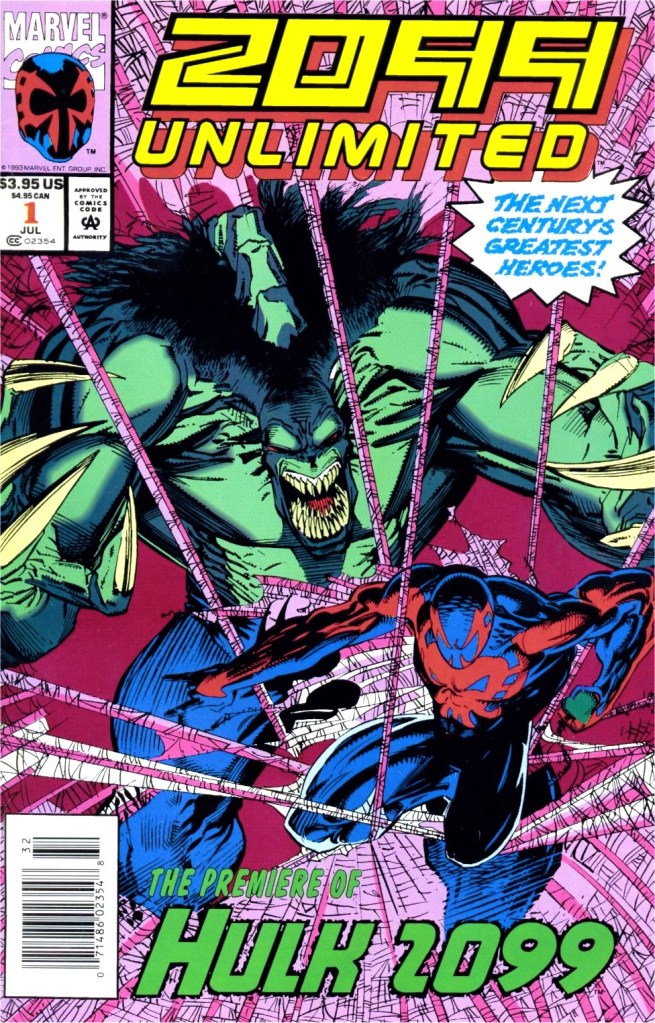
The cover.

Early stories

“Nothing ever changes!” – the story begins at New York City’s Koop Memorial Hospital where an investigation is happening. A married couple arrives and noticed the unusual activity happening there. As they arrive at another floor to visit their son Michael, they noticed the hallway is full of dead bodies. They panic and start running to find their son. Suddenly a muscular man appears and kills the husband, stating his action is justified by his belief about the natural order of things and his effort to ensure humanity’s survival. The killer escapes.

Weeks later, Spider-Man/Miguel O’Hara returns home from fighting crime just in time to rush and prepare himself for his date with Anna. During their date, Anna talks about her sister who has a rare genetic deformity. She intends to visit her sister at the hospital, and Miguel asked if she wants him to come along…

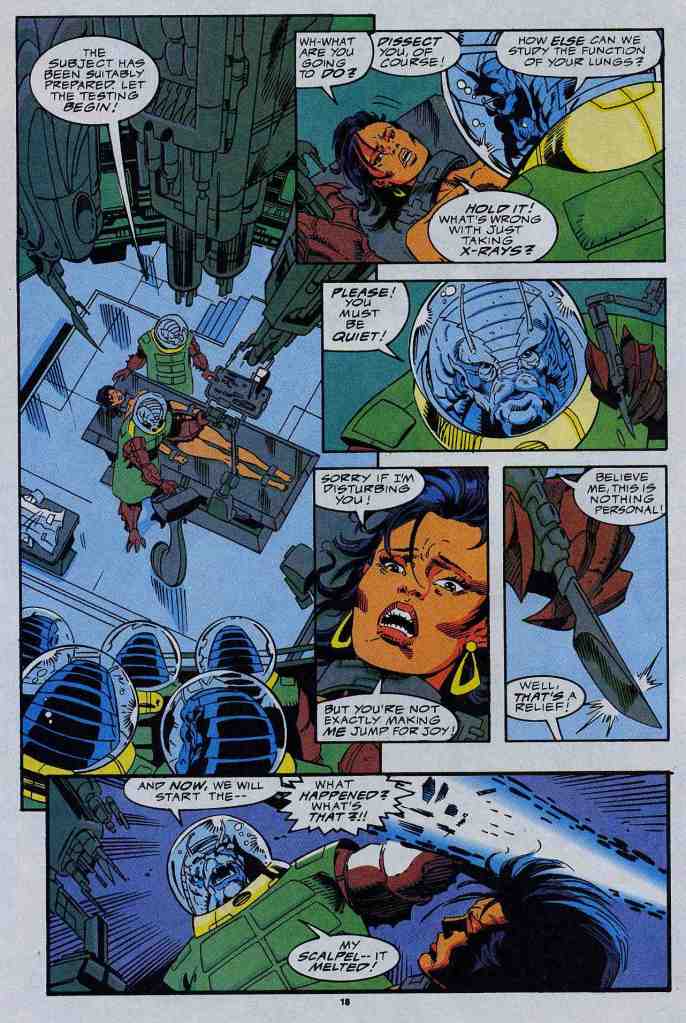
“Hulk 2099” – the story begins in the Mojave Desert with the Hulk traveling alone in the middle of the night. He has been traveling for over three hundred miles alone hunting something. The Hulk arrives at the private residence of a lady who spots him and alerts the armed personnel of Sweat Dreams Security Services. Soon enough, Sweet Dreams personnel arrive and its tank charges at the green monster…

Quality

Imagine Hulk 2099 trespassing on your property.

The first story featuring Spider-Man 2099 has a pretty interesting concept that was nicely executed and proved to be surprisingly satisfying. The creative team introduced the new villain Mutagen and they succeeded in building his personality (including his obsession with perfecting human genetics and altering the so-called gene pool) which resulted a justified conflict with Spider-Man. The character development, focused mainly on Mutagen, was well done and by the end of the story, he became a pretty interesting villain.

As for Spider-Man, his character development was pretty limited to his interactions with Anna laced with little references to his career with Alchemax, and there were no references to his personal life and the people who mattered most to him. Clearly, the first story was more about Mutagen than Spider-Man, and it has a very satisfying conflict between the two. I also enjoyed the way the creative team presented Mutagen being able to adapt to his environment and the attacks Spider-Man threw at him. While the story is strong, I should say that Chris Wozniak’s art is uneven. His drawings on Mutagen were pretty details but the same cannot be said about his art on Spider-Man.

The second story, featuring Hulk of 2099, is the actual gem in this comic book. Not only was it the first-ever appearance of the character, it unsurprisingly took inspiration from the origin of the classic Hulk (Bruce Banner) and made some twists with themes of the business of entertainment and the human desire of idolatry (always unholy). The new Hulk here is an entertainment executive named John Eisenhart who has been researching the Knights of Banner, a group of people who worship the classic Hulk. What he does in the real world and with people, he strives to make something out of them to boost his career and stand out in the business of amusement. Eisenhart sees Banner’s idolaters having the makings of a new cult of Thor complete with living in isolation

Eisenhart is not the typical good-natured protagonist. Quite the opposite in fact as he is obsessed with success and is a walking tool of Hollywood who exploits people and insists that being civilized is essential and that strength is knowing where the power is. That being said, this story has a lot of build-up on Hulk 2099 while still having sufficient space to tell his origin that arguably links him with the legacy of Banner Hulk. For the most part, the bouts of build-up resulted worthy pay-offs that readers can enjoy.

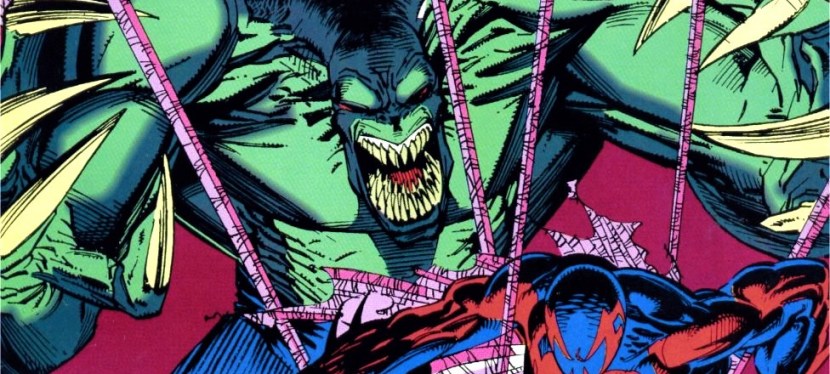
More on Hulk 2099 himself, this version of the classic character is more monstrous and freakish looking. While Hulk 2099 maintains the intelligence of Eisenhart, he still is deadly and unpredictable. Supporting characters like Gawain and Quirk both lacked scenes and dialogue but that is not surprising since the focus of the comic book is on Hulk 2099. For the art, Dwayne Turner’s work here is satisfying.

Conclusion

Spider-Man 2099 and Mutagen in battle!

When I first read this way back in 1993, I felt underwhelmed. By today’s standards, 2099 Unlimited (1993) surprisingly aged well and it is actually deeper, more meaningful and engaging than I previously thought. Apart from Hulk 2099’s debut, the introduction of Mutagen was pretty engaging and he had a lot of potential to be a major 2099 universe villain. Too bad that Mutagen was not used to be a nemesis against Ravage 2099 or Punisher 2099 or even X-Men 2099. Hulk 2099 meanwhile went on to have a dedicated monthly series which came at a time when the 2099 imprint and the comic book industry in general went way down. This comic book, in my opinion, is more cerebral than it looks and that is thanks to the writers.

If you are seriously planning to buy an existing hard copy of 2099 Unlimited (1993), be aware that as of this writing, MileHighComics.com shows that the near-mint copy of the regular edition costs $15 while the near-mint copy of the newsstand edition costs $32.

Overall, 2099 Unlimited (1993) is recommended.

+++++

Thank you for reading. If you find this article engaging, please click the like button below and also please consider sharing this article to others. If you are looking for a copywriter to create content for your special project or business, check out my services and my portfolio. Feel free to contact me as well. Also please feel free to visit my Facebook page Author Carlo Carrasco and follow me at HavenorFantasy@twitter.com
A Look Back at Ravage 2099 #5 (1993)

Disclaimer: This is my original work with details sourced from reading the comic book and doing personal research. Anyone who wants to use this article, in part or in whole, needs to secure first my permission and agree to cite me as the source and author. Let it be known that any unauthorized use of this article will constrain the author to pursue the remedies under R.A. No. 8293, the Revised Penal Code, and/or all applicable legal actions under the laws of the Philippines.

Welcome back, superhero enthusiasts, comic book collectors and fans of Marvel’s 2099 universe! Do you want to see more of 2099 stories written by the late Stan Lee? There is Ravage 2099, the one original character for the 2099 universe co-created by Lee and illustrator Paul Ryan. In my last review, the story had Ravage desperately trying to survive in an island which is toxic and filled with lots of bad guys hunting him down.  

With those details laid down, here is a look back at Ravage 2099 , published in 1993 by Marvel Comics with a story written by Stan Lee and drawn by Paul Ryan.

The cover.

Early story

The story begins with Ravage, in the presence of Ursell (the one who saved his life), reacting to his hands burning with light-blue flame. Ursell states it is the radiation causing it. Ravage accuses him of turning him into a troid and that he is not better than Dethstryk, the ruler on the island. As he could not control his anger, Ravage attacks Ursell (who told him his hands are lethal as they destroy what they touch).

Outside, one Dethstryk’s troops spots light (the result of Ravage’s energetic hands) coming from the same cave Ravage and Ursell are in. Eventually Ravage calms down and the energy of his hands weaken. Ursell hands him gloves (composed of complex molecular formula) which help him contain the energy but only for one hour.

Suddenly, Dethstryk’s thugs spot the two in the cave. One of them identifies Ursell as the betrayer of their leader…

Quality

I wonder if SJWs, socialists, Communists and the radicalized feminists will find this image offensive…

In terms of storytelling, this comic book is a big improvement over the last issue. While issue was pretty much limited to Ravage just struggling to survive, this one had more elements of discovery and surprise which made it feel fresh. Ravage having his hands energetic and getting bothered deeply by it was a nice touch to spice up the character while building him up to be potentially more powerful. I also enjoyed the sub-plot in which Tiana, who has been portrayed as an erotic damsel-in-distress since issue , finally gets to do something important with trying to free the troubled youth Dack. Not only that, there is also another sub-plot involving a race of aquatic creatures that seek to invade the surface.

Conclusion

Spider-Man 2099’s very brief appearance!

Ravage 2099 (1993) is fun to read and surprisingly engaging as it is a big improvement over issue . Considering the uneven quality of this particular series, it’s nice to see Stan Lee make storytelling improvements just as they are needed. Still the quality of dialogue is sub-par and there were corny lines like Ravage saying, “You’re cornier than breakfast cereal!”

If you are seriously planning to buy an existing hard copy of Ravage 2099 (1993), be aware that as of this writing, MileHighComics.com shows that the near-mint copy of the regular edition costs $8 while the near-mint copy of the newsstand edition costs $24.

Overall, Ravage 2099 (1993) is satisfactory.

+++++

Thank you for reading. If you find this article engaging, please click the like button below and also please consider sharing this article to others. If you are looking for a copywriter to create content for your special project or business, check out my services and my portfolio. Feel free to contact me as well. Also please feel free to visit my Facebook page Author Carlo Carrasco and follow me at HavenorFantasy@twitter.com
A Look Back at Spider-Man 2099 #2 (1992)

Disclaimer: This is my original work with details sourced from reading the comic book and doing personal research. Anyone who wants to use this article, in part or in whole, needs to secure first my permission and agree to cite me as the source and author. Let it be known that any unauthorized use of this article will constrain the author to pursue the remedies under R.A. No. 8293, the Revised Penal Code, and/or all applicable legal actions under the laws of the Philippines.

I can hardly believe that it has been a year since Marvel Comics organized the return of their 2099 universe with the release of several comic books. Among those, I bought 2099 Alpha it was a very disappointing read. I also read some other 2099 comic books released late 2019, and none of those engaged me nor gave me much entertainment value in return for what I paid for.

If you ask me, the Marvel 2099 universe of comics was at its best during the early 1990s. That being said, join me on this look back at Spider-Man 2099 , published in 1992 by Marvel Comics with a story written by Peter David and drawn by Rick Leonardi.

The cover.

Early story

The story begins at one of the Alchemax towers. Miguel O’Hara is standing naked in front of a shocked Aaron Delgato, a corporate rival of his who tried to kill him. As he noticed Miguel (with fangs) looking at him, he reacts by firing his gun. With fast reflexes, Miguel (whose DNA has been altered already at this point) dodges all of the shots and tries to get close to his rival. One of the bullets hit a tank which causes a large explosion at the tower. The tremendous force pushed them both to the exterior.

Miguel grabs Aaron’s arm not realizing that his talons are hurting his rival. The skin of Aaron’s arm got ripped off causing him to fall to his death below. Miguel gets dressed as armed personnel arrive. As shots were fired, Miguel falls off the edge…

Quality

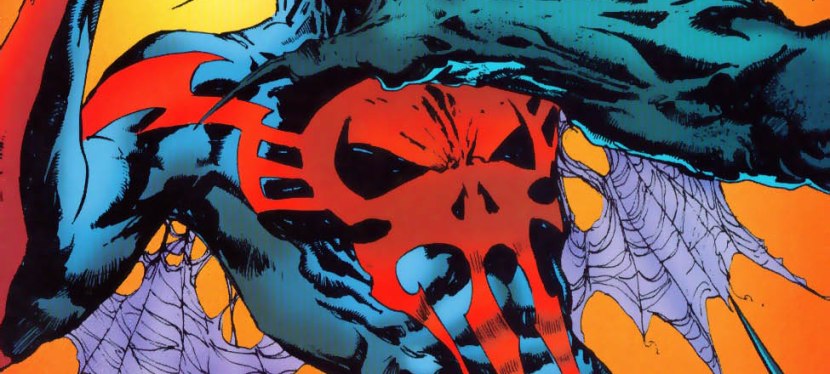
The costume!

This is a very well-written story by Peter David. While the first issue established Miguel O’Hara’s personality and corporate standing, this one established his becoming Spider-Man 2099 by means of mutation. Not only does he have talons (which retract automatically when he touches his own skin) and sharp teeth, he also gains heightened vision, enhance leaping ability, and most notably his costume (backed with a reasonable explanation it exists). The scenes of corporate intrigue and the introduction of the cyber cowboy named Venture easily added a detective story element into the plot which was quite gripping. No doubt about it, I found the story in this comic book more satisfying than the first issue.

Conclusion

Spider-Man 2099’s talons save him from falling further.

Spider-Man 2099 (1992) is a great read and this is the one comic book that fully establishes the title character as we know him.

If you are seriously planning to buy an existing hard copy of Spider-Man 2099 (1992), be aware that as of this writing, MileHighComics.com shows that the near-mint copy of the regular edition costs $15 while the near-mint copy of the newsstand edition costs $45.

Overall, Spider-Man 2099 (1992) is highly recommended!

+++++

Thank you for reading. If you find this article engaging, please click the like button below and also please consider sharing this article to others. If you are looking for a copywriter to create content for your special project or business, check out my services and my portfolio. Feel free to contact me as well. Also please feel free to visit my Facebook page Author Carlo Carrasco and follow me at HavenorFantasy@twitter.com
A Look Back at Ravage 2099 #3 (1993)

Disclaimer: This is my original work with details sourced from reading the comic book and doing personal research. Anyone who wants to use this article, in part or in whole, needs to secure first my permission and agree to cite me as the source and author. Let it be known that any unauthorized use of this article will constrain the author to pursue the remedies under R.A. No. 8293, the Revised Penal Code, and/or all applicable legal actions under the laws of the Philippines.

Welcome back, Marvel 2099 fans and superhero comic book geeks! Are you ready for another trip into the high-tech future of Marvel’s comic book universe through the storytelling of the late Stan Lee? This is about the 3rd issue of the Ravage 2099 monthly series.

For the newcomers reading this, Ravage is an original character co-created by Stan Lee and artist Paul Ryan for the 2099 universe of Marvel Comics. By comparison, 2099 started in the 1990s with its own versions of Spider-Man, Dr. Doom and the Punisher. As such, Ravage stood out simply because he was different from them and that includes being idiotic and chaotic as a lead character.

Having already reviewed the first two issues (read my recent review), it became clear to me that Ravage started to deteriorate as a person even as he strived hard in doing what he thought was right. There are two established villains in the story and so far, Ravage does not look any different from them since he proved to be so chaotic, he became a danger not only to the thugs but also to law enforcers. As such, he is a danger to the public.

To find out if anything will improve creatively and artistically, here is a look back at Ravage 2099 , published in 1993 by Marvel Comics with a story written by Stan Lee and drawn by Paul Ryan.

The cover.

Early story

The story begins moments after Alchemax forces abducted Tiana from Ravage and Dack who find themselves busy with armed enemies on the street. The young Dack got hit by a gun blast. Somehow, Dack was brought to the nearest medical facility for treatment and placed in a medi-cell for questioning.

Already alone in the room, Dack is trapped and a bearded man delivering some candy arrives. It turns out it is Ravage in disguise and he wanted to make sure the youth was fine. Dack tells reveals that he was question for hours. Ravage updates Dack that Tiana was probably half-way to Hellrock, and he intends to get her back.

Meanwhile, armed personnel spot Ravage on surveillance video and rush to get him…

Quality

Most likely the portrayal of Tiana being helpless will turn off radical feminists and SJWs reading this.

To put things straight, this particular story has a retro vibe which reminds me of certain sci-fi and adventure comic books of the 1950s to the 1970s. This is not surprising given Stan Lee’s own style of plotting and writing. Like in issue , creative baggage was less of a hindrance and this allowed Lee and Paul Ryan to craft another action-hero tale that is straightforward and easier to follow. Unlike the previous issue, this one has stakes raised near the end of the story which is refreshing and it also involves a nice change of location. Compared to how he acted in issue , Ravage here begins to act more heroic and showed willingness to sacrifice something to help someone. He still is a chaotic person to be with, only this time he is in the company of a different kind of walking characters. To say the least, this story is an improvement over its predecessor.

Conclusion

Ravage in action inside Dak’s medi-cell.

I can say that Ravage 2099 (1993) is surprisingly a satisfying read. It definitely is not great but the traditional elements of sci-fi, action adventure storytelling lifted its quality. It should be noted that the act of heroism on the part of Ravage begins here and the predicted rivalry between him and the villain Dethstryk (who looks generic as the leader of a band of baddies) finally starts.

If you are seriously planning to buy an existing hard copy of Ravage 2099 (1993), be aware that as of this writing, MileHighComics.com shows that the near-mint copy of the regular edition costs $8 while the near-mint copy of the newsstand edition costs $24.

Overall, Ravage 2099 (1993) is satisfactory. That being said, I don’t recommend spending any more than $1 for it.

+++++

Thank you for reading. If you find this article engaging, please click the like button below and also please consider sharing this article to others. If you are looking for a copywriter to create content for your special project or business, check out my services and my portfolio. Feel free to contact me as well. Also please feel free to visit my Facebook page Author Carlo Carrasco and follow me at HavenorFantasy@twitter.com
A Look Back at Spider-Man 2099 #37 (1995)

Disclaimer: This is my original work with details sourced from reading the comic book and doing personal research. Anyone who wants to use this article, in part or in whole, needs to secure first my permission and agree to cite me as the source and author. Let it be known that any unauthorized use of this article will constrain the author to pursue the remedies under R.A. No. 8293, the Revised Penal Code, and/or all applicable legal actions under the laws of the Philippines.

If you’re looking for a powerful, dramatic tale of Spider-Man 2099 from the 1990s, you will find it right here in this retro review.

Before getting to the review, it is important to remember that Spider-Man 2099 was mainly driven by Peter David, who is one of the best-ever writers in the history of superhero comics in America. Many geeks I know admired his work on other Marvel titles, most notably The Incredible Hulk.

So how did he get involved in Marvel’s 2099 universe that was first launch in 1992? Check out Peter David’s words from an online interview in Doom2099.com:

The Marvel editors approached me, as they did a number of free lancers, and said we’re going to be doing a 2099 line. And we would like you [meaning me and other writers] to submit a proposal on how you would do Spider-Man 2099. We knew he was Spider-Man 2099. We knew he worked for a company called Alchemax. Beyond that there was nothing about him established. So I sat down and I thought, the last thing I want to do is have him be a relative of Peter Parker. Because that’s the obvious thing. So I created someone completely from scratch. I made him of mixed ethnicity, because I felt that by the end of the 21st century mixed ethnicity is going to be more common than it is now. So I made him half-Irish and half-Mexican because I thought that was the most combustible combination I could come up with. And I decided I would zig wherever Stan and Steve zagged when they created Spider-Man. Peter Parker was a white bred WASP. So Miguel O’Hara was a combined ethnicity. Peter was an orphan. Miguel would have a living mother. Peter was alone. I gave Miguel a brother. Peter had no idea how to handle girls and was a teenager. Miguel was in his 20s and had a fiancée. I just made the contrary move all the way. And I submitted my proposal. A week later I get a call from the Marvel editors and they said ‘we love your take on Spider-Man 2099. For starters, it’s the only one that doesn’t start with a relative of Peter Parker.’ And I went ok, that’s interesting. They asked me if I would be interested in writing. I said, sure. And that’s how I became involved in it.

Right from the start of the Spider-Man 2099 series, Peter David and illustrator Rick Leonardi established 2099’s New York City society and went on to develop Miguel O’Hara/Spider-Man 2099 deeply as well as his relationships with his family and companions, complete with his struggle working for a sinister boss at Alchemax. Things escalated further personally for the futuristic Spider-Man during my last review and we will find out what happens next.

Here is my retro comic book review of Spider-Man 2099 #37, published in 1995 by Marvel Comics with a story by Peter David and art by Andrew Wildman.

Cover
The cover of the regular edition.

Early story

The comic book opens with a quick flashback in the past when Miguel O’Hara, his then girlfriend Xina and his brother Gabe spend time at a club talking about relationships. Eventually Gabe’s date Dana arrives late. Miguel could not help but react with his mouth open.

In the present day, Miguel faces Venom 2099 who has Xina and Dana wrapped with his symbiote. In reaction to Venom’s ploy, Miguel frees Dana which broke of Venom’s right arm. Miguel and Dana moved quickly to the next room and the door shut provided them temporary refuge from Venom. Before the two separated (Miguel to fight and Dana to leave for safety), they kissed.

Even without his costume, Miguel decides to go after Venom to free Xina…

Quality

14
Venom 2099 is truly dangerous.

Another well-crafted comic book carrying the same strong creative energy since Venom 2099’s debut in issue #35. While it is no surprise that Peter David’s writing remains top-notch and highly compelling in showing the continued conflicts between Spider-Man and Venom of the future, he inserted some flashbacks into the past showing how Miguel O’Hara got romantically involved with Dana and how it complicated matters in his family given the fact that Dana was the GF of his brother Gabe. Those flashbacks, which some might think served as padding, are actually helpful to not only inform readers about the Miguel-Xina-Dana triangle but also give readers a new look at Miguel’s personality. All of that added in the build-up leading to the very powerful ending. After being absent in issue #36, Andrew Wildman returned strongly in visualizing this comic book. His art on the ending is something I will keep remembering for a very long time.

Conclusion

11
A flashback…

The first time I read Spider-Man 2099 #37 when it was initially released, its story and ending proved to be powerful. In this review, I do confirm it still maintains that powerful impact by today’s standards. This comic book is not only great on its own, it also showed how much Venom 2099 made life for Spider-Man 2099 go upside-down. By the time this comic book got published, Miguel O’Hara transformed a whole lot since the first issue reaching the corporate leadership of Alchemax. Clearly, this means that Spider-Man 2099 carried tremendous power with him to go against his era’s Venom (who in turn really proved to be a very dangerous menace not only to the superhero but the public as well).

If you are seriously planning to buy an existing hard copy of Spider-Man 2099 #37, be aware that as of this writing, MileHighComics.com shows that the near-mint copy of the regular edition costs $34. The near-mint copies of the “Venom 2099” regular edition and the “Venom 2099” newsstand edition cost $85 and $255 respectively.

Overall, Spider-Man 2099 #37 (1995) is highly recommended!


Thank you for reading. If you find this article engaging, please click the like button below and also please consider sharing this article to others. If you are looking for a copywriter to create content for your special project or business, check out my services and my portfolio. Feel free to contact me as well. Also please feel free to visit my Facebook page Author Carlo Carrasco and follow me at HavenorFantasy@twitter.com
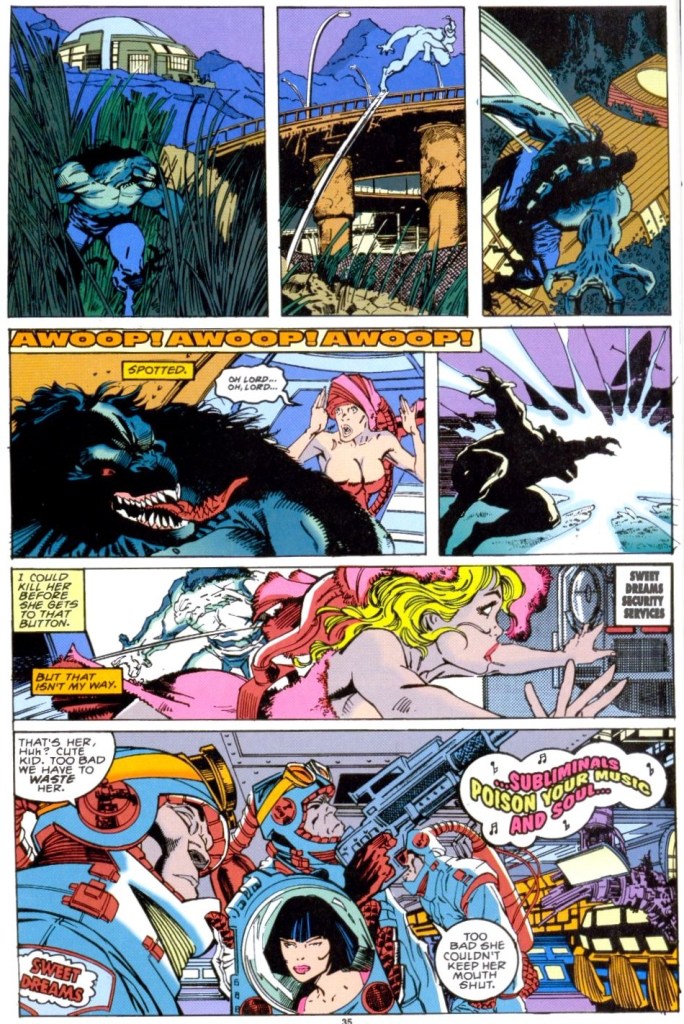
A Look Back at What If #72 (1995)

Disclaimer: This is my original work with details sourced from reading the comic book and doing personal research. Anyone who wants to use this article, in part or in whole, needs to secure first my permission and agree to cite me as the source and author. Let it be known that any unauthorized use of this article will constrain the author to pursue the remedies under R.A. No. 8293, the Revised Penal Code, and/or all applicable legal actions under the laws of the Philippines.

Spider-Man is not just the icon of Marvel Comics co-created by Stan Lee and Steve Ditko. He is an icon of American culture! From comic books to video games, toys, movies, TV shows and merchandise, Spider-Man’s legacy will always be visible to the public. The fandom of the icon is also undeniable. As if that was not enough, a futuristic, sci-fi version of the superhero was realized in 1992 when Marvel Comics launched its 2099 comic book universe with Spider-Man 2099.

Not even Stan Lee himself anticipated how famous Spider-Man would become.

“”It’s so indescribably thrilling to realize that so many people really care about a character I dreamed up and wrote so many years ago. Although it’s probably lucky I didn’t know how big Spidey would become in later years—because, if I suspected that, I’d have been too nervous to write the stories, worrying if they’re good enough for posterity to judge,” Lee stated.

Considering his relevance and attraction to the public, Spider-Man unsurprisingly got featured in issues of the What If monthly series. What I’m about to review is a comic book that explores what would it be had Spider-Man became a murderer.

You read it right!

Anyway, here is a look back at What If , published by Marvel Comics in 1995 with a story written by Simon Furman and illustrated by Craig Brasfield.

Cover
The cover.

Early story

The story begins with Peter Parker/Spider-Man alone in a dark prison cell. A flashback begins set inside a particular warehouse showing how he (dressed as Spider-Man) savagely beat up a man whom he believed was responsible for the death of his beloved Uncle Ben. By looking at the man’s face, Spider-Man noticed that the guy he just beat up was the fugitive (a burglar) who ran past him…the one man whom he could have stopped when he had the chance. Spider-Man realizes that he just killed the man and starts regretting it.

Suddenly a loud voice from outside the warehouse startled him. It turns out New York’s police officers are located outside and they know he is in the warehouse. They called Spider-Man to surrender. He thought about doing the right thing to surrender but eventually decides to escape and go home.

The next morning, Peter Parker is at home with Aunt May. The guilt of killing a man is bothering him personally and he knows how much his aunt depends on him. He knows that she is already struggling to make ends meet for them both. Aunt May notices Peter looking bad from a lack of sleep.

Then Peter goes to school feeling very burdened with guilt…

Quality

11
Peter Parker bothered by guilt…

I can clearly that this is a very well-written story crafted by Simon Furman. Not only did Furman really strongly focused on the very theme of this comic book, he went the extra mile exploring a darker side of Spider-Man brought out by the burden of guilt. I also enjoyed the scenes crafted showing Spider-Man to not only act different but also become more unsure of himself and even becoming afraid to use his super powers. Worth mentioning is how Peter Parker handles his relationship with Aunt May while carrying the guilt deep inside.

The comic book is not a 100% pure character exploration. There is still a good amount of superhero spectacle here and there to keep you entertained. There are also a few other classic Spider-Man characters that fans will enjoy such as Flash Thompson, Dr. Connors/The Lizard and Sandman. Furman cleverly created nice encounters between Spider-Man and the two mentioned villains which also added further to the hero’s development.

Visually, What If is nice to look at thanks to Craig Brasfield’s work. He proved to be good in drawing Spider-Man although I find his art on the Lizard better and more detailed to look at. When it comes to superhero action, Brasfield delivered the goods.

Conclusion

8
With the guilt bothering him, Peter Parker is unsure of doing something in a bad situation.

What If is quite compelling to read. It explores how Spider-Man would act while carrying the guilt of accidentally killing someone. That being said, I should say that this comic book achieved its goal of emphasizing its concept – what if Spider-Man became a murderer? – but it ended on a whimper. Remember how the 2012 James Bond movie Skyfall literally broke rules and traditions of James Bond storytelling only to revert back before the movie ended? That’s how I look at this comic book. It went deep with its concept but not all the way. How exactly did it end? You should read the comic book to find out.

If you are seriously planning to buy an existing hard copy of What If , be aware that as of this writing, MileHighComics.com shows that the near-mint copy of the regular edition costs $17 while the near-mint copy of the newsstand edition is priced at $51.

Overall, What If (1995) is recommended.


Thank you for reading. If you find this article engaging, please click the like button below and also please consider sharing this article to others. If you are looking for a copywriter to create content for your special project or business, check out my services and my portfolio. Feel free to contact me as well. Also please feel free to visit my Facebook page Author Carlo Carrasco and follow me at HavenorFantasy@twitter.com
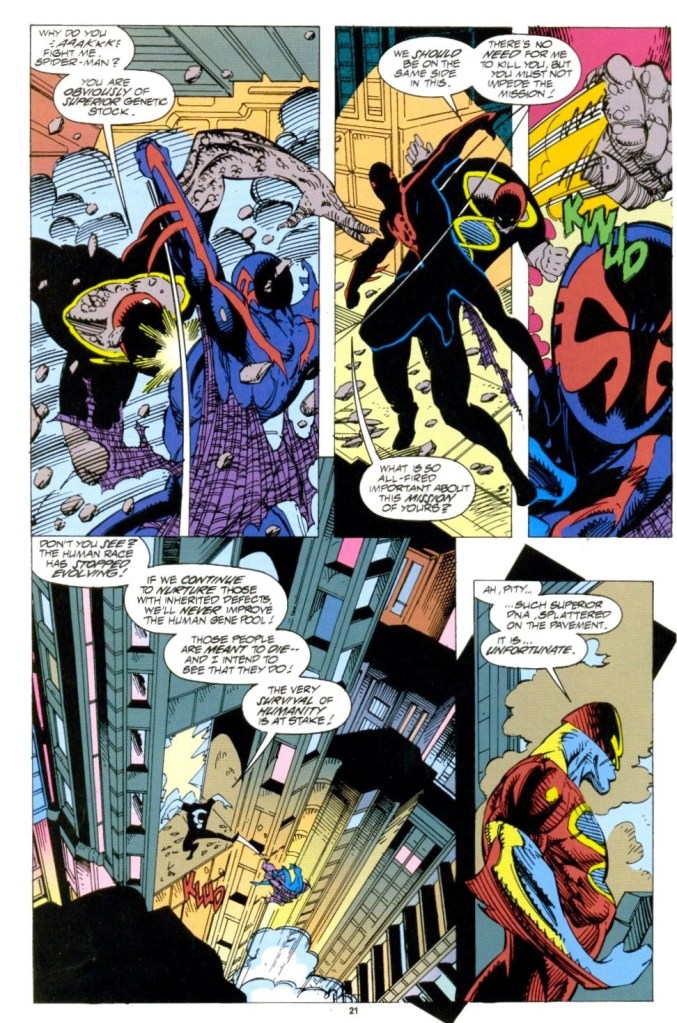


A Look Back at Spider-Man 2099 #36

Disclaimer: This is my original work with details sourced from reading the comic book and doing personal research. Anyone who wants to use this article, in part or in whole, needs to secure first my permission and agree to cite me as the source and author. Let it be known that any unauthorized use of this article will constrain the author to pursue the remedies under R.A. No. 8293, the Revised Penal Code, and/or all applicable legal actions under the laws of the Philippines.

It has been months since I last reviewed a Spider-Man 2099 comic book. In recent times, I’ve been reviewing the final issues of X-Men 2099 so I figured now is a good time to revisit Spidey of the far future.

To put things in perspective, my review of Spider-Man 2099 #35 explored the introduction of Venom 2099. Here we get to explore the super villain and discover more about him and how he impacts the this old monthly series.

Here’s a look back at Spider-Man 2099 #36, published in 1995 by Marvel Comics with a story written by Peter David and illustrated by Keith Pollard.

Cover
The cover drawn by Jae Lee.

Early story

Picking right after the end of issue #35, the comic book opens with a charging Venom 2099 hitting Spider-Man 2099, crashing out of a high level of a hospital. As they fall down, hospital personnel enter the hospital room to provide assistance to Dana and a recovering Tyler Stone. Dana urged the personnel to move Tyler to a new location fearing that Venom will return.

While falling down, Spider-Man hits Venom, manages to stop falling down and watches him hit the ground hard. To his shock, Venom survived and proved to be much stronger than he thought. Venom climbs up the building’s wall to go after Spider-Man…

Quality

10
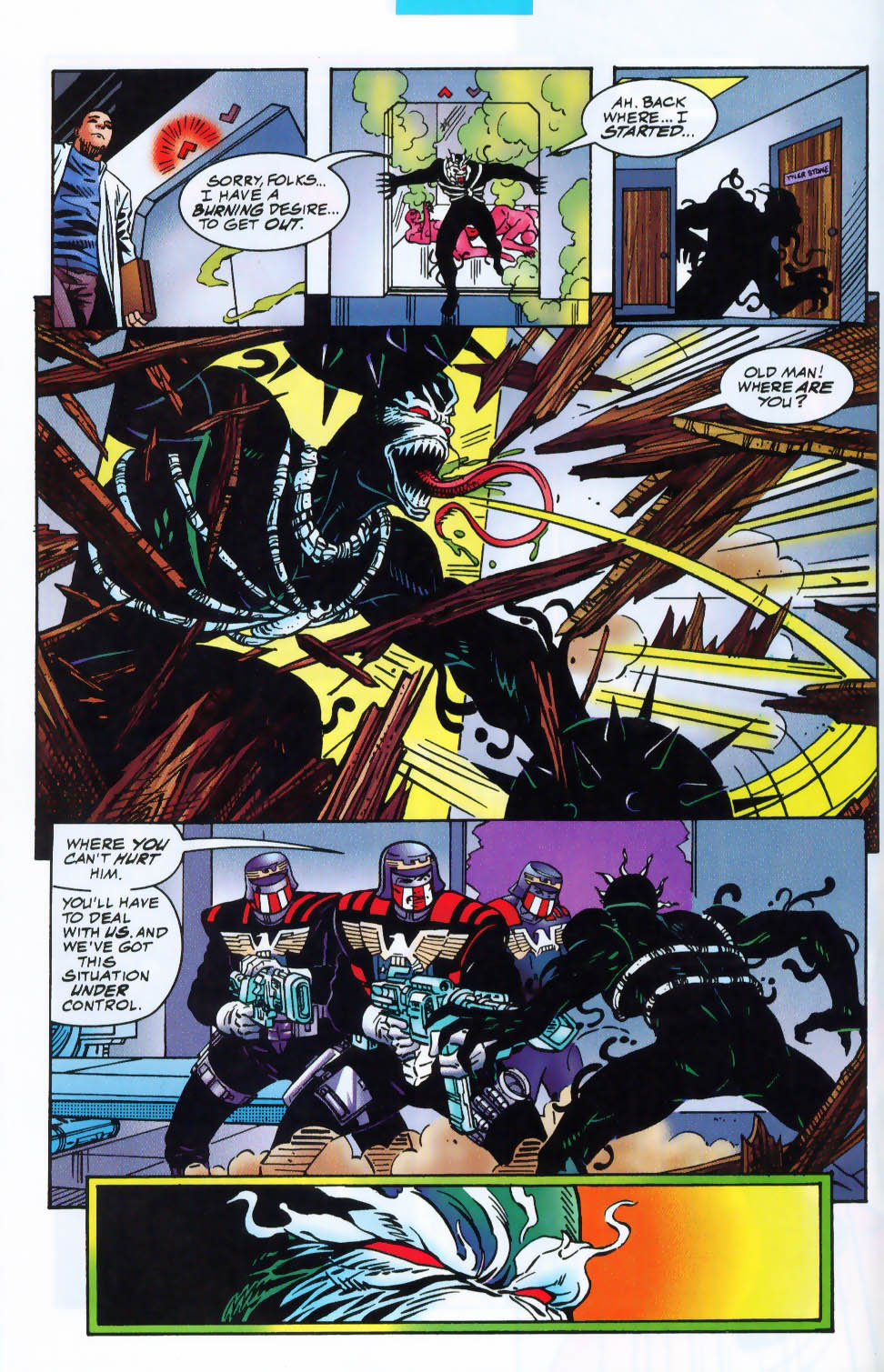
Venom 2099 and the armed personnel.

Dramatic and gripping. That is how I describe the tone of Peter David’s script here. As this is Spider-Man’s first encounter with Venom (which started at the end of the last issue), David not only crafted a very compelling conflict between them but also maintained consistency on developing the supporting cast members. Unsurprisingly, the sufficient focus on Venom made clear to reader that he is not only very dangerous but also uncompromising with his acts which make him a menace not only to people but even to armed personnel. His obsession with Tyler Stone is really something.

Regarding the comic book’s art, guest illustrator Keith Pollard did a fine job capturing the looks of the characters and also maintained the storytelling pace that started with issue #35. He also scored nicely on making the action look dynamic and fun to see. He also paid close attention to key details on the costumes of Spider-Man and Venom. I also like the way Pollard drew Spider-Man when it comes to swinging positions, wall-crawling, etc.

Conclusion

3
Spider-Man hits Venom while falling down.

Spider-Man 2099 #36 is a very good, old comic book! As this is one of the early comic book appearances of Venom 2099, it is significant not just in terms of financial value but also in terms of developing Spider-Man as a character. Partly helped by the massive popularity of the mainstream Venom (Eddie Brock), Venom of 2099 become one of the most significant super villains of Marvel 2099.

If you are seriously planning to buy an existing hard copy of Spider-Man 2099 #36, be aware that as of this writing, MileHighComics.com shows that the near-mint copy of the regular edition (Spider-Man 2099 cover), the “Venom 2099” titled cover regular edition, and the “Venom 2099” titled newsstand edition cost $34, $85 and $255 respectively.

Overall, Spider-Man 2099 #36 is highly recommended!


Thank you for reading. If you find this article engaging, please click the like button below and also please consider sharing this article to others. If you are looking for a copywriter to create content for your special project or business, check out my services and my portfolio. Feel free to contact me as well. Also please feel free to visit my Facebook page Author Carlo Carrasco and follow me at HavenorFantasy@twitter.com
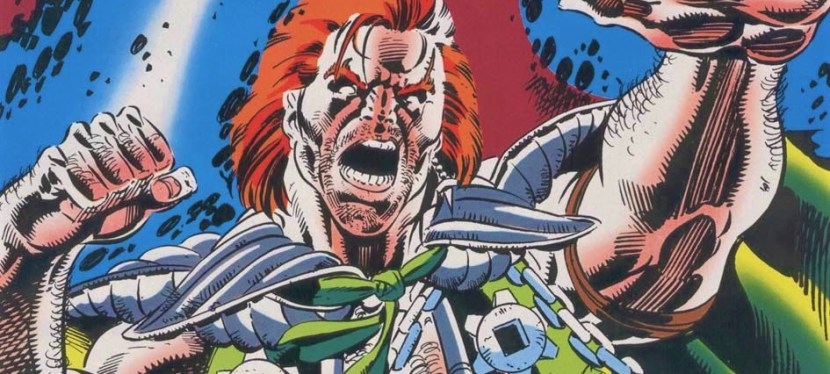


A Look Back at X-Men 2099 #3

Disclaimer: This is my original work with details sourced from reading the comic book and doing personal research. Anyone who wants to use this article, in part or in whole, needs to secure first my permission and agree to cite me as the source and author. Let it be known that any unauthorized use of this article will constrain the author to pursue the remedies under R.A. No. 8293, the Revised Penal Code, and/or all applicable legal actions under the laws of the Philippines.

When X-Men 2099 #1 was released in 1993, it was an instant hit with comic book collectors and became one of the top-selling comic books in America during its month of release. That was no surprise not simply because the comic book speculator boom was still in effect back then, but also because the X-Men 2099 monthly series was launched at a time when Marvel Comics spent a lot of money promoting the 30th anniversary celebration of the X-Men franchise and, on the other hand, agreed to expand the Marvel 2099 universe apart from Spider-Man 2099, Ravage 2099, Doom 2099 and Punisher 2099.

And there I was eager to witness how the 2099 universe got expanded through the futuristic X-Men whose adventures took place far away from New York. After reading the first two issues, I was hooked already on X-Men 2099. And then X-Men 2099 appeared at the shelves of the local comic book store with a rather intriguing cover.

Cover
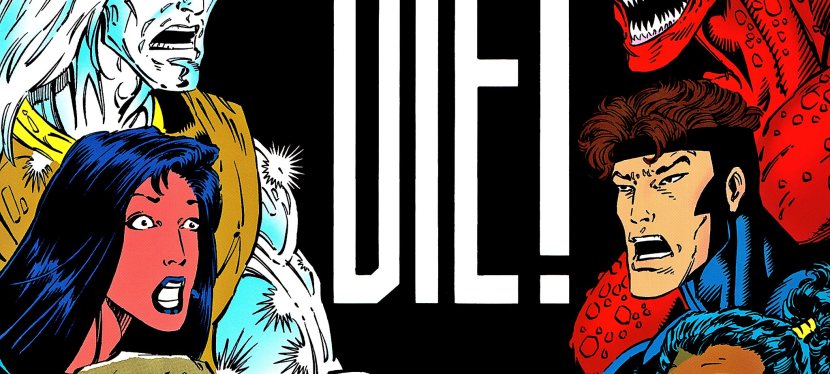
The intriguing cover complete with a coloring error (Tim’s red hair ended up black). 

I admit that after seeing that cover, I became more eager to find out if anyone from the futuristic mutants would actually die. By that time, the story that started with issue turned out to be a 3-part story with the objective of establishing X-Men 2099 to readers.

Anyway, let’s start with the retro comic book review of X-Men 2099 published in 1993 by Marvel Comics with a story by John Francis Moore and illustrations by Ron Lim.

Early story

Picking up shortly after the events of issue , the comic book begins with Xi’an’s cocooned body being transported back to headquarters by Junkpile (who turned traitor on the X-Men) while captured X-Men team members Meanstreak and Metalhead were placed into liquid-filled chambers. Team member Krystalin managed to elude capture while her teammates Serpentina, Cerebra, Skullfire and Bloodhawk are temporarily free.

4
The free X-Men members try to infiltrate the place to rescue their teammates.

Lytton, who took over the family corporation since the death of his father Noah Synge, is running a brutal operation. His sister Desdemona does not fully trust him. Bloodhawk flies and breaks into a building in Las Vegas causing trouble for the Synge security personnel.

On the side of the chaos, Shakti/Cerebra, Tim/Skullfire and Tina/Serpentina quiet grab uniforms of Synge security personnel to infiltrate the place to rescue Meanstreak, Metalhead and their cocooned leader Xi’an…..

Quality

When it comes to storytelling, the creators delivered a satisfying ending to the 3-story arc complete with actually killing one of the X-Men 2099 members. John Francis Moore was successful in creating a 3-part story that ultimately gave me clear views of the respective personalities of each X-Men member (examples: Tim is the newcomer who is slowly finding his purpose, Shakti is the strong lady with leadership values who supports the leadership of the reformed Xi’an, Bloodhawk is a hard-headed rebel, etc.) while also succeeded in telling a cohesive story that placed the mutants in conflict with the Synge corporate family.

The twist regarding the murder of Noah Synge (the patriarch) was decently pulled off and the executed death of an X-Men 2099 member actually raised the stakes for the team. By the end of issue , the purpose of the futuristic X-Men became clear and was different enough from the mainstream X-Men. Unlike Charles Xavier’s mutants, Xi’an’s X-Men have to reclaim their heritage in a totally different America where corporations ruled the cities and outlaws ruled the wasteland and wilderness of the American southwest region. The X-Men of 2099 are nomadic and they don’t have the facilities nor a safe place to live in which Charles Xavier’s X-Men had.

5
Desdemona, Junkpile and the cocooned Xi’an.

When it comes to art, I noticed that Ron Lim exerted more effort not only with visualizing John Francis Moore’s script but added noticeable visual details on key moments in the comic book. Seeing Tim/Skullfire so enraged followed by a violent impact of action was unforgettable when compared to other highly charged, emotional scenes Lim drew in his other works. Lim also delivered good stuff with the action scenes and further visualized the look of Las Vegas of 2099. His design of Desdemona, however, really looks uninspired and generic.

Conclusion

On its own, X-Men 2099 is a good and fun comic book to read complete with a good amount of characterization. To really know the X-Men on a personal level, you really have to buy issues and . On the creative side of things, I like the fact that John Francis Moore kept references to Charles Xavier’s X-Men to a bare minimum which nicely kept a strong focus on the X-Men of 2099 and the world they live in.

For the comic collectors reading this, if you are seriously considering acquiring a hard copy of X-Men 2099 , be aware that according to Mile High Comics, a near-mint copy of the regular edition costs $4 while the near-mint copy of the newsstand edition is priced at $8.

Overall, X-Men 2099 is recommended.


Thank you for reading. If you find this article engaging, please click the like button below and also please consider sharing this article to others. If you are looking for a copywriter to create content for your special project or business, check out my services and my portfolio. Feel free to contact me as well. Also please feel free to visit my Facebook page Author Carlo Carrasco and follow me at HavenorFantasy@twitter.com