A Look Back at Resident Evil: The Official Comic Book Magazine #4 (1998)

Welcome back, 1990s arts and culture enthusiasts, video game enthusiasts and comic book collectors! Today we go back to the late-1990s to examine another issue of the magazine-sized comic book series titled Resident Evil: The Official Comic Book Magazine.

Having read the first three issues of the RE comic book magazine series, I can say that the quality has been mixed. While issue #2 had pretty bad Resident Evil 2 illustrated adaptation, issue #3 had a short story that functioned as a sequel to Resident Evil (1996) in the form of a polished fan fiction. There were other short stories that turned out serviceable to intriguing and surprisingly entertaining to read. How much creative freedom WildStorm had in its publishing deal with Capcom remains unclear.

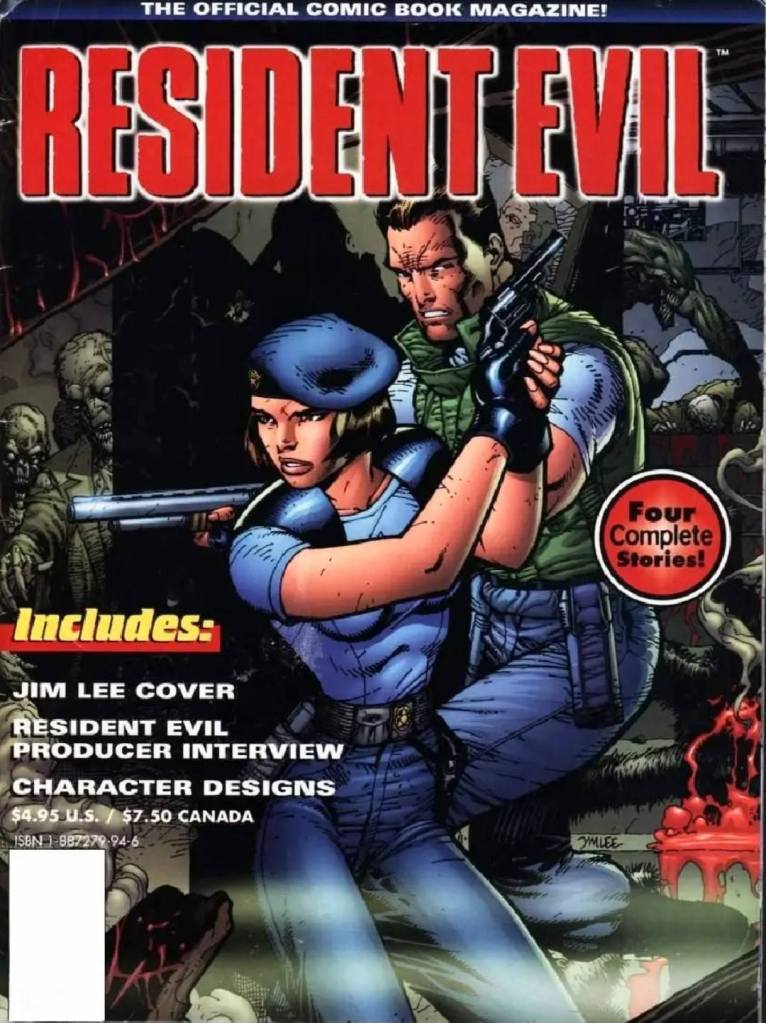
With those details laid down, here is a look back at Resident Evil: The Official Comic Book Magazine #4, published by WildStorm/Image Comics in 1998 with short stories written by Ted Adams, Marc Mostman and Kris Oprisko, and drawn by Rafael Kayanan, Ryan Odagawa and Norman Felchie.
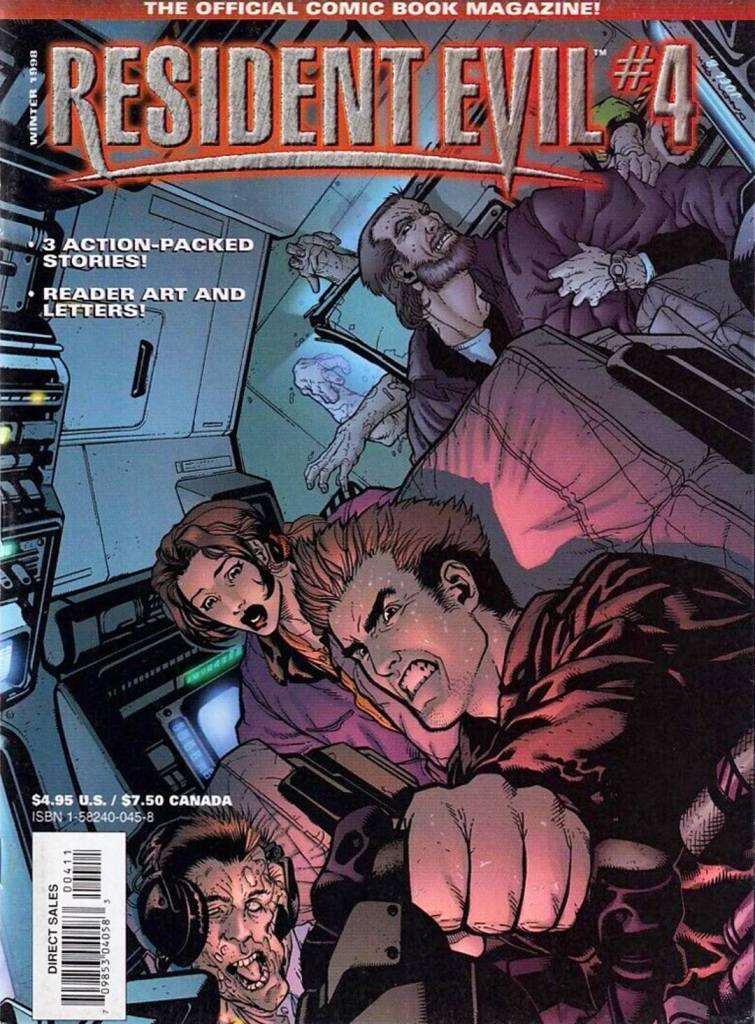
The cover.

Early stories

Night Stalkers – In a sleepy town in the southwestern part of America, two men suddenly got abducted by humanoid bats (referred to as “zombie bats” by the publisher) and were brought to a secret facility of Umbrella. The scientists of Umbrella have the technology to control the bats and they have already abducted many people who became helpless subjects of a transmutation process. Back in the sleepy town, the community is panicking and the son of the sheriff was rescued from a group of humanoid bats. In response to the town’s call for help, the United States government sends agent Leon Kennedy to solve their problem.

Special Delivery – Two helicopter operators working for Umbrella are tasked to lift special containers of their company’s bio-weapons. Their goal is to drop specific containers at different sites within and outside of Raccoon City. One by one, the monsters of Umbrella are dropped in some very unsuspecting laps from above.

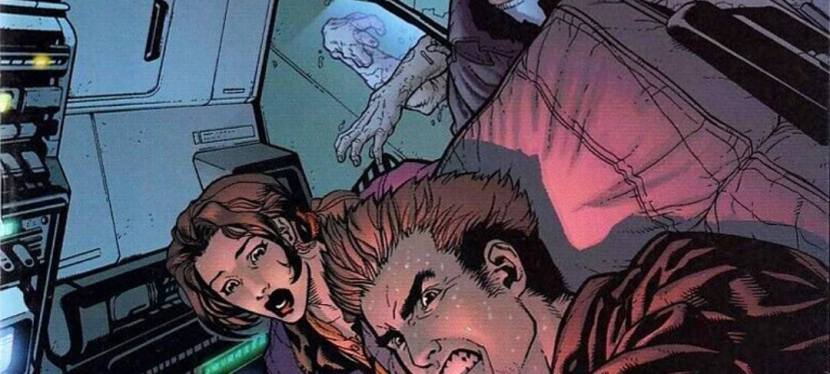
Zombies Aboard – Inside the airplane, Chris Redfield, his sister Claire and Barry Burton realize the there is nobody left to pilot the aircraft. Using the flight training he had with S.T.A.R.S., Chris takes control of the airplane.

Quality
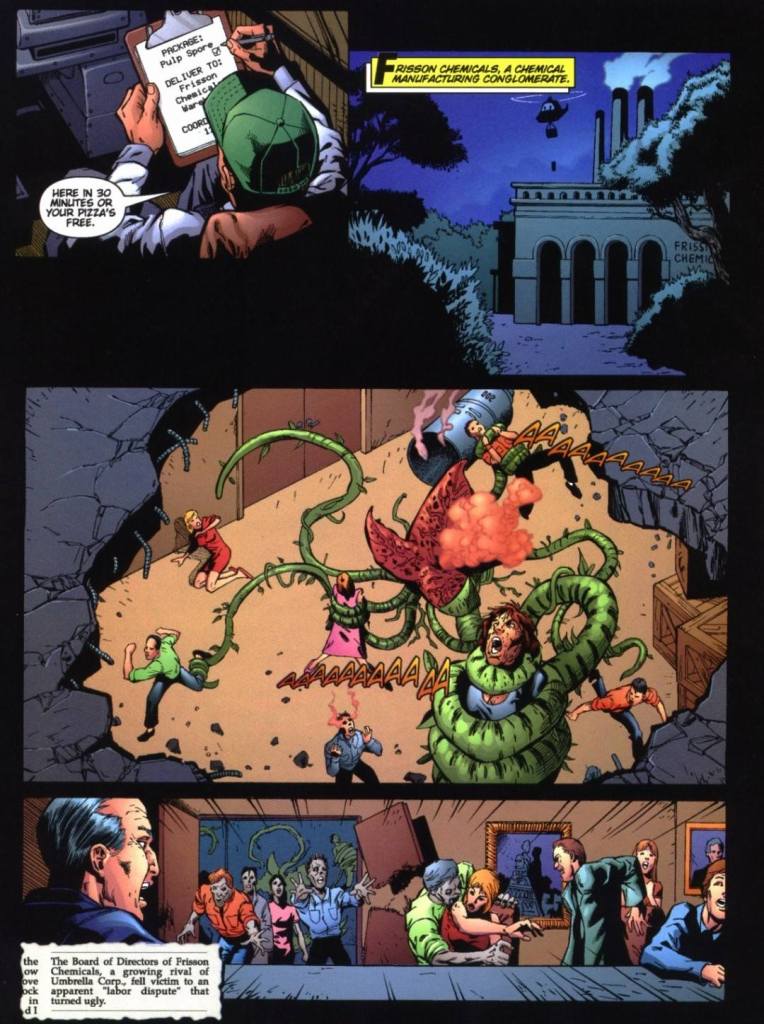
When Umbrella’s helicopter drops its biological weapons, chaos happens.

This early, I can say that I was entertained by this Resident Evil comic book.

The first short story Night Stalkers is WildStorm’s next attempt of making a sequel to Resident Evil following Leon Kennedy on his mission to take on Umbrella and the town it affected. There are no zombies but Umbrella’s scientists and the project leader are using man-sized bats to spread the G-virus and their methods clearly caused human rights violations on the victims. This short story, which was well written and had a good structure, is actually prophetic because it portrayed Leon Kennedy as an agent of the US government and this comic book was released many years before Resident Evil 4 (2005) came out. For context, Leon Kennedy in RE4 worked for the US government and his mission was to rescue the American President’s daughter. In the short story and in the said video game, both versions of Leon Kennedy showed him being very proficient with action and he has no fear going up against multiple enemies. One has to wonder if RE creator and RE4 game director Shinji Mikami ever read Night Stalkers for inspiration. Night Stalkers is entertaining.
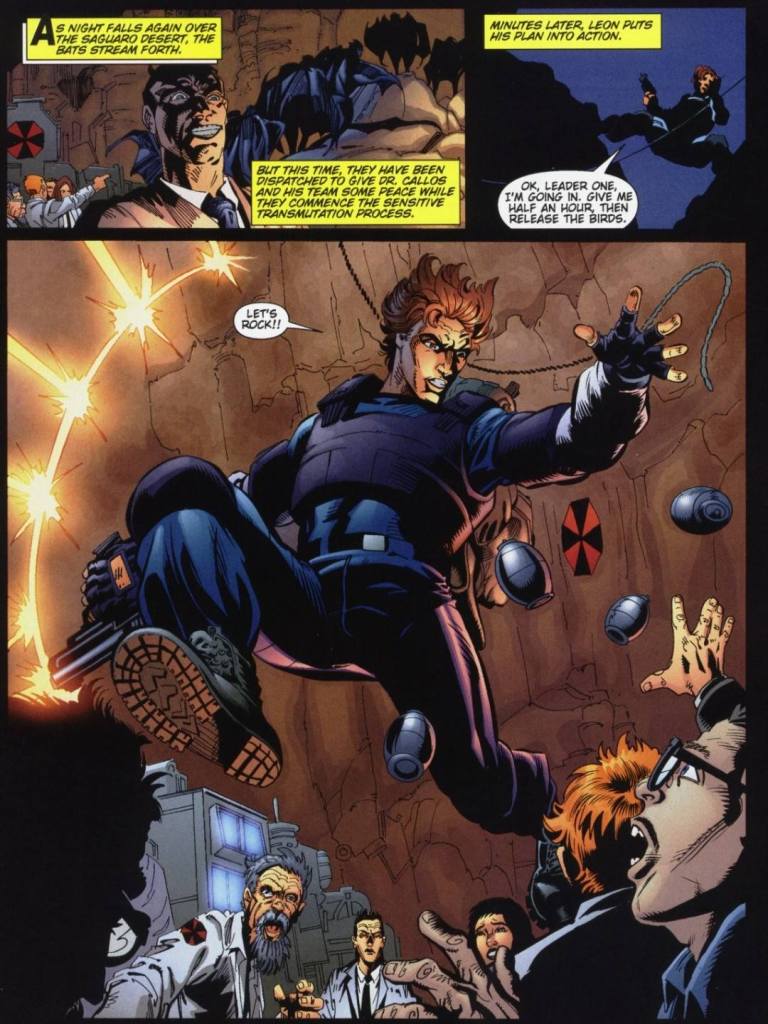
The brave and dynamic Leon Kennedy springs into action against Umbrella.

The second short story Special Delivery is a really intriguing look at the personnel who operated the helicopter to transport Umbrella’s monsters. This is in reference to what happened in Resident Evil 2 as Mr. X got dropped down. There are no established characters here but that’s not a problem because the story made a lot of sense and fit in nicely with the Resident Evil universe. It also shows how unethical, cold-hearted and evil Umbrella really is not only towards its business rivals but also against humanity. This one is surprisingly entertaining.

The final short story Zombies Aboard follows Chris, Jill and Barry Burton on their high-risk mission to find Umbrella in Europe and stop them from causing danger on the world. This is the continuation of Dead Air in issue #3 and it was a serious attempt by WildStorm creators to function as a sequel to the RE games of the time. With regards to its quality, the short story was structured with action and horror in mind. While the three established RE characters search for Umbrella, the story lacked depth as there is way too little detective elements in it. Instead, you will see the S.T.A.R.S. members firing or stabbing or slashing zombies they encountered from England to Germany (the story never showed the authorities reacting to the collateral damage caused by the three), and it is at the very end of the tale when the suspense and horror came in. This short story is clearly less engaging compared to its predecessor. At least the art work is good and the artist did not hold back on the violence.

Conclusion
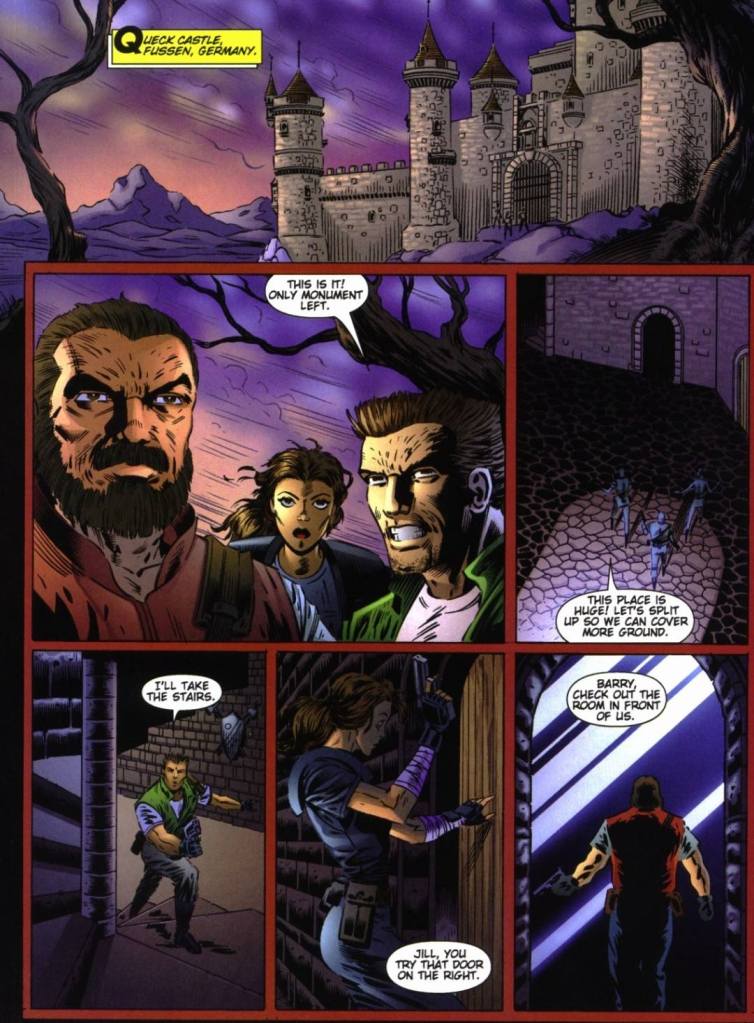
Chris Redfield, Jill Valentine and Barry Burton search for Umbrella in Europe.

With the three stories featured, Resident Evil: The Official Comic Book Magazine #4 (1998) is just as entertaining as issue #3. For me, the only letdown was the final short story. The highlight was actually the first short story as it turned out to be very prophetic as to how Leon Kennedy would eventually turn out in video games – the brave and dynamic action hero millions of fans and gamers today enjoy.

Overall, Resident Evil: The Official Comic Book Magazine #4 (1998) is recommended.

+++++

Thank you for reading. If you find this article engaging, please click the like button below and also please consider sharing this article to others. If you are looking for a copywriter to create content for your special project or business, check out my services and my portfolio. If you want to support my website, please consider making a donation. Feel free to contact me with a private message. Also please feel free to visit my Facebook page Author Carlo Carrasco and follow me on Twitter at  @HavenorFantasy as well as on Tumblr at https://carlocarrasco.tumblr.com/ and on Instagram at https://www.instagram.com/authorcarlocarrasco/.
A Look Back at Resident Evil: The Official Comic Book Magazine #3 (1998)

Welcome back, 1990s arts and culture enthusiasts, video game enthusiasts and comic book collectors! Today we go back to the late-1990s to examine another issue of the magazine-sized comic book series titled Resident Evil: The Official Comic Book Magazine.

By the time WildStorm Productions released the 3rd issue in 1998, many millions of gamers around the world played Resident Evil 2 on PlayStation. The Resident Evil fanbase expanded dramatically and many of them completed the game’s multiple scenarios. At the same time, Leon Kennedy and Claire Redfield became popular characters in gaming.

The 2nd issue I reviewed had a very bad adaptation of Resident Evil 2’s story. What prevented the comic book from ending up as a complete disaster were the two other short stories which were surprisingly entertaining to read. Still, I wonder if Shinji Mikami and the game developers ever saw the abysmal Resident Evil 2 adaptation in the 2nd issue.

With those details laid down, here is a look back at Resident Evil: The Official Comic Book Magazine #3, published by WildStorm/Image Comics in 1998 with short stories written by Ted Adams and Kris Oprisko, and drawn by Ryan Odagawa, Carlos D’Anda and Lee Bermejo.

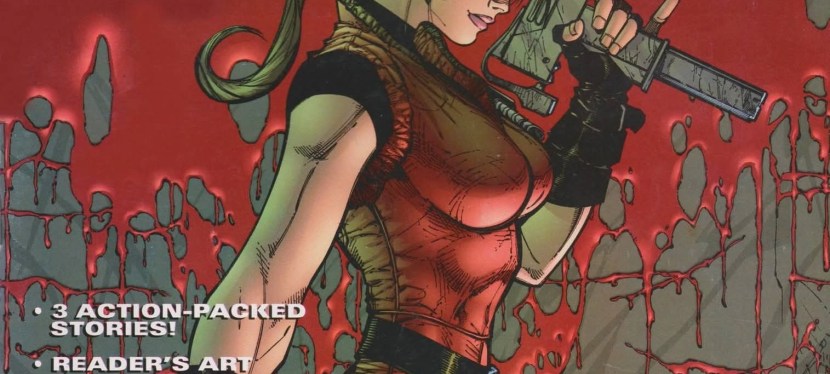
The cover with art by Jim Lee.

Early stories

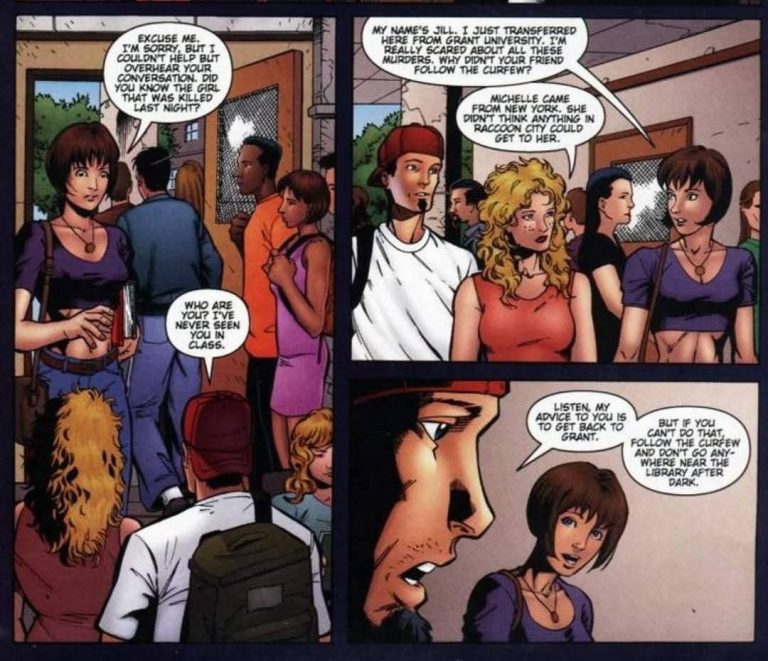
Wolf Hunt – At Raccoon City College, a few students talk about someone who got killed at school and her body was all torn up. They aware that the authorities are keeping the story out of the papers to avoid causing a panic. In the evening, of the students got harmed by a ferocious monster. The next day at S.T.A.R.S. headquarters, Albert Wesker, Jill Valentine and Barry Burton discuss the killings that happened at the city college. They were asked by the local police to investigate what happened. Jill takes the assignment of going undercover as a student.

Danger Island – A man and a woman arrive at Isla Bonale in Caribbean for a vacation. The island is so exclusive, they only let ten couples on it at a time. After having a romantic night of dinner and dancing, they decide to go snorkeling and rent a boat. Just as they start snorkeling, a plane crashes on the island.

Dead Air – Following the events of Resident Evil (1996) and Resident Evil 2, Chris Redfield, Jill Valentine and Barry Burton start traveling to Europe with the goal of ending Umbrella’s current progress on a new variation of the T-virus even though they have to go undercover. They have the support of a top-secret international agency which already has someone in place to help them. Meanwhile, Umbrella has a spy watching on the three.

Quality

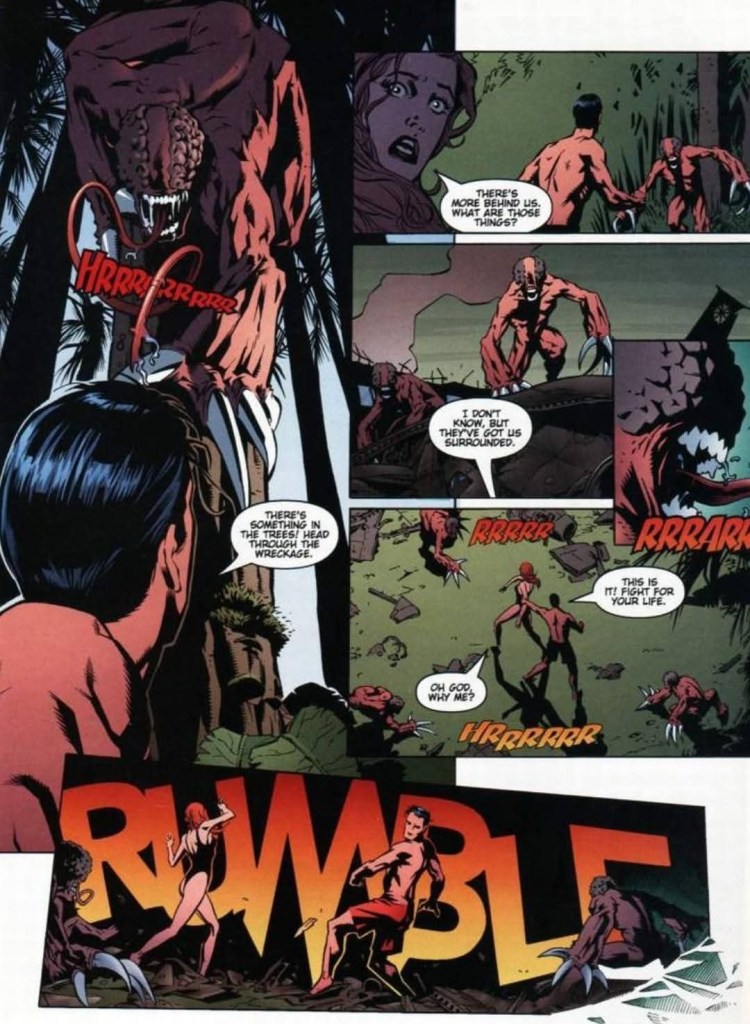
Imagine being surrounded by the deadly Lickers of Umbrella on an island wearing only swimwear and having no useful pieces of equipment to protect yourself with.

Similar to issue #2, this comic book has three short stories and some extras.

The short story Wolf Hunt, which took place before the events of the original Resident Evil game of 1996, has the odd concept of having werewolves existing within the RE universe. Werewolves are often super natural and such monsters don’t align with the sci-fi and biological aspects of the Resident Evil games. In fairness, the creative team had this interesting concept of having Jill Valentine going undercover as a student in the city college to find answers and solve the problem. I should state that the artwork by Ryan Odagawa is good overall although his take on Jill Valentine is cartoonish. This story is pretty short and lacked a solid conclusion. It’s really a glorified piece of fan fiction that should interest fans of the 1996 game.

Danger Island, the 2nd short story, is easily the gem of this comic book. This is a completely original tale that has brand-new lead characters – the couple Stan and Leslie – and an island as the setting. Without spoiling the plot, this is a suspense story with a moderate pace, some dynamic visuals and a good implementation of elements from the lore of Resident Evil. The creative team behind this tale emphasized that as long as Umbrella and is biological experiments exist, danger and death will creep up on people regardless of location. A notable monster species from Resident Evil 2 is included here and the effects the G-virus has on creatures on the island are cleverly presented complete with nice artwork by Lee Bermejo.

Through the couple, readers will feel the danger, desperation and anxiety as the story went on. How the story ended is a must-see and I am confident it will encourage you to revisit Resident Evil 2.  

The final tale Dead Air is a daring attempt by WildStorm’s creators to make a sequel to the first two games. As mentioned above, Chris Redfield, Jill Valentine and Barry Burton are together on a high-risk mission to find and stop Umbrella in Europe. The main setting is inside a commercial flight where a zombie outbreak happens. Without their weapons, Chris, Jill and Barry are compelled to use alternative items and ways to overcome the zombies.

While this tale is packed with action and the violence is uncompromised, something is off with the way Jill Valentine is portrayed. She is more violent with action and even expressed sarcasm. This tale is pretty short as the comic book made it clear that the continuation will happen in the next issue. Considering what was told in Resident Evil: Code Veronica (released in 2000 with Chris and Claire Redfield included), Dead Air is clearly a non-canon Resident Evil tale and it is at best a polished piece of fan fiction by WildStorm.  

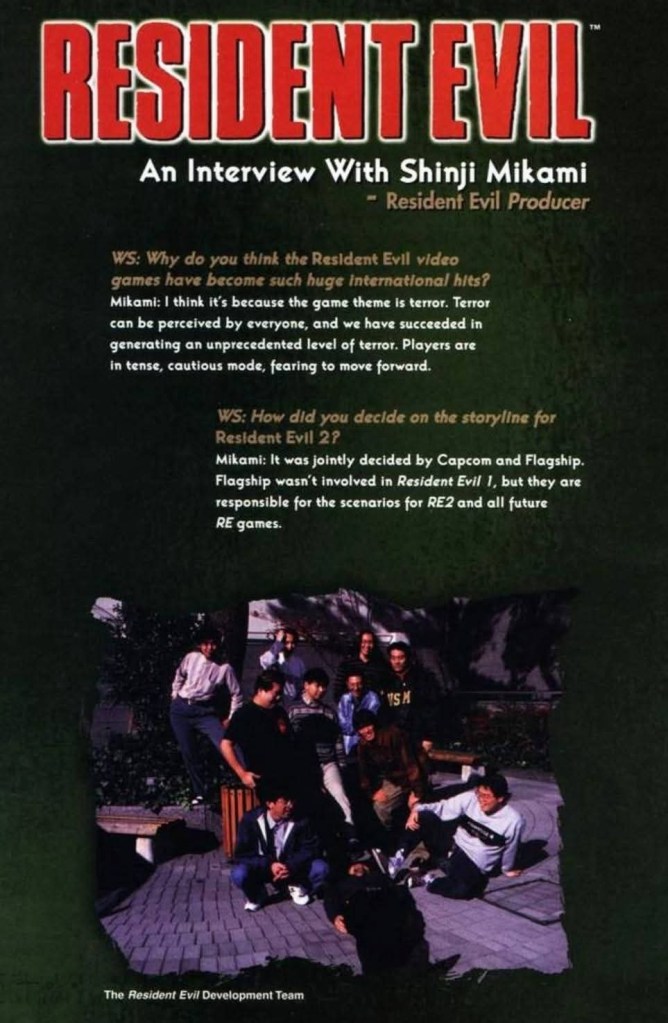
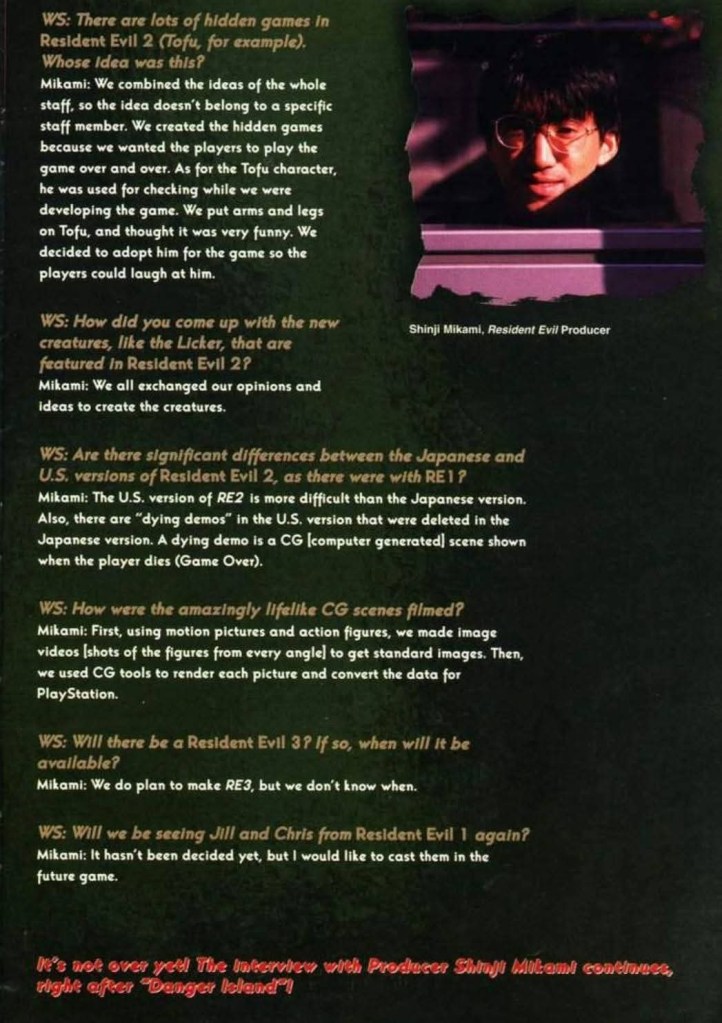
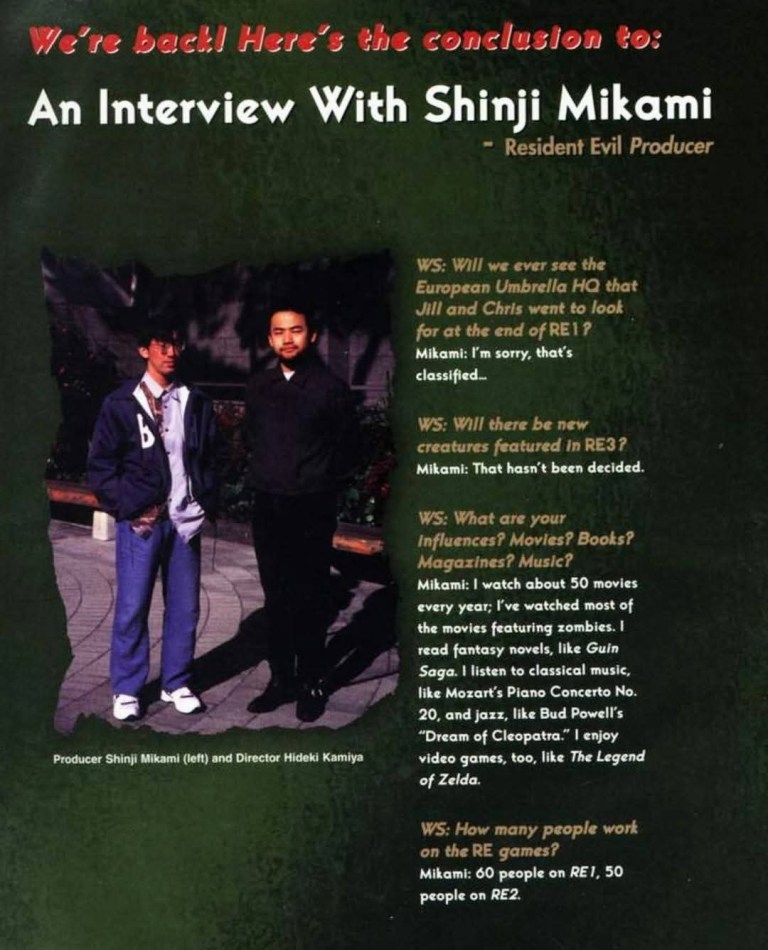
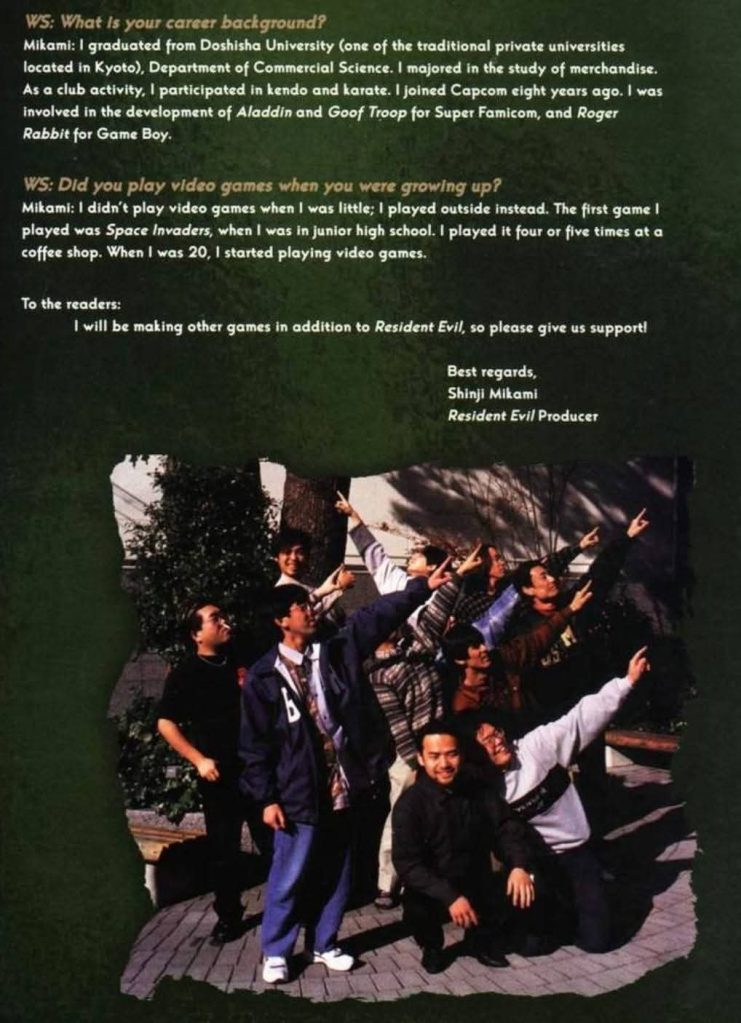
When it comes to the extras, you will find the Readers Art gallery and The Resident Evil Files (featuring Chris Redfield and his sister Claire). The most notable extra stuff here, however, is another interview with Resident Evil creator/producer Shinji Mikami and you will even see a few pictures of not just him but also Hideki Kamiya (the game director of Resident Evil 2 who went on to produce lots of highly entertaining games through the decades) and members of the team behind the RE games of the time. Enjoy the pages of the interview below.

The members of the development team of Resident Evil games of the time.
Very notable details shared by Shinji Mikami.
Shinji Mikami with Hideki Kamiya. Mikami directed the original Resident Evil game of 1996 while Kamiya directed Resident Evil 2. The two are still prolific makers of video games today.
Shinji Mikami played Space Invaders when he was young.

Conclusion

Remember Jill Valentine’s extra costume in the original game of 1996?

Considering the qualities of the three short stories and the extra stuff, Resident Evil: The Official Comic Book Magazine #3 (1998) is easily a huge improvement over issue #2. The quality and creativity of the short stories are better, the interview with Shinji Mikami was worth reading and the comic book itself is more entertaining. That said, I am convinced to move on to the next Resident Evil comic book.

Overall, Resident Evil: The Official Comic Book Magazine #3 (1998) is recommended.

+++++

Thank you for reading. If you find this article engaging, please click the like button below and also please consider sharing this article to others. If you are looking for a copywriter to create content for your special project or business, check out my services and my portfolio. If you want to support my website, please consider making a donation. Feel free to contact me with a private message. Also please feel free to visit my Facebook page Author Carlo Carrasco and follow me on Twitter at  @HavenorFantasy as well as on Tumblr at https://carlocarrasco.tumblr.com/ and on Instagram at https://www.instagram.com/authorcarlocarrasco/.
A Look Back at Resident Evil: The Official Comic Book Magazine #1 (1998)

Welcome back, 1990s arts and culture enthusiasts, video game enthusiasts and comic book collectors! Today we go back to the late-1990s to examine the launch issue of the magazine-sized comic book series titled Resident Evil: The Official Comic Book Magazine.

To put things in perspective, this year marks the 30th anniversary of the Resident Evil video games and multimedia entertainment franchise . The original Resident Evil (Japanese title: Biohazard) video game released in 1996 was arguably a major turning point in console gaming as it was an adulterated game that blended horror, action, monsters and the cinematic experience. Initially released on PlayStation, the game got released on Windows PC and the Sega Saturn, and eventually sold millions of copies worldwide while establishing a solid fanbase. Arguably, RE sparked the revival of the zombie genre in pop culture during the 1990s and contributed to new zombie-related multimedia productions in the 2000s.

Even before the release of Resident Evil 2, the number of Resident Evil fans grew and so did demand for more related stuff. Marvel Comics published a free one-shot Resident Evil comic book while Resident Evil: The Book was released in Japan.

When Resident Evil 2 was released in 1998, it became an even bigger blockbuster and resulted in even more new RE fans as gamers enjoyed playing it so much. The massive commercial success of RE2 led Capcom to approving several new Resident Evil game projects for development. Still within 1998, the licensed RE multimedia projects were released in the form of two novels and a new comic book series with a magazine format.

With those details laid down, here is a look back at Resident Evil: The Official Comic Book Magazine #1, published by WildStorm/Image Comics in 1998 with short stories written by Ted Adams and Kris Oprisko, and drawn by  Ryan Odagawa, Carlos D’Anda and Lee Bermejo.

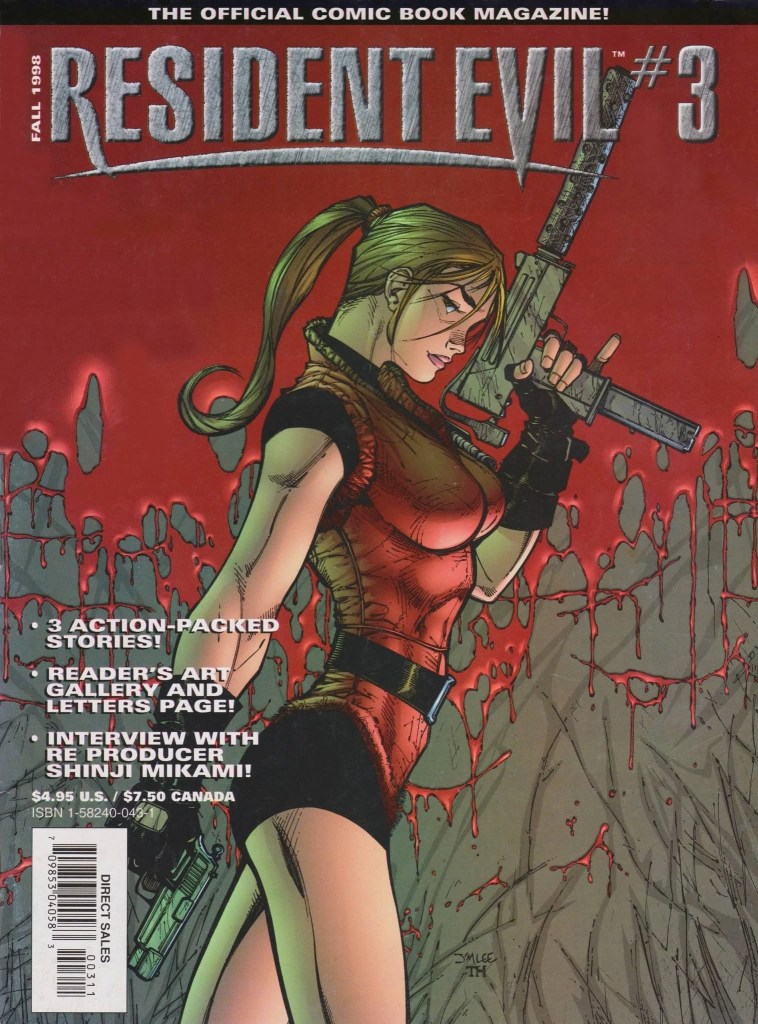
The cover drawn by Jim Lee.

Early stories

S.T.A.R.S. Files – Inside an office, Albert Wesker gets briefed about his next assignment in Raccoon City which has been experiencing a series of mysterious murders. The superior tells Wesker to field a S.T.A.R.S. (Special Tactics and Rescue Service) team to find out what is going on.

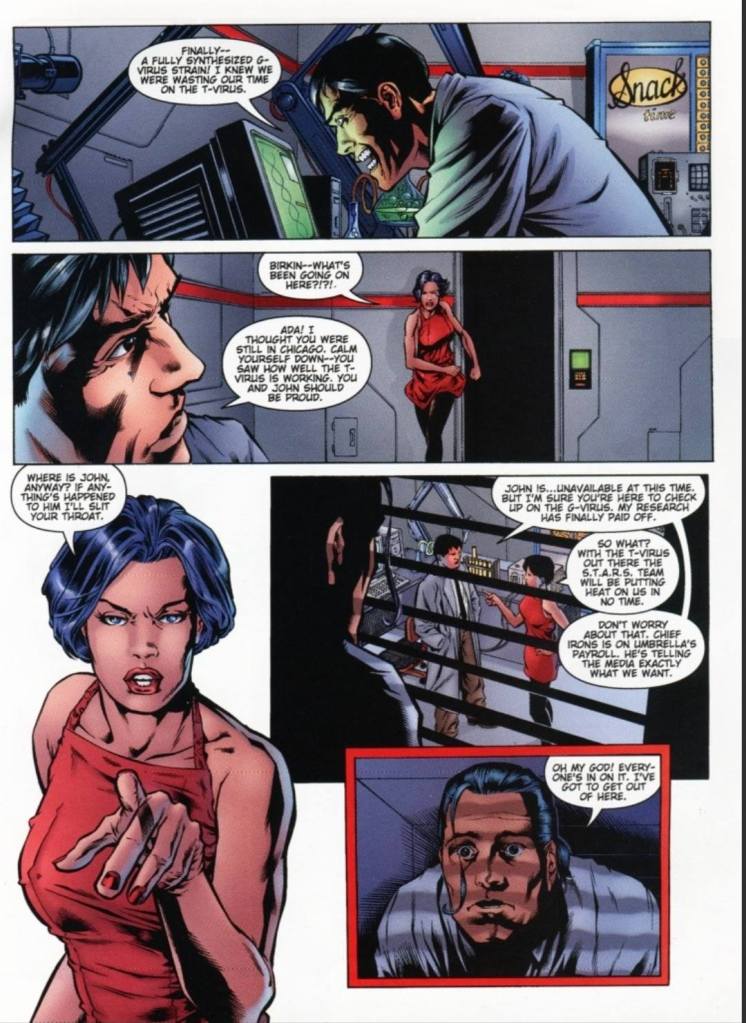
Who Are These Guys? – A scientist writes a letter to Ada Wong and reveals key details about the research of the T-Virus, including what his team has been doing and what he observed.

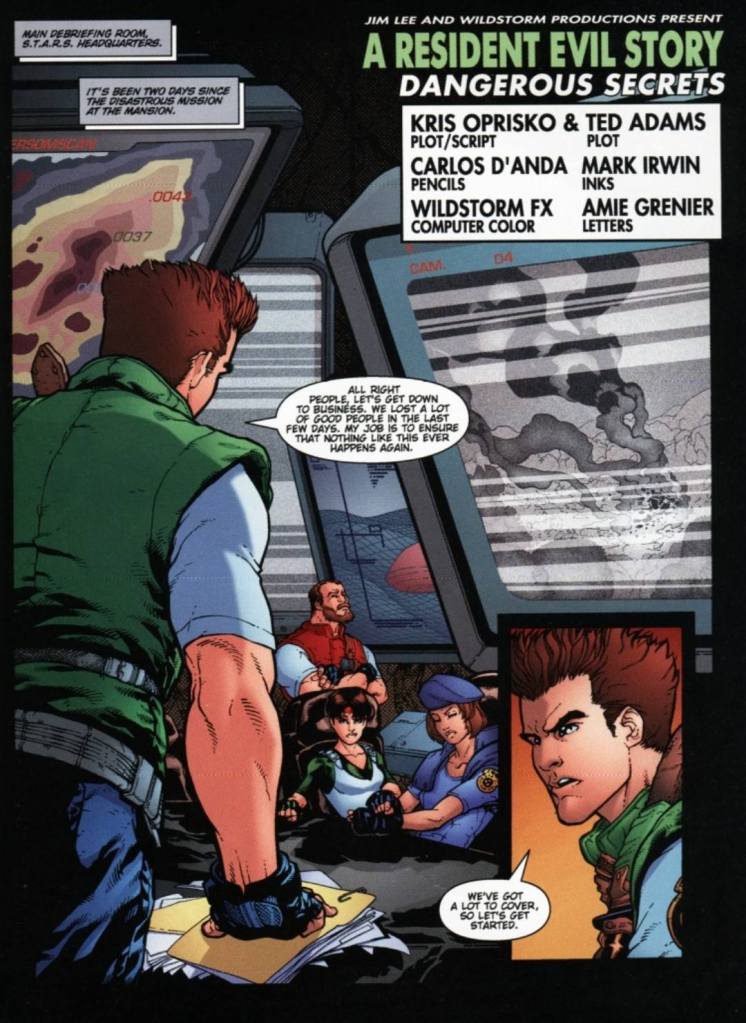
Dangerous Secrets – Inside the high-tech debriefing room of the S.T.A.R.S. headquarters, Chris Redfield begins a review of what happened during their mission at the mansion and what took place before they even got involved. Present are Jill Valentine, Rebecca Chambers and Barry Burton.

Raccoon City – R.I.P. – A very sick and physically deteriorating man watches the news on TV at home. As the moments passed by, he begins to lose control of himself as his deteriorates. He suddenly goes out of his house and walks down the street aimlessly.

Quality

Ada Wong, the scientist and the journalist who secretly spied in a scene that happened before Resident Evil 2 started.

As already revealed on the cover of this magazine-style comic book, this is a collection of four short stories designed to provide readers insight on the lore of Resident Evil, additional portrayals of the established RE characters of the time – Chris Redfield, Barry Burton, Jill Valentine, Rebecca Chambers, Albert Wesker, Leon Kennedy and a few supporting characters seen in the games – and, more notably, illustrated development of events that connect the first two games with each other in ways that the games themselves could not. To be clear, Resident Evil took place in July 1998 while its sequel took place in September 1998.

Without spoiling the stories, I can say that S.T.A.R.S. Files was a warm-up in the form of introducing the characters of the first RE game. Who Are These Guys? was a creepy telling of what happened behind the scenes with regards to the unethical scientific experiments that caused zombies and monsters at the mansion to happen. It has a violent ending which made one of the most popular Resident Evil characters look like a murderer (note: I’m surprised it was not controversial). Dangerous Secrets was a creative recap of what happened at the mansion (which follows the game ending involving the rescue of Jill Valentine) and S.T.A.R.S. had such futuristic office equipment to work with (it has a strong sci-fi flavor). Raccoon City – R.I.P. was the build-up of developments leading to the start of Resident Evil 2.

Clearly, the quality of the writing and artworks varied from one story to another. The writing of Who Are These Guys? really stood out nicely due to its creepy vibe and the fine way of telling the story of the scientist who wrote to Ada Wong. Dangerous Secrets also stood out with its dramatization of Chris Redfield, Jill Valentine, Rebecca Chambers and Barry Burton who have to move on knowing that a lot of lives were lost and lots of dirty secrets were uncovered. When it comes to the art style used on established RE characters, the zombies and monsters, fans looking for a more realistic take will end up disappointed (example: a few shots of Jill Valentine had a cartoony aesthetic). At the same time, Jim Lee’s only art of Resident Evil was the cover.

Readers looking for spectacle and moments of zombie horror will find something to enjoy here. I can confirm that the creative teams did not hold back on the violence and gore.

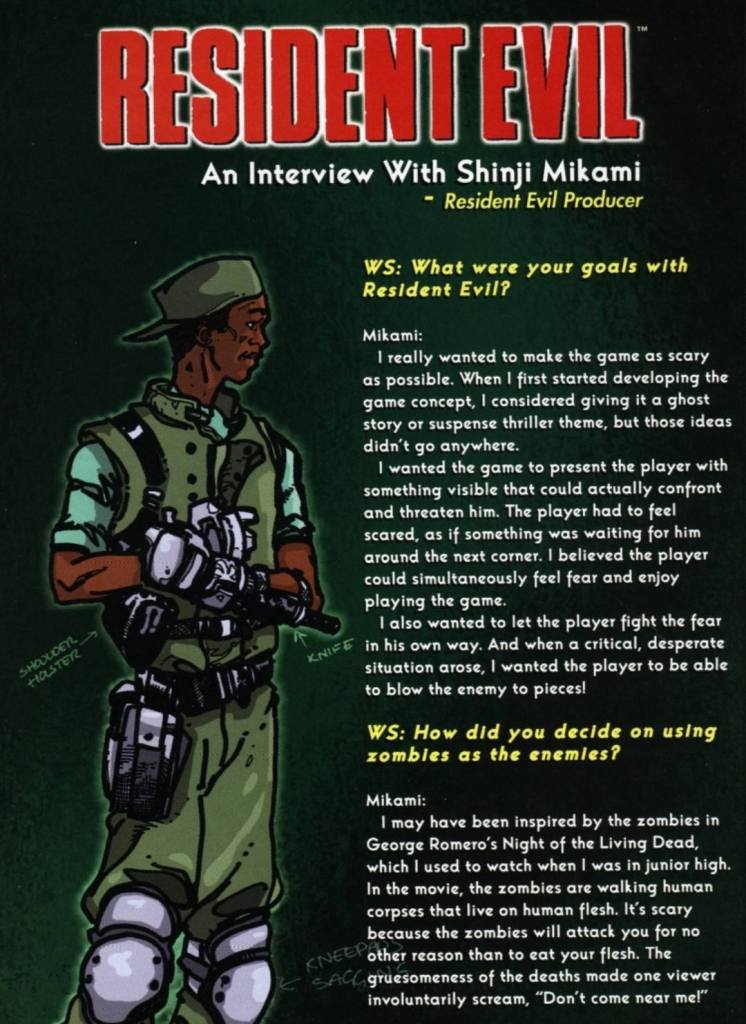
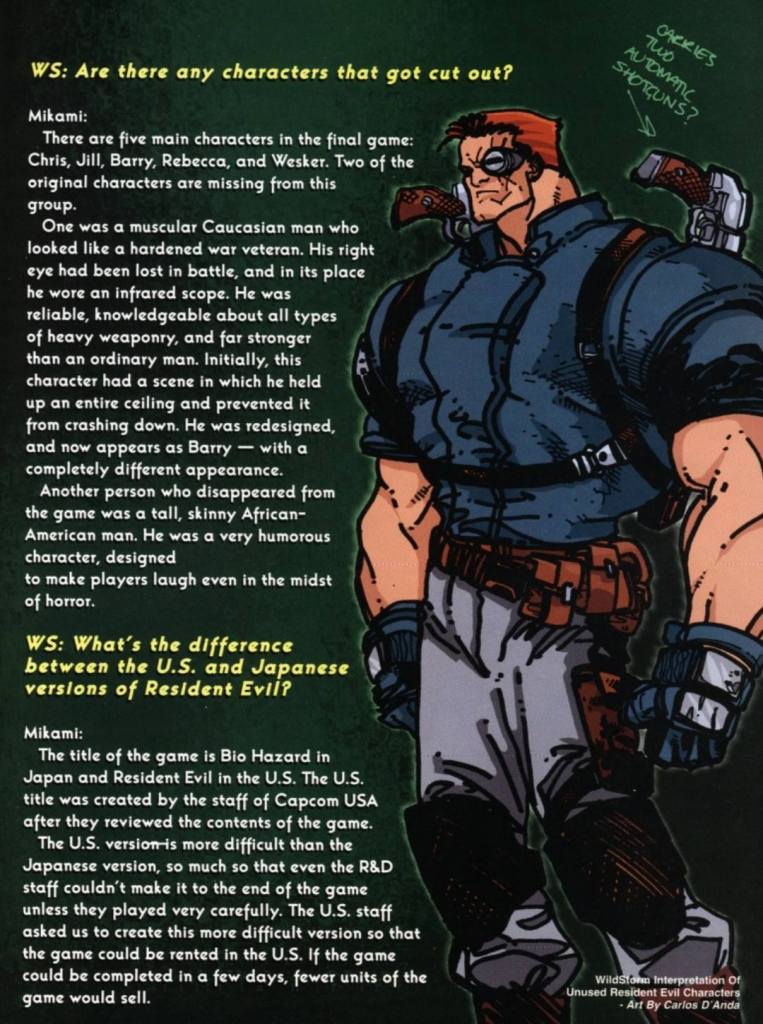
WildStorm did not just settle with doing their own literary take on the Resident Evil lore. They even went further by publishing an interview with Resident Evil creator Shinji Mikami knowing that the fans will enjoy discovering details and revelations through the production side of the video games.

Page 1 of the interview with Mikami.
Page 2.

Going back to the first RE game of 1996, be aware that certain details in this comic book could end up lacking or feel irrelevant given the fact that this was published years before the Resident Evil remake on Nintendo GameCube was released.

Conclusion

Chris Redfield leads the post-mission review.

Resident Evil: The Official Comic Book Magazine #1 (1998) succeeded in what it was meant to do. It gave readers added insight to the characters and the events – including those that happened off-screen – of the 1996 video game while literally warming them up for Resident Evil 2’s illustrated events. To really enjoy this comic book magazine, it is clear that one has to play BOTH video games to gain at least a basic understanding of what happened and who is who. As it was released at a time when Resident Evil 2 was available and selling a lot of copies, this comic book adaptation turned out to be a helpful read that fans and newcomers can enjoy. It is also a reminder that the late 1990s was an exciting time to be a Resident Evil fan.

Overall, Resident Evil: The Official Comic Book Magazine #1 (1998) is recommended.

+++++

Thank you for reading. If you find this article engaging, please click the like button below and also please consider sharing this article to others. If you are looking for a copywriter to create content for your special project or business, check out my services and my portfolio. If you want to support my website, please consider making a donation. Feel free to contact me with a private message. Also please feel free to visit my Facebook page Author Carlo Carrasco and follow me on Twitter at  @HavenorFantasy as well as on Tumblr at https://carlocarrasco.tumblr.com/ and on Instagram at https://www.instagram.com/authorcarlocarrasco/.