Disclaimer: This is my original work with details sourced from reading the comic book and doing personal research. Anyone who wants to use this article, in part or in whole, needs to secure first my permission and agree to cite me as the source and author. Let it be known that any unauthorized use of this article will constrain the author to pursue the remedies under R.A. No. 8293, the Revised Penal Code, and/or all applicable legal actions under the laws of the Philippines.
I could never forget the sense of engagement and fun I had the first time I read the Ultraverse comic book The Strangers #1 decades ago. After completing that comic book, I was really eager to discover more of the team and what else they would encounter in the next issue. Entertainment and literary value aside, The Strangers #1 succeeded in making me craving for more about the Ultraverse (same with reading Hardcase #1, Mantra #1, Freex #1, Prime #1 and Prototype #1).
Take note that the year was 1993 when Malibu Comics launched the Ultraverse and at that time I was already a fan of the X-Men and Marvel Comics organized the celebration of X-Men’s 30th anniversary that same year. As such, it became a challenge for me to collect X-Men-related comic books while keeping up with the Ultraverse releases. While the X-Men 30th anniversary was heavily marketed, The Strangers and Freex were superhero team titles under the Ultraverse that still caught my attention. I’m really glad that
Enough with the history lesson. Let’s now take a look back at The Strangers #2, published in 1993 by Malibu Comics with a story written by Steve Englehart and drawn by Rick Hoberg.
Early story
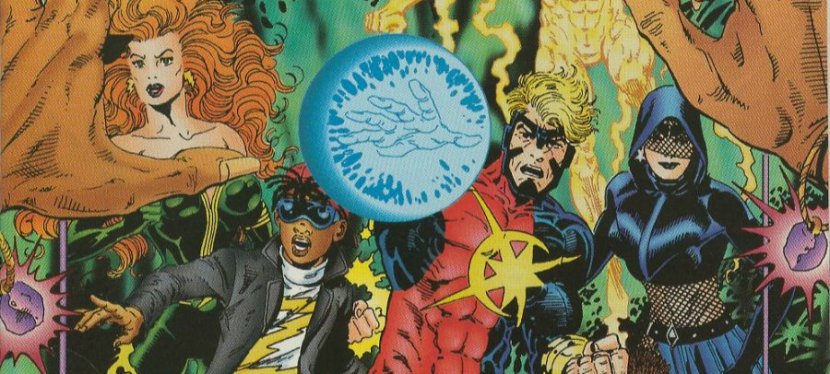
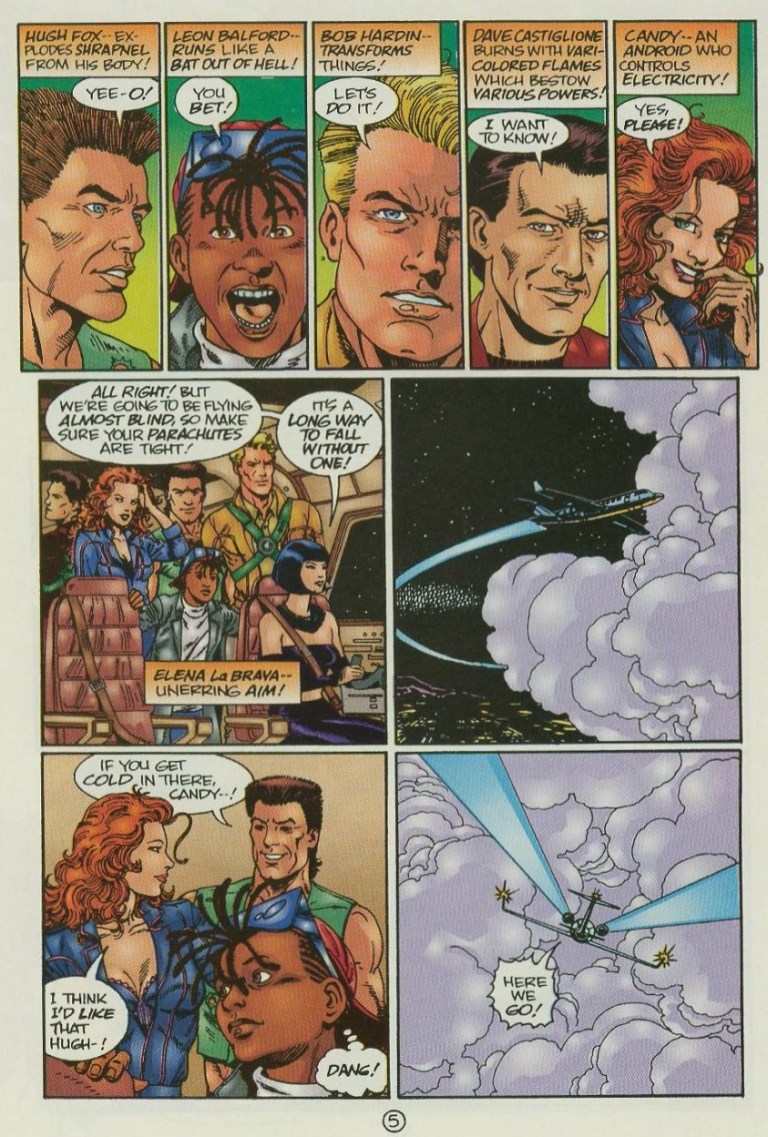
The story begins with the Strangers riding a private jet piloted by Lady Killer. Flying over the city of Fresno in California, the jet heads to a very strange cloud which seems to be the source of the powers they suddenly gained (as a result of what happened when they rode the cable car in San Francisco).
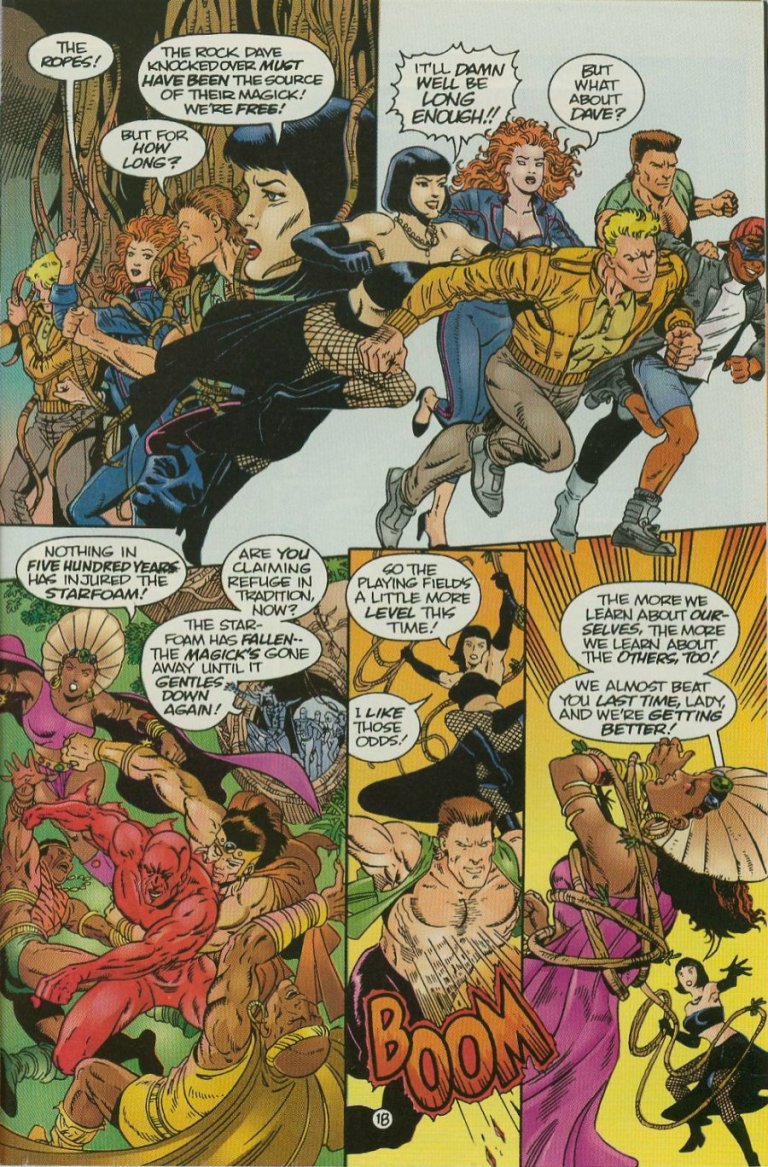
After some effort, they discover, to their surprise, an entire island with a forest and a small mountain completely floating hidden in the cloud. Upon landing, Atom Bob, Grenade, Electrocute, Lady Killer, Spectral and Zip-Zap move into the forest to explore. Eventually they got surrounded by members of a tribe (including the flying lady whom they encountered in issue #1) who use magic to take them down…
Quality
The Strangers move into action!
In terms of quality, this comic book worked strongly as a concluding piece to the previous issue. In issue #1, the story was about one main event that impacted the lives of strangers who happened to be riding the cable car, and those who gained powers got together. The Strangers #2 was more about the powered strangers searching for answers only to find themselves in a tremendous misadventure they did not anticipate. The result is a nice series of further incidents laced with spectacle, interactions between the characters and ultimately another bout of fun and discovery for readers to experience.
When it comes to the writing, the narrative from the 1st issue continued smoothly here. Apart from the big misadventure on the floating island, the further development of each member of The Strangers proved to be very strong. Lady Killer is firmly established to be strong-willed and capable of leading and organizing people. Spectral starts doing more as he gradually learns more about his untapped potential. By the time I reached the end of this comic book, I got to know the characters much more and also craved for more on their further adventures/misadventures. Visually, Rick Hoberg’s art really brought the story to life.
Conclusion
Get to know the Strangers more with this page.
The Strangers #2 is an excellent comic book worthy of being part of your collection. In my view, this comic book is an essential follow-up to the excellent 1st issue. Without this, your discovery of the Strangers would be incomplete. This comic book also explains how the team got its name.
If you are seriously planning to buy an existing hard copy of The Strangers #2, be aware that as of this writing, MileHighComics.com shows that the near-mint copy of the regular edition, the bagged edition and the newsstand edition cost $4, $4 and $8 respectively.
Overall, The Strangers #2 is highly recommended!
Thank you for reading. If you find this article engaging, please click the like button below and also please consider sharing this article to others. If you are looking for a copywriter to create content for your special project or business, check out my services and my portfolio. Feel free to contact me as well. Also please feel free to visit my Facebook page Author Carlo Carrasco and follow me at HavenorFantasy@twitter.com
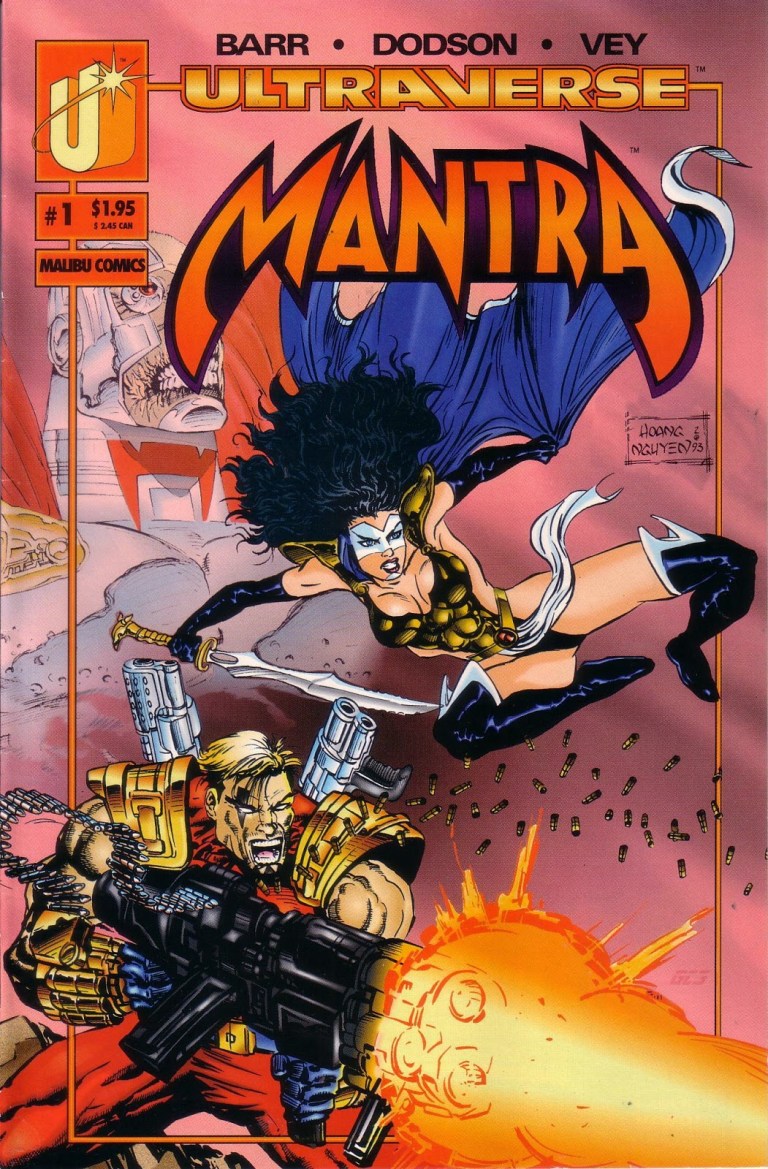
If there is any intriguing way of utilizing fantasy concepts to introduce a superhero (or superheroine) to readers, Mantra #1 from the Ultraverse published in 1993 by Malibu Comics is one fine example.
The cover of Mantra #1.
Early story
Written by Mike W. Barr with art by Terry Dodson, Mantra #1 was an Ultraverse launch comic book that follows Lukasz who is an eternal warrior belonging to a group of other warriors which had been fighting another group (led by eventual Ultraverse villain Boneyard) for several centuries.
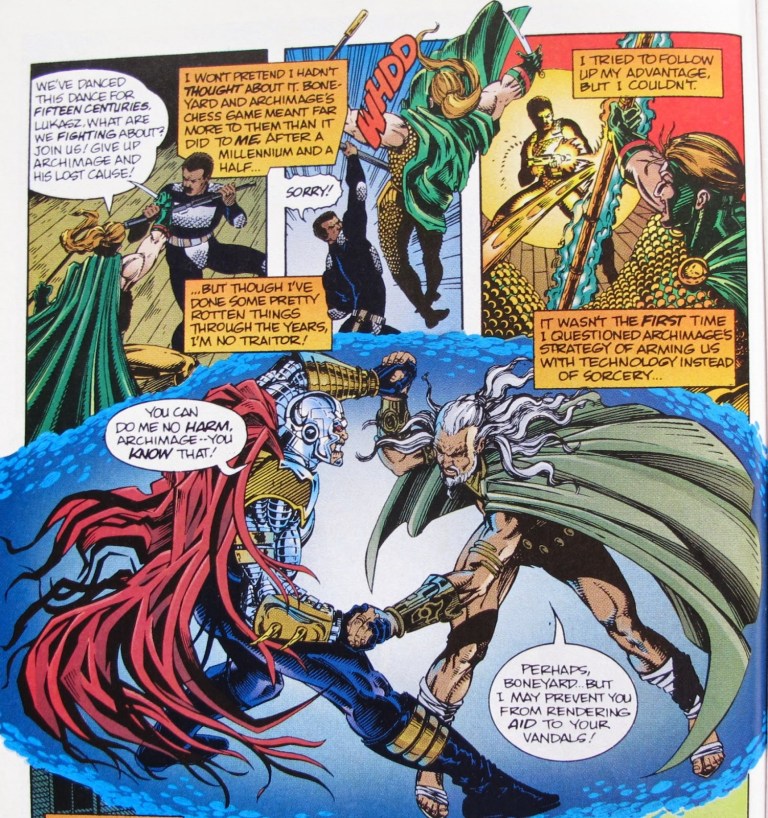
How did that conflict last that long? As told through the views of Lukasz, any individual warrior who dies will eventually be placed in a new body (often that of an existing person) and take control of it effectively displacing the its soul. Behind it all, Archmage, the leader of the warriors’ group that includes Lukasz, uses magic to ensure that each member will be reincarnated after dying.
A page for your viewing pleasure.
The story takes a major turn for the shocking and intriguing when something unfortunate happens to Archmage and that the protagonist himself gets killed again. Fortunately for him, he gets to live one more time but there is one major difference – Lukasz occupies the body of a woman named Eden Blake (and the revealing scene remains shocking).
At this point, I don’t want to spoil the rest of the story. If you want to find out how Mantra came to be, you just have to read the comic book yourselves.
Quality
From an analytical view, I still find Mantra’s concept very intriguing to this day. In terms of mysticism, it reminds me a little bit of George Perez’s take on Wonder Woman in the mid-1980s and in some cases Mantra/Eden Blake herself reminds me bit of Wonder Woman/Diana albeit in a more motherly way.
When it comes to storytelling, Mike W. Barr’s script is very solid and made very good use of the twenty-eight (28) pages of the comic book. Unsurprisingly, there was a good amount of expository dialogue and narration but it was handled efficiently. The first-person views of Lukasz/Eden Blake are truly immersive to read. Along the way, there were several scenes that were intriguing to read and there were some nice moments of unintentional comedy which helped balance the overall tone of the story.
To say the least, Mantra’s concept about dead warriors’ souls entering bodies of existing people to live again sheds light on the moral or psychological implications of such events. If you were a warrior who just died and eventually got a new lease on life by occupying the body of let’s say a software company’s chief executive officer, would you not be concerned as to what happened to the soul (of the body) you displaced? Would you not think about how your control of that displaced soul’s body would affect not only the person’s established life but also the personal association with other people? Truly Mike Barr’s writing got me hooked and Terry Dodson’s art really brought his concepts to life.
Conclusion
So what else could I say? Mantra #1 is highly recommended not only because of its story and concepts but also because this particular series lasted several issues more and, for the most part, Mantra’s adventures and misadventures have often been fantastic and fun.
Even though it is fact that the Ultraverse remained in limbo and Marvel Entertainment showed no intention to revive the franchise, Mantra is still a fun and engaging comic book series to read and this comic book is the golden start of it. Mantra #1 itself is one of the most defining superhero comic books of the 1990s ever published and its mature themes combined with strong fantasy concepts made it stand out among all of those other superhero comic books I spotted on the shelf of a BF Homes comic book store that I visited in July 1993.
You guys can order copies Mantra #1 online at ComicCollectorLive.com, at MileHighComics.com (a near-mint holographic cover version of the comic book is worth over $40) or by visiting your local comic book retailer selling old issues.
Author’s Note: This article was originally published at my old Geeks and Villagers blog. What you just read on this website is the most definitive version.
Thank you for reading. If you find this article engaging, please click the like button below and also please consider sharing this article to others. Also my fantasy book The World of Havenoris still available in paperback and e-book format. If you are looking for a copywriter to create content for your special project or business, check out my services and my portfolio. Feel free to contact me as well. Also please feel free to visit my Facebook page Author Carlo Carrasco and follow me at HavenorFantasy@twitter.com
When done right, a crossover storyline showcasing a big mix of superheroes getting involved in a huge event can be memorable and worth revisiting years after getting published.
Back in 1993, Malibu Comics launched the Ultraverse which involved many talented creators. Right from the start, it was made clear that there was a shared universe occupied by The Strangers, Night Man, Prototype, Prime, Mantra, Hardcase and many others.
Before the end of 1993, Malibu launched Break-Thru #1 which started a new storyline that involved many of the above characters plus Firearm, The Solution, Sludge and Solitaire. Adding more punch to this comic book was Malibu’s hiring of legendary artist George Perez who worked on the classic Crisis on Infinite Earths maxi-series of DC Comics.
A great cover! One of the best ever for any Ultraverse comic book!
Here is a close look at Break-Thru #1 mainly written by Gerard Jones, drawn by George Perez and inked by John Lowe with colors by Moose Baumann. Credited as contributing writers were Steve Englehart, Mike W. Barr, Steve Gerber, James D. Hudnall, Tom Mason, George Perez, James Robinson and Len Strazewski.
Early story
The story begins immediately after the end of Exiles #4. A man falls to his death from the top of a tower thinking he was reaching the moon at night. Elsewhere, an airplane sharply goes up with too much altitude as the pilot obsesses with going to the moon
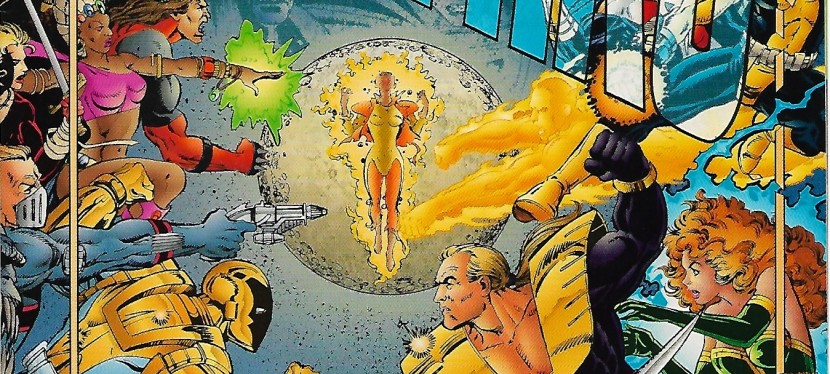
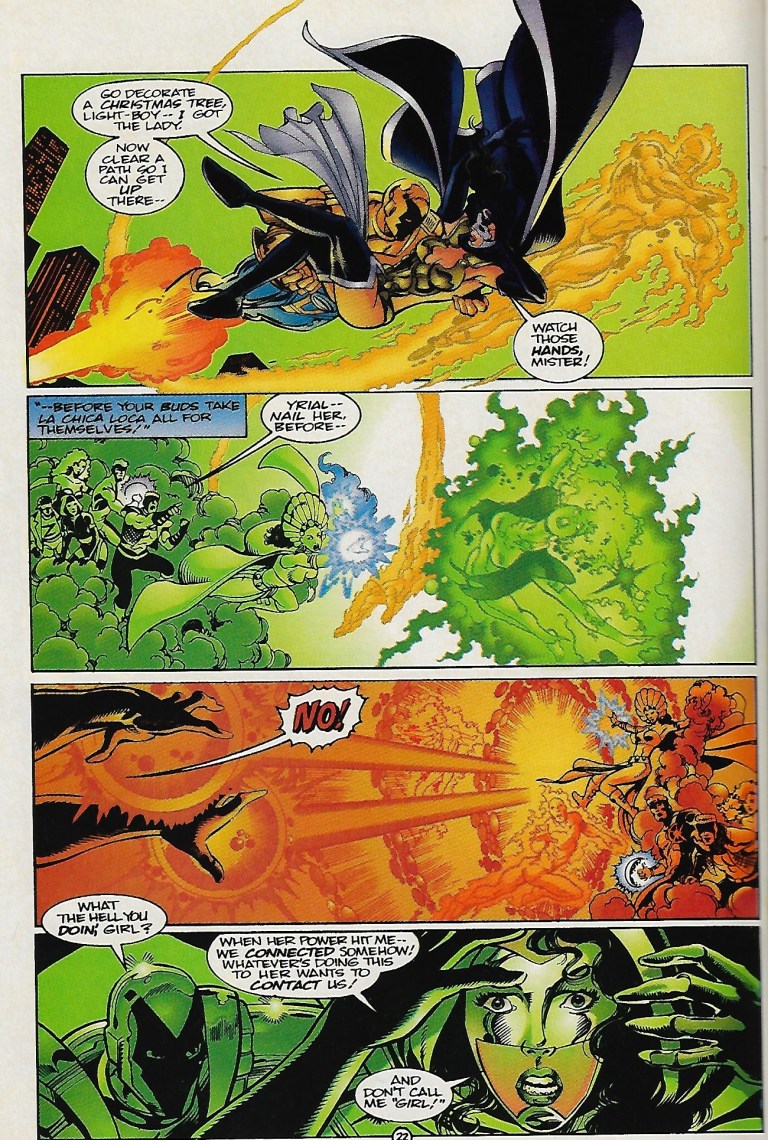
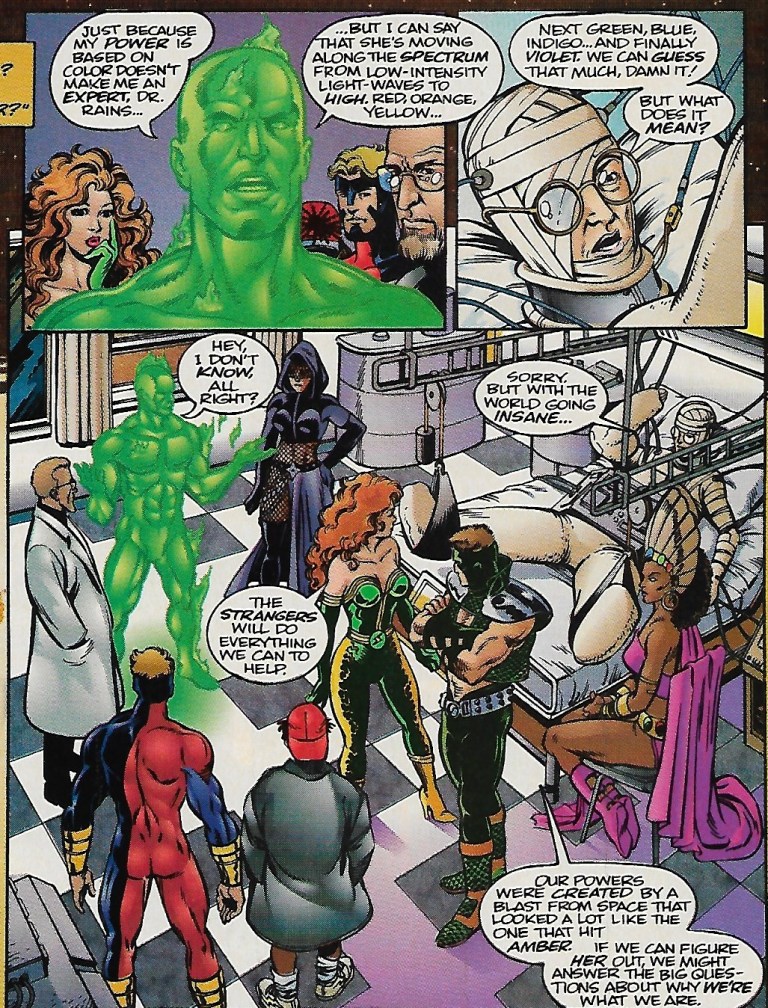
As it turns out, the media reports about people trying to reach the moon and getting restless. A member of Exiles lies helplessly on a bed with his entire body covered with medical materials for his injuries. A doctor presses him for answers and he claims to know that Amber, one of the Exiles members, looks a lot like a young lady floating over Los Angeles. He thinks she is responsible for the madness that has been going around the world.
The injured confirmed that the lady, floating high above with reddish energy around her, is none other than Amber. He claims, however, that he has no idea what happened but shared that she was already prone to volatile energy blasts.
Behind the scenes, members of Aladdin discuss what has been happening. One of them believes that Amber may hold important clues to the nature and origin of Ultras. The Aladdin people get distracted with noise caused by Eden Blake (Mantra in civilian form) who secretly eavesdropped on them pretending to be lost (note: a reference is made to Mantra #5 to explain her new employment with Aladdin.)
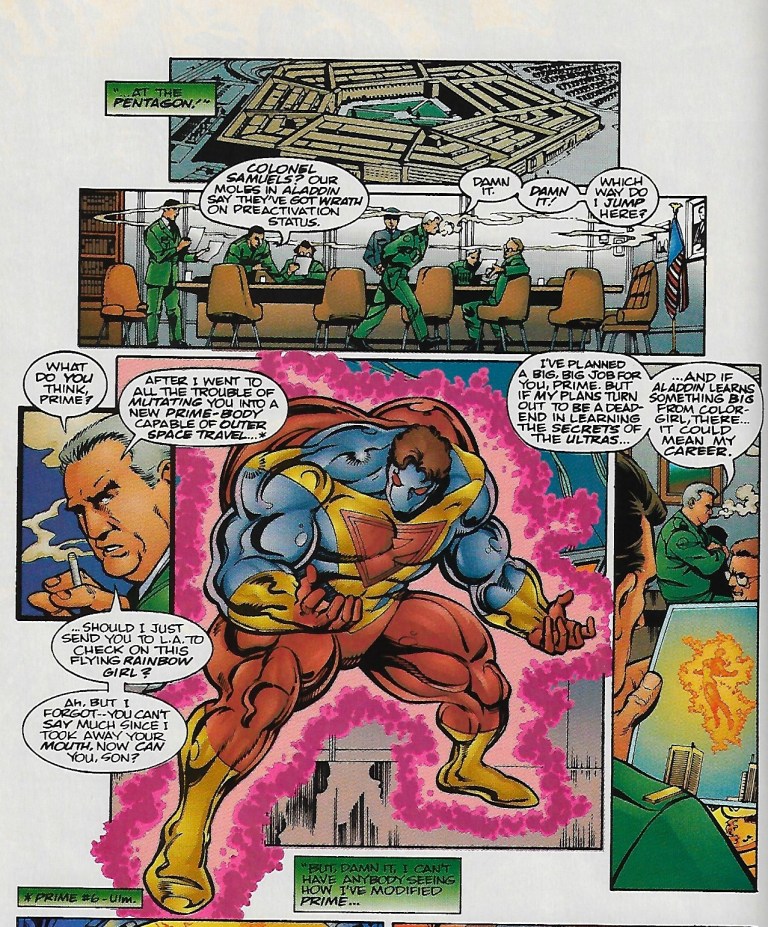
The military and Prime.
Aladdin decides to activate their own Ultra named Wrath. Over at the Pentagon, military officers discuss the information about Wrath they got received from their moles at Aladdin. Their leader wondered about sending Prime (with a modified look) on a mission but he can’t have anyone see how he modified the Ultra.
Meanwhile in the bowels of the Earth, a man who is not really a man watches…
Quality
In terms of storytelling, Break-Thru #1 has a nice build-up. It took its time making references to the many, many characters of the Ultraverse. By the end of the comic book, you will realize there are different kinds of Ultras: the solo Ultras, the corporate Ultras, the freelancers, the work-for-hire Ultras, the accidental Ultras and the like. With regards to emphasizing the shared universe, this comic book shows that connections with the individual comic books are tight. References in what happened in Exiles #4, Prime #6, Mantra #5 and others all helped build-up the concept of Break-Thru. The story is 35-pages long which, in my opinion, was sufficient not only to emphasize the conflict Break-Thru but also give readers enough space to get to know what exactly is going on, who are these many characters, what the institutions involved are, etc.
Mantra with Prototype.The Strangers discuss what has been happening.
More on Break-Thru’s concept, I like the way the comic book emphasized how the sudden presence of multiple Ultras affected local societies, members of the public, the government, the secret groups and others. It also sheds light on how people, regardless of social class or status, react to the presence of people who carry special powers or have unusual talents over them. This reminds me of a key scene in the 2012 Avengers movie in which Col. Fury mentioned how the sudden presence of super beings caused a disturbance.
Spectacle? Unsurprisingly there is a good amount of action as well as incidental moments that kept the narrative entertaining.
Visually, Break-Thru #1 is a great looking comic book thanks to George Perez who is famous for drawing multiple characters environments with his distinctive style complete with a high level of detail. There is not a single boring moment with his art and each panel has really nice visuals. The action scenes and incidental happenings (example: Valerie’s sudden burst of energy) come with a lot of punch.
Freex got affected.
Very notably, Perez’s take on each of the Ultraverse characters is very good to look at and in some ways, certain characters look a lot better than they did in their respective comic book series. A perfect example here is the team Freex whose characters look more human (in style) and more lively. Of course, I don’t mean to say that the illustrators of the Freex series did not do a good job.
Perez’s drawing of Mantra is very good. Similar results with The Strangers, Hardcase, Solitaire and Prototype. Very clearly George Perez carefully did his research on the characters and their respective designs.
Conclusion
Hardcase, Choice and The Solution on the move!
Overall, Break-Thru #1 is a great comic book to read and it reflects the high quality and deep engagement the Ultraverse had when it was still under the control of Malibu Comics (note: Marvel Comics acquired them and drastically changed the UV for the worse in the mid-1990s). It definitely still is one of the finest superhero crossover comic books of the 1990s and, personally, I found it to be more engaging than the launch issues of other crossover storylines like Zero Hour and The Infinity Gauntlet. If you are interested, Break-Thru continued in Firearm #4, Freex #6, Hardcase #7, Mantra #6, The Night Man #3, Prime #7, Prototype #5, Sludge #3, Solitaire #2, The Solution #4, The Strangers #7 and then in Break-Thru #2.
Break-Thru #1 is highly recommended and you can buy a near-mint copy of it for $4 at Mile High Comics’ website.
Thank you for reading. If you find this article engaging, please click the like button below and also please consider sharing this article to others. Also my fantasy book The World of Havenoris still available in paperback and e-book format. If you are looking for a copywriter to create content for your special project or business, check out my services and my portfolio. Feel free to contact me as well. Also please feel free to visit my Facebook page Author Carlo Carrasco and follow me at HavenorFantasy@twitter.com
There is nothing like seeing squabbling individuals (each with a unique talent or two) realize that they have to end the division between them and work together to solve a problem that affects everyone.
Tropes like that are common in superhero comic books, animation, movies and other forms of media. The concept of having superheroes is precisely the key element behind the UltraForce of the Ultraverse.
To put things in perspective, UltraForce is a team of superheroes (called Ultras in the Ultraverse) composed of Prime, Hardcase, Prototype, Topaz, Ghoul, Pixx and Contrary. The team was formed to protect the public while, at the same time, keep their fellow Ultras (examples: Mantra, The Strangers, Night Man, etc.) from getting out of line with the general public and their government leaders.
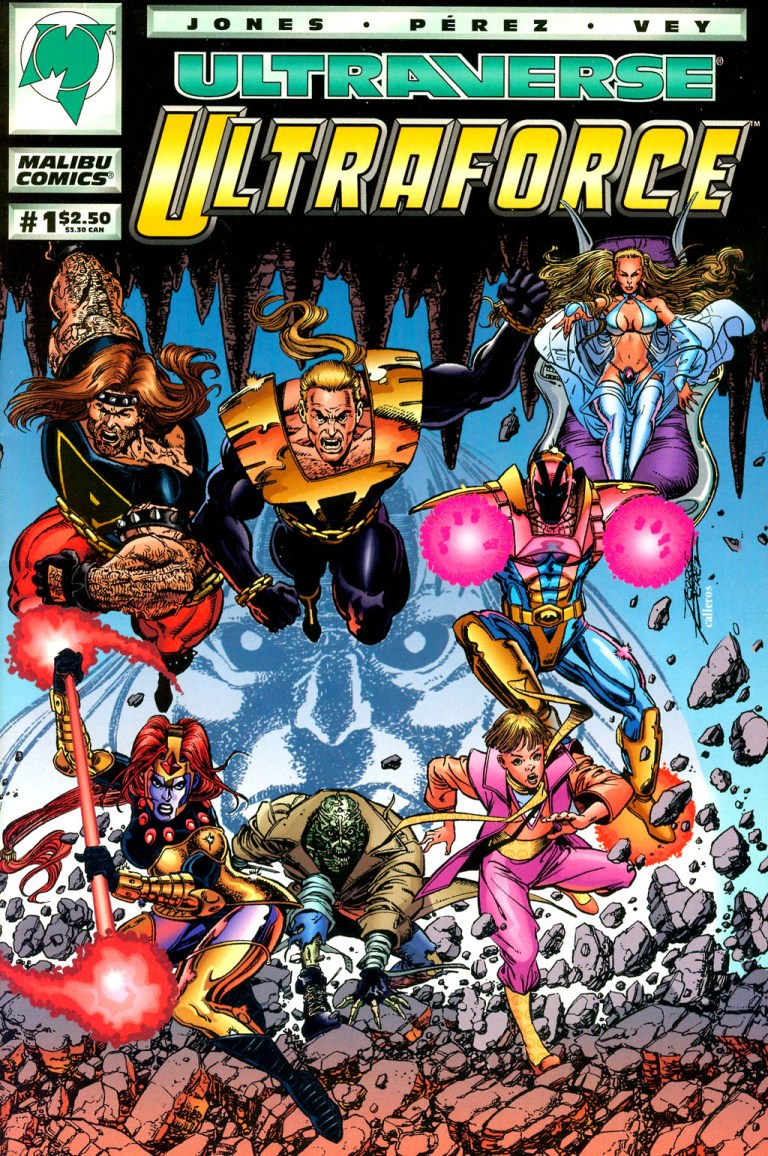
Previously, I discussed what would it be like had superheroes conspired with government officials and corporate media as told in UltraForce #2. For this article, we take a look back at the formation of the team in UltraForce #1, published by Malibu Comics in August 1994 with a story by Gerard Jones and art by the legendary George Perez.
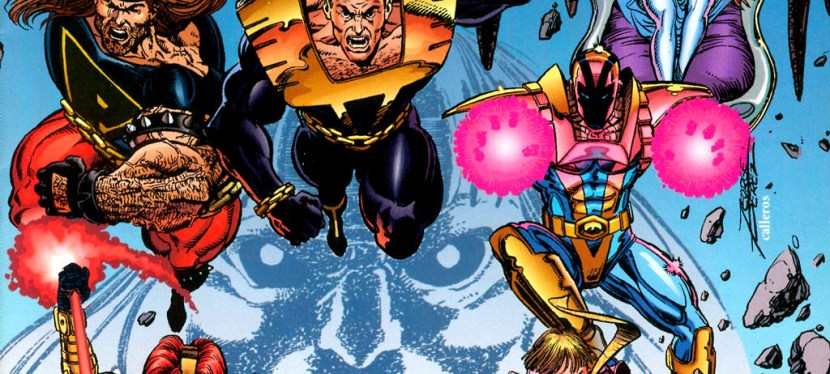
Great cover by George Perez.
Early story
The story begins with a disaster as fighter planes get pulled down to the ground by an unknown force. A pilot who ejected and flew by parachute finds himself pulled down as well. Down on his back, he feels intense pain and could not get himself up. His body begins to get destroyed when a voice is heard.
“You thought your little flying toys would stop me. You thought your mastery of light and air made you invincible. And no creature of the dark, hidden places could possibly beat you. Now feel the weight. Feel what we feel. The weight of the core of the Earth. The weight of eons of darkness. The age of light and air is done. Prepare for a new age. The age of Atalon!”
Inside a ship above the desert, Hardcase reacts as he watches multiple monitors showing current events highlighting people’s fear of the Ultras, citizen demanding controls, Hardcase reported as saying “only Ultras can control Ultras”, plus an image of Prime and Prototype in action. With him were Contrary, Pixx and Ghoul.
“No!” said Hardcase. “I won’t go through that again!”
Harcase clarifies to his companions that, due to his past with The Squad ending in tragedy, he won’t join a group and end up counting friends’ bodies again. Regarding his reported quote in the media, he stated that he specifically said that government could never control Ultras plus he did not say an UltraForce should try to do it. Being an actor in Hollywood, he decides to go to the media and wash his hands of this.
Contrary, who is the schemer in the team, asked him, “Won’t the public fear Ultras more and more…unless someone steps up to teach Ultras how to function in the world?”
Hardcase asked if she was the one to do the teaching.
Pixx butts into the conversation telling them that Prime and Prototype are about to approach the press. After calling Pixx an attentive student, Contrary tells Hardcase she is the to teach the Ultras which she claims is her business.
In front of the press, Prime (who is a kid inside that overly muscular body) talks impulsively to them and Prototype (who is receiving communication feed from Ultratech which seeks a public coup with the idea of him gathering the team) who states that an UltraForce is needed and that he will recruit one.
This sets off Prime to act even more impulsively over who has credit over the UltraForce idea. Behind the scenes, Ultratech’s Leland and Hardcase watch as things turn wrong (between Prime and Prototype) in front of the press.
An incident like that in front of the media is enough to mislead the public into thinking negatively about who got covered in the press. There are those who acted badly in front of the press and there are media operators who practice journalism wrongly.
“They’re going to force the government to crack down on Ultras!” – Hardcase.
Concerned that the embarrassment could start a civil war between Ultras and Normals (the people), Hardcase tells Contrary he wants to leave the ship to prevent things from getting worse. Contrary gets on his way saying she was going to talk to Prime and Prototype and even have their ship fly after them.
Hardcase disagrees with her idea and insisted she should not be near the mess (about Ultras and the public) until she comes clean with all her secrets and explain what her academy for Ultras is about.
“Is this the same Hardcase who didn’t want responsibility of leading other Ultras…laying down the law for me?” – Contrary
Eventually Contrary sends Hardcase away and tells Pixx to bring their ship to the Redstone Arsenal.
Meanwhile, in Los Angeles, Topaz appears suddenly in the middle of a football game causing confusion to the players and the spectators.
The power of Prime!
Quality
I absolutely enjoyed reading UltraForce #1for the fact that it has a very engaging story, great art, in-depth characterization and a great presentation of superheroes banding together for a higher cause. It is the complete package of what a fun yet thoughtful superhero comic book should be!
The story written by Gerard Jones shows lots of signs that things were carefully planned not just for the comic book but for the Ultraverse as a whole as it focused on the concept about the Ultras being on the edge of getting misunderstood by the general public (the people who don’t have powers) who in turn relied on the news coverage of corporate media (which itself has lapses or made deliberate moves that did not give the viewers an accurate look at the events that happened) to take a look at beings with powers.
This concept kinda reminds me of the traditional concept behind the X-Men. Charles Xavier founded the X-Men to train mutants to use their gifts for good while trying to establish a bond of understanding and tolerance between mutants and humans.
UltraForce’s concept of the fragile link between Ultras and ordinary people really went deep as it involved not only the media but also the private sector, the government leaders and the armed forces. Heck, in Prototype #1 the corporation Ultratech made its move with Ultras by having a flying, armored guy representing them. In Prime #1, the element of militarism was involved.
The comic book’s concept is nicely reflected in Hardcases thoughts below.
“Great. The military, the media, the eyes of the world…dying for a sign. Are Ultras for them or against them? And what sign are we giving them?”
Gerard Jones also achieved a great job with the characterization. Prime is the impulsive powerful superhero who is also a loose canon because he’s really a kind inside the large, muscular body of a man. Prototype is piloted by a young guy working for a corporation and along the way, he has trouble balancing himself between duty and personal interest. Hardcase, who has been living with guilt as one of two surviving members of The Squad, struggles between his internal struggle and keeping the peace between humans and Ultras. The way I remember these three notable Ultraverse lead characters from their respective comic book series, their personalities were successfully replicated and developed in this comic book.
Contrary meanwhile is subtle yet brainy and strategic figure of the team. For the most part, she is mysterious and yet already has a clear vision about mentoring people with super powers. She is easily the most defining member of UltraForce who does not have her own comic book series. Topaz, who comes from a society of women, is clearly the Ultraverse parallel to DC Comics’ Wonder Woman. She appeared in prior issues of Mantra and her addition to UltraForce added more depth and variety. Of course, given her background, working alongside men is a challenge for her personally. Pixx and Ghoul, meanwhile, contributed nicely as supporting characters in this comic book. For the villain King Atalon, he succeeded in presenting himself and his group as a credible threat to the world. Not only is he powerful in combat, he is very driven with a mission for his kingdom and his people strongly love him and support him.
Even though this was just the first story, UltraForce #1 is already a nice exploration of each member’s personality and the personal relationships between them. How these characters formed a team was not only convincing but was done with a lot of depth and focus. At the same time, the dialogue written for each character is lively to read. Take note how Atalon reacted to Prototype’s attack on him.
“Didn’t your Dr. Einstein tell your people decades ago that great gravity could bend even energy? But you never do listen to your own wise men, do you? Just like my people. We wise ones must find ways to make you listen.”
Spectacle and action? There’s lot of them in this comic book. More than enough to satisfy anyone who enjoys reading superhero stories that pack a lot of hard-hitting action, intense moments of damage on the surrounding made only possible by superheroes, energy blasts and the like.
This bring me to the next aspect of the comic book….George Perez’s great art! I should say that Malibu Comics made the best decision to hire Perez for UltraForce #1 given his established talent of drawing multiple superheroes in high detail (with that distinct style on drawing human faces) and ensuring that what was written on Gerard Jones’ script would come out not only looking great but also always look very lively. I love the way Perez drew the facial expressions of Hardcase, the visualization of Prime’s immense strength, Pixx looking really like a teenager, the high level of detail on the backgrounds, Ghoul’s creepy look and much more. No doubt about it, each and every panel drawn by Perez is great to look at!
Conclusion
I really love reading and re-reading UltraForce #1. It succeeded in its goal of getting the divided superheroes together to form a team in convincing fashion complete with a clear and present danger (Atalon and his people) that justifies the events. It’s got great writing and art, very engaging characters, heavy action and a good amount of characterization. The good news about this comic book is that it can be found in good supply online and you don’t have to worry about paying high prices for it. As of this writing, you can order a near-mint copy of UltraForce #1 for only $4 at the website of Mile High Comics. Apart from comic books, there were some action figures of UltraForce released and there was a short-lived animated series of it on TV.
If you are a comic book reader who is dissatisfied with today’s comic books (and even superhero movies), if you are reader looking for a great superhero team reading experience, or if you want the best superhero comic book experiences of not only the Ultraverse but of the 1990s as a whole, then UltraForce #1 is highly recommended! This comic book is a classic of its decade!
Thank you for reading. If you find this article engaging, please click the like button below and also please consider sharing this article to others. Also my fantasy book The World of Havenoris still available in paperback and e-book format. If you are looking for a copywriter to create content for your special project or business, check out my services and my portfolio. Feel free to contact me as well. Also please feel free to visit my Facebook page Author Carlo Carrascoand follow me at HavenorFantasy@twitter.com
Back in the 1990s, there was a flood of superhero comic books that introduced brand new heroes, teams and even anti-heroes. A strong contributor to this was the market presence of Image Comics, Valiant Comics, Malibu Comics and other smaller publishers that tried their best to gain shares in what was back then the highly lucrative superhero comic book market which was long dominated by Marvel Comics and DC Comics.
With Malibu Comics, their Ultraverse franchise of superhero comics was a blast and I had a lot of fun reading comic books of The Strangers, Prime, Hardcase, UltraForce, Mantra, etc.
For this review, here is my look back at the Ultraverse team comic book The Solution #1 (September 1993).
The front cover.
Written by the late James Hudnall and drawn by Darick Robertson (inked by John Lowe), the story begins when Russian personnel get killed by a team of deadly people whose purpose is to raid the nuclear storage buildings.
As a result, several nuclear warheads were taken away without a trace. A KGB agent discusses the tragedy with an Aladdin agent and seeks help. In response, the Aladdin agent recommends to him The Solution.
“We’d like to (help) but our agency can’t give you any direct assistance. You know how it is. However these people might be what you need. Just remember…I never told you about them,” the Aladdin agent said.
Meet The Solution.
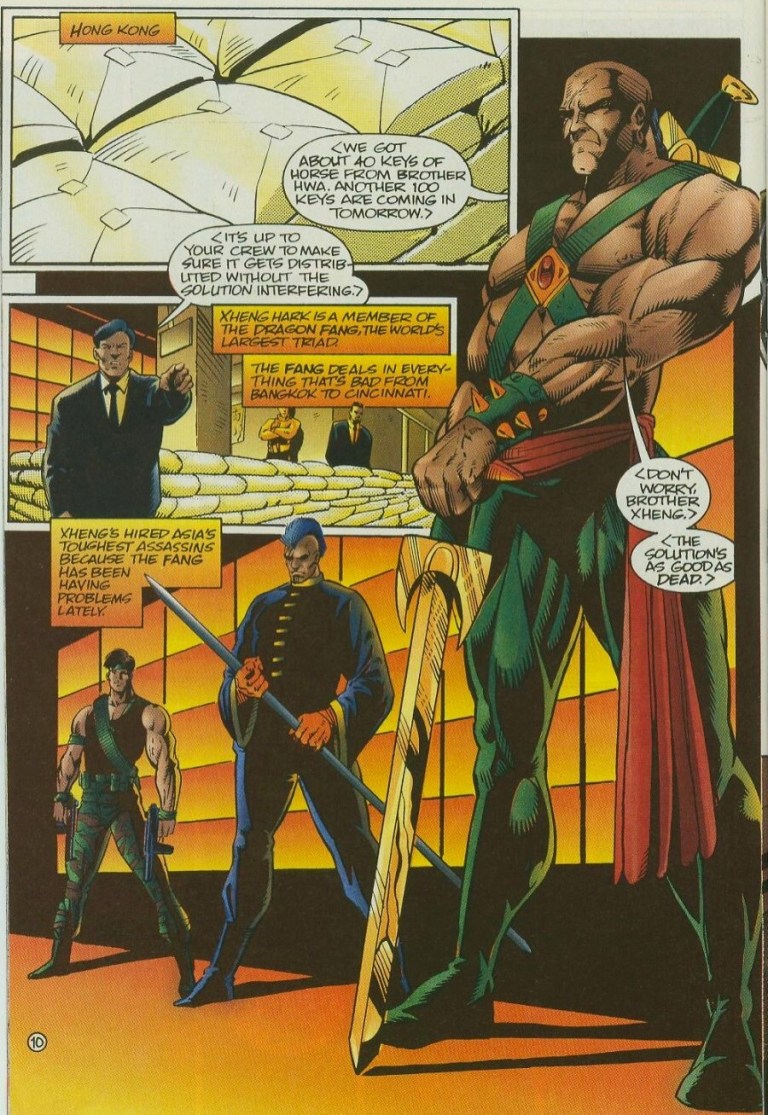
In Hong Kong, a member of the triad instructs his hired assassins to distribute a shipment of illegal substances without getting any interference from The Solution. Predictably, the said team happens to be with them in their secret venue which starts a wave of martial arts, shooting and use of magic.
Enough with the plot. The Solution is a team of super-human mercenaries composed of Lela Cho/Tech (the leader), Eara/Shadowmage, Vurk/Outrage and Dropkick. Quite literally, whenever a major problem happens someone will call The Solution (the answer) to solve it for a fee.
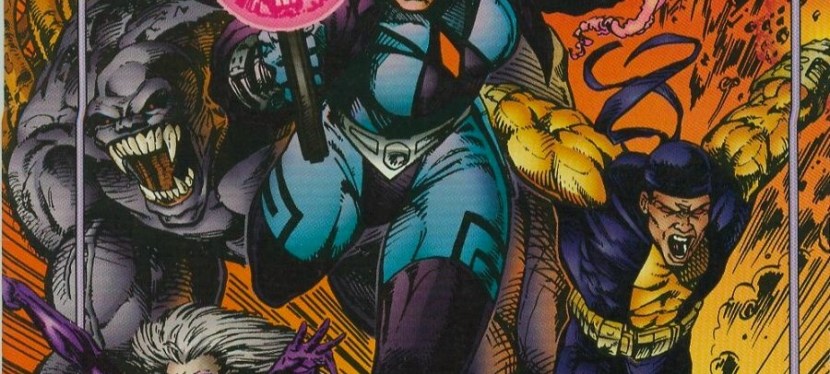
In terms of character design, The Solution has a rather visceral look which was clearly emphasized on the cover art. Outrage, for example, looks very monstrous and one could easily mistake him for an evil figure.
Obvious antagonists.
Illustrator Darick Robertson’s art is nice to look at and when the action happens, he sure delivers the goods making the hard action moves look intense. Even showing characters firing their guns look intense. The violence in this comic book is quite bloody and the opening scenes really show that.
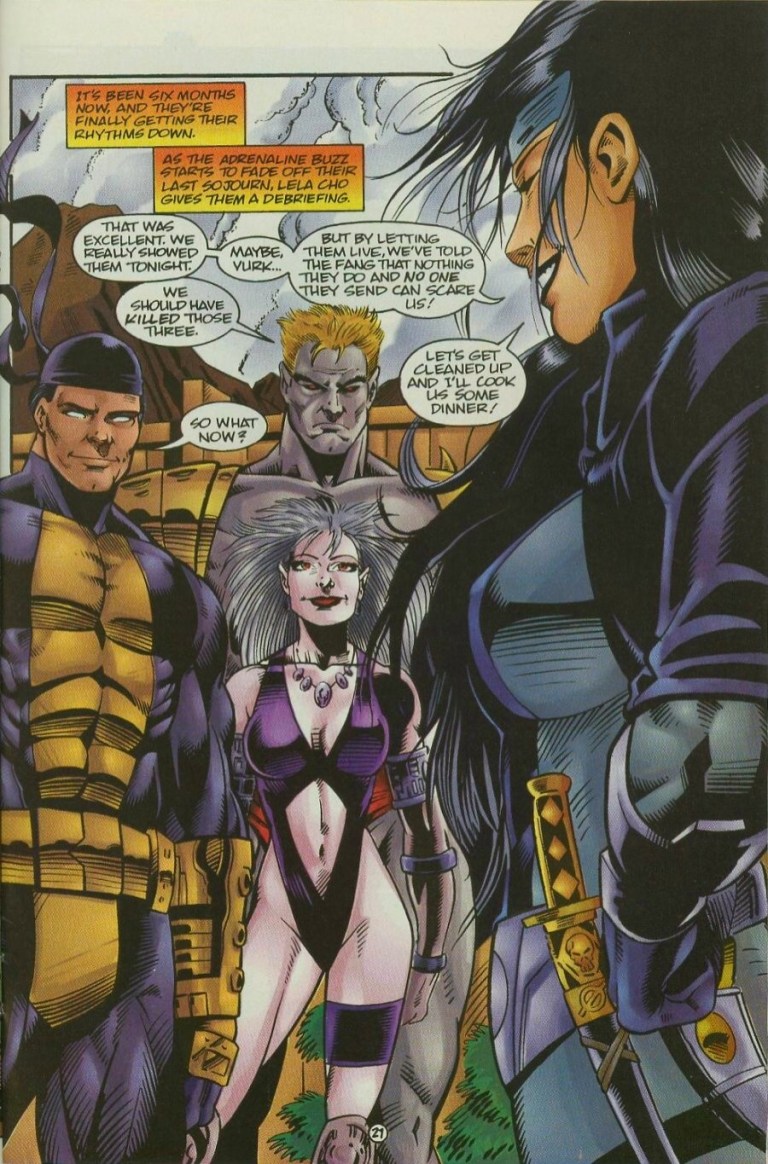
Even with the non-action, talking scenes, Robertson’s art makes the members of The Solution look believably human. Facial expressions are good and they quite match the dialogue written. The team shot on page 21, which shows Lela Cho in the foreground talking to her teammates in the background, really looks nice.
In terms of writing, I found this comic book to be a bit bloated in terms of details and plot. Most notably, the pace of the story moves very fast and while it does its job establishing The Solution (and part of its purpose as a team-for-hire), the circumstances and the team’s place within the Ultraverse, the story felt really crammed even though there were 28 pages of story and art. I noticed that while the comic book is about The Solution, it ended up showing a total of three different teams (including the hired assassins).
In terms of character development, there was clear focus on Lela Cho which is not a surprise since she is the team leader. It turns out Lela has lots of vested interests in the corporate world and instead of being in a fancy office, she goes out in the field to get things done. She has a very direct, personal access to information online by means of wetware embedded in her skull. She also has a touch of business in her approach with leading The Solution.
“Our potential client has a problem with some Ultras. They want us to take care of it,” Lela Cho said on page 23.
You got a problem? Call The Solution!
While it may not look as prominent as The Strangers or UltraForce as far as Ultraverse superhero teams go, The Solution stands out nicely for it is unique and its team-for-hire concept is very interesting. When I first read this comic book long ago, I was convinced to pursue the succeeding issues. Even by today’s standards, this old comic book remains fun and engaging.
The Solution #1 is recommended.
Thank you for reading. If you find this article engaging, please click the like button below and also please consider sharing this article to others. Also my fantasy book The World of Havenoris still available in paperback and e-book format. If you are looking for a copywriter to create content for your special project or business, check out my services and my portfolio. Feel free to contact me as well. Also please feel free to visit my Facebook page Author Carlo Carrascoand follow me at HavenorFantasy@twitter.com
What is the one thing I love most about superhero comics of the 1990s? It’s easy – the Ultraverse! Launched in 1993 by Malibu Comics during the late stage of what is now called the Comic Book Speculator Boom in Amerca, the Ultraverse was a line of superhero comic books featuring all-new characters and concepts which were the result of intense brainstorming by the founders of the Ultraverse.
Back in mid-1993 here in the Philippines, I first got to discover the Ultraverse through print ads in comic books and take note that the Internet was not yet publicly accessible. By June that year, I visited a comic book store in BF Homes, Paranaque and was astonished to see the store’s wall with multiple Ultraverse comic books on display. With my limited funds at that time, I only managed to buy Freex #1 and Mantra #1. By the end of the evening, I greatly enjoyed what I read and became an Ultraverse fan ever since.
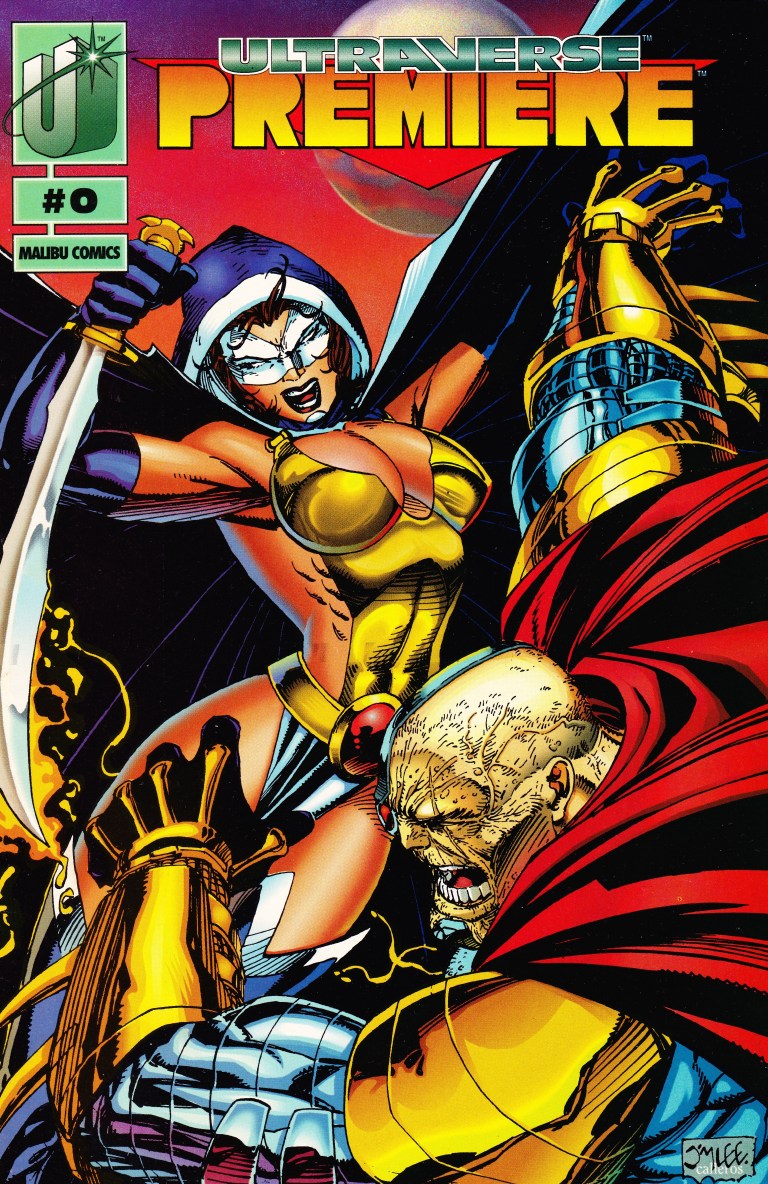
As the months passed by, I enjoyed reading more Ultraverse comic books. What was also fun to read were the special double-sized UV comic books, the Ultraverse Double Feature comic books (flip comic books) and then there was the Ultraverse Premiere #0 comic book which had a cover of Mantra drawn by the great Jim Lee! This is the one comic book I am taking a look back at.
The front cover drawn by Jim Lee!
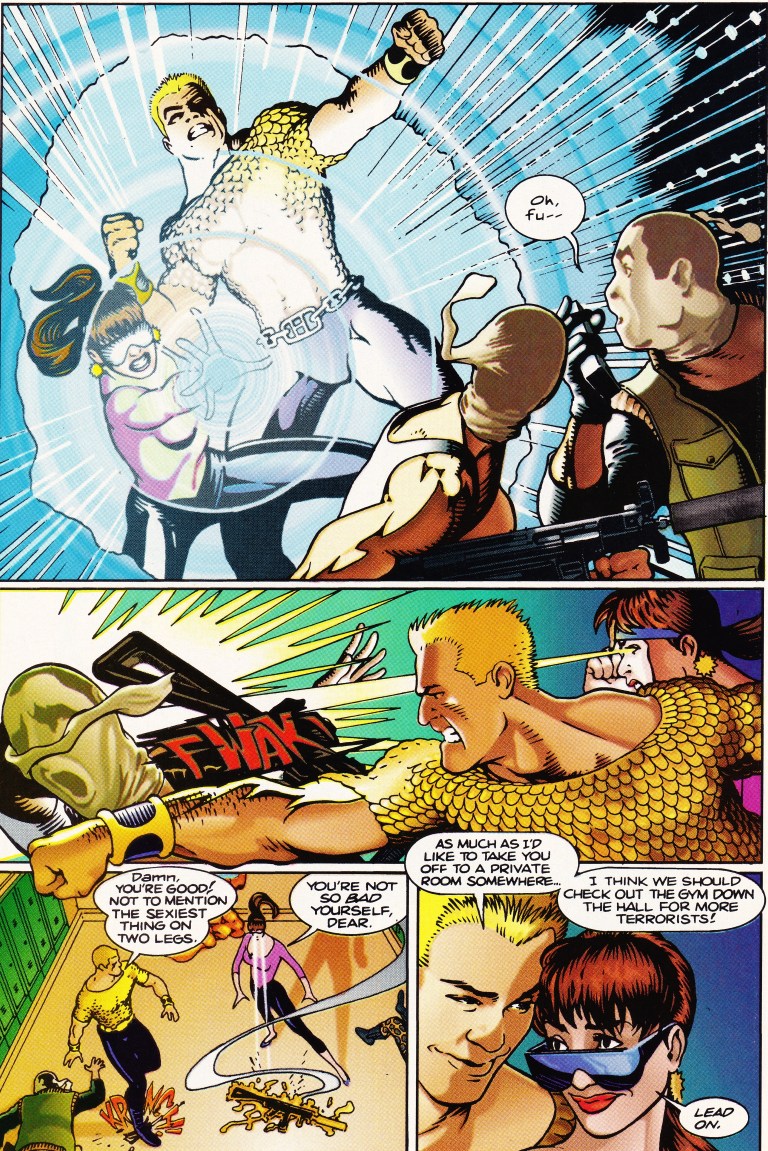
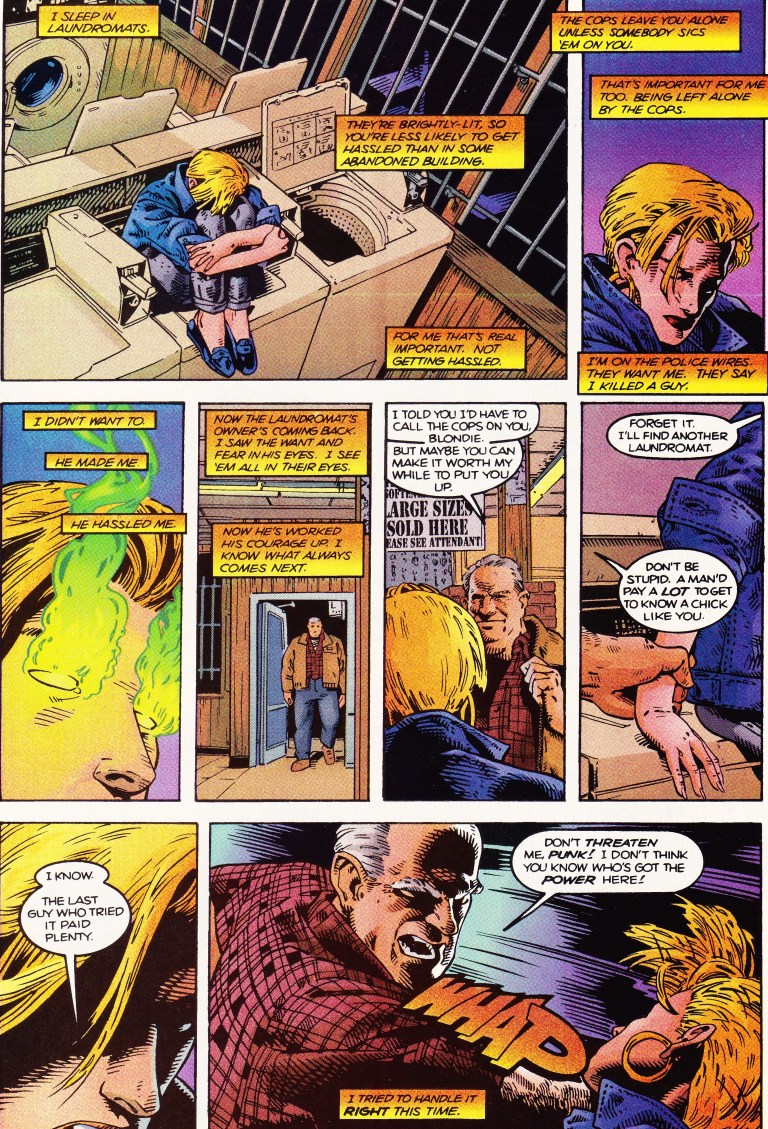
So what Ultraverse Premiere #0 and what made it special other than having a cover drawn by Jim Lee? Released in late 1993, the comic book is a showcase of separate stories featuring Prime, The Strangers, Rune, Hardcase, Mantra and Freex. It is also a showcase of the respective talents of a big mix of writers and artists that include Len Strazewski, Tom Mason, Gerard Jones, Steve Englehart, Barry Windsor-Smith, Rick Hoberg, James Hudnall, Mike W. Barr, Norm Breyfogle and others.
Given its release date, the stories served as preludes leading to the stories told in the launch comic books. For example, the Hardcase story shows Tom Hawke/Hardcase with his team called The Squad performing what turned out to be their last mission leading directly to the events that started Hardcase #1.
Tom Hawke/Hardcase with his lovely teammate during his time with The Squad.
The story of Mantra in the comic book however was presented more like a side-story. Lukasz is already shown as Mantra with her mystical powers and revealing outfit in place. The short story adds a nice perspective on the personality of Mantra as well as her burden of having to take care of a daughter.
The Rune segment meanwhile was a look at the making of the character involving Barry Windsor-Smith and his art. In the text written by Chris Ulm, what caught my attention was the following segment.
After writing up the concept in the Ultraverse bible, I shortly added Rune to “Fusion”, the story of a conspiracy to develop the ultimate biological weapon by a covert group called Aladdin.
This opening of the Freex short story starts very strongly.
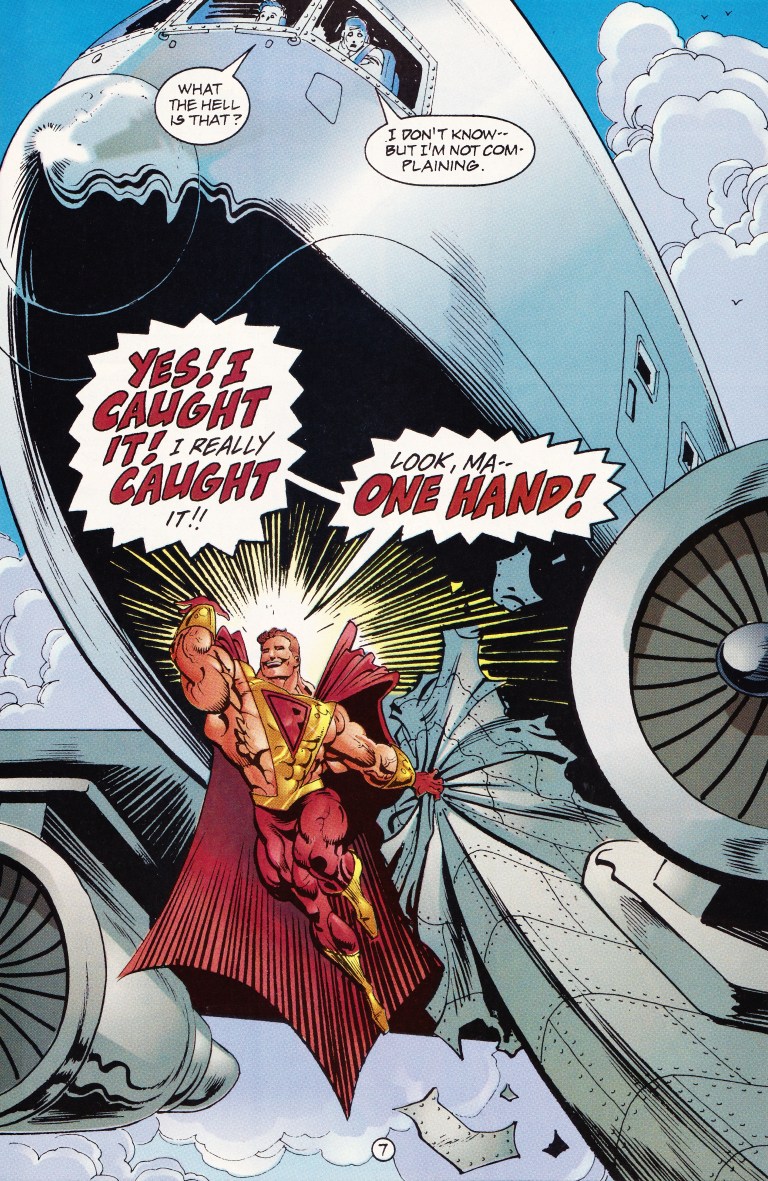
Of course, there is also the fine story of Prime by Len Strazewski and Gerard Jones with great looking art by the late Norm Breyfogle. Remember in the early pages of Prime #1 when the overly muscular superhero claimed he saw the school coach touch the young girls? That got emphasized in the Prime short story in this comic book.
And then there is the one very memorable whole page art of Prime by Breyfogle.
I love this art of Prime by the late Norm Breyfogle.
The stories and art, in my view, were done with a lot of passion by the creators. They make Ultraverse Premiere #0 a worthy comic book to collect even though Marvel (which acquired Malibu Comics in the mid-1990s) screwed the Ultraverse and left the characters and concepts in limbo with no clear sign of any revival coming.
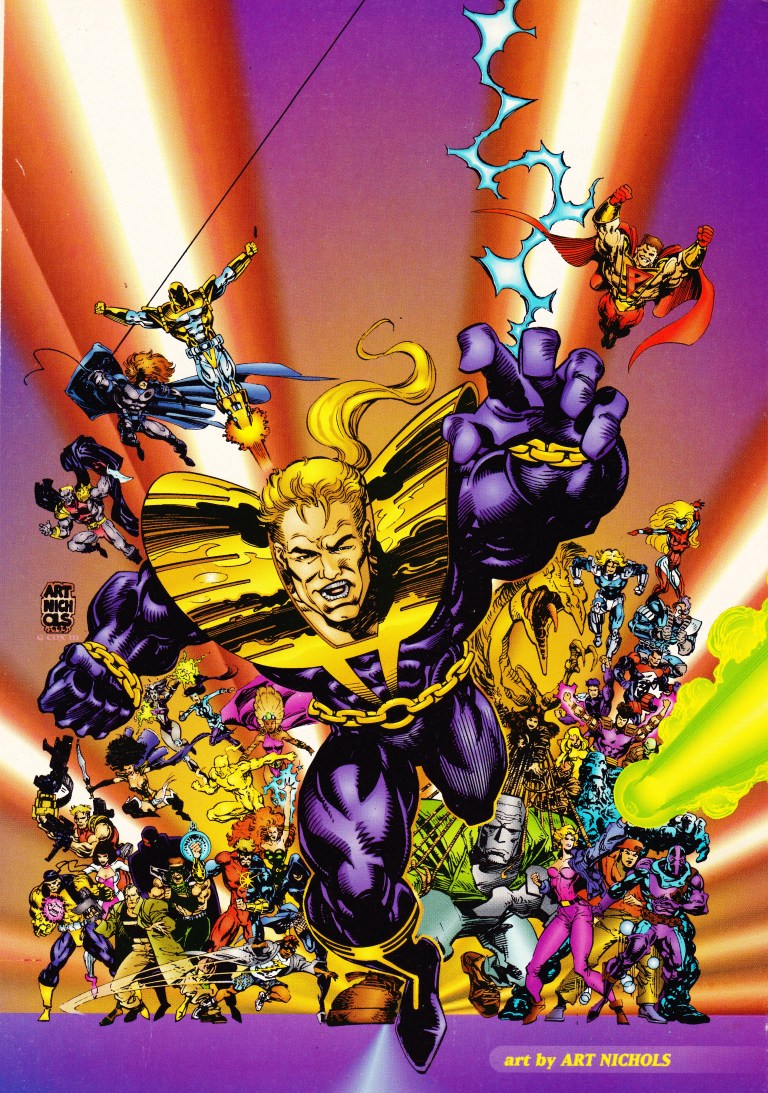
Last but not least, there is this great art of the Ultraverse characters done by Art Nichols at the rear of the comic book.
The best back cover of any superhero comic book of the 1990s!
Art Nichols’ work on the back cover is fantastic and timeless in my view. It’s great multi-character art that truly captures the spirit of the Ultraverse!
If you are going out to buy old comic books, I strongly recommend Ultraverse Premiere #0.
Thank you for reading. If you find this article engaging, please click the like button below and also please consider sharing this article to others. Also my fantasy book The World of Havenoris still available in paperback and e-book format. If you are looking for a copywriter to create content for your special project or business, check out my services and my portfolio. Feel free to contact me as well. Also please feel free to visit my Facebook page Author Carlo Carrasco and follow me at HavenorFantasy@twitter.com
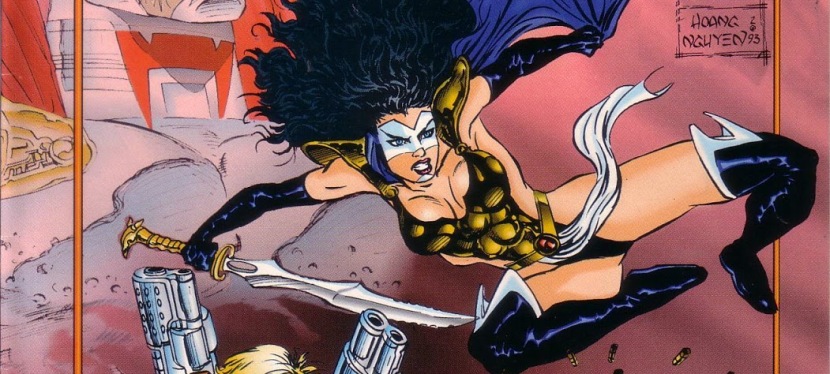
Solitaire in action in Solitaire #1 published in 1993 by Malibu Comics under their Ultraverse line of comic books.
The concept of vigilante figures taking the fight against crime alone backed with resources (in the form of weapons) is a long running tradition in superhero comic books. DC Comics has its iconic Batman doing lots of detective work and fighting criminals many times on his own. Similar stories were seen with the Punisher and Daredevil over at Marvel.
When Malibu Comics launched the Ultraverse line of superhero comics in 1993, they added variety into the big mix. They had their own parallel to Marvel’s Punisher and DC’s Batman in the form of Solitaire and they boldly launched a comic book series of the character.
Released in late 1993 with story by Gerard Jones and art by Jeff Johnson and Barb Kaalberg, Solitaire #1 introduced readers to Nicholas Lone who wears a purple-and-blue costume with mask and fights criminals as Solitaire. He’s not just a brave, tough guy who daringly goes against thugs. He’s is very talented with martial arts, acrobatics and weapon use.
The comic book begins when thugs working for a crime lord called the King are about to catch a helpless lady who gets saved by Solitaire. The hero easily outmaneuvers the bad guys and he proved to them that he really is hard to hurt.
At his headquarters, the King made it clear to readers that Solitaire has been a problem to him for some time already and feels bad when the hero disrupts his operation. Solitaire meanwhile prepares himself for the next move against the King by returning to his hideout (an old theater), doing some research by computer and coordinating with his contacts on the streets.
Regarding the quality of the comic book, I say the script is nicely paced as it does a good job introducing Solitaire to readers while still having spare spotlight for the King. Within twenty-five pages, the hero got clearly defined as a man of action as well as a person with a purpose. His fight against crime is defined by key parts of his past especially with the fact that his own father – Antone Lone – is a crime lord.
When it comes to super powers, Solitaire has very quick reflexes which makes him a hard target for armed thugs. He also has healing factor which works rapidly and gives him a major advantage over the bad guys. In fact, the presence of the healing factor (which works like that of Wolverine) makes Solitaire more daring and more willing to take risks engaging the bad guys with violence. He can get stabbed and his body can be shot with several bullets and still he will recover quickly to get the job done.
Solitaire is indeed super and yet there is something intriguing with his personality. Apart from being the son of a crime lord, Nicholas Lone’s acquisition of his powers is a painful mark on him personally. This was because his father gave him those powers as a result of his attempt to commit suicide. The powers are the result of the installation of nano-machines into his body.
Overall, Solitaire #1 is a good and intriguing read. It really comes with a flavor that makes it distinct from other superhero-versus-criminals stories and the introduction of Solitaire alone is worth the cover the price. If you can find copies of Solitaire #1 on the back issue shelves of the comic book stores, I recommend buying it as well as the other issues.
It’s too bad that the Ultraverse ended after Marvel Comics acquired Malibu Comics back in the 1990s because like Prime, Hardcase and Prototype, Solitaire is very unique and intriguing at the same time. In my opinion, Solitaire is the most defining crime fighter of the entire Ultraverse and it’s too bad stories featuring him are not too many.
Thank you for reading. If you enjoyed this article, please click the like button below and also please consider sharing this article to your fellow comic book geeks and Ultraverse fans. Also my fantasy book The World of Havenor is still available in paperback and e-book format for you to order.
Author’s Note: This article was originally published at my old Geeks and Villagers blog. What you read on this website was an updated and expanded version. In other words, this newest version you just read is the most definitive version.










 Author Carlo Carrasco