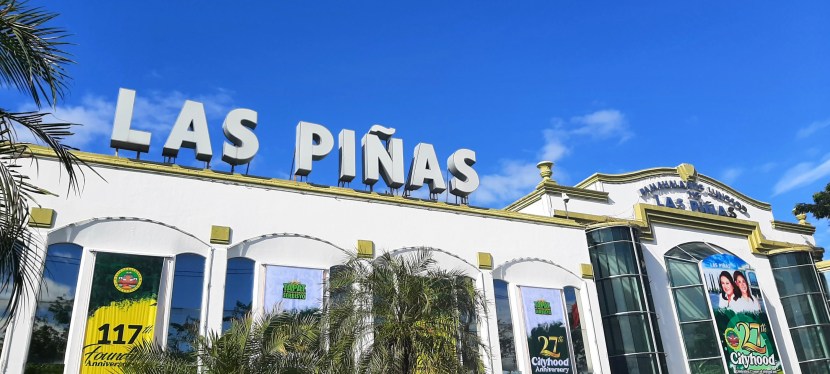
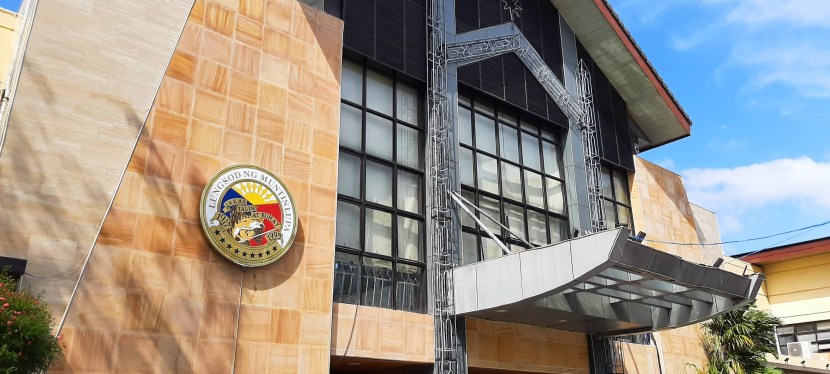
The City Government of Las Piñas recently announced via social media that Malacañang formally declared March 27, 2026, a special non-working day in the city in celebration of the cityhood anniversary as well as the founding anniversary.
To put things in perspective, posted below is the entire announcement by the City Government. Some parts in boldface…
Malacañang declared Las Piñas Day on March 27, 2026 as a Special Non-Working Holiday. This is in conjunction with the celebration of the 119th Founding Anniversary, and 29th Cityhood Anniversary of Las Piñas. Let’s celebrate our beloved City together!
The City Government’s social media post includes an image of the official signed document from Malacañang.
Let me end this piece by asking you readers: If you are a resident of Las Piñas City, what is your reaction to this development? How do you plan to spend the special non-working day of March 27? Are many people in your local community aware of the history of the city’s founding and cityhood?
For more South Metro Manila community news and developments, come back here soon. Also say NO to fake news, NO to irresponsible journalism, NO to misinformation, NO to plagiarists, NO to reckless publishers and NO to sinister propaganda when it comes to news and developments. For South Metro Manila community developments, member engagement, commerce and other relevant updates, join the growing South Metro Manila Facebook group at https://www.facebook.com/groups/342183059992673
It can be said that 2025 is indeed a very disappointing year for the Philippines as it attracted only $7.79 billion in terms of net inflows of foreign direct investments (FDI), according to a news report by the Manila Bulletin. The said figure is a drop of more than 17% compared with 2024 and it is recalled that the flood control corruption scandal of 2025 negatively affected the nation.
To put things in perspective, posted below is an excerpt from the news report of the Manila Bulletin. Some parts in boldface…
Net inflows of foreign direct investment (FDI) into the Philippines plunged to their lowest level in a decade—excluding the pandemic slump—as investors stepped on the brakes on injecting funds into the country.
The latest data from the Bangko Sentral ng Pilipinas (BSP) released on Tuesday night, March 10, showed net inflows of FDI stood at $7.79 billion for the full year of 2025, dropping 17.1 percent from the $9.4 billion recorded in 2024.
It bears noting that the 2025 performance marks a significant downturn, as full-year FDI was the lowest since the 2020 pandemic level of $6.82 billion.
Excluding the pandemic period, 2025 net FDI represents the lowest level in a decade since the $5.64 billion recorded in 2015. This contraction was a consistent trend throughout 2025, with cumulative annual growth remaining negative every month since January.
On a positive note, the final figure exceeded the country’s $7-billion full-year target.
According to the BSP, the overall decline in investments was largely driven by net debt instruments, or intercompany borrowings, which shrank by 27 percent to $5.27 billion from $7.22 billion in 2024.
Meanwhile, net equity capital, other than reinvestment of earnings, grew by 31.4 percent to $1.32 billion from $1.01 billion the previous year. Reinvestment of earnings also saw a modest expansion of 2.5 percent, reaching $1.2 billion.
For the full year, equity capital placements were primarily sourced from Japan, the United States (US), Singapore, and South Korea.
Investments were largely channeled into financial and insurance activities, manufacturing, and wholesale and retail trade.
In December 2025 alone, net inflows were recorded at $560 million, marking the lowest in three months since September 2025 at $316 million.
Robert Dan Roces, group economist at SM Investments Corp. (SMIC), said investors delayed their investments, particularly in December. He added that softer inflows likely reflect seasonality.
Looking ahead, Roces believes the ongoing military conflict in the Middle East could add a layer of uncertainty, triggering market volatility. Still, he sees a gradual rebound in 2026 on the back of improving global financial conditions.
“While the Iran conflict adds uncertainty through higher oil prices and market volatility, we still expect FDI to gradually recover in 2026, particularly in manufacturing, renewable energy (RE), and logistics, as global financial conditions ease and supply-chain diversification continues,” Roces said.
Let me end this post by asking you readers: What is your reaction to this recent development? Do you think the Philippines will be able to rebound strongly this year with foreign investors?
Recently in the progressive City of Muntinlupa, a motorcycle rider died when a tree fell down on him along National Road. As such, the City Government will provide assistance to the family of the victim and no less than Mayor Ruffy Biazon confirmed it, according to a Manila Bulletin news report.
To put things in perspective, posted below is an excerpt from the news report of the Manila Bulletin. Some parts in boldface…
Mayor Ruffy Biazon said the city government will provide assistance to the family of a motorcycle rider who was killed when a falling tree hit him on March 11.
“Lubos akong nakikiramay sa pamilya ng motorcycle rider na nasawi matapos mabagsakan ng puno sa National Rd. kagabi. Ang Pamahalaang Lungsod ng Muntinlupa ay nakikipag-ugnayan na sa kanyang pamilya para magbigay ng assistance at iba pang kinakailangang tulong sa abot ng ating makakaya (I extend my deepest condolences to the family of the motorcycle rider who died after being hit by a tree on National Rd. last night. The Muntinlupa City Government is already coordinating with his family to provide assistance and other necessary help to the best of our ability),” Biazon said.
“Kasabay nito, ongoing na rin ang masusing imbestigasyon tungkol sa insidente. Ipinag-utos ko rin ang inspection at agarang cutting o trimming ng mga puno sa mga lugar na maaaring magdulot ng panganib, para maiwasan ang kaparehong trahedya sa hinaharap. Maraming salamat din sa responders na agad tumulong para maalis ang natumbang puno (At the same time, a thorough investigation into the incident is also ongoing. I have also ordered the inspection and immediate cutting or trimming of trees in areas that may pose a danger, to prevent similar tragedies in the future. Many thanks also to the responders who immediately helped to remove the fallen tree).”
The Muntinlupa police reported that an acacia tree suddenly fell, directly hitting the northbound motorcycle rider and damaging two southbound vehicles.
The police identified the victim as Ronnie Cruz, 36, stockman, a resident of BF Homes International Village, Las Piñas. He suffered injuries and was brought to the Medical Center Muntinlupa (MCM) where he was declared dead on arrival by an attending doctor, the police said in a report.
Let me end this post by asking you readers: What is your reaction to this recent development? If you are a resident of Muntinlupa City, are you satisfied with the City Government providing assistance to the family of the victim? Do you think it is time for local authorities to closely examine large trees along the major roads to determine if they will fall down soon? When was the last time a significant trimming of trees in your local community happened?
For more South Metro Manila community news and developments, come back here soon. Also say NO to fake news, NO to irresponsible journalism, NO to misinformation, NO to plagiarists, NO to reckless publishers and NO to sinister propaganda when it comes to news and developments. For South Metro Manila community developments, member engagement, commerce and other relevant updates, join the growing South Metro Manila Facebook group at https://www.facebook.com/groups/342183059992673
South Korea is aiming high to attract more highly skilled professionals from around the world and it will soon introduce new visa programs for technicians and sector-specific workers, according to a news report by VnExpress. For insight, South Korea has a low birth rate and a rapid aging population.
To put things in perspective, posted below is an excerpt from the news report VnExpress. Some parts in boldface…
South Korea plans to expand eligibility for its “top-tier visa” for highly skilled foreign professionals and introduce new visa programs for technicians and sector-specific workers, part of broader efforts to address the country’s low birth rate and rapidly aging population.
Justice Minister Jung Sung-ho announced the measures at a press briefing on Tuesday, describing them as part of the government’s long-term immigration strategy looking toward the 2030s, according to Yonhap News Agency.
The top-tier visa is currently granted mainly to professionals working in eight advanced sectors, including semiconductors, artificial intelligence and robotics. Under the revised policy, eligibility will be expanded to include professors and researchers in science and technology fields.
The Justice Ministry said it developed the “2030 Immigration Policy Future Strategy” in response to declining birth rates and an aging population, as well as rapid changes in industrial and technological environments.
Authorities also plan to introduce a new visa program called the K-Core Visa (E-7-M), allowing international students graduating from Korean junior colleges to remain in the country for longer periods, The Korea Herald reported.
To address labor shortages in the care sector, the government will designate selected colleges in each region to specialize in training foreign caregivers.
The ministry also intends to launch a regional immigration package program aimed at encouraging foreign residents to live and work in areas experiencing population decline. The initiative will offer support such as employment and business information, social integration programs and childcare assistance to help foreign workers and their families settle in local communities.
Let me end this piece by asking you readers: What is your reaction to this development? Do you think the authorities in South Korea are carefully with the plans they came up with to attract more skilled foreign workers? Do you think the plan will result in a huge impact on the country’s population and demographics? Do you think South Korea has enough measures to prevent illegal immigration from happening?
With Maynilad’s daily water service interruptions still going on in Muntinlupa City, Mayor Ruffy Biazon formally wrote to the executives of the water concessionaire about the problem, according to a Manila Bulletin news report.
To put things in perspective, posted below is an excerpt from the news report of the Manila Bulletin. Some parts in boldface…
Mayor Ruffy Biazon took the problem of the daily water service interruptions in Muntinlupa to the top executives of Maynilad Water Services.
Muntinlupa customers of Maynilad have been experiencing daily water service interruptions since February.
In its latest advisory, Maynilad told Muntinlupa customers, “Some areas of Brgys. Alabang, Bayanan, Poblacion, Putatan and Tunasan, Muntinlupa City may experience low to no water supply starting March 14, 2026 at 4:00 pm until March 15, 2026 at 7:00 am. This is due to sudden changes in raw water quality caused by strong winds over Laguna Lake during the Amihan season, which required operational adjustments in our treatment facilities. We are currently managing the limited supply and will restore normal service as soon as conditions improve. Mobile water tankers are being deployed in affected areas to assist customers. We apologize for the inconvenience and thank you for your understanding.”
Biazon sent letters to Ramoncito Fernandez, Maynilad president and chief executive officer; and Christopher Jaime Lichauco, chief operating officer, telling them that “once again, Maynilad has failed its customers.”
He said that the water service interruptions have been happening despite the fact that Maynilad has two water treatment plants in Muntinlupa, located in Barangays Putatan and Poblacion.
The mayor is asking Maynilad for a meeting to explain the situation, present steps to prevent it from happening again, and give consideration to affected Muntinlupa customers.
Due to the water service interruptions, the Metropolitan Waterworks and Sewerage System Regulatory Office (MWSS-RO) imposed a penalty against Maynilad amounting to P42,569,790.85.
“Meanwhile, following the prolonged water service interruptions that occurred in the southern portion of the West Concession Area in February 2026, the MWSS RO conducted an investigation into the prevailing water supply conditions in the affected areas. Based on the evidence gathered, the MWSS RO found that Maynilad failed to meet its service obligation of providing an uninterrupted twenty-four (24)-hour supply of water at a minimum pressure of seven (7) pounds per square inch (psi) to 98,331 customers within the Putatan Water Treatment Plant and Poblacion Water Treatment Plant Supply Zones,” Maynilad said in a press statemetn.
It said the penalty will be implemented in the form of bill rebates equivalent to P432.92 per affected water service connection, to be reflected in customers’ water bills by April this year.
Let me end this post by asking you readers: What is your reaction to this recent development? If you are a resident of Muntinlupa City, were you affected by the ongoing water service interruptions? If you were affected, how were you able to solve water-related problems in your household? Where do you get water now?
For more South Metro Manila community news and developments, come back here soon. Also say NO to fake news, NO to irresponsible journalism, NO to misinformation, NO to plagiarists, NO to reckless publishers and NO to sinister propaganda when it comes to news and developments. For South Metro Manila community developments, member engagement, commerce and other relevant updates, join the growing South Metro Manila Facebook group at https://www.facebook.com/groups/342183059992673
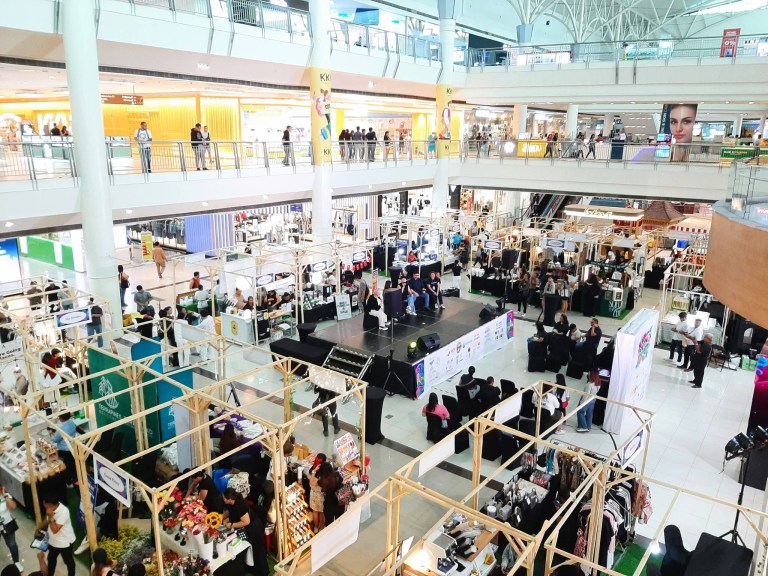
Southie Fest, a special event organized by South Snippets and its strategic partners, formally opened yesterday at the Carousel area of Festival Mall in Filinvest City, Alabang. A showcase of varied products and services offered by mostly business joints of the south, Southie Fest will last until Sunday (March 15).
I personally witnessed the opening of Southie Fest. There was a panel discussion wherein three local entrepreneurs shared insight about their respective businesses, how they managed their enterprise through the years, and what they learned from the many local communities of the south. South Snippets co-founder Donna Santiago was with them and she also shared insight about the organization’s drive of promoting businesses and connecting them with people of the South. Santiago confirmed that she is organizing South Snippets full-time.
The panel discussion held on the first day of Southie Fest inside Festival Mall. From left to right are the host, the three local entrepreneurs and South Snippets co-founder Donna Santiago.
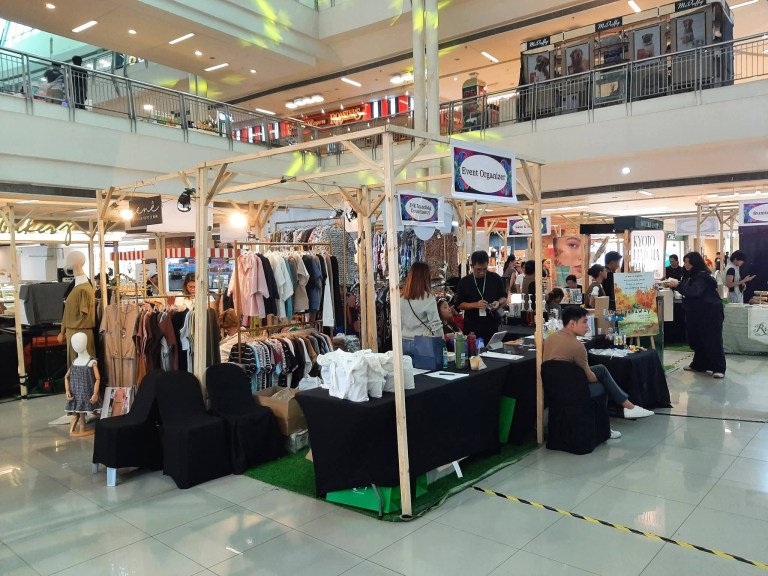
Southie Fest is at the 2nd floor of Festival Mall in front of the old Carousel.
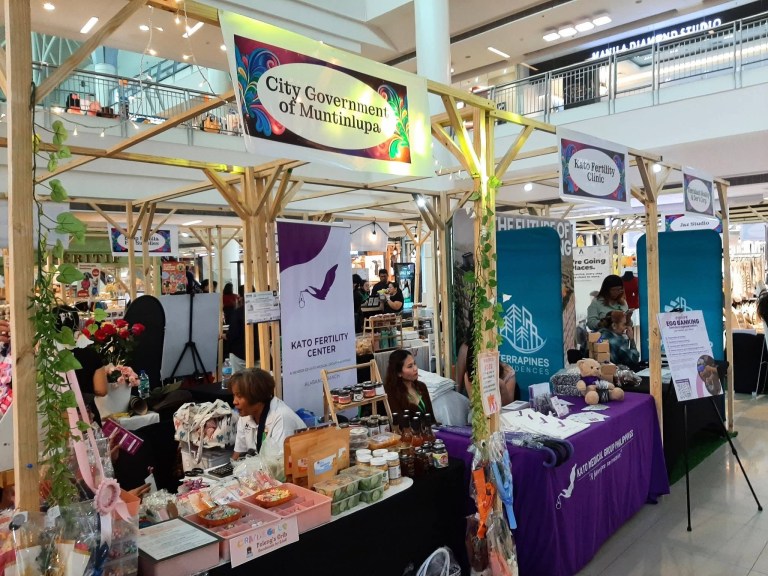
A few of the many booths/stalls that you can visit to see what they are offering. If you make it there, go around to explore.
I had a very tasty avocado shake there at Southie Fest. This one costs P120 and it is of very good quality.
Within the Carousel area – 2nd floor specifically – are lots of booths/stalls of varied local businesses offering customers a wide range of selections of food, beverages, accessories, collectibles, clothing, gift items, handcrafted items, services and a lot more. You really have to be there to truly discover them.
Remaining schedule of activities for March 14 and 15, 2026
Today, a “Southie Community Day” session will take place which will emphasize he community members and local digital trendsetters. It will help people understand who the Southie influencers and content creators are and what they do to inspire the community as they promote their respective platforms. There will be Q&A interviews, interactive games, and meet-and-greet opportunities.
On Sunday, the “Southie Family Day” will wrap up the event. Participants can dive into a variety of interactive workshops, creative classes, and community workout sessions. There will lots of things or experiences that participants can discover, and even learn from.
Southie Fest is a special showcase by South Snippets®, with support from JNE Branding Consultancy, Festival Mall, Aly Olaez, Neil de Belen Studios, Nextgen Events Management, Design Specs Printing Services, Carlo Suzara: Host & Content Creator, Terraland Pines, Kato Fertility Center, and the City Government of Muntinlupa.
It is also supported by Mama Lou’s Group and Mama Lou’s Italian Kitchen, Schola de Vita, MEgorgeous, Let’s Glow Aesthetics, Lando’s Bar Las Piñas, Manna & Muse, BetterLife Yoga Studio, Lindy Hop Philippines, Invitations by Ten Arts & Gift Store, BloomsBrewsMNL, Be Club Lifestyle Hub, SOS Children’s Villages Pilipinas, Kalye Negosyo, and Southies Strays.
Southie Fest media partners are labang Bulletin, TigaSouthKaba, WhenInManila.com, Manila Bulletin, Manila Times, Manila Standard, Life In Tagaytay, Life In Alfonso, Chef Beng, Lowkey Lakwatsera, The Quiet Diner, Southieto, Tara Tagaytay, Wild and Sassy Blog, Dyan sa South, Chizbun Eats, The Reel B, Mauriz Coronel, and Mini Shoots.
The event organizer booth and more nearby.
For those of you reading this, I encourage you to visit Festival Mall to attend Southie Fest while it is still going on.
For more South Metro Manila community news and developments, come back here soon. Also say NO to fake news, NO to irresponsible journalism, NO to misinformation, NO to plagiarists, NO to reckless publishers and NO to sinister propaganda when it comes to news and developments. For South Metro Manila community developments, member engagements, commerce and other relevant updates, join the growing South Metro Manila Facebook group at https://www.facebook.com/groups/342183059992673
Another step towards a nuclear-powered Philippines happened as the energy giant Meralco signed a memorandum of understanding (MOU) with Export-Import Bank of Korea (KEXIM) and Korea Hydro & Nuclear Power (KHNP) for a strategic partnership on the development of nuclear energy projects in the country, according to a BusinessWorld news report.
To put things in perspective, posted below is an excerpt from the news report of BusinessWorld. Some parts in boldface…
MANILA ELECTRIC CO. (Meralco) has signed a memorandum of understanding (MoU) with Korea Hydro & Nuclear Power (KHNP) and the Export-Import Bank of Korea (KEXIM) to collaborate on the development of nuclear energy projects in the Philippines.
The partnership aims to leverage South Korean expertise to evaluate the feasibility of nuclear power through a multi-faceted approach.
Under the agreement, the three organizations will conduct joint discussions on reactor design and engineering, exchange technical and regulatory information, and work to “strengthen the Philippines’ nuclear legal and institutional frameworks.”
The scope of the MoU also covers early-stage project development, including “public acceptance initiatives, project planning, and site selection studies.”
The companies will focus on business and financial modeling, with KEXIM specifically exploring “potential financing structures and credit facilities” for Meralco’s prospective projects.
Meralco Chairman and Chief Executive Officer Manuel V. Pangilinan highlighted the strategic importance of the collaboration, saying “Partnering with KHNP and KEXIM gives us access to proven global expertise and enables us to study technology, business models, and financing options with greater depth. This MoU marks an early but consequential step in this important process.”
He also said that nuclear energy is a critical component of the company’s long-term strategy to ensure energy security.
“Nuclear energy is a way to diversify our portfolio and reinforce energy security, while offering a degree of insulation from fuel market fluctuations,” he said.
He added that Meralco’s initiative is “complementary to the Philippine government’s efforts to lay the groundwork for its nuclear power program” as the utility provider assesses how the technology can best contribute to its future operations.
KHNP, a subsidiary of Korea Electric Power Corp., is currently the largest power generation company in South Korea, while KEXIM serves as the nation’s state-owned official export credit agency.
Meralco is the country’s biggest private electric distribution utility, serving 39 cities and 72 municipalities. It also has interests in power generation through wholly owned units and equity stakes.
Let me end this post by asking you readers: What is your reaction to this recent development? Now that the MOU has been signed, do you feel more confident about the future of a nuclear-powered Philippines? Do you think new nuclear power facilities in the country will be realized in your lifetime?
For more South Metro Manila community news and developments, come back here soon. Also say NO to fake news, NO to irresponsible journalism, NO to misinformation, NO to plagiarists, NO to reckless publishers and NO to sinister propaganda when it comes to news and developments. For South Metro Manila community developments, member engagement, commerce and other relevant updates, join the growing South Metro Manila Facebook group at https://www.facebook.com/groups/342183059992673
Having been to the Subic Bay Freeport Zone many times already, the former US Naval base has been a strong engine for tourism, commerce and investments for the Philippines over the decades. Each time I visited, there was also something new to discover and the economic modernization happened gradually.
In a serious bid to enhance investments and accelerate the growth of tourism, the Subic Bay Metropolitan Authority (SBMA) announced that it has teamed up with the Leechiu Property Consultants (LPC) and their officials had important talks recently.
To put things in perspective, posted below is an excerpt from the official announcement of the SBMA. Some parts in boldface…
Subic Bay Metropolitan Authority (SBMA) officials met with executives of Leechiu Property Consultants (LPC) to explore collaborative initiatives to accelerate tourism growth and investment promotion here.
Led by SBMA Business and Investment Group’s Senior Deputy Administrator (SDA) Renato Lee III, discussions focused on expanding high-impact tourism segments including cruise ship tourism, wreck diving, forest trails, and Meetings, Incentives, Conferences, and Exhibitions (MICE) activities.
David Lee-Chiu, CEO of Leechiu Property Consultants highlighted Subic Bay’s deep-water port and strategic location as key advantages in positioning the Freeport as a competitive cruise ship destination in Luzon.
Lee-Chiu also noted that increased cruise calls would drive growth across hospitality, retail, transport, and local enterprises.
Meanwhile, SBMA Chairman and Administrator Eduardo Jose L. Alino also mentioned “wreck diving” as a strong niche market, with Subic Bay’s historic shipwrecks that continue to attract both domestic and international divers.
Also discussed was the development and promotion of forest trails and eco-tourism experiences, recognizing Subic Bay Freeport’s protected forest areas as prime assets for sustainable tourism, nature-based recreation, and eco-adventure activities.
Let me end this post by asking you readers: What is your reaction to this recent development? If you have visited the Subic Bay Freeport Zone over the past three months, how was your stay and did you find the place worth revisiting? Do you think the SBMA can still achieve so much more in terms of tourism growth and business?
Even as the United States is busy working alongside Israel on the war against the Islamic terrorist state of Iran, the Trump administration announced that it will launch tariff investigations on several countries including trade partners like Japan, according to a news report by Kyodo News. The probes are meant to find out if unfair trading practices exist.
To put things in perspective, posted below is an excerpt from the Kyodo News report. Some parts in boldface…
U.S. President Donald Trump’s administration said Wednesday it will launch tariff investigations into what it sees as unfair practices by China, Japan and over a dozen other American trading partners.
According to U.S. Trade Representative Jamieson Greer, the move is intended to “uncover a variety of unfair trading practices related to excess capacity in production” in the manufacturing sector, and replace Trump’s sweeping tariff regime that was invalidated by the Supreme Court in February.
“Our view is that key trading partners have developed production capacity that is really untethered from the market incentives of domestic and global demand,” Greer told reporters.
The other trading partners facing the investigations, carried out under Section 301 of the Trade Act of 1974, are the European Union, Bangladesh, Cambodia, India, Indonesia, Malaysia, Mexico, Norway, Singapore, South Korea, Switzerland, Taiwan, Thailand and Vietnam, Greer said.
The statute, which allows the U.S. government to impose tariffs in response to a foreign country’s alleged unfair practices, was a favorite tool of Trump for justifying higher tariffs on Chinese imports when he started a trade war with Beijing during his first term as president.
After the U.S. top court on Feb. 20 struck down a large chunk of Trump’s far-reaching tariff agenda as imposed under the International Emergency Economic Powers Act, his administration introduced a new 10 percent global duty.
However, the new 10 percent surcharge, relying on a different legal framework, can only last 150 days unless Congress approves an extension.
Greer said the Trump administration seeks to complete the investigations as quickly as possible and prepare for new Section 301 tariffs within the 150-day period.
The statute requires consultations with the governments of the targeted trading partners before tariffs can be imposed.
Let me end this piece by asking you readers: What is your reaction to this development? Do you think the United States is doing the right thing with the multiple trade investigations? How do you think the Trump administration will adjust its tariff policy once the 150-day period expires?
As many countries around the world are already struggling with the economic disruptions and the spike in oil prices as a result of the ongoing chaos in the Middle East, Japan has decided to release its own oil reserves and it could happen as early as Monday (March 16), according to a news report by Kyodo News.
To put things in perspective, posted below is an excerpt from the news report of Kyodo News Some parts in boldface…
Japan will begin drawing down its oil reserves as early as next Monday to deal with a possible sharp rise in gasoline and other petroleum product prices amid the Middle East conflict, Prime Minister Sanae Takaichi said.
Takaichi told reporters on Wednesday that Japan will release 15 days’ worth of reserves held by the private sector and then one month’s worth of government-held oil without waiting for a decision coordinated by the International Energy Agency.
It will be the first time Japan has released its government oil reserves individually, not in an internationally coordinated way, since the stockpiling of oil began in 1978.
Japan’s dependency on the Middle East for crude oil is “prominently high” compared with other countries and imports are expected to “significantly drop late this month or later,” necessitating measures to prevent a disruption to the supply of gasoline and other petroleum items, Takaichi said.
Citing the possibility that the average price of domestic retail gasoline could surpass 200 yen ($1.26) per liter, Takaichi also said she aims to keep the price at around 170 yen by utilizing a government fund.
The price of gasoline hit as low as 154.70 yen in mid-January but rose to 161.80 yen per liter as of Monday, according to industry ministry data.
“We will flexibly review the support measures to ensure continuous relief for the public even if the (Middle Eastern) situation is prolonged,” Takaichi said.
Japan imports more than 90 percent of its oil from the Middle East, making it highly vulnerable to the effective closure of the Strait of Hormuz, which has prevented the transportation of oil and gas from suppliers in the Persian Gulf, after the U.S. and Israel attacked Iran late last month.
As of the end of December, Japan had 470 million barrels of oil reserves equivalent to 254 days of domestic consumption, of which 146 days’ worth were government-owned, 101 days held by the private sector, and the remainder jointly stored with oil-producing countries.
Let me end this piece by asking you readers: What is your reaction to this development? Do you think Japan made the right decision to release its oil reserves good for fifteen days? Do you think Japan will be able to find new and alternative sources of oil so that it can cut its reliance on Middle East oil?