A Look Back at Amazing Spider-Man #129 (1974)

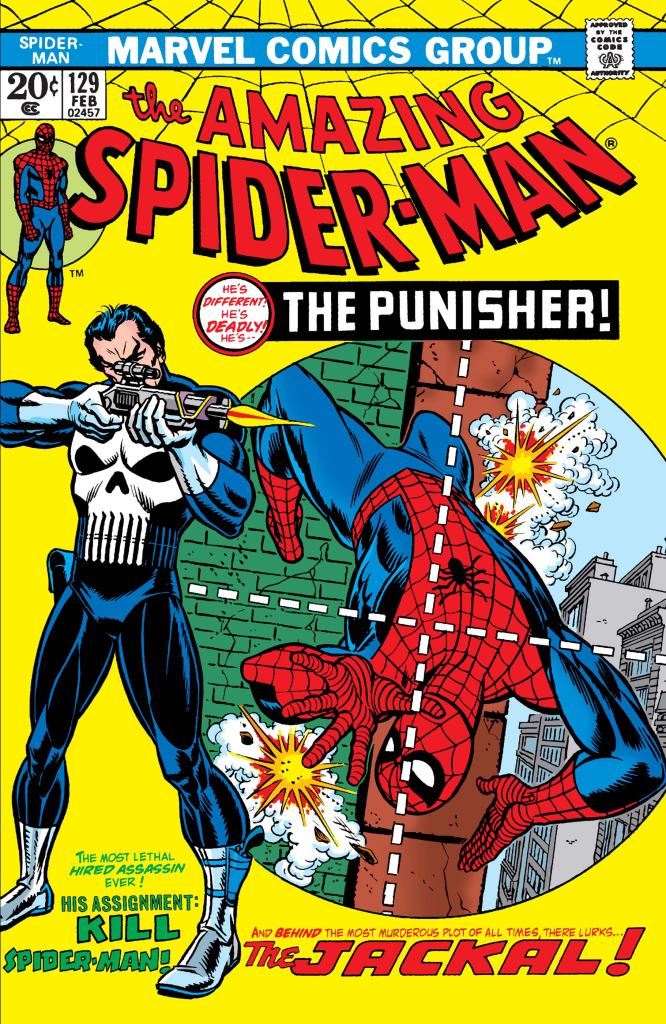
Welcome back superhero enthusiasts, 1970s arts and culture enthusiasts, Marvel Comics fans and comic book collectors! Today we go back to the year 1974 to examine a highly significant tale from Marvel Comics’ shared universe – the first appearance of the Punisher and his first-ever encounter with Spider-Man.

To put things in perspective, Punisher’s literary debut was told within the Amazing Spider-Man comic book series and it happened not too long after the legendary tragedy of Gwen Stacey. During the 1970s, Hollywood made and released several action movies and crime thrillers that were violent, gritty and highlighted vigilantes and assassins. Some of that influence somehow made it into Marvel’s shared universe which was symbolized creatively through the Punisher who debuted as an assassin.

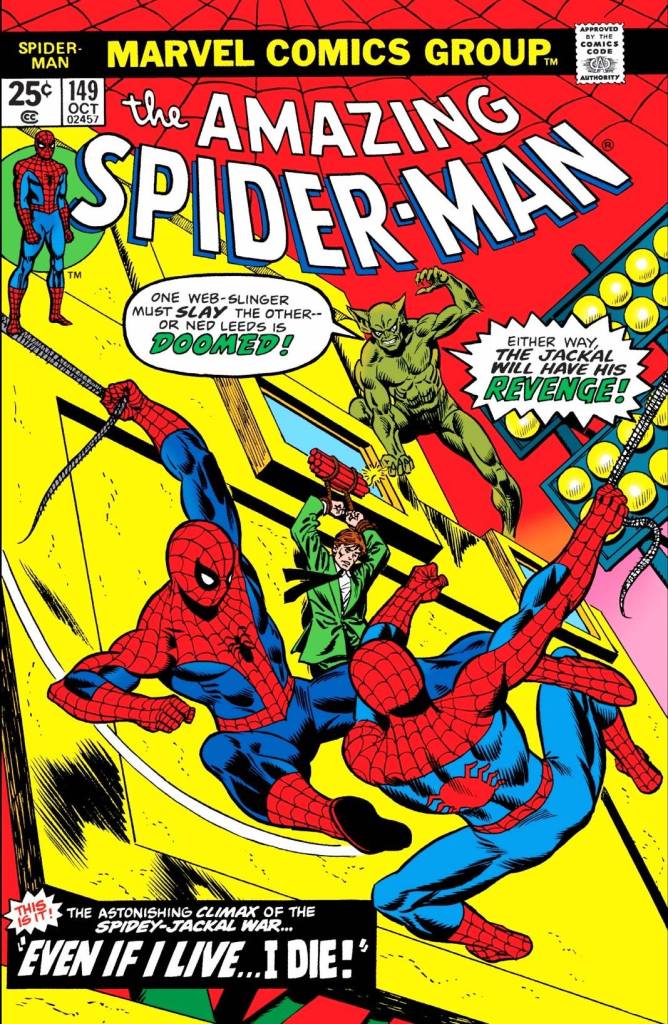
With those details laid down, here is a look back at Amazing Spider-Man #129, published in 1974 by Marvel Comics with a story written by Gerry Conway and drawn by Ross Andru (the same creative duo behind Superman vs. The Amazing Spider-Man crossover).

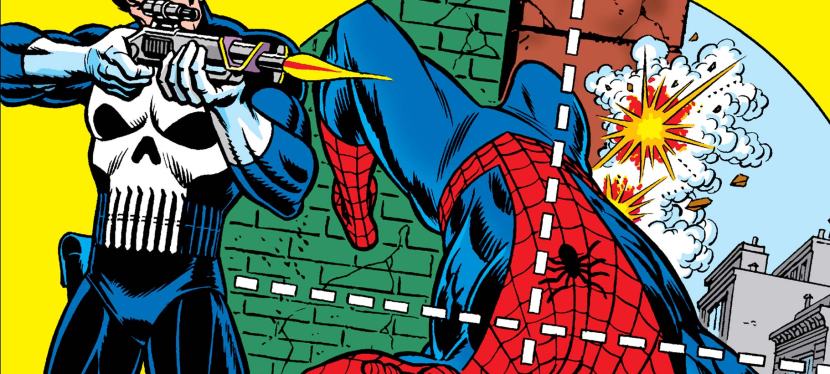
The cover.

Early story

The story begins inside a private facility an assassin wearing black with a huge skull on his upper body heavily damages a solid statue of Spider-Man using a powerful rifle. This impresses the hideous villain called the Jackal who tells him that if he does well with the real Spider-Man, he would have performed a great service for the world. Knowing he impressed the Jackal, the Punisher states that he will only kill those who deserve killing and he expresses his belief that the webslinger deserves to die.

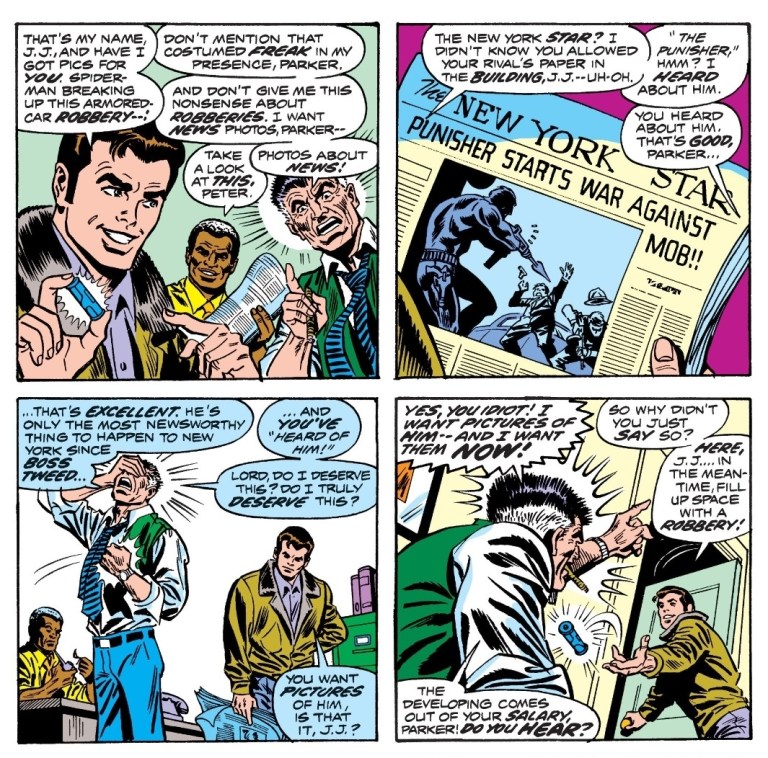
Elsewhere, Spider-Man swings into action and successfully stops an armed robbery from happening. Along the way he managed to capture photographs, changes into his civilian clothes and enters the Daily Bugle’s office ready to submit the roll of film as Peter Parker. Unfortunately, his superior J. Jonah Jameson disregards Parker’s submission and points out that the Punisher made waves with New York’s readers via the Bugle’s competitor The New York Star. For Jameson, the Punisher is only the most newsworthy thing to happen to New York and tells Parker he wants photos of the assassin…

Quality

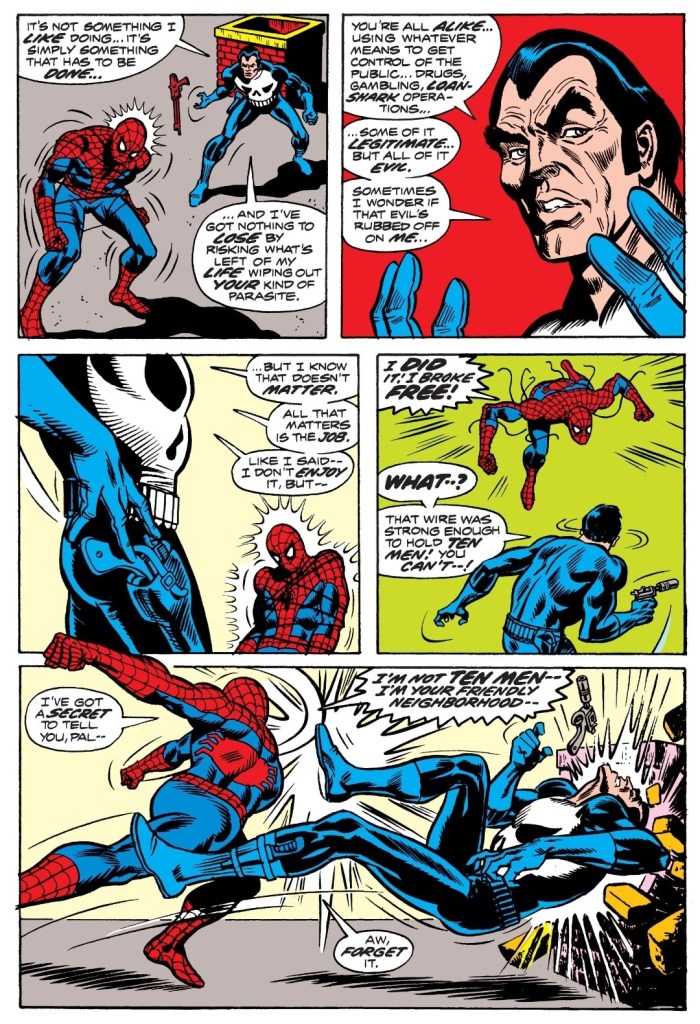
This is a scene from the first of two encounters between Spider-Man and the Punisher who was introduced as an assassin.

To make things very clear about storytelling without spoiling plot details, this is a tale about intrigue and the darker side of society that involves vigilantes and murdering. The Punisher here did not debut as a crime-busting vigilante but rather an assassin who accepts assignments from clients as long as the jobs fall in line with his personal philosophy that focuses on taking the lives of those who deserved to be killed. That being said, it is clear that Hollywood’s vigilante flicks of the 1970s influenced the presentation and I can say that whenever the story focuses on the Punisher, there definitely is a grim tone which contradicts the tone of Spider-Man’s scenes.

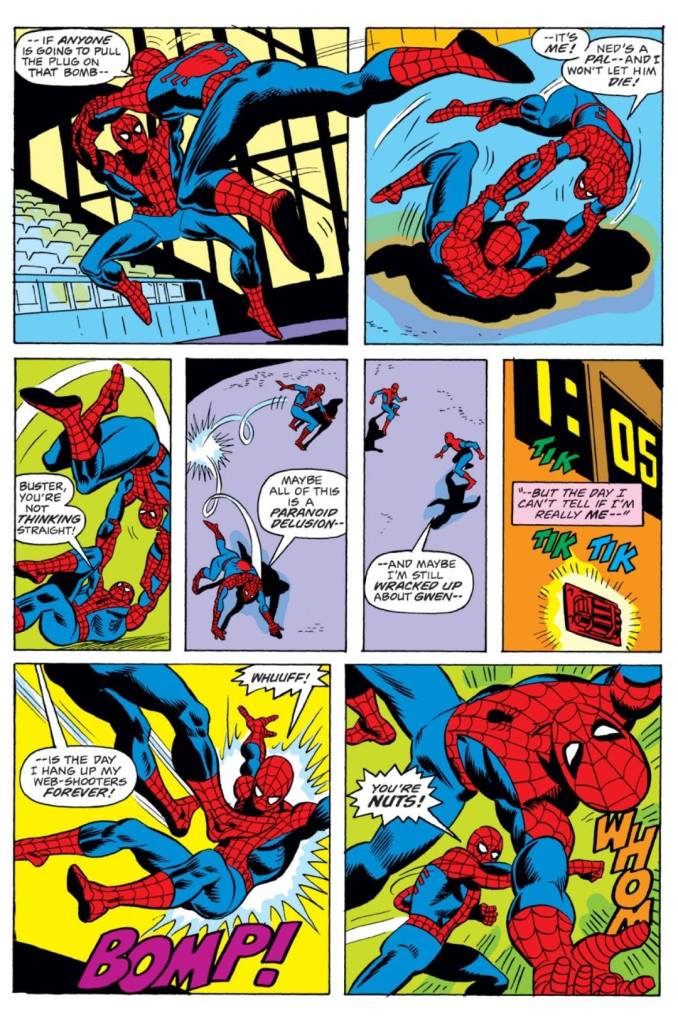
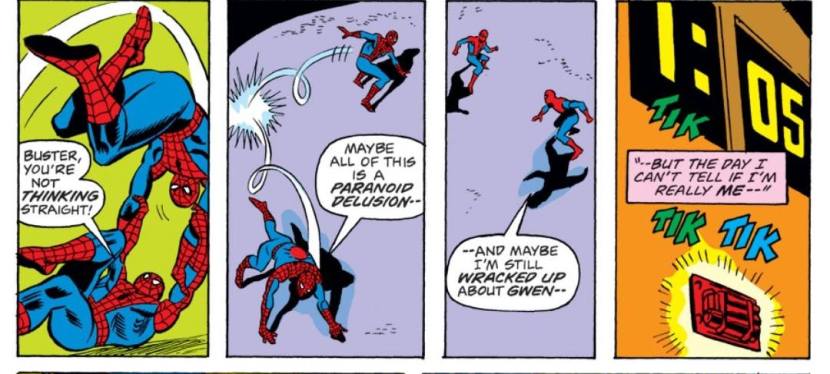
Spider-Man here continues to struggle somewhat with his personal life having recently lost Gwen Stacey while remaining disturbed about the identity of the Green Goblin. The webslinger also has to live with the heavy situation in which a lot of people in New York were convinced that he killed Norman Osborne which was the result of his own boss’ handling of the Daily Bugle. These elements along with his civilian involvement with his newspaper creatively added to the build-up of Spider-Man’s eventual encounters with the Punisher. The build-up was structured nicely and the pay-off was worth it.

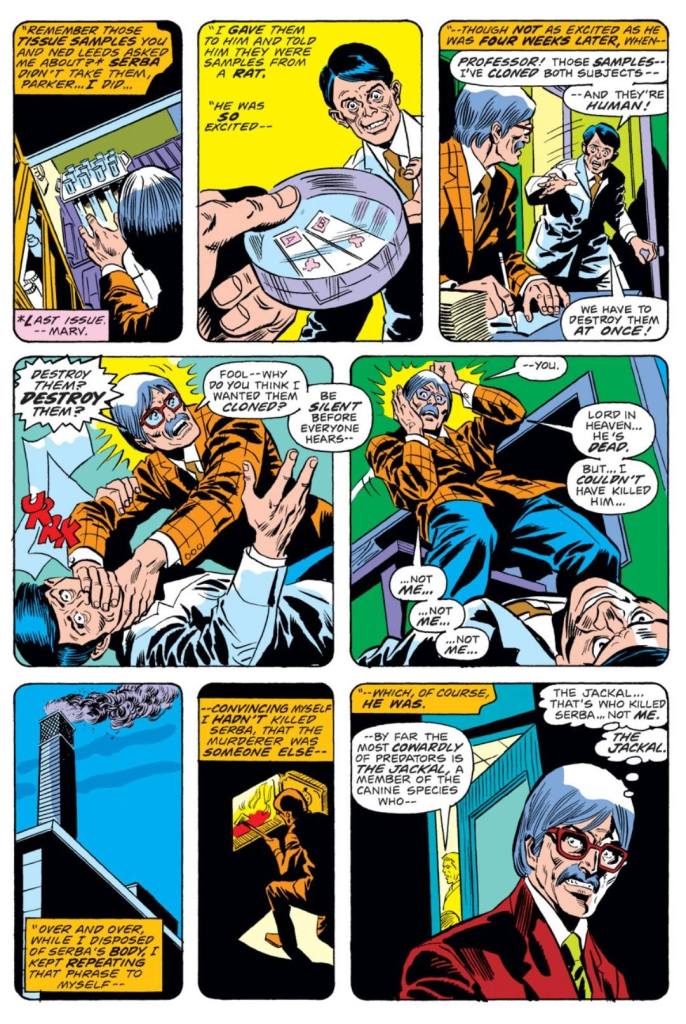
There was also the introduction of Jackal. While he has a hideous appearance, his participation was more about scheming than action which contrasted him with the Punisher. For the newcomers reading this, Jackal is actually Miles Warren in a more monstrous form. From this comic book, it was clear that Jackal was created to be a recurring super villain for Spider-Man and this was strongly executed in the first Clone Saga of 1975 and the controversial Clone Saga of the 1990s.

Going back to the Punisher, he symbolically uses guns with designs that were more grounded in reality (inspired by real-life guns in looks) instead of taking influence from science fiction. As an assassin living with a strong code, the Punisher is truly determined to eliminate Spider-Man whom he even referred to as a murderer. The perception of Spider-Man as a criminal on the part of the Punisher clearly reflected the defamation caused by the Daily Bugle on the webslinger. Gerry Conway established the assassin to be a strong believer in fighting evil by using violence and killing.

The build-up of the Punisher is very solid and the pay-off in the form of battles with Spider-Man is tremendous and very satisfying to read. There is a lot of action to enjoy here and most notably Gerry Conway maintained a strong narrative throughout.

Conclusion

Have you ever worked in a newspaper before?

I can say out loud that Amazing Spider-Man #129 (1974) is truly a great read and a true illustrated literary classic of Marvel Comics. This tale alone added a touch of darkness and grit (in the form of vigilante and assassins cultures) into the Spider-Man legacy. Apart from its status as a comic book classic, this one paved the way for the rise of the Punisher in terms of more comic book appearances and the publishing of new comic book series featuring him. While the Punisher’s legacy as a killer is obviously not something worth believing in, Marvel Comics took the risk of having him as one of their primary characters in the decades that followed. This particular story is so significant, Marvel Comics revisited it with What If #58 (1994). Check out my other Punisher-related retro reviews by clicking here, here, here, here and here.

Overall, Amazing Spider-Man #129 (1974) is highly recommended!

+++++

Thank you for reading. If you find this article engaging, please click the like button below, share this article to others and also please consider making a donation to support my publishing. If you are looking for a copywriter to create content for your special project or business, check out my services and my portfolio. Feel free to contact me with a private message. Also please feel free to visit my Facebook page Author Carlo Carrasco and follow me on Twitter at  @HavenorFantasy as well as on Tumblr at https://carlocarrasco.tumblr.com/ and on Instagram at https://www.instagram.com/authorcarlocarrasco
A Look Back at Robin III #3

Disclaimer: This is my original work with details sourced from reading the comic book and doing personal research. Anyone who wants to use this article, in part or in whole, needs to secure first my permission and agree to cite me as the source and author. Let it be known that any unauthorized use of this article will constrain the author to pursue the remedies under R.A. No. 8293, the Revised Penal Code, and/or all applicable legal actions under the laws of the Philippines.

Before I start this retro comic book review of Robin III #3, let me explain that the illustrator of the comic book, Tom Lyle, passed away last November over health-related reasons. Before dying, he had a surgery in October 2019 to remove a blood clot in his brain and subsequently fell into a coma. Apart from drawing comics, Tom Lyle was a professor of art at Georgia’s Savannah College of Art and Design (SCAD). For a look at Lyle’s expertise, watch the video from 2017 below.

When it comes to the comic book industry, Lyle started his career with AC Comics and Eclipse Comics back in the 1980s. In 1988, he worked on the art of Starman for DC Comics and went on to work on the company’s other properties and played a major role with the publishing of the three mini-series featuring Batman’s sidekick Robin (Tim Drake specifically).

After leaving DC Comics, he joined Marvel Comics as one of their illustrators on the Spider-Man monthly series. He quickly got involved in the Maximum Carnage crossover and made bigger waves with Spider-Man readers with the Clone Saga. Lyle is widely credited for designing the Scarlet Spider. With regards to his death, Marvel Comics published online a tribute for him.

Now that the short history lesson is over, let’s take a look back at Robin III #3 published by DC Comics in 1993 with a story by Chuck Dixon and art by Tom Lyle.

Cover
The cover.

Early story

The story begins in school where Tim Drake/Robin gets confronted by his superior who noticed the bruises he got. As Tim tries to keep his secrets, the superior Ms. Hollingsworth knows that he was cared for by Bruce Wayne (Batman) while his father was in a coma. She also knows that he lives on a property bordering the estate of Wayne. She makes clear that he can speak openly to her and Tim simply denies that Bruce would never hit him. He states: “An upperclassman…a senior…I think…big kid.”

Eventually the meeting ended and Tim leaves struggling over thinking about the complications he is experiencing with his double life as a student and as a crime fighter. Since he cannot get involved with Batman and Alfred, he spends some time with Harold (who was so busy working on a machine) and eventually goes home. His father notices Tim’s bruises and states that he spends too much time at Wayne’s. This leaves Tim more conflicted within.

Elsewhere, a muscular man called Sir Edmund easily beats up his loyal followers in a bout of combat. His assistant Lynx arrives and informs him that their turf is in danger with the arrival of Russians with KGBeast involved.

In the evening, Robin meets the Huntress and start their next mission…

Quality

13
Hard action with a smooth flow of sequence by Tom Lyle.

For a story set within the realm of Batman and, at the same time, does not have Batman at all, this Robin-centered comic book is well written and engaging. To say the least, showing Tim Drake struggling with his civilian life and crime-fighting life made Robin a literary symbol about the false maturity that youth in real life often experience. That false maturity is nicely portrayed with the superhero aesthetics and fantasy elements.

Quite predictably, Robin performs detective work and analyzes crime situations like Batman only this time, he gets involved with the Huntress (note: this mini-series carries the storyline title of “Cry of the Huntress”) to find out more answers and solve the crime problem. Being a product of the early 1990s, it is no surprise that the story has fictional portrayals about the Russians (with KGBeast leading the so-called invasion of the city) and even mentioning Afghans.

14
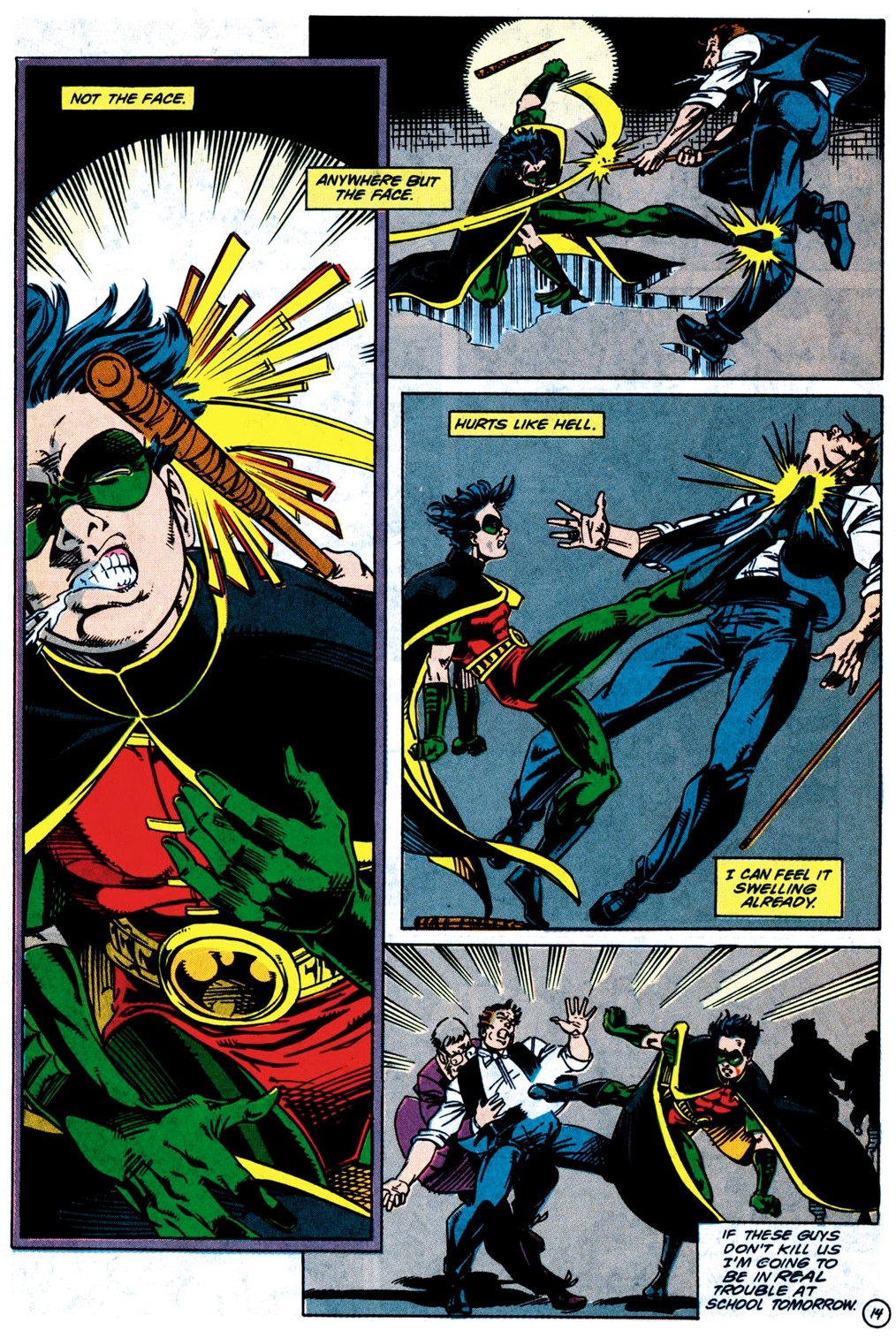
Hurting Robin on the head led to hard reactions.

Apart from the storytelling, the art by Tom Lyle here remains good to look at. Each scene, whether is it a talking scene or an action scene, looks good and Lyle has a nice touch on drawing facial expressions. When it comes to the spectacle, Lyle really shows how good he is with drawing hard-hitting physical action. I should also state how smooth the sequencing of action is drawn by him.

Conclusion

16
Robin and the Huntress make an odd crime-fighting duo.

To make things clear, Robin III #3 is the first-ever Tom Lyle-drawn comic book I ever bought and read. By today’s standards, the comic book is still fun to read and it is compelling enough to make readers interested to read more of the mini-series. However, if seeing more of Robin fighting crime by himself is your type of Robin story, then this may not be compelling for you.

If you are seriously planning to buy an existing hard copy of Robin III #3, be aware that as of this writing, MileHighComics.com shows that the near-mint copy of the regular edition and the newsstand edition of the direct version costs $4 and $6 respectively. Meanwhile, the near-mint copy of the bagged edition and the unbagged edition of the deluxe version costs $4. To be clear, the deluxe version of Robin III #3 in bagged form comes with a moving cover, a second reversible cover and additional artwork.

Overall, Robin III #3 is recommended.


Thank you for reading. If you find this article engaging, please click the like button below and also please consider sharing this article to others. If you are looking for a copywriter to create content for your special project or business, check out my services and my portfolio. Feel free to contact me as well. Also please feel free to visit my Facebook page Author Carlo Carrasco and follow me at HavenorFantasy@twitter.com