In what is clearly a bid to enhance tourism, investments and trade, the Department of Foreign Affairs (DFA) announced that Chinese nationals are being granted visa-free entry into the Philippines and they are allowed to stay up to fourteen days, according to a GMA Network news report.
To put things in perspective, posted below is an excerpt from news report of GMA News. Some parts in boldface…
The Philippines is granting visa-free entry to Chinese nationals starting January 16 in its bid to increase Chinese trade, investments and tourists, the Department of Foreign Affairs said Thursday.
Under the new policy, Chinese nationals may enter the Philippines without the requirement of obtaining a visa for a stay of up to 14 days.
“This is in line with the President’s directive to facilitate trade, investments, and tourism, as well as strengthen people-to-people exchanges between the Philippines and China,” the DFA said in a statement.
Such visa-free entry arrangement will be in effect for one year and will be reviewed accordingly before it expires.
The visa-free privilege will be valid for entry only through the Ninoy Aquino International Airport (NAIA) in Metro Manila and the Mactan-Cebu International Airport (MCIA) in Cebu.
Upon arrival, Chinese nationals need to present a passport valid for at least six months beyond the intended stay, confirmed hotel accommodation/booking, and a return or onward ticket to the next country of destination.
“Chinese nationals traveling to the Philippines strictly for tourism or business purposes may avail of the new visa-free entry privilege,” the DFA said.
However, the DFA said visas (cannot) be extended beyond the allowable 14-day stay and is non-convertible to any other type of Philippine visa category.
For added context about the potential risks that come with attracting Chinese tourists, watch the video below.
Let me end this post by asking you readers: What is your reaction to this recent development? Do you think this new policy by the national government is the right move even though there is tension between Communist China and the Philippines? Does this new policy make the Philippines look very desperate to attract money from Chinese visitors? Are you concerned that criminal activities here in the Philippines will get worse as more Chinese tourists enter the country?
Japanese Prime Minister Sanae Takaichi met with Italian Prime Minister Giorgia Meloni and they agreed to cooperate with each other on enhancing economic security, according to a report by Kyodo News. Meloni is on her first official visit to Japan since taking office in 2022.
For the newcomers reading this, Japan is currently dealing with the aggression of Communist China not only diplomatically but also economically. Prime Minister Takaichi will soon meet US President Donald Trump in America.
To put things in perspective, posted below is an excerpt from the news article of Kyodo News. Some parts in boldface…
Japanese Prime Minister Sanae Takaichi and her Italian counterpart Giorgia Meloni agreed Friday to cooperate in strengthening economic security including supply chains of critical minerals as they aligned their nations more closely in the face of China’s growing clout.
The two countries upgraded their “strategic partnership” to a “special strategic partnership” to boost ties in “all sectors” including security and culture, Takaichi and Meloni said in a joint statement released after their meeting in Tokyo.
The leaders “shared grave concern for all forms of economic coercion and for use of nonmarket policies and practices and use of export restrictions which disrupt global supply chains for key goods and components,” they said, in an apparent reference to China.
Japan and Italy will also establish a consultative body to promote cooperation in space technology and will advance collaboration in areas such as artificial-intelligence robotics and semiconductors, the statement said.
“As the international community faces a complex crisis and the strategic environment surrounding the Indo-Pacific region has become severe, close collaboration between like-minded countries has become more important than ever,” Takaichi told a joint press appearance with Meloni after the talks.
Japan and Italy, both Group of Seven members, will also work together on securing liquefied natural gas in case of emergencies, among other infrastructure and energy issues, Takaichi said.
Meloni said that the alliance between Japan and Italy has “high potential” and that she discussed with Takaichi diversifying critical mineral providers and reinforcing the resilience of their supply chains.
Japan and Italy share concerns over China, a dominant producer of rare earths essential for cutting-edge products whose trade practices are often criticized as coercive.
Beijing imposed stricter controls on exports to Japan of dual-use items last week, escalating a bilateral spat sparked by Takaichi’s remarks in November suggesting an attack on Taiwan could trigger a response by her nation’s defense forces. The targeted goods may include rare earths.
Japan and Italy are heavily dependent on imports from China for their rare earth supplies.
Finance ministers from the G7 nations and some other countries agreed Monday to accelerate the reduction of their overreliance on China for critical minerals during their gathering in Washington.
Tokyo and Rome have also been ramping up defense collaboration against the background of China’s growing military reach in the Indo-Pacific region and Russia’s invasion of Ukraine, taking the view that security in the Indo-Pacific and Euro-Atlantic is inseparable.
The two countries have a joint trilateral project with Britain to develop a next-generation fighter jet they aim to deploy by 2035.
For added insight, watch the Nippon TV videos below.
Let me end this piece by asking you readers: What is your reaction to this development? Do you think big developments will happen once Japan and Italy start a new series of cooperation tackling economics and military matters? Do you think Italy and Japan will be able to find alternative sources of rare earth supplies and heavily cut their dependence on China? Do you think China will react angrily at Japan and Italy?
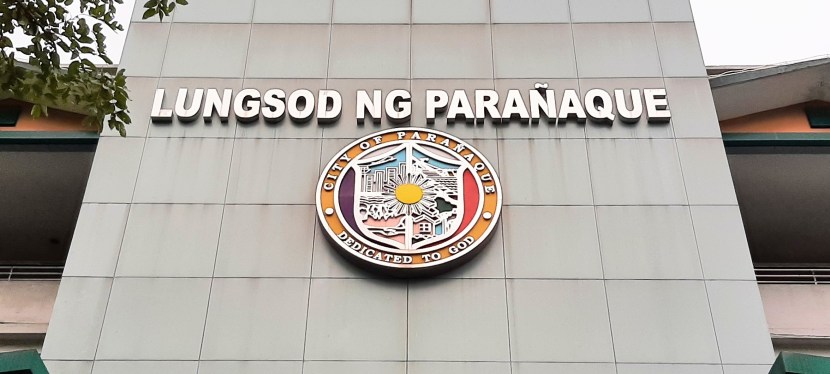
Recently in the city of Parañaque, a raid happened at a certain shopping mall which resulted in the apprehension of more than eighty illegal aliens, according to a news release by the Philippine News Agency (PNA). A great majority of the suspects were from Bangladesh.
To put things in perspective, posted below is an excerpt from the PNA news article. Some parts in boldface…
The Bureau of Immigration (BI) on Saturday reported the arrest of 83 foreign nationals during a large-scale operation at a shopping mall in Baclaran, Parañaque City.
The operation, which stemmed from intelligence reports, was carried out on Jan. 7, following weeks of surveillance and verification, according to a belated news release.
The apprehended foreigners were 68 Bangladeshi nationals, 14 Chinese and one Indian. There were 2 females in the group.
Initial records check showed that while some held valid visas, they were engaged in retail trade activities prohibited under Philippine law. The report added that 18 of the foreigners are holding tourist visas, while the identities of six are under verification.
The foreign nationals are facing charges of immigration violations including undocumented stay, misrepresentation and violation of Republic Act 8762 or the Retail Trade Liberalization Act, which prohibits foreigners from engaging in retail trade without proper authority, regardless of visa status.
BI Commissioner Joel Anthony Viado explained that the possession of a visa does not grant blanket authority to work or do business in the country.
Let me end this post by asking you readers: What do you think about this recent development? If you are a resident of Parañaque, are you concerned that there could be foreigners secretly working illegally at the nearest commercial center?
For more South Metro Manila community news and developments, come back here soon. Also say NO to fake news, NO to irresponsible journalism, NO to misinformation, NO to plagiarists, NO to reckless publishers and NO to sinister propaganda when it comes to news and developments. For South Metro Manila community developments, member engagement, commerce and other relevant updates, join the growing South Metro Manila Facebook group at https://www.facebook.com/groups/342183059992673
Vietnam, a nation ravaged by war decades ago, has emerged as a major tourism magnet in both Southeast Asia and Asia as a whole after successfully attracting more than twenty-one million foreign tourists in 2025, according to a VnExpress International news report. The figure is a new all-time high. What Vietnam achieved was more than 20% higher than its 2024 foreign tourist numbers. For 2026, Vietnam is aiming high with a target of 25 million foreign visitors.
To put things in perspective, posted below is an excerpt from the news report VnExpress. Some parts in boldface…
Vietnam welcomed a record number of foreign tourists in 2025 with 21.2 million, up 20.4% from the previous year and the highest ever, according to General Statistics Office.
Mainland China was Vietnam’s biggest source of visitors last year with 5.2 million arrivals, up 41% year-on-year, followed by South Korea with 4.3 million and Taiwan with 1.23 million.
The U.S. ranked fourth with 848,000, followed by Japan with 814,000. The rest of the top 10 were India (746,000), Russia (689,000), Cambodia (687,000), Malaysia (573,000) and Australia (548,000).
Tourism industry insiders attributed Vietnam’s strong performance to visa reforms.
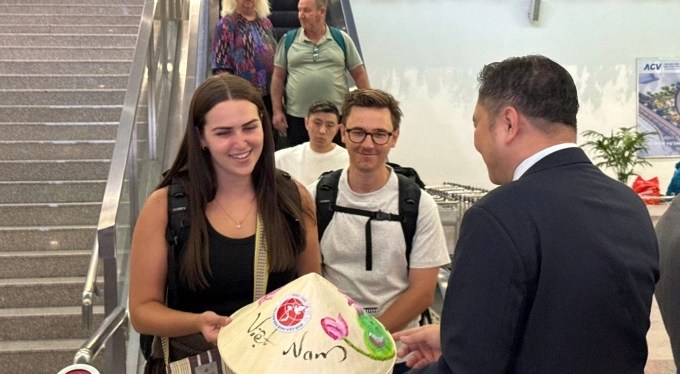
Foreign tourists welcomed in Vietnam. (photo credit: Ho Chi Minh City Department of Tourism)
In March the government decided to extend visa exemptions until 2028 for citizens of 12 countries: Denmark, Finland, France, Germany, Italy, Japan, Norway, Russia, South Korea, Spain, Sweden, and the U.K.
In August it waived visa requirements for stays of up to 45 days for citizens of 12 more countries: Belgium, Bulgaria, Croatia, Czechia, Hungary, Luxembourg, the Netherlands, Poland, Romania, Slovakia, Slovenia, and Switzerland.
This expanded the unilateral visa waiver list to 24 countries and the total number including bilateral waivers to 39.
Let me end this piece by asking you readers: What is your reaction to this development? Considering the strong international tourism momentum it has right now, do you think Vietnam will succeed in attracting 25 million foreign tourists this year? Do you think a lot more visitors from Europe will come to Vietnam this year?
Recently in the city of Parañaque, local police officers rescued a Chinese national and apprehended two foreign suspects, according to a Manila Bulletin news report. The police received an emergency call which led to the rescue.
To put things in perspective, posted below is an excerpt from the Manila Bulletin report. Some parts in boldface…
Police rescued a Chinese national after receiving a 911 emergency call and arrested two of his compatriots who allegedly held him captive in Parañaque City on Dec. 27.
The Southern Police District (SPD) identified the victim as Zhenhai, a Chinese national, who was rescued at around 10:40 p.m. inside a condominium unit in Barangay Don Galo, Parañaque City. The suspects were identified as Haoxin, 38, and France, 37, both Chinese nationals and residents of Pandacan, Manila.
According to police, a duty officer at the Parañaque City Police Station Tactical Operations Center received a call through the 911 emergency hotline reporting that a Chinese national was being held against his will and threatened at gunpoint for allegedly refusing to pay a P25,000 debt, which he claimed he did not owe.
Personnel from the Parañaque City Police Station Niño Substation immediately responded to the report, leading to the rescue of the victim and the arrest of the two suspects.
Recovered from the suspects were a 9mm caliber pistol without a serial number, one magazine, and nine rounds of 9mm ammunition.
Let me end this post by asking you readers: What do you think about this recent development? If you are a resident of Parañaque, are you concerned that there could be more Chinese nationals kidnapping their fellow people and detaining them within the city? Do you think criminal activities in Parañaque involving Chinese nationals will only get worse over the next six months?
For more South Metro Manila community news and developments, come back here soon. Also say NO to fake news, NO to irresponsible journalism, NO to misinformation, NO to plagiarists, NO to reckless publishers and NO to sinister propaganda when it comes to news and developments. For South Metro Manila community developments, member engagement, commerce and other relevant updates, join the growing South Metro Manila Facebook group at https://www.facebook.com/groups/342183059992673
Following the capture of socialist dictator Nicolas Maduro, US President Donald Trump announced that Venezuela will turn over to America thirty million to fifty million barrels of oil which will benefit people of both nations, according to a news report by Newsmax.
For the newcomers reading this, Maduro ruled Venezuela for more than a decade and his predecessor was none other than the demon Hugo Chavez. Maduro brutalized his fellow Venezuelans and is responsible with the intense deterioration of their national economy. Under Maduro, Venezuela cooperated with the terrorist state of Iran, Communist China and Putin’s Russia. Maduro is also involved in drug trafficking and narco-terrorism.
To put things in perspective, posted below is an excerpt from a Newsmax report. Some parts in boldface…
President Donald Trump said Tuesday that Venezuela is turning over 30 million to 50 million barrels of oil to the United States, with proceeds he said will benefit both the Venezuelan people and Americans.
Trump made the announcement in a post on Truth Social, just days after he authorized U.S. military action to remove socialist strongman Nicolas Maduro from power in Venezuela.
“I am pleased to announce that the Interim Authorities in Venezuela will be turning over between 30 and 50 MILLION Barrels of High Quality, Sanctioned Oil, to the United States of America,” Trump said in the post.
“This Oil will be sold at its Market Price, and that money will be controlled by me, as President of the United States of America, to ensure it is used to benefit the people of Venezuela and the United States!” he added.
Delcy Rodriguez was sworn in as Venezuela’s interim president Monday. Rodriguez indicated she would cooperate with Washington.
“I have asked Energy Secretary Chris Wright to execute this plan, immediately. It will be taken by storage ships, and brought directly to unloading docks in the United States,” Trump concluded his post.
Before the arrest of Maduro, Venezuela’s oil sector was a shadow of its former self despite holding the world’s largest proven oil reserves — estimated at over 300 billion barrels.
Decades of socialist mismanagement, expropriation of foreign assets, and U.S. sanctions decimated output, which fell from over 3 million barrels per day in the early 2000s to roughly 1 million barrels per day by 2025.
Sanctions forced much of the crude trade underground and shifted exports mainly to China, with Petróleos de Venezuela, S.A. (PDVSA) struggling to generate cash revenue. Production bottlenecks, lack of investment, and aging infrastructure kept Venezuela’s oil influence weak on global markets.
For additional insight about Venezuelan oil and what it means to America and the world, watch the selected videos below.
Let me end this piece by asking you readers: What is your reaction to this development? With Maduro on trial in America, are you confident that he will be found guilty on each and every charge against him? Do you think the announced high amount of barrels of Venezuelan oil will be a big economic boost for America? Do you think China, Russia and terrorist state Iran are panicking now that they lost their access to Venezuela’s oil? Do you think it is a matter of time before the military hardware of Russia, China and Iran in Venezuela will get dismantled?
What happened this past weekend was very surprising, was executed very efficiently and the result is the fall and capture of Venezuela’s dictator Nicolas Maduro. This is the latest US military operation executed by President Donald Trump and his administration. Maduro is now in America and will be tried in court. The justice that the people of Venezuela have been dreaming of will eventually manifest. Trump also announced that America will run Venezuela until a transition of power can occur.
For the newcomers reading this, Maduro and his very wicked predecessor Hugo Chavez are collectively responsible for the downfall of Venezuela. Having ruled Venezuela for more than a decade, Maduro brutalized his fellow Venezuelans and is responsible with the intense deterioration of their national economy. Under Maduro, Venezuela cooperated with the terrorist state of Iran, Communist China and Putin’s Russia. Maduro is also involved in drug trafficking and narco-terrorism. Months ago, America started encountering vessels from Venezuela filled with illegal drugs. The dangerous gang Tren de Aragua was eliminated at sea.
To put things in perspective, watch the YouTube videos posted below and pay close attention to the details.
Already Venezuelans are cheerful and relieved with the fall of the dictator. It easily the most positive turn of events in their lives. Venezuelans are also thankful to President Trump. Watch and learn from the video below.
With Maduro and his wife in US custody, the effort for justice will begin soon. For insight, posted below is an excerpt from a Newsmax report. Some parts in boldface…
President Donald Trump said Saturday that U.S. forces captured Venezuelan leader Nicolas Maduro and his wife during a military operation, announcing they are being transported to the United States to face criminal prosecution in what he described as a decisive blow against international drug trafficking and regional instability.
Speaking at a Saturday afternoon press conference aired live on Newsmax and Newsmax2, Trump accused Maduro of overseeing a massive criminal enterprise responsible for drug trafficking, violence and instability affecting the United States.
“The illegitimate dictator, Maduro was the kingpin of a vast criminal network responsible for trafficking colossal amounts of deadly and illicit drugs into the United States, as alleged in the indictment, he personally oversaw the vicious cartel known as cartel de las Olas, which flooded our nation with lethal poison, responsible for the deaths of countless Americans, the many, many Americans, hundreds of thousands over the years of Americans died because of him,” Trump said.
Trump said Maduro and his wife were taken into custody during a U.S. operation in Venezuela and are currently being transported by ship.
“Maduro and his wife will soon face the full might of American justice and stand trial on American soil.”
In the same Newsmax report, Trump also mentioned that there is overwhelming evidence of Maduro’s crimes which will be presented in court.
Overseas, Israel commended America for the successful operation that led to Maduro’s capture. This is not surprising as Venezuela is allied with the terrorist regime of Iran and other Islamic terrorists. To put things in perspective, posted below is an excerpt from the news report of The Jerusalem Post. Some parts in boldface…
Israel lauded the American operation that resulted in the capture of Venezuelan President Nicolas Maduro on Saturday.
In a post on X/Twitter, Foreign Minister Gideon Sa’ar wrote, “Israel commends the United States’ operation, led by President Trump, which acted as the leader of the free world. At this historic moment, Israel stands alongside the freedom-loving Venezuelan people, who have suffered under Maduro’s illegal tyranny.“
Sa’ar added that the Jewish state “welcomes the removal of the dictator who led a network of drugs and terror” and that it hopes democracy would return to Venezuela and that the two countries would be able to resume friendly relations.
“The people of Venezuela deserve to exercise their democratic rights. South America deserves a future free from the axis of terror and drugs,” Sa’ar concluded.
Netanyahu congratulates Trump on capture of Maduro – Later, Prime Minister Benjamin Netanyahu also congratulated US President Donald Trump.
“Congratulations, President [Donald Trump] for your bold and historic leadership on behalf of freedom and justice. I salute your decisive resolve and the brilliant action of your brave soldiers,” the Prime Minister’s Office quoted Netanyahu as saying in a post to X.
Israeli NGO of retired senior security officials see Venezuela op. as warning to Iran’s regime –Earlier, the Commanders for Israel’s Security, an NGO of more than 550 retired senior officials from the IDF, the Mossad, the Shin Bet, the police, and the Foreign Service, also welcomed the operation, seeing it as a warning to the Iranian regime, Israeli outlet Maariv reported.
Let me end this piece by asking you readers: What is your reaction to this development? What is your reaction to the American military operation in Venezuela that resulted in the capture of dictator Maduro? Do you think it is only a matter of time before the remnants of Maduro’s administration will collapse and get overwhelmed by the Venezuelans who have long been hungry for freedom and the return of democracy? What do you think Iran, Russia and China will do now that their ally Maduro has fallen?
Japanese Prime Minister Sanae Takaichi will meet again with US President Donald Trump specifically in the United States in the spring, according to a Kyodo News article. The upcoming meeting will also by Takaichi’s first official visit to America as Prime Minister.
For the newcomers reading this, the Prime Minister first met with Trump in Japan last October. The said meeting happened not so long after Takaichi was elected to her position. For the upcoming meeting in the United States, the stakes are high for Prime Minister Takaichi as her nation has been dealing with tension from Communist China.
To put things in perspective, posted below is an excerpt from the news article of Kyodo News. Some parts in boldface…
Japan’s Prime Minister Sanae Takaichi said Friday that she and U.S. President Donald Trump have agreed to work toward meeting in the United States in the spring, with the aim of further strengthening the alliance between the two countries.
Takaichi’s plan to make her first visit to the United States since taking office in October, confirmed during their phone call, comes at a time of strained relations between Japan and China, and ahead of Trump’s possible trip to Beijing in April to meet with Chinese President Xi Jinping.
“At the start of the new year, I consider it extremely significant that I was able to exchange words directly with President Trump and confirm the strong partnership of the Japan-U.S. alliance,” Takaichi told reporters following the call.
Takaichi said she and Trump agreed to promote a free and open Indo-Pacific as well as cooperation among like-minded countries, including in the three-way partnership also involving South Korea.
She said their discussion was mainly about the region, without elaborating as to whether it had anything to do with China specifically.
According to Japan’s Foreign Ministry, the conversation lasted about 25 minutes, during which Trump, who met with Takaichi in October in Tokyo, invited her to visit the United States.
In late December, Takaichi said she was exploring a visit to the United States for another meeting with Trump early in the upcoming year, with Japanese officials proposing late March for her trip to Washington.
Late on Friday night, Takaichi said she had conveyed her congratulations to Trump on the United States marking in 2026 the 250th anniversary of its independence.
She said they agreed this year should also be one that opens a “new chapter in the history of the Japan-U.S. alliance” and that they will further deepen the wide-ranging cooperation and friendly relations between the two countries.
If all goes smoothly, Takaichi’s upcoming trip will coincide with the U.S. capital’s well-known annual cherry blossom festival.
The festival commemorates the 1912 gift of cherry trees from Tokyo to Washington and the longtime friendship between Japan and the United States.
When Takaichi hosted Trump in Japan in late October, the two leaders affirmed their intention to jointly celebrate the 250th anniversary, and she confirmed Japan’s promise to give 250 cherry trees to the United States.
Takaichi and Trump last spoke by phone on Nov. 25, with the conversation taking place after his call with Xi and amid escalating tensions between Tokyo and Beijing over Taiwan.
China has been taking a hard-line stance against Japan since Takaichi suggested earlier that month that an attack on Taiwan could constitute an existential threat to Japan and warrant a response from its forces.
Trump, who also met with Xi in late October during his trip to Asia, has not made his position public on the ongoing tensions between Japan and China, which views Taiwan as its own territory and has not ruled out the use of force to bring the self-ruled island under its control.
Trump has repeatedly said he has good relationships with both Takaichi and Xi.
Let me end this piece by asking you readers: What is your reaction to this development? What kind of developments do you think will manifest after the next meeting of Trump and Takaichi? Do you think the Trump administration will be able to maintain healthy ties with China and Japan even as the tension between the two Asian nations goes on? Do you think there will be more joint military exercises between Japan and America this year?
In light of the aggression of Communist China in the Pacific and security challenges coming from North Korea, the government of Japan set its draft defense budget for fiscal 2026 at a record figure of 9 trillion yen (estimated at $58 billion), according to a news article published by Kyodo News.
To put things in perspective, posted below is an excerpt from the news release of Kyodo News. Some parts in boldface…
Japan’s draft defense budget was set at a record 9.04 trillion yen ($58 billion) for fiscal 2026, the government said Friday, as the country faces increasing security challenges from China and North Korea.
The figure, including outlays linked to hosting U.S. military bases, eclipses the then record 8.7 trillion yen in the initial budget for the current fiscal year to March 2026. Fiscal 2026 marks the fourth year of Japan’s five-year 43-trillion-yen defense buildup plan.
The Cabinet of Prime Minister Sanae Takaichi approved the same day a draft initial state budget for the year starting next April worth 122.3 trillion yen, also a record high, including defense and other expenditures.
Under the defense budget, 100.1 billion yen has been earmarked for building the “Shield” layered coastal defense system, which requires numerous aerial, surface and underwater vehicles. The spending on Shield comes at a time when many countries have been rapidly developing drone technology since the Russia-Ukraine war changed the nature of warfare.
With China in mind, 1.1 billion yen has been set aside to assess the use of long-endurance drones as a measure against airspace violations.
Japan plans to rebrand the Air Self-Defense Force as the Air and Space Self-Defense Force to enhance the country’s space capabilities.
Another 1.1 billion yen has been earmarked for acquiring equipment to monitor satellite interference.
The country has secured 30.1 billion yen to procure hypersonic guided missiles, which travel at above five times the speed of sound and are considered hard to intercept, as a means of counterattack.
Let me end this piece by asking you readers: What is your reaction to this development? Do you think the record defense budget of 9 trillion yen is sufficient to keep Japan secured from the threats of China and North Korea?
With 2025 already behind us, one has to wonder how the Philippines performed when it comes to attracting foreign tourists and as of this writing, the final statistics have yet to be announced by the government. What is clear is that the Philippines really slumped on international tourism last year and the nation is behind many of its Southeast Asian neighbors, according to a recent news article by VnExpress International.
To put things in perspective, posted below is an excerpt from the news article of the VnExpress International. Some parts in boldface…
Vietnam and Malaysia are rising tourism stars in Southeast Asia thanks to relaxed visa policies and improving infrastructure while Thailand has lost its lead due to border clashes and safety concerns.
Vietnam received its 20th millionth foreign visitor in a year for the first time at the Phu Quoc International Airport on Dec. 15, marking a milestone for its tourism sector. The full-year is expected to exceed 21 million, surpassing the previous record of 18 million achieved in 2019 before Covid.
With its 21% growth rate this year, Vietnam is regarded by the United Nations World Tourism Organization as one of the fastest-growing markets in the world.
Malaysia attracted 28.2 million tourists in the first eight months of this year, a 14.5% increase year-on-year.
The industry will be supported by stronger Chinese tourist arrivals, improving flight connectivity and the government’s ambitious “Visit Malaysia 2026” campaign, according to HSBC Global Research.
“Malaysia is on track to easily exceed its 2025 tourism target of 31.4 million tourists, making it one of the few ASEAN economies to achieve its target.
“We estimate the number of tourists is likely to exceed 40 million.”
This year, both countries have strived to ease visa polices, enhance promotion campaigns and improve airport infrastructure.
Indonesia and Laos have also seen increasing tourist numbers.
Indonesia received over 12.76 million foreign visitors in the first 10 months, a 10% increase, with Malaysia, Singapore, Australia, and India being the leading source markets. Laos received 3.8 million, a 13% increase.
Challenging year for Thailand, Cambodia – Once a tourism powerhouse in Southeast Asia, Thailand has struggled with setback after setback this year.
The crisis began in January as many Chinese tourists canceled their trips to the country following the high-profile abduction of Chinese actor Xing Xing.
Two months later a deadly earthquake in Myanmar that sent tremors across Bangkok caused widespread damage to the tourism industry.
Escalating military clashes along the Thai-Cambodian border also triggered a surge in cancellations across provinces near the fighting. Some countries warned their citizens to postpone traveling to Thailand.
Arrivals as of early December declined by 7% to 30 million. Thailand had received 40 million tourists in 2019 and 35 million last year.
Meanwhile, Cambodia’s reputation took a beating in the eyes of South Koreans due to online scams and the disappearance of hundreds of their fellow citizens who entered that country.
The South Korean government has issued warnings to its citizens to cancel or postpone non-essential travel to the Cambodian capital Phnom Penh and areas like Sihanoukville and Bokor Mountain.
Cambodia attracted only 4.75 million tourists in January-October, a decrease of 11.6%.
The Philippines received 4.7 million foreign visitors in the first 11 months of the year, a 3.02% decline due to significantly lower arrivals from South Korea and China.
Let me end this post by asking you readers: What is your reaction to this recent development? Do you think the Philippines still has a lot of problems to solve regarding infrastructure, tourism promotions and domestic travel costs before it could become competitive with its Southeast Asian neighbors? If ever the Philippines fails to hit its 2025 foreign tourist arrivals target, do you think the Department of Tourism (DOT) will once again point to tourism revenues as a barometer for success? With its current standing on international tourism, do you consider the 2023-2028 National Tourism Development Plan (NTDP) of the Philippines a failure already?