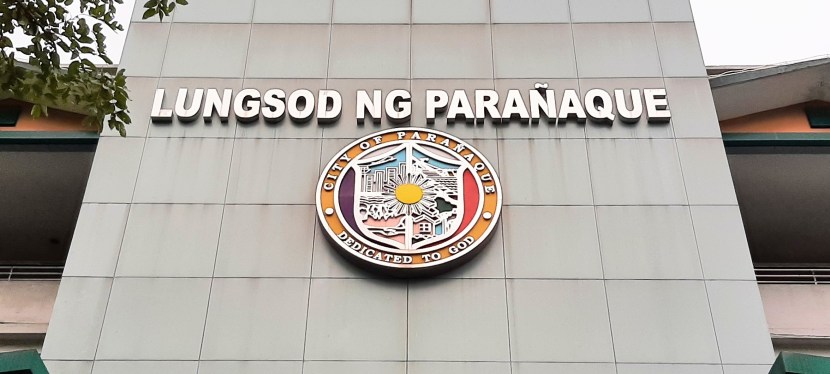
Recently in the City of Parañaque, the local police apprehended five suspects for the theft of copper cables worth more than P200,000, according to a news report by the Manila Bulletin. A local security guard caught them in the act and called the police.
To put things in perspective, posted below is an excerpt from the news report of the Manila Bulletin. Some parts in boldface…
Police arrested five individuals involved in the theft of underground copper cables in Parañaque City on Sunday, March 22.
Parañaque City Police Chief Col. Nicolas Piñon identified the suspects as John, Roel, George, Bryan, and Adrian. They were apprehended at around 4:50 a.m. along KM 17 West Service Road in Barangay Marcelo Green.
Piñon said the suspects were arrested after a security guard noticed suspicious activity involving a parked vehicle and five men forcibly pulling underground copper cables.
The security guard immediately alerted their zone commander, who coordinated with the Marcelo Green Police Substation, leading to the arrest of the suspects who were caught in the act.
Recovered from the suspects were copper cables worth P201,218.64, cutting tools, and a utility vehicle.
The suspects are currently detained at the police custodial facility and are facing charges for violation of Republic Act 10515, also known as the Anti-Cable Television and Cable Internet Tapping Act of 2013.
Let me end this post by asking you readers: What do you think about this recent development? If you are a resident of Parañaque, are you concerned that there could be more attempts by undesirable people to steal copper cables?
For more South Metro Manila community news and developments, come back here soon. Also say NO to fake news, NO to irresponsible journalism, NO to misinformation, NO to plagiarists, NO to reckless publishers and NO to sinister propaganda when it comes to news and developments. For South Metro Manila community developments, member engagement, commerce and other relevant updates, join the growing South Metro Manila Facebook group at https://www.facebook.com/groups/342183059992673
With the ongoing war in the Middle East, the hiked prices of fuel and other problems happening already, the World Bank (WB) sees the economy of the Philippines achieving gross domestic product (GDP) growth of 4.6% this year and 5.3% next year, according to a Manila Bulletin news report.
To put things in perspective, posted below is an excerpt from the news report of the Manila Bulletin. Some parts in boldface…
Philippine economic growth would likely remain below its potential of at least six percent until the end of the Marcos Jr. administration, according to the latest forecasts by the World Bank.
Documents on the latest $800-million Philippines Growth and Jobs Development Policy Loan (DPL) 1, approved by the Washington-based multilateral lender last week, showed a projected 4.6- percent gross domestic product (GDP) growth rate for the country in 2026, inching up from the post-pandemic-low of 4.4 percent in 2025. This forecast is below the government’s downgraded five- to six-percent growth target for the year.
For 2027, the World Bank expects the Philippine economy to grow by 5.3 percent, which would also be lower than next year’s downscaled 5.5- to 6.5-percent goal.
By the time President Ferdinand R. Marcos Jr. steps down and turns over to a new administration in 2028, World Bank projections showed 5.5-percent GDP growth, still below the six- to seven-percent target.
“The growth outlook remains moderate over the near term, with activity expected to remain subdued in 2026 before gradually strengthening… The impact of the government’s anti-corruption efforts and a significantly lower infrastructure budget in 2026 is expected to weigh on public investment,” the World Bank said.
The lender added that a smaller statistical carry-over into 2026 signals weaker initial momentum, with growth projected to average 5.2 percent in 2026 to 2028, driven by recovering private domestic demand amid easing inflation and financing conditions.
“Private consumption is expected to benefit from stable labor income and improved confidence, while private investment gradually strengthens alongside improved credit conditions and a normalization of public capital spending. External demand, particularly for electronics and artificial intelligence (AI)-related exports, is projected to remain supportive, although global trade uncertainty presents downside risks,” the document said.
This World Bank report was prepared in mid-February before it was disclosed last week, which means that the impact of the war in the Middle East was not yet taken into consideration by the lender in its GDP growth forecasts.
At that time, the World Bank projected headline inflation to stay within the Bangko Sentral ng Pilipinas’ (BSP) two- to four-percent target range, averaging about 2.8 percent in 2026 to 2028.
Before the domestic price pressures wrought by the Middle East conflict that sent global oil prices soaring, the World Bank believed that the BSP would likely keep a neutral-to-supportive policy stance while balancing the still-negative output gap against risks from exchange-rate volatility and food inflation. A negative output gap refers to the economy expanding below its potential, which, for the Philippines, is estimated at about six percent annually.
Let me end this post by asking you readers: What is your reaction to this recent development? Do you think the economic growth predictions of the World Bank for the Philippines will turn out to be true in the near future? Do you think there is any hope left for the economy of the Philippines to achieve annual GDP growth of 6%? Do you think more foreign investors will be convinced to invest in the Philippines this year?
With the joint Israel-US military operations against the Islamic terrorist regime of Iran still going on, the tourism authority of Thailand announced it is preparing measures to ease the effects of the conflict on its tourism sector, according to a news report of VnExpress. Already the conflict caused a series of economic disruptions affecting air travel and the prices of services and products offered to tourists.
To put things in perspective, posted below is an excerpt from the news report of VnExpress. Some parts in boldface…
The Tourism Authority of Thailand (TAT) is preparing measures to mitigate the impact of tensions in the Middle East on the country’s tourism sector, including proposals to stimulate domestic travel and short-haul flights.
Following consultations with private operators, TAT Governor Thapanee Kiatphaibool said the agency is promoting Thailand as a safe destination and plans to suggest the establishment of a strategic operations unit to monitor flight capacity, load factors, oil prices and travel costs.
TAT also plans to use the remaining central budget under the Thailand Summer Blast scheme, which supports inbound flights to Thailand, to back airlines and promote both major and secondary cities.
It is considering adjustments to an existing subsidy program for charter flights to cover long-haul markets, as well as incentives such as free domestic flights for international visitors and co-payment schemes to boost local tourism.
Thailand aims to capitalize on the situation by positioning itself as an aviation hub linking Europe with Asia and Australia, while adjusting flight schedules to attract more direct long-haul services. At the same time, efforts will be made to rebalance international tourism markets by focusing on China, Japan, the Republic of Korea and Southeast Asia.
Let me end this piece by asking you readers: What is your reaction to this development? Do you intend to visit Thailand over the next six months? Does the war against Iran discourage you from traveling overseas?
Recently a survey conducted by OCTA Research and commissioned by the Embassy of Japan in the Philippines revealed that almost eight out of ten Filipinos trust Japan, according to a news article by the Philippine News Agency (PNA).
To put things in perspective, posted below is an excerpt from the news article of the PNA. Some parts in boldface…
A survey of a private polling and research firm, OCTA Research, released on Monday showed that eight in 10 adult Filipinos trust Japan.
The survey, commissioned by the Embassy of Japan in the Philippines and conducted from December 3 to 11, 2025, among 1,200 respondents aged 18 and above, asked the question: “How much does the Philippines trust Japan?”
A total of 79 percent of the respondents answered they “strongly trust/somewhat trust” Japan, while at least 17 percent responded “can’t say if I trust or not”, and 4 percent have shown distrust.
This result suggests that positive perceptions of Japan are deeply embedded in Philippine public opinion.
Filipinos also trust the Japanese people, with 74 percent expressing trust and 6 percent expressing distrust. About 20 percent answered that they are undecided.
This indicates that goodwill toward Japan extends to interpersonal perceptions of Japanese citizens, according to OCTA Research.
Most or 70 percent of the respondents said they view the relationship between the Philippines and Japan as “very good” while 24 percent view it as neither good nor poor.
These favorable perceptions of Japan were observed across Metro Manila, Balance (of) Luzon, the Visayas, and Mindanao, as well as across socioeconomic classes.
“Cultural exchanges, tourism, educational cooperation, and the growing Filipino community in Japan contribute to familiarity and mutual goodwill between the two societies,” OCTA Research said.
Let me end this piece by asking you readers: What is your reaction to this development? Do you think the governments of Japan and the Philippines should engage more with each other diplomatically, economically and militarily? Do you think Filipinos see the Japanese as an ally while the Philippines remains in conflict with Communist China at the West Philippine Sea? Are you one of the hundreds of thousands of Filipinos who traveled to Japan yearly?
The Lord is blessing the Philippines again as Planetshakerswill return this coming July with new worship events featuring Planetboom.
In its official announcement via social media, Planetshakers Live In Manila Featuring Planetboom will be held at the SM Mall of Asia Arena on the evenings of July 17 to 19, 2026. Tickets for the worship events will become available on March 26 via SM Tickets. For the official layout and ticket prices, look closely at the image below.
The official seat layout and ticket prices ranging from P700 to P2,000.
The upcoming Planetshakers worship events featuring Planetboom here in the Philippines are opportunities for people to worship the Lord and deepen their faith in Him. You can also honor Him, thank Him and connect with Him as Planetshakers plays the music and lead the prayers. These events are blessings from God that you should strive for. That being said, you should get ready for the official March 26 release of the tickets of Planetshakers Live In Manila Featuring Planetboom via SMTickets.com
For the newcomers reading this, Planetshakers is a Christian church based in Melbourne, Australia and their music team is a very blessed group which produced a whole lot of worship songs that resonated with faithful Christians around the world. I myself attended a Planetshakers worship event here in the Philippines in September 2022.
Tickets will be released via SMTickets.com on March 26.
If you want to discover and learn more about Planetshakers, I encourage you to click here (Facebook page), here (Instagram), here (Twitter) and here (YouTube). To know more about Planetshakers itself, visit https://www.planetshakers.com/
In closing this, posted below are a few worship music videos from Planetshakers’ YouTube channel. Jesus is our Lord and Savior and He is also the hope of ALL nations! Move forward with unbreakable and uncompromising faith in Him! Seek Him first and always be the fearless and aggressive church of Lord Jesus!
Recently in the City of Parañaque, the local police successfully pulled off an entrapment operation that resulted in two suspects arrested and the seizure of illegal drugs worth P102,000, according to a Manila Bulletin news report.
To put things in perspective, posted below is an excerpt from the news report of the Manila Bulletin. Some parts in boldface…
Operatives of the Parañaque City Police arrested two drug suspects and seized P102,000 worth of shabu in an entrapment early Tuesday morning, March 17.
Parañaque City Police Chief Nicolas Pinon identified the suspects as Melchor, 41, a Joyride rider, and Lance, 24.
They were arrested at around 12:10 a.m. on F. Bernabe Street in Airport Village, Barangay Moonwalk.
Police said members of the Parañaque City Police Station Drug Enforcement Unit (SDEU) launched a buy-bust operation that led to the arrest of the suspects.
Authorities said that during a body search, Melchor was found in possession of 10 more plastic sachets of suspected shabu and the P500 marked buy-bust money. Meanwhile, Lance yielded about five grams of suspected shabu.
Let me end this post by asking you readers: What do you think about this recent development? If you are a resident of Parañaque, are you convinced that a lot of people in the city have been attracting smugglers or pushers of illegal drugs? Is your local community considered drug-free?
For more South Metro Manila community news and developments, come back here soon. Also say NO to fake news, NO to irresponsible journalism, NO to misinformation, NO to plagiarists, NO to reckless publishers and NO to sinister propaganda when it comes to news and developments. For South Metro Manila community developments, member engagement, commerce and other relevant updates, join the growing South Metro Manila Facebook group at https://www.facebook.com/groups/342183059992673
Around two thousand tricycle drivers (the first batch) have received their cash relief assistance at the Aguilar Sports Complex recently, according to the social media announcement of the City Government of Las Piñas. Each tricycle driver received P5,000 as relief from the much higher prices of fuel caused by the ongoing war against the Islamic terrorist regime of Iran which itself attacked multiple nations in the Middle East with missiles and drones.
To put things in perspective, posted below is an excerpt from the social media announcement of the City Government. Some parts in boldface…
The distribution of P5,000 cash payout of the AICS program for the first batch of tricycle drivers in Las Piñas City was held at Aguilar Sports Complex.
This is part of President Ferdinand “Bongbong” Marcos Jr.’s support to help drivers cope with the continuing rise of oil prices due to tensions in the Middle East.
The Department of Social Welfare and Development (DSWD), City Social Welfare and Development Office (CSWDO), and other offices of the city government are working together to ensure a smooth and peaceful distribution of aid to beneficiaries.
On the first day of payout, almost 2,000 drivers from TODA groups ACAPODA, APHDA, ATODA, BFLTSODA, BFRSSCV, BFRV-VG, CCTODA, CEBMTODA and BFATODA were given cash assistance. Payout will continue in the coming days to provide all registered members of TODA.
Let me end this piece by asking you readers: If you are a resident of Las Piñas City, what is your reaction to this development? Do you often ride the tricycle when moving around?
For more South Metro Manila community news and developments, come back here soon. Also say NO to fake news, NO to irresponsible journalism, NO to misinformation, NO to plagiarists, NO to reckless publishers and NO to sinister propaganda when it comes to news and developments. For South Metro Manila community developments, member engagement, commerce and other relevant updates, join the growing South Metro Manila Facebook group at https://www.facebook.com/groups/342183059992673
Japanese Prime Minister Takaichi Sanae visited Washington for the first time as the head of her nation and met with US President Donald Trump at the White House where they discussed very important matters in front of the media and officials, according to a news report by Kyodo News. Takaichi also praised the President for his peace efforts.
To put things in perspective, posted below is an excerpt from the news report of Kyodo News Some parts in boldface…
Prime Minister Sanae Takaichi told U.S. President Donald Trump on Thursday that Japan is ready to contribute to the safety of the Strait of Hormuz as the U.S.-Israeli war on Iran intensifies, while explaining Tokyo’s legal constraints on sending ships from its defense forces to the region.
Takaichi told reporters after her meeting at the White House with Trump that she told the U.S. leader “in detail what Japan can do and cannot do” from a legal perspective under the country’s war-renouncing Constitution.
Trump, for his part, reiterated his expectation that Japan would be engaged, while saying during the part of their talks open to media that he believes Japan has been “stepping up to the plate” in recent days over the Iran war, “unlike NATO.”
The U.S. leader has made public his dissatisfaction with Washington’s allies, including Tokyo and members of the trans-Atlantic alliance, over their reluctance to pitch in to help secure the Hormuz strait, a vital waterway for global oil transportation now largely blocked by Iran.
“I expect Japan to step up, because, you know, we have that kind of relationship,” he said. “We have 45,000 soldiers in Japan. We have, we spend a lot of money on Japan…so I expect, I’m not surprised that they would step up.“
Noting also that more than 90 percent of Japan’s crude oil imports normally pass through the strait, Trump said Japan has a “big reason” to do more.
In affirming Japan-U.S. collaboration on expanding U.S. energy production, Takaichi said she proposed to Trump a joint oil-reserve project to ease supply concerns driven by the Middle East conflict.
At the talks, Takaichi praised Trump’s “peace” efforts, expressing readiness to assist by reaching out to other countries. “Donald is the only person who can bring peace and prosperity across the world,” she said.
Takaichi emphasized that the prospect of Iran developing nuclear weapons is unacceptable. Trump alluded earlier to Iran’s nuclear program to explain the U.S. decision to launch its military campaign against the country.
Facing an increasingly assertive China, Takaichi also reminded Trump that the security environment remains severe in the Indo-Pacific, at a time when reports have emerged that some U.S. military assets are being moved from the region to the Middle East.
The two leaders “committed to peace and stability across the Taiwan Strait as an indispensable element of regional security and global prosperity” and “opposed any attempts to unilaterally change the status quo, including by force or coercion,” the White House said in a press release without naming China.
They confirmed that their nations oppose measures threatening critical mineral supplies such as export controls, senior Japanese government officials told reporters, apparently referring to Beijing’s tighter regulations on rare earths exports.
They agreed to advance broad defense cooperation, including joint missile development and production, and promote a free and open Indo-Pacific, according to Takaichi. The White House said the production of the interceptor Standard Missile-3 Block 2A in Japan will be quadrupled.
“We were able to affirm many concrete forms of cooperation that will further enhance the quality of our alliance in wide-ranging fields,” Takaichi said, adding that she and Trump are aiming to elevate bilateral ties to “a higher level” together.
Trump welcomed Japan buying “a lot of” U.S. military equipment. He further stressed that he has a “very fine relationship” with Takaichi, describing her as “a very special person” who is doing a “fantastic job.”
The U.S. side did not bring up fresh demands for Japan to spend more on its defense, the officials said.
Takaichi’s main goals in her first trip to the United States since taking office in October were to strengthen the personal trust in her ties with Trump and reaffirm the U.S. security commitment to the Indo-Pacific region as China’s influence grows.
The meeting came amid increasing concerns within Japan that the U.S. focus in terms of policy and military assets could shift from the Indo-Pacific to the Middle East if the U.S.-Israeli war with Iran drags on, a development that would work in China’s favor.
The U.S. military has reportedly begun relocating the amphibious assault ship Tripoli and over 2,000 Marines from their bases in southwestern and southern Japan to the Middle East.
Takaichi got off to a positive start in building personal ties with Trump when they met in person for the first time in October in Tokyo, shortly after she became Japan’s first female prime minister.
Since the outbreak of the Middle East conflict, Tokyo has sought to strike a delicate balance between maintaining its strong alliance with Washington and its friendly relations with Tehran.
For more insight about the Trump-Takaichi meeting, watch the videos below.
Let me end this piece by asking you readers: What is your reaction to this development? What is your impression about the many matters and announcements that happened during the Trump-Takaichi meeting at the White House? Were you surprised when it was announced that US allies Japan, Italy, England, Netherlands, Germany, and France jointly agreed to secure the Strait of Hormuz in response to Trump’s demand? With Japan having a close relationship with Trump’s America now, do you think Communist China and North Korea will feel intimidated at their side of the Pacific?
Recently inside the Subic Bay Freeport Zone, Subic Bay Metropolitan Authority (SBMA) Chairman and Administrator Eduardo Jose L. Aliño formally led the opening of a new two-storey Starbucks Coffee shop with drive-thru, according to the official announcement of the authority. The newest branch of the coffee giant was made with an investment of over P36 million.
To put things in perspective, posted below is an excerpt from official announcement by the SBMA. Some parts in boldface…
Subic Bay Metropolitan Authority (SBMA) Chairman and Administrator Eduardo Jose L. Aliño led the opening of the first two-storey Starbucks Coffee Shop with drive-thru facility here on March 6, 2026.
According to Aliño, the opening of the two-storey Starbucks Coffee Shop indicates Subic Bay Freeport’s status as a popular tourist destination, anticipating a year-round influx of customers.
The Starbucks Coffee Shop invested ₱36.75 Million in a 1,700-square-meter area at the portion of Lot 75-A, Rizal Highway, Central Business District, Subic Bay Freeport Zone.
The inauguration was attended by Engr. and Mrs. Rhammeth Paras, Arch. and Mrs. Adonis Co, Mr. and Mrs. Timothy Tang, and Engr. Aries Tanglao, owners of Pandabest Realty and Trading, Inc.
The two-storey Starbucks locations usually offer enhanced, often scenic, spaces with increased seating, frequently housed in restored, architecturally unique, or heritage buildings.
Notable examples include the heritage shophouse in Singapore’s Chinatown, the sprawling Reserve Hiraya in Tagaytay, and a colonial-style bungalow in Rochester.
“Now we have one here, with the building designed to be ‘work and study-friendly,’ providing more intimate, quiet spaces on the upper level compared to the busy ground floor,” Aliño said.
Let me end this post by asking you readers: What is your reaction to this recent development? Have you visited other Starbucks branches inside the Subic Bay Freeport Zone during your recent visit there? Do you think there is still more room for further coffee shops or cafes inside the Subic Bay Freeport Zone? How often do you order coffee by drive-thru?
To put things in perspective, posted below is an excerpt from the news report of Kyodo News Some parts in boldface…
Prime Minister Sanae Takaichi is considering expressing Japan’s desire to cooperate on the U.S. “Golden Dome” next-generation missile defense system at her upcoming meeting with President Donald Trump, Japanese government sources said Tuesday.
The envisaged missile defense collaboration is among the expected agreements, covering various areas from the long-standing Japan-U.S. alliance to the fields of economic security and cutting-edge technology, at the summit slated for Thursday in Washington, the sources said.
Revealed by Trump in May, the Golden Dome scheme is intended to detect and destroy hypersonic missiles, which can fly at above five times the speed of sound, in outer space in mid-flight. The total costs are estimated at $175 billion.
The trajectories of hypersonic weapons are irregular and low-altitude, making them difficult to shoot down or track by radar. China, North Korea and Russia have been aggressively pursuing such arms.
In August 2023, Tokyo and Washington agreed to develop a new type of missile to intercept hypersonic weapons, with the goal of completing it by the 2030s. It is intended that Aegis destroyers of the U.S. Navy and the Japan Maritime Self-Defense Force will be equipped with the missile.
To enhance the missile defense system’s detecting and tracking capabilities, the U.S. military has been building a “satellite constellation” system that allows it to capture incoming missiles with high accuracy by linking multiple small satellites.
Japan’s Defense Ministry, which has also been conducting research on technologies necessary for detecting projectiles from outer space, is eyeing information sharing with the United States, the sources said.
During the summit talks, which will take place amid the Middle East conflict following U.S. and Israeli attacks on Iran, Takaichi also plans to ask Trump about purchasing crude oil produced from Alaska, according to the sources.
Japan, which relies heavily on the Middle East for its crude oil imports, has once again had its energy vulnerability exposed in the wake of the war in the region, with the effective closure of the Strait of Hormuz disrupting oil flows.
Takaichi and Trump, meanwhile, are expected to agree on a $100 million joint project in shipbuilding, a sector both countries are keen on enhancing amid dominance by Chinese makers.
Let me end this piece by asking you readers: What is your reaction to this development? Do you think the US-Japan summit this week will result in big breakthroughs with regards to defense, economics and energy? What do you hope to see happen after President Trump and Prime Minister Takaichi meet in Washington? Do you think the Golden Dome missile defense project will be fully realized and operational in the years to come?