A Look Back at Dazzler #1 (1981)

Disclaimer: This is my original work with details sourced from reading the comic book and doing personal research. Anyone who wants to use this article, in part or in whole, needs to secure first my permission and agree to cite me as the source and author. Let it be known that any unauthorized use of this article will constrain the author to pursue the remedies under R.A. No. 8293, the Revised Penal Code, and/or all applicable legal actions under the laws of the Philippines.

Welcome back, superhero enthusiasts, comic collectors, 1990s culture enthusiasts and fans of Marvel Comics! Previously, I reviewed Uncanny X-Men #130 which was the first appearance of Dazzler who went on to become one of the most notable new characters of Marvel Comics in the 1980s. After appearing in Uncanny X-Men #131 and Amazing Spider-Man #203, Dazzler became more prominent among all of Marvel’s superheroes as the publisher launched an all-new monthly series featuring her. There is more to that than meets the eye, however.

In his article titled “Dazzler and Me”, Danny Fingeroth wrote: Marvel decided to tray an experiment with the relatively new “direct market” – comic book shops. It was decided that Dazzler #1 would only be available in comic book shops, not at traditional newsstands.

Dazzler #1 sold over 400,000 copies.

Even the top-selling comics of the era sold perhaps 250,000 copies. So, the first issue, anyway, was a major hit.

Apart from the confirmed commercial success of the comic book, it is a wonder if it is still good to read by today’s standards. To find out, here is a look back at Dazzler #1, published in 1981 by Marvel Comics with a story written by Tom DeFalco and drawn by John Romita, Jr.

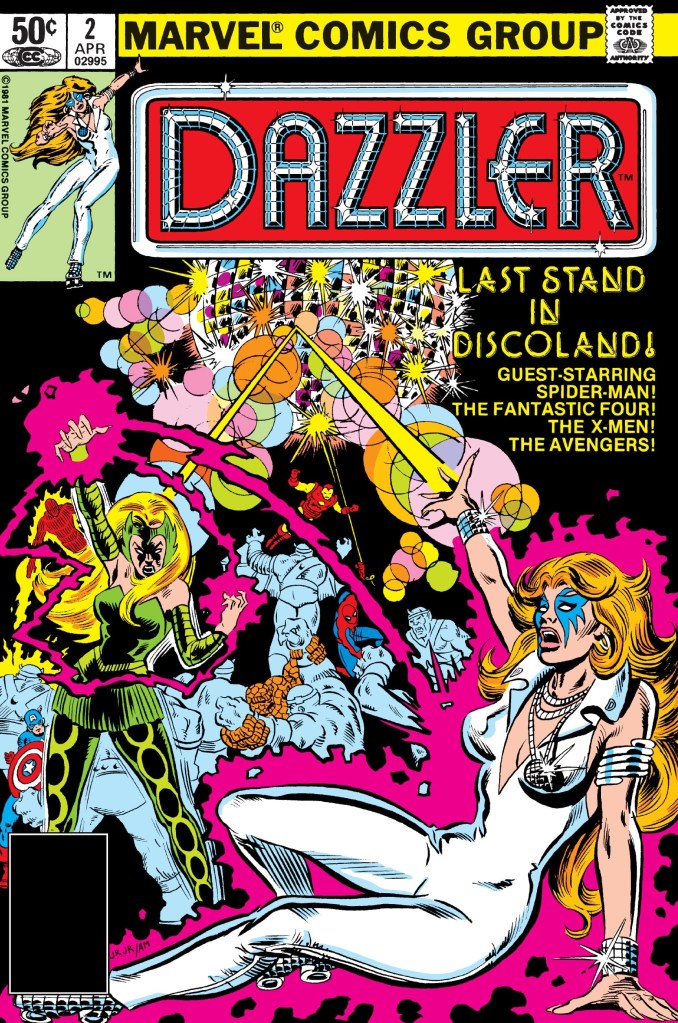
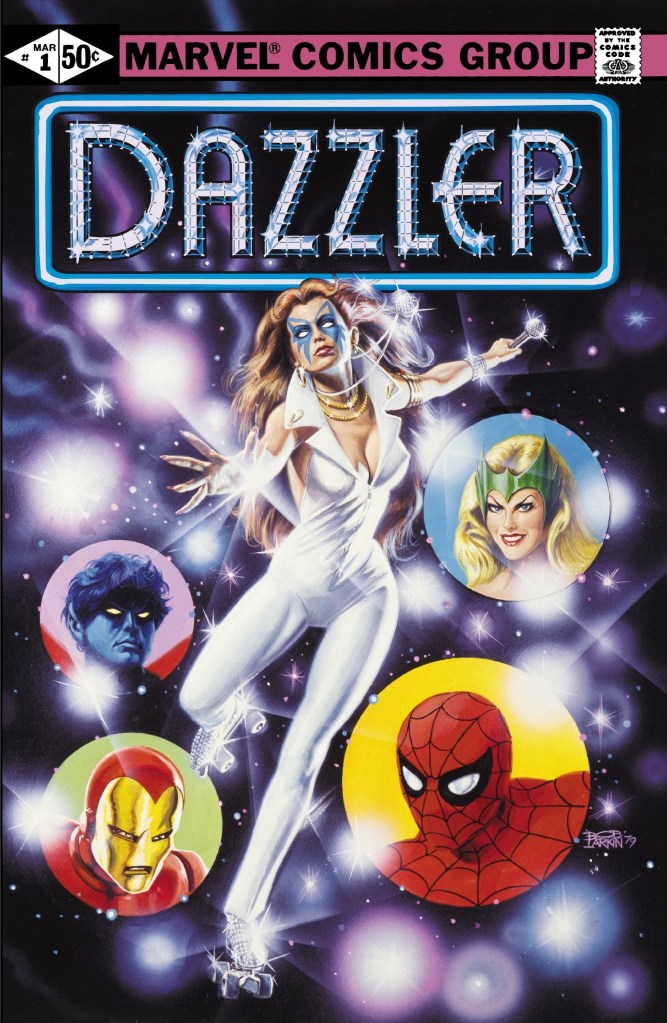
The cover.

Early story

The story begins with Dazzler running away from four armed men who had been following her since she left the disco. She finds herself corned at the dead end of an alley as the men approach her. While pretending to be reaching for her make-up in the bag, Dazzler grabs and activates her portable radio which plays music. With the music turned on, she uses her power to convert it all into a dazzling display of light and color which makes the men disoriented.

While swinging nearby, Spider-Man notices the display of light but before he begins his approach, Dazzler makes her move to knock two men out. Another man fires his gun and his bullet ricochets until it hits the portable radio stops the music and Dazzler’s lights altogether leaving her vulnerable once again…

Quality

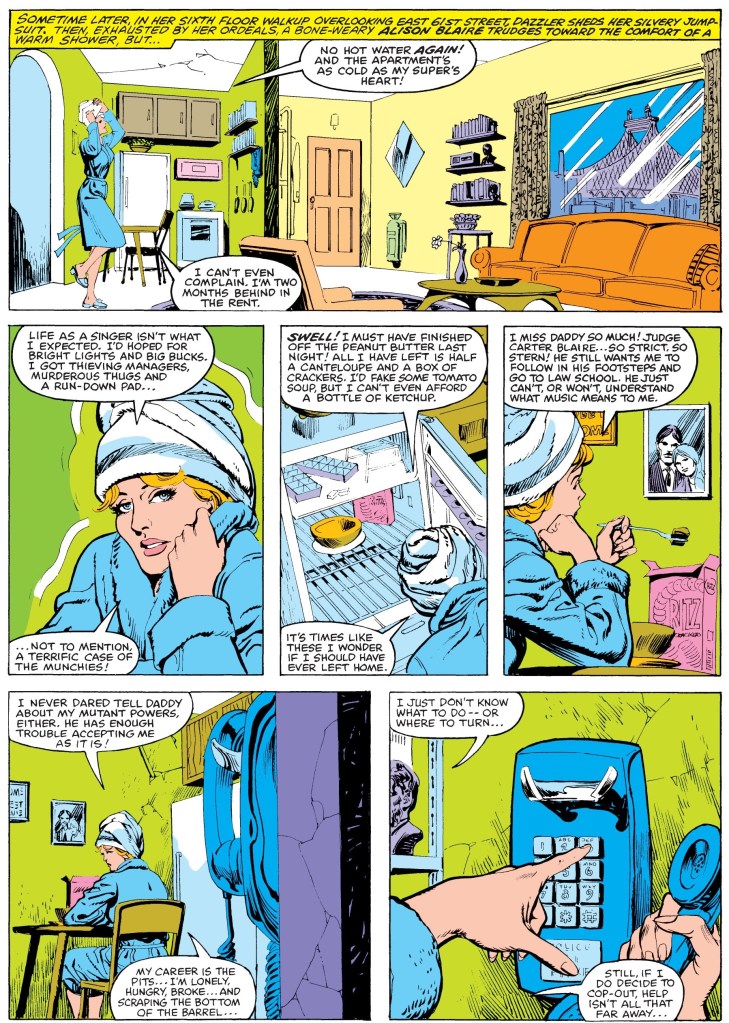
This page alone establishes Dazzler as a person struggling to make ends meet.

As far as telling a Dazzler story goes, this comic book is the complete package and it’s got very solid writing! Apart from showing what happened to her after her appearances in the Uncanny X-Men and Amazing Spider-Man series, this comic book formally introduces Dazzler in her civilian identity as Alison Blaire and thanks to efficient writing, it also reveals threads of her past and how her mutant powers manifested. Not only that, readers will get to see the title character as a typical person who is struggling to make ends meet even though she does her best with entertainment as a career.

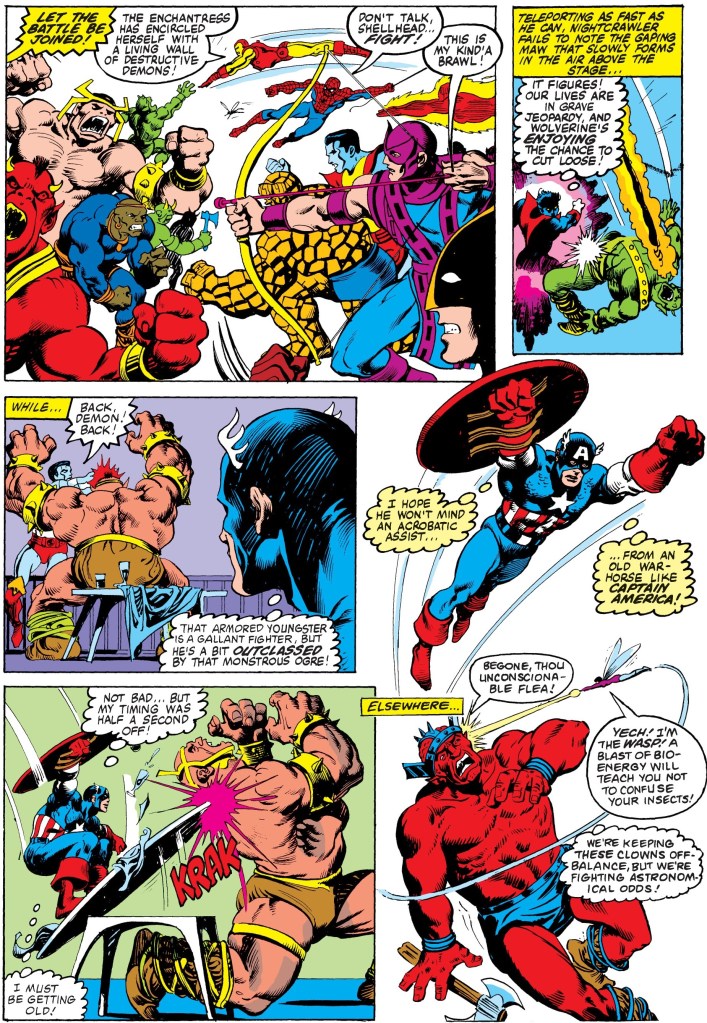
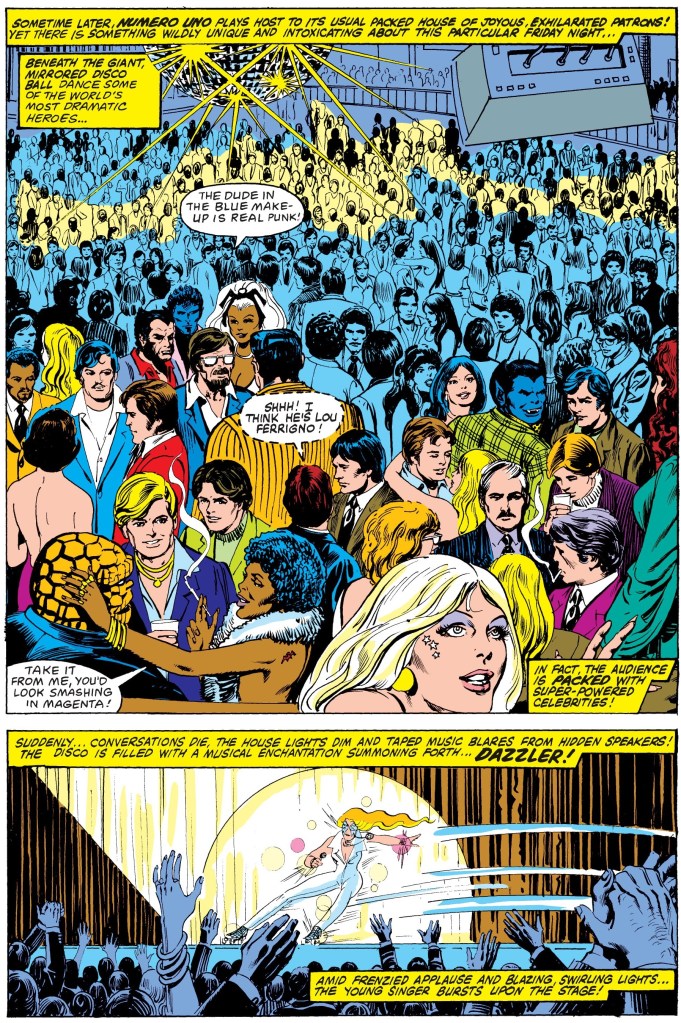
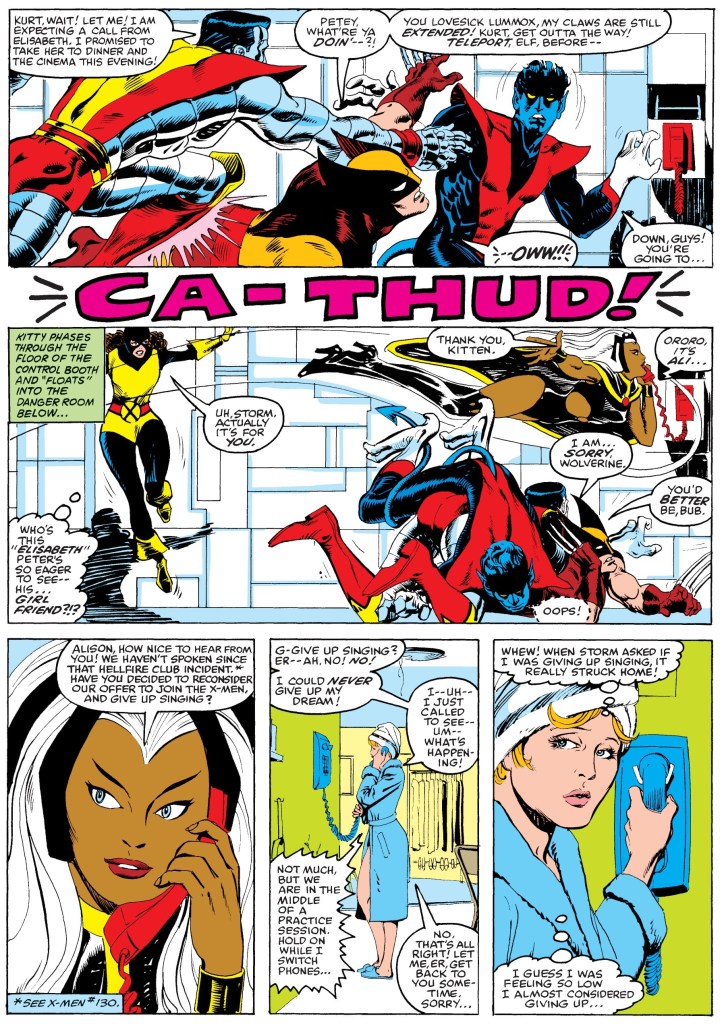
Strangely, the focus on Dazzler is relatively light in content and the result is several pages of Marvel universe-related filler which shows several other characters like Captain America, Iron Man, Storm, Wolverine and others present with little to no connection with the title character. The X-Men scene is a nice touch as it will remind readers about Dazzler’s first interaction with them.

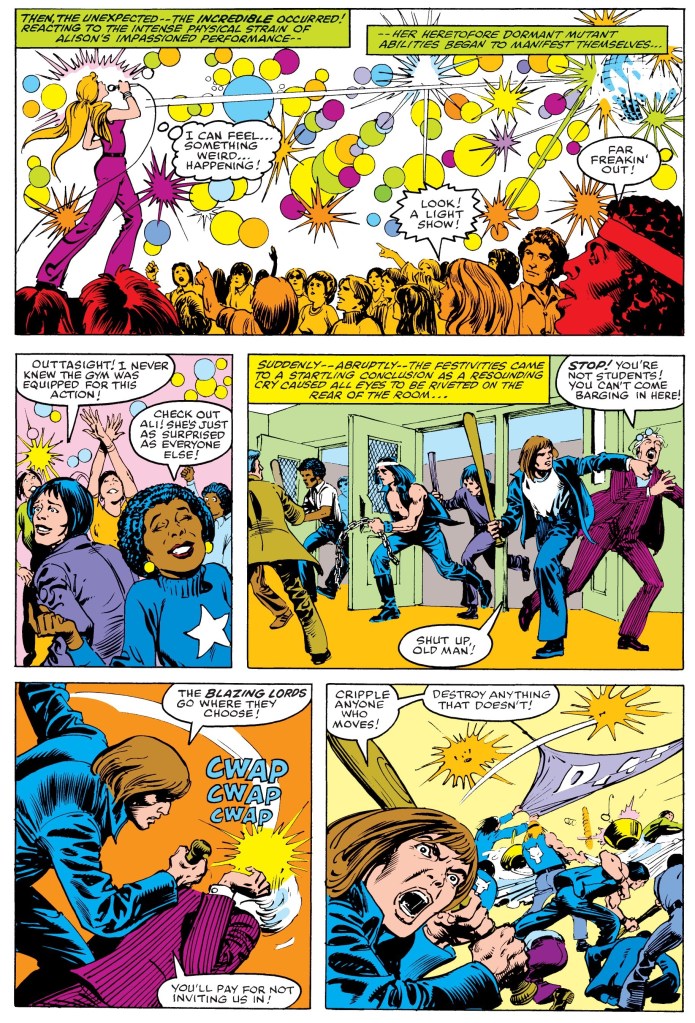
As a teenager, Alison Blaire’s power begins to manifest during this particular event in her life.

To build-up the first challenge for Dazzler, this comic book has the Enchantress as the villainess and ironically it also had some room of character development for her. Clearly this was done not only to build up anticipation for the next issue but to make readers root for Dazzler some more. In retrospect, the Enchantress would later emerge as an important figure in 1984’s crossover storyline Secret Wars.

Conclusion

The scene involving the X-Men is a nice touch as it connects with Dazzler’s previous interaction with them.

While it is indeed a product of the early 1980s carrying influences from the 1970s New York club scene, Dazzler #1 (1981) is still fun and engaging to read. Clearly this comic book is a must-have for anyone who loves Dazzler and it should be entertaining enough for geeks who love the 1980s and the Marvel-related crossovers of the time. Very clearly, this comic book succeeded in introducing and developing Dazzler as a person (as opposed to being a super hero) and the background story established fits in nicely with the character’s first appearance in Uncanny X-Men #130. Very clearly, there is a lot more to Dazzler than her unique super power and her disco look.

If you are seriously planning to buy an existing hard copy of Dazzler #1 (1981), be aware that as of this writing, MileHighComics.com shows that the near-mint copy of the comic book costs $70.

Overall, Dazzler #1 (1981) is highly recommended!

+++++

Thank you for reading. If you find this article engaging, please click the like button below and also please consider sharing this article to others. If you are looking for a copywriter to create content for your special project or business, check out my services and my portfolio. Feel free to contact me as well. Also please feel free to visit my Facebook page Author Carlo Carrasco and follow me at HavenorFantasy@twitter.com
A Look Back at Amazing Spider-Man #203 (1980)

Disclaimer: This is my original work with details sourced from reading the comic book and doing personal research. Anyone who wants to use this article, in part or in whole, needs to secure first my permission and agree to cite me as the source and author. Let it be known that any unauthorized use of this article will constrain the author to pursue the remedies under R.A. No. 8293, the Revised Penal Code, and/or all applicable legal actions under the laws of the Philippines.

Welcome back, superhero enthusiasts, 1980s culture enthusiasts, comic book collectors and fans of Marvel Comics! Previously I reviewed Uncanny X-Men #130 (1980) which was the first appearance of Dazzler who eventually became a popular figure for Marvel Comics in the 1980s. Before the company published a monthly comic book series featuring her, Dazzler made another appearance in an issue of the Amazing Spider-Man which was released just a few months after her debut. This, of course, led to a crossover with the iconic webslinger himself.

With those details laid down, here is a look back at Amazing Spider-Man #203, published in 1980 by Marvel Comics with a story written by Marv Wolfman and drawn by Keith Pollard.

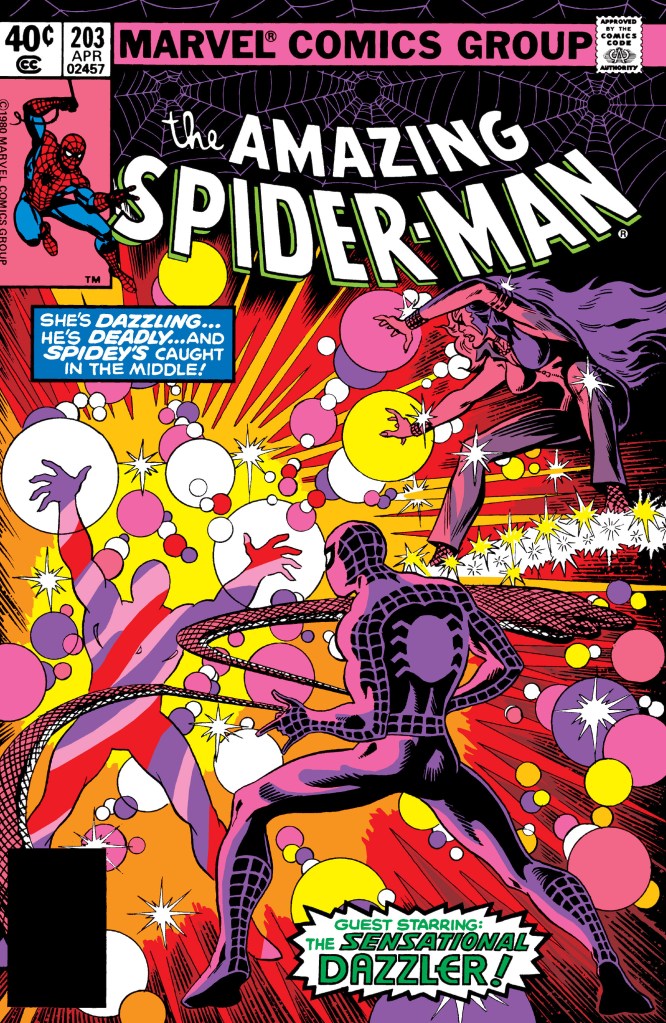
The cover.

Early story

The story begins during a night in the city where a swinging Spider-Man gets distracted by fast skating Dazzler who is being followed closely by a streak of light. After Spider-Man speculates about the possible return of Will-o-the-Wisp, he decides to intervene and pulls Dazzler off the road and to himself above. Dazzler faints suddenly.

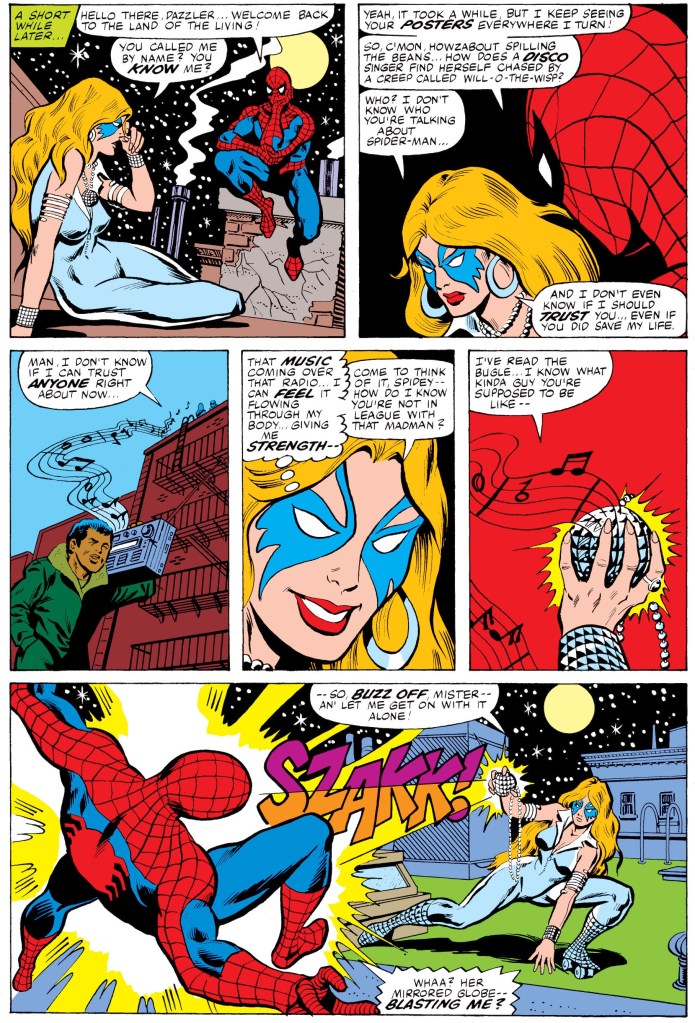
A short while afterward, Dazzler wakes up and starts talking with the webslinger. In response to the mention of Will-o-the-Wisp’s name, she claims to not knowing what he was talking about. As their talk goes on, Dazzler hears music from the street which strengthens her. Using the small mirror globe she is wearing, Dazzler hits Spider-Man with a blast of light pushing him off the building…

Quality

The crossover between Dazzler and Spider-Man is the main feature of this comic book.

This is one fun crossover between the iconic Spider-Man and the brand-new Dazzler. Marv Wolfman wrote a story that not only followed the further adventures of the webslinger, it also gave readers more to see and learn about Dazzler who just had her unexpected adventure with the X-Men months earlier (in Uncanny X-Men #130 and #131). By connecting this story with those two X-Men comic books, it really looked like just got back home in the city only to get chased by streaking light. The interactions between Dazzler and Spider-Man were entertaining. While Dazzler is a known entertainer among New Yorkers, it was the webslinger who remains the big, popular local figure which is clearly reflected in the singer’s verbal exchange with him.

The villain in this comic book, Lightmaster, is pretty cartoonish visually but his super power and high intelligence do make him look threatening. I like the way the story was crafted with concepts that link Lightmaster with Dazzler. Both of them are connected with light and while Dazzler is able to absorb sound like a form of energy and create light beams, Lightmaster has the means to tap on her power and use it for his advantage. There is also another capability of Lightmaster’s which I will just leave unrevealed and you who read this should find out about it.

Conclusion

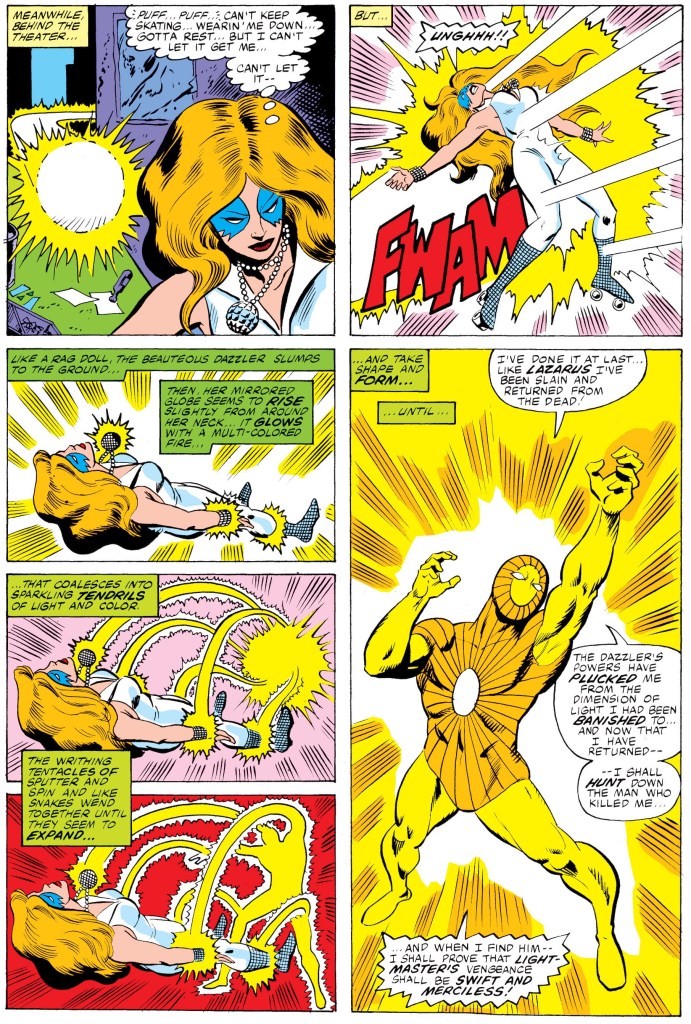
Lightmaster enters the scene.

Amazing Spider-Man #203 (1980) is a very old yet fun comic book that fans of Spider-Man and Dazzler will enjoy. Not only does it have a meaty encounter between the two, it also succeeds in chronicling Spider-Man’s life both in costume and as civilian Peter Parker. Going back to Dazzler, there is not much character development for her here but that is understandable as such emphasis was only waiting to happen in her own monthly comic book series.

If you are seriously planning to buy an existing hard copy of Amazing Spider-Man #203 (1980), be aware that as of this writing, MileHighComics.com shows that the near-mint copy of the regular edition costs $94 while the near-mint copy of the newsstand edition costs $150.

Overall, Amazing Spider-Man #203 (1980) is recommended.

+++++

Thank you for reading. If you find this article engaging, please click the like button below and also please consider sharing this article to others. If you are looking for a copywriter to create content for your special project or business, check out my services and my portfolio. Feel free to contact me as well. Also please feel free to visit my Facebook page Author Carlo Carrasco and follow me at HavenorFantasy@twitter.com
A Look Back at Spider-Man #26 (1992)

Disclaimer: This is my original work with details sourced from reading the comic book and doing personal research. Anyone who wants to use this article, in part or in whole, needs to secure first my permission and agree to cite me as the source and author. Let it be known that any unauthorized use of this article will constrain the author to pursue the remedies under R.A. No. 8293, the Revised Penal Code, and/or all applicable legal actions under the laws of the Philippines.

In 1992, Marvel Comics organized a big celebration of what was back then the 30th anniversary celebration of Spider-Man. Behind the scenes, the Spider-Man editorial team organized their creators to make something special worthy of the anniversary. Back then there were four monthly series of Spider-Man – Amazing Spider-Man, Spectacular Spider-Man, Web of Spider-Man and Spider-Man – and in keeping with the 30th anniversary bonanza, each of the monthly series would see one special issue with a hologram on the cover.

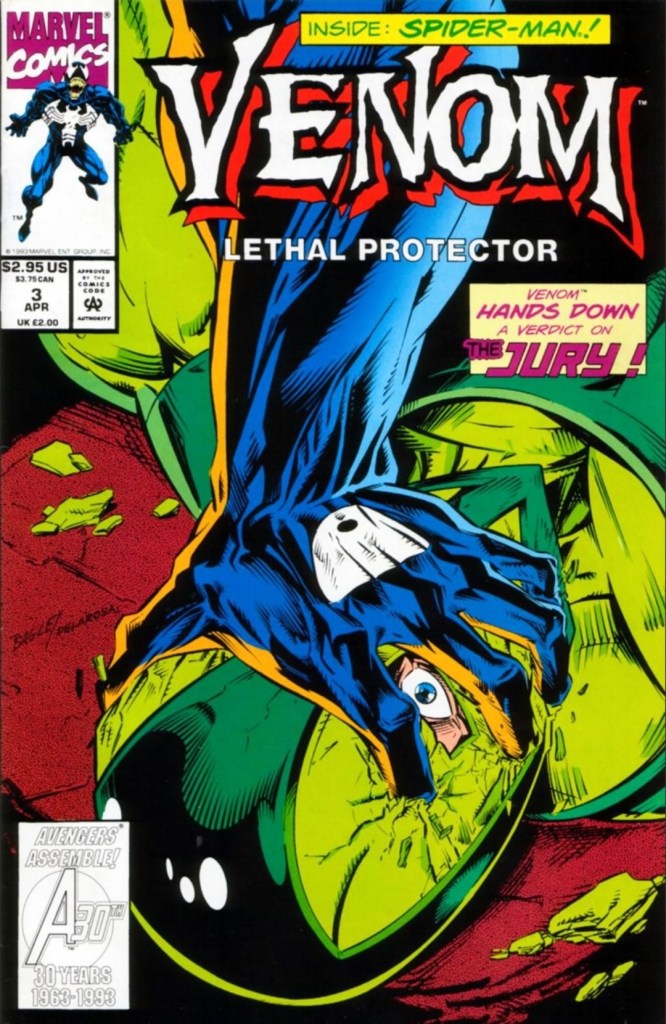
What I read recently was one of those 30th anniversary celebration special comic books – Spider-Man #26. This comic book had a green cover and a hologram of Spider-Man upside-down. Its cover price is $3.50.

Was this old comic book’s content really worth the high cover price and the hologram? Did the creative team at Marvel do their job on making something special in line with the 30th anniversary celebration? We can find out in this look back at Spider-Man #26, published in 1992 by Marvel Comics with the main story written by Tom DeFalco and drawn by Mark Bagley and Ron Frenz.

The cover with a hologram.

Early story

The story begins on the street of New York when a man wearing a device runs down the sidewalk distracting and unintentionally pushing a few people out of the way. He is glowing as he moves. Someone from behind him calls him Stewart.

Soon enough, Peter Parker/Spider-Man and Mary Jane cross paths with him. Peter immediately leaves Mary Jane behind and starts pursuing the glowing Stewart. In the middle of the street, Stewart sees a speeding motorcycle heading towards him. He dives for cover which incidentally shapes his glowing field into a makeshift ramp causing the motorcyclist go over him. Spider-Man sees the flying motorcycle and its driver, and struggles to decide which one to save…

Quality

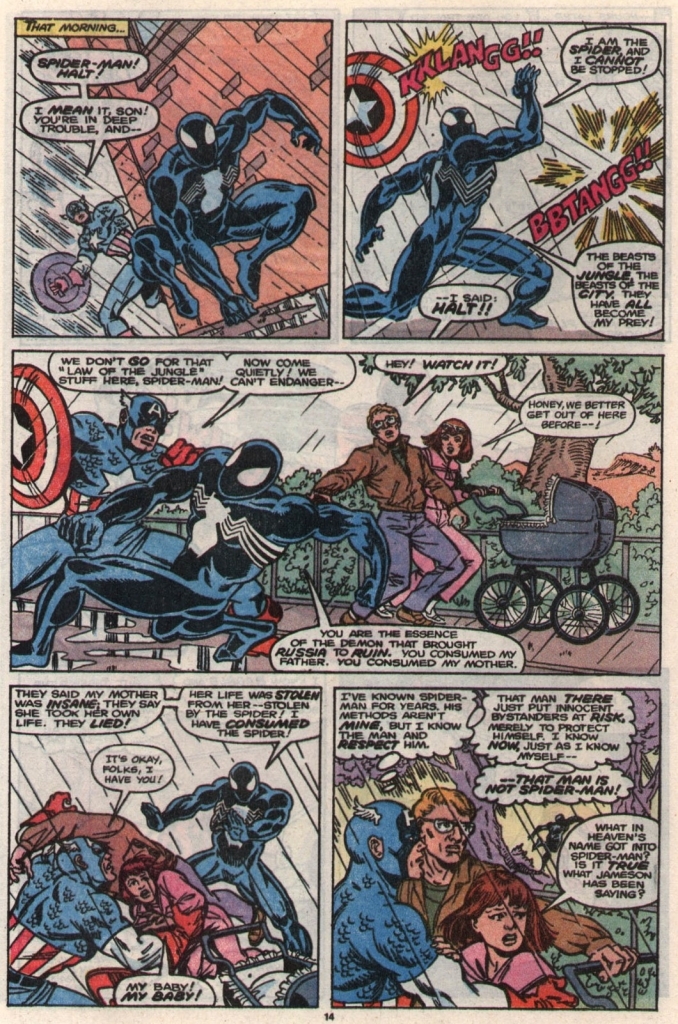
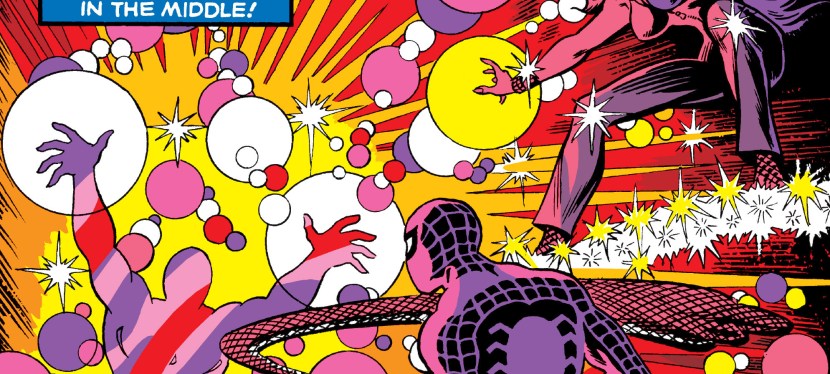
From the 2nd story.

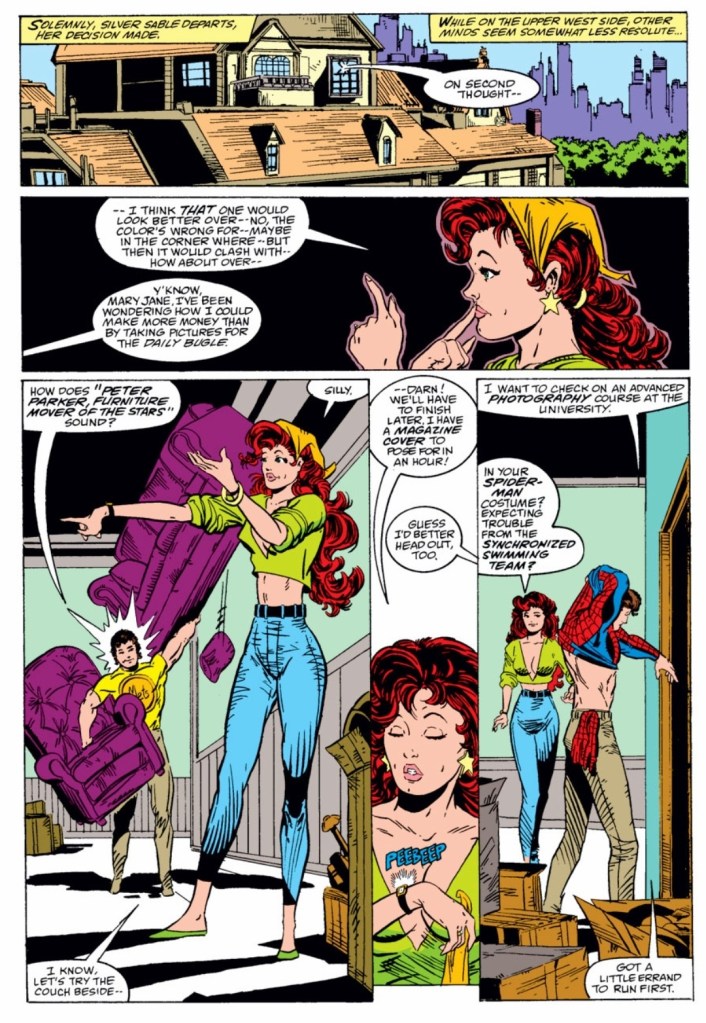
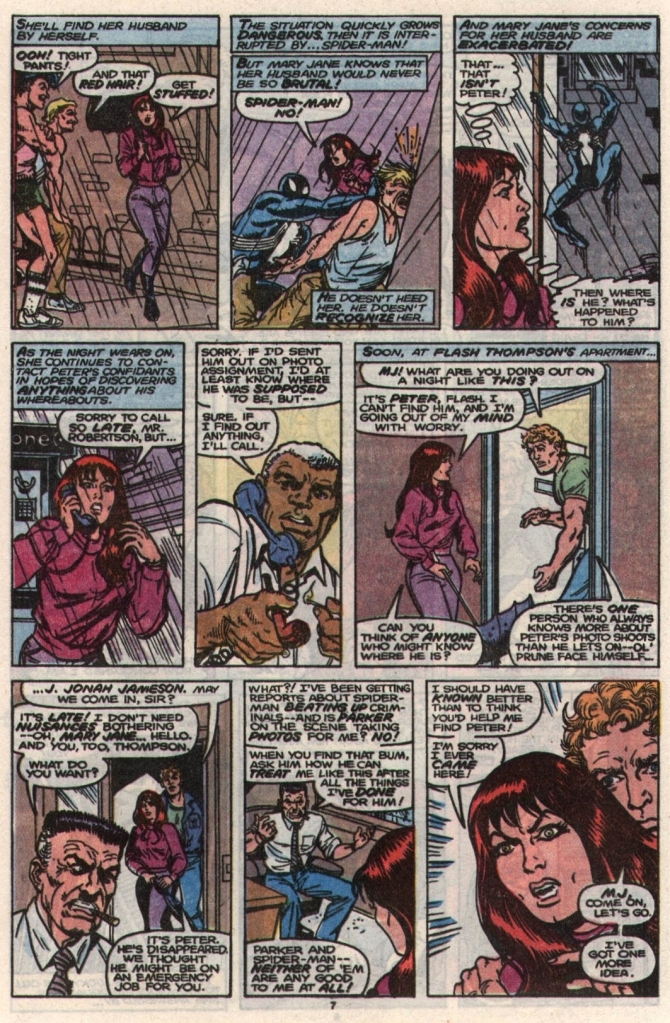
Let me start with the main story. It sure is heavily worded almost all throughout but that is understandable because Tom DeFalco really pushed hard to emphasize the theme of responsibility as Spider-Man struggles to tackle criminals while trying to find quality time for his wife. There was even a scene in which Peter Parker recalls key events from his past (his becoming Spider-Man, letting a certain criminal get away, the death of his Uncle Ben, etc.) which, in terms of presentation, was a clear attempt by the creative team to bring readers back to the recorded history of Marvel’s icon. The main story is a genuine, heart-filled attempt to go beyond showing Spider-Man beating the bad guys to do local society good. There was also effort exerted to show that there are a few guys who do bad things not because they are inherently evil but rather they are desperate and/or misguided. The problem with the main story is that the other characters – Stewart, Bill, the gang leader Maxwell and others – are not so interesting at all. Of course, we cannot expect to see Spider-Man go head-to-head with another one of his major villains but this story was part of the 30th anniversary celebration.

The 2nd story, if you can all it that, is pretty much an exposition-filled exercise designed to give readers – both new and old – a review of Spider-Man’s powers and capabilities. To prevent it from becoming a total bore, some characters from the Marvel Comics universe were visually added.

When it comes to the quality of the artwork, Ron Frenz’s work here is serviceable at best. Mark Bagley’s art here improves the quality but that’s not saying much.

Conclusion

From the main story.

As a 30th anniversary celebration issue, Spider-Man #26 does not have much when it comes to being truly special. You love spectacle? You won’t find much in it. You wanted to see something groundbreaking in terms of character development? There’s none. Gripping storytelling? None! There was also no conflict with any prominent villain from the Marvel universe here. What you will get here is nostalgic stuff plus exposition about key elements that define Spider-Man. Truly the only thing special here is the hologram on the gimmick cover.

If you are seriously planning to buy an existing hard copy of Spider-Man #26 (1992), be aware that as of this writing, MileHighComics.com shows that the near-mint copy of the regular edition costs $27 while the near-mint copy of the newsstand edition costs $90.

Overall, Spider-Man #26 (1992) is serviceable. If you really want to buy this old comic book, I recommend waiting for its price to fall below $5 and I’m referring to the near-mint copy.

+++++

Thank you for reading. If you find this article engaging, please click the like button below and also please consider sharing this article to others. If you are looking for a copywriter to create content for your special project or business, check out my services and my portfolio. Feel free to contact me as well. Also please feel free to visit my Facebook page Author Carlo Carrasco and follow me at HavenorFantasy@twitter.com