
Several business executives and investors from the United States are set to visit the Philippines next week to explore investment opportunities in the nation’s infrastructure sector, energy sector, and more, according to a news report by the Manila Bulletin. The American investors will engage with their Filipino counterparts during the planned 5-day trade mission.
To put things in perspective, posted below is the excerpt from the report of the Manila Bulletin. Some parts in boldface…
More than 25 American business executives and investors will visit the country next week for a business mission as the United States (US) seeks to deepen its economic ties with the Philippines, which recently secured upper-middle-income status.
In a statement, the Department of Trade and Industry (DTI) said the US business delegation would mount a five-day trade mission across major economic areas in the Philippines from July 6 to 10.
The delegation includes business leaders and investors from the Northeast and Midwest regions of the US. The mission is organized by the DTI’s Philippine Trade and Investment Center (PTIC) in New York and the Philippine Consulates General in New York and Chicago.
The DTI said the business mission aims to strengthen economic ties between the two longtime trade partners while also encouraging US companies to invest more in the country’s growing economy.
Based on the latest country income classifications of the World Bank, the Philippines has moved up from lower-middle-income to upper-middle-income status. This was based on the country’s gross national income (GNI) per capita estimate for 2025, which reached a record $4,850.
The DTI noted that the upcoming visit also comes at a time when the Philippines is actively positioning itself as a key partner for US companies looking to expand in Asia.
During the business mission, the US delegation will meet with Philippine government leaders and local business owners to explore business, tourism, and investment opportunities.
The US business leaders will also attend business meetings, informational briefings, and tours of key economic areas in Manila, Clark, Subic, and Corregidor.
Let me end this piece by asking you readers: What is your reaction to this development? Do you see a promising future between the United States and the Philippines when it comes to economics and investment under the leadership of US President Donald Trump? Are you convinced the corruption within the Philippines is no longer a turn-off for American investors?
Following the big meeting between Japanese Prime Minister Takaichi Sanae and Philippines president Ferdinand “Bongbong” Marcos in Tokyo, the two nations confirmed they will work together on developing the Luzon Economic Corridor (LEC) into an economic hub described as “world-class”, according to a news article by the Philippine News Agency (PNA).
To put things in perspective, posted below is an excerpt from the PNA news article. Some parts in boldface…
The Philippines and Japan have reaffirmed their commitment to transform the Luzon Economic Corridor (LEC) into a “world-class economic hub,” recognizing its strategic role in strengthening regional economic architecture and global supply chain resilience.
In a joint statement following a summit meeting in Tokyo, Japan on Thursday, President Ferdinand R. Marcos Jr. and Japanese Prime Minister Sanae Takaichi pledged to deepen cooperation on high-impact infrastructure and economic initiatives under the LEC framework.
Priority areas include rail and port modernization, clean energy, semiconductor supply chains, digital connectivity, agribusiness, and civilian port upgrades.
“They also reaffirmed their strong commitment to transforming the LEC into a world-class economic hub that strengthens global supply chains, accelerates economic development, and delivers mutual economic prosperity,” the joint statement read.
The LEC is a trilateral initiative involving the Philippines, Japan, and the United States (US) aimed at enhancing connectivity and economic growth across Luzon, particularly along the Subic-Clark-Manila-Batangas corridor.
The Philippines and Japan acknowledged the importance of trilateral cooperation with the US and coordination with like-minded partners such as Australia and India in upholding a “free and open” international order based on the rule of law.
The two leaders emphasized that strengthening infrastructure connectivity and resilience through Japan’s Official Development Assistance (ODA) is vital not only to the Philippines’ economic growth but also to regional stability.
Japan reaffirmed its support for “high-quality, resilient, and sustainable infrastructure development” to help advance the Philippines’ economic and social transformation.
The two countries also agreed to deepen cooperation in economic security, including efforts to strengthen resilient and diversified supply chains in critical minerals, renewable energy, automotive manufacturing, and advanced technologies such as artificial intelligence (AI).
They likewise committed to enhancing collaboration on digital infrastructure, including undersea cables and 5G Open RAN technologies, while promoting secure and trustworthy AI ecosystems through the Japan-ASEAN Co-creation Initiative for AI.
On trade and investment, both sides stressed the importance of full implementation of existing agreements such as the Philippines-Japan Economic Partnership Agreement, the ASEAN-Japan Comprehensive Economic Partnership, and the Regional Comprehensive Economic Partnership.
Let me end this piece by asking you readers: What is your reaction to this development? Do you think Japan’s involvement in the Luzon Economic Corridor will be beneficial to the Philippines economically? What do you think Japan can gain from developing the Luzon Economic Corridor?
Thank you for reading. If you find this article engaging, please click the like button below, share this article to others and also please consider making a donation to support my publishing. If you are looking for a copywriter to create content for your special project or business, check out my services and my portfolio. Feel free to contact me with a private message. Also please feel free to visit my Facebook page Author Carlo Carrasco and follow me on Twitter at @CarloCarrascoPH as well as on Tumblr at https://carlocarrasco.tumblr.com/and on Instagram athttps://www.instagram.com/authorcarlocarrasco
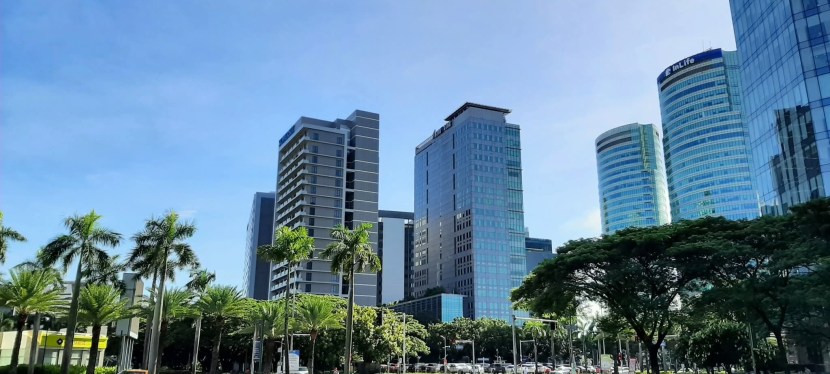
Here in the Philippines, the push to develop new international airports to improve air travel connectivity with other destinations gained a major step forward as the United States Trade and Development Agency (USTDA) will fund a crucial feasibility study for the multi-billion Dollar Sangley Point International Airport (SPIA) project, according to a news report by the Manila Bulletin.
To put things in perspective, posted below is an excerpt from the Manila Bulletin report. Some parts in boldface…
The United States (US) Trade and Development Agency (USTDA) will fund a feasibility study for the proposed Sangley Point International Airport in Cavite, a project aimed at easing congestion in Metro Manila and bolstering security for direct transpacific flights.
The USTDA awarded the grant to Cavitex Holdings Inc., a local developer leading the project consortium, the agency said in a statement on Tuesday, May 12.
Cavitex has selected California-based The S-A-P Group LLC to conduct the technical analysis, which will include air traffic forecasting, financial modeling, and the design of security protocols for a facility intended to serve as a major gateway for US-bound travel.
The investment comes as the Philippines struggles to manage surging aviation demand. Metro Manila’s primary gateway, Ninoy Aquino International Airport (NAIA), handled approximately 52 million passengers in 2025, pushing its aging infrastructure to the limit. The Sangley project is a central component of the Luzon Economic Corridor, a strategic initiative designed to strengthen economic resilience and infrastructure connectivity across the country’s most populous island.
“The high volume of direct international travel between the United States and the Philippines reflects the steadfast friendship of our two countries,” said Thomas R. Hardy, USTDA deputy director.
He added that the project aligns with the broader goal of maintaining a free and open Indo-Pacific by fostering safe and efficient passenger traffic.
For Cavitex, the US backing provides both technical expertise and a gateway to American technology. The study will evaluate the adoption of US solutions for security screening, telecommunications, and airport construction.
Leonides J.M. Virata, Cavitex president and chief executive officer, said the grant will accelerate the development of an airport expected to generate tens of thousands of jobs and unlock billions of pesos in long-term economic activity.
While the project cost remains subject to the study’s findings, the consortium has previously indicated that the multi-phase redevelopment of the former naval base could require an investment exceeding 500 billion pesos. The project is designed to handle both cargo and passenger traffic, providing a necessary relief valve for the capital region’s saturated airspace.
The USTDA functions as a “first mover” for US government involvement in emerging market infrastructure, providing the technical groundwork required to make large-scale projects bankable.
Let me end this post by asking you readers: What is your reaction to this recent development? Are you convinced that the USTDA’s funding of a feasibility study is very crucial for the development of the Sangley Point International Airport? Do you think there really is a high volume of direct international travel between America and the Philippines? Do you think the development of new international airports in the Philippines will progress better as long as the national government does not get involved?
Thank you for reading. If you find this article engaging, please click the like button below, share this article to others and also please consider making a donation to support my publishing. If you are looking for a copywriter to create content for your special project or business, check out my services and my portfolio. Feel free to contact me with a private message. Also please feel free to visit my Facebook page Author Carlo Carrasco and follow me on Twitter at @CarloCarrascoPH as well as on Tumblr at https://carlocarrasco.tumblr.com/and on Instagram athttps://www.instagram.com/authorcarlocarrasco

In the latest development between the United States and the Philippines, the US Department of State announced that the two nations plan the launch of a historic economic security zone of four thousand acres which will shore up supply chains and it will be located in the main island of Luzon.
To put things in perspective, posted below is an excerpt from the fact sheet posted by the State Department. Some parts in boldface…
Under Secretary of State for Economic Affairs Jacob Helberg today announced the United States’ and the Philippines’ plans to establish a 4,000-acre industrial hub to secure inputs vital to American and global supply chains. The site is located in the Luzon Economic Corridor of the Philippines. The site—the first of its kind—is being designated by the Philippines as an Economic Security Zone, a new model for AI-native investment acceleration hubs being developed under the Pax Silica Initiative.
The Economic Security Zone is part of a broader strategy to surge production for inputs vital to U.S. supply chains. It is expected to serve as a purpose-built platform for allied manufacturing—an investment acceleration hub where the specific industrial activities are shaped by market demand, host-country comparative advantages, and the evolving needs of the allied network. Situated within the Luzon Economic Corridor, the Zone can leverage the Philippines’ geographic centrality in the Indo-Pacific, its young and technically skilled workforce, and its deepening alliance with the United States.
Structure and Planned Governance
Joint governance: The two governments intend to identify appropriate frameworks for the long-term development of the Zone that facilitate sovereign alignment and shared upside as it scales.
Enhanced Operational Certainty: The Economic Security Zone is intended to fuse American expertise in institutions and legal regimes – internationally enforceable contracts, transparent regulatory standards, and expert dispute resolution – with enhanced access to the Philippines’ outstanding workforce and talent, mineral endowments, energy resources, and strategic position at the crossroads of Indo-Pacific trade.
The Philippines and Pax Silica
Critical minerals: The Philippines holds significant reserves of nickel, copper, chromite, and cobalt—minerals increasingly vital to global supply chains.
Infrastructure: The Luzon Economic Corridor (LEC) is a coordinated, high-impact investment in key sectors, including in transportation, energy, digital infrastructure, and advanced manufacturing. The LEC will transform Luzon into a more prosperous and interconnected region while delivering value to American investors.
The Economic Security Zone
First of many: The Luzon hub is intended to be the first Zone in a broader industrial network—a constellation of integrated manufacturing sites, logistics corridors, and shared financial instruments spanning partner nations across multiple continents.
System transformation: This interconnection can transform Pax Silica industrial policy from a collection of bilateral projects into a genuine system capable of competing with—and ultimately displacing—the concentrated supply chains on which the world currently depends.
For insight, Pax Silica is the State Department’s flagship effort on artificial intelligence (AI) and supply chain security, advancing new economic security consensus among allies and trusted partners. To learn more, click here.
Meanwhile the Philippine News Agency (PNA) published its news article about this development revealing that the Philippines officially joined the Pax Silica Initiative described as a strategic coalition among fourteen states to create a secure supply for semiconductors and AI. To read the news article, click here.
Let me end this piece by asking you readers: What is your reaction to this development? Do you think both the Philippines and America will benefit from the planned 4,000-acre special economic security zone in the long-term?
Recently the Subic Bay Metropolitan Authority (SBMA) was recognized by the Australia and New Zealand Chamber of Commerce (ANZCham) for strengthening economic ties between the Philippines, Australia and New Zealand during a prestigious event held in Makati City, according to the official announcement.
To put things in perspective, posted below is an excerpt from official announcement by the SBMA. Some parts in boldface…
The Australia and New Zealand Chamber of Commerce (ANZCham) recognized the Subic Bay Metropolitan Authority (SBMA) for its efforts in fostering strong economic linkages between the Philippines, Australia, and New Zealand.
The citation was given during ANZCham’s 45th Annual General Meeting and Awards Night held at the Makati Shangri-La on March 24, 2026, where SBMA Senior Deputy Administrator for Business and Investment Renato Lee III accepted the award on behalf of the agency.
“We are strengthening our global linkages not only to attract capital but also to bring in innovation, technology, employment, and long-term partnerships that create real economic value,” Lee said.
The Bridges of Progress Award is conferred to Philippine institutions that have demonstrated exemplary collaboration and actively contributed to strengthening trilateral and economic ties with Australia and New Zealand.
SBMA’s recognition reflects its role in advancing international partnerships and investment promotion, a testament to SBMA’s growing role in the regional investment landscape.
It recognizes its sustained efforts to streamline investment processes, support foreign enterprises, and position Subic Bay Freeport as a competitive hub for global business.
Meanwhile, SBMA Chairman and Administrator Eduardo Jose L. Aliño emphasized the award’s broader significance in reinforcing international cooperation: “This honor reflects the strength of our partnerships with the Australian and New Zealand business communities.”
“We remain committed to policies that encourage greater investments, deepen economic engagement, and promote shared prosperity across our regions,” he added.
ANZCham officers, headed by its President Benjamin Romualdez, attended the event, along with members of the diplomatic corps and leaders from both the public and private sectors, and gathered to celebrate organizations that have contributed significantly to enhancing cross-border partnerships.
ANZCHAM Philippines is a prominent, non-profit business organization that has been active for over 45 years. It serves as a bridge for enterprises looking to expand within the Philippine-Australian-New Zealand business corridor.
Let me end this post by asking you readers: What is your reaction to this recent development? Do you think the SBMA’s continued efforts on strengthening economic ties with the Philippines, Australia and New Zealand will result in investment breakthroughs?
While the Philippines continues to be active on attracting investments from around the world, it still has yet to wipe out the plague of corruption which remains a persistent challenge in the private and public sectors. That being said, the United States pointed to the corruption as a major barrier to trade and investment with the Philippines, according to a Manila Bulletin news report. This is not the first time America noticed Philippine corruption in relation to economics.
To put things in perspective, posted below is an excerpt from the report of the Manila Bulletin. Some parts in boldface…
The United States (US) has once again flagged corruption as a major barrier to trade and investment with the Philippines, as recent efforts to clean up regulatory and judicial processes have failed to yield positive results.
In this year’s National Trade Estimate (NTE) report, the Office of the US Trade Representative (USTR) said corruption continues to be a “pervasive and longstanding problem” in doing business in the Philippines. The report was released on Tuesday, March 31.
This year, unlike last year’s NTE report, the USTR specifies that corruption remains a persistent challenge in both the private and public sectors.
“National and local government agencies, for example the Bureau of Customs (BOC), are beset with various corruption issues, including allegations of overt bribery,” it said.
The USTR said attempts by the BOC to address customs and corruption concerns continue to fall short, as reports of corruption and irregularities in customs processing remain widespread.
In particular, US businesses are complaining about incidents of undue and costly delays, irregularities in the valuation process, exhaustive inspection and testing of some products, and inconsistent assessment of fees.
The USTR also called out the “lack of transparency in judicial and regulatory processes,” which ultimately undermines efforts to address corruption.
The agency is urging the Philippine government to deal with corruption once and for all, warning that it may impact trade and investment flows between the two longtime allies.
“If left unchecked, bribery and corruption can negate market access gained through trade negotiations, frustrate broader reforms and economic stabilization programs, and undermine the foundations of the international trading system,” the USTR said.
Despite the Philippines’ efforts to strengthen its intellectual property (IP) protection and enforcement, the USTR said the US remains dissatisfied with “inconsistent enforcement activities.”
“Stakeholders report issues with online piracy and sales of counterfeit goods, including apparel, shoes, watches, jewelry, perfume, and electronics,” it said.
Issues involving counterfeiting and piracy led to the continued inclusion of Greenhills Shopping Center in the 2025 Review of Notorious Markets for Counterfeiting and Piracy, or the USTR’s Notorious Markets List, released last month.
The government’s efforts to combat issues involving IP rights are weakened by the slow prosecution and conviction of cases, the USTR said.
Further, the USTR said that the US has concerns about the Philippines’ laws regarding the protection of internationally recognized labor rights, as well as the enforcement of labor laws.
The USTR noted that the Philippines currently does not have a ban on the importation of goods produced with forced or compulsory labor, which earlier prompted the agency to investigate the country along with 59 other economies.
Meanwhile, the agency also raised its objections to the country’s persistent problem with wildlife trafficking, which undercuts regulated trade in wildlife products and may lead to the contamination of global supply chains that would ultimately reach US consumers.
Without sufficient measures in place, the USTR said these market-distorting practices may weaken the trading relationship between the US and the Philippines.
“The Philippines has not entered into an Agreement on Reciprocal Trade with the US that includes commitments to address these distortions,” it said.
Philippine imports to the US, minus some exemptions, are subject to a 10-percent global tariff. This is lower than the 19-percent tariff imposed on such goods during the second half of last year.
Unlike countries that have negotiated tariff deals with the US, the Philippines remains at the whim of US President Donald Trump and his ever-unpredictable global trade agenda.
With the 2025 NTE report essentially shaping Trump’s tariff scheme last year, the USTR said the new 2026 report is no different, as it seeks to outline the US’ aim to rectify what it considers unfair trade practices of its trading partners.
Let me end this piece by asking you readers: What is your reaction to this development? Do you think the government of the Philippines consistently fell short on wiping out corruption and improving the many processes? Is the Philippines the least transparent nation in Southeast Asia when it comes to international trade and foreign investments? Do you think the deep corruption of the Philippines will become a major campaign issue in the 2028 Presidential, National and Local elections? Do you think the Philippines’ hosting of the ASEAN Summit will make Filipinos complete forget about corruption?
Recently inside the Subic Bay Freeport Zone, the Subic Bay Metropolitan Authority (SBMA) headed by its Chairman and Administrator Eduardo Jose L. Aliño hosted a delegation from the Embassy of Belgium led by Ambassador Vladislava Iordanova. During the visit, Aliño proposed to them a Sister Port Agreement between the Port of Subic and the Port of Antwerp-Bruges, according to the official announcement by the SBMA.
To put things in perspective, posted below is an excerpt from official announcement by the SBMA. Some parts in boldface…
A sister port agreement between the Port of Subic and the Port of Antwerp-Bruges is being considered during the visit of delegates from the Embassy of Belgium to the Philippines here on March 16, 2026.
Belgian Ambassador Her Excellency Vladislava Iordanova paid a visit along with officials from the Port of Antwerp-Bruges International (PoABI), the consultancy and investment subsidiary of the Port of Antwerp-Bruges.
During their visit, the Subic Bay Metropolitan Authority (SBMA) team, led by Chairman and Administrator Eduardo Jose L. Aliño, proposed a Sister Port Agreement between the two ports to enhance the traditional friendship between the SBMA and the PoABI.
The Port of Antwerp-Bruges is the largest petrochemical cluster in Europe and the second-largest in the world; it is also the largest car-handling port in Europe, handling more than 3 million cars per year. It has two oil refineries and is a frontrunner in the energy transition.
The port is also a driver of economic growth with 4.5% GDP contribution and a total annual throughput of +370 million tonnes, including +13 million TEUs.
Meanwhile, the Subic Bay Freeport has several locators with European Equity, including Agila NY Naval Inc. and Agila South Inc. from the Netherlands, with a combined investment commitment of US$350 million.
Let me end this post by asking you readers: What is your reaction to this recent development? Do you think the proposed Sister Port Agreement between the SBMA and Belgium will eventually be approved in the near future? Do you think that better trade will happen between the Port of Subic and the Port of Antwerp-Bruges will be realized?
Japanese Prime Minister Takaichi Sanae visited Washington for the first time as the head of her nation and met with US President Donald Trump at the White House where they discussed very important matters in front of the media and officials, according to a news report by Kyodo News. Takaichi also praised the President for his peace efforts.
To put things in perspective, posted below is an excerpt from the news report of Kyodo News Some parts in boldface…
Prime Minister Sanae Takaichi told U.S. President Donald Trump on Thursday that Japan is ready to contribute to the safety of the Strait of Hormuz as the U.S.-Israeli war on Iran intensifies, while explaining Tokyo’s legal constraints on sending ships from its defense forces to the region.
Takaichi told reporters after her meeting at the White House with Trump that she told the U.S. leader “in detail what Japan can do and cannot do” from a legal perspective under the country’s war-renouncing Constitution.
Trump, for his part, reiterated his expectation that Japan would be engaged, while saying during the part of their talks open to media that he believes Japan has been “stepping up to the plate” in recent days over the Iran war, “unlike NATO.”
The U.S. leader has made public his dissatisfaction with Washington’s allies, including Tokyo and members of the trans-Atlantic alliance, over their reluctance to pitch in to help secure the Hormuz strait, a vital waterway for global oil transportation now largely blocked by Iran.
“I expect Japan to step up, because, you know, we have that kind of relationship,” he said. “We have 45,000 soldiers in Japan. We have, we spend a lot of money on Japan…so I expect, I’m not surprised that they would step up.“
Noting also that more than 90 percent of Japan’s crude oil imports normally pass through the strait, Trump said Japan has a “big reason” to do more.
In affirming Japan-U.S. collaboration on expanding U.S. energy production, Takaichi said she proposed to Trump a joint oil-reserve project to ease supply concerns driven by the Middle East conflict.
At the talks, Takaichi praised Trump’s “peace” efforts, expressing readiness to assist by reaching out to other countries. “Donald is the only person who can bring peace and prosperity across the world,” she said.
Takaichi emphasized that the prospect of Iran developing nuclear weapons is unacceptable. Trump alluded earlier to Iran’s nuclear program to explain the U.S. decision to launch its military campaign against the country.
Facing an increasingly assertive China, Takaichi also reminded Trump that the security environment remains severe in the Indo-Pacific, at a time when reports have emerged that some U.S. military assets are being moved from the region to the Middle East.
The two leaders “committed to peace and stability across the Taiwan Strait as an indispensable element of regional security and global prosperity” and “opposed any attempts to unilaterally change the status quo, including by force or coercion,” the White House said in a press release without naming China.
They confirmed that their nations oppose measures threatening critical mineral supplies such as export controls, senior Japanese government officials told reporters, apparently referring to Beijing’s tighter regulations on rare earths exports.
They agreed to advance broad defense cooperation, including joint missile development and production, and promote a free and open Indo-Pacific, according to Takaichi. The White House said the production of the interceptor Standard Missile-3 Block 2A in Japan will be quadrupled.
“We were able to affirm many concrete forms of cooperation that will further enhance the quality of our alliance in wide-ranging fields,” Takaichi said, adding that she and Trump are aiming to elevate bilateral ties to “a higher level” together.
Trump welcomed Japan buying “a lot of” U.S. military equipment. He further stressed that he has a “very fine relationship” with Takaichi, describing her as “a very special person” who is doing a “fantastic job.”
The U.S. side did not bring up fresh demands for Japan to spend more on its defense, the officials said.
Takaichi’s main goals in her first trip to the United States since taking office in October were to strengthen the personal trust in her ties with Trump and reaffirm the U.S. security commitment to the Indo-Pacific region as China’s influence grows.
The meeting came amid increasing concerns within Japan that the U.S. focus in terms of policy and military assets could shift from the Indo-Pacific to the Middle East if the U.S.-Israeli war with Iran drags on, a development that would work in China’s favor.
The U.S. military has reportedly begun relocating the amphibious assault ship Tripoli and over 2,000 Marines from their bases in southwestern and southern Japan to the Middle East.
Takaichi got off to a positive start in building personal ties with Trump when they met in person for the first time in October in Tokyo, shortly after she became Japan’s first female prime minister.
Since the outbreak of the Middle East conflict, Tokyo has sought to strike a delicate balance between maintaining its strong alliance with Washington and its friendly relations with Tehran.
For more insight about the Trump-Takaichi meeting, watch the videos below.
Let me end this piece by asking you readers: What is your reaction to this development? What is your impression about the many matters and announcements that happened during the Trump-Takaichi meeting at the White House? Were you surprised when it was announced that US allies Japan, Italy, England, Netherlands, Germany, and France jointly agreed to secure the Strait of Hormuz in response to Trump’s demand? With Japan having a close relationship with Trump’s America now, do you think Communist China and North Korea will feel intimidated at their side of the Pacific?
Even as the United States is busy working alongside Israel on the war against the Islamic terrorist state of Iran, the Trump administration announced that it will launch tariff investigations on several countries including trade partners like Japan, according to a news report by Kyodo News. The probes are meant to find out if unfair trading practices exist.
To put things in perspective, posted below is an excerpt from the Kyodo News report. Some parts in boldface…
U.S. President Donald Trump’s administration said Wednesday it will launch tariff investigations into what it sees as unfair practices by China, Japan and over a dozen other American trading partners.
According to U.S. Trade Representative Jamieson Greer, the move is intended to “uncover a variety of unfair trading practices related to excess capacity in production” in the manufacturing sector, and replace Trump’s sweeping tariff regime that was invalidated by the Supreme Court in February.
“Our view is that key trading partners have developed production capacity that is really untethered from the market incentives of domestic and global demand,” Greer told reporters.
The other trading partners facing the investigations, carried out under Section 301 of the Trade Act of 1974, are the European Union, Bangladesh, Cambodia, India, Indonesia, Malaysia, Mexico, Norway, Singapore, South Korea, Switzerland, Taiwan, Thailand and Vietnam, Greer said.
The statute, which allows the U.S. government to impose tariffs in response to a foreign country’s alleged unfair practices, was a favorite tool of Trump for justifying higher tariffs on Chinese imports when he started a trade war with Beijing during his first term as president.
After the U.S. top court on Feb. 20 struck down a large chunk of Trump’s far-reaching tariff agenda as imposed under the International Emergency Economic Powers Act, his administration introduced a new 10 percent global duty.
However, the new 10 percent surcharge, relying on a different legal framework, can only last 150 days unless Congress approves an extension.
Greer said the Trump administration seeks to complete the investigations as quickly as possible and prepare for new Section 301 tariffs within the 150-day period.
The statute requires consultations with the governments of the targeted trading partners before tariffs can be imposed.
Let me end this piece by asking you readers: What is your reaction to this development? Do you think the United States is doing the right thing with the multiple trade investigations? How do you think the Trump administration will adjust its tariff policy once the 150-day period expires?
The new 15% tariff on imports announced by US President Donald Trump after reacting to the Supreme Court of the United States (SCOTUS) decision is already troubling exporters of the Philippines, according to a report by BusinessWorld.
There is concern that the new tariff may dampen the export recovery of the Philippines. It should be recalled that the American tariff on Philippine-made goods was set at 19% following the meeting between President Trump and Philippine President Ferdinand “Bongbong” Marcos, Jr. last year.
To put things in perspective, posted below is an excerpt from the BusinessWorld news report. Some parts in boldface…
THE United States government’s plan to impose a new 15% tariff on imports may dampen the Philippines’ export recovery and disrupt supply chains, according to analysts.
“Under a 15% tariff, there might be a disruption in the supply chain, because other countries might negotiate or diverge [to other markets],” Philippine Exporters Confederation, Inc. President Sergio R. Ortiz-Luis, Jr. said in a phone call.
“Unfortunately, our competitors here in the ASEAN (Association of Southeast Asian Nations) are supported by their governments, but we aren’t,” he added.
Mr. Ortiz-Luis said the Philippine government must resume negotiations with its US counterparts to ensure exports remain competitive.
Philippine Institute for Development Studies Senior Research Fellow John Paolo R. Rivera said the new tariffs could dampen export recovery, especially for electronics, garments, and agricultural sectors.
“The renewed threat of a 15% global tariff signals that protectionist risks remain and could dampen export recovery if implemented, especially for semiconductors and intermediate goods integrated into US supply chains,” he said in a Viber message.
US President Donald J. Trump said he wants to impose a new 15% duty on US imports from all countries, starting Tuesday, Reuters reported. (Read related story “Asian economies weigh impact of fresh Trump tariff, uncertainties” on S1/11).
This after the US Supreme Court struck down his previous tariff program, ruling that Mr. Trump had exceeded his authority when he imposed higher tariffs under an economic emergency law.
Government officials emphasized that the US remains an important trading and investment partner.
“We will continue to engage with (the US). A stable and predictable arrangement with the US will be very beneficial to our stakeholders,” Trade Undersecretary Allan B. Gepty said in a Viber message.
Finance Secretary Frederick D. Go earlier said that the majority of the country’s exports — like semiconductors and key agricultural goods — were already exempted before the US Supreme Court’s ruling.
The US has long been the Philippines’ biggest export market. From January to December 2025, the value of Philippine exports to the US stood at $13.44 billion.
“We don’t know under what authority he (Mr. Trump) will impose those tariffs, and if these will last. We will have to wait until the dust settles to properly assess the impact of his new universal tariffs,” Foundation for Economic Freedom President Calixto V. Chikiamco said in a Viber message.
Reuters reported the new US tariffs are grounded in a separate but untested law, known as Section 122, that allows tariffs up to 15% but requires congressional approval to extend them after 150 days.
Foreign Buyers Association of the Philippines President Robert M. Young said its members have been resuming talks with its US buyers.
“We have survived, for the last eight months, the US’ 19% tariff. So, I think we have to just go on with what we are doing, and we’ll try our best to just lower our price to be competitive with other ASEAN nations,” he said via telephone.
Let me end this piece by asking you readers: What is your reaction to this development? Do you think Filipino exporters will do better with the new 15% tariff instead of the previous one set at 19%? If you are managing a company that makes products for export mainly to the United States, do you have any backup plans when dealing with new tariffs?