With the Christmas season approaching, Bank of the Philippine Islands (BPI) warned the public about the rise of smishing as criminals have changed their strategies and used more sophisticated technology to steal people’s money, according to a Manila Bulletin news report.
To put things in perspective, posted below is an excerpt from the news report of Manila Bulletin. Some parts in boldface…
Ayala-led Bank of the Philippine Islands (BPI) is cautioning clients about a sharp, pre-holiday surge in online banking fraud linked to smishing, noting that criminals’ tactics have evolved from simple text scams to using highly sophisticated tools to steal money.
“Consumer complaints are increasing… a lot of it is seasonal. During Christmas, when people receive their bonuses, these cases really go up,” Jon Paz, BPI enterprise information security officer and data protection officer, said during the bank’s cybersecurity roundtable with the media on Wednesday, Oct. 22.
Paz reported that around eight out of 10 online banking fraud cases last year were perpetrated through smishing attacks using International Mobile Subscriber Identity (IMSI) catchers and rogue apps.
He further noted that there were almost zero IMSI-catcher-related fraud cases in 2024, but incidents began appearing around December and skyrocketed by the second quarter of this year.
“Some of the authorities reported that those who were caught were reporting to Chinese nationals,” Paz added.
An IMSI catcher is a fake cell tower device used by scammers to intercept mobile signals and steal users’ personal and banking information.
Meanwhile, a rogue app is a malicious or fake mobile application that tricks users into granting permissions or entering credentials, allowing scammers to harvest personal and banking data.
Despite the increasing number of consumer complaints in the banking industry, Paz noted that BPI’s risk tolerance is “low—one incidence of fraud is one too many for us.”
While the bank cannot disclose its total allotment for app enhancements, BPI Chief Technology Officer Alex Seminiano stated that nearly 60 individuals are working across various functions—business, technology, and operations—to enhance the bank’s mobile app.
BPI said its mobile apps are equipped with an evolving security layer that can detect risky environments and devices, such as those that are jailbroken, use overlays, or allow side-loading, to prevent potential breaches.
Let me end this post by asking you readers: What is your reaction to this development? Are you concerned that smishing will affect members of your family or those in your local community? Were you scammed online during the past six months? How many people in your local community are aware of smishing right now? Did you receive any text messages that tried to convince you to hit the link provided?
If you are in the Philippines, did you receive any suspicious calls on the telephone or on your mobile phone lately? Based on the data of an anti-scam app developer, scam calls in the country surged by more than 78% in the 3rd quarter of this year, according to a Manila Bulletin news report.
To put things in perspective, posted below is an excerpt from the news report of the Manila Bulletin. Some parts in boldface…
A 78.44 percent rise in scam calls was recorded in the Philippines in the third quarter of 2025, data from the latest Whoscall Scam Report of global anti-scam app developer Gogolook showed.
During the period, Whoscall said it logged a total of 62,390 scam calls, a sharp increase from 34,964 in the previous quarter.
Despite the spike, it noted that the figure remains 62.24 percent lower year-on-year than the 165,236 scam calls recorded in the same period in 2024.
Whoscall stated that it recorded 37,609 SMS scams, down by 42.17 percent from 65,035 in the previous quarter and a 97.71 percent year-on-year drop from 1,645,470 in 2024.
Gogolook Philippines Country Head and General Manager Mel Migriño said the trend indicates a behavioral shift among mobile users.
“Since the first quarter Scam Report of 2025, we have seen that Filipinos have become more cautious about clicking links from unknown numbers in SMS swindles. This shows that scammers are now shifting their tactics to calls and social media,” she said.
She explained that the rise in call scams is largely driven by fraudsters exploiting the telemarketing systems of financial institutions.
“They are taking advantage of legitimate promotional calls like credit card limit upgrades, making their scams sound more believable to unsuspecting consumers,” she noted.
Per Migriño, the continued decline in text-based scams can be credited to the “whole-of-society approach” involving law enforcement raids of major scam hubs nationwide and joint awareness campaigns.
Authorities urged the public to remain vigilant and report scam incidents through official channels.
Cybercrime Investigation and Coordinating Center (CICC) acting executive director Usec. Renato “Aboy” Paraiso said public reports are crucial in combating online fraud.
“We continue to urge the public to report scam incidents, as these serve as leads for further investigation and as the foundation for various initiatives that raise public awareness against online scams,” he said.
Let me end this post by asking you readers: What is your reaction to this recent development? What do you think is causing the surge of scam calls over the previous quarter?
In response to the abuse of visa processes and cases of fraud committed by some foreigners, Japan recently tightened the rules for applying for the Business Manager Visa and also raised the capital requirement by six times, according to varied sources. To put things in perspective, the said visa was launched by Japan over a decade ago in order to attract foreign entrepreneurs who can contribute a lot to building up the national economy and create new jobs.
To get yourselves oriented, watch the English-language analytical news video of NHK World by clicking here. To put things in perspective, posted below is an excerpt from NHK’s English news report. Some parts in boldface…
Japan’s business manager residence status, introduced a decade ago to lure entrepreneurs from overseas, has become increasingly popular. More than 41,000 people held it last year.
But concerns have grown that the status was being misused as an easy path to immigration, prompting the government to tighten rules this month – including a steep increase in capital requirements.
Worries about abuse – With the number of business manager visas issued more than doubling in ten years, worries have grown that it was being misused – a view highlighted by then-justice minister Suzuki Keisuke earlier this month.
“It was pointed out that the residential status is abused by some foreigners as a means of moving to Japan, as permit standards are lax compared to the same systems in other countries.” (Suzuki Keisuke)
How have the requirements changed? –Japan introduced this visa 10 years ago to attract foreign entrepreneurs. The goal was to boost investment and create jobs. But new rules for the visa were introduced in October.
The capital requirement was raised six-fold, from 5 million to 30 million yen. That means incoming applicants will need nearly 200,000 dollars in the bank.
The rules also require companies to hire at least one full-time employee, who must be, for example, a Japanese citizen or permanent resident.
It also requires that applicants have at least three years of business management experience or hold at least a master’s degree.
Why tighten the rules? – Authorities said the capital requirement was too low. In addition, they’ve seen a number of fraudulent applications using shell companies that aren’t actually operative in the real world.
“Someone who has no intention of engaging in business activities can obtain business manager residence status as a means of immigrating to Japan. But that is not acceptable from our viewpoint. We made these changes because we believe the previous requirements were too loose.” (Ito Junji)
Over 41,000 people had business manager residence status last year. That number has more than doubled over the last decade.
Social situation in China may be one cause of the increase – More than half of the people holding this residence status are Chinese. Of course, there are legitimate applications. But the visa has also been widely advertised on social media as a means of moving to Japan.
And some Chinese residents are looking for a way to escape their country’s harsh rules. For example, Beijing’s strict lockdown policies during the coronavirus pandemic pushed people away. And China’s high-pressure “entrance exam war” is another reason why people want to leave China. They want to raise their children in Japan to avoid that kind of pressure.
Meanwhile, The Japan News (of The Yomiuri Shimbun) published an editorial about the recent tightening of rules regarding the Business Management Visa. Posted below is an excerpt. Some parts in boldface…
A status of residence originally created to help Japan’s economic growth by accepting entrepreneur-minded foreign nationals is being abused.
The system must be changed in line with its original intent, while authorities must firmly crack down on illegal residency.
The Justice Ministry has tightened the requirements for obtaining the business manager visa, a type of residence status, by revising a ministerial ordinance under the Immigration Control and Refugee Recognition Law.
This type of visa was created in 2015 for foreign nationals who launch businesses in Japan. The number of business manager visa holders has continued to increase, reaching 44,800 in June this year.
In recent years, there have been cases where foreign nationals have reportedly obtained this visa fraudulently by establishing shell companies. The Immigration Services Agency investigated 300 applications suspected of fraud and found that 90% of them had irregularities such as having no actual business operations.
It is believed that the holders of this visa in those cases have come to Japan under the guise of starting businesses with their real purpose being to bring their families for advanced medical treatment or to provide their children with high-quality education. This situation where the system’s original intent is being disregarded cannot be overlooked.
Previously, the government granted this status of residence for up to five years if applicants had an office in Japan and met either of these requirements: having capital of ¥5 million or more or hiring two or more full-time employees.
Under the revised ministerial ordinance, the minimum capital requirement has been raised to ¥30 million and it is now mandatory to hire at least one full-time employee. A certain level of Japanese language ability is another new requirement.
In South Korea, obtaining a similar visa requires about ¥32 million in capital, and in the United States, about ¥15 million to ¥30 million in capital is needed. Compared to other countries, Japan’s lenient visa criteria may have contributed to the rampant abuse.
There are other areas that need to be changed. Currently, screenings for the visa have been conducted primarily through documents alone. If illegal acquisition is suspected, why not conduct interviews with the applicants in addition to on-site inspections?
It is also important to check business operations regularly after the visa is granted. To that end, strengthening the system for immigration checks is indispensable.
Some people say that because screenings of registrations for companies and other entities have been lax in the first place, shell companies have been used as covers for money laundering and other purposes. The loose screening system must be overhauled.
As you can see in the above editorial excerpt, cases of abuse and fraud were spotted by Japan’s government already. In related to the findings, watch the China Observer YouTube video below.
The China Observer video pointed out that a lot of foreigners who applied for Japan’s Business Manager Visa before were Chinese nationals. Some Chinese nationals see the said visa as a shortcut to immigration into Japan and get away from mainland China where their lives allegedly have been hard and restrictive. It is also widely reported that China has been having serious economic problems for years now.
Going back to the Japanese authorities, the changes made on the Business Manager Visa were meant to prevent further fraud from happening, to ensure that companies have substantial operational capability, and prevent the proliferation of shell companies. Along the way, the authorities want to make certain that those who applied for the visa have at least 3 years entrepreneurial experience or have a master’s degree in business management, so that the foreigners (who secretly have no intention to contribute to Japan’s economy) can be prevented from entering.
When it comes to the abuses of the Business Manager Visa, Japanese authorities discovered cases of fraud such as some small buildings in Tokyo and Osaka had as many as fifty different company names registered with the same address, and often with no real staff present. These visa-related fraud cases only add to the endless problems Japan already has. That being said, Japanese authorities did the right thing with tightening the rules and adjusting requirements for the Business Management Visa.
Let me end this piece by asking you readers: What is your reaction to this development? Do you think that too many foreigners abused the Business Management Visa already? Did you notice any foreigners who want to migrate to Japan with a hidden agenda that would only lead to trouble? Do you think other countries should follow Japan’s example?
In its latest economic report, Nomura Global Markets Research sees the economic growth of the Philippines slowing down to 4.7% this and they pointed to an expected decline in government spending, according to a news report by BusinessWorld.
To put things in perspective, posted below is an excerpt from the news report of BusinessWorld. Some parts in boldface…
PHILIPPINE ECONOMIC GROWTH may slow to 4.7% this year, as government spending is expected to further decline amid the corruption investigation in infrastructure projects, Nomura Global Markets Research said.
In a report dated Oct. 27, Nomura Chief ASEAN (Association of Southeast Asian Nations) Economist Euben Paracuelles and Macroeconomic Research Analyst Yiru Chen said the gross domestic product (GDP) forecast was slashed to 4.7% this year from 5.3% previously as downside risks increased due to the corruption scandal involving flood control projects.
“This pencils in GDP growth slowing to just 4% in the second half from 5.4% in the first half and is based on the assumption that the decline in government expenditures in September will worsen in the next 3-4 months,” they said.
Nomura’s latest forecast is below the government’s 5.5-6.5% GDP growth target for the year and is slower than the 5.7% growth in 2024.
“Taking into account the sharp drop in fiscal spending in September, we think the ‘bad scenario’ on the growth impact of the ongoing corruption scandal is materializing,” they said.
Third-quarter GDP data will be released on Nov. 7.
President Ferdinand R. Marcos, Jr. had flagged anomalous flood control projects during his State of the Nation Address in late July. This sparked several investigations into alleged corruption involving lawmakers, government officials, and private contractors.
Latest Treasury data showed government expenditures declined by 7.53% in September, worsening from the 0.7% drop in August, mainly due to lower spending by the Department of Public Works and Highways. Nomura also noted that government spending declined by 2.8% in the third quarter, a reversal of 1.6% growth in the second quarter.
“Excluding interest payments and debt servicing, expenditure growth slumped even more to -10.2% y-o-y (year on year) in September from -3.5% in August, the weakest since 2020. This suggests a relatively rapid deterioration in the pace of budget disbursements after President Marcos brought to light the corruption scandal of flood control projects,” they said.
Nomura also noted that the reallocation of funds to other types of capital expenditures such as school buildings has been “challenging” to implement.
“In addition, we incorporate some spillovers into other components of domestic demand, which were also evident in these previous episodes, including household consumption spending. Our forecast continues to take into account the impact of the US tariffs, which, as we have argued before, pose significant headwinds for goods exports,” they said.
Let me end this post by asking you readers: What is your reaction to this recent development? Do you think the GDP growth of the Philippines will end up below 5% for 2025 as a whole? Are you convinced that investigations and embarrassing details from flood control projects are turning away foreign investors already?
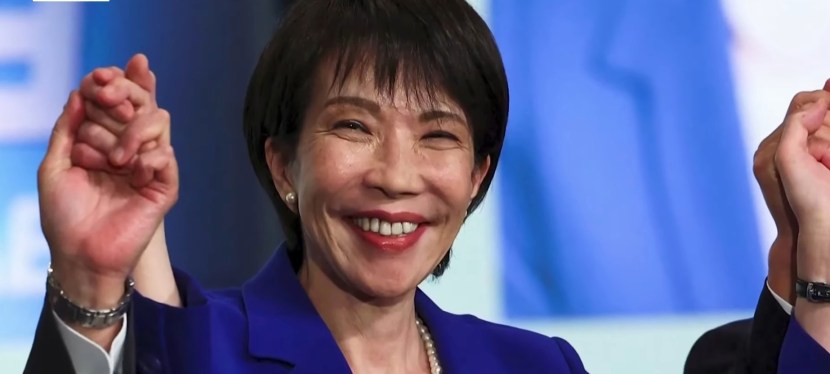
Shortly after Sanae Takaichi took office as Prime Minister of Japan, Philippine President Ferdinand “Bongbong” Marcos, Jr., recently congratulated her, according to a Manila Bulletin news report.
To put things in perspective, posted below is an excerpt from the news report of the Manila Bulletin. Some parts in boldface…
President Marcos has extended his congratulations to Japan’s newly-elected Prime Minister Takaichi Sanae, the first woman to assume the post.
“Congratulations to Prime Minister Takaichi Sanae on her historic election as Japan’s first female Prime Minister,” Marcos said in a statement on Wednesday, Oct. 22.
“Her assumption demonstrates Japan’s firm democratic advocacy, and reflects the country’s commitment to progress and representation,” the President added.
Marcos expressed his eagerness to work with Prime Minister Takaichi in strengthening the Philippines’ and Japan’s bilateral cooperation, especially as both countries prepare to mark the 70th anniversary of diplomatic relations in 2026.
“I look forward to working with her in commemorating the 70th Anniversary of Philippine-Japan diplomatic ties in 2026, and in deepening the Philippine-Japan Strengthened Strategic Partnership for the peace and prosperity of our peoples,” the President said.
Most recently, the Prime Minister met with President Marcos formally in Malaysia. For details, click here.
Let me end this post by asking you readers: What is your reaction to this recent development? Do you think bilateral ties between Japan and the Philippines will grow stronger now that President Marcos and Prime Minister Takaichi have officially met? Do you think Filipinos who intend to migrate to Japan have doubts about Prime Minister Takaichi knowing that she will be tough on illegal immigration?
For more South Metro Manila community news and developments, come back here soon. Also say NO to fake news, NO to irresponsible journalism, NO to misinformation, NO to plagiarists, NO to reckless publishers and NO to sinister propaganda when it comes to news and developments. For South Metro Manila community developments, member engagement, commerce and other relevant updates, join the growing South Metro Manila Facebook group at https://www.facebook.com/groups/342183059992673
United States President Donald Trump and new Japanese Prime Minister Takaichi Sanae met in Tokyo yesterday and officially America and Japan reaffirmed its alliance, according to the English news report of NHK and other sources.
To put things in perspective, posted below is an excerpt from NHK’s English news report. Some parts in boldface…
Japanese Prime Minister Takaichi Sanae and US President Donald Trump are taking part in a series of talks and appearances during their first summit in Tokyo.
Takaichi welcomed Trump at the State Guest House in Tokyo Tuesday morning. They received a salute from a ceremonial guard of honor with Japan’s Self-Defense Forces. Soon after, the two leaders sat down for their first face-to-face meeting.
Takaichi said, “I am determined to restore Japan’s dynamic diplomacy to protect Japanese national interests. I am ready to promote further collaboration between Japan and the United States toward our shared goal of achieving a free and open Indo-Pacific. I want to realize a new golden age of our Japan-US alliance in which both nations become stronger and more prosperous.“
Trump said, “I have always had a great love of Japan and a great respect of Japan, and I will say that this will be a relationship that will be stronger than ever before, and I look forward to working with you and on behalf of our country. I want to just let you know anytime you have any questions, any doubt, anything you want, any favors you need, anything I can do to help Japan, we will be there, we are an ally at the strongest level.”
The two leaders have signed documents to cement a deal reached as a result of tariff talks.
Trump meets abductee families – After the meeting, Trump met families of Japanese citizens abducted by North Korea.
He said, “I met the families before, and I’m with them all the way, and the US is with them all the way, and with Japan and the prime minister.“
Trump also said he’s had the issue in mind since meeting late Prime Minister Abe Shinzo. He told the families the US will do everything in its power to help.
Japan’s government says at least 17 Japanese nationals were kidnapped by North Korean agents in the 1970s and ’80s. Five of them returned in 2002, but what happened to a dozen others remains unknown.
Takaichi seeks to strengthen security, economic ties with US – Ahead of the meeting on Tuesday morning, Takaichi wrote on X that she is looking forward to “having a fruitful discussion on how we can further strengthen our great Alliance.”
Trump has complained that the burden for security shouldered by US allies is insufficient. The measures include revising three national security documents, including the National Security Strategy, by the end of next year.
Japan had been aiming to increase defense spending and related expenditures to two percent of the GDP in fiscal 2027. Takaichi will likely tell Trump that Japan will instead achieve that goal in the current fiscal year.
Takaichi wants to use the occasion to build a personal relationship with Trump. She is also hoping to enhance bilateral cooperation across a wide range of fields, including security and economy.
For additional coverage of Trump’s visit in Japan, watch the selected YouTube videos below…
Let me end this piece by asking you readers: What is your reaction to this development? Are you feeling confident that US-Japan relations will improve under Trump and Takaichi? Considering the geopolitical interests of both leaders, do you think US-Japan will help turn the tide against Communist China with regards to disputes on the sea of Southeast Asia? Do you think illegal immigrants, the LGBTQ mob, the woke extremists and Islamists are now feeling uneasy about invading Japan and America?
There is no denying the fact that the Philippines is having trouble attracting foreign tourists this year but for Leechiu Property Consultants there is still a bright future ahead for the nation’s tourism industry due to growth in domestic tourism and a few other factors, according to a Manila Bulletin news report.
To put things in perspective, posted below is an excerpt from the Manila Bulletin news report. Some parts in boldface…
Although Asian tourist arrivals decline, the Philippine tourism industry is still perceived to be entering “a new era of opportunity” because of the growth in domestic tourism, improved flight connectivity, and the 99-year lease reform.
Leechiu Property Consultants said in its third-quarter media briefing that, as investors refocus on long-duration assets, the country’s hospitality and leisure industries are expected to see renewed capital flows and expanded capacity through 2026.
“With the anticipated growth in domestic and long-haul tourism, along with increased hospitality FDIs (foreign direct investments) driven by the newly-approved 99-year lease to foreign investors, the tourism sector is poised to strengthen its position as a key investment area and a vital pillar of the Philippine economy,” said LPC Director of Hotels, Tourism, and Leisure Alfred Lay.
He said the sector continued its steady recovery in the third quarter of 2025, but “while there are signs of resilience, no significant shifts have yet created real momentum in foreign arrivals. Without a major catalyst, arrivals are unlikely to surpass 2024 levels.”
Traditional leaders, such as South Korea and China, show steep declines, while the USA, Japan, and Australia are emerging as stronger contributors, reflecting changing travel patterns and opportunities to diversify source markets.
While international arrivals remain below pre-pandemic peaks, Lay said “domestic travel is surging toward historic highs, establishing a solid foundation for long-term tourism growth and investment confidence.”
Domestic tourists are projected to reach 58.7 million in 2025, rising further to 62.2 million in 2026, a trajectory supported by the country’s forecast gross domestic product growth by 7.63 percent and 5.8 percent in 2025 and 2026, respectively.
Over the past two decades, domestic tourism spending has outpaced GDP, underscoring the sector’s resilience and capacity to drive nationwide economic activity.
Meanwhile, rising travel demand has spurred a wave of hotel developments nationwide, with a total of 5,210 new keys to be added in 2025—over 4,300 of which are expected to open in the fourth quarter.
A majority of these projects are led by domestic operators, reflecting local developers’ agility in capturing demand across destinations such as Metro Manila, Cebu, Boracay, Davao, and Palawan.
Lay said the newly approved 99-year lease law has created a strong foundation for long-term tourism investment as it provides global investors with the security to pursue large-scale resort and mixed-use developments.
Over time, the law is expected to stimulate foreign direct investment in tourism and hospitality, similar to the trends observed in the Maldives, where long-term leases have transformed the sector into a global investment hotspot.
Let me end this post by asking you readers: What is your reaction to this development? Do you think domestic tourism, improved flight connectivity and the 99-year lease reform will boost Philippine tourism in the short-term? Do you think domestic tourism will keep on growing to life up the nation’s tourism industry as a whole?
Recently the Secretary of the Department of Economy, Planning, and Development (DEPDev) expressed confidence that the economy of the Philippines will hit the low-end target of GDP growth for 2025, according to a BusinessWorld news report.
To put things in perspective, posted below is an excerpt from the news report of BusinessWorld. Some parts in boldface…
Department of Economy, Planning, and Development (DEPDev) Secretary Arsenio M. Balisacan said he is confident Philippine economic growth will hit the lower end of the target this year, despite a slowdown in the third quarter.
“The growth that we are expecting for 2025 is now 5.5 to 6.5% The low-end of the range is still very much achievable,” he told reporters on the sidelines of an event on Oct. 16.
Economic managers will meet next week to assess whether revisions to this year’s growth outlook are needed, he added.
Budget Secretary and Development Budget Coordination Committee (DBCC) Chairperson Amenah F. Pangandaman on Wednesday told BusinessWorld that the gross domestic product (GDP) target for 2025 “remains attainable.”
Finance Secretary Ralph G. Recto earlier said flagged a slowdown in the third quarter and possibly until early 2026 as corruption probes curb public spending.
Aside from slower public spending, Mr. Balisacan said weather disruptions may have dampened economic activity in the July-September period.
“There may be a bit of a slowdown (in third quarter) because of these supply shocks that we have seen. There are so many typhoons that we have seen during the quarter, many days of work suspension. So economic activity is really affected,” he said.
Asked whether third quarter growth could fall below the 5.5% annual GDP growth in the second quarter, Mr. Balisacan said: “Hopefully not.”
Let me end this post by asking you readers: What is your reaction to this development? Would you be satisfied to see the economy of the Philippines grow by 5.5% this year? Do you think there will still be a lot of challenges and problems in the 4th quarter that could somehow bring economic growth below 5.5% for the entire year?
The embarrassment of the ongoing flood control corruption scandals and the slowing economy of the Philippines caught the attention of the World Bank (WB) as it released a detailed assessment of the nation, according to a Manila Bulletin news report.
To put things in perspective, posted below is an excerpt from the Manila Bulletin report. Some parts in boldface…
The World Bank (WB) has flagged a slowing Philippine economy as investor sentiment weakens, financial markets soften, and manufacturing and exports falter—even as joblessness steadies and inflation stays below target.
“There are signs that economic activity may be decelerating” in the country, the WB said in its Philippines Monthly Economic Developments report for September 2025, published on Oct. 14.
The WB highlighted that investor sentiment toward domestic financial assets weakened in September, with the Philippine Stock Exchange Index (PSEi) falling 0.9 percent between August and Sept. 18—contrasting with the rising stock markets of regional peers since July.
The WB noted that while interest rate cuts by the Bangko Sentral ng Pilipinas (BSP)—which lowered its policy rate by 25 basis points (bps) to 4.75 percent last Oct. 9—and the United States (US) Federal Reserve supported early September gains, negative market developments later limited buying activity in the domestic stock market.
Among these “unfavorable market updates” were “governance issues in flood control projects, an uptrend in inflation and unemployment, and lower foreign direct investment (FDI) inflows,” the report said.
“Amid these developments, foreign investors became net sellers of local shares. This contributed to the slight weakening of the Philippine peso against the US dollar,” the report noted.
“In real effective terms, the Philippine peso depreciated in August against a basket of currencies of its major trading partners” and sustained a slight depreciation last month, it added.
The WB also noted that the Philippines’ merchandise export growth fell to an eight-month low in August, with exports rising just 4.6 percent year-on-year as shipments to the US declined following the introduction of higher tariffs.
This came even as export growth was “driven by sustained demand for semiconductors and electronic data processing equipment, primarily from Hong Kong and Japan,” the report added.
Meanwhile, the WB emphasized that merchandise import values declined by 4.9 percent year-on-year last August, mainly due to lower global prices for coal and petroleum products. The Philippines is a net oil importer. The report also noted that imports of raw materials and intermediate goods fell after robust growth in prior months.
Imports of motor vehicles, however, rose—driven by strong consumer demand. The WB noted that, in all, the goods trade deficit narrowed from $4.4 billion in July to $3.5 billion in August.
The WB also highlighted that high-frequency data indicated a slowdown in manufacturing activity, with output rising just 1.4 percent year-on-year in August, largely supported by growth in the food products sector.
However, the WB said that production of electrical equipment as well as computer, electronic, and optical products decelerated, reflecting the slowdown in export growth.
The WB also noted that the country’s S&P Global manufacturing purchasing managers’ index (PMI) for September dropped to 49.9, falling below the neutral threshold for the first time in six months and indicating a contraction in activity.
“Despite modest gains in external demand, output and new orders from the domestic market declined, and business confidence, while positive, remained subdued,” the WB added.
The WB further highlighted that labor market conditions steadied as the effects of weather-related disruptions eased, noting that the unemployment rate held steady year-on-year at 3.9 percent in August, rebounding from a temporary rise in July caused by adverse weather that affected agriculture and fisheries.
The WB said that employment in wholesale and retail trade fell year-on-year, although the reasons behind the decline remain unclear and require careful monitoring.
“The government expects further improvement in labor market conditions as weather-sensitive sectors continue to recover in the near term,” the WB added.
The WB stressed that inflation has increased moderately in recent months but remains below the central bank’s target, with headline inflation reaching a six-month high of 1.7 percent in September due to the delayed effects of weather-related supply disruptions, which pushed up food prices, especially for vegetables and oils.
“Despite this, average inflation remains below the two- to four-percent inflation band set by the BSP and is partly limited by sustained rice disinflation,” the WB said.
Year-on-year drops in rice prices helped ease inflationary pressures on the poorest 30 percent of households, with their consumer price index (CPI) falling by 0.2 percent in September, the report added.
“Favorable inflation dynamics and moderating domestic demand” supported the BSP’s monetary easing, the WB said, adding that the central bank has “space for a more accommodative policy stance in the context of a weaker outlook for economic growth.”
The WB stated that external imbalances widened in the first half of 2025, though foreign reserves remained sufficient, noting that the current account deficit grew to 3.9 percent of gross domestic product (GDP)—up 0.3 percentage point (ppt) year-on-year—driven by strong domestic demand that boosted goods imports.
“Higher spending by Filipino tourists abroad and lower inbound tourism receipts also contributed to a decline in net receipts from services trade,” it added.
Let me end this post by asking you readers: What is your reaction to this development? What do you think the national government should do to improve the nation’s economic conditions? Do you agree with what the WB reported about the Philippines? If you have been managing a business for at least one year, has 2025 been a rough business year?
A few months ago in the United States, the Keep Call Centers in America Act of 2025 was filed and it really caused a disturbance on the business process outsourcing (BPO) industry and the Department of Trade and Industry (DTI) here in the Philippines. Recently a member of Congress here in the Philippines filed a resolution to initiate talks with the US to discuss call center reshoring and seek exemptions, according to a BusinessWorld news report.
Coincidentally, the proposed resolution was filed by a Congressman from the province of Cebu where I once worked as a call center agent a very long time ago. I never returned to the call center industry.
To put things in perspective, posted below is an excerpt from the news report of BusinessWorld. Some parts in boldface…
A CEBU legislator filed a resolution on Monday urging the government to initiate talks with the US over plans to bring the call-center industry back from overseas.
The Trade and Foreign Affairs departments should “immediately initiate dialogue” with their US counterparts to seek exemptions for US business process outsourcing (BPO) firms operating in the Philippines, according to Cebu Rep. Vincent Franco D. Frasco, who filed House Resolution No. 386.
“The urgency of the situation demands proactive and high-level diplomatic action and trade engagement to ensure that the interests of Filipino workers and US-affiliated firms operating in the Philippines are protected from the US bill’s unintended economic consequences,” he said, referring to US legislation known as the proposed Keep Call Centers in America Act
The US bill could penalize US companies for outsourcing call center operations by ruling them out for federal grants and loan guarantees. The Philippines call center industry employs about 1.7 million, according to the House resolution.
Mr. Frasco described the US measure as posing a “direct threat” to the stability of the BPO industry and may discourage American firms from setting up shop in the country, leading to job losses and loss of investor confidence.
Let me end this post by asking you readers: What is your reaction to this development? Do you think Congressman Frasco’s proposed resolution will be approved soon? Do you think the DTI will be able to meet with their American counterparts and be able to secure exemptions? Do you think the Keep Call Centers in America Act of 2025 is very dangerous to the BPO industry of the Philippines? How many people in your local community are working in call centers right now? When do you think the Keep Call Centers in America Act of 2025 will be passed by US Congress and be sent to President Donald Trump for final approval?







 Author Carlo Carrasco