A Look Back at Mantra: Spear of Destiny #1 (1995)

Welcome back superhero enthusiasts, 1990s culture enthusiasts and comic book collectors! Today we go back to the mid-1990s to explore a part of the Ultraverse through a tale of Mantra, the male eternal warrior Lukasz who died during battle then returned in the body of a woman named Eden.

It has been a few years since the last time I reviewed a Mantra comic book. For the newcomers reading this, the Ultraverse was a franchise of superhero comic books launched by Malibu Comics in 1993 which produced a lot of fun, intriguing and memorable tales made by a variety of really talented creators. Mantra was one of the pioneering characters of the Ultraverse and the related comic book series lasted more than twenty issues. Along the way, a standalone story of Mantra was published in the form of a 2-part mini-series.

With those details laid down, here is a look back at Mantra: Spear of Destiny published in 1995 by Malibu Comics with a story written by Mike W. Barr and drawn by Paul Abrams.

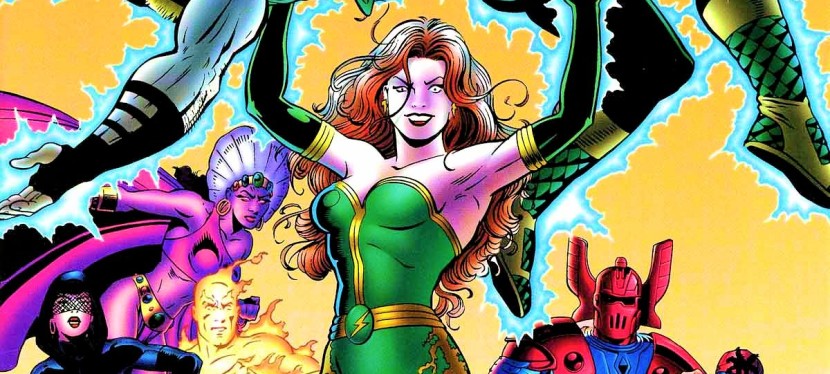
The cover.

Early story

The story begins when Mantra arrives at a museum to start her attempt (in her civilian identity as Eden Blake) to obtain the Spear of Destiny. While wearing a revealing outfit to distract the men, Mantra gets close to the highly prized spear to observe it and see how the security personnel guard it.

At a different spot within the museum, Mantra decides to start obtaining the spear in magical outfit and with a mask. As Mantra arrives at the room where the Spear of Destiny, already there are monsters overwhelming the men guarding the Spear of Destiny…

Quality

Eden Blake/Mantra reporting to work at Aladdin.

Having read most of the stories of the Mantra comic book series, I can say that Mike W. Barr came up with a fresh concept that emphasizes the quest to gain possession of a highly valuable item while also creating a new approach on presenting Mantra…by engaging in espionage (spying and infiltration).

As I am already used to seeing the eternal warrior Lukasz/Mantra using magic in many struggles or missions, the concept of having the protagonist getting disguised and becoming an impostor on a spy mission is a very inspired move by the writer. The preparations taken by Mantra to becoming a certain blonde woman for the mission were nicely structured and detailed enough to make the transformation. As if that was not enough, a certain piece of technology was implemented which made using magic a huge risk for the eternal warrior. That being said, the story smoothly transitioned from magic-filled fantasy into a convincing spy thriller

Along the way, this comic book also emphasizes the darkness of the secret society Aladdin which Mantra (as Eden Blake) works for. Aladdin’s operations were dramatized several times in other Ultraverse comic books but this one has a more explicit portrayal of them.  

Conclusion

Mantra got hold of the Spear of Destiny but for how long?

Mantra: Spear of Destiny (1995) is really entertaining and compelling to read. This is easily one of the more creative and more unique tales of the Ultraverse character ever told and I can say that I am eager to find out what would happen next. This is also the one tale in which Mantra became a spy and gets into a dangerous mission in which the use of magic is too risky. The writing by Mike W. Barr is really strong with this one.

Overall, Mantra: Spear of Destiny (1995) is recommended.

+++++

Thank you for reading. If you find this article engaging, please click the like button below, share this article to others and also please consider making a donation to support my publishing. If you are looking for a copywriter to create content for your special project or business, check out my services and my portfolio. Feel free to contact me with a private message. Also please feel free to visit my Facebook page Author Carlo Carrasco and follow me on Twitter at  @HavenorFantasy as well as on Tumblr at https://carlocarrasco.tumblr.com/ and on Instagram at https://www.instagram.com/authorcarlocarrasco
A Look Back at Prototype #18 (1995)

Disclaimer: This is my original work with details sourced from reading the comic book and doing personal research. Anyone who wants to use this article, in part or in whole, needs to secure first my permission and agree to cite me as the source and author. Let it be known that any unauthorized use of this article will constrain the author to pursue the remedies under R.A. No. 8293, the Revised Penal Code, and/or all applicable legal actions under the laws of the Philippines.

Welcome back, superhero fans, comic book collectors, fans of 1990s culture and fans of Malibu Comics! After going through reviewing seventeen issues of the Prototype monthly series that started with the 1993 launch of the Ultraverse, the end of the said series is here.

Before doing the retro review of the 18th and final issue of Prototype, I should state that the armored hero is indeed one of the most significant Ultraverse heroes of them all. Other than having a standalone monthly series (which includes issue #0) plus a giant size one-shot comic book, Prototype also was part of UltraForce and his presence and overall contribution in that short-lived series were undeniably good. Prototype is also memorable for his conflicts with Prime (read my review of Prime #4). As a series, Prototype also sheds light on the concept about how society would react to an actual functioning, flying armored hero who was also marketed for commercial purposes.

You must be wondering…is the 18th issue a conclusive story of the monthly series? What were the effects of Marvel’s acquisition of Malibu Comics on the creative team? We can all find out in this look back at Prototype #18, published in 1995 by Malibu Comics with a story written by R.A. Jones and drawn by Paul Abrams.

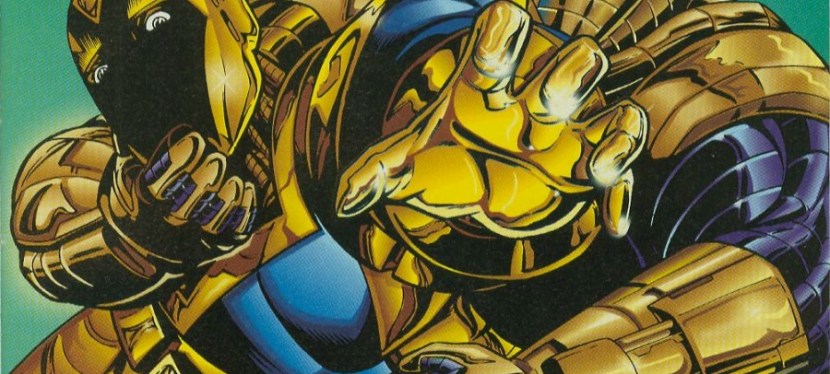
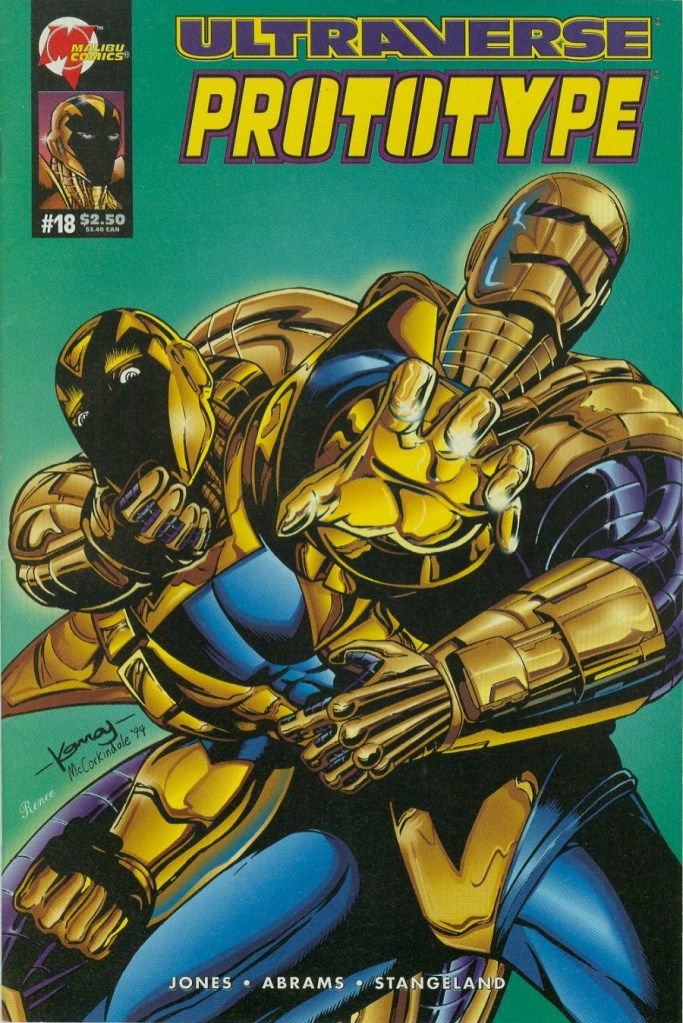
The cover.

Early story

The story begins in a certain department store in Manhattan where a special anniversary celebration is being held and Prototype (piloted by Jimmy Ruiz) is the special guest. The affair turns out to be an assignment for him from his employer. Suddenly an armored figure (human-like above the belt, mechanical below the belt) breaks into the store causing a major disturbance. He calls himself Battlewagon.

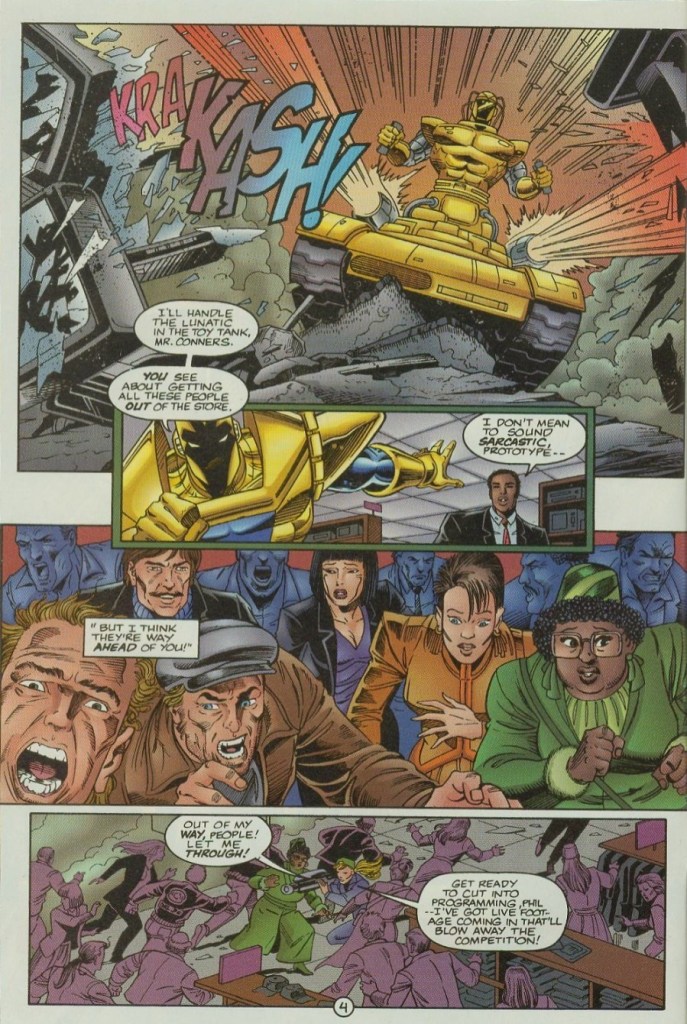
Battlewagon suddenly opens fire and hits many items around, causing people to panic. Prototype decides to take action and their conflict causes even more damage.

As Battlewagon speaks out against him, Prototype notices the use of a word which was a reference to the gang that he (Jimmy Ruiz) used to hang out with. Prototype also realizes that his new foe is after him in a rather personal way…

Quality

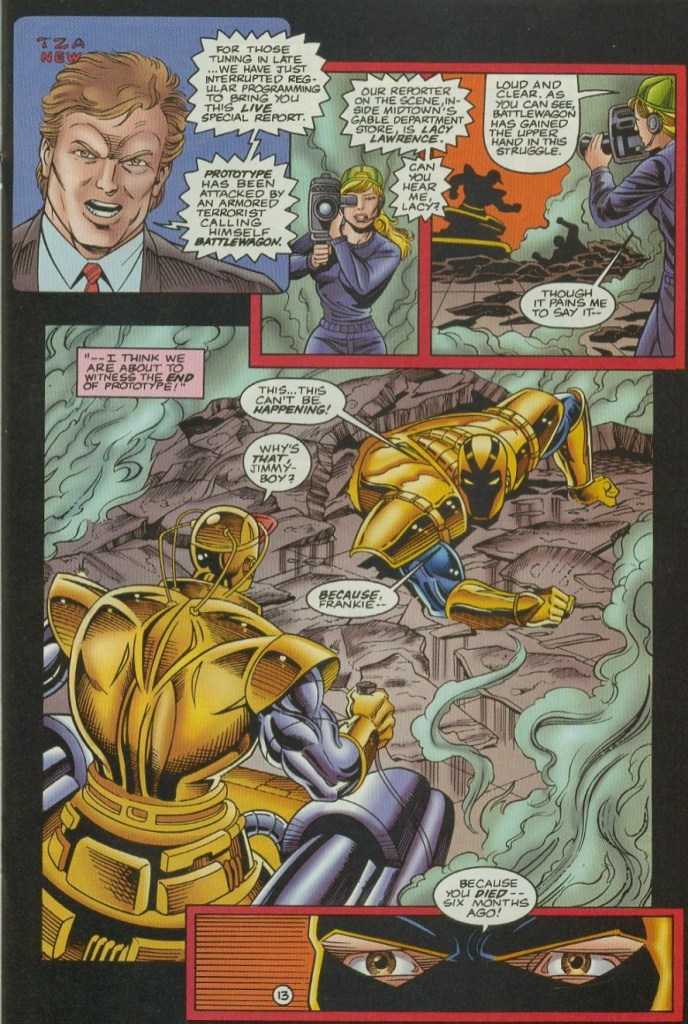
Does this scene remind you of today’s manipulative and irresponsible news media coverage?

To put it straight to the point, this comic book is not as conclusive as what Prototype fans would hope for. Sure the words “The end.” were written on the last page but, without fully spoiling the story of the comic book, sub-plots that started building up in the few previous issues were left unresolved. You hoped to see Jimmy reunited with Angella in this issue? You hoped to what happened to the deformed Stanley Leland? You will be disappointed.

More on the comic book itself, the conflict between Prototype and Battlewagon is actually written to be intense in terms of dialogue and interaction between the two. While that is a good thing, it does not hide the fact that Battlewagon, as a villain, felt more like an afterthought in terms of character introduction and the flashback relating to collateral damage in Prototype #7 does not really add much to the him. What I liked most in the script written by R.A. Jones was the look back at the past of Jimmy Ruiz when he was younger and was a thug on the streets.

Conclusion

Chaos inside the department store.

While it is not strong enough to be a worthy conclusion to its series, Prototype #18 (1995) managed to tell its own tale in a satisfying manner by adding another villain for the hero to fight with, and also expanding Jimmy Ruiz’s past as a gang member. Of course, I don’t have the details about what happened behind the scenes at Malibu Comics as a result of getting acquired by Marvel Comics, and how all that impacted the creators working on Prototype. I can only speculate that there were planned stories of Prototype that did not get published. In fact, there was a short announcement of Prototype: Turf War shown.

If this comic book is any indication, its story really felt more like a substitution as it had no references to the plot elements of the immediate few issues before it. Considering what happened at the end of issue , Jimmy Ruiz really acted out of character in this story.   

If you are seriously planning to buy an existing hard copy of Prototype #18 (1995), be aware that as of this writing, MileHighComics.com shows that the near-mint copy of the comic book costs $35.

Overall, Prototype #18 (1995) is satisfactory. As a series’ final issue, however, it is a disappointment.

+++++

Thank you for reading. If you find this article engaging, please click the like button below and also please consider sharing this article to others. If you are looking for a copywriter to create content for your special project or business, check out my services and my portfolio. Feel free to contact me as well. Also please feel free to visit my Facebook page Author Carlo Carrasco and follow me at HavenorFantasy@twitter.com

A Look Back at The Strangers #22 (1995)

Disclaimer: This is my original work with details sourced from reading the comic book and doing personal research. Anyone who wants to use this article, in part or in whole, needs to secure first my permission and agree to cite me as the source and author. Let it be known that any unauthorized use of this article will constrain the author to pursue the remedies under R.A. No. 8293, the Revised Penal Code, and/or all applicable legal actions under the laws of the Philippines.

Welcome back, superhero enthusiasts, comic collectors and fans of 1990s comics culture! We go back to the Ultraverse to witness further events from The Strangers told during the late stage of their 24-issue run as a comic book series. In the previous review, Teknight became more prominent as a member of the team as Candy/Electrocute got heavily damaged which led the Strangers to having her repaired not in just any private facility but rather in the facility of a powerful organization.

And then something happened at the end of The Strangers #21.

With those details laid down, here is a look back at The Strangers #22, published by Malibu Comics in 1995 with a story written by Steve Englehart and drawn by Paul Abrams.

The cover.

Early story

The story begins inside a high-tech facility when the newly repaired Electrocute gets up and attacks her teammates Grenade (her romantic partner) and Teknight. Electrocute is acting under someone’s control. In response to Teknight’s methodical approach on absorbing electric blasts from Electrocute, Grenade warns him about the how capable NuWare is when it comes to control and execution.

Even so, Teknight continues to stand until he gets overwhelmed by the lady’s power and ends up getting paralyzed. An executive walks near Teknight and Electrocute boasting that he loves seeing his designs in action and Grenade comes in to use his power on his romantic partner…

Quality

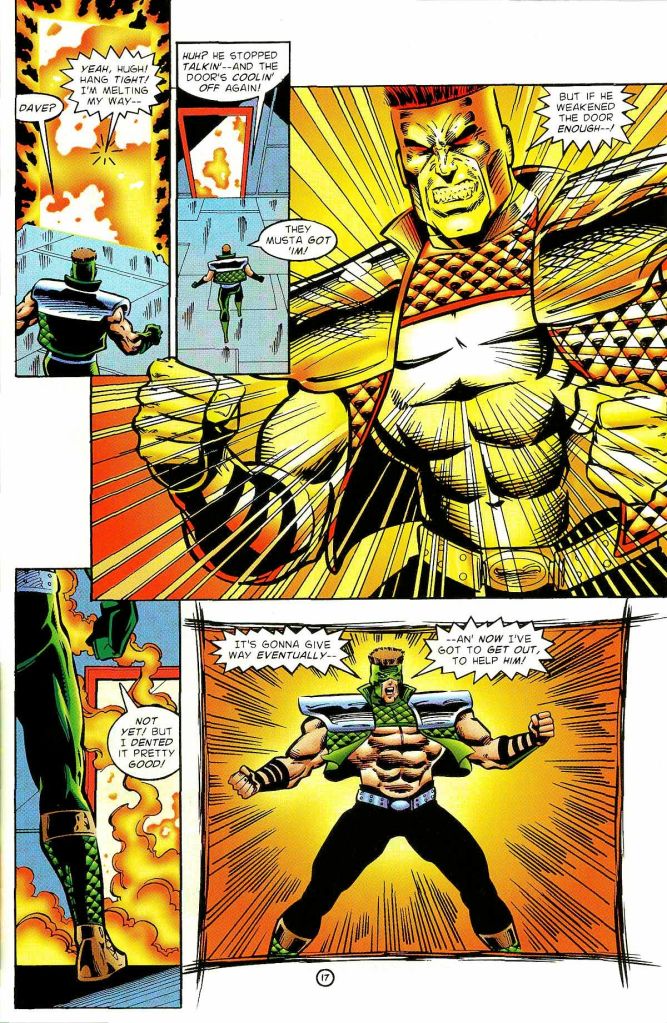
Grenade and the door.

Once again, Steve Englehart crafted another story that keeps this series fresh and fun to read. The story started with a good amount of action involving Grenade, Electrocute and Teknight. As I don’t want to spoil the plot, I can say that what happened after the action-packed opening sheds light on a new yet significant youth who wields a lot of power thanks to his father (clue: a powerful and ruthless executive who was involved not only with the Strangers but also with Mantra and Night Man). The story is very well structured and moves at a nice pace. Also I can say that the spotlight on the Strangers as a whole team was carefully balanced.

When it comes to character development, it is Grenade who clearly got a good dose of it. Apart from the usual display of his feelings towards Electrocute, this comic book dramatizes his effort to understand not only his lady and their new teammate Teknight, but also his realization about the delicate balance between being alive and being linked with technology.

Conclusion

I wonder how today’s SJWs, radical socialists and Black Lives Matter activists would react to this particular scene.

The Strangers #22 (1995) is another fun-filled superhero story which served its purpose in concluding the story that started in the previous issue. It also achieved its goal of emphasizing the role of NuWare (read: corporate intrigue) and the continued relevance of a certain corporate executive that the Strangers could not just get rid of.

If you are seriously planning to buy an existing hard copy of The Strangers #22 (1995), be aware that as of this writing, MileHighComics.com shows that the near-mint copy of the comic book costs $27.

Overall, The Strangers #22 (1995) is recommended.

+++++

Thank you for reading. If you find this article engaging, please click the like button below and also please consider sharing this article to others. If you are looking for a copywriter to create content for your special project or business, check out my services and my portfolio. Feel free to contact me as well. Also please feel free to visit my Facebook page Author Carlo Carrasco and follow me at HavenorFantasy@twitter.com