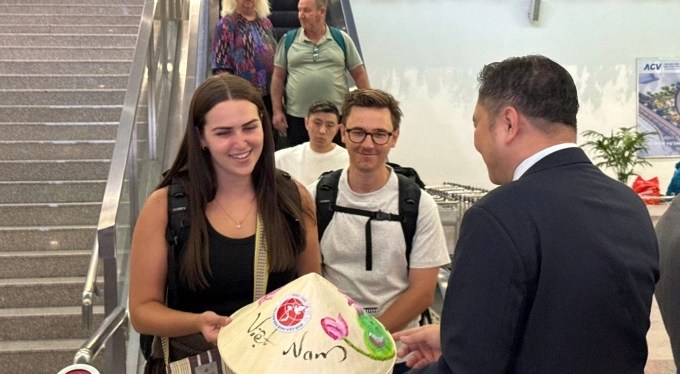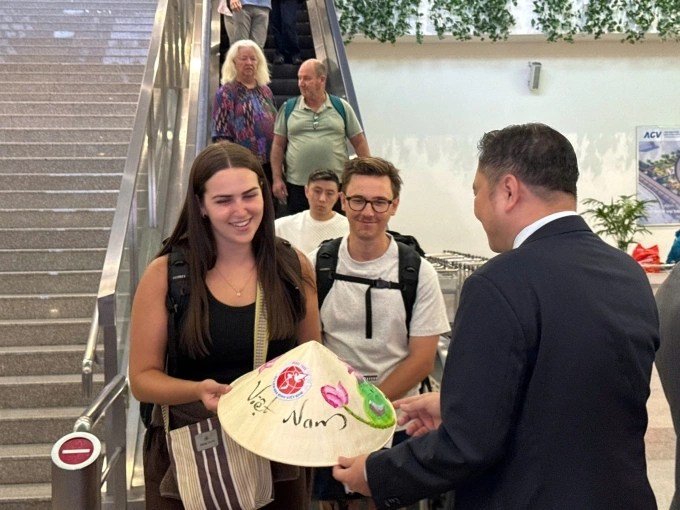
In what is clearly an attempt to help the Philippines attract more foreign tourists, the government is pushing to open regional tourism and business hubs to international flights which should enable foreigners to have better access to other parts of the country, according to a Manila Bulletin news report.
To put things in perspective, posted below is an excerpt from the Manila Bulletin news report. Some parts in boldface…
President Marcos has underscored the government’s push to open regional tourism and business hubs to international flights, saying these would allow foreign travelers to skip Metro Manila and head straight to their chosen destinations.
Marcos said this as he led the groundbreaking of the Caticlan Passenger Terminal Building in Aklan on Monday, July 18.
In his speech, the President said regional airports such as Caticlan are key to welcoming foreign travelers directly to Philippine destinations, bypassing Metro Manila and stimulating regional economies.
“We are slowly putting together the building blocks of our policy of opening up our tourist areas… to international travelers without having to go through the Manila Airport,” he said.
Marcos added that the new passenger terminal, which will serve as the main airport gateway to Boracay and other destinations in Western Visayas, would help ease travel to the region and boost economic activity.
“It is not just Aklan who is involved in this; it is the entire region that will be assisted by the construction of this terminal building,” he said.
Let me end this post by asking you readers: What is your reaction to this recent development? Do you think the national authorities will be able to establish new ways for foreign tourists to skip Metro Manila and move on to their chosen destinations located in other parts of the country? On a scale of 1 to 10, how would you rate the current state of tourism in the Philippines?
For more South Metro Manila community news and developments, come back here soon. Also say NO to fake news, NO to irresponsible journalism, NO to misinformation, NO to plagiarists, NO to reckless publishers and NO to sinister propaganda when it comes to news and developments. For South Metro Manila community developments, member engagement, commerce and other relevant updates, join the growing South Metro Manila Facebook group at https://www.facebook.com/groups/342183059992673
To put things in perspective, posted below is an excerpt from the PNA news article. Some parts in boldface…
Domestic travel continues to lead the recovery of the Philippine tourism industry, with its receipts able to make up for the “shortfall” in international arrivals, real estate advisory firm Leechiu Property Consultants (LPC) said Thursday.
“Domestic travel is so big. It’s so big and strong that it can make up for, now in the short term, the shortfall of international arrivals,” Alfred Lay, LPC director for Hotels, Tourism, and Leisure, said during the presentation of the LPC Q2 2025 Philippine Property Market Report in Makati City.
“It can do that for a long time, and the long-term goal for domestic tourism would probably to double (its) size within the next five to 10 years.”
Lay noted that domestic tourism expenditure in 2024 reached PHP3.16 trillion, surpassing the pre-pandemic level of PHP3.14 trillion in 2019. Tourism contributed 8.9 percent of the country’s gross domestic product (GDP) last year.
International tourism expenditures, on the other hand, stood at PHP699 billion, up from PHP600 billion pre-pandemic levels, despite missing the 2024 targets.
In an interview, Lay said he expects inbound arrivals this year to reach at least six million.
He noted that the arrival of South Korean visitors, the Philippines’ top market, has seen a decline in the past five months, likely due to the “negative media coverage” in South Korea over security issues in the country, but long-haul tourists are increasing and have offset the decline.
According to the LPC report, Korean arrivals in the first five months of 2025 dipped 19 percent to 552,000 from 682,000 in the same period last year, while inbound arrivals from the United States, Japan, Australia, and Canada surged between 9 percent and 19.4 percent.
Additional routes and flight frequencies, he said, are likewise expected to sustain this upward momentum.
Meanwhile, Lay addressed news coverage about the affordability of travel to the Philippines, stating that the country only ranks in the “middle of the pack” in terms of hotel average daily rates (ADR) compared to Southeast Asian neighbors and competitors.
The LPC report showed that the Philippines ranks fourth in hotel ADR at PHP6,048, with Thailand (PHP8,171), Cambodia (PHP6,591), and Vietnam (PHP6,359) in the top three places.
Let me end this post by asking you readers: What is your reaction to this recent development? Do you think the tourism industry of the Philippines will do better this year with domestic travel as the main factor? Do you think it is still possible for the Philippines to attract at least six million foreign tourists by the end of this year? Do you think both the national government and private sector should work together to improve local infrastructure so that the cost of travel will go down?
Disclaimer: This is my original work with details sourced from my personal experiences and observations during the Israel pilgrimage tour I joined and what happened during my free time. Anyone who wants to use this article, in part or in whole, needs to secure first my permission and agree to cite me as the source and author. Let it be known that any unauthorized use of this article will constrain the author to pursue the remedies under R.A. No. 8293, the Revised Penal Code, and/or all applicable legal actions under the laws of the Philippines.
Welcome back, readers and fellow followers of the Lord! This is the 10th chapter of my ongoing series of articles about the holy nation of Israel with recollections about the experiences and discoveries I had during the pilgrimage tour I joined with my local church (hosted by strategic partner Behold Israel). To see my previous Israel tour articles, click here, here, here, here, here, here, here, here and here. No matter what happens in this twisted world we live in, I will always stand with Israel and my faith in the Lord remains uncompromising!
In this latest edition of my Israel 2023 series, I share with you what I experienced when our pilgrimage tour group visited the Southern Steps (also referred to as the Southern Stairs and Rabbi Stairs) located at the lower part of the Southern Wall of the Temple Mount in the Old City of Jerusalem.
Thanks to our dedicated local tourist guide, our tour group had a meaningful visit there and we spent several minutes observing the place. Our time at the steps concluded with a bible teaching led by New Life Philippines Pastor Edwin Tugano. In my personal experience, I felt something from the Lord there as I realized the biblical relevance of the holy site as well as insight regarding what the place was like thousands of years ago.
This is me at the Southern Steps in Jerusalem, Israel.
The site is very significant as it is the place that served as one of the main entrances from the south to the Temple Mount during the time of Lord Jesus. In fact, people coming from the City of David going north to the Temple Mount used the Southern Steps very long ago. Also, the Southern Steps became a useful place where rabbis and their disciples gathered for faith lessons and this explains why the said steps are also called the Rabbi Stairs. Physically, the steps were hundreds of feet wide which provided abundant space for congregating and teaching.
As many centuries had passed since Lord Jesus ascended to Heaven, there were physical changes that happened at the Southern Wall of the Temple Mount and this is evident as visitors today cannot access the mentioned sacred site above (where the Jewish temples used to be) using the Southern Steps. This is because there is noticeable expansion of the Southern Wall blocking the steps’ upward access to the Temple Mount. I myself had touched that wall and noticed how its stone quality and colors differed from the rest of the Southern Wall.
I brought the Passion Translation Holy Bible with me at the Southern Steps. After taking this image, I climbed up the steps, reached the Southern Wall and touched it.
Regardless, the step themselves – composed of the original stones from Jesus’ time (those steps with the rougher stones) plus newer ones (added to fill the gaps) leading to the Southern Wall – are still there and climbing them required methodical walking. The Southern Steps today are widely visited by faithful Christians from around the world as it is a holy site and it is very likely that Lord Jesus Himself climbed the steps going to the Temple Mount. There is no doubt that Lord Jesus and His disciples also gathered at the steps for teachings. The holy site should remind you about the significance of Lord Jesus’ presence in Jerusalem.
In my experience there at the Southern Steps with my tour companions, I felt the holiness of the place and that became more evident as I opened the Holy Bible during the bible teaching led by our pastor right there. During our time there, I noticed another pilgrimage tour group was present with us several feet away.
Did Pentecost happen at the Southern Steps?
Our pilgrimage tour group in the foreground, and another group in the background. The Southern Steps is an essential place for Christians to visit in Israel.
By reading the biblical reference of Pentecost and connecting it with my observations of the holy site, I can say that the Southern Steps is a possible place where Pentecost may have happened. I can even say that it is a more suitable place – where about three thousand Jews got baptized after the apostle Peter preached the good news – than the Upper Room (itself a popular location in many paintings and artworks dramatizing Pentecost).
Take a close look at the biblical record of Pentecost below…
When the Day of Pentecost had fully come, they were all with one accord in one place. And suddenly there came a sound from heaven, as of a rushing mighty wind, and it filled the whole house where they were sitting. Then there appeared to them divided tongues, as of fire, and one sat upon each of them. And they were all filled with the Holy Spirit and began to speak with other tongues, as the Spirit gave them utterance.
And there were dwelling in Jerusalem Jews, devout men, from every nation under heaven. And when this sound occurred, the multitude came together, and were confused, because everyone heard them speak in his own language. Then they were all amazed and marveled, saying to one another, “Look, are not all these who speak Galileans? And how is it that we hear, each in our own language in which we were born? Parthians and Medes and Elamites, those dwelling in Mesopotamia, Judea and Cappadocia, Pontus and Asia, Phrygia and Pamphylia, Egypt and the parts of Libya adjoining Cyrene, visitors from Rome, both Jews and proselytes, Cretans and Arabs—we hear them speaking in our own tongues the wonderful works of God.” So they were all amazed and perplexed, saying to one another, “Whatever could this mean?”
Others mocking said, “They are full of new wine.”
But Peter, standing up with the eleven, raised his voice and said to them, “Men of Judea and all who dwell in Jerusalem, let this be known to you, and heed my words. For these are not drunk, as you suppose, since it is only the third hour of the day. But this is what was spoken by the prophet Joel:
‘And it shall come to pass in the last days, says God,
That I will pour out of My Spirit on all flesh;
Your sons and your daughters shall prophesy,
Your young men shall see visions,
Your old men shall dream dreams.
And on My menservants and on My maidservants
I will pour out My Spirit in those days;
And they shall prophesy.
I will show wonders in heaven above
And signs in the earth beneath:
Blood and fire and vapor of smoke.
The sun shall be turned into darkness,
And the moon into blood,
Before the coming of the great and awesome day of the Lord.
And it shall come to pass
That whoever calls on the name of the Lord
Shall be saved.’
“Men of Israel, hear these words: Jesus of Nazareth, a Man attested by God to you by miracles, wonders, and signs which God did through Him in your midst, as you yourselves also know— Him, being delivered by the determined purpose and foreknowledge of God, you have taken by lawless hands, have crucified, and put to death; whom God raised up, having loosed the pains of death, because it was not possible that He should be held by it. For David says concerning Him:
‘I foresaw the Lord always before my face,
For He is at my right hand, that I may not be shaken.
Therefore my heart rejoiced, and my tongue was glad;
Moreover my flesh also will rest in hope.
For You will not leave my soul in Hades,
Nor will You allow Your Holy One to see corruption.
You have made known to me the ways of life;
You will make me full of joy in Your presence.’
“Men and brethren, let me speak freely to you of the patriarch David, that he is both dead and buried, and his tomb is with us to this day. Therefore, being a prophet, and knowing that God had sworn with an oath to him that of the fruit of his body, according to the flesh, He would raise up the Christ to sit on his throne, he, foreseeing this, spoke concerning the resurrection of the Christ, that His soul was not left in Hades, nor did His flesh see corruption. This Jesus God has raised up, of which we are all witnesses. Therefore being exalted [j]to the right hand of God, and having received from the Father the promise of the Holy Spirit, He poured out this which you now see and hear.
“For David did not ascend into the heavens, but he says himself:
‘The Lord said to my Lord,
“Sit at My right hand,
Till I make Your enemies Your footstool.” ’
“Therefore let all the house of Israel know assuredly that God has made this Jesus, whom you crucified, both Lord and Christ.”
Now when they heard this, they were cut to the heart, and said to Peter and the rest of the apostles, “Men and brethren, what shall we do?”
Then Peter said to them, “Repent, and let every one of you be baptized in the name of Jesus Christ for the remission of sins; and you shall receive the gift of the Holy Spirit. For the promise is to you and to your children, and to all who are afar off, as many as the Lord our God will call.”
And with many other words he testified and exhorted them, saying, “Be saved from this perverse generation.” Then those who gladly received his word were baptized; and that day about three thousand souls were added to them.
Acts 2:1-41 (NKJV)
Take note that verse 2 of Chapter 2 in the Book of Acts specifically mentioned “house” which is not limited to houses. In fact, in the Old Testament of the Bible, the Jewish temple is referred to as the house – as in the house of the Lord. The place of worship of the Lord!
Still within biblical context, “house” – as seen in verse 36 with “house of Israel” – also symbolizes family and lineage in the Holy Bible. “House of Israel” refers to the entire nation descended from Abraham through Jacob and Isaac and that includes the Jewish people (descendants) who were present in Jerusalem during Pentecost. For relevance of the house of Israel, read 2 Kings 7:1-16 in the Holy Bible – God’s words for King David passed through the prophet Nathan.
In the foreground are the Southern Steps and the Southern Wall of the Temple Mount. In the background is more of Jerusalem. (source – screenshot taken from the Instagram video of Hananya Naftali)
As it was an essential form of access into the Temple Mount, the Southern Steps also served as a natural place of gathering, spacious enough to accommodate thousands of Jews. As mentioned earlier, these wide and spacious holy stairs are a more suitable place than the Upper Room for Pentecost to happen.
Also take note that verse 41 of Chapter 2 of the Book of Acts mentions that there were around three thousand Jews who got baptized and helped the church of Lord Jesus grow a lot on the day of Pentecost itself (for relevance, read John 3:3 in the Holy Bible). This also means that there were between fifteen thousand to thirty thousand people in Jerusalem who witnessed Pentecost happen. Having been at the Southern Steps myself, I can easily visualize the whole place – from the steps themselves and the space between them and the City of David in the south, plus the whole stretch of the Southern Wall – being filled with lots of people on that very day. Having attended the bible teaching led by our pastor who stood at the steps facing us south, I can visualize the apostle Peter preaching to thousands of Jewish people there long ago.
Our pastor Edwin Tugano (standing on the ancient steps facing us) led the bible teaching for me and my pilgrimage group companions.
There is absolutely no way that the 3,000 people who received Christ and got baptized would fit inside the Upper Room at the time of Pentecost. When the apostle Peter preached, he was not surrounded by only a tiny group of people but by a huge crowd who listened. The other apostles were with Peter back then. This should remind you that the artists responsible for the paintings and artworks portraying Pentecost happening inside the Upper Room or within an indoor place with walls and a roof did not fully understand the biblical record of Pentecost. In other words, those artists got it wrong and the Bible proves they are wrong. This should remind you to maintain faith in God’s Word, not in man-made artworks.
Once again, the Southern Steps is a possible site of Pentecost. It may not be definitive but it definitely is more suitable than the Upper Room for congregating and preaching in front of thousands. The other possible places where Pentecost may have happened include the Royal Stoa (which was intact at the Southern Wall covering its length and was located high above the Southern Steps) and at the Jewish Temple itself.
While the exact location of Pentecost remains unresolved, I encourage you all to always keep faith in the Lord and His Word knowing that Pentecost truly happened as it was an anointed by the Lord to happen. Location is one thing, but the Holy Bible and the Holy Spirit are always essential to our faith in Lord Jesus.
Conclusion
It was destiny from the Lord for me and my pilgrimage tour group to visit the Southern Steps. I felt the unction from the Holy Spirit to capture this very moment upon arrival there.
I can say that me and my pilgrimage tour group companions were blessed by the Lord during our time at the Southern Steps. Simply thinking about Lord Jesus teaching His followers at the steps is uplifting There clearly is a lot to learn and discover by being at the holy site and having the Bible for reference. I thank Lord Jesus for blessing us, for our pastors and our local tour guide, and for the anointed experience at the Southern Steps. I definitely will revisit those steps when I return to Israel.
Israel is a great and holy place to visit! Visit Israel with the Holy Bible! Pray to the Lord wholeheartedly and reveal to Him your heart’s desire to visit Israel to deepen your faith in Him. Always be the fearless and aggressive church of Lord Jesus! Follow the light of Lord Jesus, keep on praying to support Israel, learn to love and bless the Jewish people and pray for the peace of Jerusalem.
Watch out for more Israel 2023 travel articles here. There is more to come!
To put things in perspective, posted below is an excerpt from the news article of the PNA. Some parts in boldface…
Philippine tourism earned an all-time high revenue of PHP760.5 billion in 2024, translating to a 126.75 percent recovery rate from the 2019 pre-pandemic levels.
Revenues from inbound tourism expenditures — representing the total amount spent by non-resident visitors — were 9.04 percent higher compared to the PHP697.46 billion in 2023.
Department of Tourism (DOT) data showed earnings surpassed the estimated PHP600.01 billion in 2019 by an impressive 26.75 percent.
“With these figures, it is clear that the Philippine tourism industry is not only bouncing back but also evolving and expanding, contributing significantly to the nation’s economic stability and growth. In the past year, we have witnessed remarkable growth in tourism revenue, which has surpassed previous records,” Tourism Secretary Christina Frasco said Monday.
“This achievement is not just a statistic. It translates to thousands of jobs created for Filipinos, fostering economic resilience and enabling families to thrive,” she added.
She attributed this growth to the pro-tourism policies of the Marcos administration that prioritized the sustainable development of Philippine tourism resources.
“These policies focus on enhancing infrastructure, promoting heritage conservation and investing in skills development programs for our workforce, among others. We believe that the growth of tourism should be inclusive and equitable, empowering local entrepreneurs and communities,” she said.
Based on the World Travel and Tourism Council data, international tourists spend at least USD2,073 per capita.
From an average of nine nights in 2019, tourists are now staying an average of over 11 nights in the country, while 70 percent are repeat visitors.
Continued collaboration with stakeholders from the private sector also garnered about 63.18 percent repeat visitors in 2023, the DOT said.
Tourist arrivals – While falling short of its original target of 7.7 million, the DOT said the country still recorded growth in the number of foreign visitors last year at 5,949,350, up by 9.15 percent from the 5.45 million foreign guests recorded in 2023.
South Korea maintained its position as the top source of foreign tourists, with arrivals increasing to 1,574,152 from 1,455,977 in 2023, garnering more than 26.46 percent of the total market share.
Frasco cited the country’s “effective strategic marketing initiatives, enhanced air connectivity and strengthened cultural exchanges” for the sustained number of Korean tourists to the Philippines.
“Furthermore, the Philippines’ growing reputation as a prime destination for incentive travel has played a key role in this positive trend, attracting an increasing number of Korean companies hosting their reward trips for their employees in the Philippines’ world-class tourist destinations,” she said.
The United States ranked second, with 1,076,663 visitors in 2024, increasing from 1,041,305 in 2023. Enhanced connectivity, including nonstop flights from San Francisco to Manila by United Airlines and from Seattle to Manila by Philippine Airlines contributed to the growth of the market.
Japan, meanwhile, emerged as a standout market with a 22.84 percent growth in arrivals, reaching 444,528 visitors from its previous year’s 361,862.
The surge was attributed to aggressive tourism campaigns and strategic partnerships with Japanese travel agencies that paved further awareness and interest in the Philippines as a travel destination.
Though significantly lower than the pre-pandemic figures, China showed signs of recovery with 313,856 arrivals compared to 264,922 in the previous year.
This can be attributed, the DOT said, to the increased number of flights from 2023, both commercial and chartered, including the first half of 2024, connecting China directly to Cebu, Bohol, and Davao.
Cruise ships also started to arrive during the second half of 2024, with the new visa waiver program becoming an important factor for the improved numbers.
Other consistent contributors included Australia (299,286) and Canada (269,300). Emerging markets like Taiwan and Singapore demonstrated strong growth momentum, with arrivals reaching 213,833 and 198,471, respectively.
The introduction of direct flights to Kalibo in Aklan and Puerto Princesa in Palawan, as well as the growth of niche markets such as English as Second Language (ESL) learning and diving, contributed greatly to the visits of guests from Taiwan.
The United Kingdom likewise sustained its position among the top contributors with 178,656 visitors, driven by a keen interest in heritage tourism and adventure activities. Meanwhile, Malaysia emerged 10th with 99,881 registered arrivals in 2024.
The DOT said the Middle Eastern market similarly showed promising signs of recovery in 2024.
The United Arab Emirates (UAE) posted a remarkable 668.34 percent recovery rate from its 2019 figures, reflecting increased air connectivity and a surge in interest in the Philippines as a leisure destination. Qatar followed closely, with an impressive 832.87 percent recovery rate, and Saudi Arabia with 66.54 percent growth.
Likewise, Oman and Bahrain registered more than 200 percent recovery rates from the 2019 number of arrivals, the DOT said.
Those in the top 25 source markets which have fully recovered as compared with 2019 data included Australia (102.63 percent), Canada (109.26 percent), Hong Kong (106.79 percent), UAE (668.34 percent), Italy (143.02 percent), Spain (111.08 percent), Guam (200.19 percent), New Zealand (100.50 percent) and Switzerland (102.01 percent).
Let me end this post by asking you readers: What is your reaction to this recent development? Do you think it is safe to call 2024 a successful year of tourism for the Philippines with regards to the record-high tourism revenue achieved? Do you think the Philippines will be able to attract at least 6 million foreign tourists this year?
As part of its pursuit to attract more foreign tourists and generate higher tourism revenue this year (click here and here), the Philippines is targeting tourists from the United States with the perception that they are heavy spending tourists, according to a Philippine News Agency (PNA) news article.
To put things in perspective, posted below is an excerpt from the PNA news article. Some parts in boldface…
The Philippines targets to attract about 15 percent more inbound visitors from the United States, seeing the “highly valuable” market as a big contributor to the full recovery of the country’s tourism sector.
In 2023, at least 903,299 visitors from the US arrived in the Philippines, generating PHP35 billion in tourism revenue— the highest among the country’s top tourist markets.
“This (receipt) is 215 percent higher than the tourism receipts from South Korea, so this is how important the American market (is). While the arrivals are fewer, the contribution is bigger,” Philippine Tourism Director-Attache in New York Francisco Hilario Lardizabal said over the weekend.
Data from the Department of Tourism (DOT) showed that visitor receipts in 2023 reached PHP482.54 billion, with the US as the top spending market, followed by Australia with PHP17.74 billion, South Korea with PHP16.41 billion, Canada with PHP15.85 billion, China with PHP12.24 billion, and Japan with PHP10.02 billion.
In a briefing with visiting Filipino journalists on April 26, the official said the American market tends to spend more and stay longer in a destination.
In the Philippines, Lardizabal said the majority, or 55 percent of inbound travelers from the US are former Filipino citizens, whose main travel motivation is to visit friends and relatives.
“Filipinos from the US do go around the Philippines and stay longer in the Philippines, and mind you, they also spend a lot. Apart from the money they spend on travel, they sometimes also give out money to their relatives,” he shared.
Presenting the country’s planned promotion efforts for the entire year, Lardizabal is confident the Philippines would achieve 15 percent more of the 2023 arrival figure.
Lardizabal said the DOT was taking a multi-pronged approach to entice the market by forging partnerships, conducting more training for travel agents, joining B2B (business-to-business) travel trade events, and organizing curated familiarization tours.
Emerging trends – Before the pandemic, most US travelers to the Philippines were baby boomers, or those in the age bracket of 60 to 78, and Generation X, or those aged 44 to 59.
Citing a 2022 study, the majority of US travelers “showing interest in the Philippines” now are millennials or those born between 1981 and 1996, Lardizabal said.
“Iyon ang dapat natin bigyan ng pansin (That should be our focus), how do we address the needs and preferences of the millennials,” he said.
Let me end this piece by asking you readers: What is your reaction to this recent development? Do you think the Philippines should do more to attract American tourists?
If you set aside all the politicking and hatred, you will realize that there is no denying that tourism in the Philippines (handled by the Department of Tourism under the administration of President Ferdinand “Bongbong” Marcos, Jr.) turned out very successful over the previous year in terms of foreign tourist arrivals and tourism revenues based on the most recent statistics recorded as emphasized in the recent news article published by the Philippine News Agency (PNA). The exact and final 2023 tourism statistics should be revealed very soon.
To put things in perspective, posted below is an excerpt from the PNA news article. Some parts in boldface…
As inbound and domestic travel gain momentum, tourism in the Philippines has seen a remarkable turnaround this 2023, breaching targets and continuing to generate employment to millions of Filipinos.
Based on the Department of Tourism’s (DOT) latest data, the industry already surpassed its target of 4.8 million foreign arrivals with over five million visitors recorded as of Dec. 12.
From January to November, the Philippines has hit PHP439.5 billion in foreign visitor receipts shooting past the 2022 figures of PHP208.96 billion.
This number also translates to a 95.85 percent recovery of the 2019 pre-pandemic international visitor receipts, when the country generated PHP458 billion for the same months.
As of Dec. 12, South Korea ranked first as the Philippines’ top source market with 1,341,029 arrivals, followed by the United States with 836,694; Japan with 285,655; China with 252,171; and Australia with 238,487.
Canada landed sixth place with 206,571, followed by Taiwan with 186,140, United Kingdom with 141,516, Singapore with 140,633, and Malaysia with 92,383.
“The performance of Philippine tourism this year has exceeded all expectations. And what these numbers would indicate is a robust economic growth,” Tourism Secretary Christina Frasco said in her year-end assessment report.
Citing the country’s economic managers, Frasco said tourism this year has also emerged as one the “strongest pillars” of the economy, ranking second in terms of the source for growth.
“Notably, the number one source of economic growth is employment of which tourism also contributes in large number of over 5.35 million, in fact,” she said.
Roads, rest areas, flights – Since the beginning of the year, the DOT has been pushing for the construction of more rest areas and roads leading to tourist destinations across the country.
To date, the DOT and its infrastructure arm, the Tourism Infrastructure and Enterprise Zone Authority (TIEZA), have launched ten tourist rest areas, with plans to build 18 more in 2024.
DOT’s collaboration with the Department of Public Works and Highways has also yielded 158 kilometers of tourism roads and an investment of at least PHP16 billion in tourism roads for 2023.
Frasco said the country has likewise recovered nearly 80 percent of its pre-pandemic international incoming seat capacity.
As of November 2023, there are over 1.4 million international seats available, vis-a-vis the one million recorded last year, and the 1.7 million recorded in 2019.
Frasco had also been meeting with stakeholders to relay Manila’s support for direct flights, including with France, the United Kingdom, and Italy.
Consistently ‘leading’ – The Philippines once again showcased the unrivaled charm of its beaches and underwater destinations to tourists from across the globe after bagging the World’s Leading Dive Destination and the World’s Leading Beach Destination awards at the prestigious World Travel Awards (WTA) 2023.
The country also net the Global Tourism Resilience Award for demonstrating “global leadership, pioneering vision, and innovation to overcome critical challenges and adversity while Manila was named the World’s Leading City Destination.
The DOT this year also introduced its new tourism branding “Love the Philippines” to emphasize that the Philippines has a lot more to offer than fun from its natural assets and history to its rich culture.
Along with the new campaign, the DOT sought to increase travel activities in other regions by helping them develop lesser-known tourism destinations.
The DOT launched various tourism initiatives such as the Philippine Experience Programs: Culture, Heritage, and Arts Caravan, which emphasized the country’s diverse cultural heritage and has so far staged four in Davao, Calabarzon, Bicol, and Western Visayas.
Better than expected – Leechiu Property Consultants (LPC) graded the industry’s performance as “better than expected,” saying the country’s focus on domestic travel also contributed to its resurgence in the face of “uncertainties” in key source markets such as China and Japan.
“Despite uncertainties in these external markets, the country’s focus on boosting internal tourism significantly bolstered the industry’s stability and growth,” it said.
For 2024, the DOT has set a modest target of 7.7 million foreign visitors, 500,000 less than the 8.2 million arrivals it generated before the pandemic
LPC Director for Hotel, Leisure, and Tourism Alfred Lay said South Korea has returned to about 72 percent arrivals while China only recovered 15 percent.
Lay said the Philippines, Thailand, Vietnam and Indonesia were all in the “same boat” and have witnessed fairly low recovery rates from Chinese inbound guests but the country was still able to breach its 2023 target.
“Next year is going to be a pivotal year because where are we going to get those (2024) numbers? If the Chinese economic slowdown continues and the Japanese Yen stays where it is, maybe the Korean market will give us more but another two million more, I don’t think so,” he said.
“The 7.7 million is a very interesting target and I’m very interested to see what happens next year, to see if the Philippines has the ability to generate two million new arrivals,” he added.
Let me end this piece by asking you readers: What do you think about this recent development? Do you think the 2024 target of 7.7 million foreign tourist arrivals is achievable even though there are uncertainties overseas that could affect the Philippines as a tourist destination? Do you think the DOT should focus more on encouraging locals to add to the tourism industry’s growth in 2024? When it comes to foreign visitor revenue, do you think the Philippines can attract P500 billion in 2024? Do you think the recent conflicts between the Philippines and China over the West Philippine Sea could negatively affect the inflow of Chinese tourists into the country this year?
With a few more weeks to go before 2023 finally comes to an end, the Department of Tourism (DOT) confirmed that the number of foreign tourist arrivals in the Philippines just surpassed the 5,000,000 mark and they raised the stakes even higher for 2024, according to a Malaya Business Insight news report.
To put things in perspective, posted below is an excerpt from the Malaya news report. Some parts in boldface…
After breaching 5 million in tourist arrivals as of December 12, the Philippines hopes to attract 7.7 million tourists in 2024.
Christina Frasco, secretary of the Department of Tourism (DOT) in her accomplishment report yesterday, said the Philippines has exceeded its 4.8 million goal when it logged 5.06 million visitors as of yesterday.
These tourists contributed P440 billion in receipts to the economy or more than double than the P209 billion recorded last year.
“In 2024, we are more than optimistic that we will once again reach our targets as we have proven in the past two years. For next year, we’re targeting 7.7 million international arrivals. I understand that this is not yet pre-pandemic numbers of 2019 at over 8.2 million international arrivals, but what I can assure you is that we will push as hard as we can and fully activate our convergences with other government agencies to reach this target and bring us closer to pre- pandemic numbers even as we grapple with many forces beyond our control globally and locally,” Frasco said.
Frasco also disclosed the DOT has proposed P5 billion infusion for the construction of new tourism roads in addition to the construction of tourism roads for 2024.
Frasco said recovery rate on arrivals to pre-pandemic of Philippine tourism is at 65 percent as of November, faster than the 62 percent average rate in Asia-Pacific as of September.
She said in terms of international visitor receipts, Philippine recovery is at 95 percent of the P458 billion visitor receipts in 2019.
This is a 267 percent increase versus the same period last year with a little over 2.6 million visitor arrivals in 2022. Tourism created over 5.35 million jobs which means that for every 100 Filipinos, 11 are employed in tourism related jobs.
According to Frasco, the Philippines has already recovered nearly 80 percent of its pre-COVID international incoming seat capacity.
Let me end this piece by asking you readers: What is your reaction to this recent development? Now that the Philippines has recorded more than 5 million foreign tourist arrivals, do you think there is still a chance for the figure to reach 6 million by December 31, 2023? Do you think the 2024 target of 7.7 million foreign tourist arrivals is achievable?
While the Philippines continues to attract more tourists from around the world (read the related post), the Bureau of Immigration (BI) is concerned about the pending resurgence of sex tourism in the country, according to a Manila Times news report. Already there have been reports of sex offenders from abroad who were intercepted by the local authorities.
To put things in perspective, posted below is an excerpt from the Manila Times report. Some parts in boldface…
THE Bureau of Immigration (BI) has expressed alarm over the likely resurgence of sex tourism in the country as indicated by the frequent arrival and interception of foreign sex offenders (FSO) at the Ninoy Aquino International Airport (NAIA) and other major ports of entry.
Immigration Commissioner Norman Tansingco said on Sunday that entry attempts by sex offenders into the country have become almost a “daily trend” and are not limited to the national capital Manila, but are also in provincial airports such as Cebu.
Tansingco also said that some unscrupulous groups or individuals could be promoting sex tourism, the practice of traveling to foreign countries with the intention of engaging in sexual activity in exchange for money.
“We will not allow that to happen. We are duty-bound to implement a provision in our immigration act that prohibits the entry of aliens convicted of crimes involving moral turpitude. We will not allow the entry of these undesirable aliens to pose a threat to our women and children,” Tansingco said.
He attributed the possible resurgence of sex tourism to the reopening of the country’s border after the pandemic.
“During the pandemic, there was an increase in online exploitation of women and children. When international travel resumed, the number of FSOs rose, which could show that the exploitation is being continued,” he said. “With the return of tourism, foreigners who intend to abuse our hospitality seem to be returning.”
“We warn these predators not to attempt to enter the country, as we have close coordination with different governments, who provide us information about sex offenders that might attempt to enter the Philippines,” he said.
Under the Philippine Immigration Act of 1940, those who have been convicted of a crime involving moral turpitude, which includes sex offenders, are ineligible to enter the country.
The Philippines is regarded as among the top 10 sex tourism destinations in the world. Others on the list are Germany, the Netherlands, Columbia, Thailand, the Dominican Republic, Spain, Kenya and Brazil.
Just over the weekend, BI frontline officers intercepted two more FSOs, identified as Mark David Scanlon and Richard Stuard Patterson, both Americans convicted of sexually molesting minors in the US. They arrived via separate flights at the international airports in Cebu and Manila.
Scanlon, 53, was intercepted after arriving aboard an Eva Air flight from Taiwan at the Mactan-Cebu International Airport (MCIA), while Patterson, 33, was turned back upon arriving from Los Angeles via a Philippine Airlines flight at the NAIA 1 terminal.
Both passengers were sent back to their ports of origin hours after they were denied entry.
Information obtained by the BI revealed that in 2012, a court in Cook County, Illinois, convicted Scanlon on the charge of indecently soliciting a child over the internet.
On the other hand, Patterson was convicted in Oregon in May 2011 on the charges of sexual abuse in the second degree and sodomy in the third degree, where the victims were 15 and 13 years old, respectively.
Scanlon and Patterson are only two of the more than 150 foreign registered sex offenders (RSOs) who have been refused entry at the airports since January.
Let me end this piece by asking you readers: What do you think about this recent development? Do you consider sex-related tourism a major issue for the Philippines’ standing in international tourism? Do you think that there are lots of suspected business joints within your city that could secretly be engaging in prostitution, pornography and human trafficking? What do you think should be done to prevent sex tourism from growing in the Philippines? Do you think that illegal sex-related activities involving foreigners here in the Philippines (for insight, click here, here, and here) are somehow attracting foreign sex offenders to come into the country?
To put things in perspective, posted below is an excerpt from the PNA news article. Some parts in boldface…
The Philippines has recorded more than 4.82 million foreign visitor arrivals, including Filipinos based overseas, breaching its target even before year end, Department of Tourism (DOT) Secretary Christina Frasco said Tuesday.
DOT data show that as of Nov. 28, a huge chunk of foreign arrivals comes from South Korea with 1,275,887 foreign visitors and 4,231 overseas Filipinos for a total of 26.46 percent.
It is followed by the United States with 923,409 foreign visitors and 123,828 overseas Filipinos and Japan with 323,029 and 49,299 overseas Filipinos.
Other international arrivals in the top 10 come from Australia, China, Canada, Taiwan, Singapore, United Kingdom and Malaysia.
The foreign arrivals have brought PHP404 billion to the economy.
Citing a report by economic managers, Frasco said this manifests that Philippine tourism is the second highest driver of economic growth for the Philippines.
“This cements our position as one of the strongest pillars of the Philippine economy that employs no less than 5.35 million Filipinos in the tourism industry sector, ensuring jobs, livelihood, and the well-being of communities all over the country,” she added.
Let me end this piece by asking you readers: What do you think about this recent development? Are you satisfied with what was accomplished this year with regards to foreign tourist arrivals and the related revenues? Are you confident that the Philippines is on-track to becoming a major tourism player in Asia by the year 2028? Do you trust the Department of Tourism more now that they were able to hit their 2023 targets already? Do you think foreign tourist arrivals here in the Philippines will reach the 5,000,000 mark before the end of the year? Could it be possible that the gains of Philippine tourism will help the nation achieve at least 6% economic growth this year?
Philippine Tour Operators Association (PHILTOA), the organization composed of tour operators and allied members that are actively involved in the advocacy of responsible tourism, was commended by Department of Tourism (DOT) Christina Frasco during their 4th General Membership Meeting (4th GMM) held recently at Crimson Hotel in Filinvest City, Alabang, Muntinlupa, according to a Manila Bulletin article. Specifically they were commended for unwavering commitment to revitalizing Philippine tourism.
To put things in perspective, posted below is the excerpt from the Manila Bulletin news report. Some parts in boldface…
The Philippine Tour Operators Association (Philtoa) recently hosted its 4th General Membership Meeting at the Crimson Hotel Filinvest City in Muntinlupa, with the Department of Tourism Secretary Christina Garcia Frasco as keynote speaker. Led by Philtoa President Fe Abling-Yu, the meeting also highlighted Bacolod City as the featured destination, with Mayor Alfredo Abelardo “Albee” Benitez in attendance.
Secretary Frasco commended Philtoa for its unwavering commitment to revitalizing Philippine tourism, highlighting the association’s promotion of inclusive tourism development in both established and emerging destinations.
“We recognize that there are several emerging destinations across the country that, if given the right assistance, attention, development, and promotion, have the potential to become key destinations, as far as tourism is concerned,” the tourism chief said. “This is why I’m very grateful to Philtoa, because their focus has not been our world-famous destinations alone, but also in giving opportunities to emerging destinations. This is reflective of true shared tourism governance, where the private sector mobilizes the industry to assist the government to ensure inclusive tourism development.“
With this, Bacolod City also took center stage at the 4th GMM as a growing “super city” with exciting advancements in tourism, including infrastructure, art, culture, and culinary experiences. Mayor Benitez highlighted upcoming projects such as the Bacolod Convention Center, which can accommodate up to 10,000 people for MICE events; the Bacolod Masskara Museum/Trade Center; and the Orange Project, a prominent art gallery. The renowned Masskara Festival, spanning three weeks, promises a vibrant celebration of sports, food, spirits, and festivities.
To further underscore its commitment to fostering partnerships and growth within the industry, Philtoa President Abling-Yu announced the upcoming 34th Philippine Travel Mart, scheduled from Sept. 1 to 3 at the SMX Convention Center Manila in Pasay City.
She stated: “We are grateful for the strong partnerships with the Department of Tourism, Tourism Promotions Board, Philippine Airlines, BPI, and our media partners. The 34th Philippine Travel Mart is not only a showcase of our country’s incredible destinations but also a celebration of our industry’s resilience and strength as a major contributor to the country’s growth and progress.”
The association also welcomed 10 new tour operators, an immigration services agency, and 15 hotel and resort properties, increasing the total membership to over 500.
Let me end this piece by asking you readers: What is your reaction to this development? Are you convinced that the PHILTOA deserves the commendation from the Tourism Secretary? Do you think that Philippine tourism will exceed its foreign tourist arrivals target by a wide margin before the year ends? What other activities or special events should the PHILTOA highlight to keep national tourism grow?
For more South Metro Manila community news and developments, come back here soon. Also say NO to fake news, NO to irresponsible journalism, NO to misinformation, NO to plagiarists, NO to reckless publishers and NO to sinister propaganda when it comes to news and developments. For South Metro Manila community developments, member engagements, commerce and other relevant updates, join the growing South Metro Manila Facebook group at https://www.facebook.com/groups/342183059992673