For the first time since the United States and Israel started their joint military operations against the Islamic terrorist regime of Iran, a tanker carrying American oil arrived in Japan, according to a news report by Kyodo News.
It should be noted that Japan imports over 90% of oil from the Middle East and the government also released some of its oil reserves. As such, importing oil from other destinations is crucial for the Japanese. US President Donald Trump already told the international community to buy oil from America.
To put things in perspective, posted below is an excerpt from the Kyodo News report. Some parts in boldface…
A tanker carrying U.S. oil arrived in Japan on Sunday, marking the first such shipment from the United States since the Iran war began in late February.
According to Cosmo Energy Holdings Co. that procured the crude oil from the United States, the tanker, which arrived in Tokyo Bay, transported 145,000 kiloliters, equivalent to half a day of domestic consumption.
The U.S.-Israeli conflict with Iran has led to the effective closure of the Strait of Hormuz, a key artery for global energy shipments. Japan relies on the Middle East for more than 90 percent of its crude oil imports, most of which pass through the strait.
The tanker departed Texas on March 22 and transited the Panama Canal, which can accommodate smaller vessels.
The Japanese government and oil wholesalers have been trying to secure oil from alternative routes to bypass the Strait of Hormuz.
Let me end this piece by asking you readers: What is your reaction to this development? Do you think this development is the first of what could be many oil shipments from America coming to Japan?
In response to the spiked fuel prices and other economic uncertainties, the Subic Bay Metropolitan Authority (SBMA) announced that it will temporarily offer reduced fees and provide financial support to its port clients.
To put things in perspective, posted below is an excerpt from official announcement by the SBMA. Some parts in boldface…
The Subic Bay Metropolitan Authority (SBMA) has temporarily taken measures to provide port clients with the much-needed financial support, amid the ongoing rise in fuel costs in the global market.
SBMA Chairman and Administrator Eduardo Jose L. Aliño explained that this is in line with President Ferdinand R. Marcos Jr.’s Executive Order No. 110, which immediately placed the entire country in a state of national energy emergency due to geopolitical tensions in the Middle East.
Aliño added that such temporary measures aim to provide aid to industries affected by the Middle East crisis by ensuring that cost-stabilizing strategies for the transport and food sectors are implemented without delay.
“These initiatives, including reduced fees and extended free storage, provide a fiscal cushion to reinforce investor confidence and prevent supply chain bottlenecks,” said Aliño.
He also cited that key industry participants namely, importers, suppliers, consignees, vessel owners, and consumers, will experience the impact of these measures through their respective counterparts – terminal operators, cargo handlers, brokers, consolidators, processors, ship agents, and shipping lines, resulting in a cascading effect throughout the supply chain.
As part of this initiative, the SBMA will implement a five percent tariff reduction on all commercial vessels, including harbor fees, berthing fees/ anchorage fees, and harbor cleaning fees, as well as a five percent tariff reduction on cargo charges including wharfage fees, and storage fees.
“We will also implement a five percent tariff reduction on SBMA shares such as pilotage fee, hauling services, tugboat services, heavy equipment rental, line handling services, chandling services, water tendering, cargo handling for containerized cargo, and bunkering services,” he added.
Additionally, the SBMA is also offering free storage for non-containerized cargo, and free storage period for an additional 2-day extension.
To further aid port clients, the SBMA will temporarily suspend the collection of shares from terminal operators/cargo handlers for liquid bulk cargo handling and related activities; the implementation of the one percent admission fee for liquid bulk; and the implementation of the ten percent increase on cargo handling and miscellaneous charges of non-containerized/ general cargoes.
Chairman Aliño assured port stakeholders that these measures shall take effect immediately upon its approval and ratification by the SBMA Board of Directors, adding that these will remain in force until geopolitical tensions subside, at which point they shall be lifted via a formal issuance following Board approval.
Let me end this post by asking you readers: What is your reaction to this recent development? Do you think this new move by the SBMA will be sufficient enough for the port clients and keep economic activity in the freeport growing? Do you think the SBMA will have to further intensify its tourism activities to attract more high-spending tourists to bounce back from a potential economic downturn?
With many nations in Asia already struggling with the very expensive prices of fuel related to the conflicts in the Middle East, their respective economic struggles are only getting worse. That said, they are very fortunate to have Japan on their side as Prime Minister Takaichi Sanae officially announced that her government will provide them financial support worth $10 billion, according to a Kyodo News report.
To put things in perspective, posted below is an excerpt from the news report of Kyodo News Some parts in boldface…
The Japanese government said Wednesday it will provide a total of $10 billion in financial support to other Asian nations to help them secure crude oil supplies as prices soar amid the Middle East conflict, aiming to ensure that petroleum-derived products made in those countries keep flowing into Japan.
The aid, announced by Prime Minister Sanae Takaichi following an online meeting with her counterparts mainly from the Association of Southeast Asian Nations, is aimed at beefing up energy supply chains across the region such as through loans for procuring crude oil and petroleum products as well as expansion of stockpiles.
“Japan is closely interconnected with each Asian country through supply chains and mutually dependent with them,” Takaichi told reporters, adding that oil shortages or supply disruptions in Asia could have a “significant negative impact” on her nation’s economy and society.
The planned financial aid is equivalent to up to 1.2 billion barrels — about one year of crude oil imports by ASEAN countries, she said.
Japan imports petroleum-derived products from Southeast Asia, including items used at medical facilities. Many countries in the region maintain limited oil reserves, so there have been concerns that supply shortages could eventually affect shipments to Japan.
The surge in oil prices on the back of the war that led to a blockade of the Strait of Hormuz, a key waterway for global energy transportation, has raised concerns in some Southeast Asian countries over their ability to pay for imports.
Tokyo aims to address the risks through financial support, including loans via the government-backed Japan Bank for International Cooperation, according to government sources.
The Japanese prime minister emphasized that the latest supportive scheme does not include direct crude oil provisions from Japan’s reserves and therefore will not negatively affect domestic supplies.
Given its high dependence on the Middle East for crude oil imports, Japan keeps abundant oil stockpiles in the country.
The other nations that joined the Japan-led, leaders-level virtual gathering were Australia, Bangladesh, Brunei, Cambodia, East Timor, India, Indonesia, Laos, Malaysia, the Philippines, Singapore, South Korea, Sri Lanka, Thailand and Vietnam.
Let me end this piece by asking you readers: What is your reaction to this development? Do you think the $10 billion assistance of Japan will be sufficient for the Asian nations for their oil and energy needs? Do you think the Islamic terrorist regime of Iran will eventually stop harming its neighbors now that American forces have blocked all the Iranian ports to allow other ships to pass through the Strait of Hormuz safely? Do you think the ASEAN member nations have learned their lessons about depending excessively on the Middle East for importing oil?
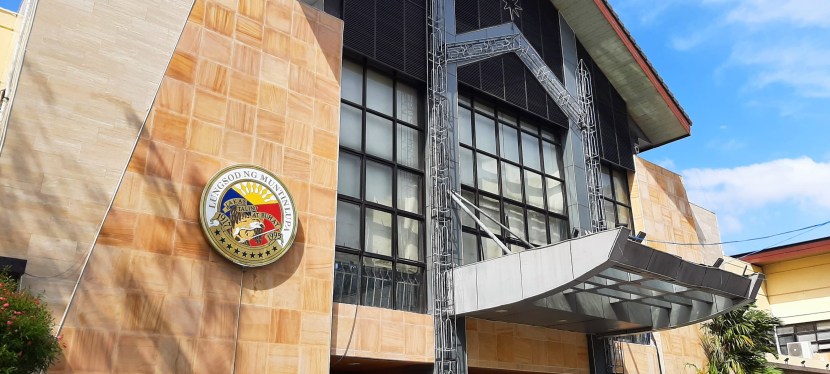
As the prices of fuel have skyrocketed nationwide, the City Government of Muntinlupa managed to save P3 million worth of fuel in a 2-week period as a result of local energy conservation measures, according to a Manila Bulletin news report.
To put things in perspective, posted below is an excerpt from the news report of the Manila Bulletin. Some parts in boldface…
The Muntinlupa City government has saved 31,000 liters of fuel, equivalent to P3 million, in two weeks as part of its energy conservation measures.
“Happy to report na mahigit 31,000 liters o katumbas na P3 milyon na halaga ng fuel ang natipid ng Pamahalaang Lungsod sa loob lamang ng dalawang linggo mula nang ipatupad natin ang austerity at energy conservation measure (Happy to report that the City Government has saved more than 31,000 liters or the equivalent of P3 million worth of fuel in just two weeks since we implemented austerity and energy conservation measures),” Mayor Ruffy Biazon announced.
The city government implemented the measures in compliance with the directive of Malacañang to all government agencies to implement austerity measures due to the Middle East crisis.
Biazon thanked employees of city and national government offices, including the police, fire station, who cooperated in the prudent use of resources.
Included in the city government’s measures is the strategic planning of vehicle trips and strict implementation of “official use only” for government vehicles.
He said in electricity, the city government is expected to save on consumption.
“Nagpatupad tayo ng compressed 4-day work week (maliban sa frontline offices at responders), itinakda ang thermostat sa 24°C (binawasan din nang dalawang oras ang paggamit ng aircon sa lahat ng tanggapan at ang pagpatay ng ilang ilaw sa mga tanggapan sa City Hall), at naglatag ng iba pang energy conservation measures sa ating mga tanggapan (We have implemented a compressed 4-day work week (except for frontline offices and responders), set the thermostat to 24°C (also reducing the use of air conditioning in all offices by two hours and turning off some lights in offices at City Hall), and implemented other energy conservation measures in our offices),” the mayor said.
Let me end this post by asking you readers: What is your reaction to this recent development? If you are a resident of Muntinlupa City, are you satisfied with the energy conservation measures implemented by the City Government?
For more South Metro Manila community news and developments, come back here soon. Also say NO to fake news, NO to irresponsible journalism, NO to misinformation, NO to plagiarists, NO to reckless publishers and NO to sinister propaganda when it comes to news and developments. For South Metro Manila community developments, member engagement, commerce and other relevant updates, join the growing South Metro Manila Facebook group at https://www.facebook.com/groups/342183059992673
As the Philippines is struggling with very expensive fuel prices, Indonesia assured the government that there will be a steady supply of coal for the country’s energy needs, according to a news report by BusinessWorld.
To put things in perspective, posted below is an excerpt from the news report of BusinessWorld. Some parts in boldface…
Indonesia has assured the Philippines of a steady supply of coal, the Philippine energy minister said on Tuesday.
“We have assurance, and we are good partners,” Energy Secretary Sharon Garin told a news briefing.
The Philippines plans to temporarily increase coal-fired generation amid energy pressures, Ms. Garin said.
The country’s fuel supply remains manageable and the government is working to procure 1 million barrels of oil from countries within and outside Southeast Asia to build its buffer stock. The Philippines has around 45 days of fuel supply based on current consumption levels, Ms. Garin said.
The Philippines has Southeast Asia’s most coal-dependent power grid.
After ramping up LNG-fired generation, Manila was poised in 2025 for its first decline in coal power in nearly two decades, but rising LNG costs are forcing it to turn back to coal.
Let me end this post by asking you readers: What is your reaction to this recent development? Do you think coal is a good solution to ensure a stable supply of energy all over the country?
Japanese Prime Minister Takaichi Sanae visited Washington for the first time as the head of her nation and met with US President Donald Trump at the White House where they discussed very important matters in front of the media and officials, according to a news report by Kyodo News. Takaichi also praised the President for his peace efforts.
To put things in perspective, posted below is an excerpt from the news report of Kyodo News Some parts in boldface…
Prime Minister Sanae Takaichi told U.S. President Donald Trump on Thursday that Japan is ready to contribute to the safety of the Strait of Hormuz as the U.S.-Israeli war on Iran intensifies, while explaining Tokyo’s legal constraints on sending ships from its defense forces to the region.
Takaichi told reporters after her meeting at the White House with Trump that she told the U.S. leader “in detail what Japan can do and cannot do” from a legal perspective under the country’s war-renouncing Constitution.
Trump, for his part, reiterated his expectation that Japan would be engaged, while saying during the part of their talks open to media that he believes Japan has been “stepping up to the plate” in recent days over the Iran war, “unlike NATO.”
The U.S. leader has made public his dissatisfaction with Washington’s allies, including Tokyo and members of the trans-Atlantic alliance, over their reluctance to pitch in to help secure the Hormuz strait, a vital waterway for global oil transportation now largely blocked by Iran.
“I expect Japan to step up, because, you know, we have that kind of relationship,” he said. “We have 45,000 soldiers in Japan. We have, we spend a lot of money on Japan…so I expect, I’m not surprised that they would step up.“
Noting also that more than 90 percent of Japan’s crude oil imports normally pass through the strait, Trump said Japan has a “big reason” to do more.
In affirming Japan-U.S. collaboration on expanding U.S. energy production, Takaichi said she proposed to Trump a joint oil-reserve project to ease supply concerns driven by the Middle East conflict.
At the talks, Takaichi praised Trump’s “peace” efforts, expressing readiness to assist by reaching out to other countries. “Donald is the only person who can bring peace and prosperity across the world,” she said.
Takaichi emphasized that the prospect of Iran developing nuclear weapons is unacceptable. Trump alluded earlier to Iran’s nuclear program to explain the U.S. decision to launch its military campaign against the country.
Facing an increasingly assertive China, Takaichi also reminded Trump that the security environment remains severe in the Indo-Pacific, at a time when reports have emerged that some U.S. military assets are being moved from the region to the Middle East.
The two leaders “committed to peace and stability across the Taiwan Strait as an indispensable element of regional security and global prosperity” and “opposed any attempts to unilaterally change the status quo, including by force or coercion,” the White House said in a press release without naming China.
They confirmed that their nations oppose measures threatening critical mineral supplies such as export controls, senior Japanese government officials told reporters, apparently referring to Beijing’s tighter regulations on rare earths exports.
They agreed to advance broad defense cooperation, including joint missile development and production, and promote a free and open Indo-Pacific, according to Takaichi. The White House said the production of the interceptor Standard Missile-3 Block 2A in Japan will be quadrupled.
“We were able to affirm many concrete forms of cooperation that will further enhance the quality of our alliance in wide-ranging fields,” Takaichi said, adding that she and Trump are aiming to elevate bilateral ties to “a higher level” together.
Trump welcomed Japan buying “a lot of” U.S. military equipment. He further stressed that he has a “very fine relationship” with Takaichi, describing her as “a very special person” who is doing a “fantastic job.”
The U.S. side did not bring up fresh demands for Japan to spend more on its defense, the officials said.
Takaichi’s main goals in her first trip to the United States since taking office in October were to strengthen the personal trust in her ties with Trump and reaffirm the U.S. security commitment to the Indo-Pacific region as China’s influence grows.
The meeting came amid increasing concerns within Japan that the U.S. focus in terms of policy and military assets could shift from the Indo-Pacific to the Middle East if the U.S.-Israeli war with Iran drags on, a development that would work in China’s favor.
The U.S. military has reportedly begun relocating the amphibious assault ship Tripoli and over 2,000 Marines from their bases in southwestern and southern Japan to the Middle East.
Takaichi got off to a positive start in building personal ties with Trump when they met in person for the first time in October in Tokyo, shortly after she became Japan’s first female prime minister.
Since the outbreak of the Middle East conflict, Tokyo has sought to strike a delicate balance between maintaining its strong alliance with Washington and its friendly relations with Tehran.
For more insight about the Trump-Takaichi meeting, watch the videos below.
Let me end this piece by asking you readers: What is your reaction to this development? What is your impression about the many matters and announcements that happened during the Trump-Takaichi meeting at the White House? Were you surprised when it was announced that US allies Japan, Italy, England, Netherlands, Germany, and France jointly agreed to secure the Strait of Hormuz in response to Trump’s demand? With Japan having a close relationship with Trump’s America now, do you think Communist China and North Korea will feel intimidated at their side of the Pacific?
To put things in perspective, posted below is an excerpt from the news report of Kyodo News Some parts in boldface…
Prime Minister Sanae Takaichi is considering expressing Japan’s desire to cooperate on the U.S. “Golden Dome” next-generation missile defense system at her upcoming meeting with President Donald Trump, Japanese government sources said Tuesday.
The envisaged missile defense collaboration is among the expected agreements, covering various areas from the long-standing Japan-U.S. alliance to the fields of economic security and cutting-edge technology, at the summit slated for Thursday in Washington, the sources said.
Revealed by Trump in May, the Golden Dome scheme is intended to detect and destroy hypersonic missiles, which can fly at above five times the speed of sound, in outer space in mid-flight. The total costs are estimated at $175 billion.
The trajectories of hypersonic weapons are irregular and low-altitude, making them difficult to shoot down or track by radar. China, North Korea and Russia have been aggressively pursuing such arms.
In August 2023, Tokyo and Washington agreed to develop a new type of missile to intercept hypersonic weapons, with the goal of completing it by the 2030s. It is intended that Aegis destroyers of the U.S. Navy and the Japan Maritime Self-Defense Force will be equipped with the missile.
To enhance the missile defense system’s detecting and tracking capabilities, the U.S. military has been building a “satellite constellation” system that allows it to capture incoming missiles with high accuracy by linking multiple small satellites.
Japan’s Defense Ministry, which has also been conducting research on technologies necessary for detecting projectiles from outer space, is eyeing information sharing with the United States, the sources said.
During the summit talks, which will take place amid the Middle East conflict following U.S. and Israeli attacks on Iran, Takaichi also plans to ask Trump about purchasing crude oil produced from Alaska, according to the sources.
Japan, which relies heavily on the Middle East for its crude oil imports, has once again had its energy vulnerability exposed in the wake of the war in the region, with the effective closure of the Strait of Hormuz disrupting oil flows.
Takaichi and Trump, meanwhile, are expected to agree on a $100 million joint project in shipbuilding, a sector both countries are keen on enhancing amid dominance by Chinese makers.
Let me end this piece by asking you readers: What is your reaction to this development? Do you think the US-Japan summit this week will result in big breakthroughs with regards to defense, economics and energy? What do you hope to see happen after President Trump and Prime Minister Takaichi meet in Washington? Do you think the Golden Dome missile defense project will be fully realized and operational in the years to come?
As expected, Japan officially started releasing yesterday its oil reserves to stabilize the distribution of petroleum products and to ensure a good supply as the war against the Islamic terrorist regime of Iran continues, according to a Kyodo News report.
To put things in perspective, posted below is an excerpt from the news report of Kyodo News Some parts in boldface…
Japan began to release oil from its reserves Monday to alleviate supply concerns that have grown amid the U.S.-Israel war with Iran and stabilize the distribution of petroleum products, taking the step ahead of a planned International Energy Agency-led move.
In its first oil release since 2022, when it joined an IEA coordinated effort following Russia’s full-scale invasion of Ukraine, Japan is initially freeing up 15 days’ worth of reserves held by the private sector, with a month’s worth of state-held oil to follow.
Chief Cabinet Secretary Minoru Kihara said the release was decided as Japan’s crude oil imports are expected to decrease significantly from late March onwards due to the effective closure of the Strait of Hormuz, which many tankers traverse.
“We plan to make efforts so that (the released oil) will circulate in the market smoothly,” he said, adding the government will “continue to take every possible step to ensure the stable supply of energy, through international coordination and without ruling out any options.”
The IEA said Sunday the planned coordinated release of oil by its 32 member countries, including Japan, will “soon start.”
It said last week that the countries will make 400 million barrels of oil available to the market in response to the disruptions resulting from the Middle East conflict.
Crude oil futures have been surging amid growing prospects of a prolonged conflict, with the benchmark West Texas Intermediate crude oil futures contract briefly topping $100 per barrel again in New York on Sunday, after a similar spike a week earlier.
The Japanese government will reduce the mandatory 70-day reserve requirement for oil refiners and trading companies under Japan’s oil stockpiling law to 55 days’ worth, allowing them to draw down their existing stocks for use.
Last Wednesday, Prime Minister Sanae Takaichi announced the government’s plans to release about 80 million barrels of oil, the largest ever, equivalent to 45 days’ worth of domestic consumption and 1.8 times the amount released after the massive earthquake and tsunami in 2011 that devastated Japan’s northeast.
Preparations are under way to sell oil in government-held reserves to wholesalers.
As of the end of 2025, Japan held reserves of approximately 470 million barrels of oil, equivalent to 254 days of domestic consumption, of which 146 days’ worth were government-owned, 101 days held by the private sector, and the remainder jointly stored by oil-producing countries.
Let me end this piece by asking you readers: What is your reaction to this development? Do you think newly released oil reserves will stabilize the Japanese market for petroleum products? Do you think the joint Israel-US campaign against the Islamic terrorist regime of Iran will ultimately cause the enemy to surrender this month?
Another step towards a nuclear-powered Philippines happened as the energy giant Meralco signed a memorandum of understanding (MOU) with Export-Import Bank of Korea (KEXIM) and Korea Hydro & Nuclear Power (KHNP) for a strategic partnership on the development of nuclear energy projects in the country, according to a BusinessWorld news report.
To put things in perspective, posted below is an excerpt from the news report of BusinessWorld. Some parts in boldface…
MANILA ELECTRIC CO. (Meralco) has signed a memorandum of understanding (MoU) with Korea Hydro & Nuclear Power (KHNP) and the Export-Import Bank of Korea (KEXIM) to collaborate on the development of nuclear energy projects in the Philippines.
The partnership aims to leverage South Korean expertise to evaluate the feasibility of nuclear power through a multi-faceted approach.
Under the agreement, the three organizations will conduct joint discussions on reactor design and engineering, exchange technical and regulatory information, and work to “strengthen the Philippines’ nuclear legal and institutional frameworks.”
The scope of the MoU also covers early-stage project development, including “public acceptance initiatives, project planning, and site selection studies.”
The companies will focus on business and financial modeling, with KEXIM specifically exploring “potential financing structures and credit facilities” for Meralco’s prospective projects.
Meralco Chairman and Chief Executive Officer Manuel V. Pangilinan highlighted the strategic importance of the collaboration, saying “Partnering with KHNP and KEXIM gives us access to proven global expertise and enables us to study technology, business models, and financing options with greater depth. This MoU marks an early but consequential step in this important process.”
He also said that nuclear energy is a critical component of the company’s long-term strategy to ensure energy security.
“Nuclear energy is a way to diversify our portfolio and reinforce energy security, while offering a degree of insulation from fuel market fluctuations,” he said.
He added that Meralco’s initiative is “complementary to the Philippine government’s efforts to lay the groundwork for its nuclear power program” as the utility provider assesses how the technology can best contribute to its future operations.
KHNP, a subsidiary of Korea Electric Power Corp., is currently the largest power generation company in South Korea, while KEXIM serves as the nation’s state-owned official export credit agency.
Meralco is the country’s biggest private electric distribution utility, serving 39 cities and 72 municipalities. It also has interests in power generation through wholly owned units and equity stakes.
Let me end this post by asking you readers: What is your reaction to this recent development? Now that the MOU has been signed, do you feel more confident about the future of a nuclear-powered Philippines? Do you think new nuclear power facilities in the country will be realized in your lifetime?
For more South Metro Manila community news and developments, come back here soon. Also say NO to fake news, NO to irresponsible journalism, NO to misinformation, NO to plagiarists, NO to reckless publishers and NO to sinister propaganda when it comes to news and developments. For South Metro Manila community developments, member engagement, commerce and other relevant updates, join the growing South Metro Manila Facebook group at https://www.facebook.com/groups/342183059992673
As many countries around the world are already struggling with the economic disruptions and the spike in oil prices as a result of the ongoing chaos in the Middle East, Japan has decided to release its own oil reserves and it could happen as early as Monday (March 16), according to a news report by Kyodo News.
To put things in perspective, posted below is an excerpt from the news report of Kyodo News Some parts in boldface…
Japan will begin drawing down its oil reserves as early as next Monday to deal with a possible sharp rise in gasoline and other petroleum product prices amid the Middle East conflict, Prime Minister Sanae Takaichi said.
Takaichi told reporters on Wednesday that Japan will release 15 days’ worth of reserves held by the private sector and then one month’s worth of government-held oil without waiting for a decision coordinated by the International Energy Agency.
It will be the first time Japan has released its government oil reserves individually, not in an internationally coordinated way, since the stockpiling of oil began in 1978.
Japan’s dependency on the Middle East for crude oil is “prominently high” compared with other countries and imports are expected to “significantly drop late this month or later,” necessitating measures to prevent a disruption to the supply of gasoline and other petroleum items, Takaichi said.
Citing the possibility that the average price of domestic retail gasoline could surpass 200 yen ($1.26) per liter, Takaichi also said she aims to keep the price at around 170 yen by utilizing a government fund.
The price of gasoline hit as low as 154.70 yen in mid-January but rose to 161.80 yen per liter as of Monday, according to industry ministry data.
“We will flexibly review the support measures to ensure continuous relief for the public even if the (Middle Eastern) situation is prolonged,” Takaichi said.
Japan imports more than 90 percent of its oil from the Middle East, making it highly vulnerable to the effective closure of the Strait of Hormuz, which has prevented the transportation of oil and gas from suppliers in the Persian Gulf, after the U.S. and Israel attacked Iran late last month.
As of the end of December, Japan had 470 million barrels of oil reserves equivalent to 254 days of domestic consumption, of which 146 days’ worth were government-owned, 101 days held by the private sector, and the remainder jointly stored with oil-producing countries.
Let me end this piece by asking you readers: What is your reaction to this development? Do you think Japan made the right decision to release its oil reserves good for fifteen days? Do you think Japan will be able to find new and alternative sources of oil so that it can cut its reliance on Middle East oil?