As the Philippines is struggling with very expensive fuel prices, Indonesia assured the government that there will be a steady supply of coal for the country’s energy needs, according to a news report by BusinessWorld.
To put things in perspective, posted below is an excerpt from the news report of BusinessWorld. Some parts in boldface…
Indonesia has assured the Philippines of a steady supply of coal, the Philippine energy minister said on Tuesday.
“We have assurance, and we are good partners,” Energy Secretary Sharon Garin told a news briefing.
The Philippines plans to temporarily increase coal-fired generation amid energy pressures, Ms. Garin said.
The country’s fuel supply remains manageable and the government is working to procure 1 million barrels of oil from countries within and outside Southeast Asia to build its buffer stock. The Philippines has around 45 days of fuel supply based on current consumption levels, Ms. Garin said.
The Philippines has Southeast Asia’s most coal-dependent power grid.
After ramping up LNG-fired generation, Manila was poised in 2025 for its first decline in coal power in nearly two decades, but rising LNG costs are forcing it to turn back to coal.
Let me end this post by asking you readers: What is your reaction to this recent development? Do you think coal is a good solution to ensure a stable supply of energy all over the country?
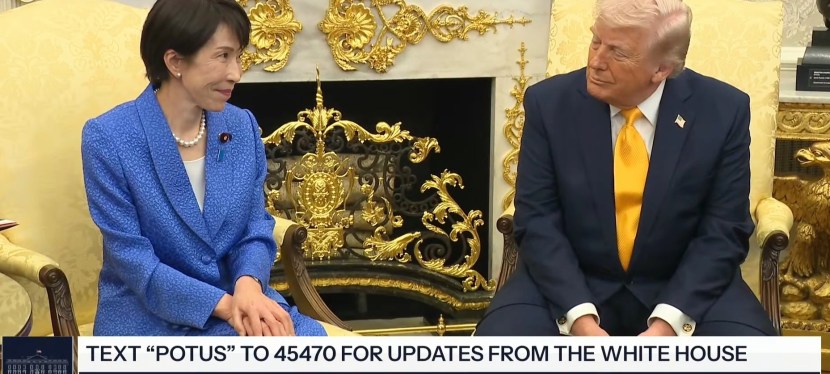
Japanese Prime Minister Takaichi Sanae visited Washington for the first time as the head of her nation and met with US President Donald Trump at the White House where they discussed very important matters in front of the media and officials, according to a news report by Kyodo News. Takaichi also praised the President for his peace efforts.
To put things in perspective, posted below is an excerpt from the news report of Kyodo News Some parts in boldface…
Prime Minister Sanae Takaichi told U.S. President Donald Trump on Thursday that Japan is ready to contribute to the safety of the Strait of Hormuz as the U.S.-Israeli war on Iran intensifies, while explaining Tokyo’s legal constraints on sending ships from its defense forces to the region.
Takaichi told reporters after her meeting at the White House with Trump that she told the U.S. leader “in detail what Japan can do and cannot do” from a legal perspective under the country’s war-renouncing Constitution.
Trump, for his part, reiterated his expectation that Japan would be engaged, while saying during the part of their talks open to media that he believes Japan has been “stepping up to the plate” in recent days over the Iran war, “unlike NATO.”
The U.S. leader has made public his dissatisfaction with Washington’s allies, including Tokyo and members of the trans-Atlantic alliance, over their reluctance to pitch in to help secure the Hormuz strait, a vital waterway for global oil transportation now largely blocked by Iran.
“I expect Japan to step up, because, you know, we have that kind of relationship,” he said. “We have 45,000 soldiers in Japan. We have, we spend a lot of money on Japan…so I expect, I’m not surprised that they would step up.“
Noting also that more than 90 percent of Japan’s crude oil imports normally pass through the strait, Trump said Japan has a “big reason” to do more.
In affirming Japan-U.S. collaboration on expanding U.S. energy production, Takaichi said she proposed to Trump a joint oil-reserve project to ease supply concerns driven by the Middle East conflict.
At the talks, Takaichi praised Trump’s “peace” efforts, expressing readiness to assist by reaching out to other countries. “Donald is the only person who can bring peace and prosperity across the world,” she said.
Takaichi emphasized that the prospect of Iran developing nuclear weapons is unacceptable. Trump alluded earlier to Iran’s nuclear program to explain the U.S. decision to launch its military campaign against the country.
Facing an increasingly assertive China, Takaichi also reminded Trump that the security environment remains severe in the Indo-Pacific, at a time when reports have emerged that some U.S. military assets are being moved from the region to the Middle East.
The two leaders “committed to peace and stability across the Taiwan Strait as an indispensable element of regional security and global prosperity” and “opposed any attempts to unilaterally change the status quo, including by force or coercion,” the White House said in a press release without naming China.
They confirmed that their nations oppose measures threatening critical mineral supplies such as export controls, senior Japanese government officials told reporters, apparently referring to Beijing’s tighter regulations on rare earths exports.
They agreed to advance broad defense cooperation, including joint missile development and production, and promote a free and open Indo-Pacific, according to Takaichi. The White House said the production of the interceptor Standard Missile-3 Block 2A in Japan will be quadrupled.
“We were able to affirm many concrete forms of cooperation that will further enhance the quality of our alliance in wide-ranging fields,” Takaichi said, adding that she and Trump are aiming to elevate bilateral ties to “a higher level” together.
Trump welcomed Japan buying “a lot of” U.S. military equipment. He further stressed that he has a “very fine relationship” with Takaichi, describing her as “a very special person” who is doing a “fantastic job.”
The U.S. side did not bring up fresh demands for Japan to spend more on its defense, the officials said.
Takaichi’s main goals in her first trip to the United States since taking office in October were to strengthen the personal trust in her ties with Trump and reaffirm the U.S. security commitment to the Indo-Pacific region as China’s influence grows.
The meeting came amid increasing concerns within Japan that the U.S. focus in terms of policy and military assets could shift from the Indo-Pacific to the Middle East if the U.S.-Israeli war with Iran drags on, a development that would work in China’s favor.
The U.S. military has reportedly begun relocating the amphibious assault ship Tripoli and over 2,000 Marines from their bases in southwestern and southern Japan to the Middle East.
Takaichi got off to a positive start in building personal ties with Trump when they met in person for the first time in October in Tokyo, shortly after she became Japan’s first female prime minister.
Since the outbreak of the Middle East conflict, Tokyo has sought to strike a delicate balance between maintaining its strong alliance with Washington and its friendly relations with Tehran.
For more insight about the Trump-Takaichi meeting, watch the videos below.
Let me end this piece by asking you readers: What is your reaction to this development? What is your impression about the many matters and announcements that happened during the Trump-Takaichi meeting at the White House? Were you surprised when it was announced that US allies Japan, Italy, England, Netherlands, Germany, and France jointly agreed to secure the Strait of Hormuz in response to Trump’s demand? With Japan having a close relationship with Trump’s America now, do you think Communist China and North Korea will feel intimidated at their side of the Pacific?
To put things in perspective, posted below is an excerpt from the news report of Kyodo News Some parts in boldface…
Prime Minister Sanae Takaichi is considering expressing Japan’s desire to cooperate on the U.S. “Golden Dome” next-generation missile defense system at her upcoming meeting with President Donald Trump, Japanese government sources said Tuesday.
The envisaged missile defense collaboration is among the expected agreements, covering various areas from the long-standing Japan-U.S. alliance to the fields of economic security and cutting-edge technology, at the summit slated for Thursday in Washington, the sources said.
Revealed by Trump in May, the Golden Dome scheme is intended to detect and destroy hypersonic missiles, which can fly at above five times the speed of sound, in outer space in mid-flight. The total costs are estimated at $175 billion.
The trajectories of hypersonic weapons are irregular and low-altitude, making them difficult to shoot down or track by radar. China, North Korea and Russia have been aggressively pursuing such arms.
In August 2023, Tokyo and Washington agreed to develop a new type of missile to intercept hypersonic weapons, with the goal of completing it by the 2030s. It is intended that Aegis destroyers of the U.S. Navy and the Japan Maritime Self-Defense Force will be equipped with the missile.
To enhance the missile defense system’s detecting and tracking capabilities, the U.S. military has been building a “satellite constellation” system that allows it to capture incoming missiles with high accuracy by linking multiple small satellites.
Japan’s Defense Ministry, which has also been conducting research on technologies necessary for detecting projectiles from outer space, is eyeing information sharing with the United States, the sources said.
During the summit talks, which will take place amid the Middle East conflict following U.S. and Israeli attacks on Iran, Takaichi also plans to ask Trump about purchasing crude oil produced from Alaska, according to the sources.
Japan, which relies heavily on the Middle East for its crude oil imports, has once again had its energy vulnerability exposed in the wake of the war in the region, with the effective closure of the Strait of Hormuz disrupting oil flows.
Takaichi and Trump, meanwhile, are expected to agree on a $100 million joint project in shipbuilding, a sector both countries are keen on enhancing amid dominance by Chinese makers.
Let me end this piece by asking you readers: What is your reaction to this development? Do you think the US-Japan summit this week will result in big breakthroughs with regards to defense, economics and energy? What do you hope to see happen after President Trump and Prime Minister Takaichi meet in Washington? Do you think the Golden Dome missile defense project will be fully realized and operational in the years to come?
As expected, Japan officially started releasing yesterday its oil reserves to stabilize the distribution of petroleum products and to ensure a good supply as the war against the Islamic terrorist regime of Iran continues, according to a Kyodo News report.
To put things in perspective, posted below is an excerpt from the news report of Kyodo News Some parts in boldface…
Japan began to release oil from its reserves Monday to alleviate supply concerns that have grown amid the U.S.-Israel war with Iran and stabilize the distribution of petroleum products, taking the step ahead of a planned International Energy Agency-led move.
In its first oil release since 2022, when it joined an IEA coordinated effort following Russia’s full-scale invasion of Ukraine, Japan is initially freeing up 15 days’ worth of reserves held by the private sector, with a month’s worth of state-held oil to follow.
Chief Cabinet Secretary Minoru Kihara said the release was decided as Japan’s crude oil imports are expected to decrease significantly from late March onwards due to the effective closure of the Strait of Hormuz, which many tankers traverse.
“We plan to make efforts so that (the released oil) will circulate in the market smoothly,” he said, adding the government will “continue to take every possible step to ensure the stable supply of energy, through international coordination and without ruling out any options.”
The IEA said Sunday the planned coordinated release of oil by its 32 member countries, including Japan, will “soon start.”
It said last week that the countries will make 400 million barrels of oil available to the market in response to the disruptions resulting from the Middle East conflict.
Crude oil futures have been surging amid growing prospects of a prolonged conflict, with the benchmark West Texas Intermediate crude oil futures contract briefly topping $100 per barrel again in New York on Sunday, after a similar spike a week earlier.
The Japanese government will reduce the mandatory 70-day reserve requirement for oil refiners and trading companies under Japan’s oil stockpiling law to 55 days’ worth, allowing them to draw down their existing stocks for use.
Last Wednesday, Prime Minister Sanae Takaichi announced the government’s plans to release about 80 million barrels of oil, the largest ever, equivalent to 45 days’ worth of domestic consumption and 1.8 times the amount released after the massive earthquake and tsunami in 2011 that devastated Japan’s northeast.
Preparations are under way to sell oil in government-held reserves to wholesalers.
As of the end of 2025, Japan held reserves of approximately 470 million barrels of oil, equivalent to 254 days of domestic consumption, of which 146 days’ worth were government-owned, 101 days held by the private sector, and the remainder jointly stored by oil-producing countries.
Let me end this piece by asking you readers: What is your reaction to this development? Do you think newly released oil reserves will stabilize the Japanese market for petroleum products? Do you think the joint Israel-US campaign against the Islamic terrorist regime of Iran will ultimately cause the enemy to surrender this month?
Another step towards a nuclear-powered Philippines happened as the energy giant Meralco signed a memorandum of understanding (MOU) with Export-Import Bank of Korea (KEXIM) and Korea Hydro & Nuclear Power (KHNP) for a strategic partnership on the development of nuclear energy projects in the country, according to a BusinessWorld news report.
To put things in perspective, posted below is an excerpt from the news report of BusinessWorld. Some parts in boldface…
MANILA ELECTRIC CO. (Meralco) has signed a memorandum of understanding (MoU) with Korea Hydro & Nuclear Power (KHNP) and the Export-Import Bank of Korea (KEXIM) to collaborate on the development of nuclear energy projects in the Philippines.
The partnership aims to leverage South Korean expertise to evaluate the feasibility of nuclear power through a multi-faceted approach.
Under the agreement, the three organizations will conduct joint discussions on reactor design and engineering, exchange technical and regulatory information, and work to “strengthen the Philippines’ nuclear legal and institutional frameworks.”
The scope of the MoU also covers early-stage project development, including “public acceptance initiatives, project planning, and site selection studies.”
The companies will focus on business and financial modeling, with KEXIM specifically exploring “potential financing structures and credit facilities” for Meralco’s prospective projects.
Meralco Chairman and Chief Executive Officer Manuel V. Pangilinan highlighted the strategic importance of the collaboration, saying “Partnering with KHNP and KEXIM gives us access to proven global expertise and enables us to study technology, business models, and financing options with greater depth. This MoU marks an early but consequential step in this important process.”
He also said that nuclear energy is a critical component of the company’s long-term strategy to ensure energy security.
“Nuclear energy is a way to diversify our portfolio and reinforce energy security, while offering a degree of insulation from fuel market fluctuations,” he said.
He added that Meralco’s initiative is “complementary to the Philippine government’s efforts to lay the groundwork for its nuclear power program” as the utility provider assesses how the technology can best contribute to its future operations.
KHNP, a subsidiary of Korea Electric Power Corp., is currently the largest power generation company in South Korea, while KEXIM serves as the nation’s state-owned official export credit agency.
Meralco is the country’s biggest private electric distribution utility, serving 39 cities and 72 municipalities. It also has interests in power generation through wholly owned units and equity stakes.
Let me end this post by asking you readers: What is your reaction to this recent development? Now that the MOU has been signed, do you feel more confident about the future of a nuclear-powered Philippines? Do you think new nuclear power facilities in the country will be realized in your lifetime?
For more South Metro Manila community news and developments, come back here soon. Also say NO to fake news, NO to irresponsible journalism, NO to misinformation, NO to plagiarists, NO to reckless publishers and NO to sinister propaganda when it comes to news and developments. For South Metro Manila community developments, member engagement, commerce and other relevant updates, join the growing South Metro Manila Facebook group at https://www.facebook.com/groups/342183059992673
As many countries around the world are already struggling with the economic disruptions and the spike in oil prices as a result of the ongoing chaos in the Middle East, Japan has decided to release its own oil reserves and it could happen as early as Monday (March 16), according to a news report by Kyodo News.
To put things in perspective, posted below is an excerpt from the news report of Kyodo News Some parts in boldface…
Japan will begin drawing down its oil reserves as early as next Monday to deal with a possible sharp rise in gasoline and other petroleum product prices amid the Middle East conflict, Prime Minister Sanae Takaichi said.
Takaichi told reporters on Wednesday that Japan will release 15 days’ worth of reserves held by the private sector and then one month’s worth of government-held oil without waiting for a decision coordinated by the International Energy Agency.
It will be the first time Japan has released its government oil reserves individually, not in an internationally coordinated way, since the stockpiling of oil began in 1978.
Japan’s dependency on the Middle East for crude oil is “prominently high” compared with other countries and imports are expected to “significantly drop late this month or later,” necessitating measures to prevent a disruption to the supply of gasoline and other petroleum items, Takaichi said.
Citing the possibility that the average price of domestic retail gasoline could surpass 200 yen ($1.26) per liter, Takaichi also said she aims to keep the price at around 170 yen by utilizing a government fund.
The price of gasoline hit as low as 154.70 yen in mid-January but rose to 161.80 yen per liter as of Monday, according to industry ministry data.
“We will flexibly review the support measures to ensure continuous relief for the public even if the (Middle Eastern) situation is prolonged,” Takaichi said.
Japan imports more than 90 percent of its oil from the Middle East, making it highly vulnerable to the effective closure of the Strait of Hormuz, which has prevented the transportation of oil and gas from suppliers in the Persian Gulf, after the U.S. and Israel attacked Iran late last month.
As of the end of December, Japan had 470 million barrels of oil reserves equivalent to 254 days of domestic consumption, of which 146 days’ worth were government-owned, 101 days held by the private sector, and the remainder jointly stored with oil-producing countries.
Let me end this piece by asking you readers: What is your reaction to this development? Do you think Japan made the right decision to release its oil reserves good for fifteen days? Do you think Japan will be able to find new and alternative sources of oil so that it can cut its reliance on Middle East oil?
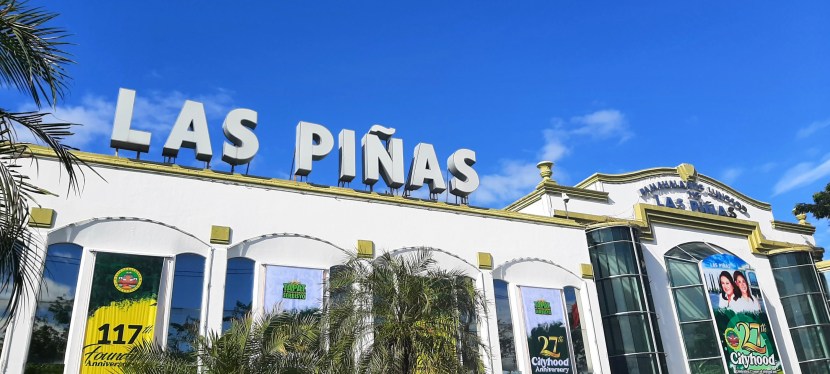
With the ongoing conflict in the Middle East and much higher prices of fuel already in effect, the City Government of Las Piñas announced that it has started implementing the compressed work week schedule to specifically cut down on energy consumption in government offices. Workers of certain departments, however, will resume their regular operations to ensure uninterrupted services.
To put things in perspective, posted below is the entire announcement by the City Government. Some parts in boldface…
The Office of the Mayor released Memo No. 2026-001 implementing the Compressed Workweek Schedule in the City Government of Las Piñas, in accordance with Memorandum Circular No. 114 of the national government that aims to reduce energy consumption in government offices.
Under the new schedule, city employees will go to work Monday through Thursday, 8:00 AM to 7:00 PM.
The move aims to support energy conservation, make government operations more efficient, and ensure service delivery to citizens continues.
Offices that provide essential services such as the City Health Office, Disaster Risk Reduction Management Office, Engineering Office, City Environmental and Natural Resources Office, and Traffic and Parking Management Office will resume their regular operations to ensure public service is not interrupted.
Let me end this piece by asking you readers: If you are a resident of Las Piñas City, what is your reaction to this development? Do you have a lot of transactions to complete at City Hall? Do you know anyone who works as a City Government employee?
For more South Metro Manila community news and developments, come back here soon. Also say NO to fake news, NO to irresponsible journalism, NO to misinformation, NO to plagiarists, NO to reckless publishers and NO to sinister propaganda when it comes to news and developments. For South Metro Manila community developments, member engagement, commerce and other relevant updates, join the growing South Metro Manila Facebook group at https://www.facebook.com/groups/342183059992673
Recently the effort to integrate nuclear power into the energy mix of the Philippines moved a few steps forward as deals with American companies worth $4.2 million were formally signed, according to a BusinessWorld news report.
To put things in perspective, posted below is an excerpt from the business news article of BusinessWorld. Some parts in boldface…
THE PHILIPPINES is gaining more support from the United States in its goal of integrating nuclear power into the national energy mix in the next six years as it sealed $4.2 million worth of deals with US companies.
Government agencies and private companies from the Philippines and the US on Monday entered into memoranda of understanding which are aimed at exploring deployment of nuclear technology and supporting nuclear workforce development in the country.
“The Philippine Energy Plan sets clear direction for an energy future — 1,200 megawatts (MW)by 2032. And that is not moving until somebody tells us that it’s impossible,” Energy Secretary Sharon S. Garin said in her speech during the signing ceremony in Makati City on Monday.
“These targets demand preparation, anchored in discipline, safety, and capacity. As we pursue energy security and a responsible transition, we must invest in our people as deliberately as we invest in infrastructure,” she added.
Under the Philippine Energy Plan, the country aims to integrate nuclear energy into the power mix with at least 1,200 MW of capacity by 2032, rising to 2,400 MW by 2045 and to 4,800 MW by 2050.
“We want to work together to get the Philippines to the finish line on nuclear energy,” Ann K. Ganzer, principal deputy assistant secretary at the US Department of State’s Bureau of Arms Control and Nonproliferation, said.
“Beyond acquiring the technology and establishing robust regulations, to achieve that 2032 goal, the most vital elements will be assessing sites for commercial reactor and developing the skilled workforce needed to design, construct, operate, regulate and sustain advanced nuclear plants for generations to come,” she added.
Manila Electric Co. (Meralco), the country’s largest private electric distribution utility, secured a $2.7-million grant from the United States Trade and Development Agency to help the company assess and deploy US-designed small modular reactors (SMRs) in the Philippines.
Meralco will pursue a feasibility study which involves an evaluation of leading US technologies, identification of viable sites, and delivery of a high-level implementation roadmap.
SMRs, each capable of generating up to 300 MW, can be constructed more quickly than traditional nuclear power plants.
Meralco Chairman and Chief Executive Officer Manuel V. Pangilinan described the grant as “the beginning of a long but necessary journey.”
“Meralco is also looking actually at not only SMRs. It depends on the horizon by which we are able to deploy, but also, perhaps a bit sooner, conventional nuclear plants for this country,” Mr. Pangilinan said.
“It simply is right for the country and for Meralco to take nuclear, and we are prepared to act as thought leaders in this regard,” he added.
The US State Department’s Foundational Infrastructure for Responsible Use of Small Reactor Technology Program involves the installation of a $1.5-million nuclear reactor control room simulator at a technical institution within the planned Luzon Economic Corridor.
The simulator will provide hands-on realistic training for future reactor operators, which is aimed at positioning the Philippines as an SMR regional training hub.
Meanwhile, several private companies and government agencies also contributed $2.5 million to bring US nuclear experts to the Philippines to develop specialized vocational and higher education curricula focused on the civil nuclear industry.
Let me end this post by asking you readers: What is your reaction to this recent development? Do you think the Philippines still has a lot of work to do and many challenges to resolve before it could convince foreign investors to come in? Do you think the national government is doing good enough to make the country attractive to foreign investors again?
The inflation rate of the Philippines for the month of January 2026 landed at 2% which is the highest in almost a year’s time, according to a news report by BusinessWorld.
To put things in perspective, posted below is an excerpt from the news report of BusinessWorld. Some parts in boldface…
PHILIPPINE INFLATION accelerated to its fastest pace in nearly a year in January amid a faster rise in rents and electricity rates, the Philippine Statistics Authority (PSA) reported.
Headline inflation picked up to 2% from 1.8% in December but slowed from 2.9% in the same month last year. This was the fastest pace seen in 11 months or since 2.1% in February 2025.
It also marked the first time in almost a year that the consumer price index (CPI) hit the Bangko Sentral ng Pilipinas’ (BSP) 2%-4% target.
The January clip was likewise above the 1.8% median forecast in a BusinessWorld poll of 18 economists but was within the central bank’s 1.4%-2.2% estimate for the month.
“The main reason for the higher inflation rate in January 2026 compared with December 2025 is the faster price increase in housing, water, electricity, gas, and other fuels, which recorded a 3.3% inflation rate,” National Statistician Claire Dennis S. Mapa said at a news briefing on Thursday.
Inflation for housing, water, electricity, gas and other fuels quickened to 3.3%, the fastest since 3.8% in August 2024.
According to the PSA, this commodity group had a 45.9% share in the overall inflation uptick in January.
Broken down, inflation for electricity rose to 6.5% year on year in January from the revised 4% in December, while rental prices picked up by 2.9% during the month from 2.4% in December.
This comes even after Manila Electric. Co. trimmed electricity rates by 16.37 centavos per kilowatt-hour (kWh) to P12.9508 per kWh last month from P13.1145 per kWh in December, which meant households consuming an average of 200 kWh paid P33 less in their monthly electricity bill.
In January 2025, Meralco charged P11.7428 per kWh.
The Department of Economy, Planning, and Development (DEPDev) said the government is enforcing programs to manage price pressures emerging from the energy sector. It includes improving the Department of Energy’s Net Metering Program by enforcing time-bound local permitting, simplifying utility documentary requirements and expanding consumer incentives.
“The program allows consumers to install eligible renewable energy systems and export surplus electricity to the grid, helping lower electricity costs and support the energy transition,” the DEPDev said in a statement.
Mr. Mapa also noted that liquefied petroleum gas (LPG) added price pressures, as inflation settled at -2.8% in January from -5.1% in December.
In January, Petron Corp. hiked LPG prices by P2.18 per kilogram (kg), while Solane imposed a P2.18-per-kg increase.
This means that the price of a household-standard 11-kg LPG tank ranged from P820 to P1,120 last month, based on data from the Department of Energy.
Let me end this post by asking you readers: What is your reaction to this recent development? Do you think the inflation rate of the Philippines could rise to as much as 3% this year? What do you think will be the factors – both internal and external – that will cause the inflation rate to spike?
Remember back in 2024 when the government canceled multiple contracts it previously awarded to Solar Philippines as a result of its failure to fulfill the energy commitments? Solar Philippines is back in the spotlight and it is facing P24 billion in penalties over terminated contracts and the Department of Energy (DOE) revealed a lot about the company, according to a BusinessWorld news report.
The government terminated more than 160 renewable energy service contracts which represent a combined potential capacity of 17,904.02 megawatts (MW). Of that amount, Solar Philippines accounted for about 64% of the terminated solar projects as announced by the DOE Secretary Sharon Garin.
To put things in perspective, posted below is an excerpt from news report of BusinessWorld. Some parts in boldface…
SOLAR PHILIPPINES Power Project Holdings, Inc. is facing P24 billion in fines for its failure to deliver nearly 12,000 megawatts (MW) of renewable energy (RE) over the last two years, according to the Department of Energy (DoE).
“Out of the 17,904 MW of terminated contracts for 2025 and 2024… Solar Philippines would be 11,427 MW. That’s more or less equivalent to 64% of the terminated contracts,” Energy Secretary Sharon S. Garin said in a press chat on Tuesday.
Ms. Garin said the DoE terminated 33 service contracts held by Solar Philippines, a company founded by businessman-turned-politician Rep. Leandro L. Leviste, due to project delays. These service contracts could have supplied 11,427.83 MW of capacity to the grid.
The DoE said it seeks to collect around P24 billion in penalties from Solar Philippines which covers contractual obligations, performance bonds and financial obligations arising from the revoked contracts.
“We have consistently sent notices even show-cause orders request for them to renew their bonds. We have not received any response from the company,” she said.
Sought for comment, Mr. Leviste has yet to respond as of press time.
The DoE said it has recorded nearly 18,000 MW worth of potential capacity from 163 terminated and relinquished service contracts Ms. Garin said that 70 contracts were terminated and relinquished in 2024 and 93 contacts in 2025.
These terminated and relinquished contracts were composed of hydro, solar, wind, geothermal, and biomass that were awarded after application and green energy auctions (GEAs).
“This could have covered actually the annual increase of our electricity demand in the country. Unfortunately, we had to cancel these contracts. They’re not complying with the requirements and in accordance with their GEA contract. This is why we had to cancel them because they really wouldn’t move,” Ms. Garin said.
Under the revised omnibus guidelines governing the award and administration of RE contracts issued in 2024, the Renewable Energy Management Bureau can recommend termination of the contract if the RE developer failed to secure and submit needed requirements.
The RE developer has 30 calendar days to explain in writing why its contract should not be terminated. The developer whose RE contract was terminated may request for reconsideration.
Ms. Garin said that the revoked contracts will be open to other developers who are interested to apply or through the open and competitive selection process (OCSP).
OCSP allows the DoE to award RE contracts in pre-determined areas through competitive bidding. These are locations identified as having high potential for RE development, including hydro, geothermal, and wind resources.
Ms. Garin said that terminating contracts is not to “scare off investors” but to make sure “we have the right investors” in the Philippines.
“What we want are really legitimate investors that have the financial, technical, and legal capacity to embark on a contract and an energy project in the Philippines. This is why we are cleaning it up,” Ms. Garin said.
Let me end this post by asking you readers: What is your reaction to this recent development? Do you think the renewable energy sector of the Philippines really lacks legitimate investors who actually have the financial, technical, and legal capacity to embark on contracts of energy projects? Are you surprised that Solar Philippines failed to fulfill the energy commitments? If you are an investor, do you trust Solar Philippines?