Based on the latest international tourism statistics and analysis for 2025, the Philippines is clearly failing to attract foreign tourists when compared to its Southeast Asian neighbors, according to a news article by VnExpress.
To put things in perspective, posted below is an excerpt from the VnExpress news article. Some parts in boldface…
An online debate has erupted on social media as users wonder why the Philippines, with its rich nature, culture, and cuisine, is being overlooked by foreign tourists in favor of destinations like Vietnam and Thailand.
Thea Tan, a Filipino, posted on her X account in May expressing frustration over the Philippines’ underwhelming tourism numbers despite offering what other countries dream of: breathtaking beaches, vibrant culture, incredible food, and the warmest locals.
“So, why are tourists still choosing Thailand, Vietnam, and Bali over us?” she asked.
The post quickly went viral, accumulating over 9,000 likes and hundreds of comments.
In the first quarter of the year, Malaysia topped the list of most-visited Southeast Asian countries, with 10.1 million arrivals, followed by Thailand (9.55 million), Vietnam (6 million), and Singapore (4.3 million). By April, the Philippines had only welcomed 2.1 million visitors.
In 2024, the country saw 5.9 million foreign tourists, falling short of the government’s target of 7.7 million and far behind its regional neighbors including Cambodia, which had 6.7 million visitors.
Many online users, like Tan, argue that the Philippines is not considered a top priority destination in ASEAN.
“We are tiring out tourists with poor infrastructure and complicated transportation,” Tan noted.
Even locals find domestic travel expensive and difficult, let alone for foreign visitors, according to comments on the post.
“The Philippines has beautiful beaches, delicious food, and friendly people, but it lacks roads, reliable airports, and public transportation. Most importantly, the prices here are too high,” one local shared.
Another netizen pointed out, “In all the countries you’ve mentioned, their capitals are also tourist destinations. Manila, on the other hand, is boring for tourists. We don’t have decent museums or historical tours, and moving around in Manila is not easy either.”
A netizen added, “The government isn’t investing in quality tourist facilities and infrastructure like our neighboring countries. That’s where we’re lagging behind.“
Recently, the Philippines was ranked as the most dangerous destination by U.K. financial comparison site HelloSafe in a survey dismissed by the Philippines’ tourism experts as biased and misleading.
Victor Lim, president of the Federation of Filipino-Chinese Chambers of Commerce and Industry, emphasized that the Philippines must improve its infrastructure and enhance safety measures to establish itself as a leading tourist destination in Southeast Asia, Philstar reported.
Let me end this post by asking you readers: What is your reaction to this recent development? Do you think the Department of Tourism and its strategic partners should get together and come up with hard adjustments to make the Philippines more attractive to foreigners? What do you think are the five biggest problems of the tourism industry of the country? Do you consider tourism-related awards crucial to the Philippines’ ability to attract visitors from around the world?
For more South Metro Manila community news and developments, come back here soon. Also say NO to fake news, NO to irresponsible journalism, NO to misinformation, NO to plagiarists, NO to reckless publishers and NO to sinister propaganda when it comes to news and developments. For South Metro Manila community developments, member engagement, commerce and other relevant updates, join the growing South Metro Manila Facebook group at https://www.facebook.com/groups/342183059992673
To put things in perspective, posted below is an excerpt from the PNA news article. Some parts in boldface…
Headline inflation continued to remain below the lower end of the government’s target range in June, despite a slight uptick due to a faster increase in non-food prices.
In a briefing on Friday, National Statistician Dennis Mapa said headline inflation settled at 1.4 percent in June from 1.3 percent in May.
This brings the year-to-date average inflation to 1.8 percent, well within the government’s target range of 2 percent to 4 percent for the year.
Mapa said the slight uptick in headline inflation was driven by higher non-food inflation (1.9 percent from 1.5 percent), with faster price increases observed in electricity (7.4 percent from 2.8 percent) and education (5.4 percent from 4.2 percent). Food inflation, however, eased to 0.1 percent during the month from 0.7 percent in May.
Mapa said the deceleration of food inflation in June was mainly due to the annual decrease in the prices of vegetables, tubers, plantains, cooking bananas, and pulses at 2.8 percent from an annual increase of 3.4 percent in the previous month. Rice deflation also hit a record low of 14.3 percent in June.
Mapa said the rollout of the government’s PHP20 per kg. rice program also contributed to the decline, especially in regular-milled rice prices.
In a separate statement, the Department of Economy, Planning, and Development (DEPDev) said government measures to stabilize food supply, boost agriculture, and improve logistics helped ease food inflation during the month.
“The sharp decline in food inflation over the past year underscores the continued progress in our coordinated efforts to boost local production, improve logistics, and implement calibrated trade and biosecurity measures,” DEPDev Secretary Arsenio Balisacan said.
“We will sustain these interventions and complement them with targeted initiatives to ensure a continuous, stable supply and shield consumers from future price pressures.”
To further strengthen food supply chains, DEPDev said the Department of Agriculture (DA) would intensify the implementation of industry recovery and expansion programs, such as the Swine Industry Recovery Project and Livestock Economic Enterprise Development, to accelerate the rehabilitation of the hog industry and restore the pre-African Swine Fever hog population levels.
The DA will also establish the country’s first Onion Research and Extension Center in Bongabon, Nueva Ecija for the development of effective methods to combat pests and diseases, enhance seed quality, and increase farm yields.
The Department of Energy, meanwhile, has partnered with private oil companies to offer fuel discounts to motorists affected by oil price fluctuations amid geopolitical uncertainties.
Let me end this post by asking you readers: What is your reaction to this recent development? Do you think inflation rate of the Philippines will be able to settle below 2% per month until the end of the year? If you are managing a local business, how much of an impact did inflation have on your business?
For more South Metro Manila community news and developments, come back here soon. Also say NO to fake news, NO to irresponsible journalism, NO to misinformation, NO to plagiarists, NO to reckless publishers and NO to sinister propaganda when it comes to news and developments. For South Metro Manila community developments, member engagement, commerce and other relevant updates, join the growing South Metro Manila Facebook group at https://www.facebook.com/groups/342183059992673
Welcome back fellow geeks, Blu-ray collectors and movie buffs!
When it comes to watching movies – both old and new – the best place for me is still the movie theater. The very large screen, high-tech sound systems and comfortable seats of the cinema all make the theater viewing experience very immersive which streaming apps and the home theater setup could never match. The cinema experience is always better than streaming.
That being said, it is disappointing for me – as a resident of Muntinlupa City here in the Philippines – that local theaters in Alabang had to close down. The original cinemas of Festival Mall, which first opened in 1998 and grew from six to ten screens, are no more. Before they were all closed down, those cinemas had deteriorated over time and I still remember how bad the projection in one of their premium cinemas was when I saw Star Trek Into Darkness in 2013. It was like I was watching a VHS copy of the movie on their screen. It was that bad!
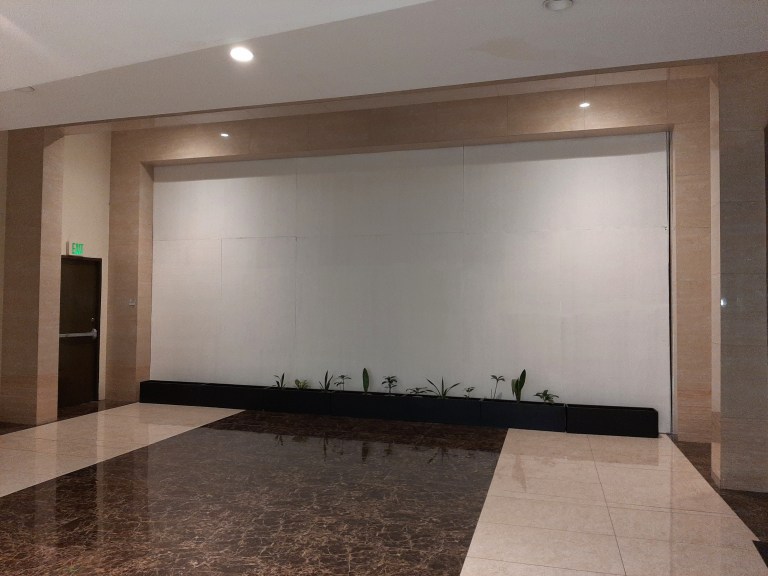
This year, the 4-screen cinemas of Commercenter in Filinvest City had closed down (refer to my past blog posts by clicking here and here) and it is very unfortunate not just for me but also for others who enjoyed watching movies at that mall. In my experience, Commercenter was my favorite local place to watch movies at and the cinema operators were consistent with maintaining each screen, the comfortable chairs and the sound systems. At the same time, it was pretty convenient for me to park the car in the basement parking (really spacious), climb up to the cinemas at the 2nd floor (ticket counter and snacks counter were beside each other), enjoy a movie, and visit a local store or a restaurant within the mall after leaving the cinema.
With the closure of Festival Mall’s original cinemas and Commercenter cinemas, that is a combined loss of ten screens along with the many seats and equipment combined. Along the way, many people who worked directly in those lost cinemas either became unemployed or got re-assigned to a new task within the local establishment. Sadly, not too many people here in the Philippines are talking about the jobs lost with the closure of cinemas.
Cinemas of Commercenter have been closed down since March 15, 2025.
This brings me to my next point – BusinessWorld published an article exploring the current struggle of Philippine cinemas in what is now the post-pandemic era. For the newcomers reading this, the Philippines economy has been growing strongly year-by-year after the COVID-19 period ended but the nation’s cinema industry is still struggling in terms of sales and attracting paying customers. The Filipinos’ love for streaming is huge factor but there are also other reasons why not enough moviegoers are supporting cinemas.
To put things in perspective, posted below is an excerpt from the BusinessWorld article. Some parts in boldface…
KAREN LUSTAÑAS, 30, tries to watch a movie in the Philippine capital at least once a month, if the budget allows it.
“I try to save time and money for films that I really want to see,” she told BusinessWorld in a Facebook Messenger chat. “I can barely afford it, but if I’m a fan of the director or actors, I really have to watch it.”
“Otherwise, I’ll just watch it on a streaming platform,” she added.
As good as the movie industry is in imagining alternate realities, it didn’t see this one coming. Five years after the coronavirus disease 2019 (COVID-19) decimated the box office here and all over the world, movies are still struggling to come back.
Philippine gross movie ticket sales fell 3.7% year on year to $45.5 million (P2.5 billion) last year, a far cry from the $144.5 million posted in 2019, before the pandemic hit, according to US-based box office revenue tracker Box Office Mojo. In 2020, gross sales plunged 95% to $7.7 million.
Global cinema ticket sales fell 8.8% last year to €28 billion (P1.8 trillion) from 2023, the first annual drop since COVID-19, the European Audiovisual Observatory (EAO) said last month.
Regular movie ticket prices cost P300 to P400 in Metro Manila, or about half the daily minimum wage. On the other hand, the basic monthly subscription to streaming platforms like Netflix, Max (HBO) and Disney+ costs P150 to P250, and the titles are virtually endless.
“If you think about it, it’s really worth it and more practical to go with Netflix,” Ms. Lustañas, a freelancer, said.
The annual Metro Manila Film Festival (MMFF) grossed P800 million last year, hitting the target but failing to top 2023’s record P1 billion despite a week-long extension.
The pandemic forced people to watch movies at home, aiding streaming services like Netflix, whose revenue grew 14% annually to more than $39 billion last year from 2019, according to computations by BusinessWorld using data from the company’s website. Netflix subscribers also doubled to about 300 million over the five-year period.
Since 2020, local box office hits have been few and far between. The latest was Star Cinema’s My Love Will Make You Disappear starring Kim Chiu and Paulo Avelino, grossing P12 million on its opening day in March.
“Today, going to the cinema is a more intentional experience, rooted not just in the movie being shown but in the overall ambiance that brings the film to life,” Hamm E. Katipunan, Ayala Malls’ Asset Management head, said in an e-mailed reply to questions.
“It’s not just about waiting for blockbusters to hit streaming sites; Filipinos appreciate the good feeling of watching movies that are truly worth experiencing on the big screen,” he added.
While cinemas run by Ayala Malls, SM Supermalls and other mall chains have diversified their offerings, a pattern has emerged in the top-grossing Filipino films that have drawn people to cinemas.
GMA Pictures and Star Cinema’s co-production Hello, Love, Again starring Alden Richards and Kathryn Bernardo set the record for the highest opening day gross for a local film with P85 million in November, surpassing the P75-million gross from The Super Parental Guardians in 2016.
‘FORMULAIC STORIES’ – It shows that Filipinos watch a movie mainly because of its main cast, Film Development Council of the Philippines (FDCP) Chairman Jose Javier Reyes told a news briefing in March, citing a council-funded study involving 800 respondents.
“They can’t afford to go regularly to the movies anymore,” he said. “The biggest blow is that people don’t repeat screenings. They just wait for it to go on streaming platforms.”
The study, done in 2024 in collaboration with De La Salle University to explore the evolving habits, preferences and challenges shaping the local film industry, found that Filipinos from the A, B, and a small part of the C socioeconomic classes regularly watch movies.
The study, which will be released in July as part of the launch of FDCP’s Philippine Film Industry Roadmap, also found that streaming services have become the primary platform for 67% of Filipinos.
Only 21% still frequent cinemas, with many complaining about repetitive movie themes and high ticket prices.
Though stars are still the main movie drawer, the study also found that Filipinos are “sick of formulaic stories,” Mr. Reyes said. He added that the roadmap, mandated by the government, would shed light on how to better support the industry.
In October last year, President Ferdinand R. Marcos, Jr. placed the Film Academy of the Philippines under the Department of Trade and Industry (DTI) to boost Filipino film development.
Trade Secretary Ma. Cristina A. Roque earlier said the budget for the film industry would increase next year as part of the roadmap. She noted that other countries have been using movies and the creative industry to boost tourism and trade.
Mr. Reyes said movie outfits should improve the quality of their films to boost their success overseas. “In the Philippines, star power is important, but the moment you cross borders, there’s a market for people who are more interested in the material itself,” he pointed out.
Rico V. Gonzales, head of distribution at Warner Bros. Pictures Philippines, said the company supports the local industry by distributing two to three Filipino movies yearly, along with the usual foreign releases from Warner Bros. and Universal Pictures.
“It’s part of the goodwill of the company to help local producers who don’t have a distribution arm, compared with the likes of Star Cinema and GMA Pictures, which have the power to do it themselves,” he said.
The current state of the cinema industry of the Philippines is disappointing and the future looks uncertain as of this writing. While a lot of my fellow Filipinos chose streaming to watch movies in the comfort of their home, I prefer watching movies on Blu-ray and 4K Blu-ray disc format. The most phenomenal 4K Blu-ray experiences I had was Top Gun: Maverick and that movie never failed to amaze me each time I saw it using my 4K Blu-ray disc player. I also enjoyed watching my 4K Blu-ray copies of Casablanca, Interstellar, Total Recall (1990), and Star Trek: First Contact.
Going back to the state of cinema here in the Philippines, I did not watch a single movie in the cinema in 2024. In fact, the last time I saw a movie on the big screen locally was Sound of Freedom in 2023 (read my review by clicking here). This is because the new movies that were released in 2024 did not interest me at all and the fact that a lot of new Hollywood movies had woke garbage in them turned me off. Not only that, there were times when news movies from overseas were not even released in Philippine cinemas at all such as Jesus Revolution (note: I had to buy the movie on Blu-ray just to watch it).
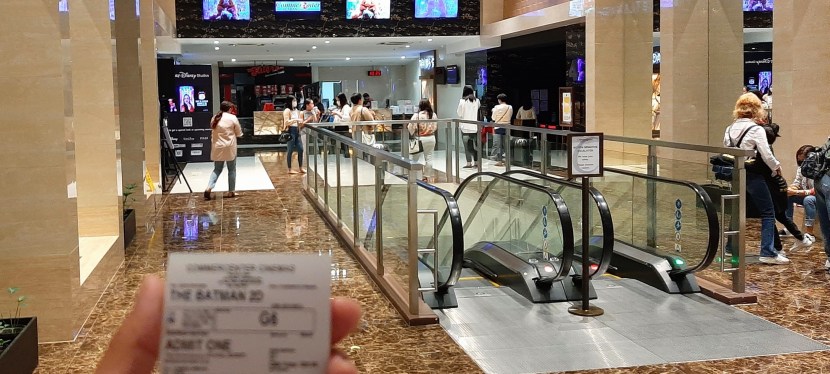
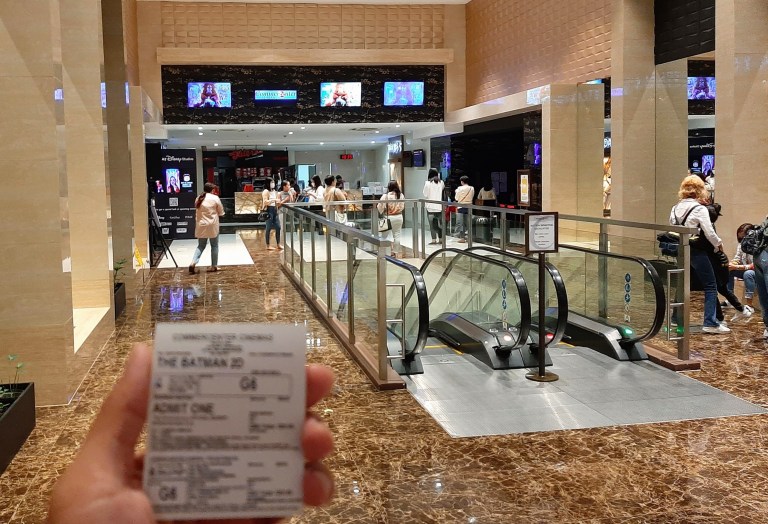
I saw The Batman at Commercenter’s cinema on March 2022.
As of this writing, the direction of the entire cinema industry of the Philippines remains uncertain and so far there were no real breakthroughs that happened. That being said, I still remember when in 2015, there were long lines of moviegoers at Commercenter waiting to enter the cinemas to watch Jurassic World. Such a memory won’t be repeated here in Alabang and without its cinemas, Commercenter’s value as a place for fun has gone way down.
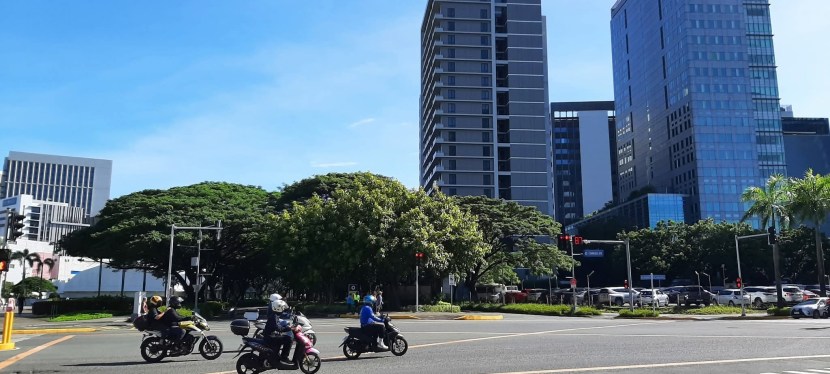
For the newcomers reading this, Filinvest City is located within the Alabang area of Muntinlupa, and it is connected with both the South Luzon Expressway (SLEX) and the Metro Manila Skyway (which itself is connected to the NAIA Expressway and the North Luzon Expressway) which makes travel connectivity convenient. PLDT itself has its current headquarters in Makati City which has lasted for decades. This new development with Filinvest City adds potential business value to Alabang. It should be noted that Filinvest City also has its own local residents.
To put things in perspective, posted below is the excerpt from the news report of Manila Bulletin. Some parts in boldface…
Filinvest City, the premier township developed by the Filinvest Group, is poised for a transformation with the announcement that PLDT Inc., the nation’s largest integrated telecommunications company, will relocate its headquarters to the Southgate District of Filinvest City.
This strategic move, which involves the development of the country’s first tech campus, signals a game-changing moment for the Garden City, paving the way for a smarter, greener, and more connected urban landscape in Metro South.
The decision to move was revealed in a press statement from Filinvest City, noting that PLDT’s choice of Filinvest City followed years of careful study and strategic planning.
The planned five-hectare PLDT campus, envisioned as the future headquarters for the telecommunications group, is slated for progressive development, with initial phases expected to commence soon.
The project draws inspiration from leading global tech campuses and reflects PLDT’s long-term commitment to fostering an innovative and future-ready workplace.
This campus is part of our effort to build a healthier, more collaborative work environment, said PLDT Chairman and CEO Manuel V Pangilinan. He added that it reflects our belief that the workplace must evolve alongside the industries we serve. We hope it will inspire creativity, encourage teamwork, and support the future of PLDT.
The tech campus is designed not only as a headquarters but also as a hub for innovation, collaboration, and digital transformation, aiming to consolidate talent and technology to cultivate a culture of agility and forward-thinking.
This aligns with PLDT’s dedication to shaping the future of connectivity in the Philippines. The development is projected to create thousands of jobs during both construction and operational phases, boosting demand for residential and commercial spaces and supporting local businesses and startups.
It is also expected to attract professionals and innovators to Metro South, reinforcing Filinvest City’s role as a nexus for future-forward enterprises.
Josephine Gotianun-Yap, Vice Chairperson, Filinvest Development Corporation, noted the transformation of Filinvest City from a quiet stock farm into a vibrant garden metropolis, stating that this was achieved through vision, dedication, and a steadfast sense of purpose. She also said, Filinvest City was designed with intention: to foster an environment where businesses thrive, innovation flourishes, and people live well. We believe a great city is not simply a backdrop to success—but a catalyst for it.” She further added that Filinvest remains committed to continued growth and meaningful collaboration, especially with PLDT, as it pursues its mission to empower Filipinos through meaningful connections, digital inclusion, and sustainable progress.
This landmark project reinforces Filinvest City’s commitment to sustainable and integrated urban planning. As the country’s only central business district holding both LEED Gold and BERDE certifications, Filinvest City is recognized for its green building standards and environmentally responsible design. The city’s master plan embraces the live-work-play philosophy, ensuring a holistic urban experience for its residents, workers, and visitors.
Let me end this post by asking you readers: What is your reaction to this recent development? Do you think PLDT’s upcoming headquarters in Alabang will create many new jobs and add value to Filinvest City as business and investment destination? Do you think this new development will influence other major corporations to consider establishing new headquarters in Alabang? Do you consider Muntinlupa City a more competitive highly urbanized city (HUC) in relation with PLDT’s upcoming Alabang headquarters?
For more South Metro Manila community news and developments, come back here soon. Also say NO to fake news, NO to irresponsible journalism, NO to misinformation, NO to plagiarists, NO to reckless publishers and NO to sinister propaganda when it comes to news and developments. For South Metro Manila community developments, member engagements, commerce and other relevant updates, join the growing South Metro Manila Facebook group at https://www.facebook.com/groups/342183059992673
Following the recent announcement of several medicines declared exempted from the value-added tax (VAT), nineteen more medicines became VAT-exempt as a result of the recommendation of the Food and Drug Administration (FDA) to the Bureau of Internal Revenue (BIR), according to a news article by the Philippine News Agency (PNA).
To put things in perspective, posted below is an excerpt from the PNA news article. Some parts in boldface…
Nineteen maintenance and lifesaving medicines have been included in the list of those exempted from value added tax (VAT), benefiting more people.
Bureau of Internal Revenue (BIR) Commissioner Romeo Lumagui Jr., during the Bagong Pilipinas Ngayon briefing on Thursday, said nine medicines were included under Revenue Memorandum Circular (RMC) 59-2025 issued on June 11, 2025 while the other 10 are covered by RMC 62-2025.
He said the inclusion of the medications for VAT exemption was based on the recommendation of the Food and Drug Administration (FDA).
Of the total, seven of these medicines are for cancer treatment; three each for diabetes, hypertension and mental illness; one each for high cholesterol, kidney disease, and tuberculosis.
“Ang mga ito ay mga maintenance at lifesaving medicines na ngayon ay hindi na papatawan ng VAT. Isang kongkretong hakbang para mas mapagaan ang gastuhin ng mga pasyente (These are maintenance and lifesaving medicines that will now be exempt from VAT. This move is a concrete step to lower patients’ expenses),” Lumagui said.
The BIR chief said both the Corporate Recovery and Tax Incentives for Enterprises (CREATE) law and the Tax Reform for Acceleration and Inclusion (TRAIN) law provide VAT exemptions on certain health products.
He said BIR coordinates with the FDA and the Department of Trade and Industry (DTI) among others to monitor compliance among pharmaceutical companies and drugstores regarding this price changes.
Let me end this post by asking you readers: What is your reaction to this recent development? Were you surprised that a lot more medicines were declared VAT-exempt?
For more South Metro Manila community news and developments, come back here soon. Also say NO to fake news, NO to irresponsible journalism, NO to misinformation, NO to plagiarists, NO to reckless publishers and NO to sinister propaganda when it comes to news and developments. For South Metro Manila community developments, member engagement, commerce and other relevant updates, join the growing South Metro Manila Facebook group at https://www.facebook.com/groups/342183059992673
As there are more signs of weakness and uncertainty, the economic managers of the Philippines officially lowered their economic growth target this year, according to a Philippine News Agency (PNA) news article.
To put things in perspective, posted below is an excerpt from the PNA news article. Some parts in boldface…
Economic managers on Thursday revised the economic growth target for this year amid mounting global uncertainties.
At a briefing after the 191st Development Budget Coordination Committee (DBCC) meeting, Budget Secretary and DBCC Chair Amenah Pangandaman said the economic growth assumption for 2025 was revised downward to 5.5 to 6.5 percent from the previous 6 to 8 percent.
For 2026 to 2028, the Philippine economy is projected to expand by 6 to 7 percent, reflecting a more cautious and resilient economic outlook amid global headwinds.
“The revisions take into account heightened global uncertainties, such as the unforeseen escalation of tensions in the Middle East and the imposition of U.S. tariffs,” Pangandaman said.
She said that despite these challenges, the DBCC remains “vigilant and ready to deploy timely and targeted measures” to mitigate their potential impact on the Philippine economy.
The budget chief said the country continues to be one of the fastest-growing economies in ASEAN driven by robust domestic demand.
To maintain this momentum, she highlighted the administration’s focus on structural reforms, including the Corporate Recovery and Tax Incentives for Enterprises to Maximize Opportunities for Reinvigorating the Economy (CREATE MORE) Act and the Public-Private Partnership (PPP) Code, both designed to enhance the country’s trade and investment competitiveness.
Pangandaman said the government will also pursue the approval and implementation of other reforms recently ratified by Congress, such as the Liberalizing the Lease of Private Lands by Foreign Investors Act, Enhanced Fiscal Regime for Large-Scale Metallic Mining Act, Accelerated and Reformed Right-of-Way (ARROW) Act, and Konektadong Pinoy Act.
The DBCC also revisited the medium-term macroeconomic assumptions to take into consideration recent global and domestic developments.
The inflation assumption for this year was cut to 2 to 3 percent from the previous 2 to 4 percent. For 2026 to 2028, the inflation assumption was retained at 2 to 4 percent.
For 2025 to 2028, crude oil price assumptions were reduced to USD60 to USD70 per barrel from USD60 to 80 per barrel, despite escalating geopolitical tensions.
The foreign exchange rate is assumed to remain stable, averaging at PHP56 to PHP58 per US dollar from 2025 through 2028, supported by lower domestic inflation.
Let me end this post by asking you readers: What is your reaction to this recent development? Do you think the economy of the Philippines is lacking momentum to achieve 6% growth this year? Do you think that inflation and unemployment will eventually rise before the year ends? Are you convinced that foreign investors are staying away from the Philippines?
Counterfeiting of money is a hot issue right now in the Philippines as the Bangko Sentral ng Pilipinas (BSP) called for targeted anti-counterfeiting campaigns in specific places of trade and commerce, according to a business news report by the Manila Bulletin.
To put things in perspective, posted below is an excerpt from the Manila Bulletin report. Some parts in boldface…
The Bangko Sentral ng Pilipinas (BSP) is calling for targeted anti-counterfeiting campaigns in shopping malls, supermarkets, and wet markets after these locations emerged as the main sources of fake banknotes and coins recovered last year.
Data from the 2024 BSP annual report published in June showed that counterfeits were “frequently recovered in areas with high foot traffic, such as shopping malls (27.2 percent), supermarkets (25.9 percent), and wet markets (20.9 percent).”
“This highlights the need for targeted anti-counterfeiting campaigns in these areas,” the report said.
According to the central bank report, the ₱1,000 paper banknote was the most counterfeited bill, accounting for 59.9 percent or the majority of documented counterfeits last year. The ₱500 paper banknote was the second-most counterfeited bill at 19.3 percent.
Notably, there were a very low number of cases of counterfeit ₱1,000 polymer banknotes. Recording only three “low-quality” counterfeits in 2024, the BSP noted that the three-year-old ₱1,000 polymer banknote has shown “resilience” against counterfeiting.
“These counterfeit polymer banknotes were printed on paper, with the transparent portions cut out and substituted with substandard plastic, making them easily detectable by the public,” the BSP said.
Fake coins also dropped significantly by 87.8 percent last year, noting that there were fewer than one fake coin for every one million real coins in circulation. Most counterfeit coins were leftovers from previous years, mostly five-peso coins from the BSP coin series.
The BSP attributed this substantial decline in counterfeited banknotes and coins to the “enhanced security features of the New Generation Currency (NGC), including the micro-printed details and laser-engraved designs.”
These added features made it more challenging for fraudsters to copy and reproduce the currencies, the BSP said.
Most counterfeiting involved inkjet printing, accounting for 79.7 percent of the recorded cases. Laser printing was next at 12.6 percent, while tampered security threads accounted for 7.6 percent.
When it comes to location, most fake currencies were found in Metro Manila, at 52.2 percent, followed by the provinces of Cavite, Laguna, Batangas, Rizal, and Quezon (collectively known as CALABARZON), at 12.2 percent.
Let me end this post by asking you readers: What is your reaction to this recent development? Do you think counterfeiting in the Philippines will get worse over the next twelve months? Do you think the local supermarket, wet market or shopping mall are hot spots of fake banknotes and coins? Who do you think is responsible for the rise of counterfeit money? Do you think the BSP’s research about counterfeiting is accurate?
Even though there are emerging rivals that each have distinctive attractions for businesses and residents, the Filinvest group remains confident and optimistic with its 244-hectare Filinvest City in Alabang, Muntinlupa, according to a business article by BusinessWorld. This is about the current state of corporate cities or central business districts (CBDs) which are contributing a lot to the economy of the Philippines in terms of financial value, jobs, properties and new residential communities.
For the newcomers reading this, Filinvest City is located within the Alabang area of Muntinlupa City, and it is connected with both the South Luzon Expressway (SLEX) and the Metro Manila Skyway (which itself is connected to the NAIA Expressway and the North Luzon Expressway) which makes travel connectivity convenient.
To put things in perspective, posted below is the excerpt from the business article of BusinessWorld. Some parts in boldface…
THE FILINVEST group is banking on unsold inventory and infrastructure readiness at its 244-hectare Filinvest City in Alabang, Muntinlupa to support growth in its township portfolio, as new large-scale developments emerge in Metro Manila and nearby provinces.
Catherine A. Ilagan, president and chief executive officer of Filinvest Alabang, Inc. (FAI), said Filinvest City continues to attract interest from businesses and residents, even as estates such as the 3,500-hectare Villar City, the 700-hectare Vermosa in Cavite, and the 74-hectare Arca South in Taguig expand their footprints.
“We’re the most developed. We have the essentials to back it up. We have the infrastructure and all of the utilities. All of that are already in place. Accessibility is also key. We also have access to talent,” Ms. Ilagan said in an interview with BusinessWorld.
“It takes a long time to develop into a real central business district (CBD),” she added.
FAI is the real estate arm of the Filinvest group, overseeing townships and high-end residential developments.
“In terms of densifying, there’s still a lot of potential for Filinvest City. The outlook for Filinvest City is really positive,” Ms. Ilagan said.
“The release of inventory is very deliberate,” she added.
According to a regulatory filing by the Filinvest group’s listed conglomerate, Filinvest Development Corp. (FDC), FAI beneficially owns 76.4 hectares of unsold lots in Filinvest City as of end-2024, indicating further growth capacity.
Launched in 1995, Filinvest City is a mixed-use township that integrates a CBD, residential communities, leisure destinations, educational institutions, and medical and wellness centers.
It is the country’s only CBD to hold both Leadership in Energy and Environmental Design (LEED) and Building for Ecologically Responsive Design Excellence (BERDE) certifications.
“The LEED and BERDE certifications are testaments to Filinvest City being a green development,” Ms. Ilagan said.
Filinvest City’s sustainability features include a district cooling system that reduces energy use and emissions by servicing multiple buildings, an integrated electric-powered transport system known as the 360 Eco-Loop, and dedicated green spaces and sustainable buildings in Northgate Cyberzone.
Under Ms. Ilagan’s leadership, FAI is replicating the Filinvest City model in other areas as it grows its portfolio of master-planned, sustainable townships and premium real estate developments under the Filigree brand.
Ms. Ilagan brings more than 30 years of experience in real estate and urban development.
“Filinvest City is a ten-minute city. Everything can be reached in ten minutes. This is the DNA that we want to replicate in the other townships,” Ms. Ilagan said.
“We’ve always subscribed to the idea of a balanced live-work-play. That’s the DNA of all of our townships, a well-rounded and balanced development,” she added.
Other FAI-led townships include the 58-hectare City di Mare in Cebu, the 201-hectare Filinvest Mimosa Plus in Clark, Pampanga, the 288-hectare Filinvest New Clark City in Tarlac, and the 677-hectare Timberland Heights in Rizal.
“Whether it’s a small development, a bigger development, a high development, or a denser development, there should always be that balance of live-work-play components. As a real estate developer, that is the sustainable way to do things. Now, we want everything to be walkable,” Ms. Ilagan said.
Let me end this post by asking you readers: What is your reaction to this recent development? What do you think that Villar City, Arca South and Vermosa don’t have when compared with Filinvest City? If you are developing properties, do you find Filinvest City advantageous and attractive for your business needs?
For more South Metro Manila community news and developments, come back here soon. Also say NO to fake news, NO to irresponsible journalism, NO to misinformation, NO to plagiarists, NO to reckless publishers and NO to sinister propaganda when it comes to news and developments. For South Metro Manila community developments, member engagements, commerce and other relevant updates, join the growing South Metro Manila Facebook group at https://www.facebook.com/groups/342183059992673
Some good news for Filipinos struggling with buy medicine for their respective health-related needs. The Bureau of Internal Revenue (BIR) officially announced that ten more medicines are exempted from the value-added tax (VAT), according to a news article by the Philippine News Agency (PNA).
To put things in perspective, posted below is an excerpt from the PNA news article. Some parts in boldface…
The Bureau of Internal Revenue (BIR) said 10 more medicines for cancer, high cholesterol, hypertension, and mental illness are now exempted from value-added tax (VAT).
In a statement on Monday, the BIR said Commissioner Romeo Lumagui Jr. issued Revenue Memorandum Circular No. 62-2025 on June 20 further expanding the list of VAT-exempt medicines.
The BIR said these changes aim to enhance access to critical medications by reducing treatment costs for patients and their families.
Some medicines on the list are Tegafur + Gimeracil + Oteracil Potassium for cancer, Metformin Hydrochloride + Teneligliptin for diabetes, Atorvastatin (as calcium) + Fenobribrate for high cholesterol, Metoprolol tartrate + Ivabradine (as hydrochloride) for hypertension, and Lamotrigine for mental illness.
The VAT exemption, pursuant to Republic Act No. 10963, or the Tax Reform for Acceleration and Inclusion (TRAIN) Law, and Republic Act No. 11534, or the Corporate Recovery and Tax Incentives for Enterprises (CREATE) Act, is intended to be responsive and adaptive to current public health needs, guided by the latest evaluations from the Food and Drug Administration.
“The BIR has issued an additional VAT-exemption of 10 medicines for cancer, diabetes, high cholesterol, hypertension, and mental illness,” Lumagui said.
Let me end this post by asking you readers: What is your reaction to this recent development? If you are on medication, does this new development from the BIR look helpful to you?
The tourism of the industry of the Philippines accounted for a share of 8.9% of the nation’s gross domestic product (GDP) for the year 2024, according to a BusinessWorld news report.
To put things in perspective, posted below is an excerpt from the news report of BusinessWorld. Some parts in boldface…
THE SHARE of the tourism industry in the Philippine economy rose to a five-year high of 8.9% in 2024, the Philippine Statistics Authority (PSA) said on Thursday.
Tourism direct gross value added (TDGVA) — an indicator of the economic contribution from tourism-related activities — jumped by 11.2% year on year to P2.35 trillion last year, preliminary data from the PSA showed.
However, TDGVA growth was slower than the 49.9% surge logged in 2023 and the slowest annual growth since the 10.3% expansion in 2020.
Despite the slower growth, the share of TDGVA to the economy rose to 8.9% in 2024, the highest share since the 12.9% recorded in 2019.
By industry, country-specific tourism characteristics goods – shopping accounted for 21.8% of the total with P512.68 billion. It was followed by miscellaneous services (20.2% share or P476.23 billion) and accommodation services for visitors (18.4% share or P432.9 billion).
Domestic tourism expenditure, which includes resident visitors’ spending within the country on a domestic trip or as part of an international trip, grew by 16.4% to P3.16 trillion last year.
Outbound tourism spending reached P345.68 billion in 2024, rising by 37.5% from P251.35 billion in 2023.
Inbound tourism expenditure, meanwhile, inched up by 0.4% annually to P699.99 billion. Total employment in the tourism sector grew by 6.1% to 6.75 million in 2024. Tourism accounted for 13.8% of the total jobs in the country in 2024.
The majority of the tourism-related jobs were centered on miscellaneous activities. The health and wellness sector employed 1.83 million, accounting for a 27.1% share.
The accommodation and food and beverage sector had 1.69 million workers (25% share), while passenger transport had 1.67 million workers (24.7%).
Reinielle Matt M. Erece, an economist at Oikonomiya Advisory and Research, Inc. said easing inflation helped boost tourism spending last year.
“Lower inflation relative to 2023 and better economic conditions in the country may have encouraged tourists due to better prices,” he said in an e-mail. Inflation averaged 3.2% in 2024, cooling from the 15-year high of 6% in 2023.
Last year, the Department of Tourism recorded 5.95 million visitor arrivals, falling short of its 7.7 million target.
“While Philippine tourism has made substantial progress — particularly in revenue generation — it hasn’t achieved full recovery in terms of visitor numbers, and the pace of recovery appears to be slowing in early 2025,” Leonardo A. Lanzona, Jr., an economics professor in Ateneo de Manila University, said in an e-mail.
Let me end this post by asking you readers: What is your reaction to this recent development? Do you think Philippine tourism will end up being weaker as an economic sector this year? Do you think the weakening Philippine Peso will convince foreigners to visit the Philippines very soon?



 Author Carlo Carrasco