Recently in the city of Parañaque, local police officers successfully pulled of a buy-bust operation resulting in the apprehension of seven suspects and the seizure of fake merchandise worth more than P5 million, according to a news report by the Daily Tribune.
To put things in perspective, posted below is an excerpt from the Daily Tribune report. Some parts in boldface…
The Philippine National Police (PNP) on Saturday reported the seizure of P5.2 million worth of counterfeit merchandise and the arrest of seven individuals during a buy-bust operation in Parañaque City.
Operatives from the Criminal Investigation and Detection Group–Specialized Mission and Monitoring Division Field Unit (CIDG-SMMDFU), in coordination with the Department of Trade and Industry (DTI), carried out the operation around 12:15 p.m. on December 18 at the third floor of a commercial establishment in Barangay San Dionisio.
Authorities confiscated 386 bales of counterfeit SHEIN products allegedly intended for local distribution. Buy-bust money and other pieces of evidence were also recovered from the premises.
The seven adult Filipino suspects were charged with violations of Republic Act No. 3883, which prohibits counterfeit and pirated goods; Republic Act No. 8293, the Intellectual Property Code of the Philippines; and Republic Act No. 10175, the Cybercrime Prevention Act of 2012. They are currently in custody of the CIDG-SMMDFU and will face inquest proceedings.
PNP Acting Chief Police Lieutenant General Jose Melencio Nartatez Jr. said the operation reflects the agency’s ongoing effort to curb illegal trade and intellectual property violations.
Let me end this post by asking you readers: What do you think about this recent development? If you are a resident of Parañaque, are you concerned that fake products have penetrated the local market? Do you think the local retailers will be able to figure out which products they have are fake?
For more South Metro Manila community news and developments, come back here soon. Also say NO to fake news, NO to irresponsible journalism, NO to misinformation, NO to plagiarists, NO to reckless publishers and NO to sinister propaganda when it comes to news and developments. For South Metro Manila community developments, member engagement, commerce and other relevant updates, join the growing South Metro Manila Facebook group at https://www.facebook.com/groups/342183059992673
A few months ago in the United States, the Keep Call Centers in America Act of 2025 was filed and it really caused a disturbance on the business process outsourcing (BPO) industry and the Department of Trade and Industry (DTI) here in the Philippines. Recently a member of Congress here in the Philippines filed a resolution to initiate talks with the US to discuss call center reshoring and seek exemptions, according to a BusinessWorld news report.
Coincidentally, the proposed resolution was filed by a Congressman from the province of Cebu where I once worked as a call center agent a very long time ago. I never returned to the call center industry.
To put things in perspective, posted below is an excerpt from the news report of BusinessWorld. Some parts in boldface…
A CEBU legislator filed a resolution on Monday urging the government to initiate talks with the US over plans to bring the call-center industry back from overseas.
The Trade and Foreign Affairs departments should “immediately initiate dialogue” with their US counterparts to seek exemptions for US business process outsourcing (BPO) firms operating in the Philippines, according to Cebu Rep. Vincent Franco D. Frasco, who filed House Resolution No. 386.
“The urgency of the situation demands proactive and high-level diplomatic action and trade engagement to ensure that the interests of Filipino workers and US-affiliated firms operating in the Philippines are protected from the US bill’s unintended economic consequences,” he said, referring to US legislation known as the proposed Keep Call Centers in America Act
The US bill could penalize US companies for outsourcing call center operations by ruling them out for federal grants and loan guarantees. The Philippines call center industry employs about 1.7 million, according to the House resolution.
Mr. Frasco described the US measure as posing a “direct threat” to the stability of the BPO industry and may discourage American firms from setting up shop in the country, leading to job losses and loss of investor confidence.
Let me end this post by asking you readers: What is your reaction to this development? Do you think Congressman Frasco’s proposed resolution will be approved soon? Do you think the DTI will be able to meet with their American counterparts and be able to secure exemptions? Do you think the Keep Call Centers in America Act of 2025 is very dangerous to the BPO industry of the Philippines? How many people in your local community are working in call centers right now? When do you think the Keep Call Centers in America Act of 2025 will be passed by US Congress and be sent to President Donald Trump for final approval?
As different forms of economic uncertainty and controversies regarding flood control projects continue to dominate the news, the Philippines got a much-needed economic boost as Japanese firm Nambu Co. Ltd. confirmed it will be investing P4 billion to build several retirement facilities in different parts of the country, according to a news article by the Philippine News Agency (PNA).
To put things in perspective, posted below is an excerpt from the PNA news article. Some parts in boldface…
A Japanese wellness company will invest PHP4-billion to build 10 retirement facilities in various parts of the Philippines.
The initial facility to be established by Nambu Co. Ltd will be in Lapu-Lapu City in Cebu province, according to the Department of Trade and Industry (DTI) on Friday.
The investment is supported by the CREATE MORE (Corporate Recovery and Tax Incentives for Enterprises – Maximize Opportunities for Reinvigorating the Economy) Act and involves training Filipino caregivers to meet Japanese standards.
CREATE MORE broadens incentives to help boost economic recovery, support enterprises and attract foreign investment.
Details of the investment plan were discussed during a meeting between Philippine officials and members of the wellness company in Osaka, Japan on Thursday, the DTI said in a press release on Friday.
“This initiative aims to leverage the country’s skilled workforce to meet Japan’s labor needs while simultaneously boosting local employment,” it said.
Trade Secretary Cristina Roque said the investment supports the government’s bid to increase high-value industries, drive job creation, and strengthen the country’s position as a premier retirement and wellness destination in the region.
Let me end this post by asking you readers: What is your reaction to the recent developments? Do you think Nambu’s multi-billion Peso investment will make a long-lasting positive impact in the Philippines?
Small businesses all over the Philippines now have extra time to get themselves registered for the E-Commerce Philippine Trustmark as the Department of Trade and Industry (DTI) officially extended the deadline all the way to December 31, 2025, according to a news article by the Philippine News Agency (PNA).
To put things in perspective, posted below is an excerpt from the PNA news article. Some parts in boldface…
The Department of Trade and Industry (DTI) has extended the Sept. 30 deadline for registration for the E-Commerce Philippine Trustmark to Dec. 31 to allow more small businesses to get the badge.
“The Trustmark is not a regulation to burden businesses but to serve as a tool that shields legitimate enterprises from scammers who undermine consumer confidence. Our aim is to make it simpler for consumers to identify and trust legitimate sellers, so entrepreneurs can focus on what truly matters — growing their business,” DTI Secretary Cristina Roque said in a statement Friday.
In a briefing earlier in the day, Roque said major players such as TikTok, Lazada and Shopee, already have their badges and more are expected to secure theirs as the deadline nears.
“Kasi alam mo naman sometimes sa ganito (Because you know sometimes, in things like this), they’re really waiting for the last minute or they’re still hoping that we can actually pull back on this Trustmark. Kasi ginagawa nila na issue (Because they’re making an issue of it) or whatnot. But we stand firm that we really need to have the Trustmark in the products that are being sold,” she said.
As of Sept. 19, a total of 10,057 business have submitted their applications to secure the Trustmark, DTI E-Commerce Bureau Officer-in-Charge Eryl Royce Nagtalon said during the briefing.
Nagtalon estimated registered micro, small, and medium enterprises (MSMEs) in the country at 1.2 million to 1.3 million, but less than half have listings on various online platforms.
He explained that while there are about 500,000 MSMEs that have shifted to e-commerce, the number might balloon to about 900,000 as some businesses offer their products not just on a single platform but on several online shopping sites.
Asked if they expect all registered MSMEs to register for the Trustmark, Nagtalon answered yes, saying it is “very good for the e-commerce system.”
“It’s good because it means the competition is very healthy, the e-commerce is very healthy,” he said.
Registration for the Trustmark is mandated under Republic Act 11967, otherwise known as the Internet Transactions Act of 2023, and the DTI’s Department Administrative Order 25-07. Applicants need to pay the PHP1,000 annual application fee, PHP100 web administration fee, and PHP30 documentary stamp tax.
Let me end this post by asking you readers: What is your reaction to the recent developments? Were you surprised to see the Philippines’ startups attracting much less equity funding from global investors? What do you think the government should do to convince global investors to invest more in startups here in the Philippines?
Japanese business entities confirmed they will be investing more than P50 billion in the Philippines following the recent meetings with and presentations by a Filipino delegation composed of government and economic officials, according to a news article by the Philippine News Agency (PNA).
To put things in perspective, posted below is an excerpt from the PNA news article. Some parts in boldface…
The Philippine delegation secured around PHP51 billion worth of investments during its trip to Osaka, Japan, last week, according to Department of Trade and Industry (DTI) Secretary Cristina Roque.
The bulk of the investments, amounting to PHP34 billion, is from the operator of the world’s largest karaoke chain, Koshidaka Holdings Co., Ltd., which intends to open 300 outlets over the next 10 years.
In a press release Monday, Roque said this particular investment is projected to generate over 1,500 direct jobs and support thousands through construction and supply-chain activities.
Another conglomerate, Marubeni Corporation, committed PHP15-billion investments for real estate, financial technology, healthcare, and afforestation.
Sojitz Corporation, a general trading corporation, will also invest PHP2 billion to PHP3 billion in a property developer to attract firms that are into artificial intelligence, semiconductor design, software, and healthcare, and expressed interest in aviation-related projects.
Roque said Mitsui & Co., a major Japanese trading company, will expand its existing investment in the Philippines after it reaffirmed its partnership with Metro Pacific Investments Corp. and Steel Asia for a steel recycling entity targeted to support decarbonization bid.
“These commitments in green energy, smart housing, healthcare, and creative services highlight the strength of our partnership with Japan. DTI and the Economic Team will work together to ensure these projects generate quality jobs, strengthen supply chains, and advance the country’s shift to a green, digital, and broad-based economy,” she said.
“These investments are a testament to President Ferdinand R. Marcos Jr.’s vision for an agile, innovation-driven economy that welcomes partnerships and delivers inclusive growth.”
Let me end this post by asking you readers: What is your reaction to the recent developments? Are you delighted that the Philippines secured P51 billion worth of investments from Japanese business entities? Do you think this will help the Philippines attract more foreign investments over the next six months?
Here in the Philippines, businesses that have established their presence online are supposed to get themselves registered for the E-Commerce Philippine Trustmark (Trustmark) and they have until September 30, 2025, to do it, according to a news article by Philippine News Agency (PNA).
To put things in perspective, posted below is an excerpt from the PNA news article. Some parts in boldface…
Businesses with online presence are given until Sept. 30, 2025 to register for the E-Commerce Philippine Trustmark (Trustmark), a move aimed to address consumer concerns, the Department of Trade and Industry said Thursday.
Online merchants are mandated by the DTI, in a Department Administrative Order, to register for the Trustmark to increase consumers’ confidence on the electric commerce (e-commerce) space and in compliance to Republic Act 11967, otherwise known as the Internet Transactions Act of 2023.
“The mandatory registration is also a direct response to the surge in consumer concerns, with DTI recording over 13,000 complaints related to online transactions from January to August 2025,” DTI said in a press release Thursday.
Under the Internet Transactions Act of 2023, consumers may file damage claims against the erring online businesses before the court or the DTI. Penalties have been set, with the third and subsequent violations penalized PHP1 million.
DTI said it has already issued digital badges to several major entities that include Shopee Philippines, Inc. (Shopee), Bytedance Philippines Inc. (TikTok Shop), Lalamove Philippines, Inc. (Lalamove), and LG Electronics Philippines, Inc. (LG).
The others are Asahi Electrical Manufacturing Corporation (Asahi), Cherenz Global Mfg., Inc. (TOUGHMAMA), Concepcion Midea, Inc. (Midea), Concepcion Carrier Air Conditioning Company (Carrier), First Digital Finance Corporation (Billease), Mailtag Ortigas Corporation (DHL Express), Pan-Eurasia Sales Marketing Corporation (Dowell, Edamama and Tefal), QuadX Inc. (Gogo Xpress and ShippingCart), and Tosot Philippines Corporation (Tosot).
Let me end this post by asking you readers: What is your reaction to the recent developments? Do you think Trustmark will is good for both the legitimacy of businesses as well as the safety of consumers? Do you own a business with online presence?
Welcome back fellow geeks, Blu-ray collectors and movie buffs!
When it comes to watching movies – both old and new – the best place for me is still the movie theater. The very large screen, high-tech sound systems and comfortable seats of the cinema all make the theater viewing experience very immersive which streaming apps and the home theater setup could never match. The cinema experience is always better than streaming.
That being said, it is disappointing for me – as a resident of Muntinlupa City here in the Philippines – that local theaters in Alabang had to close down. The original cinemas of Festival Mall, which first opened in 1998 and grew from six to ten screens, are no more. Before they were all closed down, those cinemas had deteriorated over time and I still remember how bad the projection in one of their premium cinemas was when I saw Star Trek Into Darkness in 2013. It was like I was watching a VHS copy of the movie on their screen. It was that bad!
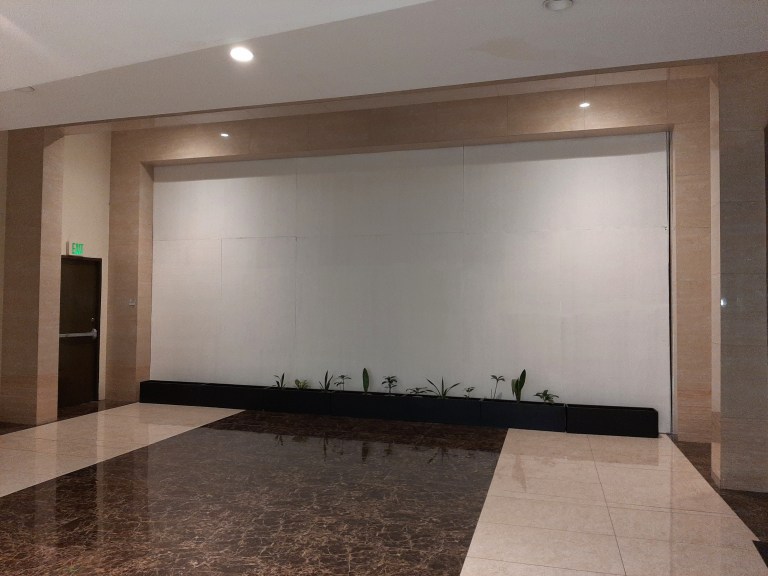
This year, the 4-screen cinemas of Commercenter in Filinvest City had closed down (refer to my past blog posts by clicking here and here) and it is very unfortunate not just for me but also for others who enjoyed watching movies at that mall. In my experience, Commercenter was my favorite local place to watch movies at and the cinema operators were consistent with maintaining each screen, the comfortable chairs and the sound systems. At the same time, it was pretty convenient for me to park the car in the basement parking (really spacious), climb up to the cinemas at the 2nd floor (ticket counter and snacks counter were beside each other), enjoy a movie, and visit a local store or a restaurant within the mall after leaving the cinema.
With the closure of Festival Mall’s original cinemas and Commercenter cinemas, that is a combined loss of ten screens along with the many seats and equipment combined. Along the way, many people who worked directly in those lost cinemas either became unemployed or got re-assigned to a new task within the local establishment. Sadly, not too many people here in the Philippines are talking about the jobs lost with the closure of cinemas.
Cinemas of Commercenter have been closed down since March 15, 2025.
This brings me to my next point – BusinessWorld published an article exploring the current struggle of Philippine cinemas in what is now the post-pandemic era. For the newcomers reading this, the Philippines economy has been growing strongly year-by-year after the COVID-19 period ended but the nation’s cinema industry is still struggling in terms of sales and attracting paying customers. The Filipinos’ love for streaming is huge factor but there are also other reasons why not enough moviegoers are supporting cinemas.
To put things in perspective, posted below is an excerpt from the BusinessWorld article. Some parts in boldface…
KAREN LUSTAÑAS, 30, tries to watch a movie in the Philippine capital at least once a month, if the budget allows it.
“I try to save time and money for films that I really want to see,” she told BusinessWorld in a Facebook Messenger chat. “I can barely afford it, but if I’m a fan of the director or actors, I really have to watch it.”
“Otherwise, I’ll just watch it on a streaming platform,” she added.
As good as the movie industry is in imagining alternate realities, it didn’t see this one coming. Five years after the coronavirus disease 2019 (COVID-19) decimated the box office here and all over the world, movies are still struggling to come back.
Philippine gross movie ticket sales fell 3.7% year on year to $45.5 million (P2.5 billion) last year, a far cry from the $144.5 million posted in 2019, before the pandemic hit, according to US-based box office revenue tracker Box Office Mojo. In 2020, gross sales plunged 95% to $7.7 million.
Global cinema ticket sales fell 8.8% last year to €28 billion (P1.8 trillion) from 2023, the first annual drop since COVID-19, the European Audiovisual Observatory (EAO) said last month.
Regular movie ticket prices cost P300 to P400 in Metro Manila, or about half the daily minimum wage. On the other hand, the basic monthly subscription to streaming platforms like Netflix, Max (HBO) and Disney+ costs P150 to P250, and the titles are virtually endless.
“If you think about it, it’s really worth it and more practical to go with Netflix,” Ms. Lustañas, a freelancer, said.
The annual Metro Manila Film Festival (MMFF) grossed P800 million last year, hitting the target but failing to top 2023’s record P1 billion despite a week-long extension.
The pandemic forced people to watch movies at home, aiding streaming services like Netflix, whose revenue grew 14% annually to more than $39 billion last year from 2019, according to computations by BusinessWorld using data from the company’s website. Netflix subscribers also doubled to about 300 million over the five-year period.
Since 2020, local box office hits have been few and far between. The latest was Star Cinema’s My Love Will Make You Disappear starring Kim Chiu and Paulo Avelino, grossing P12 million on its opening day in March.
“Today, going to the cinema is a more intentional experience, rooted not just in the movie being shown but in the overall ambiance that brings the film to life,” Hamm E. Katipunan, Ayala Malls’ Asset Management head, said in an e-mailed reply to questions.
“It’s not just about waiting for blockbusters to hit streaming sites; Filipinos appreciate the good feeling of watching movies that are truly worth experiencing on the big screen,” he added.
While cinemas run by Ayala Malls, SM Supermalls and other mall chains have diversified their offerings, a pattern has emerged in the top-grossing Filipino films that have drawn people to cinemas.
GMA Pictures and Star Cinema’s co-production Hello, Love, Again starring Alden Richards and Kathryn Bernardo set the record for the highest opening day gross for a local film with P85 million in November, surpassing the P75-million gross from The Super Parental Guardians in 2016.
‘FORMULAIC STORIES’ – It shows that Filipinos watch a movie mainly because of its main cast, Film Development Council of the Philippines (FDCP) Chairman Jose Javier Reyes told a news briefing in March, citing a council-funded study involving 800 respondents.
“They can’t afford to go regularly to the movies anymore,” he said. “The biggest blow is that people don’t repeat screenings. They just wait for it to go on streaming platforms.”
The study, done in 2024 in collaboration with De La Salle University to explore the evolving habits, preferences and challenges shaping the local film industry, found that Filipinos from the A, B, and a small part of the C socioeconomic classes regularly watch movies.
The study, which will be released in July as part of the launch of FDCP’s Philippine Film Industry Roadmap, also found that streaming services have become the primary platform for 67% of Filipinos.
Only 21% still frequent cinemas, with many complaining about repetitive movie themes and high ticket prices.
Though stars are still the main movie drawer, the study also found that Filipinos are “sick of formulaic stories,” Mr. Reyes said. He added that the roadmap, mandated by the government, would shed light on how to better support the industry.
In October last year, President Ferdinand R. Marcos, Jr. placed the Film Academy of the Philippines under the Department of Trade and Industry (DTI) to boost Filipino film development.
Trade Secretary Ma. Cristina A. Roque earlier said the budget for the film industry would increase next year as part of the roadmap. She noted that other countries have been using movies and the creative industry to boost tourism and trade.
Mr. Reyes said movie outfits should improve the quality of their films to boost their success overseas. “In the Philippines, star power is important, but the moment you cross borders, there’s a market for people who are more interested in the material itself,” he pointed out.
Rico V. Gonzales, head of distribution at Warner Bros. Pictures Philippines, said the company supports the local industry by distributing two to three Filipino movies yearly, along with the usual foreign releases from Warner Bros. and Universal Pictures.
“It’s part of the goodwill of the company to help local producers who don’t have a distribution arm, compared with the likes of Star Cinema and GMA Pictures, which have the power to do it themselves,” he said.
The current state of the cinema industry of the Philippines is disappointing and the future looks uncertain as of this writing. While a lot of my fellow Filipinos chose streaming to watch movies in the comfort of their home, I prefer watching movies on Blu-ray and 4K Blu-ray disc format. The most phenomenal 4K Blu-ray experiences I had was Top Gun: Maverick and that movie never failed to amaze me each time I saw it using my 4K Blu-ray disc player. I also enjoyed watching my 4K Blu-ray copies of Casablanca, Interstellar, Total Recall (1990), and Star Trek: First Contact.
Going back to the state of cinema here in the Philippines, I did not watch a single movie in the cinema in 2024. In fact, the last time I saw a movie on the big screen locally was Sound of Freedom in 2023 (read my review by clicking here). This is because the new movies that were released in 2024 did not interest me at all and the fact that a lot of new Hollywood movies had woke garbage in them turned me off. Not only that, there were times when news movies from overseas were not even released in Philippine cinemas at all such as Jesus Revolution (note: I had to buy the movie on Blu-ray just to watch it).
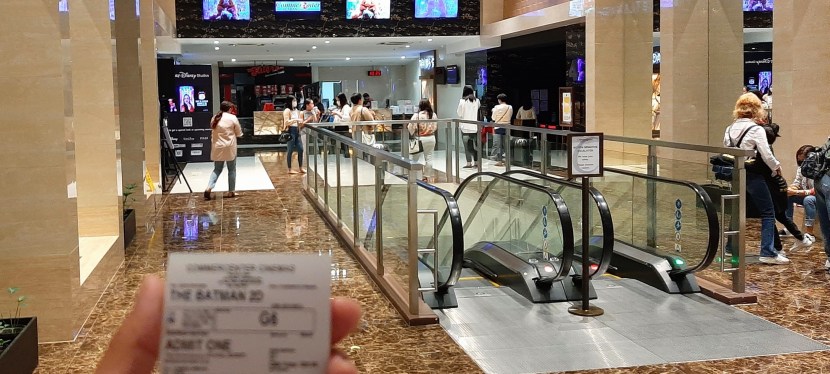
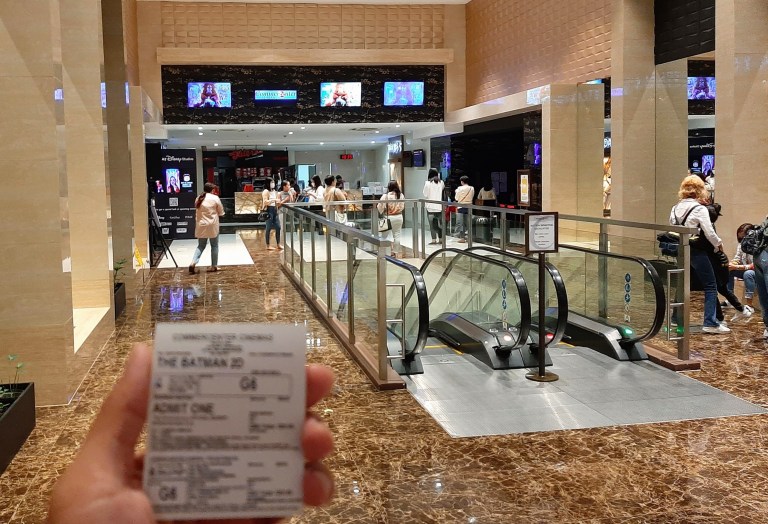
I saw The Batman at Commercenter’s cinema on March 2022.
As of this writing, the direction of the entire cinema industry of the Philippines remains uncertain and so far there were no real breakthroughs that happened. That being said, I still remember when in 2015, there were long lines of moviegoers at Commercenter waiting to enter the cinemas to watch Jurassic World. Such a memory won’t be repeated here in Alabang and without its cinemas, Commercenter’s value as a place for fun has gone way down.
Koshidaka Holdings, a leisure services firm based in Japan, will be investing P2.5 billion in the Philippines and plans to launch its first store this year, according to a Philippine News Agency (PNA) news article. This development is related with the Department of Trade and Industry’s (DTI) recent meetings with corporations in Japan. Kodaka Holdings has more than six hundred outlets in Japan and the Philippines is a key part of its planned expansion in Southeast Asia.
To put things in perspective, posted below is an excerpt from the PNA news article. Some parts in boldface…
Japanese leisure services firm Koshidaka Holdings Co. Ltd. will be investing PHP2.5 billion in the country, with its first store set to open this year, Department of Trade and Industry (DTI) Secretary Ma. Cristina Roque said.
In a virtual briefing Tuesday, Roque said Koshidaka is aggressive on its plans to expand in the country to bring its karaoke business and onsen-style (hot spring) spas as well as opening women’s fitness studios in Philippine malls.
The Japanese firm is scouting for 30 locations to establish its business here before growing to 100 sites nationwide.
Koshidaka is one of the 13 firms and business organizations that Roque met during her recent visit in Tokyo as a follow-through of the agency’s investment missions in Japan.
These firms include Nidec Corp., Ibiden Co., Ltd., Etoile Kaito & Co., Inc, Adastria Co., Ltd., Sumitomo, Fujifilm Holdings Corp., Chodai Co., Ltd. Taiheiyo Cement Corp., Fast Retailing, JR East, and Koshidaka Holdings Co., Ltd as well Keizai Doyukai and Keidanren.
“We also check on their plans, what their plans are in our country for expansion and also for growth,” Roque said.
Earlier, Koshidaka announced that it would establish a Philippine subsidiary to offer a new style of karaoke entertainment.
Koshidaka said its expansion in the Philippines is a key initiative in its Southeast Asia growth strategy, with the country’s large market and economic development.
“Aside from the entertainment, they also want to open a gym that’s really just focused on women all over the country, and they also want to focus on creating Japanese onsen in the malls or in different areas that are of interest to them,” Roque said.
“So they’re actually coming first quarter this year to really explore the different locations where they can open.”
Let me end this post by asking you readers: What is your reaction to this recent development? Do you find Koshidaka Holdings’ karaoke and onsen-style spas interesting? Have you tried any of Koshidaka Holdings’ businesses in Japan before?
With the Corporate Recovery and Tax Incentives for Enterprises to Maximize Opportunities for Reinvigorating the Economy (CREATE MORE) Act already in effect, more than P23 billion in new investments was pledged by Japanese companies in connection with it, according to a Philippine News Agency (PNA) news article.
To put things in perspective, posted below is an excerpt from the news article of the PNA. Some parts in boldface…
Department of Trade and Industry (DTI) Secretary Ma. Cristina Roque said Wednesday the Corporate Recovery and Tax Incentives for Enterprises to Maximize Opportunities for Reinvigorating the Economy (CREATE MORE) law has attracted Japanese companies to invest in the country.
Roque and Special Assistant to the President for Economic Affairs and Investments Secretary Frederick Go visited Japan from March 3 to 4 to meet Japanese companies and business groups.
The DTI said during the visit, four companies pledged PHP23.5 billion worth of investments.
“Representing both the government and private sectors, those we engaged with expressed excitement and enthusiasm about collaborating with us, inspired by the positive developments they’ve heard about our country—our robust economic fundamentals and reformed policies and regulations,” Roque said.
“Specifically, what caught their attention was the recently enacted CREATE MORE law, which offers enhanced tax incentives, simplified processes, and greater opportunities for businesses to thrive in the Philippines,” she added.
Among Japanese companies that the Philippine government officials met include Ibiden Co., Ltd., Nidec Corp. and Sumitomo Corp.
The Philippine Trade and Investment Center (PTIC)-Tokyo told the Philippine News Agency that two of these companies are eyeing fresh investments in the country, while one of them is updating its three-year investment pledge.
DTI said Ibiden expressed its prospect for expanding its advanced substrate technologies operations, while Nidec eyes to expand its manufacturing footprint here.
On the other hand, Sumitomo renewed its commitment to collaborate with the Marcos administration’s infrastructure and clean energy goals.
Sumitomo’s project in the Philippines include the Metro Manila Subway Project, the MRT Line 3 maintenance contract, and the First Philippine Industrial Park.
Roque also had meetings with Fast Retailing Co. Ltd., the firm behind clothing brand Uniqlo, as well as the Japan Association of Corporate Executives (Keizai Doyukai) and the Japan Business Federation (Keidanren).
Let me end this post by asking you readers: What is your reaction to this recent development? Do you think the new investments pledged by Japanese companies in connection with CREATE MORE will influence many other foreign companies to invest in the Philippines this year?
For more South Metro Manila community news and developments, come back here soon. Also say NO to fake news, NO to irresponsible journalism, NO to misinformation, NO to plagiarists, NO to reckless publishers and NO to sinister propaganda when it comes to news and developments. For South Metro Manila community developments, member engagement, commerce and other relevant updates, join the growing South Metro Manila Facebook group at https://www.facebook.com/groups/342183059992673
In connection with the recent signing of the implementing rules and regulations (IRR) of the Corporate Recovery and Tax Incentives for Enterprises to Maximize Opportunities for Reinvigorating the Economy (CREATE MORE) Act, a director of the Philippine Economic Zone Authority (PEZA) expects more investors to come in, according to a news article by the Philippine News Agency (PNA).
To put things in perspective, posted below is an excerpt from the news article of the PNA. Some parts in boldface…
Philippine Economic Zone Authority (PEZA) Director General Tereso Panga is expecting more investors to put up their businesses in economic zones across the country following the signing of the implementing rules and regulations (IRR) of the Corporate Recovery and Tax Incentives for Enterprises to Maximize Opportunities for Reinvigorating the Economy (CREATE MORE) Act.
Panga said the IRR provides clarity for the smooth implementation of the law.
“It is a product of conjoined efforts that will surely attract more interest in the Philippines and paves the way for future investment growth,” Panga said in a statement Wednesday.
On Feb. 17, Finance Secretary Ralph Recto and Trade Secretary Ma. Cristina Roque led the signing of the CREATE MORE’s IRR.
The IRR supports PEZA’s mandate of driving investment growth into the country, promote sustainable development in the countryside, and create more jobs.
“The CREATE MORE Act refines the investment landscape of the Philippines to be at parity with other countries,” he said.
“With these new policies in place, coupled with the positive attributes already presented by our country and the various advantages like a communications-ready skilled workforce, a conducive business environment and a whole-of-government approach, it is without doubt that new investors will come in and old investors will choose to stay for the long haul,” he added.
Let me end this post by asking you readers: What is your reaction to this recent development? Do you think the newly signed IRR of CREATE MORE will result in more investors to come into the Philippines and put up businesses in economic zones?





 Author Carlo Carrasco