A Look Back at Elven #3 (1995)

Welcome back, superhero fans, 1990s arts and culture enthusiasts, Ultraverse fans and comic book collectors! Today we go back to the mid-1990s to examine one of the many tales of the Ultraverse through the Elven mini-series.

Having read the first two issues (click here and here), I can say that there is indeed progressive development of the personality of Elvia and her fantasy inspired identity as Elven. At the same time, the fantasy elements of the Ultraverse itself were portrayed in lively fashion. Clearly, Elven’s own corner of the Ultraverse has been established and there is some excitement to find out what would happen next and how it could affect others within the UV.

With those details laid down, here is a look back at Elven #3, published by Malibu Comics in 1995 with a story written by Len Strazewski and illustrated by Aaron Lopresti (Sludge).
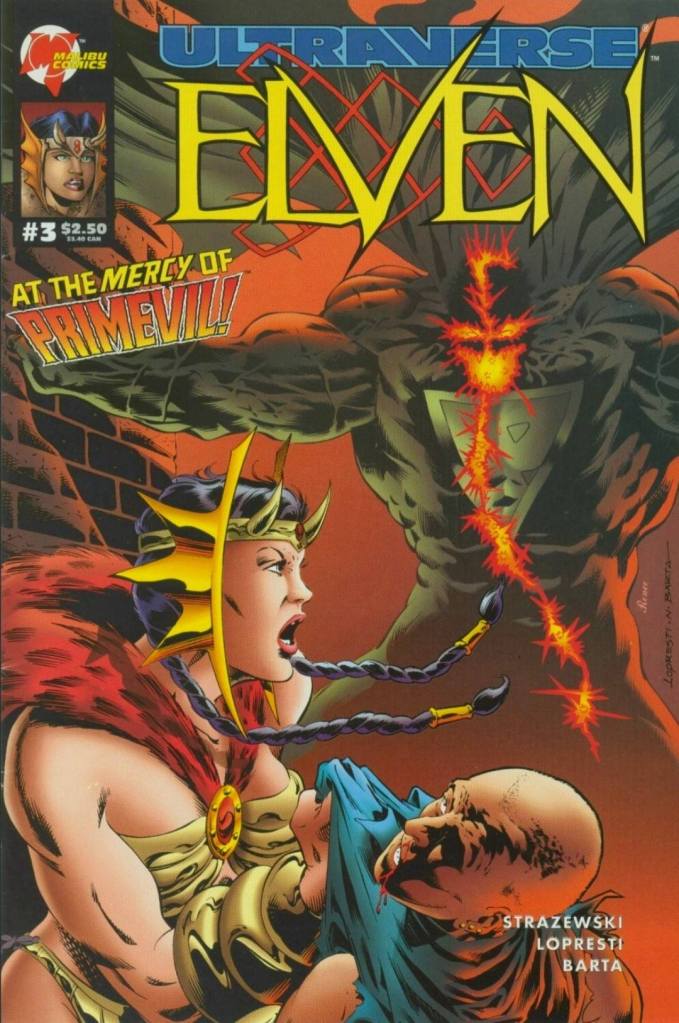
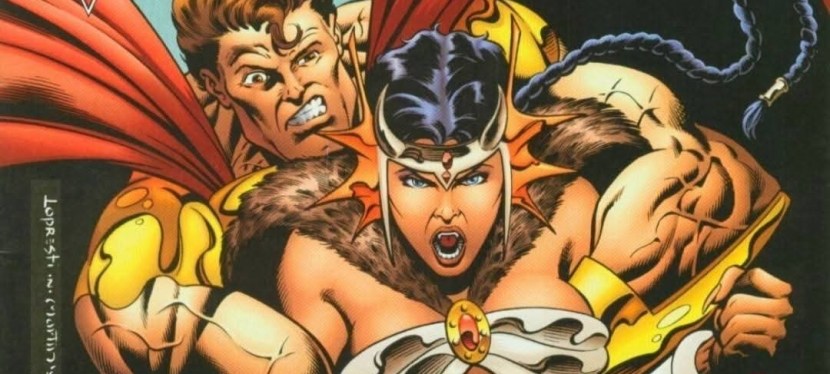
The cover.

Early story

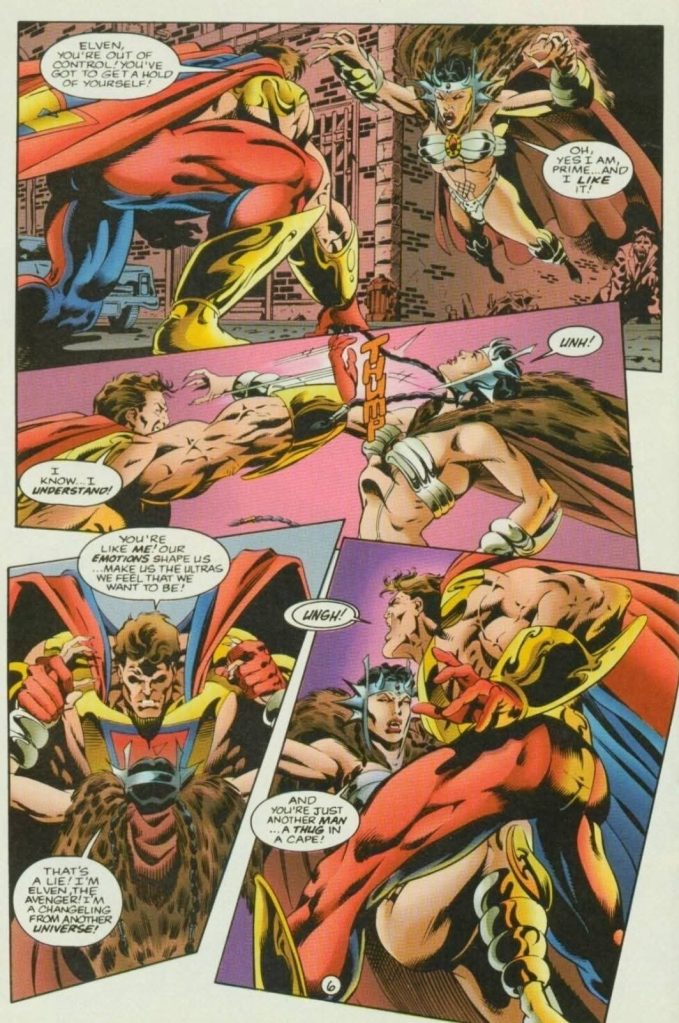
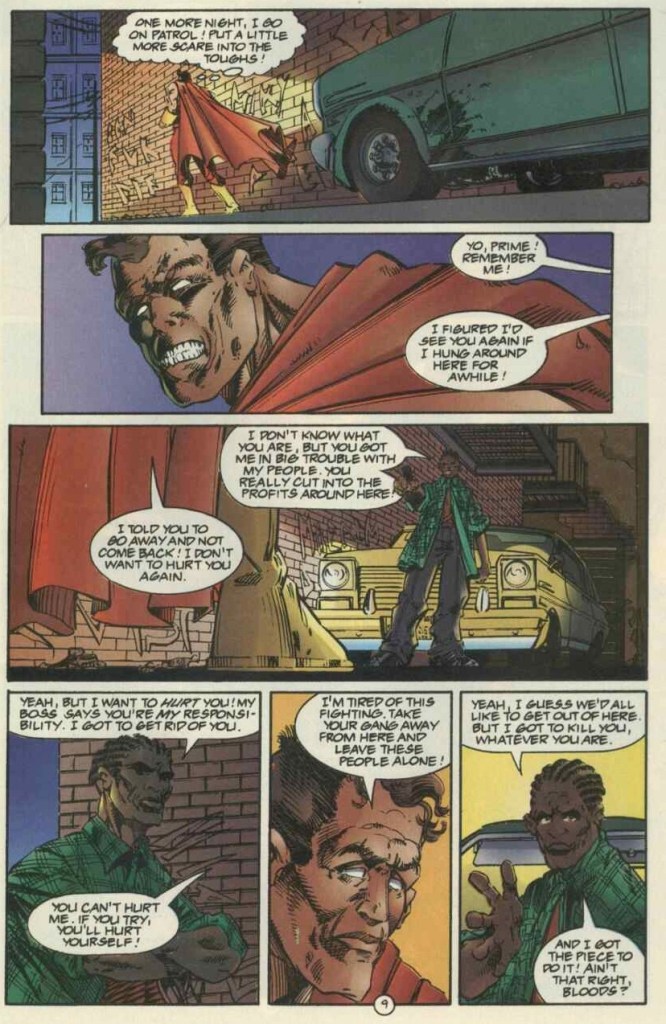
The story begins on top of the building with Elven and Prime meeting again. Tensions are high as Elven accuses him of lying. By this time, she learned a lot of details about her origin from the demon she fought with which convinced her that Prime lied to her about their genetic connections with each other (note: Doctor Vincent Gross was involved as he wanted to create ultras).

Elven rejects the science as she is strong convinced she is of magical origin from a mystical world and happens to be trapped on Earth. As Prime tries to put sense into her, Elven strikes him with a blast of energy to push him back. The blast turned to be of biological energy instead of magic.

As Elven reveals that she learned crucial information from the demon she fought with, Prime realizes it is none other than the one enemy he fought with some time ago

Quality

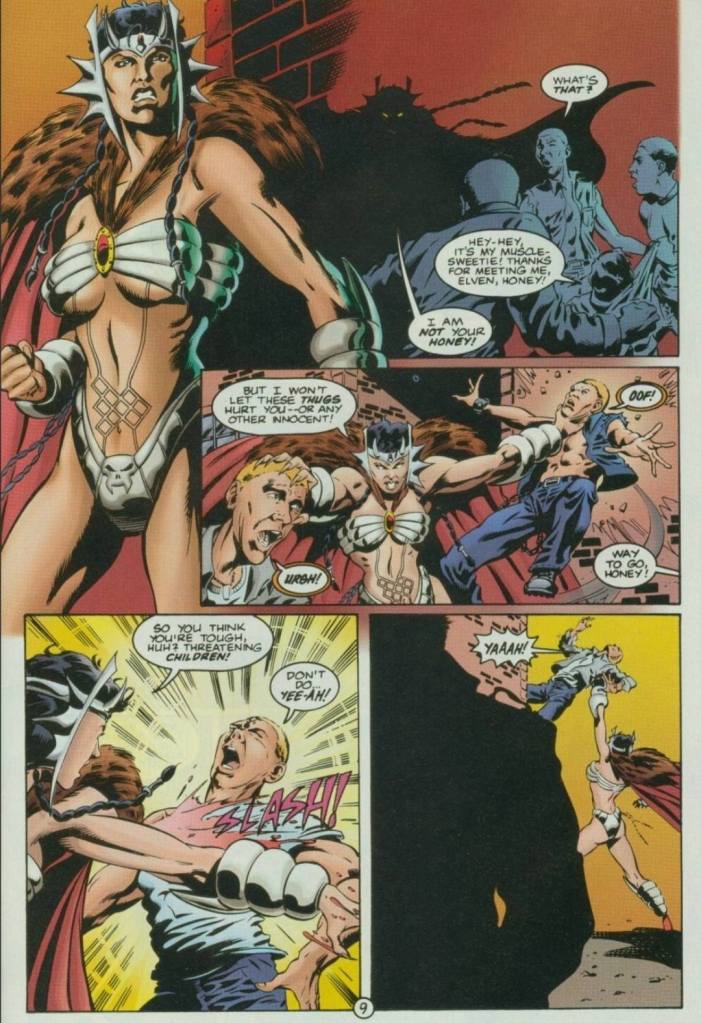
Once again, Elven impulsively uses violence on individuals to help Bruno.

Following the events of issue #2, Elven here remains confused and even lost as she has a lot of trouble figuring out the facts. Of course, being a fanatic of fantasy and Elfquest, Elven clings on to the belief that the fantasy realm is real and that she is of magical origin (which conflicts with the biology and science of her abilities and physical transformation). This is evident in the early part of the comic book when she has a tense reunion with Prime who did his best to explain details and help her understand.

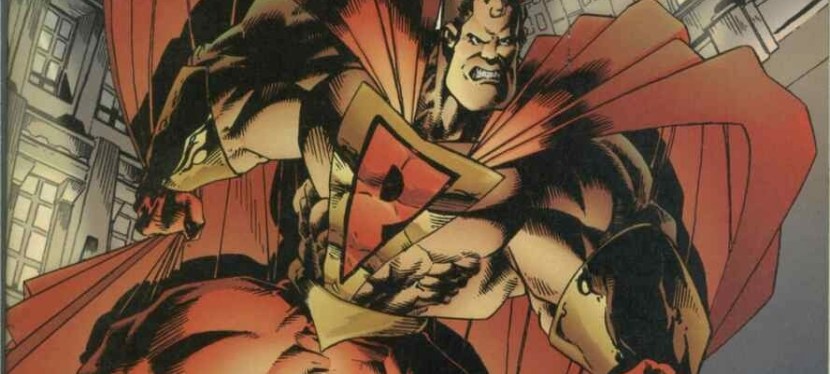
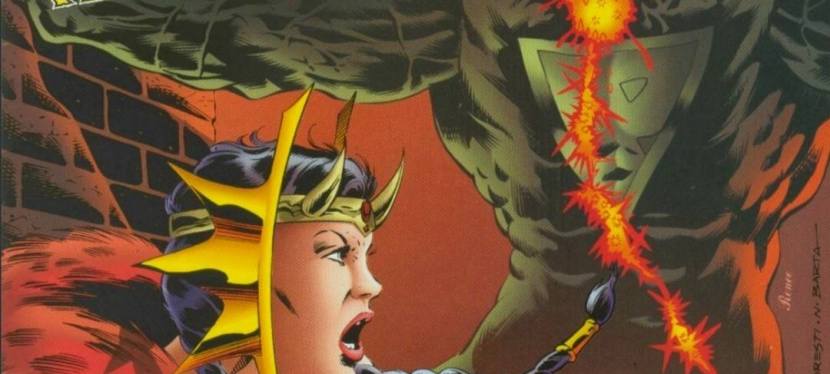
When it comes to the very conflict of the story itself, the stakes were raised when Strazewski has Prime-Evil and elements of unethical science present during the later stage. Apart from abducting Elven, Prime-Evil has his own agenda pursuing Mantra (who in turn has an evil version called Necro Mantra) and a lot of arrogance within. Literally, Prime-Evil’s presence added intrigue to the plot and only made Elven’s struggle to realize the truth of her origin – both the scientific and fantasy aspects – even more complicated.

Bruno, who was a significant and surprising factor behind the conflict in issue #2, gets his nice share of the spotlight. Without spoiling the plot, I can say that he is a lot more than what he seems and has more to add to the conflict.

Considering the intensity of the conflict in issue #2, I find it very weird that Bruno and Elvia were not even reported to the local authorities for questioning and accountability. Perhaps the psychiatrist did not bother to do what is right since he was so fascinated with the fantastic conflict and unexplained moments that happened in his office (note: his own office assistant even became naked suddenly), and he has ambitions to become America’s next big name with his knowledge.

Conclusion
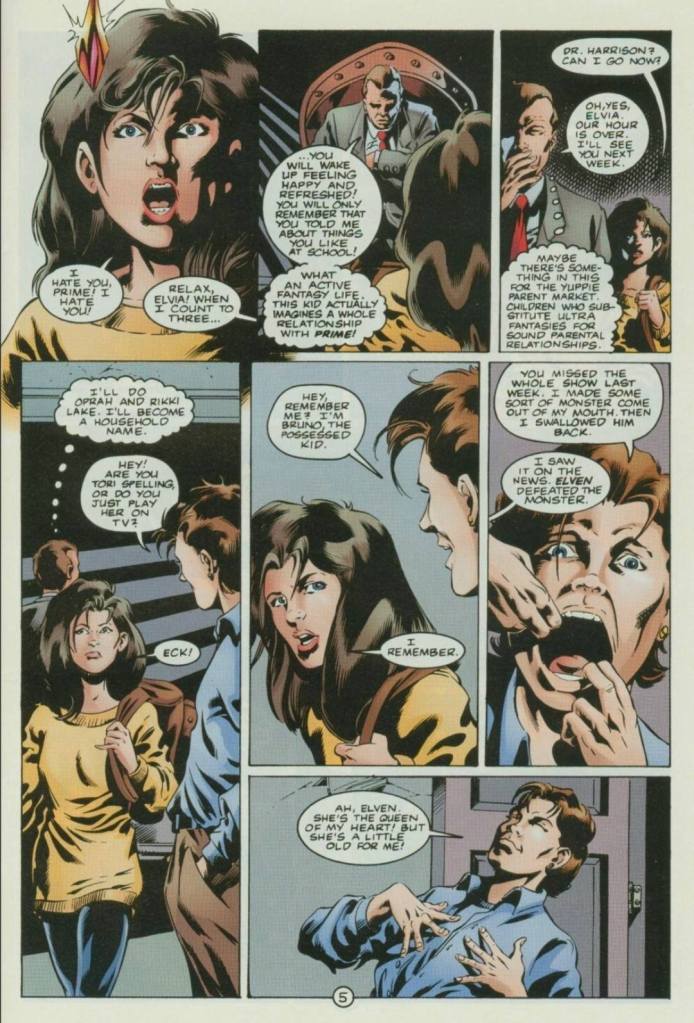
Elvia with Bruno and their psychiatrist.

At this particular stage of the mini-series, Elven #3 (1995) had an even more intriguing story to tell while gradually moving forward with Elven’s quest for the truth of her origin and her own purpose. The Strazewski-Lopresti duo did fine work in this comic book for the most part and ultimately the story convinced me to look forward to the next issue. I can say that the ending of this comic book is more suspenseful than that of issue #2.

Overall, Elven #3 (1995) is recommended.

+++++

Thank you for reading. If you find this article engaging, please click the like button below and also please consider sharing this article to others. If you are looking for a copywriter to create content for your special project or business, check out my services and my portfolio. If you want to support my website, please consider making a donation. Feel free to contact me with a private message. Also please feel free to visit my Facebook page Author Carlo Carrasco and follow me on Twitter at  @HavenorFantasy as well as on Tumblr at https://carlocarrasco.tumblr.com/ and on Instagram at https://www.instagram.com/authorcarlocarrasco/.
A Look Back at Elven #2 (1995)

Welcome back, superhero fans, 1990s arts and culture enthusiasts, Ultraverse fans and comic book collectors! Today we go back to the mid-1990s to examine one of the many tales of the Ultraverse through the Elven mini-series.

When I grabbed a copy of Elven #1, I did not expect much entertainment and surprise. But as I started reading it and witnessed Elven’s interactions with Prime, the narrative became even more engaging to read. In addition, Len Strazewski’s writing clearly defined the personality of fantasy fanatic and confused girl Elvia Swanson and established Elven as a twisted female parallel to Prime. Along the way, Aaron Lopresti’s art showed a lot of details, emotions and dynamism (on the action).

With those details laid down, here is a look back at Elven #2, published by Malibu Comics in 1995 with a story written by Len Strazewski and illustrated by Aaron Lopresti (Sludge).

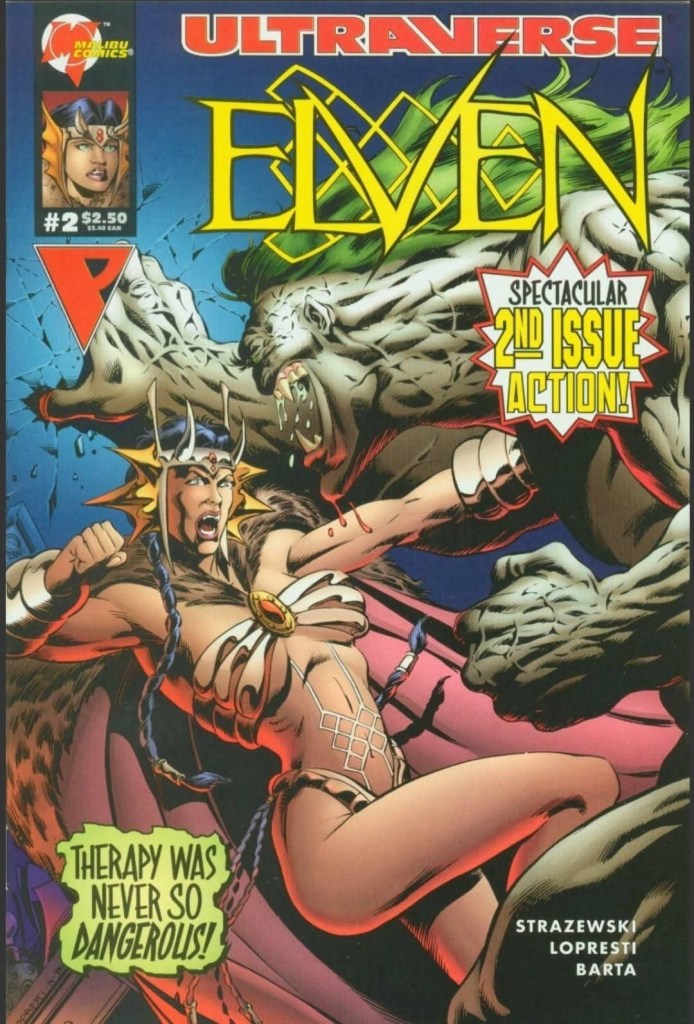
The cover.

Early story

The story begins inside the office of a psychiatrist where Elven encounters a demon which just came out of the teenage boy Bruno. As the two fight each other violently, the psychiatrist watches them obsessively and writes down the notable details for a potential advancement in his career. Bruno, who carried the demon in him some time prior, watches the fight from a distance marveling at Elven while also observing how chaotic the demon is.

Elven fights the demon hard while maintaining a mindset of pride and even being superior. The demon reveals his link with Boneyard (for reference, click here) confirming he came from a distant world.

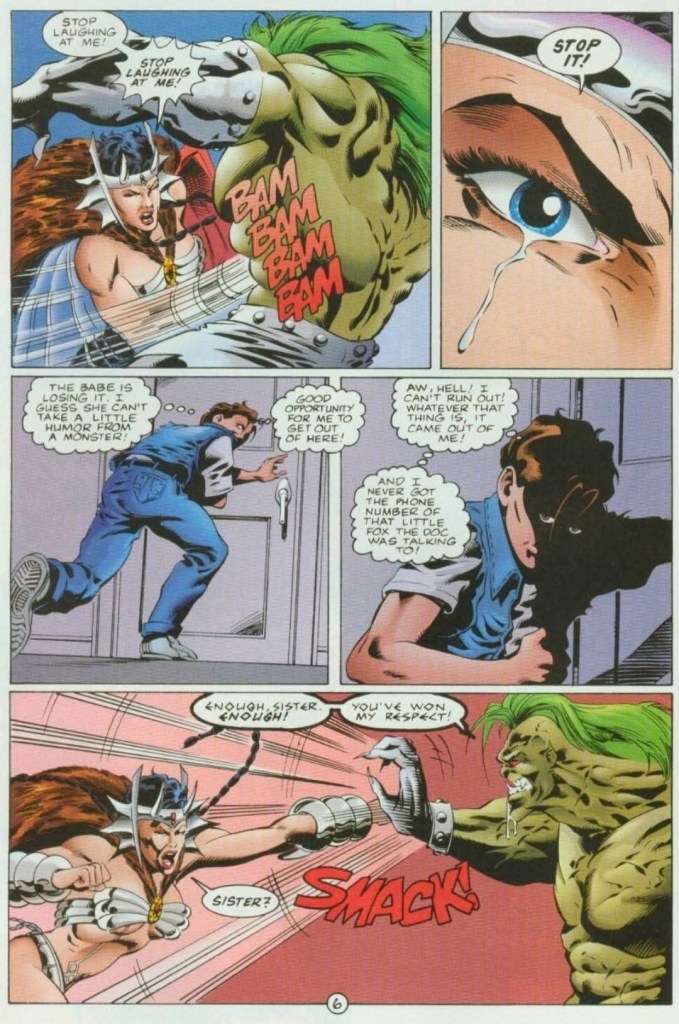
After getting hit by Elven’s elf-fire, the demon begins to laugh at her. Elven gets triggered and starts hitting the demon more…

Quality

By giving in to her impulses, Elven commits a very violent move on a man. This also shows her inability to restrain herself.

While issue #1 established Elvia Swenson personality and her super-powered, fantasy inspired Elven identity who has a genetic connection with Prime, this comic book emphasizes the deeper fantasy aspects of the Ultraverse while expanding the lore within Elven’s part of the shared comic book universe.

Similar to Prime (Kevin Green in disguise), Elven gets triggered emotionally which is the result of the youth and obvious lack of maturity of Elvia. That being said, the moments of Elven getting more violent and shedding a few tears after getting laughed at by the demon deserve any reader’s attention.

Len Strazewski’s writing is pretty rich here and he pulled of some clever moves with the narrative. As the battle between Elven and the demon intensified, there were signs that the conflict would turn into an even bigger and more destructive battle. Instead, there were these deep revelations that happened (note: for relevance, you will have to read Prime #5 which I reviewed some time ago) and even the arrogant boy Bruno has his own share of what has been going on. Even the psychiatrist turned out to be a pretty significant bystander during the battle which suggests a build-up for a sub-plot.

As such, Strazewski wrote the story to be very intriguing and the plot threads are not limited to Elven and the demon. The way I see it, something is being built up and to grasp the relevance, you will have to read some issues of the Prime and Mantra comic book series.

If there is any weakness in the storytelling, it is the fact that the psychiatrist and his office assistant very easily forgot the moments of Bruno turning evil during the late part of issue #1. The way they reacted in this comic book after the end of the battle between Elven and the demon, they did not make any moves to hold Bruno accountable nor did they question Elven’s way of handling matters (which includes the eventual ruining of the office).

Conclusion

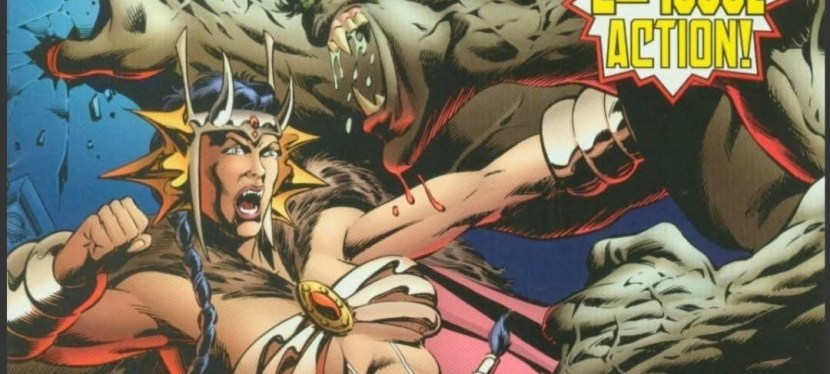
After getting triggered (being laughed at by the demon), Elven acted move violently and impulsively.

While there were a few weak spots in certain parts of the story, Elven #2 (1995) is another solid read from the Strazewski-Lopresti duo. Elven got developed even more through conflict with the demon, and her own search for the truth about her origin. Aside from that, the fantasy elements implemented in the story expanded the lore of the Ultraverse in a very unique way. Ultimately, I am looking forward to reading the next chapter of this mini-series.

Overall, Elven #2 (1995) is recommended.

+++++

Thank you for reading. If you find this article engaging, please click the like button below and also please consider sharing this article to others. If you are looking for a copywriter to create content for your special project or business, check out my services and my portfolio. If you want to support my website, please consider making a donation. Feel free to contact me with a private message. Also please feel free to visit my Facebook page Author Carlo Carrasco and follow me on Twitter at  @HavenorFantasy as well as on Tumblr at https://carlocarrasco.tumblr.com/ and on Instagram at https://www.instagram.com/authorcarlocarrasco/.
A Look Back at Elven #1 (1995)

Welcome back, superhero fans, 1990s arts and culture enthusiasts, Ultraverse fans and comic book collectors! Today we go back to the mid-1990s to examine one of the many tales of the Ultraverse.

For the newcomers to the Ultraverse, Prime is one of its most definitive heroes and his true identity is the teenager Kevin Green who can transform into an overly muscular caped adult superhero. The Prime monthly series of comic books ran for two years and the title character appeared in many other Ultraverse comic books.

Considering the prominence of Prime, it is not surprising that Malibu Comics proceeded to create comic books featuring a female counterpart to Prime. That counterpart is called Elven who appeared in a few early issues of the Ultraverse Premiere series and eventually Prime interacted with her.

With those details laid down, here is a look back at Elven #1, published by Malibu Comics in 1995 with a story written by Len Strazewski and illustrated by Aaron Lopresti (Sludge).

The cover.

Early story

The story begins deep within a city when a beautiful blonde woman got hurt by a very angry man named Billy. With the lady down on the floor, the man raises his metallic weapon intending to strike her not realizing that someone is emerging from behind. He turns and sees a scantily clad caped woman who immediately hits him hard. The caped woman is Elven who believes she is helping the blonde woman.

To Elven’s surprise, the blonde woman tells her to stop and not hurt the man who was violent towards her. The man hits Elven on the face with his weapon but ended up getting hit hard again in retaliation. Elven then uses an optic blast at the wall as she tells the blonde woman to leave.

With the violent man down and hurt, Elven decides to kill him but is prevented by Prime from behind. After telling Prime that she told him not to interfere with her, she hits him with an energy blast…

Quality

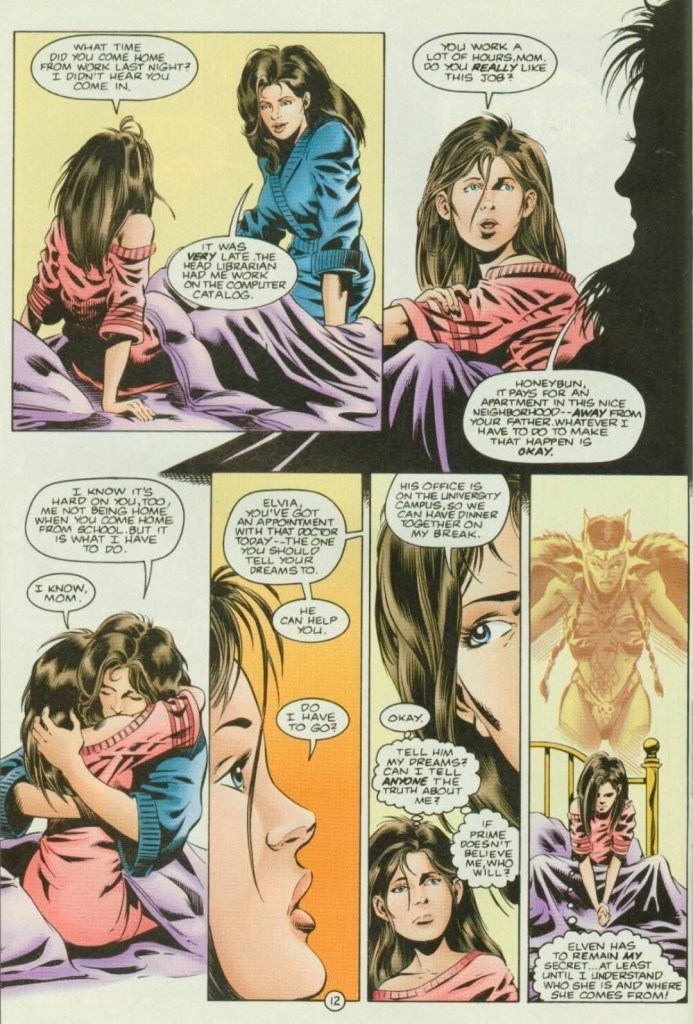
Elvia with her hard-working mother. The lack of a loving father affected Elvia deeply.

Being written by Prime co-creator and series co-author Len Strazewski, this Ultraverse tale about Elven is very good and there is a lot of depth in the plot. You will meet Elven and the true human behind her named Elvia Swenson, a teenage girl who has a painful past, has an obsession with fantasy tales, and was created through the very same secret government fertility research program as Kevin Green/Prime. Elven’s disturbing look (with elvish features) reflects Elvia’s fantasy obsession and personally belief of using violence against men. She and Prime are genetically related due to the top secret project.

This comic book examines Elvia whose life lacks direction and her abusive father really impacted her negatively. With her mother’s love and guidance remaining in her life, Elvia is literally in a quest to find purpose, happiness and friendship. Unfortunately, the young guy Bruno is in the neighborhood and he is actually a demon. Bruno’s presence literally raised the stakes of the story which justifies Elvia’s transformation into Elven for the eventually good-versus-evil conflict. All throughout, there is tension and drama which got balanced with superhero spectacle. The way Elven is portrayed here makes her comparable with the arrogant, man-bashing, rabid feminists of modern society.

When it comes to Prime himself, this comic book features a really mature portrayal of him. I am talking about the early part of the story when Prime did his best to calm Elven down, restrain her and convince her to think first as a way to prevent her recklessness. Long-time Ultraverse readers should now that Prime is actually teenager Kevin Green inside all that muscle and he often has an awkward or a tense way of communicating with others (note: imagine the teenager pretending to think and act like an adult). That said, Prime here really interacts maturely and his attempt to put a lot of sense into the impulsive Elven is very believable. This is clever writing by Strazewski and it is one of the more notable portrayals of Prime.  

When it comes to the visual side, artist Aaron Lopresti’s style worked smoothly in this comic book. I have seen his works in the Sludge series and he really excels with facial expressions, spectacle and the monsters looking very creepy. Strangely enough, Lopresti’s take on Elven is noticeable smaller and less muscular when compared to how the character appeared in Elven #0 and Ultraverse Premiere drawn by Greg Luzniak.

Conclusion

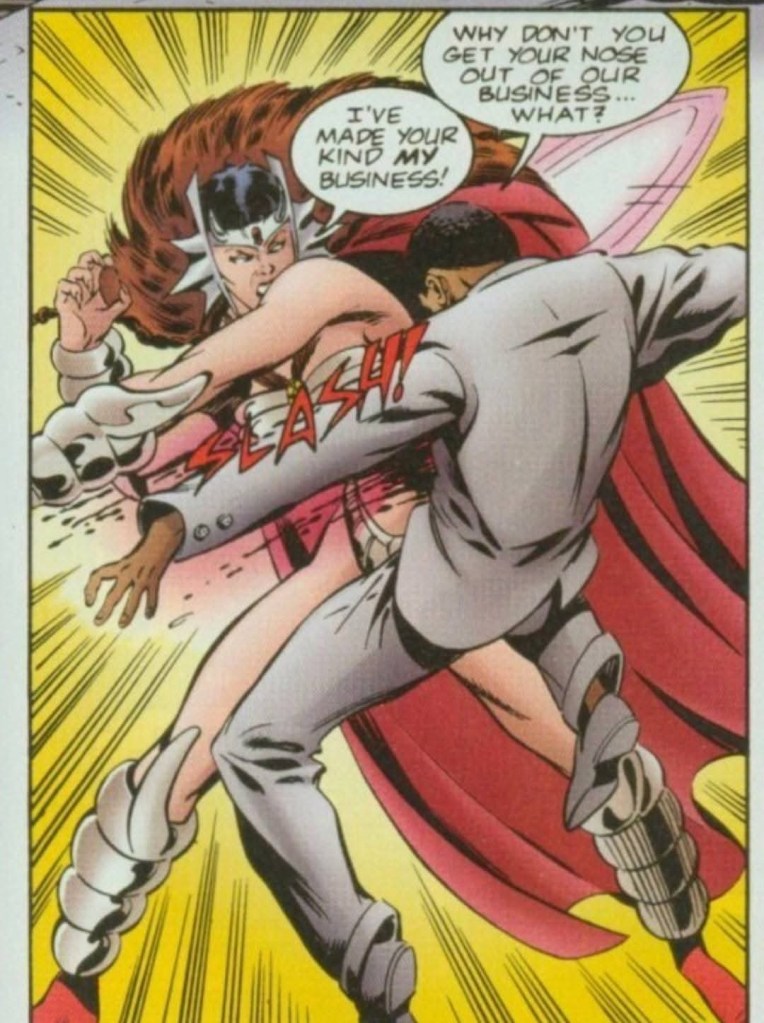
Prime struggles to calm the impulsive and reckless Elven down. Without Prime’s intervention, Elven definitely would have committed murder against a man who harmed a woman moments earlier.

Elven #1 (1995) is clearly a very solid read and easily one of the best spin-off comic books of the Ultraverse. Strazewski and Lopresti crafted a tale that was intense and dramatic while successfully defining Elven and her true identity as the teenage Elvia. Considering her painful background and current situation, Elvia is sympathetic although things got twisted when she becomes Elven which brings out her violent side, her recklessness and distorted view about helping women by using violence. That being said, Elven at this stage in the Ultraverse is not really a likable lead character and that only makes her more unique when compared to Prime. Will Elven become as terrible as the evil ones? There is more to discover as this comic book is part of the limited series.

The specific portrayals of Elvia and Elven is very tricky to write down and Strazewski succeeded in making it work. Ultimately, this comic book added strong fantasy elements within the Ultraverse.

Overall, Elven #1 (1995) is recommended.

+++++

Thank you for reading. If you find this article engaging, please click the like button below and also please consider sharing this article to others. If you are looking for a copywriter to create content for your special project or business, check out my services and my portfolio. If you want to support my website, please consider making a donation. Feel free to contact me with a private message. Also please feel free to visit my Facebook page Author Carlo Carrasco and follow me on Twitter at  @HavenorFantasy as well as on Tumblr at https://carlocarrasco.tumblr.com/ and on Instagram at https://www.instagram.com/authorcarlocarrasco/.
A Look Back at Freex #15 (1994)

Disclaimer: This is my original work with details sourced from reading the comic book and doing personal research. Anyone who wants to use this article, in part or in whole, needs to secure first my permission and agree to cite me as the source and author. Let it be known that any unauthorized use of this article will constrain the author to pursue the remedies under R.A. No. 8293, the Revised Penal Code, and/or all applicable legal actions under the laws of the Philippines.

Welcome back superhero enthusiasts, 1990s arts and culture enthusiasts and comic book collectors! Today we go back to the wild 1990s and explore a part of Malibu Comics’ Ultraverse through a tale of Freex.  

Since after facing off with Contrary (who eventually became part of UltraForce) and her so-called school and students, Freex had been traveling far and long (refer to my previous Freex reviews here, here and here) and gained Old Man as a useful companion. Along the way, they encountered the unknown deep underground and even saw a powerful being. They even got to the city of Denver temporarily. As they went on, they found the path that led them back to civilization.

With those details laid down, here is a look back at Freex #15, published in 1994 by Malibu Comics with a story written by Gerard Jones and drawn by Scott Kolins. This is a flip-side comic book with Ultraverse Premiere #9 (1994) on the other side.  

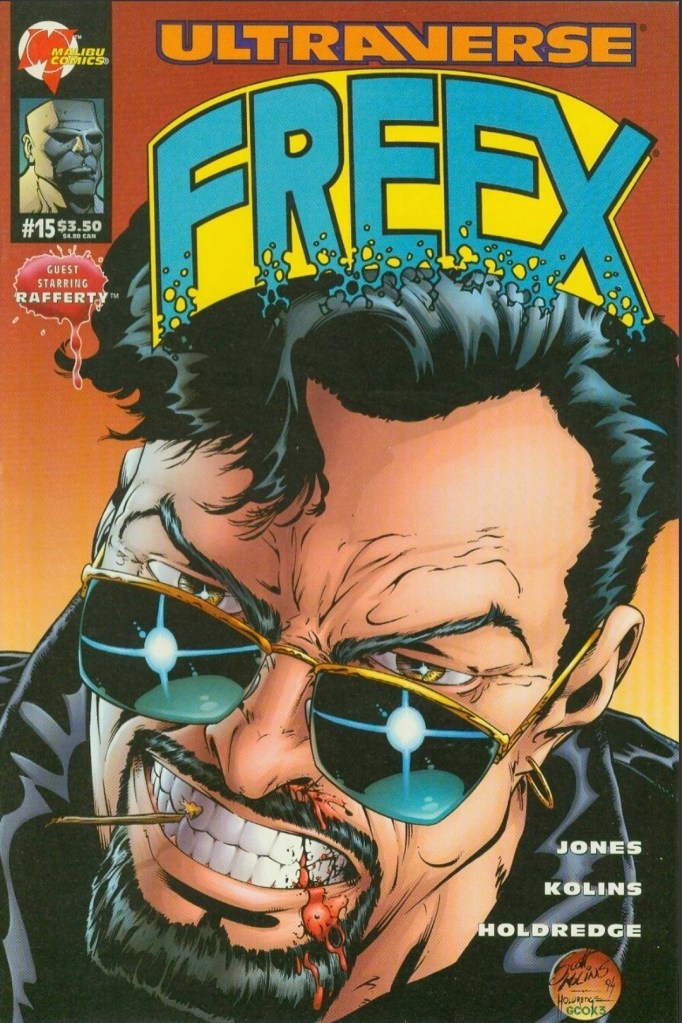
The cover.

Early story

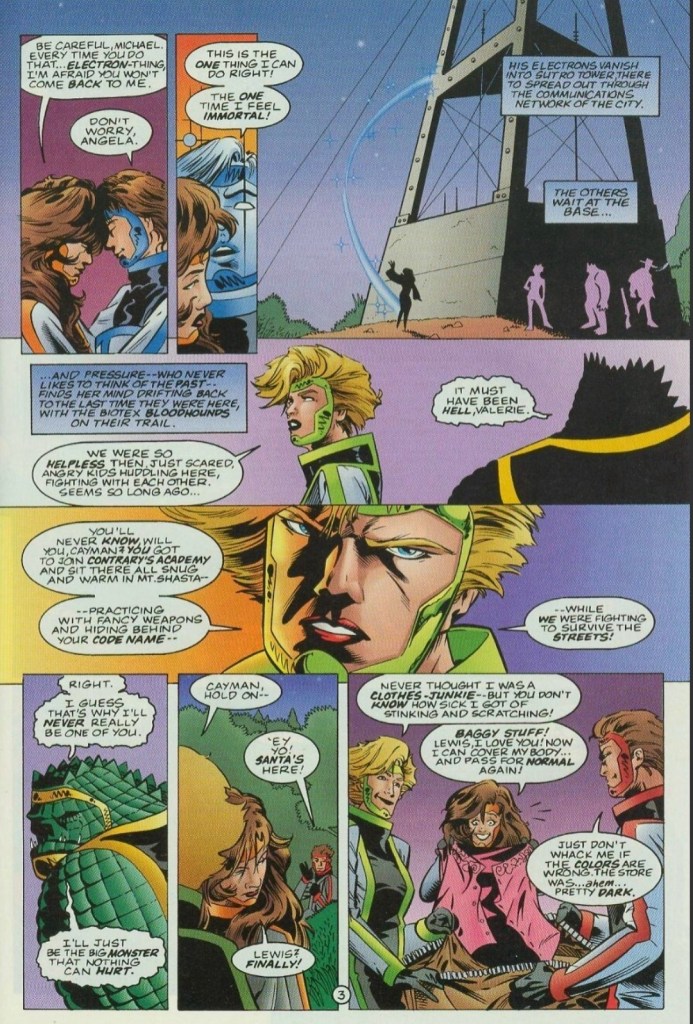
The story begins with Freex – composed of Plug, Sweet-Face, Pressure, Anything and new member Cayman – have been traveling for some time deep underground with Old Man. They find themselves back in San Francisco, the one city that brought them together. While still a long distance away from the city proper and there are no locals who could see them, the team cautiously move to a high communications tower. Michael/Plug uses his special ability to transform himself into electronic matter and makes his way through the communications network of the city to do something very important. Cayman meanwhile becomes the object of discussion between Pressure and Sweet-Face as he has yet to share with them details about himself.

As Cayman himself was part of Contrary’s academy and joined Freex recently, he has trouble gaining the trust of the others. After wearing new clothes that Lewis found, a guy suddenly appears to them. He introduces himself to them as Evan…  

Quality

The very evil Rafferty monitoring Freex secretly and enjoying his advantage over them.

Considering what happened in the previous issues, this story feels like a breath of fresh air not only because of the new location the team got into but also because of strong twists that happened. Instead of going through fantastical encounters, Freex found themselves in situations that are more grounded with reality (within Ultraverse standards specifically) and more notably, the story emphasized crossover as Freex and Old Man encountered Firearm. The said crossover, quite cleverly, sets up Freex into a collision course with the serial killer Rafferty (who encountered The Strangers elsewhere within the Ultraverse). For the newcomers reading this, Rafferty is one of the most evil characters of the Ultraverse who has murdered a lot of people – including his own parents – and has developed tremendous hatred of Ultras.

The inclusion of Rafferty here also sheds light on the Freex’s past connection with the Night Man (click here and here). More notably, the said serial killer turned out to be so resourceful and totally obsessed with murdering people with special abilities, he became a formidable force towards Freex. This leads to a pretty powerful and twisting conclusion that must be seen.  

Conclusion

The gang by the tower.

With a good amount of intrigue, characterization spectacle, strong dialogue and the element of crossover, Freex #15 (1994) is a pretty engaging comic book to read. The biggest feature here is having Freex in a conflict with a very obsessed killer who not only hates Ultras but also has an extensive record of murdering many people over a long period of time. In my view, the Freex-Rafferty conflict was nicely structured and it added depth to the plot. What happened in the end of this comic book should resonate with dedicated fans of Freex.

Overall, Freex #15 (1994) is highly recommended.

+++++

Thank you for reading. If you find this article engaging, please click the like button below, share this article to others and also please consider making a donation to support my publishing. If you are looking for a copywriter to create content for your special project or business, check out my services and my portfolio. Feel free to contact me with a private message. Also please feel free to visit my Facebook page Author Carlo Carrasco and follow me on Twitter at  @HavenorFantasy as well as on Tumblr at https://carlocarrasco.tumblr.com/ and on Instagram at https://www.instagram.com/authorcarlocarrasco

A Look Back at Ultraverse Premiere #4 (1994)

Disclaimer: This is my original work with details sourced from reading the comic book and doing personal research. Anyone who wants to use this article, in part or in whole, needs to secure first my permission and agree to cite me as the source and author. Let it be known that any unauthorized use of this article will constrain the author to pursue the remedies under R.A. No. 8293, the Revised Penal Code, and/or all applicable legal actions under the laws of the Philippines.

Welcome back, superhero fans, 1990s arts and culture enthusiasts and comic book collectors! Today we revisit the Ultraverse of Malibu Comics and examine one of its many stories told through an issue of the Ultraverse Premiere series.

For the newcomers reading this, Ultraverse Premiere was a series of comic books published by Malibu Comics that showcased several tales of the Ultraverse and its characters. These stories were made to expand the lore of the UV, emphasize key characters and give fans a lot of content to enjoy. Certain issues of Ultraverse Premiere served as flip comic books which are thick (a lot more than the normal 32 pages) and allow you to read Ultraverse Premiere tales on side and read another UV comic book on the other side. The Ultravere Premiere comic book I am about to review here had The Strangers #13 on its flip side.

With those details laid down, here is a look back at Ultraverse Premiere #4, published by Malibu Comics in 1994 with stories written by Len Strazewski and Kurt Busiek, and drawn by Frank Gomez and Kris Renkewitz.

The cover.

Early stories

Story 1 – the story begins with Prime making several appearances protecting innocent people from gangs, muggers, thieves and natural disasters. Specifically, his presence is making an impact on the lives of many neighborhoods and its people.

Sometime later, inside a private facility, the figure identified as Prime turns out to be fake and was designed as a human-shaped suit that was piloted inside by Sy Bernstein. He is personally determined to make an impact on crime in his local community with the fake Prime as his main tool.

Story 2 – the story begins with Lady Killer privately viewing a cartoon preview based on her team – The Strangers – with an executive of Imagine-Arts. Shortly after, Lady Killer meets with more executives of the said company and she is told that Imagine-Arts and Labrava Company (Lady Killer’s own enterprise) make a business deal match and they offer to buy her out. Lady Killer tells them that her company and herself are not for sale…

Quality

Lady Killer talking hard on business.

As far as storytelling goes, this comic book’s two tales succeeded in expanding the lore of the Ultraverse through Prime (as a figure to certain members of the public) and Lady Killer, the leader of The Strangers. The Prime-related story offers a nice take on one small part of the Ultraverse that deals with a local community tainted with crime and how Prime’s influence on the ordinary people impacts the said community in varied ways. Of course, these are all executed not with Prime/Kevin Green himself but rather with someone who happens to have the means to pose as Prime and pretend to be the ultrahero himself. Having read a lot of the adventures of the real Prime, this Prime tale is a really nice take although I should say that the art by Frank Gomez has that very rough look all throughout.

The second story meanwhile is an interesting side-story of The Strangers specifically limited to Lady Killer. She gets into business talk with one company which only leads to an intriguing turn of events which creatively emphasizes capitalism to be corrupt and twisted. In some ways, the anti-corporate theme of the story overshadows the plot itself and as the story progressed, Lady Killer slightly becomes less relevant. To be fair to the creative team, this side-story happens to be the first portion of a storyline that involves J.D. Hunt. To say the least, this tale is worth reading even though its protagonist lost some relevance due to a plot twist that started before reaching the end.

Conclusion

Something very odd here.

Ultraverse Premiere #4 (1994) indeed carries enough entertainment and literary value on its two UV tales alone. Just consider The Strangers #13 as a notable additive thanks to the flip side feature. Prime fans will most likely be intrigued and even entertained with the first story while The Strangers fans might end up dissatisfied with the story centered on Lady Killer not because it is the first chapter of a multi-part story but more on its storytelling quality. At least the art of the Lady Killer tale done by Kris Renkewitz is good to look at.

Overall, Ultraverse Premiere #4 (1994) is recommended.

+++++

Thank you for reading. If you find this article engaging, please click the like button below and also please consider sharing this article to others. If you are looking for a copywriter to create content for your special project or business, check out my services and my portfolio. Feel free to contact me with a private message. Also please feel free to visit my Facebook page Author Carlo Carrasco and follow me on Twitter at  @HavenorFantasy as well as on Tumblr at https://carlocarrasco.tumblr.com/and on Instagram at https://www.instagram.com/authorcarlocarrasco/