A Look Back at Peter Parker, The Spectacular Spider-Man #131 (1987)

Welcome back superhero enthusiasts, 1980s arts and culture enthusiasts, Marvel Comics fans and comic book collectors! Today we go back to the year 1987 to examine a small part of the Marvel Comics shared universe through a tale of the Peter Parker, The Spectacular Spider-Man monthly series.

For this particular review, we will explore the 3nd chapter of classic storyline Kraven’s Last Hunt. The storyline started in Web of Spider-Man (read my retro review by clicking here) and progressed further in Amazing Spider-Man (read my retro review by clicking here) and creators J. M. DeMatteis and Mike Zeck crafted it to last six chapters.

With those details laid down, here is a look back at Peter Parker, The Spectacular Spider-Man , published in 1987 by Marvel Comics with a story written by J. M. DeMatteis and drawn by Mike Zeck.
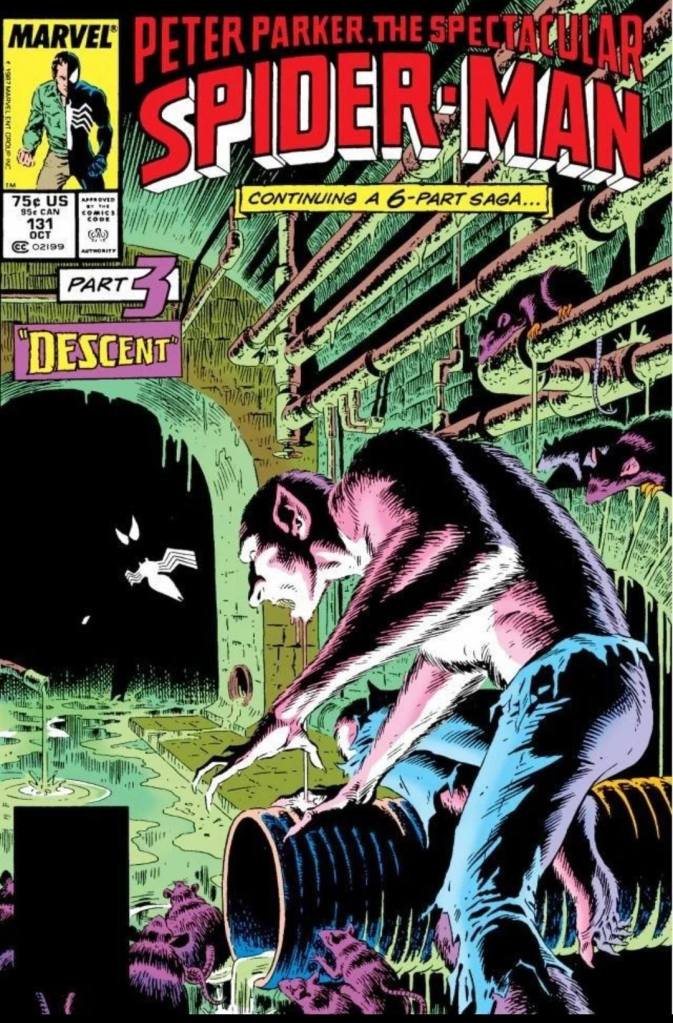
The cover.

Early story

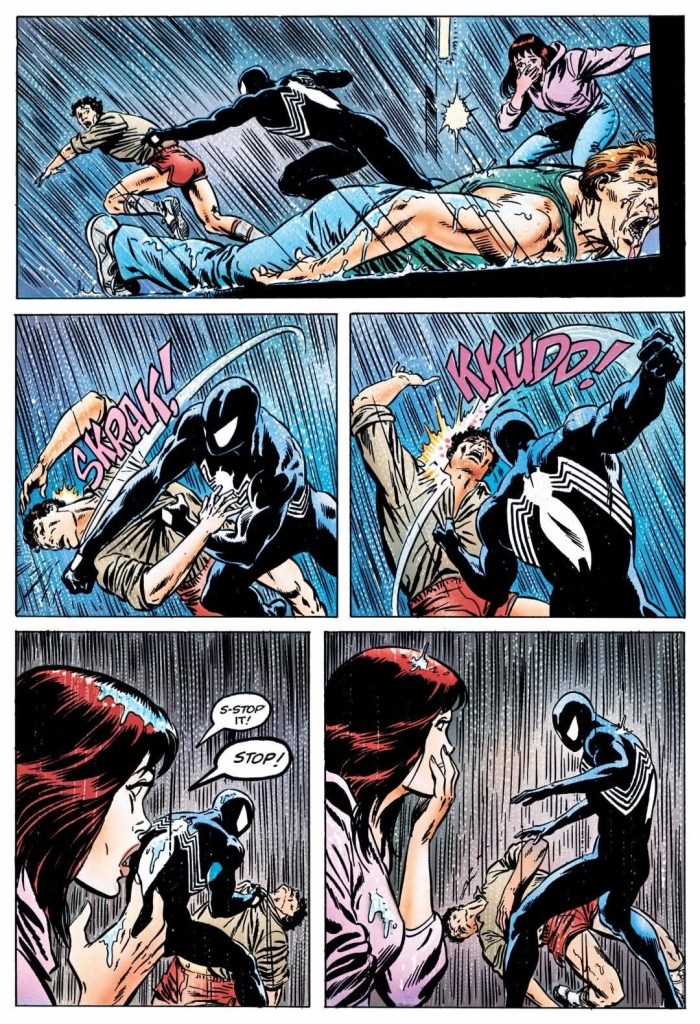
The story begins inside a facility in New York City on a rainy night. Men inside work quietly moving heroin from one vehicle to another. Suddenly Kraven – wearing a black costume believing he is Spider-Man – breaks in and fearlessly attack the men who are already armed. Using very violent force, Kraven beats the men and killed the last one. Eventually, police officers and detectives broke into the facility which compels Kraven to get away fast and leaves them no opportunities to catch up. One of the detectives mentions that fifteen suspects have been hospitalized because of the individual they perceive as Spider-Man.

After climbing to the top of a building, Kraven takes his mask off. He thinks deeply about his victory over Spider-Man and becoming him. He believes he has consumed the spider’s prey and proved himself to be superior in every way. Regardless, Kraven’s obsession continues as he seeks the final proof.

Elsewhere in the city, Vermin pulls a woman into an alley and then comes out on the street as a police car approaches him…

Quality
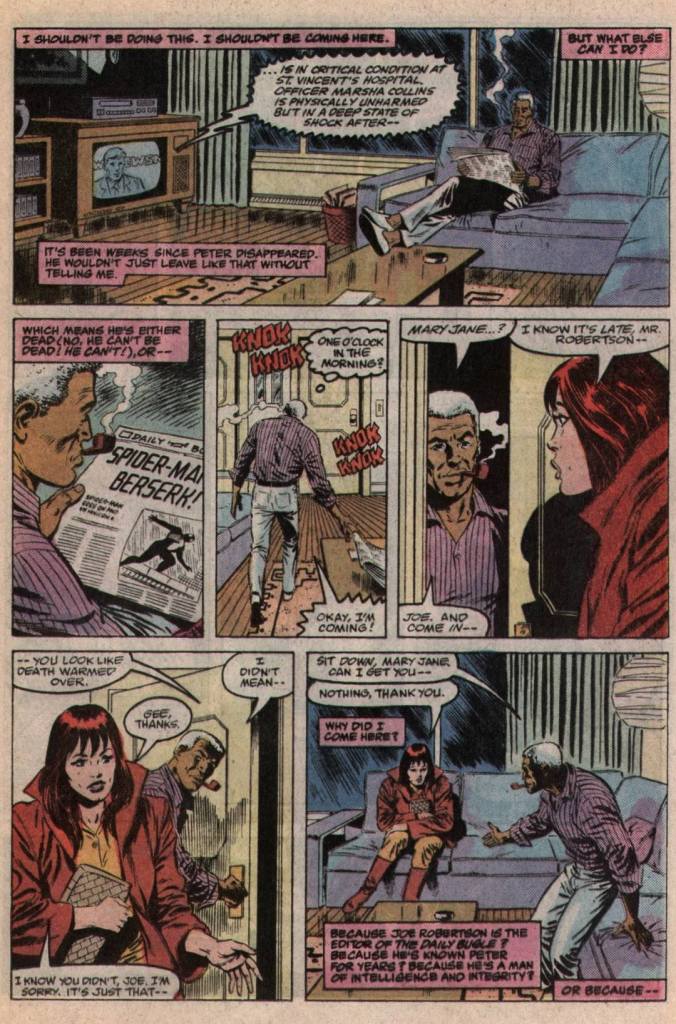
A key scene showing how Mary Jane and Joe Robertson react to the absence of Peter Parker who was buried alive by Kraven.

In this 3rd chapter of the Kraven’s Last Hunt storyline, the iconic Spider-Man is absent again but his presence is still felt through the way people perceive him and through two notable characters who personally knew Peter Parker. At this point in the storyline, Kraven truly believes he has not only replaced Spider-Man but became even more significant than him. Kraven’s obsession with achieving both greatness and significant placed him on a collision course with Vermin, and I can say that the conflict between the them is a powerful feature of the story. Once again, DeMatteis proved how compelling his script really is and Mike Zeck easily brought the said script to life with strong imagery.

As with the previous two chapters, the darkness and grittiness of the storyline are lively which resulted in a very atmospheric reading experience. The DeMatteis-Zeck duo knew exactly how to engage readers using a powerful script and images that range from being action-packed to looking very disturbing.

Speaking of character development, Mary Jane here shows how the continued absence of her husband is wearing herself down and making her even more worried. Mary Jane is a lively symbol about how we readers miss Spider-Man and how uncertain we feel about the future of comic book storytelling without the iconic superhero.

Conclusion
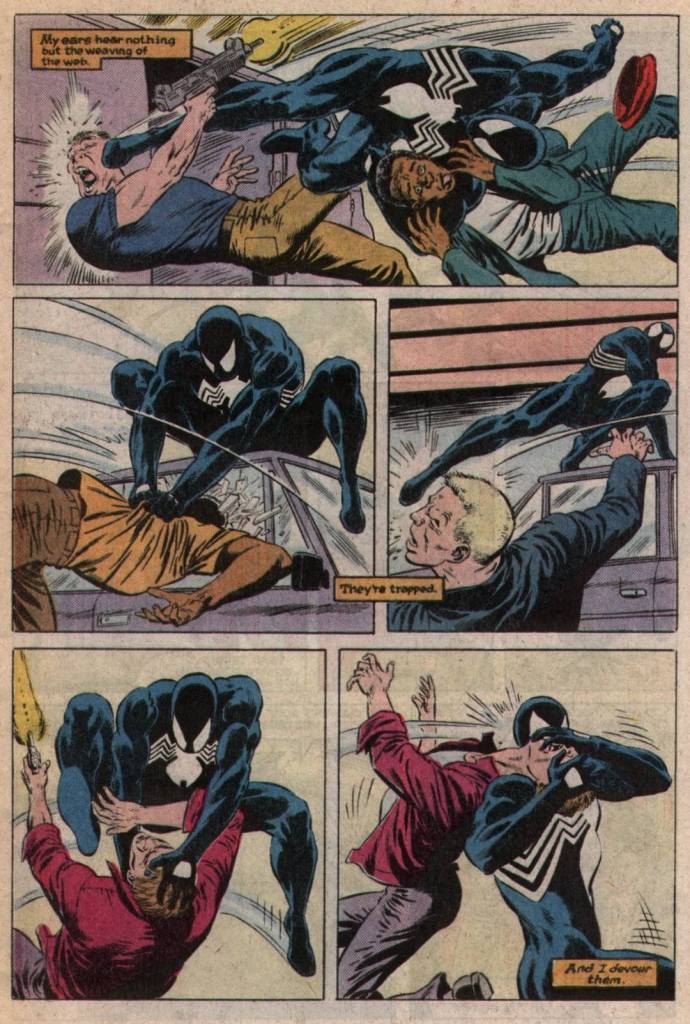
Without any concern whatsoever, Kraven’s Spider-Man brutally hits the criminals with powerful strikes.

Peter Parker, The Spectacular Spider-Man (1987) is a powerful 3rd chapter of the Kraven’s Last Hunt storyline. At this point, Kraven continues to not only be Spider-Man but make others feel his impact as he strives to be greater than the genuine Spider-Man. Vermin has turned more prominent in this comic book and the big conflict between him and Kraven is a huge pay-off to what was built-up since Amazing Spider-Man . Right now, I am looking forward to the next chapter of Kraven’s Last Hunt.

Overall, Peter Parker, The Spectacular Spider-Man (1987) is highly recommended.

+++++

Thank you for reading. If you find this article engaging, please click the like button below, share this article to others and also please consider making a donation to support my publishing. If you are looking for a copywriter to create content for your special project or business, check out my services and my portfolio. Feel free to contact me with a private message. Also please feel free to visit my Facebook page Author Carlo Carrasco and follow me on Twitter at  @HavenorFantasy as well as on Tumblr at https://carlocarrasco.tumblr.com/ and on Instagram at https://www.instagram.com/authorcarlocarrasco
A Look Back at Amazing Spider-Man #293 (1987)

Welcome back superhero enthusiasts, 1980s arts and culture enthusiasts, Marvel Comics fans and comic book collectors! Today we go back to the year 1987 to examine a small part of the Marvel Comics shared universe through a tale of the Amazing Spider-Man monthly series.

For this particular review, we will explore the 2nd chapter of classic storyline Kraven’s Last Hunt. The storyline started in Web of Spider-Man (read my retro review by clicking here) and creators J. M. DeMatteis and Mike Zeck crafted it to last six chapters.

With those details laid down, here is a look back at Amazing Spider-Man , published in 1987 by Marvel Comics with a story written by J. M. DeMatteis and drawn by Mike Zeck.

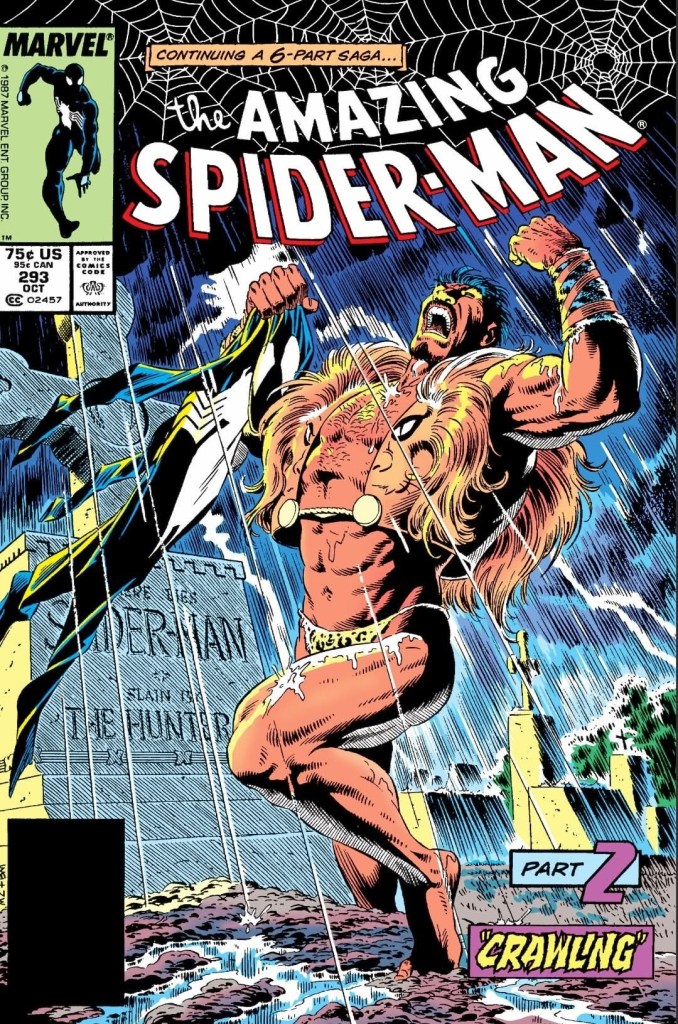
The cover.

Early story

The story begins on a rainy night as a tall figure wearing a black costume and mask stands over the grave stone that read “Here lies Spider-Man slain by the Hunter.” The figure takes off his mask revealing Kraven who delightfully laughs believing he has achieved greatness by defeating Spider-Man, burying him and taken his identity.

Elsewhere in New York City, a woman struggles with walking down the sidewalk during the rain. As a rat runs near her, she loses her balance and falls on the road. Suddenly, a manhole near her opens revealing the hand of an unseen creature which pulls the lady down to the sewer. Moments later, she finds herself surrounded with rats and toxic materials. Slowly, the Vermin approaches her…

Quality

This is Kraven’s Spider-Man in action! How people perceive Spider-Man is an emerging theme in this storyline.

Considering what happened in Web of Spider-Man , it is not a spoiler to point out that the iconic Spider-Man is not really present in this very comic book. That being said, writer J. M. DeMatteis shifted the spotlight on Kraven – now in a Spider-Man costume and being the webslinger we know – while leaving some of it for Mary Jane Parker and Vermin.

Following what was established in the first chapter of Kraven’s Last Hunt, Kraven here continues with his obsession over his destiny while remembering lessons he learned not only from his personal past but also the legacy he inherited from his family. In his other obsession of becoming Spider-Man, Kraven went to the extreme being with countless spiders, consuming green liquid believing that spiderness will come into him, and more. Some may perceive him as a mad man while others might see him being mystical somewhat.

The DeMatteis-Zeck duo excelled in developing Mary Jane in this story as she feels uneasy over her husband’s absence. She really feels the weight of inconveniences and loneliness that come being married to a superhero who is far away doing something or being captured by a capable enemy. Mary Jane’s personality here shows signs of fragility too.

Vermin – the rat-like monster – is portrayed as an eater of human beings who turns out to be afraid of Spider-Man and he still remembers his past conflict not only with him ut also with Captain America. Vermin is a tragic character and the presence of rats in different parts of the story suggest that his presence in the storyline will only grow stronger. Some readers might find Vermin an abomination while there might be others who could get sympathetic towards him.

The plot itself has a strong structure and builds up nicely on what was established in the first chapter of this storyline. This time around, Kraven becomes Spider-Man and how he is perceived by others – who do not know the truth that Peter Parker is temporarily gone – is an emerging theme of the storyline.

Conclusion

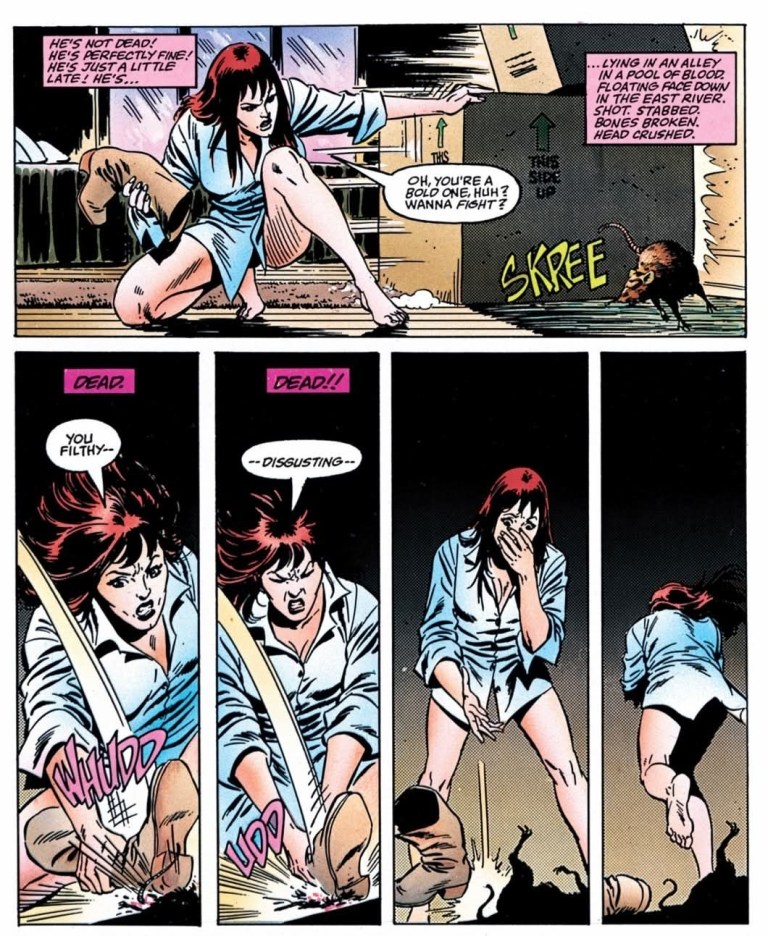
Alone in the apartment, Mary Jane took action against the rat.

Filled with gritty darkness, drama and suspense, Amazing Spider-Man (1987) is an engaging 2nd chapter of the Kraven’s Last Hunt storyline. Even though Spider-Man is not present here, the DeMatteis-Zeck duo succeeded in making the tale compelling to read from start to finish. What they did to develop Mary Jane and Vermin added depth not only to this comic book but to the storyline as well. Right now, I am convinced to read the next chapter of this storyline.

Overall, Amazing Spider-Man (1987) is highly recommended.

+++++

Thank you for reading. If you find this article engaging, please click the like button below, share this article to others and also please consider making a donation to support my publishing. If you are looking for a copywriter to create content for your special project or business, check out my services and my portfolio. Feel free to contact me with a private message. Also please feel free to visit my Facebook page Author Carlo Carrasco and follow me on Twitter at  @HavenorFantasy as well as on Tumblr at https://carlocarrasco.tumblr.com/ and on Instagram at https://www.instagram.com/authorcarlocarrasco
A Look Back at Amazing Spider-Man #320 (1989)

Welcome back superhero enthusiasts, 1980s arts and culture enthusiasts, Marvel Comics fans and comic book collectors! Today we go back to the year 1985 to examine a small part of the Marvel Comics shared universe through a tale of the Amazing Spider-Man monthly series.

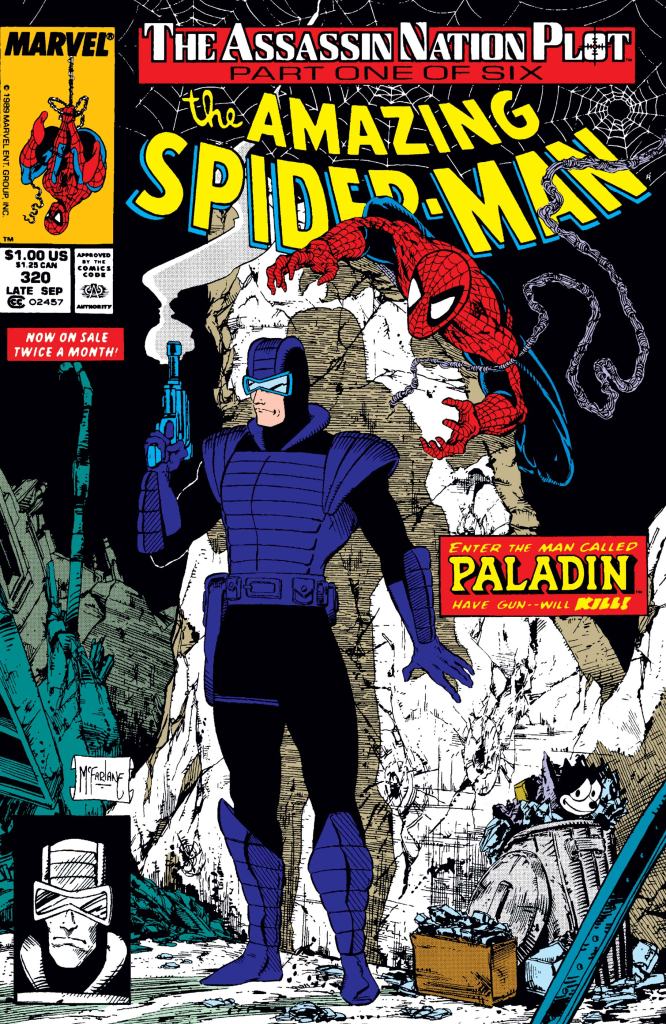
For this particular review, we will explore the first chapter of The Assassin Nation Plot storyline that took place within the Amazing Spider-Man series.  

With those details laid down, here is a look back at Amazing Spider-Man , published in 1989 by Marvel Comics with a story written by David Michelinie and drawn by Todd McFarlane.

The cover.

Early story

The story begins inside Empire State University where Peter Parker – working as an assistant in the science lab – takes advantage of the free time and resources to create web fluid using a new formula. He notices that the acetylene torch does not even leave a smudge on the new web he made.

To his surprise, his boss doctor Evan Sloan catches him doing an interesting experiment. Parker comes up with a convincing excuse for the experiment which spares him from getting into trouble. After promising doctor Sloan he will get on the neutron project first thing in the morning of Thursday, Parker leaves, secretly changes into Spider-Man and equipped his brand new web. He then leaves the university and moves deep into the city…

Quality

Peter Parker and Mary Jane having a discussion.

I really like the story David Micheline came up with as the start of The Assassin Nation Plot storyline. This is clearly not your typical good-versus-evil superhero tale starring the webslinger. Instead, there are layers of secrecy, suspense and intrigue that involves a powerful private organization, private armies and diplomats.

Instead of facing off with super villains, Spider-Man finds himself in the middle of something very big brewing behind the scenes, and that puts him in deep danger. That being said, Michelinie’s approach on building up the details of the plot moved very smoothly and the payoff for each buildup was executed on a timely manner. The buildup of details was never boring nor too slow to absorb, and Todd McFarlane excelled with visualizing the plot while still delivering dynamic superhero action.

I should mention that the character Paladin has a strong presence in the story and there were moments when he outweighed Spider-Man in terms of importance.

Conclusion

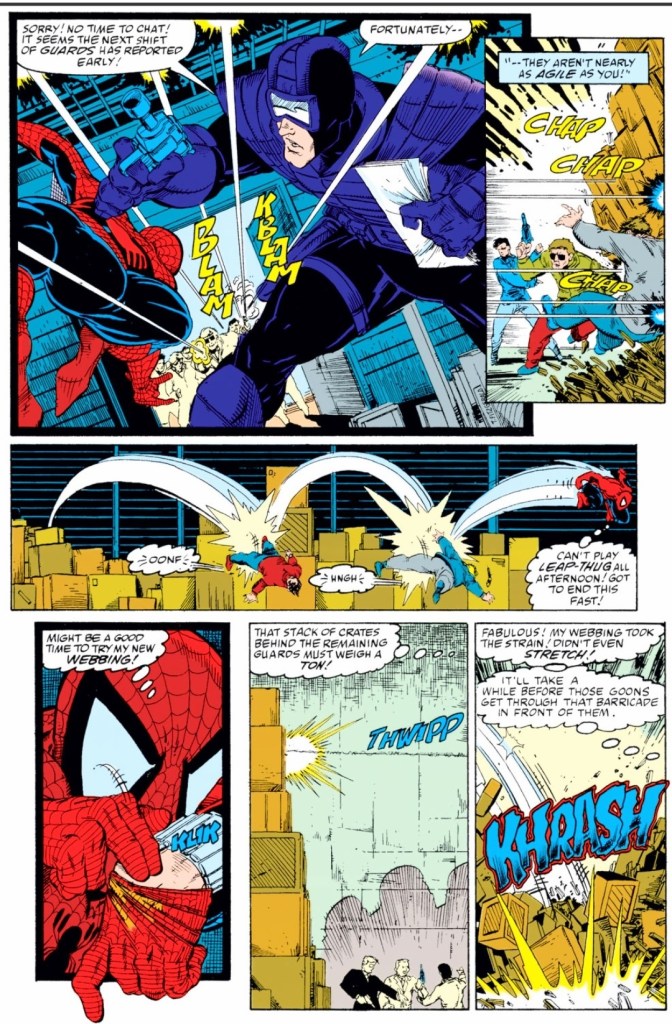
Spider-Man and Paladin targeted by armed guards.

Amazing Spider-Man (1989) is indeed a very solid story to read and a powerful start of The Assassin Nation Plot storyline. With the way the core concept was presented, this comic book symbolically showed that there are high stakes and other matters that are clearly too overwhelming for Spider-Man to deal with. The story is nicely paced and the creative team knew when and how to execute worthy payoffs for each buildup. By the time I reached the end of the comic book, I became convinced to read the next chapter of this storyline.

Overall, Amazing Spider-Man (1989) is highly recommended.

+++++

Thank you for reading. If you find this article engaging, please click the like button below, share this article to others and also please consider making a donation to support my publishing. If you are looking for a copywriter to create content for your special project or business, check out my services and my portfolio. Feel free to contact me with a private message. Also please feel free to visit my Facebook page Author Carlo Carrasco and follow me on Twitter at  @HavenorFantasy as well as on Tumblr at https://carlocarrasco.tumblr.com/ and on Instagram at https://www.instagram.com/authorcarlocarrasco
A Look Back at Amazing Spider-Man #375 (1993)

Welcome back superhero enthusiasts, 1990s arts and culture enthusiasts, Marvel Comics fans and comic book collectors! Today we go back to the year 1993 and examine a small part of the Marvel Comics universe through a tale of the Amazing Spider-Man monthly series.

In my previous retro comic book review, the insane murderer Venom returned to antagonize Spider-Man by targeting his parents. While it was a fact that Venom – who knew Spider-Man’s true identity – got into close contact with Aunt May (symbolizing the danger he poses on the Peter Parker’s family) a few years prior, going after the mother and father of Peter really raised the stakes.

With those details laid down, here is a look back at Amazing Spider-Man , published in 1993 by Marvel Comics with a story written by David Michelinie and drawn by Mark Bagley. This comic book marked the 30th anniversary of Amazing Spider-Man (1963).

The cover.

Early story

The story begins inside one of the facilities of the closed amusement park in Brooklyn. In his vicious form, Venom tells Richard and Mary Parker (both restrained) that they belong to him and declares that he would protect them from Spider-Man.

When Richard Parker asked why would he think that they would have anything to do with Spider-Man, Venom realizes that the couple does not even know their son is the webslinger. Venom tells the couple that their innocence is what he is sworn to preserve.

Over at Manhattan, Spider-Man swings back to the Daily Bugle building and discreetly changes his clothes before moving in as photographer Peter Parker. Inside one of the offices, J. Jonah Jameson reaches out to Silver Sable by telephone…

Quality

Peter Parker had to commit a crime by trespassing into Anne Weying’s residence. His disguise as Spider-Man does not protect him from the law.

I have mixed feelings about this follow-up to the great story of the previous issue. For one thing, David Michelinie’s script had a completely different tone and direction even though he intended this comic book to conclude what issue started. Another thing is that this story has even more characters added in which clearly diluted the intensity of the Venom-Spider-Man rivalry that was so intense in the previous issue.

There are two sub-plots – one of which deals with someone from Eddie Brock’s past – that were emphasized with sufficient details and the creative team integrated them into the main story. It seems that the creators intended to make the main story look grander in scope while sacrificing the very elements that made issue a great and intense reading experience.

Remember the suspense and danger that came with Venom targeting the older Parker couple? Those elements are almost totally absent in this comic book even though this story concluded the previous issue’s conflict build-up. Richard and Mary Parker are both present as captives of Venom but there really is no tension nor any sense of danger here due to the drastic change of tone and direction in the script.

I should also stress that the introduction of Anne Weying (previously Anne Brock) as Eddie Brock’s ex-wife looked and felt like an afterthought inserted into the story. While Anne’s presence brought out some traces of humanity and sanity from Venom during the 2nd half of the story, it did not add much impact on the conflict between the webslinger and the symbiote-wearer murderer. Ultimately, the creative team had to do something to explain the story build-up on Venom’s part leading into the Lethal Protector limited series which is set in the city of San Francisco.

And then there was the presence of Silver Sable’s team called the Wild Pack. The Wild Pack is the result of J. Jonah Jameson’s agreement with Silver Sable with the objective of achieving a journalistic exclusive for the Daily Bugle. This particular sub-plot is really lousy and not even the dynamic looking action sequences involving the Wild Pack could hide lousiness.

If there is anything symbolic about the script, it is the emphasis on family as well as the impact that comes with elements of the past emerging unexpectedly. In this very comic book, you will get to see Eddie Brock/Venom react like a sane person in response to the sudden re-appearance of his former wife. No matter what the creative team did here, I can say that the Spidey/Venom conflict did not really intensify (note: the dynamic action scenes did not solve the shortcomings) and there was no reason to worry about the captive Parker couple.

Conclusion

The insane murderer Venom with the parents of Peter Parker.

Considering the great stuff and raised stakes that made issue a very compelling read, Amazing Spider-Man (1993) is clearly a disappointing conclusion. This is not a terrible comic book as it has some good stuff for fans to enjoy but the overall presentation of the creators here is not too great due to their approach with the storytelling (with two sub-plots that did not add much). Overall, I am glad I never bought this comic book (with flashy cover and more pages) at full price in 1993.

Overall, Amazing Spider-Man (1993) is satisfactory.

+++++

Thank you for reading. If you find this article engaging, please click the like button below, share this article to others and also please consider making a donation to support my publishing. If you are looking for a copywriter to create content for your special project or business, check out my services and my portfolio. Feel free to contact me with a private message. Also please feel free to visit my Facebook page Author Carlo Carrasco and follow me on Twitter at  @HavenorFantasy as well as on Tumblr at https://carlocarrasco.tumblr.com/ and on Instagram at https://www.instagram.com/authorcarlocarrasco
A Look Back at Amazing Spider-Man #301 (1988)

Disclaimer: This is my original work with details sourced from reading the comic book and doing personal research. Anyone who wants to use this article, in part or in whole, needs to secure first my permission and agree to cite me as the source and author. Let it be known that any unauthorized use of this article will constrain the author to pursue the remedies under R.A. No. 8293, the Revised Penal Code, and/or all applicable legal actions under the laws of the Philippines.

Welcome back superhero enthusiasts, 1980s arts and culture enthusiasts, Marvel Comics fans and comic book collectors! Today we go back to the 1980s and examine a small part of the Marvel Comics universe through a tale of the Amazing Spider-Man monthly series.

Back in the year 1988, Spider-Man fans enjoyed and got very intrigued with the first-ever Venom storyline which climaxed in Amazing Spider-Man . Some of you might be wondering what happened after the 300th issue of the series.

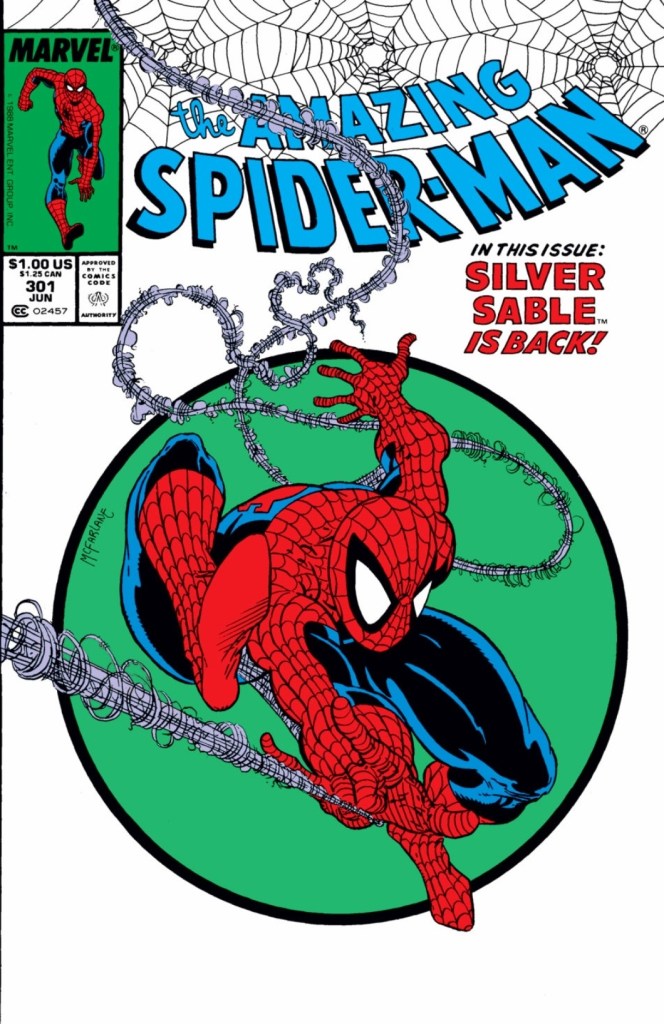
With those details laid down, here is a look back at Amazing Spider-Man #301, published in 1988 by Marvel Comics with a story written by David Michelinie and drawn by Todd McFarlane.

The cover.

Early story

The story begins with a group of armed personnel doing a mission inside a building. In the middle of the corridor, several over-head turrets pop out and fire paint balls at the team which used shields for protection. Moments after, they communicate with an executive called Mr. Cruz by means of live video feeds. Cruz tells them they failed the test.

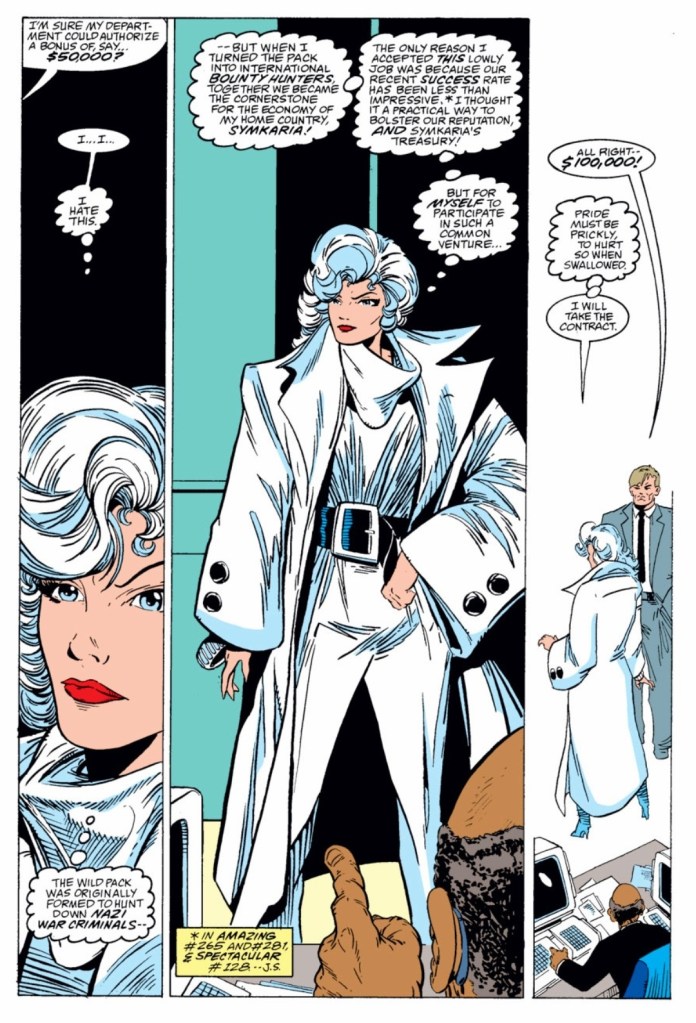
Shortly after, Mr. Cruz and Silver Sable meet with Mr. Pruett and discuss key aspects about the Pruett building’s security. It turns out Pruett himself advertised his building as being the safest locale in New York. Cruz tells him that Silver Sable’s Wild Pack team was fine to a certain extent but he feels much more confident if Sable herself would test building security. After some thinking about her team – international bounty hunters –, their role with the economy of her home country of Symkaria and the less-than-impressive success her team achieved recently, she accepts the contract from Pruett worth $100,000.

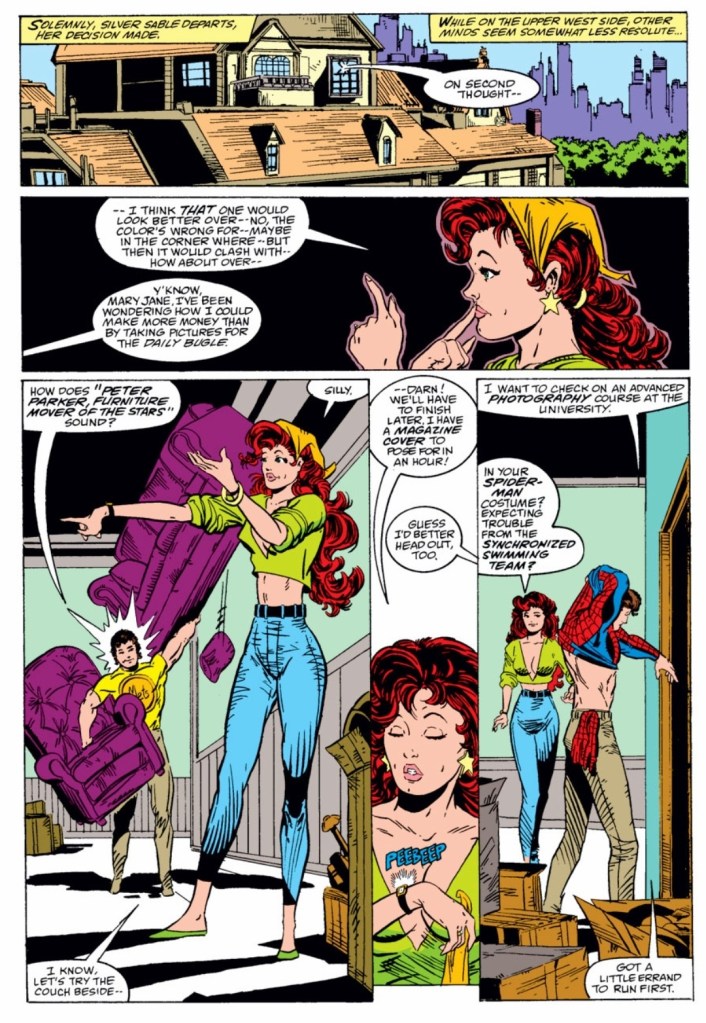
Meanwhile at another location within the city, Mary Jane Parker carefully decides where should her husband Peter (carrying a sofa and a large seat with his own super strength) should put furniture in their home. MJ then has to rush to attend a magazine cover photo session while Peter has to go out and check on an advanced photography course at a university…

Quality

The new couple Peter and Mary Jane Parker together with domestic life.

This is one of the more unique Spider-Man tales of the 1980s I have read. Silver Sable herself is the big feature of this comic book, even overshadowing the famous web-slinger. As this was published years before the Silver Sable and the Wild Pack monthly series launched, David Michelinie portrayed the character as a professional business woman who also happens to be a very capable physical fighter and infiltrator while carrying with her the pride of her homeland Symkaria. Through Silver Sable, you can see the richness of Michelinie’s writing and feel the uniqueness of her personality which makes her stand out among the many other supporting characters or heroes Spider-Man ever interacted with.

As a story set shortly after the climax of the Venom storyline, Peter Parker is portrayed to be in the middle of a transition having gone through college and recently getting married with Mary Jane. Even with the challenges and complications of life, he still finds himself stuck with the perceived obligations of the superhero life. There is also a sub-plot here about a white-haired man searching for him.

Going into the plot itself, Peter Parker could not contain himself from going out again in full costume and web-swinging as Spider-Man as he finds Mr. Cruz a suspicious figure. While it looks like the right thing to do for any superhero, it shows weakness in Peter Parker’s struggle to balance his life. The use of irony is nicely portrayed here.

Conclusion

This is how Silver Sable looked like in the late 1980s.

While the good-versus-evil element of the story is very subtle, Amazing Spider-Man #301 (1988) still succeeded in engaging and entertaining me primarily due to David Michelinie’s very solid storytelling and characterization. Unsurprisingly, Michelinie’s script is brought to life with Todd McFarlane’s fine art from start to finish. Don’t expect Spider-Man nor Silver Sable get to fight some dangerous villain in personal combat as the plot is more about suspense and intrigue laced with some twists. Still, there is plenty of superhero action to enjoy here and McFarlane’s art remains impressive. Silver Sable is very well defined in this comic book and by the end, you will get a solid grasp of herself and her background. This comic book is a must-read before you jump into the Silver Sable and the Wild Pack comic book series.

Overall, Amazing Spider-Man #301 (1988) is highly recommended.

+++++

Thank you for reading. If you find this article engaging, please click the like button below, share this article to others and also please consider making a donation to support my publishing. If you are looking for a copywriter to create content for your special project or business, check out my services and my portfolio. Feel free to contact me with a private message. Also please feel free to visit my Facebook page Author Carlo Carrasco and follow me on Twitter at  @HavenorFantasy as well as on Tumblr at https://carlocarrasco.tumblr.com/ and on Instagram at https://www.instagram.com/authorcarlocarrasco
A Look Back at What If #21 (1991)

Disclaimer: This is my original work with details sourced from reading the comic book and doing personal research. Anyone who wants to use this article, in part or in whole, needs to secure first my permission and agree to cite me as the source and author. Let it be known that any unauthorized use of this article will constrain the author to pursue the remedies under R.A. No. 8293, the Revised Penal Code, and/or all applicable legal actions under the laws of the Philippines.

Welcome back superhero enthusiasts, 1990s arts and culture enthusiasts, Marvel Comics fans and comic book collectors! Today we go back to the year 1993 and explore a part of Marvel Comics’ universe through the re-imagined tales emphasized in the What If monthly series.

Some time ago, I reviewed What If #20 (1990) which explored what would have happened had Peter Parker/Spider-Man did not marry Mary Jane Watson. While that comic book’s story and visuals were engaging, the narrative weakened before the end and it turns out the tales was not really designed as standalone What If story. That being said, the story continues on in the 21st issue of the What If series that I just reviewed.

With those details laid down, here is a look back at What If #21, published in 1991 by Marvel Comics with a story written by Danny Fingeroth and drawn by Jim Valentino.

The cover.

Early story

The story begins with a man – who overheard the talk between Black Cat and Mary Jane Watson during the end of issue – who calls someone and starts a negotiation. The unseen person on the other end of the call is not seen but the man knows about the other person’s history of attempts to kill Spider-Man.

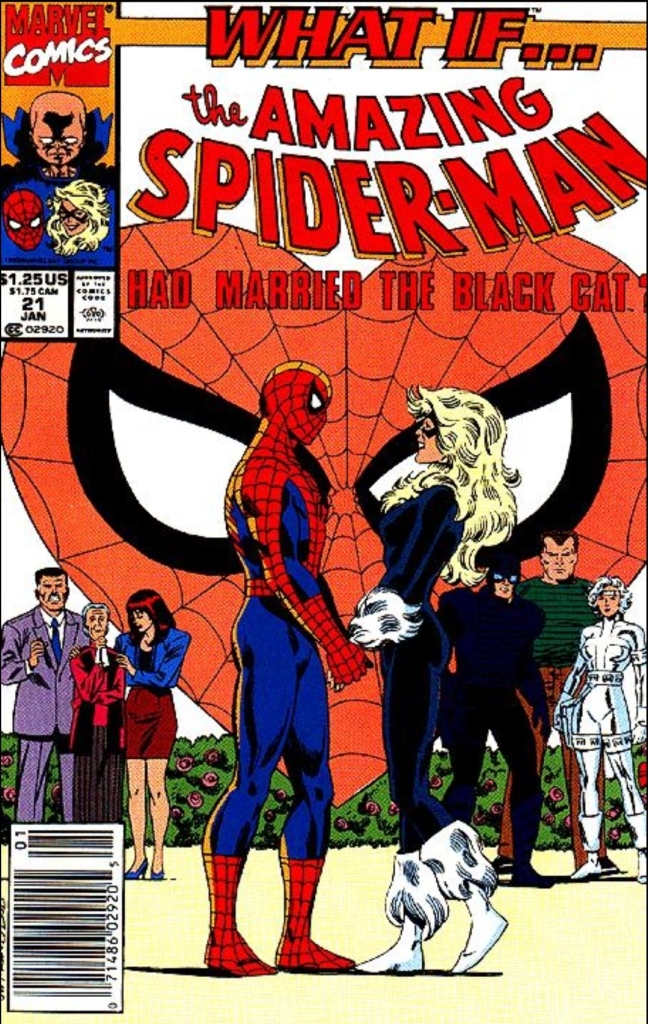
Within the City of New York, the romantically bonded Spider-Man and Black Cat work as a crime-fighting duo bringing crooks down. Shortly after, they get married in a private ceremony in Niagara Falls, New York using fake names (Peter Parker as Peter Palmer, and Felicia Hardy as Felina Marvey). During their first night together as husband and wife, Felicia gets out of bed surprising Peter. It turns out, Felicia is in the mood for crime-fighting. This brings them back to New York City where they resume their anti-crime crusade as Spider-Man and Black Cat.

Peter Parker notices something with his new wife. No matter what she says as Black Cat, she is still in love with his Spider-Man identity and only tolerates his true, civilian identity. He wonders if Felicia will come to accept the real him…

Quality

The Vulture attacks Spider-Man’s wife Black Cat.

To begin with, this comic book has a much stronger story, deeper character development, solid twists and a very intriguing conclusion that also happens to be a lot more satisfying compared with issue .

For one thing, the team of Fingeroth-Valentino really ramped up their imaginative creations and took this tale to more daring directions. The core concept of Spider-Man and Black Cat being married is deeply explored which resulted in a tale that is intriguing for most of the time. Their marriage also raises questions as to how Spider-Man and Black Cat perceive each other both as civilians and as costumed crime fighters. Also explored nicely was how they handled their secret identities while struggling with their own emotions deep inside. To say the least, seeing Spider-Man and Black Cat as a married couple as well as a dynamic duo of crime fighters makes a solid reading experience.

I should also state that there is a lot of story and characterization-development pay-offs that reflect not only what was built up in this comic book but also in issue . To really enjoy and experience this issue, you must read the previous issue as well.

Conclusion

Spider-Man and Black Cat as the married couple and duo of crime fighters.

What If #21 (1991) is a very captivating read. To put it short, it exceeds issue on just about everything and the conclusion is a lot more satisfying and intriguing to read. The Fingeroth-Valentino team created an in-depth look at an alternate married life of Spider-Man as well as what would happen once the webslinger and Black Cat work together in fighting criminals while managing their personal secrets and the stress that comes with marriage. I should also state that the twists within the story are much more satisfying than in issue . This is truly a must-read not just for Spider-Man fans but for any superhero enthusiast!

Overall, What If #21 (1991) is highly recommended!

+++++

Thank you for reading. If you find this article engaging, please click the like button below, share this article to others and also please consider making a donation to support my publishing. If you are looking for a copywriter to create content for your special project or business, check out my services and my portfolio. Feel free to contact me with a private message. Also please feel free to visit my Facebook page Author Carlo Carrasco and follow me on Twitter at  @HavenorFantasy as well as on Tumblr at https://carlocarrasco.tumblr.com/ and on Instagram at https://www.instagram.com/authorcarlocarrasco
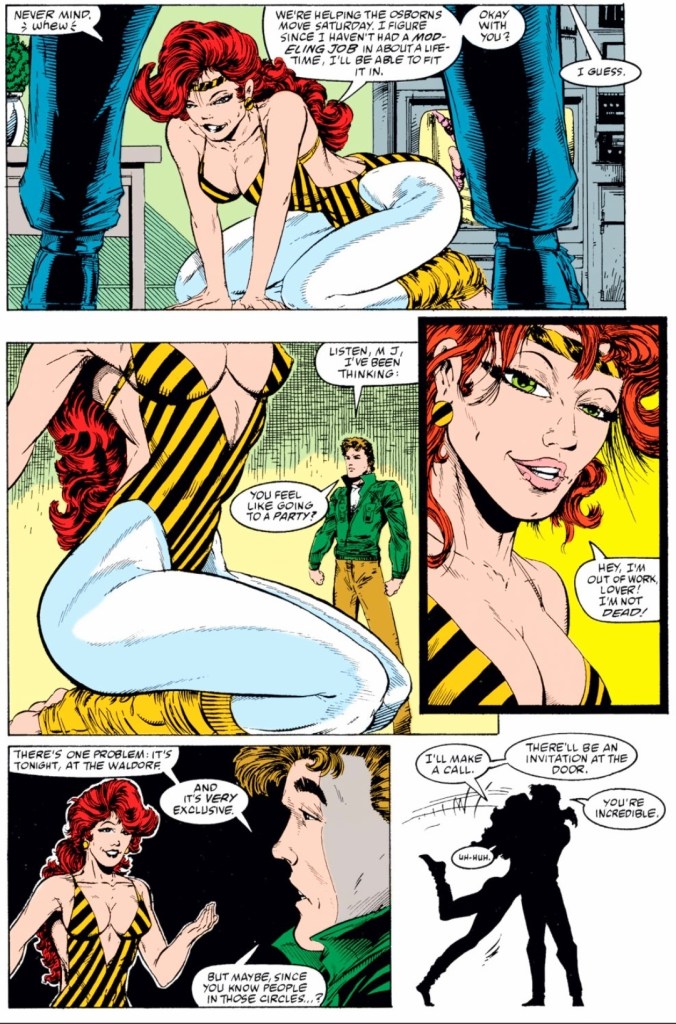
A Look Back at What If #20 (1990)

Disclaimer: This is my original work with details sourced from reading the comic book and doing personal research. Anyone who wants to use this article, in part or in whole, needs to secure first my permission and agree to cite me as the source and author. Let it be known that any unauthorized use of this article will constrain the author to pursue the remedies under R.A. No. 8293, the Revised Penal Code, and/or all applicable legal actions under the laws of the Philippines.

Welcome back superhero enthusiasts, comic book collectors, 1990s culture enthusiasts and fans of Marvel Comics! Before starting this newest retro comic book review, I should state that I really like Marvel’s way of exploring the unexplored scenarios related to the stories they published. Back in the 1980s, Marvel made its decision to have their icon Spider-Man – in his civilian form as Peter Parker – get married with Mary Jane Watson. Unsurprisingly, such an event added a whole lot of new elements into the life of the literary Spider-Man with regards to his struggle on balancing his life between superhero acts, domestic living and being attentive to his wife. If you really want to read about the wedding, I suggest searching for a copy of The Amazing Spider-Man Annual #21 (1987).

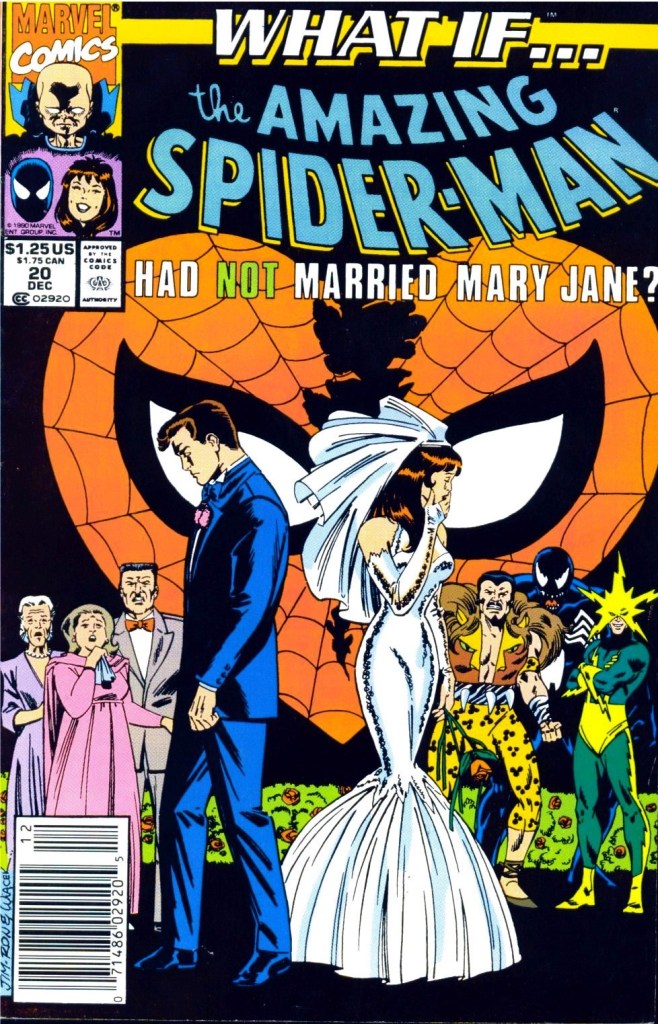
Imagine what would have happened had Spider-Man not married Mary Jane? That very scenario was explored in an issue of the What If monthly series (Volume 2) back in the early 1990s. We can find out more together in this look back at What If , published by Marvel Comics in 1990 with a story written by Danny Fingeroth and drawn by Jim Valentino.

The cover.

Early story

The story begins with the Watcher narrating key events in the life of Spider-Man. It is recalled how much pain Spider-Man endured when his beloved Gwen Stacy died during his conflict with the Green Goblin. Subsequently Peter Parker resumed his relationship with Mary Jane. When Mary Jane became absent, he got involved with Felicia Hardy/Black Cat who turned out to be too wild and reckless for him. Eventually, Peter married Mary Jane.

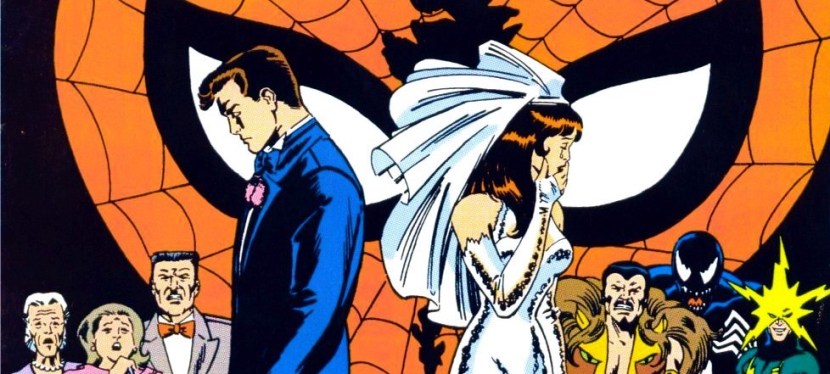
By pointing out that there are other realities, the Watcher then begins to explore another scenario in which Spider-Man realizes is far from being all right with him. During the wedding ceremony, Peter turns down Mary Jane which shocks the guests who were present. He tells her privately that even though he loves her, she will be in danger all the time as a wife. She walks away from him, still wearing her wedding dress.

Some hours later, Spider-Man swings around New York and strikes the criminals really hard…

Quality

Spider-Man and Black Cat take on Venom!

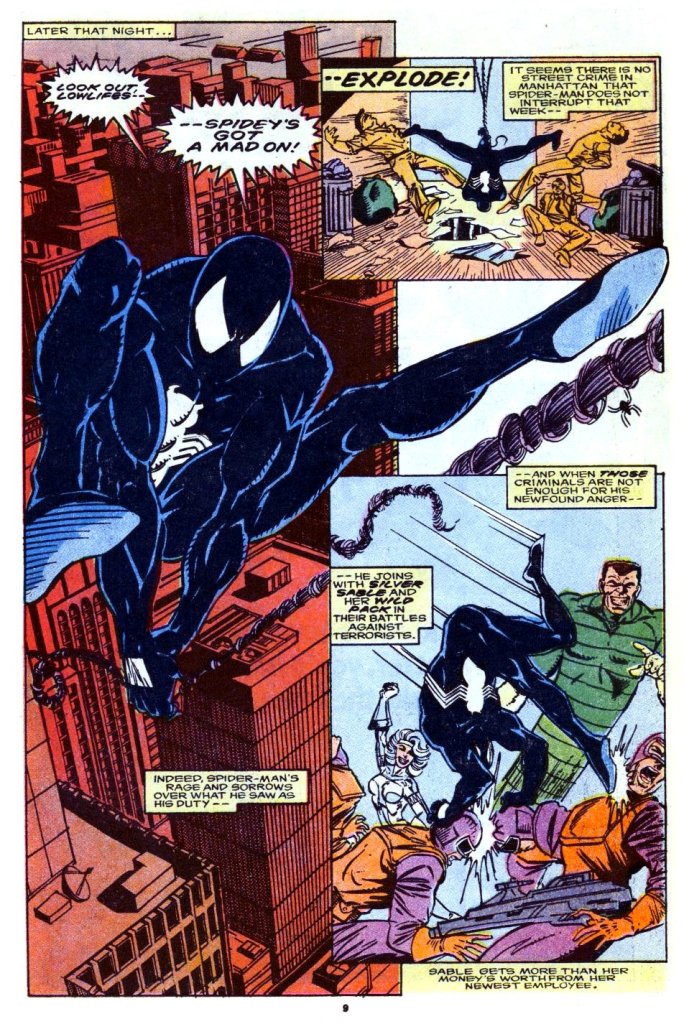
To be clear, this comic book shows a Spider-Man who not only rejected marriage, but is also a tortured soul whose inner pain started even before the failed wedding ceremony. Silver Sable, who is often focused on missions, notices Spider-Man being too angry and careless with his performance with them taking on the bad guys. The old and frail Aunt May is deeply worried over Peter and hopes he would not harden his heart to the possibility of loving someone.

The thing about this story is that the writing done by Danny Fingeroth is pretty good as he captured Spider-Man’s essence while successfully steering him pretty close to the edge, almost blurring the boundary the separates the good and evil in him. The story moved with a nice pace and there is a good amount of suspense that will keep you wondering if Spider-Man can climb out of the deep hole of darkness he’s in.

More on the plot, I also enjoyed this comic book’s connection with Kraven’s Last Hunt and the early encounter with Venom. If there is any weak point with this story, it is the fact that it served as build-up of something set to happen in the next issue.

When it comes to the art, Jim Valentino did a good job bringing the script to life and that includes framing the character development scenes and the spectacle scenes in interesting ways. I personally enjoyed his take on Venom and Kraven.

Conclusion

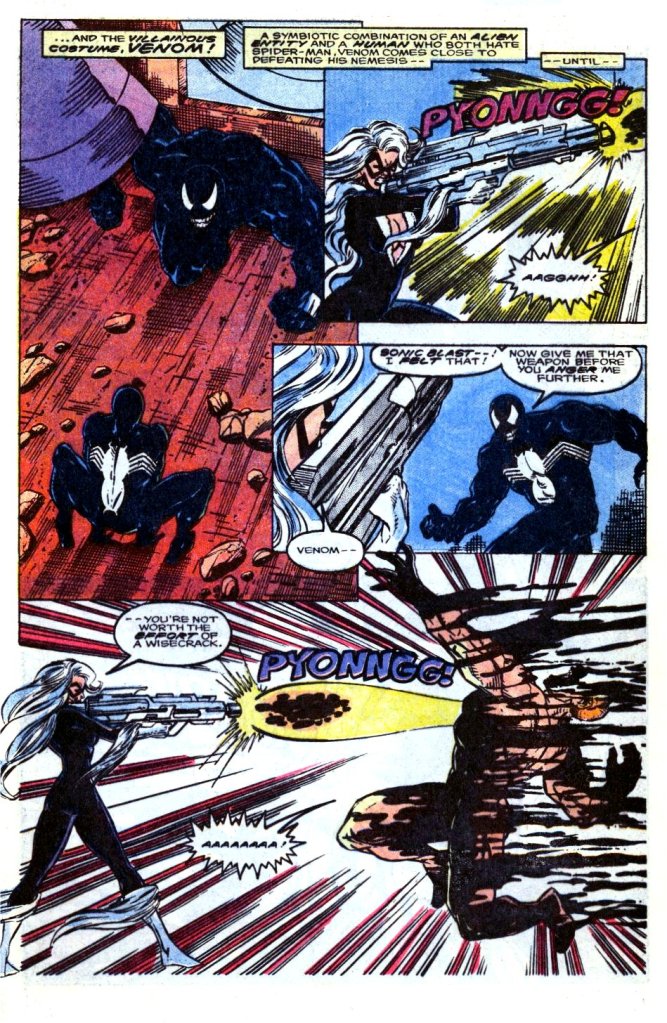
Without Mary Jane as a wife, Spider-Man went on to fight the bad guys more intensely.

What If (1990) is indeed a solid, alternate story about Spider-Man. It was gripping right from the start but it lacked a solid conclusion as its last few pages started to build up anticipation for the following issue. In short, this is not a standalone story and to fully enjoy what it started, you have to read What If #21. Still, I love the way Spider-Man is portrayed here and there are some characters involved that long-time fans will enjoy.

If you are seriously planning to buy an existing hard copy of What If (1990), be aware that as of this writing, MileHighComics.com shows that the near-mint copy of the regular edition costs $53 while the respective near-mint copies of the newsstand edition and the signed edition both cost $105.

Overall, What If (1990) is recommended.

+++++

Thank you for reading. If you find this article engaging, please click the like button below and also please consider sharing this article to others. If you are looking for a copywriter to create content for your special project or business, check out my services and my portfolio. Feel free to contact me as well. Also please feel free to visit my Facebook page Author Carlo Carrasco and follow me at HavenorFantasy@twitter.com