

Disclaimer: This is my original work with details sourced from reading the comic book and doing personal research. Anyone who wants to use this article, in part or in whole, needs to secure first my permission and agree to cite me as the source and author. Let it be known that any unauthorized use of this article will constrain the author to pursue the remedies under R.A. No. 8293, the Revised Penal Code, and/or all applicable legal actions under the laws of the Philippines.
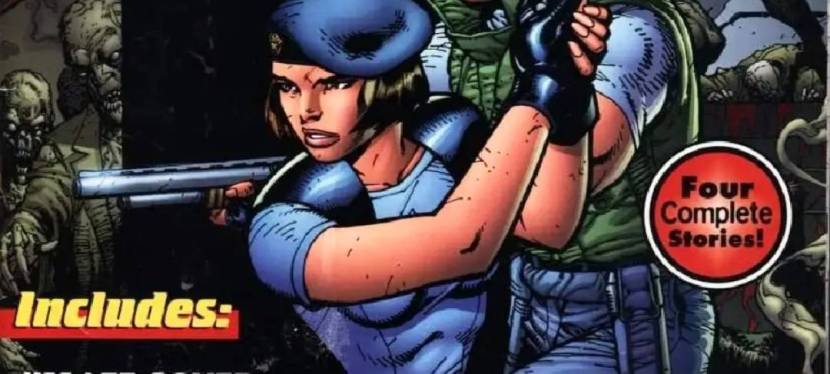
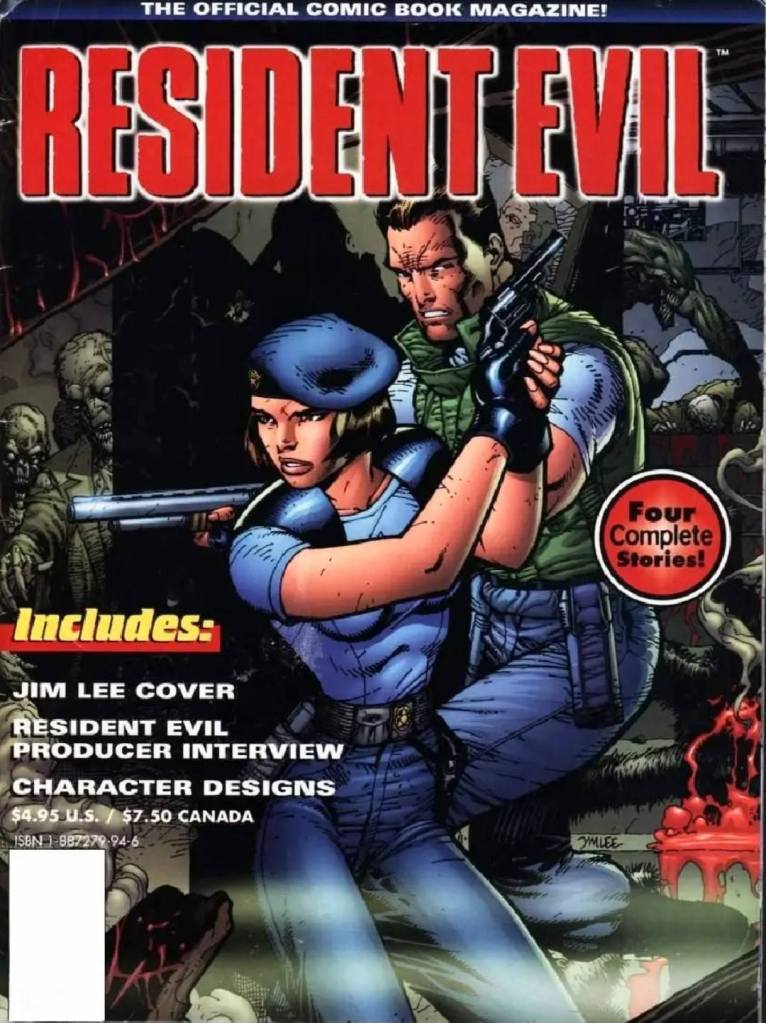
Welcome back, 1990s arts and culture enthusiasts, video game enthusiasts and comic book collectors! Today we go back to the late-1990s to examine the launch issue of the magazine-sized comic book series titled Resident Evil: The Official Comic Book Magazine.
To put things in perspective, this year marks the 30th anniversary of the Resident Evil video games and multimedia entertainment franchise . The original Resident Evil (Japanese title: Biohazard) video game released in 1996 was arguably a major turning point in console gaming as it was an adulterated game that blended horror, action, monsters and the cinematic experience. Initially released on PlayStation, the game got released on Windows PC and the Sega Saturn, and eventually sold millions of copies worldwide while establishing a solid fanbase. Arguably, RE sparked the revival of the zombie genre in pop culture during the 1990s and contributed to new zombie-related multimedia productions in the 2000s.
Even before the release of Resident Evil 2, the number of Resident Evil fans grew and so did demand for more related stuff. Marvel Comics published a free one-shot Resident Evil comic book while Resident Evil: The Book was released in Japan.
When Resident Evil 2 was released in 1998, it became an even bigger blockbuster and resulted in even more new RE fans as gamers enjoyed playing it so much. The massive commercial success of RE2 led Capcom to approving several new Resident Evil game projects for development. Still within 1998, the licensed RE multimedia projects were released in the form of two novels and a new comic book series with a magazine format.
With those details laid down, here is a look back at Resident Evil: The Official Comic Book Magazine #1, published by WildStorm/Image Comics in 1998 with short stories written by Ted Adams and Kris Oprisko, and drawn by Ryan Odagawa, Carlos D’Anda and Lee Bermejo.
Early stories
S.T.A.R.S. Files – Inside an office, Albert Wesker gets briefed about his next assignment in Raccoon City which has been experiencing a series of mysterious murders. The superior tells Wesker to field a S.T.A.R.S. (Special Tactics and Rescue Service) team to find out what is going on.
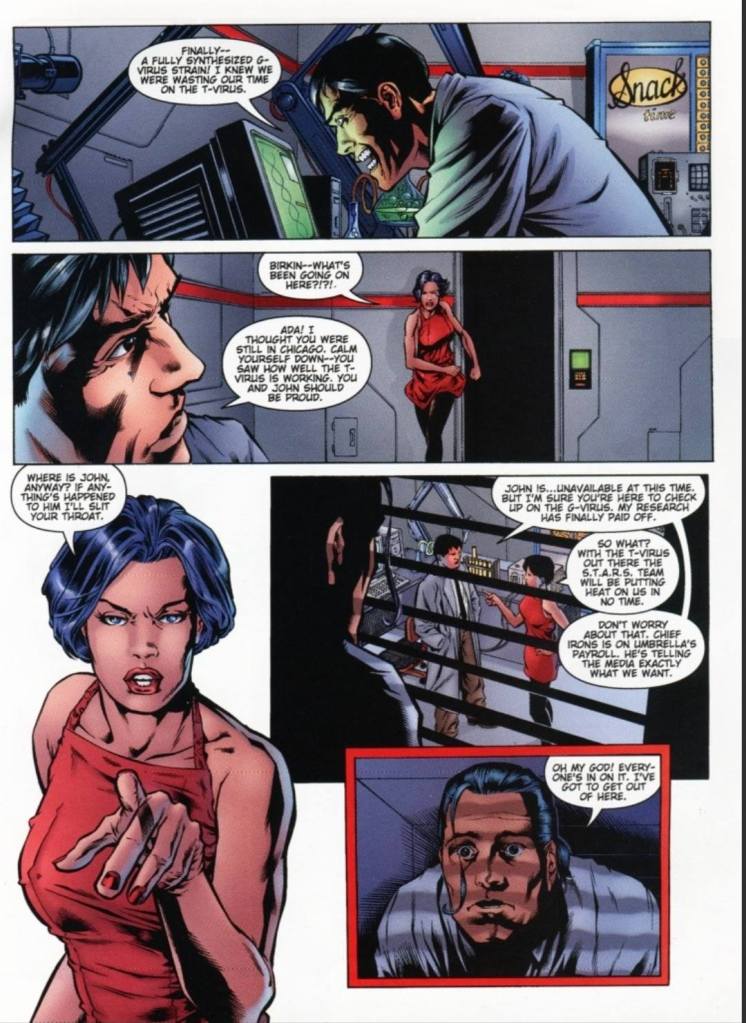
Who Are These Guys? – A scientist writes a letter to Ada Wong and reveals key details about the research of the T-Virus, including what his team has been doing and what he observed.
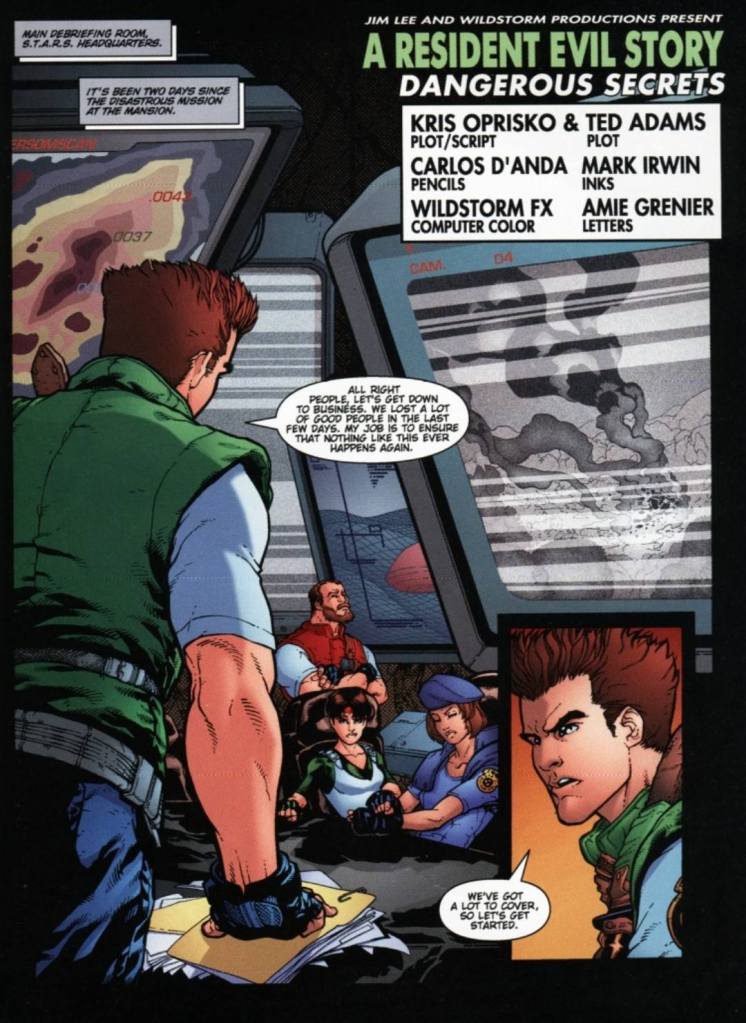
Dangerous Secrets – Inside the high-tech debriefing room of the S.T.A.R.S. headquarters, Chris Redfield begins a review of what happened during their mission at the mansion and what took place before they even got involved. Present are Jill Valentine, Rebecca Chambers and Barry Burton.
Raccoon City – R.I.P. – A very sick and physically deteriorating man watches the news on TV at home. As the moments passed by, he begins to lose control of himself as his deteriorates. He suddenly goes out of his house and walks down the street aimlessly.
Quality
As already revealed on the cover of this magazine-style comic book, this is a collection of four short stories designed to provide readers insight on the lore of Resident Evil, additional portrayals of the established RE characters of the time – Chris Redfield, Barry Burton, Jill Valentine, Rebecca Chambers, Albert Wesker, Leon Kennedy and a few supporting characters seen in the games – and, more notably, illustrated development of events that connect the first two games with each other in ways that the games themselves could not. To be clear, Resident Evil took place in July 1998 while its sequel took place in September 1998.
Without spoiling the stories, I can say that S.T.A.R.S. Files was a warm-up in the form of introducing the characters of the first RE game. Who Are These Guys? was a creepy telling of what happened behind the scenes with regards to the unethical scientific experiments that caused zombies and monsters at the mansion to happen. It has a violent ending which made one of the most popular Resident Evil characters look like a murderer (note: I’m surprised it was not controversial). Dangerous Secrets was a creative recap of what happened at the mansion (which follows the game ending involving the rescue of Jill Valentine) and S.T.A.R.S. had such futuristic office equipment to work with (it has a strong sci-fi flavor). Raccoon City – R.I.P. was the build-up of developments leading to the start of Resident Evil 2.
Clearly, the quality of the writing and artworks varied from one story to another. The writing of Who Are These Guys? really stood out nicely due to its creepy vibe and the fine way of telling the story of the scientist who wrote to Ada Wong. Dangerous Secrets also stood out with its dramatization of Chris Redfield, Jill Valentine, Rebecca Chambers and Barry Burton who have to move on knowing that a lot of lives were lost and lots of dirty secrets were uncovered. When it comes to the art style used on established RE characters, the zombies and monsters, fans looking for a more realistic take will end up disappointed (example: a few shots of Jill Valentine had a cartoony aesthetic). At the same time, Jim Lee’s only art of Resident Evil was the cover.
Readers looking for spectacle and moments of zombie horror will find something to enjoy here. I can confirm that the creative teams did not hold back on the violence and gore.
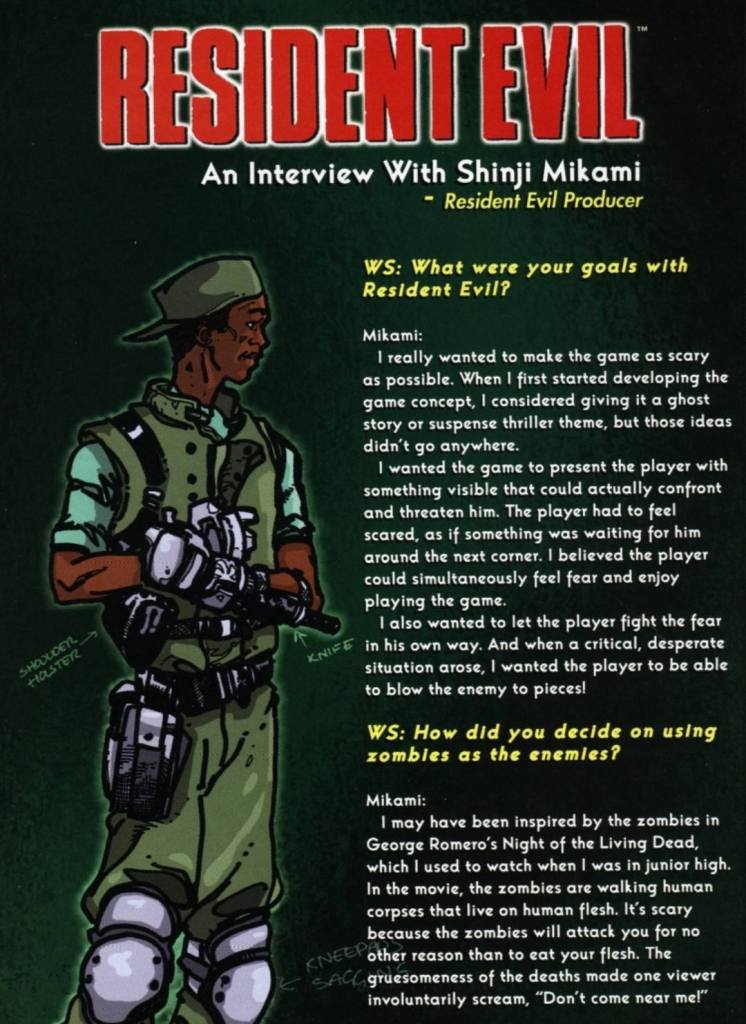
WildStorm did not just settle with doing their own literary take on the Resident Evil lore. They even went further by publishing an interview with Resident Evil creator Shinji Mikami knowing that the fans will enjoy discovering details and revelations through the production side of the video games.
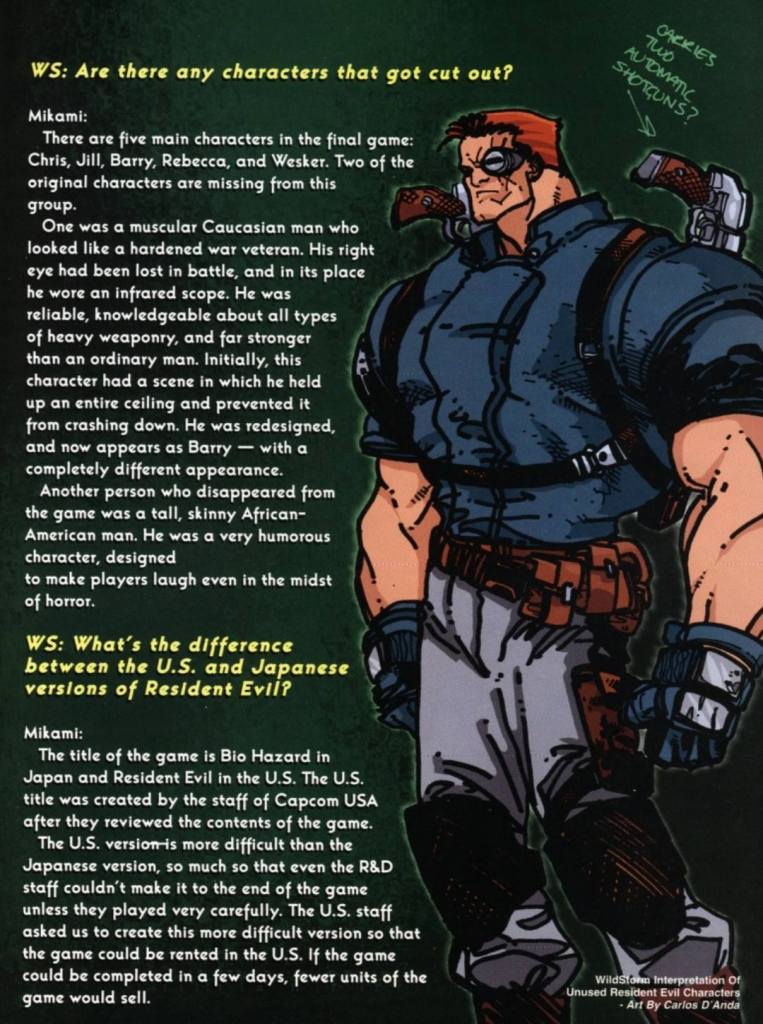
Going back to the first RE game of 1996, be aware that certain details in this comic book could end up lacking or feel irrelevant given the fact that this was published years before the Resident Evil remake on Nintendo GameCube was released.
Conclusion
Resident Evil: The Official Comic Book Magazine #1 (1998) succeeded in what it was meant to do. It gave readers added insight to the characters and the events – including those that happened off-screen – of the 1996 video game while literally warming them up for Resident Evil 2’s illustrated events. To really enjoy this comic book magazine, it is clear that one has to play BOTH video games to gain at least a basic understanding of what happened and who is who. As it was released at a time when Resident Evil 2 was available and selling a lot of copies, this comic book adaptation turned out to be a helpful read that fans and newcomers can enjoy. It is also a reminder that the late 1990s was an exciting time to be a Resident Evil fan.
Overall, Resident Evil: The Official Comic Book Magazine #1 (1998) is recommended.
+++++
Thank you for reading. If you find this article engaging, please click the like button below and also please consider sharing this article to others. If you are looking for a copywriter to create content for your special project or business, check out my services and my portfolio. If you want to support my website, please consider making a donation. Feel free to contact me with a private message. Also please feel free to visit my Facebook page Author Carlo Carrasco and follow me on Twitter at @HavenorFantasy as well as on Tumblr at https://carlocarrasco.tumblr.com/ and on Instagram at https://www.instagram.com/authorcarlocarrasco/.
 Author Carlo Carrasco