Here in the Philippines, the renewable energy sector suffered a tremendous setback at the Department of Energy (DOE) officially terminated eighty-four renewable energy service contracts over the failure of developers to meet their contractual obligations, according to a news release by the Philippine News Agency (PNA).
To put things in perspective, posted below is an excerpt from the news article of the PNA. Some parts in boldface…
The Department of Energy (DOE) has terminated 84 renewable energy service contracts this 2025 after developers failed to implement their contractual obligations.
These service contracts cover an “estimated 5,372.209 megawatts (MW) of potential capacity that had been factored into the country’s energy planning assumptions,” the DOE said in a press release Wednesday.
These were terminated “due to developers’ non-compliance with work program requirements, failure to satisfy the Green Energy Auction Program (GEAP) Terms of Reference, and non-adherence to established DOE standards.”
These actions, it said, “follow a comprehensive technical and legal evaluation of the affected projects’ compliance with the material terms and conditions of their respective service contracts.”
“The DOE will continue to uphold high standards for the succeeding GEAP rounds and may impose further sanctions, including blacklisting, forfeiture of performance bonds, and the imposition of applicable penalties,” it said.
The DOE said 43 other RE projects are under enforcement review and may be subject to termination.
With a big chunk of potential capacities unmet, the DOE said it is “actively revisiting supply-demand scenarios and undertaking further system planning to determine appropriate next steps toward meeting established generation targets.”
Let me end this post by asking you readers: What is your reaction to this recent development? Do you think the developers and stakeholders of the renewable energy sector of the Philippines are mostly incapable of fulfilling the requirements of the national government with regards to energy service contracts?
When US President Donald Trump declared Islamic terrorists in Nigeria a target, his administration backed it up with real action as America struck the evil ones in the African nation in coordination with the government there, according to a news report by The Jerusalem Post. Specifically, the US Africa Command (AFRICOM) executed Trump’s order.
For the newcomers reading this, Islamic terrorists have been killing Christians there in Nigeria for a long time already. This newest development proves that Trump’s America really means business when it comes to fighting the terrorists.
To put things in perspective, posted below is an excerpt from the news report of The Jerusalem Post. Some parts in boldface…
The US Africa Command (AFRICOM) launched a strike against Islamic State terrorists in Nigeria, US President Donald Trump announced on social media early on Friday.
AFRICOM stated that the strike in Sokoto was carried out “in coordination with Nigerian authorities” and killed multiple terrorists.
The strike was ordered due to “the persistent threat of terrorism and violent extremism,” the Nigerian Foreign Ministry confirmed in a statement.
“The Department of War executed numerous perfect strikes, as only the United States is capable of doing,” Trump said, adding that he wishes a “MERRY CHRISTMAS to all, including the dead Terrorists, of which there will be many more if their slaughter of Christians continues.“
The Defense Department additionally published declassified footage of at least one projectile launched from a warship.
Following the strike, the Nigerian Foreign Ministry stated that they would continue to work with the US and international partners to “weaken terrorist networks, disrupt their financing and logistics, and prevent cross-border threats.”
Nigerian President Bola Tinubu, in a Christmas statement released on Wednesday, affirmed that he is “committed to doing everything within [his] power to enshrine religious freedom in Nigeria and to protect Christians, Muslims, and all Nigerians from violence.”
“No one, regardless of ethnicity or belief, should be made to suffer for professing or practicing his faith,” Tinubu added.
Islamic State terrorists carry out several mass kidnappings, church attacks in Nigeria –Islamic State attacks on Christian Nigerians, including mass kidnappings and attacks on churches, have risen in recent months.
On December 17, an attack on a church in Kogi, Nigeria, resulted in at least 13 worshippers being abducted by gunmen, according to state officials.
On November 21, over 300 schoolchildren were abducted from a Catholic school by terrorists, according to Tinubu’s spokesperson.
As of Monday, all of the children had been released, with 130 of them having been held in captivity for nearly a month.
In early November, Nigeria said it was open to US help in combating the rise of violent Islamic State terrorism.
Let me end this piece by asking you readers: What is your reaction to this development? Are you glad that the Trump administration struck the many Islamic terrorists in Nigeria quickly and decisively? Do you think this new development will enable the Nigerian government to effectively fight the Islamic terrorists in their country?
It has been months since the flood control corruption scandal rocked the entire Philippines and the economic situation has turned for the worse along the way (click here, here and here). In the view of Fitch Ratings, the scandal puts the nation’s credit rating at risk, according to a news report by BusinessWorld.
To put things in perspective, posted below is an excerpt from the report of BusinessWorld. Some parts in boldface…
THE Philippine economy continues to bear the brunt of the ongoing flood control corruption scandal, Fitch Ratings said, noting that further unrest could spill over to the country’s credit rating.
Fitch Ratings Head of Asia-Pacific Sovereigns Thomas Rookmaaker said the controversy surrounding the anomalous government flood control projects threatens the country’s political stability, fiscal policy implementation, as well as business and consumer confidence.
“We believe that the flood control corruption scandal in the Philippines poses an ongoing risk to political stability, fiscal policy execution, and business and consumer confidence,” Mr. Rookmaaker told BusinessWorld in an e-mail.
Government officials, lawmakers and contractors have been accused of getting billions of pesos in kickbacks from substandard or nonexistent flood control projects. This has triggered widespread protests, slowed government spending, and hurt investor and consumer sentiment.
“The overall impact the scandal will have on the Philippines’ public finances is still uncertain,” Mr. Rookmaaker said.
“Public investment spending is likely to remain weak for quite some time, but continued social unrest could simultaneously lead to spending pressures to head off public discontent.”
In October, government spending fell for a third straight month to P430.6 billion, down 7.76% from P466.8 billion a year ago. Revenues likewise slipped by 6.64% to P441.7 billion from P473.1 billion last year.
Mr. Rookmaaker noted that the immediate impact of the scandal was reflected in the sharp economic slowdown in the third quarter.
Philippine gross domestic product (GDP) expanded by an over four-year low of 4% in the third quarter, as household final consumption expenditure and government spending slowed amid the corruption mess.
For the first nine months, GDP growth averaged 5%, well-below the government’s 5.5-6.5% full-year target.Public investments likewise took a hit from the corruption issues, he added.
In the third quarter, foreign investment pledges approved by investment promotion agencies plunged by 48.7% to P73.68 billion, Philippine Statistics Authority data showed.
“Persisting social tensions could become more of a drag on growth if confidence among foreign and domestic investors suffers,” the Fitch analyst said. “Tensions could also serve as a distraction for policymakers, impeding the passage of reforms that have the potential to enhance economic productivity and competitiveness.”
Mr. Rookmaaker said implementing reforms to enhance accountability and governance could bolster private investments and promote growth in the medium term.
Let me end this post by asking you readers: What is your reaction to this recent development? Did you think Fitch Ratings is correct with its economic analysis of the Philippines and the flood control corruption scandal? Do you think foreign investors have been turned off by the scandals and social unrest?
Even though there already is a foreign tourism boom in Southeast Asia, the Philippines has literally been left behind by its neighbors as it attracted only 5.235 million international tourist arrivals for the period of January to November 2025, according to a news report by BusinessWorld.
To put things in perspective, posted below is an excerpt from the report of BusinessWorld. Some parts in boldface…
VISITOR ARRIVALS in the Philippines fell by 2.16% in the first 11 months, amid a decline in tourists from South Korea and China, Tourism department data showed.
Data from the Department of Tourism (DoT) showed international tourist arrivals dropped to 5.235 million in the January-to-November period from 5.35 million in the same period in 2024.
Of the tourist arrivals, the bulk or 4.918 million were foreign tourists, while the rest were overseas Filipinos.
South Korea remained the biggest source of tourists in the first 11 months, accounting for 21.66% of the total. While 1.134 million South Koreans visited the Philippines as of November, this was a 21% decline from the 1.436 million Korean tourists a year ago.
The US was the second-biggest source of tourists, at 894,835 or 17.09% of the total as of end-November. This was 6.57% higher than last year’s 839,635 tourist arrivals from the US.
Japan was the third-biggest source of tourists, accounting for 406,794 or 7.77% of the total, 15.36% up from 352,630 a year ago.
Tourist arrivals from Australia increased by 16.17% to 268,892 in the 11-month period. Meanwhile, tourists from China fell by 16.55% to 248,339 as of end-November.
The other top markets were Canada, Taiwan, the United Kingdom, Singapore, and Malaysia, which cumulatively accounted for 793,750 of the total arrivals.
“The weaker South Korean won amid a volatile political and economic situation over the past year and slower economic growth in China, which is the world’s second-biggest economy, on top of territorial disputes partly weighed on foreign tourism numbers,” Rizal Commercial Banking Corp. Chief Economist Michael L. Ricafort said in a Viber message.
Mr. Ricafort noted that the government should improve infrastructure to make it more convenient for tourists to travel around the country.
“Challenges include the need to further expand and develop tourism-related infrastructure such as airports, seaports, accommodation facilities, and train systems, including the Metro Manila subway and toll roads,” he added.
Despite the decline in the first 11 months, Mr. Ricafort said that it is still possible for the country to surpass the tourist arrivals last year, which reached 5.949 million.
“It is still possible, considering some seasonal increase in foreign tourists during the Christmas holiday season, especially overseas Filipino workers and balikbayans, to spend the most festive time of the year, while others escape winter,” he said.
“A higher US dollar-peso exchange rate would make it cheaper for foreign tourists to come to the Philippines,” he added.
Meanwhile, Mr. Ricafort noted the growth in tourist arrivals from India and other countries, which helped “offset the decline in major traditional sources such as South Korea and China.”
India was the 11th biggest source of tourist arrivals in the January-to-November period, accounting for 85,885 or 1.64% of the total. Tourists from India increased by 17.06% from 73,369 arrivals in the same period in the previous year.
Earlier this year, the Philippines and India signed the Implementation Program on Tourism Cooperation for the years 2025 to 2028.
For his part, Colliers Research Director Joey Roi H. Bondoc said that with only 5.235 million as of end-November, it will be difficult for the country to even surpass last year’s arrivals.
“I think it will be very difficult… We may not be able to beat that or even meet that, but of course we want to end the year stronger,” he said in a phone interview.
“We see a lot of foreign tourists still in December because of the holiday season. Definitely that optimism should spill over to next year,” he added.
As for the drop in arrivals from South Korea, Mr. Bondoc attributed this to the economic downturn and political crisis in the country.
“If you look at some integrated casinos, they were initially targeting Koreans… so they are experiencing the pinch of slower arrivals from South Korea,” he said.
Mr. Bondoc said the Philippines should try to attract tourists from other markets.
For further insight about the tourism industry problem of the Philippines, watch the CNA Insider video below.
Let me end this post by asking you readers: What is your reaction to this recent development? Did you think the Philippines can still beat its 2024 record of international visitor arrivals and generate huge revenues for the economy? Do you think the current administration will be able to improve the nation’s infrastructure and make travel more efficient and convenient for all tourists? Do you think the Philippines is too expensive when it comes to air travel?
For the newcomers reading this, not even the softened economic growth of the Philippines dampened the Filipinos’ rising demand for food and the young population is a factor behind it. America sees opportunities to export more meat, seafood and other agricultural products to the Philippines.
To put things in perspective, posted below is an excerpt from the news report of the Manila Bulletin. Some parts in boldface…
The United States (US) is gearing up to increase its agricultural exports to the Philippines, banking on the country’s growing food demand and potential economic growth.
In a Dec. 17 report, the US Department of Agriculture (USDA) said the country was the ninth-largest market for US exporters last year, with agricultural goods valued at $3.5 billion.
The foreign agency expects continued growth in the years to come, especially given the country’s fast-growing economy, which ranked third among the Association of Southeast Asian Nations (ASEAN) countries last year.
While it noted that the Philippine economy “continues to face risks from geopolitical tensions and trade policy uncertainties,” the USDA said it will likely remain resilient in the coming year.
The International Monetary Fund (IMF) earlier lowered its forecast of the country’s gross domestic product (GDP) growth from 5.4 percent to 5.1 percent this year, before rebounding to 5.6 percent in 2026.
The USDA also cited the easing of inflation and income inequality, driven by a growing population, as fueling demand for more agricultural commodities.
“With its rapid population growth, the Philippines has a young population that increasingly demands imported agricultural products,” it said.
According to the USDA, these market dynamics provide opportunities for US agricultural product exporters to broaden their presence in the country.
The report said products that have the “greatest potential for expansion” include dairy, poultry, ethanol (non-beverage), pork, beef, processed potatoes, confectionery and snack foods, and seafood.
Last year, the US was the top single-country supplier to the Philippines, with a market share of 18 percent, behind ASEAN at 31 percent.
The USDA noted that despite this strong performance, US exporters remain at a disadvantage relative to other exporters due to logistical and tariff challenges.
In this case, members of ASEAN benefit from lower tariffs and cheaper shipping costs, whereas the US is subject to slightly higher taxes under the most-favored nation tariff rates.
On top of this, the USDA said exporters also face higher costs due to government policies such as the sanitary and phytosanitary import clearance (SPSIC)—a document required before shipment of any agricultural product to the Philippines.
“SPSICs are valid for 20 to 90 days, depending on the commodity. The limited validity period adds costs and complicates the timing of exports, among other factors,” the report read.
In this view, the USDA emphasized the need for exporters to keep up to date with market trends to maintain the competitiveness of American products in the local market.
For instance, it noted that young Filipinos are more open to new flavors and experiences, which suppliers could consider when promoting their products.
For the full report of the US Department of Agriculture related to the news story, click here.
Let me end this piece by asking you readers: What is your reaction to this development? Are you looking forward to more American agricultural products plus seafood in the local markets? Do you think exporters of America are on the verge of becoming more competitive globally over the next 24 months?
Long before the birth of the Make America Great Again (MAGA) movement and his incredible 2016 US Presidential Election victory, Donald Trump made his presence felt in video games.
I am talking about Trump’s participation in a short video that was presented during the Xbox conference of the 2004 Electronic Entertainment Expo (E3). The video was a parody of Trump’s popular show The Apprentice in which he appeared in a business meeting with the executives of Team Xbox (the real-life Robbie Bach, J Allard and Peter Moore) and Team PlayStation (with actors playing the PlayStation executives).
Back in 2004, as I was anticipating online media coverage of that year’s E3, I visited one particular Xbox website which streamed the said Trump-Xbox-PlayStation video and even offered a downloadable version for Windows media. I downloaded the video, watched it and was delighted ultimately. For your viewing pleasure, posted is a direct-feed video of from the This Week In Gaming YouTube channel.
Next, I posted below for you all another video that is slightly longer, was recorded off-screen at the Xbox conference, and has the live audience reactions that you should listen to. Watch the video below.
Is the 2004 video (titled “The Novice”) entertaining? For me it still is fun to watch again and it is one of the more memorable moves Xbox executed at the E3 (which today no longer exists). It is intriguing and entertaining to see Trump at the center of the video about the console war between Microsoft and Sony at the time.
As an entertainment piece of history, The Novice video is a reminder about how exciting console gaming was back in 2004 (note: intense competition between console makers was the standard of the time) when compared to what happened in recent times. Xbox gaming this year has been disappointing considering the following developments that happened: 50% price hike on the Xbox Game Pass Ultimate subscription service, Xbox Series consoles price hikes, thousands of game developers laid off, the sudden cancellation of unreleased Xbox games, and Team Xbox directed by Microsoft to go full multiplatform with their own games (examples: Gears of War: Reloaded and Forza Horizon 5 got released on PlayStation 5).
Over at the side of PlayStation, Sony itself was embarrassed with its over-budgeted and poorly made game Concord. Concord is easily one of the most expensive flops in the history of video games.
Indeed, a lot has changed since 2004. Trump is now on his 2nd term as President of the United States solving the nation’s many problems while tackling several matters happening overseas. Sony and Microsoft are still active in the video games industry in different ways and they are still having their respective consoles manufactured outside of America. Console gaming nowadays is getting too expensive.
Let me end this piece by asking you readers: Do you find Donald Trump’s participation in the 2004 video with Xbox and PlayStation entertaining to watch? Were you a constant viewer of The Apprentice? Do you own a PlayStation 5 or an Xbox Series X or Xbox Series S console?
I believe that every nation has to reward its armed forces in return for the extensive services they rendered for the citizens and the government throughout the year. Just today, I learned via a Newsmax news report that US President Donald Trump announced that every active-duty member of the United States Armed Forces will receive a Christmas bonus worth $1,776 – called the Warrior Dividend – and already the checks are on their way to them (1.45 million service members).
Before proceeding with the news and details, let me remind you all that Christmas is all about Lord Jesus, and never about the character called Santa Claus. Lord Jesus is our Savior and the Hope of ALL nations! Wherever you are, celebrate Christmas with your family remembering Lord Jesus and living on with His peace. All the praise, honor and thanks to the Lord!
To put things in perspective, posted below is an excerpt from the news report of Newsmax. Some parts in boldface…
President Donald Trump announced Wednesday night that every active-duty member of the U.S. armed forces will receive a $1,776 Christmas bonus, unveiling what he called the “Warrior Dividend” during a nationally televised prime-time address from the White House.
Trump said the one-time payment would go to roughly 1.45 million service members and is already being distributed, with checks scheduled to arrive before Christmas. The amount, Trump said, was deliberately chosen to honor America’s founding in 1776. That’s just ahead of the nation’s 250th anniversary, to be celebrate (throughout) the coming year.
“I am also proud to announce that 1,450,000 military service members will receive a special — we call Warrior Dividend — before Christmas, a Warrior Dividend in honor of our nation’s founding in 1776,” Trump said during the address, which was carried live by Newsmax from the White House Diplomatic Room.
“We are sending every soldier $1,776. The checks are already on the way,” Trump said. “Nobody deserves it more than our military. And I say congratulations to everybody.”
The Warrior Dividend emerged as a highlight of Trump’s year-end prime-time address, which the White House framed as a review of economic gains and fiscal changes achieved during his second term and promised gains in the (coming) years of the president’s second term. The speech focused heavily on revenue growth, job creation, and what Trump described as a reshaping of federal finances.
Trump tied the military bonus directly to increased government revenue generated through tariffs and recent legislation, arguing that stronger trade enforcement and changes in economic policy produced results that exceeded projections.
“We made a lot more money than anybody thought because of tariffs, and the bill helped us along,” Trump said.
The president cast the dividend as both a tangible reward and a symbolic gesture, presenting it as recognition of service members’ sacrifices while reinforcing claims of economic revival. Trump said the payment reflects an administration that prioritizes military families and uses economic strength to deliver direct benefits rather than expanding federal debt.
The prime-time address marked Trump’s final nationally televised speech of the year and served as a capstone to a broader messaging effort focused on economic performance. Trump used the speech to highlight tariff revenue, domestic manufacturing investment, and wage growth, arguing that those factors allowed the administration to deliver what he described as meaningful, immediate relief.
Let me end this piece by asking you readers: What is your reaction to this development? Do you find the Warrior Dividend a nice bonus for the active members of the United States Armed Forces? Are you looking forward to the 250th Independence Day of the America? What are your current feelings or opinions about the US Armed Forces right now?
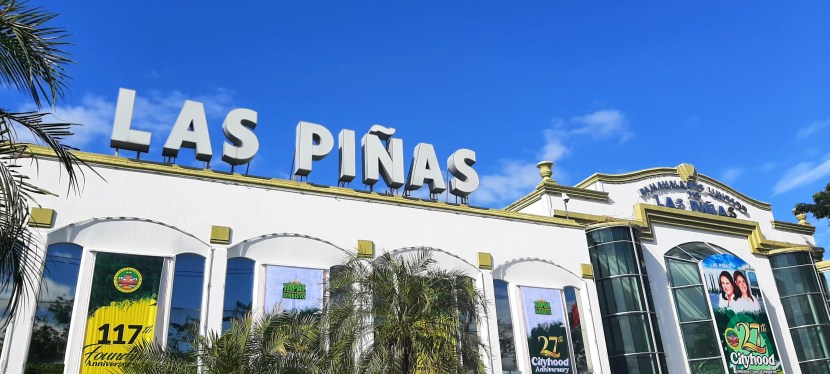
Recently in the City of Las Piñas, almost one thousand and eight hundred senior citizens five barangays received their social pension payout for the 4th quarter, the City Government confirmed via social media. Mayor April Aguilar personally attended the distribution.
To put things in perspective, posted below is an excerpt from social media post of the City Government (translated from Tagalog to English). Some parts in boldface…
The first day of Social Pension Payout was happily held, where almost 1,800 senior citizens from the barangays of Almanza Dos, Almanza Uno, Talon Dos, Daniel Fajardo, and Ilaya received their 4th quarter social pension.
Our seniors received 3,000 pesos (1,000 pesos per month) for the last quarter of the year. Payout was held at the air-conditioned Aguilar Sports Complex to ensure a comfortable and smooth flow of the program, especially for our seniors.
Mayor April Aguilar wants this pension to be given immediately to be used for their daily needs, and most of all, so they can have something to use this coming Christmas.
Let me end this piece by asking you readers: If you are a resident of Las Piñas City, what is your reaction to this development? Did many senior citizens from your local community receive their social pension payout?
For more South Metro Manila community news and developments, come back here soon. Also say NO to fake news, NO to irresponsible journalism, NO to misinformation, NO to plagiarists, NO to reckless publishers and NO to sinister propaganda when it comes to news and developments. For South Metro Manila community developments, member engagement, commerce and other relevant updates, join the growing South Metro Manila Facebook group at https://www.facebook.com/groups/342183059992673
The inflation rate of the Philippines eased further this past November landing at 1.5%, according to a business news report by GMA News.
To put things in perspective, posted below is an excerpt from the business news report of the GMA News. Some parts in boldface…
The country’s inflation rate slowed down in November 2025 on the back of slower increase in food costs during the period, the Philippine Statistics Authority (PSA) reported on Friday.
At a press conference, PSA Deputy National Statistician Divina Gracia del Prado said the overall inflation —which measures the rate of increase in the prices of goods and services— clocked in at 1.5%. This was slower than the 1.7% rate seen in October 2025.
November’s inflation rate brought the year-to-date national average to 1.6%, well within the government’s comfortable ceiling of 2% to 4%.
“Ang pangunahing dahilan ng mas mababang antas ng inflation nitong Nobyembre 2025 kaysa noong Oktubre 2025 ay ang mas mabagal na pagtaas ng presyo ng Food and Non-Alcoholic Beverages na may 0.1% inflation rate,” del Prado said.
(The main reason for the lower inflation rate in November 2025 versus October 2025 was the slower increase in the prices of Food and Non-Alcoholic Beverages with an inflation rate of 0.1%.)
The inflation rate for the heavily weighted index clocked in at 0.5% in October 2025.
The Food and Non-Alcoholic Beverages index contributed 85.3% to the country’s overall inflation print.
Meanwhile, food inflation —which tracks the price movements of food items in a “basket” commonly purchased by households— registered a negative rate of 0.3% from 0.2% in the prior month due to slower increase in vegetable prices at 4% from 16.4% month-on-month as well as the slowdown in the growth of meat prices at 4.2% from 5.2%.
Let me end this post by asking you readers: What is your reaction to this recent development? Did you think the nation’s inflation could slow down even more to as low as 1% by the end of December?
Recently in the City of Las Piñas, the Las Piñas City Lying-In Clinic will be available for check-ups of high-risk expectant mothers two days per week, according to a news report by the Daily Tribune.
To put things in perspective, posted below is an excerpt from the news report of the Daily Tribune. Some parts in boldface…
The Las Piñas City Lying-In Clinic designated Tuesdays and Thursdays from 9:00 a.m to 5 p.m. for check-ups of high-risk expectant mothers.
According to the Las Piñas Public Information Office, patients qualified for the schedule include those with a history of cesarean section, or other uterine surgery, gynecological issues such as abnormal bleeding, polycystic ovarian syndrome (PCOS), or myoma.
Mothers aged 35 to 39 in their first and fifth-time pregnancies, and those with existing conditions such as hypertension, heart disease, diabetes, cancer, or goiter are also qualified.
Patients are reminded to bring their voter’s registration record, greencard, referral from their respective health center, and previous results of ultrasound or laboratory.
Let me end this piece by asking you readers: If you are a resident of Las Piñas City, what is your reaction to this development? Were there many AKAP beneficiaries among the members of your local community?
For more South Metro Manila community news and developments, come back here soon. Also say NO to fake news, NO to irresponsible journalism, NO to misinformation, NO to plagiarists, NO to reckless publishers and NO to sinister propaganda when it comes to news and developments. For South Metro Manila community developments, member engagement, commerce and other relevant updates, join the growing South Metro Manila Facebook group at https://www.facebook.com/groups/342183059992673