As the armed conflict in the Middle East continues to cause economic disruptions, hiked oil prices and impact international air travel, luxury hotels in Thailand have been cutting down their prices as a way to deal with the slowdown on tourism, according to a news report of VnExpress.
To put things in perspective, posted below is an excerpt from the news report of VnExpress. Some parts in boldface…
Luxury hotels across Thailand, the second largest economy in Southeast Asia, are rolling out deep discounts to attract domestic travelers as international arrivals weaken due to disruptions linked to the Middle East conflict.
Thai residents and expatriates are being offered discounts of up to 70% at five-star hotels, where nightly rates can typically reach US$1,000, Bloomberg reported.
At Mandarin Oriental, Bangkok, one of the capital’s most iconic riverside properties, rooms are now priced below $300 per night. In southern Thailand, a luxury resort overlooking the dramatic limestone cliffs of Railay Beach is offering stays from around $430 per night, roughly half its usual rate.
The steep promotions come as flight cancellations and airspace closures tied to the conflict in Iran disrupt key Europe-Asia travel routes, making journeys to Thailand more complex and costly.
Thailand’s Ministry of Tourism fears a loss of 596,000 visitors and 40.9 billion baht ($1.29 billion) in revenues if the conflict drags on for more than eight weeks.
Phangnga Province has already seen a sharp decline in European arrivals and estimates losses at nearly 1.7 billion baht ($52.3 million), according to its hotel association, Bangkok Post reported.
Authorities are also preparing contingency measures to offset any decline in arrivals from long-haul markets including Europe and the U.S. Thailand experienced a tourism downturn last year amid a combination of kidnapping incidents, flooding and border conflict.
The country is aiming to attract 37 million foreign visitors this year, a projected increase of more than 11% from 2025 but that target is increasingly at risk.
Let me end this piece by asking you readers: What is your reaction to this development? Does the discounting of room rates by luxury hotels in Thailand entice you to visit them? How long do you think the slump of tourism will last?
Welcome back my readers, YouTube viewers and all others who followed this series of articles focused on YouTube videos worth watching. Have you been searching for something fun or interesting to watch on YouTube? Do you feel bored right now and you crave for something to see on the world’s most popular online video destination?
I recommend you check out the following videos I found.
#1 Resident Evil Bonanza (1996 Original and 2002 Remake) – Thirty years ago this month, the original Resident Evil video game was released on PlayStation and it impacted console gaming by moving towards an adulterated direction with zombie horror and mad science as core elements. The 1996 game led Capcom to making Resident Evil sequels and spin-offs in the years that followed. Then in 2002, an ambitious remake of Resident Evil was released on the Nintendo GameCube and it became the definitive version RE creator Shinji Mikami and his team came up with. To explore Resident Evil in its original version and the remake, watch the videos below.
#2 Living In Las Vegas –For decades, Las Vegas in Nevada has always been known as a major tourist destination with lots of hotels, casinos and other entertainment joints clustered together. There is also the perception that a lively city like it means there are lots of job opportunities and business or investment options to pursue there. What most people do not realize is that Las Vegas is not exactly the ideal city to move into and live in due to many factors that can be challenging and stressful to deal with. To discover why, watch the videos below.
#3 Popcorn In Bed Reacts To Logan’s Run – It has always been argued that science fiction movies released before Star Wars were not too exciting to watch. One of them was Logan’s Run which continues to have a divisive reception among movie buffs both young and old. There are some who liked its concept and execution, while others dismissed it for being corny or even being symbolic about the sexual revolution of the 1960s and 1970s. If you want to discover the film without spending money on it, watch Popcorn in Bed’s reaction video below. Observe how the movie impacts her.
#4 The History Of Atari Arcade Games – I was fortunate enough to have played games in video arcades in the 1980s. In the old days, Atari was a major arcade industry player apart from being big on console gaming. Atari was also responsible in bringing its arcade games to Japan (with Namco as its partner) and also brought some of Namco’s games into American arcades. If you love Atari, arcade games and retro gaming in general, watch the video documentaries below.
#5 Ranting For Vengeance Demolishes Woke Nuts’ Take On Resident Evil’s Chris Redfield – Going back to Resident Evil, it is not surprising that the mob of woke zealots, LGBTQ activists and other Leftists keep on creeping in on existing entertainment franchises to deform them and make it fit their wicked ideology. Recently there were woke nuts online who targeted the Resident Evil icon Chris Redfield and perceive him as gay. Ranting For Vengeance posted a video to demolish the woke mob’s take on Redfield and he explains in detail why the iconic hero has always been straight since the very beginning. Watch the video below and share it with all Resident Evil fans out there.
#6 Forgotten Video Games Based On Movies – Remember back in the old days when there were a lot of video games based on movies released? Back then, there was money to be made on licensing and merchandising. As a gamer and movie buff since youth, there definitely was excitement whenever I learned a game about a film I enjoyed was made available. Of course, there were games that turned out fun and others ended up being disappointing or even very poor in quality. Check out the video below about the forgotten movie-based games.
#7 How Hollywood Killed The Oscars – Avoiding the Academy Awards (AKA Oscars) is absolutely fine. It no longer celebrates the best of filmmaking and it has been overwhelmed by woke activists, Satanic Leftists, modern day Commies and the like. Communist Hollywood (Commiewood) has been using the Academy Awards to amplify its wicked agenda for a long time now. The old glory and the celebration of the best of filmmaking are truly gone. Watch the video below.
#8 National Security Council Secretary Ali Larijani And Basij Commander Of Iran Eliminated By Israel – I recently blogged about the eliminations of two high-ranking officials of the Islamic terrorist regime of Iran as the conflict in the Middle East went on. It was Israel which successfully killed Ali Larijani and a Basij commander and it was the most significant achievement since the elimination of the demon Ali Khamenei. Right now, it is not clear who is really leading the remaining wicked regime and Iran’s military has been decimated by America and Israel. Keep in mind that the military operations against Iran is all about bringing down the Islamic terrorist regime and liberating the oppressed Iranians so they can take their country back after 47 years. For insight about what happened, watch the videos below.
#9 The Revival Of A Japanese Sake Brewery – It is always depressing to see your own business get destroyed because of a natural disaster. In Japan, a certain brewery that produced sake got ruined when a huge earthquake struck. Since then, the owner started hard efforts to revive the business. To discover what happened, watch the Nippon TV video below.
With the ongoing war in the Middle East, the hiked prices of fuel and other problems happening already, the World Bank (WB) sees the economy of the Philippines achieving gross domestic product (GDP) growth of 4.6% this year and 5.3% next year, according to a Manila Bulletin news report.
To put things in perspective, posted below is an excerpt from the news report of the Manila Bulletin. Some parts in boldface…
Philippine economic growth would likely remain below its potential of at least six percent until the end of the Marcos Jr. administration, according to the latest forecasts by the World Bank.
Documents on the latest $800-million Philippines Growth and Jobs Development Policy Loan (DPL) 1, approved by the Washington-based multilateral lender last week, showed a projected 4.6- percent gross domestic product (GDP) growth rate for the country in 2026, inching up from the post-pandemic-low of 4.4 percent in 2025. This forecast is below the government’s downgraded five- to six-percent growth target for the year.
For 2027, the World Bank expects the Philippine economy to grow by 5.3 percent, which would also be lower than next year’s downscaled 5.5- to 6.5-percent goal.
By the time President Ferdinand R. Marcos Jr. steps down and turns over to a new administration in 2028, World Bank projections showed 5.5-percent GDP growth, still below the six- to seven-percent target.
“The growth outlook remains moderate over the near term, with activity expected to remain subdued in 2026 before gradually strengthening… The impact of the government’s anti-corruption efforts and a significantly lower infrastructure budget in 2026 is expected to weigh on public investment,” the World Bank said.
The lender added that a smaller statistical carry-over into 2026 signals weaker initial momentum, with growth projected to average 5.2 percent in 2026 to 2028, driven by recovering private domestic demand amid easing inflation and financing conditions.
“Private consumption is expected to benefit from stable labor income and improved confidence, while private investment gradually strengthens alongside improved credit conditions and a normalization of public capital spending. External demand, particularly for electronics and artificial intelligence (AI)-related exports, is projected to remain supportive, although global trade uncertainty presents downside risks,” the document said.
This World Bank report was prepared in mid-February before it was disclosed last week, which means that the impact of the war in the Middle East was not yet taken into consideration by the lender in its GDP growth forecasts.
At that time, the World Bank projected headline inflation to stay within the Bangko Sentral ng Pilipinas’ (BSP) two- to four-percent target range, averaging about 2.8 percent in 2026 to 2028.
Before the domestic price pressures wrought by the Middle East conflict that sent global oil prices soaring, the World Bank believed that the BSP would likely keep a neutral-to-supportive policy stance while balancing the still-negative output gap against risks from exchange-rate volatility and food inflation. A negative output gap refers to the economy expanding below its potential, which, for the Philippines, is estimated at about six percent annually.
Let me end this post by asking you readers: What is your reaction to this recent development? Do you think the economic growth predictions of the World Bank for the Philippines will turn out to be true in the near future? Do you think there is any hope left for the economy of the Philippines to achieve annual GDP growth of 6%? Do you think more foreign investors will be convinced to invest in the Philippines this year?
With the joint Israel-US military operations against the Islamic terrorist regime of Iran still going on, the tourism authority of Thailand announced it is preparing measures to ease the effects of the conflict on its tourism sector, according to a news report of VnExpress. Already the conflict caused a series of economic disruptions affecting air travel and the prices of services and products offered to tourists.
To put things in perspective, posted below is an excerpt from the news report of VnExpress. Some parts in boldface…
The Tourism Authority of Thailand (TAT) is preparing measures to mitigate the impact of tensions in the Middle East on the country’s tourism sector, including proposals to stimulate domestic travel and short-haul flights.
Following consultations with private operators, TAT Governor Thapanee Kiatphaibool said the agency is promoting Thailand as a safe destination and plans to suggest the establishment of a strategic operations unit to monitor flight capacity, load factors, oil prices and travel costs.
TAT also plans to use the remaining central budget under the Thailand Summer Blast scheme, which supports inbound flights to Thailand, to back airlines and promote both major and secondary cities.
It is considering adjustments to an existing subsidy program for charter flights to cover long-haul markets, as well as incentives such as free domestic flights for international visitors and co-payment schemes to boost local tourism.
Thailand aims to capitalize on the situation by positioning itself as an aviation hub linking Europe with Asia and Australia, while adjusting flight schedules to attract more direct long-haul services. At the same time, efforts will be made to rebalance international tourism markets by focusing on China, Japan, the Republic of Korea and Southeast Asia.
Let me end this piece by asking you readers: What is your reaction to this development? Do you intend to visit Thailand over the next six months? Does the war against Iran discourage you from traveling overseas?
The North Atlantic Treaty Organization (NATO) – an intergovernmental military alliance between more than thirty member states – was slammed by US President Donald J. Trump and labeled a paper tiger due to its cowardice as it never supported the military operations against the Islamic terrorist regime of Iran, according to a news report by Newsmax.
To put things in perspective, posted below is an excerpt from the report of Newsmax. Some parts in boldface…
President Donald Trump on Friday blasted NATO and key European allies, calling the alliance “a paper tiger” and accusing its members of cowardice for refusing to back efforts to secure the Strait of Hormuz while the United States and Israel continue military strikes against Iran.
“Without the U.S.A., NATO IS A PAPER TIGER!” Trump wrote in a Truth Social post. “They didn’t want to join the fight to stop a Nuclear Powered Iran.
“Now that fight is Militarily WON, with very little danger for them, they complain about the high oil prices they are forced to pay, but don’t want to help open the Strait of Hormuz, a simple military maneuver that is the single reason for the high oil prices.“
Although Trump has argued the conflict is effectively over and that Iran’s military has been severely weakened, he has stopped short of formally declaring victory.
“So easy for them to do, with so little risk,”Trump wrote. “COWARDS, and we will REMEMBER!“
Trump’s criticism came after Japan, the United Kingdom, France, Germany, Italy, and the Netherlands signaled Thursday that they were prepared to assist in keeping the vital shipping lane open.
“We express our readiness to contribute to appropriate efforts to ensure safe passage through the Strait,” the countries’ leaders wrote in a letter. “We welcome the commitment of nations who are engaging in preparatory planning.”
The letter did not specify what role those countries would play in any Hormuz security effort. The strait carries about 20% of the world’s daily oil supply, and the joint statement also voiced “deep concern” over the effect of Iranian strikes on global energy markets.
The United Kingdom, France, Germany, Italy, and the Netherlands are NATO members.
Trump has repeatedly pressed NATO and European allies to help secure the Strait of Hormuz and has urged several countries to take part in the military campaign, though they have so far resisted direct involvement.
NATO Secretary General Mark Rutte said Thursday he believes the alliance and its members will ultimately reach a solution to restore passage through the strategic waterway.
“I’m confident that allies, as always, will do everything in support of our shared interest as we always do,” he said.
This development raises doubts about the credibility and relevance of NATO in the 21st century. Among NATO’s members are Spain and Turkey whose leaders openly support Islamic terrorists and hate Israel. I am surprised that Italy – led by its conservative Prime Minister Giorgia Meloni – did not get involved considering her nation’s healthy ties with Trump’s America and Israel. Let’s be clear here…a lot of European nations rely on oil tankers that pass through the Strait of Hormuz. Finally, I believe it is arrogant and wrong for NATO to ignore Iran’s attacks against other states in the Gulf such as Kuwait, Saudi Arabia, the United Arab Emirates (UAE) and even Islamist Qatar.
For additional insight, watch the YouTube news videos below.
Let me end this piece by asking you readers: What is your reaction to this development? Apart from the obvious cowardice, what do you think are the other factors as to why NATO and its members stayed away from the military operations against the Islamic terrorist regime of Iran? Do you think the wicked Iranian regime has deep connections with most of NATO’s members? Do you consider NATO relevant and needed in this current century?
Recently in the province of Pangasinan, Israeli Ambassador to the Philippines Dana Kursh visited the wake of Mary Ann De Vera to pay respect to her as well as to her family, the Embassy of Israel in the Philippines announced via social media.
Mary Ann De Vera died in Israel as a result of a missile attack committed by the Islamic terrorist regime of Iran. She worked there as a caregiver. De Vera’s family recently met with Israeli President Isaac Herzog in Jerusalem and later met with the ambassador here in the Philippines when the remains arrived.
To put things in perspective, posted below is the entire social media post of the Israeli Embassy. Some parts in boldface.
Amb Dana Kursh paid a visit to Pangasinan to pay her respects and extend condolences to the family of Mary Ann De Vera, the Overseas Filipino Worker (OFW) who passed away in Israel while serving as a caregiver, dedicating her life to caring for others far from her own home.
Ambassador Kursh joined Pangasinan Governor Ramon “Mon-Mon” Guico III, OWWA Overseas Workers Welfare Administration Administrator Patricia Yvonne Caunan, Department of Migrant Workers Usec. Felicidad Bay, and officials from the Department of Migrant Workers and the Overseas Workers Welfare Administration to pay their respects and stand with the bereaved family during this time of mourning.
Mary Ann De Vera was known for her kindness, dedication, and quiet strength. Like many Filipino caregivers in Israel, she left her family in the Philippines to work abroad and support her loved ones, while compassionately caring for those entrusted to her. Her passing is deeply felt both by the people she cared for in Israel and by the many who loved her here at home.
The Government of Israel mourns her loss and extends its heartfelt condolences to her family and loved ones.We share in the grief of the De Vera family and honor Mary Ann’s life, service, and the compassion she showed every day through her work. May her memory be a blessing.
To all my readers, I encourage you to pray to the Lord for the protection of all civilians in the Middle East while the joint military operation of Israel and the United States versus the Islamic terrorist regime of Iran continues. Pray to Him for the regime of Iran to surrender unconditionally so that the conflict will end and the economic disruptions will stop.
Also I encourage you to realize the truth that Israel is the land God designated specifically for the Jewish people (read Genesis 35:10-12) and His command must be followed without hesitation. If you want to be blessed further by the Lord, do so by loving and blessing the Jewish people (Genesis 12:1-3). I did my part when I was in Israel. Also, let me remind you all that the ties between the Jews and Christians are truly biblical!
I encourage you all to pray to the Lord God in support of Israel, to love and bless the Jewish people, and pray for the peace of Jerusalem.
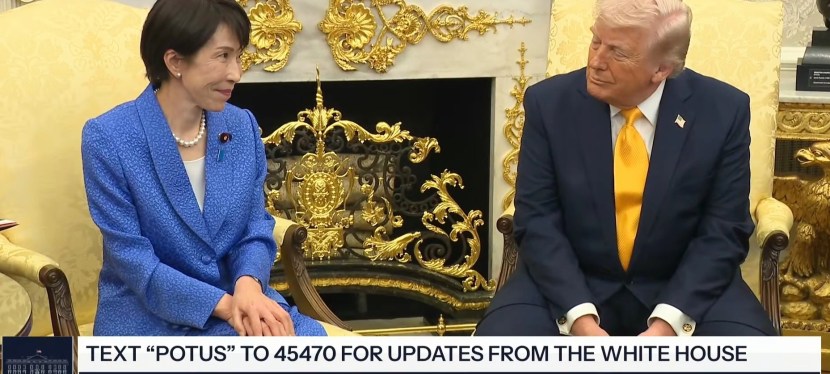
Japanese Prime Minister Takaichi Sanae visited Washington for the first time as the head of her nation and met with US President Donald Trump at the White House where they discussed very important matters in front of the media and officials, according to a news report by Kyodo News. Takaichi also praised the President for his peace efforts.
To put things in perspective, posted below is an excerpt from the news report of Kyodo News Some parts in boldface…
Prime Minister Sanae Takaichi told U.S. President Donald Trump on Thursday that Japan is ready to contribute to the safety of the Strait of Hormuz as the U.S.-Israeli war on Iran intensifies, while explaining Tokyo’s legal constraints on sending ships from its defense forces to the region.
Takaichi told reporters after her meeting at the White House with Trump that she told the U.S. leader “in detail what Japan can do and cannot do” from a legal perspective under the country’s war-renouncing Constitution.
Trump, for his part, reiterated his expectation that Japan would be engaged, while saying during the part of their talks open to media that he believes Japan has been “stepping up to the plate” in recent days over the Iran war, “unlike NATO.”
The U.S. leader has made public his dissatisfaction with Washington’s allies, including Tokyo and members of the trans-Atlantic alliance, over their reluctance to pitch in to help secure the Hormuz strait, a vital waterway for global oil transportation now largely blocked by Iran.
“I expect Japan to step up, because, you know, we have that kind of relationship,” he said. “We have 45,000 soldiers in Japan. We have, we spend a lot of money on Japan…so I expect, I’m not surprised that they would step up.“
Noting also that more than 90 percent of Japan’s crude oil imports normally pass through the strait, Trump said Japan has a “big reason” to do more.
In affirming Japan-U.S. collaboration on expanding U.S. energy production, Takaichi said she proposed to Trump a joint oil-reserve project to ease supply concerns driven by the Middle East conflict.
At the talks, Takaichi praised Trump’s “peace” efforts, expressing readiness to assist by reaching out to other countries. “Donald is the only person who can bring peace and prosperity across the world,” she said.
Takaichi emphasized that the prospect of Iran developing nuclear weapons is unacceptable. Trump alluded earlier to Iran’s nuclear program to explain the U.S. decision to launch its military campaign against the country.
Facing an increasingly assertive China, Takaichi also reminded Trump that the security environment remains severe in the Indo-Pacific, at a time when reports have emerged that some U.S. military assets are being moved from the region to the Middle East.
The two leaders “committed to peace and stability across the Taiwan Strait as an indispensable element of regional security and global prosperity” and “opposed any attempts to unilaterally change the status quo, including by force or coercion,” the White House said in a press release without naming China.
They confirmed that their nations oppose measures threatening critical mineral supplies such as export controls, senior Japanese government officials told reporters, apparently referring to Beijing’s tighter regulations on rare earths exports.
They agreed to advance broad defense cooperation, including joint missile development and production, and promote a free and open Indo-Pacific, according to Takaichi. The White House said the production of the interceptor Standard Missile-3 Block 2A in Japan will be quadrupled.
“We were able to affirm many concrete forms of cooperation that will further enhance the quality of our alliance in wide-ranging fields,” Takaichi said, adding that she and Trump are aiming to elevate bilateral ties to “a higher level” together.
Trump welcomed Japan buying “a lot of” U.S. military equipment. He further stressed that he has a “very fine relationship” with Takaichi, describing her as “a very special person” who is doing a “fantastic job.”
The U.S. side did not bring up fresh demands for Japan to spend more on its defense, the officials said.
Takaichi’s main goals in her first trip to the United States since taking office in October were to strengthen the personal trust in her ties with Trump and reaffirm the U.S. security commitment to the Indo-Pacific region as China’s influence grows.
The meeting came amid increasing concerns within Japan that the U.S. focus in terms of policy and military assets could shift from the Indo-Pacific to the Middle East if the U.S.-Israeli war with Iran drags on, a development that would work in China’s favor.
The U.S. military has reportedly begun relocating the amphibious assault ship Tripoli and over 2,000 Marines from their bases in southwestern and southern Japan to the Middle East.
Takaichi got off to a positive start in building personal ties with Trump when they met in person for the first time in October in Tokyo, shortly after she became Japan’s first female prime minister.
Since the outbreak of the Middle East conflict, Tokyo has sought to strike a delicate balance between maintaining its strong alliance with Washington and its friendly relations with Tehran.
For more insight about the Trump-Takaichi meeting, watch the videos below.
Let me end this piece by asking you readers: What is your reaction to this development? What is your impression about the many matters and announcements that happened during the Trump-Takaichi meeting at the White House? Were you surprised when it was announced that US allies Japan, Italy, England, Netherlands, Germany, and France jointly agreed to secure the Strait of Hormuz in response to Trump’s demand? With Japan having a close relationship with Trump’s America now, do you think Communist China and North Korea will feel intimidated at their side of the Pacific?
To put things in perspective, posted below is an excerpt from the news report of Kyodo News Some parts in boldface…
Prime Minister Sanae Takaichi is considering expressing Japan’s desire to cooperate on the U.S. “Golden Dome” next-generation missile defense system at her upcoming meeting with President Donald Trump, Japanese government sources said Tuesday.
The envisaged missile defense collaboration is among the expected agreements, covering various areas from the long-standing Japan-U.S. alliance to the fields of economic security and cutting-edge technology, at the summit slated for Thursday in Washington, the sources said.
Revealed by Trump in May, the Golden Dome scheme is intended to detect and destroy hypersonic missiles, which can fly at above five times the speed of sound, in outer space in mid-flight. The total costs are estimated at $175 billion.
The trajectories of hypersonic weapons are irregular and low-altitude, making them difficult to shoot down or track by radar. China, North Korea and Russia have been aggressively pursuing such arms.
In August 2023, Tokyo and Washington agreed to develop a new type of missile to intercept hypersonic weapons, with the goal of completing it by the 2030s. It is intended that Aegis destroyers of the U.S. Navy and the Japan Maritime Self-Defense Force will be equipped with the missile.
To enhance the missile defense system’s detecting and tracking capabilities, the U.S. military has been building a “satellite constellation” system that allows it to capture incoming missiles with high accuracy by linking multiple small satellites.
Japan’s Defense Ministry, which has also been conducting research on technologies necessary for detecting projectiles from outer space, is eyeing information sharing with the United States, the sources said.
During the summit talks, which will take place amid the Middle East conflict following U.S. and Israeli attacks on Iran, Takaichi also plans to ask Trump about purchasing crude oil produced from Alaska, according to the sources.
Japan, which relies heavily on the Middle East for its crude oil imports, has once again had its energy vulnerability exposed in the wake of the war in the region, with the effective closure of the Strait of Hormuz disrupting oil flows.
Takaichi and Trump, meanwhile, are expected to agree on a $100 million joint project in shipbuilding, a sector both countries are keen on enhancing amid dominance by Chinese makers.
Let me end this piece by asking you readers: What is your reaction to this development? Do you think the US-Japan summit this week will result in big breakthroughs with regards to defense, economics and energy? What do you hope to see happen after President Trump and Prime Minister Takaichi meet in Washington? Do you think the Golden Dome missile defense project will be fully realized and operational in the years to come?
As expected, Japan officially started releasing yesterday its oil reserves to stabilize the distribution of petroleum products and to ensure a good supply as the war against the Islamic terrorist regime of Iran continues, according to a Kyodo News report.
To put things in perspective, posted below is an excerpt from the news report of Kyodo News Some parts in boldface…
Japan began to release oil from its reserves Monday to alleviate supply concerns that have grown amid the U.S.-Israel war with Iran and stabilize the distribution of petroleum products, taking the step ahead of a planned International Energy Agency-led move.
In its first oil release since 2022, when it joined an IEA coordinated effort following Russia’s full-scale invasion of Ukraine, Japan is initially freeing up 15 days’ worth of reserves held by the private sector, with a month’s worth of state-held oil to follow.
Chief Cabinet Secretary Minoru Kihara said the release was decided as Japan’s crude oil imports are expected to decrease significantly from late March onwards due to the effective closure of the Strait of Hormuz, which many tankers traverse.
“We plan to make efforts so that (the released oil) will circulate in the market smoothly,” he said, adding the government will “continue to take every possible step to ensure the stable supply of energy, through international coordination and without ruling out any options.”
The IEA said Sunday the planned coordinated release of oil by its 32 member countries, including Japan, will “soon start.”
It said last week that the countries will make 400 million barrels of oil available to the market in response to the disruptions resulting from the Middle East conflict.
Crude oil futures have been surging amid growing prospects of a prolonged conflict, with the benchmark West Texas Intermediate crude oil futures contract briefly topping $100 per barrel again in New York on Sunday, after a similar spike a week earlier.
The Japanese government will reduce the mandatory 70-day reserve requirement for oil refiners and trading companies under Japan’s oil stockpiling law to 55 days’ worth, allowing them to draw down their existing stocks for use.
Last Wednesday, Prime Minister Sanae Takaichi announced the government’s plans to release about 80 million barrels of oil, the largest ever, equivalent to 45 days’ worth of domestic consumption and 1.8 times the amount released after the massive earthquake and tsunami in 2011 that devastated Japan’s northeast.
Preparations are under way to sell oil in government-held reserves to wholesalers.
As of the end of 2025, Japan held reserves of approximately 470 million barrels of oil, equivalent to 254 days of domestic consumption, of which 146 days’ worth were government-owned, 101 days held by the private sector, and the remainder jointly stored by oil-producing countries.
Let me end this piece by asking you readers: What is your reaction to this development? Do you think newly released oil reserves will stabilize the Japanese market for petroleum products? Do you think the joint Israel-US campaign against the Islamic terrorist regime of Iran will ultimately cause the enemy to surrender this month?
It can be said that 2025 is indeed a very disappointing year for the Philippines as it attracted only $7.79 billion in terms of net inflows of foreign direct investments (FDI), according to a news report by the Manila Bulletin. The said figure is a drop of more than 17% compared with 2024 and it is recalled that the flood control corruption scandal of 2025 negatively affected the nation.
To put things in perspective, posted below is an excerpt from the news report of the Manila Bulletin. Some parts in boldface…
Net inflows of foreign direct investment (FDI) into the Philippines plunged to their lowest level in a decade—excluding the pandemic slump—as investors stepped on the brakes on injecting funds into the country.
The latest data from the Bangko Sentral ng Pilipinas (BSP) released on Tuesday night, March 10, showed net inflows of FDI stood at $7.79 billion for the full year of 2025, dropping 17.1 percent from the $9.4 billion recorded in 2024.
It bears noting that the 2025 performance marks a significant downturn, as full-year FDI was the lowest since the 2020 pandemic level of $6.82 billion.
Excluding the pandemic period, 2025 net FDI represents the lowest level in a decade since the $5.64 billion recorded in 2015. This contraction was a consistent trend throughout 2025, with cumulative annual growth remaining negative every month since January.
On a positive note, the final figure exceeded the country’s $7-billion full-year target.
According to the BSP, the overall decline in investments was largely driven by net debt instruments, or intercompany borrowings, which shrank by 27 percent to $5.27 billion from $7.22 billion in 2024.
Meanwhile, net equity capital, other than reinvestment of earnings, grew by 31.4 percent to $1.32 billion from $1.01 billion the previous year. Reinvestment of earnings also saw a modest expansion of 2.5 percent, reaching $1.2 billion.
For the full year, equity capital placements were primarily sourced from Japan, the United States (US), Singapore, and South Korea.
Investments were largely channeled into financial and insurance activities, manufacturing, and wholesale and retail trade.
In December 2025 alone, net inflows were recorded at $560 million, marking the lowest in three months since September 2025 at $316 million.
Robert Dan Roces, group economist at SM Investments Corp. (SMIC), said investors delayed their investments, particularly in December. He added that softer inflows likely reflect seasonality.
Looking ahead, Roces believes the ongoing military conflict in the Middle East could add a layer of uncertainty, triggering market volatility. Still, he sees a gradual rebound in 2026 on the back of improving global financial conditions.
“While the Iran conflict adds uncertainty through higher oil prices and market volatility, we still expect FDI to gradually recover in 2026, particularly in manufacturing, renewable energy (RE), and logistics, as global financial conditions ease and supply-chain diversification continues,” Roces said.
Let me end this post by asking you readers: What is your reaction to this recent development? Do you think the Philippines will be able to rebound strongly this year with foreign investors?