COVID-19 Crisis: Safety and sanitation at local cinemas emphasized

It has been days since Alert Level 3 was officially implemented all over Metro Manila which allowed for the reopening of several businesses and allowing them to accommodate more customers as the limitations on capacity were modified. Among the businesses authorized by the to reopen were the cinemas or movie theaters although the actual reopening has yet to happen. In fact, I passed by the cinemas at a local mall I visited this past Sunday and I saw they were still closed. Take note that there were attempts to push for reopening Metro Manila cinemas (click here, here and here).

As the reopening is still pending, there is this Manila Bulletin article about local cinemas will strictly implement health protocols. To put things in perspective, posted below is an excerpt plus a few relevant videos about safety and reopening. Some parts in boldface…

Cinemas and movie houses in the Philippines will strictly implement health protocols when these establishments reopen soon.

The Inter-Agency Task Force (IATF) put Metro Manila under Alert Level 3 and allowed the reopening of cinemas with restrictions. Only fully vaccinated people will be admitted and seating capacity will be limited to 30 percent.

The actual date of reopening of cinemas is still subject to confirmation and the public is advised to wait for further announcement, according to the Cinema Exhibitors Association of the Philippines (CEAP).

Cinemas in Metro Manila have been closed for 19 months due to the ongoing coronavirus disease (COVID-19) pandemic.

“That is the main goal right now,” said CEAP Charmaine Bauzon. “We have devoted the past 19 months of cinema closure identifying solutions and precautions based on science. We will implement these measures to confidently welcome back movie fans to cinemas and send them home safe.

Cinemas are safe spaces

Bauzon assured “the public that cinema is a safe place. In fact, LGUs [local government units] have converted some theaters into vaccination centers, and no super-spreading were ever reported, even though people waited inside for hours.

CEAP cited a recent study in Germany which concluded that cinemas are safer than almost any other indoor environment as long as safety guidelines are followed like wearing face masks, physical distancing and proper air ventilation.

The German study considered the following factors in its conclusion: People spend an average of only two hours at a cinema; people inside the cinema simply sit down and face the same direction which is known to reduce transmission risks; and people are not talking to each other during a movie, which minimizes possibility of infection.

Cinemas to strictly impose all safety protocols

According to CEAP, besides adhering to the IATF-mandated health standards, it also developed the “Sa Sine Safe Ka” protocols patterned after the “CinemaSafe” measures set by America’s National Association of Theatre Owners (NATO) and endorsed by epidemiologists.

I personally support the reopening of cinemas not just because I love watching movies in them but also because cinemas and their employees can contribute a lot to the economic recovery from this COVID-19 crisis we are all living with. When it comes to viewing movies in the comfort of home, I prefer Blu-ray over streaming anytime. Still the very best way to enjoy movies in their full glory is still inside the cinema! I can never forget the day I first saw Wonder Woman (2017) in the IMAX cinema at SM Southmall which was really an immersive experience. I even replayed that same movie in another cinema which had lazy boy seats. I also saw Logan, Godzilla: King of the Monsters, Avengers: Endgame, Aquaman and X-Men: Dark Phoenix on IMAX screens in different cinemas. When it comes to regular cinemas, I viewed Write About Love, Shazam!, and Joker to name some. Eventually I got to watch these movies in the comfort of home mainly on Blu-ray (which is always better than streaming) but I can confirm to you all that in my experience, the best place to view movies is still the cinema!

This iconic scene was at its grandest only in the cinema and I was fortunate to watch it on IMAX format!
The immersion of Aquaman on the big screen inside the IMAX cinema was indeed top-notch.

The good news here, as revealed in the excerpt above, is that local cinemas will exert efforts to make their venues clean and safe as their inevitable customers will be those who have been fully vaccinated. Cinema viewing will be far from normal but the latest developments related to Alert Level 3 are very welcome as it is the first step to returning to normalcy as the nation deals with community management and vaccinations for COVID-19. Above all, I urge all of you fully vaccinated people of Metro Manila and around the nation reading this – support the local cinemas! Put a stop to streaming and take the opportunities to watch movies in the movie theater because that streaming will NEVER match the grandeur and immersion of the cinema! The cinema is always better than streaming!

Let me end this piece by asking you readers: Are you eager to watch a movie inside the cinema here in Metro Manila as soon as it reopens? Have you been fully vaccinated already? What upcoming movies do you hope to watch in the local movie theater? Have you been following the CEAP on social media lately? Do you think that the top officials of the Metro Manila Council (MMC) and the Metropolitan Manila Development Authority (MMDA) really care about the plight of the cinema operators and their employees?

You may answer in the comments below. If you prefer to answer privately, you may do so by sending me a direct message online.

+++++

Thank you for reading. If you find this article engaging, please click the like button below and also please consider sharing this article to others. If you are looking for a copywriter to create content for your special project or business, check out my services and my portfolio. Feel free to contact me as well. Also please feel free to visit my Facebook page Author Carlo Carrasco and follow me at HavenorFantasy@twitter.com

For more South Metro Manila community news and developments, come back here soon. Also say NO to fake news, NO to irresponsible journalism, NO to misinformation, NO to plagiarists, NO to reckless publishers and NO to sinister propaganda when it comes to news and developments. For South Metro Manila community developments, member engagements, commerce and other relevant updates, join the growing South Metro Manila Facebook group at https://www.facebook.com/groups/342183059992673
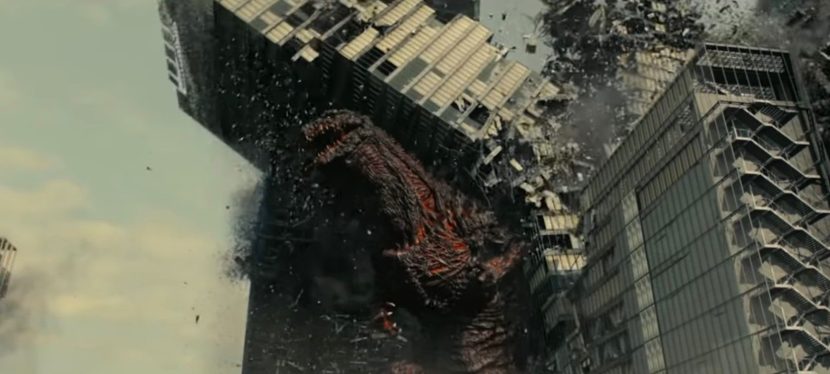
A Look Back at Shin Godzilla (2016)

Disclaimer: This is my original work with details sourced from watching the movie and doing personal research. Anyone who wants to use this article, in part or in whole, needs to secure first my permission and agree to cite me as the source and author. Let it be known that any unauthorized use of this article will constrain the author to pursue the remedies under R.A. No. 8293, the Revised Penal Code, and/or all applicable legal actions under the laws of the Philippines.

There is no doubt that Japan’s fictional monster Godzilla (originally called as Gojira) made tremendous impact not only with the Japanese but also with other entertainment lovers around the world. Way back in 1954, the monster was portrayed as a destructive, walking symbol of nuclear weapons in the movie Gojira directed by the late Ishirô Honda.

As the years passed by, several more Godzilla movies were released by Toho Pictures. In 1998, an American-made movie about Godzilla was finally made in a disappointing form directed by Roland Emmerich. In 2014, Warner Bros. and Legendary Pictures made a more respectful film of the monster under the direction of Gareth Edwards. In 2019, the follow-up Godzilla: King of the Monsters was released and I enjoyed it a lot more than its 2014 predecessor.

Before the 2019 movie was released, Toho in Japan released Shin Godzilla (alternate titles: Shin Gojora and Godzilla: Resurgence) which was the result of the 2014 movie’s success as well as the fact that there were no restrictions in the contract with Legendary Pictures for the Japanese studio to make their own domestic versions.

Due to its lack very limited presence in cinemas here in the Philippines in 2016, I was unable to watch it on the big screen. Fortunately, it was released locally on original DVD some time after and I got to watch it in the comfort of home.

With those details laid down, here is a look back at Shin Godzilla co-directed by Hideaki Anno and Shinji Higuchi (both best known for Neon Genesis Evangelion).

This is classic Godzilla.

Early story

The story begins at Tokyo Bay where the coast guard personnel found an abandoned yacht and searched inside. Suddenly a huge cloud of steam erupted from the ocean followed by blood-like water flooding the Tokyo Bay Aqua-Line. The tragedies compelled local authorities to take action starting with a committee meeting.

As emergency personnel save the victims in the damaged Tokyo Bay Aqua-Line, the tragedies reach the office of the Prime Minister who engages with many other government officials in an official meeting. They try to figure out what caused the incidents and, as such, theories and efforts to explain what happened were spoken until Deputy Chief Cabinet Secretary Rando Yaguchi (Hiroki Hasegawa) theorized that a living creature caused it (because he saw a viral video) which only resulted disbelief and dismissal.

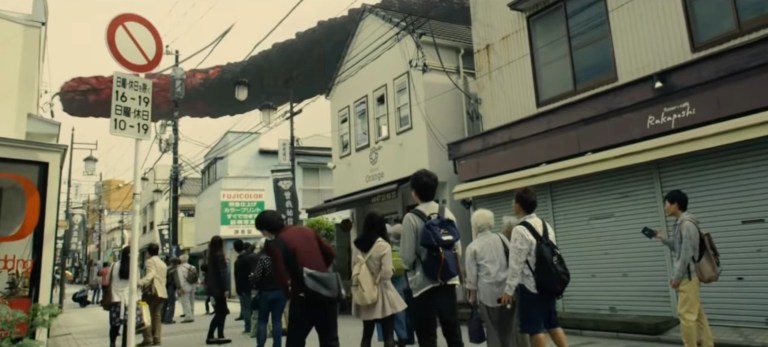
Suddenly a massive tail rises from the ocean which got captured in video and photographs by the news media which confirms Yaguchi’s hunch. As the Prime Minister and the team of officials spend more time discussing and searching for real experts (because the three scientists they just met did not produce any breakthroughs), a huge creature makes its way into one of Tokyo’s districts through a waterway causing massive damage and displacing many people as well as all boats that got in its way.  

In a press conference, the Prime Minister gave his assurance to the public that they need not worry about the creature coming to shore. Just after giving his assurance speech, an assistant approaches the Prime Minister with really bad news that the creature has been crawling inland and causing even more damage…

Quality

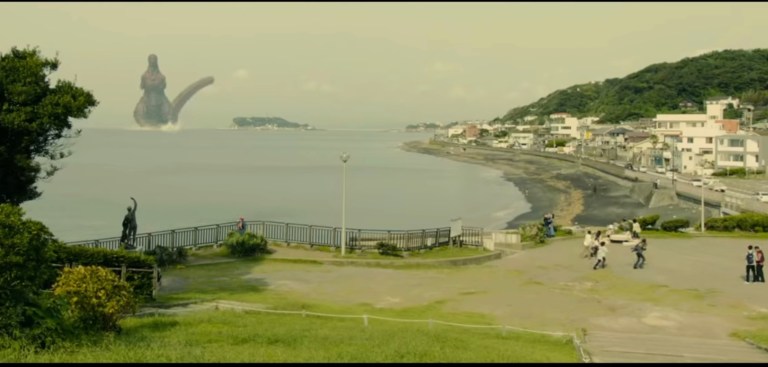
Japan’s iconic monster is not only terrifying here but also very deadly.

When it comes to presentation in comparison to all other Godzilla movies released, Shin Godzilla is very unique as it strongly brings to the viewers a very in-depth examination of the bureaucracy of the Japanese government complete with the many laws, requirements, rules and other elements of governance that made it so hard for the local authorities to respond to Godzilla’s invasion of the metropolis. There are key details that were raised such as the constitutionality of using local military force against the monster (which is not a foreign invader), which department should be in-charge of research about the same monster, etc.

Along the way, there is an overload of information – in terms of text, images and dialogue – that makes viewing quite a challenge. This makes watching Shin Godzilla a learning experience that viewers who are interested in governance and science will likely enjoy although it will alienate other moviegoers, especially those who only want to watch the spectacle of massive on-screen destruction that giant monster movies are known for. Going through all the exposition and explanations, and understanding most of it, however, will make the viewing experience worth it as these countless details do make sense in relation to Godzilla’s destructive impact on the people.

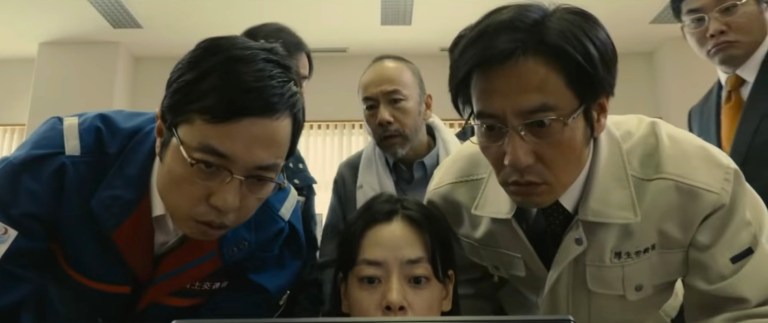
And then there is the huge cast of characters that needs to be followed. This is another big challenge for viewers because if one misses out on the key purpose a character has, then following the government’s efforts on dealing with Godzilla will make less sense. Not only will you have to follow the characters’ names, you will also have to remember their respective work titles. Apart from the government officials, there is also the huge batch of nerds and varied experts gathered by the government to do intense research. Again, those people need to be followed and remembered so you can understand what they do and how they contribute to their government’s efforts. When it comes to performances, they are collectively dramatic and you will be convinced of the pressure, the danger and uncertainty they face with Godzilla threatening Tokyo.

Better get used to seeing so many characters throughout the movie.
Hiroki Hasegawa as Rando Yaguchi.

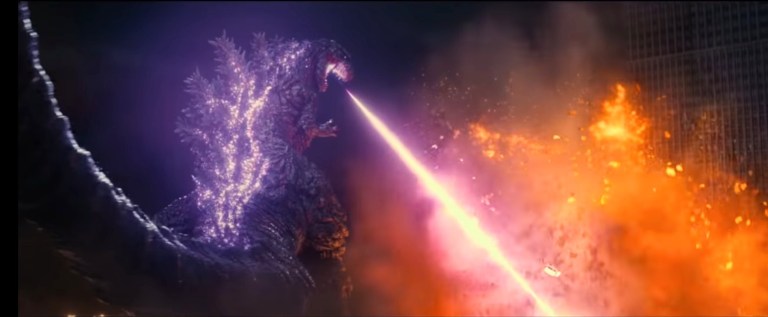
As for the main spectacle of the movie, Godzilla, I can say that the monster here is very terrifying to watch. This is not your typical Godzilla as the Anno-Higuchi directorial duo really went all out with their creativity to remake Japan’s iconic monster into something new and deadly while still linking him creatively to the legacy of the classic Godzilla. There is even an element of evolution in this version of Godzilla and to see the Japanese military fire their expensive weapons at him really made a lot of spectacle to enjoy. I should also state that several scenes of disaster caused by the monster in this film were inspired by the tragedies of the Tōhoku earthquake and tsunami, and the Fukushima Daiichi nuclear disaster of 2011. Lastly, Godzilla here is really a super villain that is not only gigantic but also is made to be highly believable that it can destroy the nation, kill innocent civilians, demoralize the authorities and even bring Japan’s entire economy way down (note: one of the government officials explained the economic consequence of failing to defeat the monster).

When it comes to visual effects, this one is the best-looking Godzilla made by the Japanese yet! While the traditional approach of having an actor wear a rubber suit has been disregarded in favor of using modern, digital means (with motion capture), what the production team did here is very impressive as they focused strongly on having computer-generated graphics that are photo-realistic. While it is true that there were some moments of fake-looking CGI, the heavy photo-realism on the graphics of Godzilla (combined with strategic camera angles that really captured the scope and size of the monster) easily outweighed the weak spots. The lighting effects used for the laser blasts were very impressive, even competitive with what Hollywood has been doing. As for the scenes of destruction, a mix of CGI and practical effects (specifically miniatures) was used. In fact, certain scenes showing Godzilla interacting with the environment was done with pushing a prop through miniatures which resulted a high level of detail with organic and solid stuff.

The spectacle would not have been that effective, however, without the solid musical work done by Shiro Sagisu. Not only did the music add a lot to the intense sequences of Godzilla, it also brought out the sense of dread and horror out of the monster especially in the night-time scene when he was towering over a large section of Tokyo that lost power. Sagisu was also involved in Neon Genesis Evangelion.

Conclusion

The emphasis on photo-realism on the computer-generated effects is something special.

I can say it out loud that Shin Godzilla (2016) is truly a spectacle to watch complete with tons of heavy drama, tons of information and the widest cast of characters to date. It is a new version of the Japanese icon that really impresses and when it comes to movie intelligence, it easily outshines many other Godzilla flicks. While it has a lot of spectacle to keep moviegoers entertained, its heaviness with the information and large cast of characters could turn off viewers who are not used to thinking and paying attention to lots of details while watching a giant monster movie. Personally, I welcomed the information overload and made efforts on paying close attention to the details and the characters. It really takes patience and focus to truly make the most out of the story and the overall presentation.

Ultimately, I enjoyed this movie for what it is and what its message was about with regards as to how governments should respond to immense disasters, what is Japan’s place in the world of the 21st century and, most notably, what Godzilla means to Japan and the international community. This is a very solid modernization of Godzilla and the Anno-Higuchi deserve admiration.

If you are seriously planning to buy an existing hard copy of Shin Godzilla (2016), visit Amazon for the Blu-ray disc release and see if it has the right price and special features to satisfy you.  

Overall, Shin Godzilla (2016) is recommended!

+++++

Thank you for reading. If you find this article engaging, please click the like button below and also please consider sharing this article to others. If you are looking for a copywriter to create content for your special project or business, check out my services and my portfolio. Feel free to contact me as well. Also please feel free to visit my Facebook page Author Carlo Carrasco and follow me at HavenorFantasy@twitter.com

A Look Back at Godzilla #1 (1995)

Disclaimer: This is my original work with details sourced from reading the comic book and doing personal research. Anyone who wants to use this article, in part or in whole, needs to secure first my permission and agree to cite me as the source and author. Let it be known that any unauthorized use of this article will constrain the author to pursue the remedies under R.A. No. 8293, the Revised Penal Code, and/or all applicable legal actions under the laws of the Philippines.

Welcome back, comic book collectors, sci-fi enthusiasts and fellow geeks! You must have heard by now that pop culture icons Godzilla and King Kong will clash together on the big screen in Godzilla vs. Kong (2021). Check out the official trailer below.

Take note that this is NOT the first time the two giant monsters encountered each other on the big screen. In fact, there was a Japanese-produced movie that featured the two released in 1963 and it involved Ishirô Honda who himself directed the 1954 original Godzilla movie. As the decades passed by, Godzilla movies were viewed by lots of people around the world and by the time efforts were taken to realize a Hollywood-produced film showcasing Japan’s icon, its place in global pop culture was already sealed.

And here is the thing that should interest you all – before the 1998 Hollywood Godzilla film (directed by Roland Emmerich) was even released, Dark Horse Comics published a series of Godzilla comic books. Of course, this was not the first time Godzilla made its presence felt in illustrated literature but the mid-1990s series was an effort to modernize Japan’s icon with readers (and comic collectors) of the time.

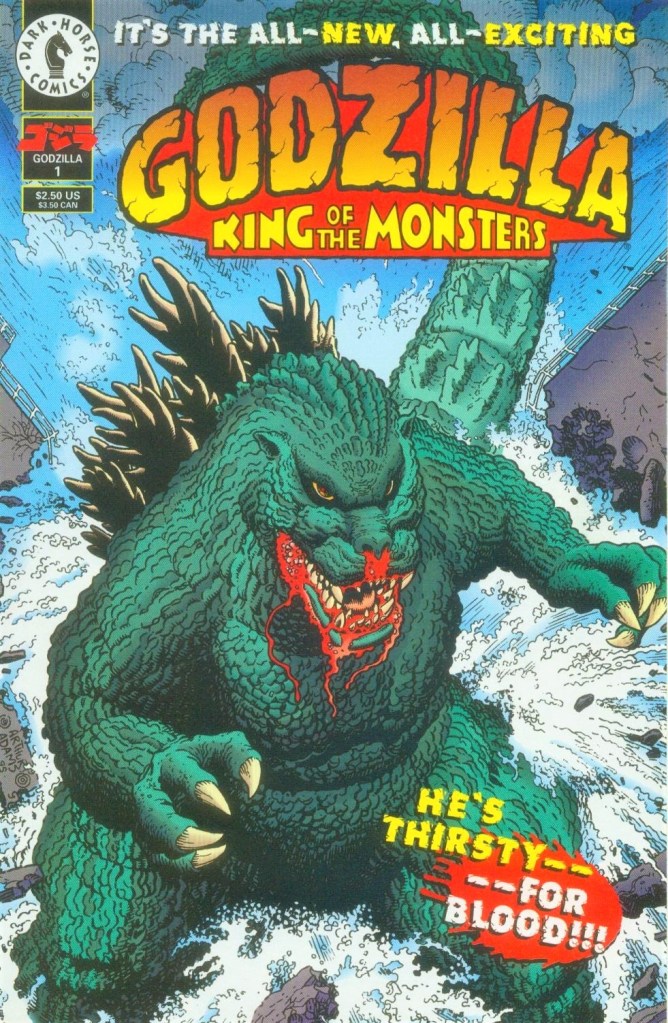
With those details laid down, here is a look back at Godzilla , published by Dark Horse Comics in 1995 with a story written by Kevin Maguire and drawn by Brandon McKinney.  

The cover.

Early story

The story begins with a network television talk show focused on Godzilla and the possibility of it attacking North America. On the air, TV show host Kate Koshiro talks with research team G-Force member Take’ who states that Godzilla has been injected with poison and swam to the bottom of the ocean. Even so, they never found a corpse.

As the show goes on, it is revealed by Take’ that his team uses low-frequency signals which they hope will attract Godzilla and even pacify it. Take’ eventually begins to get nervous as Kate Koshiro presses him for details. Behind the scenes, personnel of G-Force watch the show on their giant monitor.

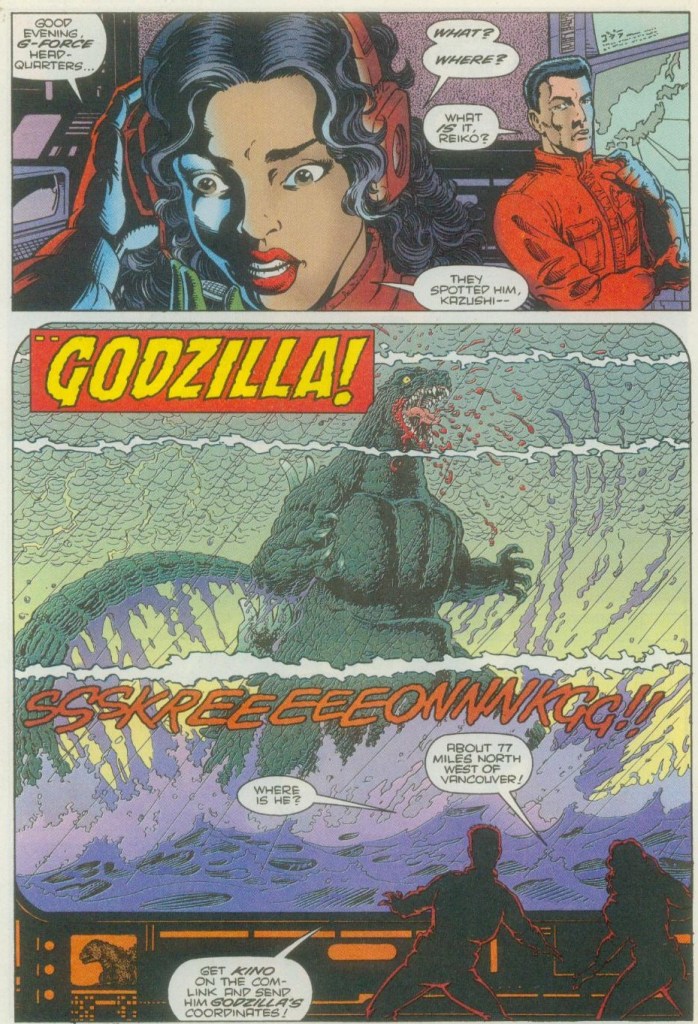
The G-Force personnel turn their attention away from the TV show as they have been alerted to the sudden emergence of Godzilla, 77 miles northwest of Vancouver…

Quality

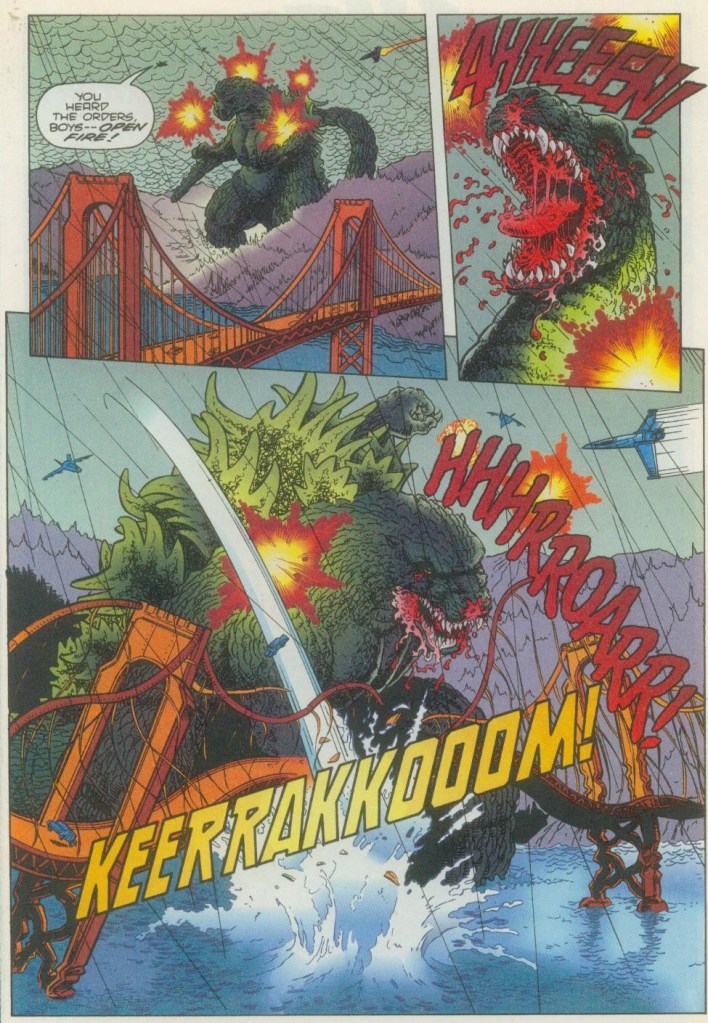
The destructive power of Godzilla!

If you are looking for a good, original story of Godzilla to read, this comic book has it! To start with, it has a nice world concept of its own surrounding the monster. G-Force serves as the primary organization the world goes to not only for protection from Godzilla’s attacks but also extensive research-and-development (R&D) that can make breakthroughs the world can benefit from, and intelligence that the respective defense forces of nations can use.

The characters are an interesting mix with elements from G-Force and the American armed services doing most of the interaction, talking and exposition. The closest thing this comic book has to a human protagonist is Take’ who turned out to be more capable than being a researcher of G-Force.

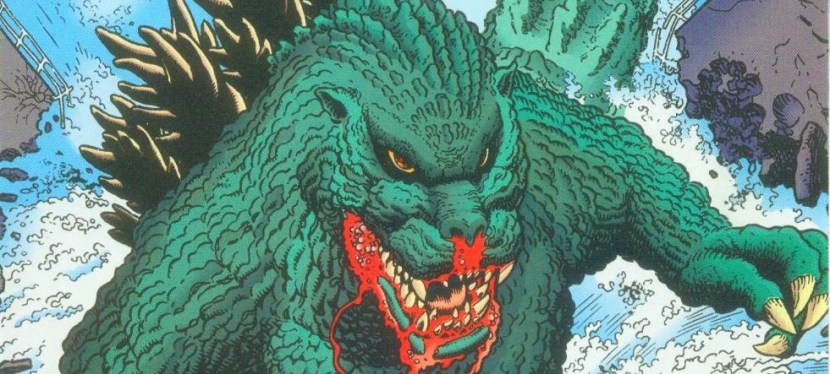
As for Godzilla, there is nothing new with the monster’s portrayal even though it is confirmed to be sick with poison. Wherever Godzilla goes, a lot of destruction happens making it look like the antagonist to the reader. In other words, a typical Godzilla portrayal. Fortunately, the comic book creators succeeded in maintaining the giant’s presence strongly even though the narrative was primarily focused on the human characters.

Conclusion

Nothing like carrying the tremendous pressure that comes with the unexpected emergence of a gigantic monster.

Godzilla (1995) is surprisingly entertaining to read. When I first read this comic book, I had modest expectations and just let myself discover what it has to offer. The good news here is that the comic creators crafted a story that is interesting and fun enough to read. Apart from focusing on Godzilla, the G-Force organization has an interesting cast of characters.

If you are seriously planning to buy an existing hard copy of Godzilla (1995), be aware that as of this writing, MileHighComics.com shows that the near-mint copy of the comic book costs $70.

Overall, Godzilla (1995) is recommended.

+++++

Thank you for reading. If you find this article engaging, please click the like button below and also please consider sharing this article to others. If you are looking for a copywriter to create content for your special project or business, check out my services and my portfolio. Feel free to contact me as well. Also please feel free to visit my Facebook page Author Carlo Carrasco and follow me at HavenorFantasy@twitter.com