As far as the Bureau of Internal Revenue (BIR) is concerned, implementing taxes on social media influencers and collecting from them are still hard to do, according to a Philippine Star news report.
To put things in perspective, posted below is an excerpt from the Philippine Star news report. Some parts in boldface…
The Bureau of Internal Revenue (BIR) continues to have difficulty in making social media influencers comply with the country’s tax laws even amid a widening adoption of various social media platforms as a form of income.
BIR Assistant Commissioner Jethro Sabariaga said the country’s largest revenue collecting agency remains in dialogue with social media influencers for them to pay their tax obligations to the government.
The BIR decided to seek a dialogue with the influencers in March this year. Sabariaga admitted that it is difficult for the BIR to get revenues from the digital space.
“Yes, (it is difficult). We will not mince with words. It might take some time, but that’s what we’ve been doing,” Sabariaga said.
“We are trying to win their side in the engagement process. The more that you can ask them to do voluntary compliance, the better rather than to fight with them,” he said.
BIR defines social media influencers as people whose digital posts are being monetized, classifying them as self-employed individuals or persons engaged in trade or business as sole proprietors.
The BIR earlier said it was looking into some 250 top earning social media influencers to see if they have been paying their obligations.
Based on BIR’s circular, influencers are required to pay income tax and percentage tax or value-added tax, if applicable, as mandated by the Tax Code.
According to the BIR, influencers derive their income from YouTube, sponsored social and blog posts, display advertising and affiliate marketing, among others.
Let me end this piece by asking you readers: What is your reaction to this recent development? Do you agree with the BIR’s plan to tax social media influencers? Is your favorite vlogger or YouTuber based in the Philippines who might have made some revenue online based on his or her output?
Ever since it was first announced, the stakeholders behind the Xbox-Activision-Blizzard-King deal worth almost $70 billion went through lots of hurdles that include opposition by Sony’s PlayStation division, a trial with America’s Federal Trade Commission (FTC) and a rejection by the United Kingdom’s regulator Competition and Markets Authority (CMA).
The obstacles are over as the Xbox-Activision-Blizzard-King deal recently closed and already the Activision side of the business has officially started integrating into Microsoft. This deal is many times larger than the Xbox-Bethesda acquisition of a few years ago. Watch the related video by Team Xbox below…
Xbox chief Phil Spencer issued a statement related to the newly closed deal. To put things in perspective, posted below is an excerpt from his statement published through Xbox.com. Some parts in boldface…
We love gaming. We play games, create games, and know first-hand how much gaming means to all of us as individuals and collectively, as a community. And today, we officially welcome Activision Blizzard and their teams to Xbox. They are the publishers of some of the most played and most beloved franchises in gaming history across console, PC and mobile. From Pitfall to Call of Duty, World of Warcraft to Overwatch, Candy Crush Saga to Farm Heroes Saga, their studios have pushed the boundaries of gaming for players around the world.
I’ve long admired the work of Activision, Blizzard, and King, and the impact they’ve had on gaming, entertainment, and pop culture. Whether it was late nights spent playing the Diablo IV campaign with friends from start to finish, gathering the entire family in the rec room for our weekly Guitar Hero night, or going on an epic streak in Candy Crush, some of my most memorable gaming moments came from experiences their studios have created. It is incredible to welcome such legendary teams to Xbox.
As one team, we’ll learn, innovate, and continue to deliver on our promise to bring the joy and community of gaming to more people. We’ll do this in a culture that strives to empower everyone to do their best work, where all people are welcome, and is centered on our ongoing commitment of Gaming for Everyone. We are intentional about inclusion in everything we do at Xbox – from our team to the products we make and the stories we tell, to the way our players interact and engage as a wider gaming community.
Together, we’ll create new worlds and stories, bring your favorite games to more places so more players can join in, and we’ll engage with and delight players in new, innovative ways in the places they love to play including mobile, cloud streaming and more.
Players have always been at the center of everything we do. And as we grow, we’ll continue to keep players at the heart of it all. We’ll continue to listen to your feedback, build a community where you can be yourself, where developers can do their best work, and continue to make really fun games. As promised, we will also continue to make more games available in more places – and that begins now by enabling cloud streaming providers and players to stream Activision Blizzard games in the European Economic Area, a commitment made to the European Commission. Today we start the work to bring beloved Activision, Blizzard, and King franchises to Game Pass and other platforms. We’ll share more about when you can expect to play in the coming months. We know you’re excited – and we are too.
For the millions of fans who love Activision, Blizzard, and King games, we want you to know that today is a good day to play. You are the heart and soul of these franchises, and we are honored to have you as part of our community. Whether you play on Xbox, PlayStation, Nintendo, PC or mobile, you are welcome here – and will remain welcome, even if Xbox isn’t where you play your favorite franchise. Because when everyone plays, we all win.
For their part, Activision Blizzard issued its own statement related to the biggest deal in video gaming with Microsoft. They are looking forward to the future of gaming with Team Xbox. Posted below is an excerpt from their statement with some parts in boldface…
It’s a big day for us at Activision Blizzard. For more than four decades, our players have inspired us to push the boundaries of imagination with iconic universes including Call of Duty, Candy Crush Saga, Crash Bandicoot, Diablo, Overwatch, and Warcraft.
Today we begin a new chapter as we officially become a part of the Microsoft family, uniting with the amazing Xbox team and co-creating the future of gaming together.
In our earliest days we were a modest collective of designers who raided rivers, commanded choppers, and avoided pitfalls. Now as part of Xbox, we will continue our mission to deliver the world’s most epic interactive entertainment experiences to more people, more platforms, and across more worlds than ever before.
All of our history and success leading to this moment is because of you, our incredible gaming community.
Unsurprisingly, the approved Xbox-Activision-Blizzard-King deal made tremendous waves through social media and through YouTube. Watch and learn from the videos below starting with an interview with Activision Blizzard’s Bobby Kotick (note: pay close attention to his words)…
The Xbox-Activision-Blizzard-King deal is not just another multi-billion Dollar business breakthrough…it is a tremendous boost for the credibility of Xbox as a video gaming, PC gaming, cloud gaming and mobile gaming entity.
While it is made clear that Microsoft-controlled ABK will still release games on multiple platforms, the new owners can make the new and upcoming games Xbox-exclusive (meaning released only on Xbox Series X, Xbox Series S, Windows PC plus cloud and mobile devices which collectively are more numerous than Nintendo and PlayStation consoles). For insights about potential Xbox-exclusive Activision Blizzard games, watch Colteastwood’s video below…
More on exclusivity that include games, DLC releases and other matters, it is clear that the pre-existing contracts between PlayStation and Activision will never be renewed (read: PlayStation is no longer the home of Call of Duty). PlayStation, whose leader Jim Ryan has been so arrogant and dishonest when opposing the Xbox-Activision-Blizzard-King deal, will have a lot to worry about on the gaming subscription side of business once Activision Blizzard games get added into the Xbox Game Pass (XGP) service some time in 2024. As much as Team Xbox and Microsoft are benefiting from this mega deal, gamers across different platforms will eventually benefit as well in various ways. Expect new customer-oriented choices to be made through the games under Xbox’s banner.
As of this writing, Xbox fans are rejoicing over the closed Xbox-Activision-Blizzard-King deal while PlayStation fanboys cannot help but agonize with anger and jealousy. All you have to do to see the PS fanboys’ anguish is search for them on social media over their collective negative reactions. The “Xbox has no games” zealots are looking and feeling bad nowadays. Indeed, things are working in Team Xbox’s favor and I personally cannot wait to see the benefits of the ABK deal get realized in my gaming experience. Also there is nothing like seeing ABK’s established franchises like Call of Duty, StarCraft, Warcraft and many others listed with Xbox’s own franchises such as Halo, Forza Motorsport, The Elder Scrolls, Starfield, Fallout and others.
Personally, I look forward to playing Call of Duty, Crash Bandicoot (a game property that started on PlayStation) other Activision titles on my Xbox Series X console through my Xbox Game Pass subscription in the near future.
As the Philippines continues to move forward in this post-pandemic age, the national unemployment rate fell down to 4.4% this past August, according to a Manila Standard news report.
To put things in perspective, posted below is an excerpt from the Manila Standard news report. Some parts in boldface…
The unemployment rate in the Philippines fell to a three-month low of 4.4 percent in August 2023 from 4.8 percent in July, the Philippine Statistics Authority said Friday.
National statistician and civil registrar-general Dennis Mapa said in an online briefing the August unemployment rate was also lower than 5.3 percent recorded a year ago.
This translated to about 468,000 fewer unemployed individuals in August, according to the National Economic and Development Authority (NEDA).
“In terms of magnitude, there were 2.21 million unemployed Filipinos aged 15 years and over in August 2023,” Mapa said.
“It was also lower than the 2.27 million unemployed in July 2023 and 2.68 million a year ago,” he said.
The underemployment rate also fell from 14.7 percent in August 2022 and 15.9 percent in July 2023 to 11.7 percent in August this year. This was equivalent to 1.4 million fewer underemployed persons, particularly among those employed in the services and industry sectors.
Underemployed persons are those who have expressed the desire to have additional hours of work in their present job or to have an additional job, or to have a new job with longer hours of work.
The number of employed persons aged 15 years and over in August 2023 increased to 48.07 million from 47.87 million a year earlier. This translated into 95.6 percent employment rate, higher than the reported employment rate in August 2022 and July 2023 at 94.7 percent and 95.2 percent, respectively.
Total employment increased 203,000 in the agriculture and industry sectors.
Mapa said the labor force participation rate (LFPR) in August reached 64.7 percent, lower than 66.1 percent a year ago, but higher than 60.1 percent in July 2023.
NEDA underscored the Marcos administration’s commitment to generating high-quality and high-paying job opportunities for workers.
NEDA said that apart from the decline in underemployment, several other indicators pointed to an accompanying increase in the quality of employment, including the increase in wage and salary, and full-time employment, and the decline in vulnerable and part-time employment.
“However, much remains to be done as the number of middle- and high-skilled occupations decreased (-354,000), while low-skilled occupations increased (+551,000) compared to the previous year,” NEDA said.
NEDA Secretary Arsenio Balisacan said the government would continue its efforts to create better job opportunities for workers in the country.
“To raise the quality of employment further, the Marcos administration is committed to exerting all efforts to shape an attractive business climate for investors who have the resources needed to bring in high-quality and high-paying jobs,” he said.
Let me end this piece by asking you readers: What is your reaction to this recent development? Were there many people in your local community who were fortunate to get a new job over the past twelve months?
Do you have an excessive amount of coins with you right now? In recent times, the Bangko Sentral ng Philippines (BSP) launched their project to give people opportunities to deposit their coins through coin deposit machines (CoDMs) that were installed in a few locations. According to a report by GMA Network, almost P90 million worth of coins have been deposited.
To put things in perspective, posted below is an excerpt from the GMA News report. Some parts in boldface…
Nearly P90 million worth of coins have been deposited through the Bangko Sentral ng Pilipinas’ (BSP) coin deposit machines (CoDMs).
Since its launch on June 20, over P87.4 million worth of coins were deposited through CoDMs from more than 20,000 transactions as of September 22, 2023.
The CoDMs were launched in a bid to encourage the public to make use of their idle coins.
Latest central bank data revealed that the coins deposited into the machines were mostly credited to customers’ e-wallets, while a portion was exchanged for shopping vouchers.
In June, the BSP deployed two CoDMs at the SM Mall of Asia in Pasay City, one at Festival Mall in Alabang, Muntinlupa City, and another at Robinsons Place Ermita in Manila.
Moreover, the BSP installed additional coin deposit machines at Robinsons Place Galleria in Ortigas, SM City North EDSA, SM City Fairview in Quezon City, SM City San Lazaro in Manila, SM City Bicutan in Parañaque, and SM City Bacoor in Cavite, bringing the total CoDMs count to 10.
The BSP’s CoDMs accept all denominations of the BSP Coin Series and the New Generation Currency Coin Series launched in 2018, ranging from a centavo to as high as P20.
Through the CoDMs, customers can deposit legal tender coins and have the equivalent amount credited to their GCash accounts. The BSP said it is also working to onboard Maya to provide more e-wallet options to the public.
In using the machines, the central bank urged customers that coins to be deposited must not be taped or bundled, must not come with other objects like buttons, magnets, nails, tokens, screws, or washers, and must be gently placed in the coin slot in handfuls.
Being based in Muntinlupa City, I myself managed to deposit coins into the BSP machine located inside Festival Mall in Filinvest City in Alabang. I really liked the convenience of having the amount of my deposited coins transferred electronically into my GCash account and without any technical or convenience fees charged. I can only hope that the BSP will come up with options for coin depositors to transfer the collected value directly into bank accounts without charging any fees.
Let me end this piece by asking you readers: What is your reaction to this recent development? Were you able to deposit your coins at a BSP machine near your local community? Do you think this project by the BSP will help prevent coin shortages from happening? If you have an excessive amount of coins in your household right now, would you be willing to deposit them all into a BSP machine?
For more South Metro Manila community news and developments, come back here soon. Also say NO to fake news, NO to irresponsible journalism, NO to misinformation, NO to plagiarists, NO to reckless publishers and NO to sinister propaganda when it comes to news and developments. For South Metro Manila community developments, member engagements, commerce and other relevant updates, join the growing South Metro Manila Facebook group at https://www.facebook.com/groups/342183059992673
GCash, a very popular electronic wallet (e-wallet) here in the Philippines, will soon be charging a fee of P5 each time a user cashes in (loading money into his or her GCash account) via the Bank of the Philippine Islands (BPI) or Union Bank of the Philippines, according to a business news story by the Philippine Star. For the newcomers reading this, GCash users can put money into their respective accounts in other ways such as doing it over-the-counter at recognized convenience stores, the cash-in kiosks and other types of businesses that accept GCash cash-in.
To put things in perspective, posted below is an excerpt from the Philippine Star business news report. Some parts in boldface…
E-wallet giant GCash will start charging a convenience fee of P5 for every time a user cashes in from its major partners Bank of the Philippine Islands (BPI) and Union Bank of the Philippines in the fourth quarter.
In an interview with reporters, GCash president and CEO Martha Sazon said the convenience fee remains to be one of the lowest compared to the transaction charges imposed by traditional banks that run as high as P25.
“As GCash continues to scale, we still subsidize most of the charges as well as heavily invest on upgrading our infrastructure and reinforcing security services,” Sazon said.
Sazon said GCash has to slap a convenience fee for cashing in to cover its rising costs. However, Sazon said the fee only reduces the subsidies that GCash pays to keep its financial services affordable.
“This also ensures that our operations will remain seamless for all customers. Even with this fee, we will continue to subsidize part of the operating cost for our cash-ins as we remain committed to keeping our services affordable to many Filipinos,” Sazon said.
Sazon is encouraging GCash customers to compute how much they have to spend for every time they load their accounts through BPI and Union Bank.
For instance, Sazon said a user can cash in P10,000 in one go rather than top up P500 in tranches to minimize getting charged P5 every time.
Users can add cash to their GCash platform by linking it into their bank accounts. Likewise, they can cash-in via convenience stores, dedicated machines, department stores, gas stations, sari-sari stores, among others.
Last week, GCash announced that it would waive for the rest of the year the transaction charges on merchants for payments accepted through QR Ph. The e-wallet leader expects that through this, micro, small and medium enterprises will book extra earnings from cashless transactions.
GCash offers merchants access to e-wallet with a limit of up to P500,000 per month, waiving the transaction fee of 1.5 percent for P100,000 in gross sales.
GCash is one of the largest finance apps in the Philippines with a nationwide presence in more than 1,600 billers.
Let me end this piece by asking you readers: What is your reaction to this recent development? If you are a GCash user who often loads money using the respective apps or systems of BPI and Union Bank, does the above business story discourage you a lot?
Recently in the progressive City of Muntinlupa, the City Government announced that it will implement a notable program that will benefit owners of sari-sari stores and other micro-retailers through a special program, according to a Manila Bulletin news report.
To put things in perspective, posted below is the excerpt from the Manila Bulletin news report. Some parts in boldface…
The Muntinlupa City government will implement the iSTAR Program aiming to provide skills to sari-sari (variety) store and other micro-retailing business owners.
The Muntinlupa City Council approved Resolution 2023-293 authorizing Mayor Ruffy Biazon to enter into a memorandum of understanding with the Technical Education and Skills Development Authority (TESDA) for the implementation of the iSTAR Program or the upgraded version of the Sari-Sari Store Training and Access Resources (STAR) Program.
According to the resolution, the iSTAR Program “aims to provide access to skill training, resources, and peer mentoring to sari-sari store and carinderia owners and operators all over the country.”
Under the iSTAR Program, “sari-sari stores, traditional food outlets or karinderias and other Micro-retailing business owners will be provided with digital basic entrepreneurship training and access to business resources.”
The MOU aims to “provide both men and women residents of the city business and training to improve their finances and standard of living and at the same time, giving the community easy access to basic goods and commodities.”
Let me end this piece by asking you readers: If you are a Muntinlupa City resident, what is your reaction to this development? If you own a sari-sari store or a micro-retailing business, would you take part in the iSTAR program?
For more South Metro Manila community news and developments, come back here soon. Also say NO to fake news, NO to irresponsible journalism, NO to misinformation, NO to plagiarists, NO to reckless publishers and NO to sinister propaganda when it comes to news and developments. For South Metro Manila community developments, member engagements, commerce and other relevant updates, join the growing South Metro Manila Facebook group at https://www.facebook.com/groups/342183059992673
To put things in perspective, posted below is an excerpt from the Manila Bulletin news article. Some parts in boldface…
THE PHILIPPINE ECONOMY is likely to grow by 6% this year amid strong domestic demand and despite elevated inflation, the World Bank said, raising its forecast from 5.4% in January.
A recovery in jobs, improved consumer sentiment and strong remittances from Filipinos overseas would drive local consumption, the multilateral lender said in its Global Economic Prospects report on Wednesday.
“Despite external challenges, high domestic inflation and tight monetary conditions, domestic demand has once again remained resilient, fueling growth,” World Bank Country Director for the Philippines Ndiame Diop separately told a virtual news briefing.
The latest growth forecast is the lower end of the government’s 6-7% growth target this year. The Philippine economy grew by 6.4% in the first quarter, slower than 8% a year ago and 7.1% a quarter earlier.
“Despite weak global conditions, our upward revision reflects this continued strength in domestic demand,” World Bank Philippines Senior Economist Ralph van Doorn said.
But the potential global slowdown could still affect growth. “Although the global economy displayed remarkable resilience in early 2023, economic conditions will remain subdued for the rest of 2023,” Mr. Diop said.
He said global growth is expected to wane due to “persistent inflation, slowdown of global trade and the effect of recent monetary tightening.”
The World Bank expects global growth to slow to 2.1% this year, though this is higher than its earlier 1.7% projection. It also sees global growth reaching 2.4% next year and 3% in 2025.
“Risks remain tilted to the downside,” Mr. Diop said. “Recent episodes of market instability have raised concerns of a potential spillover. The possibility of further monetary tightening amid sticky core inflation could raise the cost of global financing and lead to a more pronounced and prolonged global slowdown.”
Persistent inflation remained a cause for concern, the World Bank said.
“Although our baseline forecast (shows) inflation will decelerate, it is still the main challenge,” Mr. van Doorn said.
The World Bank expects Philippine inflation to average 5.7% this year, higher than its earlier 4.2% forecast.
Let me end this piece by asking you readers: What is your reaction to this recent development? Do you agree with the World Bank’s analysis about economic growth for the Philippines this year? Do you think the Philippine economy can do better than expected by the end of 2023?
Were you able to buy a brand new laptop or desktop over the past six months? This question I asked because according to a news report by BusinessWorld, personal computer (PC) sales in the Philippines decreased by almost 49% in the 4th quarter of 2022. There is an ongoing downward trend that cannot be ignored.
To put things in perspective, posted below is an excerpt from the BusinessWorld news article. Some parts in boldface…
The personal computer (PC) market in the Philippines had 464,000 units in the fourth quarter of 2022, representing a 48.9% decrease compared to the same period the previous year, according to the International Data Corp. (IDC).
The PC market also declined 18.5% from the previous quarter.
“The market declined across notebooks and desktops,” IDC Philippines Associate Market Analyst Jeeno Velasco said in a statement on Monday.
“Household consumption was largely fulfilled and refocused on other spending activities geared toward the holiday season.”
He also noted that macroeconomic pressures further drove inventory rationalization among vendors.
Top five PC companies in the Philippines during the quarter were Acer Group, Lenovo, HP Inc, ASUS, and Dell Technologies.
The commercial space has not bounced back, as reported by the market intelligence company, due to weakened government and enterprise sectors which declined 44.7% and 25.2% from the previous quarter, respectively.
It noted that the national government has not announced any major plans involving information technology spending, while the enterprise segment is more reluctant to procure more units due to its negative financial outlook.
“Demand for desktops and the influx of company workers required to report back to work should have increased shipments for the corporate sector, but this didn’t pan out,” Mr. Velasco said.
Let me end this piece by asking you readers: What is your reaction to this recent development? Do you think economic factors like high inflation, rising interest rates and a potential recession overseas will keep the local PC market down for the rest of the year?
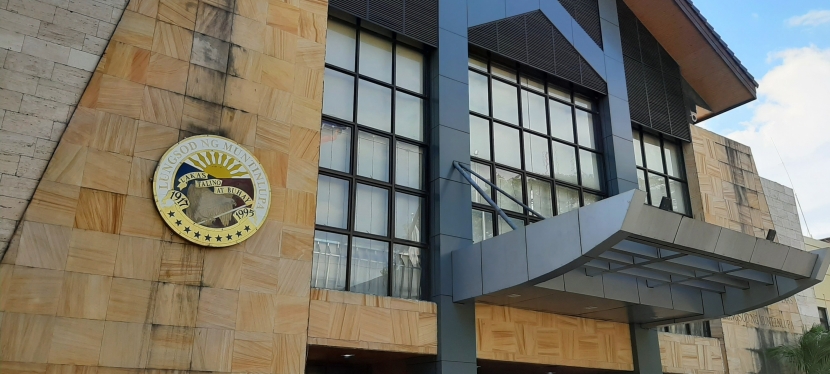
Recently in the progressive city of Muntinlupa, the Top 10 taxpayers of the city were lauded for their tremendous economic contributions which played a key role in local recovery from the downturn of the COVID-19 crisis, according to a Manila Bulletin news report. They were commended by Mayor Ruffy Biazon during the 28th cityhood anniversary celebrations on March 1.
To put things in perspective, posted below is the excerpt from the Manila Bulletin news report. Some parts in boldface…
Muntinlupa Mayor Ruffy Biazon commended the top 10 taxpayers and the business community for helping in reviving the local economy especially after the onslaught of the Covid-19 pandemic.
During the 28th Muntinlupa cityhood anniversary on March 1, the top 10 taxpayers were recognized.
They were Filinvest Alabang, Inc.; Ford Group Philippines, Inc.; Filinvest Land Inc. – Festival Supermall; Ayala Land Inc.; Filinvest Reit Corporation; Meralco Business Center; Amkor Technology Philippines; Capital One Philippines Support Services Corporation; GenPact Services LLC Philippines, Inc.; and Insular Life Assurance Company Ltd.
In his State of the City Address, Biazon said Muntinlupa is “steadily bouncing back” from the effects of the Covid-19 pandemic, which crippled the economy and resulted in people losing their jobs.
“Our cityhood journey, and now our road to pandemic recovery, underscores the importance of working together, and shows what we can do when we are focused towards a more liveable and more responsive city for Muntinlupeños,” Biazon said.
Taxpayers, including business establishments, have fueled the city’s economic recovery from the pandemic, posting P6.033 billion in total revenues with 101.09 percent collection efficiency.
In addition, the city government recorded 12,232 registered businesses as of January 2023, up 59 percent from 7,651 registered businesses in the same period last year.
Let me end this piece by asking you readers: If you are a Muntinlupa City resident, what is your reaction to this development? Are you thankful to the mentioned companies that made the Top 10 list of taxpayers? Are you confident with the City Government’s role with the local economy?
For more South Metro Manila community news and developments, come back here soon. Also say NO to fake news, NO to irresponsible journalism, NO to misinformation, NO to plagiarists, NO to reckless publishers and NO to sinister propaganda when it comes to news and developments. For South Metro Manila community developments, member engagements, commerce and other relevant updates, join the growing South Metro Manila Facebook group at https://www.facebook.com/groups/342183059992673
For Oxford Economics, the economy of the Philippines will achieve continued growth in 2023 but with a notable slow down to 4.1%, according to a BusinessWorld news report. Oxford Economics mentioned in its statement factors like the global economy entering recession, inflation and the lack of impact from China’s reopening.
To put things in perspective, posted below is the excerpt from the BusinessWorld news article. Some parts in boldface…
PHILIPPINE ECONOMIC GROWTH is expected to slow to 4.1% this year, as external headwinds and elevated inflation are seen to dampen domestic demand, Oxford Economics said.
“After registering respectable growth of 7.6% in 2022, we expect the Philippines’ economy to slow to 4.1% amid global headwinds, elevated inflation, and a fading reopening boost. With monetary tightening set to continue, the economy could use a hand from the fiscal side, but chances are slim,” Makoto Tsuchiya, assistant economist at Oxford Economics, said in a research note released on Wednesday.
Oxford Economics’ gross domestic product (GDP) projection is well below the government’s 6-7% target.
It expects GDP to expand by 4.5% next year, still outside the 6.5-8% target set by the government.
“We expect GDP growth to slow materially amid softer external demand as the global economy enters a recession, led by weakness in major advanced economies. We don’t think China’s reopening will be enough to offset this weakness, with the recovery in private consumption there likely to be lackluster,” Mr. Tsuchiya said.
There is a widely anticipated global recession this year, with the World Bank projecting global growth to slow to 1.7%.
Rising inflation is also seen to “substantially” slow the Philippine economy, Mr. Tsuchiya said.
In January, inflation soared to a 14-year high of 8.7%, marking the 10th consecutive month inflation was above the Bangko Sentral ng Pilipinas’ (BSP) 2-4% target range.
The central bank also raised its average inflation forecast to 6.1% this year from 4.5% previously.
Oxford Economics said that the BSP will continue to hike rates to tame inflation and keep in step with the US Federal Reserve.
“Elevated inflation means policy makers will not be able to react by lowering interest rates. Indeed, we expect tightening to continue for at least the next two meetings, albeit at a slower pace — in contrast to other Asian central banks who can afford to pause,” Mr. Tsuchiya said.
Oxford Economics also cited the lack of policy support as a factor contributing to slower growth this year.
“We think significant support is unlikely given limited policy space on both the monetary and fiscal front. Ideally, fiscal policy would take over the burden of supporting growth. But debt accumulated during the pandemic era means the focus is instead on fiscal consolidation,” Mr. Tsuchiya said, noting that the Philippine government may adopt a more restrained approach in spending.
Oxford Economics expects the budget deficit will reach 2.7% of GDP by 2028, better than the 3% projection given by the Development Budget Coordination Committee (DBCC).
The government projects the fiscal deficit to hit 6.9% of GDP or around P1.5 trillion this year. In the 11 months to November, the budget deficit shrank by 7.2% to P1.24 trillion.
However, Oxford Economics said the debt-to-GDP ratio may remain elevated at 61.1% by 2025. This is higher than the 60% target set by the government in the same period.
The country ended last year with a debt stock at 60.9%, better than the 63.7% seen in end-September but still above the 60% threshold considered manageable by multilateral lenders for developing economies.
Let me end this piece by asking you readers: What is your reaction to this recent development? Do you think Oxford Economics’ prediction about 4.1% economic growth for the Philippines this year will turn out to be true? Do you think Oxford Economics made a strong case explaining why economic growth in 2023 will be smaller for the Philippines?
For more South Metro Manila community news and developments, come back here soon. Also say NO to fake news, NO to irresponsible journalism, NO to misinformation, NO to plagiarists, NO to reckless publishers and NO to sinister propaganda when it comes to news and developments. For South Metro Manila community developments, member engagements, commerce and other relevant updates, join the growing South Metro Manila Facebook group at https://www.facebook.com/groups/342183059992673






 Author Carlo Carrasco