The United States officially revoked the US visa of Taif Sami Mohammed Al Shakarchi, the Iraqi national who was awarded by the failed Biden Administration in 2022, according to US State Department citing her placement on the Terror Watchlist of the Federal Bureau of Investigation (FBI).
In a New York Post report, Taif Sami Mohammed Al Shakarchi’s alleged links to the Islamic terrorist regime of Iran and Iran-backed militias in Iraq drew headlines. She was also the target of two Republicans in the US House of Representatives accused of being the “key enabler of terrorist funding in Iraq.”
To put things in perspective, posted below is the entire statement of the US State Department. Some parts in boldface…
The U.S. Department of State has revoked the visa of an Iraqi national who was presented an award by the Biden Administration for her purported role in fighting corruption and her advocacy for “gender equity.”
Taif Sami Mohammed Al Shakarchi was given the International Woman of Courage Award in 2022by former Secretary of State (Antony Blinken) and former First Lady Jill Biden.
The award recognized “women from around the globe who have demonstrated exceptional courage, strength, and leadership in advocating for peace, justice, human rights, gender equity and equality, and the empowerment of women and girls, in all their diversity.”
This Iraqi national’s visa has now been revoked by the State Department following her placement on the Federal Bureau of Investigation’s Terror Watchlist. She is no longer present in the United States.
Under President Trump and Secretary of State Marco Rubio, suspected terrorists will never be allowed to remain in the United States.
Let me end this piece by asking you readers: What is your reaction to this development? Are you aware that Taif Sami Mohammed Al Shakarchi was Iraq’s Finance Minister from 2022 to 2026? Do you suspect Taif Sami Mohammed Al Shakarchi may have been involved in financing connected with Islamic terrorists? Should all her communications and interactions with the Islamic terrorist regime of Iran be investigated?
The Philippines, which hosted the summit of the Association of Southeast Asian Nations (ASEAN) and other related conferences, failed once again on attracting significant foreign direct investment (FDI) as the May 2026 FDI net inflow was counted at $210 million only making it the lowest in eleven years, according to a news report by the Manila Bulletin.
To put things in perspective, posted below is an excerpt from the Manila Bulletin news report. Some parts in boldface…
Foreign direct investment (FDI) net inflows into the Philippines plunged to $210 million in May, the lowest monthly total in more than 11 years as global economic volatility and geopolitical tensions prompted foreign companies to delay capital commitments.
According to the latest data from the Bangko Sentral ng Pilipinas (BSP), released on Monday, Aug. 10, the May figure represents a 64.7 percent contraction from the level recorded in May 2025 and falls below the previous record low of $200.43 million seen in March 2015.
The sharp monthly drop dragged total net inflows for the first five months of 2026 to $2.18 billion, a 33.4 percent decline from the $3.27 billion recorded in the same period last year.
According to the BSP, the cumulative decline was “driven by lower foreign net investments in debt instruments and reinvestment of earnings, which more than offset the increase in net equity capital investments (other than reinvestment of earnings).”
The central bank added that this trend “reflected lower intercompany borrowings from foreign direct investors and reduced earnings retained for reinvestment during the period.”
Among its components, the primary driver of the May shrinkage was the sharp fall in net investments in debt instruments, which tumbled 92.1 percent to $35 million from $440 million a year earlier.
As of end-May, debt instruments—which “consist mainly of intercompany borrowing or lending between foreign direct investors and their subsidiaries or affiliates in the Philippines”—totaled $1.25 billion, dropping by nearly half from the $2.48 billion recorded in 2025.
This five-month performance follows a challenging 2025, during which annual net inflows plunged to $7.79 billion from $9.40 billion in 2024. The BSP forecasts inflows to clock in lower at $7 billion before rebounding to $8 billion in 2027.
Let me end this post by asking you readers: What is your reaction to this recent development? Do you think hosting the ASEAN Summit will lead the Philippines to economic miracles and stronger FDI in the near future?
Thank you for reading. If you find this article engaging, please click the like button below, share this article to others and also please consider making a donation to support my publishing. If you are looking for a copywriter to create content for your special project or business, check out my services and my portfolio. Feel free to contact me with a private message. Also please feel free to visit my Facebook page Author Carlo Carrasco and follow me on Twitter at @CarloCarrascoPH as well as on Tumblr at https://carlocarrasco.tumblr.com/and on Instagram athttps://www.instagram.com/authorcarlocarrasco
Startups here in the Philippines secured $86.4 million in equity funding during the first half of this year which translates to a very sharp drop of 55% when compared to a year earlier, according to a news report by BusinessWorld.
To put things in perspective, posted below is an excerpt from the BusinessWorld news report. Some parts in boldface…
PHILIPPINE startups secured $86.4 million in equity funding in the first half of 2025, down 55% from a year earlier and lagging most of its Southeast Asian neighbors, according to a report by Kickstart Ventures, Inc., the corporate venture capital arm of Globe Telecom, Inc., and Singapore-based business news platform DealStreetAsia.
The Philippines raised about P4.91 billion from 15 disclosed deals in the six-month period, lower than the P10.86 billion ($191 million) recorded in the same period last year.
By deal value, the country trailed Singapore ($1.21 billion), Vietnam ($275 million), and Malaysia ($196 million). It only surpassed Indonesia ($78 million) and Thailand ($10 million), while Cambodia did not disclose figures.
Across Southeast Asia, startup equity investment fell by 20.7% year on year to $1.85 billion, the lowest in six years.
Joan Yao, general partner at Kickstart Ventures, said funding deals slowed after digital activity peaked in 2021 and 2022 at the height of coronavirus lockdowns.
“I think to some extent, as the effects of COVID died down… [digital] activity became more balanced between online and offline,” Ms. Yao said during a media briefing on Wednesday.
Philippine startups had raised $456 million and $481 million in the first halves of 2021 and 2022, respectively, before declining sharply as global investors scaled back.
Ms. Yao cited the tight monetary policy in the United States, when the US Federal Reserve hiked interest rates from March 2022 through July 2023 to curb inflation.
“A lot of the global investors that were coming to invest in the Philippine market or Southeast Asia pulled back a little bit from their investment activities because of the higher cost of capital,” she said.
The report said investors have become more selective, favoring companies with stronger governance and clearer paths to profitability.
Let me end this post by asking you readers: What is your reaction to the recent developments? Were you surprised to see the Philippines’ startups attracting much less equity funding from global investors? What do you think the government should do to convince global investors to invest more in startups here in the Philippines?
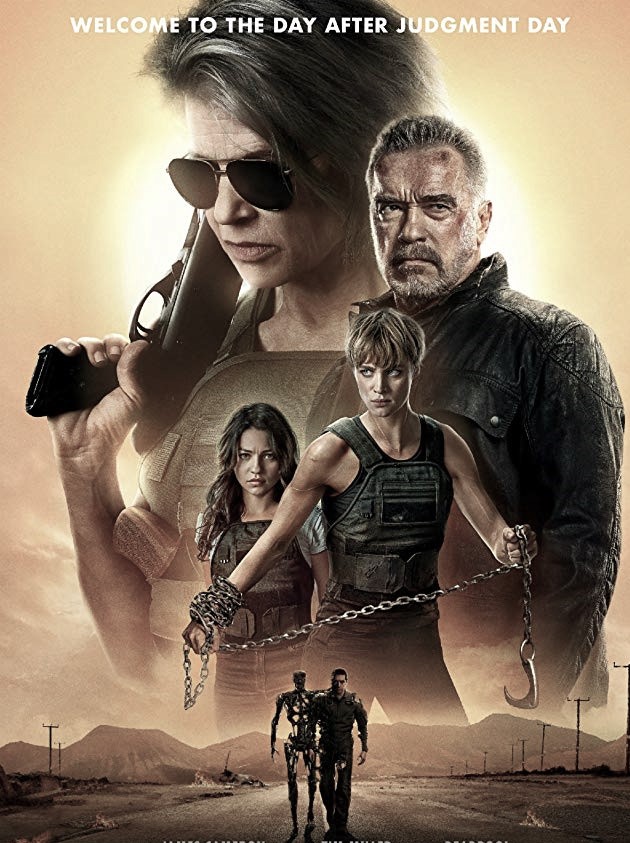
I will just say it straight and clearly – the Terminator film franchise is truly unnecessary today and, having seen its debut in the year 1984 (written and directed by a very young James Cameron), I should say that the saga really ended with 1991’s Terminator 2: Judgment Day (Cameron’s masterpiece).
Ultimately, I left the cinema disappointed yet again although the experience was not as bad as that of 2015 (with Genisys).
Clearly, the filmmakers took inspiration from Star Wars: The Force Awakens and mix the more established film franchise stars (in supporting roles) with the younger actors.
To put it short, Terminator: Dark Fate took creative inspiration from 2015’s Star Wars: The Force Awakens. This means it was made with recycled concepts, told the story through its new characters (played by actors who are much younger and who are supposed to appeal to younger viewers) and back them up with the old, more iconic actors (Arnold Schwarzenegger and Linda Hamilton) limited to supporting roles. When it comes to presentation, this new movie felt more like a roller coaster ride than an actual story laced with spectacle stage-by-stage.
That is pretty much how Terminator: Dark Fate turned out. It does not matter that this was directed by Tim Miller, the guy behind 2016’s Deadpool. It does not matter that the great James Cameron got involved with producing and story credit (he shared with a few other names). It does not matter that this movie was made with a large budget of $185 million and relied heavily on computers to generate the visuals (which look fake most of the time). Whatever the preparations made, they did not matter at all because Terminator: Dark Fate is a rushed and creative disappointment that does not deserve your time nor your money.
The movie opened with archived footage of Sarah Connor expressing the darkness of the future coming. This was immediately followed by a scene set in 1998 showing Sarah and her son John living in an age in which Judgment Day did NOT occur on August 29, 1997. Suddenly another Terminator T-800 Model 101 (another Schwarzenegger-type Terminator) appears and actually kills John Connor leaving Sarah in turmoil.
This is the protector sent through time by the human resistance.
John Connor, who has been a central story element in the 1984 and 1991 (memorably played by Edward Furlong) movies as he was destined to be the human resistance leader in the war with Skynet, was eliminated so quickly in the opening of this new movie very similar to how the character of Dwayne Hicks (played by Michael Biehn in the James Cameron-directed Aliens) got killed in a very dismissive way in the beginning of Alien 3. This move was nothing less than cynical, ill-conceived and even a daring disservice to Terminator fans.
From this point on, Terminator: Dark Fate turns into a “what if John Connor was dead and a new future war followed?” type of story.
Even though Judgment Day got prevented in relation to what Sarah and John achieved in Terminator 2, a new war between man and machines in the far future still occurs only this time Skynet is no more and the new enemy artificial intelligence (AI) this time is called Legion. This new story concept, by the way, is pretty insulting to any fan who loved the first two films directed by James Cameron as those flicks told a complete saga.
This is the new, future leader of the human resistance.
And then the plot of The Terminator got recycled. A human fighter is sent back through time to protect a person who is destined to become the leader of the human resistance. Also sent back through time is a Terminator designed to look human and infiltrate society with a mission to kill the future human resistance leader. This is essentially what Terminator: Dark Fate truly is and even though Sarah Connor returned (plus another Terminator T-800 played by Schwarzenegger), there really is nothing new, nothing fresh and nothing worth enjoying.
When it comes to quality, this movie does not have much standing for it. The new characters are not engaging at all and their respective performers really had nowhere to go to engage moviegoers. Mackenzie Davis playing the new combat-ready protector only served to beef the film with action and there is nothing compelling about her act, nor did the script provide anything to make her androgynous character memorable. The new human resistance leader played by Natalia Reyes is forgettable and unbelievable even though she tried hard being dramatic. Compared with Sarah Connor in 1984’s The Terminator, the chosen one Dani Ramos in the film was transformed from a struggling, working-class person into a brave fighter in a very rushed and unconvincing manner. Also, if you take a close look at Natalia Reyes, she is too short to be a figure of authority, too small to use weapons and her act is clearly sub-par in terms of quality making her big misfire in terms of casting. The performance, script and directing really had no depth when it comes to developing the characters.
The new Terminator (Rev-9) played by Gabriel Luna was nothing more than an uninspired attempt to outdo the T-1000 of Terminator 2. Luna was decent with playing cold and emotionless but when he acts human to infiltrate human society, he’s just generic at best.
This is the new cinematic villain that won’t stop to kill the future leader of the human resistance. Oh, the computer-generated visuals are often fake to look at.
As for Arnold Schwarzenegger and Linda Hamilton returning, it is sad for me to say that these two iconic performers of the film franchise got wasted. Sarah Connor in this movie was poorly written and this modern version ruins the legacy the character had since 1991. Schwarzenegger meanwhile played another T-800 Terminator whose adjustment into human society turned out to be unconvincing, even outlandish. A Terminator adjusting into domestic human life? Totally unbelievable!
If there is anything to admire in this ill-conceived movie, it is Schwarzenegger’s delivery of his lines as the Terminator. He was over 70-years-old at the time of filming and he no longer has the super fit, muscular build he was famous for but he still proved to be excellent in being robotic with the dialogue. Sadly, this good stuff from the ex-governor of California was not enough to save this movie from its dark fate.
The film has a lot of action and there is a notable variety of it here. Even though action-packed and the action quality is an improvement over Terminator 3, Salvation and Genisys, Terminator: Dark Fate is ultimately a ride that can only provide temporary relief from the pain of the weak script. Oh, the use of fake-looking CGI hurts the action and stunts
Conclusion
Let this be the LAST Terminator movie and let it fade away. How? By NOT spending your precious time and money on it.
Terminator: Dark Fate clearly failed to be a solid film and definitely it is NOT worthy of being the official follow-up (the “real Terminator 3”) to the first two films written and directed by James Cameron. Cameron’s involvement with this movie did not really improve the situation of the deteriorating Terminator film franchise and even worse, this big disappointment taints his record of excellence as a producer. Director Tim Miller, in my opinion, should go back to superhero film making or try directing a brand new project of science fiction that does not involve an established intellectual property.
Bottom line – Terminator: Dark Fate is absolutely not recommended. You definitely should NOT spend your money on this movie (the cinema, future release on streaming services, Blu-ray, DVD, etc.). The movie is also woke garbage and the product of DEI (diversity, equity and inclusion).
If you want to experience the cinematic greatness of the Terminator film franchise, go back to watching The Terminator and Terminator 2: Judgment Day instead.
Thank you for reading. If you find this article engaging, please click the like button below and also please consider sharing this article to others. Also my fantasy book The World of Havenoris still available in paperback and e-book format. If you are looking for a copywriter to create content for your special project or business, check out my services and my portfolio. Feel free to contact me as well. Also please feel free to visit my Facebook page Author Carlo Carrasco and follow me at HavenorFantasy@twitter.com










 Author Carlo Carrasco