A Look Back at Prime #11 (1994)

Disclaimer: This is my original work with details sourced from reading the comic book and doing personal research. Anyone who wants to use this article, in part or in whole, needs to secure first my permission and agree to cite me as the source and author. Let it be known that any unauthorized use of this article will constrain the author to pursue the remedies under R.A. No. 8293, the Revised Penal Code, and/or all applicable legal actions under the laws of the Philippines.

“I’m Prime. The real Prime!”

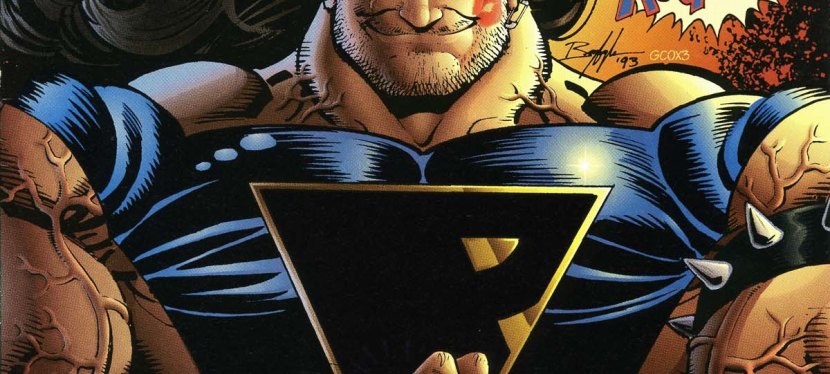
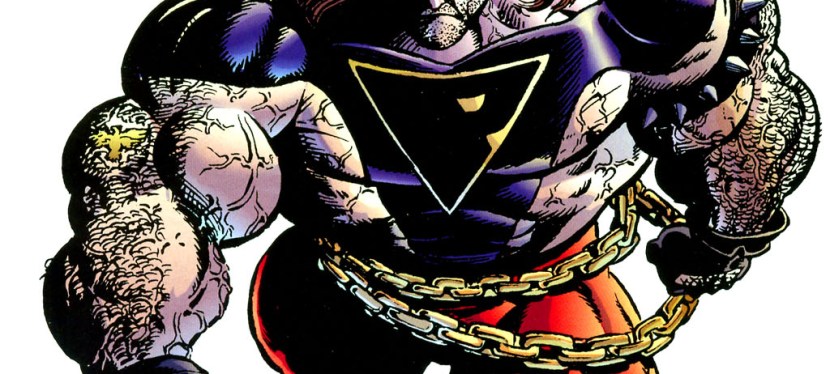
Those were the words Prime said in conflict involving the American military and Firearm (another Ultraverse main hero) as told in the pages of Prime #10. It was also at that same moment Prime appeared in a totally new look, a look so radical a change! Instead of heaving a clean haircut, he has long hair with a spiked headband. Instead of a cape (the most traditional part of superhero costumes), he wore a V-shaped shirt and chains.

To put it short, this was Prime’s new look in the Ultraverse (note: he appeared already like this in the early issues of UltraForce in 1994) and we will find out how people will react to his appearance in this look back at Prime #11, published in 1994 by Malibu Comics with a story written by Len Strazewski and Gerard Jones, and drawn by the late Norm Breyfogle.
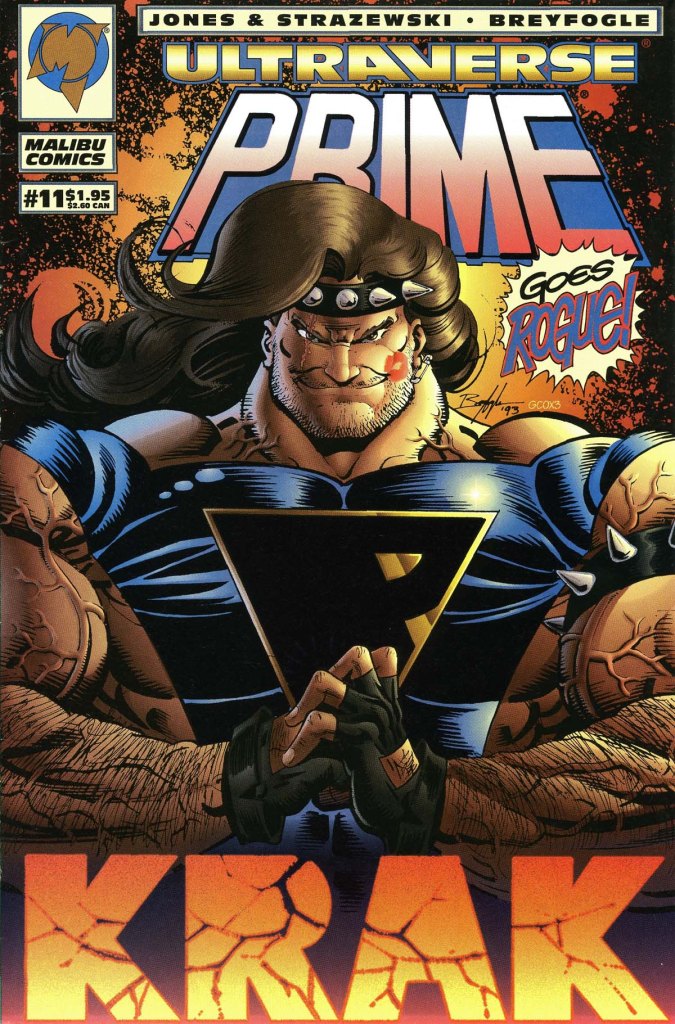
The cover.

Early story

The story begins with Prime flying over the Sunset Strip. There he visits a night club filled with a lot of people drinking, dancing and socializing while a live band performs for them. Prime easily catches people’s attention as he walks to the bar thinking how as his real self (teenager Kevin Green) could never go into a place like the club. As he is about to order an alcoholic drink, a pretty lady tells him to buy her a drink which compels him to say he left his wallet.

As they drink and socialize, Prime begins to enjoy the lady’s way of flirting with him. Suddenly a Hollywood celebrity (Justin Kuttner who appeared in Hardcase #1) interrupts them by confronting the lady. As the tension rises between the two, Prime intervenes a strikes Justin away from the lady. Justin gets up and prepares to fight Prime no matter the odds…

Quality
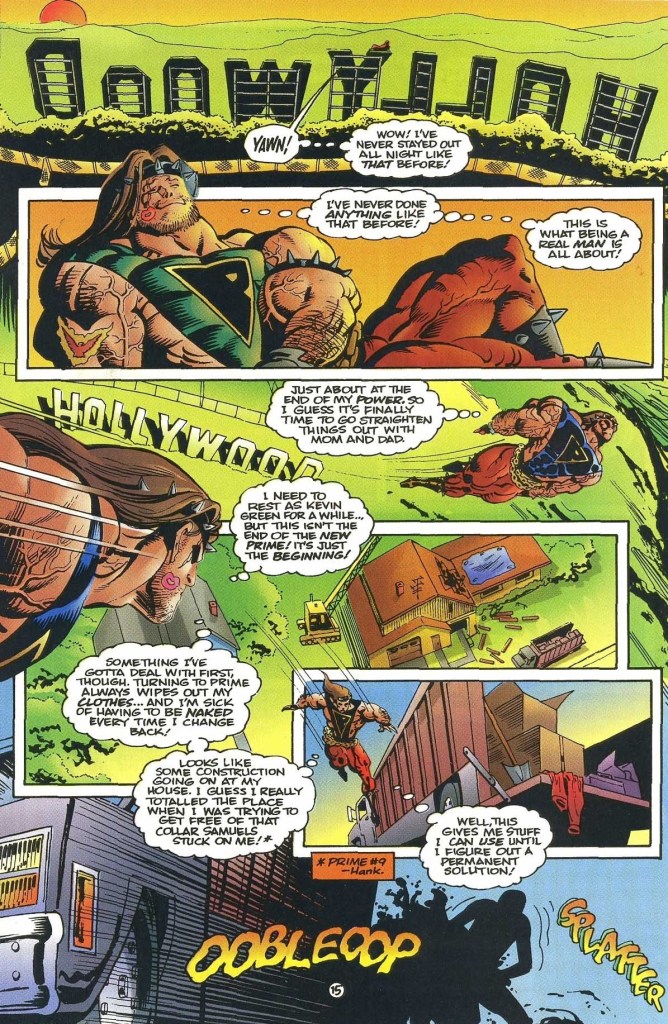
Prime in California.

There is a lot more in this comic book than simply showing Prime with his new look. To say the least, the story, dialogue and characterization are all very well-written. Even though there is a lack of a conflict between Prime and someone bad (note: Prime just got freed from the military’s grasp), the strong writing made this a character-driven piece that focuses more on Kevin and how his dual-life continues to impact himself and his family.

The biggest attraction in this comic book is the flashback showing the events that led to establishing the origin of Prime. This alone justifies acquiring this issue.

Conclusion
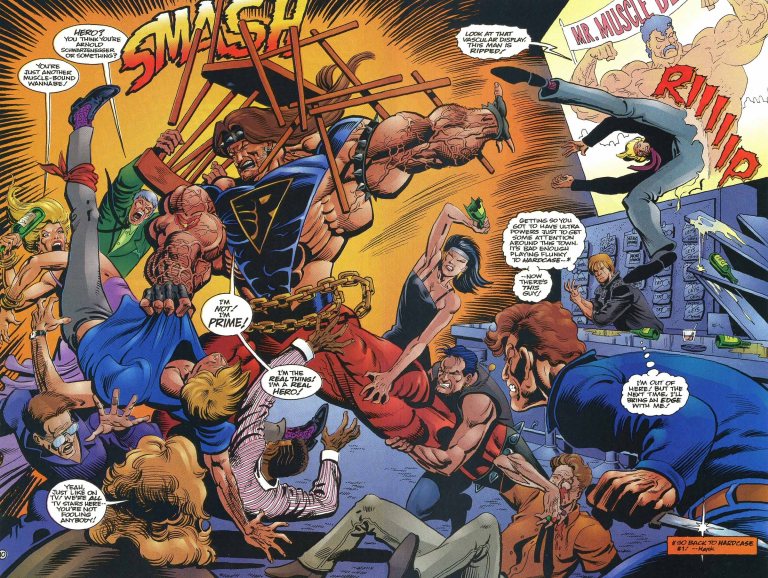
The money shot!

Prime #11 is a solid old comic book worthy of inclusion in anyone’s collection of Ultraverse and Malibu Comics-published issues. It does not have the expected good-versus-bad battle but it still managed to have some scenes of spectacle and its characterization makes it a must-read.

If you are seriously planning to buy an existing hard copy of Prime #11 (1994), be aware that as of this writing, MileHighComics.com shows that the near-mint copy of the regular edition costs $8 while the near-mint copy of the newsstand edition costs $26.

Overall, Prime #11 (1994) is recommended.

+++++

Thank you for reading. If you find this article engaging, please click the like button below and also please consider sharing this article to others. If you are looking for a copywriter to create content for your special project or business, check out my services and my portfolio. Feel free to contact me as well. Also please feel free to visit my Facebook page Author Carlo Carrasco and follow me at HavenorFantasy@twitter.com
A Look Back at UltraForce #5 (1995)

Disclaimer: This is my original work with details sourced from reading the comic book and doing personal research. Anyone who wants to use this article, in part or in whole, needs to secure first my permission and agree to cite me as the source and author. Let it be known that any unauthorized use of this article will constrain the author to pursue the remedies under R.A. No. 8293, the Revised Penal Code, and/or all applicable legal actions under the laws of the Philippines.

One of the things I enjoyed best about the UltraForce done by the solid creative team of Gerard Jones and George Perez is the fact that the team’s lesser known characters such as Pixx (the lone minor), Contrary, Ghoul and Topaz are richly layered, highly interesting and engaging members who really stand on their own and don’t get overshadowed by their major teammates (the Ultraverse’s premier lead heroes Hardcase, Prime and Prototype). Of course, the presentation of Pixx, Contrary, Ghoul and Topaz would not have been great had Gerard Jones failed to deliver the solid writing and managing required.

That being said, it’s time to find out more on how balanced the presentation of UltraForce members will be as the conflict with Atalon escalates further in this look back at UltraForce #5, published in 1995 by Malibu Comics with a story written by Jones and Perez.

The spoileriffic cover.

Early story

The story begins with Ghoul (still in the presence of Atalon and far away from his teammates) having a nightmarish vision of death, chaos, rioting and disasters. He recognizes a certain teammate included in the vision. His personal concern for his teammate grows, and king Atalon notices his distress. Atalon states he has cleared the final obstacles and what he has planned will push through. He intends to use many nuclear missiles on the world.

“When my warheads strike the raw nerve centers of your world, the surface will blossom with the fires of chaos and war,” Atalon tells Ghoul. “And the launching begins now. You see, Ghoul? Your world is dead. There’s nothing you can do. There’s no point in worry at all.”

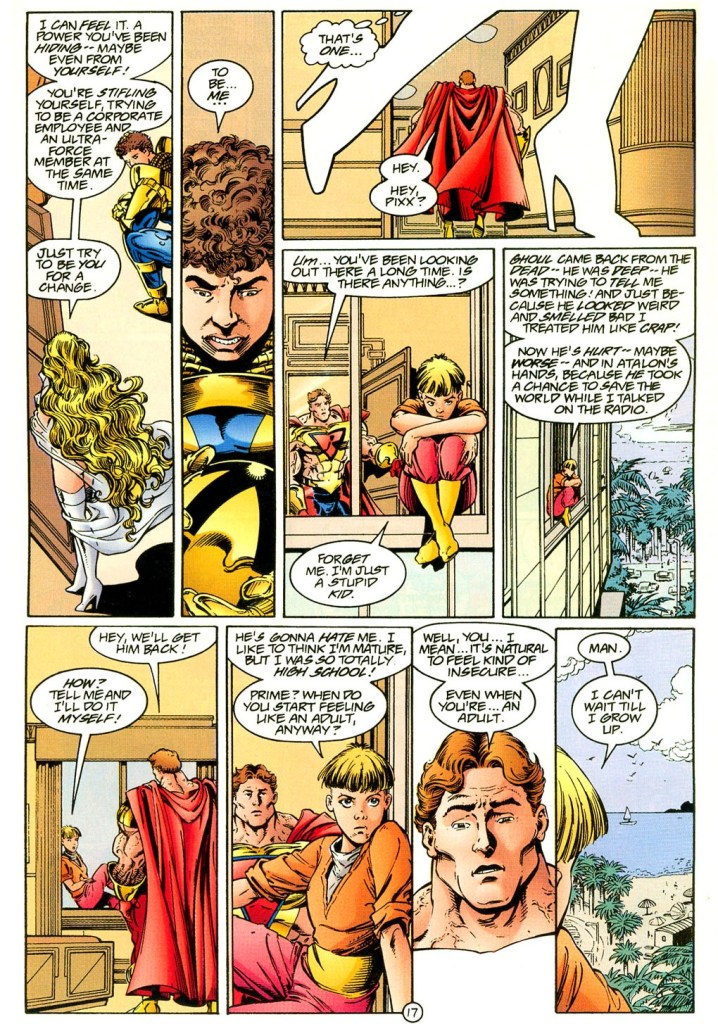
Over at Miami, Florida, Pixx talks to her mother via the telephone and assures her that she is in good hands with UltraForce with a role to give her teammates the youth point-of-view. After the phone talk, Pixx personally struggles with the stress of being with the team which itself has gotten involved not only with the global conflict with Atalon but also with the concerned world leaders and the ever demanding public.

Prime approaches her and, because she noticed her looking troubled, he asked her if she could handle the situation they are in. Pixx answers back and does some posturing that she is strong and capable. Prime, who is really teenager Kevin inside, feels he screwed-up and knows well that Pixx is older than him.

The UltraForce then meet on the top of the building…

Quality

Dynamic action drawn by the legendary George Perez supported by inkers and colorists!

Strong writing – check. Great visuals with high detail – check. The high quality and strong creative energy of the Jones-Perez team continued to shine brightly in this comic book. Definitely a very well-made comic book that also continued to deliver the great stuff like strong character engagement and development, dynamic action (hey, this is George Perez’s art!) and the like.

While issue #4 featured Atalon’s background story and some references about the history of his people, this comic book has its spotlight on the teenage member Pixx. Her dialogue and character development are very well crafted and as the story goes on, you will start to care about her.

The conflict with Atalon here shows the stakes raised high once more as the said leader of the creatures from deep below the surface acquired mankind’s nuclear weapons and really starts to control them. I should also state that this comic book is another spectator-filled pay-off story that succeeded issue #4 which was mainly a build-up type of story.

If there is anything wrong with the comic book, it is the cover as it truly is a major spoiler. Too bad that the art showed Pixx in the presence of a nuclear warhead because the imagery alone took out some of the power behind her story in the big conflict of the comic book.  

Conclusion

This art by Perez looks great and worthy of the cover!

UltraForce #5 is another solid read thanks again to its creators. I should also state that even though the cover art was a spoiler, at least the ending was intriguing and powerful to see.

If you are seriously planning to buy an existing hard copy of UltraForce #5 (1995), be aware that as of this writing, MileHighComics.com shows that the near-mint copy costs $16.

Overall, UltraForce #5 (1995) is highly recommended!

+++++

Thank you for reading. If you find this article engaging, please click the like button below and also please consider sharing this article to others. If you are looking for a copywriter to create content for your special project or business, check out my services and my portfolio. Feel free to contact me as well. Also please feel free to visit my Facebook page Author Carlo Carrasco and follow me at HavenorFantasy@twitter.com

A Look Back at UltraForce #4 (1995)

Disclaimer: This is my original work with details sourced from reading the comic book and doing personal research. Anyone who wants to use this article, in part or in whole, needs to secure first my permission and agree to cite me as the source and author. Let it be known that any unauthorized use of this article will constrain the author to pursue the remedies under R.A. No. 8293, the Revised Penal Code, and/or all applicable legal actions under the laws of the Philippines.

I just love reading stories of UltraForce, the superhero team that involved three major Ultraverse characters – Prime, Hardcase and Prototype – supported by secondary characters from varied parts of the said universe such as Topaz (identified with Mantra), Ghoul (The Exiles), Contrary (Freex) and Pixx. Of course, UltraForce stories would not have been strong without the combined creative forces of Gerard Jones and George Perez who in turn crafted the said team, established a really strong villain in Atalon and making Atalon’s arrival a major international crisis that is epic in scale. The first three issues (plus issue #0) all showed the series’ greatness!

Will the great stuff of the UltraForce creative team continue? We will find out right now in this look back at UltraForce #4, published in 1995 by Malibu Comics with a story written by Gerard Jones and drawn by George Perez.

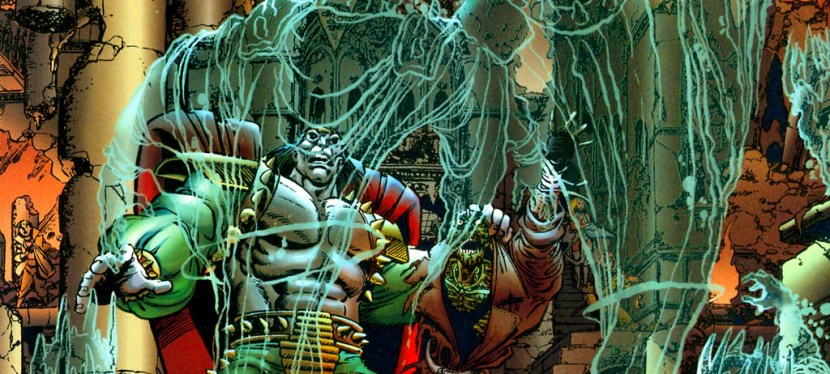
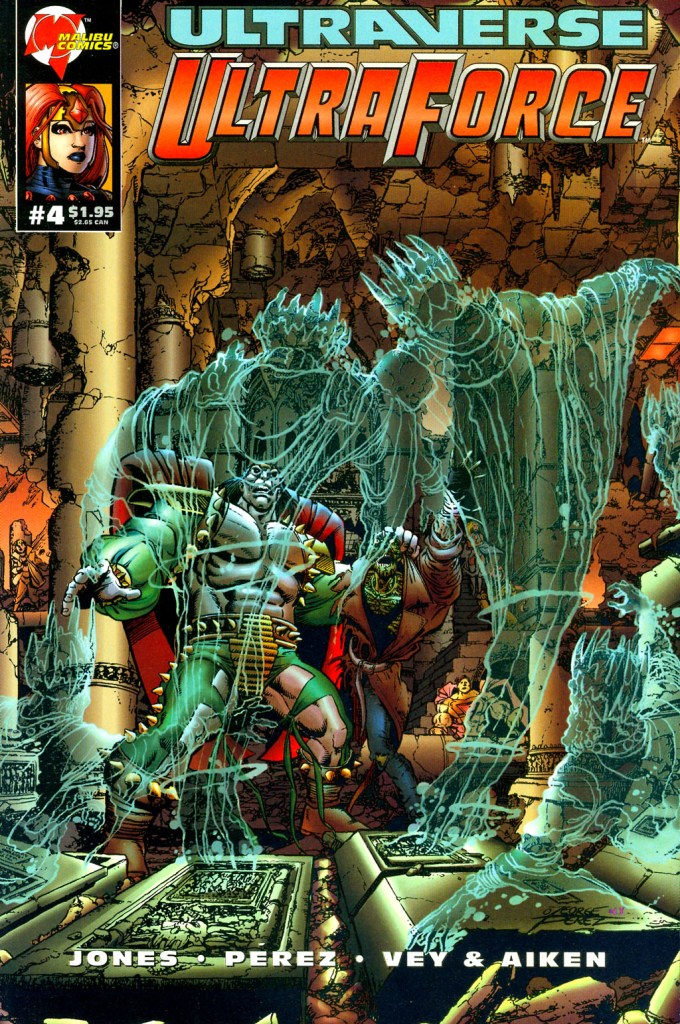
The cover.

Early story

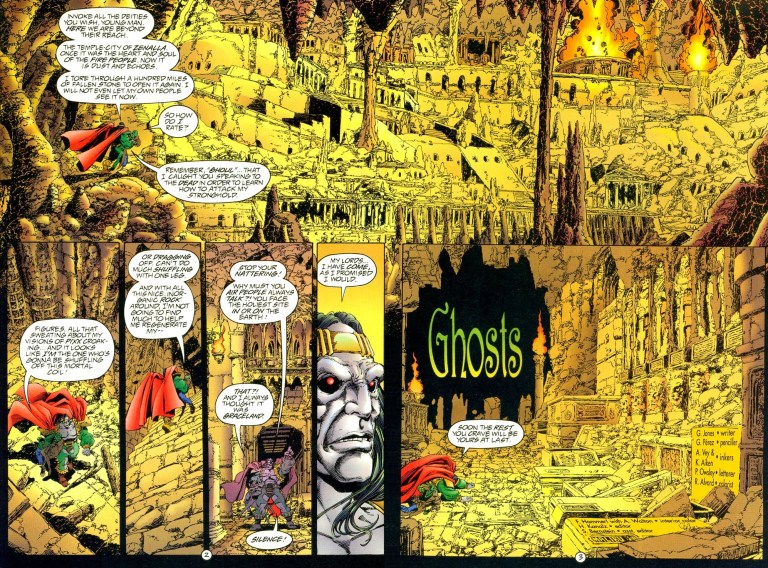
The story begins with UltraForce member Ghoul being held helplessly by King Atalon. He tells Ghoul that he has no intention of destroying the people of Earth for at least one more day. Some time later, the two arrived at the remains of an old civilization very deep in the cavern. Atalon tells Ghoul: Invoke all the deities you wish, young man. Here we are beyond their reach. The temple city of Zenalla. Once it was the heart and soul of the fire people.

As it turns out, Atalon reveals that he tore through a hundred miles of fallen stone to reopen Zenalla and expressed that he will not event let his own people see it. After some more talk and travel, Atalon kneels and bows to specific monuments of his ancestors who are also the founder of cities and the fathers of the fire people. He tells Ghoul that he will bring them to speak to him.

Elsewhere, the mainstream media magnified the powerful blast that happened off Cuba which contributed to the panic and fear of the public. With people agitated, the UltraForce faces the media in an attempt to provide clarity and calm.

Hardcase (with Prototype, Prime, Topaz, Contrary and Pixx standing with him) tells the world: Activity continues on the island-we have to assume that Atalon planned that blast and survived it! And that was just one bomb-out of dozens he’s threatening to launch against mankind! As long as he has the gravity power to launch those nukes, we can’t afford a replay of our last assault!

Quality

I just love the interactions between the members of Ultraforce.

To make things clear, issue #2 was mainly a build-up story which was followed by a huge, spectacle-filled pay-off in issue #3. Backed with still very solid writing, this comic book is another build-up type of story and its most compelling feature is the origin of Atalon which was very well told by Jones and Perez. Atalon’s background story is definitely one of the finest origin stories of the Ultraverse ever told that focused more on an anti-hero instead of a hero. Through his past, you will realize that Atalon is not your typical big, muscular, raging antagonist but rather a leader who went through a lot of struggles when he was young (and had no power) and was compelled to lead his people as a result of key events that happened.

I really enjoyed discovering also the history of Atalon’s people who existed entirely deep underground and were told by the supposedly wise elders that the surface of the Earth was not an air-world and that they should only remain under it. As for how Atalon gained power, that one was strongly told and, more importantly, was believable in its presentation.

More on the build-up and character development, the members of UltraForce unsurprisingly got a good chunk of the spotlight in favor of characterization. The interaction between Hardcase and Topaz was not only very engaging but also symbolized the conflicts between their respective cultures (with Topaz coming from a society of women). And then there was Contrary with her very distinctive way of interacting with others with a sense of manipulation.

Conclusion

The lost city!

UltraForce #4 (1995) is another great comic book thanks to the Jones-Perez team. The interactions between the UltraForce is top-notch, the origin of Atalon is fantastic, and the theme about society reacting to an existing superhero team that supposed to help them in a time of crisis is very believable. As with the first four issues (including issue #0), the way this comic book’s story was written showed that the creators made preparations. This one is not only a whole lot of fun to read but also very engaging from start to finish.

If you are seriously planning to buy an existing hard copy of UltraForce #4 (1995), be aware that as of this writing, MileHighComics.com shows that the near-mint copy of the comic book costs $16.

Overall, UltraForce #4 (1995) is highly recommended!

+++++

Thank you for reading. If you find this article engaging, please click the like button below and also please consider sharing this article to others. If you are looking for a copywriter to create content for your special project or business, check out my services and my portfolio. Feel free to contact me as well. Also please feel free to visit my Facebook page Author Carlo Carrasco and follow me at HavenorFantasy@twitter.com

A Look Back at UltraForce #2 (1994)

Disclaimer: This is my original work with details sourced from reading the comic book and doing personal research. Anyone who wants to use this article, in part or in whole, needs to secure first my permission and agree to cite me as the source and author. Let it be known that any unauthorized use of this article will constrain the author to pursue the remedies under R.A. No. 8293, the Revised Penal Code, and/or all applicable legal actions under the laws of the Philippines.

Some time ago, I wrote and explored what would happen had superheroes been real and got involved with government leaders and the corporate media. Considering what has been going on for some time now, I hope that more readers would read the article and realize the conspiracy between political parties and corporate media is real and even dangerous. Did you even notice that in America, the Left-leaning media outlets have been distorting the facts about the riots involving the Marxist movement Black Lives Matter and the violent Antifa group? Also, did you notice that the liberal media distorted the meaning of the words peaceful protesters? Being a former local community print media publication journalist myself, I know why media outlets (whose owners and managers willingly get involved with those who wield power) would distort the news and insult the public’s intelligence. Really, the truth is that objective, truthful, responsible and professional journalism is shrinking.

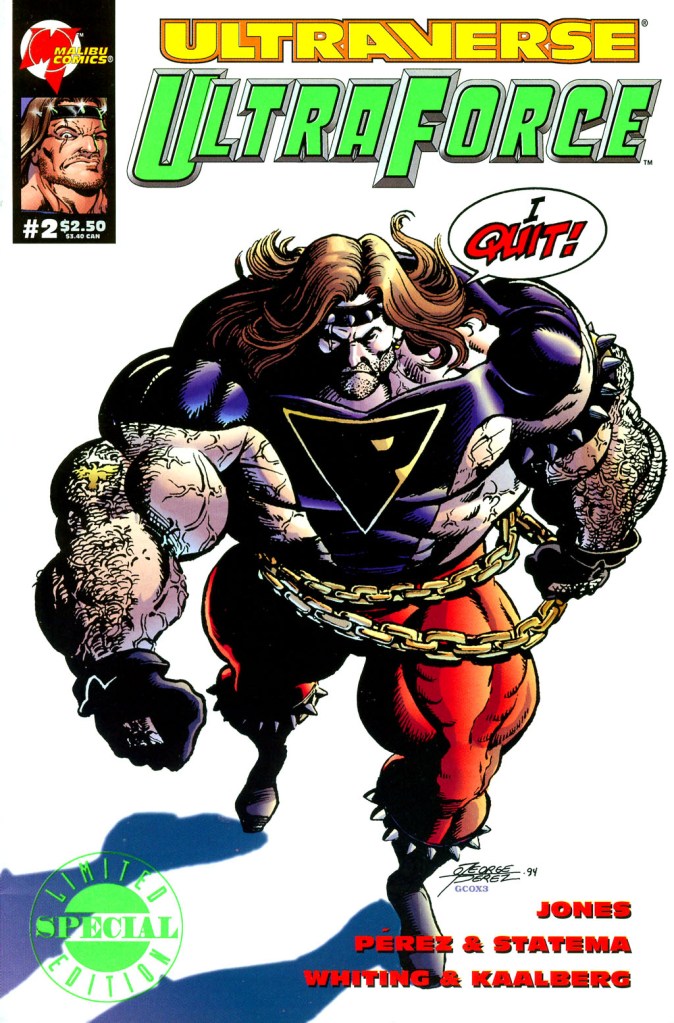
Enough with the sickening news wave of negativity magnified by corporate media. It’s time to examine the superhero-government-media conspiracy followed by a fantastic conflict within the Ultraverse in this look back at UltraForce #2, published in 1994 by Malibu Comics with a story written by Gerard Jones and art by George Perez (breakdowns) and John Statema (finished pencils).  

The cover of the limited edition.

Early story

The story begins with UltraForce member Ghoul visiting a place within the woods. He stops at a huge grave site of the Exiles and tries to communicate with his former teammates but to no avail. He only got glimmers from them. After expressing himself to nobody, he walks away.

Shortly after, UltraForce composed of Hardcase, Prime, Prototype, Ghoul, Pixx, Contrary and Topaz meet with US President Bill Clinton, US Senator Bob Dole, UN’s secretary general Boutros-Ghali and Blackrock of the press in the Oval Office at the White House in Washington, DC. As they discuss important matters together, Atalon makes his move against the civilized world…

Quality

The interactions between the members of UltraForce are richly written.

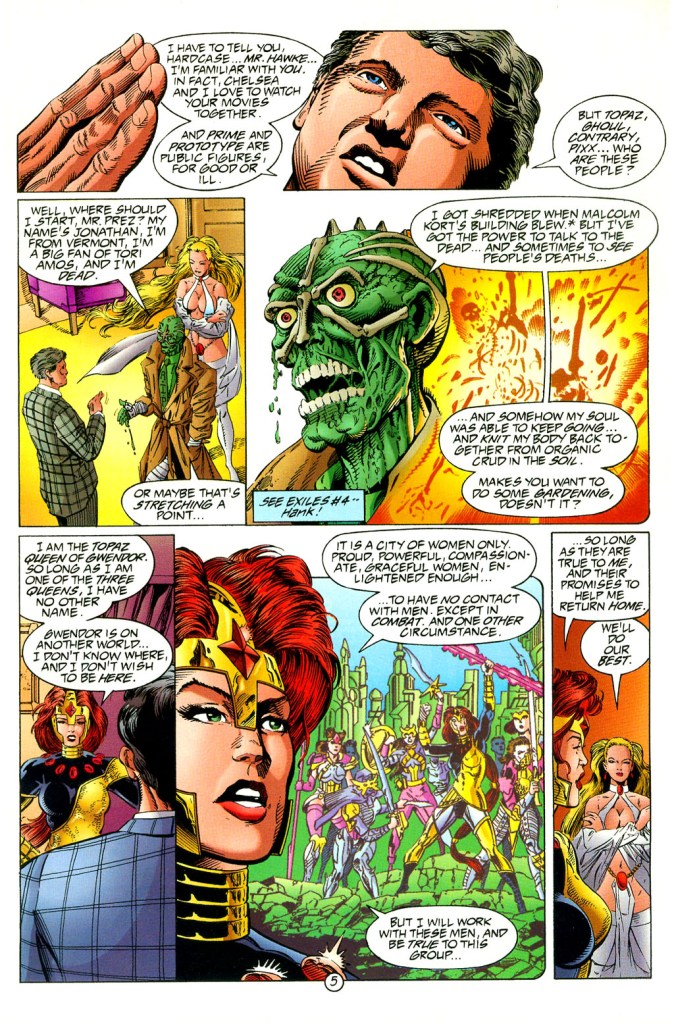
To start with, this comic book is a build-up type of story containing lots dialogue, exposition and explanatory pieces with not too much spectacle. That’s not to say this is a boring issue, in fact it still remained quite engaging to read. The very wordy script for this comic book was written with care and there were efforts made to keep the story cohesive even as it grapples with all the details for explaining. What the writer presented not only explained what is happening and why the world is being threatened by Atalon and his forces from underneath, the script also took its time in presenting the characters struggling with each other’s views while providing key moments that add some development to the personality of some of the characters (example: Prime’s interest in Chelsea Clinton reflected not only his teenage self but also his first encounter with her during the Prime monthly series). As far as storytelling goes, it succeeded in helping me understand the huge event transpiring and justified why UltraForce as a team is needed. When you think about it, Prime, Hardcase and Prototype already have major affairs of their own (especially when you read their respective monthly series) but Atalon is a major threat that requires the three to work together (along with Pixx, Ghoul, Topaz and the ever scheming Contrary).

More on the conspiracy between the superheroes, the government leaders and the corporate press, this comic book is more relevant than ever today even though superheroes do not even exist in real life. I like the moments when Contrary wanted access to government files which drew a strong reaction from Bill Clinton who in turn is being watched carefully by opposition leader Bob Dole. For his part, Hardcase expressed that his team does not want any power struggle between ultras and the government. And then Bob Dole stressed to Prototype that he works for Ultratech and said: I take it that you are a defender of the rights of the private sector?

Of course, the highlight of the writing is the dynamic interactions between the UltraForce members when they are on their own and struggle to work together due to their respective differences. The dialogue is very rich.

When it comes to visuals, this one is rather unique because it has breakdowns by the legendary George Perez with finished pencil work by John Statema. It’s not a pure Perez art work which is obvious but still I recognized the characters and there is still a high level of visual detail all throughout. Still a solid looking comic book!

Conclusion

This is a clever way of doing exposition…Bill Clinton learns more about Topaz and Ghoul but only the readers get a visual presentation.

Never mind the fact that it lacked spectacle, UltraForce #2 is still compelling to read mainly due to its strong writing, the memorable interactions between the characters and emphasis of the crisis that justifies the presence of the team complete with impact on the world. Not only that, this comic book event went the extra mile to emphasize crossing-over within the Ultraverse by including The Strangers (check out The Strangers #4 and Hardcase #4 for reference).

If you are seriously planning to buy an existing hard copy of UltraForce #2 (1994), be aware that as of this writing, MileHighComics.com shows that the near-mint copy of the regular edition costs $8 while the near-mint copy of the limited edition costs $12.

Overall, UltraForce #2 (1994) is highly recommended!

+++++

Thank you for reading. If you find this article engaging, please click the like button below and also please consider sharing this article to others. If you are looking for a copywriter to create content for your special project or business, check out my services and my portfolio. Feel free to contact me as well. Also please feel free to visit my Facebook page Author Carlo Carrasco and follow me at HavenorFantasy@twitter.com
A Look Back at Prototype #11 (1994)

Disclaimer: This is my original work with details sourced from reading the comic book and doing personal research. Anyone who wants to use this article, in part or in whole, needs to secure first my permission and agree to cite me as the source and author. Let it be known that any unauthorized use of this article will constrain the author to pursue the remedies under R.A. No. 8293, the Revised Penal Code, and/or all applicable legal actions under the laws of the Philippines.

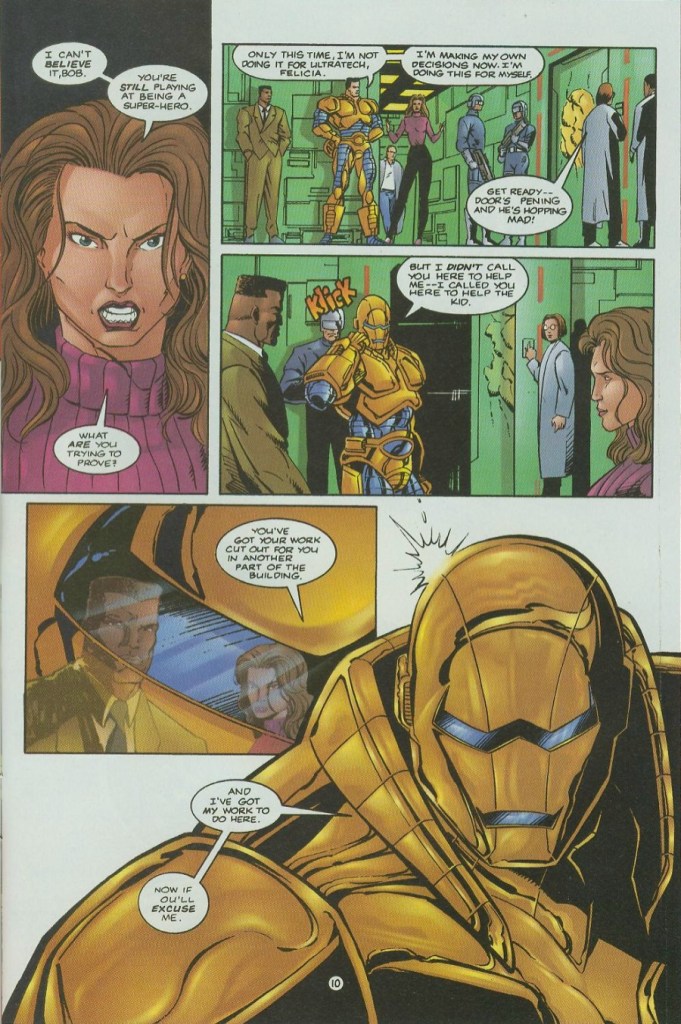
Hey fellow superhero comic book geeks and Ultraverse fans! Welcome back to my continuing retrospective of the Ultraverse through the Prototype series of comic books published by Malibu Comics. Last time around, Jimmy Ruiz (Prototype) was not prominent as the comic book focused more on Ranger (the previous Prototype piloy Bob Campbell actually) who took on a group of terrorists with some help.

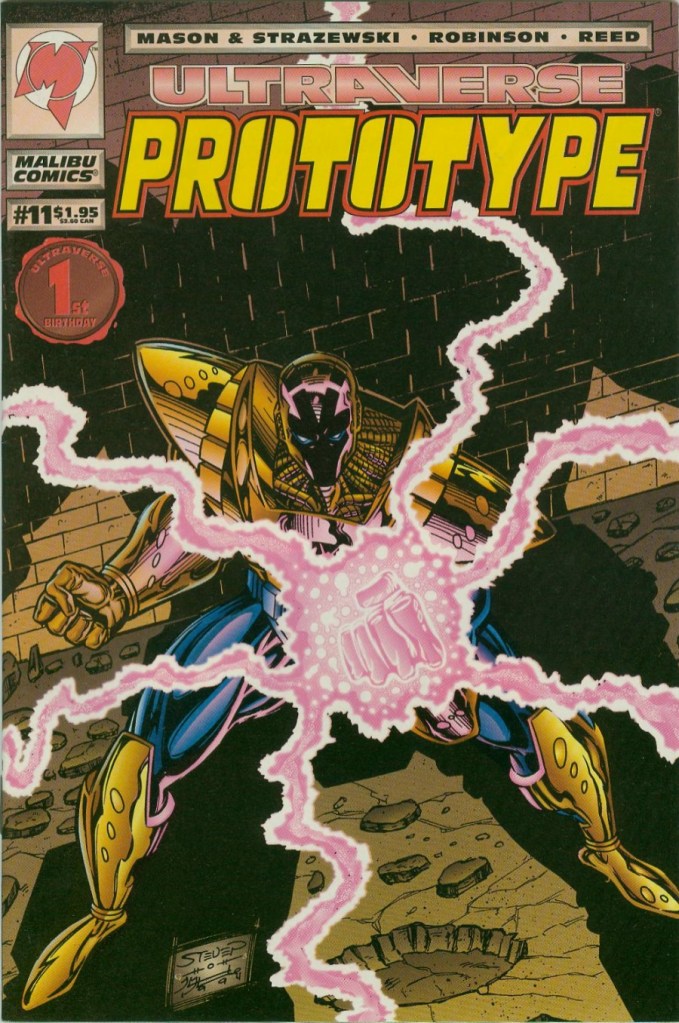
As such, we can see what happens next with this look back at Prototype #11, published in 1994 by Malibu Comics with a story by Tom Mason and Len Strazewski and art by Roger Robinson.

The cover.

Early story

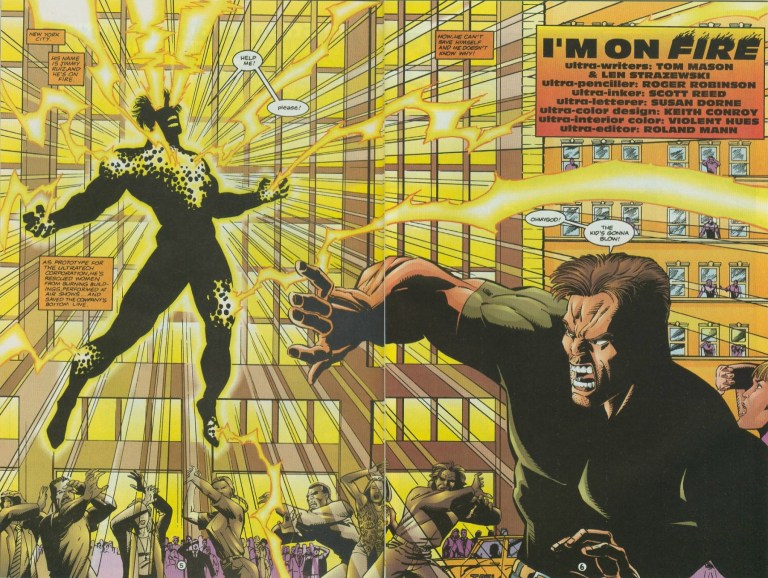
The story begins with Glare, an old nemesis of Prototype. As it turns out, he was revived by some scientists in a high-tech facility of the sinister group Aladdin. The green-skinned Glare breaks free from the restraints and starts causing some damage. He is driven by revenge against Stanley Leland, Ultratech and Ranger (Bob Campbell).

Meanwhile on the street of New York, Jimmy Ruiz (Prototype) and Bob Campbell are together. Jimmy, who is not even using the powered suit of armor, released a lot of energy while floating off the surface causing a major public disturbance. Afterwards, Bob decides to help his Prototype successor…

Quality

Bob Campbel in his Ranger powered suit of armor.

Let me start by confirming that the storytelling is very good. In fact, the high quality of writing was maintained and judging from the presentation of having Jimmy Ruiz and Bob Campbell together in a full issue (note: they got together only in the late stages of issue #10), it seems that Tom Mason and Len Strazewski had things planned out in an organized fashion. The result is having the two Prototype pilots not only together but getting involved (in a pretty believable way) in response to a rising danger. To make things clearer, this is NOT the anticipated superheroes-set-aside-their-differences-to-work-together-to-solve-the-problem type of story.

Bob Campbell still got plenty of the spotlight as Ranger and his battle with Glare is a lot of fun to read. Jimmy Ruiz meanwhile is developed even further. I also like the scenes that emphasized the difference between being an ultra and a tool of Ultratech which affects Jimmy.

Conclusion

Jimmy Ruiz and Bob Campbell together.

Prototype #11 is another enjoyable and compelling Ultraverse comic book to read. Its own story is indeed special and worthy of being an Ultraverse 1st birthday issue (as marked on the cover). Clearly this comic book marked a bold new direction of storytelling just as the two Prototype pilots are finally together.

If you are seriously planning to buy an existing hard copy of Prototype #11 (1994), be aware that as of this writing, MileHighComics.com shows that the near-mint copy of the comic book costs $8.

Overall, Prototype #11 (1994) is highly recommended!

+++++

Thank you for reading. If you find this article engaging, please click the like button below and also please consider sharing this article to others. If you are looking for a copywriter to create content for your special project or business, check out my services and my portfolio. Feel free to contact me as well. Also please feel free to visit my Facebook page Author Carlo Carrasco and follow me at HavenorFantasy@twitter.com
A Look Back at RoboCop versus The Terminator #3 (1992)

Disclaimer: This is my original work with details sourced from reading the comic book and doing personal research. Anyone who wants to use this article, in part or in whole, needs to secure first my permission and agree to cite me as the source and author. Let it be known that any unauthorized use of this article will constrain the author to pursue the remedies under R.A. No. 8293, the Revised Penal Code, and/or all applicable legal actions under the laws of the Philippines.

Hey everyone! It’s time to go back to the comic book crossover featuring two metallic titans, The Terminator and RoboCop! I have already reviewed two issues of the 4-issue mini-series published by Dark Horse Comics and so far, it’s been a mixed ride. Issue #1 was pretty much a huge build-up that led to a nice pay-off in issue #2. Considering what happened at the end of the last issue, I got hooked with wanting to see what follows next.

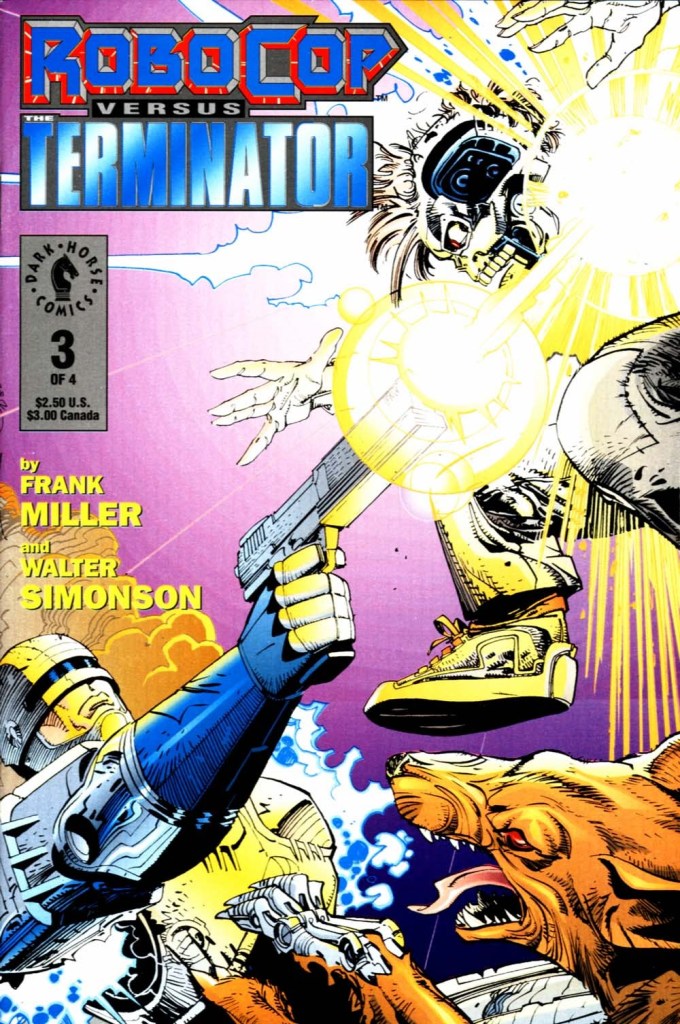
As such, here is my look back at RoboCop versus The Terminator #3, published in 1992 by Dark Horse Comics with a story written by Frank Miller and drawn by Walt Simonson.

The cover.

Early story

The story begins in the far future in with planet Earth already saved but at the expense of humanity. The human race not only got crushed but also flattened, processed and converted into energy to fuel the Terminators. While things look certain and final for machines and man in the far future, a universe is about to organize.

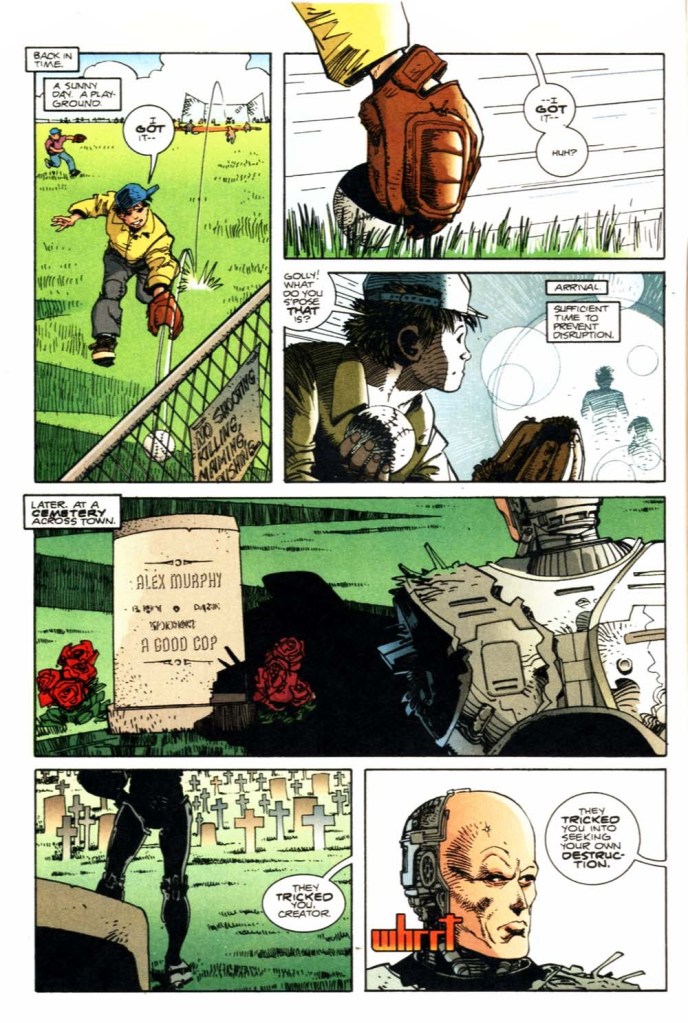
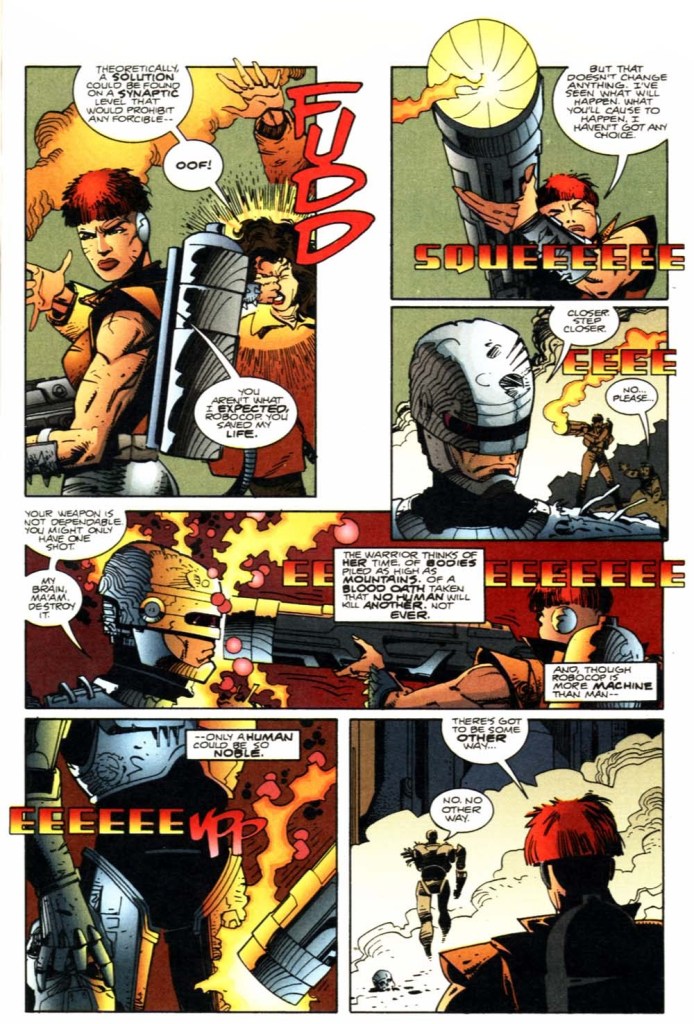
Back in the present day, RoboCop just defeated the Terminator in a high-octane battle that caused a whole lot of damage. The lady from the far future asked RoboCop if he understood what has happened and if he finally believes she told the truth. Realizing the truth, RoboCop allows her to come close and try to blast him with her huge weapon. The attempt failed and RoboCop walks away.

RoboCop visits the cemetery and spends time at his grave that states his name: Alex Murphy. After some deep reflection, RoboCop recalls his vision of the far future. This prompts him to take the most drastic action he could think of…

Quality

Something suspenseful…

Considering how the story turned out in the first two issues, it was no surprise that some drastic twists had to be taken to not only continue the combined universes of RoboCop and the Terminator, but also keep things fresh. The good news here is that Frank Miller’s writing is pretty good and he successfully kept the story cohesive even though drastic twists were made.

At the very core of the story is the theme about RoboCop being acknowledged as the creator of Skynet and the Terminators. As a police officer, RoboCop’s duty is to protect the innocent and uphold the law for the good of his local society, and yet for as long as he exists, so will Skynet and the Terminators of the far future. How Frank Miller fused key elements of RoboCop’s mythos with those of the Terminator franchise was pretty clever and believable from a fantasy viewpoint.

When it comes to weak points, I should say that Walt Simonson’s are here is not great although he does a descent job with drawing RoboCop. Simonson’s visual take on the Terminators has that cartoony look which is alienating.

Conclusion

It sure is hard to make the moves to drastically alter the future for the good of humanity.

RoboCop versus The Terminator #3 is a successfully told chapter in its 4-issue mini-series. It falls short of the greatness of issue #2 but it still proved to be fun and compelling to read. By the time the comic book ended, the stakes were raised for the next issue which I look forward to read.

If you are seriously planning to buy an existing hard copy of RoboCop versus The Terminator #3 (1992), be aware that as of this writing, MileHighComics.com shows that the near-mint copy costs $15.

Overall, RoboCop versus The Terminator #3 (1992) is recommended.

+++++

Thank you for reading. If you find this article engaging, please click the like button below and also please consider sharing this article to others. If you are looking for a copywriter to create content for your special project or business, check out my services and my portfolio. Feel free to contact me as well. Also please feel free to visit my Facebook page Author Carlo Carrasco and follow me at HavenorFantasy@twitter.com
A Look Back at Hardcase #14 (1994)

Disclaimer: This is my original work with details sourced from reading the comic book and doing personal research. Anyone who wants to use this article, in part or in whole, needs to secure first my permission and agree to cite me as the source and author. Let it be known that any unauthorized use of this article will constrain the author to pursue the remedies under R.A. No. 8293, the Revised Penal Code, and/or all applicable legal actions under the laws of the Philippines.

Hey comic book geeks and superhero enthusiasts! Are you ready for another trip back to the Ultraverse through the stories of Hardcase? Before getting there, I should state that the last Hardcase comic book I reviewed ended in a very intriguing way.

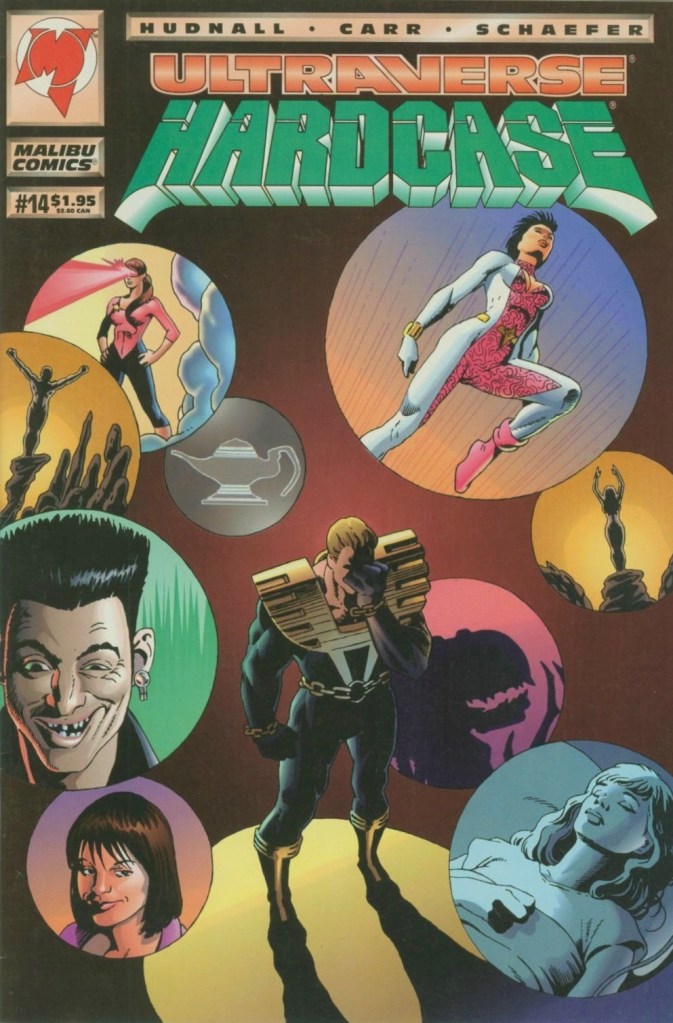
To find out more what followed, here is a look back at Hardcase #14, published in 1994 by Malibu Comics with a story written by the late James Hudnall and drawn by Steve Carr.

The cover.

Early story

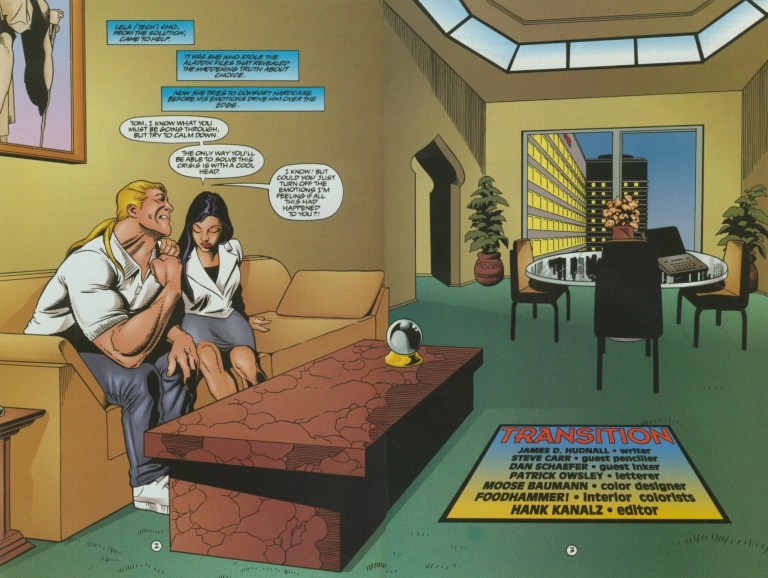
The story begins with Tom Hawke/Hardcase wondering if he is turning insane. He went through a lot lately such as getting targeted by Aladdin for elimination, learning that a portion of Linda’s brain was taken by Aladdin via operation, and his new lover Choice (who has the mentioned part of Linda’s brain in her) just vanished in front of him and Lela Cho/Tech (of The Solution) who seated near him.

Lela tries to calm him down and shares to him that she herself went through a whole lot of trouble which made her form her team. Hardcase is concerned that Choice could be in danger already. Lela reminds him of what happened during their time on the moon. She states that there is something out there, a flat world. Hardcase speculates that someone from out there could have taken Choice away…

Quality

Compared to issue #13, the storytelling in this comic book went back to build-up tension and suspense for future developments waiting to happen. When it comes to characterization, you will find Hardcase being without a partner for the first time since the early issues of the series. This also resulted some short but notably dramatic scenes that further developed Hardcase’s personality. As this was written by the late James Hudnall, there is more crossing-over between Hardcase and a few members of The Solution which is pretty good creative move.

When it comes to the art, Steve Carr did a good job visualizing the characters. His art is a radical change from that of Kelly Krantz in issue #13.

Conclusion

Picking up from where issue #13 ended.

To put straight, Hardcase #14 will appeal to fans who don’t mind the lack of action (like issue #13) for as long as the Hollywood hero became more prominent and his personality developed further. If you are wondering what happened to Choice, you’ll have to search elsewhere in the Ultraverse. Also there is continued build-up behind the scenes setting up gradually (yet again) the inevitable rematch between Hardcase and a certain nemesis from the past.

If you are seriously planning to buy an existing hard copy of Hardcase #14 (1994), be aware that as of this writing, MileHighComics.com shows that the near-mint copy of the regular edition costs $14 while the near-mint copy of the newsstand edition costs $13.

Overall, Hardcase #14 (1994) is recommended.

+++++

Thank you for reading. If you find this article engaging, please click the like button below and also please consider sharing this article to others. If you are looking for a copywriter to create content for your special project or business, check out my services and my portfolio. Feel free to contact me as well. Also please feel free to visit my Facebook page Author Carlo Carrasco and follow me at HavenorFantasy@twitter.com
A Look Back at UltraForce #0 (1994)

Disclaimer: This is my original work with details sourced from reading the comic book and doing personal research. Anyone who wants to use this article, in part or in whole, needs to secure first my permission and agree to cite me as the source and author. Let it be known that any unauthorized use of this article will constrain the author to pursue the remedies under R.A. No. 8293, the Revised Penal Code, and/or all applicable legal actions under the laws of the Philippines.

Hey everyone! I bet you heard the sad news about the layoffs over at DC Comics which is the result of a corporate restructuring on the part of AT&T. With the ongoing pandemic of COVID-19, restructuring in the private sector is inevitable with the intention of keeping business surviving. Already I noticed some people are divided over the DC Comics layoffs – some people condemned the corporate hierarchy for laying off DC’s employees while some believe it is necessary to keep long-time comic book publisher alive. As for the socialist and Communist-minded critics, I wonder if they prefer the State Government of California (led by a tyrant governor) to fully take over DC Comics just to prevent layoffs and still be able to provide financial assistance (including taxpayers’ money) to illegal immigrants.

Wow. Just about any news development can get politicized. Regardless, the Political Left clearly support criminals, embrace corruption, move to destroy capitalism and move to betray their fellow citizens. Anyway, enough with the current events. If you want some escapism from the harshness of reality, then join me on my look back at UltraForce #0, published in 1994 by Malibu Comics with a story by Gerard Jones and illustrated by the legendary George Perez.

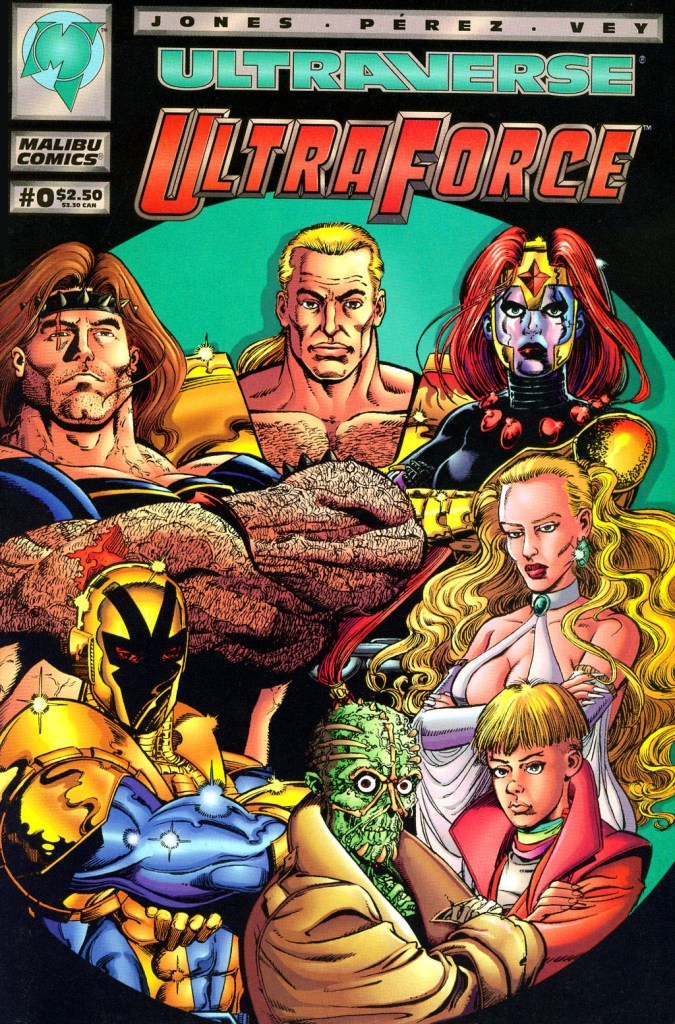
Great cover by George Perez.

Early story

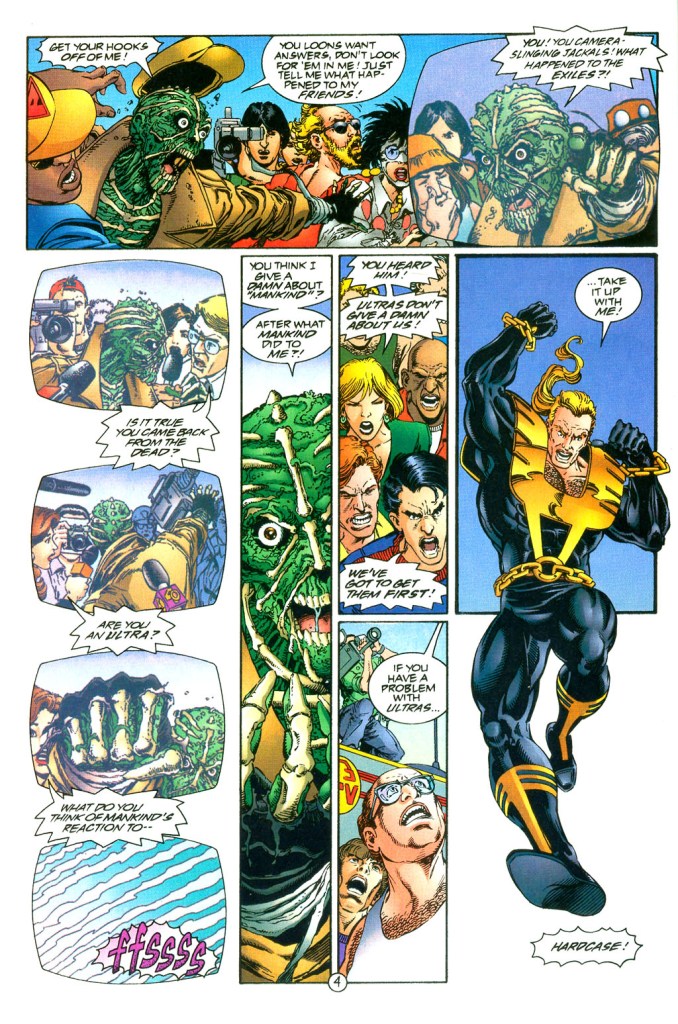
The story begins at a cemetery where Ghoul rises from the grave and disturbs a man and a woman who planned to have a good time together that evening. The next morning on the streets of Hollywood, police officers struggle to separate the people who condemned ultras apart from those who believe in the ultras. Ghoul, now wearing a trench coat, is in the middle of the crowd and it turns out he is looking for his friends…the Exiles. Suddenly, Hardcase comes in and easily catches the attention of the aggressive news media who asked questions such as:

“As the most visible ultra, do you feel ultras should be feared or worshipped?”

“What about the accountability of corporate-sponsored ultras like Prototype?”

“How do we contain an out-of-control vigilante like Prime?”

Given his experience as a celebrity, Hardcase carefully explains that even though most ultras try to do the right thing, they are not accountable for each other. Elsewhere, young Kevin Green watches the live feed of Hardcase on TV. In response to what he saw and heard about having ultras held accountable, Kevin becomes fascinated with the idea of a team of ultras who are united and cannot be beaten by the government.

Suddenly Kevin’s chest begins to hurt and moves out of the house leaving his mother. After hiding himself behind the bush, he transforms into Prime and flies away to show the world what ultras can do when he leads them…

Quality

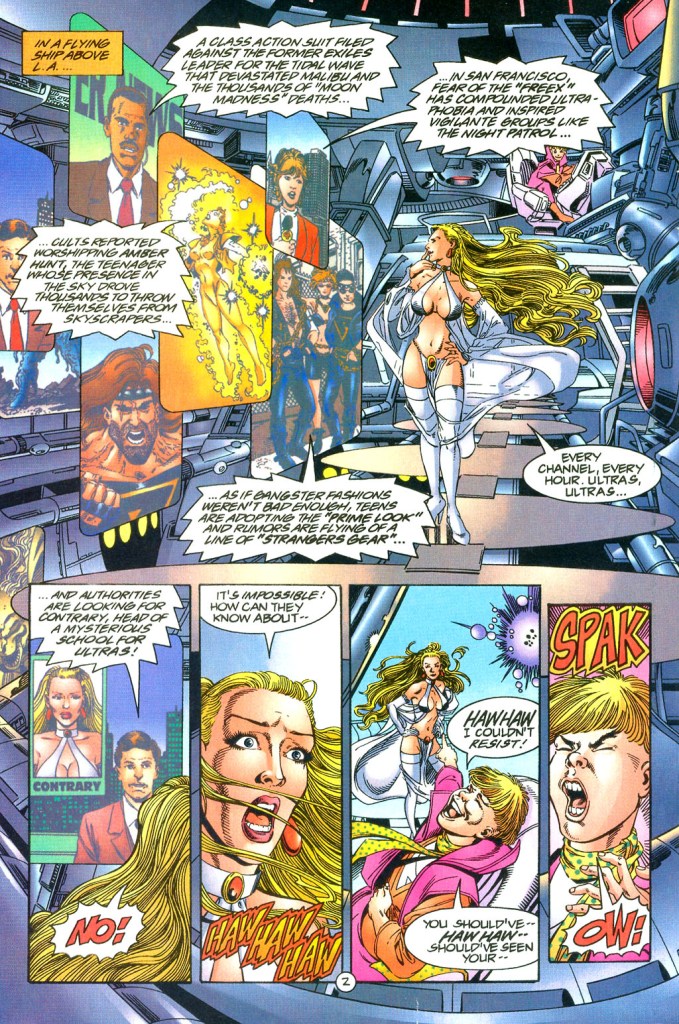
Premier rivals Prime and Prototype meet again!

I’ll cut to the chase. While UltraForce #1 showed how very notable superheroes of the Ultraverse banded together, this story cleverly explained what happened just a short time prior to that story. The very good news here is that the script written by Jones is very detailed and told a really cohesive story of its which was greatly brought to life visually by George Perez (which should not be a surprise at all). In fact, UltraForce #0 (which had some of its content previewed in the pages of Wizard Magazine) and #1 form one single narrative which was made with really high quality writing and visuals. It also showcases amazing production values by the creative teams at Malibu Comics.

For the newcomers reading this, this comic book sheds light on the impact ultras have on society and why people get divided when it comes to living knowing that someone much more powerful than them could suddenly impact their way of life. To put it short, this comic book’s social concept will keep you thinking and speculating. More on the writing, like the 1st issue, the storytelling here is certainly unpredictable (but still manages to tell a cohesive tale) and will keep you guessing what would happen next. Definitely this is not typical superhero story about someone saving the day and restoring the peace. Finally, I do confirm that this comic book is very loaded with spectacle and the pace of the story moves quite fast. By the end of this comic book, you will not only anticipate the following events (in issue #1) but also get to know Prime and the others better and be entertained a lot.

Contrary and Pixx inside their secret ship.

Conclusion

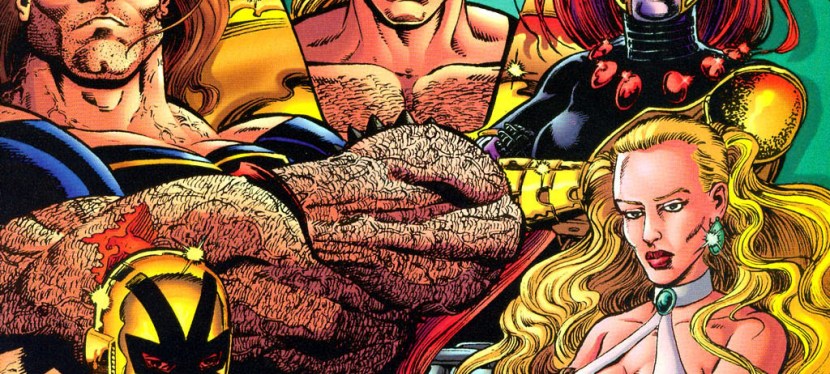
Hardcase comes in as Ghoul struggles with all the attention.

I’ll say it out loud – UltraForce #0 is a great comic book (as great as issue #1) and it truly is one of the best Ultraverse comic books as well as one of the finest works done by Malibu Comics! As a superhero team concept, UltraForce is clearly the most symbolic team of the Ultraverse not just because it has major players like Prime, Hardcase and Prototype together but also with the way they were defined literally and visually. For more on the concept of UltraForce, check out the words of then Ultraverse editor Chris Ulm.

“UltraForce is the unluckiest group in the Ultraverse. Each one has their own conception of the what mission of UltraForce is. Each fancies themselves the leader. But somehow, they are able to forge a new kind of team that is greater than the sum of its parts,” wrote Ulm in the comic book.

If you are seriously planning to buy an existing hard copy of UltraForce #0 (1994), be aware that as of this writing, MileHighComics.com shows that the near-mint copy of the regular edition costs $4.

Overall, UltraForce #0 (1994) is highly recommended!

+++++

Thank you for reading. If you find this article engaging, please click the like button below and also please consider sharing this article to others. If you are looking for a copywriter to create content for your special project or business, check out my services and my portfolio. Feel free to contact me as well. Also please feel free to visit my Facebook page Author Carlo Carrasco and follow me at HavenorFantasy@twitter.com
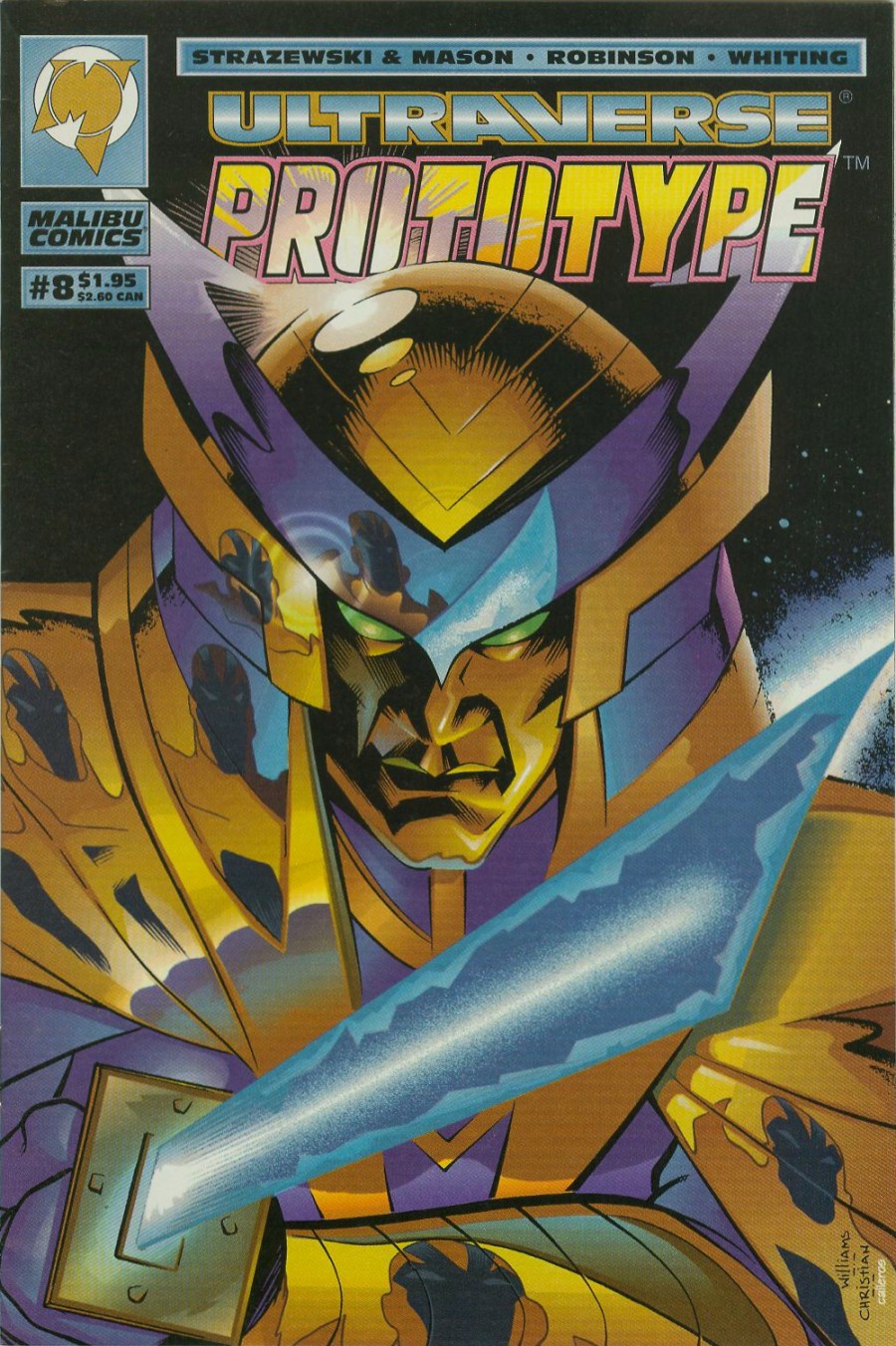
A Look Back at Prototype #8 (1994)

Disclaimer: This is my original work with details sourced from reading the comic book and doing personal research. Anyone who wants to use this article, in part or in whole, needs to secure first my permission and agree to cite me as the source and author. Let it be known that any unauthorized use of this article will constrain the author to pursue the remedies under R.A. No. 8293, the Revised Penal Code, and/or all applicable legal actions under the laws of the Philippines.

Hey everyone! Are you ready for another return to the Ultraverse? This time, it’s a return to the Prototype monthly series published by Malibu Comics.

That being said, here is a look back at Prototype #8, published by Malibu Comics in 1994 with a story by Tom Mason and Len Strazewski, and art done by Roger Robinson.

Cover

Early story

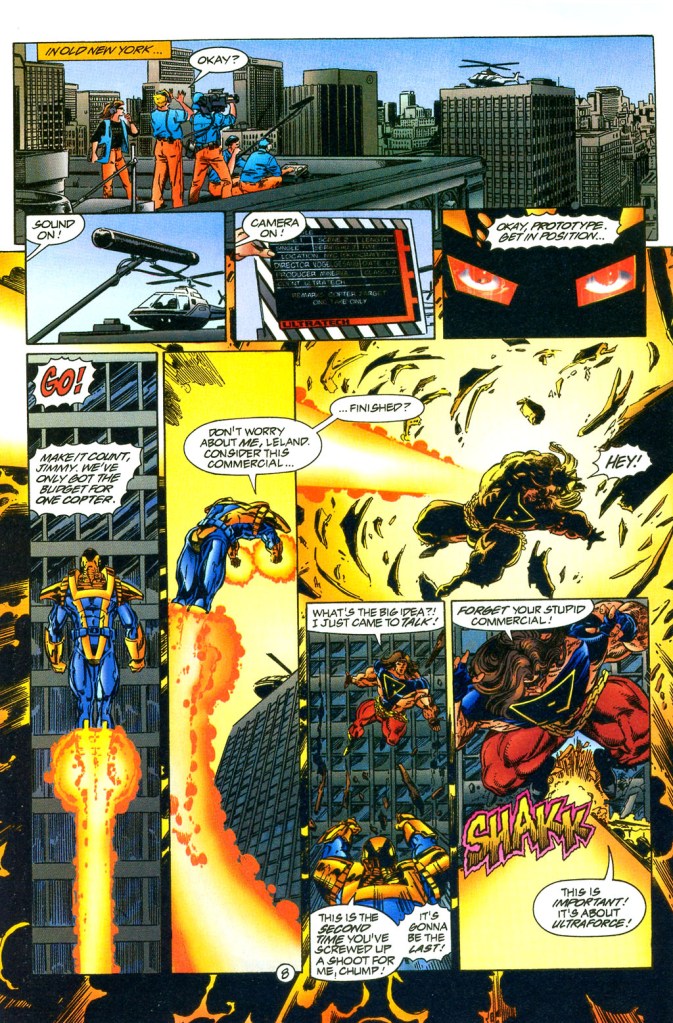
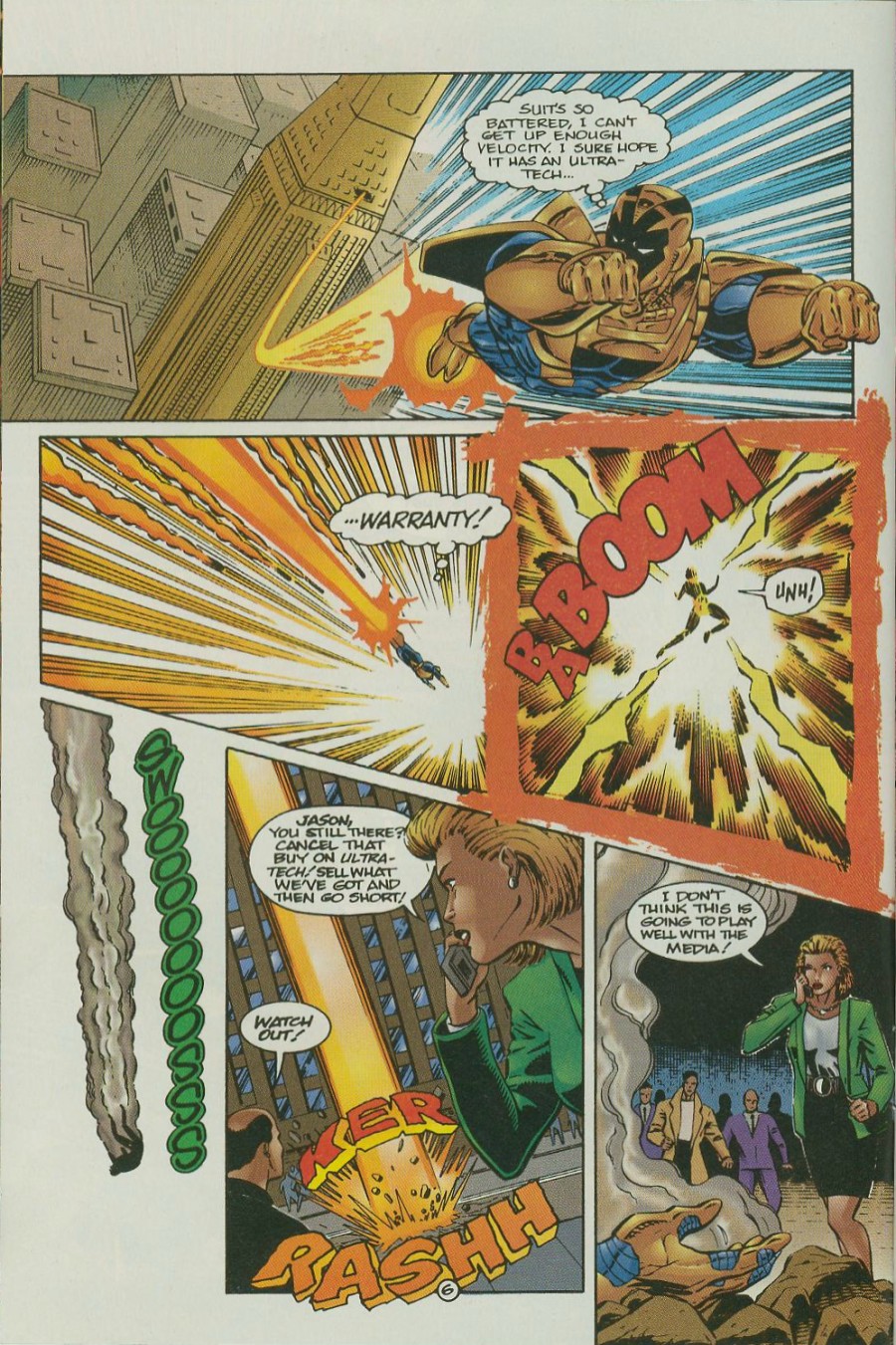
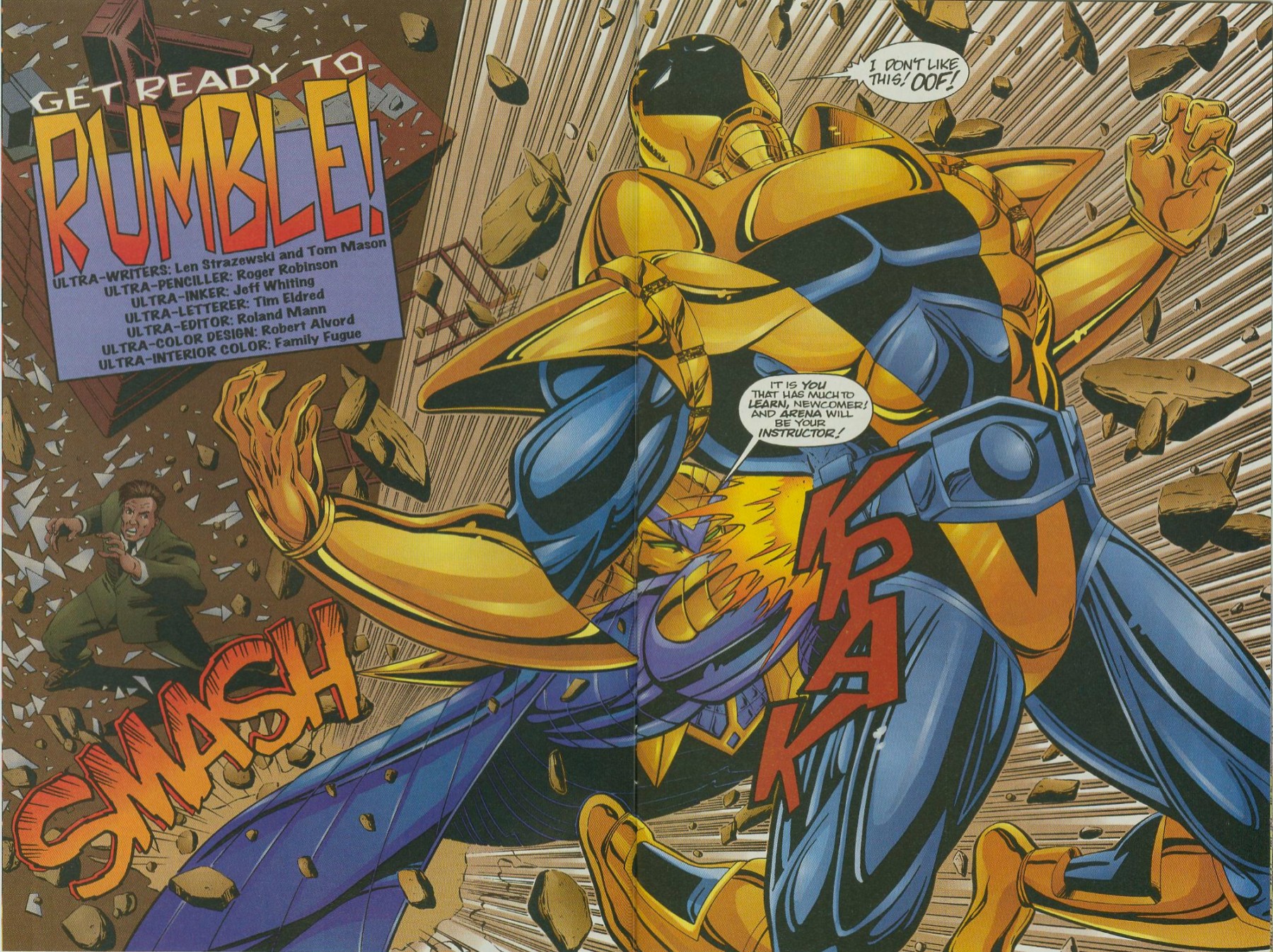
The story begins with the continuing destructive battle between Prototype (piloted by Jimmy Ruiz) and Arena (a past foe that Bob Campbell dealt with as Prototype) inside a building in the middle of the city. As the two armored figures fight, an Ultratech executive calls out for Veil. Facing disadvantages against Arena, Prototype decides to fly out of the building to try something more strategic.

Meanwhile, Bomb Campbell learns about the ongoing battle in the news while working on a part of powered suit of armor he has. He notices the return of Arena and analyzes that Jimmy Ruiz will end up losing to the old foe…

Quality

5
Even flying away did not help Prototype from avoiding Arena’s attacks.

I’m happy to say that this is another well-written story here by Mason and Strazewski. While the battle between Arena and Prototype is the main feature, the script focused nicely on other developments such as Bob Campbell’s recollection of his past encounter with Arena (from his time as Prototype), how the city officials perceive ultras as a threat and danger to the locality, and how the people react to gang violence striking their community.

What is pretty striking with this comic book is the further development of Jimmy Ruiz as a character. Not only will you see him struggle a lot not only with fighting and piloting the powered sit of armor, you’ll also see how the frustration with his high-paying job impacts him deeply. His personality got fleshed out during his battle with Arena who in turn thinks with tradition and philosophies. The way the story ended is a must-see and the good news is that it builds up the suspense for the next issue.

Conclusion

2
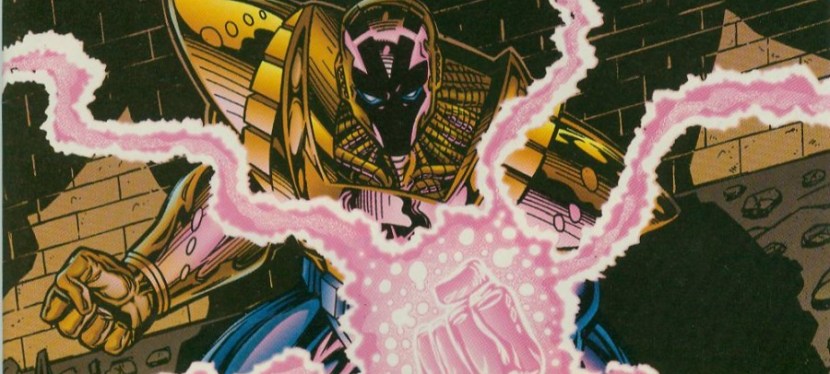
The money shot!

Prototype #8 is fun to read and compelling for anyone who is focused on Jimmy Ruiz. This comic book, which by the way is loaded with lots of action, is not the typical hero-beats-antagonist type of story rather it went the extra mile on developing the present-day Prototype. It is also the most engaging portrayal of Jimmy Ruiz yet!

If you are seriously planning to buy an existing hard copy of Prototype #8 (1994), be aware that as of this writing, MileHighComics.com shows that the near-mint copy of the regular edition costs $4.

Overall, Prototype #8 (1994) is recommended!


Thank you for reading. If you find this article engaging, please click the like button below and also please consider sharing this article to others. If you are looking for a copywriter to create content for your special project or business, check out my services and my portfolio. Feel free to contact me as well. Also please feel free to visit my Facebook page Author Carlo Carrasco and follow me at HavenorFantasy@twitter.com
A Look Back at V #1 (1985)

Disclaimer: This is my original work with details sourced from reading the comic book, watching the V mini-series (Original Miniseries and The Final Battle) and the 1984 TV series, and doing personal research. Anyone who wants to use this article, in part or in whole, needs to secure first my permission and agree to cite me as the source and author. Let it be known that any unauthorized use of this article will constrain the author to pursue the remedies under R.A. No. 8293, the Revised Penal Code, and/or all applicable legal actions under the laws of the Philippines.

Back in the 1980s – a time when Netflix, Blu-ray, social and other forms of digital entertainment were not yet realized – watching a special show on television was really something. During that particular decade, science fiction in cinema was already popular (thanks to George Lucas and Star Wars plus the resurgence of Star Trek) but there was still room for growth on the TV market.

IMDBcoverpic
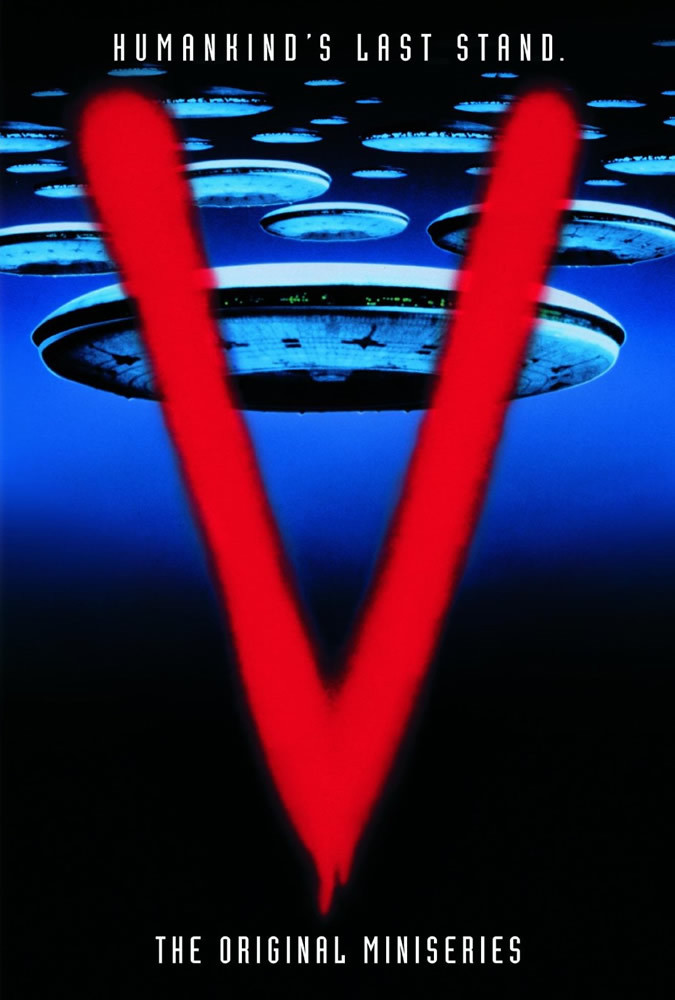
The cover of V: The Original Miniseries. (source – IMDB.com)

Then came the very memorable sci-fi TV mini-series titled V (also referred to as V: The Original Miniseries) in 1983 which not only became a big hit with viewers but also brought the sci-fi concept of reptiloids (reptilian humanoids) to the mainstream. The mini-series also had parallels to the Nazis and the Holocaust. The original mini-series was such a big hit, it spawned a sequel mini-series titled V: The Final Battle (1984) and even a TV series (1984-1985).

IMDBpic
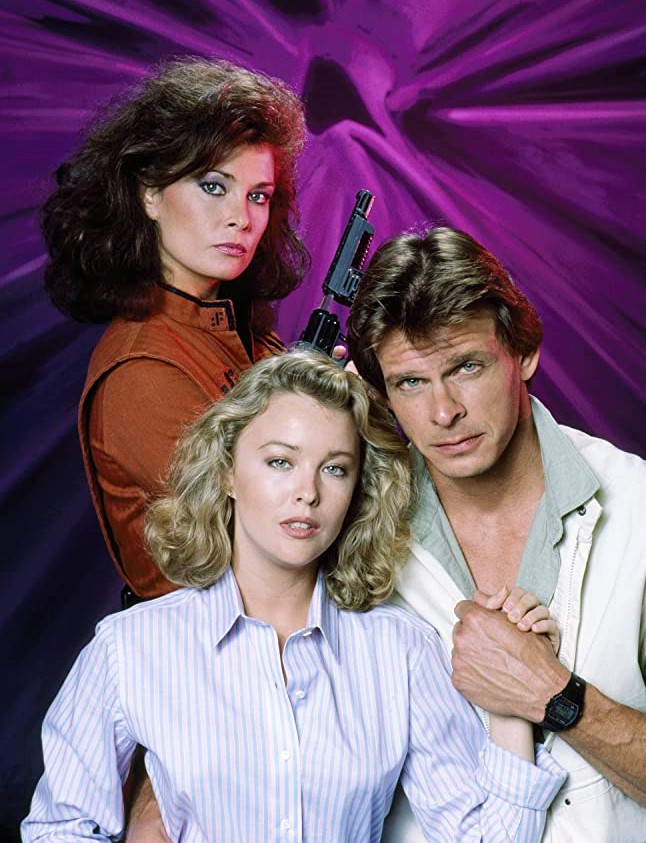
Jane Badler as Diana, Faye Grant as Julie Parrish and Marc Singer as Mike Donovan. (source – IMDB.com)

Created by Kenneth Johnson, V became a popular franchise and made stars out of Marc Singer (The Beastmaster), Faye Grant, Michael Ironside (Total Recall) and Jane Badler. Even though there never was a movie made, V was popular enough to have a line of novels, a video game and even a comic book series!

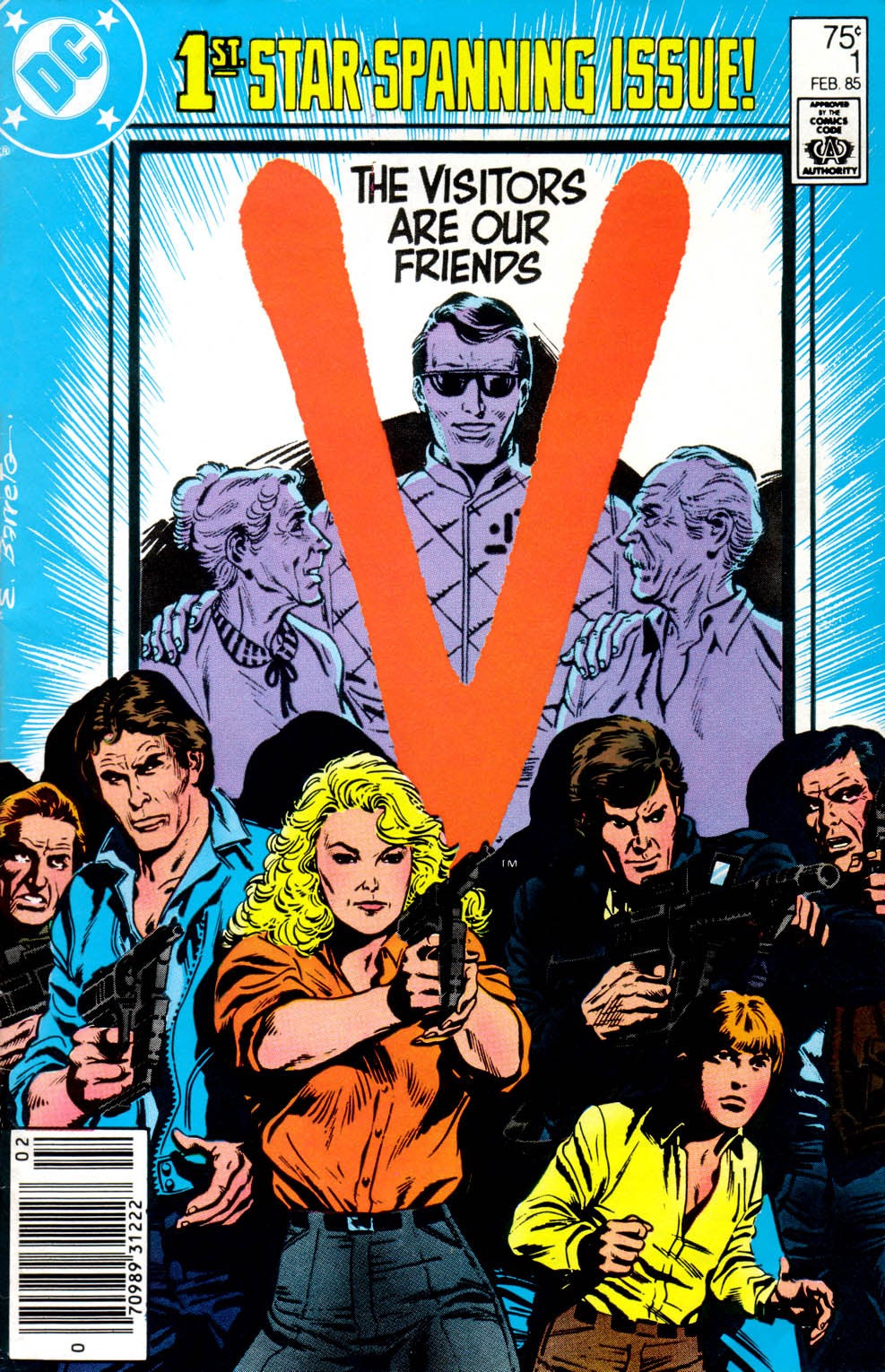
With the history lesson done, it’s high time to start taking a look back at V #1, published in 1985 by DC Comics with a story written by Cary Bates and illustrated by Carmine Infantino.

Cover
The cover.

Early story

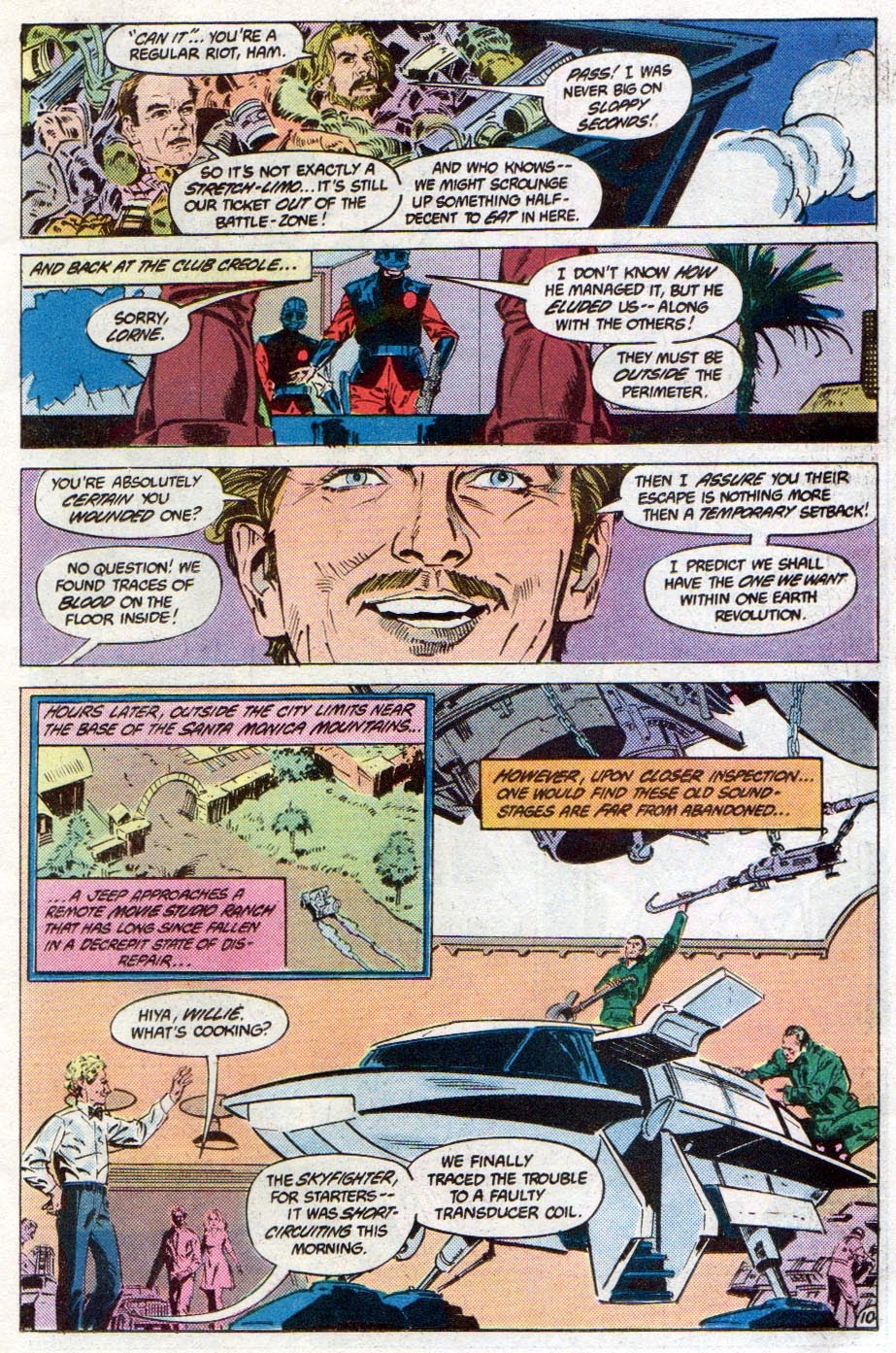
The story begins in the city of Los Angeles, California, with millions of locals try to co-exist with the visitors (reptilian beings disguised as humans) who are armed and still have power over Earth’s people. Los Angeles stands as a so-called neutral zone but some things are not what they seem.

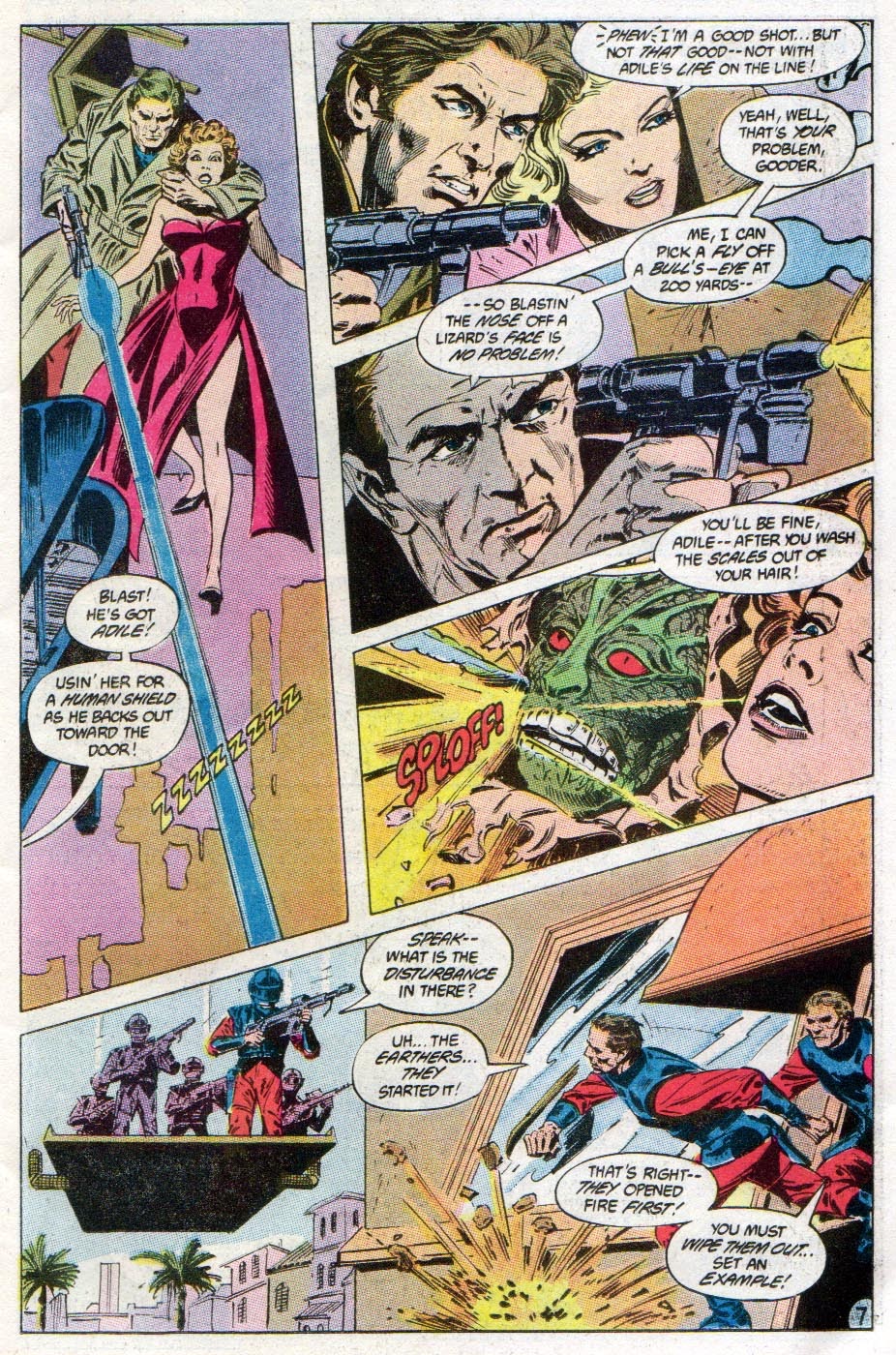
Inside a restaurant, Mike Donovan, Julie Parrish, Ham Tyler and Chris Farber talk about their situation. For Ham and Chris, the neutral zone stinks but for Mike, the current situation spares the city from turning into an open battlefield. Suddenly, three men wearing trench coats standing by the bar pull their guns out and fire at Mike and his companions who take cover…

Quality

9
The struggle between the resistance and the visitors goes on.

Before discussing the quality of this comic book, I should state that having sufficient knowledge about the two TV mini-series and the TV series is required in order to understand what has been going on in the literary tale and who the characters are.

On quality, let’s start with the storytelling done by Cary Bates. It is clear Bates carefully researched the TV materials to make a comic book script that pretty much captures not only the essence of V but also the notable differences of each character (examples: Tyler is sarcastic, Mike is determined, Willie occasionally speaks with a misplaced word, and Diana is sadistic). This comic book’s plot was written to be aligned with the events of the TV series as it is clear that its tale took place some time after the climax of V: The Final Battle.

When it comes to translating V’s essence from TV to comic book format, Bates script worked surprisingly well and more importantly there was a careful balance between exposition, plotting, spectacle and suspense. When it comes to character development, what you get from the TV series (in terms of doing characterization) is also present here.

When it comes to visuals, Carmine Infantino’s work is serviceable. The artist did what was possible with the script provided although there were key moments in which the panels and drawings were structured to be a little disorienting. Was this Infantino’s way of trying to be dynamic with the visuals? Lastly, don’t expect to see the major characters resemble their TV counterparts. Ham does not look like Michael Ironside, Mike does not look like Marc Singer and Julie does not look like Faye Grant.

Conclusion

6
Recognize Mike, Julie and Ham here?

I can say it straight that V #1 is a solid science fiction comic book that specifically will strongly resonate with fans of the V franchise’s entertainment of the 1980s. This comic book strongly captures the essence of the V franchise, specifically the TV series itself, and the good news is that the major characters are nicely dramatized which should delight fans. That being said, it’s tricky to recommend this to people who did not grow up with nor knew the V mini-series and TV series. When it comes to trading and making money out of this comic book, you could be in luck.

If you are seriously planning to buy an existing hard copy of V #1 (1985), be aware that as of this writing, MileHighComics.com shows that the near-mint copy of the regular edition costs $28 while the near-mint copy of the newsstand edition costs $33.
Overall, V #1 (1985) is highly recommended specifically for the fans and the collectors. Those who are not oriented with the franchise need to see the mini-series and TV series first in order to realize this comic book’s value.


Thank you for reading. If you find this article engaging, please click the like button below and also please consider sharing this article to others. If you are looking for a copywriter to create content for your special project or business, check out my services and my portfolio. Feel free to contact me as well. Also please feel free to visit my Facebook page Author Carlo Carrasco and follow me at HavenorFantasy@twitter.com