A Look Back at WildC.A.T.S: Covert Action Teams #5 (1993)

Disclaimer: This is my original work with details sourced from reading the comic book and doing personal research. Anyone who wants to use this article, in part or in whole, needs to secure first my permission and agree to cite me as the source and author. Let it be known that any unauthorized use of this article will constrain the author to pursue the remedies under R.A. No. 8293, the Revised Penal Code, and/or all applicable legal actions under the laws of the Philippines.

Hey fellow comic book geeks! Remember before that I reviewed X-Men #1 of 1991 drawn by the great Jim Lee? That was over a year ago and so far, that is my only retro review of a dominant Jim Lee-drawn comic book.

Instead of reviewing another X-Men comic book drawn by Lee or any of the illustrator’s other works, I’ve decided to focus on the 1990s particularly on Image Comics. Back in those days, Lee was one of the main figures of Image and through that company he turned his dream projects into published comic books. When Image Comics launched in 1992, Jim Lee launched his superhero team project titled WildC.A.T.S: Cover Action Teams and issue #1 of that sold a lot. Eventually WildC.A.T.S. finished as a 4-issue mini-series.

Along with WildC.A.T.S were other projects launched under Lee and his company WildStorm (previously referred to as Aegis Entertainment) such as Stormwatch and Gen13.

Then in 1993, Jim Lee, Scott Williams and Brandon Choi worked again to produce even more WildC.A.T.S comic books for fans to enjoy and keep business at WildStorm moving. The result was the release of WildC.A.T.S: Covert Action Teams #5 which symbolically marked the start of a new regular series without starting with a new issue #1. Here’s an excerpt of Jim Lee’s explanation printed inside the said comic book:

I’m baaack!!! But rather than starting over with a new first issue, I decided to just “extend” the WildCATs miniseries into a regular series. Why? Well, I did it mostly for psychological reasons as first issues are always the most difficult ones to tell and draw. You have to get the readers to accept and understand a whole legion of new concepts and characters—characters which you’re illustrating often for the very first time. And as ant professional in the business can tell you, it takes a while for an artist to get the hang of certain characters-the way they movie, the way they talk, the way they reaction to different situations. And U’ve found that I haven’t really “connected” with any new characters until I’ve had four or five issues worth under my belt. ~ Jim Lee

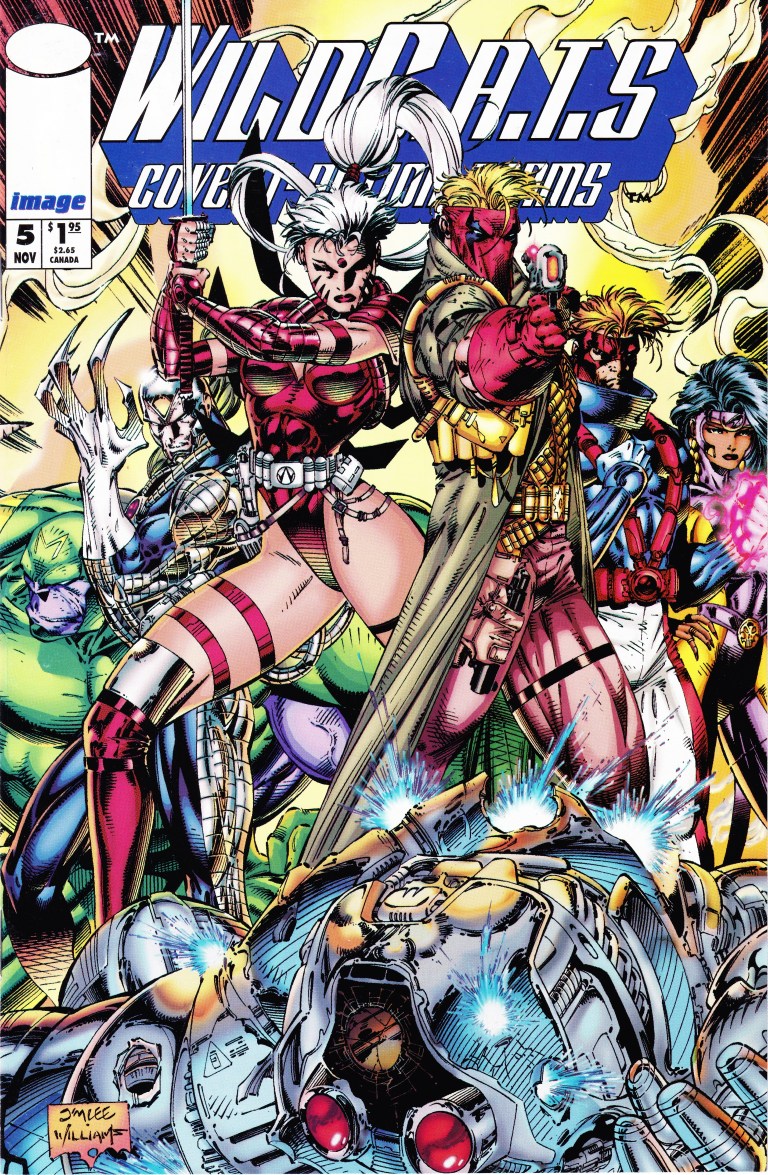
That being said, here is a look back at WildC.A.T.S: Covert Action Teams #5 published in 1993 by Image Comics with a story written by Jim Lee and Brandon Choi, and with art drawn by Lee and inked by Scott Williams.

Cover
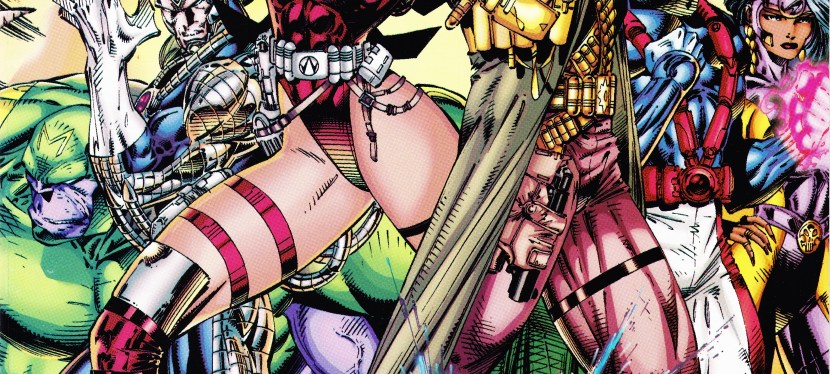
The cover.

Early story

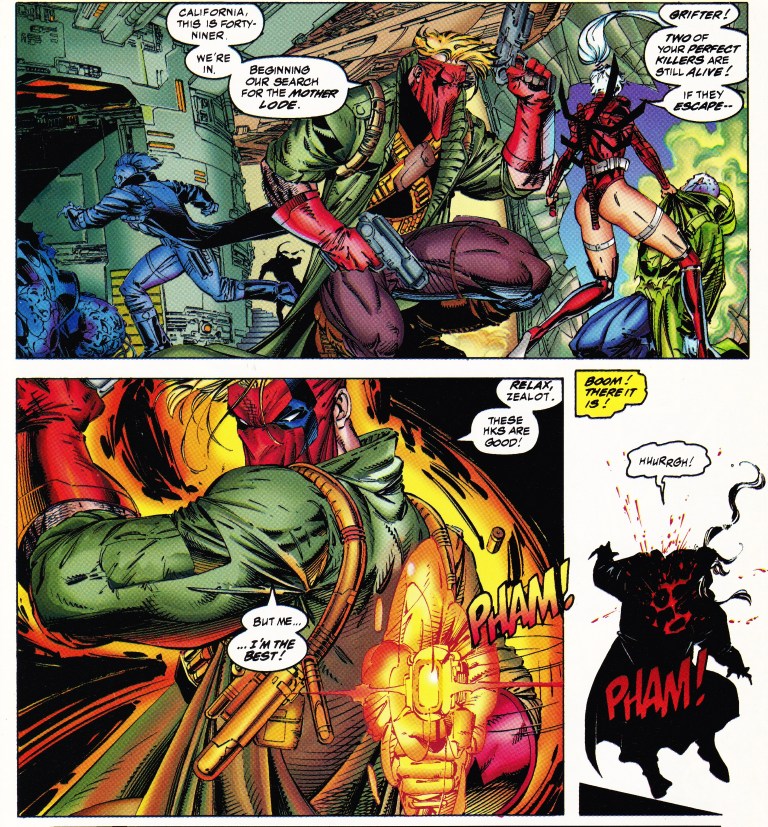
The story begins with WildC.A.T.S members Grifter and Zealot gliding quietly approaching a secret base. Following Grifter’s lead to go into action, Zealot joins him to crash through the glass window and take out the perceived enemy troops called the hunter killers shooting and assaulting them. It turns the two are in search for something and they have their other teammates ready to come in to provide back-up.

Even though they tried to sneak around the place quietly, mechanical enemy reinforcements spotted them and chased them. As a metallic door shuts and separates the two, Grifter successfully got through the armed defense system and finds himself at the vault. After informing his other teammates of his new location, Grifter opens the vault revealing something very captivating with regards to the Daemonites’ secret operations…

Quality

Action3
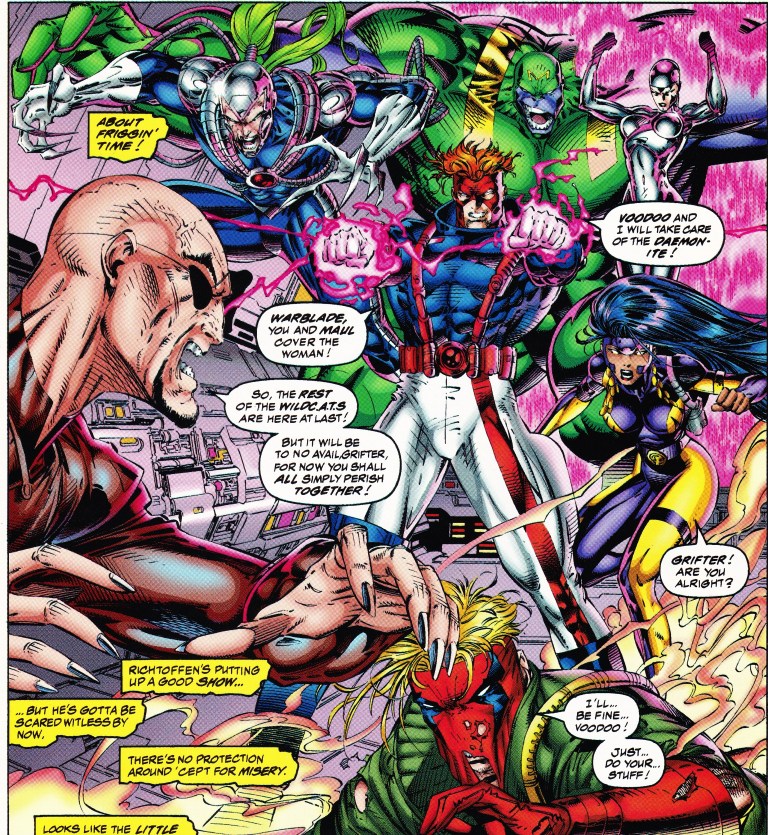
The team and the villain.

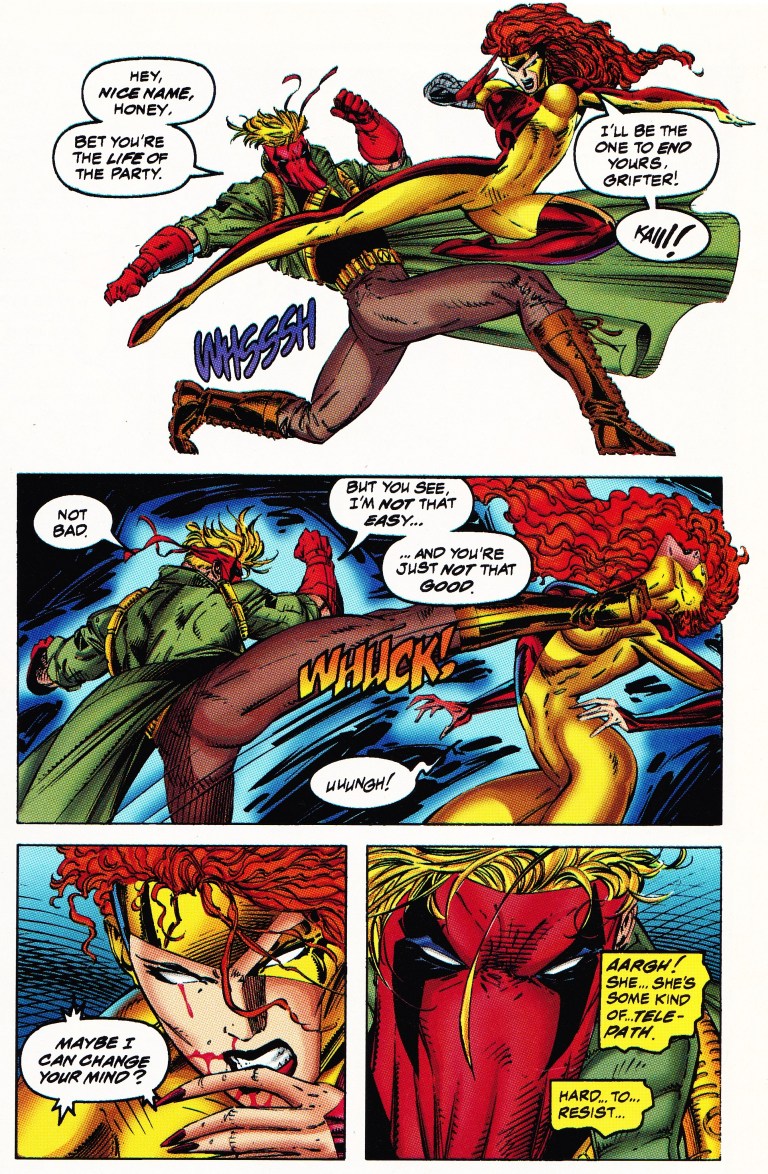
Visually, this is one great looking comic book filled with lots of dynamism and flare provided by Jim Lee and Scott Williams. Each and every character looks great and come with a good amount of visual details on them. Also I love the futuristic technology look that dominated most of the scenes. When it comes to spectacle, this one is loaded and Jim Lee’s presentation of adulterated action and stunts is undeniably fantastic. I should also state that the colors are very vibrant thanks to Joe Chiodo.

Action2
Great action drawn by Jim Lee.

When it comes to storytelling, however, this one lacks depth. In terms of plotting, it’s pretty basic and goes like this: two heroes infiltrate the base of an enemy, they get discovered and more enemy troops come in, the top villains come in followed by the rest of the heroes’ teammates. As the focus here was more on spectacle and suspense, there was definitely no room left for character development. There is a subplot here worth mentioning and it serves as a link leading to the eventual Killer Instinct crossover with Marc Silvestri’s Cyberforce.

Conclusion

Action1
Great visuals and action here but not much in terms of storytelling.

I should say that WildC.A.T.S: Cover Action Teams #5 is pretty tricky to recommend to all comic book geeks and superhero enthusiasts. I can easily recommend it to die-hard fans of Jim Lee, the die-hard fans of WildC.A.T.S, as well as those who love Image Comic books from the 1990s. If you are looking for a short bout of fun with action in mind, this comic book will serve you. If you are the kind of reader who wants deep storytelling and solid character development, this one will fall short.

If you are seriously planning to buy an existing hard copy of WildC.A.T.S: Cover Action Teams #5 (1993), be aware that as of this writing, MileHighComics.com shows that the near-mint copy of the regular edition costs $4.

Overall, WildC.A.T.S: Cover Action Teams #5 (1993) is satisfactory. It’s a great looking comic book (with gate-fold pages) that does not have much to fulfill readers looking for the solid combination of art, storytelling, characterization and entertainment.


Thank you for reading. If you find this article engaging, please click the like button below and also please consider sharing this article to others. If you are looking for a copywriter to create content for your special project or business, check out my services and my portfolio. Feel free to contact me as well. Also please feel free to visit my Facebook page Author Carlo Carrasco and follow me at HavenorFantasy@twitter.com

A Look Back at Prime #5 (1993)

Disclaimer: This is my original work with details sourced from reading the comic book and doing personal research. Anyone who wants to use this article, in part or in whole, needs to secure first my permission and agree to cite me as the source and author. Let it be known that any unauthorized use of this article will constrain the author to pursue the remedies under R.A. No. 8293, the Revised Penal Code, and/or all applicable legal actions under the laws of the Philippines.

Hey everyone! If you are looking for something new with my retro reviews of Ultraverse comic books, then you will get it now as I’ve decided to go back to the Prime monthly series for the first time in over thirty days since my last Prime review.

That being said, here is my look back at Prime #5, published in 1993 by Malibu Comics with a story written by Len Strazewski and Gerard Jones, and drawn by the late Norm Breyfogle.

Cover
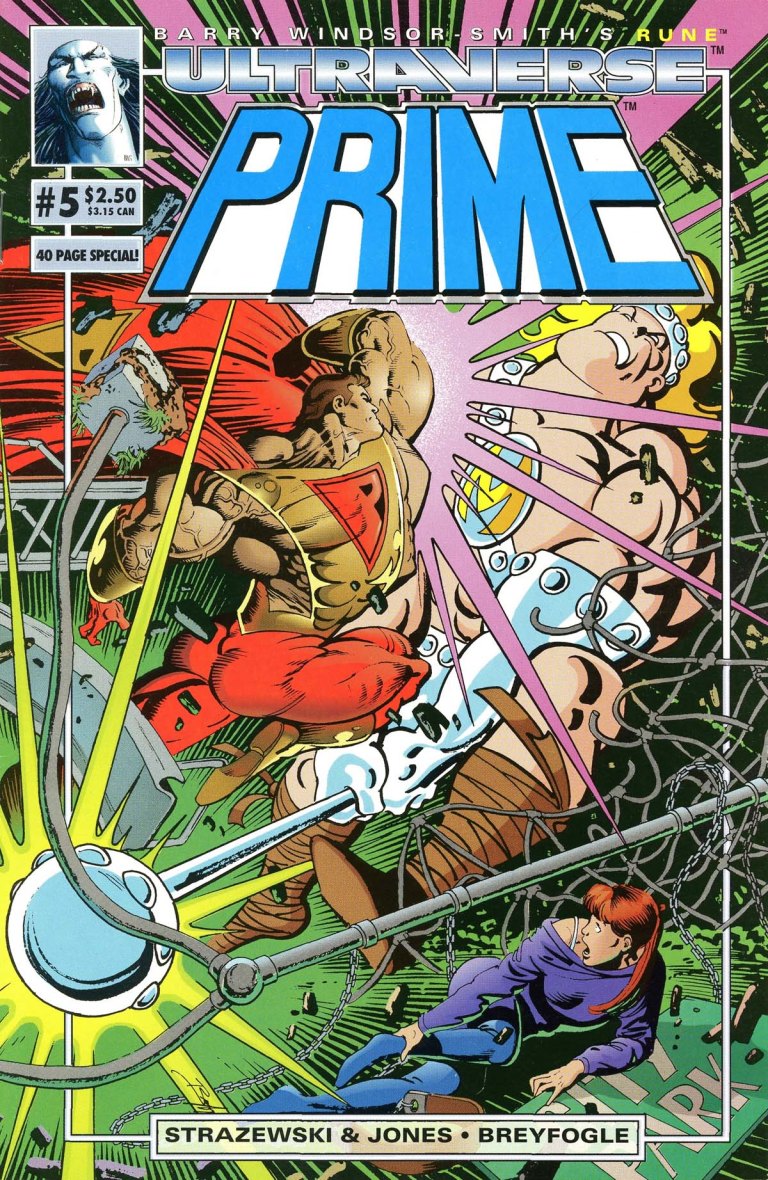
The cover.

Early story

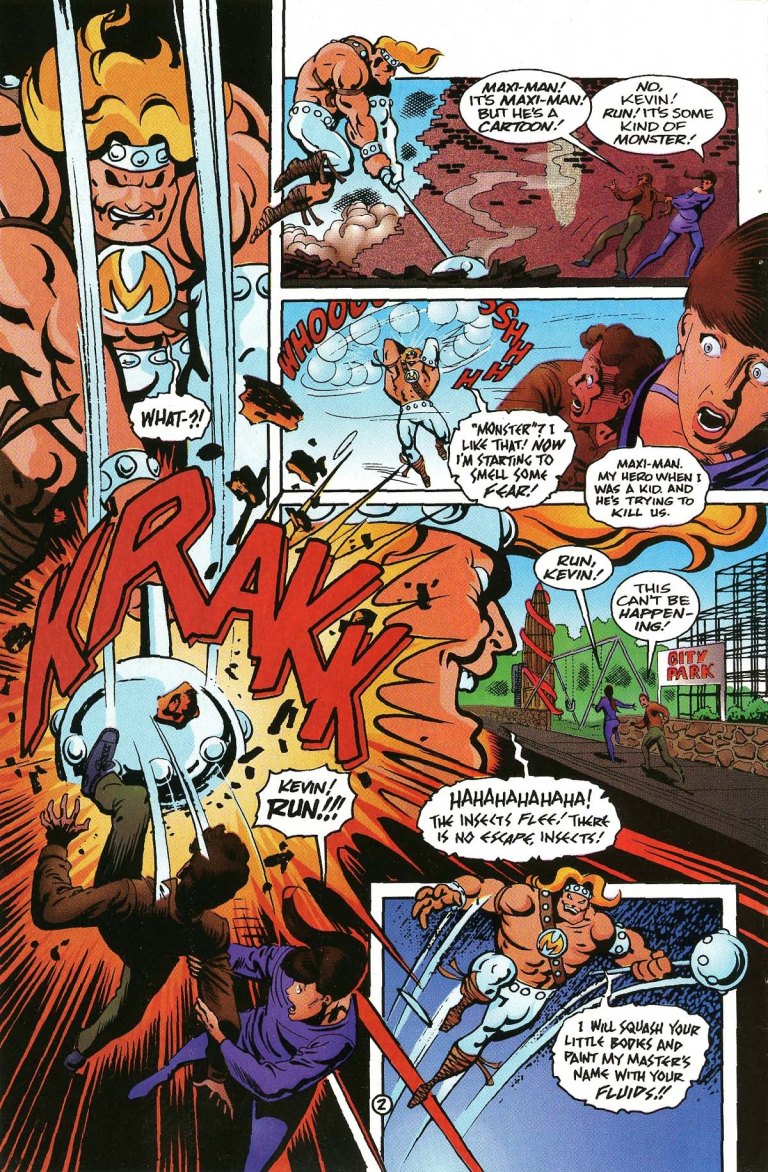
The story begins with an unbelievable yet living cartoon character called Maxi-Man about to strike a young and helpless Kevin (Prime actually) claiming to be doing it for the majesty of Boneyard (a villain of Mantra’s). Fortunately, Kevin got saved by Kelly who pulled him away from Maxi-Man’s deadly strike.

With the local community already in chaos due to Maxi-Man’s rampage, Kevin and Kelly ran to the nearby city park only to be stopped by the him. With her ankle hurt, Kelly could not move from her downed position and tells Kevin to run.

Kevin struggles with the tension building up as Maxi-Man makes his way to Kelly…

Quality

Heavily action-packed, smart, intriguing and engaging this comic book truly is! Let me start with the storytelling here. Len Strazewski and Gerard Jones crafted a great story that not only followed Prime’s exploits but also fleshed out his personality a lot with an emphasis on his civilian life as teenager Kevin who happens to be dealing with the pressure of living a double-life (as an unstable superhero and as a high school student). He pursues to be with Kelly but suddenly finds themselves in trouble with the unexpected presence of Maxi-Man, an in-story cartoon character Kevin admired so much as a child. This not only added to Kevin’s struggle with stress but also complicates his mind. By focusing closely on Kevin, you will feel his struggle a lot.

When it comes to the spectacle, Norm Breyfogle perfectly brought the script to life and ramped up the excitement a whole lot with his illustrations. The visual highlight is the big battle between Prime and Maxi-Man, and even though the fighting is extensive, it never feels dumb nor brainless due to the smart dialogue provided by the writers (note: observe closely the exchange of words Prime and Maxi-Man had with each other). Breyfogle clearly paced the action sequences smoothly and he chose the right moments to draw the action dynamically.

Speaking of dialogue, I love the following line Prime said during the fight with Maxi-Man…

“I’m what you’re supposed to be! I’m a hero! I grew up on your cartoons! I learned about heroism from you! About fighting for what’s right! I don’t know how you got to be real, or why you’re trying to kill us—but I’m gonna show you what you taught me!”

Back to the writing, there is a sub-plot that took place during the big battle. That one added a good amount of mystery and intrigue not only into the story but also to the Ultraverse itself.

Conclusion

2
Kevin (Prime), Kelly and Maxi-Man.

What can I say? Prime #5 is a great read! Personally, when it comes to Prime’s encounters, I found this one to be much more engaging, more fun and more intriguing than even Prime’s encounter with Prototype in the previous issue (which is supposed to be an essential encounter between the Ultraverse’s main superheroes). The way I look at this comic book’s quality, the creators actually over-did themselves to deliver superhero greatness.

If you are seriously planning to buy an existing hard copy of Prime #5 (1993), be aware that as of this writing, MileHighComics.com shows that the near-mint copy of the regular edition costs $4 while the near-mint copy of the newsstand edition costs $8.

Overall, Prime #5 (1993) is highly recommended!


Thank you for reading. If you find this article engaging, please click the like button below and also please consider sharing this article to others. If you are looking for a copywriter to create content for your special project or business, check out my services and my portfolio. Feel free to contact me as well. Also please feel free to visit my Facebook page Author Carlo Carrasco and follow me at HavenorFantasy@twitter.com
A Look Back at Hardcase #12 (1994)

Disclaimer: This is my original work with details sourced from reading the comic book and doing personal research. Anyone who wants to use this article, in part or in whole, needs to secure first my permission and agree to cite me as the source and author. Let it be known that any unauthorized use of this article will constrain the author to pursue the remedies under R.A. No. 8293, the Revised Penal Code, and/or all applicable legal actions under the laws of the Philippines.

At long last, the twelfth issue of the Hardcase monthly series (note: the series lasted a total of 26 issues) of the Ultraverse is finally here. Since the opening page of issue #1, Hardcase has been very engaging, enjoyable and intriguing to read complete with very deep character development as written by the late James Hudnall. In comparison with superhero comics in general, Hardcase itself is pretty unique (a superhero team member who ends up the only walking survivor who gets into Hollywood before returning to doing superhero acts) even by today’s standards.

As the series went on, Hardcase got involved with Choice initially solving mysteries and finding answers. It was only recently they got involved romantically, which hurt Hardcase’s other girl Linda (the other survivor from The Squad). Along the way, Hardcase and Choice got involved with The Strangers and The Solution in memorable crossovers.

Now the stage is set! We will find out if the first full year of the Hardcase series will be completed with impact or not with this look back at Hardcase #12, published in 1994 by Malibu Comics with a story written by James Hudnall and drawn by Scott Benefiel.

Cover
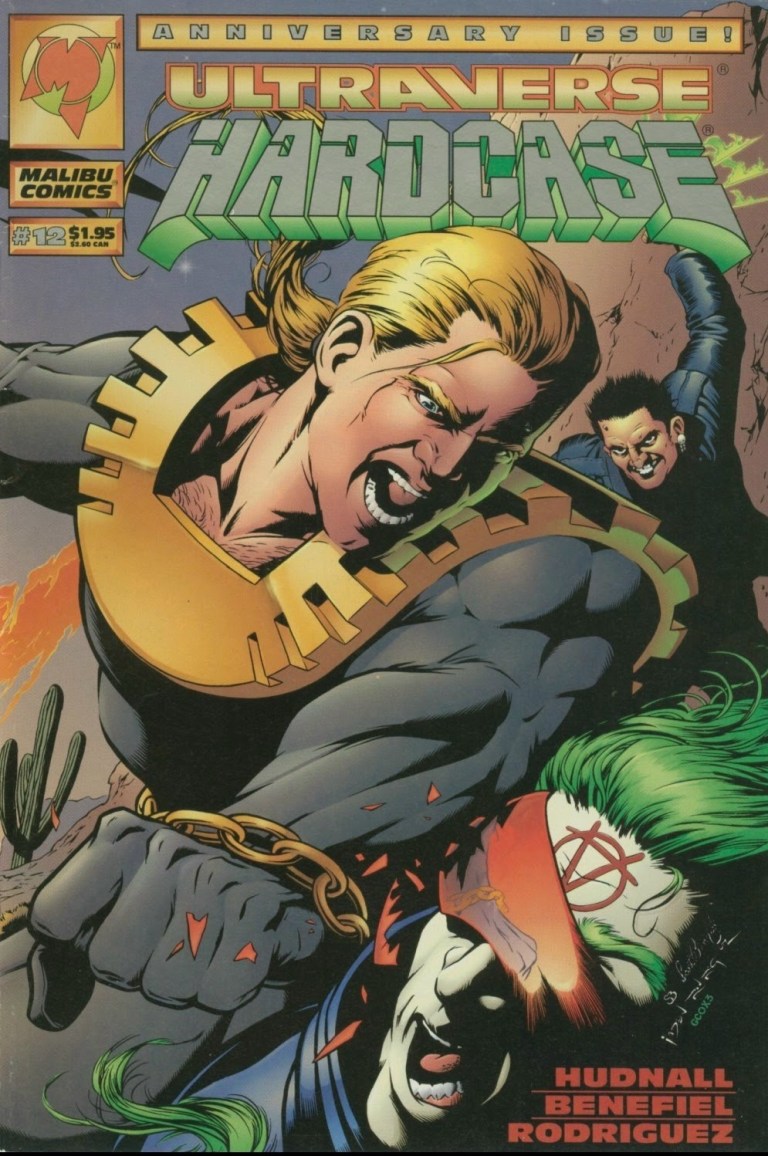
The cover.

Early story

The story begins in the night in the desolate land, just a few miles away from the secret base of Aladdin. Hardcase and Choice were together resting when suddenly Headknocker and Hardwire arrive to attack them. As Hardcase and Headknocker start their rematch (note: they first fought in issue #1), Hardwire goes after Choice.

Even though he knows Hardknocker is tough, the Hollywood superhero makes his move to take on Hardwire and help Choice.

Meanwhile over at Groom Lake Control Center, two men in suits look at the images and details of Hardknocker and Hardwire on oversized screens. As they analyze the situation happening outside their facility, they argue over the possible release and use of the other undesirable ultras they captured…

Quality

10
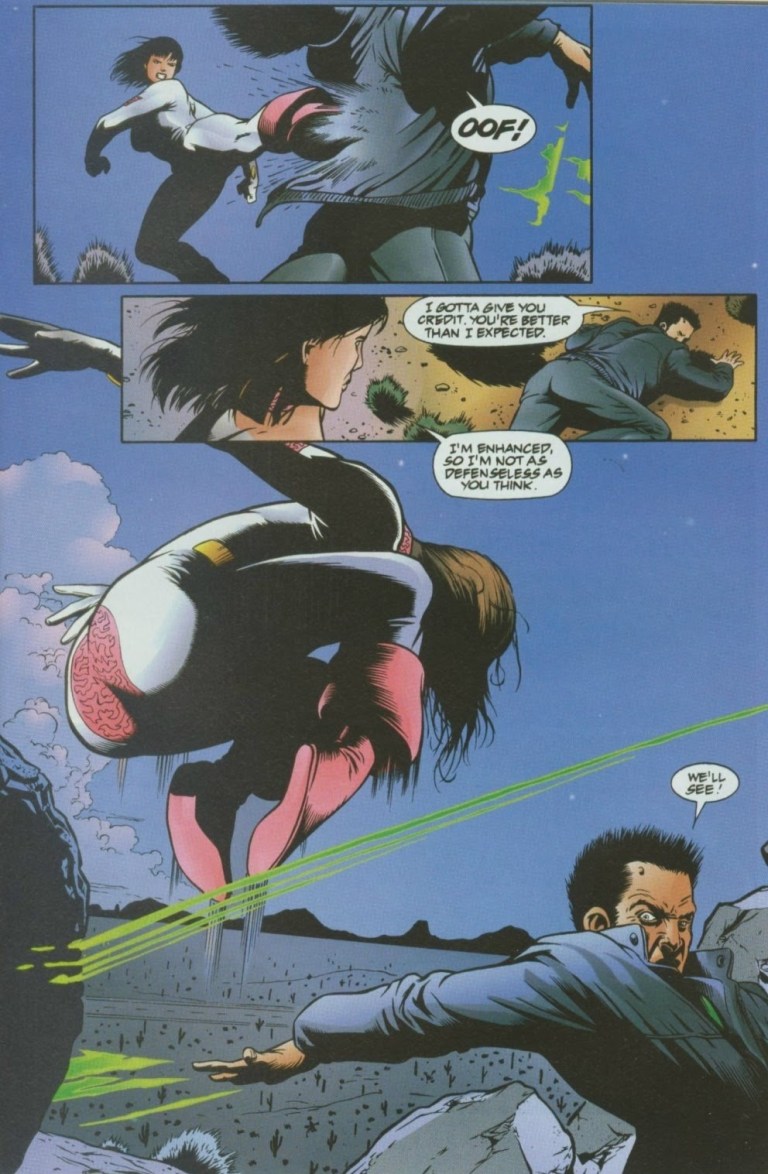
Choice and Hardwire meet again.

There is no doubt that this is a very high-quality comic book with a very strong script that mixes spectacle with character development, secret society intrigue, mystery and some drama. The storytelling itself was successful thanks to Hudnall.

The story started strongly with action scenes with some build-up of suspense and mystery emphasized when the narrative switches to another scene at a different location. While there is a notable twist in the comic book, it is the ending that really shook things up so much, it made me go back to issue #1 and other references to The Squad. This is great writing done by James Hudnall and he knew how to shake the foundation of the series.

When it comes to the art, Scott Benefiel work here is great and the best one yet within the first year of the series. I love the way he draws facial expressions that really show emotions or intensity and he knows how the pace the flow of events (and still manage to draw dynamic action shots).

Conclusion

4
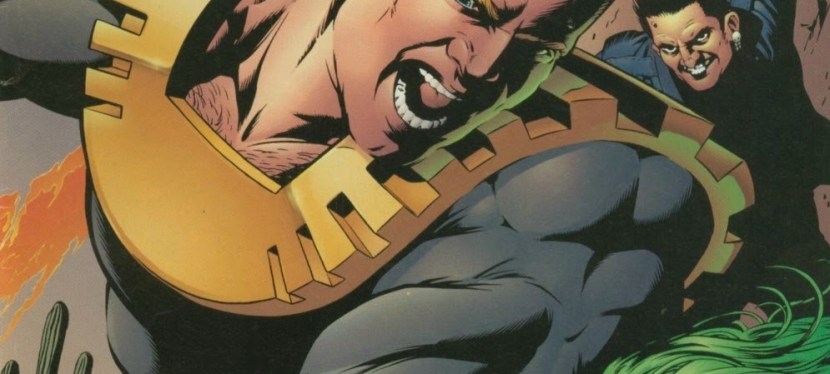
Headknocker and Hardcase.

Hardcase #12 is a great read and it certainly is not the typical good-versus-evil type of superhero story. As the conclusion of the first year of the Hardcase series of the 1990s, this one really defined the title character’s place in the Ultraverse as Hudnall shook the foundation of the series in a very memorable way. The ending of the comic book is truly powerful and it should be seen. It is easily one of the most notable endings of any Ultraverse comic book.

If you are seriously planning to buy an existing hard copy of Hardcase #12 (1994), be aware that as of this writing, MileHighComics.com shows that the near-mint copy of the regular edition costs $4 while the near-mint copy of the newsstand edition costs $11.

Overall, Hardcase #12 (1994) is highly recommended!


Thank you for reading. If you find this article engaging, please click the like button below and also please consider sharing this article to others. If you are looking for a copywriter to create content for your special project or business, check out my services and my portfolio. Feel free to contact me as well. Also please feel free to visit my Facebook page Author Carlo Carrasco and follow me at HavenorFantasy@twitter.com
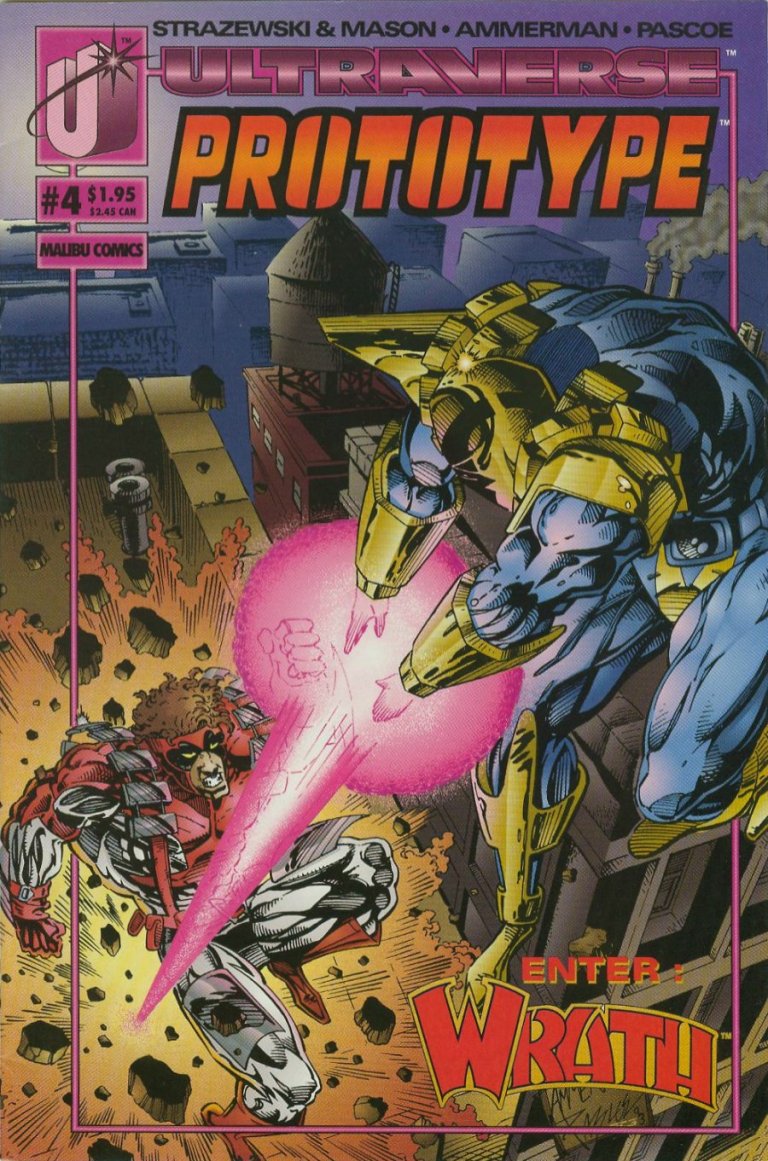
A Look Back at Prototype #4 (1993)

Disclaimer: This is my original work with details sourced from reading the comic book and doing personal research. Anyone who wants to use this article, in part or in whole, needs to secure first my permission and agree to cite me as the source and author. Let it be known that any unauthorized use of this article will constrain the author to pursue the remedies under R.A. No. 8293, the Revised Penal Code, and/or all applicable legal actions under the laws of the Philippines.

One of the things that I like most about the Prototype monthly series of the Ultraverse is that it follows the respective exploits of not one but two men who got involved as pilots of Ultratech’s powered suits of armors. Bob Campbell is the older Prototype pilot from the past who got succeeded by Jimmy Ruiz, a much younger guy doing the corporation’s wishes.

So far, the dual-narrative approach to storytelling worked well for me and it is one of the more defining elements of the Prototype series. We can find out more with this look back at Prototype #4, published in 1993 by Malibu Comics with a story written by Tom Mason and Len Strazewski and drawn by David Ammerman.

Cover
The cover.

Early story

The story begins in New York City where Jimmy Ruiz looks down at the streets from the balcony of a tower. He remembered the old days when he used to live down there and spend time with his amigos. A pretty lady is on his bed with the blanket covering her naked body. After some talk, they make love with each other.

Over at the headquarters of Ultratech, a lady searches for Jimmy claiming she knows he’s living right there. The security guard tells her that Jimmy is not listed in the residential directory, and asked her to call the company in the morning. She leaves and passes by a man with a coat.

The coated guy approaches the security guard and asked for the name and contact number of their building manager. He claims to be look to sublet some office space….

Quality

15
Solidly fun action!

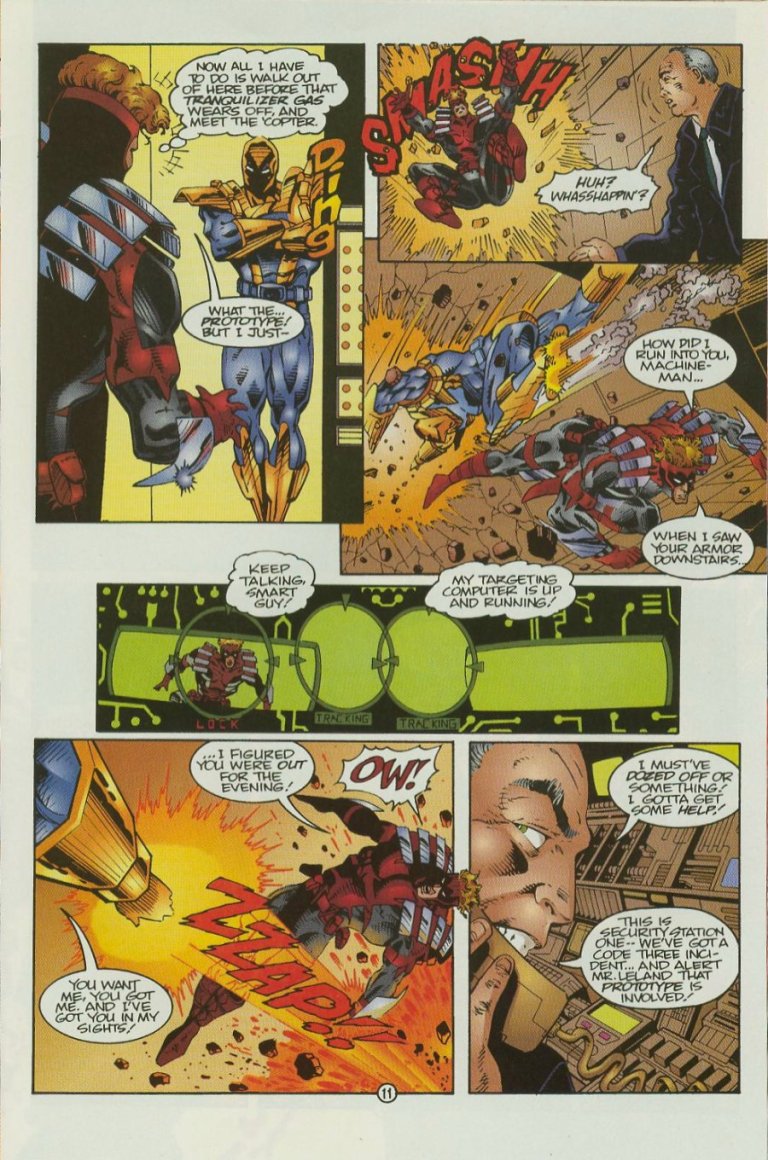
This is another well-written story by Tom Mason and Len Strazewski. In here, the new antagonist named Wrath was introduced and he certainly is not another generic bad guy opposite the superhero. During the heat of battle between him and Prototype (Jimmy Ruiz), you will learn nice details about Wrath through the banter. For one thing, Wrath works for a superior (like Prototype) and even though it is normal for him to use violence as a means of survival or winning, he makes it a point not to hurt civilians. The same conflict also paved the way for further development of the personality of Jimmy who is not only struggling with his job as Prototype pilot but also living with things that his employer physically implanted into his body that’s supposed to link him with the armor.

On the other hand, there is a short segment following former Prototype pilot Bob Campbell which served as a strong ending for the comic book. You really have to read it.

Conclusion

11
And the battle begins…

I really like this comic book. It’s got all the fun and compelling stuff any reader can enjoy. The introduction of Wrath alone is worth the cover price.

If you are seriously planning to buy an existing hard copy of Prototype #4 (1993), be aware that as of this writing, MileHighComics.com shows that the near-mint copy of the regular edition costs $4.

Overall, Prototype #4 (1993) is highly recommended!


Thank you for reading. If you find this article engaging, please click the like button below and also please consider sharing this article to others. If you are looking for a copywriter to create content for your special project or business, check out my services and my portfolio. Feel free to contact me as well. Also please feel free to visit my Facebook page Author Carlo Carrasco and follow me at HavenorFantasy@twitter.com

A Look Back at Hardcase #11 (1994)

Disclaimer: This is my original work with details sourced from reading the comic book and doing personal research. Anyone who wants to use this article, in part or in whole, needs to secure first my permission and agree to cite me as the source and author. Let it be known that any unauthorized use of this article will constrain the author to pursue the remedies under R.A. No. 8293, the Revised Penal Code, and/or all applicable legal actions under the laws of the Philippines.

After reviewing the first ten issues of the Hardcase monthly series, I should say that the title character is one of the most defining lead characters of not only the Ultraverse but also 1990s superhero comics in general. The late James Hudnall really defined the character Tom Hawke/Hardcase and established his rightful spot in the Ultraverse.

Now is time to take a look back at Hardcase #11 published in 1994 by Malibu Comics with a story written by James Hudnall and drawn by Scott Benefiel.

Cover
The cover.

Early story

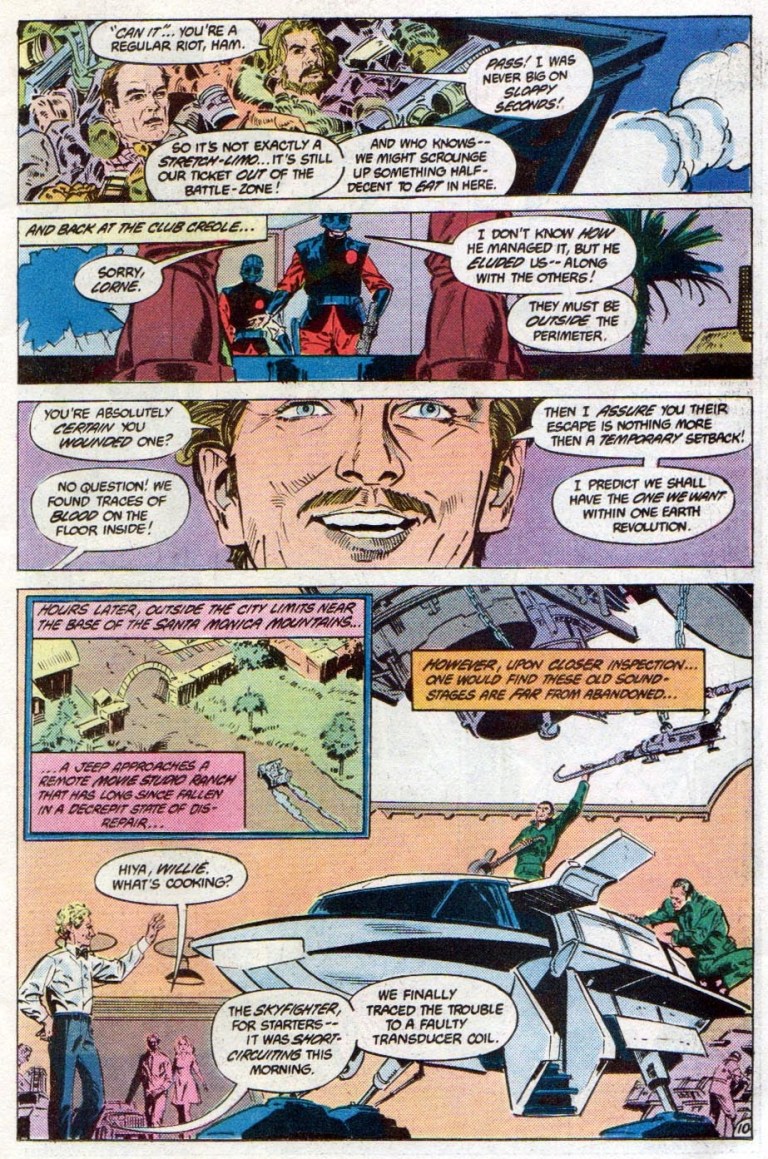
The story begins with Hardcase and Choice riding a car in high speed going to Nevada to uncover a mystery. Their destination is Aladdin base, a top secret facility that the two believe contains the answers to Choice’s past.

Suddenly Hardcase slammed the brakes of the car as they encounter a helicopter in front of them. Worse than that, four powerful adversaries – Foxfire, Head Knocker, War Eagle and Hardwire – jointly confront them ready to fight to the death…

Quality

18
Really dynamic art by Scott Benefiel.

As before, James Hudnall delivered yet another compelling story and artist Scott Benefiel nailed it visually. To begin with, this comic book is packed with a lot of action and the blows and hard hits can be felt. As it is loaded with action, the narrative never felt brainless nor dumb. Rather, there was nice variety mixed with the spectacle as Hudnall made solid efforts to make each bad guy express himself respectively when fighting with Choice or Hardcase. Take for example, Hardwire is creepy and ruthless. Along the way, the coordination between Hardcase and Choice as well as between the bad guys themselves was well executed literally and visually.

As the conflicts went on, Aladdin’s presence was also felt even though there were no images used. In fact, the sudden involvement of the bad guys reflected what Aladdin does whenever it captures and uses individuals with special abilities or talents for its own gain.

More on Hardcase and Choice, I like the fact that the creators explained that Choice’s powers could only last 60 minutes and will take two hours to recharge. This adds weight to their mission of finding and infiltrating Aladdin’s base. How Choice and Hardcase deal with the challenge is worth reading.

Conclusion

2
The money shot!

Hardcase #11 is not only a really great comic book to read, it is also a clear attempt by the creators to build up something and conclude the first year of the monthly series with something strong. If course, this issue marked the 2nd part of The Angry Past storyline. We will find that out soon enough what will turn out next in Hardcase #12.

If you are seriously planning to buy an existing hard copy of Hardcase #11 (1994), be aware that as of this writing, MileHighComics.com shows that the near-mint copy of the regular edition costs $4.

Overall, Hardcase #11 (1994) is highly recommended!


Thank you for reading. If you find this article engaging, please click the like button below and also please consider sharing this article to others. If you are looking for a copywriter to create content for your special project or business, check out my services and my portfolio. Feel free to contact me as well. Also please feel free to visit my Facebook page Author Carlo Carrasco and follow me at HavenorFantasy@twitter.com
A Look Back at Solitaire #7 (1994)

Disclaimer: This is my original work with details sourced from reading the comic book and doing personal research. Anyone who wants to use this article, in part or in whole, needs to secure first my permission and agree to cite me as the source and author. Let it be known that any unauthorized use of this article will constrain the author to pursue the remedies under R.A. No. 8293, the Revised Penal Code, and/or all applicable legal actions under the laws of the Philippines.

Are you readers craving for another tale of crime-fighting and vigilantes set within the Ultraverse? Get ready for another bout of conflicts told through the eyes of Solitaire, one of the more unique crime-fighting superheroes to have ever existed.

As such, here is a look back at Solitaire #7, published in 1994 by Malibu Comics with a story written by Gerard Jones and drawn by Jeff Johnson.

Cover
The cover.

Early story

The story begins with the arrival of Double Edge, a caped swordsman who strong believes that all things in life must be balanced no matter how hard it could be. As far as he is concerned, only he can help achieve balance whenever the scales are tilted. Double Edge jumps down on a man (outside of a parked car), knocked him out and grabbed the keys from him. Another man comes out of the café and spots Double Edge with the keys, which made him think the swordsman was stealing the downed man’s car. Double Edge strikes him impulsively to balance things out but ends up leaving him down on the sidewalk with a lot of blood lost. The swordsman regrets it.

Double Edge drives the car still obsessing with balancing. Suddenly another car – driven by Solitaire – gets into his way forcing the swordsman to move his car leftwards and hit another vehicle.

Immediately, Solitaire and Double Edge jumped out of their vehicles to start a fight…

Quality

17
Really nice action between Solitaire and Double Edge by Jeff Johnson.

For a pretty wordy comic book, this one still managed to entertain with lots of action and intriguing dialogue. As far as narrative is concerned, this one is about Solitaire dealing with a fellow costumed vigilante who is obsessed with balance even thought it complicates his ways of fighting criminals.

What is easily the strongest selling point as well as the most interesting aspect of this comic book is the clash between Solitaire and Double Edge not only with armed combat but also with the very different ways they look at fighting crime and helping people in times of danger. Their exchange of words is engaging thanks to the strong dialogue.

As with the previous issues, Jeff Johnson delivered good visuals complete with a smooth flow of transition.

Conclusion

2
Double Edge jumps on someone.

Solitaire #7 is indeed entertaining and intriguing. It’s not an Ultraverse story with a high-stakes concept, but it succeeds in telling a more grounded story within the said universe through the eyes of not just one but two costumed crime fighters. This comic book was released with an “Ultraverse 1st Birthday” mark on the cover and considering what happened in the first six issues, this one really felt like a turning point in the saga of Solitaire.

If you are seriously planning to buy an existing hard copy of Solitaire #7 (1994), be aware that as of this writing, MileHighComics.com shows that the near-mint copy of the regular edition costs $4.

Overall, Solitaire #7 is recommended.


Thank you for reading. If you find this article engaging, please click the like button below and also please consider sharing this article to others. If you are looking for a copywriter to create content for your special project or business, check out my services and my portfolio. Feel free to contact me as well. Also please feel free to visit my Facebook page Author Carlo Carrasco and follow me at HavenorFantasy@twitter.com

A Look Back at Prototype #7 (1994)

Disclaimer: This is my original work with details sourced from reading the comic book and doing personal research. Anyone who wants to use this article, in part or in whole, needs to secure first my permission and agree to cite me as the source and author. Let it be known that any unauthorized use of this article will constrain the author to pursue the remedies under R.A. No. 8293, the Revised Penal Code, and/or all applicable legal actions under the laws of the Philippines.

Hey everyone! Are you ready for another return to the Ultraverse following the tales of Prototype?

We can start now with this look back at Prototype #7, published in 1994 by Malibu Comics with a story written by Tom Mason and Len Strazewski, and illustrated by Roger Robinson.

Cover
The cover.

Early story

The story begins high above the city street with a battle between Prototype (piloted by Jimmy Ruiz using a more advanced armor provided by his boss) and Arena. The boss of Jimmy could only express surprise to see Arena return having believed that Bob Campbell finished him off some months back.

As the fight goes on, Arena realizes that it is not his old nemesis Bob Campbell occupying the Prototype armor. For his part, Jimmy struggles with the uncertainty that comes with fighting his predecessor’s nemesis from the past.

Meanwhile at the roof of Ultratech’s headquarters in the city, armed and armored personnel take position following the orders of Leland…

Quality

Once again, Tom Mason and Len Strazewski crafted another strongly engaging story with the established mix of spectacle, corporate intrigue and the continued development of the two pilots of Prototype – Jimmy and Bob.

Speaking of the two, I love the way the story explored the other key elements from the respective personal lives of Jimmy and Bob. While Bob tends to his friend Jake in the hospital, Jimmy’s girl continues to pursue him (Jimmy) even though he is occupied with working as Prototype. This comic book also went the extra mile confirming the shared universe connection with a certain other Ultraverse character (note: he had his own series) making an appearance.

Artist Roger Robinson continued to deliver nice visuals that reflected the script, from the subtle drama scenes to the dynamic action scenes.

Conclusion

2
The money shot!

Prototype #7 is another solidly enjoyable comic book of the Ultraverse, worthy of inclusion in your collection.

If you are seriously planning to buy an existing hard copy of Prototype #7 (1994), be aware that as of this writing, MileHighComics.com shows that the near-mint copy of the regular edition costs $4 while the near-mint copy of the newsstand edition costs $13.

Overall, Prototype #7 is recommended.


Thank you for reading. If you find this article engaging, please click the like button below and also please consider sharing this article to others. If you are looking for a copywriter to create content for your special project or business, check out my services and my portfolio. Feel free to contact me as well. Also please feel free to visit my Facebook page Author Carlo Carrasco and follow me at HavenorFantasy@twitter.com

A Look Back at Total Recall Movie Special #1

Disclaimer: This is my original work with details sourced from reading the comic book, watching the movie and doing personal research. Anyone who wants to use this article, in part or in whole, needs to secure first my permission and agree to cite me as the source and author. Let it be known that any unauthorized use of this article will constrain the author to pursue the remedies under R.A. No. 8293, the Revised Penal Code, and/or all applicable legal actions under the laws of the Philippines.

I already published that I really love the 1990 sci-fi action movie Total Recall which starred Arnold Schwarzenegger, Sharon Stone, Michael Ironside and Rachel Ticotin under the direction of the highly talented Paul Verhoeven. The movie is one of my all-time favorites and most notably it has aesthetics that are totally unique mainly due to the combined expressions and artistry of Schwarzenegger and Verhoeven. Behind it all, Total Recall would not have been realized without the short story We Can Remember It For You Wholesale written by the late sci-fi author Philip K. Dick whose published works led to other movies from Hollywood.

As part of a business strategy, Total Recall also had multi-media releases in the form of a novel (by Piers Anthony), video games and a comic book published by DC Comics. Very recently I was able to finally read the comic book adaptation of the film titled Total Recall Movie Special #1. It had a cover that was technically a copy of the American movie poster with Arnold Schwarzenegger’s face dominating it and it came with a cover price of $2.95 which was pretty high for 1990.

Is the comic book adaptation any good? Does it capture the essence of the blockbuster film? We can find out by finally starting this look back at Total Recall Movie Special #1, published in 1990 by DC Comics with a story written by Elliot S. Maggin and drawn by the late Tom Lyle (read my first article of Lyle’s work).

Cover
The cover of the comic book.

Early story

The story begins on the surface of planet Mars where a man and a woman (both wearing space suits) walk together heading towards an unknown destination. Suddenly a small stone cracks the glass face shield of the man’s helmet exposing him to the deadly atmosphere of Mars.

2
Like in the movie, Douglas Quaid and Lori wake up.

It turns out it was just a dream for Douglas Quaid who was in bed with his wife Lori. The dream turned out to be a recurring one as Lori asked him if the dream lady was in there again. Lori then asked Doug who the dream lady was. A short time later, Doug reports to work and while doing construction work on the field, he asked a colleague about Rekall (note: he saw a video ad of it on his way to work). The guy told Doug about someone getting lobotomized at Rekall and discouraged him from availing of their service.

7
Douglas Quaid at Rekall for his virtual holiday.

Doug eventually visits Rekall after work and availed of their virtual holiday as a secret agent. Something goes wrong as Doug goes berserk while strapped on one of Rekall’s seats. Dr. Lull (in-charge of the operation) explains to her boss that Doug was not acting out his virtual holiday as her team has not even implanted it yet on him…

Quality

14
The bad guys on the hunt for Douglas Quaid.

When it comes to presenting the story, Elliot S. Maggin clearly paid close attention to the details, the plot and dialogue of the movie while implementing adjustments along with artist Tom Lyle to make the story work in comic book format. Clearly, this is not a word-for-word, scene-for-scene adaptation but it comes close to capturing the essence of the film. Unsurprisingly, the comic book adaptation never captured the unique Schwarzenegger-Verhoeven aesthetics of the movie but it still performed well on replicating the sci-fi, hard action moments. I find it surprising that Total Recall Movie Special #1 carried the seal of approval of the Comics Code Authority (CCA) as there were some bloody shots and several moments of strong violence inspired by the R-rated film.

When it comes to the visuals, Tom Lyle succeeded in capturing the sci-fi look of the movie and even had the literary Douglas Quaid occasionally resemble Arnold Schwarzenegger. Lyle’s drawings on other characters like Lori, Melina, Coohagen and Richter looked NOTHING like the actors who played them but that’s not a problem at all as this gives this comic book its own unique touch. In fact, there were some drawings of people that sometimes reminded me of what I saw in EC Comics’ Weird Science comic books.

While Lyle scored nicely with the action scenes, his own drawings of planet Mars and the human colony are quite nice to look at. With regards to the urban environment, Lyle drew a nice mix of 20th century inspired urban areas laced with futurism. Unsurprisingly, the futurism got stronger when the story was set in Mars.

If there is anything lacking with the art, it would be visual dynamism. This can be forgiven however given the high amount of dialogue and story details that had to be presented with each page carrying a lot of panels.

Conclusion

23
The human colony in planet Mars.

I can say it out loud that Total Recall Movie Special #1 is a fun read and serves nicely as a literary companion to the cinematic masterpiece Total Recall. As a comic book adaptation of a blockbuster movie, this one is pretty good and in some ways captured some of the flair of the film even as it never successfully replicated the Verhoeven-Schwarzenegger aesthetic in the film. Really, if you want the best of Total Recall you really should watch the movie. This comic book on its own is entertaining and should encourage you to watch the film.

If you are seriously planning to buy an existing hard copy of Total Recall Movie Special #1 (1990), be aware that as of this writing, MileHighComics.com shows that the near-mint copy of the regular edition costs $11 while the near-mint copy of the newsstand edition costs $31. If you are looking for something more valuable, the near-mint copy of the numbered-and-signed edition of the comic book costs $51.

Overall, Total Recall Movie Special #1 (1990) is highly recommended!


Thank you for reading. If you find this article engaging, please click the like button below and also please consider sharing this article to others. If you are looking for a copywriter to create content for your special project or business, check out my services and my portfolio. Feel free to contact me as well. Also please feel free to visit my Facebook page Author Carlo Carrasco and follow me at HavenorFantasy@twitter.com
A Look Back at X-Men 2099 #35 (1996)

Disclaimer: This is my original work with details sourced from reading the comic book and doing personal research. Anyone who wants to use this article, in part or in whole, needs to secure first my permission and agree to cite me as the source and author. Let it be known that any unauthorized use of this article will constrain the author to pursue the remedies under R.A. No. 8293, the Revised Penal Code, and/or all applicable legal actions under the laws of the Philippines.

This is it! The thirty-fifth and final issue of the X-Men 2099 monthly series from Marvel Comics is at hand. How times have changed in the American comic book industry back in the 1990s. When X-Men 2099 #1 was released in 1993, there was still good demand and room for expanding the 2099 imprint beyond the pioneering characters Spider-Man 2099, Punisher 2099, Ravage 2099 and Doom 2099. By the time the X-Men 2099 series came to an end, Marvel Comics was in turmoil internally and several 2099 series talents behind the scenes left as a result of the termination of 2099 line editor Joey Cavalieri.

With the short history lesson done, we can now take a look back at X-Men 2099 #35, published in 1996 by Marvel Comics with a story written by John Francis Moore (who wrote ALL the series’ issues) and drawn by Jan Duursema.

Cover
The cover.

Early story

The story begins with some members of the X-Men facing off with Darkson (his name is Joaquim, the accelerated grown-up son of Metalhead and Rosa) and his evil mentor Vulcan. Following Vulcann’s command, Darkson lets go of Luna (who was carried earlier by him) who lands on the ground in a weakened state and was approached by Krystallin. In reaction, Krystallin launches some crystals to Vulcann and Darkson but got blocked by a protective aura.

The X-Men realize that Darkson is as potentially dangerous as Zhao. Darkson then strikes at Bloodhawk with a psionic blast and then attacks the other X-Men…

Quality

7
Two X-Men veterans and one X-Nation member in a scene.

In terms of storytelling, John Francis Moore did what he could with all the plot details and with what was built up during the previous issues leading to this issue’s final conflict. The problem, however, is that the pay-off was ultimately unsatisfactory.

Firstly, having Vulcann and Darkson parallel God and Jesus (complete with doing something about the destiny of people who need saving, which in this comic book referred to the futuristic mutants) in a twisted fashion was just hollow and never engaging. Secondly, the way the X-Men members got together was very rushed in execution. Thirdly and more importantly, the final conflict was pretty shallow and only led to a sequel-bait ending designed to lead into 2099: World of Tomorrow #1.

If you are looking for superhero spectacle, you will find some here but they all feel rushed and unsatisfying. If you care about key X-Men 2099 characters like Skullfire and Xi’an, the way they developed and appeared here will disappoint you. In fairness, Shakti remains the strong-willed mutant as before.

To say the least, there was an effort to emphasize what was at stake for the mutants of 2099 living in Halo City and there was also the idea that the world was coming to an end. The problem here was the execution as the comic book basically showed the X-Men in the presence of Vulcann and Darkson. There was no epic battle here at all and the climax at the end clearly showed rush and even a lack of creativity (note: most likely due to the internal turmoil at Marvel at the time).

Conclusion

2
Vulcan and Darkson (carrying the X-Men’s Luna).

I should say that X-Men 2099 #35 is indeed a disappointing conclusion not only to its series but also in the final conflict the X-Men had with Vulcann and Darkson. The pay-off was very unsatisfying and it did not help that this comic book served as just another build-up leading to another Marvel 2099 publication. By the time the conflict ended, I did not care much about the X-Men which, for the most part, became irrelevant. This is too bad because in issue #1 they were very interesting and (after some stories of misadventures showing the X-Men members separated) they became interesting again with the events in issue #25.

If you are seriously planning to buy an existing hard copy of X-Men 2099 #35 (1996), be aware that as of this writing, MileHighComics.com shows that the near-mint copy of the regular edition costs $17 while the near-mint copy of the newsstand edition costs $51.

Overall, X-Men 2099 #35 (1996) is unsatisfying. I don’t recommend spending a lot of money for it. Better save your money.


Thank you for reading. If you find this article engaging, please click the like button below and also please consider sharing this article to others. If you are looking for a copywriter to create content for your special project or business, check out my services and my portfolio. Feel free to contact me as well. Also please feel free to visit my Facebook page Author Carlo Carrasco and follow me at HavenorFantasy@twitter.com
A Look Back at Hardcase #10 (1994)

Disclaimer: This is my original work with details sourced from reading the comic book and doing personal research. Anyone who wants to use this article, in part or in whole, needs to secure first my permission and agree to cite me as the source and author. Let it be known that any unauthorized use of this article will constrain the author to pursue the remedies under R.A. No. 8293, the Revised Penal Code, and/or all applicable legal actions under the laws of the Philippines.

Having read the first several issues of Hardcase, I must say that the late James Hudnall did an incredible job on developing the titular character. Hardcase #9 was very memorable as it marked a turning point in Hardcase’s life and the further development of his relationship with Choice, the lady he has been helping for some time. That particular comic book had a powerful ending as well.

That being said, now we can take a look back at Hardcase #10, published in 1994 by Malibu Comics with a story written by James Hudnall and drawn by Kelly Krantz.

Cover
The cover.

Early story

The story begins with Tom Hawke/Hardcase being spied on electronically by Aladdin. It turns out, the secret organization has been spying on him for eight weeks as they viewed him as a potential danger to them given his ultra abilities, his capability of solving mysteries and recent interactions he had with other existing ultras. Aladdin continues to collect more data needed to launch a pre-emptive strike against Hardcase.

Meanwhile, Hardcase and Choice start a heartful talk about some serious, personal matters now that they are in a relationship. Choice admits that her memories of the past have been coming back since they returned from the moon.

Quality

13
Choice and Hardcase in a dramatic scene.

I’ll say it straight here – this comic book is full of character development laced with mystery and intrigue. It clearly lacks superhero action (which issue #9 had so much of) but that is NOT a problem at all. This is because James Hudnall’s script is truly compelling to read and his writing was successfully brought to life visually by Kelly Krantz. Not even the slowest scenes felt boring.

What I enjoyed a lot here, apart from character development, are the flashbacks presented as Choice recalled the past. They were very well written and moved at a nice pace. The more the past of Choice was revealed, the more I wanted to discover. The same goes with how the past fit smoothly with Hardcase’s search for answers. It’s really great writing done by Hudnall.

Conclusion

2
Really nice visual presentation of how Aladdin spies on Hardcase. This was long before Wikileaks and the modern age of electronic surveillance.

No doubt about it. Hardcase #10 is a great read! It has almost no superhero spectacle but the story, characterization, suspense and intrigue all more than made up for it. Other than exploring the deepening relationship between the Hollywood ultra and Choice, this comic book is one of the most defining stories about the secret organization Aladdin and what it has been doing behind the scenes. How Aladdin is portrayed, you really have to read the comic book and I assure you all, it is worth discovering on your own!

If you are seriously planning to buy an existing hard copy of Hardcase #10 (1994), be aware that as of this writing, MileHighComics.com shows that the near-mint copy of the regular edition costs $4 while the near-mint copy of the newsstand edition costs $11.

Overall, Hardcase #10 (1994) is highly recommended!


Thank you for reading. If you find this article engaging, please click the like button below and also please consider sharing this article to others. If you are looking for a copywriter to create content for your special project or business, check out my services and my portfolio. Feel free to contact me as well. Also please feel free to visit my Facebook page Author Carlo Carrasco and follow me at HavenorFantasy@twitter.com