A Look Back at Venom: Lethal Protector #2 (1993)

Disclaimer: This is my original work with details sourced from reading the comic book and doing personal research. Anyone who wants to use this article, in part or in whole, needs to secure first my permission and agree to cite me as the source and author. Let it be known that any unauthorized use of this article will constrain the author to pursue the remedies under R.A. No. 8293, the Revised Penal Code, and/or all applicable legal actions under the laws of the Philippines.

Welcome back superhero enthusiasts, 1990s arts and culture enthusiasts, Marvel Comics fans and comic book collectors! Today we go back to the year 1993 and explore a part of Marvel Comics’ universe through the first-ever limited comic book series featuring one of Marvel’s most iconic villains – Venom.

In my previous retro review, Eddie Brock returned to his hometown of San Francisco following the events of Amazing Spider-Man #375 (1993). Living with his very distorted belief of protecting the innocent by doing unrelenting acts of violence on others, he begins to get involved with helpless people who happened to be hounded by agents of a certain private organization that wields power. Along the way, Spider-Man arrives in the city find Venom.

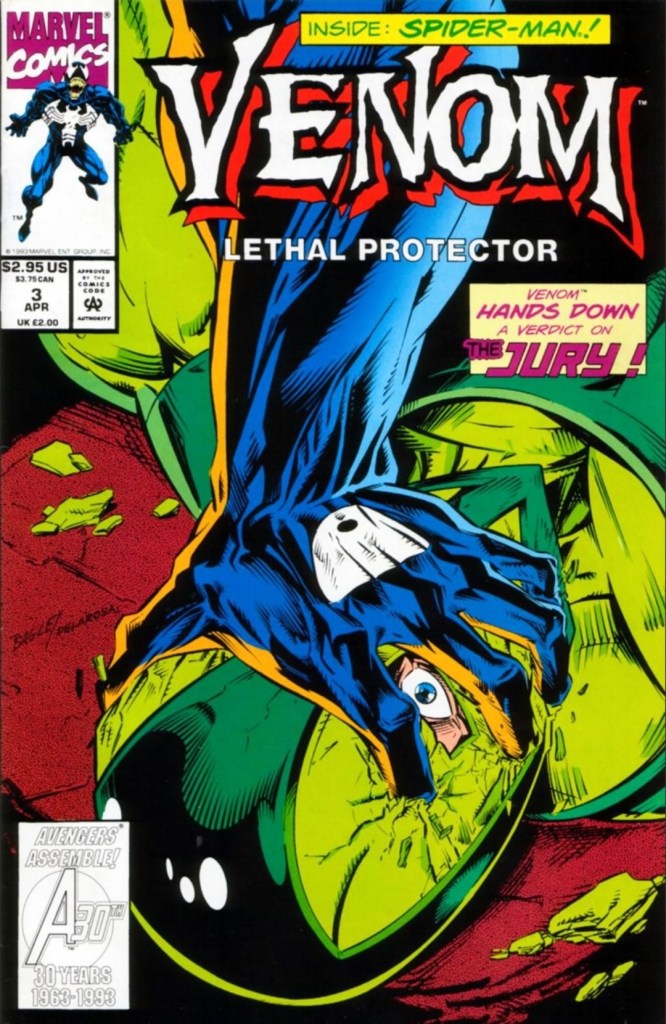
With those details laid down, here is a look back at Venom: Lethal Protector #2, published in 1993 by Marvel Comics with a story written by David Michelinie and drawn by Mark Bagley.

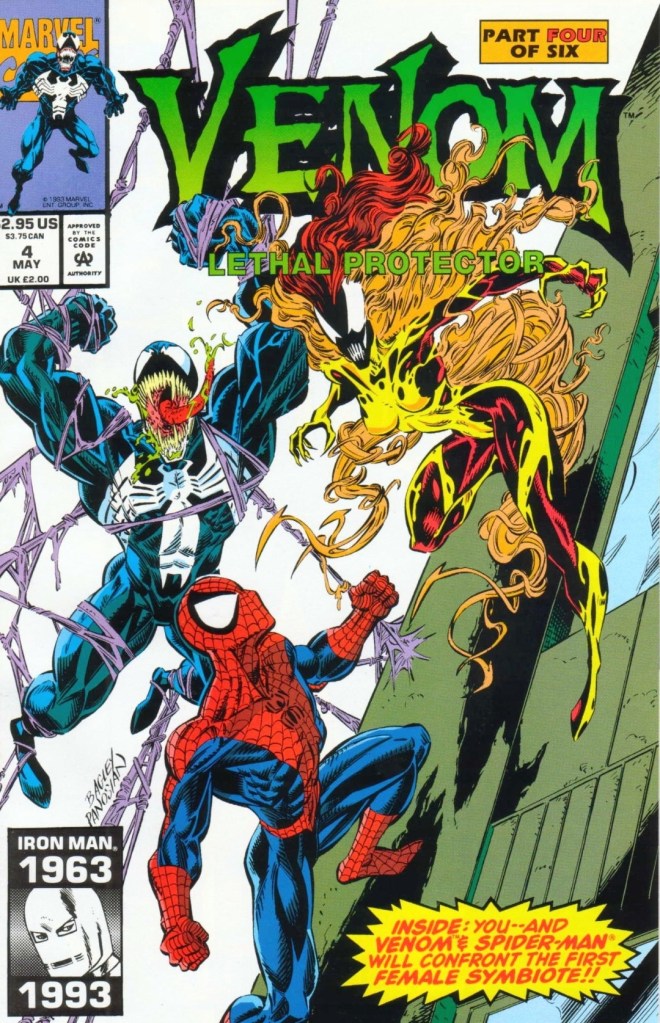
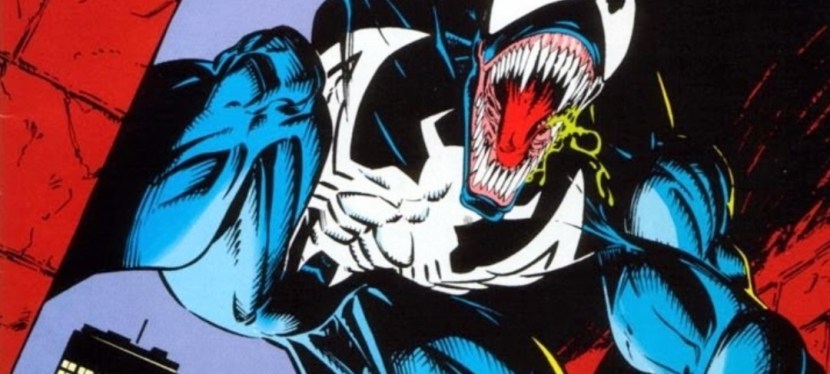
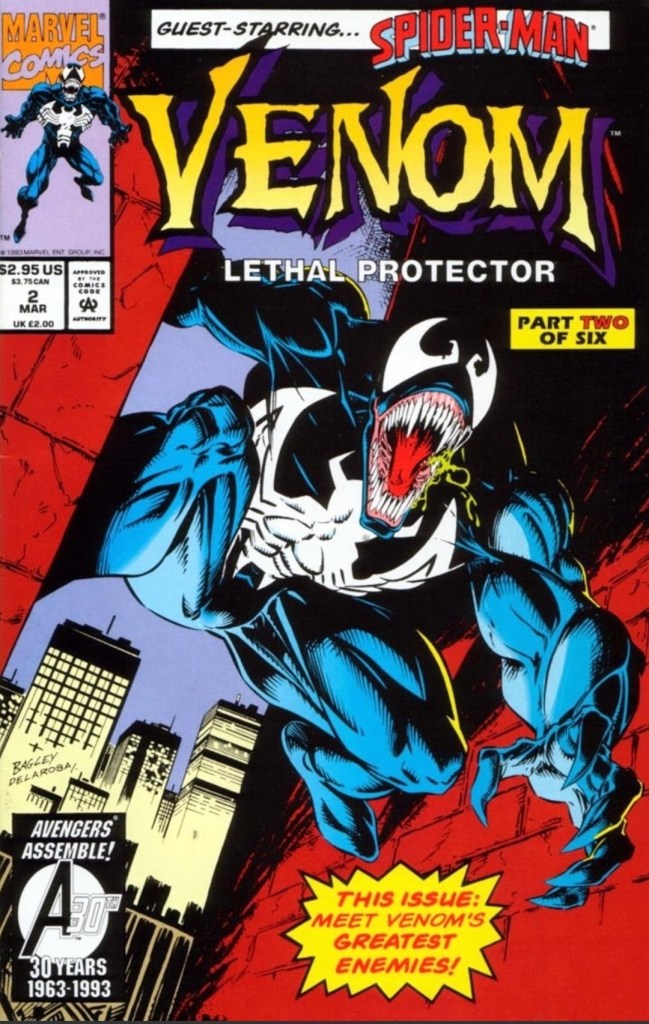
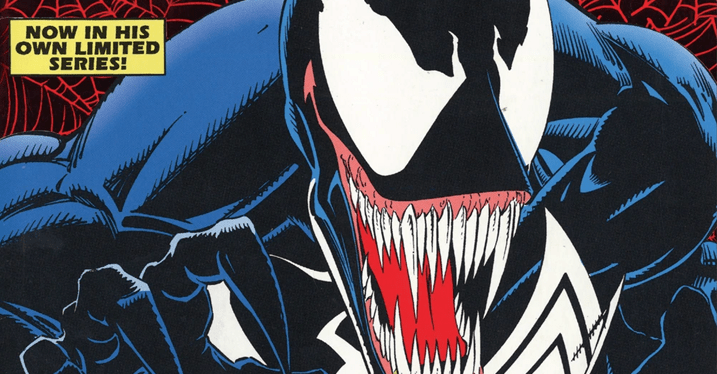
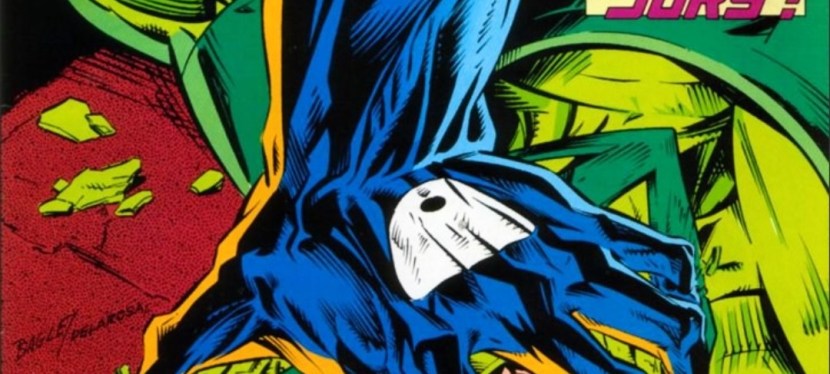
The cover.

Early story

The story begins deep underneath the city of San Francisco. Venom, who is caught by the large mechanical fist of a walking mech (piloted by a man working for Roland Treece’s organization), finds himself on the deeply buried section of the city and around them are vagrant people who settled and became residents of a local society that the rest of America does not even know exists.

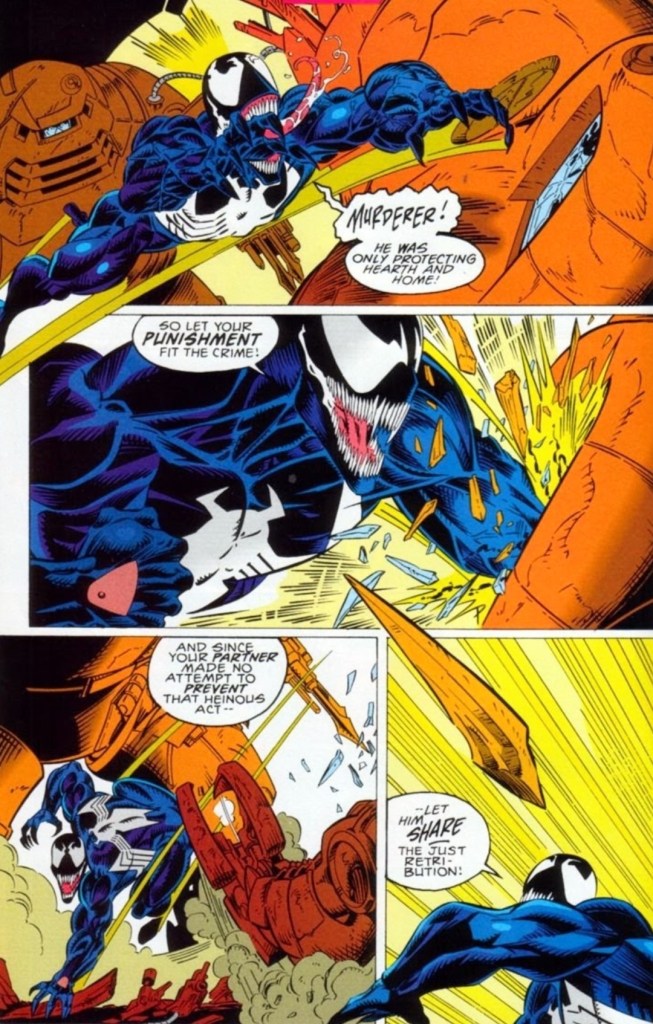
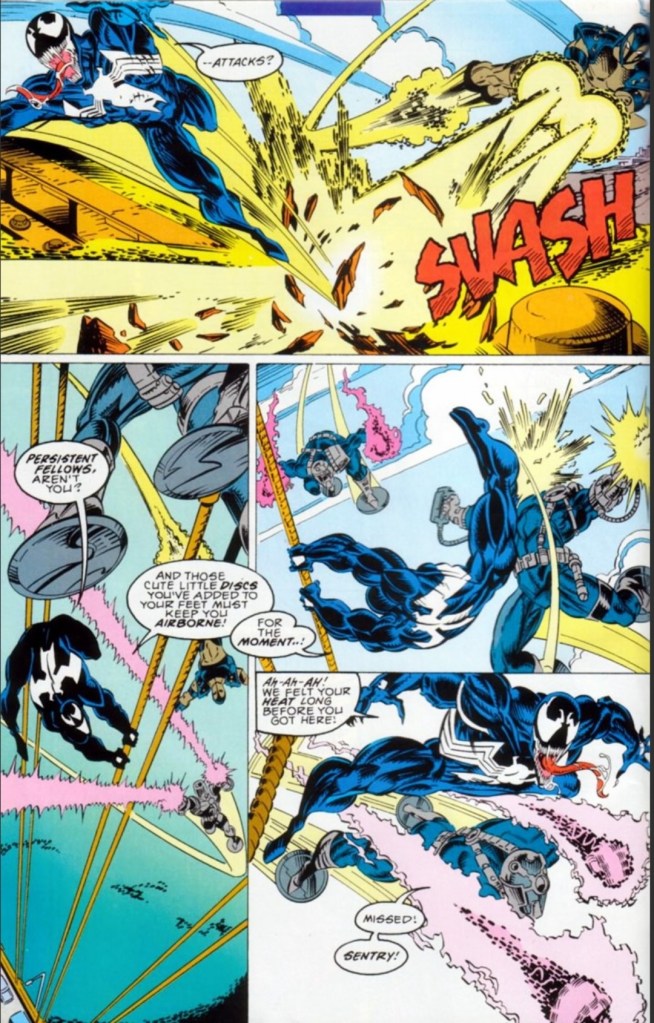
As the local residents caught the attention of the pilot, Venom breaks free by smashing the mechanical fist into pieces. Another mech suddenly jumps into place near the first one. In response to the first mech’s sudden killing of a local resident (who was armed with a shotgun), Venom jumps to it and kills the pilot inside by punching into the cockpit. Venom then grabs a long sharp object and kills the pilot of the other mech with it.

While the locals were hostile and afraid of Venom, the other people (who were assisted on the surface by Venom) come to support him and tell their fellow underground residents that he is not their enemy. One of the local council members stated that a meeting at the council hall will be held and Venom will attend it…

Quality

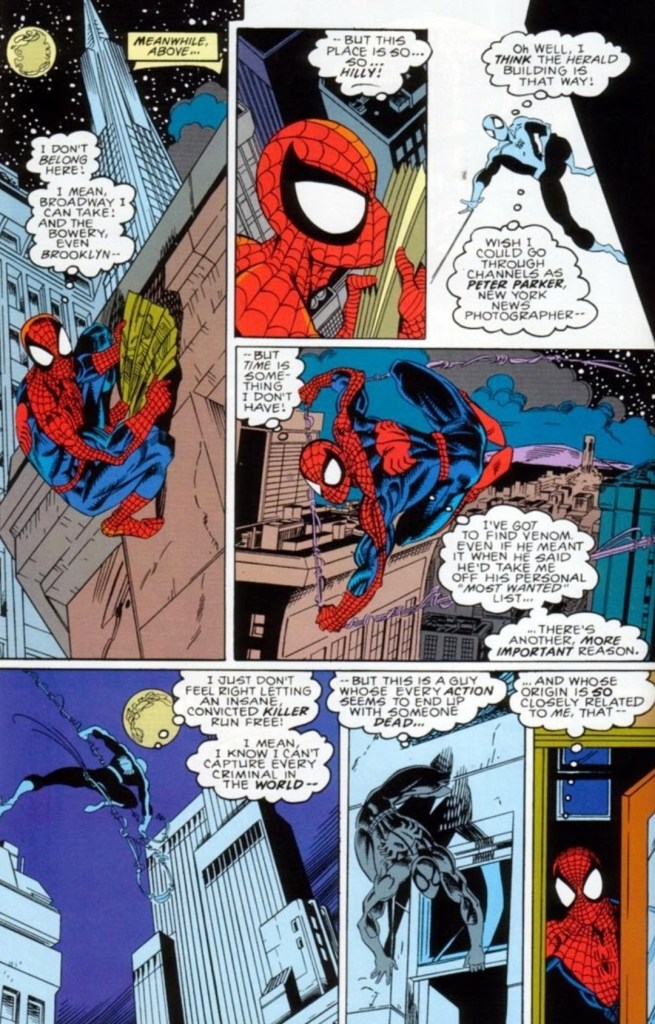
With exposition in mind, Spider-Man here does most of the detective work. Understandably, he is not involved with the superhero spectacle.

Compared to issue #1, this story has a more interesting setting which is the buried and forgotten section of San Francisco which was the result of the 1906 earthquake. Showing that the lost section has a local population composed of homeless people and those who reject the modern society above was a bright idea nicely executed by the Michelinie-Bagley team as it added some depth into Marvel Comics’ own version of San Francisco.

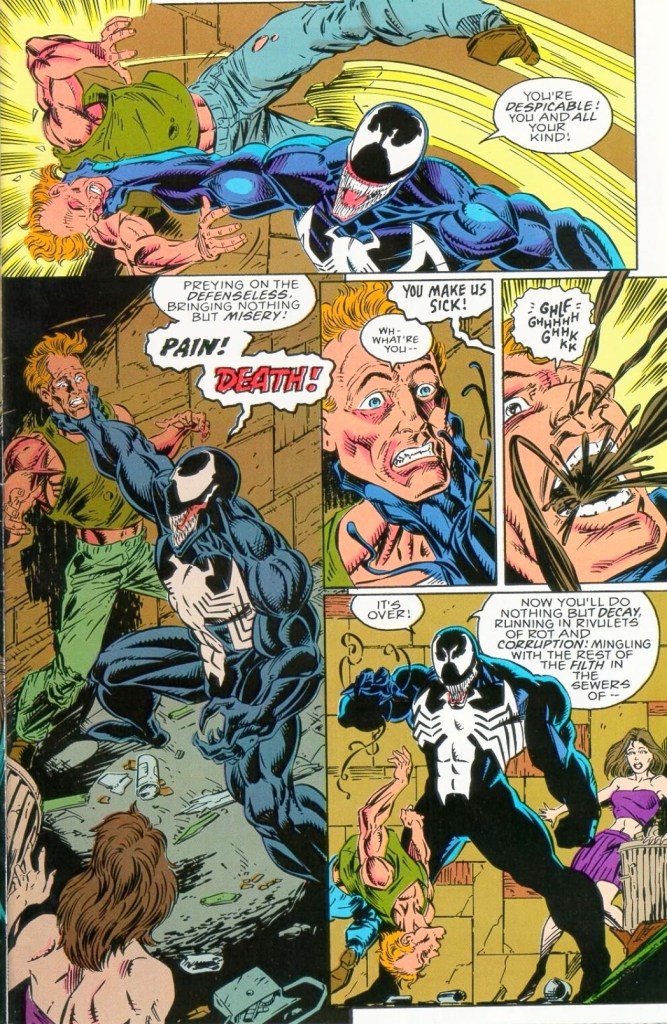
It was also in the underground city and with the residents where we get to see Venom do his own distorted acts of heroism backed by killing, and see how he fared when trying to win the trust of the locals whose members include those who read about him in the news and those who completely know nothing about him.

Through his interactions with the underground people, Eddie Brock is portrayed to be a bit more human compared to what happened in issue #1. For a man who has gotten very used to using extreme forms of violence and committing multiple acts of murder, it is surprising to see Brock looking and acting more civil in the presence of Americans (and perhaps illegal immigrants) who settled deep underground and established their own rules (note: Eddie Brock does not care about rules while having the alien costume). Still, you will see Venom engage in violent superhero action and even do a bit of detective work.

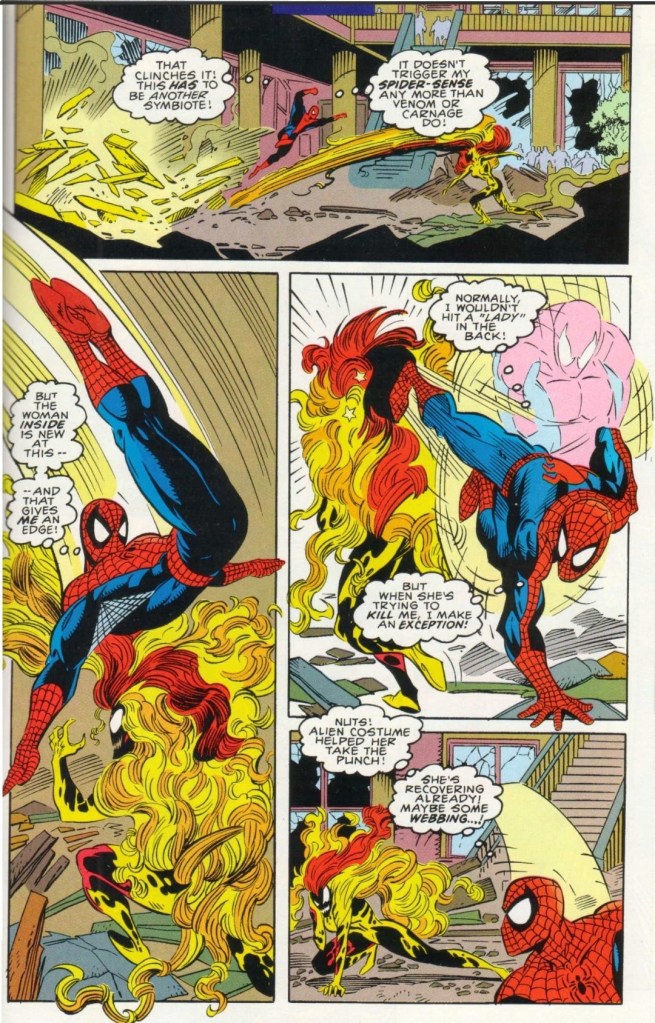
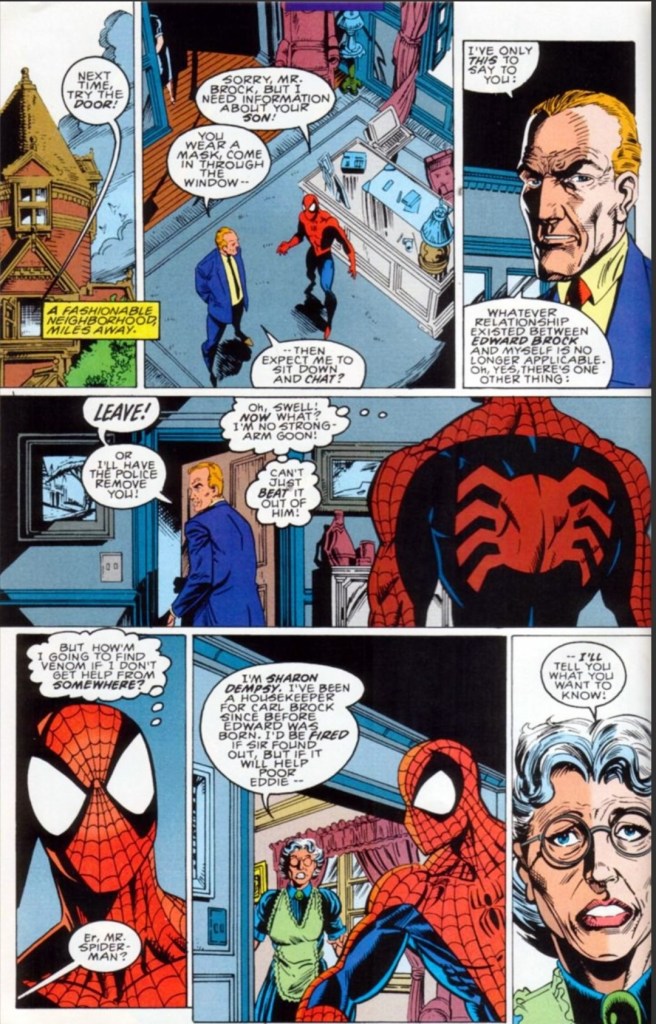
As with the previous issue, the iconic Spider-Man got a good share of the spotlight in the story as he searches for details about Venom which leads him to finding his rival’s estranged father. Spider-Man’s presence here is noticeably lessened compared to issue #1 and his own search for answers creatively served as exposition. Don’t expect to see any superhero spectacle from Spider-Man.

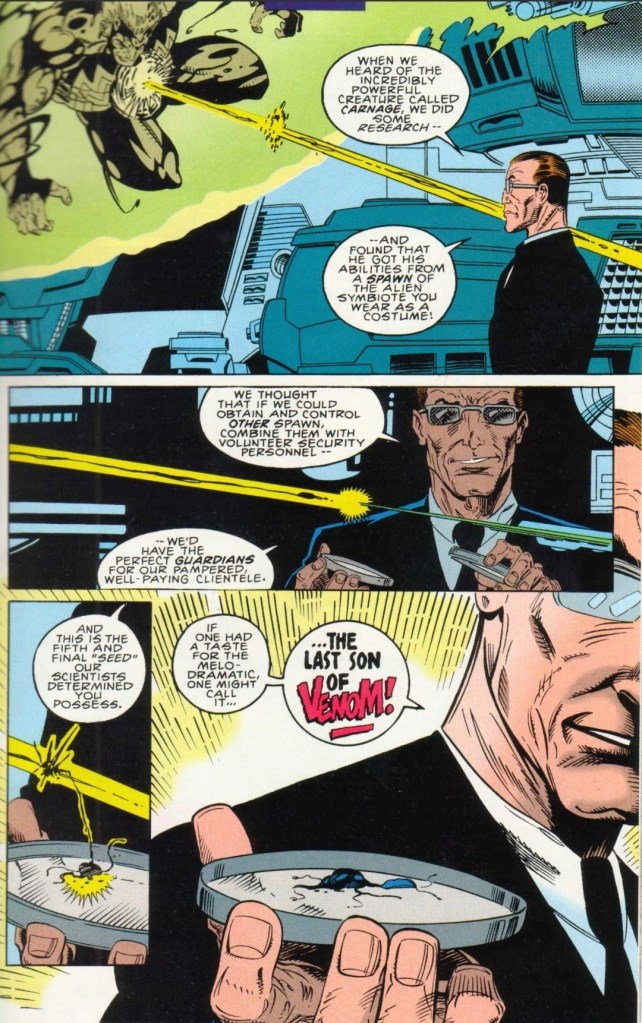
Without spoiling details and names, I should state that this comic book marks the debut of a ream of armed mercenaries led by a powerful man who lost a son because of what Venom did in Amazing Spider-Man #315 (1989).

Conclusion

The violent nature of Venom displayed.

Venom: Lethal Protector #2 (1993) is a marginal improvement over the first issue in terms of storytelling and setting. Part of the big build-up that happened in issue #1 started to get paid-off in this comic book which allowed for the plot to move forward at a more satisfying pace. Venom and Spider-Man share the spotlight again, but this time the edge goes to the black-wearing murderer who also has the benefit of being part of the superhero spectacle here. At this point of the mini-series, Venom is not only facing elements of the Treece organization (which has been organizing something that could impact San Francisco and its people) but also a new force of opposition that is related to something he did a few years prior. That being said, Venom is first and foremost a murderer that Marvel wanted to make big money out of.

Overall, Venom: Lethal Protector #2 (1993) is satisfactory.

+++++

Thank you for reading. If you find this article engaging, please click the like button below, share this article to others and also please consider making a donation to support my publishing. If you are looking for a copywriter to create content for your special project or business, check out my services and my portfolio. Feel free to contact me with a private message. Also please feel free to visit my Facebook page Author Carlo Carrasco and follow me on Twitter at  @HavenorFantasy as well as on Tumblr at https://carlocarrasco.tumblr.com/ and on Instagram at https://www.instagram.com/authorcarlocarrasco
A Look Back at Venom: Lethal Protector #1 (1993)

Disclaimer: This is my original work with details sourced from reading the comic book and doing personal research. Anyone who wants to use this article, in part or in whole, needs to secure first my permission and agree to cite me as the source and author. Let it be known that any unauthorized use of this article will constrain the author to pursue the remedies under R.A. No. 8293, the Revised Penal Code, and/or all applicable legal actions under the laws of the Philippines.

Welcome back superhero enthusiasts, 1990s arts and culture enthusiasts, Marvel Comics fans and comic book collectors! Today we go back to the year 1993 and explore a part of Marvel Comics’ universe through the first-ever limited comic book series featuring one of Marvel’s most iconic villains – Venom.

To put things in perspective, the origin of Venom started within the events of the 1980s series Secret Wars which took place in a far-away planet. As a result of that series, Spider-Man returned home wearing the alien symbiote as a costume which turns out to have a mind of its own. After Spider-Man successful separate himself from the symbiote (again) using the loud bells of a church, the living costume eventually found a desperate Eddie Brock and bonded with him to form Venom. In the late 1980s comics of Amazing Spider-Man, Venom became the deadliest enemy Spider-Man ever faced.

Going into the early 1990s, Venom’s popularity continued to grow tremendously. He became one of Marvel’s most popular non-hero type of characters and helped sell a lot of comics for the publisher. Knowing they had something to sell, Marvel approved a 6-issue limited series showcasing Venom. It was also the most anticipated comic book among collectors right after DC Comics killed Superman with Superman #75 (1993).

With those details laid down, here is a look back at Venom: Lethal Protector #1, published in 1993 by Marvel Comics with a story written by David Michelinie and drawn by Mark Bagley.

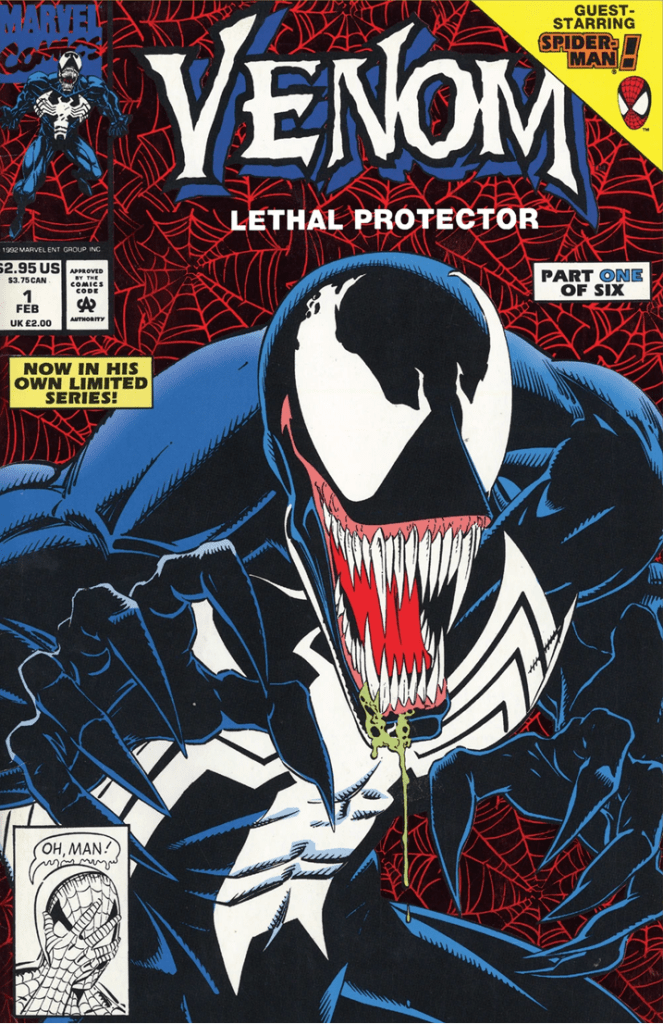
The cover.

Early story

The story begins in San Francisco, California. Deep within the city, a man cornered a lady at the dead end of an alley. Just as he was about do something bad to her, Venom leaps in at them. Totally surprised, the man was easily grabbed by Venom who lifted him and hit the wall bodily. Using his costume, Venom then chokes the man to death through the mouth and nose. Venom then picks up the lady’s purse and gives it to her. As soon as Venom leaves, the shocked lady runs away screaming.

Venom swings and leaps as he travels through the city. While traveling, Eddie Brock tells his living costume that while their hatred towards Spider-Man got reconciled a bit, the said superhero also helps the innocent. Eddie then reveals that he was born in San Francisco and they can start a new life together in it. Secretly, Venom turns into Eddie Brock in his civilian form. As Brock walks down the sidewalk, police officers nearby recognize him. It turns out. Eddie Brock was listed by police as a wanted person…

Quality

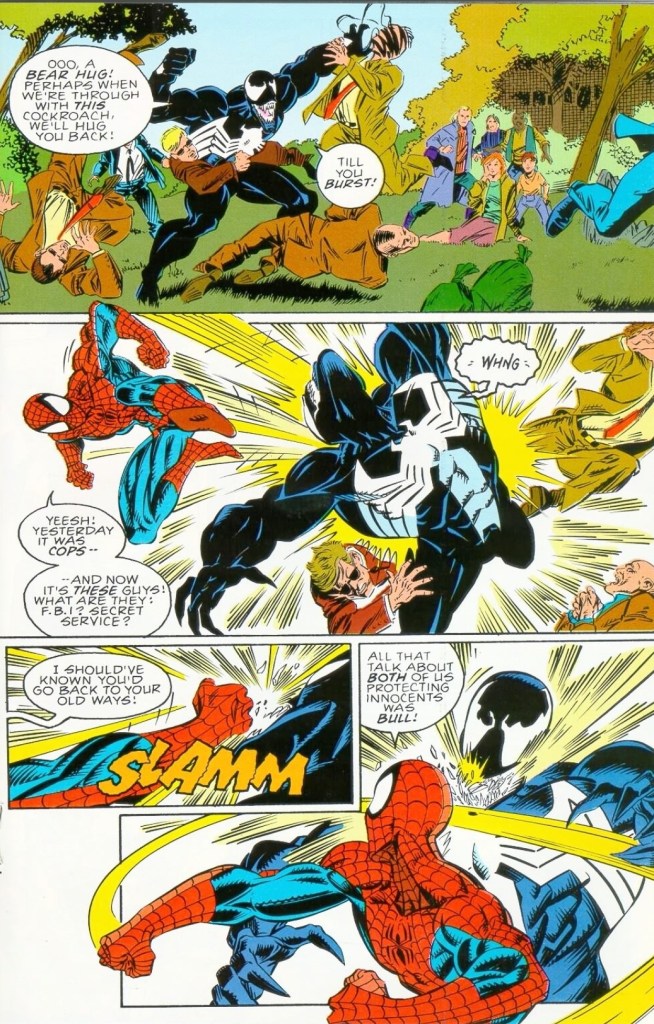
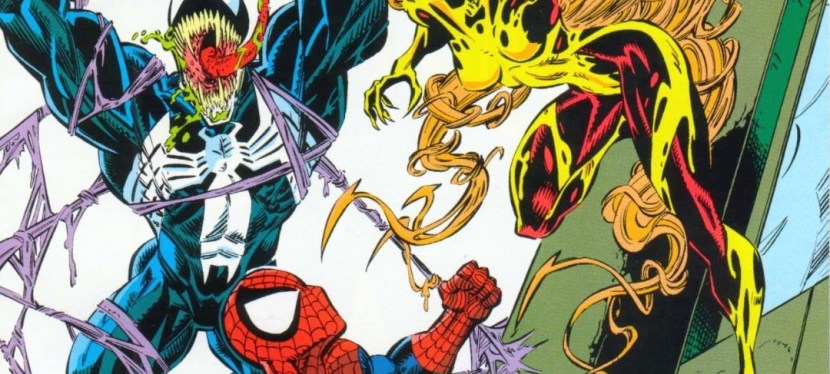
Spider-Man and Venom face each other unexpectedly.

Focusing on the plot, this story took place after the events in Amazing Spider-Man #375 (1993) which was released AFTER this particular comic book. As a standalone Venom story, this one clearly portrays him more of a vigilante in the sense that he goes up against a new force of evil that happens to be pouncing on people that Venom believes to be innocent and powerless. Unsurprisingly, Venom does not seek the help of law enforcers to help the innocent but rather he takes violent action to help the victims, going as far as to kill the so-called bad guys. The bad guys in this story work under a powerful man whose son was killed by Venom a few years prior. Within the context of this comic book, the new force of evil was introduced in subtle ways.

With extensive experience writing tales about Spider-Man and Venom, David Michelinie clearly redefined Venom’s beliefs here. Venom believes in protecting the innocent but he is much more violent and is relentless with cruelty which makes him a clear opposite of Spider-Man. Yet in a way, Venom sure talks and acts in a rather psychotic way and this alone makes him a very unlikable comic book protagonist.

Along the way, the iconic Spider-Man got a rather huge chunk of the spotlight in this comic book making him the 2nd lead next to Venom. I remember back in 1993 when there were Venom fans who complained about Spider-Man literally stealing the thunder away from his greatest enemy while there were a few Spider-Man fans who defended the icon’s guest participation in the story as he has always been linked with Venom’s origin. Considering the lack of depth in the plot, I can say Spider-Man appearance her served as a somewhat helpful filler.  

Conclusion

Helping victims does NOT justify killing. This makes Venom a major turn-off as a comic book protagonist.

Venom: Lethal Protector #1 (1993) is a comic book that can be alienating, especially when you are not a Venom fan. I find Venom too evil and too unbelievable to be a heroic figure even though he strong believes in protecting and helping the innocent. In my view, he is more of vigilante living with the delusion of achieving something worthwhile as he interacts with people who happen to be not assisted by the many, many Marvel Comics superheroes. It is not surprising that Venom definitely will never be a good role model. He is a murderer and the act of helping victims never justifies murder. The comic book’s plot lacks weight and Mark Bagley’s art looked a little rushed. What made this comic book interesting are Venom and Spider-Man themselves. Yes, there is a lot of superhero spectacle here but don’t expect anything new when you see Spider-Man and Venom resume their violent rivalry. This comic book is unsurprisingly a warm-up of things to come within its series. It is not a terrible literary work. It’s just not really good and it did not deserve the hype and sales of its time.

Overall, Venom: Lethal Protector #1 (1993) is serviceable.

+++++

Thank you for reading. If you find this article engaging, please click the like button below, share this article to others and also please consider making a donation to support my publishing. If you are looking for a copywriter to create content for your special project or business, check out my services and my portfolio. Feel free to contact me with a private message. Also please feel free to visit my Facebook page Author Carlo Carrasco and follow me on Twitter at  @HavenorFantasy as well as on Tumblr at https://carlocarrasco.tumblr.com/ and on Instagram at https://www.instagram.com/authorcarlocarrasco
A Look Back At The H.A.R.D. Corps #1

The 1990s was a decade of excess when it comes to superhero comic books. Apart from the persistent hoarding of comic books and the quest for profit, there were also these wide superhero franchises (or superhero universes) that popped up and even challenged Marvel Comics and DC Comics. Malibu Comics launched the Ultraverse while Valiant Comics came up with its own universe.

Valiant established itself nicely with popular characters like Bloodshot, X-O Manowar, Turok and Ninjak, and each one had its own regular series of comic books published. When it comes to teams, there was H.A.R.D. Corps (H.A.R.D. stood for Harbinger Active Resistance Division).

During the recent Hobby Con held at Las Piñas City, I luckily found myself a copy of The H.A.R.D. Corps #1 and read it for the first time ever. This is my review of the comic book which has a cover drawn by the great Jim Lee.

RCO002_1472443923.jpg
Cover with art by Jim Lee.

Early story

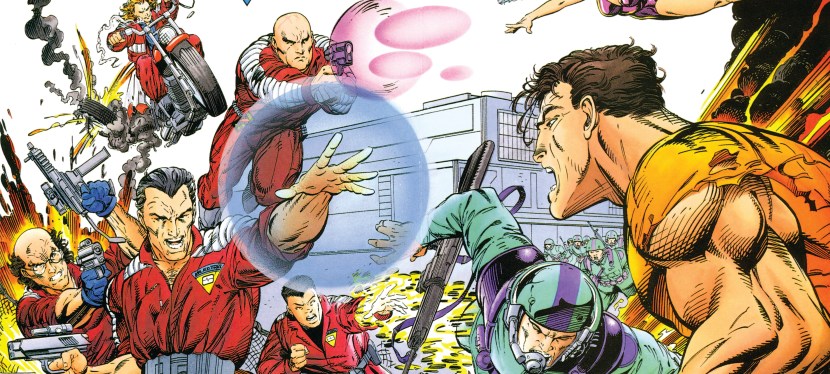
The story begins with the 5-member team in the middle of a mission inside the secured facility of the Harbinger Foundation. Under fire from the facility’s armed personnel, the team (riding a floating vehicle) struggle to find their way and evacuate. Along the way, an oversized man called Big Boy grabbed one of their members and separated him from the others. With the situation getting worse, the captured member got “brain popped” (a remote form of self-destruction via the neural flash implanted inside the person’s brain). The remaining four manage to get away by means of aerial transport provided by their company.

Then a section of the facility exploded causing financial damage to Mr. Harada who decided to visit and inspect the site.

RCO017_1472443923~2.jpg
Expository information done cleverly.

Some time later, the H.A.R.D. Corps enjoy the privacy and security at their headquarters in the Nevada desert. Team members Shakespeare, Major Palmer, Softcore, Hammerhead and Superstar wait for instructions at the debriefing room.

Quality

The H.A.R.D. Corps #1 is very well written by David Michelinie. Within twenty-two pages, Michelinie loaded enough details to explain the comic book’s core concept efficiently while at the same time he managed to tell an engaging story with a light touch on character development (note: there were many characters and there was not enough space for further personality emphasis). By the time the story ended, I really felt enlightened, entertained and wanting to find out what would happen next.

Michelinie’s handling of expository dialogue was done very efficiently. I’m talking about the private briefing done by an executive of the Cartel explaining to a recovering man named Kim (who was almost killed during the Los Angeles Riot) what H.A.R.D. Corps is, why the Cartel is in a race against Harada who has been manipulating Harbingers (persons with unique abilities). The Cartel opposes Harada with neural implants.

More on the team, H.A.R.D. Corps members are people who have gone through training programs and each of them had neural implants in their heads which enable them to mimic Harbinger powers (one at a time) through signals broadcast from a base station. Each of them was comatose and the use of the implants reversed the coma.

RCO007_1472443923~2.jpg
Some action for you.

When it comes to visuals, the art by David Lapham (inked by Bob Layton) was pretty good. I like the high amount of detail placed on the surroundings in most of the panels. Action shots had a good amount of impact.

Conclusion

This comic book from late 1992 is a good and engaging read. I really enjoyed it and I like its core concept about a team of enhanced individuals who are technically living properties of very business-minded people opposed to Harada. Even by today’s standards, H.A.R.D. Corps concept really stands out among all superhero team comic books.

The H.A.R.D. Corps #1 is recommended and you can acquire a near-mint copy of it for only $4 at MileHighComics.com (as of this writing).