A Look Back at What If #31 (1982)

Disclaimer: This is my original work with details sourced from reading the comic book and doing personal research. Anyone who wants to use this article, in part or in whole, needs to secure first my permission and agree to cite me as the source and author. Let it be known that any unauthorized use of this article will constrain the author to pursue the remedies under R.A. No. 8293, the Revised Penal Code, and/or all applicable legal actions under the laws of the Philippines.

Welcome back superhero enthusiasts, 1980s arts and culture enthusiasts, Marvel Comics fans and comic book collectors! Today we go back to the early 1980s and examine an alternate universe portrayal of Wolverine and some other characters as told in one of the comic books of the first volume of the series What If.

Wolverine is one of the most iconic characters of Marvel Comics and he has been part of some of my retro reviews (click here, here, here, here, here, here and here). Wolverine made his first appearance in comics in Incredible Hulk #181 which was published way back in 1974 which marked the first conflict of the two Marvel icons. Years later, Marvel decided to revisit that event with a What If story.

With those details laid down, here is a look back at What If published in 1982 by Marvel Comics with a story written by Rick Margopoulos and drawn by Bob Budiansky.
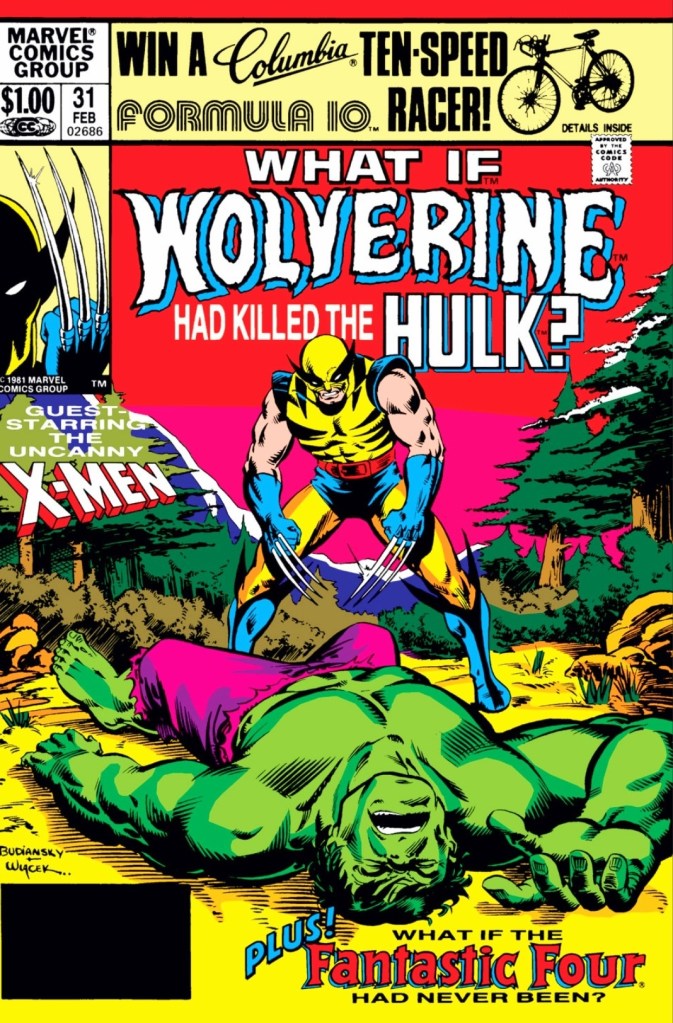
The cover.

Early story

The story begins with Wolverine and the Hulk in combat with each other in a forest within Canada. It turns out, Wolverine was sent by Canadian authorities to capture not just the Hulk but also the Wendigo.

With the Wendigo down on the ground, Wolverine and the Hulk struggle with each other. The Canadian’s speed helped him dodge the green giant’s powerful punches and as the fight goes on, so does the impulse and emotion from within. Suddenly, Wolverine decides to deliberately disobey his orders by deciding to kill the Hulk. In a few but strategic strikes with his Adamantium claws, Wolverine kills the Hulk. The Canadian authorities eventually got rid of the corpses of the Wendigo and the Hulk.

Soon enough, news about the Hulk’s death spread like wildfire all over America catching the attention of Spider-Man, the Avengers, the Fantastic Four and General Ross and his daughter Betty…

Quality
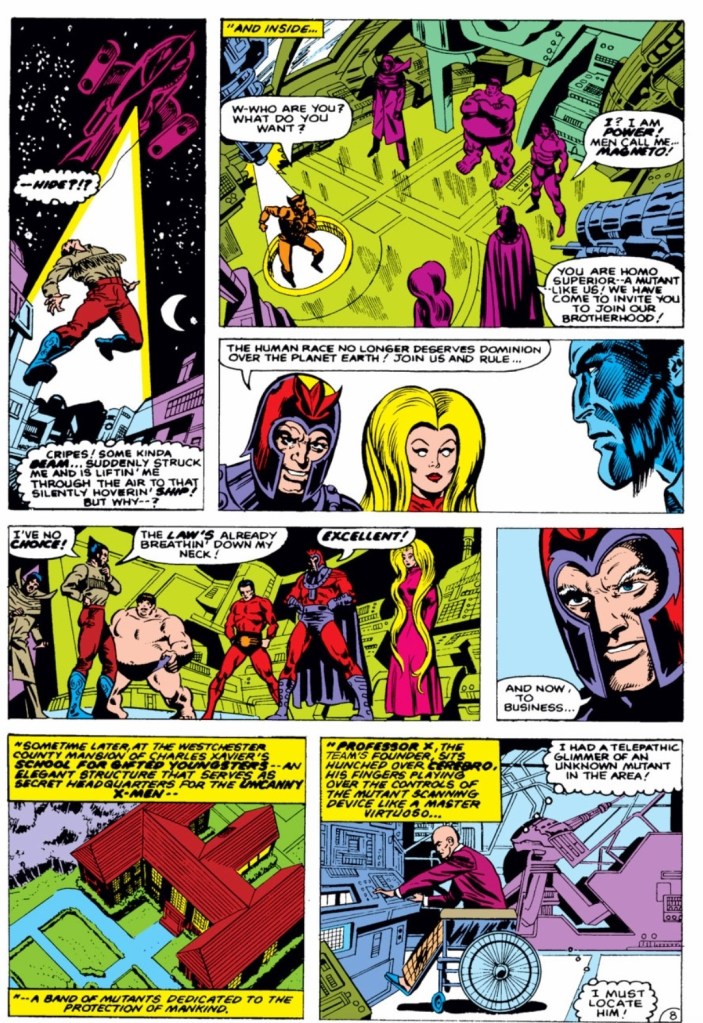
Wolverine gets abducted not by aliens from outer space but by Magneto and his Brotherhood of Evil Mutants.

To start with, I can say that I immensely enjoyed this alternate portrayal of the events that happened in relation to Wolverine’s first-ever appearance in comics. For one thing, the concept of Wolverine actually killing the Hulk is not only shocking on its own, it also set a chain reaction of events that involved or affect a whole lot of other characters within the Marvel Comics shared universe.

Let me start with Wolverine himself. As the story was set before he joined the X-Men, you will see Wolverine as a super-powered agent of Canada whose career really goes down as he failed to restrain his wild self from killing not once but twice. This results in a Wolverine who is deeply troubled with guilt and becomes desperate believing that running away and hiding will somehow solve his dilemma.

Wolverine’s entry into a gang of evil mutants led by Magneto (note: this comic book’s main villain) is itself worth getting this comic book. This shows Magneto – always obsessed with his belief that mutants are superior to humans – putting his diabolical plan into action with Wolverine as the key participant. This itself led to Wolverine’s encounter with the X-Men (the one team he was destined in reality to be with).

The creative team clearly exerted a lot of effort to not only ensure the plot made sense but also have a solid structure that can accommodate twists, intrigue and superhero spectacle altogether complete with enough room for character development. Lastly, I should say that this comic book’s climax is both compelling and shocking to read.

Conclusion
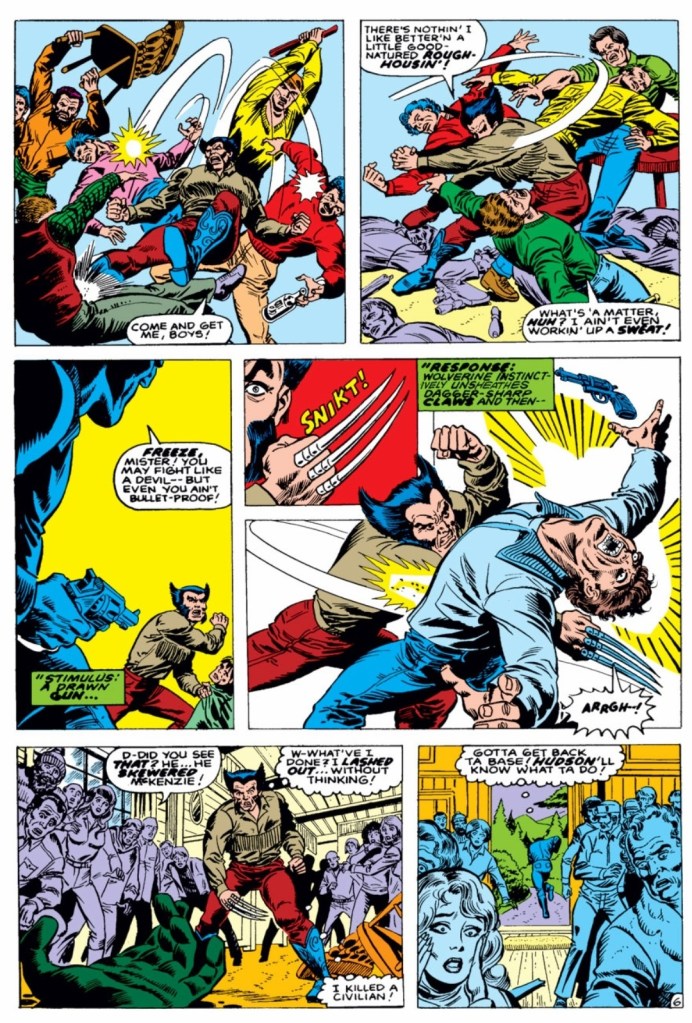
Wolverine’s 2nd kill in this comic book.

What If (1982) is indeed a great Marvel comic book to read. It has a very engaging alternate universe portrayal of Wolverine and this paved the way for a new and fresh approach on showcasing how the X-Men and Magneto’s gang reacted with the clawed Canadian. While the scope of the consequence of Wolverine’s killing of the Hulk ultimately ending up narrowing on Marvel’s mutants could be disappointing for those who seek a bigger impact on other Marvel universe characters, what was shown here in this comic book still made sense and ultimately turned out believable. This comic book also has another tale exploring what if there was no Fantastic Four which ultimately ended up as a decent additive.

Overall, What If (1982) is highly recommended.

+++++

Thank you for reading. If you find this article engaging, please click the like button below, share this article to others and also please consider making a donation to support my publishing. If you are looking for a copywriter to create content for your special project or business, check out my services and my portfolio. Feel free to contact me with a private message. Also please feel free to visit my Facebook page Author Carlo Carrasco and follow me on Twitter at  @HavenorFantasy as well as on Tumblr at https://carlocarrasco.tumblr.com/ and on Instagram at https://www.instagram.com/authorcarlocarrasco
A Look Back at Dazzler #22 (1982)

Disclaimer: This is my original work with details sourced from reading the comic book and doing personal research. Anyone who wants to use this article, in part or in whole, needs to secure first my permission and agree to cite me as the source and author. Let it be known that any unauthorized use of this article will constrain the author to pursue the remedies under R.A. No. 8293, the Revised Penal Code, and/or all applicable legal actions under the laws of the Philippines.

Welcome back superhero enthusiasts, 1980s culture enthusiasts and comic book collectors! Today we go back to the 1980s to examine the Marvel Comics universe through the exploits of Dazzler!

In my retro review of Dazzler #21 (1982), I observed that the story had no good-versus-evil conflict at all as it was purely character-driven and focused a lot on the personal development of Alison Blaire/Dazzler. More notably, the story shed light on both Alison’s father (a judge) and mother (who left the judge) and how the past affected the protagonist. Very clearly, Dazzler’s development really went deep since her first-ever appearance in an X-Men comic book. Speaking of the X-Men, I must say that one of the team’s notable members had an early (not the first) appearance in the next Dazzler issue I just reviewed. That character is none other than Rogue and she looks nothing like the way Jim Lee modernized her in the 1990s.

With those details laid down, here is a look back Dazzler #22, published by Marvel Comics in 1982 with a story written by Danny Fingeroth and drawn by the late Frank Springer.

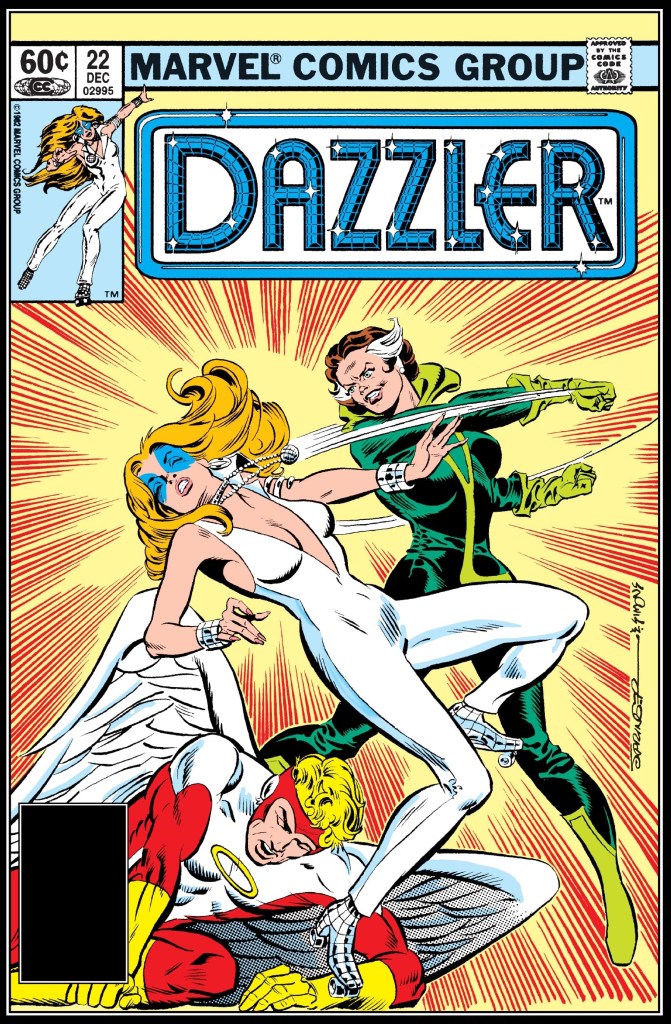
The cover.

Early story

The story begins in the air high above the streets of New York City. Warren Worthington III/Angel’s flight gets disrupted as a group of hawks suddenly attack him from all sides. With quick thinking, he uses different methods to gradually lure each hawk and trick them into bumping into something to end their pursuit.

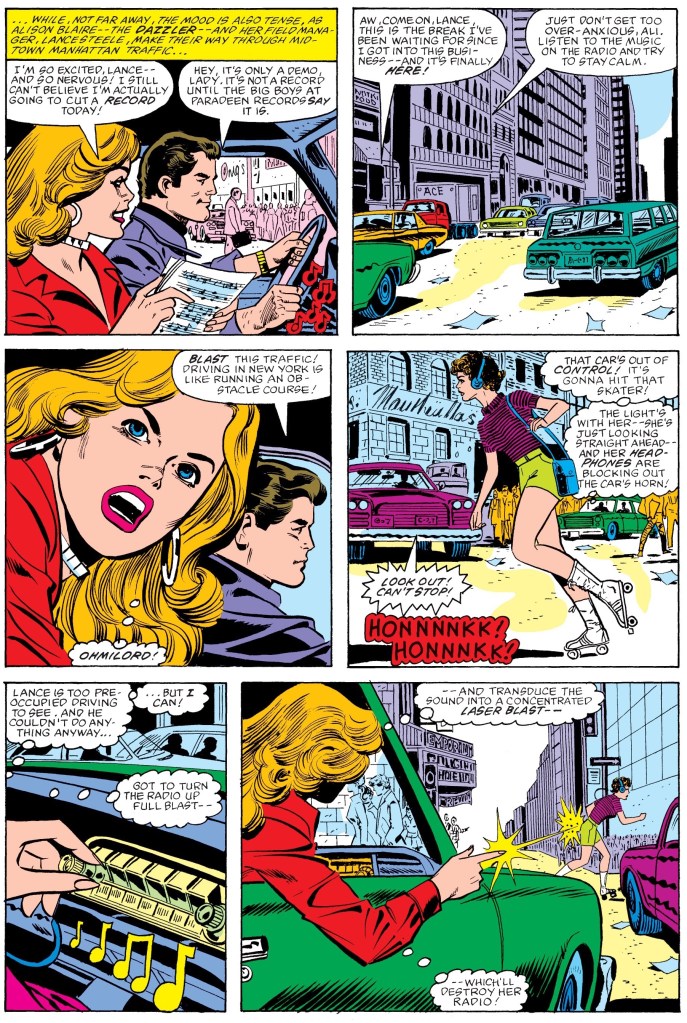
Meanwhile, as Alison Blaire rides the car driven by her field manager Lance going to the studio, she saves a roller-skating lady from colliding with a car using clever methods. At the studio, Alison prepares herself for a recording session under the watch of the perfectionist music producer L.B. Holman…

Quality

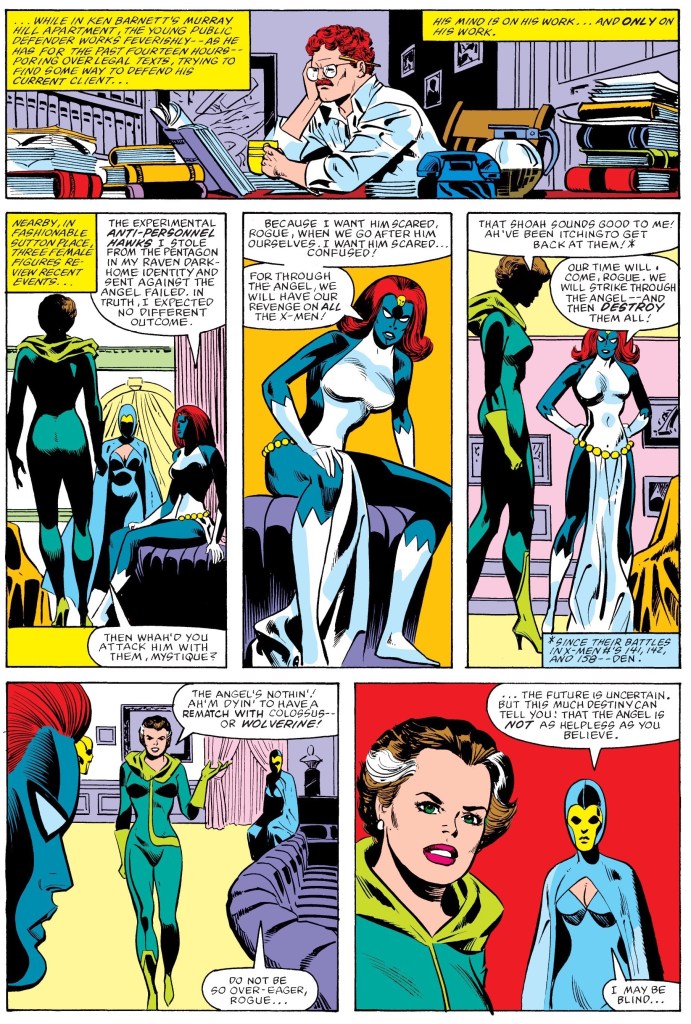
The Brotherhood of Evil Mutants led by Mystique.

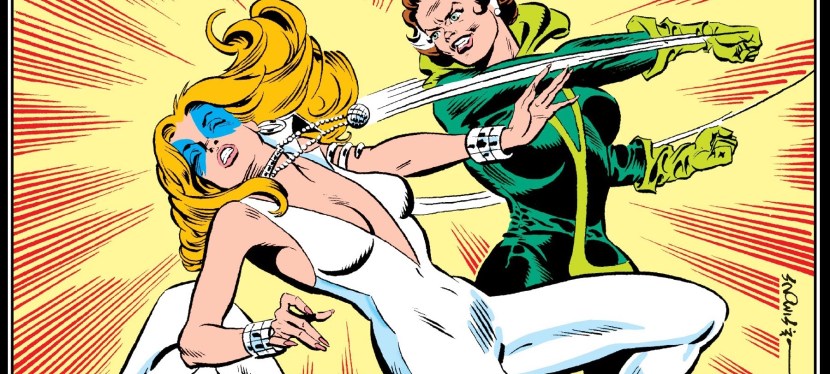
As expected, the story in this comic book showed natural progression on developing the protagonist as well as her parents while also reviving the superhero trope of good-versus-evil which was clearly done for entertainment value. While the cover art had Rogue hitting Dazzler, the good-versus-evil conflict within is actually bigger than that as the story involves not only Rogue but also notable X-Men villainess Mystique plus Destiny.

As this was in the early 1980s, Rogue was not a member of the X-Men at the time and was still new (her first-ever appearance was in Avengers Annual in 1981). Regarding Mystique, her appearance in this comic book was not merely just an appearance but rather an extension of the exploits of her group called the Brotherhood of Evil Mutants and it has been her desire to get back at the X-Men over what happened in Uncanny X-Men #142 (part 2 of the Days of Future Past storyline). As such, having Dazzler encounter the evil group in the presence of the X-Men’s Angel was a very strategic move by Danny Fingeroth as it emphasized the crossover aspect within the Marvel Comics universe of the time complete with pretty good dialogue and details emphasized.

This also helps remind readers of Dazzler’s previous involvement with the X-Men and cleverly gave them the idea of what would things be like if the protagonist someday really joined the team of mutants.

On character development, dramatizing Alison’s mother and father shows progress from what happened near the end of the previous issue which is a nice touch. Even Alison’s boyfriend Ken got his own share of the spotlight. What is most notable when it comes to characterization in this comic book is the smooth and fine chemistry between Alison and Warren Worthington. The two made convincing friends and how their respective circumstances brought them together here was well executed by the creators.

Conclusion

Discreetly, Alison Blaire uses her power to help someone.

Dazzler #22 (1982) is enjoyable and has that fine balance between characterization, plotting and spectacle. The good-versus-evil conflict here should really catch the attention of readers, especially those who are deeply interested with the X-Men-related characters and groups of the early 1980s. There is also enough superhero action to keep readers entertained and clearly this was done to make up for the lack of action in the very dramatic issue #21.

If you are seriously planning to buy an existing hard copy of Dazzler #22 (1982), be aware that as of this writing, MileHighComics.com shows that the near-mint copy of the regular edition costs $57 while the near-mint copy of the newsstand edition costs $113.

Overall, Dazzler #22 (1982) is recommended.

+++++

Thank you for reading. If you find this article engaging, please click the like button below and also please consider sharing this article to others. If you are looking for a copywriter to create content for your special project or business, check out my services and my portfolio. Feel free to contact me with a private message. Also please feel free to visit my Facebook page Author Carlo Carrasco and follow me on Twitter at  @HavenorFantasy as well as on Tumblr at https://carlocarrasco.tumblr.com/