A Look Back at Godzilla: King of the Monsters #1 (1977)

Welcome back superhero enthusiasts, 1970s arts and culture enthusiasts, Marvel Comics fans and comic book collectors! Today we go back to the year 1977 when Marvel Comics had the license to publish comic books about Japan’s iconic monster Godzilla (Gojira in Japanese) and even integrated him into their shared comic books universe.

The mid-1970s saw a decline of Godzilla’s popularity in Japan as reflected in the commercial disappointment of the movie Terror of Mechagodzilla (1975). The company Toho decided to put on-hold the production of its monster movies without permanently ending the Godzilla film franchise. The next Godzilla movie released was The Return of Godzilla (1984) which proved to be a solid rebound of the Japanese film franchise.

Sometime between the mentioned movies, there was interaction between Toho officials and Marvel Comics – including the late Stan Lee – when the Japanese company screened the movie Godzilla vs. Gigan (titled in America as Monster Island) to the comic guys in relation to the film’s American theatrical release. It turns out Stan Lee enjoyed the movie a lot and seated next to him was writer Doug Moench (the eventual writer for the Godzilla comic book series).

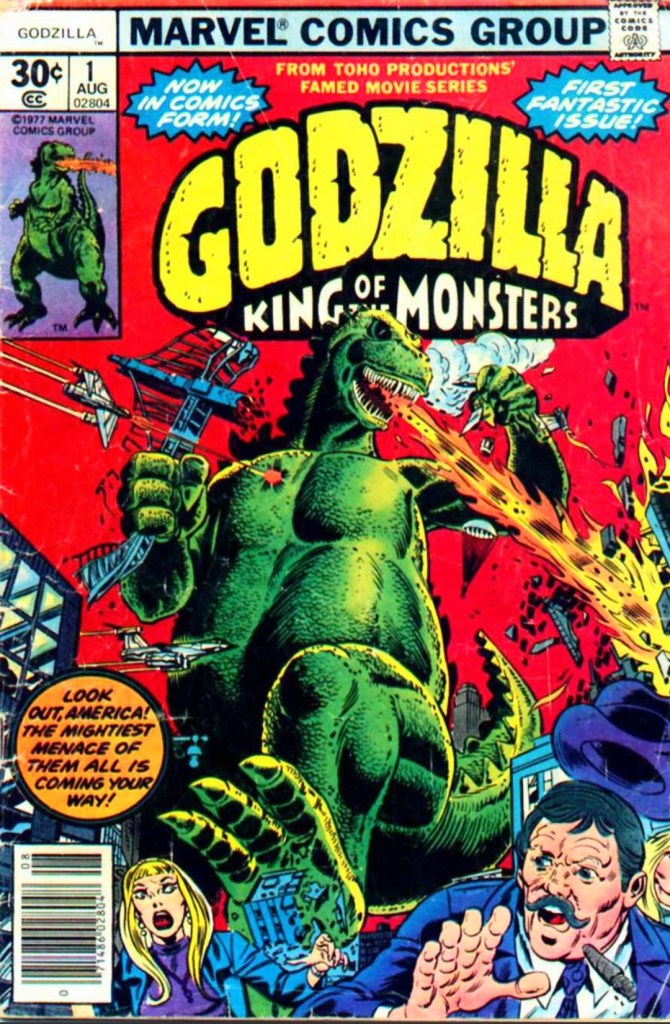
With those details laid down, here is a look back at Godzilla: King of the Monsters , published in 1977 by Marvel Comics with a story written by Doug Moench and drawn by Herb Trimpe.

The cover.

Early story

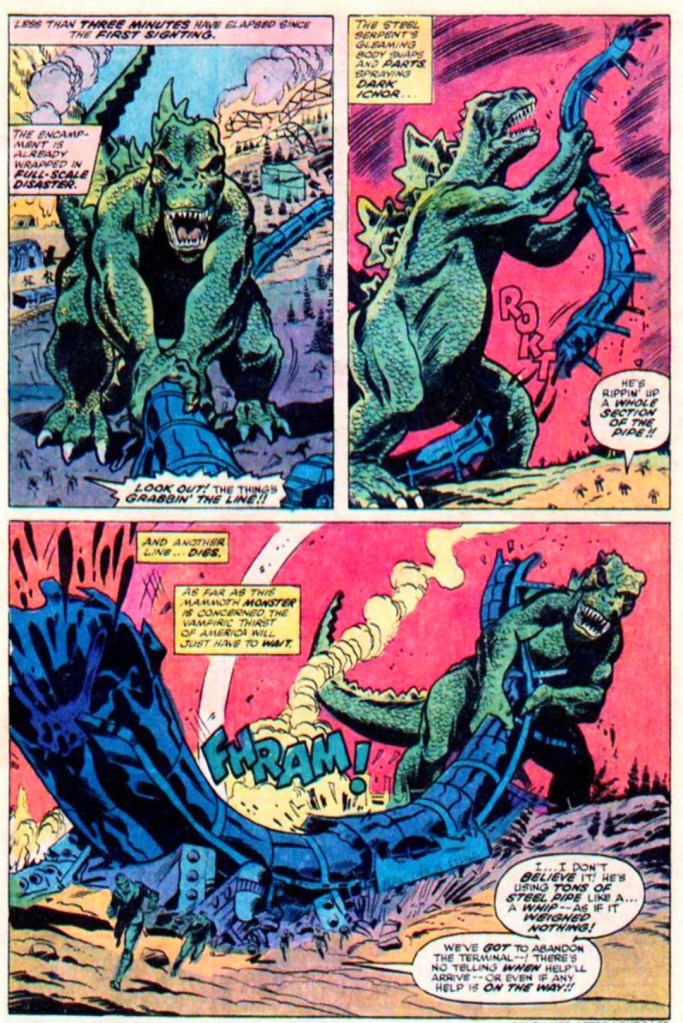
The story begins in Alaska when a huge iceberg suddenly deteriorates unleashing a gigantic monster with sharp teeth, dorsal fins and immense strength – Godzilla. After instantly crushing a supply ship, the monster moves onto the land destroying structures and disrupting the lives of every person nearby.

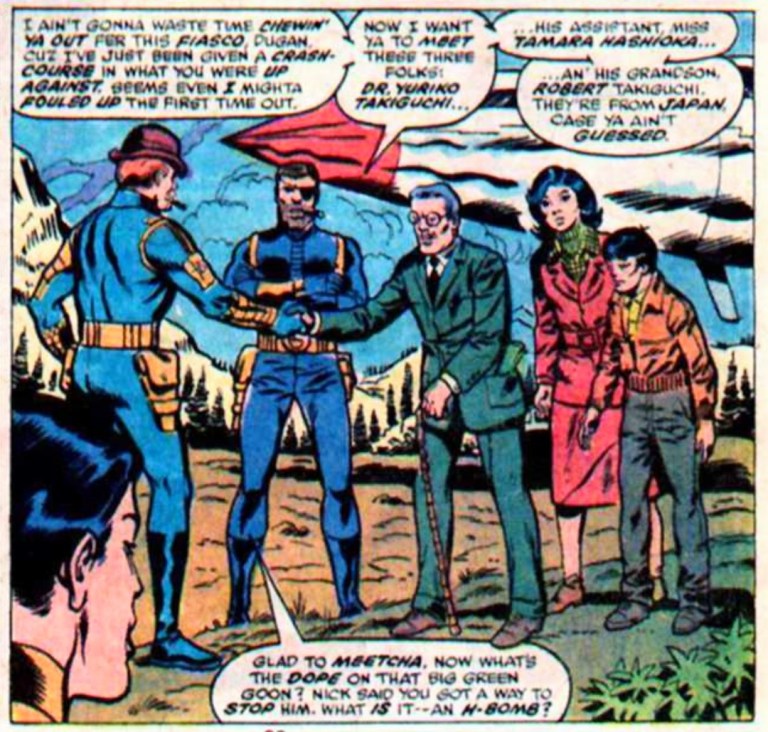
In response to Godzilla’s rampage in Alaska, S.H.I.E.L.D. dispatches its agents to the site of destruction to take on the monster. Meanwhile, S.H.I.E.L.D. director Col. Nick Fury is transporting with him three Japanese individuals deemed important (with clearances from the Pentagon and the White House)…

Quality

Dum Dum Dugan, Col. Nick Fury and the Japanese characters.

To get straight to the point, this comic book not only marked the literary debut of Japan’s iconic monster under Marvel Comics’ banner but also his integration into the shared universe of the time. That being said, the story written by Doug Mench was pretty much a functional build-up of Godzilla’s presence within the realm of Marvel which includes a strategic choice of having S.H.I.E.L.D. and its characters encountering the monster. In short, the creative team decided not to literally pull out Marvel’s biggest guns (the more popular superheroes and teams) as such a move would have lessened the impact of Godzilla’s debut.

For the most part, S.H.I.E.L.D.’s Nick Fury and Dum Dum Dugan had lively portrayals and the way they reacted to the rampage of Godzilla was believable. The introductions of the Japanese characters (who could provide breakthroughs on dealing with the giant monster) were clearly inspired by the Japanese scientists who were crucial in the plot of the original 1954 movie Gojira.

Going further, Doug Mench went on to efficiently establish Godzilla’s origin which creatively is a sensible reinterpretation of what was established in the 1954 movie. The giant monster’s rise as a result of humanity’s testing of powerful weapons on Earth is definitely here.

As expected, Godzilla is the unrestrained force of destruction but as this comic book was released in the 1970s, the destruction scenes lacked impact as they were creatively sanitized with deliberate moves of showing no casualties no matter what happened. This limitation on the part of Marvel Comics showed they were not willing to emulate the approach on destruction and death that was clearly emphasized in the first Godzilla movie of 1954.

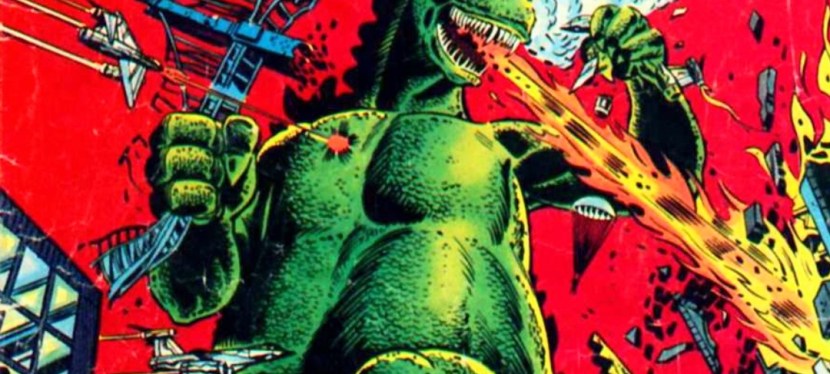
As for Godzilla himself, Herb Trimpe’s visual approach is not really good. While Trimpe implemented the guy-in-a-suit shape on the giant monster’s form, he made Godzilla his own (took no inspiration from Godzilla’s cinematic designs) which resulted in making the icon look unrecognizable. There were inconsistencies on Godzilla’s head as well. In certain shots, Godzilla looked terrifying but in other shots, he looked weird or cartoony. The use of the color green did not make Godzilla look reptilian but rather comical.    

Conclusion

I can only imagine the SJWs and the climate change extremists enjoying these images of an unrecognizable Godzilla wreaking havoc to the oil supply. Are there lots of people in your local community who were brainwashed to hate oil and gas?

Godzilla: King of the Monsters (1977) is a serviceable approach on debuting the iconic monster within the fantasy realm of Marvel Comics and sparking a new wave of crossovers. There were uneven levels of quality here and there, and Herb Trimpe’s visual approach on Godzilla was alienating to say the least. Honestly, I did not really see Godzilla in this comic book but rather a green-colored dinosaur-like creature that was mislabeled as Godzilla. What works here is the writing by Doug Mench which proved to be entertaining enough.

Overall, Godzilla: King of the Monsters (1977) is satisfactory.

For my other Godzilla-related posts, click here, here, here, here and here.

+++++

Thank you for reading. If you find this article engaging, please click the like button below, share this article to others and also please consider making a donation to support my publishing. If you are looking for a copywriter to create content for your special project or business, check out my services and my portfolio. Feel free to contact me with a private message. Also please feel free to visit my Facebook page Author Carlo Carrasco and follow me on Twitter at  @HavenorFantasy as well as on Tumblr at https://carlocarrasco.tumblr.com/ and on Instagram at https://www.instagram.com/authorcarlocarrasco

A Look Back at On Deadly Ground

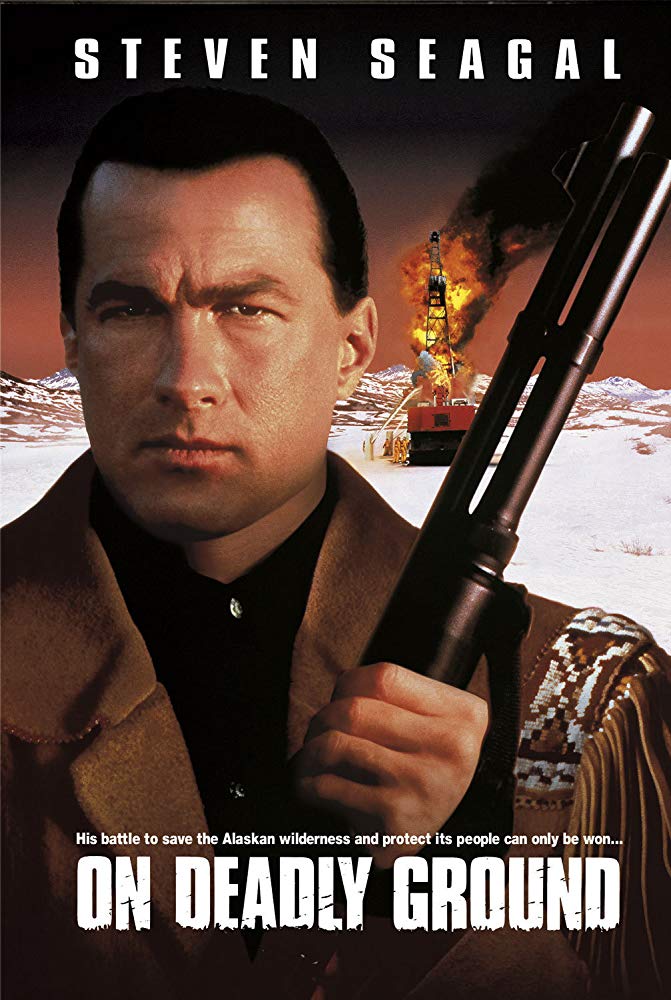
Way back in 1994, Warner Bros. released the action movie On Deadly Ground which marked the directorial debut of its star Steven Seagal. The movie had a poster that easily attracted the attention of avid Steven Seagal fans and eventually the film lured quite a lot of moviegoers to the cinemas.

ODG1
Even though it had a boring design, this image at cinemas excited Steven Seagal fans and moviegoers craving for action.

I never saw it in the cinemas due to a lack of time and money. Instead I saw On Deadly Ground on VHS format (and later on cable TV) in the comfort of home. That comfort however turned into disappointment after watching it.

For starters it’s a Steven Seagal movie which guarantees lots of hard-hitting action with lots of swearing. What makes it feel unique was its focus of the environment and its very forced concept about a very greedy top executive of an oil company is creating danger towards the environment as his team rushes to complete an oil rig called Aegis One in Alaska.

The execution of the movie, to say the least, is rather poor. Just about every character in the movie is one-dimensional. When it comes to action, it is typical (and very predictable) Seagal as the star gets to fight lots of bad guys without ever being hurt by them! Ironically Seagal in the film expresses pain over the treatment of his wounds.

ODG6
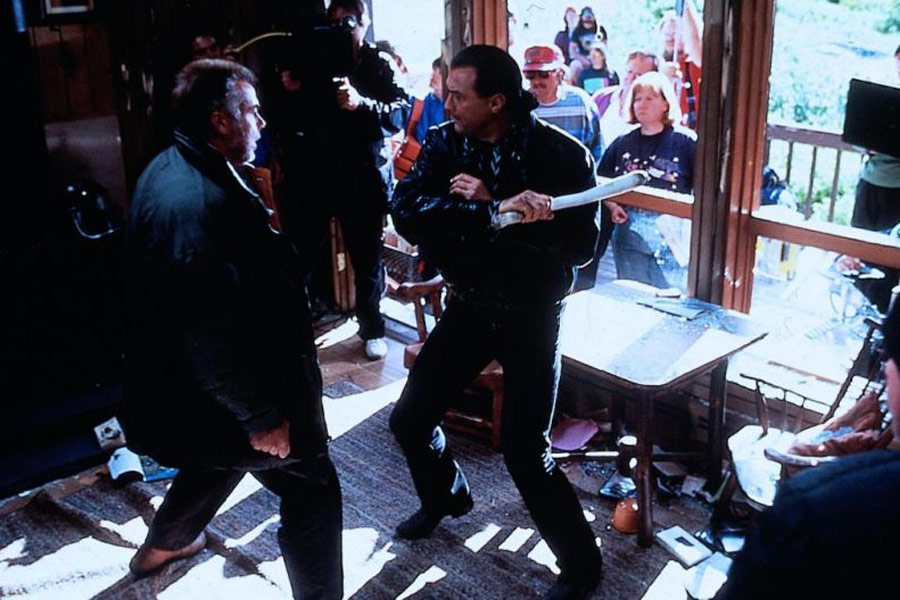
Star-director Steven Seagal and the film crew working on an action sequence.

And then there is the emphasis on the environment. The movie narrowly portrays the fictional oil company as the force of danger to nature and threat to indigenous people of Alaska because it is led by Michael Jennings (played by Michael Caine) who is too greedy and desperate to beat a deadline  and prevent the oil rights from reverting back to native Alaskans.

That’s right! Jenning’s Aegis had the oil rights for twenty years and all they could do is try to launch an oil refinery so near the end of the time period. Does it really take that long to construct an oil rig? What exactly did Jennings do during those twenty years? I mean, he acquired the oil rights from the natives and I could speculate he did not prioritize the construction of any oil-related business project using those same rights. Perhaps Jennings spent years touring the world, suddenly was advised that his corporation has financial trouble and only then did he go to work to make oil rig.

More on the environment, Steven Seagal plays Forrest Taft who initially serves Jennings. He eventually checks the computers of the company to find out that faulty equipment has been used and the delivery of better and more reliable equipment is coming in way too late. Taft even asked Jennings (who eventually learned about Taft’s unauthorized computer access) how much money is enough and this predictably leads to a scene in which Taft gets set up to die in an explosion.

ODG2
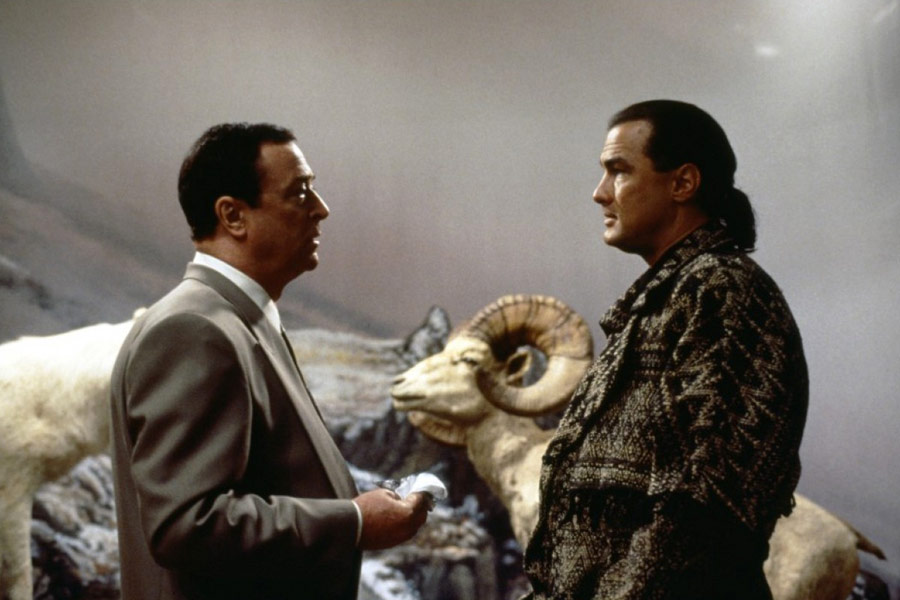
Michael Caine and Steven Seagal.

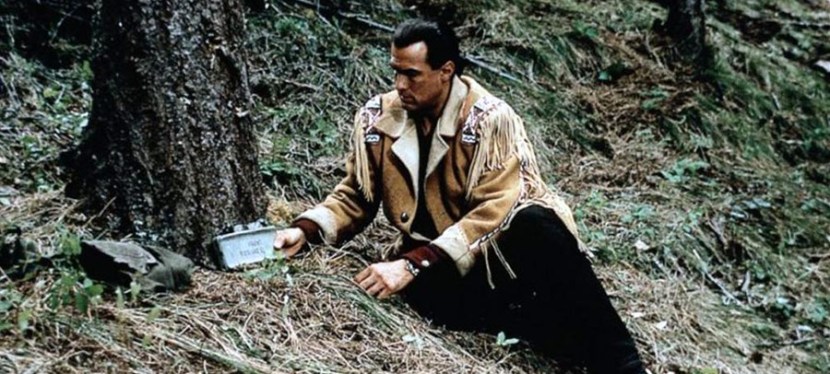
Unfortunately for Jennings and the other bad guys, Taft survived and got assistance from native Alaskans. Very predictably, he makes a comeback, collects weapons, performed a few destructive operations before proceeding to Aegis Oil’s rig to cause further destruction and kill bad guys!

Then the film ends with Taft giving a speech at the Alaska State Capitol focused on uncontrolled pollution, environmental destruction and big businesses’ contribution to environmental decline.

ODG4
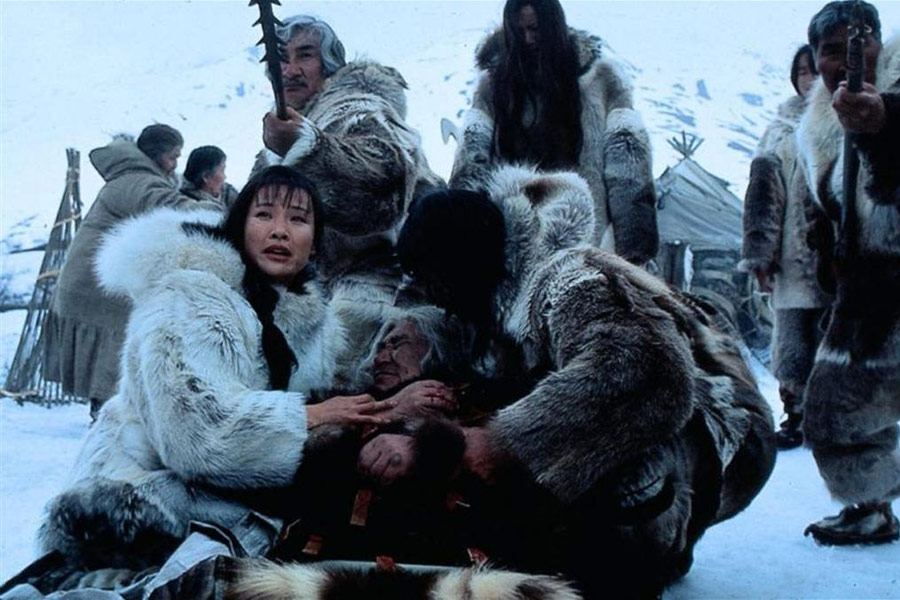
Chinese actress Joan Chen pretending to be a native tribe member.

It’s funny how Taft got to deliver his speech. He was not arrested for causing the oil rig’s devastation nor was held accountable for killing other people. Where were the local authorities who could have initiated an investigation? Even without Michael Jennings, the oil company could have gone to the local authorities or the federal government to accuse Forrest Taft for murder and even acts of terrorism! Also where in the world are those staunch, loudmouth environmental activists, SJWs and climate change activists? The damage caused by Taft on the oil rig clearly caused damage to the natural environment with those toxic fumes from the explosions! Logic was clearly thrown out for the sake of senseless violence.

When it comes to performances, this movie is a showcase of shallow acting and cinematic expressions. Not only are the characters one-dimensional and the script really had no character development, the actors really had no where to go as far as acting is concerned. Chinese actress Joan Chen plays Masu who only serves as the English-speaking expository dialogue delivery person to help the audience understand the norms and concerns of a native tribe. Shari Shattuck  (who is an author and has her own Facebook page) played the pretty, bland and straight-forward special assistant to Michael Jennings. R. Lee Ermey, who is best known for playing military officers, plays the leader of a group of mercenaries who got defeated too easily by Seagal.

In terms of directing and overall presentation, this movie is clearly nothing more than a vanity project of Steven Seagal. There were many moments in the film that looked like it suggested viewers to worship and idolize Seagal. The pacing of the film is very lackluster overall.

Poorly directed scenes? One of them is the excessively violent torture scene of Hugh Palmer (played by a then 73-year-old Richard Hamilton) which showed no restraint on the part of filmmakers. The scene, which was clearly designed to make moviegoers see the evil of Michael Jennings through the acts of his henchmen, would have worked better had the on-screen torture been reduced and shortened.

More on the movie’s violence, the scene showing Forrest Taft easily beating up multiple oil workers in response to the mistreatment towards a native man was unnecessary and overly long. Taft looked more like a senseless superhero who does not care about humanity and laws. And then there was that hand-slap game between him and “the man’s man” Big Mike (Mike Starr). The presentation of violence and bloodily injuring a man as means of enlightenment is senseless.

Ultimately On Deadly Ground is a worthless action to film to watch and I believe only die-hard Steven Seagal fans will love it. It was a very bad movie back in 1994, it’s even worse by today’s standards. On Deadly Ground is filled with bad ideas turned into film. A pro-environment concept presented as a senseless action film is a big waste. And then there is the old stereotype that a giant corporation’s head is unabashedly evil, inhuman and greedy (note: not all corporate heads of billion-dollar corporations are like that).

As such, I should say that you should never waste your time nor your money on this piece of crap.

+++

Note: This retro movie review was originally published at my old blog Geeks and Villagers. What you just read was the updated and expanded version. As such, this retro movie review is the most definitive version.


Thank you for reading. If you find this article engaging, please click the like button below and also please consider sharing this article to others. Also my fantasy book The World of Havenor is still available in paperback and e-book format. If you are looking for a copywriter to create content for your special project or business, check out my services and my portfolio. Feel free to contact me as well. Also please feel free to visit my Facebook page Author Carlo Carrasco and follow me at HavenorFantasy@twitter.com