A Look Back at Wonder Woman #23 (1988)

Disclaimer: This is my original work with details sourced from reading the comic book and doing personal research. Anyone who wants to use this article, in part or in whole, needs to secure first my permission and agree to cite me as the source and author. Let it be known that any unauthorized use of this article will constrain the author to pursue the remedies under R.A. No. 8293, the Revised Penal Code, and/or all applicable legal actions under the laws of the Philippines.

Before I start another retro review of the post-Crisis Wonder Woman comic book series, I need to share to you readers my observations about the recent social media trends that happened inside three Wonder Woman-focused groups within Facebook.

For one thing, I asked a simple question on all three WW FB groups asking the members if they would want to see Zack Snyder replace Patty Jenkins as the director of future Wonder Woman movies. Their reactions were pretty mixed and among them were a few very toxic responses. One group member asked me why do I hate Patty Jenkins (I have no hatred for her and in fact I admired her work in the 2017 Wonder Woman movie and pointed out her work in my piece about the No Man’s Land scene). Another member (an openly feminist-minded male) condemned me of sexism (completely false).

And in most recent times, I posted a few not so favorable media reviews of Zack Snyder’s Justice League on those same three WW groups on Facebook. This member called me a hater (I’m not a hater and I cannot judge a movie I have not even viewed), another member thought I allowed the negative review to influence me (sharing a post of an unfavorable review does NOT mean I believe in it), while another member took it very personal against me by means of verbal attacks (that person does not even know me and he allowed his uncontrolled fanaticism to go on the offense) on me.

Whew! There sure are a lot of Wonder Woman fans out there who are over-sensitive, who lacked self-control, who allowed themselves to be influenced by the socialists, and who allowed themselves to be swallowed by unrestrained political correctness. Clearly there are lots of hostile minds and likely believers of Cancel Culture among fellow WW fans which is unfortunate. What I posted on those FB groups were simply about entertainment, not identity politics and certainly not about attacking others.

I am still standing here!

Anyway, last time I reviewed an issue of Wonder Woman that I determined lacked depth and only served to build-up suspense and anticipation for future events. What will happen next to Wonder Woman and her companions? Will there be a pay-off to the build-up that happened in the pages of issue #22? We can all find out in this look back at Wonder Woman , published by DC Comics in 1988 with a story written and drawn by George Perez with finishes done by Will Blybers.
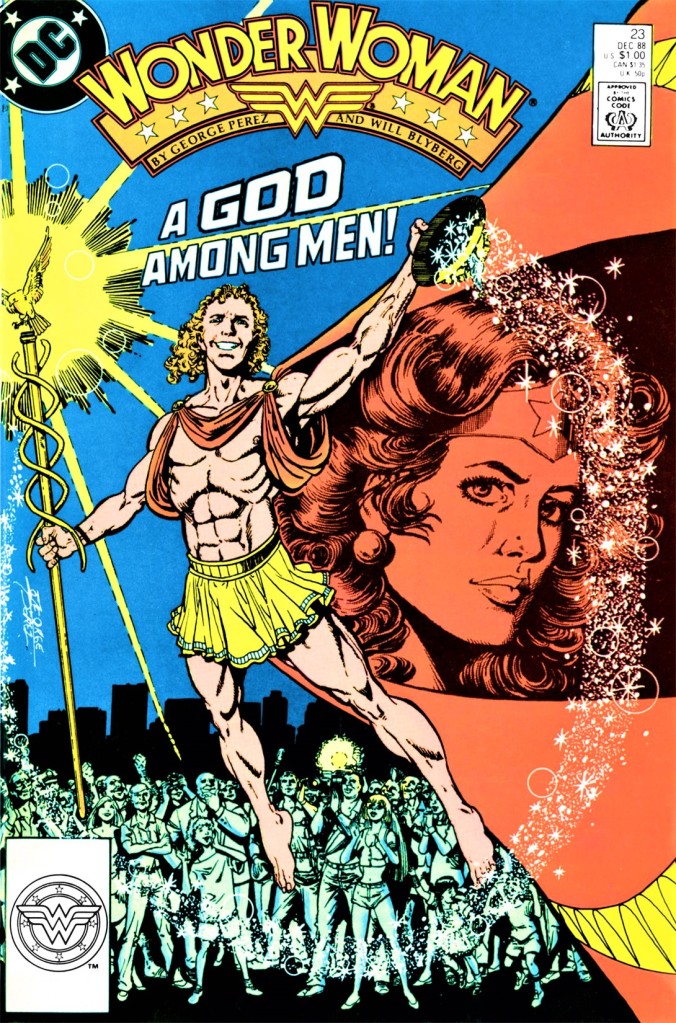
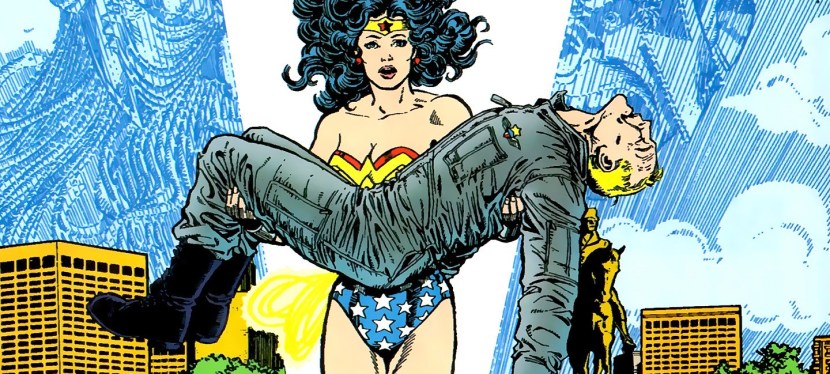
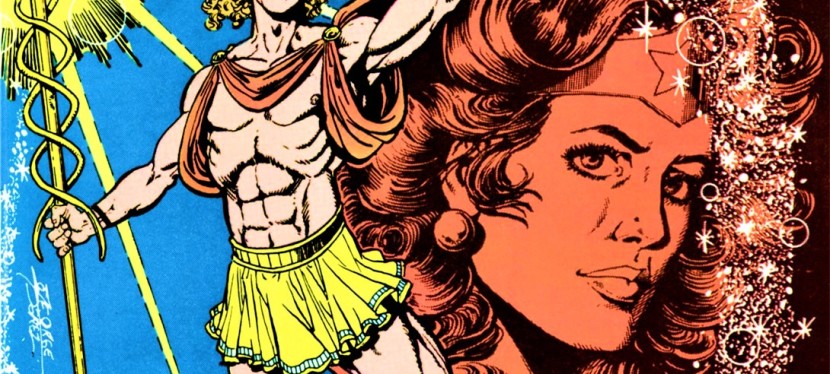
The cover.

Early story

The story begins with a print media blast of Diana, her mother Queen Hippolyte, as well as Julie Kapatelis and her daughter Vanessa all occupying varied parts of the front cover of The World Today magazine with a feature about the royal family of Themyscira. At the corner of the cover says, “Memories of a Boston teen.”

At school, the teenage Vanessa (referred to as Nessie) is completely surrounded by other students who want her to sign their respective copies of the said magazine. She is enjoying the attention being the close, personal friend of the Amazons. Vanessa’s friends Eileen and Meekins can only watch the activity from a distance feeling lonely and let down.

In New York, Wonder Woman delivered a speech to the United Nations general assembly. She spoke on behalf of her mother and formally announced that the gates of Themyscira will be opened to the rest of the world (which is the result of the Amazons’ majority vote in issue #22). The response to her speech ranged from enthusiastic to apathetic.

After the speech, Diana finds herself surrounded by news reporters who ask her a lot of questions about her homeland, Queen Hippolyta’s potential visit to man’s world (AKA patriarch’s world) and the way some assembly members reacted to her speech.

Suddenly a mysterious figure whose head and face cannot be seen emerges. Diana senses something is wrong…

Quality
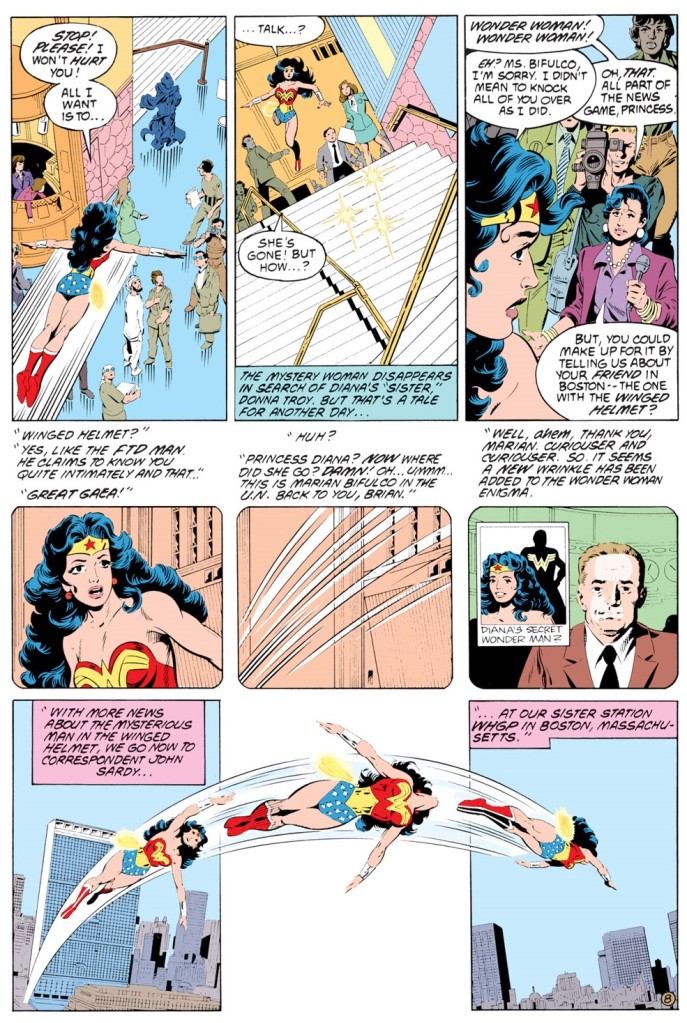
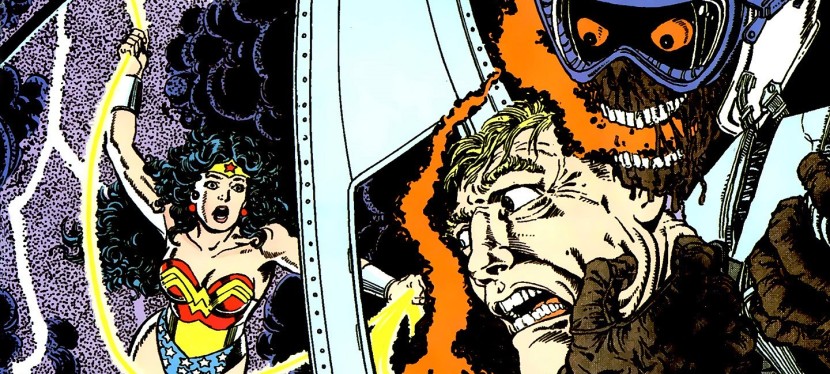
Wonder Woman flying in search of the mysterious figure.

I will start first by confirming that indeed, this comic book’s story has some pay-off to the suspense built-up in issue #22. Take note…some pay-off. It might sound disappointing for those who read issue #22 expecting a big pay-off but after going through the theme of this particular story, it is clear that there were planned plot events lying ahead related to the build-up (in issue #22).

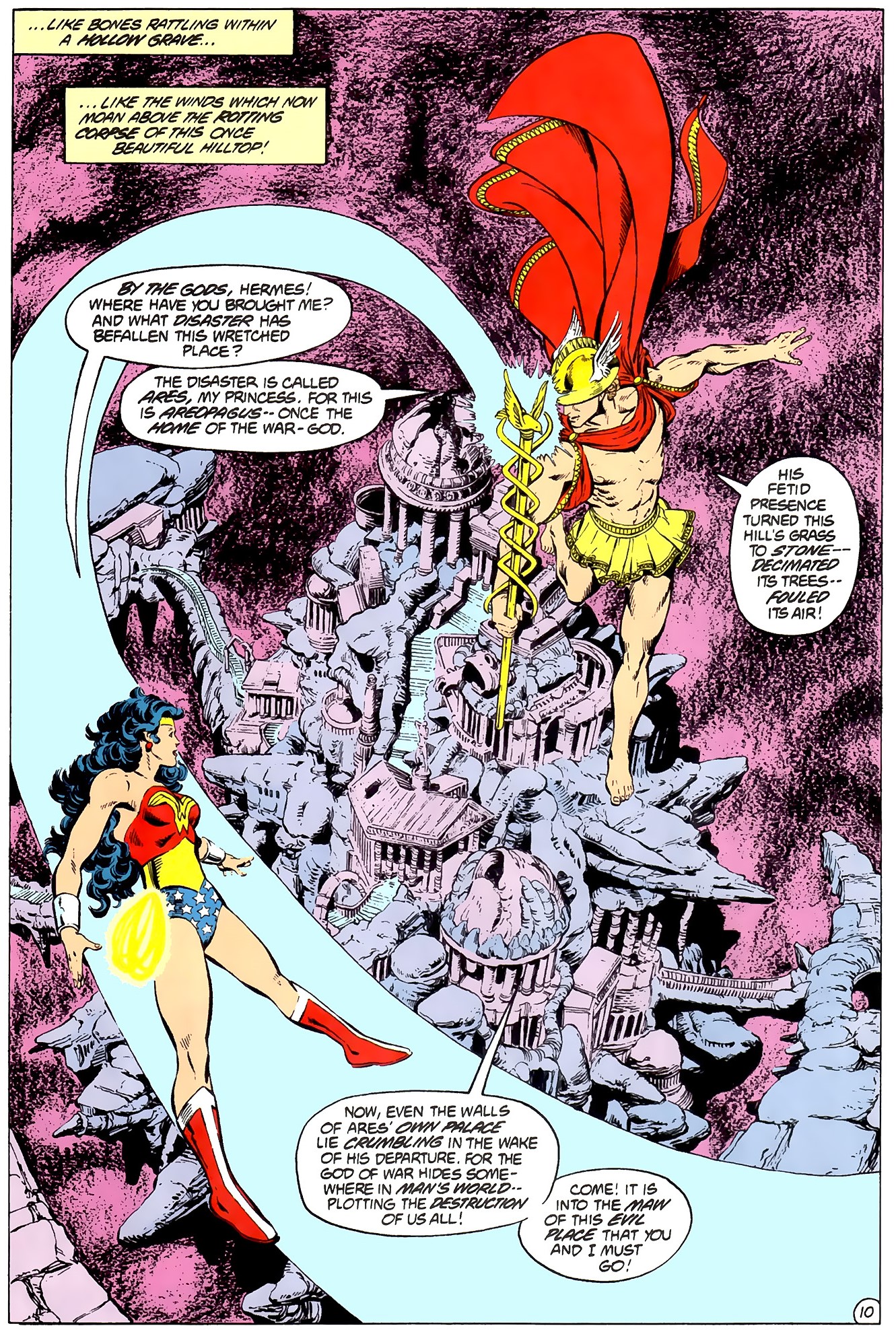
More on the story itself, without spoiling much, I can say that George Perez pushed the envelope yet again by involving Hermes a lot more with Wonder Woman here. A lord to Diana, Hermes appeared not merely for a cameo appearance nor as a guide as seen in the early issues of this series, but rather he has a much bigger role than before. Hermes does not just appear with Wonder Woman who strictly follows him, he also makes an impact with the people on Earth.

When it comes to moral lessons, this comic book is boldly written by touching on themes such as how a deity from Olympus would impact people by bribing them, why mortals let their guard down when they believe what they saw or witnessed, and why would a foreign deity (from Olympus specifically) does not want mortals to challenge their authority.

The good news here is that everything is very well written from the way the plot was structured, the clear presence of emotion that filled much of the dialogue and the notable presence of philosophies that added depth to the dialogue.

When it comes to Wonder Woman herself, I love the way how Perez portrayed her on her struggle of doing her duty (for Themyscira and her deities) and maintaining friendship with the people she loved in man’s world. There is that nice touch of fragility on Diana’s personality and the same can be found on Julie Kapatelis whose struggle with being a mother and a friend is nicely dramatized.

Conclusion
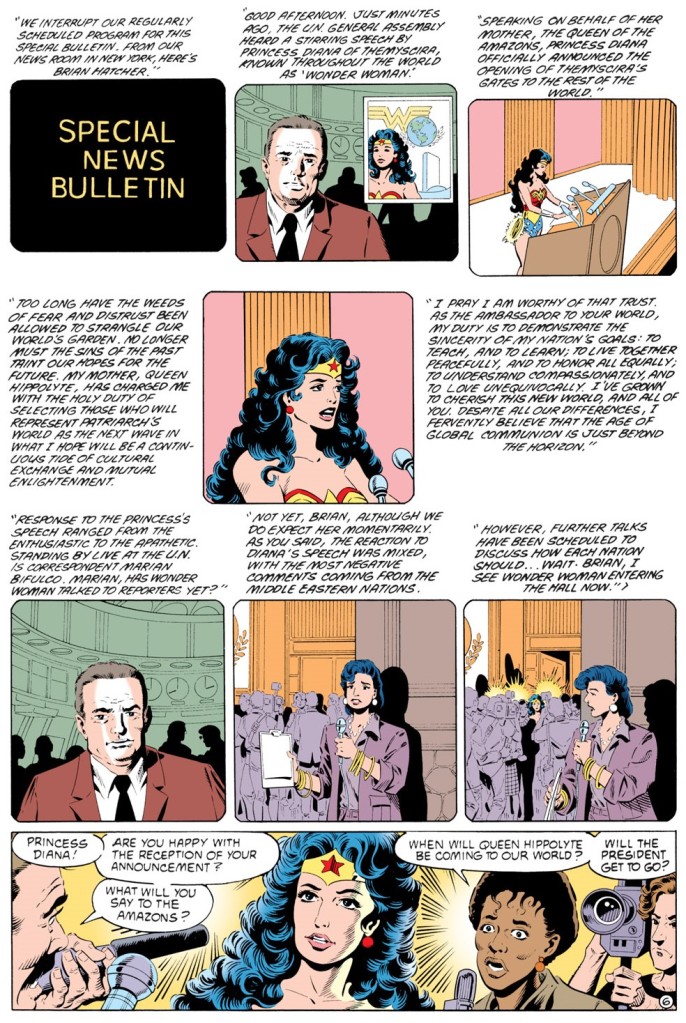
Wonder Woman faces the world through the corrupt United Nations.

I can say that Wonder Woman (1998) is a clear improvement over its predecessor by means of having a solid story concept backed with nice artwork (no surprise) and in-depth writing done by George Perez. I also like the fact that Wonder Woman herself gets upstaged in a rather reasonable way which shows Perez was not afraid to take risks when it comes to redefining the Queen of Superheroes in the post-Crisis era of DC Comics. Lastly, this comic book shows how faith is not to be practiced and why deities of Olympus are not worthy of faith and trust of the people. It also shows idolatry is foolishness.

If you are seriously planning to buy an existing hard copy of Wonder Woman (1988), be aware that as of this writing, MileHighComics.com shows that the near-mint copy of the regular edition costs $35 while the near-mint copy of the 2nd print edition costs $350.

Overall, Wonder Woman (1998) is highly recommended!

+++++

Thank you for reading. If you find this article engaging, please click the like button below and also please consider sharing this article to others. If you are looking for a copywriter to create content for your special project or business, check out my services and my portfolio. Feel free to contact me as well. Also please feel free to visit my Facebook page Author Carlo Carrasco and follow me at HavenorFantasy@twitter.com
A Look Back at Wonder Woman #21 (1988)

Disclaimer: This is my original work with details sourced from reading the comic book and doing personal research. Anyone who wants to use this article, in part or in whole, needs to secure first my permission and agree to cite me as the source and author. Let it be known that any unauthorized use of this article will constrain the author to pursue the remedies under R.A. No. 8293, the Revised Penal Code, and/or all applicable legal actions under the laws of the Philippines.

Welcome back, superhero enthusiasts, comic book collectors and fans of superhero universe of DC Comics! I don’t know with you, my readers, but I love the way George Perez and his fellow writers characterized Wonder Woman during the very early stage of the post-Crisis era of DC Comics. The character development was not only a great way to achieve balance with spectacle and plotting for each story of Wonder Woman, but also a solid way to redefine the Queen of Superheroes to new fans as well as other comic book readers of the late 1980s. Such characterization efforts include redefining other key elements of the Wonder Woman concept such as the development of Themyscira and its all-women society, the struggle that the deities of Olympus had while the Amazons struggled, and most notably the way Wonder Woman and the people of man’s world adjusted to each other.

With those details laid down, we can find out more about Wonder Woman’s development in this look back at Wonder Woman #21, published by DC Comics in 1988 with a story written and drawn by George Perez with Bob McLeod credited with the finished art.

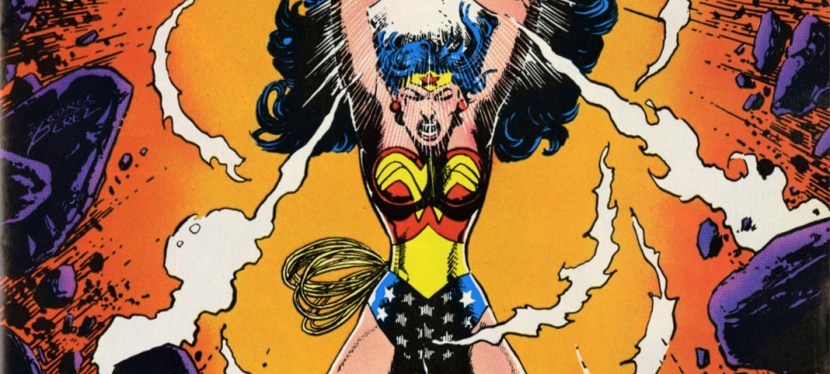
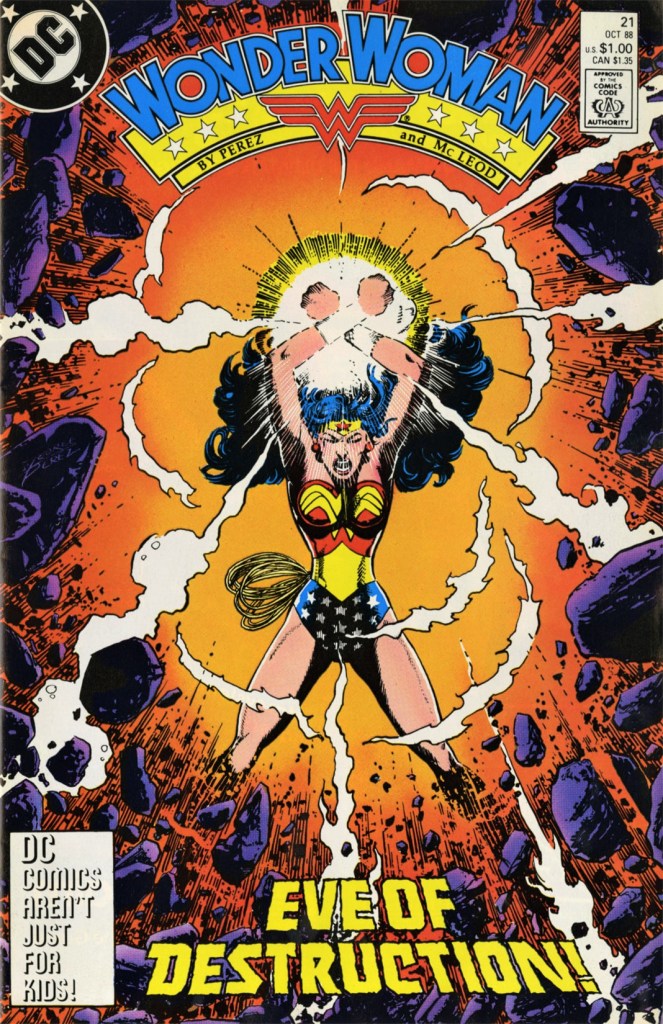
The cover.

Early story

The story begins in Themyscira. In the middle of the night, Menalippe, the oracle of the Amzons wakes up looking terrified. She makes a reference to the deities of Olympus. In Wakefield, Massachusetts, Diana/Wonder Woman, Julia Kapatelis and teenager Vanessa arrive home from the memorial service of the late Myndi Mayer. As Vanessa goes to her bedroom feeling depressed, Diana admits to Julia that she is deeply troubled over what happened in recent times. She also expressed that she can’t help feeling partially responsible for Mayer’s death.

As Julia tries to comfort Diana, several knocks were made at the house door. Upon opening it, a bird carrying a note suddenly flies into the house and heads straight to Diana who recognizes it and reads a new message written by her mother, the queen Hippolyte.

After reading it, Diana leaves for Themyscira with a promise to Julia and her daughter that she will return. Shortly after arriving in her nation, she, her mother and all their Amazon sisters assembled at the altar of Apollo and performed a ritual led by Menalippe. Menalippe claims to have made contact with the deities and states that she, Diana and Queen Hippolyte have been called to appear at the court in Mount Olympus…

Quality

The deities of Olympus were never holy and were in fact very flawed beings who happen to hold tremendous power over Wonder Woman and the Amazons.

I can say that this is a story about the foundation of Wonder Woman’s place in the DC Comic universe as it involves the link between Olympus and Themyscira. The good news here is that this story is very well written and the plot structure was nicely organized by George Perez.

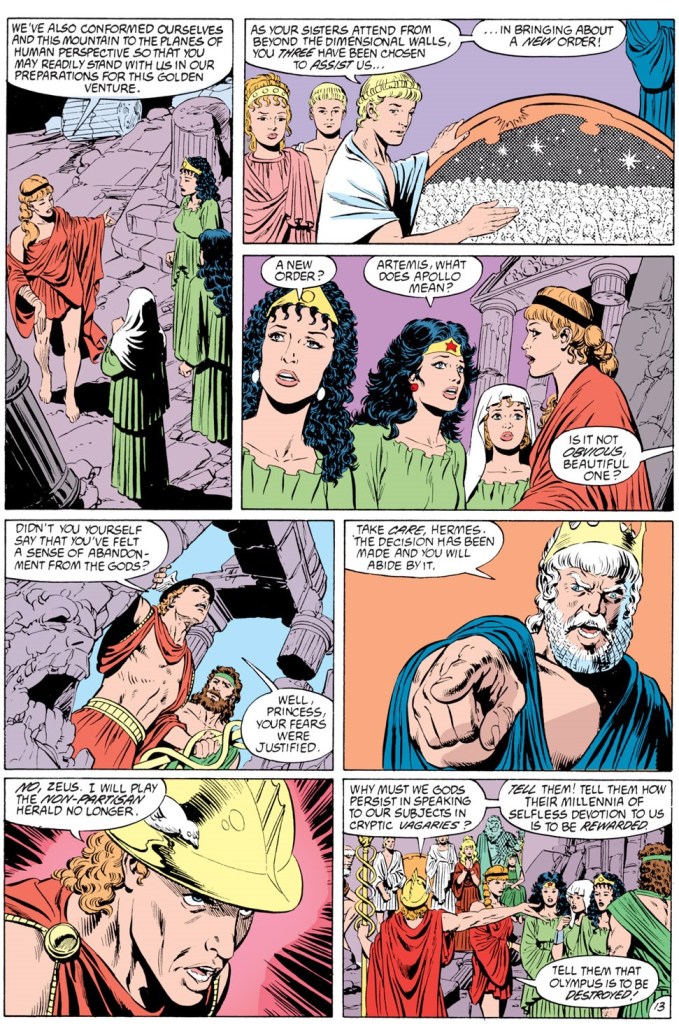
In many ways, this story is a continuation to Wonder Woman’s personal interaction with the deities of Olympus. The difference here is that her mother Queen Hippolyte and their oracle are much more involved and the deities – which include Zeus, Hera, Heracles and the rest – themselves have gotten into tremendous trouble as a result of what Darkseid did to them. This leads to the call of a new order which got the three Amazons chosen. This alone marks the new chapter in the lives of Amazons and Wonder Woman, who proved her worth in the Challenge of the Gods storyline, is unsurprisingly part of it.

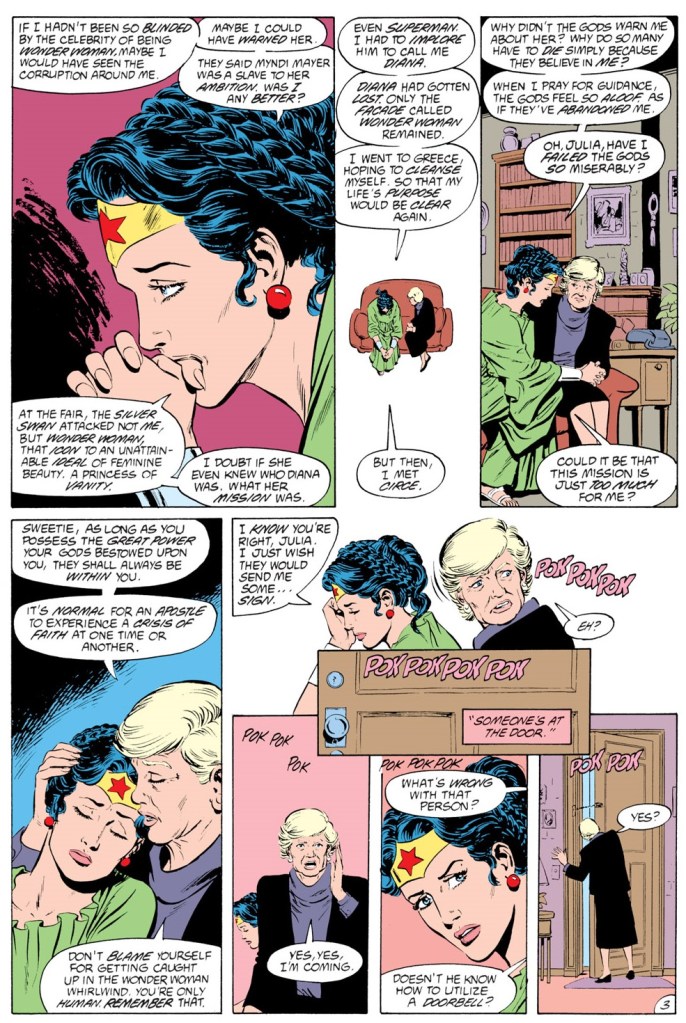
When it comes to the character development of Wonder Woman, the golden part happened early in this comic book. I love the way that George Perez portrayed Diana to be fragile as a person who realizes that her being a very powerful icon in man’s world causes both blessings and problems around her. Diana admits getting blinded by the celebrity of being Wonder Woman to the many people around her. The dialogue Perez wrote for Diana in the early scene (in the presence of Julia) is very rich and so touching, you will feel sympathy for the Queen of all Superheroes.

Conclusion

A very touching scene about Diana/Wonder Woman dealing with the responsibility of what went wrong recently.

Apart from being a new chapter for Wonder Woman and her Amazons, Wonder Woman #21 (1988) is a richly layered story to read. It does not have the usual good-versus-evil spectacle common with most superhero comic books, but the story succeeds in moving the narrative of the Amazons and Olympus deities forward while developing Diana as an even more human character (as opposed to being a superhero). This is another great work spearheaded by George Perez.

If you are seriously planning to buy an existing hard copy of Wonder Woman #21 (1988), be aware that as of this writing, MileHighComics.com shows that the near-mint copy of the regular edition costs $33 while the near-mint copy of the newsstand edition and the 2nd print edition cost $70 each.

Overall, Wonder Woman #21 (1988) is highly recommended!

+++++

Thank you for reading. If you find this article engaging, please click the like button below and also please consider sharing this article to others. If you are looking for a copywriter to create content for your special project or business, check out my services and my portfolio. Feel free to contact me as well. Also please feel free to visit my Facebook page Author Carlo Carrasco and follow me at HavenorFantasy@twitter.com
A Look Back at Wonder Woman #3 (1987)

Disclaimer: This is my original work with details sourced from reading the comic book and doing personal research. Anyone who wants to use this article, in part or in whole, needs to secure first my permission and agree to cite me as the source and author. Let it be known that any unauthorized use of this article will constrain the author to pursue the remedies under R.A. No. 8293, the Revised Penal Code, and/or all applicable legal actions under the laws of the Philippines.

Like anyone of you guys and gals reading this, I’ve been limited to staying mostly at home as a result of the community quarantine imposed by the local authorities in response to the Coronvirus disease COVID-19 that started in China and has since turned into a global pandemic. Many people lose their jobs and have no income. Varied industries have been shut down. People are struggling to follow local authorities while there are some depending on relief goods (food, water and essential supplies) released by their respective governments or by charitable organizations.

The pandemic affected the entertainment industry too. As such, the much-awaited threatrical opening of the Wonder Woman 1984 movie had to be delayed by Warner Bros. from June 2020 to August 2020.

While waiting for the big movie to come out, let’s take a nice look back at Wonder Woman published by DC Comics in 1987 with a story co-written by the late Len Wein and the legendary George Perez who worked on the art (inked by Bruce D. Patterson).

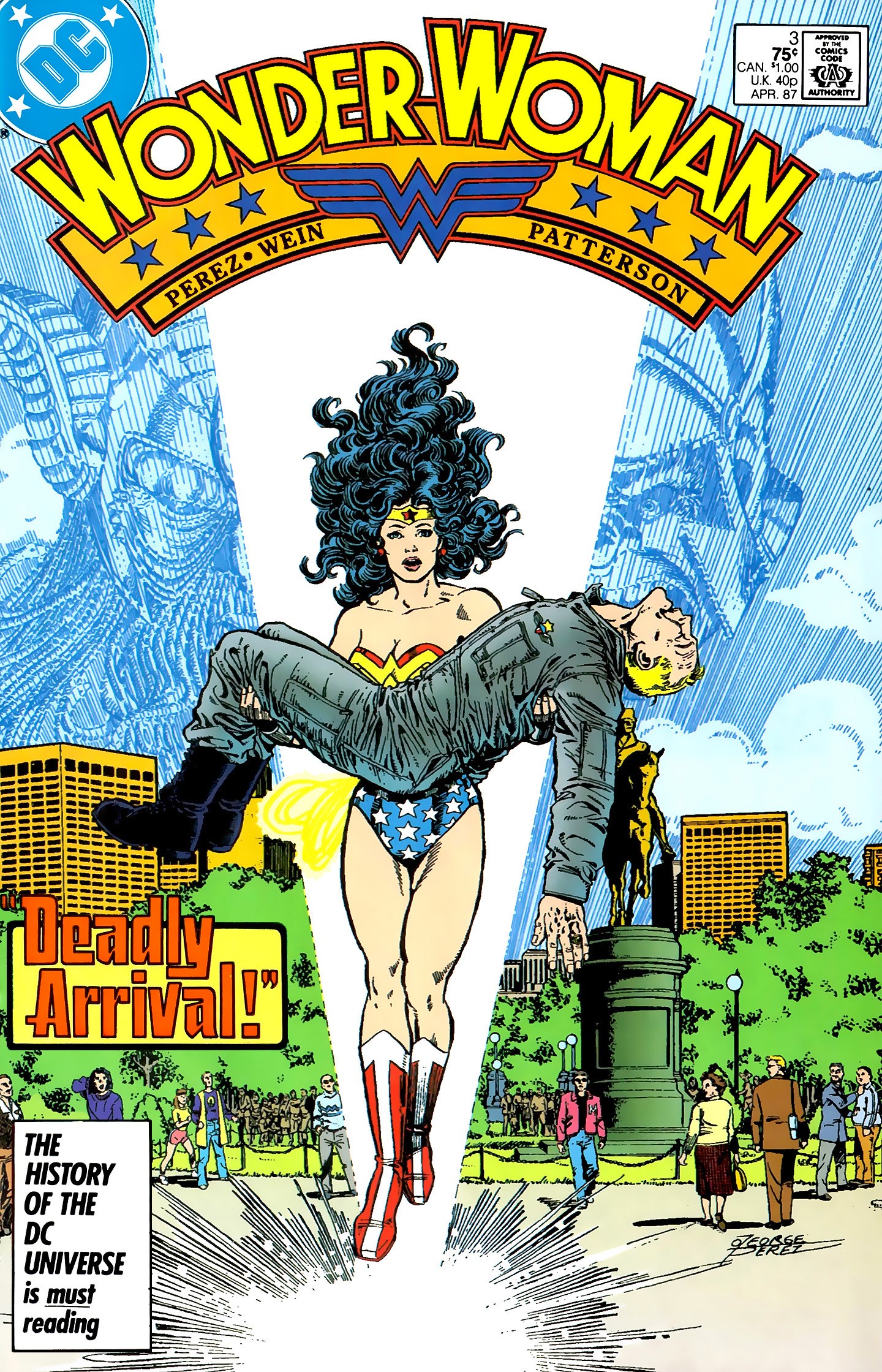
Cover
The cover by George Perez.

Early story

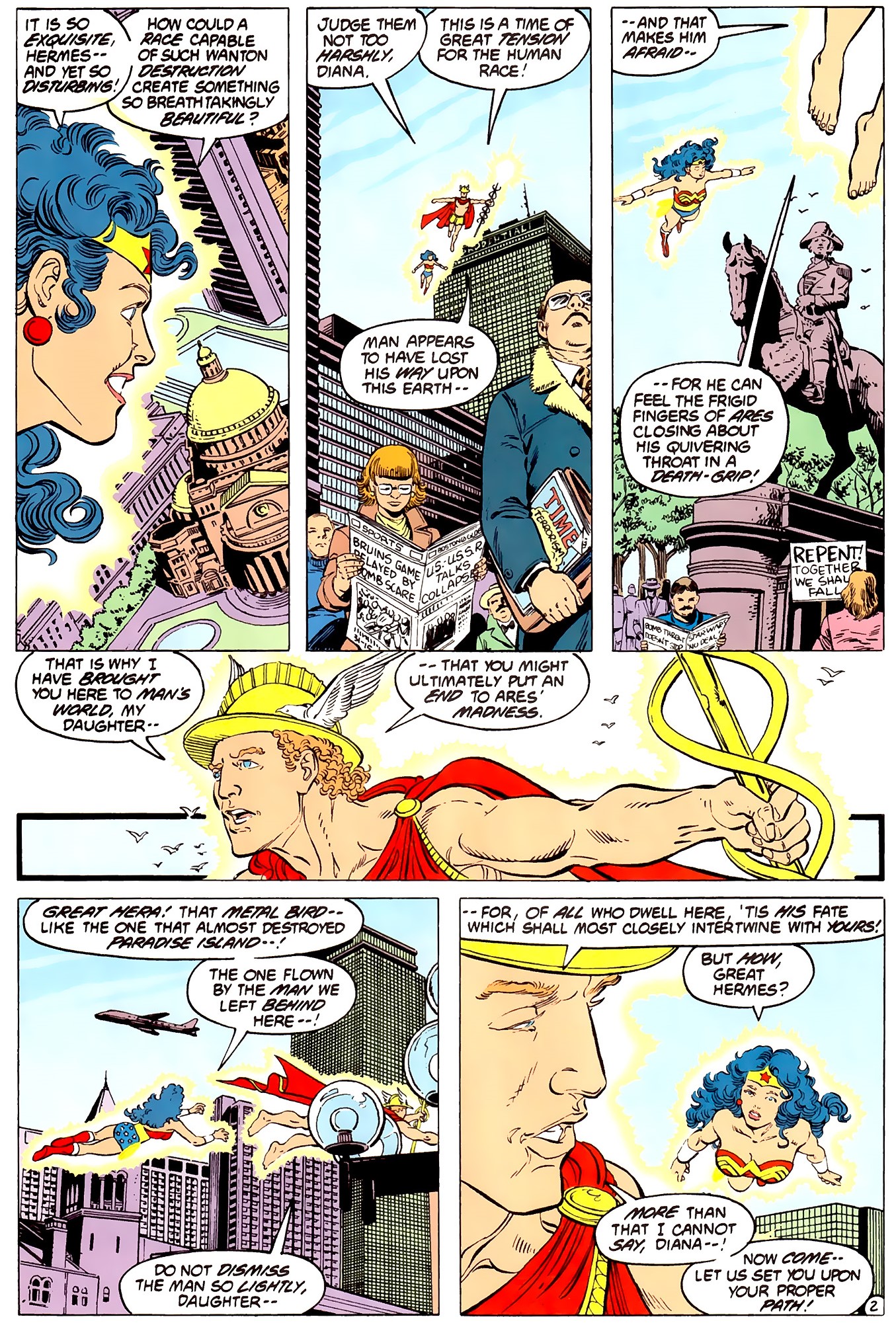
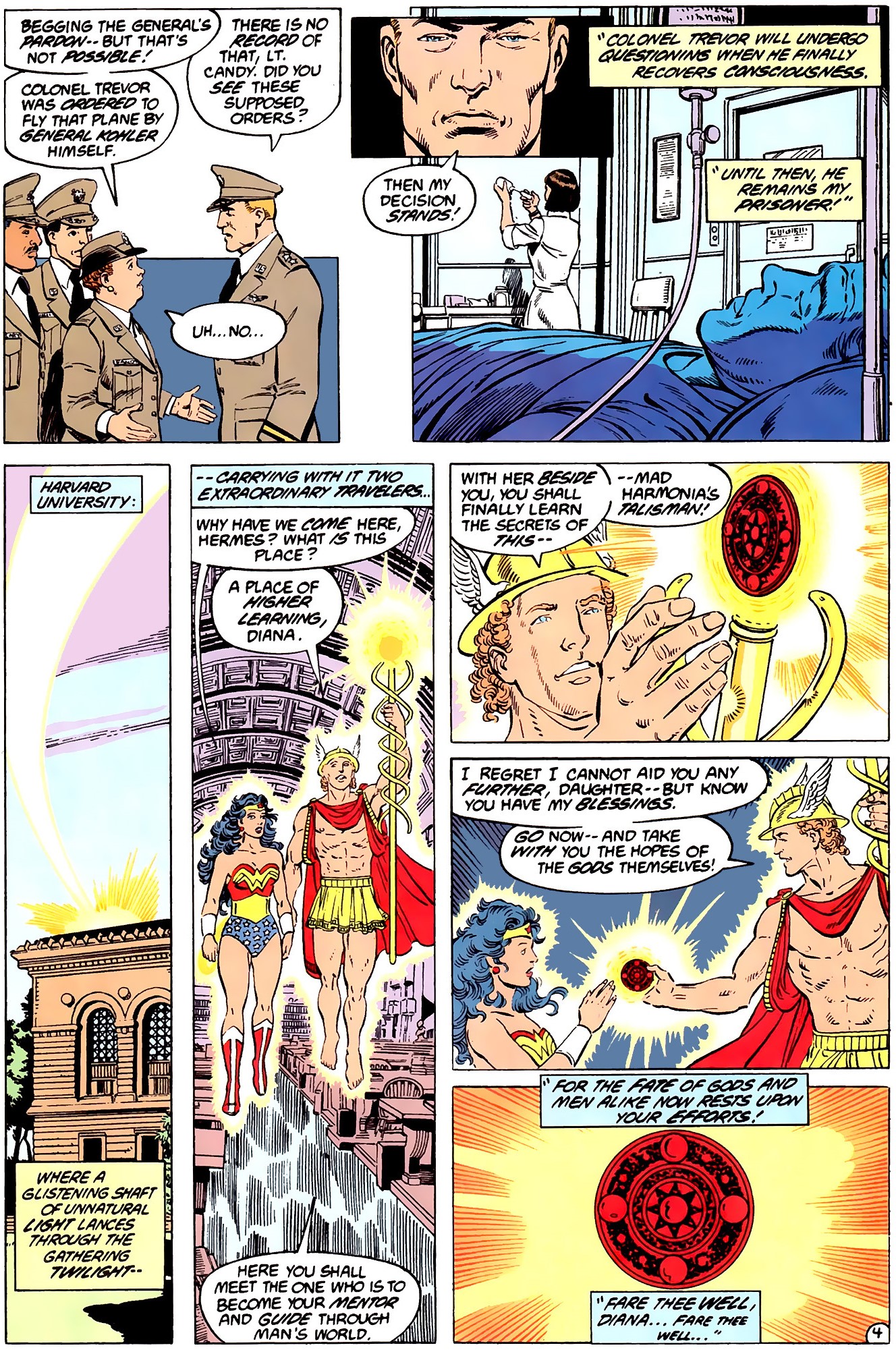
The story begins with Wonder Woman and Hermes arriving in the City of Boston in the United States. While flying in the air, princess Diana expressed her amazement of the city finding it exquisite and yet so disturbing. Even as Hermes cautions her from judging the people of man’s world, he states that man appears to have lost his way on Earth which makes him afraid and vulnerable to the influence of Ares.

He tells Wonder Woman that he led her to man’s world so that she could end the madness Ares has been causing on the people. Together they fly off to pursue the next objective.

2
Wonder Woman and Hermes arrive in Boston.

Meanwhile at the Hanscom Air Force Base, a general arrives to check on Steve Trevor who is recovering from the incident that happened at Themyscira (in issue #2). As it turns out, Trevor is under arrest as he is wanted for questioning in relation to the shocking murder of another general. It was also stated that Trevor returned without the jet he used….

Quality

If there is anything that stood out for me personally in Wonder Woman , it is the wonder that comes with discovery which was greatly pulled off by Len Wein and George Perez. As Wonder Woman arrives in Boston, observes how strange the society is to her and how she adjusts to the place and people around her, I got very engaged along the way. What Wonder Woman discovers and learns, I discovered and learned as well. In some ways, her discovery of man’s world (through Boston) reminded me of what I experienced during my first arrival in San Francisco, California decades ago. It should be noted that the dialogue is very rich continuing nicely from what was started in issue .

9
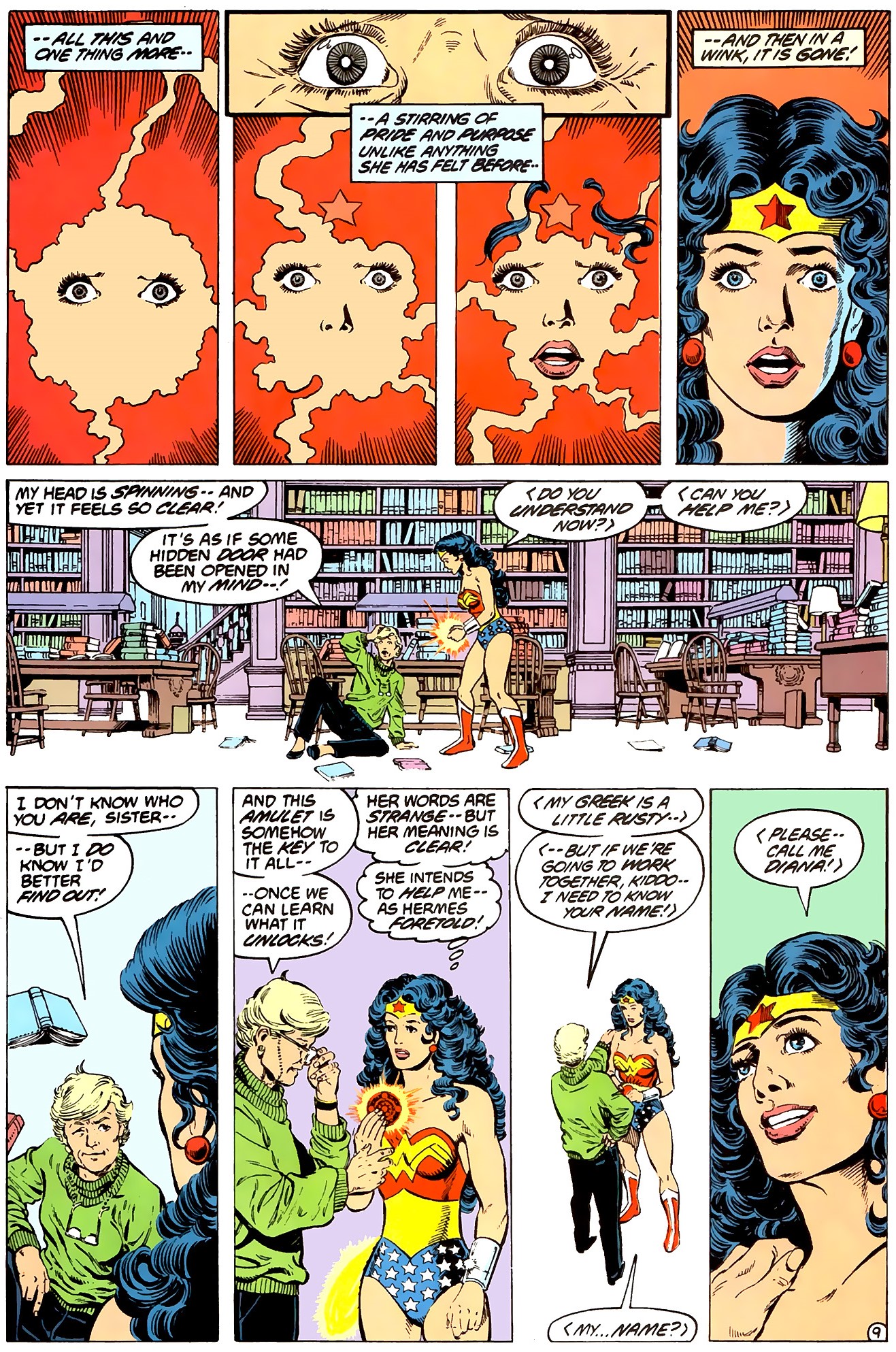
Wonder Woman and Julia Kapatelis slowly communicating with each other. 

Like in the first two issues, there is also a nice build-up of suspense which is connected with the fusion of both fantasy elements and Greek mythology. This comic book cleverly reminds readers what is happening behind the scenes in the fantasy realm (within the story that is) just as Wonder Woman and the people in man’s world move on with their respective exploits. Such suspense is very well used on adding depth to the plot while paving the way for sub-plots.

Also worth mentioning here is the introduction of professor Julia Kapatelis and her teenage daughter Vanessa as supporting characters who will prove to be crucial to Wonder Woman’s adjustment into their society. Personally, I just love the way the creators showed that Wonder Woman does not speak English and had yet to learn the language which added some depth into her first encounter with Julia.

Conclusion

I really had a great time reading Wonder Woman . This is a significant comic book as it marked Wonder Woman’s first arrival in man’s world during the Post-Crisis era (after Crisis on Infinite Earths) and a true modernization of the icon as well as her literary story during the Reagan years. As many true Wonder Woman fans already know, George Perez’s leading on reintroducing Wonder Woman in the 1980s is better and more dramatic than the Golden Age Wonder Woman.

4
Steve Trevor recovering and Wonder Woman and Hermes arrive at Harvard University.

If you are seriously planning to buy an existing hard copy of Wonder Woman (1987), be aware that as of this writing, MileHighComics.com shows that the near-mint copy of the regular edition costs $24 while the newsstand edition’s near-mint copy is priced at $51. As for the edition that does not have the month printed on the cover, the near-mint copy is worth $77.

Overall, Wonder Woman (1987) is highly recommended!


Thank you for reading. If you find this article engaging, please click the like button below and also please consider sharing this article to others. If you are looking for a copywriter to create content for your special project or business, check out my services and my portfolio. Feel free to contact me as well. Also please feel free to visit my Facebook page Author Carlo Carrasco and follow me at HavenorFantasy@twitter.com
A Look Back at Wonder Woman #2 (1987)

Disclaimer: This is my original work with details sourced from reading the comic book and doing personal research. Anyone who wants to use this article, in part or in whole, needs to secure first my permission and agree to cite me as the source and author. Let it be known that any unauthorized use of this article will constrain the author to pursue the remedies under R.A. No. 8293, the Revised Penal Code, and/or all applicable legal actions under the laws of the Philippines.

After the end of publishing their landmark maxi-series Crisis on Infinite Earths, DC Comics gained an all-new slate to literally fill up by rebooting their entire superhero comics universe. They started the new universe (now referred to as the Post-Crisis Universe) with Superman, Batman and some others.

Then in late 1986, DC Comics reintroduced the post-Crisis version of Wonder Woman creatively led by the legendary George Perez (who was assisted by writer Greg Potter) with the release of the comic book Wonder Woman (cover dated February 1987). That particular comic book retold (in great detail with Greek mythology) the origin of the Amazons who were reincarnated women (the souls of which came from women whose deaths were caused by men). The Amazons and Hippolyta (Hippolyte in this comic book) eventually got betrayed by Heracles and his men leading to a period of tremendous hardship. Beatings were obvious and rape was implied.

After getting freed, they are sent to the island of Themyscira. It was there when Hippolyta learned that she died previously as a pregnant woman. Using the clay of the island, the Amazons’ queen formed an infant girl. Then after communicating with the midwives in the spiritual realm, the soul of Hippolyta’ unborn daughter arrived into the clay child. This marked the birth of Princess Diana who would become Wonder Woman. For the newcomers reading this, Diana is the only Amazon who grew up from child to adult in Themyscira.

Right here is my retro comic book review of Wonder Woman published in 1987 by DC Comics with the story done by George Perez and Greg Potter. The art was done by Perez.

Cover
Cover drawn by George Perez. 

Early story

The story begins in man’s world, at an American military base. Colonel Steve Trevor meets with his superior General Kohler who tells him that he has been chosen for a special mission which involves the use a new, modified fighter plane. Steve reacted that the coordinated provided lead to nothing out there. The general instructs him to shut his mouth and do what he was ordered to do.

In Themyscira, Princess Diana is set to start her first-ever mission as Wonder Woman. Her mission pits her against a god gone mad, and her mother Hippolyta and the Amazons are deeply concerned. Suddenly, the Lasso of Truth from Olympus arrives which Diana picks up. Immediately after that, the messenger of the gods Hermes arrives marking the first time in centuries that any Amazon saw him.

45

After a brief talk, Diana travels away with Hermes who could only guide her. They disappeared suddenly surprising the Amazons and Hippolyta who was not given an opportunity to bid farewell to her daughter.

Quality

As expected, Wonder Woman has great qualities with regards to storytelling, characterization and artwork. With Greg Potter assisting George Perez, this comic book told not one but three story arcs each with a good amount of details and, amazingly, such stories were told rather efficiently complete with very believable dialogue. I’m talking about impressive writings and descriptions of the characters, apart from Wonder Woman herself, that include the Amazons, the gods and goddesses of Olympus and the American military.

The story also comes with a very nice touch of discovery which readers can easily relate with through Wonder Woman. As Diana develops and learns more, the reader gets connected with her even more. This is the Queen of Superheroes I’m talking about and the writing is truly excellent.

At the same time, continuing with what was first presented in Wonder Woman , this comic book also explores how much of a threat Ares (god of war) truly is not only to Wonder Woman and her Amazons but also on people in man’s world. The build-up of the tension is really nice and the pay-off is worth it.

Unsurprisingly, this comic book has great looking art. It’s done by George Perez after all supported with ink work by Bruce Patterson. Perez knows how to dramatize characters, pull of amazing shots of action and other forms of spectacle, and most of all, illustrate the very visual elements of Greek mythology complete with other visual concepts of the fantasy genre.

Conclusion

As it is clear it is not the launch issue of its monthly series, Wonder Woman is still very significant as it marks the first-ever mission of Wonder Woman in the post-Crisis universe of DC Comics and also her first encounter with a modernized (for the 1980s specifically) Steve Trevor. Remember the first time Diana and Steve met in 2017 Wonder Woman movie? Remember how Wonder Woman reacted to see a mortal man for the first time ever as played by Gal Gadot and Chris Pine on the big screen? You will see some common elements between the film and this comic book about the two characters. Even the Amazons’ reaction to Steve alone makes this comic book worth reading and it should encourage readers to go back to first issue to understand the details about the Amazons’ culture and mindset.

10
Heavy inspiration about Greek mythology, culture and arts is evident not only in the artwork by Perez but also on the script itself.

If you are seriously considering acquiring an existing copy of Wonder Woman , be aware that according to MileHighComics.com as of this writing, a near-mint copy of the regular edition costs $24, while a near-mint copy of the newsstand edition costs $49. As for the other edition that does not have a month printed on the cover, a near-mint copy costs $77.

Overall, Wonder Woman (1987) is highly recommended!


Thank you for reading. If you find this article engaging, please click the like button below and also please consider sharing this article to others. If you are looking for a copywriter to create content for your special project or business, check out my services and my portfolio. Feel free to contact me as well. Also please feel free to visit my Facebook page Author Carlo Carrasco and follow me at HavenorFantasy@twitter.com
Wonder Woman 1984 First Movie Trailer is Impressive

Hey readers, moviegoers and geeks! Were you able to watch the official, first movie trailer of Wonder Woman 1984? It was released globally today online and, in case you have not seen it, here is the movie trailer for your viewing pleasure.

That movie trailer, which was released around the time the Wonder Woman 1984 special event at the CCXP in Brazil ended, was a blast and having seen it, I am more excited for the movie’s June 2020 release. I plan to watch it on an IMAX screen by then.

FB_IMG_1575843285219.jpg
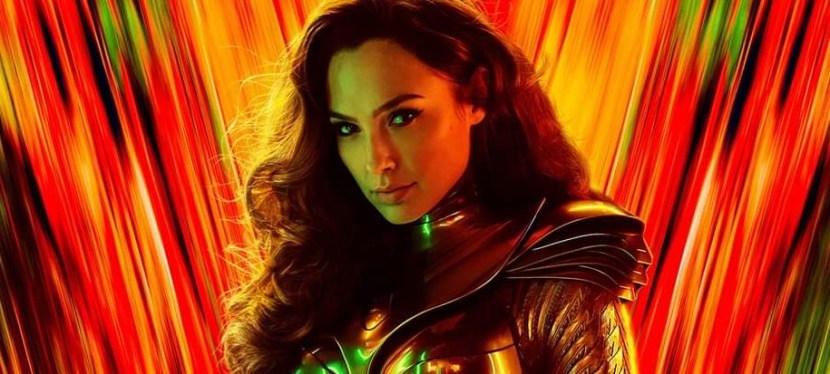
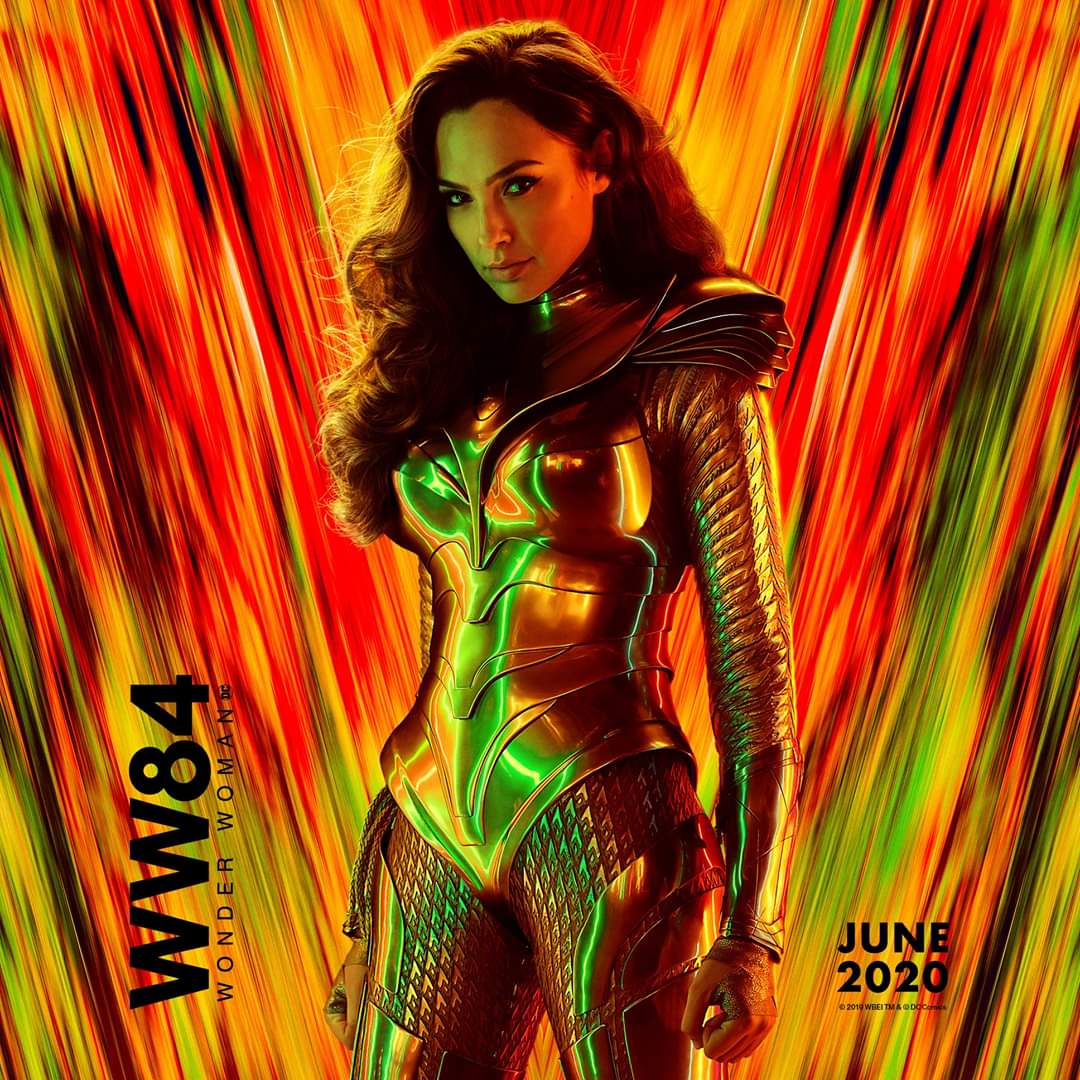
Official movie character poster for Wonder Woman 1984.

What can I say? It does not only have the 1980s setting (hence the year on the movie title), but the said time setting was made to be very lively in terms of visuals, fashion, style, music and feel. When it comes the decade in real life, it was the same decade when DC Comics published the maxi-series Crisis on Infinite Earths. Following Crisis, a major relaunch of the entire DC Comics universe followed and along the way Wonder Woman was reintroduced under the creative direction of George Perez. The George Perez-era of Wonder Woman, at least seen in the trailer, is looking like a big influence on the new movie starring Gal Gadot and Chris Pine (whose character Steve Trevor returns somehow) and directed by Patty Jenkins. This brings me to my next point.

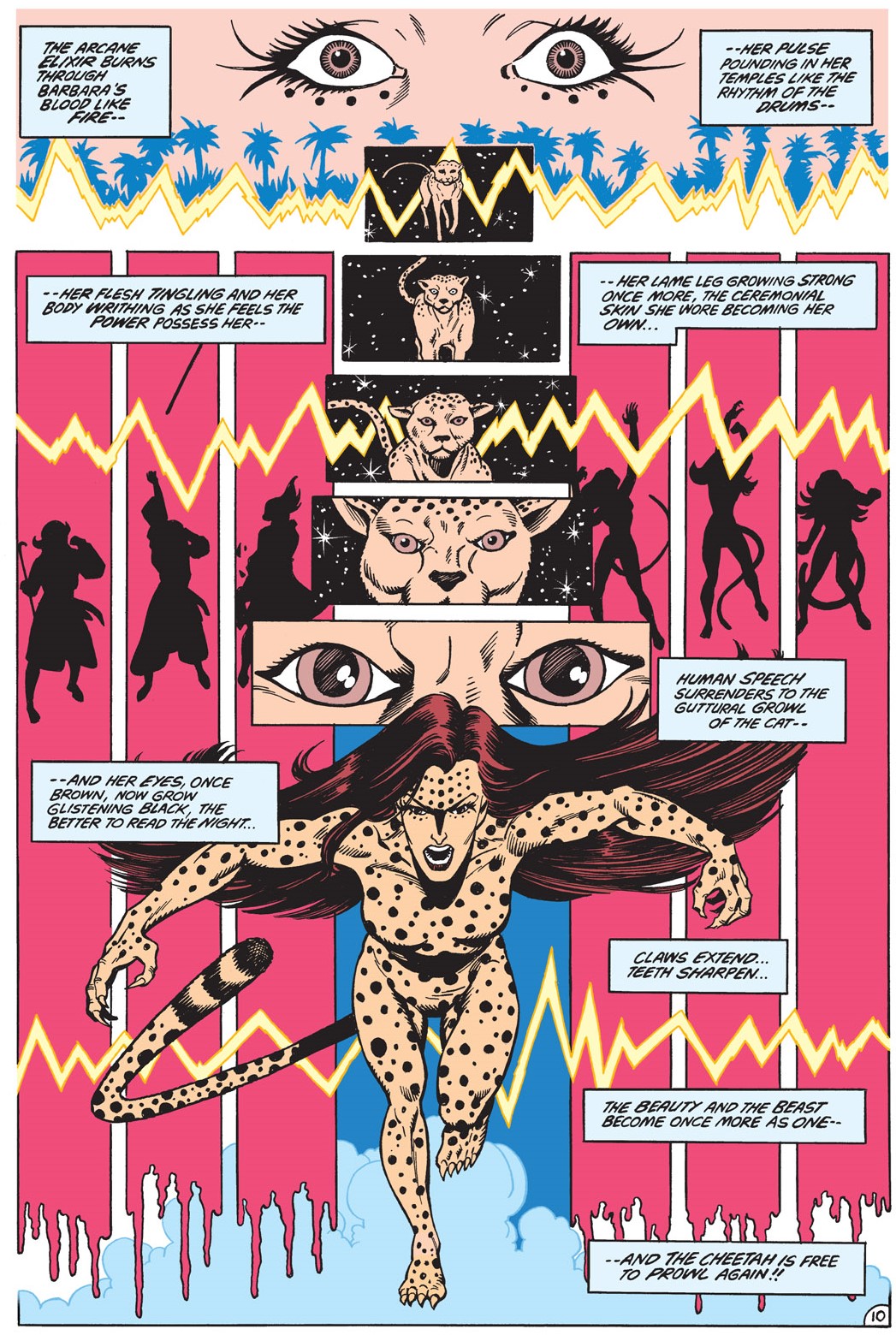
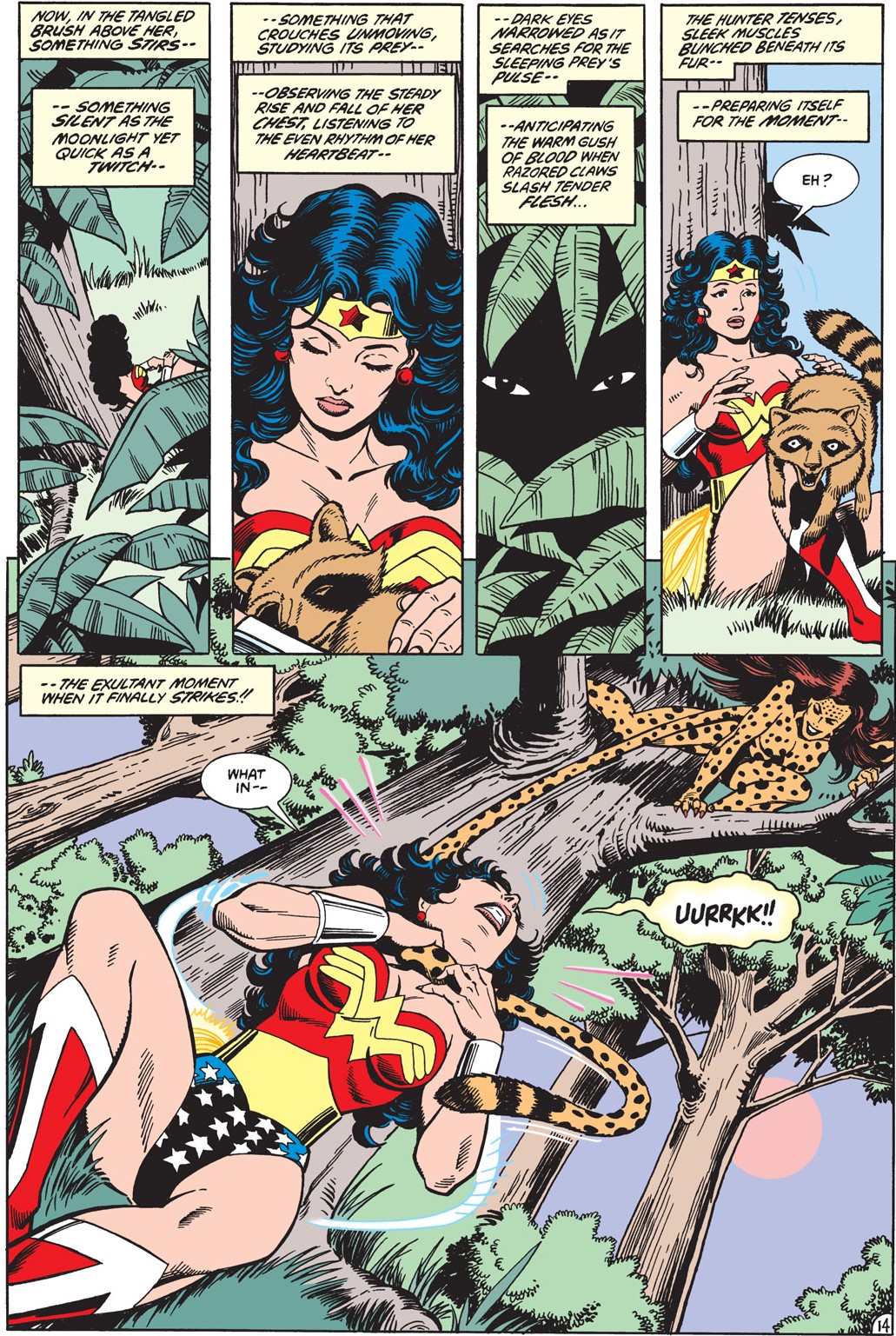
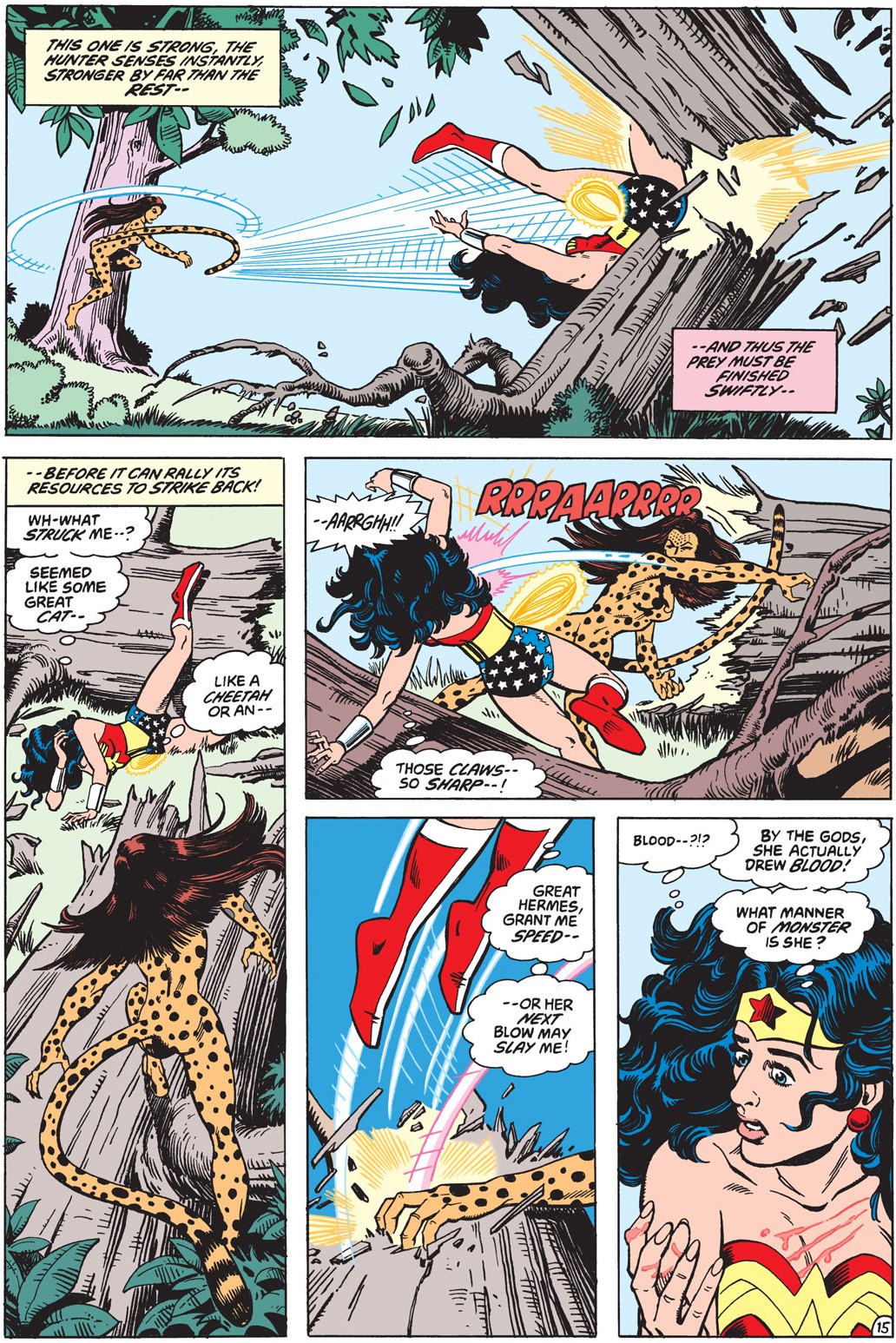
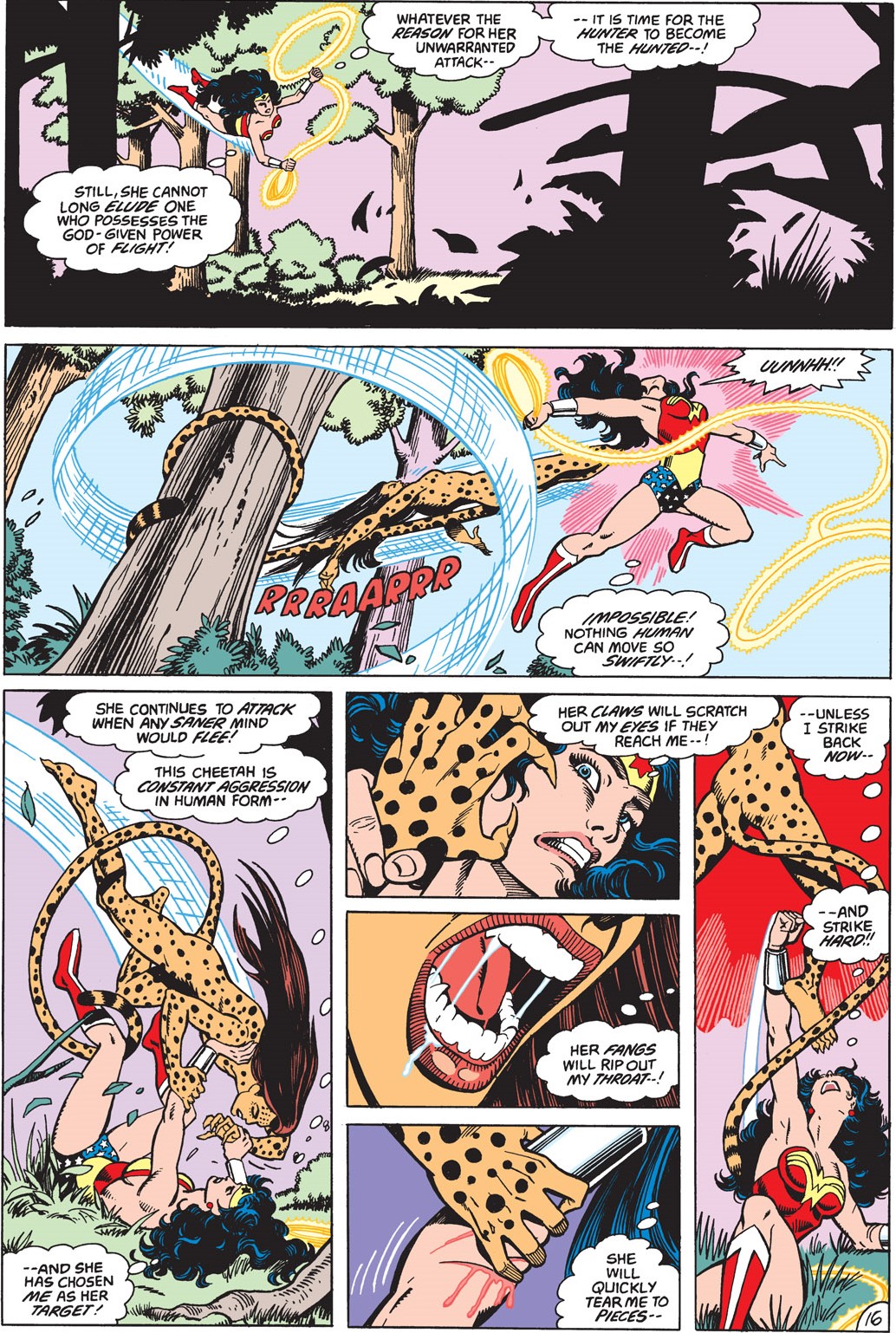
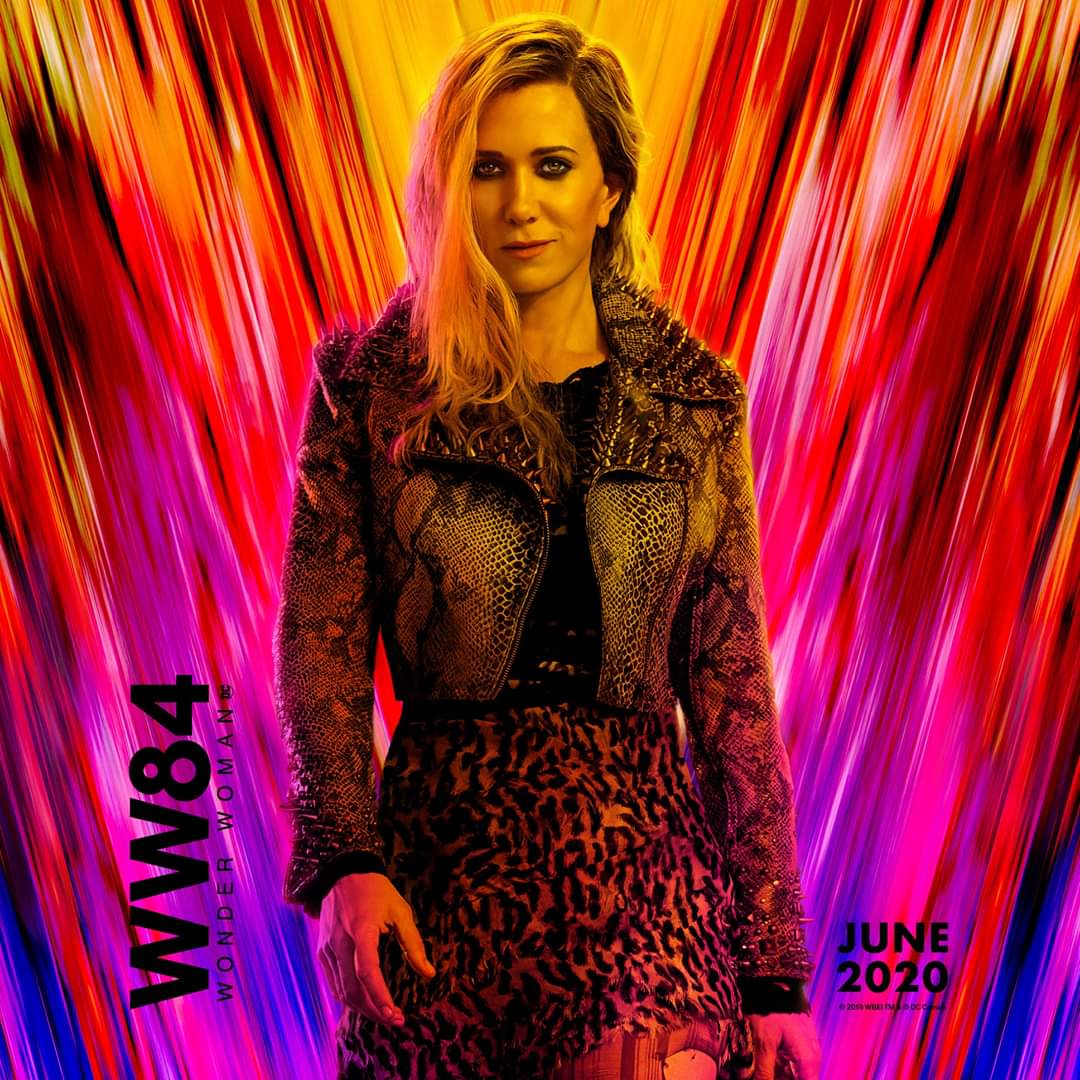
Early in the trailer, Diana/Wonder Woman was shown talking with archaeologist Barbara Ann Minerva (played by Kristen Wiig). What’s so significant about Minerva? She is none other than the super villain Cheetah, specifically the 3rd version of the character that debuted in the comic books during the George Perez-era of Wonder Woman!

Here are some images from the pages of Wonder Woman from 1988.

Cheetah2Cheetah4Cheetah5

Cheetah6
All of the above images are properties of DC Comics.

As I mentioned before, the involvement of Cheetah in the movie is alone a great attraction. As far as the trailer goes, we only see Cheetah in her normal human form with Kristen Wiig. The way I see it, we will eventually see the super villain in her terrifying, animal-like form. I am speculating the filmmakers will save that for the movie’s release and will only show very brief, body part shots in the next two movie trailers leading into June 2020. It’s much better this way especially under the watch of Walter Hamada.

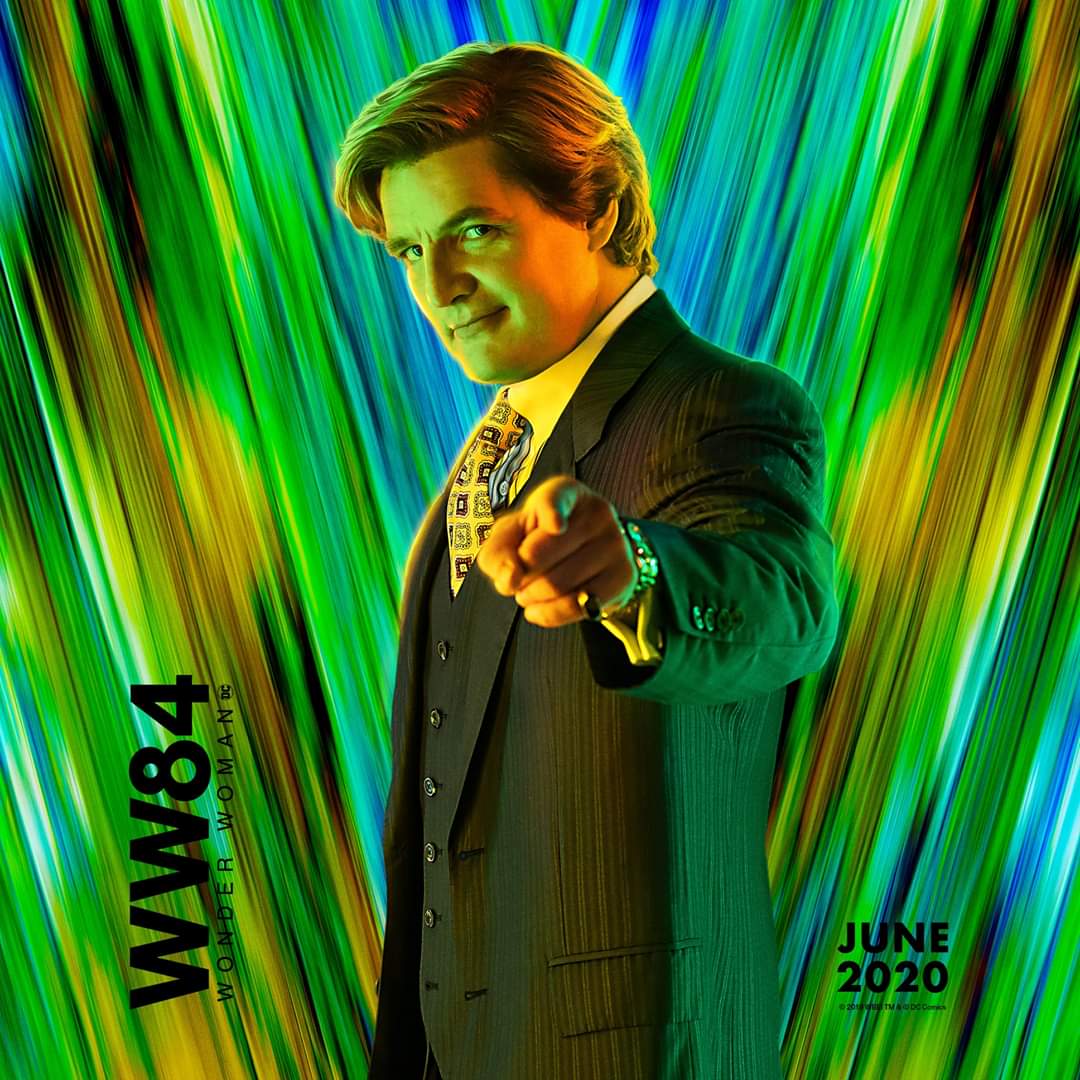
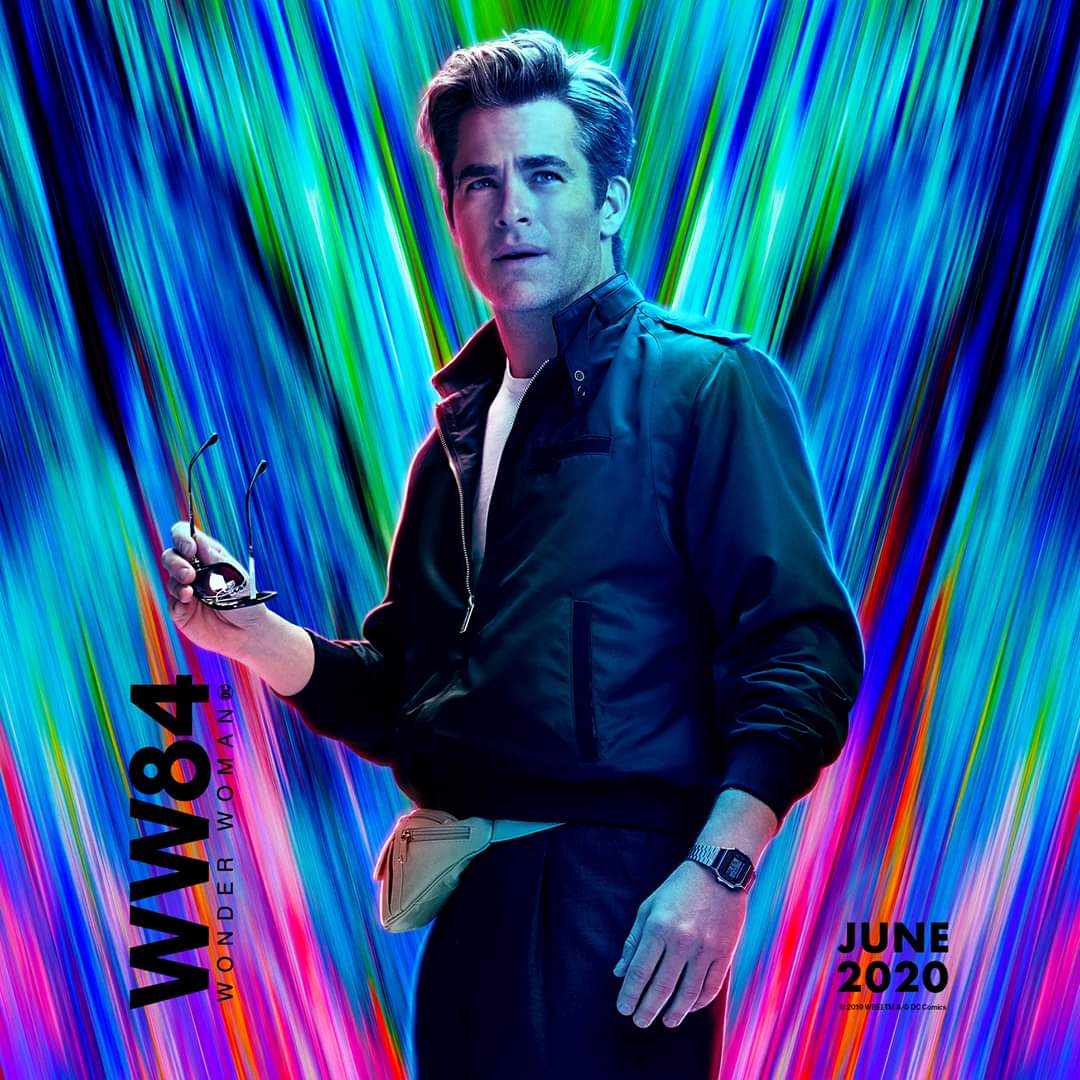
Regarding the return of Steve Trevor, I don’t want to speculate as to how he returns given what happened in the acclaimed Wonder Woman movie of 2017. Still, it sure is nice to Chris Pine return as Diana’s romantic partner because he and Gal Gadot have solid chemistry together and there is indeed a need to present more cinematic adventures of them together just like in the comic books!

As seen in the trailer, some shots showing Wonder Woman and Steve traveling together in a foreign land (with a desert environment) where they encounter military hardware operated by some group (or a government perhaps?). This is clearly a Cold War reference although which particular setting or historical event the movie is emphasizing remains to be revealed.

FB_IMG_1575843275014.jpg
Maxwell Lord.

FB_IMG_1575843282153.jpg
Barbara Ann Minerva/Cheetah.

FB_IMG_1575843277701.jpg
Steve Trevor.

The Cold War setting is the new era emphasized for Wonder Woman 1984. Story details are unintentionally light but what was shown in the trailer made the movie very promising.

As for other elements like the cinematic Maxwell Lord, shots of Themyscira, Wonder Woman’s armor and others, I’ll discuss those next time. Right now, things are looking great for Wonder Woman 1984 and we’ll see more what the filmmakers have left to offer in the next two movie trailers.

If my sources are correct, the creative synergy of director Patty Jenkins combined with passionate work implemented by Gal Gadot on playing the Queen of Superheroes should result a great Wonder Woman cinematic story as well as a solid superhero movie. On the part of Warner Bros. Pictures, it seems the studio and its creative teams are now in more solid footing when it comes to making new DC Comics superhero movies. The DC Comics cinematic stuff will resume on February 2020 with the release of Birds of Prey.

Wonder Woman 1984 will open in cinemas around the world on June 2020.

FB_IMG_1575863476174.jpg
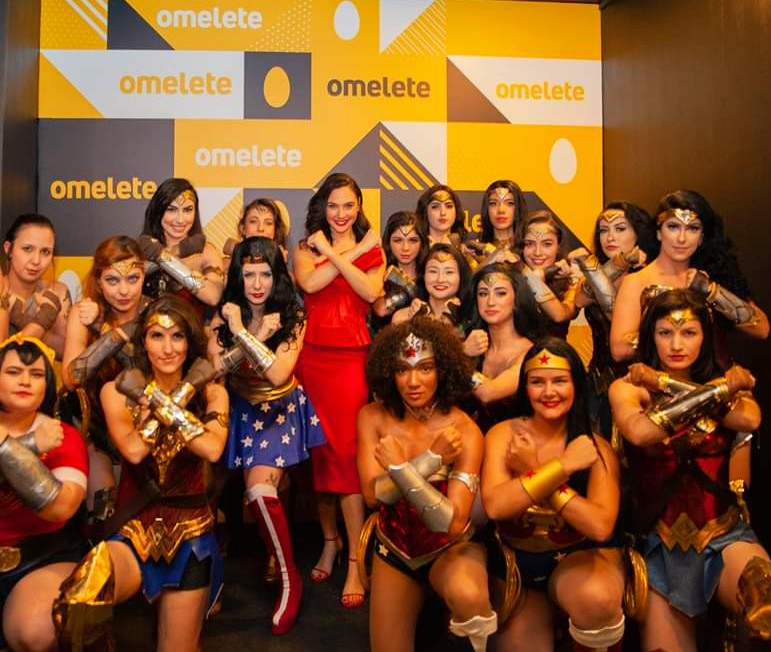
Wonder Woman 1984 star Gal Gadot with cosplayers and fans during the CCXP in Brazil. (photo source – Wonder Woman Facebook page)


Thank you for reading. If you find this article engaging, please click the like button below and also please consider sharing this article to others. Also my fantasy book The World of Havenor is still available in paperback and e-book format. If you are looking for a copywriter to create content for your special project or business, check out my services and my portfolio. Feel free to contact me as well. Also please feel free to visit my Facebook page Author Carlo Carrasco and follow me at HavenorFantasy@twitter.com