Welcome back, fellow geeks, Blu-ray collectors and movie buffs! As you may have noticed, I am a 4K Blu-ray movie collector and I can say that I really am enjoying watching movies in 4K at the comfort of home with my Xbox Series X console as the 4K Blu-ray player.
When it comes to watching my favorite movies with the best possible video and audio qualities, I always had a grand time replaying Total Recall (1990) on 4K Blu-ray, and I can say the same with replaying the greatest Hollywood action movie ever made – Die Hard (1988)!
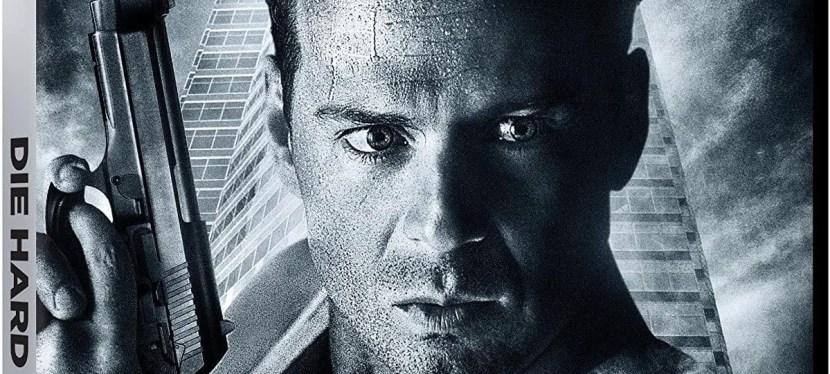
This is my copy of Die Hard 4K Blu-ray.
Back in 2021, I bought myself the 4K Blu-ray copy of Die Hard even though I already have the Blu-ray (1080p) copy. I simply wanted the best possible visuals and home entertainment experience of the classic movie that starred Bruce Willis and was directed by John McTiernan. In my life, I was fortunate to watch Die Hard in the local cinema here in the Philippines way back in 1988 and it was indeed the most thrilling in-theater experience I had as the film drew lots of reactions from all the moviegoers around me (note: this includes a standing ovation during the final conflict between John McClane and Hans Gruber) and its presentation turned out great. Simply put, Die Hard is one of my favorite movies all of time and the greatest Hollywood action movie of all.
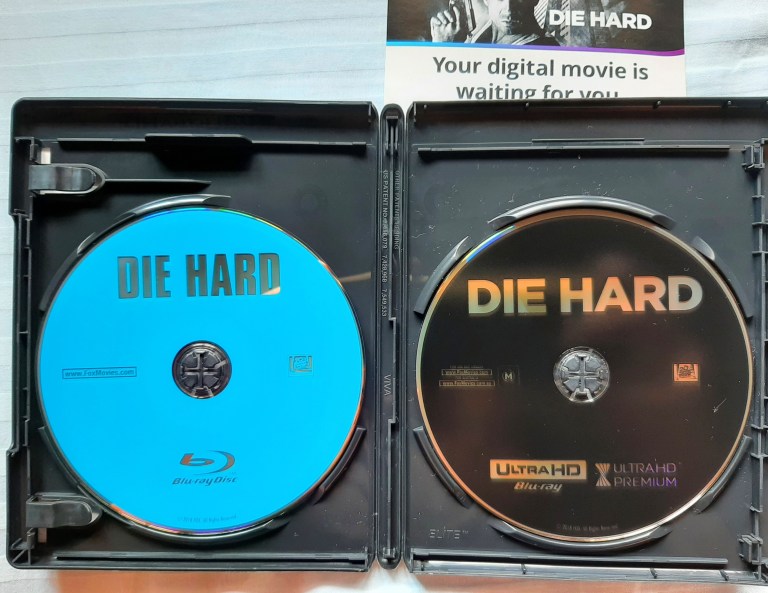
As for Die Hard 4K Blu-ray itself, it came with the 4K Blu-ray disc, the Blu-ray disc and the digital code. I bought it online with a huge discount. Oh yes, the visuals were in native 4K resolution which I always preferred.
To put things in perspective, posted below are the technical details of Die Hard 4K Blu-ray as displayed on its Blu-ray.com page.
Video
Codec: HEVC / H.265 (49.50 Mbps)
Resolution: Native 4K (2160p)
HDR: HDR10
Aspect ratio: 2.39:1
Original aspect ratio: 2.39:1
Audio
English: DTS-HD Master Audio 5.1 (48kHz, 24-bit)
English: DTS-HD Master Audio 2.0 (48kHz, 24-bit)
Spanish: Dolby Digital 5.1
French: DTS 5.1
Spanish: DTS 5.1
German: DTS 5.1
Italian: DTS 5.1
Czech: Dolby Digital 2.0
Polish: Dolby Digital 5.1
Japanese: DTS 5.1
Subtitles – English SDH, French, German, Italian, Japanese, Spanish, Cantonese, Czech, Danish, Dutch, Finnish, Mandarin (Traditional), Norwegian, Polish, Swedish
Discs – 4K Ultra HD, Blu-ray Disc, Two-disc set (1 BD-66, 1 BD-50)
Digital – Digital copy expired, Movies Anywhere
Packaging – Slipcover in original pressing
Playback –4K Blu-ray: Region free, 2K Blu-ray: Region A
The Blu-ray disc, the 4K Blu-ray disc and the paper for the digital copy.
In my experience watching Die Hard on 4K Blu-ray disc, I noticed there were indeed visual improvements here and there. The film was remastered in 4K and it maintained the cinematic look precisely while it had assorted visual upgrades along the way. There was also a noticeable noise reduction on moments of intense brightness, particularly the explosions (note: they are longer overly bright and their precise colors and shapes became visible) and the fluorescent lights. I also enjoyed how the colors were improved and with the improvements on clarity, the tiny visuals details that were not visible on other formats became visible in 4K.
In connection to the improved visuals, watching Bruce Willis looking so much younger and with a full head of hair turned out to be unique part of the viewing experience. Oh yes, Alan Rickman as Gruber in a fancy looking suit looks better than ever in 4K!
Indeed, watching Die Hard 4K Blu-ray is the best and definitive way to enjoy the 1988 action classic at home. Don’t settle for streaming nor the 1080p Blu-ray nor DVD. Die Hard 4K Blu-ray is the best! If you don’t have it yet in your 4K Blu-ray collection, go for Die Hard 4K Blu-ray while it is still available and currently discounted!
Disclaimer: This is my original work with details sourced from reading the comic book and doing personal research. Anyone who wants to use this article, in part or in whole, needs to secure first my permission and agree to cite me as the source and author. Let it be known that any unauthorized use of this article will constrain the author to pursue the remedies under R.A. No. 8293, the Revised Penal Code, and/or all applicable legal actions under the laws of the Philippines.
Welcome back, superhero enthusiasts, 1990s culture enthusiasts and comic book collectors! Today we revisit the Ultraverse and focus on The Solution, which remains as one of the most entertaining and intriguing team comic book series ever published by Malibu Comics! For the newcomers reading this, I previously published reviews of some The Solution comic books such as issue #6 (a great origin story of Lela Cho), issue #4 (a part of the Break-Thru crossover storyline), and issue #13 (part of a crossover storyline involving Night Man).
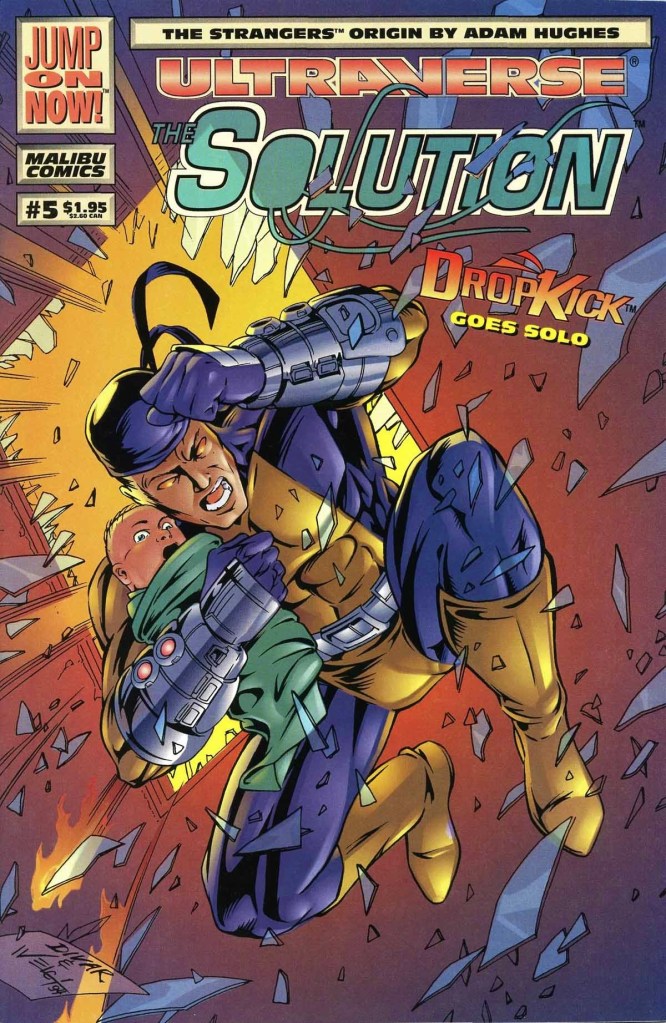
With those details laid down, here is a look back at The Solution #5, published by Malibu Comics in 1994 with a story written by the late James Hudnall and drawn by Alan Jacobsen.
The cover.
Early story
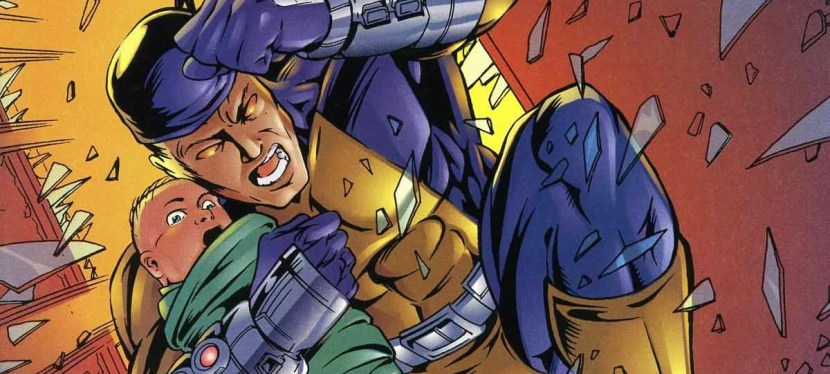
The story begins with The Solution’s member Dropkick trying to save an infant by carrying him strategically through the burning interior of a tall building. Dropkick jumps out through a window falling down with the infant still with him….
Quality
Before the mission starts, here is what happened.
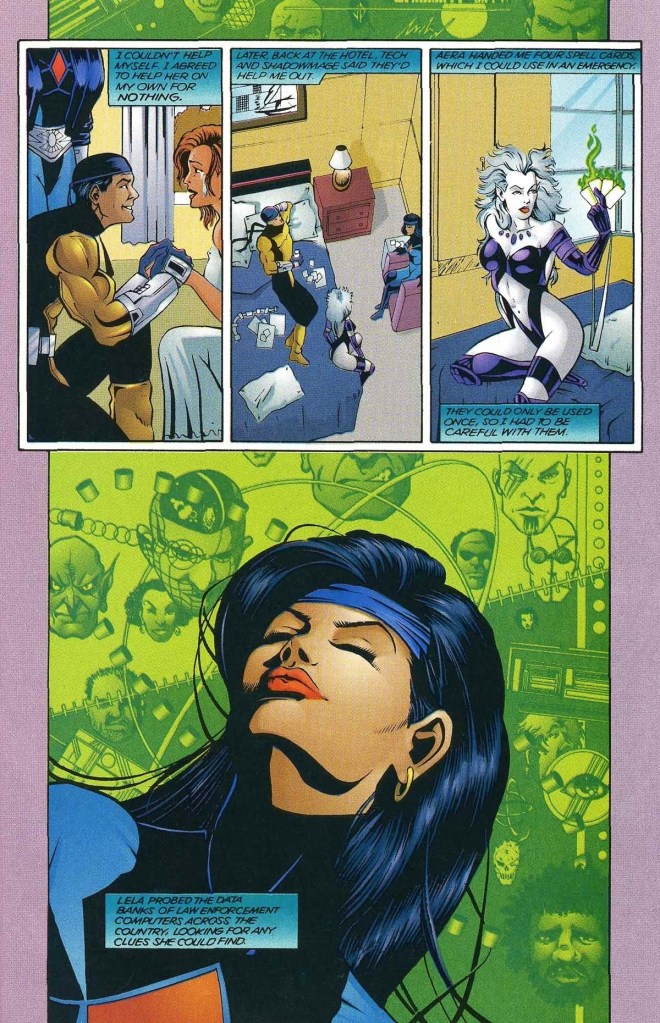
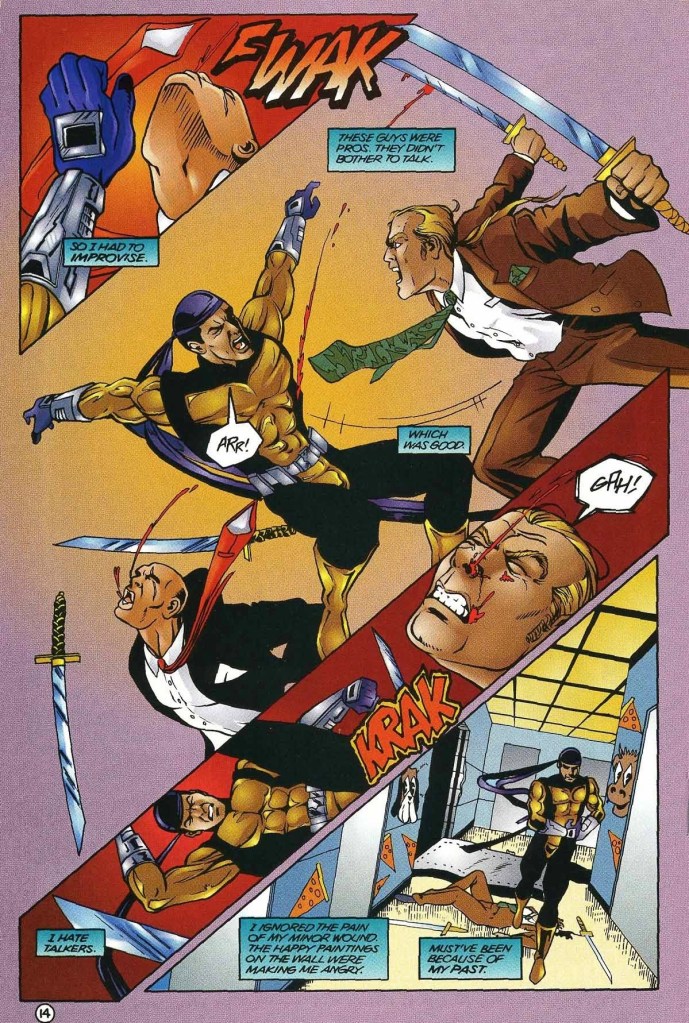
To make things clear, this The Solution comic book is actually a solo story focused on Dropkick. You will get to see members of the team together but only for a few pages. More on Dropkick himself, this story was written to show not only the team member’s capabilities but also provide readers insight on his personality, specifically about how he thinks and reacts when he is under the heat of a dangerous mission. As there are no scenes showing his personal life as a civilian, James Hudnall wrote the script to emphasize Dropkick as the determined yet vulnerable action hero which somehow reminds me of John McClane in the action classic Die Hard.
Apart from the solid storytelling, you must be wondering if Dropkick himself is interesting enough as one of the many action-oriented characters within the Ultraverse. I can say yes.
Conclusion
Dropkick in action!
Being on the first solo stories of The Solution series, I can say that The Solution #5 (1994) is entertaining enough and the creative team succeeded in defining Dropkick as an essential member of the group he belongs to. Speaking of solo stories, in retrospect this comic book is almost like a warm-up to prepare readers for The Solution #6 which had a really great story focused on Lela Cho and her origin as well as the events that led to forming the team.
If you are seriously planning to buy an existing hard copy of The Solution #5 (1994), be aware that as of this writing, MileHighComics.com shows that the near-mint copy of the regular edition costs $16 while the near-mint copy of the newsstand edition costs $48.
Overall, The Solution #5 (1994) is recommended.
+++++
Thank you for reading. If you find this article engaging, please click the like button below and also please consider sharing this article to others. If you are looking for a copywriter to create content for your special project or business, check out my services and my portfolio. Feel free to contact me with a private message. Also please feel free to visit my Facebook page Author Carlo Carrasco and follow me on Twitter at @HavenorFantasy as well as on Tumblr at https://carlocarrasco.tumblr.com/
Disclaimer: This is my original work with details sourced from watching V: The Original Miniseries and doing personal research. Anyone who wants to use this article, in part or in whole, needs to secure first my permission and agree to cite me as the source and author. Let it be known that any unauthorized use of this article will constrain the author to pursue the remedies under R.A. No. 8293, the Revised Penal Code, and/or all applicable legal actions under the laws of the Philippines.
Way back in 1983, I was fortunate to watch the 2-episode sci-fi mini-series on television titled V: The Original Miniseries. Because there was no Netflix, no YouTube, no Internet access and no DVD at the time, getting to replay the said mini-series as well as its sequel V: The Final Battle was really hard. Replays of them on local TV rarely happened.
Then in 2001, V: The Original Miniseries was released on DVD format and I got to watch it all over again with a good amount of enjoyment. In recent times, I purchased the Blu-ray release and replayed the original miniseries in high-definition at last!
You must be wondering if the original mini-series aged well through the decades, and is it still good to watch by today’s standards? While I will comment about its overall quality below, what I can say is that its theme about people fighting to be free from fascism, oppression, terrorism and dictatorship remains relevant to this day.
For his part, star Marc Singer stated: “I think themes of what holds society together and what tears society apart, those themes are universal themes and I think they’re always going to be relevant. I think there’s going to be a necessity for things like V to be revisited in order that society remember what it is that’s cohesive and coherent about it and why is it that we should all stand together and treat each other well.”
With those details laid down, here is a look back at V: The Original Miniseries, written and directed by Kenneth Johnson. The first episode was broadcast on television in the United States on May 1, 1983.
V: The Original Miniseries
Early story
The story begins in El Salvador where camera operator Mike Donovan (Marc Singer) and his companion Tony risk their lives capturing footage of an armed conflict. As the two tried their best to move away from the heat of battle, a helicopter of the enemy tracks them and corners them. Just as hope seems lost for Mike Donovan, the helicopter suddenly flies away. He turns to the other direction and witnesses the presence of a huge, floating saucer-like space ship coming his way. He begins to record footage of it.
Soon enough, several other space ships arrive and float above many other cities around the world. In America, medical student Julie Parrish (Faye Grant) and her colleagues carefully watch the TV news coverage. In a nice neighborhood, several residents – including Robin Maxwell (Blaire Tefkin), Eleanor Dupres (Neva Patterson), Daniel Bernstein (David Packer) and his grandfather Abraham (Leonardo Cimino) to name a few – marvel at the sight of a space ship above them. At another location, the research of scientist Robert Maxwell (Michael Durrell) and his colleague got interrupted with the arrival of a space ship.
The Visitors formally begin their new relationship with the people of Earth.
Diana of the Visitors played by Jane Badler.
Some time later, the Visitors make verbal contact with the people around the world using varied languages of Earth. In a special arrangement held at the top of the United Nations (UN) building in New York closely viewed on TV by the general public, the Visitors reveal themselves represented by John (Richard Herd) who expresses their message of reaching out peacefully to the people of Earth, seek their help and, in return, share with them their advanced technologies that could help humanity a whole lot for future generations. The Visitors are human in appearance but speak with very distinct sounds.
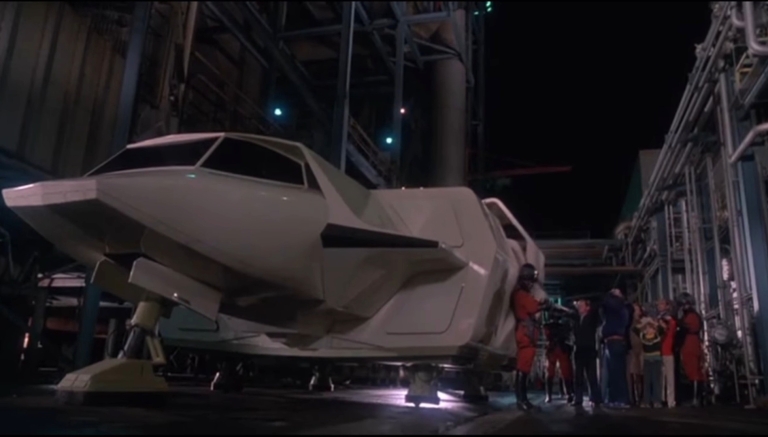
As a result, the governments of Earth agree to the offer of the Visitors and establish ties with them. Symbolically, a large group of Visitors’ engineers led by Diana (Jane Badler) and security chief Steven (Andrew Pine) arrive at a refinery to formally begin collecting chemicals and minerals.
Then things start to turn bad…
Quality
I can clearly declare that the writing and directing done by Kenneth Johnson remains great, and for many reasons why. On storytelling, Johnson (who was inspired by the anti-fascist novel It Can’t Happen Here and made an adaptation of it before finally coming up with V) clearly took his time on establishing the core concept stage-by-stage, and he also found efficient ways of explaining details to viewers by using in-story news reports and videos and retrospective as effective tools of exposition (these helped cut down the reliance on expository dialogue).
As the story goes on, Johnson carefully introduced the many characters on-screen (including the use of quick introductions of some characters who are located away from others they are connected/related with), established who they are and, most notably, showed how the events that took place affected them.
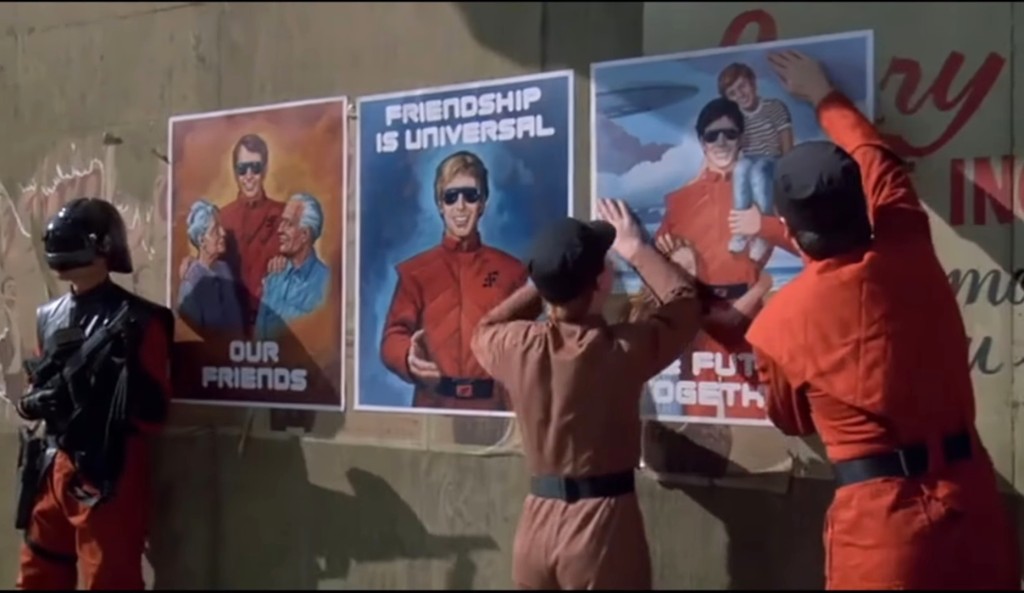
The Visitors (and one member of their youth auxiliary movement wearing brown) posting propaganda material to condition people’s minds they are friendly and trustworthy. These posters are familiar to many Nazi propaganda materials used in Europe decades earlier. Prior to the release of the Original Miniseries, a real-life marketing campaign of putting up such posters happened in real life.
Johnson also used symbolism which reflects what happened decades ago in Europe with the rise of the Third Reich. The Visitors’ symbol resembles the Nazi Swastika while the persecution of scientists (as well as their families and associates) resembles the Nazi persecution of Jewish people, and the scene of Daniel Bernstein joining the Visitors through their “Friends of Visitors” movement recalls memories of the Hitler Youth. I should state that Earth citizens who chose to collaborate with the aliens from space (strongly symbolized through Eleanor Dupres), images of the armed Visitors watching several helpless Earth people being taken away from their homes and the dominance of propaganda over the free press also reflect what happened back in World War II when the Nazis occupied many parts of Europe. The fact that Johnson used alien humanoids as the Visitors make them a more universal antagonistic force that viewers can relate with.
When it comes to the cast members and their respective performances, there is a whole lot to enjoy here and I can confirm that the quality of dramatic performances is pretty good and adds a whole lot of believability to the story. The most notable performer here is none other than Faye Grant who believably portrayed Julie Parrish on her in-depth transformation from a promising medical student to a reluctant organizer of a movement of freedom-loving people called the Resistance. Faye Grant excellently portrayed emotions and even showed the fragile side of Julie as she struggles to strengthen herself to lead her fellow people who seek freedom and survival. Julie also is the most charismatic and likable character in my view.
Marc Singer’s Mike Donovan is the closest thing this miniseries has to an action hero. Donovan is not a soldier, nor a policeman, nor a combat specialist. He is a hard-working media employee who has covered a lot of armed conflicts overseas and along the way he learned how to fight. As he is not a fighting machine, Donovan was portrayed to be vulnerable and really ends up struggling a lot. In a way, Donovan symbolizes people who take action once they realize what is wrong and what lies they have been fed with. It should be noted that before Bruce Willis wowed audiences as the vulnerable hero John McClane in Die Hard, Marc Singer’s Donovan was the vulnerable and struggling action performer realized ahead in time. On the dramatic side, Donovan’s talk with his mother Eleanor is a great scene to watch, and his contrast with Kristine Walsh (Jenny Sullivan) must be seen! If you ask me, Mike Donovan is Marc Singer at his best!
Faye Grant’s portrayal of Julie Parrish is highly believable complete with a good range of emotions. Her character development all throughout the Original Miniseries is very believable.
Marc Singer as Mike Donovan.
The other most notable role is none other than the Visitors’ commander Diana excellently played by Jane Badler. Diana was played to be charismatic, powerful, and sadistic at the same time. She is not a mere evil figure nor is she your typical pure evil antagonist. In fact, she is the powerful extension of an unseen high authority of the aliens and this alone makes her worth your attention. Also, through her interactions with her fellow aliens Steven and Brian (Peter Nelson), you will see very interesting traits of Diana’s personality. I should state that Jane Badler’s eyes and expressions really gave her character a very commanding presence on-screen. Even though her screen time is not dominant, Diana’s impact remains very strong.
As for the other cast members and their contributions in the film, I can state that Robert Maxwell was excellently portrayed by Michael Durrel to be the very caring father striving to protect his family even as society has been manipulated to demonize scientists like him. Daniel Bernstein is clearly the traitorous Earthling who has gotten so involved with the Visitors, and I am confident that David Packer will get on your nerves. Willie is the good-natured Visitor who tries to fit in with the people of Earth and his friendship with Harmony Moore (Diane Cary) is very symbolic. Given the reputation of Robert Englund as a horror icon, his performance as Willie is a must-see!
The most notable of all the supporting cast members here is none other than Leonardo Cimino’s Abraham Bernstein who is a Jewish man who went through the Holocaust and survived to establish the family in America only to see evil return in the form of the Visitors. His dramatic scene of protecting a certain family is a must-watch, and most likely it will stir your emotions.
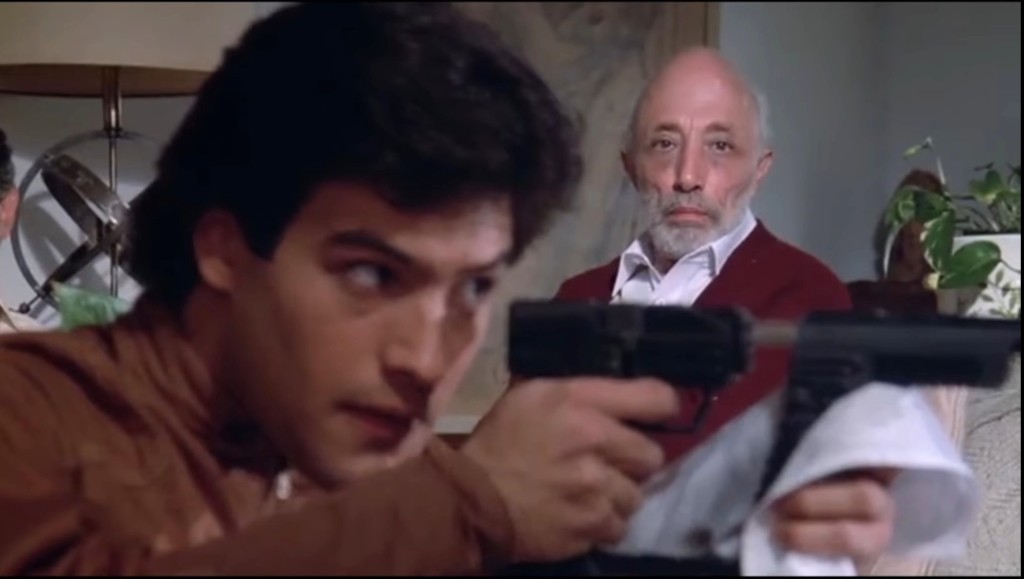
This scene shows the contrast between Abraham Bernstein (Leonardo Cimino) in the background and his grandson Daniel (David Packer) in the foreground. Abraham is an old Jewish man who went through the Holocaust and lived on. Daniel, who is 17-years-old, willingly joined the Visitor’s youth auxiliary movement which parallels that Hitler Youth.
In addition to being successful with telling the story, spreading the details and getting solid performances from the cast, Kenneth Johnson also proved to be really crafty with the way the camera captured images and how the very important moments were presented to captivate viewers. Johnson’s work here is clearly a labor of love. As for the music, Joseph Harnell did a good job overall. His style gives V a distinct aesthetic on tunes and I noticed his music becomes more lively late in the 2nd episode. Harnell also knew how to add musical excitement when the narrative needed a boost of energy or speed.
People of Earth, including children, are helpless under the Visitors.
Last but not least, I want to talk about the action and visual effects here. The action is, for the most part, raw and believable to watch. The action performers dressed as the Visitors never looked like they were trained but at least their ways of positioning themselves to fire their laser weapons made up for it. The hard action has that raw aesthetic which I actually liked because the action performers – including Marc Singer himself – were convincing with the way they exerted efforts. In this modern age of wire works and digital effects, seeing raw action and real human effort combined with risk taking is refreshing to watch.
More on the action scenes, I should state that the concept of showing the humans using conventional guns against the laser-armed Visitors was done in a satisfying and believable manner on-screen. Such concepts could have turned out bad had Kenneth Johnson and his team lacked talent and precision. As for the visual effects, they resulted a mixed bag as far as quality and artistry are concerned. While the laser blasts still look very good (and their impact was felt thanks to excellent timing with the on-set explosions and fireworks), the huge motherships really look dated as they were matte images (not miniatures), and in a few shots the matte lines were clearly exposed in high-definition which broke the immersion for me. The smaller space crafts that were shown flying also had that similar, out-of-place look (note: they did not match the lighting of the live-action footage). Still, the practical effects used are good to see and the matte paintings used for two key shots in the 2nd episode were photo-realistic.
Conclusion
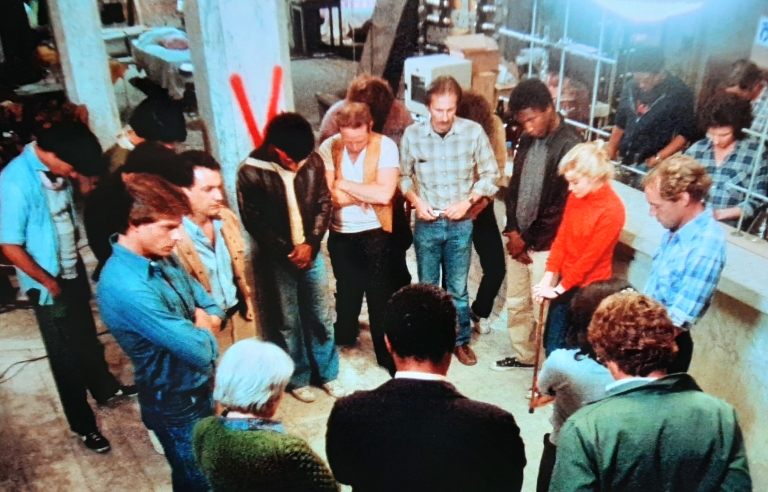
The free and righteous praying to the Lord.
As it is clearly still great and engaging to watch, V: The Original Miniseries (1983) certainly aged well, it remains essential to watch even by today’s standards and most of all, its theme about the conflict of freedom and dictatorship makes it completely relevant to this day. It is a reminder about what your part in your society is, who you are, what your values are, and why you have freedom in your local society which can be destroyed by an alienating force once your fellow people refuse to resist it. As mentioned earlier, the cast is great and I am confident that you readers will find a character or two to relate with.
The focus of this miniseries on fascism invading the lives of the free people easily reminds me about how, in this modern age, sinister influences like Marxism, socialism, Communism, unrestrained political correctness and fascism poisoned the minds of millions of people through the academic system and turned them into social rebels, domestic terrorists, looters, rioters and new criminals who are so determined to go against their fellow people who do not share their beliefs. In modern-day America, the ongoing movements of Black Lives Matter, Antifa, SJWs, the anti-Semitic BDS movement, the rabid LGBTQ+ movement, the so-called democratic socialists and other agents of Satan have been harming patriotic Americans, attacking their values, taking the innocence of the youth and children away, destroying businesses and tearing down societies as we know it. The 1983 mini-series will remind you that from time to time, social order will be pushed hard by the invaders (be it people or be it influences so alien to the society) and the people who are righteous can choose to restore the said order as well as their respective lives.
Seriously, if you value your freedom, your culture, your values, your people and your faith in the Lord, you certainly would not want to submit yourselves to a foreign people who intend to destroy you.
No matter what happens, people should never lose faith in the Lord and they must look up to Him for deliverance. The Lord will punish the wicked and make ways happen to lift up the faithful. Clearly, V’s theme about the fight for freedom is truly universal.
Symbolism and socio-political relevance aside, V: The Original Miniseries (1983) also comes with a good amount of spectacle that make sense within the narrative. Do not expect to see extensive, over-the-top action scenes of modern-day cinema/television here but I assure you that the spectacle (note: even with the flawed matte imagery of the visual effects) in this production paid-off nicely in relation to the build-up of events throughout the story.
I strongly recommend you acquire V: The Original Miniseries on Blu-ray while it is still available. Watching it in high-definition is a great experience on my part.
Overall, V: The Original Miniseries (1983) is highly recommended! That being said, I strongly encourage you to buy it on Blu-ray disc format while it is still available and affordable. If you want more of Kenneth Johnson’s other work related to V, I suggest you to look for his book V: The Second Generation. Don’t forget to visit Johnson’s website at http://www.kennethjohnson.us/
+++++
Thank you for reading. If you find this article engaging, please click the like button below and also please consider sharing this article to others. If you are looking for a copywriter to create content for your special project or business, check out my services and my portfolio. Feel free to contact me as well. Also please feel free to visit my Facebook page Author Carlo Carrasco and follow me at HavenorFantasy@twitter.com
For more V-related writings of mine, check out my retro comic book reviews of the V comic books (published by DC Comics) issues #1, #2, #3 and #4.









 Author Carlo Carrasco