Welcome back, fellow geeks, Blu-ray collectors and movie buffs! Way back in 1954, the original Godzilla movie (Japanese title: Gojira) made its debut in theaters in Japan. Not only did it make a huge impact with moviegoers, it paved the way for more Godzilla movies (which compelled Hollywood players to join in), imitators and made a solid contribution to global pop culture.
Of course, the original Godzilla film was decades before I was even born and as a boy, I got to watch on home video “Godzilla 1985” which was a Westernized version of The Return of Godzilla (1984). Then in 1998, I saw Roland Emmerich’s twisted version of Japan’s giant monster.
Going back to the original film from 1954, an American version of it was released in 1956 under the title Godzilla: King of the Monsters which was a recut version that had actor Raymond Burr in it as an American journalist witnessing events. That American version, which I saw partially by chance on cable TV, only made me want to see the 1954 original Godzilla movie intact.
That being said, I acquired a copy of the Godzilla (1954) Blu-ray fromCriterion Collection and I can say I am really enjoying it. It definitely is a very good addition to my collection of Blu-ray movies.
The cover of the Godzilla (1954) Blu-ray release from Criterion Collection.
To begin with, posted below are the specs from the Blu-ray.com page…
Video
Codec: MPEG-4 AVC (24.01 Mbps)
Resolution: 1080p
Aspect ratio: 1.37:1
Original aspect ratio: 1.37:1
Audio
Japanese: LPCM Mono (48kHz, 24-bit)
English: LPCM Mono (48kHz, 24-bit)
Subtitles – English, English SDH
Discs -Blu-ray Disc, Single Disc (1 BD-50)
Playback – Blu-ray: Region A
The back of the Criterion Collection Godzilla (1954) Blu-ray. Pay close attention to the details because you will get a lot of stuff to enjoy with this one added into your Blu-ray movie collection.
I really enjoyed the 1954 movie directed by Ishiro Honda and I can talk more about it in detail in a future retro movie review. Going back to Criterion’s Godzilla (1954) Blu-ray, I can say that the company did a great job not only with the restoration and audio, they also loaded the disc with a whole lot of content that will appeal strongly with dedicated Godzilla fans as well as the newcomers who wish to learn more about Japan’s giant monster, its legacy and place in global pop culture. The disc also has a restored copy of Godzilla: King of the Monsters (1956) but I strongly recommend you watch the 1954 film first and foremost.
The extra stuff in the disc contains a lot of content for you to enjoy. There are interviews with certain cast and crew members, an illustrated audio essay about the tragic Lucky Dragon No. 5 vessel, an audio commentary by David Kalat, and more.
When it comes to the physical aspect of Criterion’s Godzilla (1954) Blu-ray, the packaging is both nicely done and inspired. I just love it whenever I opened the set to get to the disc, an image of Godzilla folds and forms in shape for your viewing pleasure. The set also has a booklet that contains really interesting information. Very clearly, this is so much better than streaming!
I really like this excellent packaging by Criterion Collection. Very clearly better than streaming!
For the dedicated Godzilla fans as well as enthusiastic film buffs and collectors of movies on physical media, Criterion’s Godzilla (1954) Blu-ray is highly recommended! This is currently the best way to enjoy the classic movie in the comfort of your home!
Disclaimer: This is my original work with details sourced from reading the comic book and doing personal research. Anyone who wants to use this article, in part or in whole, needs to secure first my permission and agree to cite me as the source and author. Let it be known that any unauthorized use of this article will constrain the author to pursue the remedies under R.A. No. 8293, the Revised Penal Code, and/or all applicable legal actions under the laws of the Philippines.
When it comes to showcasing giant robots fighting other robots or monsters, there is no denying that Japan is the leader. In my lifetime, I have seen lots of episodes of varied anime TV series, some anime feature films as well as OVAs (original video animation) of such a genre of entertainment made by lots of Japanese creators. While I never saw any episodes of Brave Raideen nor any episodes of Chōdenji Robo Combattler V, I saw episodes of Dangard Ace on home video.
As seen already in issues #1 and #2 of the Shogun Warriors comic book series, the giant robots were adapted but not their respective original concepts and characters the Japanese established. As such, an all-new concept with Westerners in mind was implemented for the said series.
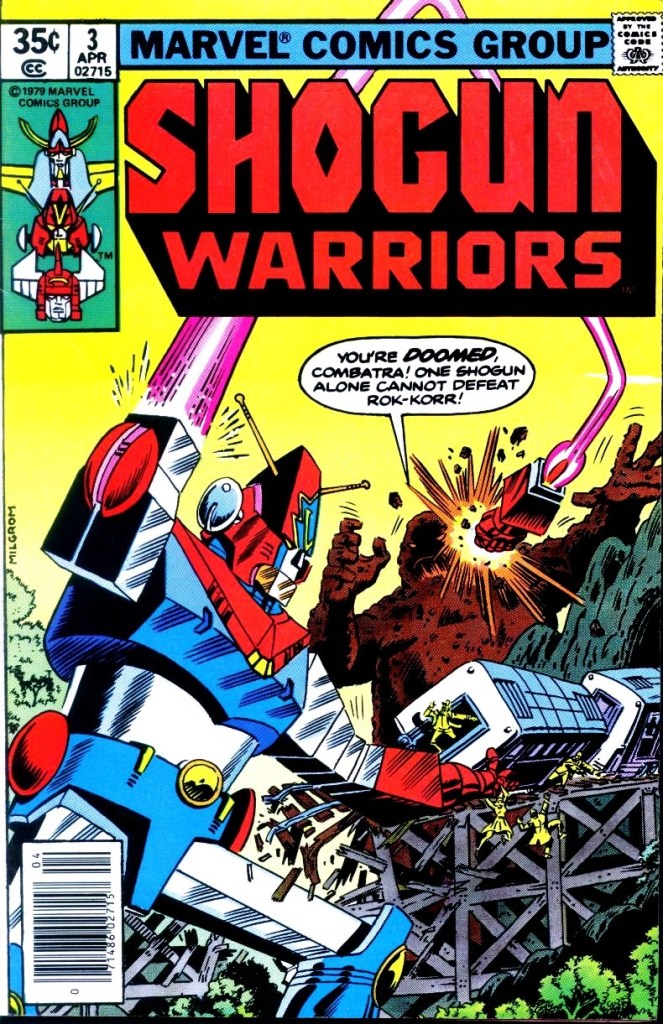
With those details laid down, here is a look back at Shogun Warriors #3, published by Marvel Comics in 1979 with a story written by Doug Moench and drawn by Herb Trimpe.
The cover.
Early story
The story begins with Raydeen, Combatra and Dangard Ace on the field facing three giant enemies (each one representing a different element – fire, earth and water). Right near them is the train (on an elevated track) that they just saved which Combatra (piloted by Genji Odashu) notices.
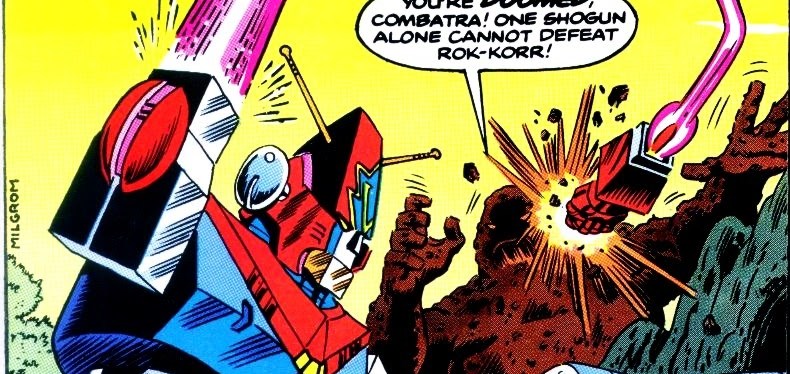
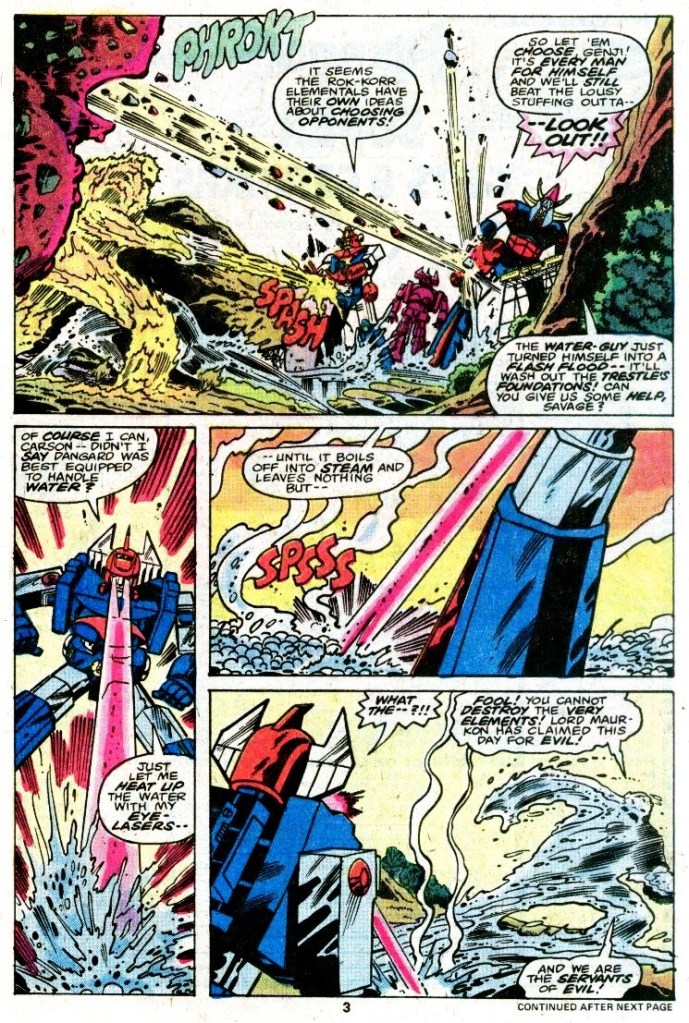
The battle begins with Dangard Ace taking on the water monster while Raydeen and Combatra take on the fire monster and earth monster respectively. During the heat of battle, the stalled train begins to fall as the elevated track gets damaged…
Quality
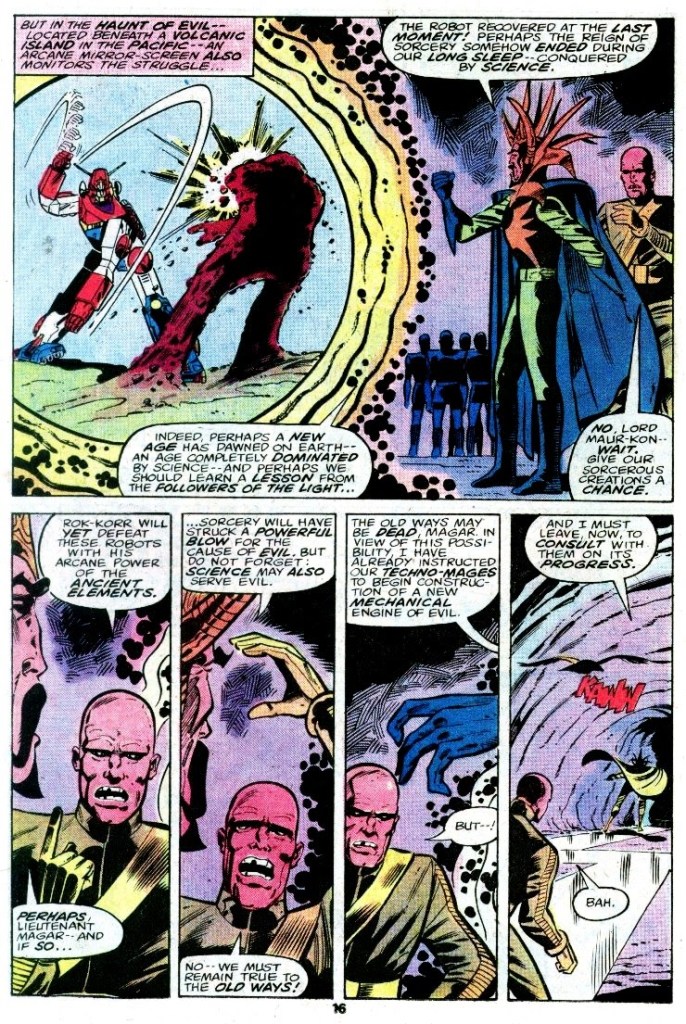
The bad guys watch behind the scenes during the battle.
To be clear and specific, this comic book creatively rebounded when it comes to spectacle. Compared to issue #2, this one has a lot of action scenes mixed with suspense and some talk scenes that were supposed to be intriguing. When it comes to exposition, this one is a refreshing change from what happened in issue #2. The exposition was clearly lessened but the creators still managed to insert some scenes to dramatize and explain to readers what the villains are up to and why sorcery is a core element of their power (which kinda explains how they were able to make giant monsters that are capable of talking). Interestingly, this comic book shows that there is division between members of the forces of evil.
Fans who love the three giant robots will have something fun to read. Take note, however, that the action scenes per robot are short and even predictable with the way the spectacle turned out. If you are looking for character development on their respective pilots, you won’t see any here.
Conclusion
Dangard Ace, Raydeen and Combatra fighting their respective counterparts.
Shogun Warriors #3 (1979) does not have much depth but still managed to deliver the goods when it comes to showcasing giant robot spectacle. On the aspect of fun, this one is an improvement over the exposition-heavy issue #2 but that is not saying much. It should be noted that, like the first two issues, this comic book has less than twenty pages of art and story. More notably, there is not much new here other than the very lame and corny attempt by the creators for the big reveal they came up with at the end.
If you are seriously planning to buy an existing hard copy of Shogun Warriors #3 (1979), be aware that as of this writing, MileHighComics.com shows that the near-mint copy of the comic book costs $35.
Overall, Shogun Warriors #3 (1979) is satisfactory.
+++++
Thank you for reading. If you find this article engaging, please click the like button below and also please consider sharing this article to others. If you are looking for a copywriter to create content for your special project or business, check out my services and my portfolio. Feel free to contact me as well. Also please feel free to visit my Facebook page Author Carlo Carrasco and follow me at HavenorFantasy@twitter.com
Disclaimer: This is my original work with details sourced from reading the comic book and doing personal research. Anyone who wants to use this article, in part or in whole, needs to secure first my permission and agree to cite me as the source and author. Let it be known that any unauthorized use of this article will constrain the author to pursue the remedies under R.A. No. 8293, the Revised Penal Code, and/or all applicable legal actions under the laws of the Philippines.
Welcome back, comic book collectors, sci-fi enthusiasts and fellow geeks! You must have heard by now that pop culture icons Godzilla and King Kong will clash together on the big screen in Godzilla vs. Kong (2021). Check out the official trailer below.
Take note that this is NOT the first time the two giant monsters encountered each other on the big screen. In fact, there was a Japanese-produced movie that featured the two released in 1963 and it involved Ishirô Honda who himself directed the 1954 original Godzilla movie. As the decades passed by, Godzilla movies were viewed by lots of people around the world and by the time efforts were taken to realize a Hollywood-produced film showcasing Japan’s icon, its place in global pop culture was already sealed.
And here is the thing that should interest you all – before the 1998 Hollywood Godzilla film (directed by Roland Emmerich) was even released, Dark Horse Comics published a series of Godzilla comic books. Of course, this was not the first time Godzilla made its presence felt in illustrated literature but the mid-1990s series was an effort to modernize Japan’s icon with readers (and comic collectors) of the time.
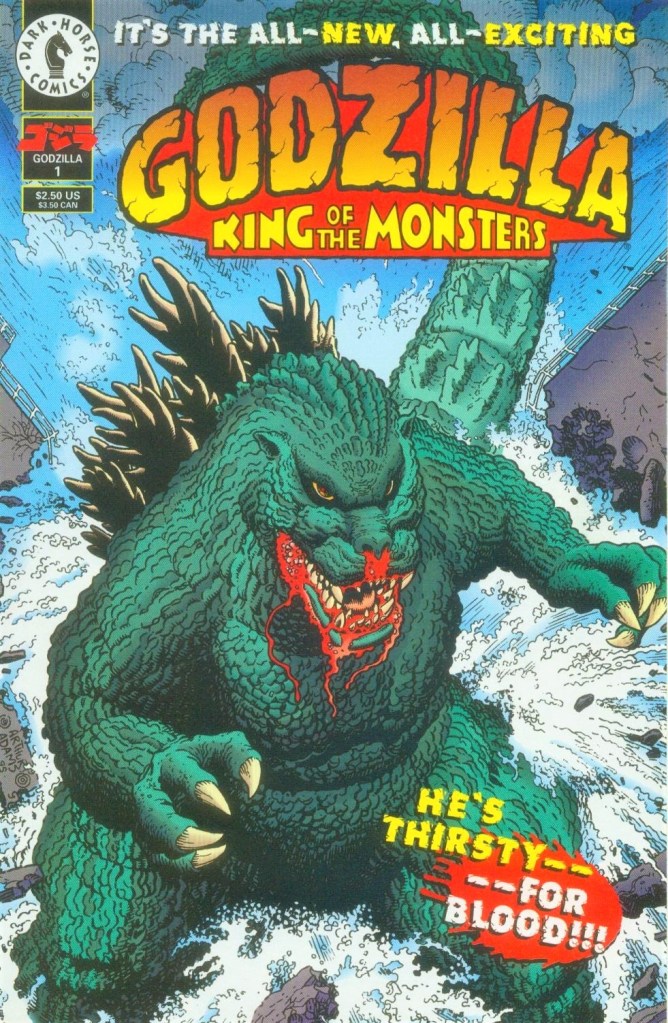
With those details laid down, here is a look back at Godzilla #1, published by Dark Horse Comics in 1995 with a story written by Kevin Maguire and drawn by Brandon McKinney.
The cover.
Early story
The story begins with a network television talk show focused on Godzilla and the possibility of it attacking North America. On the air, TV show host Kate Koshiro talks with research team G-Force member Take’ who states that Godzilla has been injected with poison and swam to the bottom of the ocean. Even so, they never found a corpse.
As the show goes on, it is revealed by Take’ that his team uses low-frequency signals which they hope will attract Godzilla and even pacify it. Take’ eventually begins to get nervous as Kate Koshiro presses him for details. Behind the scenes, personnel of G-Force watch the show on their giant monitor.
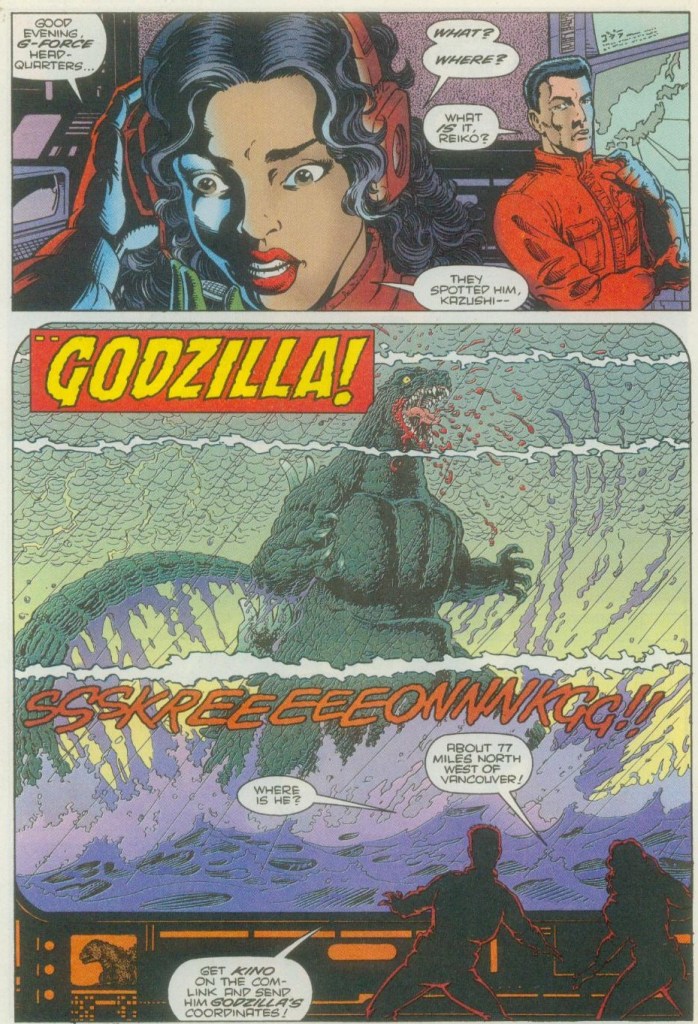
The G-Force personnel turn their attention away from the TV show as they have been alerted to the sudden emergence of Godzilla, 77 miles northwest of Vancouver…
Quality
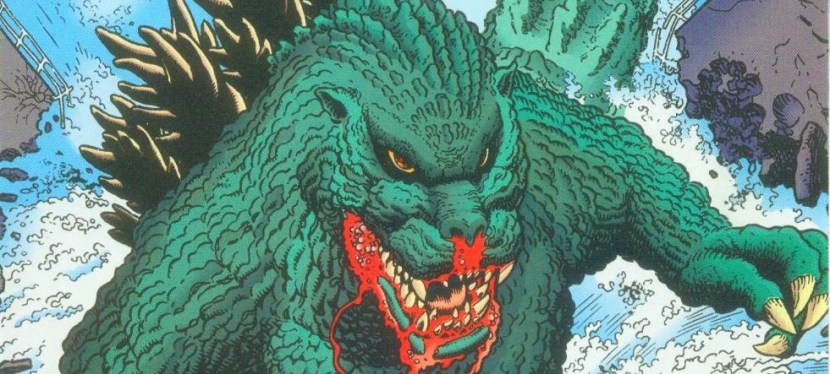
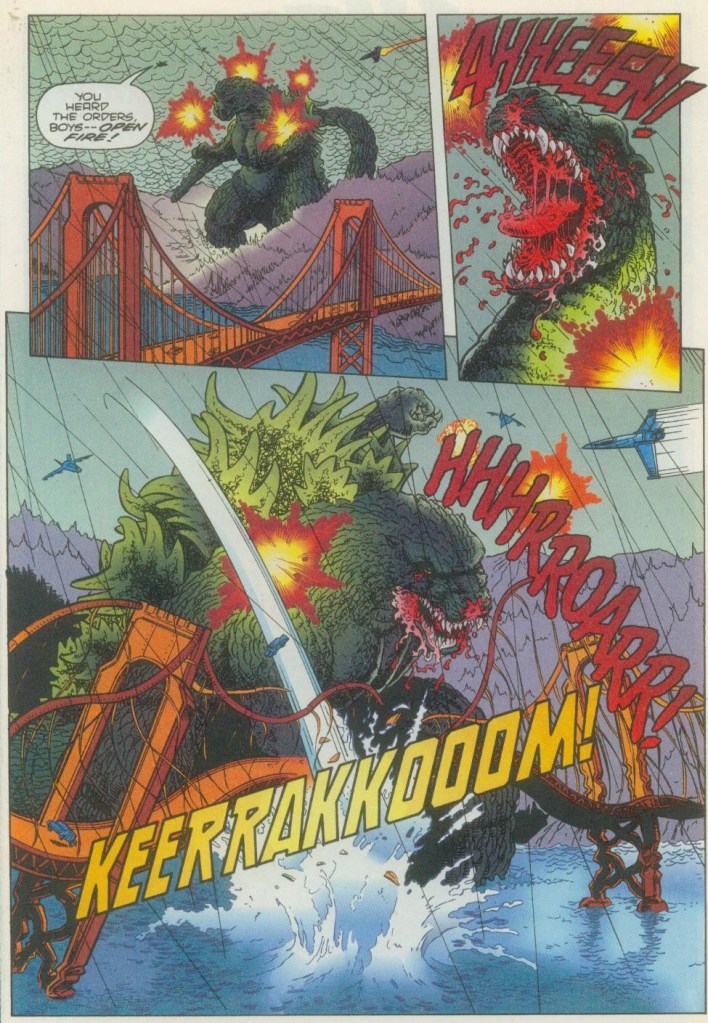
The destructive power of Godzilla!
If you are looking for a good, original story of Godzilla to read, this comic book has it! To start with, it has a nice world concept of its own surrounding the monster. G-Force serves as the primary organization the world goes to not only for protection from Godzilla’s attacks but also extensive research-and-development (R&D) that can make breakthroughs the world can benefit from, and intelligence that the respective defense forces of nations can use.
The characters are an interesting mix with elements from G-Force and the American armed services doing most of the interaction, talking and exposition. The closest thing this comic book has to a human protagonist is Take’ who turned out to be more capable than being a researcher of G-Force.
As for Godzilla, there is nothing new with the monster’s portrayal even though it is confirmed to be sick with poison. Wherever Godzilla goes, a lot of destruction happens making it look like the antagonist to the reader. In other words, a typical Godzilla portrayal. Fortunately, the comic book creators succeeded in maintaining the giant’s presence strongly even though the narrative was primarily focused on the human characters.
Conclusion
Nothing like carrying the tremendous pressure that comes with the unexpected emergence of a gigantic monster.
Godzilla #1 (1995) is surprisingly entertaining to read. When I first read this comic book, I had modest expectations and just let myself discover what it has to offer. The good news here is that the comic creators crafted a story that is interesting and fun enough to read. Apart from focusing on Godzilla, the G-Force organization has an interesting cast of characters.
If you are seriously planning to buy an existing hard copy of Godzilla #1 (1995), be aware that as of this writing, MileHighComics.com shows that the near-mint copy of the comic book costs $70.
Overall, Godzilla #1 (1995) is recommended.
+++++
Thank you for reading. If you find this article engaging, please click the like button below and also please consider sharing this article to others. If you are looking for a copywriter to create content for your special project or business, check out my services and my portfolio. Feel free to contact me as well. Also please feel free to visit my Facebook page Author Carlo Carrasco and follow me at HavenorFantasy@twitter.com
After five long years, we finally got ourselves another big budget Godzilla movie from Warner Bros. and Legendary – Godzilla: King of the Monsters.
I can declare it out loud that this new giant monsters movie, even though it has some notable flaws, is indeed a more enjoyable cinematic experience than the 2014 Godzilla movie (directed by Gareth Edwards). What I like about it is that the movie studio and the filmmakers responded to people’s complaints about the 2014 movie.
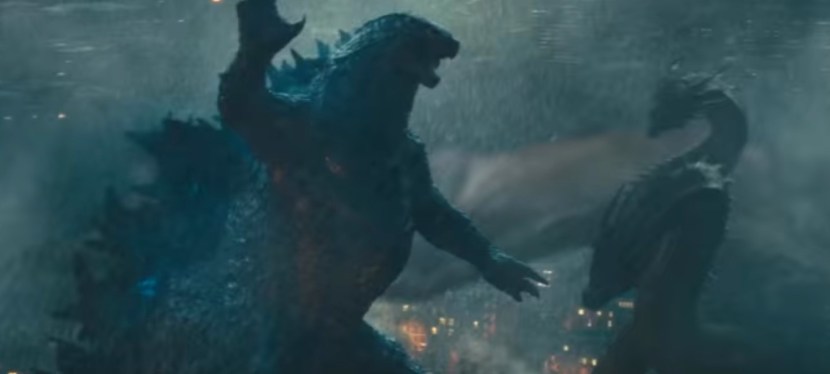
Godzilla and King Ghidora!
I will start with the strong points of the film with comparisons to the previous film. In the 2014 movie, people I talked with complained that there was not enough of Godzilla and the grand final battle was barely enough to make up for the monster’s lack of presence. This movie solves that with a lot more of Godzilla on screen and the final battle is grander! As sentimentalism was thrown out, the film also concludes a lot stronger as well!
Some people complained of the lack of giant monsters action in the 2014 film which had lots of slow scenes, a reliance on in-story news media coverage of disasters and an over-emphasis on building up suspense. Godzilla: King of the Monsters solves all of that by ramping up the giant monsters action (lots of monster battles with more than enough action to satisfy moviegoers), established a faster pace on storytelling (as a result, the movie never dragged and did not feel like a 131-minute movie at all), and noticeably reduced the news media focus as well as the suspense build-up.
In the 2014, Monarch’s purpose on monitoring the global presence of giant monsters was established and this sequel raised the stakes further pushing the organization on doing what it was established to do. Ken Watanabe’s Dr. Serizawa has noticeably less screen time due to “competition” for spotlight with the many other characters but the filmmakers managed to make the most out of him.
I can’t help but think that the filmmakers tried to outdo what Steven Spielberg did in Jurassic Park.
Speaking of giant monsters, this movie heavily outclassed its predecessor! Apart from Godzilla are other notable kaijus from the long-running Japanese Godzilla film franchise like the 3-headed dragon King Ghidorah, the deadly Rodan and the grand looking Mothra!
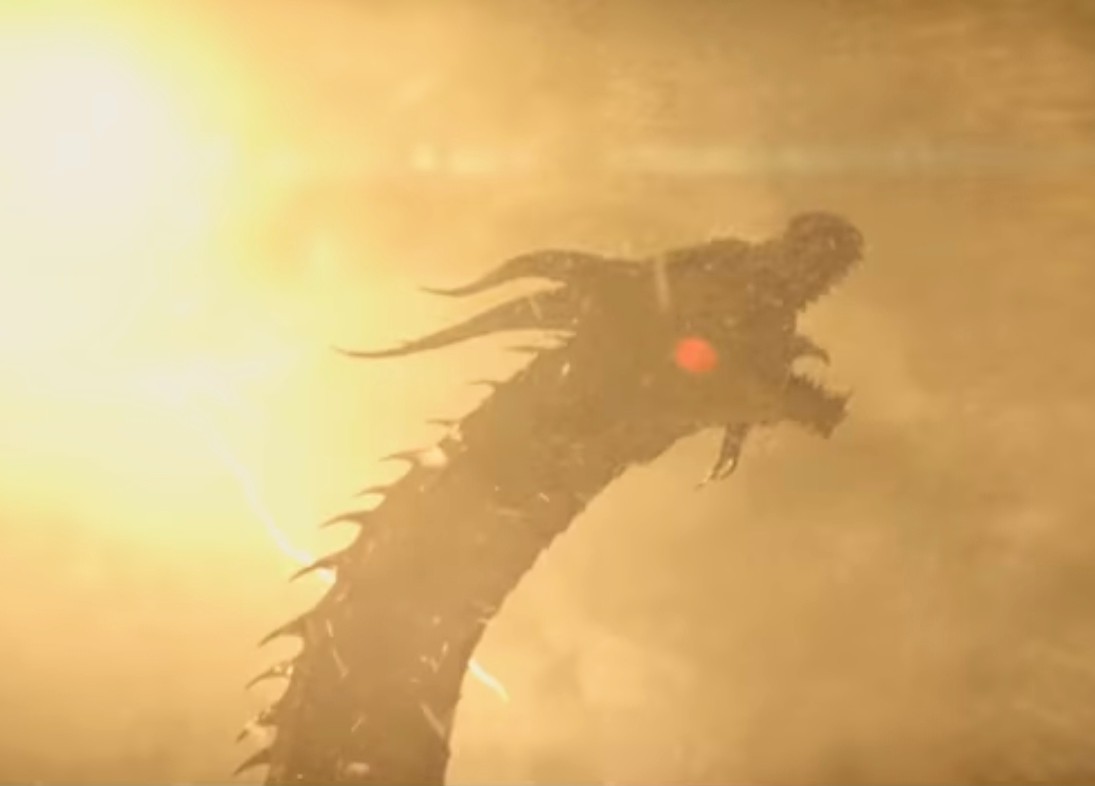
It is clear that director Michael Dougherty and the team made sure that each of those iconic monsters from Japanese cinema not only got sufficient screen time but also honored them with spectacular scenes! King Ghidorah really looks terrifying and even horrific. Rodan alone made the high-speed flying sequence in the film memorable while Mothra was a giant monster that very few people would wish to destroy.
Apart from the giant monsters action, the film’s action sequences are a big improvement over its predecessor even though there were some common action cinema elements recycled (note: tough guys with guns). There the definitely are a lot more thrills now that the suspense build-up has been reduced. Godzilla: King of the Monsters was clearly made to entertain and prevent moviegoers from getting bored.
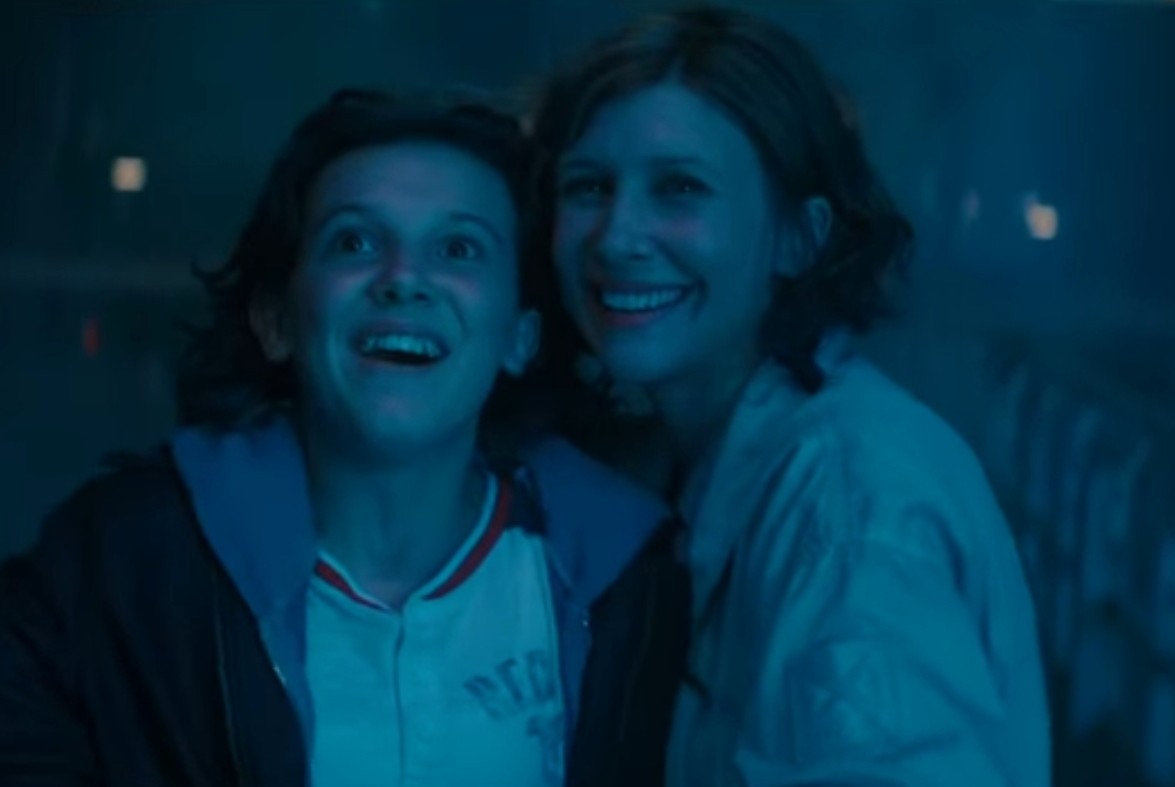
The daughter and her mother played by Millie Bobby Brown and Vera Farmiga. Don’t let their smiles fool you because the cast in this film is the weakest element.
The movie obviously is not perfect. I never expected it to be perfect at all and as I suspected, the film’s biggest weakness is, again, its human characters. Like the 2014 film, this one has a cast of many people who were created to make moviegoers care for them as the story moves on. Clearly the filmmakers and the actors failed to deliver the goods but in fairness, the cast is more interesting compared with that of the 2014 movie.
In the 2014 Godzilla, the cast was weak, the characters were mostly not worth caring for and there were so many scenes with them. There were times back then I wished the character “development” scenes were cut to speed up the pace. In this sequel, the cast was nowhere as boring as their 2014 counterparts but their dialogue was either weak or had too much exposition (I felt like the characters explaining this and that were talking to the moviegoers).
Speaking of the script, the film failed to justify its concept of the Russell family which first appeared in a short scene (that took place during the 2014 film’s story). The family focus started decently with Vera Farmiga as Mrs. Russell (with her daughter living with her) working with a device that could help humanity gain some control over the giant monsters. As the story went on, the spotlight had to be divided by the large cast of characters and the monsters which ultimately made the Russell family less relevant. Kyle Chandler’s entry into the film as Mr. Russell did not save the family aspect of the story even though he proved to be the “instant resourceful and knowledgeable” character of them all.
While the cast had mostly one-dimensional characters, at least Charles Dance’s performance as the human villain proved to be interesting. Apart from being the leader of a team of armed personnel and having a history of being disillusioned with humanity which led him to becoming an anarchist eco-terrorist, there is still this element of mystery about him. Although he leads a group, could he be working discreetly for some sort of secret society or a group of elite people with sinister intentions for reforming the world? We won’t find out until the next movie.
Charles Dance casting in this film seems inspired. I remember how good he was in playing the villain in 1993’s Last Action Hero. His role is not very loud but still his presence in this movie is the best thing of the weak cast.
Other problems? As great as the giant monsters spectacle were, there were these camera framing problems. There were many monster action strikes that were “filmed” too close to the camera. I felt that the filmmakers tried too hard to deliver moviegoers the “in your face” action with the monsters and ultimately those efforts ended up being an annoying experience. With regards to storytelling, the plot is serviceable at best but, then again, we cannot expect a very engaging story with Godzilla so this is not a surprise. At the very least, this sequel’s plot works better than that of its predecessor. The plot here does not drag mainly because the filmmakers put heavy emphasis on spectacle and speed.
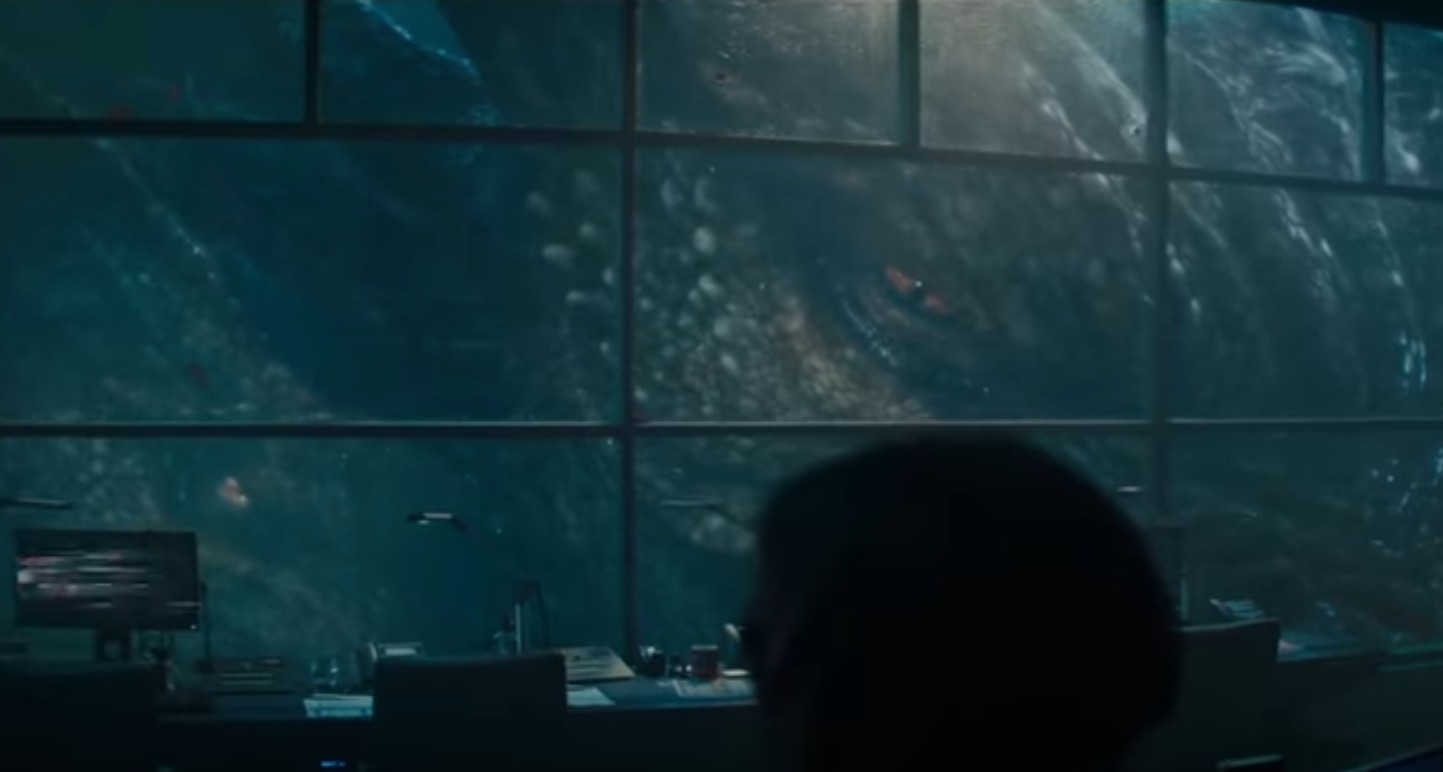
If there is an advantage the 2014 movie has over the sequel, it’s the sense of scale. The giant monsters are indeed gigantic but they moved rather fast for their size and this breaks the sense of scale for moviegoers. They looked gigantic but they don’t feel gigantic when in motion.
As for Milly Bobby Brown’s character, the scenes in which she escaped from the secret facility going into Boston and then entering the baseball stadium’s operation room without even being detected or prevented by security measures were just unbelievable. And I thought the concept of poor security in Terminator Salvation was bad. Oh yes, Bradley Whitford’s attempts on providing humor ended in failure. He was more annoying and never funny.
One of the three heads of King Ghidorah! Up-close, they look terrifying!
Overall, Godzilla: King of the Monsters is indeed highly entertaining and anyone who loves on-screen battles between giant monsters will surely enjoy it a lot. Its cast is weak (although nowhere as weak as the 2014 film), its storytelling is flawed and there were some parts that made the 2014 look better but still the good stuff outweighed the bad stuff. As far as Hollywood-made giant monster movies go, Godzilla: King of the Monsters is indeed the best!
Oh yes! One last thing! The playing of threads from the theme music from the 1954 Godzilla movie was a very nice touch and will resonate with any moviegoer who enjoyed the Japanese Godzilla films. Clearly the MonsterVerse continues to deliver the fun and greatness!
Bring on Godzilla vs. Kong!!!
Thank you for reading. If you find this article engaging, please click the like button below and also please consider sharing this article to others. Also my fantasy book The World of Havenoris still available in paperback and e-book format. If you are looking for a copywriter to create content for your special project or business, check out my services and my portfolio. Feel free to contact me as well. Also please feel free to visit my Facebook page Author Carlo Carrascoand follow me at HavenorFantasy@twitter.com





 Author Carlo Carrasco