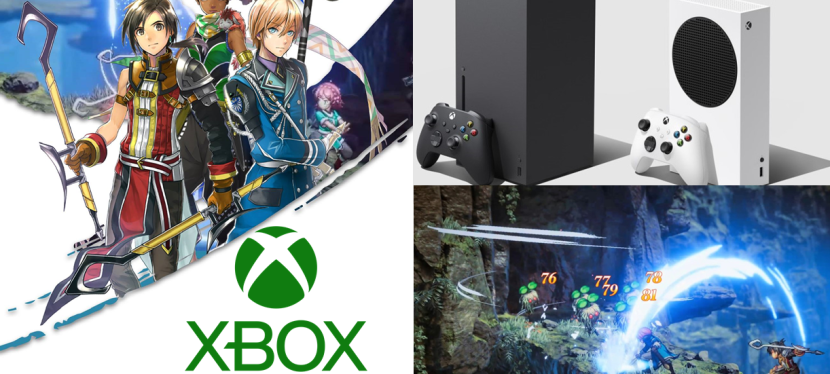
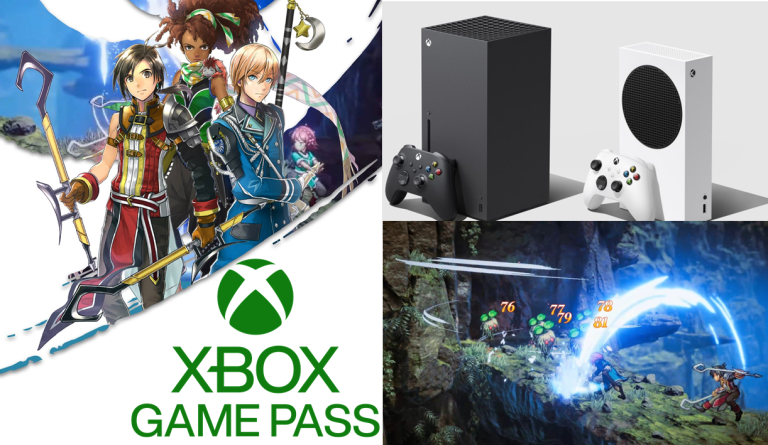
To the gamers who are craving for new role-playing experiences and some more action, get ready as 505 Games confirmed that Eiyuden Chronicle: Rising (the spin-off game to 2023’s Suikoden-inspired Eiyuden Chronicle: Hundred Heroes) will be released on Xbox Series X, Xbox Series S, Xbox One and Windows PC (via Steam) on May 10, 2022, and it will also launch on both Xbox Game Pass (XGP) and PC Game Pass that same day!
To put things in perspective, posted below is the excerpt from 505 Games’ announcement. Some parts in boldface…
Global publisher 505 Games in collaboration with Rabbit & Bear Studios, headed by Yoshitaka Murayama, a creator of Suikoden, and NatsumeAtari today unveil the release date for Eiyuden Chronicle: Rising, the fast-paced 2.5D action RPG with town-upgrading elements serving as a companion prequel game to the upcoming Eiyuden Chronicle: Hundred Heroes. Rising’s pre-war tales begin May 10th, 2022 on PlayStation 4 and PlayStation 5, Xbox Series X|S, Xbox One, Nintendo Switch and PC via Steam, Epic and GOG. Eiyuden Chronicle: Rising will also be available day one via Xbox and PC Game Pass.
After a massive earthquake revealed Runebarrows deep below a town on the remote frontier of the Allraan known as New Nevaeh, fortune-seeking adventurers and merchants from across the world arrive. Among those hoping to find treasure, three star-crossed heroes come together. CJ, the Venerable Scavenger, and Garoo, the Beastman Mercenary, hope to mine the Rune Lens, a source of magic hidden underground. Isha, the Young Deputy Mayor, wants to rebuild her town.
Delve into the ruins and master Rising’s satisfying combat. Dash in quick and strike with CJ’s climbing axes, sling sorcery from afar as Isha, and punish foes with Garoo’s gigantic sword. Topple imaginative bosses by swapping between each character and unleashing devastating Link Attacks combining each hero’s specialty, all while platforming through gorgeous 2.5D environments.
Scavenge dungeons and earn materials to reconstruct New Nevaeh to its former glory and reap benefits applying to Hundred Heroes when it releases in 2023. Cross content includes special cosmetic items, valuable equipment, and trade goods. Make a personal mark on the world of Eiyuden Chronicle by naming certain weapons and delicacies in Rising that will carry over to Hundred Heroes next year.
We all know that great video games will be released for fun-loving gamers on the Xbox platforms. That’s the truth that Xbox-hating people out there keep on denying. The June 2021 Xbox-Bethesda games showcase was a major event that showed what kind of games and experienced will be released in the years to come. For me, one of the biggest and most unexpected reveals in the showcase were Eiyuden Chronicle: Hundred Heroes and Eiyuden Chronicle: Rising from developer Rabbit & Bear (led by Suikoden creator Yoshitaka Murayama).
In my view, those two Japanese role-playing games (JRPGs) are significant not only because they add variety to the upcoming games Xbox gamers can look forward to but also because both will be made available to the many millions of Xbox Game Pass (XGP) subscribers!
More recently, a developer exclusive preview of Eiyuden Chronicle: Rising (note: the spin-off game to Eiyuden Chronicle: Hundred Heroes) which you can watch below…
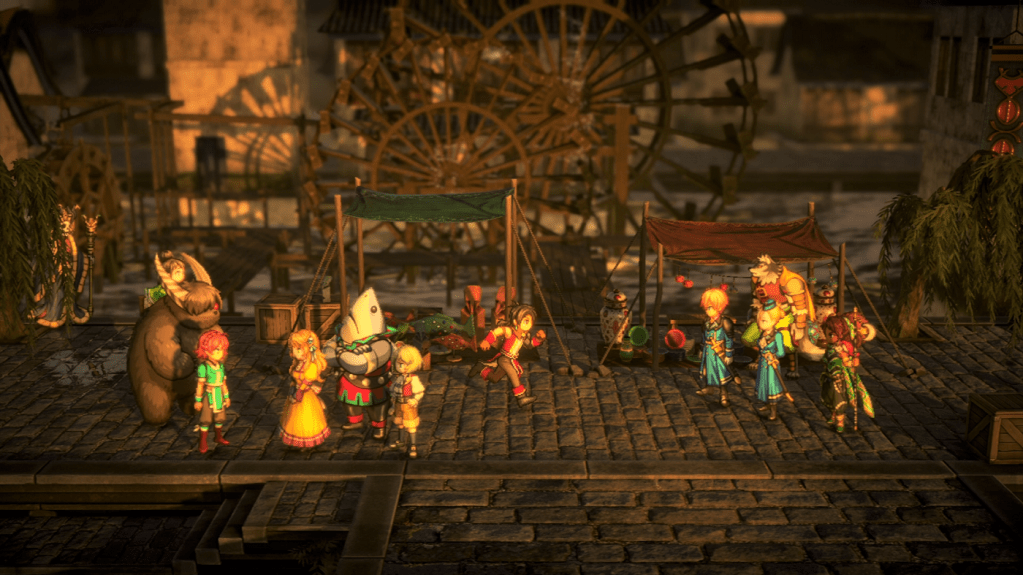
Eiyuden Chronicle: Rising is clearly a side-scrolling JRPG that emphasizes action, platforming and town-building set within the universe of Eiyuden Chronicle. To learn more details about the game, posted below is the excerpt from the Xbox.com article written by 505 Games Brand Community Manager Stephen Takowsky. Some parts in boldface…
This upcoming game is a side-scrolling adventure that mixes platforming, action, and role-playing.
The game’s story takes place on the continent of Allraan in a small mining town called New Neveah. The battle against the evil Galdean Empire awaits. Traverse the town, encounter a vibrant cast of colorful characters, collect resources, and prepare for epic battles.
As you watch this first look at Eiyuden Chronicle: Rising, make sure you pay attention to these five key elements in the footage!
A cut-scene with dialogue for gamers to read and understand as the narrative moves.
Utilize potions and other stat boosting modifiers to increase your chance of survival. You might notice that we’re at a very high character level compared to the enemies we face off against in this exclusive look. When you play Eiyuden Chronicle: Rising, confrontations could be far more challenging than they appear. Potions will give you an edge when traversing dungeons, but they heal your entire party. Try to even out the damage your party receives so you heal everyone efficiently as opposed to only partially healing members of your squad. It is possible to overuse members of your team!
Fast travel will help you traverse massive dungeons and hasten quest completion. You will save hours by using the maps and signposts to fast-travel versus running everywhere.
Some enemies have an additional bar next to their health that represents a shield. Focus on removing this bonus defense to quickly defeat strong enemies.
Each character can help in unique ways throughout levels and even in combat. For example, Garoo can destroy shields quickly, Isha can effectively bring down the defenses of magic focused enemies, CJ is better equipped to traverse challenging terrain, and Isha can teleport to inaccessible areas. Understand the strengths and weaknesses of your team.
While a final release date has yet to be made, 505 Games declared that the launch of Eiyuden Chronicle: Rising will take place later this year. Perhaps the publisher might announce the final launch dates of both Eiyuden Chronicle: Rising and the Suikoden-inspired Eiyuden Chronicle: Hundred Heroes (tentatively set for 2023) at the next Xbox-Bethesda games showcase in a few months from now.
In closing this piece, posted below are Xbox-related videos for your viewing pleasure.
Disclaimer: This is my original work with details sourced from playing Suikoden II (English version, released in 1999) and doing personal research. Anyone who wants to use this article, in part or in whole, needs to secure first my permission and agree to cite me as the source and author. Let it be known that any unauthorized use of this article will constrain the author to pursue the remedies under R.A. No. 8293, the Revised Penal Code, and/or all applicable legal actions under the laws of the Philippines.
Who is Yoshitaka Murayama? He created the memorable Suikoden (AKA Genso Suikoden) RPG franchise during his time with Konami, specifically the first three games. I myself played and finished Suikoden on the original PlayStation in 1996 and it was a lot of fun thanks to the combined efforts of Murayama (who did the scenarios and game direction) and his teammates such as Junko Kawano (who did the design), Miki Higashino (who did the music along with four other teammates) and some others.
Then in 1999, the sequel to Suikoden was released and I can never forget the day I bought it at a local game store and rushed home with a lot of excitement to start playing it on our then aging PlayStation console.
So you must be wondering…how did I find the sequel? Was it an improvement over its predecessor? Did Murayama and the key creators do better than what they did in the first game? You can all find out in this look back at Suikoden II, published by Konami for the PlayStation (PS1).
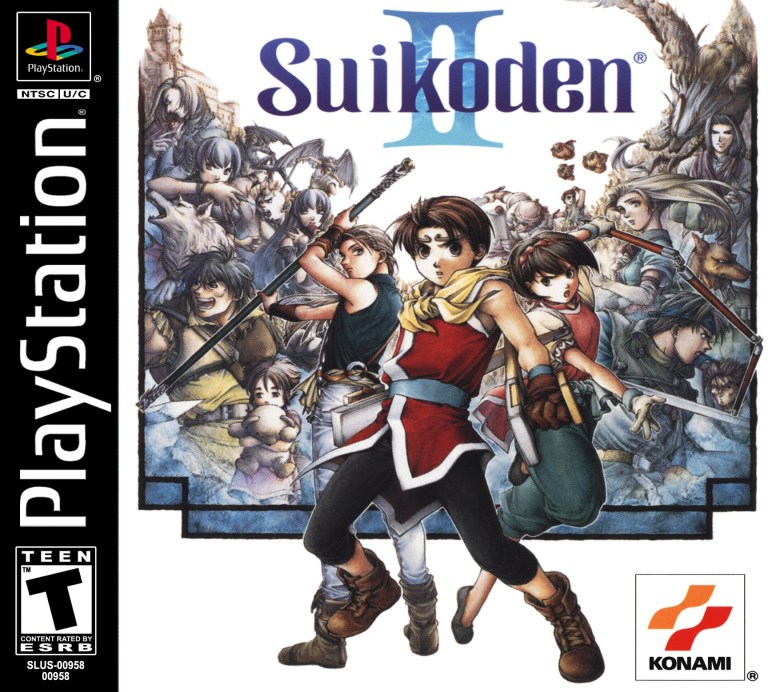
The cover of the North American version of Suikoden II.
Early story
The story begins with two youngsters – Riou (your character whose name can be modified) and Jowy – who are close friends since childhood now serving the Highland Army as members of their youth brigade. They spend time in a military camp in the forest as a peace treaty between two great forces is pending (note: Highland has been in conflict with the City-State of Jowston).
As some soldiers expressed desires to go home once the peace has been finalized, Riou and Jowy are ordered by their commanding officer Rowd to go back to their tent and sleep. However, a surprise attack happened which alerted them. As soon as the two close friends left their tent, they are shocked to see parts of the camp burning. Their officer Rowd informed them that their enemy is responsible for the attack and deliberately broke the peace agreement. Riou and Jowy are told to take the mountain path to the east and save themselves before it is too late.
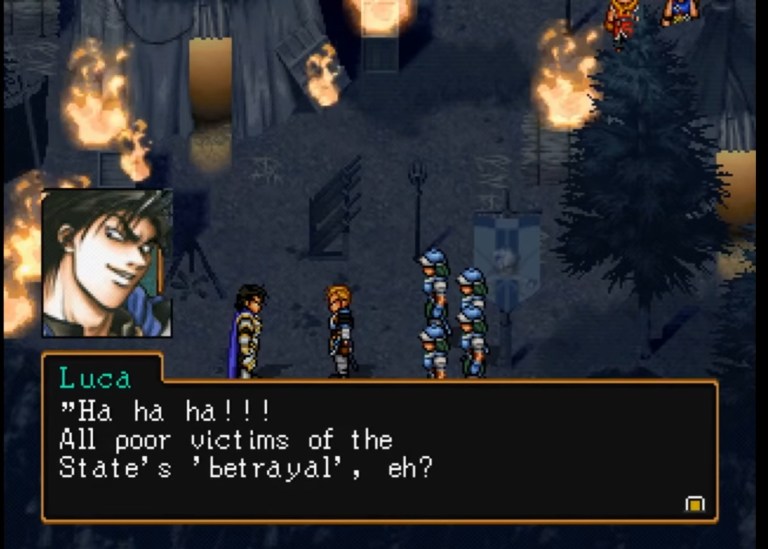
Fearing that they might get ambushed in the woods, Jowy tells Riou that they should return to camp. Upon returning, they quietly witness the unexpected presence of Highland prince Luca Blight who gets briefed by Rowd. As it turns out, the attack on their camp was not committed by the opposing forces but rather it was all a self-inflicted operation by Highland. Rowd’s instruction to some of their selected soldiers to head east was a set-up. What happened was all part of a plan by Highland to escalate the conflict by blaming their losses on Jowston. Luca Blight expressed clearly that a peace treaty with Jowston and its states was not needed, and he strongly believes in the power of Highland to conquer them all.
Jowy and Riou (upper-right corner) quietly witness the conversation between prince Luca Bright and the captain.
After learning the shocking details, Riou and Jowy decide to leave for the cliff to the north as a way of escape. At the cliff, Rowd catches up to the two. Fortunately, Riou and Jowy were successful in defeating Rowd’s soldiers and pave the way for their escape. Before fleeing, they marked a rock and promised to return to that same place if ever they get separated.
Riou and Jowy jumped off the cliff and get separated. Some time later, Riou wakes up and finds himself in the presence of three men. One of them identifies himself as Viktor, the leader of an army of mercenaries and an ally of Jowston. Another member of the mercenary army in blue arrives and he is Flik.
Being powerless, Riou marches with them to the headquarters of the mercenary army…
Quality
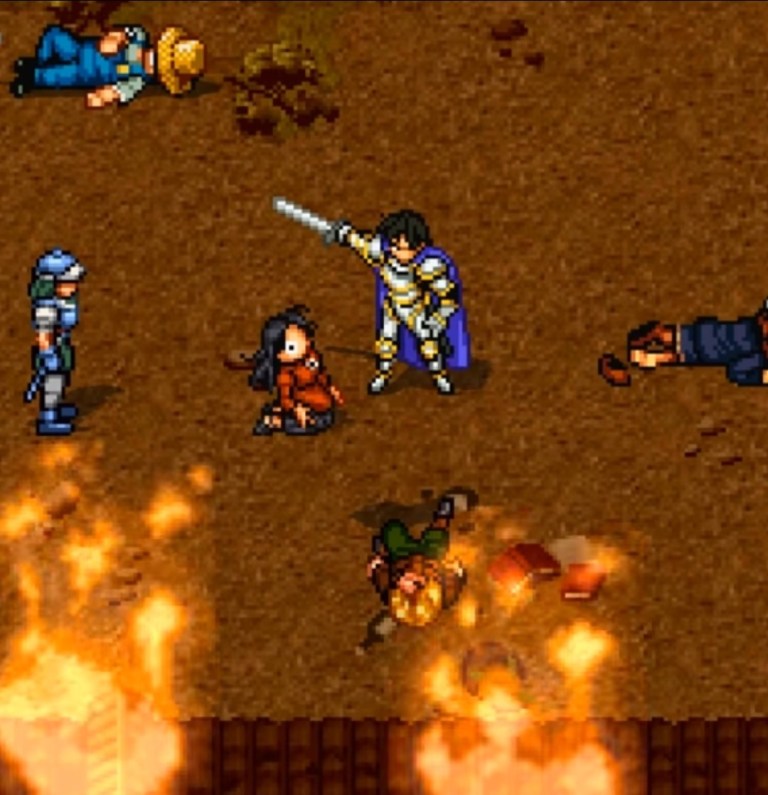
Luca Blight (with sword) is a lot more than just being evil as the game’s main antagonist.
Having played Suikoden a lot in 1996, I got familiar with the game design, the varied battle systems and other features that made it a solid RPG on its own. As for Suikoden II, I can clearly say that Murayama and his creative team built up on their foundation (in the first game), expanded the fantasy concept dramatically and ultimately made an extensive series of improvements and additions over each and every aspect of the sequel!
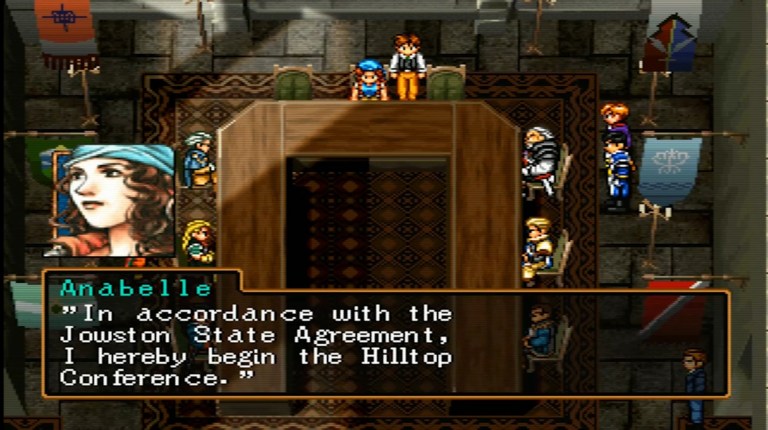
I’ll start first with the storytelling and writing. Compared to its predecessor, I found Suikoden II to be deeper and it took great advantage of the fact that the plot took place just years after first game and by this time the established world, the cities, tribes and geopolitical concept have been developed so much – backed with solid writing – they all become a lot more believable. In the middle of the great conflict are the three main characters Riou, Jowy and Nanami whose exploits and portrayals are pretty rich and lively to follow. It’s kinda like following the love triangle of Hikaru, Misa and Minmay through the war in the classic Super Dimension Fortress Macross anime TV series, except that you – the player – get heavily involved as Rious by making decisions that affect yourself and others, leading missions, building up a community (and force) of over 100 members, and overcoming challenges related to the conflict between Highland and Jowston.
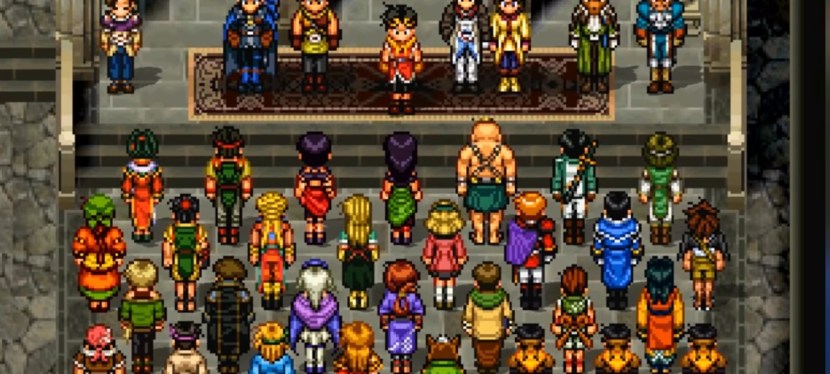
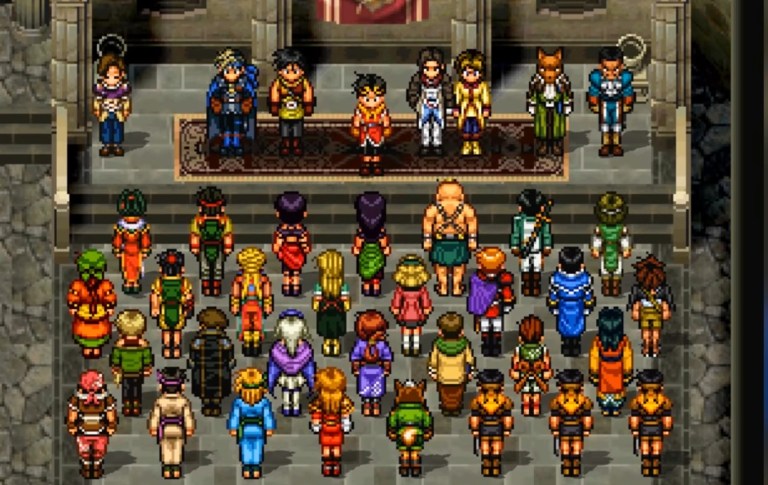
The great news here is that the Riou-Jowy-Nanami emotional arc was written to be dramatic, engaging, intriguing and sentimental which ultimately will make you feel for them just as you make your way through the many events and twists of the war story. Beyond these three key characters, it should be noted that the scenarios are excellently executed and really showed how lively the fantasy world of Suikoden II really is. I’m talking about the portrayal of the many, many supporting characters and the interactions you have with them as the plot moves forward. Remember how lively your troops were in welcoming you back after winning your first army battle? Such a scenario was well directed and scripted, and the supporting characters you recruited really had their moments of participation which make sense within the narrative. I also should mention that the opposition figure of the game – Luca Blight – is still a powerful and complex villain in JRPGs even by today’s standards. Luca Blight is not evil for the sake of being evil, but if you pay close attention to the details about his background as the game’s story goes on, you will realize he is quite a complex character whose evil made sense within the narrative. Very clearly, the writing and storytelling done by Yoshitaka Muraya is not only greater than in the first game, but also very inspired.
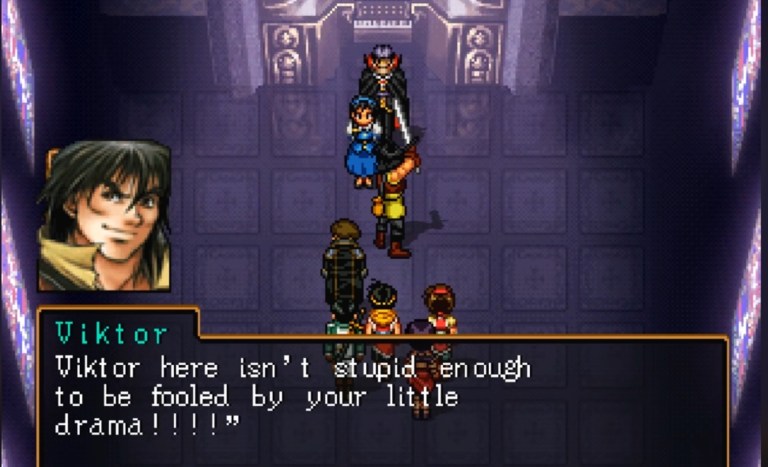
Viktor, who also appeared in the first game, continues to be an important supporting character in this sequel! He is one of several characters from Suikoden who returned.
On the gameplay and design, Suikoden II’s exploration of the world, towns and locations uses good old 2D graphics. The big difference here is that the 2D visual elements are more varied in terms of detailed sprites for non-playable characters (NPCs) and interactive characters, and visually the sprites as well as the art used for the in-game environments looked more polished (clearer, smoother and less pixelated). The controls are responsive enough for my taste, and it is also nice that my character moves faster while exploring. More on exploring, I do confirm that there are indeed more locations to visit (including those that are part of the quests related to finding the 100+ characters) and the art made for the locations are more varied as well.
More on the gameplay, two types of battle systems from the first game are back but with refinements. First to talk about is the party battle system in which players get to control a group of up to six members who face off with enemies by group, or a single powerful boss-type enemy. During the party battle, you get to pick options as to what type of action each member of your party will do – Attack, Magic (note: this involve Runes), Item or Flee (note: if your party is much stronger than the opposition, Bribe or Let Go options will appear).
The party battle system is a lot of fun and not too stressful.
The way the battles are designed, as in the first game, is smooth, very visually appealing (thanks to the dynamic camera and fine level of detail of the sprites and animation) and fun to watch. Adding further depth to the party battles are the combined attacks involving at least two characters. Take for example Flik and Viktor doing the cross-attack, or Riou and Nanami performing a series of combo attack moves in strong coordination with each other. These combined attacks are not only fun to perform and see, but also encourages you to experiment by mixing up characters (specifically combatants) and paying attention as to which characters they can do combined attacks with. This alone will encourage you to complete the 108 characters of your force.
The use of Runes has been improved a lot in this game as the combatants now have three slots to equip Runes (note: these slots gradually open up as characters’ levels go up). Runes are essential to use magic spells in battles and the improvement of the Runes – plus the Run Affinity system – add more variety in the battles.
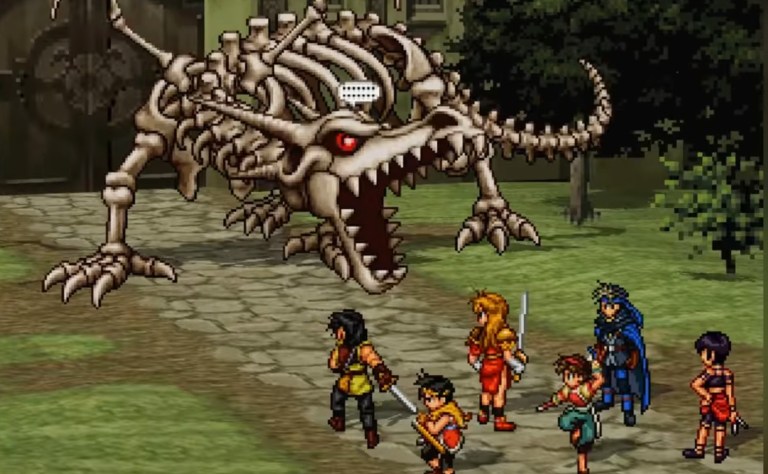
The 2D sprites are very visually appealing, especially when you watch the characters perform varied forms of action during the party battle.
Compared to other Japanese RPGs, the party battles here are much less stressful even though a random encounter system is used. There is also the option for automated attacks, which spares you from having to choose options for each member of your party to perform when fighting the enemies. Granted, I went through lots of random encounter battles and some challenges, but ultimately the stress level and tedium were very low. Doing party battles is fun overall.
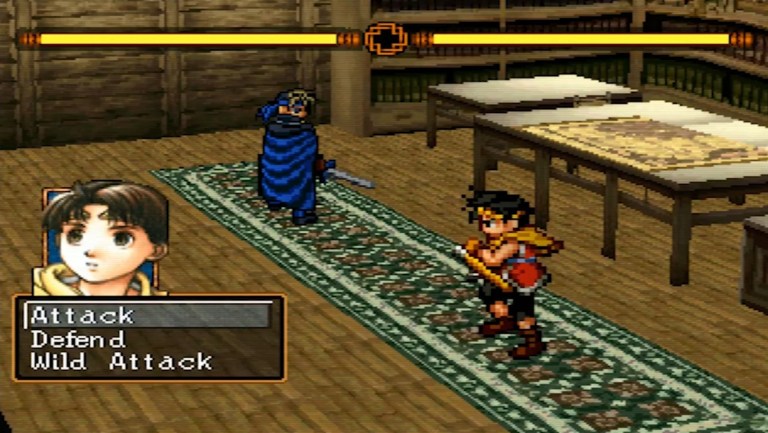
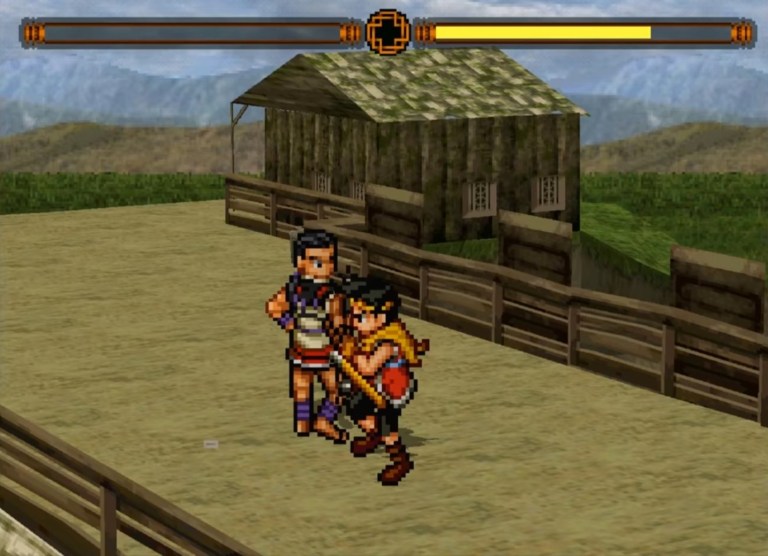
The 2nd battle system inherited from the first game is the duel. Duels happen the least throughout the game but each time they happen, they can be quite engaging to do. As the one-on-one battle between your character and an opponent begins, you will see them in a 3D realm with the dynamic camera capturing the action. Your options are mainly Attack, Wild Attack and Defend, and before you can pick an option, you must pay attention first to the clues (note: taunts) from your opponent which can help you anticipate his/her/its next move. While the visuals are clearly improved, the duel is pretty much the same as in the first game.
Duels happen in a 3D environment with the characters still presented as 2D sprites that are not only highly detailed but also are smoothly animated.
Like in the party battles, duel sequences also have a dynamic camera system complete with zoom during the action.
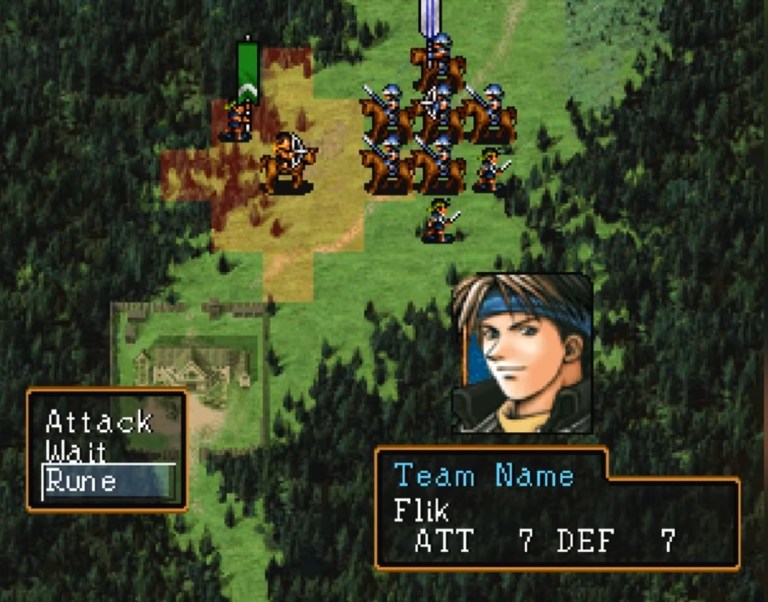
The 3rd battle system – army battles – is clearly the most revised part of the game as it is radically different from the army battles of the previous game. This time the army battles involves the heavy use of a tactical map (where you move units in a grid-like system). Your units – composed of mainly characters you recruited, including the non-combatants – can be moved on the map to counter an enemy unit. Then a short, animated battle sequence will commence and based on the statistics of each unit, the winner and loser of the sequence will be determined. Take note that in events of defeat, recruits can die permanently. As such, it is important to pay attention to not only the statistics but also the types of troops you have such as archers, healers, knights, and foot troops. When controlling units on the map, your options are Attack, Wait and Rune. It is also very entertaining to see how the characters react (with dialogue, no less) to the battles. Overall, the army battle system here is clearly much deeper and more strategic than what was used in the first Suikoden.
The army battles in this game are more tactical than what was presented in the first Suikoden. This is also the main map used for such battles.
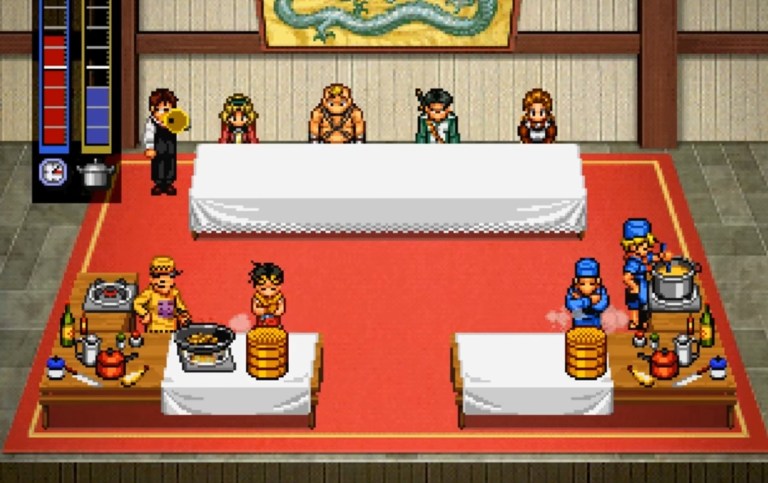
Battles aside, there are also lots of things to do related to exploration. For one thing, there are these fun-filled mini-games the game creators set up such as fishing (note: not as boring as it may sound), the whack-a-mole game, rope climbing, Chinchirorin (dice game in a bowl) and, the most exciting and deepest of them all, the cooking contest game. When you fully invest your time into each of these mini-games, you will not feel relieved from the stress of battles and exploration, but also have a lot of fun free of stress. I enjoyed these a lot myself.
If you enjoyed building up your fortress in the first game, you will experience that here also! Building up your stronghold is related to your recruiting of people and some of them have certain talents that will establish key parts of your place like a store, a Rune shop, aa tavern, a restaurant, an armor shop and even a detective agency to name some! It may take an effort to have all possible establishments get realized in the game but I promise you, they are all worth it and you will feel thankful that you got to recruit lots of people. The other reward of building up your fortress is the establishment of a thriving community of people!
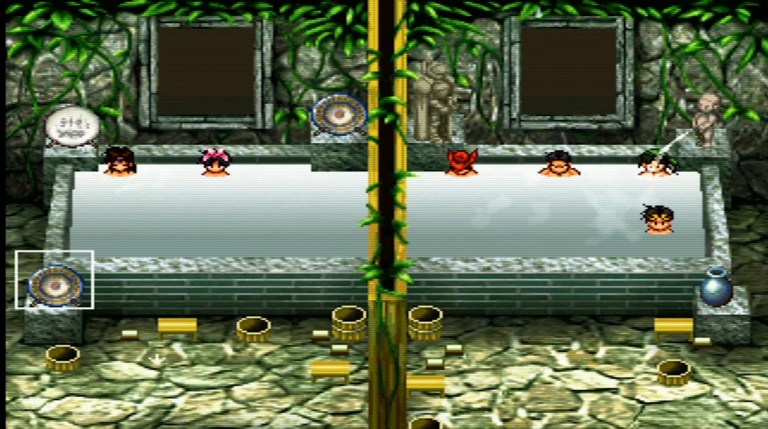
Your party members can take a bath and even use the collected artifacts as decorations. This is one of the many side activities you can do at your stronghold.
The cooking contest mini-game is easily the best in the game!This alone will encourage you to keep searching for recipes during your adventures!
With regards to continuity with the first Suikoden game, the game developers implemented certain content (locations, dialogue, story and characters) that get unlocked by having your preserved Suikoden saved game content successfully loaded with Suikoden II running on PS1. I’m talking about being able to meet and even recruit Suikoden hero Tir McDohl, plus meeting even more characters from the first game. Very clearly, this is a clever presentation of fan service done by Murayama and his creative team who paid attention to the feedback of the first Suikoden.
The music done by Miki Higashino and Keiko Fukami are very varied and many of them reflect the places you get to visit, the emotional scenes you witness and the epic moments that happen. The great news here is that each and every tune in the game was made and performed with special care. This game’s soundtrack really stands out high among Japanese RPGs of the 1990s and even by today’s standards, it still is a great soundtrack to listen to.
If there are any flaws in this great game, it is the English translation itself as there were typographical errors, mistranslations and even NPCs with lines of dialogue that made absolutely no sense. Clearly there was a rushed job with the translation.
Conclusion
The political aspect of the game’s story is simple and never overwhelming.
I really love Suikoden II and very clearly, it is a major improvement over its predecessor (which itself was a solidly good RPG). Suikoden II is a labor of love done by Murayama and his creative team and the result is a true epic RPG that has so much enjoyable stuff and high replay value for gamers. Its quality is still great and by today’s standards, Suikoden II is indeed a classic RPG that gamers should play even though Konami itself does not care to make it more accessible in this modern age of gaming.
Given the legacy of Suikoden II and the fact that Konami showed no signs of reviving the Suikoden RPG franchise, now is the time to look forward to Eiyuden Chronicle: Hundred Heroes which Murayama and his team are developing for release in 2023 for Xbox consoles, Xbox Game Pass and other platforms. Eiyuden Chronicle: Hundred Heroes clearly has strong Suikoden vibes and the distinct combination of 2D sprites with 3D polygonal environments, plus its party battle system strong resembles that of Suikoden and Suikoden II!
Overall, Suikoden II is highly recommended!
Now if only Konami would change its ways to make Suikoden II more accessible (go way beyond the PlayStation online store and ecosystem) to gamers by releasing it digitally through Xbox LIVE, Steam, Xbox Game Pass and other online stores or ecosystems. Paying hundreds of dollars for a legitimate hard copy of the game is simply too much.
There is nothing like building up your stronghold and seeing your recruits become part of its development as well as your campaigns.
+++++
Thank you for reading. If you find this article engaging, please click the like button below and also please consider sharing this article to others. If you are looking for a copywriter to create content for your special project or business, check out my services and my portfolio. Feel free to contact me as well. Also please feel free to visit my Facebook page Author Carlo Carrasco and follow me at HavenorFantasy@twitter.com
As I viewed the Xbox-Bethesda games showcase live on my PC, I got delightfully surprised when the two Eiyuden Chronicle Japanese role-playing games (JRPGs) – Eiyuden Chronicle: Hundred Heroes and Eiyuden Chronicle: Rising – were revealed and confirmed to be coming to Xbox Game Pass (XGP) separately in the near future. Really, I never anticipated that the Eiyuden Chronicle games developed by Rabbit & Bear (led by Suikoden creator Yoshitaka Murayama) would appear in the showcase nor did I anticipate they would be added to XGP (on Xbox consoles and PC) which has many millions of active subscribers worldwide.
To put things in perspective, posted below is an excerpt from the official press release (titled: Microsoft partnership announcement at E3, franchise trailer, and website launch) from the Eiyuden Chronicle official website. Some parts in boldface…
Revealed today during the Xbox E3 showcase, a new trailer for the Eiyuden Chronicle franchise formally announcing that 505 Games, Rabbit & Bear Studios, and Microsoft are bringing legendary game developer Yoshitaka Murayama’s (Suikoden I & II) latest JRPG adventures, Eiyuden Chronicle: Rising and Hundred Heroes, to Xbox Gamepass. Eiyuden Chronicle: Rising is set to release in 2022, and Eiyuden Chronicle: Hundred Heroes is set to release in 2023.
This is the companion game Eiyuden Chronicle: Rising coming to Xbox Game Pass in 2022.
Eiyuden Chronicle: Rising is the first entry in the franchise and a companion game to Eiyuden Chronicle: Hundred Heroes that is set in the same world and tells the pre-war tales of various characters who will appear in the main game. The action-RPG melds key backstory with fast-paced combat, town-building mechanics and 2.5D platforming, and is set to release in 2022.
This is what Eiyuden Chronicle: Hundred Heroes looks like. Coming to Xbox Game Pass in 2023.
“We’ve been working hard on the Eiyuden Chronicle franchise and love to see the amazing reactions from fans following our trailer at the Microsoft E3 event,” said Studio Lead Yoshitaka Murayama. “We’re telling a rich story with the Eiyuden Chronicle franchise, so much so that we couldn’t possibly tell it all within the confines of a single game. We set out to solve that problem with our companion game Eiyuden Chronicle: Rising which features key backstory to the main game and a completely different gameplay style.”
Studio Lead Yoshitaka Murayama and Director Osamu Komuta are joining forces once again to bring an unforgettable journey into their fully-realized world of Allraan. In Eiyuden Chronicles: Hundred Heroes Rabbit & Bear Studios are taking the turn-based strategy game experience to the next level with a fine crafted six-character battle system. The developers are using meticulously created 2D sprites and 3D backgrounds to deliver a riveting story with over 100 playable characters and engaging gameplay that’s meant to bring players a modern take on classic JRPGs.
And here’s the video…
Since I first heard about its successful Kickstarter campaign, I have been following the news about Eiyuden Chronicle, specifically the Hundred Heroes game which was the precise project of the said campaign. Why? Because that game was clearly designed as an inspired successor (or spiritual successor as others call it) to the early Suikoden RPGs of Konami. When I was still a PlayStation fan, I was fortunate to have played and enjoyed a lot Suikoden and Suikoden II on the original PlayStation. Rabbit & Bear Studios head Yoshitaka Murayama was the producer, writer and game director of Suikoden, Suikoden II and Suikoden III (on PS2) during his time with Konami.
Other than the Eiyuden Chronicle franchise coming to XGP, the announcement of the companion game Eiyuden Chronicle: Rising coming out first (2022) was also very surprising. It was just unexpected but still it made sense as the developers really have a huge concept and a living universe of the Eiyuden Chronicle franchise that just could not fit in one single game. Clearly Murayama and his creative team are up to something that could shake gamers’ love for Japanese RPGs for the better eventually.
Significance to Xbox
A character in Eiyuden Chronicle: Hundred Heroes about to throw a strong punch at the monster during a battle.
Back on August 2020, I expressed confidence that Xbox as an ecosystem (the consoles, PC, cloud and Xbox Game Pass) will become a haven for gamers who love fantasy role-playing games (fantasy RPGs). That article was published before the megaton announcement about Microsoft acquiring ZeniMax Media (to integrate Bethesda with Xbox) and the addition of the Elder Scrolls fantasy RPG franchise further adds credibility to Xbox for fantasy RPG enjoyment (as well as RPGs as a whole).
So where can the Eiyuden Chronicle RPG franchise fit in? For one thing, Xbox fantasy RPG enthusiasts who love Suikoden or those who enjoy turn-based strategy, or those who are looking for nice alternatives to Square Enix’s Final Fantasy and Dragon Quest games on Xbox can experience something new and fun with the Rabbit & Bear Studios-developed JRPGs. It is also clear that the Eiyuden Chronicle RPGs help fill the perceived lack of JRPGs on this current Xbox console generation.
The combination of highly detailed 2D sprites and 3D polygonal environments makes Eiyuden Chronicle: Hundred Heroes look radically different from most JRPGs on Xbox.
Second, gamers will be able to experience role-playing with the game design and storytelling philosophies of Yoshitaka Murayama. In addition, Murayama’s production team created a very unique visual style that combines highly-detailed, well-animated 2D sprites (pixel artworks) with 3D polygonal environments combined with strategic camera angles and movements. The way I see it, it seems to be an inspired take on modern gaming’s visuals while still retaining that artistic link back to the glory days of the Suikoden game franchise.
In this age of high-definition, highly detailed polygonal graphics and 120FPS frame rates, it is refreshing to see Murayama and his team use pixel artworks as a key visual element in their presentation with Eiyuden Chronicle JRPGs.
Third, the battles seen in Eiyuden Chronicle: Hundred Heroes strongly resemble the functions and speed of what I enjoyed in Suikoden and Suikoden II on the original PlayStation console. Unlike other turn-based Japanese RPGs of the 1990s, battles in the early Suikoden games were NEVER stressful and grinding was not too present. Even during times in Suikoden or Suikoden II when I needed to have my characters level up to be stronger, doing so with battles was smooth and painless. The trailer of Eiyuden Chronicle: Hundred Heroes even showed the developers pushing the battle design of their game, going beyond the limits of the early Suikoden games. In one sequence, they showed one of the playable characters in the foreground firing a shot at a monster far into the background. This could suggest strategic placings for battles and we will find out soon how this will turn out.
Fourth, having Eiyuden Chronicle JRPGs in the Xbox ecosystem adds more variety into the current lineup of upcoming fantasy RPGs. Even with the likes of Elder Scrolls VI (which Phil Spencer mentioned during the Xbox-Bethesda games showcase), Fable and Avowed, I believe that Eiyuden Chronicle: Rising and Eiyuden Chronicle: Hundred Heroes will fit in very nicely and even attract a lot gamers who want a lot of fun with role-playing on their Xbox consoles. I also believe that the global Xbox fans community can provide Murayama and his team a suitable audience of not only buyers of their games but also help establish a large base of fans for the Eiyuden Chronicle game franchise.
The addition of the Eiyuden Chronicle JRPG franchise makes fantasy role-playing on Xbox even more exciting! It is also another great reason to sign up for Xbox Game Pass subscription!
That being said, I urge you my readers, fellow Xbox fans, fans of Suikoden and others who love playing fantasy RPGs that we all have the time and opportunities to acquire our own copies of the two Eiyuden Chronicle JRPGs upon release on the Xbox ecosystem and help Murayama and the rest of his team fulfill their goals with their fantasy RPG franchise! We can also convince Team Xbox to get more involved with Rabbit & Bear Studios to ensure that future installments of Eiyudin Chronicle will come to Xbox!
Think about the future of fantasy RPGs on Xbox: Eiyuden Chronicle: Hundred Heroes, Eiyuden Chronicle: Rising, Avowed (Xbox-exclusive), Fable (Xbox-exclusive) and Elder Scrolls VI (Xbox-exclusive)…I want them all on Xbox via Xbox Game Pass!
In ending this piece, here are some Eiyuden Chronicle and Xbox-related videos for your enjoyment!
+++++
Thank you for reading. If you find this article engaging, please click the like button below and also please consider sharing this article to others. If you are looking for a copywriter to create content for your special project or business, check out my services and my portfolio. Feel free to contact me as well. Also please feel free to visit my Facebook page Author Carlo Carrasco and follow me at HavenorFantasy@twitter.com








 Author Carlo Carrasco