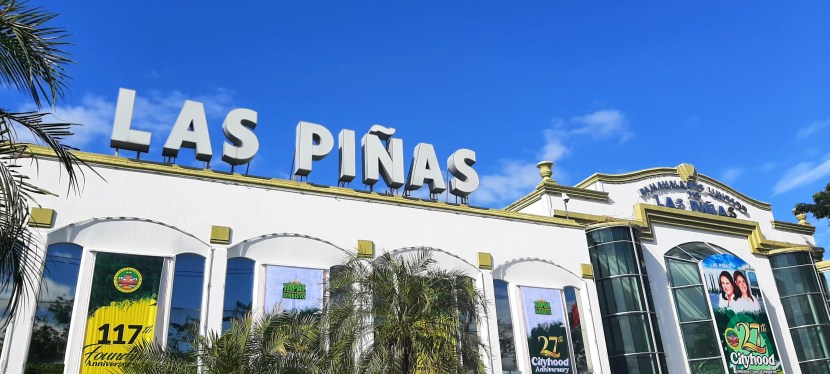
There is no denying that consumers here in the Philippines prefer to use digital methods of paying over cash as more than 57% of retail transactions by volume are digital, according to a business news report by Malay Business Insight. The details were revealed by the Bangko Sentral ng Pilipinas (BSP).
To put things in perspective, posted below is an excerpt from Malaya Business Insight’s news report. Some parts in boldface…
More Filipinos are going cashless and transacting in e-money or digital cash as the most preferred payment for retail accounts, the Bangko Sentral ng Pilipinas (BSP) said in a report on Monday.
Based on the latest BSP status report, digital payments now account for 57.4 percent of retail transactions by volume as of end-2024, up from 52.8 percent in 2023. In terms of value, e-money’s share also increased to 59 percent from 55.3 percent.
The figures surpassed the government’s target range of between 52 and 54 percent as set under the Philippine Development Plan 2023–2028.
BSP Governor Eli M. Remolona Jr. said the steady year-on-year growth “reinforces the momentum built after surpassing the 2023 digitalization target of 50 percent for volume.”
He also said the upward trajectory “reflects the long-term impact of market developments, policy initiatives, and the growing trust and familiarity of Filipinos with digital payment options.”
Remolona said the BSP will continue to harness technology and finance to connect markets and ensure that “every Filipino becomes part of the formal financial system.”
They will do this by empowering banks, non-banks and the fintech sector to leverage innovation in designing financial products that are not only accessible but also more responsive to the needs of consumers.”
Let me end this post by asking you readers: What is your reaction to this recent development? When it comes to retail transactions, do you prefer to pay with cash or with a digital payment method? Do you have any e-wallets (electronic wallets) right now?
Recently in the city of Parañaque, NBI agents arrested two people and seized illegal vape products that have been estimated to be worth almost P4 million, according to a news article by the Philippine News Agency (PNA). This development is the result of a successful entrapment operation by the NBI.
To put things in perspective, posted below is an excerpt from the PNA news article. Some parts in boldface…
The National Bureau of Investigation (NBI) has arrested two individuals and seized PHP3.9 million worth of illegal vape products in an operation in Parañaque City.
In a press briefing, NBI Director Jaime Santiago identified the suspects as Ace Garcia and Reginald Llanto, who were arrested by operatives of the NBI’s Cavite North District Office (NBI-CAVIDO-North) on Wednesday.
According to the NBI, the CAVIDO-North received information on the sale and distribution of illegal vaporized nicotine and non-nicotine products.
After presenting a sample, the NBI received a certification from the Department of Trade and Industry – Office for the Special Mandate on Vaporized Nicotine and Non-Nicotine Products (DTI-OSMV) that the vape products submitted were considered “unregulated and substandard.”
Operatives conducted an entrapment against the two suspects, resulting in the seizure of 49 master cases which contain 8,200 pieces of vape pods and 1,600 pieces of vape devices, among others, with an estimated value of PHP3.92 million.
Let me end this post by asking you readers: What do you think about this recent development? If you are a resident of Parañaque, do you think the sale and distribution of illegal vaporized nicotine and non-nicotine products in the city will only get worse over the next six months?
For more South Metro Manila community news and developments, come back here soon. Also say NO to fake news, NO to irresponsible journalism, NO to misinformation, NO to plagiarists, NO to reckless publishers and NO to sinister propaganda when it comes to news and developments. For South Metro Manila community developments, member engagement, commerce and other relevant updates, join the growing South Metro Manila Facebook group at https://www.facebook.com/groups/342183059992673
Based on the latest international tourism statistics and analysis for 2025, the Philippines is clearly failing to attract foreign tourists when compared to its Southeast Asian neighbors, according to a news article by VnExpress.
To put things in perspective, posted below is an excerpt from the VnExpress news article. Some parts in boldface…
An online debate has erupted on social media as users wonder why the Philippines, with its rich nature, culture, and cuisine, is being overlooked by foreign tourists in favor of destinations like Vietnam and Thailand.
Thea Tan, a Filipino, posted on her X account in May expressing frustration over the Philippines’ underwhelming tourism numbers despite offering what other countries dream of: breathtaking beaches, vibrant culture, incredible food, and the warmest locals.
“So, why are tourists still choosing Thailand, Vietnam, and Bali over us?” she asked.
The post quickly went viral, accumulating over 9,000 likes and hundreds of comments.
In the first quarter of the year, Malaysia topped the list of most-visited Southeast Asian countries, with 10.1 million arrivals, followed by Thailand (9.55 million), Vietnam (6 million), and Singapore (4.3 million). By April, the Philippines had only welcomed 2.1 million visitors.
In 2024, the country saw 5.9 million foreign tourists, falling short of the government’s target of 7.7 million and far behind its regional neighbors including Cambodia, which had 6.7 million visitors.
Many online users, like Tan, argue that the Philippines is not considered a top priority destination in ASEAN.
“We are tiring out tourists with poor infrastructure and complicated transportation,” Tan noted.
Even locals find domestic travel expensive and difficult, let alone for foreign visitors, according to comments on the post.
“The Philippines has beautiful beaches, delicious food, and friendly people, but it lacks roads, reliable airports, and public transportation. Most importantly, the prices here are too high,” one local shared.
Another netizen pointed out, “In all the countries you’ve mentioned, their capitals are also tourist destinations. Manila, on the other hand, is boring for tourists. We don’t have decent museums or historical tours, and moving around in Manila is not easy either.”
A netizen added, “The government isn’t investing in quality tourist facilities and infrastructure like our neighboring countries. That’s where we’re lagging behind.“
Recently, the Philippines was ranked as the most dangerous destination by U.K. financial comparison site HelloSafe in a survey dismissed by the Philippines’ tourism experts as biased and misleading.
Victor Lim, president of the Federation of Filipino-Chinese Chambers of Commerce and Industry, emphasized that the Philippines must improve its infrastructure and enhance safety measures to establish itself as a leading tourist destination in Southeast Asia, Philstar reported.
Let me end this post by asking you readers: What is your reaction to this recent development? Do you think the Department of Tourism and its strategic partners should get together and come up with hard adjustments to make the Philippines more attractive to foreigners? What do you think are the five biggest problems of the tourism industry of the country? Do you consider tourism-related awards crucial to the Philippines’ ability to attract visitors from around the world?
For more South Metro Manila community news and developments, come back here soon. Also say NO to fake news, NO to irresponsible journalism, NO to misinformation, NO to plagiarists, NO to reckless publishers and NO to sinister propaganda when it comes to news and developments. For South Metro Manila community developments, member engagement, commerce and other relevant updates, join the growing South Metro Manila Facebook group at https://www.facebook.com/groups/342183059992673
To put things in perspective, posted below is an excerpt from the PNA news article. Some parts in boldface…
Headline inflation continued to remain below the lower end of the government’s target range in June, despite a slight uptick due to a faster increase in non-food prices.
In a briefing on Friday, National Statistician Dennis Mapa said headline inflation settled at 1.4 percent in June from 1.3 percent in May.
This brings the year-to-date average inflation to 1.8 percent, well within the government’s target range of 2 percent to 4 percent for the year.
Mapa said the slight uptick in headline inflation was driven by higher non-food inflation (1.9 percent from 1.5 percent), with faster price increases observed in electricity (7.4 percent from 2.8 percent) and education (5.4 percent from 4.2 percent). Food inflation, however, eased to 0.1 percent during the month from 0.7 percent in May.
Mapa said the deceleration of food inflation in June was mainly due to the annual decrease in the prices of vegetables, tubers, plantains, cooking bananas, and pulses at 2.8 percent from an annual increase of 3.4 percent in the previous month. Rice deflation also hit a record low of 14.3 percent in June.
Mapa said the rollout of the government’s PHP20 per kg. rice program also contributed to the decline, especially in regular-milled rice prices.
In a separate statement, the Department of Economy, Planning, and Development (DEPDev) said government measures to stabilize food supply, boost agriculture, and improve logistics helped ease food inflation during the month.
“The sharp decline in food inflation over the past year underscores the continued progress in our coordinated efforts to boost local production, improve logistics, and implement calibrated trade and biosecurity measures,” DEPDev Secretary Arsenio Balisacan said.
“We will sustain these interventions and complement them with targeted initiatives to ensure a continuous, stable supply and shield consumers from future price pressures.”
To further strengthen food supply chains, DEPDev said the Department of Agriculture (DA) would intensify the implementation of industry recovery and expansion programs, such as the Swine Industry Recovery Project and Livestock Economic Enterprise Development, to accelerate the rehabilitation of the hog industry and restore the pre-African Swine Fever hog population levels.
The DA will also establish the country’s first Onion Research and Extension Center in Bongabon, Nueva Ecija for the development of effective methods to combat pests and diseases, enhance seed quality, and increase farm yields.
The Department of Energy, meanwhile, has partnered with private oil companies to offer fuel discounts to motorists affected by oil price fluctuations amid geopolitical uncertainties.
Let me end this post by asking you readers: What is your reaction to this recent development? Do you think inflation rate of the Philippines will be able to settle below 2% per month until the end of the year? If you are managing a local business, how much of an impact did inflation have on your business?
For more South Metro Manila community news and developments, come back here soon. Also say NO to fake news, NO to irresponsible journalism, NO to misinformation, NO to plagiarists, NO to reckless publishers and NO to sinister propaganda when it comes to news and developments. For South Metro Manila community developments, member engagement, commerce and other relevant updates, join the growing South Metro Manila Facebook group at https://www.facebook.com/groups/342183059992673
Welcome back fellow geeks, Blu-ray collectors and movie buffs!
When it comes to watching movies – both old and new – the best place for me is still the movie theater. The very large screen, high-tech sound systems and comfortable seats of the cinema all make the theater viewing experience very immersive which streaming apps and the home theater setup could never match. The cinema experience is always better than streaming.
That being said, it is disappointing for me – as a resident of Muntinlupa City here in the Philippines – that local theaters in Alabang had to close down. The original cinemas of Festival Mall, which first opened in 1998 and grew from six to ten screens, are no more. Before they were all closed down, those cinemas had deteriorated over time and I still remember how bad the projection in one of their premium cinemas was when I saw Star Trek Into Darkness in 2013. It was like I was watching a VHS copy of the movie on their screen. It was that bad!
This year, the 4-screen cinemas of Commercenter in Filinvest City had closed down (refer to my past blog posts by clicking here and here) and it is very unfortunate not just for me but also for others who enjoyed watching movies at that mall. In my experience, Commercenter was my favorite local place to watch movies at and the cinema operators were consistent with maintaining each screen, the comfortable chairs and the sound systems. At the same time, it was pretty convenient for me to park the car in the basement parking (really spacious), climb up to the cinemas at the 2nd floor (ticket counter and snacks counter were beside each other), enjoy a movie, and visit a local store or a restaurant within the mall after leaving the cinema.
With the closure of Festival Mall’s original cinemas and Commercenter cinemas, that is a combined loss of ten screens along with the many seats and equipment combined. Along the way, many people who worked directly in those lost cinemas either became unemployed or got re-assigned to a new task within the local establishment. Sadly, not too many people here in the Philippines are talking about the jobs lost with the closure of cinemas.
Cinemas of Commercenter have been closed down since March 15, 2025.
This brings me to my next point – BusinessWorld published an article exploring the current struggle of Philippine cinemas in what is now the post-pandemic era. For the newcomers reading this, the Philippines economy has been growing strongly year-by-year after the COVID-19 period ended but the nation’s cinema industry is still struggling in terms of sales and attracting paying customers. The Filipinos’ love for streaming is huge factor but there are also other reasons why not enough moviegoers are supporting cinemas.
To put things in perspective, posted below is an excerpt from the BusinessWorld article. Some parts in boldface…
KAREN LUSTAÑAS, 30, tries to watch a movie in the Philippine capital at least once a month, if the budget allows it.
“I try to save time and money for films that I really want to see,” she told BusinessWorld in a Facebook Messenger chat. “I can barely afford it, but if I’m a fan of the director or actors, I really have to watch it.”
“Otherwise, I’ll just watch it on a streaming platform,” she added.
As good as the movie industry is in imagining alternate realities, it didn’t see this one coming. Five years after the coronavirus disease 2019 (COVID-19) decimated the box office here and all over the world, movies are still struggling to come back.
Philippine gross movie ticket sales fell 3.7% year on year to $45.5 million (P2.5 billion) last year, a far cry from the $144.5 million posted in 2019, before the pandemic hit, according to US-based box office revenue tracker Box Office Mojo. In 2020, gross sales plunged 95% to $7.7 million.
Global cinema ticket sales fell 8.8% last year to €28 billion (P1.8 trillion) from 2023, the first annual drop since COVID-19, the European Audiovisual Observatory (EAO) said last month.
Regular movie ticket prices cost P300 to P400 in Metro Manila, or about half the daily minimum wage. On the other hand, the basic monthly subscription to streaming platforms like Netflix, Max (HBO) and Disney+ costs P150 to P250, and the titles are virtually endless.
“If you think about it, it’s really worth it and more practical to go with Netflix,” Ms. Lustañas, a freelancer, said.
The annual Metro Manila Film Festival (MMFF) grossed P800 million last year, hitting the target but failing to top 2023’s record P1 billion despite a week-long extension.
The pandemic forced people to watch movies at home, aiding streaming services like Netflix, whose revenue grew 14% annually to more than $39 billion last year from 2019, according to computations by BusinessWorld using data from the company’s website. Netflix subscribers also doubled to about 300 million over the five-year period.
Since 2020, local box office hits have been few and far between. The latest was Star Cinema’s My Love Will Make You Disappear starring Kim Chiu and Paulo Avelino, grossing P12 million on its opening day in March.
“Today, going to the cinema is a more intentional experience, rooted not just in the movie being shown but in the overall ambiance that brings the film to life,” Hamm E. Katipunan, Ayala Malls’ Asset Management head, said in an e-mailed reply to questions.
“It’s not just about waiting for blockbusters to hit streaming sites; Filipinos appreciate the good feeling of watching movies that are truly worth experiencing on the big screen,” he added.
While cinemas run by Ayala Malls, SM Supermalls and other mall chains have diversified their offerings, a pattern has emerged in the top-grossing Filipino films that have drawn people to cinemas.
GMA Pictures and Star Cinema’s co-production Hello, Love, Again starring Alden Richards and Kathryn Bernardo set the record for the highest opening day gross for a local film with P85 million in November, surpassing the P75-million gross from The Super Parental Guardians in 2016.
‘FORMULAIC STORIES’ – It shows that Filipinos watch a movie mainly because of its main cast, Film Development Council of the Philippines (FDCP) Chairman Jose Javier Reyes told a news briefing in March, citing a council-funded study involving 800 respondents.
“They can’t afford to go regularly to the movies anymore,” he said. “The biggest blow is that people don’t repeat screenings. They just wait for it to go on streaming platforms.”
The study, done in 2024 in collaboration with De La Salle University to explore the evolving habits, preferences and challenges shaping the local film industry, found that Filipinos from the A, B, and a small part of the C socioeconomic classes regularly watch movies.
The study, which will be released in July as part of the launch of FDCP’s Philippine Film Industry Roadmap, also found that streaming services have become the primary platform for 67% of Filipinos.
Only 21% still frequent cinemas, with many complaining about repetitive movie themes and high ticket prices.
Though stars are still the main movie drawer, the study also found that Filipinos are “sick of formulaic stories,” Mr. Reyes said. He added that the roadmap, mandated by the government, would shed light on how to better support the industry.
In October last year, President Ferdinand R. Marcos, Jr. placed the Film Academy of the Philippines under the Department of Trade and Industry (DTI) to boost Filipino film development.
Trade Secretary Ma. Cristina A. Roque earlier said the budget for the film industry would increase next year as part of the roadmap. She noted that other countries have been using movies and the creative industry to boost tourism and trade.
Mr. Reyes said movie outfits should improve the quality of their films to boost their success overseas. “In the Philippines, star power is important, but the moment you cross borders, there’s a market for people who are more interested in the material itself,” he pointed out.
Rico V. Gonzales, head of distribution at Warner Bros. Pictures Philippines, said the company supports the local industry by distributing two to three Filipino movies yearly, along with the usual foreign releases from Warner Bros. and Universal Pictures.
“It’s part of the goodwill of the company to help local producers who don’t have a distribution arm, compared with the likes of Star Cinema and GMA Pictures, which have the power to do it themselves,” he said.
The current state of the cinema industry of the Philippines is disappointing and the future looks uncertain as of this writing. While a lot of my fellow Filipinos chose streaming to watch movies in the comfort of their home, I prefer watching movies on Blu-ray and 4K Blu-ray disc format. The most phenomenal 4K Blu-ray experiences I had was Top Gun: Maverick and that movie never failed to amaze me each time I saw it using my 4K Blu-ray disc player. I also enjoyed watching my 4K Blu-ray copies of Casablanca, Interstellar, Total Recall (1990), and Star Trek: First Contact.
Going back to the state of cinema here in the Philippines, I did not watch a single movie in the cinema in 2024. In fact, the last time I saw a movie on the big screen locally was Sound of Freedom in 2023 (read my review by clicking here). This is because the new movies that were released in 2024 did not interest me at all and the fact that a lot of new Hollywood movies had woke garbage in them turned me off. Not only that, there were times when news movies from overseas were not even released in Philippine cinemas at all such as Jesus Revolution (note: I had to buy the movie on Blu-ray just to watch it).
I saw The Batman at Commercenter’s cinema on March 2022.
As of this writing, the direction of the entire cinema industry of the Philippines remains uncertain and so far there were no real breakthroughs that happened. That being said, I still remember when in 2015, there were long lines of moviegoers at Commercenter waiting to enter the cinemas to watch Jurassic World. Such a memory won’t be repeated here in Alabang and without its cinemas, Commercenter’s value as a place for fun has gone way down.
Recently in the city of Parañaque, local police officers apprehended twelve people – taxi and transport drivers – over their engagement in illegal online gambling, according to a Manila Bulletin news report.
To put things in perspective, posted below is an excerpt from the Manila Bulletin news report. Some parts in boldface…
Operatives from the Southern Police District (SPD) arrested taxi and transport drivers engaged in illegal online gambling inside a transportation hub in Paranaque City on July 3.
SPD Director Brig. Gen. Randy Arceo identified the suspects as taxi drivers Mark, 35; Reynante, 43; Gilleard, 52; Jimmy, 54; Ely, 38; Rodel, 48; Ronaldo, 63; Sunny, 51; and Joeuie, 50; Conrado, 41, a ride-hailing driver; John Robert, 50, a modern jeep conductor; and Domingo, 43.
Arceo said members of the SPD- Special Operation Unit (DSOU), with support from the District Intelligence Division (DID) and the Paranaque City Police Substation 3, arrested the suspects at the PITX Taxi Lane in Barangay Tambo, Paranaque City, at around 10:30 p.m.
He said police operatives acted on complaint from a concerned citizen that a group of taxi drivers were engaged in online cockfighting or “E-sabong” while waiting for passengers.
The SPD chief said the arrested taxi drivers engaged in guerrilla-style gambling, causing them to overcharge their passengers for their fares to recover from their losses.
Police recovered two mobile phones used in placing bets and betting money amounting to ₱3,545.
The suspects were brought to the DSOU-SPD Office and were charged for violation of Presidential Decree 1602 on illegal gambling.
Let me end this post by asking you readers: What do you think about this recent development? If you are a resident of Parañaque, do you think that illegal online gambling will get worse over the next six months? Is online gambling happening in your local community right now?
For more South Metro Manila community news and developments, come back here soon. Also say NO to fake news, NO to irresponsible journalism, NO to misinformation, NO to plagiarists, NO to reckless publishers and NO to sinister propaganda when it comes to news and developments. For South Metro Manila community developments, member engagement, commerce and other relevant updates, join the growing South Metro Manila Facebook group at https://www.facebook.com/groups/342183059992673
Recently in the city of Parañaque, National Bureau of Investigation (NBI) agents arrested a group of nine people – six foreigners and three locals – for their involvement in a car financing scam, according to a Philippine News Agency (PNA) news article.
To put things in perspective, posted below is an excerpt from the news article of the PNA. Some parts in boldface…
The National Bureau of Investigation (NBI) has arrested three Filipinos and six Indian nationals for their alleged involvement in an “assume balance-talon” scheme.
In a statement on Friday, NBI Director Jaime Santiago identified the suspects as Teotima Batutay, Rose Torion and Michael Castulo, and Indian nationals Sajjan Sarkar, Sai Charan, Kulvatnh Thati, Gayatri Sarma, Ray Anand, and Nithin Kamepalli.
They were arrested on June 24 in Parañaque City and charged with carnapping and syndicated estafa.
According to the NBI, the complainant said he failed to pay the monthly amortization of the subject vehicle to a bank and offered it for sale on the “assume balance” process.
The said vehicle was assumed by a car dealer, which passed it to Batutay who allegedly sold the vehicle to Castulo. Castulo together with Sarkar, mortgaged it to Anand for PHP120,000.
The bank chased after the complainant after the amortizations fell due, and sought the recovery of the vehicle through Castulo.
However, Castulo demanded PHP450,000 from the complainant and even threatened to tear the car into parts if the money, which was later reduced to PHP250,000, was not given.
The complainant filed a report with the NBI, leading to the suspects’ arrest and the recovery of the vehicle.
Let me end this post by asking you readers: What do you think about this recent development? If you are a resident of Parañaque, do you think that there are still gangs of both foreigners and locals who are committing scams and have yet to be caught? Do you think there will be more financial scams that will take place in Parañaque over the next six months?
For more South Metro Manila community news and developments, come back here soon. Also say NO to fake news, NO to irresponsible journalism, NO to misinformation, NO to plagiarists, NO to reckless publishers and NO to sinister propaganda when it comes to news and developments. For South Metro Manila community developments, member engagement, commerce and other relevant updates, join the growing South Metro Manila Facebook group at https://www.facebook.com/groups/342183059992673
Following the recent announcement of several medicines declared exempted from the value-added tax (VAT), nineteen more medicines became VAT-exempt as a result of the recommendation of the Food and Drug Administration (FDA) to the Bureau of Internal Revenue (BIR), according to a news article by the Philippine News Agency (PNA).
To put things in perspective, posted below is an excerpt from the PNA news article. Some parts in boldface…
Nineteen maintenance and lifesaving medicines have been included in the list of those exempted from value added tax (VAT), benefiting more people.
Bureau of Internal Revenue (BIR) Commissioner Romeo Lumagui Jr., during the Bagong Pilipinas Ngayon briefing on Thursday, said nine medicines were included under Revenue Memorandum Circular (RMC) 59-2025 issued on June 11, 2025 while the other 10 are covered by RMC 62-2025.
He said the inclusion of the medications for VAT exemption was based on the recommendation of the Food and Drug Administration (FDA).
Of the total, seven of these medicines are for cancer treatment; three each for diabetes, hypertension and mental illness; one each for high cholesterol, kidney disease, and tuberculosis.
“Ang mga ito ay mga maintenance at lifesaving medicines na ngayon ay hindi na papatawan ng VAT. Isang kongkretong hakbang para mas mapagaan ang gastuhin ng mga pasyente (These are maintenance and lifesaving medicines that will now be exempt from VAT. This move is a concrete step to lower patients’ expenses),” Lumagui said.
The BIR chief said both the Corporate Recovery and Tax Incentives for Enterprises (CREATE) law and the Tax Reform for Acceleration and Inclusion (TRAIN) law provide VAT exemptions on certain health products.
He said BIR coordinates with the FDA and the Department of Trade and Industry (DTI) among others to monitor compliance among pharmaceutical companies and drugstores regarding this price changes.
Let me end this post by asking you readers: What is your reaction to this recent development? Were you surprised that a lot more medicines were declared VAT-exempt?
For more South Metro Manila community news and developments, come back here soon. Also say NO to fake news, NO to irresponsible journalism, NO to misinformation, NO to plagiarists, NO to reckless publishers and NO to sinister propaganda when it comes to news and developments. For South Metro Manila community developments, member engagement, commerce and other relevant updates, join the growing South Metro Manila Facebook group at https://www.facebook.com/groups/342183059992673
For the newcomers reading this, Filinvest City is located within the Alabang area of Muntinlupa, and it is connected with both the South Luzon Expressway (SLEX) and the Metro Manila Skyway (which itself is connected to the NAIA Expressway and the North Luzon Expressway) which makes travel connectivity convenient. PLDT itself has its current headquarters in Makati City which has lasted for decades. This new development with Filinvest City adds potential business value to Alabang. It should be noted that Filinvest City also has its own local residents.
To put things in perspective, posted below is the excerpt from the news report of Manila Bulletin. Some parts in boldface…
Filinvest City, the premier township developed by the Filinvest Group, is poised for a transformation with the announcement that PLDT Inc., the nation’s largest integrated telecommunications company, will relocate its headquarters to the Southgate District of Filinvest City.
This strategic move, which involves the development of the country’s first tech campus, signals a game-changing moment for the Garden City, paving the way for a smarter, greener, and more connected urban landscape in Metro South.
The decision to move was revealed in a press statement from Filinvest City, noting that PLDT’s choice of Filinvest City followed years of careful study and strategic planning.
The planned five-hectare PLDT campus, envisioned as the future headquarters for the telecommunications group, is slated for progressive development, with initial phases expected to commence soon.
The project draws inspiration from leading global tech campuses and reflects PLDT’s long-term commitment to fostering an innovative and future-ready workplace.
This campus is part of our effort to build a healthier, more collaborative work environment, said PLDT Chairman and CEO Manuel V Pangilinan. He added that it reflects our belief that the workplace must evolve alongside the industries we serve. We hope it will inspire creativity, encourage teamwork, and support the future of PLDT.
The tech campus is designed not only as a headquarters but also as a hub for innovation, collaboration, and digital transformation, aiming to consolidate talent and technology to cultivate a culture of agility and forward-thinking.
This aligns with PLDT’s dedication to shaping the future of connectivity in the Philippines. The development is projected to create thousands of jobs during both construction and operational phases, boosting demand for residential and commercial spaces and supporting local businesses and startups.
It is also expected to attract professionals and innovators to Metro South, reinforcing Filinvest City’s role as a nexus for future-forward enterprises.
Josephine Gotianun-Yap, Vice Chairperson, Filinvest Development Corporation, noted the transformation of Filinvest City from a quiet stock farm into a vibrant garden metropolis, stating that this was achieved through vision, dedication, and a steadfast sense of purpose. She also said, Filinvest City was designed with intention: to foster an environment where businesses thrive, innovation flourishes, and people live well. We believe a great city is not simply a backdrop to success—but a catalyst for it.” She further added that Filinvest remains committed to continued growth and meaningful collaboration, especially with PLDT, as it pursues its mission to empower Filipinos through meaningful connections, digital inclusion, and sustainable progress.
This landmark project reinforces Filinvest City’s commitment to sustainable and integrated urban planning. As the country’s only central business district holding both LEED Gold and BERDE certifications, Filinvest City is recognized for its green building standards and environmentally responsible design. The city’s master plan embraces the live-work-play philosophy, ensuring a holistic urban experience for its residents, workers, and visitors.
Let me end this post by asking you readers: What is your reaction to this recent development? Do you think PLDT’s upcoming headquarters in Alabang will create many new jobs and add value to Filinvest City as business and investment destination? Do you think this new development will influence other major corporations to consider establishing new headquarters in Alabang? Do you consider Muntinlupa City a more competitive highly urbanized city (HUC) in relation with PLDT’s upcoming Alabang headquarters?
For more South Metro Manila community news and developments, come back here soon. Also say NO to fake news, NO to irresponsible journalism, NO to misinformation, NO to plagiarists, NO to reckless publishers and NO to sinister propaganda when it comes to news and developments. For South Metro Manila community developments, member engagements, commerce and other relevant updates, join the growing South Metro Manila Facebook group at https://www.facebook.com/groups/342183059992673
They finally did it! The United States Agency for International Development (USAID) –the independent agency of the American government responsible for administering civilian and foreign aid – was formally shut down by the Trump administration and has been incorporated into the State Department, according to a news report by Breitbart.
It should be remembered that USAID was heavily abused for a long time and a lot of taxpayers’ money was abused for questionable and wrongful purposes around the world such as funding LGBTQ projects, pushing abortion overseas, overseas tourism promotions, terrorist funding, creating a Sesame Street in Iraq, creating a mural in Parañaque City, and more.
As expected, there are high-profile figures who still want USAID to continue even though the abuses have been exposed. This new development with USAID is undeniably a major change decades in the making and United States Secretary of State Marco Rubio issued statements defending the move.
To put things in perspective, posted below is an excerpt from the Breitbart news report. Some parts in boldface.
The US foreign aid agency formally closed down Tuesday, with President Donald Trump’s administration trumpeting the end of the “charity-based model” despite predictions that millions of lives will be lost.
Founded in 1961 as John F. Kennedy sought to leverage aid to win over the developing world in the Cold War, the US Agency for International Development (USAID) has now been incorporated into the State Department — after Secretary of State Marco Rubio slashed 85 percent of its programming.
In a farewell to remaining staff on Monday, former presidents George W. Bush and Barack Obama — as well as U2 frontman Bono — saluted their work and said it was still needed.
Bush pointed to PEPFAR, the massive US effort to fight HIV/AIDS that he considers one of the top achievements of his 2001-2009 Republican presidency.
“This program shows a fundamental question facing our country — is it in our nation’s interest that 25 million people who would have died now live? I think it is,” Bush said in a video message seen by AFP.
Obama, who like Bush has been sparing in openly criticizing Trump, said that ending USAID was “inexplicable” and “will go down as a colossal mistake.”
“Gutting USAID is a travesty and it is a tragedy because it’s some of the most important work happening anywhere in the world,” the Democrat said.
A study published in the medical journal The Lancet predicted that more than 14 million people would die, a third of them small children, by 2030 due to the foreign aid cuts.
‘Little to show’ – Rubio painted a drastically different picture of USAID, which was an early target of a sweeping government cost-cutting drive led for Trump by billionaire Elon Musk.
Rubio said that USAID’s “charity-based model” fueled “addiction” by developing nations’ leaders and that trade was more effective.
“Beyond creating a globe-spanning NGO industrial complex at taxpayer expense, USAID has little to show since the end of the Cold War,” Rubio wrote in an essay.
He also complained that many recipients of US aid do not vote with the United States at the United Nations and that rival China often enjoys higher favorability among the public.
A senior State Department official, speaking on condition of anonymity, said that The Lancet study relied on “incorrect assumptions” and said the United States will continue aid but in a “more efficient” way.
He said that PEPFAR will remain, with a priority on stopping HIV transmission from mothers to children.
But he acknowledged the United States was no longer funding PrEP medication, which significantly reduces the rate of HIV transmission and has been encouraged by high-risk communities.
“No one is saying that gay men in Africa shouldn’t be on PrEP. That’s wonderful. It doesn’t mean that the United States has to pay for every single thing,” the official said.
He said the Trump administration was looking at “new and innovative solutions” and pointed to food deliveries in war-battered Gaza staffed by US military contractors and surrounded by Israeli troops.
Witnesses, the United Nations and local Gaza officials have reported that Israeli troops have repeatedly opened fire and killed Palestinians waiting for aid — although the US-backed initiative, the Gaza Humanitarian Foundation, denies any deadly incidents.
Let me end this piece by asking you readers: What is your reaction to this development? Are you satisfied with the formal end of USAID and its incorporation into the State Department? Do you think a lot of people’s lives around the world will suffer from the shutdown of assistance from USAID?