2025 continues to look rough for the Philippines. A lot of people are angry over government corruption and the flood control projects scandal investigation is only adding fuel to the fire. When it comes to economic growth, S&P Global Ratings says the economy of the Philippines will grow by only 5.6% this year, according to a Philippine Star news report.
To put things in perspective, posted below is an excerpt from the Philippine Star news report. Some parts in boldface…
S&P Global Ratings has trimmed its growth forecast for the Philippines to 5.6 percent this year from its earlier 5.9 percent estimate, citing subdued private consumption and investment alongside persistent global uncertainties.
The downgrade reflects weaker-than-expected momentum in the first half, when Philippine gross domestic product (GDP) grew by 5.4 percent. This was faster than many economies in Asia, but still below trend and short of expectations.
“Private consumption growth, investment and household confidence are still relatively subdued,” S&P economist Vince Conti told The STAR.
“We expect that both global and domestic uncertainty would continue to weigh on investment growth in the near term,” Conti said.
S&P’s latest projections show the country’s GDP growth will hit the government’s 5.5 to 6.5 percent target for 2025.
The credit watcher also sees growth picking up to 5.8 percent in 2026, though this remains below the government’s more ambitious six to seven percent goal for next year.
Conti noted, however, that the country’s reliance on external demand comes more from services rather than goods trade, which provides a degree of resilience against heightened global trade frictions.
“This will partially mitigate the impact of the elevated trade tensions,” he said. “On the positive side, with inflation low and likely to remain under control in the next few years, the Bangko Sentral ng Pilipinas (BSP) has room to continue its easing path to support growth.”
S&P expects Philippine inflation to average 1.8 percent in 2025, sharply down from 3.2 percent last year, before rising moderately to three percent in 2026 and 3.3 percent in 2027.
The credit watcher is penciling in around 100 basis points of further policy rate cuts by the BSP between now and end-2026, which could help shore up domestic activity.
Let me end this post by asking you readers: What is your reaction to this development? Do you think the economy of the Philippines does not have enough momentum to achieve 6% growth this year? Do you think that any rise of inflation will hamper economic growth?
As far as the information technology and business process management (IT-BPM) industry of the Philippines is concerned, there is still room for growth in the near future as the country could become the next hot spot for global capacity centers (GCCs), according to a BusinessWorld news report.
To put things in perspective, posted below is an excerpt from the BusinessWorld news report. Some parts in boldface…
THE PHILIPPINE information technology and business process management (IT-BPM) industry is still bullish on growth, as it expects to generate $42 billion in export revenues and increase headcount to 1.97 million in 2026, an industry group said.
The Philippines is also aiming to become the next hub for global capability centers (GCC), as it has seen an uptick in interest from multinational companies, the group added.
IT & Business Process Outsourcing Association of the Philippines (IBPAP) President and Chief Executive Officer Jonathan R. Madrid said the industry has so far created 450,000 new jobs and $10.5 billion in revenue since the creation of the industry roadmap in 2022.
“Now, for 2025, that includes 80,000 new jobs and $2 billion in incremental revenue. That is a growth of 4% and 5.3%, respectively,” he said at the International IT-BPM Summit on Tuesday. “By 2026, we project to reach $42 billion in revenue and close to a total of two million jobs for Filipinos.”
The expected jobs and revenues for 2026 are aligned with the baseline projections indicated in the IT-BPM Roadmap 2028. Mr. Madrid said the industry’s growth will still be driven by core segments — banking, financial services, and healthcare.
While the Philippines remains strong in contact centers, he noted faster growth coming from GCCs. “(There’s) a slightly higher growth rate from GCCs. Coming from a lower base, you tend to see more growth from that sector,” he said.
GCCs are offshore units established by multinational corporations to provide specialized services such as finance, IT and customer support to their global operations.
Mr. Madrid said he sees increased interest in setting up GCCs in the Philippines from prospective clients in the US, Australia and Europe.
Globally, GCCs are reshaping the IT-BPM industry, with its market expected to grow to $155 billion by 2027.
To date, there are 170 GCCs in the Philippines, growing by around 10 each year, but India continues to dominate with its 2,000 GCCs.
“We know that India dominates as the world’s GCC hub, showing how GCCs have evolved. They are no longer cost centers but strategic engines of innovation and transformation,” Mr. Madrid said.
“I think the Philippines should aspire to do the same. We have the talent, we have the scale, the cost efficiency, and the ecosystem maturity to become the next global GCC hub,” he added.
LEGISLATION NEEDED –IBPAP Chief Operating Officer Celeste B. Ilagan said more needs to be done on the policy front to support the growth of GCCs in the Philippines.
“GCCs have different needs compared with the traditional BPM providers,” she said, adding that the group wants Congress to pass legislation to help attract more GCCs into the country.
In particular, she said that the industry needs a law that is similar to the Regional Operating Headquarters (ROHQ) law. However, this move was “abandoned” in favor of the Corporate Recovery and Tax Incentives for Enterprises (CREATE) Act, she added.
“We know that other countries have this international business services law that they are already implementing so that they can get more GCCs to their country. So, we are trying to work along those lines as well,” she added.
Let me end this post by asking you readers: What is your reaction to this development? Do you think the Philippines will be able to act fast to attract more GCCs in the near future?
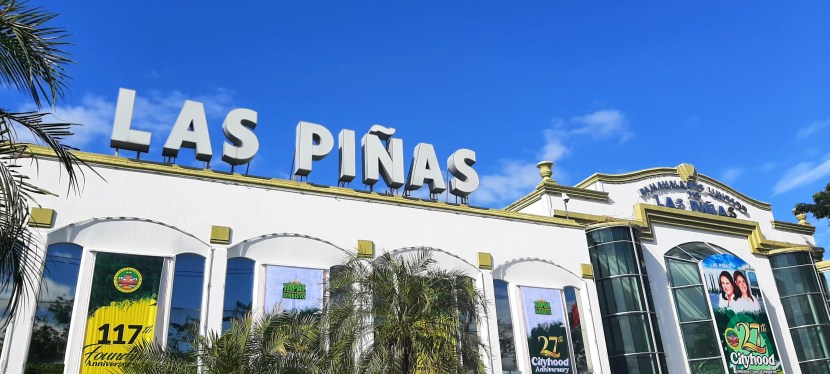
Recently in the City of Las Piñas, eight hundred locals availed of free food and water when the local feeding program occurred in Barangay Daniel Fajardo and no less than Mayor April Aguilar was present, the City Government announced via social media.
To put things in perspective, posted below is an excerpt from the social media post of the City Government. Some parts in boldface…
Through the initiative of Mayor April Aguilar, Vice Mayor Mel Aguilar, and the City Council, an auxiliary feeding program was held in Madrigal Covered Court, Barangay Daniel Fajardo to support the health and nutrition of children and families in the community.
A total of 800 beneficiaries received nutritious pork steak rice topping and bottled water that were carefully prepared and distributed with the help of Barangay Nutrition Scholars. The program was spearheaded by the Las Piñas City Nutrition Office under the leadership of OIC and City Nutrition Action Officer Dr. Julio P. Javier II.
Barangay Captain Dolphy Cristobal, together with Kagawads Melvin Cristobal, Irish Alinigue, Bernard Abersosa, Archie Casimiro, Bhong Ello, and Rodelyn Gonzales, joined the activity to show their support.
Let me end this piece by asking you readers: If you are a resident of Las Piñas City, what is your reaction to this development? Has the City Government feeding program reached your local community recently?
For more South Metro Manila community news and developments, come back here soon. Also say NO to fake news, NO to irresponsible journalism, NO to misinformation, NO to plagiarists, NO to reckless publishers and NO to sinister propaganda when it comes to news and developments. For South Metro Manila community developments, member engagement, commerce and other relevant updates, join the growing South Metro Manila Facebook group at https://www.facebook.com/groups/342183059992673
Recently in the City of Las Piñas, local police officers apprehended a man who turned out to be the 2nd most wanted person in Davao del Sur, according to a Manila Bulletin news report. He was arrested for murder.
To put things in perspective, posted below is an excerpt from the report of the Manila Bulletin. Some parts in boldface…
Authorities from the Las Piñas Police Warrant and Subpoena Section (WSS) arrested Davao del Sur’s No. 2 most wanted person in the municipal level in 2022 during the conduct of a manhunt operation against wanted fugitives.
Las Piñas City Police Chief Col. Sandro Tafalla identified the suspect as Jesan, 37, a laborer wanted for the crime of murder in Davao del Sur. He was arrested along Narra Street, Barangay CAA, Las Piñas City.
Tafalla said members of the Malalag Municipal Police Station coordinated with the Southern Police District and notified members of the Las Piñas City Police WSS conducting a manhunt operation against wanted fugitives for the arrest of Jesan.
He said Jesan was arrested by virtue of a warrant of arrest issued by Judge Marivic Trabajo Daray of Digos City, Davao del Sur, Regional Trial Court Branch 18, for the crime of murder on May 31, 2022, with no bail recommended.
Let me end this piece by asking you readers: If you are a resident of Las Piñas City, what is your reaction to this development? Are you concerned that there could be wanted persons from the provinces hiding in the city?
For more South Metro Manila community news and developments, come back here soon. Also say NO to fake news, NO to irresponsible journalism, NO to misinformation, NO to plagiarists, NO to reckless publishers and NO to sinister propaganda when it comes to news and developments. For South Metro Manila community developments, member engagement, commerce and other relevant updates, join the growing South Metro Manila Facebook group at https://www.facebook.com/groups/342183059992673
During a high-level press conference in the White House, United States President Donald Trump revealed an ambitious new plan to achieve peace not only in the Gaza Strip but also in the Middle East, and already Israeli Prime Minister Benjamin Netanyahu has agreed to it.
To get straight into what happened, watch the official video of the press conference from the White House below. Pay close attention to the details.
It should be noted that during the conference, Trump made it clear that if the Palestinian terrorist group Hamas (which has always been supported by terrorist state Iran and Qatar) rejects the plan, America will support Israel to eliminate the terrorists. Be aware that Hamas never cared for their fellow Palestinians in Gaza as they used them as human shields, and Hamas fed their greed and selfishness using humanitarian aid they snatched for a long time. Hamas, not Israel, is guilty of committing genocide and other crimes against humanity. There clearly is no justification for the Palestinian terrorists to exist the way they are. Hamas has a chance to stop their terrorism and we will find out soon if they will give in or not.
WHAT DID TRUMP SAY AT THE WHITE HOUSE PRESS CONFERENCE? – Trump said that the US would be involved in Israel’s security after the ceasefire agreement.
The president said that if his deal were accepted by Hamas, all of the hostages, living and dead, would be released almost immediately.
Trump intends to end the war itself, and said that he was “hearing that Hamas wants to get this done.”
He also stated that during his meeting with Netanyahu, the Israeli PM clearly stated his opposition to a Palestinian state.
Trump slammed other countries that had “foolishly” recognized a Palestinian state at the UN General Assembly last week.
He noted that if Hamas rejects the deal that Israel has agreed to, he would give Israel the backing to destroy Hamas.
“And if Hamas rejects the deal, which is always possible, they’re the only one left. Everyone else has accepted it, but I have a feeling that we’re going to have a positive answer,” he said. “But if not, as you know, Bibi, you have our full backing to do what you would.“
In addition, he said Israel and others were “beyond very close” to reaching an agreement on ending the Israel-Hamas War in the Gaza Strip.
Trump, standing alongside Netanyahu, said the agreement would involve Arab countries and should help to achieve a broader peace in the Middle East.
“At least we’re at a minimum, very, very close. And I think we’re beyond very close,” Trump told reporters. “And I want to thank Bibi for really getting in there and doing a job.”
Trump affirmed that Israelis want a return to peace and want the hostages home. He also added that there were “many Palestinians who wish to live in peace,” adding that they had a “rough life under Hamas.
Trump stated that he believes Iran will one day become a member of the Abraham Accords.
He concluded his statement by again calling on Hamas to accept his plan, calling it an “extremely fair proposal.”
WHAT DID NETANYAHU SAY AT THE WHITE HOUSE PRESS CONFERENCE? – Netanyahu stated that Trump was Israel’s greatest friend in Washington.
“You are the greatest friend that Israel has ever had in the White House,” the prime minister said, adding that “it’s not even close.”
He also said that Trump’s plan achieves all of Israel’s war aims. Netanyahu outlined his cabinet’s “day after” plan for Gaza and the end of the war.
The objectives included: the disarmament of Hamas, the demilitarization of Gaza, the return of the hostages, Israel maintaining security parameters within the enclave, and the establishment of a peaceful civilian administration in the Gaza Strip.
The prime minister also said that there would be no role for the Palestinian Authority in Gaza until it underwent major transformations.
Netanyahu said that Trump’s plan provides a “realistic path for Gaza.”
WHAT IS TRUMP’S PLAN? – Trump released his plan to end the Israel-Hamas War.
Notably, the statement said that within 72 hours of Israel publicly accepting this agreement, all hostages, alive and deceased, will be returned.
The released statement states that Gaza will be “a deradicalized terror-free zone that does not pose a threat to its neighbors,” and that the enclave will be redeveloped for the citizens of Gaza, “who have suffered more than enough.”
If both sides agree to this proposal, the war will immediately end. Israeli forces will withdraw to the agreed-upon line to prepare for a hostage release. During this time, all military operations, including aerial and artillery bombardment, will be suspended, and battle lines will remain frozen until conditions are met for the complete staged withdrawal.
Once all hostages are released, Israel will release 250 life sentence prisoners plus 1,700 Gazans who were detained after October 7th, 2023, including all women and children detained in that context. For every Israeli hostage whose remains are released, Israel will release the remains of 15 deceased Gazans.
Once all hostages are returned, Hamas members who commit to peaceful co-existence and to decommission their weapons will be given amnesty. Members of Hamas who wish to leave Gaza will be provided safe passage to receiving countries.
For additional insight about the press conference, watch the videos below.
Thank the Lord for this significant development on the part of Israel. President Trump and his team truly have a grand strategy to achieve peace in the Middle East and it involves Gaza (note: Trump previously revealed a Gaza plan) which has long been a hot bed of Islamic terrorists and literally the launch pad of terrorist attacks against Israel. Trump has been able to make peace agreements happen since he returned to the White House and in this year alone, many breakthroughs happened diplomatically, socially and economically.
That being said, it is a must for people to focus on what would happen next after the announcement of Trump’s bold peace plan for the Middle East. You can simply ignore the foolish acts of the corrupted United Nations (UN) and its many member nations who joined the wrong side of history by deciding to recognize a Palestinian state, getting close with terrorist state Iran and walking out of Netanyahu’s UN address. The Gaza and Middle East peace plan revealed by Trump and agreed to by Netanyahu is the one people of faith should focus on and pray to the Lord to make it happen.
I encourage you all to pray to the Lord God in support of Israel, to love and bless the Jewish people, and pray for the peace of Jerusalem.
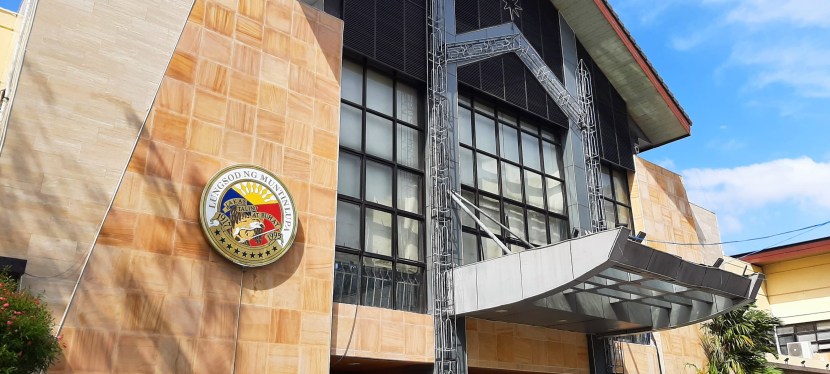
Recently in the progressive City of Muntinlupa, the City Government delivered almost four thousand seven hundred tables and chairs to public schools which reflects their goal to uplift the quality of local education, according to a Manila Bulletin news report.
To put things in perspective, posted below is an excerpt from the news report of the Manila Bulletin. Some parts in boldface…
The Muntinlupa City government delivered a total of 4,693 tables and chairs to different public schools.
This is part of Mayor Ruffy Biazon’s 7K Agenda, aiming to uplift the quality of education for Muntinlupa students.
“Layunin nito na masigurong ang bawat estudyante ay may maayos, komportable, at conducive na learning space para sa kanilang pag-aaral. Patunay ito ng malasakit at pagtutok ng lokal na pamahalaan at ng Schools Division Office-Muntinlupa City sa pangangailangan ng mga paaralan at kabataan ng ating lungsod. (The goal is to ensure that every student has a well-organized, comfortable, and conducive learning space for their studies. This is proof of the concern and focus of the local government and the Schools Division Office-Muntinlupa City on the needs of the schools and youth of our city),” the city government posted on Facebook.
Biazon previously emphasized the need to improve the quality of education in Muntinlupa public schools.
Meanwhile, the city government congratulated Muntinlupa Science High School for being recognized as one of the top schools for MSTR (Math, Science & Technology, and Research) Class during the 2025 STEM Enrichment Program (STEP).
“The STEP Program brings together Science and other High Schools from across NCR to competitively assess its students’ knowledge and skills in STEM,” the city government said.
Let me end this post by asking you readers: What is your reaction to this recent development? If you are a resident of Muntinlupa City, are you delighted with the delivery of so many tables and chairs to the public schools in the city? Are there lots of children in your local community who are enrolled in public schools?
For more South Metro Manila community news and developments, come back here soon. Also say NO to fake news, NO to irresponsible journalism, NO to misinformation, NO to plagiarists, NO to reckless publishers and NO to sinister propaganda when it comes to news and developments. For South Metro Manila community developments, member engagement, commerce and other relevant updates, join the growing South Metro Manila Facebook group at https://www.facebook.com/groups/342183059992673
This past weekend, Philippine team members Irienold Reig, Jr., and Katrina Almuete Salazar won the Sprint Elite titles of the 2025 National Aquathlon Championships in Quezon City. The official race results have been released online by Triathlon Philippines (click here).
To put things in perspective, posted below is the sports press release of Triathlon Philippines. Some parts in boldface…
Irienold Reig hugged the limelight in the National Aquathlon Championships 2025 after dominating the sprint men’s elite division Sunday at the Amoranto Sports Center in Quezon City.
The Quezon City resident clocked 17 minutes and 11 seconds.
Juan Miguel Tayag of Angeles City, Pampanga bagged the silver medal with a time of 17:20 while Daniel Cadavos of Bukidnon settled for the bronze medal in 17:41.
“The goal is to win and I’m glad that I accomplished it today,” said Reig, who placed third behind Joshua Alexander Ramos and Iñaki Emil Lorbes in the Standard Elite category of the National Age Group Aquathlon at the Ayala-Vermosa Sports Hub in Imus, Cavite last March.
Reig (7:20) was behind Tayag (7:17) in the swim stage, but came back strong in the running stage with a time of 9:18 against Tayag’s 9:30.
“I’ll keep on training and hope to win more titles,” said Reig, runner-up to Matthew Hermosa in the Sun Life 5150 Bohol triathlon last July.
Katrina Almuete Salazar, a fourth year dentistry student from University of the East, topped the women’s Elite division in 19 minutes and 23 seconds.
“I’m happy with my performance, this is a training race just to chck my condition,” said Salazar, who competed in the Asian Triathlon Cup in Gamagori, Japan last week.
In the junior category, Darell Johnson Bada was crowned champion in the men’s division after crossing the finish line with a time 0f 16 minutes and 51 second. Giro Don Rafael Gito (17:13) was second followed by John Micheal Lalimos (17:16).
The women’s title went to Anisha Eunice Caluya, who clocked 18:53. Dhana Victoria Seda-Lomboy (19:57) took the silver medal while Qaantreulle Light Wangkay (21:22) bagged the bronze medal.
Quezon City Vice Mayor Gian Sotto awarded the medals to the podium finishers.
“Thank you for the Triathlon Philippines for giving us the opportunity, thank you for partnering with us in the government to make everything possible,” said Sotto, who was accompanied by Amoranto Sports Complex head Martin Julian Vicente Manese.
Small businesses all over the Philippines now have extra time to get themselves registered for the E-Commerce Philippine Trustmark as the Department of Trade and Industry (DTI) officially extended the deadline all the way to December 31, 2025, according to a news article by the Philippine News Agency (PNA).
To put things in perspective, posted below is an excerpt from the PNA news article. Some parts in boldface…
The Department of Trade and Industry (DTI) has extended the Sept. 30 deadline for registration for the E-Commerce Philippine Trustmark to Dec. 31 to allow more small businesses to get the badge.
“The Trustmark is not a regulation to burden businesses but to serve as a tool that shields legitimate enterprises from scammers who undermine consumer confidence. Our aim is to make it simpler for consumers to identify and trust legitimate sellers, so entrepreneurs can focus on what truly matters — growing their business,” DTI Secretary Cristina Roque said in a statement Friday.
In a briefing earlier in the day, Roque said major players such as TikTok, Lazada and Shopee, already have their badges and more are expected to secure theirs as the deadline nears.
“Kasi alam mo naman sometimes sa ganito (Because you know sometimes, in things like this), they’re really waiting for the last minute or they’re still hoping that we can actually pull back on this Trustmark. Kasi ginagawa nila na issue (Because they’re making an issue of it) or whatnot. But we stand firm that we really need to have the Trustmark in the products that are being sold,” she said.
As of Sept. 19, a total of 10,057 business have submitted their applications to secure the Trustmark, DTI E-Commerce Bureau Officer-in-Charge Eryl Royce Nagtalon said during the briefing.
Nagtalon estimated registered micro, small, and medium enterprises (MSMEs) in the country at 1.2 million to 1.3 million, but less than half have listings on various online platforms.
He explained that while there are about 500,000 MSMEs that have shifted to e-commerce, the number might balloon to about 900,000 as some businesses offer their products not just on a single platform but on several online shopping sites.
Asked if they expect all registered MSMEs to register for the Trustmark, Nagtalon answered yes, saying it is “very good for the e-commerce system.”
“It’s good because it means the competition is very healthy, the e-commerce is very healthy,” he said.
Registration for the Trustmark is mandated under Republic Act 11967, otherwise known as the Internet Transactions Act of 2023, and the DTI’s Department Administrative Order 25-07. Applicants need to pay the PHP1,000 annual application fee, PHP100 web administration fee, and PHP30 documentary stamp tax.
Let me end this post by asking you readers: What is your reaction to the recent developments? Were you surprised to see the Philippines’ startups attracting much less equity funding from global investors? What do you think the government should do to convince global investors to invest more in startups here in the Philippines?
Startups here in the Philippines secured $86.4 million in equity funding during the first half of this year which translates to a very sharp drop of 55% when compared to a year earlier, according to a news report by BusinessWorld.
To put things in perspective, posted below is an excerpt from the BusinessWorld news report. Some parts in boldface…
PHILIPPINE startups secured $86.4 million in equity funding in the first half of 2025, down 55% from a year earlier and lagging most of its Southeast Asian neighbors, according to a report by Kickstart Ventures, Inc., the corporate venture capital arm of Globe Telecom, Inc., and Singapore-based business news platform DealStreetAsia.
The Philippines raised about P4.91 billion from 15 disclosed deals in the six-month period, lower than the P10.86 billion ($191 million) recorded in the same period last year.
By deal value, the country trailed Singapore ($1.21 billion), Vietnam ($275 million), and Malaysia ($196 million). It only surpassed Indonesia ($78 million) and Thailand ($10 million), while Cambodia did not disclose figures.
Across Southeast Asia, startup equity investment fell by 20.7% year on year to $1.85 billion, the lowest in six years.
Joan Yao, general partner at Kickstart Ventures, said funding deals slowed after digital activity peaked in 2021 and 2022 at the height of coronavirus lockdowns.
“I think to some extent, as the effects of COVID died down… [digital] activity became more balanced between online and offline,” Ms. Yao said during a media briefing on Wednesday.
Philippine startups had raised $456 million and $481 million in the first halves of 2021 and 2022, respectively, before declining sharply as global investors scaled back.
Ms. Yao cited the tight monetary policy in the United States, when the US Federal Reserve hiked interest rates from March 2022 through July 2023 to curb inflation.
“A lot of the global investors that were coming to invest in the Philippine market or Southeast Asia pulled back a little bit from their investment activities because of the higher cost of capital,” she said.
The report said investors have become more selective, favoring companies with stronger governance and clearer paths to profitability.
Let me end this post by asking you readers: What is your reaction to the recent developments? Were you surprised to see the Philippines’ startups attracting much less equity funding from global investors? What do you think the government should do to convince global investors to invest more in startups here in the Philippines?
With its recent economic study, Oxford Economics declared that the Philippines has the highest debt risk among its Asian neighbors and the biggest contributor to the risk is the nation’s limited internal policy space, according to a Manila Bulletin news report.
To put things in perspective, posted below is an excerpt from the Manila Bulletin news report. Some parts in boldface…
Constrained fiscal and monetary policy space, along with increasing reliance on foreign debt, has placed the Philippines at the highest sovereign risk, or the greatest risk of failing to meet its debt obligations, among its Asian peers.
According to a Sept. 10 report by the think tank Oxford Economics, the Philippines recorded the highest sovereign risk score among 12 Asian economies, at 4.5 out of 10. The biggest contributor to this risk is limited internal policy space, referring to the country’s relatively narrow fiscal and monetary flexibility compared with its peers.
The second-largest factors are external imbalances—measured by current account and trade deficits—along with the size of the economy, and institutional risks. Other contributors include political risks, the business environment, vulnerabilities in the banking sector, and corporate debt.
India ranked second in sovereign risk, followed by China, Vietnam, Malaysia, Thailand, and Indonesia. Meanwhile, Japan, Singapore, South Korea, Hong Kong, and Taiwan were assessed to have the lowest risk levels.
Sovereign risk refers to the possibility that a government may default on its debt by failing to meet interest or principal payments.
“On the fiscal front, the stubborn bias towards fiscal conservatism is likely to persist, following the broad unwinding of pandemic-era discretionary support,” Oxford Economics lead economist Alexandra Hermann said.
However, given that “around half of the region’s economies are likely to fall short of their official growth estimates this year, and the remainder only just meeting stated targets, the political economy of growth underperformance could tilt authorities towards further incremental easing going into 2026.”
For the Philippines, the government is targeting a growth rate of 5.5 to 6.5 percent for 2025—a downscaled version of the more ambitious goal of six to eight percent previously.
While governments in Asia, including the Philippines, could implement measures to soften the impact of weaker exports, the think tank noted that economic growth would still be slower than normal. Philippine gross domestic product (GDP) growth averaged 5.4 percent in the first half of the year.
“On the monetary side, most central banks have room to cut further as real rates are still elevated compared to pre-pandemic norms, despite pre-emptive cuts this year particularly in emerging Asia,” Hermann said.
To recall, the Bangko Sentral ng Pilipinas (BSP) aggressively hiked lending rates to as high as 6.5 percent in 2024 to tame raging increases in consumer prices brought about by the Covid-19 pandemic.
Hermann expects the Philippine central bank alongside other Southeast Asian central banks to further reduce key borrowing costs by as much as three quarters of a point by early next year, similar to what they did previously during economic slowdowns.
“We anticipate an additional 25-75 bps [basis points] of rate reductions across India, Indonesia, the Philippines, and Thailand, completing an easing cycle by early 2026 that is broadly consistent in scale with prior non-recessionary slowdowns,” Hermann said.
Should the BSP reduce the key policy rate by up to 75 bps though the first half of 2026, the current five percent could be brought down to 4.25 percent. For this year alone, the BSP has so far lowered rates by a cumulative 75 bps, citing still subdued inflation and risks to slower growth.
In another Sept. 10 report of the think tank, the BSP and other central banks are seen to be “hawkish despite low inflation.” BSP Governor Eli M. Remolona Jr. earlier signaled a still accommodative stance but now less dovish.
Let me end this post by asking you readers: What is your reaction to the recent developments? Do you think the Philippines will be able to reduce its sovereign risk? What do you think should be done about the debt risk the country has? Do you think the high debt risk could turn off foreign investors?