A Look Back at Harbinger #23 (1993)

Disclaimer: This is my original work with details sourced from reading the comic book and doing personal research. Anyone who wants to use this article, in part or in whole, needs to secure first my permission and agree to cite me as the source and author. Let it be known that any unauthorized use of this article will constrain the author to pursue the remedies under R.A. No. 8293, the Revised Penal Code, and/or all applicable legal actions under the laws of the Philippines.

Welcome back superhero enthusiasts, 1990s culture enthusiasts and comic book collectors! Today we go back to the early 1990s and explore a part of the Valiant Comics shared universe through the Harbinger monthly series.

In my previous review, Faith, Flamingo and Kris – with her uncle as a companion – accidentally got reunited with Archer and Armstrong at Coney Island. It turns out Kris’ uncle had a negative encounter with Armstrong decades prior which compels him to approach a local crime boss for assistance. This led to a wild chase.

With those details laid down, here is a look back at Harbinger , published in 1993 by Valiant Comics with a story written by Maurice Fontenot and illustrated by Howard Simpson.

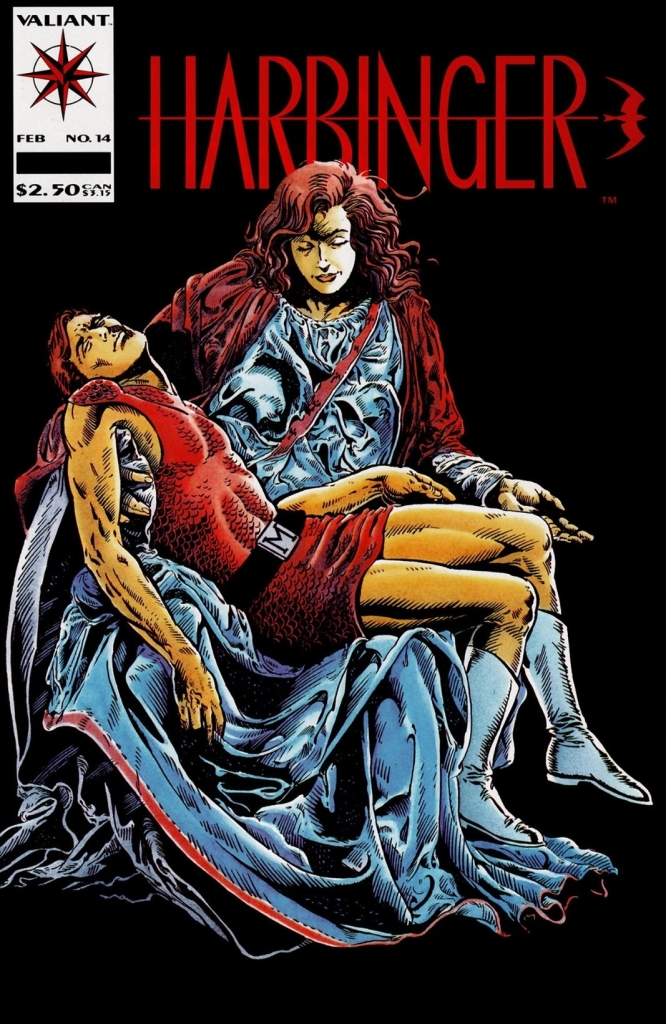
The cover.

Early story

The story begins with Sting, Flamingo and Faith surrounded by armed personnel at the Harbinger Foundation’s private hangar at La Guardia Airport in New York. Faith does something drastic causing a heavy object from above to start falling down on the armed men. One of the men fires his gun at a barrel of fuel which causes a big explosion.

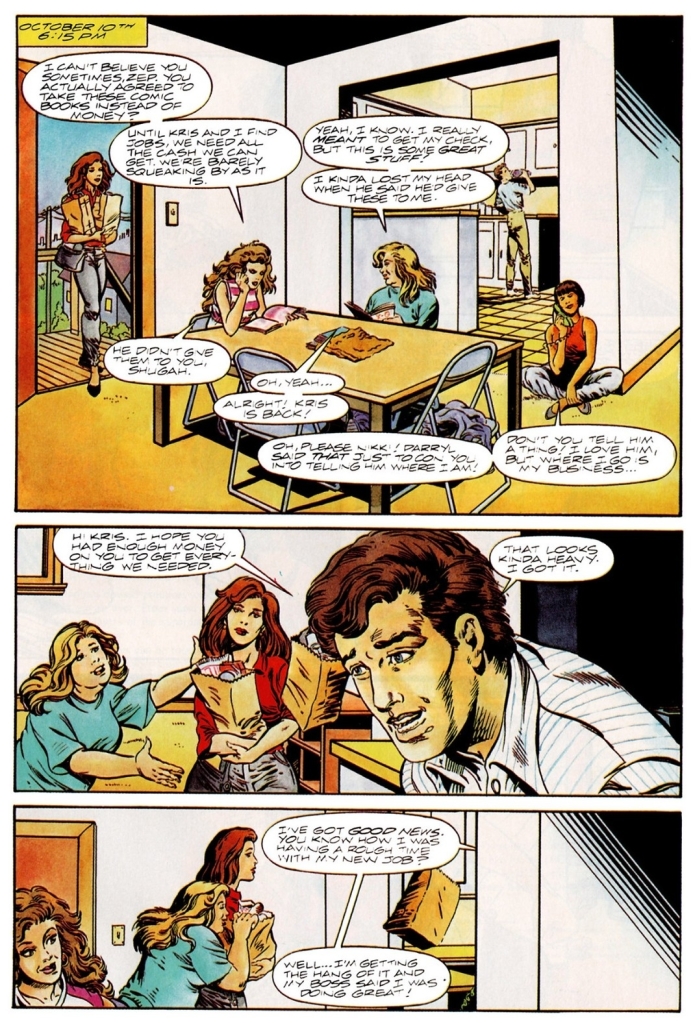
In a room nearby, Shatiqua and Kris hacked a computer to acquire lots of confidential information from the Harbinger Foundation. After realizing the explosion that happened, they decide to work fast getting the information they need.

On the airport’s tarmac, a private jet is on standby waiting for clearance to take off. Inside is Walter Sakai, who is one of the most trusted men under Toyo Harada…

Quality

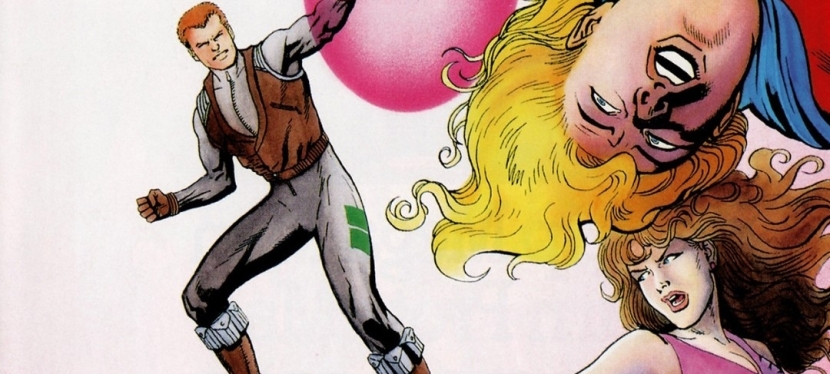
Sting, his teammates and their major enemy Toyo Harada.

Without spoiling the crucial details of the plot, the Fontenot-Simpson clearly made the moves to raise the stakes between Sting’s team and the Harbinger Foundation, complete with the build-up of a pending high-stakes conflict between their respective leaders.

Of course, this is the latest conflict between the two sides – one side has super-powered teens who want to live freely while the other is a powerful organization that has been developing its of super-powered youth members using vast resources as well as political connections. This time around, the creative team not only raised the stakes but also came up with some really dark and bizarre scenarios within Sting’s own team. The good news is that Fontenot came up with something new and surprising to keep this series going with a clear direction ahead. The mentioned dark scenarios visually have a horror film vibe.

As for Sting himself, he continues to take action recklessly and without any backup, he impulsively goes after one of Harada’s top executives without considering the consequences. At this stage, Sting has turned unlikable and it really looks like the boundary separating good and evil got blurred away. That being said, there will be moments in which you will feel like wanting to tell Sting he is doing things the wrong way.

Conclusion

Very recklessly, Sting goes after one of Toyo Harada’s most trusted men.

Harbinger (1993) revives the rivalry between Sting’s team and the Harbinger Foundation, only this time there are some very solid twists that resulted in both surprise and intrigue when I read this tale. It seems to me that something tremendous between Harada and Sting was being built up. Considering the really good quality of this comic book and how the story ended, I can say I am looking forward to the next issue.

Overall, Harbinger (1993) is recommended.

+++++

Thank you for reading. If you find this article engaging, please click the like button below, share this article to others and also please consider making a donation to support my publishing. If you are looking for a copywriter to create content for your special project or business, check out my services and my portfolio. Feel free to contact me with a private message. Also please feel free to visit my Facebook page Author Carlo Carrasco and follow me on Twitter at  @HavenorFantasy as well as on Tumblr at https://carlocarrasco.tumblr.com/ and on Instagram at https://www.instagram.com/authorcarlocarrasco
A Look Back at Harbinger #22 (1993)

Disclaimer: This is my original work with details sourced from reading the comic book and doing personal research. Anyone who wants to use this article, in part or in whole, needs to secure first my permission and agree to cite me as the source and author. Let it be known that any unauthorized use of this article will constrain the author to pursue the remedies under R.A. No. 8293, the Revised Penal Code, and/or all applicable legal actions under the laws of the Philippines.

Welcome back superhero enthusiasts, 1990s culture enthusiasts and comic book collectors! Today we go back to the early 1990s and explore a part of the Valiant Comics shared universe through the Harbinger monthly series.

In my previous review, Sting has been suffering and was revealed to have mononucleosis. After having a nightmare, he stubbornly re-entered his family’s home in the middle of the night trying to reconnect to his past life as Pete Stanchek. He eventually learned something harsh about his estranged father and went on to visit him in the hospital.

With those details laid down, here is a look back at Harbinger #22, published in 1993 by Valiant Comics with a story written by Maurice Fontenot and illustrated by Howard Simpson.

The cover.

Early story

The story begins with Archer and Armstrong having fun at the amusement of Coney Island. They eventually bump into Flamingo, Faith, Shatiqua and Kris who happens to be with her uncle named Mel. Armstrong found Mel looking familiar causing the latter to feel uneasy.

Sometime later that day, Mel visits a bar in Brooklyn managed by a local crime boss called Anthony Carino. After going through some initial trouble with Carino’s tough talking employees, Mel finally meets with their boss and told him that decades Armstrong made a move on his fiancé and then he and his buddies ran him out of town. After revealing Armstrong’s name and his presence at Coney Island, the crime boss reacts with knowledge about him. It turns out, Armstrong busted up his bar sometime in the past. Carino agreed to help Mel get back on Armstrong… 

Quality

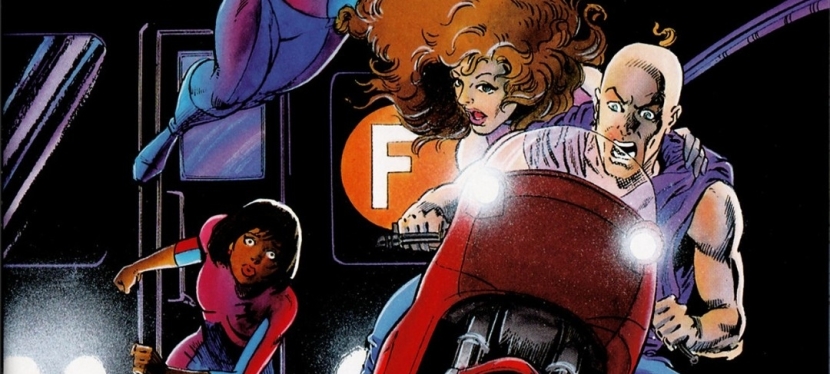
The wild chase!

To start with, I can say that this comic book’s main feature is the crossover between the team (minus Sting) and the duo of Archer and Armstrong which also serves as a reunion in relation to their time together during the Unity crossover storyline. This time around, these established Valiant Comics characters get to interact with each other during a more peaceful time and if you remember Armstrong delivering Kris’ child (note: Magnus Robot Fighter) during the Unity storyline, there is a nice scene between the two characters talking about it. As with other Valiant works of the 1990s, the crossover element here is strong and engaging.

On the story itself, Armstrong’s past encounter with Mel sparks a conflict here which eventually pulled Archer and the other team members into a wild chase that was somewhat entertaining. How the story ended was surprising and even intriguing. If you are looking for character development regarding Faith, Flamingo, Kris and Shatiqua, you won’t find much here which is a bummer. Again, the mentioned crossover is the key feature of this comic book.

Conclusion

A reunion between Archer & Armstrong and the team (minus their leader Sting).

While it shifted the focus away from the unlikable Sting, Harbinger #22 (1993) was more about a shared universe crossover between the other team members and Archer and Armstrong. In some ways, Armstrong himself was almost the main character in this tale and what he did in the past sparked a chain of unfortunate events that involved Kris, Faith, Flamingo and Shatiqua. As this comic book was more about crossover, it turned out to be a missed opportunity for the creative team to further develop the other team members. Still, this tale delivered some entertainment value and there definitely is something being built up for further issues.

Overall, Harbinger #22 (1993) is satisfactory.

+++++

Thank you for reading. If you find this article engaging, please click the like button below, share this article to others and also please consider making a donation to support my publishing. If you are looking for a copywriter to create content for your special project or business, check out my services and my portfolio. Feel free to contact me with a private message. Also please feel free to visit my Facebook page Author Carlo Carrasco and follow me on Twitter at  @HavenorFantasy as well as on Tumblr at https://carlocarrasco.tumblr.com/ and on Instagram at https://www.instagram.com/authorcarlocarrasco

A Look Back at Harbinger #20 (1993)

Disclaimer: This is my original work with details sourced from reading the comic book and doing personal research. Anyone who wants to use this article, in part or in whole, needs to secure first my permission and agree to cite me as the source and author. Let it be known that any unauthorized use of this article will constrain the author to pursue the remedies under R.A. No. 8293, the Revised Penal Code, and/or all applicable legal actions under the laws of the Philippines.

Welcome back superhero enthusiasts, 1990s culture enthusiasts and comic book collectors! Today we go back to the early 1990s and explore a part of the Valiant Comics shared universe through the Harbinger monthly series.

In my previous review, the team led by Sting daringly broke into the Harbinger Foundation’s New York facility and freed the pretty blonde Natalie Toynbee (codename: Stunner) who happened to have a big ego and was not comfortable with the organization’s rules. While Sting and his team secured Natalie as their newest member, a sinister force from Iran arrives in America. 

With those details laid down, here is a look back at Harbinger , published in 1993 by Valiant Comics with a story written by Maurice Fontenot and illustrated by Howard Simpson.

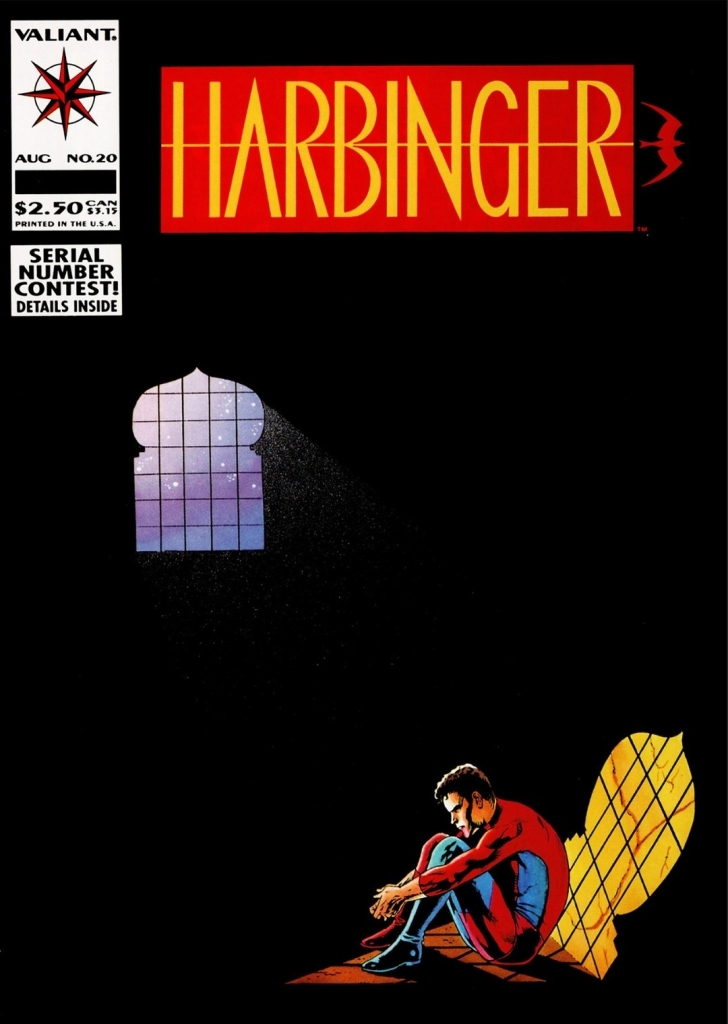
The cover.

Early story

The story begins deep in the nation of Iran on February 1, 1993. Thanks to the tremendous help of Screen, the Harbinger renegades composed of Flamingo, Kris, Shatiqua and Faith/Zephyr make their way through the busy section of Mashad, carefully communicating with each other while disguised in cultural clothing. Their mission is to find the hideout of Kaliph and rescue Sting and Natalie/Stunner knowing they only have ten hours left.

Inside Kaliph’s fortress, a very weak and uneasy Sting finds himself alone in a dark room while Natalie is being treated nicely by the servants of Kaliph in preparation for dinner with the sinister master himself…

Quality

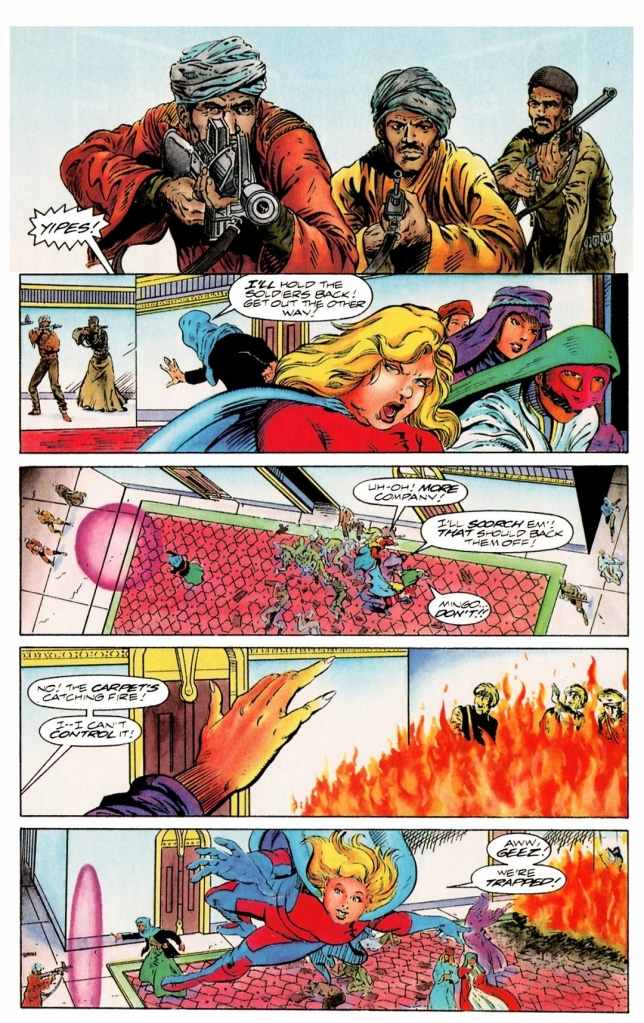
During their rescue effort, Sting’s teammates face off with the armed Iranians of Kaliph.

In terms of storytelling, this is a very solid continuation to the events that happened in the previous issue and it was a clever move by the creators to have the story set in enemy territory which easily raised the stakes for Sting’s team. While this is not the first time that the group went out on dangerous missions going into the turf of the opposition, having Iran as the setting and Kaliph as the powerful villain really made things fresh for this particular comic book series.

It should be noted that having Sting being very vulnerable added a nice layer of depth in this tale given the fact that he is still living with a false sense of maturity as well as traces of arrogance on his part believing that he could make positive changes by fighting powerful enemies and freeing powered youth from captivity without vast amounts of resources. For the newcomers reading this, Sting and his companions do not have much money to live with nor do they have technologies or connections to be powerful as a team. They simply have their own super powers and the will to move on and make things happen which makes them different compared to many other superhero teams in comics.

There are also signs of suicidal thoughts on Sting’s part as he recklessly moved to get to Kaliph even though the villain’s men were armed. By contrast, his teammates moved cautiously into Kaliph’s fortress and the way they handled the armed Iranians was believably presented. Not to be outdone here in Natalie who got a good share of the spotlight.

This comic book’s evil Iranian Kaliph was presented to be not only powerful but also talented as a business negotiator (which makes him somewhat similar with this comic book series’ super villain Toyo Harada) and even as a host of special guests. His evil nature here got emphasized further through his treatment of people as pawns of negotiations backed by his power of manipulation.

Conclusion

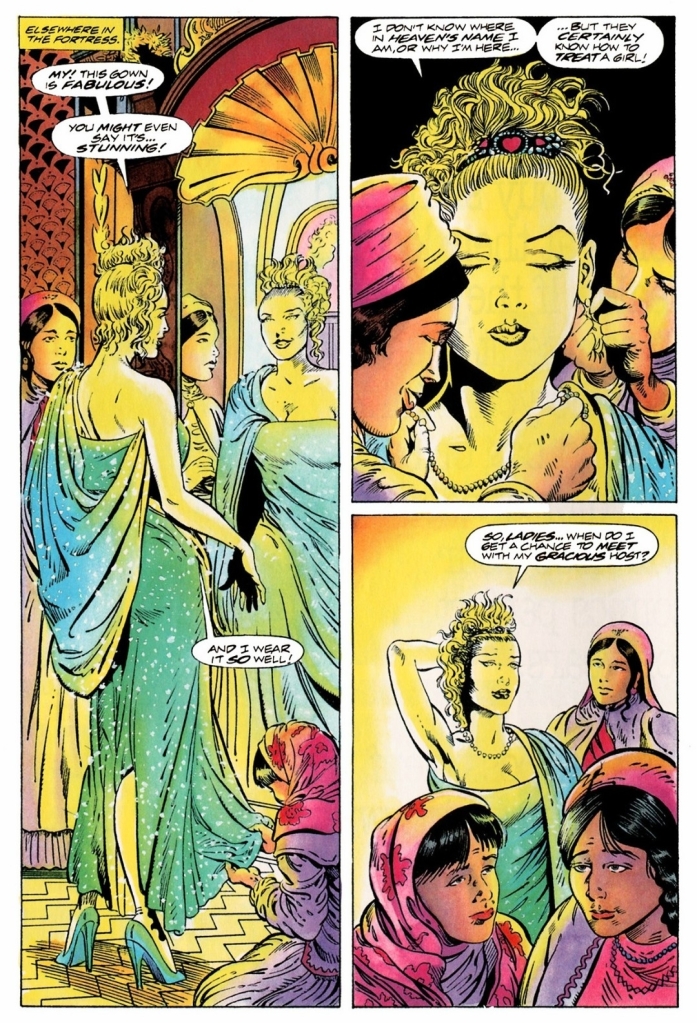
Natalie Toynbee being treated nicely by the servants not realizing the evil of the man she is about to meet.

Harbinger (1993) is both engaging and intriguing to read from start to finish. Having Sting’s team on a high-risk rescue mission in Iran made for a great setting and Kaliph turned out to be a more significant figure of evil. Through Kaliph and his violence-oriented servants, you will see the symbolism of the evil of Iran in real-life even though this comic book does not show any links between him and the regime that took power in 1979. Geopolitics are pretty much absent in the story but the evil presented through Kaliph make this old comic book highly relevant in relation to the evil of Iran today (for reference, click here, here, here, here, here and here). It should be noted that within the comic book, the Iranian people in general are not condemned and in real life, there are Iranians standing up against their government which itself has been sponsoring terrorists and organizing terrorism for a long time now. The brutality committed by Iran’s regime made several Iranians escape their country to be free.

Considering the very sensitive matter of Iran and other issues related with contemporary geopolitics, Harbinger (1993) not only aged well but is also a living reminder that people whose minds got poisoned with wickedness, political correctness and wokeness would not dare make a comic book showing the evil of Iran. The Leftist-oriented people prefer to make deals with terrorists (for examples, click here and here).

Overall, Harbinger (1993) is highly recommended!

+++++

Thank you for reading. If you find this article engaging, please click the like button below, share this article to others and also please consider making a donation to support my publishing. If you are looking for a copywriter to create content for your special project or business, check out my services and my portfolio. Feel free to contact me with a private message. Also please feel free to visit my Facebook page Author Carlo Carrasco and follow me on Twitter at  @HavenorFantasy as well as on Tumblr at https://carlocarrasco.tumblr.com/ and on Instagram at https://www.instagram.com/authorcarlocarrasco

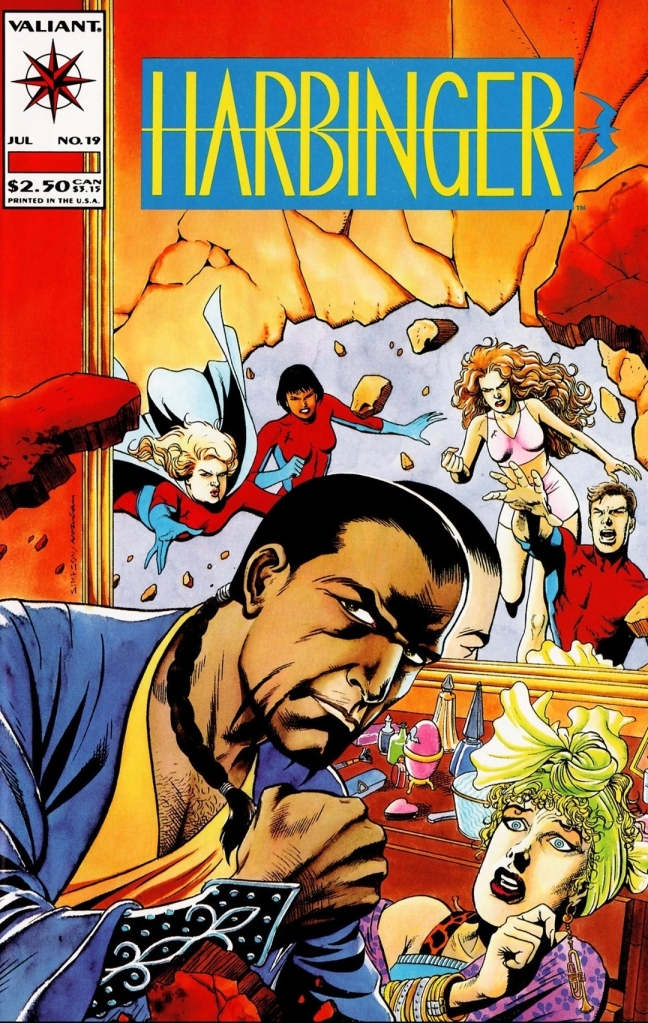
A Look Back at Harbinger #19 (1993)

Disclaimer: This is my original work with details sourced from reading the comic book and doing personal research. Anyone who wants to use this article, in part or in whole, needs to secure first my permission and agree to cite me as the source and author. Let it be known that any unauthorized use of this article will constrain the author to pursue the remedies under R.A. No. 8293, the Revised Penal Code, and/or all applicable legal actions under the laws of the Philippines.

Welcome back superhero enthusiasts, 1990s culture enthusiasts and comic book collectors! Today we go back to the early 1990s and explore a part of the Valiant Comics shared universe through the Harbinger monthly series.

In my previous retro review, the creative team of Fontenot-Simpson told another story that built up Harbinger’s concept some more while introducing yet another new character – Screen – who is not part of the team led by Sting. The story symbolically showed the further growth of the tremendous power of Toyo Harada not only through his control of the Harbinger foundation but also of his connection with the new United States President of the time. 

With those details laid down, here is a look back at Harbinger , published in 1993 by Valiant Comics with a story written by Maurice Fontenot and illustrated by Howard Simpson.

The cover.

Early story

The story begins on the afternoon of January 25, 1993. Inside the New York facility of the Harbinger foundation, a pretty blonde, young lady named Natalie Toynbee – codename: Stunner – gets scanned by the technicians handling the technologies. A technician’s request for Natalie to urinate into a cup reveals that the lady has a huge ego and pride of herself as she reacts negatively. 

Suddenly, the wall near Natalie and the technician got damaged by force unleashed by Sting who is accompanied by Faith, Flamingo and Shatiqua. Their mission is to free Natalie from the clutches of the Harbinger foundation which is a small part of their long-term vision of freeing and recruiting more powered young adults.

After subduing the Harbinger foundation personnel, Sting begins to explain to Natalie the situation and tells her to just trust him. Sting tells her to come with them which only drew more of Natalie’s ego along with skepticism. This reaction makes Faith think Natalie is not worth saving…

Quality

Imagine Iran invading America and causing terror like in this scene. Imagine Joe Biden and the Democrats allowing this to happen to Americans.

While the story was not crafted to follow-up closely on the events of issue #18, this comic book puts Sting and his teammates into a collision course with a new force of evil – the Iranians (note: issue confirms their national identity) who have interests on specific young adults with powers and special abilities. Along the way, the Fontenot-Simpson team introduced a new sinister force in the form of a very manipulative Iranian named Kaliph.

Kaliph’s introduction here is easily the biggest feature of the story and he unsurprisingly overwhelms the debut of Natalie. Kaliph here works in service of his unidentified superiors and as he does his job, he uses his special ability of manipulating people’s minds through sight and sound to gain information, find directions, make them do his orders and gain access into places that he could never have had he been an ordinary person. By the end of the story, I was convinced that Kaliph was created to be an enduring or recurring villain for Sting and his team.

More on the primary characters of this monthly series, Sting and his teammates were portrayed to get more harbingers (powered young adults) to join them and become part of their long-term opposition against Toyo Harada and the Harbinger foundation, even though their own team lacks the resources needed to support themselves. The lack of resources was cleverly highlighted through Natalie’s reactions (related to her big ego) to what Sting’s team has for her to live with. Looking at the bigger picture going back to issue , Sting’s vision of defeating Harada and winning the trust of powered young adults without any solid foundation (specifically resources, connections and security) emphasize his recklessness and false sense of maturity as a team leader.

Conclusion

Kaliph and his companion arrive in America with a sinister plan.

In my view, Harbinger (1993) is a solid change of direction for the monthly series complete with the introduction of a new, strong villain who originated from Iran which by today’s standards is the major force of terrorism in this world. The new villain Kaliph has a creepy aesthetic that other villains in this series lacked. More notably, the story remained consistently very engaging and pulled off some notable surprises which were indeed entertaining.

Overall, Harbinger (1993) is highly recommended!

+++++

Thank you for reading. If you find this article engaging, please click the like button below, share this article to others and also please consider making a donation to support my publishing. If you are looking for a copywriter to create content for your special project or business, check out my services and my portfolio. Feel free to contact me with a private message. Also please feel free to visit my Facebook page Author Carlo Carrasco and follow me on Twitter at  @HavenorFantasy as well as on Tumblr at https://carlocarrasco.tumblr.com/ and on Instagram at https://www.instagram.com/authorcarlocarrasco

A Look Back at Harbinger #18 (1993)

Disclaimer: This is my original work with details sourced from reading the comic book and doing personal research. Anyone who wants to use this article, in part or in whole, needs to secure first my permission and agree to cite me as the source and author. Let it be known that any unauthorized use of this article will constrain the author to pursue the remedies under R.A. No. 8293, the Revised Penal Code, and/or all applicable legal actions under the laws of the Philippines.

Welcome back superhero enthusiasts, 1990s culture enthusiasts and comic book collectors! Today we go back to the early 1990s and explore a part of the Valiant Comics shared universe through the Harbinger monthly series.

In my previous retro review, some twists of events happened for Sting and his teammates during the Christmas season. The story was part of the continuing build-up and expansion of the Harbinger series’ own space within Valiant Comics’ shared universe under the direction of Maurice Fontenot. As of issue , another new character from outside of Sting’s group got introduced for them to interact with.     

With those details laid down, here is a look back at Harbinger #18, published in 1993 by Valiant Comics with a story written by Maurice Fontenot and illustrated by Howard Simpson.

The cover.

Early story

The story begins on January 1993. Within the city of New York, Faith, Shatiqua and Flamingo are being followed by a young man wearing a trench coat. They know they are being followed. They eventually found themselves just outside the same amusement joint where Shatiqua played a lot of arcade games and decide to enter.

Inside, many people recognized and greeted Shatiqua which reflects her outstanding reputation on arcade games. As Shatiqua, Faith and Kris approach a certain arcade game (that Shatiqua wants to play), they noticed the one playing it is the same little black boy (capable of disappearing) they encountered previously. Shatiqua then takes the first step to approach him and gain his attention.

The boy then disappears and reappears a short distance away from the three and right beside same trench coated man who earlier follow them. The boy then attempts to blow the place up with a hand grenade. The man in the trench coat reacts quickly revealing his power to Faith, Shatiqua and Flamingo.

Quality

Sting shows his ignorance and lack of maturity while getting checked by Dr. Hayward.

This is the latest build-up type of story Fontenot composed and like the previous issue, another new character unconnected to Sting’s team got introduced for them to interact with. The new character here is referred to as Screen and he clearly is a more interesting character than the one introduced in issue . Screen here is more impulsive and aggressive and he sure looks like he has what it takes to oppose Sting. I also liked the way the creative team showed the impulsiveness and lack of maturity of both Sting and Screen.

Within the script is the establishment of a new sub-plot which symbolizes the growing danger of the Harbinger foundation towards not only on Sting and teammates but also against the others that oppose Toyo Harada and his organization. In some ways, the sub-plot will make you speculate about the invisible yet sinister forces who wield tremendous power over the top government officials who are supposed to be serving their constituents within the republic.

With all of these details laid down, I can say they are all engaging to read as Fontenot’s writing continued to be really strong. For the art, I can say that Howard Simpson continued to pump out really solid visuals while successfully keeping the primary characters recognizable all the time.

Conclusion

This image is very symbolic as Bill Clinton and his wife Hillary made it normal for the United States to make deals with terrorists (notably Iran and Palestine) and betray the patriotic Americans. This makes this comic book socially relevant and what you see with the corrupt administration of Joe Biden reconnects strongly with the Clinton legacy.

Harbinger #18 (1993) is a very solid comic book to read. The build-up continues to happen and along the way, the titular characters got developed some more and this time around, the Harbinger foundation’s power continues to get stronger which convinced me to look forward to the next issue.   

Overall, Harbinger #18 (1993) is highly recommended!

+++++

Thank you for reading. If you find this article engaging, please click the like button below, share this article to others and also please consider making a donation to support my publishing. If you are looking for a copywriter to create content for your special project or business, check out my services and my portfolio. Feel free to contact me with a private message. Also please feel free to visit my Facebook page Author Carlo Carrasco and follow me on Twitter at  @HavenorFantasy as well as on Tumblr at https://carlocarrasco.tumblr.com/ and on Instagram at https://www.instagram.com/authorcarlocarrasco
A Look Back at Harbinger #17 (1993)

Disclaimer: This is my original work with details sourced from reading the comic book and doing personal research. Anyone who wants to use this article, in part or in whole, needs to secure first my permission and agree to cite me as the source and author. Let it be known that any unauthorized use of this article will constrain the author to pursue the remedies under R.A. No. 8293, the Revised Penal Code, and/or all applicable legal actions under the laws of the Philippines.

Welcome back superhero enthusiasts, 1990s culture enthusiasts and comic book collectors! Today we go back to the early 1990s and explore a part of the Valiant Comics shared universe through the Harbinger monthly series.

In my previous retro review, Sting, Kris and Shatiqua got into trouble upon seeing the traitorous Ax and his powered companions. Their encounter turned into a radically different turn of events when the Harbinger foundation’s armed personnel and Eggbreakers members arrived targeting Ax.    

With those details laid down, here is a look back at Harbinger , published in 1993 by Valiant Comics with a story written by Maurice Fontenot and illustrated by Howard Simpson.

The cover.

Early story

The story begins in the past – January 11, 1991 at the Woodville State Mental Institution in Pennsylvania. One of the local doctors leads two formal visitors into the secured room of one of their patients described as a “fascinating subject”. His name is Simon and the visitors turned out to be from the Harbinger foundation. They tell Simon, who is invisible, that the Harbinger foundation was established to help special people like him, help him understand and control his talents, and he will not be alone as the foundation has others like him.

In the present day of December 23, 1992, Faith is flying just above a truck which is slipping out of control along a major bridge in New Jersey. Sting is barely holding on the top of the truck. Being unable to utilize his power to control the situation, Sting instructs Faith to pull the driver out of the truck. Moments after Faith saves the truck driver, the truck itself stops but ended up hitting a vehicle.

As Flamingo uses her power to put out a fire, Kris finds Sting on the side of a car feeling terrible. Sting wonders what is wrong with him as he failed to stop the truck…

Quality

Even though he is already in a relationship with Kris, Sting focused on the blonde lady in the middle of a party.

I want to point out that this is yet another build-up type of story from Fontenot and Simpson, only this time it introduces Simon who is involved with the Harbinger foundation not as a trained Eggbreakers member but rather as a patient still relying on medical and psychological care. Through Simon, you will feel his loneliness, his trouble to fit in with society and his personal pain related to being unwanted. Through him, you will also realize that even though it has lots of resources and experts as employees, the Harbinger foundation is not the ideal replacement for Simon’s father (who rejected him in the first place). That should also remind you readers that government units also can never be your parent nor your guiding light no matter what socialists and Commies say in this age of Joe Biden and the fascist Democrats (read: the Satanic Left). Fontenot’s script here is, unsurprisingly, really strong and Simon’s introduction never felt like a throwaway piece.

Apart from Simon, Sting and his teammates got a lot more of the narrative’s spotlight this time around which is like a breath of fresh air since the previous two issues focused more on Harbinger and the Eggbreakers. Even though they are already dealing with their domestic problems, the primary characters still make efforts to solve problems and help others knowing that they would not be compensated by society.

More on character development, the team leader Sting continues to desire recruiting and helping powered young adults before the organization of Toyo Harada gets them first. This shows his arrogance and delusion as he rejects the reality that he and his team don’t really have the massive resources the Harbinger foundation has when it comes to recruitment and providing the constant needs of recruits. Furthermore, Sting does not even see his current problem (with his super power) as a hindrance at all when facing the Harbinger foundation.

Storywise, this comic book is more balanced with the spotlight on characters on the two sides of the spectrum with Simon being symbolically caught in the middle of the conflict. This is really solid storytelling.

Conclusion

Something’s wrong with Sting.

I like Harbinger (1993) very much. What it lacks in spectacle, it bounces back big time with character development, deep dramatics and introducing a new character who gets connected with both Sting’s team and the Harbinger foundation. This story obviously keep on building up something for a future conflict between the two forces and already I am eager to find out what will happen in the next issue.

Overall, Harbinger (1993) is highly recommended!

+++++

Thank you for reading. If you find this article engaging, please click the like button below, share this article to others and also please consider making a donation to support my publishing. If you are looking for a copywriter to create content for your special project or business, check out my services and my portfolio. Feel free to contact me with a private message. Also please feel free to visit my Facebook page Author Carlo Carrasco and follow me on Twitter at  @HavenorFantasy as well as on Tumblr at https://carlocarrasco.tumblr.com/ and on Instagram at https://www.instagram.com/authorcarlocarrasco
A Look Back at Harbinger #15 (1993)

Disclaimer: This is my original work with details sourced from reading the comic book and doing personal research. Anyone who wants to use this article, in part or in whole, needs to secure first my permission and agree to cite me as the source and author. Let it be known that any unauthorized use of this article will constrain the author to pursue the remedies under R.A. No. 8293, the Revised Penal Code, and/or all applicable legal actions under the laws of the Philippines.

Welcome back superhero enthusiasts, 1990s culture enthusiasts and comic book collectors! Today we go back to the early 1990s and explore a part of the Valiant Comics shared universe through the Harbinger monthly series.

In my previous retro review, the story heavily emphasized the thoughts, feelings and acts of Kris who is trying to live a normal life, maintain her relationship with Sting and also dealing with the vision she had about the infant she lost who eventually grew up to be Magnus the robot fighter. While Sting and his teammates deal with their domestic matters without the hassle of being held accountable for the crimes they committed, the Harbinger foundation keeps on training several powered young adults called Eggbreakers for dangerous missions.   

With those details laid down, here is a look back at Harbinger , published in 1993 by Valiant Comics with a story written by Maurice Fontenot and illustrated by Howard Simpson.

The cover.

Early story

The story begins on the morning of December 15, 1992. Ax, the computer expert who turned traitor against Sting, Faith, Torque, Flamingo and Kris before (for reference, click here and here), returns home concealing his left arm with his jacket. He tells his companions that he just ran into a bit of trouble and that encountered Bloodshot. When asked about what happened to his arm, Ax just makes an excuse to move away.

Moments later, Ax is inside a large room filled with computers and other high-tech pieces of equipment. The male companion who asked about the arm realizes that Ax’s left arm is gone. Ax then admits he lost his arm and has to build himself a new arm as soon as possible.

Meanwhile inside a top secret facility of the Harbinger foundation, members of the Eggbreakers are training hard and even having fun talking as the action happen…

Quality

Nothing like a youth member getting the rare opportunity to meet the big boss right after the end of a big meeting.

I will go straight to the point here. The biggest and most surprising aspect of this Harbinger comic book is that much of the narrative focused strongly on the Harbinger foundation and its young adult members which left little spotlight for Sting, Faith, Kris, Flamingo and Shatiqua.

As this is the story of the people from the other side of the spectrum, writer Maurice Fontenot crafted a script that emphasized the Harbinger foundation to be more human than the usual sinister force that was portrayed before. You will not only see the founder and main villain Toyo Harada here but also the members of the Eggbreakers who are composed of young adults not too different from Sting and his companions. Unlike Sting’s team, the Eggbreakers are constantly trained with a high-tech facility and necessities provided by Harada who is simply uncompromising with his way on achieving things. There is also one particular young adult member who looks up to Harada as a great and positive figure who is dedicated on making the whole world a better place.

The good news here is that Fontenot’s writing is rock-solid! The character development is very in-depth, the young adults of the Harbinger foundation act and speak naturally, and strong focus on the Harbinger foundation’s internal matters and developments really gave me a clearer understanding of the organization on top of its reputation in this comic book series. That being said, Howard Simpson’s art here maintained the visual tone of the series while moving along smoothly when visualizing Fontenot’s script.

If there are any weaknesses in this comic book, it is the need to re-read it in order to get yourself oriented with who is who among the Eggbreakers and the other Harbinger foundation people. This is because there are lots of characters here.

Conclusion

The Eggbreakers in training.

Considering all the story build-up and character build-up that was focused mainly on Sting and his teammates, Harbinger (1993) is clearly a major surprise and a major pay-off which ultimately adds to the anticipation of the future conflicts between the two sides. What Fontenot and Simpson presented here was outstanding work and it sure is entertaining as well as refreshing to read. At the same time, this Valiant comic book gave me some X-Men vibes but in a twisted and bastardized manner. As such, this Harbinger issue is very unique.

Overall, Harbinger (1993) is highly recommended!

+++++

Thank you for reading. If you find this article engaging, please click the like button below, share this article to others and also please consider making a donation to support my publishing. If you are looking for a copywriter to create content for your special project or business, check out my services and my portfolio. Feel free to contact me with a private message. Also please feel free to visit my Facebook page Author Carlo Carrasco and follow me on Twitter at  @HavenorFantasy as well as on Tumblr at https://carlocarrasco.tumblr.com/ and on Instagram at https://www.instagram.com/authorcarlocarrasco
A Look Back at Harbinger #14 (1993)

Disclaimer: This is my original work with details sourced from reading the comic book and doing personal research. Anyone who wants to use this article, in part or in whole, needs to secure first my permission and agree to cite me as the source and author. Let it be known that any unauthorized use of this article will constrain the author to pursue the remedies under R.A. No. 8293, the Revised Penal Code, and/or all applicable legal actions under the laws of the Philippines.

Welcome back superhero enthusiasts, 1990s culture enthusiasts and comic book collectors! Today we go back to the early 1990s and explore a part of the Valiant Comics shared universe through the Harbinger monthly series.

In my previous retro review, Faith encountered an old man who turned out to be highly unusual and this led to her dealing with street troublemakers. More notably, the comic book developed Faith’s personality further and she is definitely more than just the geek among her teammates.   

With those details laid down, here is a look back at Harbinger , published in 1993 by Valiant Comics with a story written by Maurice Fontenot and illustrated by Howard Simpson.

The cover.

Early story

The story begins during one of the past events in the Unity storyline as the young Geomancer tells Kris to give to him her baby as something crucial was about to happen in just a few minutes. Kris, who already knows that her infant is actually Magnus the robot fighter, unsurprisingly resists. Suddenly, energy and light formed between the two and Kris’ baby suddenly disappears which prompts the Geomancer to state that Solar is sending everyone – including the baby – to a proper place in time.

In the present day of October 9, 1992, Faith helps a kid by retrieving his kite from a tall tree not realizing that she just exposed herself as they are within a public park. Sting warns her that her act was risky as there could by anybody watching them from a distance.

A few feet away from Sting, Faith, Flamingo and Shatiqua is Kris who watches a group of children playing…

Quality

Even though most of them have special abilities, they are still vulnerable with the costs of independent living as well as being targets of the Harbinger foundation.

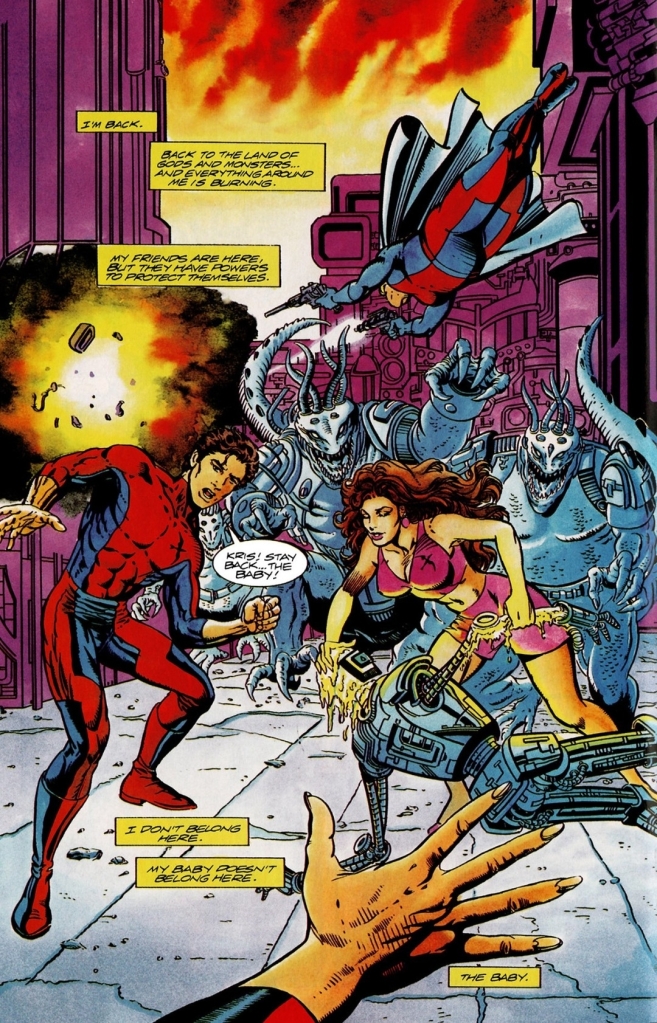
The story here is a complete change of direction compared to issue . For one thing, it takes a look back at key events that took place during the Unity crossover storyline which specifically involved Sting and his teammates. The flashbacks were done through Kris’ memory and she provides the narration (conveniently for us readers) as she shares her personal views about what happened.

More notably, the flashback and narrations reflect how much of an impact the loss of the baby truly was for Kris who even expressed that the infant – destined to be Magnus the robot fighter as an adult – must have hated her for letting him go.

Unity aside, this comic book also follows the private lives of Sting, Kris, Flamingo, Faith and Shatiqua as they now live together in a rented home. While almost all of them have special abilities, they are still vulnerable with not just the threat of the Harbinger foundation but also the with the costs and constant challenges of living independently from their respective families. It’s nice that as this was Maurice Fontenot’s debut as writer of this particular monthly series, the general tone was maintained and the story was told with realism in mind. I also like the way Fontenot dramatized the characters particularly with Sting still living with a false sense of maturity at a time when his love Kris is struggling over the visions about the past and her lost child.

This comic book also marked the series debut of Howard Simpson whose art style resembles that of David Lapham.

Conclusion

A quick look back at Unity.

Harbinger (1993) has a solid touch on developing the lead characters – specifically Kris – and went as far as recalling some of the events of Unity while even having a few pages featuring one of Valiant Comics’ major characters which you can easily guess who. To put it short, this comic book ultimately served as a build-up for further confrontations with the Harbinger foundation but the characterization of Kris here is the real meat of the story. By the time you reach the end, you should be able to know Kris more. Definitely a solid read!

Overall, Harbinger (1993) is highly recommended!

+++++

Thank you for reading. If you find this article engaging, please click the like button below, share this article to others and also please consider making a donation to support my publishing. If you are looking for a copywriter to create content for your special project or business, check out my services and my portfolio. Feel free to contact me with a private message. Also please feel free to visit my Facebook page Author Carlo Carrasco and follow me on Twitter at  @HavenorFantasy as well as on Tumblr at https://carlocarrasco.tumblr.com/ and on Instagram at https://www.instagram.com/authorcarlocarrasco

A Look Back at Harbinger #13 (1993)

Disclaimer: This is my original work with details sourced from reading the comic book and doing personal research. Anyone who wants to use this article, in part or in whole, needs to secure first my permission and agree to cite me as the source and author. Let it be known that any unauthorized use of this article will constrain the author to pursue the remedies under R.A. No. 8293, the Revised Penal Code, and/or all applicable legal actions under the laws of the Philippines.

Welcome back superhero enthusiasts, 1990s culture enthusiasts and comic book collectors! Today we go back to the early 1990s and explore a part of the Valiant Comics shared universe through the Harbinger monthly series.

In my previous retro review, Sting, Faith, Kris, Flamingo and newcomer Shatiqua pursued a mission recklessly with revenge over the death of Torque as the main motivator. That story symbolically shows that the boundary between good and evil has been blurred away as Sting and his team just kept on pursuing their goals disregarding the rule of law and committing acts that make them no different from the sinister Harbinger Foundation. In some ways, Sting himself is gradually becoming as evil and abusive as his target (and former mentor) – Toyo Harada.

With those details laid down, here is a look back at Harbinger , published in 1993 by Valiant Comics with a story written and drawn by David Lapham.

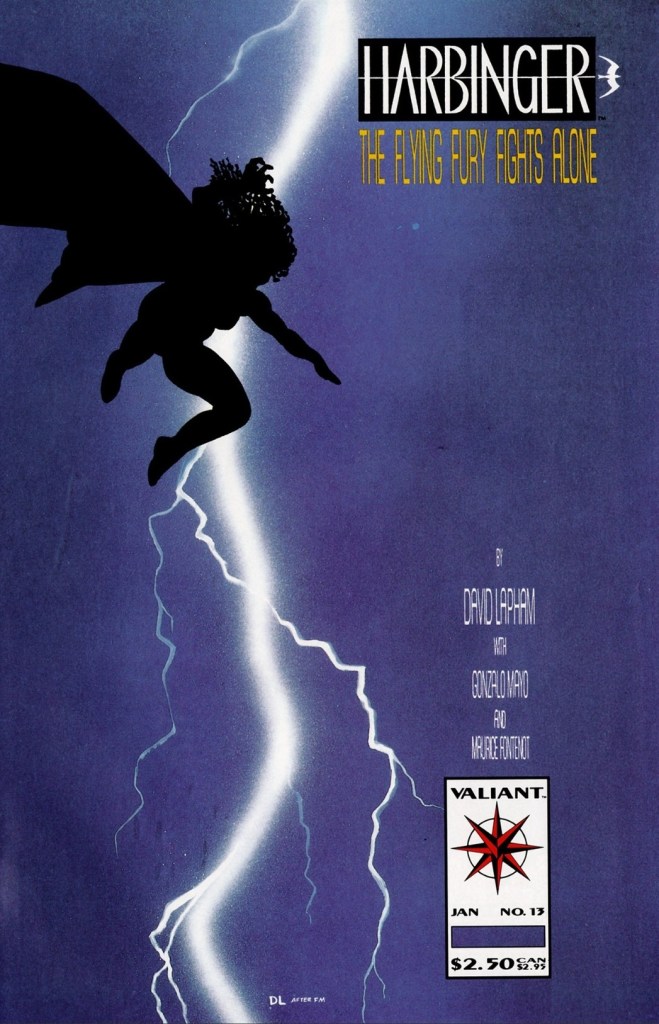
The cover that closely imitates the iconic image of Frank Miller’s The Dark Knight Returns.

Early story

The story begins with Faith flying high above the streets of New York City talking to herself as she enjoys the flight as well as the flight of fantasy in her mind. After discreetly landing in an alley, she bumps into a man as she moves into the city sidewalk. Two other men could not help but laugh at what they just saw.

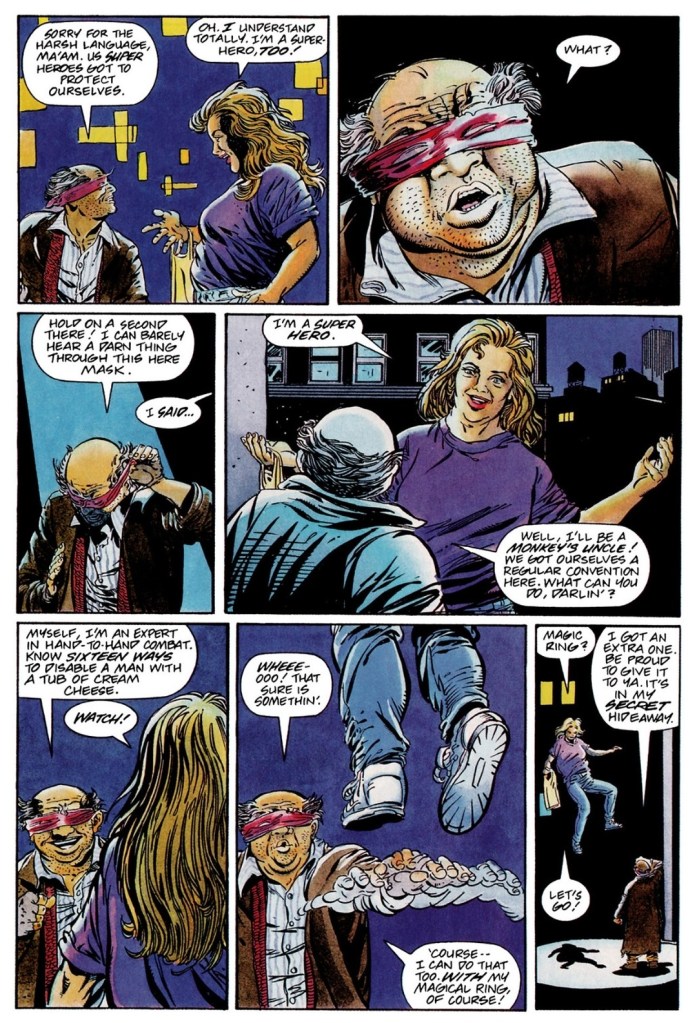
The man Faith bumped into gets mad, grabs her by the shirt and pulls out a knife. Suddenly, an old man comes out of nowhere and threatens the knife-wielding man which in turn prevented Faith from getting hurt. Upon realizing a lot of people are around them and watching, the knife-wielding man and his two companions move away.

The old man then befriends Faith. She thanks him for his help…

Quality

Faith and the old man.

As I expected another Harbinger tale about Sting and his team going up against Harada’s foundation, I can say that this comic book surprised me in a rather delightful way. To be clear, this is a story mainly focused on Faith and under Lapham’s direction, readers will see her personality emphasized more than ever and what she is capable of with not just her special abilities but also with how she deals with problems.

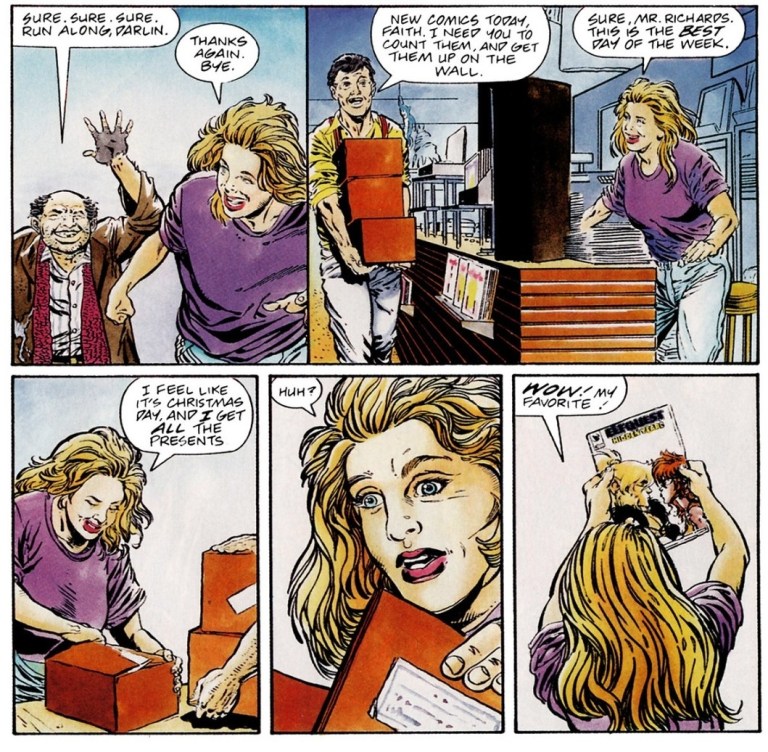
The good news here is that the writing by Lapham is solid. Faith is clearly the comic book geek among her teammates and to see her work inside a comic book store in the city is amusing as her portrayal captures how comic book fans react when they see something really fascinating or special among the many printed materials displayed. It should be noted that Faith’s independence is nicely portrayed and she has her own way of dealing with the harshness of reality without ever letting her personal obsession with entertainment overwhelm her reasoning. The ironic thing about Faith’s view of life around her is that she does not show any regrets about the crimes the she and her teammates committed.

Those who are looking for superhero spectacle will find something gritty and short with regards to Faith. Adding further zest in this comic book are fantasized excerpts from a particular comic book Faith reads in the story.

Conclusion

Faith working inside the comic book store.

Harbinger (1993) is a very surprising read that clearly delivered a good bout of fun. Its main attraction is Faith herself and this comic book has the most in-depth development of her character to date. Through her, comic book readers will have something to resonate with when it comes to comic book culture and geek interests. Ultimately, David Lapham succeeded in defining Faith and telling a solid Harbinger tale mainly focused on her. In some ways, this comic book is like a relief from all the tension built up on the rivalry between Sting’s team and the Harbinger Foundation. That being said, this comic book is no filler and it fits right in the monthly series.

Overall, Harbinger (1993) is highly recommended!

+++++

Thank you for reading. If you find this article engaging, please click the like button below, share this article to others and also please consider making a donation to support my publishing. If you are looking for a copywriter to create content for your special project or business, check out my services and my portfolio. Feel free to contact me with a private message. Also please feel free to visit my Facebook page Author Carlo Carrasco and follow me on Twitter at  @HavenorFantasy as well as on Tumblr at https://carlocarrasco.tumblr.com/ and on Instagram at https://www.instagram.com/authorcarlocarrasco
A Look Back at Harbinger #12 (1992)

Disclaimer: This is my original work with details sourced from reading the comic book and doing personal research. Anyone who wants to use this article, in part or in whole, needs to secure first my permission and agree to cite me as the source and author. Let it be known that any unauthorized use of this article will constrain the author to pursue the remedies under R.A. No. 8293, the Revised Penal Code, and/or all applicable legal actions under the laws of the Philippines.

Welcome back superhero enthusiasts, 1990s culture enthusiasts and comic book collectors! Today we go back to the early 1990s and explore a part of the Valiant Comics shared universe through the Harbinger monthly series.

In my previous retro review, Sting, Faith, Kris and Flamingo adjusted themselves to normal living. As far as they are concerned, several months had passed for them during their time in the unknown world during the events of Unity. For their real world, however, very little time had passed. They also took a renewed effort to search for powered beings like themselves as part of their plan to protect themselves and be able to take down the Harbinger foundation in due time.

With those details laid down, here is a look back at Harbinger , published in 1992 by Valiant Comics with a story written and drawn by David Lapham.

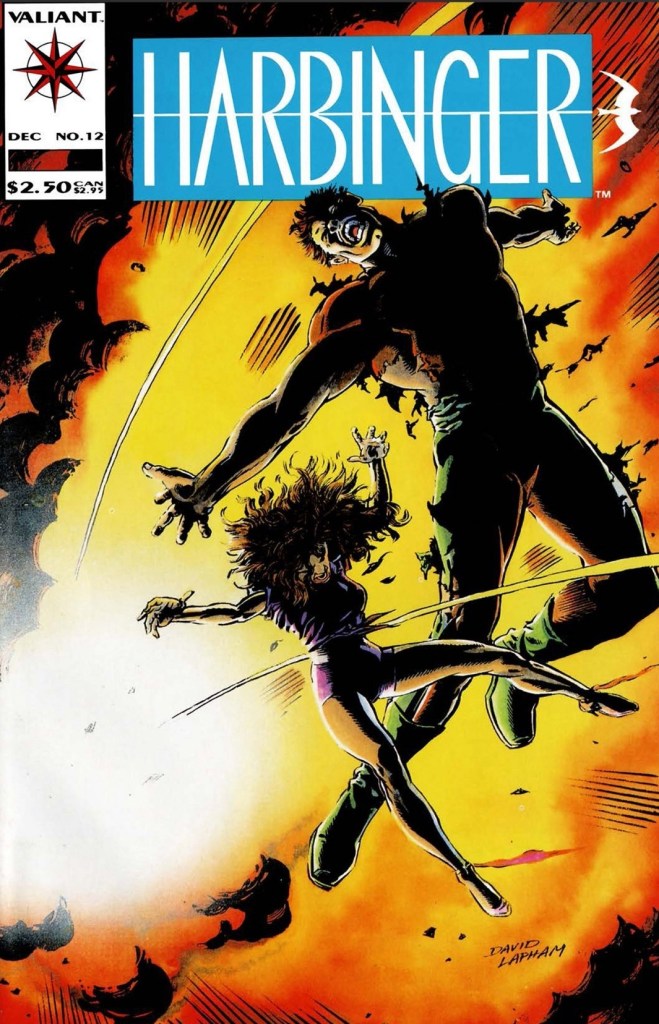
The cover.

Early story

The story begins during the wee hours of September 4, 1992 inside the rented house occupied by Sting, Flamingo, Kris and Faith. Flamingo wakes up from another nightmare causing her to unintentionally burn part of her bed. Her teammates rush in to comfort her and it turns out Flamingo just had her third nightmare of the week which reflects her sadness over the death of their late teammate Torque. In response to this, Sting takes Faith with him to fly out and do some information gathering at the Harbinger office in New York.

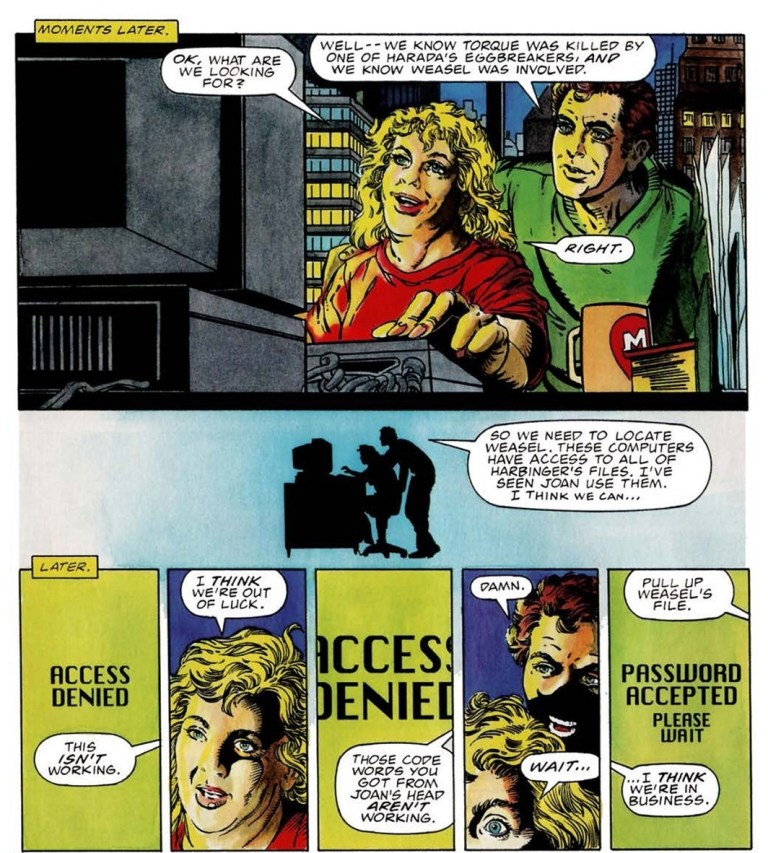
It turns out Sting had been covertly breaking in to the said office in recent times primarily to get information about the latest moves of the one organization that wants them defeated. After sneaking into the New York office of Harbinger, Sting uses his power on a Harbinger employee named Joan to get codes from her to get into the organization’s computer network…

Quality

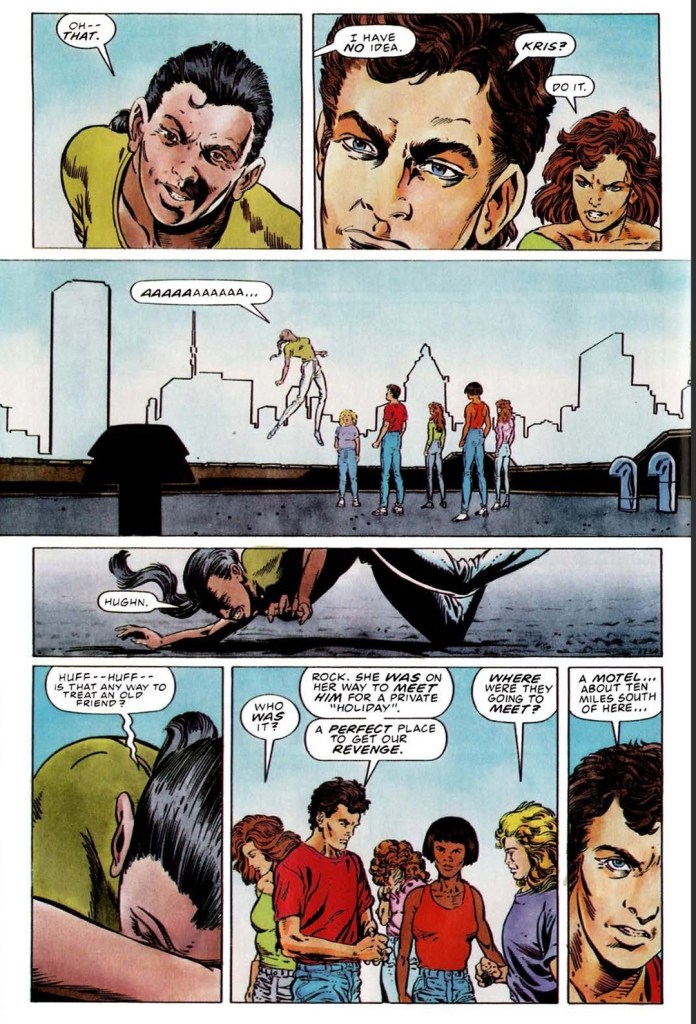
Clearly Sting and his teammates are becoming as bad as their counterparts at the Harbinger foundation. Sting looks like he is destined to become sinister and unstoppable as his target Toyo Harada.

Considering how I felt after reading issue , this comic book series indeed took a turn to a new creative direction under David Lapham’s writing (note: this is the 2nd Harbinger story Lapham wrote). Not only did Sting and his teammates gain a new member with Shatiqua, they daringly pursued another dangerous mission that could be described as reckless and even idiotic. Even though they knew that the Harbinger foundation was strongly powerful and had many powered young adults as opposition, revenge over the death of Torque motivated them to take on their enemies head-on one member at a time.

David Lapham successfully portrayed Sting and his team to be as ruthless as Harbinger which strongly symbolizes the blurring of the boundary between good and evil. With regards to Sting, I saw a powerful teenager who could someday grow to be an evil leader similar to his rival and main target Toyo Harada. The mere fact that revenge was the objective for the team shows how dark Sting has turned even though he believes that he and his teammates are victims trying to survive and be free from the present danger of the Harbinger foundation.

Along the way, this comic book shows Flamingo at her most emotional state as she still clings on to the ate Torque. Her portrayal in this comic book is quite believable as it reflects the difficulties that teenagers in real life experience when it comes to letting go of the past and struggle to move forward as they carry bitterness and pain with them.

If you are looking for superhero spectacle, there is a lot to enjoy here. I won’t say how it is presented because that is something you yourselves should read and discover.

Conclusion

Breaking in and hacking into a private company’s network are crimes that Sting and Faith are comfortable with.

Harbinger (1992) is a very solid read! What Jim Shooter established for this series with the first ten issues, David Lapham carefully moved the narrative forward to a new direction while still maintaining the elements that defined the main characters, why they exist and what they are fighting for.  At this stage in the Harbinger series, Sting, Faith, Flamingo and Kris (plus new member Shatiqua) continue to operate as a team while disregarding the laws and morality because they truly believe that they are victims and moving targets of Harada and the Harbinger foundation. This comic book also has an excellent mix of storytelling, characterization and superhero action while still feeling like it is all grounded with reality (note: the X-Men comics published the same year as this had more fantasy elements). Right now, I’m happy with the way Lapham is handling the story and I’m looking forward to the next issue.

Overall, Harbinger (1992) is highly recommended!

+++++

Thank you for reading. If you find this article engaging, please click the like button below, share this article to others and also please consider making a donation to support my publishing. If you are looking for a copywriter to create content for your special project or business, check out my services and my portfolio. Feel free to contact me with a private message. Also please feel free to visit my Facebook page Author Carlo Carrasco and follow me on Twitter at  @HavenorFantasy as well as on Tumblr at https://carlocarrasco.tumblr.com/ and on Instagram at https://www.instagram.com/authorcarlocarrasco