A Look Back At Halloween (1978)

A lot of people call the 1978 low-budget horror film Halloween from director John Carpenter an all-time classic that is also one of the scariest movies ever made. As a commercial product, it made around $70 million in ticket sales worldwide on a production budget of less than $400,000. When it was first released, it received a mixed reception from movie critics but two notable critics – Roger Ebert and Tom Allen – praised it and arguably propelled the film. Halloween also sparked a wave of slasher horror films that got produced most notably the Friday the 13th and Nightmare on Elm Street films. The slasher horror sub-genre also became a business-friendly model for movie studios that wanted to profit without spending too much on production costs.

Apart from the continued praise and accolades it received, Halloween was selected for preservation in the United States National Film Registry (NFR) by the Library of Congress which found it to be “culturally, historically, or aesthetically significant.” The film was selected by Empire Magazine as an entry in its “The 500 Greatest Movies of All Time” feature.

I learned about all those winning achievements before even getting to watch John Carpenter’s Halloween for the first time ever many years ago.

How was my 90 minutes of watching it the first time? Halloween did not do well for me and it’s not as great as I thought it was.

Let’s start with the plot. On the evening of October 31, 1963, a 6-year-old Michael Myers (wearing a clown costume) killed his teenage sister and was discovered by their parents outside their home (in Haddonfield, Illinois) still holding the knife. Fifteen years later, Michael was to be escorted from a sanitarium to a court by Dr. Sam Loomis and Marion Chambers but he took advantage of a situation to steal the car (of Loomis) and drive all the way to Haddonfield. Along the way he killed a mechanic (to wear a boiler suit) and stole key items (knives, rope and the distinctive mask) from a store.

Shortly enough Myers stalks Laurie Strode while Dr. Loomis reaches Haddonfield anticipating great danger from the Myers. Wanna know what happens? Watch the movie if you can.

Strong points

H2
Jamie Lee Curtis and John Carpenter on the set of Halloween.

Halloween is not a mere low-budget horror movie that got very successful commercially. Rather it is a labor of love and collaboration. Many times during the filming, the cast members participated in the arrangement of the equipment and along the way they bonded closely with John Carpenter, Debra Hill and the other film crew members. In some ways, the bonding added to the serviceable quality of the actors’ performances on-screen as well as the clever techniques used by the filmmakers. Donald Pleasance is the true start of the film and clearly did his best on making Dr. Loomis a very believable concerned professional that viewers can relate with. Jamie Lee Curtis as Laurie Strode is memorable and will always be remembered as the archetype “final girl” of the horror genre.

Carpenter did not only write and direct the film but also provided the music which alone added to the scare factor and overall mood of the film. Definitely without the music, the movie would have been ineffective in scaring viewers. Even until now, having a movie director who is also talented and capable of providing the music is rare.

Considering the low budget, the filmmakers did a good job making the movie visually creepy. The way they had Michael Myers mix in with the shadows in the dark interiors of the houses remains great to watch. Also who could forget Michael’s emerging from the darkness in the background as Laurie Strode (in the brighter foreground) remained unaware of his presence late in the film? That sequence is true horror classic.

The cinematography by Dean Cundley is excellent to the eyes. The film looks bigger than its budget shows and there were lots of shots showing a wide, open “world” within.

As for the horror icon Michael Myers, having him as a mysterious figure was the right move pulled of here. He stalks people and takes his time killing the victims which easily freaked out moviegoers back in 1978. His mask with a very expressionless face further added to his creepy look. Back to his being mysterious, Michael Myers is truly effective as a violent horror figure as moviegoers are left up to imagine on their own why is he such a killer, why is he so cold, what could have made him like that, etc.

Weak spots

While the movie had its strong points, they are not enough to keep Halloween the acclaimed, all-time, very scary movie many claimed to be. In my honest view, I don’t find Halloween scary at all even with the combined visuals, action and music.

As it preceded the 1980s wave of slasher horror movies, John Carpenter’s movie lacked the violence and the goriness of those other films which ultimately made it look tame by comparison. It is no wonder why when the filmmakers produced Halloween II (1981), moves were made to make that sequel more violent and gory to keep up with the competition. That being said, Halloween just can’t keep up with those other slasher horror films when it comes to scare factor and violence. Really, Halloween is ultimately not scary to me.

While Michael Myers is iconic as a horror figure, he really is not that intimidating as a villain in the movie. Sure he stands from outside the place staring at Laurie Strode like an obsessed stalker but I personally don’t find that effective. In fact, I just end up saying, “Oh, he’s just posing to catch Laurie’s attention and then vanishes without a trace…like an attention grabber with some cowardice within.”

On the way things happened in the story, unrealistic or unbelievable scenarios made me lose focus on the narrative. Let’s be honest with ourselves as we try to relate to what happened and who took part in the story. Who would walk into another house alone in the dark (read: not bothering to turn the lights on) alone? Who would go to the yard alone in the dark to check on the noise or disturbance felt? The lack of lighting sure adds to the creepy factor but ultimately these are cheap tactics by filmmakers to build up suspense and jump scares.

And then there was that scene in which Dr. Loomis spent too much time standing at one particular spot only to realize that his stolen car was just parked nearby. Was he absent-minded all the time to even notice his car?

Another weakness in the film is its slow pacing which made me feel sleepy at times. The film’s dialogue lacked punch and there was a lack of interesting developments before the killings set in. As for the serviceable acting, there were a few actors playing the victims of Michael Myers who registered sub-par reactions which detracted from the targeted scare and shock values of the killings. Perhaps a few more takes and compelling the actors to perform better would have helped.

Conclusion

I know I will be bashed here by the fans of Halloween and John Carpenter but I must say that 1978’s Halloween is simply not a great film, not scary at all and it did not age well. I question not only the acclaim it received but also its status as a preserved film in the National Film Registry. Had I not seen all the other slasher horror films and limited myself to Halloween, then this John Carpenter movie would have been more engaging and scarier. Sadly that’s not the case with reality right now and I can clearly say that Halloween is over-rated. Sorry John Carpenter.


Author’s Note: This article was originally published at my old Geeks and Villagers blog. What you read on this website was an updated and expanded version. In other words, this newest version you just read is the most definitive version.


Thank you for reading. If you find this article to be engaging, please click the like button below and also please consider sharing this article to others. Also my fantasy book The World of Havenor is still available in paperback and e-book format. If you are looking for a copywriter to create content for your special project or business, check out my services and my portfolio. Feel free to contact me as well. Also please feel free to visit my Facebook page Author Carlo Carrasco.


A look back at Resident Evil 3: Nemesis

My Resident Evil 3 article updated for your enjoyment.

carlocarrasco's avatarAuthor Carlo Carrasco

Screenshot_20190115-204136~2.png

First released in late 1999 on the PlayStation console in America, Resident Evil 3: Nemesis (Japan title: Biohazard: Last Escape) was a notable game of the Resident Evil franchise that not only proved to be a lot of fun but also a memorable experience for fans. To this day the game is fondly remembered.

In recent times, the Resident Evil franchise made waves with gamers worldwide with Resident Evil 7 (which came with a very daring change of style and gameplay) and the Resident Evil 2 remake demo (which I played the full 30 minutes of). The RE2 demo instantly brought back my own memories of enjoying the PlayStation version of early 1998. Granted, Resident Evil 2 in 1998 was truly a great sequel and its concept was epic compared to its predecessor’s. Because that game was a major blockbuster, Capcom had to come up with worthy follow-ups.

Then…

View original post 1,906 more words

A look back at Resident Evil 3: Nemesis

Screenshot_20190115-204136~2.png

First released in late 1999 on the PlayStation console in America, Resident Evil 3: Nemesis (Japan title: Biohazard: Last Escape) was a notable game of the Resident Evil franchise that not only proved to be a lot of fun but also a memorable experience for fans. To this day the game is fondly remembered.

In recent times, the Resident Evil franchise made waves with gamers worldwide with Resident Evil 7 (which came with a very daring change of style and gameplay) and the Resident Evil 2 remake demo (which I played the full 30 minutes of). The RE2 demo instantly brought back my own memories of enjoying the PlayStation version of early 1998. Granted, Resident Evil 2 in 1998 was truly a great sequel and its concept was epic compared to its predecessor’s. Because that game was a major blockbuster, Capcom had to come up with worthy follow-ups.

Then something happened over at Capcom in Japan. The initial concept for a sequel to RE2 was in the form of a story set on a luxury cruise liner but the company decided it lacked the time to produce a game out of it and this was related to Sony’s unveiling of the PlayStation 2 console.

Screenshot_20190115-203934~2.png

After some shuffling of executives and creative people, a team composed of not-so-experienced talents led by game director Kazuhiro Aoyama was formed to produce a spin-off  with a plot penned by company writer Yasuhisa Kawamura. The story was reviewed and approved by Flagship (an internal team that led the creative charge of Resident Evil projects) and RE creator Shinji Mikami worked as producer on the project.

Regarding its status, Resident Evil 3 was developed in tandem with the Sega Dreamcast-bound game that became Resident Evil: Code Veronica which was a bigger project and was the true sequel to RE2. The tricky part was that Capcom decided that its RE games released on PlayStation will carry a number on the title for “consistency” while RE games released on other platforms would carry subtitles.

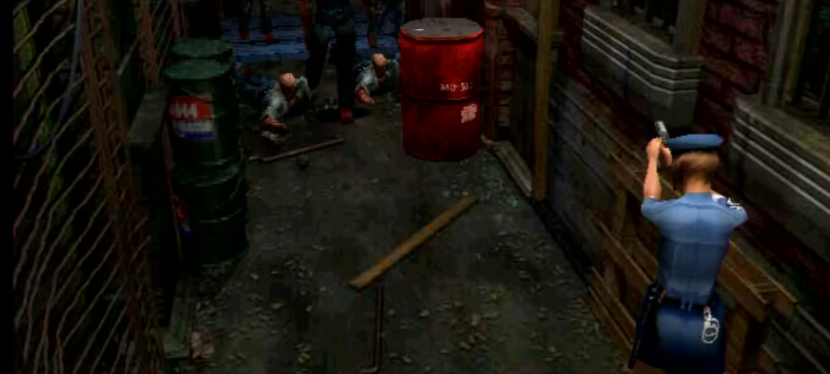
RE3 followed the exploits of Jill Valentine, who was a protagonist in the 1996 original Resident Evil game. The story begins with her stuck in the middle of Raccoon City surrounded by flesh-eating zombies and she has no choice but to fight, run and escape to survive. Along the way, she discovers that what she learned from Umbrella in the first game was nothing compared to the more sinister intentions of the company she discovers in RE3. Making matters even harder for her was Nemesis, a large walking bio-weapon whose purpose is to destroy members of the city’s police unit S.T.A.R.S. (which Jill belongs to).

Screenshot_20190115-210004~2.png

For what started as a spin-off, Resident Evil 3’s gameplay showed notable improvements over that of Resident Evil 2. As a survival horror game, it has the awkward tank-like controls, the static pre-rendered environments with fixed camera angles and challenges of moving from one place to another while dealing with zombies or monsters.

The most notable improvement made was the addition of the ability for players to do 180-degree quick turn-around movements when controlling the character. Not only does this make moving the character easier, it also adds more speed and strategy into the game itself especially when the protagonist is surrounded by many zombies or monsters. The pace of gameplay also quickened with the quick turn-around.

Another addition is the ammunition crafting system that allows you to make more ammo for your weapons by combining the raw material (example: gun powder) into the in-game ammo-making device. This results making different types of ammunition for different weapons. By the time you reached deeper into the game, more powerful ammunition for newer weapons can be made and used.

Meanwhile the game had key moments that compel players to make a decision as that the narrative and gameplay would move forward. The element of choice is a nice gameplay addition and each choice made showed different results as to what happened next. When Nemesis appears, the game’s movement slows down presenting choices for gamers to make. The good news here is the decision making affects the quality of the story’s ending.

Screenshot_20190115-204827~2.png

The one addition I find questionable in the game is the dodge which works rather unpredictably in terms of response. There are times it worked and there are times it failed. No matter how you use the controls and time them with the action, the results are always inconsistent.

The biggest addition, not to mention the biggest impact, made in the game is Nemesis himself. Unlike Mr. X in Resident Evil 2, Nemesis is the unrelenting stalker whose presence and action deepened the gaming experience. Not only was Nemesis tough to fight with, he also appeared when gamers least expected and he runs a lot to get to Jill (or the mercenary Carlos who was also controlled temporarily by players). The music accompanying Nemesis’ presence also heightened the fear factor. It is argued that Nemesis himself is the most defining feature of Resident Evil 3 and deserved to have the game’s subtitle made after him.

Screenshot_20190115-202827~2.png

In my honest opinion, Nemesis reminds me a lot of the horror icon Jason Voorhees from the Friday The 13th slasher horror movie franchise. Like Jason, Nemesis is heavily disfigured (horrific to look at), stalks his prey relentlessly and does a lot (and anything) to kill his prey. Nemesis’ killing of Brad only shows how deadly he is. Like Jason, Nemesis cannot be reasoned with nor does he feel any pity. He simply won’t stop until he kills you in the game.

In terms of technology, RE3 used the same game engine as RE and RE2. By this time, the technology experts at Capcom improved the visual quality and the 2D pre-rendered backgrounds always felt convincing to me each time I played. Rare are the times when I noticed the 3D polygonal characters or monsters stood out from the 2D environments. With regards to the anti-hero elements, the zombies are more varied and most of all the monsters are creepier to look at. The Hunters made a nice return as well.

In terms of exploration, Resident Evil 3 makes heavy use of the city environment complete with many varied interiors mixed with believable exteriors. There were these alleys, streets (with some stores to enter) and more. The many puzzles as well as machines that required key items to be retrieved provide a good challenge although some may find the backtracking a bit tedious.

The return of Jill

jill

Jill Valentine made a nice return as the protagonist of the game. Right from the start, it was explained that she had resigned from the police force. Regarding her skimpy appearance (the blue tube top she wore with short skirt and boots), it turned out she was on her way out of town when the zombie infestation of Raccoon City begins in RE3.

More on Jill’s sexy default appearance in the game, I believe that Capcom’s creative team designed her like that in response to the sexy, armed woman charm popularized by Lara Croft of the best-selling Tomb Raider game franchise.

Take note of this. The first Resident Evil was released in 1996 many months before the first Tomb Raider came out. By the time Resident Evil 3 was released, the Tomb Raider franchise already had three games (note: there was a 12-month cycle for releasing sequels back then) that each sold in the millions and Lara Croft was quickly established as not only as a pop culture icon but also as a digital sex symbol idolized by millions of guys worldwide. I have this theory that some members of the Resident Evil 3 team subconsciously came up with the tube top look for Jill Valentine with Lara Croft as an influence. To say the least, both Jill and Lara are brave women capable of fighting with varied types of guns.

Screenshot_20190115-210306~2.png

Sex appeal aside, Resident Evil 3’s story is truly a defining tale of Jill Valentine as a character. By connecting her RE3 tale with that of the events of the first game from 1996, I come to realize that her stories made sense. Her becoming disillusioned with the failure of the city police department to go against Umbrella and eventual quitting from the police force was believable. In addition, Nemesis proved to be the ultimate monster she ever faced and all the monsters she encountered in the first game paled in comparison to him.

Alone and without having access to police resources, Jill’s struggle in Resident Evil 3 is a story that won’t be forgotten and the game’s fun and engaging gameplay only made her story even more memorable.

The cinematic “adaptation”

reapocalups
Sienna Guillory as the cinematic Jill Valentine at the left. With her were Sophie Vavasseur as Angela Ashford and director Alexander Witt. (credit: Screen Gems, Inc.)

In 2004, the second Resident Evil live-action movie Resident Evil: Apocalypse was released in cinemas starring Milla Jovovich. The concepts of Resident Evil 3: Nemesis were carelessly adapted by the movie showing a Raccoon City filled with zombies and a live-action Jill Valentine played by Sienna Guillory who appeared with the tube top, short skirt and boots. In a sequence in the movie, Guillory even tried moving like her character’s video game counterpart.

While attention was paid on Jill’s Resident Evil 3 look, Guillory’s portrayal of her was nothing special and this has a lot to do with the screenplay by Paul W.S. Anderson, the directing by Alexander Witt (not really a prolific director) and notably Milla Jovovich’s dominance of the spotlight.

Whenever I watch Guilloy’s Jill in the movie, I really never felt like watching RE3’s Jill at all. Also the film had Jill being inferior to Alice (Milla Jovovich) on screen. There are two scenes in the movie wherein Jill does something to solve the problem, Alice comes in to do it better than her.

Having seen all Resident Evil live-action movies, which I regret for the most part, it is no secret that the filmmakers treated the concepts, characters and other elements from the RE video games with no real respect and certainly with no care about the concerns of Resident Evil game fans.

If you have not seen Resident Evil: Apocalypse and have been interested to see it for the RE3 elements, better not waste your time. Better play the video game instead.

Conclusion

Screenshot_20190115-210810~2.png

Ultimately Resident Evil 3: Nemesis is a classic even though it was never meant to be the big budget sequel to the classic Resident Evil 2. The game deservedly got released on the Sega Dreamcast, the Nintendo GameCube and Windows PC.

Now that Resident Evil mania is back in gamers’ minds right now, I should say that Capcom should consider re-releasing digitally RE3 for Xbox One, PlayStation 4, Nintendo Switch and Windows 10 if ever possible. Even though its tank-like controls are very outdated by today’s standards, Resident Evil 3: Nemesis is a classic that gamers of different ages must enjoy without having to go through the hassle of acquiring old existing copies of it (not to mention having an existing old console to play it). I myself am willing to pay for RE3 to be re-released and play it on my Xbox One. Very recently an enhanced re-release of Onimusha: Warlords was done by Capcom. Making the same treatment with RE3 only makes sense.

Who knows what impact a re-released RE3 would create? Such a re-release could lead to a popular demand for Capcom to make a big budget remake of Resident Evil 3 similar to what they have done with RE2. This will also give today’s gamers an opportunity to experience the one defining story of Jill Valentine.

In ending this article, I posted some YouTube videos of RE3 for your enjoyment.


Thank you for reading. If you find this article to be engaging, please click the like button below and also please consider sharing this article to others. Also my fantasy book The World of Havenor is still available in paperback and e-book format. If you are looking for a copywriter to create content for your special project or business, check out my services and my portfolio. Feel free to contact me as well. Also please feel free to visit my Facebook page Author Carlo Carrasco.