A Look Back at X-Men Unlimited #1 (1993)

Disclaimer: This is my original work with details sourced from reading the comic book and doing personal research. Anyone who wants to use this article, in part or in whole, needs to secure first my permission and agree to cite me as the source and author. Let it be known that any unauthorized use of this article will constrain the author to pursue the remedies under R.A. No. 8293, the Revised Penal Code, and/or all applicable legal actions under the laws of the Philippines.

As mentioned before (refer to my reviews of X-Men 2099 #1 and X-Men #25), 1993 was the year when the 30th anniversary of the X-Men was celebrated. Back then, Internet connection was not very accessible to the public, social media had not been invented and streaming movies and TV shows was not yet the norm. How did Marvel Comic organize the celebration for X-Men fans? By publishing a lot of comic books and selling merchandise.

In the first quarter of 1993, Marvel Comics went on to feed the perceived high demand of X-Men fans by launching X-Men Unlimited which was an all-new comic book series with a schedule of quarterly releases per new comic book (initially with 64 pages of content using glossy paper). They released X-Men Unlimited in March 1993 and I bought a copy for a hefty $3.95.

So what exactly did the said comic book feature? Was it good? We can all find out in this look back at X-Men Unlimited published by Marvel Comics with a story written by Scott Lobdell and drawn by Chris Bachalo.
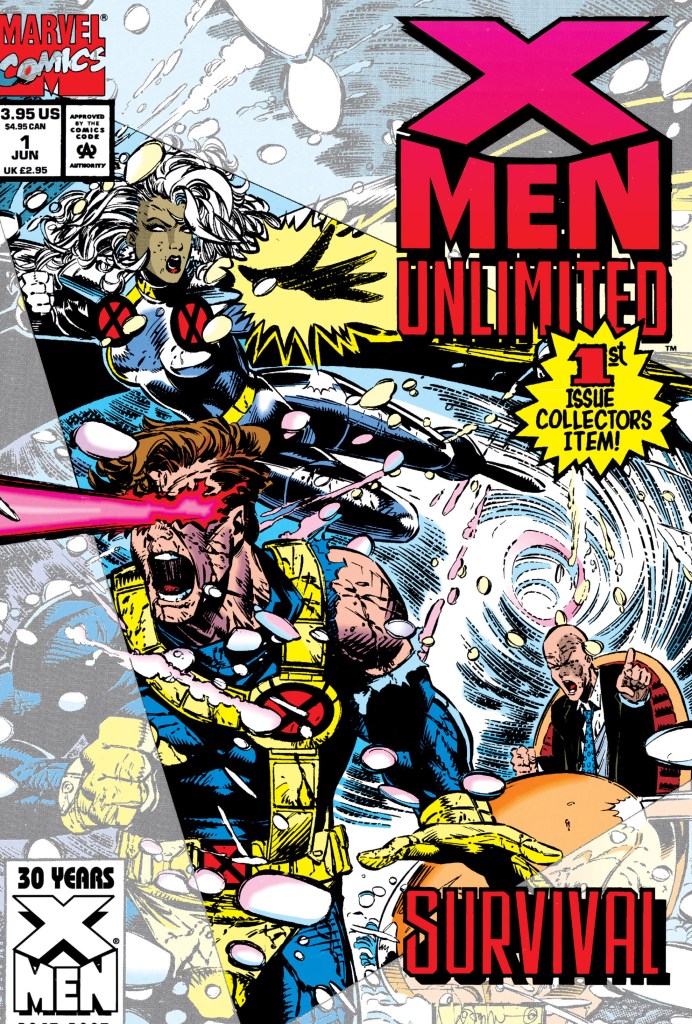
The cover.

Early story

The story begins on the snowy surface of Antarctica where the Blackbird (the X-Men’s jet) has crashed. Cyclops is outside the crashed jet already suffering from internal bleeding and other injuries. As his ruby quartz visor has been lost, he desperately keeps his eyes shut to avoid firing any optic blast. Even with tremendous odds against him, Cyclops concentrates very hard to reach out to Charles Xavier and successfully makes contact. Xavier is surprised.

With telepathic assistance provided by Xavier, Cyclops successfully reaches him and carries him. After some searching, they spot Storm alone on the snow. Elsewhere, a lady gets up from the snow and walks towards a facility. Upon entering, there are scientists working with computers and they called her Ms. Blaze. She asked them if she succeeded in killing Cyclops, Storm and Xavier…

Quality
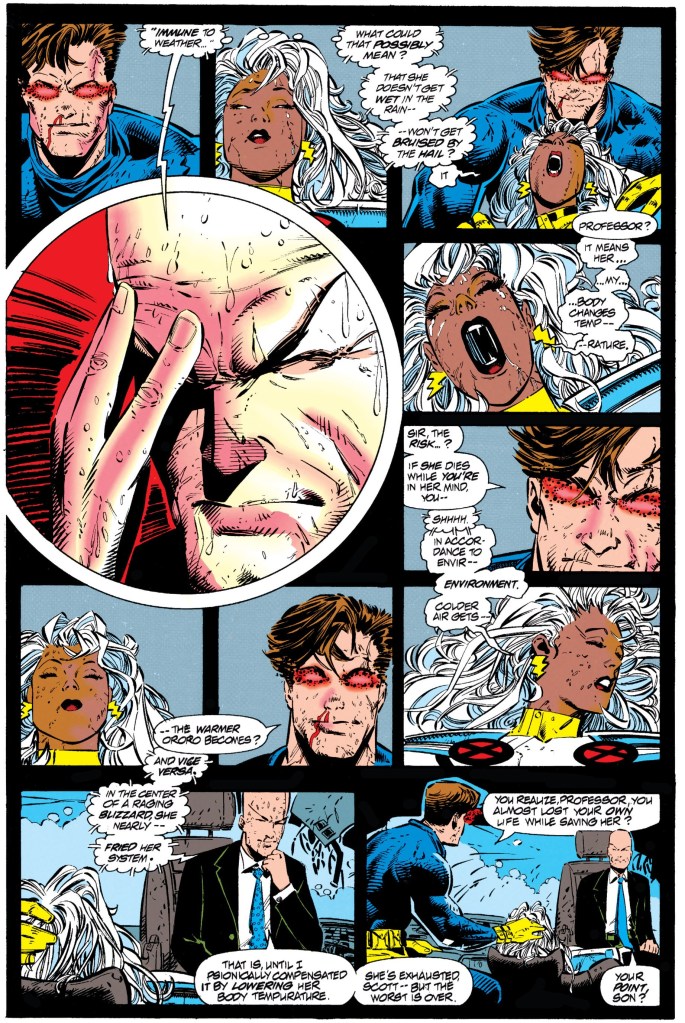
Artist Chris Bachalo failed to pace his art properly on this page.

To get to the point, I should state that the main lesson of this X-Men story written by Lobdell is about leadership mixed with responsibility and survival. Symbolically, the three leaders of the X-Men (Xavier the head with Blue Team leader Cyclops and Gold Team leader Storm) were placed in a situation of great odds and their respective powers cannot just help solve their problems nor help them get away easily. Here we get to see Cyclops, Storm and Xavier really struggling and having no choice but to use their wits as well as skills learned from the past in order to survive and progress. This is easily the comic book’s most unique feature and it is very rare to see Xavier and the two team leaders spend a lot of time together and work with each other. As far as emphasizing the leadership dynamics of the X-Men is concerned, Lobdell succeeded. I should also state that Lobdell really dramatized the respective personalities of the three.

Still there are some notable flaws. I should say the story had lots of dragging moments in between and the overall pace is between slow and medium. The dialogue is quite wordy and ultimately a lot of it felt like fillers than actual attempts to develop personalities and explain things. There were attempts to make the dialogue more philosophical but end up dragging the narrative. I should state that verbal descriptions or narrations in certain pages were quite excessive. If you are looking for superhero spectacle, there is actually little to enjoy here and by the time the final conflict is over, you will end up unsatisfied. Of course, there are also scenes of incidental moments (examples: explosions, the environment causing damage, etc.) that were emphasized as if to make up for the lack of superhero spectacle.  

The antagonist Sienna Blaze is not a compelling villainess. There is no justification as to why she tried to kill the X-Men. The way she is presented, Blaze is more like a reckless and impulsive teenager than a real opposing force against Xavier and his mutants.
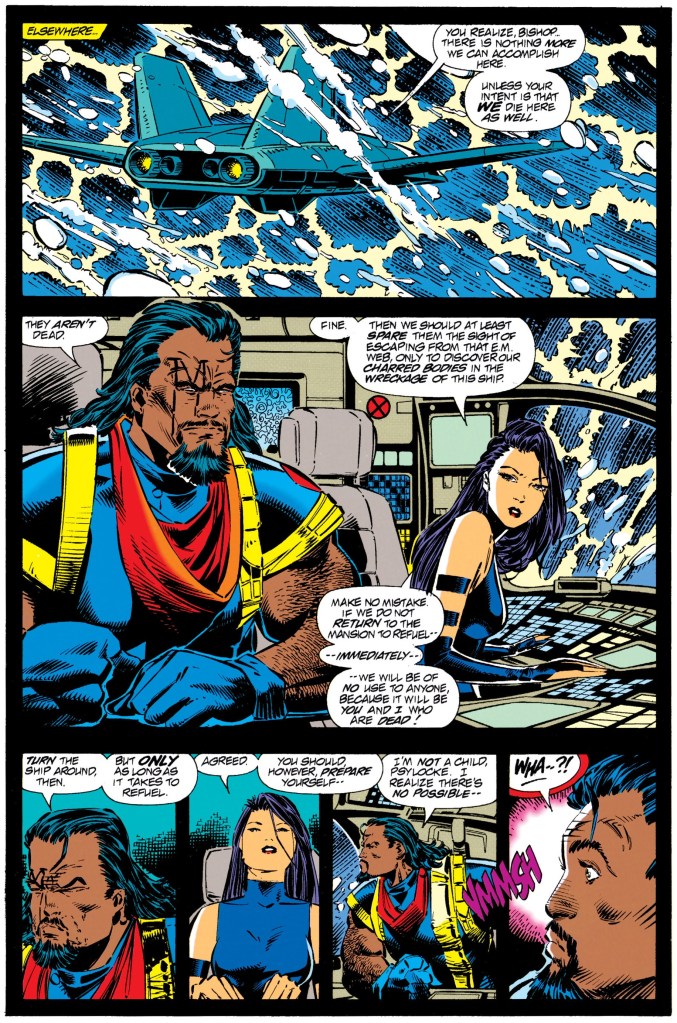
Psylocke and Bishop were the other X-Men members who appeared.

Lastly, there is the art by Chris Bachalo which has always been sub-par and disappointing to look at. While Bachalo did a decent job drawing disaster-related moments, his art on drawing the X-Men really sucked. There were many times when Charles Xavier LOOKED LIKE A DUMMY (think mannequin) than a living person as drawn by Bachalo. The art of this comic book was disappointing in 1993, and it has aged badly by today’s standards.

Apart from the main story, this comic book has a gallery of artworks highlighting the X-Men (including members who did not appear in the said story) done by varied illustrators. The quality of the art, unsurprisingly, is a mixed bag. Ultimately the art gallery served as convenient filler made to satisfy the cravings of X-Men fans.

Conclusion
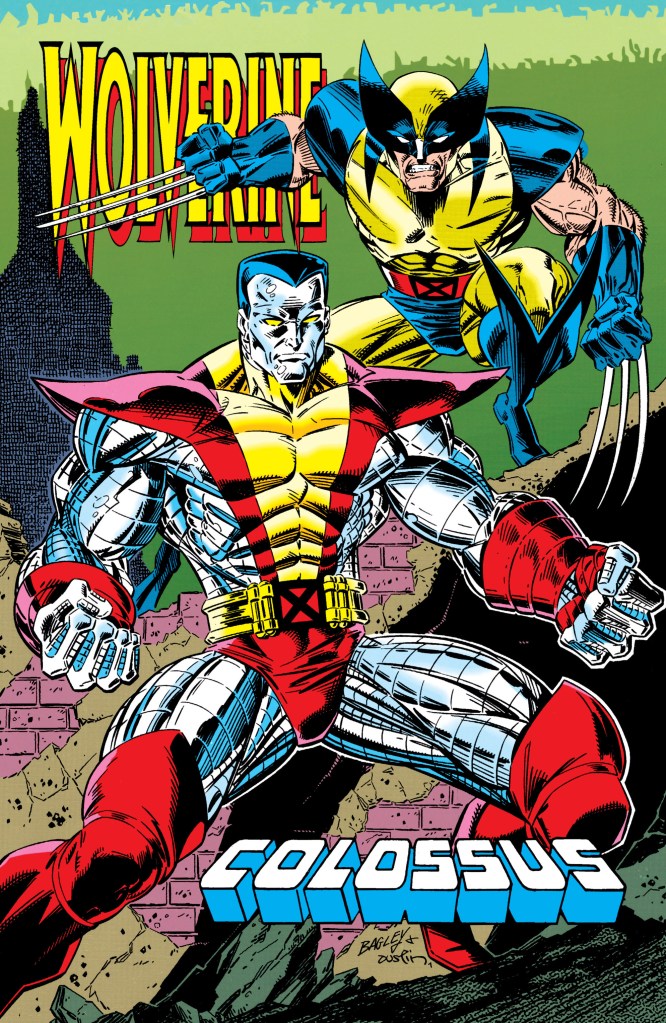
This is how Wolverine and Colossus look as drawn by Mark Bagley who was the Amazing Spider-Man artist of the time.

Apart from being made to sell a bunch of copies and take advantage of the comic book collector craze of the time, X-Men Unlimited (1993) was an effort to keep defining the X-Men for fans and comic readers of the 1990s by adding depth to the bond between Xavier, Storm and Cyclops. The problem is with the execution as the story dragged a lot, and a whole lot of dialogue and text descriptions were made as if to ensure that enough content would fit the 64-pages of content of the comic book. As far as 1993 X-Men comic books go, this one has one of the worst looking artworks used in storytelling. When it comes to its connection with the 30th anniversary of the X-Men, what happened to Xavier in this comic book is connected to the events of Uncanny X-Men and #310.

If you are seriously planning to buy an existing hard copy of X-Men Unlimited (1993), be aware that as of this writing, MileHighComics.com shows that the near-mint copy of the regular edition costs $10 while the near-mint copies of the signed edition (without certificate), the newsstand edition and the signed edition (with certificate of authenticity) cost $105, $32 and $105 respectively.

Overall, X-Men Unlimited (1993) is unsatisfying. If I were you, I would avoid spending any money above its cover price. Considering its quality, the near-mint copy of this comic book is really worth only $1.

+++++

Thank you for reading. If you find this article engaging, please click the like button below and also please consider sharing this article to others. If you are looking for a copywriter to create content for your special project or business, check out my services and my portfolio. Feel free to contact me as well. Also please feel free to visit my Facebook page Author Carlo Carrasco and follow me at HavenorFantasy@twitter.com
A Look Back at X-Men #8 (1992)

Disclaimer: This is my original work with details sourced from reading the comic book and doing personal research. Anyone who wants to use this article, in part or in whole, needs to secure first my permission and agree to cite me as the source and author. Let it be known that any unauthorized use of this article will constrain the author to pursue the remedies under R.A. No. 8293, the Revised Penal Code, and/or all applicable legal actions under the laws of the Philippines.

Do you remember the X-Men animated TV series episode – an adaptation of Days of Future Past – wherein Bishop (who came from the dark future) claimed that Gambit would betray the X-Men and lead them all to darkness? You will see Bishop and Gambit in conflict in this retro review of a Jim Lee-drawn X-Men comic book from the 1990s.

To put things in perspective, back in 1991 Bishop was formally introduced in the Uncanny X-Men monthly series. By that time, Gambit was already wildly popular with X-Men fans. It made sense back then to have the two conflict each other in comic book format as it would add variety and some freshness with the X-Men franchise of the time.

With the short history lesson over, here is a look back at X-Men , published in 1992 by Marvel Comics with a story done by Jim Lee and Scott Lobdell. The art was handled by Lee and Art Thibert.

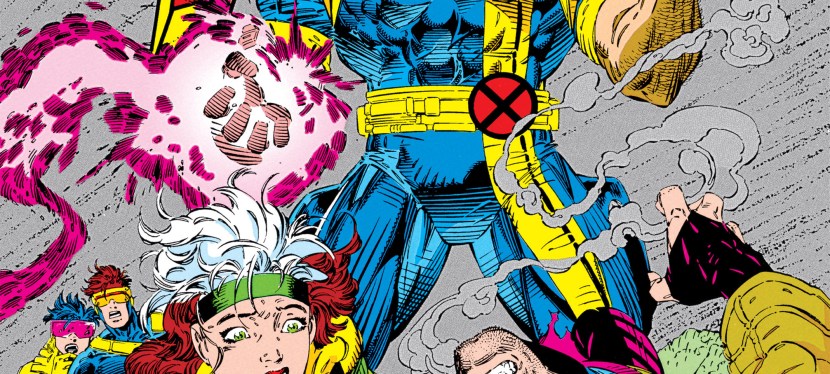
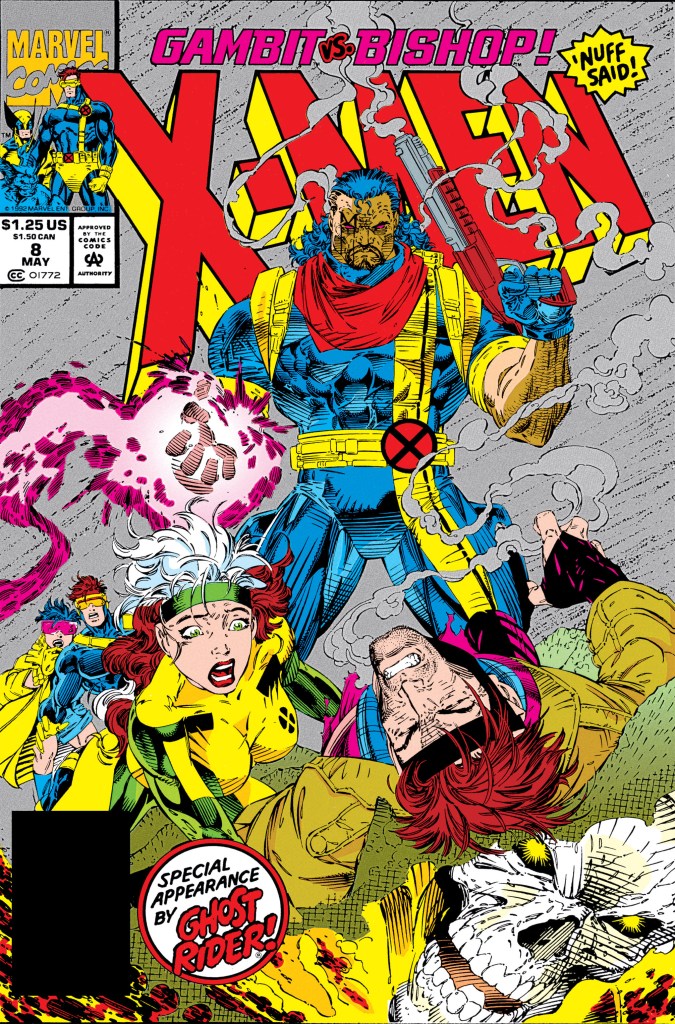
The cover.

Early story

The story begins at the X-Men’s headquarters with Wolverine using the computer to gain access into something until he got interrupted by Jubilee who is accompanied by Cyclops. She tells him that Charles Xavier is about to introduce Bishop to their teammates. Wolverine tells them to go away.

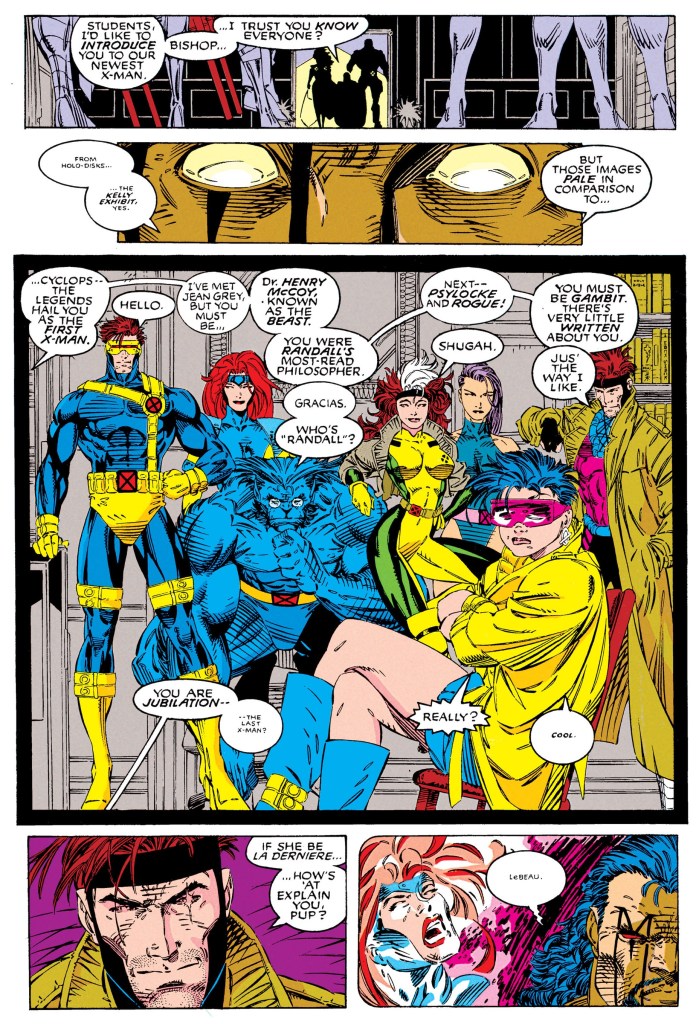
At the mansion, Storm welcomes Bishop in the presence of Xavier who explains to her that the newcomer is from the far future. Slowly Xavier and Storm guide Bishop around the mansion and introduce him to their members. Bishop, who still remembers the legends of the X-Men from his time in the far future, referred to Forge as Genesis. Moments later, Bishop meets Cyclops, Jean Grey, Beast, Rogue, Psylocke, Jubilee and Gambit.

After expressing that there was little know about Gambit, Bishop then claims that a certain someone was the last person to see the X-Men alive before they got betrayed by one of their own. Bishop then tells Xavier to scan Gambit’s thoughts…

Quality

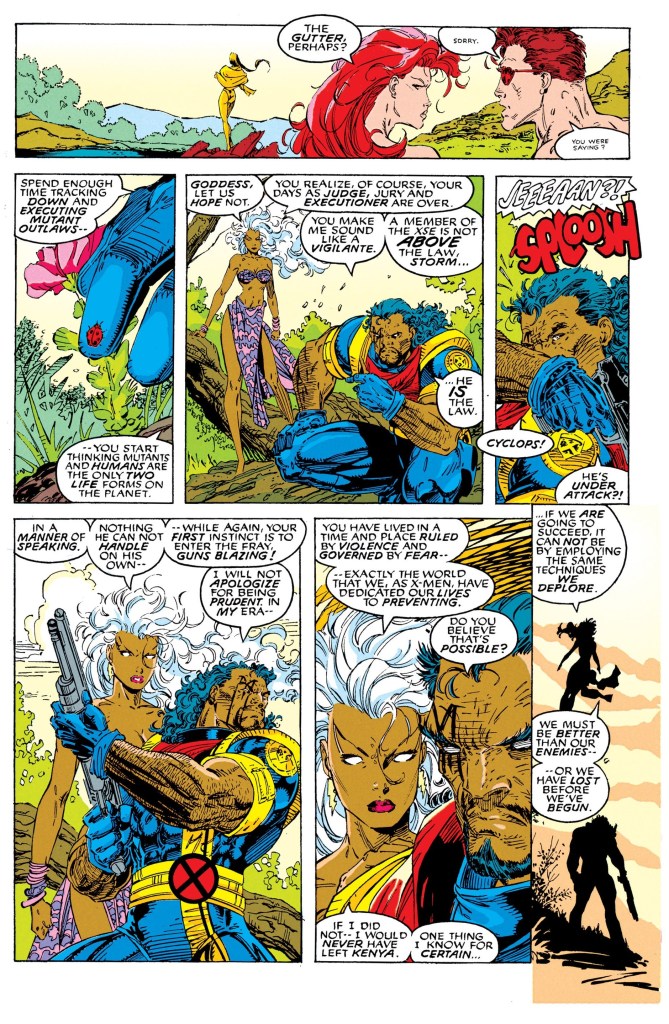
The interaction between Storm and Bishop is great!

What really defines this comic book apart from having art by Jim Lee and the lack of villains are the storytelling and characterization. The good news is that the respective qualities of the plotting (by Lee) and scripting (by Lobdell) were very solid. While there is a lack of a good-versus-evil plot element, characterization alone made this an engaging comic book to read. Without spoiling the plot, the story has a lot more than the promised Bishop-Gambit conflict (I’ll describe it as a short yet sweet part of the story). I also love the big twist that happened in the 2nd half of the story.

More on characterization, I love the fact that Gambit got more developed here complete with a few threads from his past that got visualized efficiently. I also enjoyed the interactions between Gold Team leader Storm and Bishop. Bishop comes from a future filled with violence and desperation which explains why he is always on the edge often thinking of action whenever something happens. Storm meanwhile tried hard to explain to Bishop that their present day society is more peaceful and that he could take things a bit easier, be more reasonable and try to level with others as he became a new part of the X-Men.

As for Jim Lee’s art, his work here is really beautiful to look at which is not surprising at all. As expected, he made the action scenes look dynamic and managed to draw some emotions from certain characters in key scenes.

Conclusion

Bishop meeting the X-Men.

X-Men (1992) is a pretty good comic book to read. At the time of its publication, the integration of Bishop into the X-Men was done months after Chris Claremont’s departure and was clearly an effort by the X-Men creators to modernize the superhero team and keep it fresh. This comic book is not exactly a landmark read but it is pretty entertaining and engaging.

If you are seriously planning to buy an existing hard copy of X-Men (1992), be aware that as of this writing, MileHighComics.com shows that the near-mint copy of the regular edition costs $50 while the near-mint copy of the newsstand edition costs $150.

Overall, X-Men (1992) is recommended.

+++++

Thank you for reading. If you find this article engaging, please click the like button below and also please consider sharing this article to others. If you are looking for a copywriter to create content for your special project or business, check out my services and my portfolio. Feel free to contact me as well. Also please feel free to visit my Facebook page Author Carlo Carrasco and follow me at HavenorFantasy@twitter.com
A Look Back at X-Men Adventures #14 (1993)

Disclaimer: This is my original work with details sourced from reading the comic book and doing personal research. Anyone who wants to use this article, in part or in whole, needs to secure first my permission and agree to cite me as the source and author. Let it be known that any unauthorized use of this article will constrain the author to pursue the remedies under R.A. No. 8293, the Revised Penal Code, and/or all applicable legal actions under the laws of the Philippines.

Last time I reviewed an issue of X-Men Adventures, it was the 13th issue which served as the first half of a two-part adaptation of the animated series’ adaptation of the literary X-Men classic storyline Days of Future Past. It was a compelling and fun comic book to read.

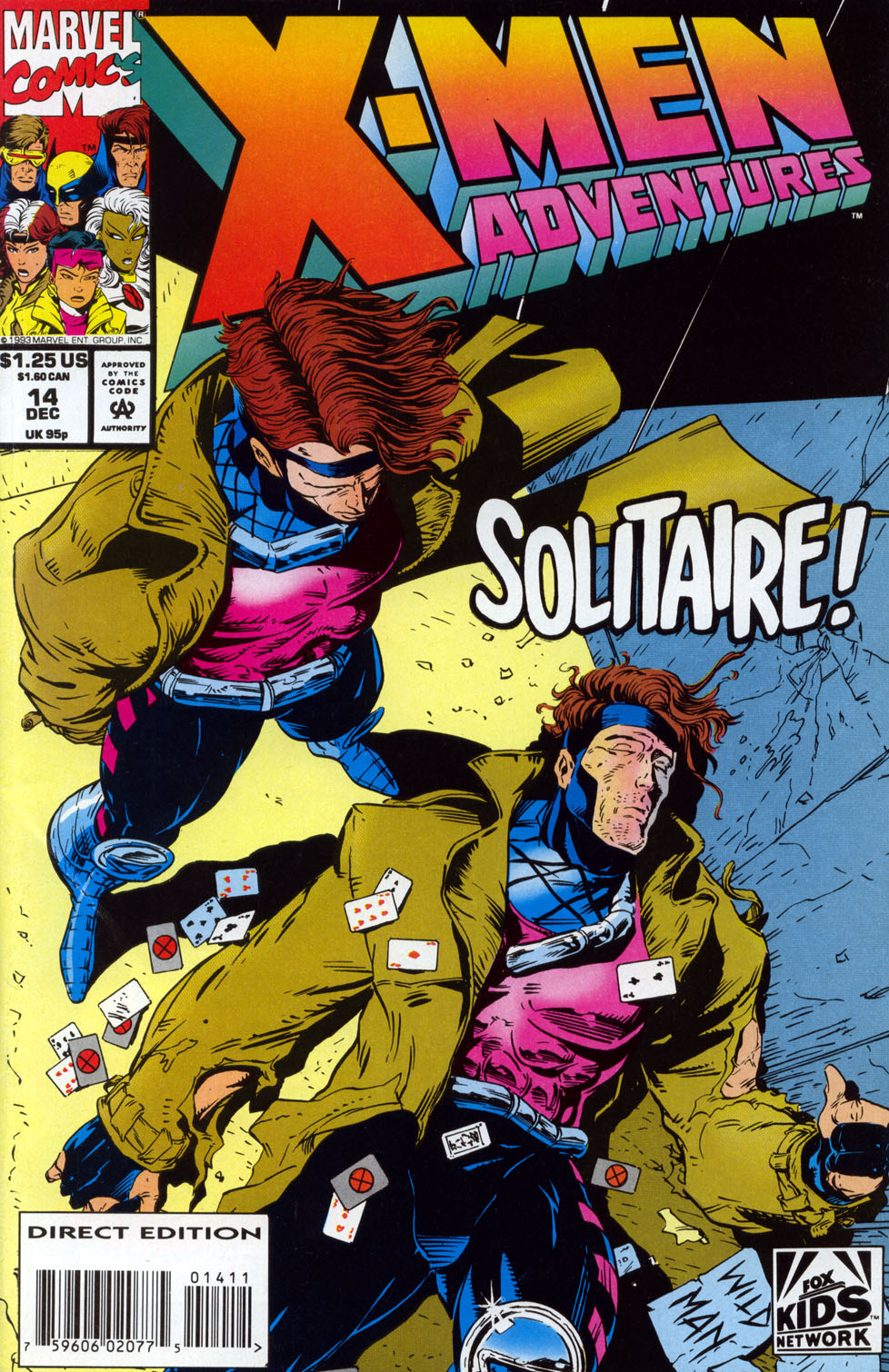
Then I saw the cover of X-Men Adventures which had a nicely drawn cover but instantly spoiled key elements of the 2nd part of the Days of Future Past adaptation. What does the comic book have left to show?

We can all find out in this look back at X-Men Adventures , published in 1993 by Marvel Comics with a story written by Ralph Macchio and drawn by Nick Napalitano.

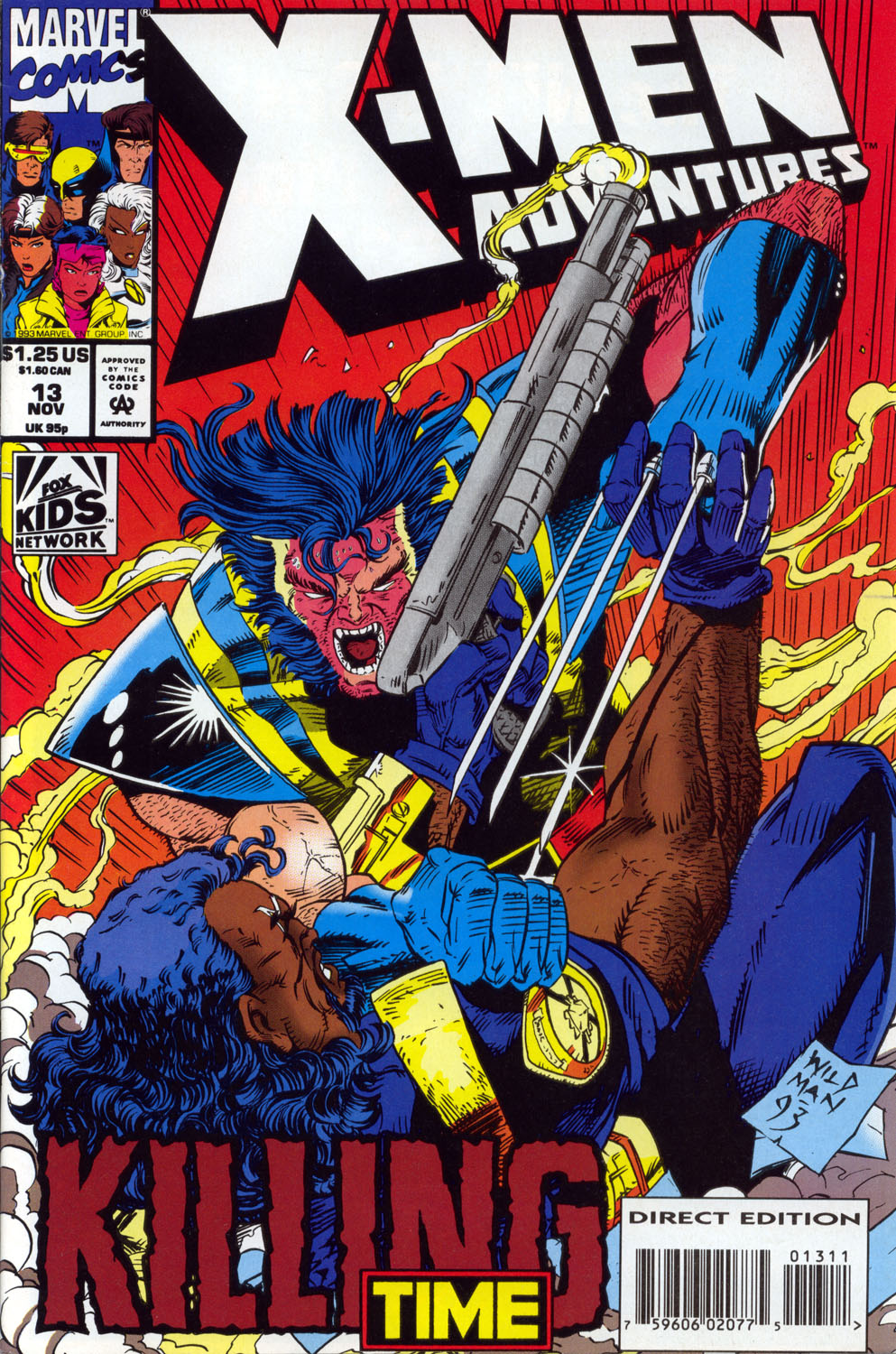
Cover
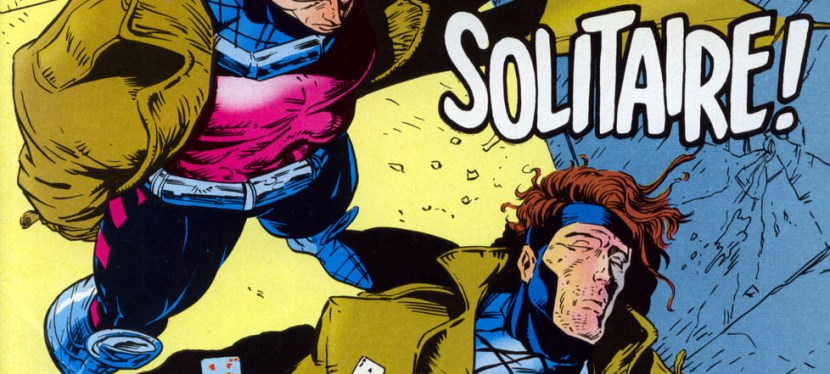
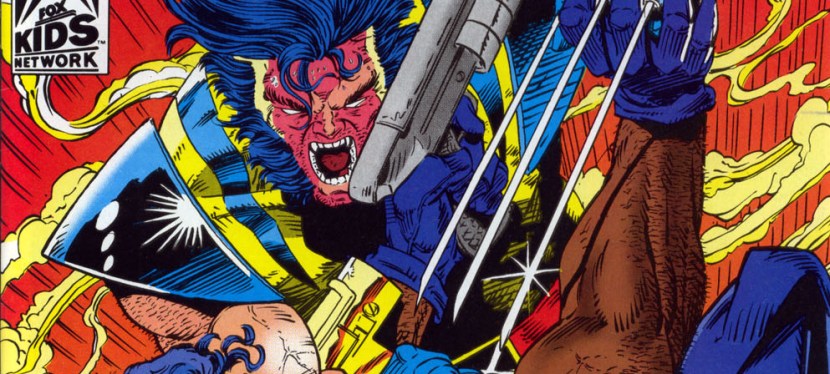
The spoileriffic cover.

Early story

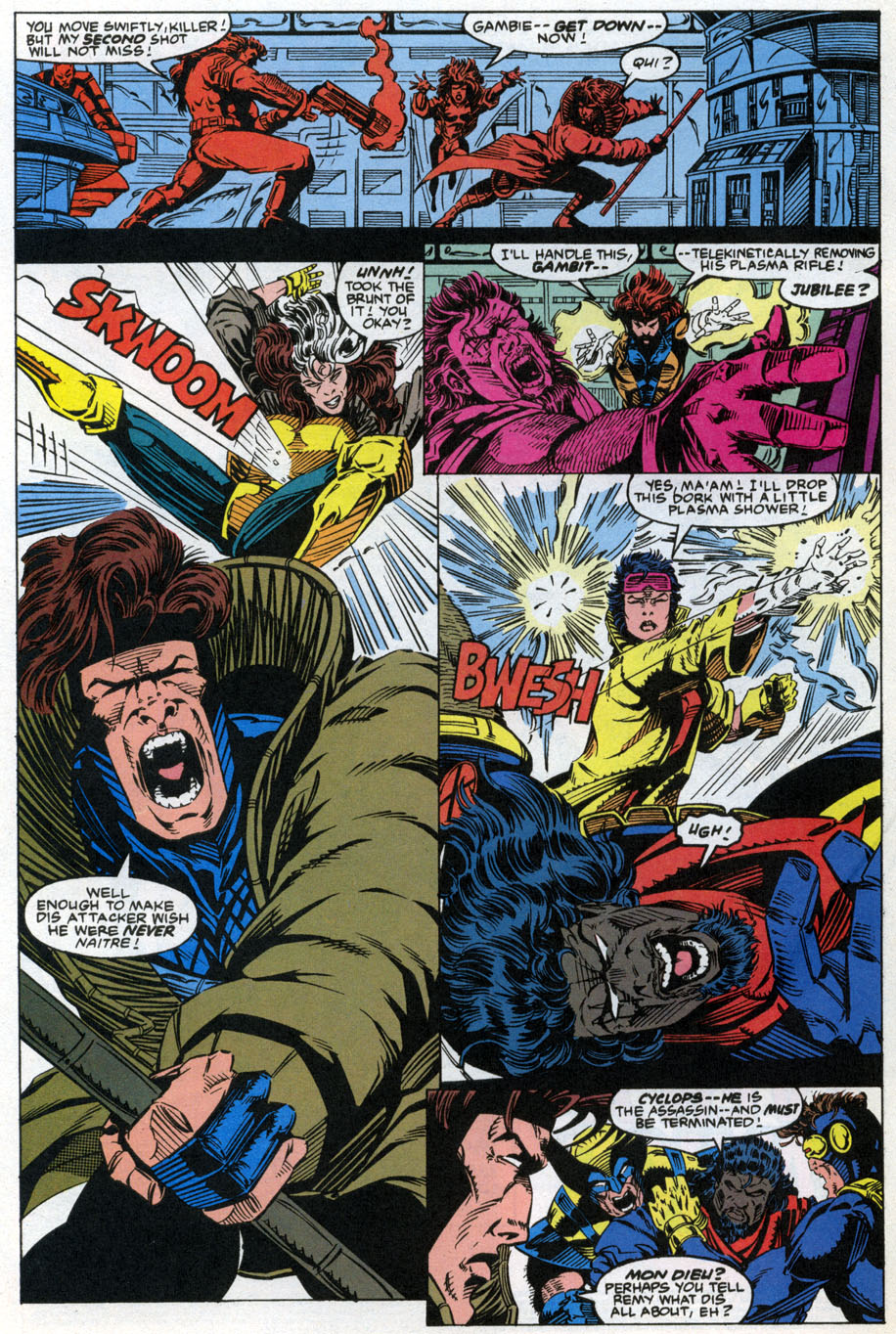
The story begins with Bishop (who came from the dark future on a mission to change events and prevent the darkness from taking over by aligning himself with the X-Men) attacks Gambit whom he identifies as the traitor responsible for the downfall of the X-Men and society. In response, Rogue, Jean Grey and Jubilee intervene to disrupt the conflict paving the way for Wolverine and Cyclops to restrain Bishop.

Bishop insists that everything will change for the worse if Gambit lives to fulfill his destiny: to kill a prominent politician who opposed mutants.

After some squabbling between the X-Men, the situation cools down and Professor X/Charles Xavier announces that he and some members will travel to Washington, D.C. where he will address the senate committee on mutant affairs…

Quality

2
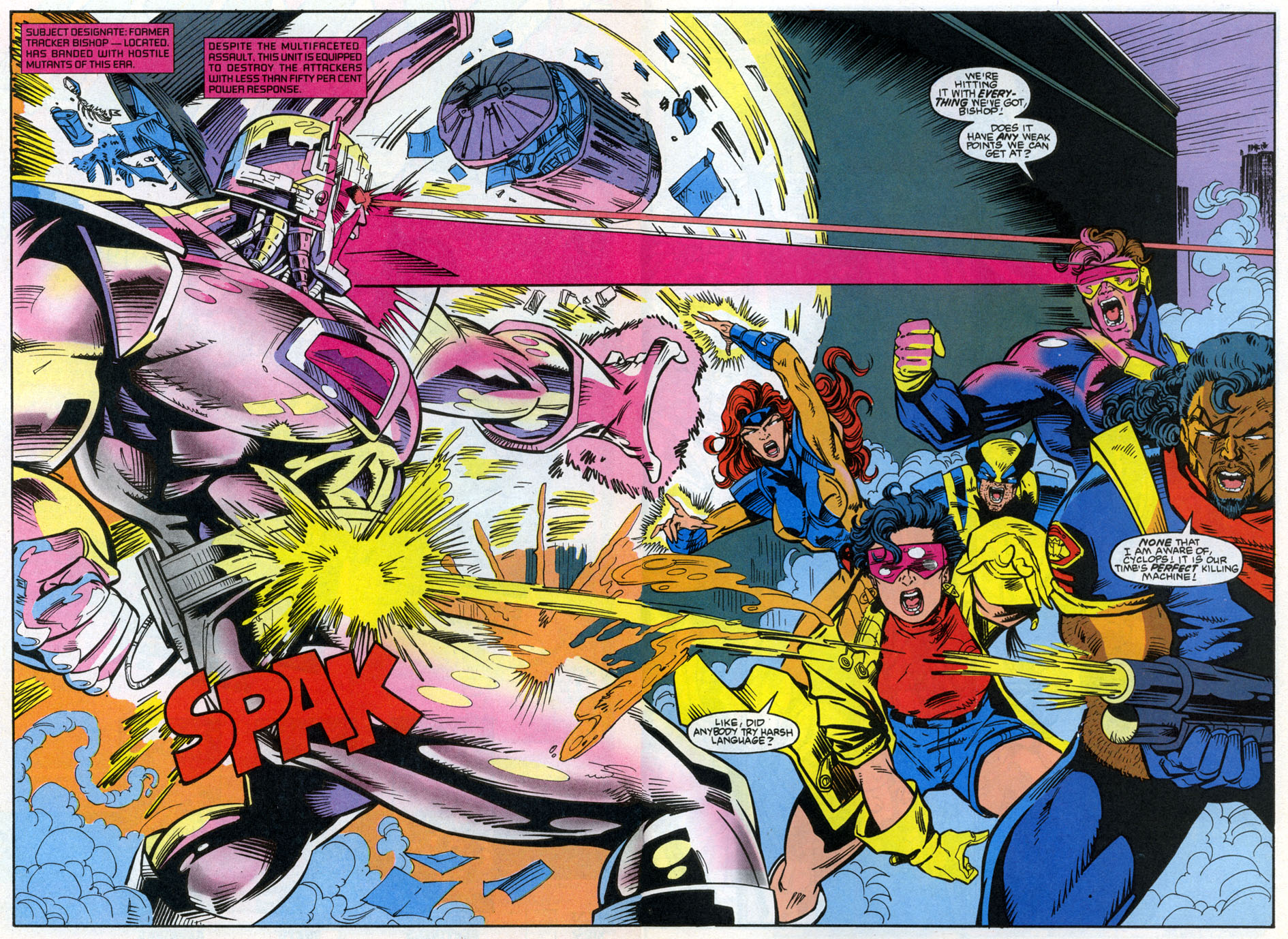
Chaos in the headquarters of the X-Men!

In terms of writing, this comic book carries a lot of punch on its own. It’s a compelling read and like the animated series episode that served as its source, it took its time to build up tension before a twist or a scene of spectacle happens. As expected, it is not a scene-per-scene recreation compared with the animated episode and that’s just fine for me. I only wished the comic book creators retained the animated episode scene in which Bishop tells Wolverine that Gambit’s destined act was the Canadian’s fault, which led to Wolverine memorably saying: “I still can’t believe it.”

More importantly, the story offers readers a nice exploration about how the public and the Federal Government of the United States would react with mutants. To see US Senator Robert Kelly harshly question Professor X if his school functioned for pro-mutant propaganda is quite striking.

When it comes to the art, Napalitano’s work here is a drop in quality and style when compared to Andrew Wildman’s art. His art is not terrible and he exerted effort on translating the script into images but the work looks rushed. There were some weirdly drawn faces of Rogue, Xavier and Wolverine to name some. The action scenes meanwhile lacked punch.

Conclusion

3
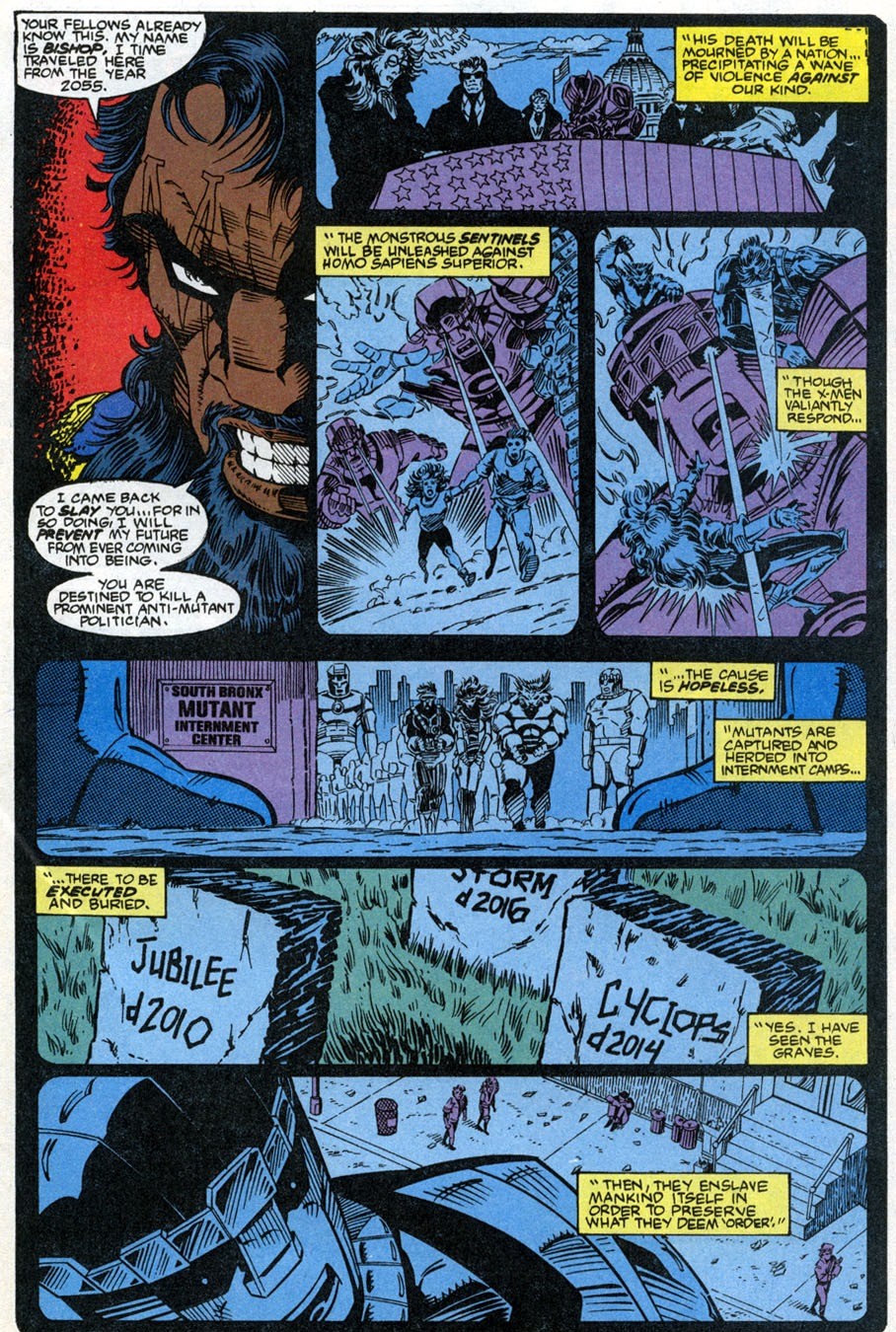
The dark future of the X-Men and their society.

While X-Men Adventures served its purpose on completing the adaptation of Days of Future Past, it failed to deliver the great stuff even though the script was strong. The sub-par art of Napalitano really dragged the presentation down making the comic book end with a whimper.

If you are seriously planning to buy an existing hard copy of X-Men Adventures , be aware that as of this writing, MileHighComics.com shows that the near-mint copy of the regular edition costs $6 while the near-mint copy of the newsstand edition costs $21.

Overall, X-Men Adventures (1993) is satisfactory.


Thank you for reading. If you find this article engaging, please click the like button below and also please consider sharing this article to others. If you are looking for a copywriter to create content for your special project or business, check out my services and my portfolio. Feel free to contact me as well. Also please feel free to visit my Facebook page Author Carlo Carrasco and follow me at HavenorFantasy@twitter.com
A Look Back at X-Men Adventures #13 (1993)

Disclaimer: This is my original work with details sourced from reading the comic book and doing personal research. Anyone who wants to use this article, in part or in whole, needs to secure first my permission and agree to cite me as the source and author. Let it be known that any unauthorized use of this article will constrain the author to pursue the remedies under R.A. No. 8293, the Revised Penal Code, and/or all applicable legal actions under the laws of the Philippines.

It’s funny how adaptations of adaptations turn out in real life. Long before the first live-action X-Men movie was released, an animated TV series (popularly referred to as X-Men: The Animated Series or X-Men TAS) was produced and arguably brought together the fans of both the X-Men comic books along with the animated X-Men followers.

Along the way, Marvel Comics went on to publish a monthly comic book series called X-Men Adventures which themselves were adaptations of the animated series (which itself adapted stories and concepts from the comic books).

The adaptation-of-an-adaptation approach went deep further when the animated series adapted loosely the story of the classic X-Men comic book storyline Days of Future Past (by legends Chris Claremont and John Byrne) which resulted a story told in two episodes on TV. And then there was also a comic book adaptation that followed starting with X-Men Adventures which is the subject of this retro comic book review.

1
The cover.

Early story

Written by Ralph Macchio and drawn by Andrew Wildman, the comic book begins in the dark future of 2055 in New York. The city is in ruins and mutants on the loose are being hunted by Sentinels. A very old Wolverine appears to help two loose mutants but ends up getting stunned with them by Bishop who turns out to be helping the automated authority of the Sentinels.

As he turns over the captured mutants, the Sentinels betray Bishop telling him that they no longer required him. Afterwards, Bishop and Wolverine (who woke up) each carry a person under the watch of a Sentinel. Suddenly, the two other mutants use their powers to attack the Sentinel and Wolverine followed to back up their efforts. The Sentinel however grabbed Wolverine.

Quality

3
A very old Wolverine in the dark future of 2055.

With the exception of some liberties, this comic book closely followed what was told in the first of the 2-episode Days of Future Past animated adaptation. As a comic book story, the story was heavily loaded with details and exposition designed to orient readers about the setting and why the future became a time of darkness in relation to the rise of machines having ultimate power over people.

While the time travel concept of the literary classic involved the mind of Kitty Pryde going into the past, this comic book used the more common concept of having Bishop travel back through time physically which easily reminds me of Kyle Reese arriving from the future in 1984’s The Terminator.

The build-up leading to Bishop’s move to travel back through time was nicely done by the creative team. There was a lot of exposition followed by an incoming attack complete with explosions happening just as Bishop is about to leave. In short, the pay-off was worth it.

The engagement did not end there. In fact, it continued nicely as Bishop meets the X-Men in 1993 with the details of his mission carefully unveiled. Professor Charles Xavier’s reaction to future history (Sentinels taking control of the world) was dramatic and worth re-reading.

As with his other works in the X-Men Adventures comic book series, Andrew Wildman’s art is very good to look at and he knows how to make each scene look engaging whether it’s just an exchange of dialogue between characters or an action scene loaded with a lot of impact.

Conclusion

While it is only half of a 2-issue adaptation of a 2-episode animated adaptation of the Days of Future Past literary classic, X-Men Adventures is still a fun-filled reading experience complete with a lot of engaging moments.

19
The money shot by Andrew Wildman!

If you are a serious collector of comic books, be aware that, as of this writing, a near-mint copy of X-Men Adventures costs $6 while its newsstand edition copy is worth $21 in near-mint condition according to Mile High Comics.

Overall, X-Men Adventures is highly recommended. Both dedicated X-Men fans as well as newcomers will have something a lot to enjoy with it.


Thank you for reading. If you find this article engaging, please click the like button below and also please consider sharing this article to others. If you are looking for a copywriter to create content for your special project or business, check out my services and my portfolio. Feel free to contact me as well. Also please feel free to visit my Facebook page Author Carlo Carrasco and follow me at HavenorFantasy@twitter.com
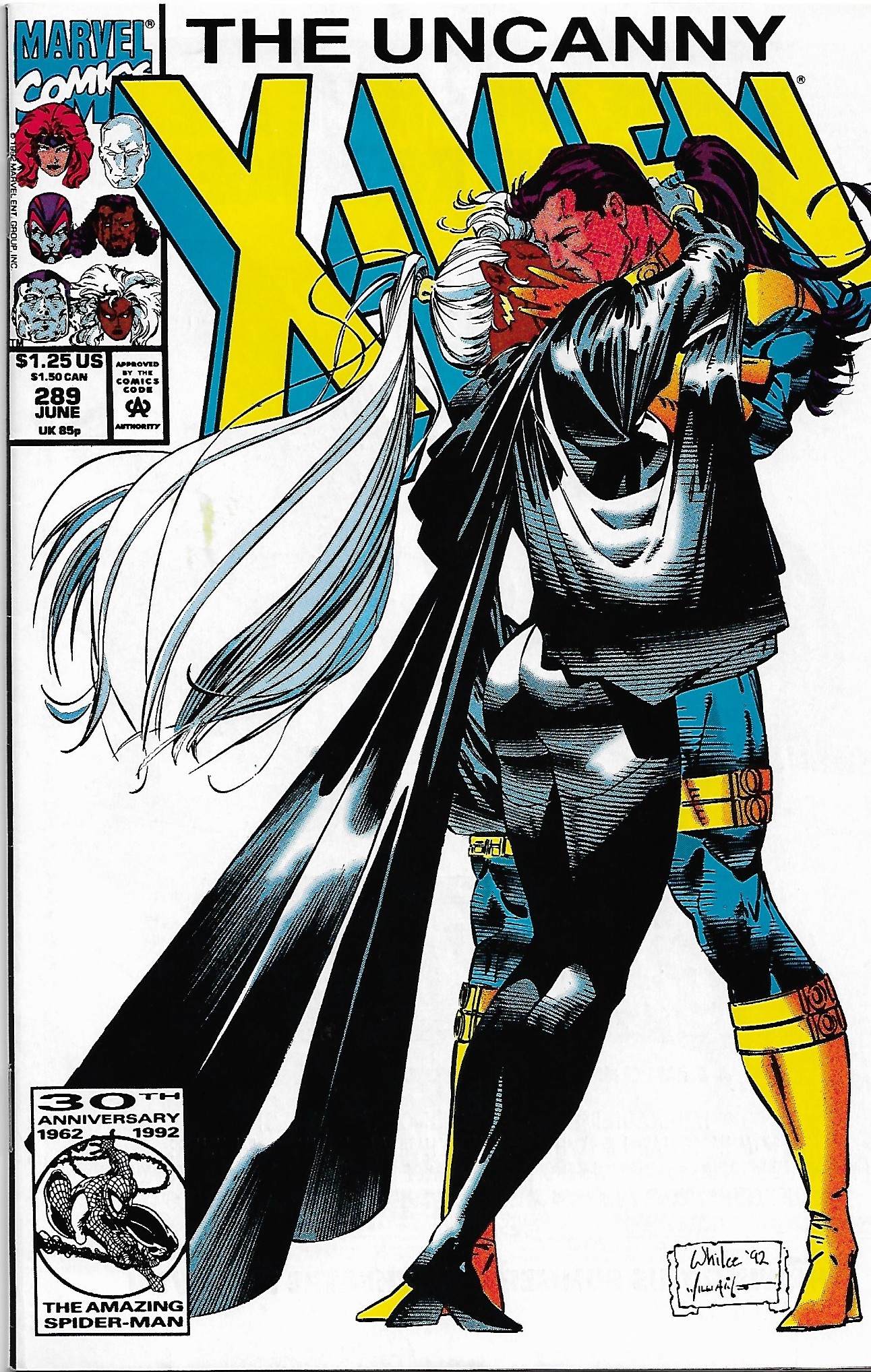
A Look Back At Uncanny X-Men #289

Released in 1992 by Marvel Comics, Uncanny X-Men #289 was written by Scott Lobdell and drawn by Whilce Portacio (with ink work by Scott Williams). Its concept focused on the Gold Team of the X-Men (composed of Jean Grey, Storm, Colossus, Ice Man and Archangel) dealing with Bishop who at the time was still a newcomer.

2019-07-11_095911~2.jpg
Cover of the comic book.

It begins when Bishop looks at a framed picture of the original X-Men followed by Storm telling him every student who graduated to the role of an X-Man remains dedicated to the ideal of peaceful coexistence between mutants and humans.

As the Gold Team X-Men enjoy their peaceful time at the mansion of Xavier, elsewhere someone spies on William and Maddy Drake who talk about Bobby (Iceman). Back at the mansion, Archangel encounters a spitting image of his younger self (as Angel and with normal skin color) which raises tension attracting the attention of Storm, Bishop and Forge.

2019-07-11_100038~2.jpg
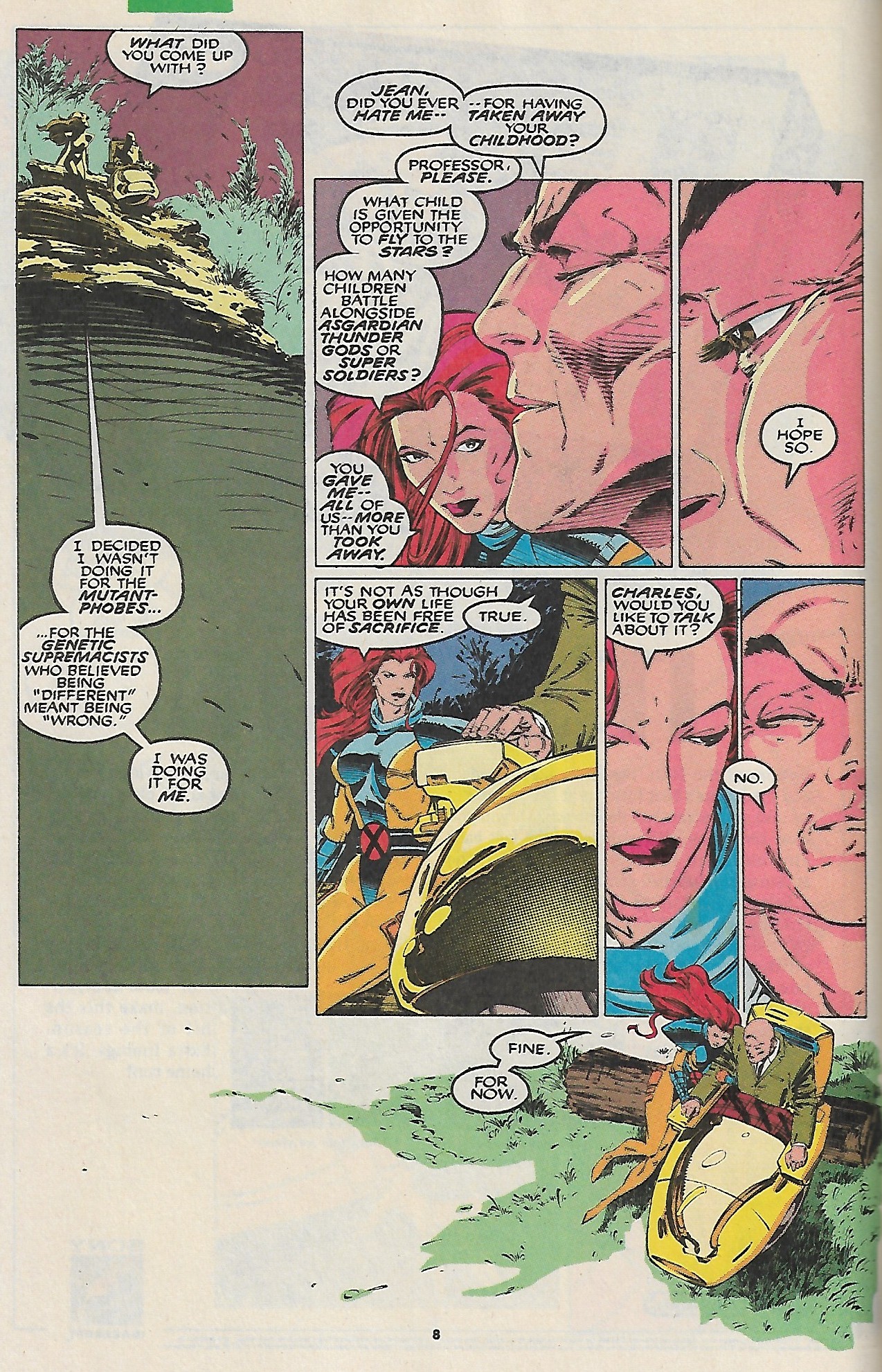
A touching scene between Jean Grey and Charles Xavier.

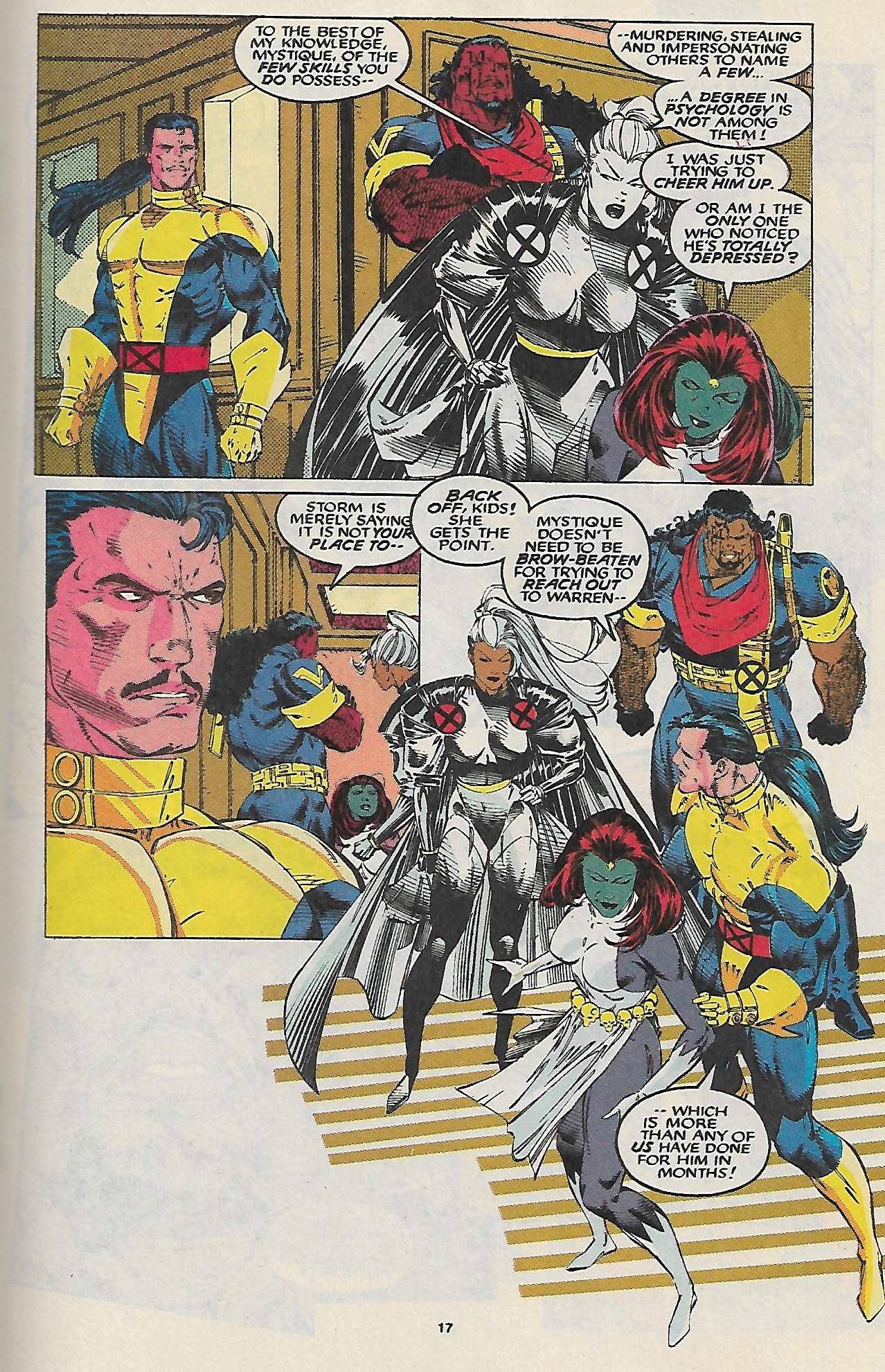
To describe Uncanny X-Men #289 clearly, the comic book is more focused on character development as it lacks a strong conflict between good and evil. Anyone craving for superhero action will most likely feel unsatisfied here. However, if you want to know the X-Men more passionately and watch the romance between Storm and Forge develop, then this comic book will be engaging.

Scott Lobdell did a good job developing the characters through drama and Whilce Portacio’s art really brought the script to life. I enjoyed reading the interaction between Jean Grey and Charles Xavier who realizes that as he led the X-Men, he took a bit of something from their respective lives.

2019-07-11_100213~2.jpg
Nice layout and style by Whilce Portacio on the team.

Take note of the following exchange of dialogue.

Charles Xavier: Jean, did you ever hate me for having taken away your childhood?

Jean Grey: Professor, please. What child is given the opportunity to fly to the stars? How many children battle alongside Asgardian thunder gods or super soldiers? You gave me…all of us…more than you took away.

That was really nice writing there by Lobdell. There was drama and harmony between the two characters.

Overall, Uncanny X-Men #289 is recommended. Think of it as a comic book that will help you – the reader – get to know the characters more closely.


Thank you for reading. If you find this article engaging, please click the like button below and also please consider sharing this article to others. Also my fantasy book The World of Havenor is still available in paperback and e-book format. If you are looking for a copywriter to create content for your special project or business, check out my services and my portfolio. Feel free to contact me as well. Also please feel free to visit my Facebook page Author Carlo Carrasco and follow me at HavenorFantasy@twitter.com