The City Government of Muntinlupa announced that it has officially received P442,191,000 from the Department of Budget and Management and Department of Social Welfare and Development as part of the national government’s emergency subsidy to families affected by the enhanced community quarantine in NCR Plus.
Mayor Jaime Fresnedi signed an executive order for the distribution of financial assistance amounting to P1,000 per individual with a maximum amount of P4,000 per family to target beneficiaries which include individuals from the Social Amelioration Program, 4Ps, low-income individuals, and those working in informal economies affected by the community quarantine, among others.
Fresnedi said qualified Muntinlupa city residents will receive the assistance in cash to help them recover from economic disruption brought about by the imposition of ECQ (enhanced community quarantine) in Metro Manila. At least 80% of the population of Muntinlupa is set to receive the emergency subsidy.
An initial pay-out will be facilitated in Tiosejo Covered Court, Brgy. Tunasan and Sucat Elementary School, Brgy. Sucat this afternoon at 2:00PM. The recipients will be assigned to different schedules to ensure compliance on social distancing and other health measures.
The local exec noted that the assistance will be in cash because the City Government has already been providing food packs to city residents since the beginning of the pandemic.
This past March, the Muntinlupa Social Service Department provided 9,989 food packages to tricycle and jeepney operators and drivers, daily wage earners who were affected by the lockdown, families of city scholars, and other members of disadvantaged groups. Each food box contains grocery items worth 785.00 pesos. Muntinlupa LGU has distributed 695,184 food boxes to city residents from March 2020 up to present.
Fresnedi called for a coordination meeting with barangay officials on Tuesday for the roll-out of the financial assistance in the communities.
Muntinlupa Public Information Officer Tez Navarro said the City Government will be tapping barangay information officers for the posting of approved list of beneficiaries as mandated by the national government.
As per Joint Memorandum Circular 1 of DBM, DSWD, and DND, LGUs are enjoined to post in its official website, social media accounts, and at conspicuous places the list of approved beneficiaries limited only to the names of beneficiaries including their barangay and district.
Further, LGUs shall manage and conduct the distribution of the emergency subsidy within fifteen (15) calendar days from release of Notice of Cash Allocation if the assistance is done in cash and within thirty (30) days if assistance is given in kind.
As of April 7, Muntinlupa City has 8,416 confirmed COVID-19 cases with 6,664 recoveries, 1,531 active cases, 221 reported deaths, 232 suspect cases, and 632 probable cases.
+++++
The above information was provided by the City Government of Muntinlupa for the purpose of public information and transparency. Some parts were edited for this website.
Thank you for reading. If you find this article engaging, please click the like button below and also please consider sharing this article to others. If you are looking for a copywriter to create content for your special project or business, check out my services and my portfolio. Feel free to contact me as well. Also please feel free to visit my Facebook page Author Carlo Carrasco and follow me at HavenorFantasy@twitter.com
For more South Metro Manila community news and developments, come back here soon. Also say NO to fake news, NO to irresponsible journalism, NO to misinformation, NO to plagiarists, NO to reckless publishers and NO to sinister propaganda when it comes to news and developments. For South Metro Manila community developments, member engagements, commerce and other relevant updates, join the growing South Metro Manila Facebook group at https://www.facebook.com/groups/342183059992673
Before I talk about Pepsi-Cola Products Philippines Inc. (PCPPI), have you heard the disappointing news lately? For those who missed out, the National Capital Region (NCR) and the bordering provinces of Laguna, Cavite, Rizal and Bulacan (note: these form the so-called NCR Plus region) is now under extended ECQ (enhanced community quarantine) until April 11, 2021. The extension was recommended by the Inter-Agency Task Force for the Management of Emerging Infectious Diseases (IATF-EID) in relation to the ongoing spikes in counted new cases of COVID-19 (China Virus) which reached as high as 15,310.
Going back to the Philippine News Agency (PNA) report, it was written that OCTA Research released its own report that the average of new daily cases of COVID-19 in NCR Plus dropped as a result of the return to ECQ. While there is no lockdown, the ECQ is bad for the economy due to reduced business activities (which affects employees and their income negatively).
Under ECQ, shopping malls here in South Metro Manila can only allow the so-called essentials to remain open. Essentials refer to groceries, banks, pharmacies, hardware stores and restaurants (which in turn are limited to processing take-out and delivery orders of customers).
When it comes to the local communities, fear about the rate of COVID-19 infection sparked authorities to discourage people from traveling around and that it is best for people to stay at home until the current bad situation improves. Some have encouraged people to order products they want or need online and have it delivered to their homes.
This brings me to the topic of this piece…why it makes more sense to order products from Pepsi Philippines via their online store and have such products delivered to the home.
To put things in perspective, Pepsi-Cola Products Philippines launched their online store at www.pepsiproducts.phfor home deliveries last October. What the company stated back then is still relevant with the current ECQ situation. Below is an excerpt from the PNA report for your reference…
PCPPI said its e-commerce website pepsiproducts.ph started to receive online orders from customers on October 5 and also providing in-home deliveries.
“With mobility restrictions brought about by varying phases of lockdown, we have decided to adopt e-commerce to our overall operations to heed the call of our customers who wish to have more access to our product while they are at home,” PCPPI president and chief executive officer Frederick Ong said.
Ong added that going online allows the company to counter business disruptions due to the limited foot traffic to physical stores.
“Pepsiproducts.ph is another way to make our products more accessible to entrepreneurs who want to venture into the distribution business. We are positive that this new revenue stream can boost PCPPI’s sales outlook in the months ahead,” he said.
Ong said the company has hired separate administrative and delivery personnel that will focus on the online venture.
The beverage firm is piloting its e-commerce business in the south part of Metro Manila — Las Piñas, Muntinlupa, and Parañaque as well as in San Pedro and Biñan in Laguna, and Carmona, Cavite.
PCPPI also targets to expand its e-commerce service in different parts of the country.
As you can see above, the company went the extra mile to make their products more accessible to customers backed with delivery services of their own. A month ago, I opened up an account with their online store, ordered a bunch of drinks that met their minimum requirement of P300, and in a little over 24 hours after posting my order, they delivered to our home. I received the drinks I ordered and paid them in cash (note: cash on delivery is the current method of payment). That being said, I really like Pepsi Philippines’ online store and delivery service not only for the user friendliness but also the fact that it spares me from having to go out to a nearby store to buy their drinks.
As such, this lessens the risk of getting infected with COVID-19 while being away from home. Again, it makes sense to order Pepsi beverages online during this time of pandemic and the company’s e-commerce effort deserves admiration.
To be clear, Pepsi Philippines is offering more than just soft drinks (Pepsi Cola, Pepsi Max, 7-Up, Mountain Dew, Mug root beer and Mirinda) on their online store. They are also offering such drinks like Gatorade, G-Active, Tropicana (orange juice and coconut juice), Sting energy drink, Premier water, Milkis, Lipton iced tea and more! I should also state that there also these temporary but really attractive online promos that will offer you a good return for your money.
Whether you like soft drinks or iced tea or milk or fruit juices, Pepsi Philippines has it all for you to choose from at their online store and they can deliver it to you if you meet the P300 minimum requirement and if your residence is located within their delivery coverage (South Metro Manila cities of Las Piñas, Muntinlupa and Parañaque plus Laguna cities San Pedro and Biñan, plus Carmona in Cavite province).
In ending this, I encourage readers who want or need drinks from Pepsi to visit their online store at https://pepsiproducts.ph/
+++++
Thank you for reading. If you find this article engaging, please click the like button below and also please consider sharing this article to others. If you are looking for a copywriter to create content for your special project or business, check out my services and my portfolio. Feel free to contact me as well. Also please feel free to visit my Facebook page Author Carlo Carrasco and follow me at HavenorFantasy@twitter.com
For more South Metro Manila community news and developments, come back here soon. Also say NO to fake news, NO to irresponsible journalism, NO to misinformation, NO to plagiarists, NO to reckless publishers and NO to sinister propaganda when it comes to news and developments. For South Metro Manila community developments, member engagements, commerce and other relevant updates, join the growing South Metro Manila Facebook group at https://www.facebook.com/groups/342183059992673
Moving around the Philippines, specifically in the National Capital Region (NCR) and the nearby provinces, has gotten tougher as President Rodrigo Duterte ordered the shift into ECQ (Enhanced Community Quarantine) for the said places. ECQ is a more restricted status that will last from March 29 to April 4, 2021. Again, this is the national government’s response to the recent spike in new COVID-19 cases which are very disturbing.
To put things in context, here is an excerpt about ECQ from Philippine News Agency’s (PNA) report…
An ECQ status mandates all households to observe strict home quarantine. Movements will be limited to Authorized Persons Outside Residence, those accessing essential goods and services, and workers in establishments allowed to operate.
Mass gatherings (more than 10 persons outside and non-household members indoors) and face-to-face classes are also prohibited in ECQ zones. Mass transportation is allowed at limited capacity.
With regards to local travel during this time of ECQ, the S-PaSS (Safe, Swift & Smart Passage) online travel management system is more essential and it has an app that can be downloaded for free. This is the same S-PaSS that the City Government of Las Piñaspromoted recently.
For those who have not been familiar nor started using it, the S-PaSS was designed to facilitate a safe, swift and smart coordination of travels to destination LGUs (local government units). The traveler may check if the destination LGU has a restricted or unrestricted travel policy. If the LGU is restricted, the traveler must use the S-PaSS to apply for a TCP or Travel Coordination Permit. Travelers are free to visit any unrestricted destination LGU, however it is recommended to generate a TPP or Travel Pass-Through Permit if they will be passing through LGUs with restricted statuses.
The new paperless app S-PaSS (Safe, Swift and Smart Passage) recently launched by the Department of Science and Technology (DOST) offers a convenient and safe way to process travel authority online for local travelers, Philippine National Police (PNP) chief Gen. Debold Sinas on Saturday said.
Sinas said S-PaSS will boost the PNP’s imposition of the enhanced community quarantine (ECQ) in the quarantine control points (QCPs) that have been set up in different local government units (LGUs).
“It will continue to help and benefit LGUs in recording and monitoring in real time, traveler’s information, such as those who are going in and out of their respective localities,” Sinas said in a statement.
He said the implementation of S-PaSS by Inter-Agency Task Force for the Management of Emerging Infectious Diseases (IATF-MEID) promises to be a one-stop-shop app for the local stranded individuals (LSIs), returning overseas Filipinos (ROFs), emergency travelers (ETs) and other essential travelers during the pandemic.
“The PNP welcomes the development of this local mobility feature as a tool which integrates the processing system for the issuance of Travel Pass-Through Permit or TPP and Travel Coordination Permit or PCP, Travel Authorities and QR codes which quickly generates real-time reports needed,” he added.
Despite the use of the mobile S-PaSS app, Sinas said police deployment will continue to ensure strict public adherence to the implementation of minimum public health and safety protocols.
Last Friday, the DOST and partner government agencies officially launched the S-PaSS, a one-stop online communication and coordination platform for LGUs.
As you can see in the above information, the S-PaSS is crucial for those who need to travel far distances and reach their respective destinations (notably local government units). Apart from helping motorists, other travelers such as returning overseas Filipinos, the stranded people and the essential movers can avail of the system to move around. The Philippine National Police (PNP) recognizes S-PaSS officially.
Thank you for reading. If you find this article engaging, please click the like button below and also please consider sharing this article to others. If you are looking for a copywriter to create content for your special project or business, check out my services and my portfolio. Feel free to contact me as well. Also please feel free to visit my Facebook page Author Carlo Carrasco and follow me at HavenorFantasy@twitter.com
For more South Metro Manila community news and developments, come back here soon. Also say NO to fake news, NO to irresponsible journalism, NO to misinformation, NO to plagiarists, NO to reckless publishers and NO to sinister propaganda when it comes to news and developments. For South Metro Manila community developments, member engagements, commerce and other relevant updates, join the growing South Metro Manila Facebook group at https://www.facebook.com/groups/342183059992673
Firstly, there is no lockdown which is good news. This is about retaining the General Community Quarantine (GCQ) status for NCR while the four nearby provinces have fallen under the same status.
To put things in perspective, posted below are excerpts from the Philippine News Agency (PNA) report…
Excerpt 1
Under IATF Resolution No. 104, he said only essential travel into and out of Metro Manila, Bulacan, Cavite, Laguna, Rizal will be allowed.
Excerpt 2
Traveling into and out of Metro Manila and the provinces of Bulacan, Cavite, Laguna, Rizal will be prohibited. We will have a sort of bubble in NCR, and the provinces of Bulacan, Cavite, Laguna, Rizal,” he said.
Travel of authorized persons outside their residences (APORs) such as essential workers, health and emergency frontline services personnel; government officials and government frontline personnel; duly-authorized humanitarian assistance actors; persons traveling for medical or humanitarian reasons; persons going to the airport for travel abroad, returning overseas Filipinos and overseas Filipino workers (OFWs) will be unimpeded for as long as they show their respective work identification cards.
Individuals crossing zones for work or business and going back home will also be allowed to travel to and from the said areas.
“Kung kayo ay uuwi, essential travel po ‘yun. Kailangan lang magpakita ng ID kung saan ka talaga nakatira (If you’re going back home that’s essential travel. All you need to do is show your ID to prove that you live there),” he said.
Excerpt 3
Public gatherings limited
All public gatherings, including religious gatherings, will be prohibited but weddings, baptism, and funerals will be allowed but must observe a 10-person venue capacity.
Current operational capacities of essential and non-essential services and industries will remain.
However, face-to-face meetings, group meals in workplaces will be prohibited. Instead, work-from-home and virtual meetings are encouraged.
Roque said the IATF resolution also enjoins the private sector to adopt similar alternative working arrangements as those in place in the executive branch of government such as operating on a 30 to 50 capacity.
Only outdoor dining allowed
As for dining, Roque said only outdoor dining will be allowed in areas under GCQ while indoor dining will be strictly prohibited.
“Pagdating po sa mga restaurants, ang papayagan lang po yung mga outdoor dining (When it comes to restaurants, we will only allow those with outdoor dining),” he said.
Outdoor dining must observe a maximum of 50 percent venue capacity.
Take out and delivery is encouraged, he added.
Wear masks at home
Although the economy will stay open, Roque said the IATF resolution will require persons below 18-years-old and above 65-years-old, those with comorbidities, and pregnant women to remain inside their residences at all times.
The IATF resolution also advises the wearing of face mask at home especially when living with elderly and vulnerable.
Accepting of visitors outside immediate family or household is strongly discouraged.
Operations of driving schools, traditional cinemas and video and interactive game arcades, libraries, archives, museums, and cultural centers, limited social events at accredited tourism establishments and limited tourism attractions will be temporarily suspended except open-air tourism attractions.
Before the IATF’s new resolution was issued, the Commission on Elections (COMELEC) went ahead in shortening the hours of voter registration as well as suspending the organizing of satellite registration (registration processes held outside of their office) which started yesterday. People around the Philippines have until the end September 2021 to register themselves or adjust their respective voter statuses in preparation of the May 2022 presidential, national and local elections.
With regards to the IATF’s prohibition on indoor dining, already the shopping malls and restaurants here in South Metro Manila have made adjustments and updated their customers. Sigekiya Ramen announced that their restaurant at Commercenter, Filinvest City in Alabang, is still allowed to accommodate paying customers for outdoor dining. Like many others, they also offer takeout and delivery services. Alabang Town Center and Festival Mall in Alabang posted updates about safety protocols in accordance to IATF Resolution #104.
With all these developments in place, people in the NCR and the affected provinces under GCQ will have to adjust. It is okay to keep reporting to work but there is a need to be cautious with regards to personal safety and avoiding COVID-19 infection as much as possible. There is also the need to prioritize where to go and what to do. All of these are in effect until April 4, 2021 and here is hoping that the current situation will improve (that the daily COVID-19 count of new cases will go down) so that the new round of restrictions under GCQ will not be extended.
Thank you for reading. If you find this article engaging, please click the like button below and also please consider sharing this article to others. If you are looking for a copywriter to create content for your special project or business, check out my services and my portfolio. Feel free to contact me as well. Also please feel free to visit my Facebook page Author Carlo Carrasco and follow me at HavenorFantasy@twitter.com
For more South Metro Manila community news and developments, come back here soon. Also say NO to fake news, NO to irresponsible journalism, NO to misinformation, NO to plagiarists, NO to reckless publishers and NO to sinister propaganda when it comes to news and developments. For South Metro Manila community developments, member engagements, commerce and other relevant updates, join the growing South Metro Manila Facebook group at https://www.facebook.com/groups/342183059992673
People here in Metro Manila who have gotten tired with the general community quarantine (GCQ) limitation during the COVID-19 pandemic will have to wait a bit longer as President Rodrigo Duterte refused to shift the entire nation to the less restrictive modified general community quarantine (MGCQ) status because the vaccination for COVID-19 should be done first.
This was announced during the Cabinet meeting last night. Below is an excerpt from the Philippine News Agency report…
“President Rodrigo Roa Duterte gave his directive to the Cabinet that the Philippines would not be placed under modified general community quarantine unless there is a rollout of vaccines,” he said in a statement.
While Duterte acknowledged the need to reopen the economy, Roque said the President refused to put people’s health and safety at risk.
“The Chief Executive recognizes the importance of reopening the economy and its impact on people’s livelihoods. However, the President gives higher premium to public health and safety,” he added.
The President made it clear that the vaccination roll-out should go first before shifting the entire nation into MGCQ control. While it is clear that reopening the economy is essential, Duterte prefers to take time to be cautious and reduce the risks of new infections. As far as he is concerned, vaccines should go first.
Going back to Metro Manila, a majority of mayors voted to have the metropolis shift to MGCQ status by March 1. As the President made the rejection and insisted vaccination should go first, business owners, their affected employees and the unemployed will have to wait longer before MGCQ will be declared not only for the National Capital Region (NCR) but for the entire nation. The MGCQ status for the Philippines is key to economic revival which the Department of Trade and Industry (DTI) supports.
For those of you reading this, do you think the President made the right decision? Would you insist on declaring an MGCQ status nationwide without the COVID-19 vaccines? Please answer by commenting below. Thank you.
+++++
Thank you for reading. If you find this article engaging, please click the like button below and also please consider sharing this article to others. If you are looking for a copywriter to create content for your special project or business, check out my services and my portfolio. Feel free to contact me as well. Also please feel free to visit my Facebook page Author Carlo Carrasco and follow me at HavenorFantasy@twitter.com
For more South Metro Manila community news and developments, come back here soon. Also say NO to fake news, NO to irresponsible journalism, NO to misinformation, NO to plagiarists, NO to reckless publishers and NO to sinister propaganda when it comes to news and developments. For South Metro Manila community developments, member engagements, commerce and other relevant updates, join the growing South Metro Manila Facebook group at https://www.facebook.com/groups/342183059992673
I am a long-time Wonder Woman fan. I deeply love watching the 2017 movie that starred Gal Gadot. I saw that movie thrice in movie theaters here in the Philippines, the first screening of which was inside the local IMAX cinema.
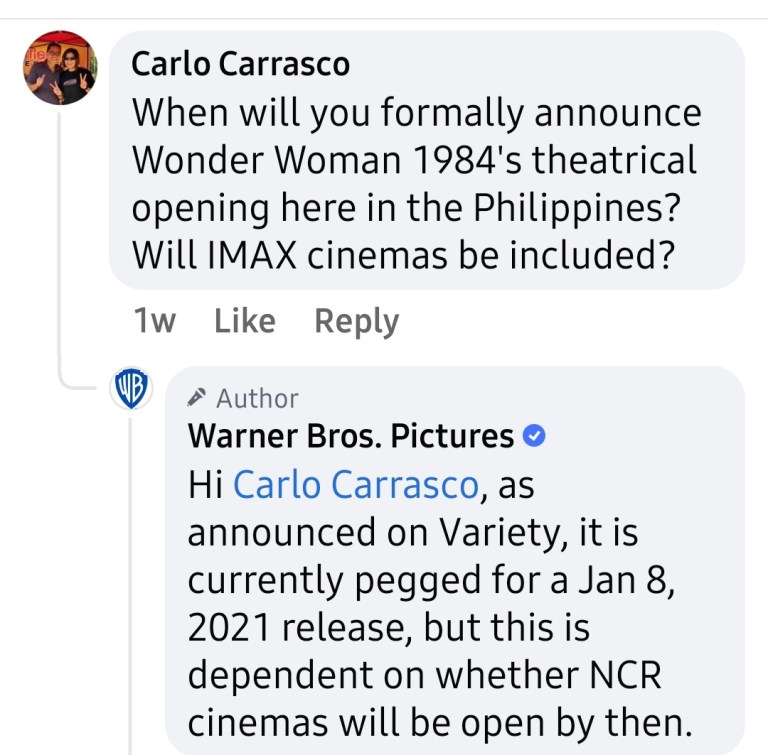
That’s because after experiencing the initial excitement of the international release dates published by Variety, I decided to verify with Warner Bros. Pictures directly via their official page on Facebook. In a November 26, 2020 FB post of theirs, I asked them directly (plus about IMAX) and they actually replied. Below is the screenshot.
As you can see above, Warner Bros. Pictures pointed to the Variety article (about the global release schedules) and with regards to the Philippines, the supposed launch of Wonder Woman 1984 in cinemas hangs in the balance because until now many cinemas – at least in the National Capital Region – remain closed even though restrictions (related to community quarantine) have been eased over the past several months as local authorities monitored the developments related to the current pandemic. This means that the Wonder Woman 1984 opening for the Philippines remains tentative at best. Warner Bros. did not say anything about IMAX.
What the status for Metro Manila will be come January 1, 2021 remains unknown. Speaking of movie theaters, I have yet to find any signs or confirmation that local movie theater operators are lobbying/appealing to the authorities to allow them to resume operations.
Again, the Philippines opening date for Wonder Woman 1984 is tentative. Whether the Patty Jenkins-directed movie will open on January 8, 2021 or be delayed, I will make it a point to watch the movie on the big screen. I will not stream Wonder Woman 1984. As far as watching the movie at home later is concerned, I’d rather watch it on Blu-ray and 4K Blu-ray. Paying for streaming will help the service but NOT the people who made the newest Wonder Woman movie.
While waiting for solid updates about Wonder Woman 1984’s opening here in the Philippines, check out my review of the 2017 movie, my review of the literary classic Wonder Woman #1 (1987), my review of Wonder Woman #9 (1987) which is the essential read before watching the new movie, and my most recent review of Wonder Woman Gallery (1996).
In ending this, here are some Wonder Woman-related videos for your amusement.
+++++
Thank you for reading. If you find this article engaging, please click the like button below and also please consider sharing this article to others. If you are looking for a copywriter to create content for your special project or business, check out my services and my portfolio. Feel free to contact me as well. Also please feel free to visit my Facebook page Author Carlo Carrasco and follow me at HavenorFantasy@twitter.com
The City Government of Muntinlupa approved the landmark Freedom of Information Ordinance of 2020, the 4th city in the National Capital Region (NCR) to localize the FOI bill, to ensure transparency in local governance.
Mayor Jaime Fresnedi signed the Ordinance 2020-139 or known as the FOI Ordinance of 2020 On October 14, 2020 to give Muntinlupa as well as non-Muntinlupa residents access to information, officials’ records, public records and documents, and papers pertaining to official acts, among others.
Fresnedi said the City Government recognizes the importance of the people’s right to government information by providing a local mechanism to ensure that these rights are respected and upheld.
City Ordinance 2020-139 is an adoption of Executive Order No.2 s. 2016 upholding the right of people to information on matters of public concern. Muntinlupa City is the 4th LGU in NCR to enact an FOI ordinance following Pasig, Valenzuela, and Quezon City.
Under the local ordinance, departments in Muntinlupa LGU are required to make public records available such as contracts, transactions and any information requested by a member of the public, except for sensitive information and matters affecting national security.
Any person who request access to information may consult the local FOI Focal Person for the processing of a request or may go directly to the concerned office that has the information being requested.
If the retrieved information has been approved for release, the FOI Receiving Officer shall immediately notify the requestor of the decision and release the information within fifteen (15) working days upon receipt of request.
Failure of any government officer to comply with the provisions of the ordinance shall be ground for reprimand for first offense, suspension of one (1) to thirty days for second offense, or dismissal from the service for third offense.
Muntinlupa Public Information Officer Tez Navarro said the City Government supports the Presidential Communications Operations Office’s thrust on continuing proactive information disclosure efforts in the spirit of openness and transparency.
She noted that the IRR is still underway but the public can now coordinate with the Public Information Office being designated as the FOI concerned office.
For more information, visit Muntinlupa City’s website at www.muntinlupacity.gov.ph or contact the Public Information Office located at 2F Annex Building, Muntinlupa City Hall with tel. no. (02) 8886-7091 and email address lingkodbayan.muntinlupa@gmail.com.
+++++
Latest City Government of Muntinlupa details sourced from their official media release. Some parts were edited for this website.
For more South Metro Manila community news and developments, come back here soon. Also say NO to fake news, NO to irresponsible journalism, NO to misinformation, NO to plagiarists, NOT to distorted views and NO to sinister propaganda when it comes to news and developments. For South Metro Manila community developments, engagements, commerce and updates, visit https://www.facebook.com/groups/342183059992673
Disclaimer: This is my original work with details sourced from reading the Our Home Tahanan coffee table book, inquiring with Florencia Umali and doing research. Anyone who wants to use this article, in part or in whole, needs to secure first my permission and agree to cite me as the source and author. Let it be known that any unauthorized use of this article will constrain the author to pursue the remedies under R.A. No. 8293, the Revised Penal Code, and/or all applicable legal actions under the laws of the Philippines.
Our Home Tahanan is the Definitive Book about Tahanan Village
If you want to discover and study the history of a well-established village such as Tahanan Village in Barangay BF Homes, Parañaque City, don’t rely on a pretentious, so-called independent local community print media publication. Instead, pursue such information recorded in the official documents or an official publication of the village produced by the villagers.
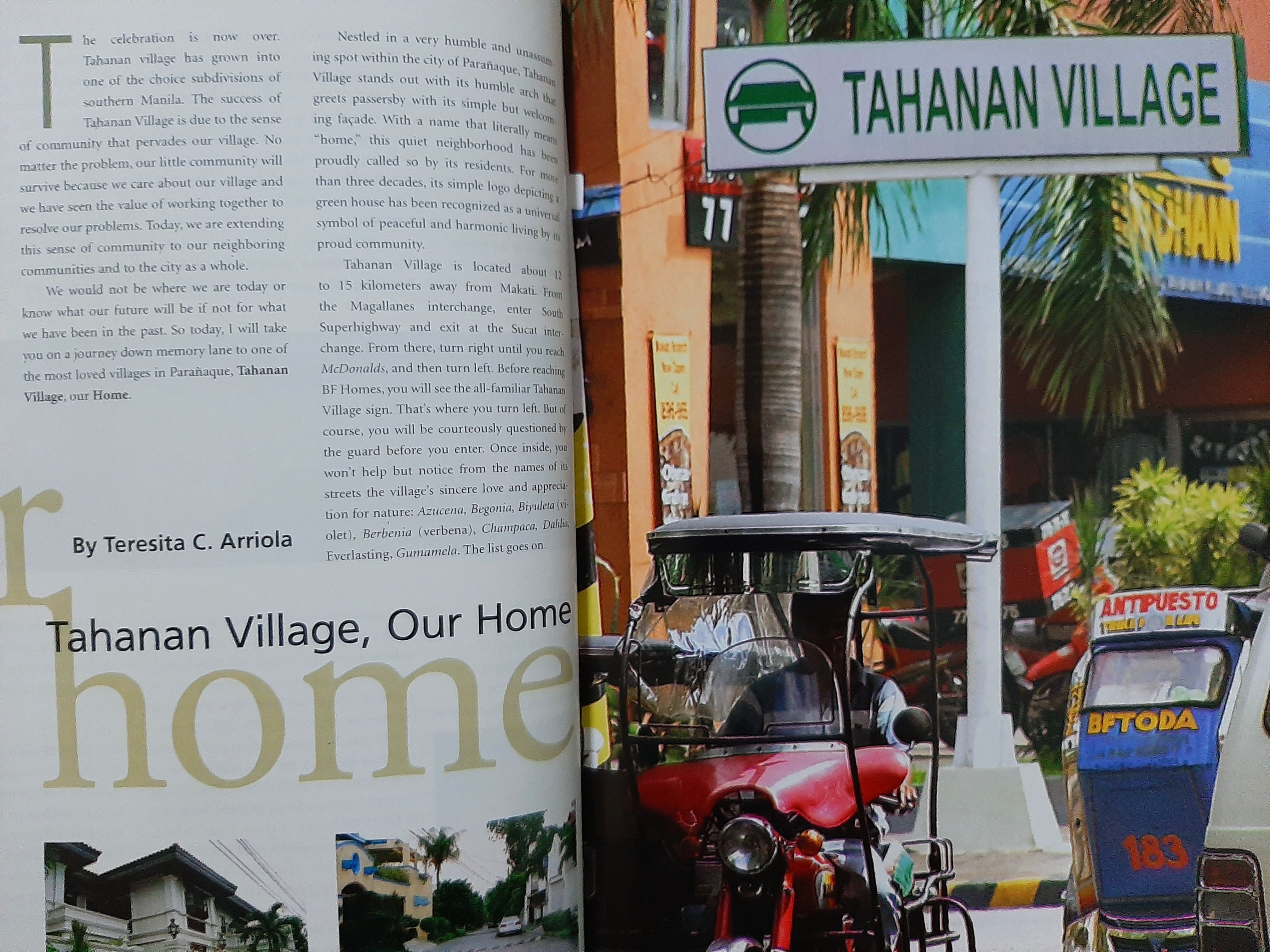
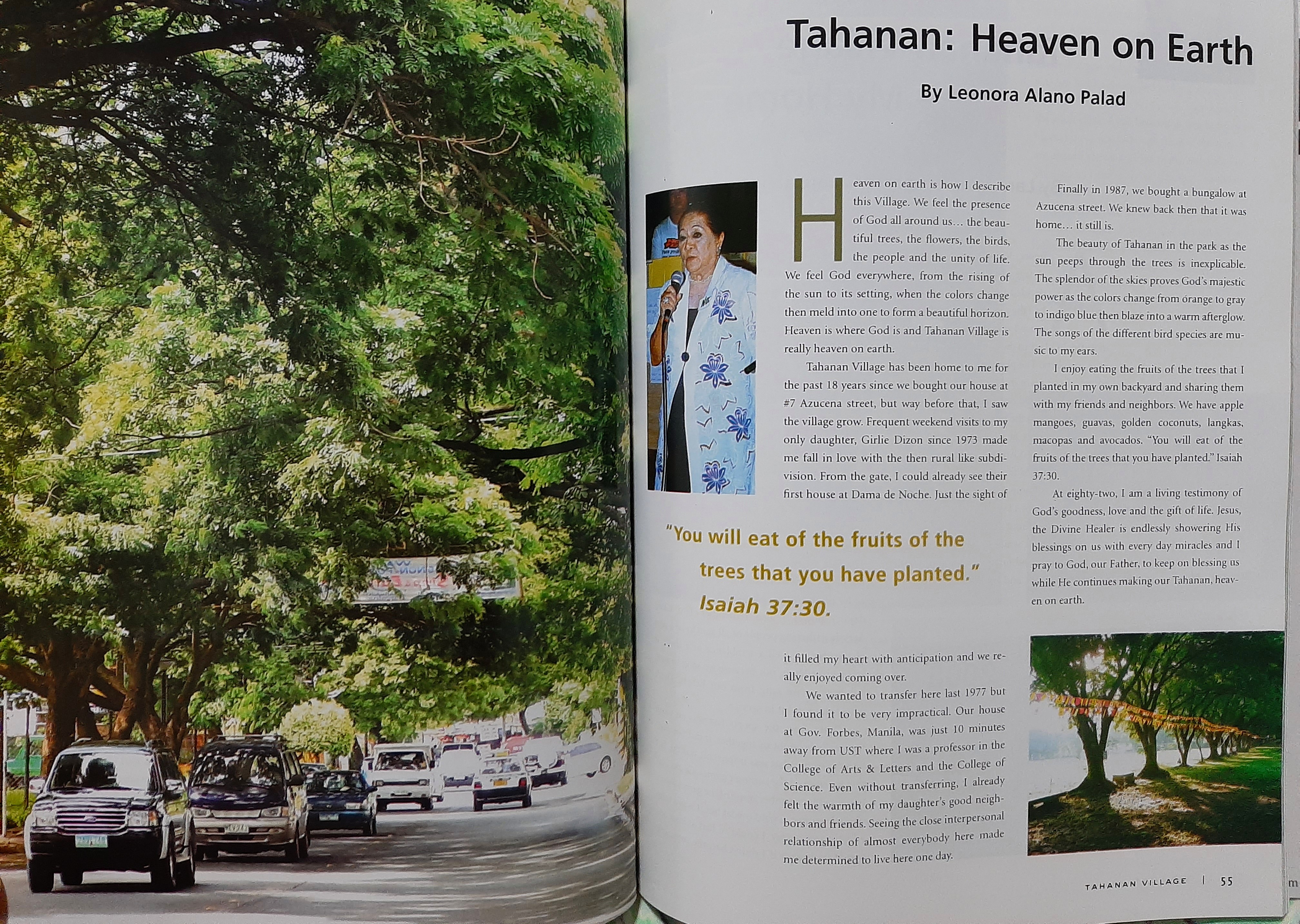
As many of us here in South Metro Manila are confined into our homes with the ongoing quarantine on communities (which is part of the COVID-19 Crisis), I found time to read the official Tahanan Village coffee table book titled Our Home Tahanan.
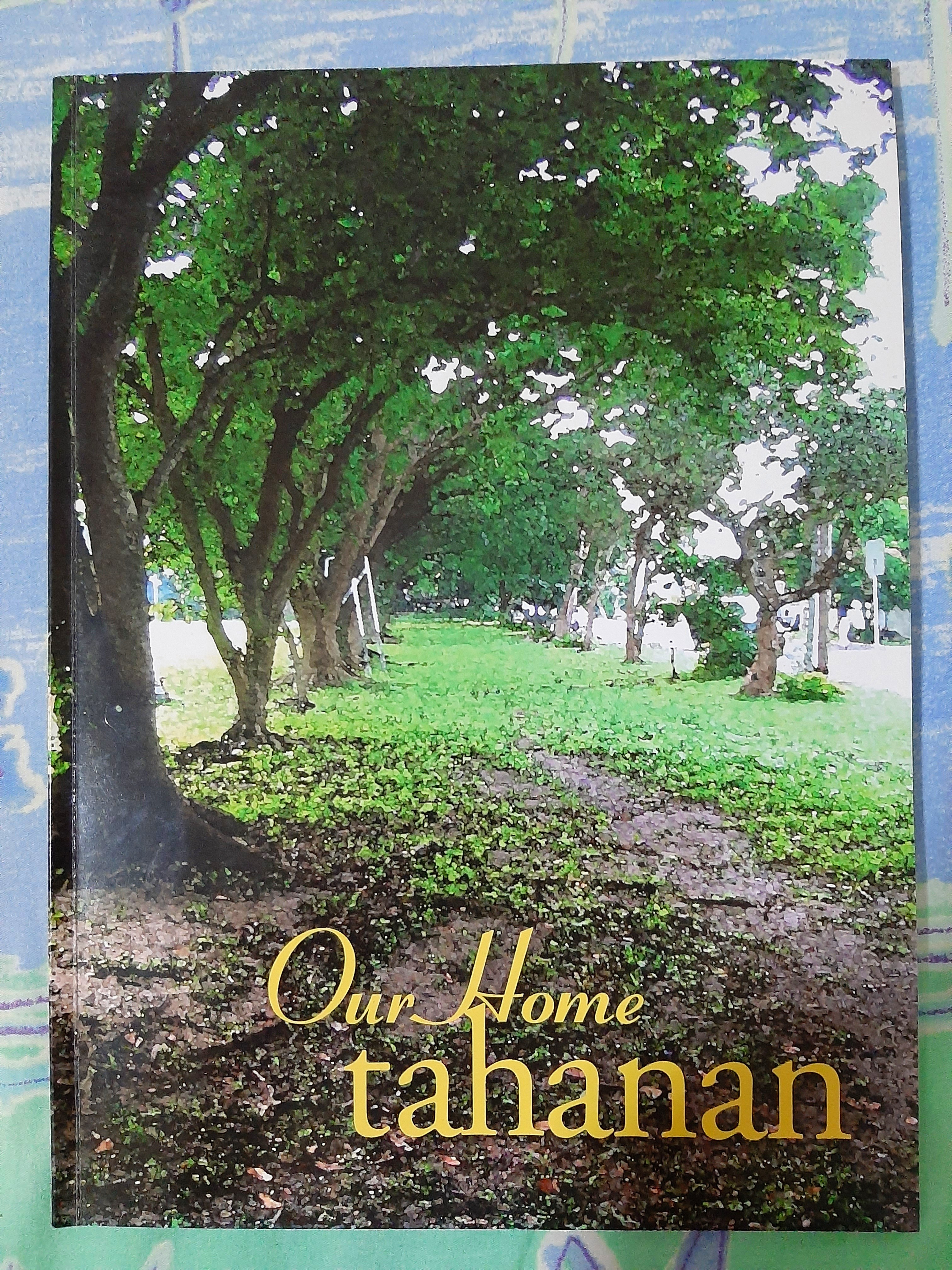
The coffee table book itself.
Published in 2006, Our Home Tahanan is a commemorative publication that emphasizes the past, the present and the future of Tahanan Village which in 2005 celebrated what was back then its 30th Foundation Day. It has a collection of stories and testimonies from the pioneering residents and the later residents who contributed to the development of the Tahanan community in more ways than one. I myself enjoy reading it and examining the photos which clearly showed how much Tahanan Village developed through the decades.
A special project of the 2005 Board of Directors of the Tahanan Homeowners Association (THA), Our Home Tahanan has an extensive look at the history of the village starting even before it was founded in the 1970s. It also offers readers a look at the many organizations that not only organized several in-village activities and events, but also emphasized how lively Tahanan’s community really has been.
Let’s take a look at how Our Home Tahanan was conceptualized and turned into an actual coffee table book.
From concept to a published work
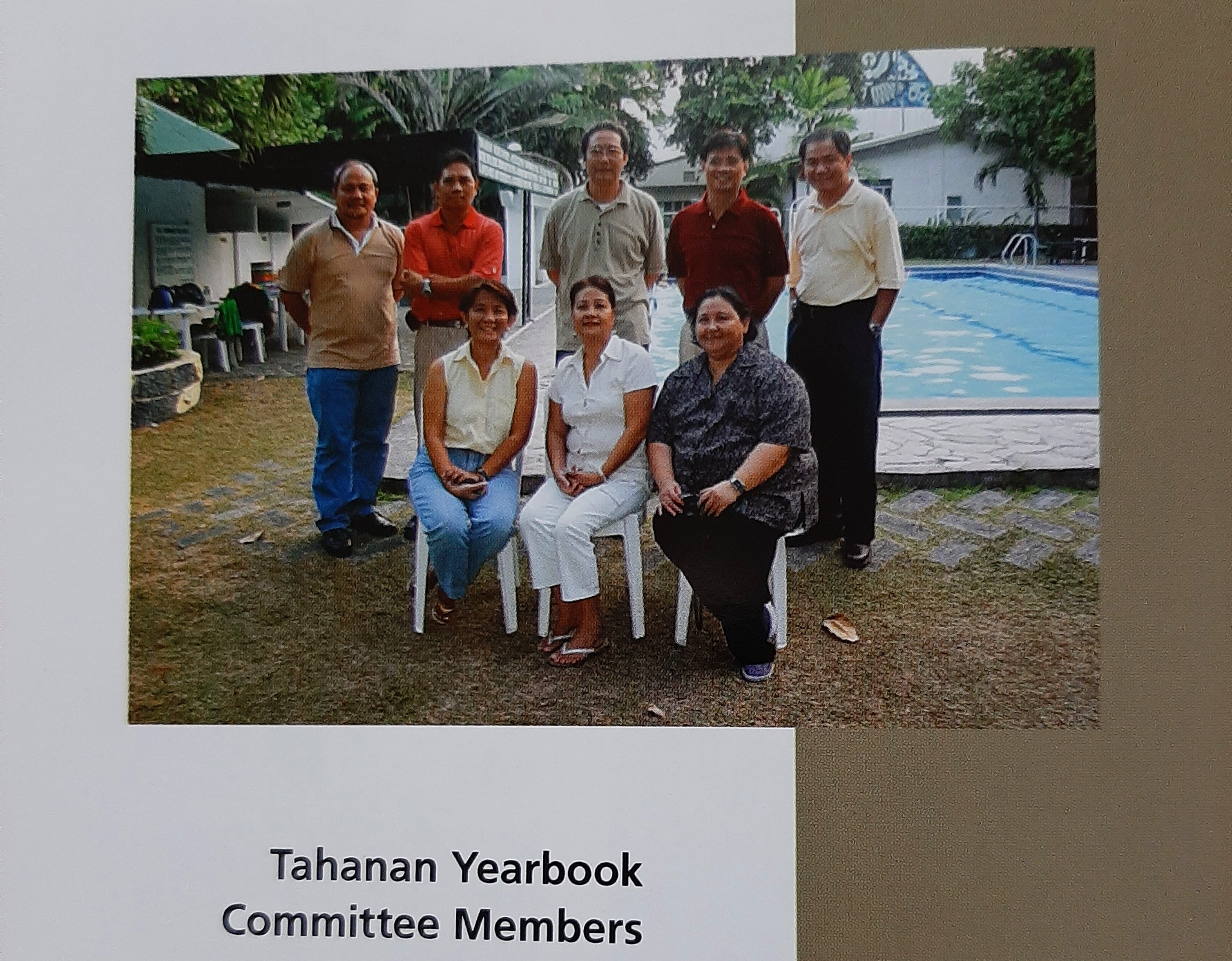
The idea of developing an official coffee table book about Tahanan Village was raised in a meeting that was held on June 10, 2005. The Committee composed of Tess Arriola, Florencia Umali, Corly Vergara, Peter Olivares, Reno and Malou Araneta, Nene Sandico and then THA president Milton Lalisan had a thorough discussion about the elements and topics for a souvenir program in relation to the 30th Foundation Day of the village.
A group photo of the yearbook committee members.
An article and a full page image.
The idea of a coffee table book alone was perceived to be challenging at first and there were expressions of skepticism and incredulity. The mood eventually turned into optimism and determination.
According to then THA president Milton Lalisan, the Committee came to a decision to develop the coffee table book project.
Below is an excerpt with words of Lalisan…
It was agreed that we would develop a really nice, glossy book, semi-hard cover, with lots of colored and black/white pictures. The book should appeal to different types of readers:
+ Residents who have grown with the village, who were here when Tahanan was still on its pioneering stage.
+ Residents who have built their houses at a later stage but who quickly managed to acclimatize to the environment around them.
+ Sons and daughters of residents who had their childhood in Tahanan Village, some who may now be in their teens, young adulthood or are parents themselves.
+ and those who have personal interests in Tahanan Village, the lot owners who have not built their houses, the prospective homeowners who are considering living in the village.
Afterwards, several forms of preparation followed: writing articles, researching, organizing an in-village photo contest, financing, editing and finally, publishing it.
According to Florencia Umali (now the incumbent president of the Century Club of Tahanan, Inc. or CCTI), she and her fellow members of the Committee worked long and hard to make the project a reality.
“We coordinated with the different clubs and organizations, and the previous Tahanan Board (of Directors),” Umali recalled. “We also coordinated with the first homeowners of Tahanan Village. We also worked on collating their old pictures and memories.”
After much hard work as well as editing done by a local resident, Our Home Tahanan got published.
The history of Tahanan Village and its origin
As mentioned earlier, this coffee table book also has the official history of Tahanan Village and what happened behind the scenes that led to its foundation way back in the 1970s.
Here’s an excerpt from the article Tahanan Village: How It All Began written by Digoy Fernandez.
I guess the Tahanan story really began with the friendship of Dominador “Bandoc” Mercado with both the Rufino and the Campillo families. According to youngest Campillo son Lito, Bandoc had a special way with his father, Sostenes Sr. Bandoc even had a free place to stay in the Campillo managed Shellbourne Hotel located strategically at the Luneta. I remember my group of friends, which included Charlie Rufino, going to watch movies for free in the Rufino theaters, and then dropping by the hotel to meet up with Bandoc and middle Campillo son, Jun, on many an occasion during our high school and college years.
One day, Bandoc approached the Rufino family with a proposition to develop 60 hectares of the Campillo rice farm in Parañaque into a subdivision. At that time, the heirs of the eldest Rufino patriarch, Vicente, wanted to try their hand in horizontal development. Their past experience in real estate was mostly in vertical development. At that time, BF Homes had already started and proved that a housing development beyond the Merville area could be a success. The Rufino family agreed provided that Bandoc take the helm of the management of the project.
Youngest son Charlie and youngest daughter Pixie were assigned to the project and were mentored directly by Bandoc. The latter drew up a joint venture agreement with the Campillo family, and thus, Tahanan Development Corporation had its beginning. The eldest Rufino daughter, Ditas, thought up the name “Tahanan” Village and also the use of flowers to denominate streets.
The definitive book about Tahanan Village
Our Home Tahanan also contains articles about how the Tahanan Homeowners Association (THA) started, what were the facilities and organizations in the village, how the village’s very own tennis club began, who were the pioneers and notable residents, and more. Special attention was also paid to the THA’s relationship with contracted security agencies as well as the breakthroughs on securing the village that were realized when the association formed their Security Committee.
A few of the many congratulatory pages.
Another villager-written article.
There are also many literary pieces written by village residents who shared their experiences and what living in the village truly is like. Adding depth to these articles are the many, many photographs of the times, the events, and the people involved with the village.
In my experience, Our Home Tahanan is not only a great published work to discover and research about Tahanan Village…it is the definitive published work complete with the contributions and involvement of the villagers.
Thank you for reading. If you find this article engaging, please click the like button below and also please consider sharing this article to others. If you are looking for a copywriter to create content for your special project or business, check out my services and my portfolio. Feel free to contact me as well. Also please feel free to visit my Facebook page Author Carlo Carrasco and follow me at HavenorFantasy@twitter.com
Special thanks to Augusto Tejada of Tahanan Village.
Muntinlupa City is among 2019 Seal of Good Local Governance (SGLG) awardees
Today the City Government of Muntinlupa announced that they have been feted by the Department of the Interior and Local Government (DILG) as one of the 2019 Seal of Good Local Governance (SGLG) awardees for its excellent delivery of public service. This latest development continues to show why Muntinlupa is a standout city among South Metro Manila’s cities.
DILG Sec. Eduardo Año turns-over the 2019 Seal of Good Local Governance award to Mayor Jaime Fresnedi during an awarding ceremony at Manila Hotel last November 4. SGLG is the DILG’s progressive assessment and reward system that gives LGUs distinction for their remarkable performance across various assessment areas in governance. Also attending the program were Muntinlupa City Administrator Engr. Allan Cachuela and DILG Muntinlupa Field Office chief Bernadette Ferino. (source – Muntinlupa PIO)
The prestigious SGLG award was received by Mayor Jaime Fresnedi from DILG Sec. Eduardo Año during the awarding ceremony held at the Manila Hotel yesterday. With the mayor were City Administrator Engr. Allan Cachuela and DILG Muntinlupa Field Office chief Bernadette Ferino.
Despite having a more stringent assessment criteria for the award, the City of Muntinlupa has passed “all-in” seven assessment areas in governance namely: Financial Administration; Disaster Preparedness; Social Protection; Peace and Order; Business Friendliness and Competitiveness; Environmental Protection; and Tourism Culture and the Arts.
To put things in perspective, Muntinlupa City was among the three hundred and eighty local government units (LGU) in the country conferred with the coveted award in governance. In the National Capital Region or NCR, only eight LGUs received this year’s Seal including the cities of Caloocan, Malabon, Mandaluyong, Navotas, Pasay, Quezon City, and San Juan.
Fresnedi thanked the DILG for its recognition of Muntinlupa’s commitment in improving local administration and service delivery for Muntinlupeños.
“We are honored to receive this award as it validates our efforts towards local governance reforms and development. This recognition is an outcome of the collective efforts of dedicated city officials and employees who tirelessly worked in facilitating a transparent, caring, and accountable government for the people,” the mayor said.
As an incentive, 2019 SGLG recipients are set to receive Performance Challenge Fund (PCF) to finance local development projects and capacity development assistance from the DILG.
To be clear, SGLG is the DILG’s progressive assessment and reward system that gives LGUs distinction for their remarkable performance across various pillars. This year’s award is the second SGLG award conferred to Muntinlupa City after receiving the same recognition in 2015.
Furthermore, Muntinlupa City was also awarded with three major awards from the Department of Health (DOH) last November 4 at the Metro Manila Center for Health Development’s “Gabi ng Parangal” held in Crowne Plaza Manila.
The DOH conferred the City Government with Best in Rabies Prevention and Control Program, Best in National Voluntary Blood Services Program, and Plaque of Appreciation for the implementation of the Universal Health Care.
More about the NCR city governments and the DILG’s organizing of the 2019 Seal of Good Local Governance awards, I reached out to my contacts at the City Government of Parañaque and asked what was their reaction about their city NOT receiving the prestigious SGLG award. They did not reply at all today.
I guess it’s more comfortable for them to remain silent than answering tough questions about competition with other city governments. Now I’ve got to check with one other South Metro Manila city regarding the SGLG awards.