As the Philippines is struggling with very expensive fuel prices, Indonesia assured the government that there will be a steady supply of coal for the country’s energy needs, according to a news report by BusinessWorld.
To put things in perspective, posted below is an excerpt from the news report of BusinessWorld. Some parts in boldface…
Indonesia has assured the Philippines of a steady supply of coal, the Philippine energy minister said on Tuesday.
“We have assurance, and we are good partners,” Energy Secretary Sharon Garin told a news briefing.
The Philippines plans to temporarily increase coal-fired generation amid energy pressures, Ms. Garin said.
The country’s fuel supply remains manageable and the government is working to procure 1 million barrels of oil from countries within and outside Southeast Asia to build its buffer stock. The Philippines has around 45 days of fuel supply based on current consumption levels, Ms. Garin said.
The Philippines has Southeast Asia’s most coal-dependent power grid.
After ramping up LNG-fired generation, Manila was poised in 2025 for its first decline in coal power in nearly two decades, but rising LNG costs are forcing it to turn back to coal.
Let me end this post by asking you readers: What is your reaction to this recent development? Do you think coal is a good solution to ensure a stable supply of energy all over the country?
The inflation rate of the Philippines for the month of January 2026 landed at 2% which is the highest in almost a year’s time, according to a news report by BusinessWorld.
To put things in perspective, posted below is an excerpt from the news report of BusinessWorld. Some parts in boldface…
PHILIPPINE INFLATION accelerated to its fastest pace in nearly a year in January amid a faster rise in rents and electricity rates, the Philippine Statistics Authority (PSA) reported.
Headline inflation picked up to 2% from 1.8% in December but slowed from 2.9% in the same month last year. This was the fastest pace seen in 11 months or since 2.1% in February 2025.
It also marked the first time in almost a year that the consumer price index (CPI) hit the Bangko Sentral ng Pilipinas’ (BSP) 2%-4% target.
The January clip was likewise above the 1.8% median forecast in a BusinessWorld poll of 18 economists but was within the central bank’s 1.4%-2.2% estimate for the month.
“The main reason for the higher inflation rate in January 2026 compared with December 2025 is the faster price increase in housing, water, electricity, gas, and other fuels, which recorded a 3.3% inflation rate,” National Statistician Claire Dennis S. Mapa said at a news briefing on Thursday.
Inflation for housing, water, electricity, gas and other fuels quickened to 3.3%, the fastest since 3.8% in August 2024.
According to the PSA, this commodity group had a 45.9% share in the overall inflation uptick in January.
Broken down, inflation for electricity rose to 6.5% year on year in January from the revised 4% in December, while rental prices picked up by 2.9% during the month from 2.4% in December.
This comes even after Manila Electric. Co. trimmed electricity rates by 16.37 centavos per kilowatt-hour (kWh) to P12.9508 per kWh last month from P13.1145 per kWh in December, which meant households consuming an average of 200 kWh paid P33 less in their monthly electricity bill.
In January 2025, Meralco charged P11.7428 per kWh.
The Department of Economy, Planning, and Development (DEPDev) said the government is enforcing programs to manage price pressures emerging from the energy sector. It includes improving the Department of Energy’s Net Metering Program by enforcing time-bound local permitting, simplifying utility documentary requirements and expanding consumer incentives.
“The program allows consumers to install eligible renewable energy systems and export surplus electricity to the grid, helping lower electricity costs and support the energy transition,” the DEPDev said in a statement.
Mr. Mapa also noted that liquefied petroleum gas (LPG) added price pressures, as inflation settled at -2.8% in January from -5.1% in December.
In January, Petron Corp. hiked LPG prices by P2.18 per kilogram (kg), while Solane imposed a P2.18-per-kg increase.
This means that the price of a household-standard 11-kg LPG tank ranged from P820 to P1,120 last month, based on data from the Department of Energy.
Let me end this post by asking you readers: What is your reaction to this recent development? Do you think the inflation rate of the Philippines could rise to as much as 3% this year? What do you think will be the factors – both internal and external – that will cause the inflation rate to spike?
Remember back in 2024 when the government canceled multiple contracts it previously awarded to Solar Philippines as a result of its failure to fulfill the energy commitments? Solar Philippines is back in the spotlight and it is facing P24 billion in penalties over terminated contracts and the Department of Energy (DOE) revealed a lot about the company, according to a BusinessWorld news report.
The government terminated more than 160 renewable energy service contracts which represent a combined potential capacity of 17,904.02 megawatts (MW). Of that amount, Solar Philippines accounted for about 64% of the terminated solar projects as announced by the DOE Secretary Sharon Garin.
To put things in perspective, posted below is an excerpt from news report of BusinessWorld. Some parts in boldface…
SOLAR PHILIPPINES Power Project Holdings, Inc. is facing P24 billion in fines for its failure to deliver nearly 12,000 megawatts (MW) of renewable energy (RE) over the last two years, according to the Department of Energy (DoE).
“Out of the 17,904 MW of terminated contracts for 2025 and 2024… Solar Philippines would be 11,427 MW. That’s more or less equivalent to 64% of the terminated contracts,” Energy Secretary Sharon S. Garin said in a press chat on Tuesday.
Ms. Garin said the DoE terminated 33 service contracts held by Solar Philippines, a company founded by businessman-turned-politician Rep. Leandro L. Leviste, due to project delays. These service contracts could have supplied 11,427.83 MW of capacity to the grid.
The DoE said it seeks to collect around P24 billion in penalties from Solar Philippines which covers contractual obligations, performance bonds and financial obligations arising from the revoked contracts.
“We have consistently sent notices even show-cause orders request for them to renew their bonds. We have not received any response from the company,” she said.
Sought for comment, Mr. Leviste has yet to respond as of press time.
The DoE said it has recorded nearly 18,000 MW worth of potential capacity from 163 terminated and relinquished service contracts Ms. Garin said that 70 contracts were terminated and relinquished in 2024 and 93 contacts in 2025.
These terminated and relinquished contracts were composed of hydro, solar, wind, geothermal, and biomass that were awarded after application and green energy auctions (GEAs).
“This could have covered actually the annual increase of our electricity demand in the country. Unfortunately, we had to cancel these contracts. They’re not complying with the requirements and in accordance with their GEA contract. This is why we had to cancel them because they really wouldn’t move,” Ms. Garin said.
Under the revised omnibus guidelines governing the award and administration of RE contracts issued in 2024, the Renewable Energy Management Bureau can recommend termination of the contract if the RE developer failed to secure and submit needed requirements.
The RE developer has 30 calendar days to explain in writing why its contract should not be terminated. The developer whose RE contract was terminated may request for reconsideration.
Ms. Garin said that the revoked contracts will be open to other developers who are interested to apply or through the open and competitive selection process (OCSP).
OCSP allows the DoE to award RE contracts in pre-determined areas through competitive bidding. These are locations identified as having high potential for RE development, including hydro, geothermal, and wind resources.
Ms. Garin said that terminating contracts is not to “scare off investors” but to make sure “we have the right investors” in the Philippines.
“What we want are really legitimate investors that have the financial, technical, and legal capacity to embark on a contract and an energy project in the Philippines. This is why we are cleaning it up,” Ms. Garin said.
Let me end this post by asking you readers: What is your reaction to this recent development? Do you think the renewable energy sector of the Philippines really lacks legitimate investors who actually have the financial, technical, and legal capacity to embark on contracts of energy projects? Are you surprised that Solar Philippines failed to fulfill the energy commitments? If you are an investor, do you trust Solar Philippines?
Philippines energy giant Meralco revealed that it intends to start a crucial study with the United States Trade and Development Agency (USTDA) within the first quarter this year, according to a BusinessWorld news report. The topic of the study is the adoption of small modular reactors (SMRs).
For the newcomers reading this, Meralco is the most notable private entity in the Philippines with strong interest on nuclear power. To learn more about them and their nuclear pursuit, click here and here.
To put things in perspective, posted below is an excerpt from news report of BusinessWorld. Some parts in boldface…
MANILA ELECTRIC CO. (Meralco) plans to begin a study with the United States Trade and Development Agency (USTDA) on the adoption of small modular reactors (SMR) within the first quarter, the company said in a disclosure to the local bourse on Monday.
“The study is expected to commence during the first quarter and is expected to be completed by the fourth quarter this year,” it said.
The power distributor is set to issue a request for proposal this month to select a contractor that will conduct the feasibility study.
Meralco earlier secured a $2.7-million (P160 million) grant from USTDA to fund the assessment of SMR deployment in the Philippines.
The initiative forms part of Meralco’s Nuclear Energy Strategic Transition (NEST) program, under which the company has been carrying out pre-feasibility work and partnership discussions to evaluate nuclear technologies suitable for local conditions.
The study supports the Department of Energy’s (DoE) goal of incorporating at least 1,200 megawatts (MW) of nuclear power into the country’s energy mix by 2032 as part of efforts to diversify supply and reduce reliance on fossil fuels.
Starting in April, Meralco said it would begin identifying potential sites suitable for SMR facilities, in coordination with government agencies such as the DoE and Philippine Nuclear Research Institute. Site selection will consider technical, environmental and regulatory factors.
SMRs are designed to generate up to 300 MW each and can be built in a shorter timeframe compared with conventional large-scale nuclear power plants. Proponents say their smaller size and modular construction could allow more flexible deployment.
Aside from the technical study, Meralco said it would carry out stakeholder engagement and consultations, capability-building initiatives and support work related to the country’s legal and regulatory frameworks governing nuclear energy.
By the fourth quarter, the company expects to produce a shortlist of potential sites for submission to the DoE and Philippine Atomic Energy Regulatory Authority, the recently established independent regulator overseeing nuclear and radiation-related activities.
“The NEST program is in its preparatory phase, thus no material impact is expected on the company’s business, operations, and financials at this juncture,” Meralco said.
Let me end this post by asking you readers: What is your reaction to this recent development? Are you hopeful that Meralco’s planned study with the USTDA will lead to progress to achieving nuclear energy in the Philippines within the next few years? Are members of your local community aware about the current move of the country towards nuclear power?
Recently the Director General of the International Atomic Energy Agency (IAEA) visited the Philippines, met with President Ferdinand “Bongbong” Marcos, Jr., and revealed to the press that the nation is at the right moment to start the push for nuclear energy, according to a Manila Bulletin news report.
To put things in perspective, posted below is an excerpt from the news report of Manila Bulletin. Some parts in boldface…
The Philippines is at the “right moment” to begin pushing for nuclear energy use amid its aim to achieve energy security and reduce its reliance on fossil fuels like coal, the International Atomic Energy Agency (IAEA) said.
IAEA Director General Rafael Mariano Grossi made this remark during the International High Level Forum on Nuclear Technology (NUTEC) Plastics in Pasay City on Tuesday, Nov. 25.
He underscored that the Philippines is not new to nuclear power.
“Let’s go a little bit back in history. Your country was a pioneer long, long, long before any other countries in this region and in the world were looking at nuclear energy. But the reality is that I like to say that the Philippines is not a newcomer, it’s a revisiting country,” he said in a press conference.
“It’s a country that is reviewing, taking into account its technological capacities, what was being done here in the late 70s, early 80s, and considering that it is perhaps the right moment, as many other countries in the world, to avail itself of a notion of a clean energy that is providing solutions in many parts of the world. Why not here?,” he added.
The Philippines, during the time of former president Ferdinand Marcos Sr., once attempted to build a nuclear power plant in Bataan. While it was completed, it was never operated because of safety concerns, political issues, and corruption allegations.
Grossi said that what the Philippines is doing today with its nuclear energy push is “extremely important,” adding that small- or big-sized nuclear projects are significant and require initial capital investment.
He also noted that banks and international financial institutions in the past have turned their backs on nuclear power plants because of their “bad image.”
“But with passage of time and the safety record of nuclear and the ability to demonstrate by the industry that banks are a conservative, of course, in what they finance, there has been an important change which was initiated earlier this year when I signed with the president of the World Bank a similar agreement,” he shared.
“So, when the World Bank sent this, you know how it happens in the economy in general, when they sign from the leading institutions, the leading financing institutions in the world that there is no problem, basically, there is really no problem, no technical problem, no fundamental problem in financing nuclear,” he added.
The IAEA director pointed out that with China, India, and Pakistan, Asia “and in particular this region, is the most dynamic in terms of nuclear growth in the world.”
Malaysia, Vietnam, Singapore, and Indonesia, he cited, are also starting their own nuclear programs, as well as African countries that need grants and loans for their own nuclear push.
“People talk about the exponential growth of renewable energy, which is a very good thing, I must say. I am very positive about renewable energies,” Grossi asserted, lamenting the lack of subsidies and access to finance in the past.
“So, I believe that we are entering now a new phase. We will see how far it goes, we will see how fast it goes, but it is clearly, in my opinion, a watershed that has happened. Very important. So, it’s a very good day in that sense,” he added.
The IAEA official also met with President Marcos on Tuesday during a courtesy call at Malacañan Palace.
Grossi, who assumed office in 2019, is on his first official visit to the Philippines for the International High-Level Forum on Nuclear Technology for Controlling Plastic Pollution (NUTEC Plastics): Scaling Solutions and Partnerships for Global Impact.
Let me end this post by asking you readers: What is your reaction to this recent development? Are you convinced that the Philippines is ready to move forward by using nuclear power for the nation’s energy requirements?
With the 2025 National and Local Elections all set for May 12, the Energy Task Force on Election (ETFE) gave its assurance to the public that uninterrupted power will be done, according to a news article by the Philippine News Agency (PNA).
To put things in perspective, posted below is an excerpt from the news article of the PNA. Some parts in boldface…
The Energy Task Force on Election (ETFE), led by the Department of Energy (DOE), has assured the public of uninterrupted power supply nationwide during the May 12 midterm polls.
In a virtual briefing Monday, DOE Undersecretary Felix William Fuentebella said the energy sector is “fully prepared” to provide stable electricity and fuel throughout the voting, transmission, and canvassing periods.
“We assure the public that the energy sector is fully prepared to ensure an unimpeded power supply before, during, and after the elections,” Fuentebella said.
“Contingency plans are in place, and we are in constant coordination with security agencies to help ensure a smooth and secure election process,” he added.
The ETFE, a multi-agency body led by the DOE, works closely with the Commission on Elections (Comelec) and security forces, including the Armed Forces of the Philippines, the Philippine National Police, and Bureau of Fire Protection to ensure a smooth and credible elections.
Since January, the task force has held regular coordination meetings and inspections to assess readiness and implement contingency plans, while field personnel have conducted maintenance on transmission lines, polling stations, and backup systems, especially in remote and off-grid areas.
The DOE official said the energy sector has mapped out priority areas and is monitoring potential vulnerabilities, particularly in Visayas and Mindanao.
“We have taken all necessary steps to support the smooth and credible conduct of the 2025 elections. The Department of Energy, through the ETFE, stands ready to respond and coordinate with our partners to maintain uninterrupted energy access across the country,” Fuentebella added.
He said the task force will closely monitor potential worst-case scenarios, including the simultaneous occurrence of natural disasters such as earthquakes, volcanic eruptions, and low-pressure weather systems that could trigger power disruptions.
Let me end this post by asking you readers: What is your reaction to this recent development? Do you think stable and sufficient electricity will be provided during and after the elections? Do you think power outages could still happen during the canvassing period?
The effort towards a nuclear-powered Philippines moved forward a bit more as the Department of Energy (DOE) confirmed that it has been assessing potential sites for future nuclear power plants, according to a business news report by the Manila Bulletin.
To put things in perspective, posted below is an excerpt from the report of Manila Bulletin. Some parts in boldface…
The Department of Energy (DOE) is assessing various sites for future nuclear power plants, including possible locations in the western regions of the Philippines.
In a recent ambush interview, DOE Undersecretary Sharon Garin shared that while these potential sites are still being evaluated against specific criteria, several areas across Luzon, Visayas, and Mindanao have already been identified as possibilities for nuclear development.
“We have evaluated sites, but that’s still not final; it’s like [the DOE is] practicing [its] criteria,” she told reporters.
“So we assess, for example, [in] Bataan [province, the municipalities of] Morong [and] Mariveles. We’ve also assessed somewhere in Bulacan, [and] in Batangas.”
While these provincial areas already have large populations, Garin is also hopeful about the possibility of building other nuclear-related infrastructures, such as data centers, in the future.
“We’ve also assessed down south. There’s a lot—Masbate, Palawan, we’ve also gone there—some of them qualify because there [are] metrics.”
She also said that Western Visayas could be a viable location for hosting nuclear facilities, along with other regional areas that are less likely to be affected by tsunamis.
“Palawan is really one of the most stable [in terms of geology]. The problem [there] is the grid—it’s not connected.”
According to Garin, the DOE is closely looking at areas that are far from fault lines and volcanoes.
She emphasized, however, that these are not confirmed sites for development, adding that, “I don’t want to announce what the specific areas have passed because it might cause some anxiety among people.”
The Energy Undersecretary assured that the government is making significant progress in its preparations, including conducting surveys, developing frameworks, and forming key partnerships, such as the 123 Agreement with the United States (US). She expressed optimism that once legal and regulatory requirements are finalized, the country will be ready to begin issuing construction licenses by 2026.
Let me end this post by asking you readers: What is your reaction to this recent development? Do you think the assessment by the government for potential nuclear power sites will be completed soon and pave the way for actual construction?
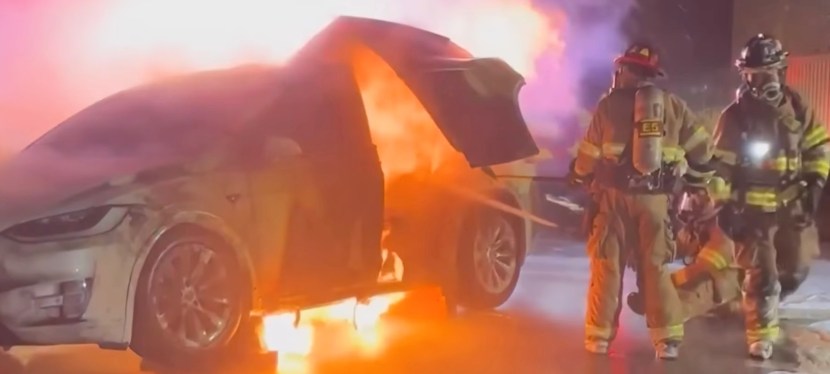
If you value your family, your personal safety and if also you have a lot of financial ends to meet, then you must avoid buying electric vehicles (EVs). With so many woke people, climate change extremists and Silicon Valley believers around the world, there is a sinister collective moment to deceive people into buying EVs – especially electric cars for personal/family use – while also campaigning to have combustion engines and fossil fuels banned. These Satanic Leftists are even conspiring with technology developers, government officials and electric vehicle manufacturers to manipulate people into owning EVs.
Of course, that sinister pro-EVs movement DOES NOT CARE about your personal safety and your family at all. They do not want you to realize that electric cars are not only very flawed and disadvantageous….the EVs can also kill you and destroy properties and harm entire communities.
To put things in perspective, watch the selected videos posted below. I encourage you to take time to watch each of them from start to finish and take notes about the key details.
There is also one particular issue that electric vehicle fanatics do not want to talk about and prefer to ignore…the number of deaths caused by electric cars that have gone wrong. Watch the video below.
And then there are also electric bikes (e-bikes) and electric scooters (e-scooters) that cause fire. Watch the selected videos below.
The radicalized believers of EVs do not want you to realize the truth and the facts that electric cars (the most commercially available EV in the market) could spark into a fire hazard that will take so much effort to put out. Imagine yourself getting trapped inside the electric car as it shorts and burst into flames which could kill you and your companions. Electric cars are also very expensive to repair and the number of public electric chargers are still not so many. E-bikes and e-scooters, as seen above, are also dangerous to have.
Let me end this piece by asking you readers: Did you encounter people who tried to fool you into buying an electric car or an electric bike? Are the electric vehicle manufacturers honest and transparent when they try to sell EVs to you? Right now, do you prefer to buy an electric car or a car that runs on fossil fuel?
Recently the administration of Philippine President Ferdinand “Bongbong” Marcos, Jr., and top officials of the Ultra Safe Nuclear Corp. (USNC) met in Washington, D.C., and discussed the progress of the company’s nuclear energy investment plan in the country, according to a Philippine News Agency (PNA) news article.
To put things in perspective, posted below is an excerpt from the PNA news article. Some parts in boldface…
President Ferdinand R. Marcos Jr. on Friday (Manila time) hailed the developments in the planned nuclear energy investment of Washington-based Ultra Safe Nuclear Corp. (USNC) in the Philippines.
Marcos met with USNC’s top executives, led by its chief executive officer Francesco Venmeri, in the United States (US) to discuss the progress in the firm’s commitment to bring a reliable and clean energy source to the Philippines.
“We are delighted to share the progress of our ongoing collaboration with Ultra Safe Nuclear Corp. since our inaugural meeting in 2023. Their investment in Micro Modular Reactors (MMRs) promises a reliable and clean energy solution for the country,” Marcos said in a Facebook post after his meeting with USNC officials.
“This initiative ensures greater energy security, reduced reliance on fossil fuels, and holds the promise of substantial economic gains for the Filipino people.”
During the meeting with USNC executives, Energy Secretary Rafael Lotilla briefed Marcos about the ongoing legislative measures in Congress that would provide the legal framework for the company’s planned investment and operation in the Philippines.
Lotilla told Marcos that the regulatory framework has been passed by the House of Representatives.
On Nov. 22, 2023, the House approved House Bill 9293, or the “Philippine National Nuclear Energy Safety Act, ” and last March 4, it also approved HB 9876 or the “Philippine Nuclear Liability Act.”
Marcos expressed hope that the bill gets passed in the Senate so that the necessary legal requirements could be completed soon to commence the project.
“You’re done already in the House. Okay. So, the elements that need to be there, the provisions that need to be (included), we can do in the Senate and then there’s one of course, is the bicam down the road. So, that would be the process from the government side,” the President said during the meeting.
“We spoke about this before. We’re going to go ahead with the program, with (the) project.”
Marcos’ meeting with USNC officials is a follow-up of their initial meeting in the US in May 2023, followed by the signing of the memorandum of understanding (MOU) on nuclear cooperation in Nov. 2023, and the firm’s participation in the US Presidential Trade and Investment Mission to the Philippines in March 2024.
The USNC is a global leader and vertical integrator of nuclear technologies and services. Its major initiatives include the MMR, Fully Ceramic Micro-encapsulated (FCM) nuclear fuel, and nuclear power and propulsion technologies for space exploration.
The MMR is a fourth-generation nuclear energy system that delivers safe, zero-carbon, cost-effective electricity and heat to utilities, industry, and remote communities.
This will be USNC’s first investment in the country and it partnered with Meralco for an MMR study.
Let me end this piece by asking you readers: What is your reaction to this recent development? Do you feel confident that safe and secure nuclear energy in the Philippines will be realized before the decade ends? Are people in your local community knowledgeable about the potential benefits of nuclear energy?
In recent times, a lot of people have spotted electric bikes (e-bikes) and electric tricycles (e-trikes) traveling on national roads – including the South Luzon Expressway (SLEX) – and posted images of them online. That being said, the local authorities could not ignore the many complaints of these electric vehicles (EVs) and they will respond by issuing a new guideline soon, according to a Manila Bulletin news report.
To put things in perspective, posted below is an excerpt from the Manila Bulletin news article. Some parts in boldface…
Viral videos of complaints against e-bikes and e-trikes , including an elementary pupil driving one of them on a national road and their presence on major thoroughfares that include the South Luzon Expressway (SLEX), have prompted national government agencies to expedite the finalization of the rules and regulations that would govern both their ownership and use.
On the side of the Land Transportation Office (LTO), its chief, Assistant Secretary Vigor D. Mendoza II, said two of the measures that would be included in the recommendation they would submit to the Department of Transportation is for the registration of the e-bikes and e-trikes before the agency.
E-bikes and e-trikes are not required to be registered similar to motor vehicles and this is actually the major marketing strategy of its sellers, according to Metropolitan Manila Development Authority (MMDA) chairperson Don Artes.
Aside from registration requirements, Mendoza said they will also include in the recommendation the issue on whether or not the users of e-bikes and e-trikes will be mandated to obtain a driver’s license.
Artes, again, said the non-requirement of a driver’s license to drive them is another selling point of the e-bikes and e-trikes.
According to Mendoza, another argument that will be included in the recommendation is the total ban of e-bikes and e-trikes not only on national roads but also on major thoroughfares and even public roads, particularly the busy ones.
“The guideline (on e-bikes and e-trikes) must be released within this month because a publication of it is still needed before the implementation,” said Mendoza in a press briefing at the MMDA office in Pasig City on Thursday, Feb. 15.
“So we should be able to submit our recommendations to the Secretary (DOTr Secretary Jaime J. Bautista) within this week so that everything will be finally ironed out,” he added.
Exponential growth – Asked if the national government has a data on how many e-bikes and e-trikes in the country, Artes said they do not have the figure simply because there is no source of credible information since e-bikes and e-trikes are not required to be registered.
Artes, however, said that in Metro Manila alone, they have been seeing an exponential growth on the number of e-bikes and e-trikes.
But in Caloocan City where an ordinance was passed for the mandatory accounting of e-bikes and e-trikes, Artes said the figure is at around 18,000.
“So in just one LGU (local government unit) here in Metro Manila, there were already 18,000. So you can just imagine using the fact there are 17 LGUs here in Metro Manila. For sure, there are plenty of them,” said Artes.
“This is really concerning in terms of road safety because they are using roads, especially major roads, and some of the users do not even have the idea of basic road regulations that may cause accidents. So it’s about time that we come up with regulations on this matter,” he added.
E-bikes accident data – Based on the data released last month by the MMDA, a total of 556 road accidents were recorded in Metro Manila involving e-bikes and e-trikes from January to November last year.
There were two reported fatalities recorded in the same period—one was reported in February last year while the other one was reported in August last year.
The same data revealed that e-bikes and e-trikes accidents resulted in 282 non-fatal injuries and 281 cases of damage to property.
Enforcement difficulties – Artes admitted that their enforcers on the roads are having difficulty dealing with e-bikes and e-trikes.For one, they could not issue a citation ticket for traffic violation since the riders have no driver’s license in the first place.
Another one is that they could not also impound the e-bikes and e-trikes due to the absence of a guideline that would legally allow the MMDA to do so.
Consolidation of policies – Artes said there are a number of local government agencies which came up with guidelines on the use of e-bikes and e-trikes, one of them is their use for livelihood by allowing e-trikes to be used as public utility vehicles.
On the part of the national government, Mendoza said they will come up with a guideline that would be nationwide in scope in coordination with local government agencies and other stakeholders.
This is the reason, he said, why they have been continuously meeting even with representatives of groups advocating e-vehicles.
“The guideline that will be issued will be nationwide on scope. So it is important that coordination with LGUs and other stakeholders is important,” said Mendoza.
For road safety – Both Artes and Mendoza said that the guidelines that will be issued by the national government are purely aimed at ensuring the safety of all road users, including the riders of e-bikes and e-trikes.
To see why e-bikes and e-trikes are problematic on major roads and highways here in the Philippines, watch the following videos below…
Let me end this piece by asking you readers: What is your reaction about this recent development? Do you consider e-bikes and e-trikes traffic hazards on major roads and highways? Do you think the national authorities will be able to come up with new rules in response to the many complaints made against e-bikes and e-trikes? Do you want to see all e-bikes and e-trikes banned on major roads and highways nationwide? Should all e-bikes and e-trikes be registered and their respective drivers should be required to have drivers’ licenses?





 Author Carlo Carrasco