Recently the World Bank announced that the economy of the Philippines will continue to grow strongly this year and next year, according to a Philippine News Agency (PNA) news report.
To put things in perspective, posted below is an excerpt from the PNA news report. Some parts in boldface…
The World Bank on Tuesday said the Philippine economy is expected to continue to post strong growth but fully implementing key reforms to boost investments is crucial to sustain growth.
“We anticipate that the Philippine economy will continue to exhibit strong performance in the next few years,” World Bank country director for Brunei, Malaysia, the Philippines and Thailand Ndiame Diop said in briefing for the presentation of the Philippines Economic Update (PEU) December 2023 edition.
“This growth will be propelled by a healthy labor market and declining inflation, which will stimulate robust household consumption,” he said.
For this year, the World Bank expects the Philippine economy to grow by 5.6 percent and edge up to 5.8 percent in 2024.
The services sector is anticipated to be the main growth driver supported by the ongoing recovery of the tourism sector and the consistent performance of the information technology and business process outsourcing industry.
“We expect that the full implementation of several investment reforms will enhance the country’s competitiveness to attract foreign investment, strengthening the country’s global growth prospects,” said Diop.
The Philippine economy grew by 5.9 percent in the third quarter of the year, bringing the year-to-date economic expansion to 5.5 percent.
“Despite the challenging global environment that resulted in a slowdown for many countries in the region, the Philippines stands out as among the top performers,” Diop added.
He said this can be attributed to the country’s resilient domestic demand which helped mitigate the impact of external headwinds.
Inflation, meanwhile, is forecast to settle at 5.9 percent this year and ease to 3.6 percent in 2024.
Policy recommendations – Diop pointed out that moving forward, full implementation of key forms is needed to mitigate the impact of high inflation amid volatility in global commodity prices and high cost of borrowings to stimulate private investment, promote job creation and reduce poverty.
These include the amendments to the Public Services Act, Retail Trade Liberalization Act, the Foreign Investment Act and amendments to the implementing rules and regulations of the Renewable Energy Act allowing foreign ownership of renewable energy projects.
World Bank senior economist Ralph Van Doorn said that in the short term, domestic policy priorities include containing elevated inflation and providing assistance to vulnerable sectors.
Van Doorn said enhancing forecasting and planning to help stabilize food prices, reducing market volatility and ensuring a consistent and reliable food supply remains fundamental to reducing inflation in the short term.
Let me end this piece by asking you readers: What is your reaction to this recent development? Do you think the World Bank is correct with its findings about the economy of the Philippines?
NOTE: Shortly after the launch of Mardi Gras Bazaar, Madison Galeries renamed it into Mardi Gras Warehouse Sale which had its last sale on December 2 and 3, 2023. The previous announced schedule of Mardi Gras Bazaar set for November 18 to December 31, 2023, no longer matters.
It has finally happened and already a lot of people have joined in for their shopping needs or purposes. I’m talking about the latest Mardi Gras Bazaar which officially started this morning at the 3rd floor of Madison Galeries along Don Jesus Boulevard, Alabang Hills, Barangay Cupang, Muntinlupa City, and I personally visited and bought some nice things with the Christmas season in mind.
Mardi Gras Bazaar this year is happening at the 3rd floor of Madison Galeries. If you go further in, there is a lot of space inside with all the products for sale.
Also taking place right now is the Christmas Sale of Oriental Merchants at the 4th floor of the same mall.
For the newcomers reading this, the Mardi Gras Bazaar this year will last until December 31, 2023 with a schedule of 10AM to 8:30 PM. In my personal experience, this is my 2nd time to attend the bazaar at Madison Galeries and it also marked the first time in four years since I last attended it (read my 2019 Mardi Gras Bazaar experience by clicking here).
More on the ongoing Mardi Gras Bazaar, check out the pictures I posted below and may these be a reference for you all…
A wide shot of the venue of the bazaar. There is a lot more products not seen in this image.
Looking for a new bicycle? Mardi Gras Bazaar has it!
The return of Mardi Gras Bazaar is indeed special. So many products with attractive prices around.
In the background are the counters where shoppers lineup with their selected products. Payments by cash, GCash (e-wallet) and credit cards are accepted.
In my experience, the process has been orderly.
For those of you who need directions to get to Madison Galeries for the bazaar, posted below is a screenshot from the social media post of the mall…
A useful reference for you all.
As we now live in the post-pandemic age, the newest Mardi Gras Bazaar is an important event not simply because it offers shoppers opportunities to acquire good items at discounted rates but also because it contributes to the normalization of life after the depression of COVID-19.
That being said, I encourage you my readers to take the opportunity to come to Madison Galeries and join the Mardi Gras Bazaar while there is still time. I encourage you also tell your neighbors and friends in our communities about it.
For your reference, this was at the ground floor of Madison Galeries along Don Jesus Boulevard.
For more information about Mardi Gras Bazaar (2023) and other activities at Madison Galeries, visit their Facebook page at https://www.facebook.com/MadisonGaleries
For more South Metro Manila community news and developments, come back here soon. Also say NO to fake news, NO to irresponsible journalism, NO to misinformation, NO to plagiarists, NO to reckless publishers and NO to sinister propaganda when it comes to news and developments. For South Metro Manila community developments, member engagements, commerce and other relevant updates, join the growing South Metro Manila Facebook group at https://www.facebook.com/groups/342183059992673
The economy of the Philippines grew almost 6% in the 3rd quarter (July-September 2023) which is a huge improvement over the 2nd quarter growth of 4.3%, according to a GMA Network news report.
To put things in perspective, posted below is an excerpt from the GMA Network news report. Some parts in boldface…
The Philippine economy regained its footing in the third quarter of 2023, following a slowdown seen in the previous quarter, the Philippine Statistics Authority (PSA) reported on Thursday.
The economy, as measured by gross domestic product (GDP) or the total value of goods and services produced in a period, grew by 5.9% during the July to September 2023 period, PSA chief and National Statistician Claire Dennis Mapa said at a press conference.
This is faster than the 4.3% growth rate seen in the second quarter of the year —its slowest pace in nine quarters since the country entered the positive territory in the middle of 2021 following a pandemic-induced recession.
“We are pleased to announce that the Philippine economy continues to grow despite several major headwinds that we have experienced and continue to experience,” National Economic and Development Authority (NEDA) Secretary Arsenio Balisacan said.
“This performance makes our economy the fastest among the major emerging economies in Asia that have released their third-quarter 2023 GDP growth: Vietnam at 5.3%, Indonesia and China at 4.9%, and Malaysia at 3.3%,” the NEDA chief said.
The third quarter economic performance brought the year-to-date or the January to September 2023 GDP growth rate to 5.5%.
Let me end this piece by asking you readers: What do you think about this recent development? Do you think there is still a chance for the Philippine economy to accelerate in the 4th quarter and achieve a full-year economic growth of at least 6%?
To put things in perspective, posted below is an excerpt from the GMA Network news report. Some parts in boldface…
President Ferdinand “Bongbong” Marcos Jr. said Monday that the implementing rules and regulations of the Maharlika Investment Fund (MIF) have been finalized, weeks after he said its implementation was suspended.
“The Investment Rules and Regulations of Maharlika Investment Fund have been finalized,” Marcos said on Instagram.
“Upon our approval, we’ll swiftly establish the corporate structure, getting the MIF up and running,” he added.
The IRR, which would spell the beginning of MIF’s operationalization, was released in August. Marcos announced the suspension of its implementation “pending further study” on October 18.
Before leaving for Saudi Arabia last month, Marcos clarified that the MIF was not put on hold, saying the government was still working to have it operational within the year.
“We are, the organization of the Maharlika Fund proceeds apace, and what I have done though, is that we have found more improvements we can make, specifically to the organizational structure of the Maharlika Fund,” the President had said.
Marcos had said the suspension of the IRR should not be misinterpreted as a judgement of rightness or wrongness of the MIF.
he President also maintained that economic managers and “personalities who will actually be involved in the fund” had been consulted regarding the MIF.
Marcos signed into law Republic Act No. 11954 or the Maharlika Investment Fund (MIF) Act of 2023 in July, with the aim to tap state assets for investment ventures to generate additional public funds.
The law creates the Maharlika Investment Corp. (MIC), a government-owned company that will manage the MIF — a pool of funds sourced from state-run financial institutions that will be invested in high-impact projects, real estate, as well as in financial instruments.
Under the law, the initial capitalization of the MIF would be sourced from Landbank at P50 billion, DBP at P25 billion, and the national government at P50 billion.
Let me end this piece by asking you readers: What is your reaction to this recent development? Do you think that there is no stopping the implementation of the Maharlika Investment Fund in the near-future?
For decades now, I have been living in Alabang and I witnessed how much Muntinlupa City modernized along the way. Bordering Barangay Ayala Alabang is Filinvest City (formerly called Filinvest Corporate City) which itself is home to several business or facilities such as the Filinvest Tent, Commercenter, Acacia Hotel Manila, Crimson Hotel, Westgate and, of course, the wildly popular place to be in – Festival Mall.
For the newcomers reading this, Festival Mall opened in May 1998 with its initial name Festival Supermall. Way back then, out of pure curiosity, I entered the mall for the first-time ever during its soft opening on May 1, 1998 (Labor Day here in the Philippines) as I was already looking for a new place and new discoveries at a time when I got tired of Alabang Town Center (ATC).
Being very new back then, Festival Mall’s presence of retailers or tenants was not yet dynamic as there were still businesses inside that could not open in time for the mall’s opening. I do remember walking down seeing lots of vacant retail spots covered with signs such as “opening soon”, “coming soon” and the like. Back in those days, the Philippine economy and society itself were dampened by the 1997 Asian Financial Crisis.
As the months passed by, more businesses opened and Festival Mall’s early attractions include the X-Site Amusement Center (which already had the indoor roller coaster) and, of course, the brand new cinemas which had several screens operating at a very spacious area on the top floor. I still remember seeing lots of people lining up for tickets and seats to watch Armageddon which ended up as the highest grossing movie of the world in 1998.
Indeed, for more than a decade, Festival Mall’s original cinemas became a favorite destination of mine to watch movies in Alabang and I definitely was not alone. I also remember the times when the said cinemas attracted a whole lot of moviegoers when the annual Metro Manila Film Festival’s (MMFF) opening day (every December 25) happened resulting in long lines. Watch the YouTube videos below…
As you can see in the above videos, Festival Mall’s original cinemas was a hot spot for moviegoers. It should be noted that the mall is strategically located in close proximity to the Alabang Viaduct and the South Luzon Expressway (SLEX) which ensures visibility to motorists and accessibility to commuters on a daily basis. The old cinemas were also a hot spot for a variety of small businesses selling different kinds of food and drinks to moviegoers and others who just passed by.
Festival Mall at 25
This past May, Festival Mall turned 25 and its anniversary was highlighted with special events as well and publicity through the media. There were these Festival Mall 25th anniversary feature articles that got published in different newspapers almost simultaneously. In the commemorative article that got published in the Manila Bulletin, President and CEO of Filinvest Development Corporation Josephine Gotianun Yap was quoted which goes as follows in the excerpt below. Some parts in boldface…
“We would not be where we are today without the unwavering support of our customers, merchants, suppliers, and employees who have journeyed with us through the years. It is humbling to think that when we first opened the mall, we only had 30 stores and no anchor supermarket. But thousands of visitors came on our first day, attracted by our amusement centers, cinemas, and food court. And now the mall has 800 tenants and eight leading anchor stores. We value our collaboration with major retailers, which has enabled us to bring together SaveMore, Ace Hardware, Robinson’s Department Store, Handyman, Shopwise, H&M, Decathlon, and Landmark all under one roof. As we build on its strong foundations for the future, we see Festival Mall continuing to serve as a place where time stops for making memories with family and friends,”
As seen above, the Filinvest Development Corporation executive clearly referred to the original cinemas which was one of the early attractions of Festival Mall way back in 1998. As mentioned earlier, Festival Mall today has more modern cinemas located at the expanded area on the same floor but several meters away from the original cinemas. So how does Festival Mall’s original cinemas look like nowadays? Watch the video below…
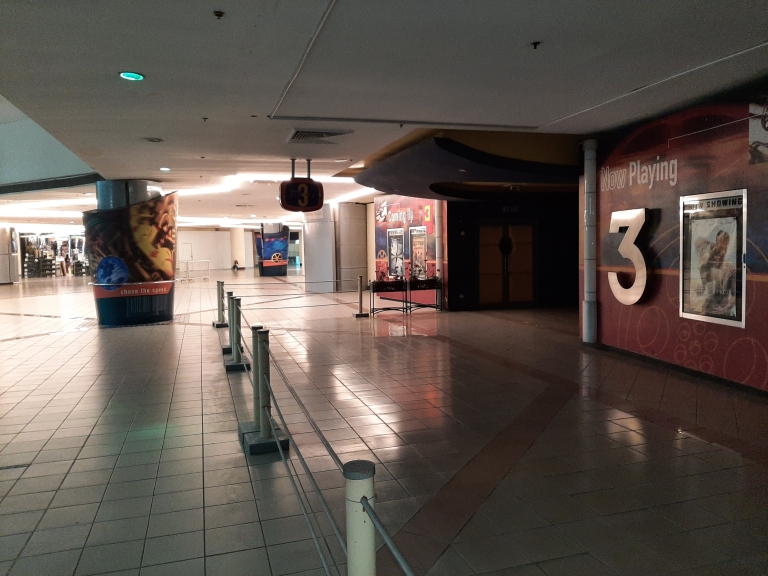
Yes, indeed the mall’s original cinemas have turned depressing. There are much less customers who pass by the area and many of the businesses that operated within have closed down! As I personally found out, Festival Mall is still using a few screens at the old cinemas for moviegoers while leaving the many others closed and left in the dark. If you think about it carefully, what does the mall management have in mind with regards to all of those cinema seats, sound systems, projectors, screens and other pieces of equipment inside each and every closed screen of the original cinemas?
A closed screen at one end of the original cinemas of Festival Mall. Just imagine what is left of all the hardware (examples: projectors and speakers) and seats inside.
This was a premium place to watch movies at. It had more comfortable seats and better equipment that made the cinematic experience more immersive. It was here where I saw 2001’s Final Fantasy: The Spirits Within.
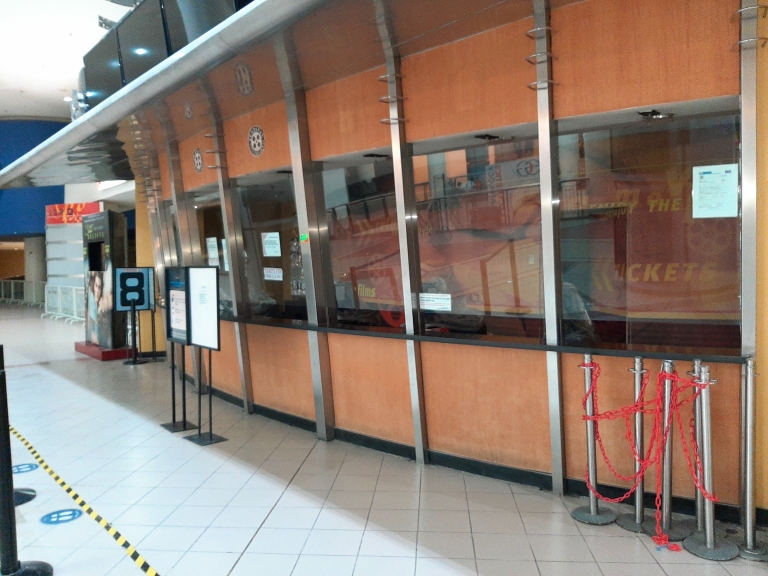
This is where I used to buy movie tickets for many years. For some time now, the selling of movie tickets here has stopped. To buy tickets, you have to go to the modern cinemas of the mall several meters away by foot at the same floor.
Apart from seeing more of the screens of the original cinemas closed down, the number of small-time businesses that sold different kinds of food and drinks are also gone which is depressing. Those businesses offered moviegoers different choices of what to eat or drink apart from the usual popcorn and drinks sold by the cinema’s concessionaires. I do remember a certain business joint that sold really good coffee (both hot and cold) that is also affordable.
There used to be different kinds of small business joints that sold a variety of food and drinks located on the floor spots at the original cinemas area. Those businesses have since closed down and left.
I remember the times I bought popcorn and drinks at this place before watching a movie. Now there are no food, no drinks and no people selling to customers anymore.
With the way things are right now, walking through the original cinemas area of Festival Mall is lonely and depressing to do. The area is almost lifeless and it easily is the saddest place inside the mall which itself has become a major attraction for shoppers and families. I can only wonder if Festival Mall’s management has any plan to revive the original cinemas area. Will they someday renovate at least a few of the screens and install brand new seats and other equipment to accommodate more moviegoers? Do they plan to attract new businesses to occupy the vacant commercial spaces and floor spaces near the old cinemas?
It would be nice to know if Festival Mall’s management or Filinvest itself has any plan to revive commerce at the original cinemas area which is now the saddest and loneliest part of the mall.
To be very clear with you all reading this, I never worked for a shopping mall nor have I ever worked in the movie theater business. I am a long-time resident of Alabang who often visits Festival Mall for purchasing needed items, dining and availing of services. Watching movies at Festival Mall used to be a big reason for me to spend time at the mall. I know for a fact that operating movie theaters is difficult and attracting people to watch movies on the big screen is tougher because of streaming. It does not help that the COVID-19 pandemic convinced people that watching new movies at home via streaming is the new standard which also made them think that movie theaters are unnecessary.
As a movie enthusiast, I can say out loud that watching a movie inside the cinema is still the best and most definitive way to enjoy watching. The movie theater experience can never be matched by streaming nor could the biggest HDTV at home could ever come close to the size and visual impact of a cinema screen. That being said, I can only hope that Festival Mall could someday revive the movie experience and commerce at their original cinemas area. They already have the modern cinemas at the expanded area but those are only 4 screens.
If you are living here in South Metro Manila and you have been to Festival Mall several times before, what do you think the mall management should do about their old cinemas? Is Festival Mall your favorite place to watch movies in? Do you think that hosting multiple film festivals – both foreign and domestic – each year would justify renovating the old cinemas of the mall?
As the Philippines continues to move forward in this post-pandemic age, the national unemployment rate fell down to 4.4% this past August, according to a Manila Standard news report.
To put things in perspective, posted below is an excerpt from the Manila Standard news report. Some parts in boldface…
The unemployment rate in the Philippines fell to a three-month low of 4.4 percent in August 2023 from 4.8 percent in July, the Philippine Statistics Authority said Friday.
National statistician and civil registrar-general Dennis Mapa said in an online briefing the August unemployment rate was also lower than 5.3 percent recorded a year ago.
This translated to about 468,000 fewer unemployed individuals in August, according to the National Economic and Development Authority (NEDA).
“In terms of magnitude, there were 2.21 million unemployed Filipinos aged 15 years and over in August 2023,” Mapa said.
“It was also lower than the 2.27 million unemployed in July 2023 and 2.68 million a year ago,” he said.
The underemployment rate also fell from 14.7 percent in August 2022 and 15.9 percent in July 2023 to 11.7 percent in August this year. This was equivalent to 1.4 million fewer underemployed persons, particularly among those employed in the services and industry sectors.
Underemployed persons are those who have expressed the desire to have additional hours of work in their present job or to have an additional job, or to have a new job with longer hours of work.
The number of employed persons aged 15 years and over in August 2023 increased to 48.07 million from 47.87 million a year earlier. This translated into 95.6 percent employment rate, higher than the reported employment rate in August 2022 and July 2023 at 94.7 percent and 95.2 percent, respectively.
Total employment increased 203,000 in the agriculture and industry sectors.
Mapa said the labor force participation rate (LFPR) in August reached 64.7 percent, lower than 66.1 percent a year ago, but higher than 60.1 percent in July 2023.
NEDA underscored the Marcos administration’s commitment to generating high-quality and high-paying job opportunities for workers.
NEDA said that apart from the decline in underemployment, several other indicators pointed to an accompanying increase in the quality of employment, including the increase in wage and salary, and full-time employment, and the decline in vulnerable and part-time employment.
“However, much remains to be done as the number of middle- and high-skilled occupations decreased (-354,000), while low-skilled occupations increased (+551,000) compared to the previous year,” NEDA said.
NEDA Secretary Arsenio Balisacan said the government would continue its efforts to create better job opportunities for workers in the country.
“To raise the quality of employment further, the Marcos administration is committed to exerting all efforts to shape an attractive business climate for investors who have the resources needed to bring in high-quality and high-paying jobs,” he said.
Let me end this piece by asking you readers: What is your reaction to this recent development? Were there many people in your local community who were fortunate to get a new job over the past twelve months?
In the views of the First Metro Investment Corporation (FMIC) and the University of the Asia and the Pacific (UA&P), the economy of the Philippines could grow by 5.5% for the year, according to a news article by Philippine News Agency (PNA). 2023 has been an economically challenging year and many anticipated that the national economy won’t grow as high as it did in 2022.
To put things in perspective, posted below is an excerpt from the PNA news report. Some parts in boldface…
The Philippine economy is projected to grow by 5.5 percent this year, driven by the growth in government spending, a report released by the First Metro Investment Corporation (FMIC) and the University of the Asia and the Pacific (UA&P) said.
In the September issue of The Market Call released on Wednesday, FMIC and UA&P said Philippine economic growth in the third quarter of the year will likely reach 5.0 to 5.2 percent.
For the fourth quarter of this year, FMIC and UA&P project the country’s gross domestic product (GDP) to grow by 6 percent.
This would bring the full year GDP growth to 5.5 percent which is slightly below the government’s 6 to 7 percent target for this year.
“Despite the weak July-August, we think the NG will accelerate further its spending on infrastructure and transportation for the rest of the year, and employment will have strong rebound in September,” the report said.
The Philippine economy grew by 4.3 percent in the second quarter of this year. During the quarter, government expenditure contracted by 7.1 percent.
FMIC and UA&P however expect government spending to accelerate in the second half of the year.
“National Government took up the slack in July spending as it ramped up expenditures by 16.2 percent year-on-year in July through higher social protection and infrastructure outlays,” the report said.
Aside from government spending, FMIC and UA&P also expect manufacturing and construction to drive growth.
Let me end this piece by asking you readers: What is your reaction to this recent development? Do you think the national economy can do better than the 5.5% growth foreseen by the First Metro Investment Corporation (FMIC) and the University of the Asia and the Pacific (UA&P)?
In a new attempt to provide jobs in the Philippines and boost the economy, President Ferdinand “Bongbong” Marcos, Jr., recently signed into law the Trabaho Para sa Bayan Act, according to a news article by the Philippine News Agency (PNA).
To put things in perspective, posted below is an excerpt from the PNA news report. Some parts in boldface…
The passage of the Trabaho Para sa Bayan Act will help the government achieve the goal of the Philippine Development Plan to provide more jobs to Filipinos, the National Economic and Development Authority (NEDA) said Wednesday.
President Ferdinand R. Marcos Jr. signed on Wednesday the Trabaho Para sa Bayan Act which seeks to, among others, address the challenges in the labor market.
“We support the Trabaho Para sa Bayan Act as it contributes to the Philippine Development Plan 2023-2028, which aims to increase employability, expand access to employment opportunities and achieve shared labor market governance,” NEDA Secretary Arsenio Balisacan said in a statement.
The law mandates the formulation of the Trabaho Para sa Bayan Plan (TPB) to address unemployment, underemployment, the informality of working arrangements, the reintegration of Overseas Filipino Workers and other challenges in the labor market.
It will also focus on improving the employability and competitiveness of Filipino workers through upskilling and reskilling initiatives and will provide support for micro, small and medium enterprises, and industry stakeholders.
The TPB Inter-Agency Council, chaired by the NEDA Secretary, will conduct a comprehensive analysis of the employment situation and labor market in the country.
The Council will also ensure the effective use of resources, harmonizing and complementing all governmental efforts and assisting local government units in planning, devising and implementing employment generation and recovery plans and programs within their respective localities.
Let me end this piece by asking you readers: What is your reaction to this recent development? Do you think the Trabaho Para sa Bayan Act will create positive results over the next few years if it succeeds? Do you think that more could be done to help local job hunters find opportunities and get employed soon?
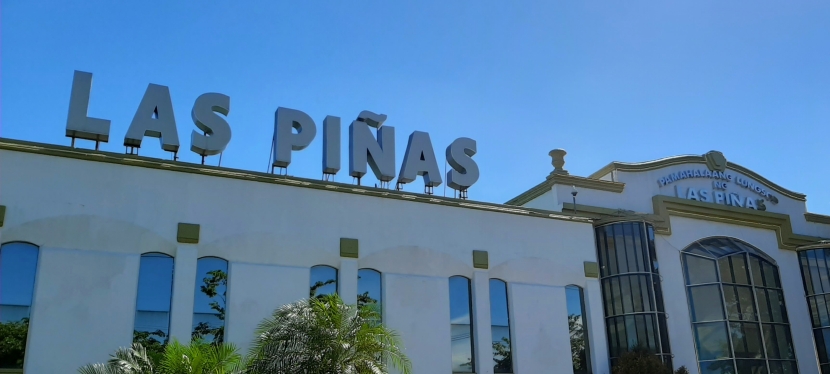
Recently in Las Piñas City, the City Government released cash aid to the local rice retailers to support them in coping with the rising costs in their line of business, according to a Manila Bulletin news report. The distribution was led by Mayor Imelda Aguilar.
To put things in perspective, posted below is an excerpt from the Manila Bulletin news report. Some parts in boldface…
Las Piñas City Mayor Imelda Aguilar led the distribution of cash assistance to 139 rice retailers at Las Piñas City Café in the City Hall grounds on Tuesday, Sept. 12.
The mayor said the City Agriculture Office (CAO), in coordination with the City Social Welfare and Development Office (CSWDO), distributed P15,000 cash assistance to each of the beneficiaries.
Aguilar took a decisive stance in response to the rising prices of rice to safeguard the city’s small-scale rice retailers, traders, and vendors.
The cash assistance is just the beginning of the city government’s initiatives to help its small rice business owners, said Aguilar, showing her commitment to aiding local businesses and prioritizing community welfare.
The mayor also revealed that the city government is in the process of developing a more comprehensive plan to support local rice traders and vendors.
The cash assistance aims to provide immediate relief to small businesses in the city, empower them to continue their operations and contribute to stabilizing rice supplies in the community since the livelihoods of rice retailers are under severe strain due to the surging price of rice.
Let me end this piece by asking you readers: If you are a resident of Las Piñas City, what is your reaction to this development? Are you struggling to buy rice grain for your family now? Do you think this newest action by the City Government will benefit consumers as well? Are the local rice retailers in your community been struggling a lot lately?
For more South Metro Manila community news and developments, come back here soon. Also say NO to fake news, NO to irresponsible journalism, NO to misinformation, NO to plagiarists, NO to reckless publishers and NO to sinister propaganda when it comes to news and developments. For South Metro Manila community developments, member engagements, commerce and other relevant updates, join the growing South Metro Manila Facebook group at https://www.facebook.com/groups/342183059992673
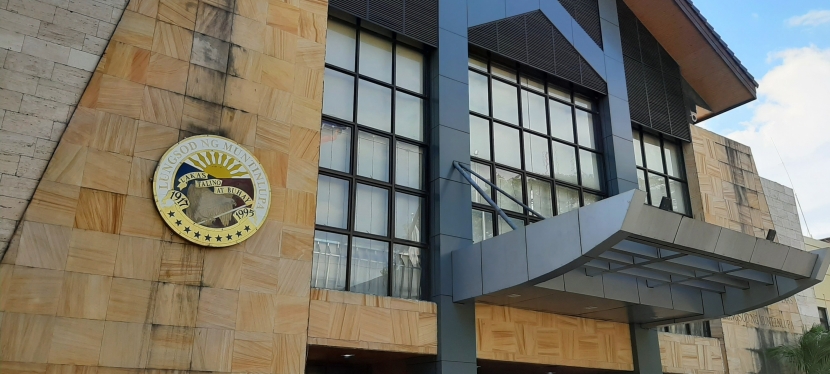
Recently in the progressive City of Muntinlupa, the City Government announced that it will implement a notable program that will benefit owners of sari-sari stores and other micro-retailers through a special program, according to a Manila Bulletin news report.
To put things in perspective, posted below is the excerpt from the Manila Bulletin news report. Some parts in boldface…
The Muntinlupa City government will implement the iSTAR Program aiming to provide skills to sari-sari (variety) store and other micro-retailing business owners.
The Muntinlupa City Council approved Resolution 2023-293 authorizing Mayor Ruffy Biazon to enter into a memorandum of understanding with the Technical Education and Skills Development Authority (TESDA) for the implementation of the iSTAR Program or the upgraded version of the Sari-Sari Store Training and Access Resources (STAR) Program.
According to the resolution, the iSTAR Program “aims to provide access to skill training, resources, and peer mentoring to sari-sari store and carinderia owners and operators all over the country.”
Under the iSTAR Program, “sari-sari stores, traditional food outlets or karinderias and other Micro-retailing business owners will be provided with digital basic entrepreneurship training and access to business resources.”
The MOU aims to “provide both men and women residents of the city business and training to improve their finances and standard of living and at the same time, giving the community easy access to basic goods and commodities.”
Let me end this piece by asking you readers: If you are a Muntinlupa City resident, what is your reaction to this development? If you own a sari-sari store or a micro-retailing business, would you take part in the iSTAR program?
For more South Metro Manila community news and developments, come back here soon. Also say NO to fake news, NO to irresponsible journalism, NO to misinformation, NO to plagiarists, NO to reckless publishers and NO to sinister propaganda when it comes to news and developments. For South Metro Manila community developments, member engagements, commerce and other relevant updates, join the growing South Metro Manila Facebook group at https://www.facebook.com/groups/342183059992673









 Author Carlo Carrasco