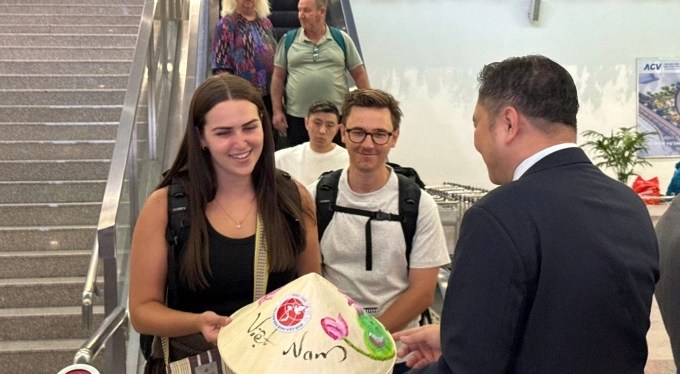
As more foreign tourists keep arriving in Vietnam, some questions about the future of the nation’s tourism industry are being raised as a tourism labor shortage has been realized, according to a news article by VnExpress.
To put things in perspective, posted below is an excerpt from the news article of VnExpress. Some parts in boldface…
Vietnam’s tourism industry is racing ahead, with international arrivals hitting new highs, but the sector is facing a growing shortage of skilled workers, from hotel staff and chefs to foreign-language guides and senior managers.
The third most visited country in Southeast Asia after Malaysia and Thailand welcomed nearly 16 million international visitors in the first eight months of 2026, up 14.4% year-on-year, driving up demand across hotels, travel companies, transport, restaurants and tourist attractions.
A 2026 survey by Hoteljob.vn found that nearly 90% of tourism businesses planned to recruit.
In Ho Chi Minh City alone, 89.7% of businesses were hiring, while 71.8% said recruitment was difficult or very difficult. The biggest shortages were among frontline workers, particularly in housekeeping, engineering, food service, front-office operations, and kitchens.
The Politburo’s Resolution dated Aug. 22, along with the government’s action programme adopted on Sept. 7, set the target for tourism to directly contribute 10-12% of GDP by 2030, attracting 45-50 million international visitors and generate total revenue of US$80-90 billion.
Hanoi, Ho Chi Minh City, and Da Nang are envisioned as major tourism growth hubs, while Phu Quoc emerges as a new hub. These targets will place greater demands on the tourism workforce, not only in terms of numbers but also skills, from frontline workers and foreign-language guides to managers, technology specialists and professionals delivering high-end services.
Ho Chi Minh City’s tourism sector, for example, is facing gaps in supervisory and management positions, as businesses seek staff capable of operating in an increasingly digitalized, international and competitive environment.
Foreign-language tour guides are another weak link. Demand is rising rapidly from markets such as Russia and India, while arrivals from Europe and the Middle East are also increasing. Yet training guides with the language skills and cultural knowledge needed to serve these markets can take years.
The labor crunch is even more acute in destinations far from major urban centers.
In Con Dao, hotels and resorts regularly struggle to recruit receptionists, housekeepers, chefs, and service staff, while travel companies face shortages of sales, marketing, and tour guide staff.
Higher salaries have done little to solve the problem. The island’s high cost of living and distance from the mainland make it difficult to attract and retain skilled workers, with many leaving after only a few months.
According to Hoteljob.vn, 79.5% of tourism businesses have raised salaries or improved benefits over the past year. Yet 59.2% cited lower incomes compared with other industries as a key reason young people leave the profession, while limited career prospects were another major factor.
Experts say Vietnam’s tourism labor shortage is not simply about training more people.
The bigger challenge is narrowing the gap between what schools teach and what employers need. Nearly 80% of businesses surveyed said fewer than 20% of young applicants could start work immediately, while more than 84% said new recruits needed at least a month before they could work independently.
Let me end this piece by asking you readers: What is your reaction to this development? Do you think Vietnam should open its doors and bring in trained tourism workers from overseas to solve their tourism labor shortage?
You may answer in the comments below. If you prefer to answer privately, you may do so by sending me a direct message online.
+++++
Thank you for reading. If you find this article engaging, please click the like button below, share this article to others and also please consider making a donation to support my publishing. If you are looking for a copywriter to create content for your special project or business, check out my services and my portfolio. Feel free to contact me with a private message. Also please feel free to visit my Facebook page Author Carlo Carrasco and follow me on Twitter at @CarloCarrascoPH as well as on Tumblr at https://carlocarrasco.tumblr.com/ and on Instagram at https://www.instagram.com/authorcarlocarrasco